Mini-Mindful Art Practice: Quick Guide to Intuitive Composition | Shelley Skail | Skillshare

Playback Speed


1.0x


  • 0.5x
  • 0.75x
  • 1x (Normal)
  • 1.25x
  • 1.5x
  • 1.75x
  • 2x

Mini-Mindful Art Practice: Quick Guide to Intuitive Composition

teacher avatar Shelley Skail, Artist, Illustrator, friendly nerd

Watch this class and thousands more

Get unlimited access to every class
Taught by industry leaders & working professionals
Topics include illustration, design, photography, and more

Watch this class and thousands more

Get unlimited access to every class
Taught by industry leaders & working professionals
Topics include illustration, design, photography, and more

Lessons in This Class

    • 1.

      Introduction

      1:45

    • 2.

      Class Project

      0:40

    • 3.

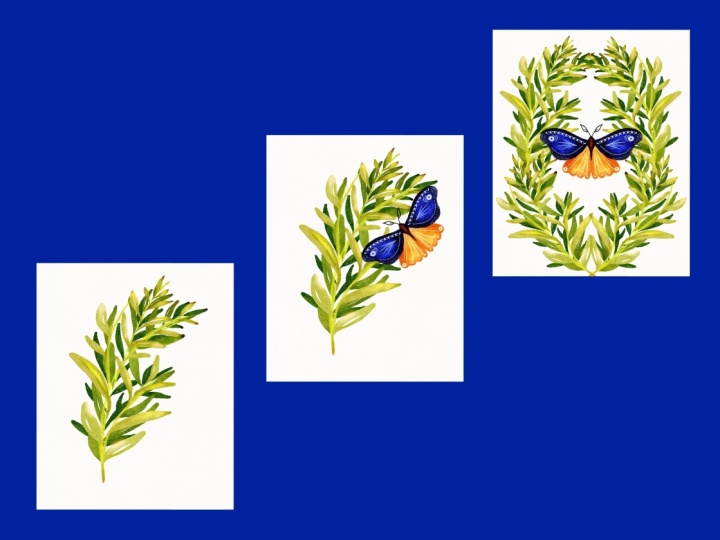
      What is Composition?

      1:32

    • 4.

      The Intuitive Composition Process

      3:11

    • 5.

      Intuitive Composition Example

      4:32

    • 6.

      Final Thoughts

      1:25

  • --
  • Beginner level
  • Intermediate level
  • Advanced level
  • All levels

Community Generated

The level is determined by a majority opinion of students who have reviewed this class. The teacher's recommendation is shown until at least 5 student responses are collected.

142

Students

5

Projects

About This Class

Would you like to feel more confident in composing your artwork but struggle with all the “rules” of composition? I used to catch myself overthinking how my drawings were arranged, trying to get everything just right, only to feel stuck. But I found a way to develop satisfying compositions that doesn’t involve memorising a long list of guidelines. Now, I use a flexible, intuitive process that lets me be creative while still building strong compositions.

In this short class, we’ll carve out a little mindful, low-pressure art time to explore composition in a way that feels natural. I’ll show you a structured but gentle approach that helps you arrange elements in your artwork in a way that feels right to you.

You'll learn how to:

  • Develop compositions without rigid rules
  • Refine your artwork through an iterative process
  • Trust your instincts while making adjustments that enhance your piece

You don’t need any prior knowledge of composition to take this class—I’ll walk you through everything you need to know. You also don’t need any special materials; just bring whatever art supplies you love working with.

By the end of this class, you’ll have developed a piece of art using a simple, repeatable method for creating compositions that feel balanced, natural, and - most importantly - yours.

Maybe you’re a beginner looking to build confidence in your compositions without the overwhelm. Perhaps you’re an experienced artist who wants to break free from overthinking. Either way, I’ve got you.

Let’s do this—see you in class!

Meet Your Teacher

Teacher Profile Image

Shelley Skail

Artist, Illustrator, friendly nerd

Top Teacher
Level: All Levels

Class Ratings

Expectations Met?
    Exceeded!
  • 0%
  • Yes
  • 0%
  • Somewhat
  • 0%
  • Not really
  • 0%

Why Join Skillshare?

Take award-winning Skillshare Original Classes

Each class has short lessons, hands-on projects

Your membership supports Skillshare teachers

Learn From Anywhere

Take classes on the go with the Skillshare app. Stream or download to watch on the plane, the subway, or wherever you learn best.

Transcripts

1. Introduction: The theory of composition is an enormous field that's had a lot said about it by many people over the years. I don't intend to add to it. What I'd like to suggest instead, is a method for helping you create compositions that you find satisfying without having to memorize a bunch of different rules. Hi, I'm Shelly Scale. I'm an artist and illustrator from Edinburgh, Scotland. For me, art is a source of joy. Sometimes frustration, let's be real, but mostly joy. And I'm really careful to protect that by not being overly academic in the way that I approach the creation of my images. This makes me really consider how to teach composition in a way that keeps that spark of joy alive. This class introduces you to a method that is respectful of both our creative process and our ability to be analytical without the unreasonable expectation that we do both things at the same time. Humans don't work that way, and I'm assuming I'm talking to humans here. We'll be working through an iterative process to find the elements of our work that we love and the things that we want to try differently next time. We'll be learning a gentle but structured process that you can apply to any painting, any artwork you like from here on out. So this is a class for humans who'd like to find a method for developing compositions that they find satisfying. If that's you, come join me in class. 2. Class Project: So what are we going to do in this class? We're going to use this intuitive composition process to develop your ideas into a composition that you find pleasing. You can either use my leaves example or something of your own. Both are totally fine. You only need the supplies that you tend to use, possibly pencil and paper for making little sketches, but apart from that, you're good. Are you ready? Let's do this. 3. What is Composition?: Like before we dive into the process, let's just take a minute to talk about what composition is. When I'm talking about composition, what I mean is the elements of your artwork and how they relate to one another. So for example, in this leaves painting, I've got stalks with leaves coming off them. That's the main elements of this painting, and the kind shape or the path that they make through the paper is this kind of eye shape here. It's a very curving, sinuous shape and that's really the main composition here. We've got lots of unpainted space that gets referred to as white space or negative space, but it's just the bits that you don't really pay attention to. That's your negative space. Then the way that this comes in from the sides and guides the eye towards the tip, that's the framing of the piece. These things together create the composition. Okay, now we've talked a bit about composition. Let's talk about this intuitive composition process. I'll see you for that in the next lesson. 4. The Intuitive Composition Process: So the intuitive composition process, what this is is a method for developing your ideas. I think what I want to say first and foremost is that when you first attempt to make something, your first draft, the most important thing about that first draft, its primary virtue, if you like, is the fact that it exists at all. You've gone from having an empty page to one with something on it, and that's a huge step. Everything after that is refinement. So don't get dejected if you don't like the first thing you made. It's really normal. It's fine. You can improve upon it. So the thing to bear in mind is that our brain has two different modes of operating and it can't do them both at the same time. We can create, we can make stuff exist that wasn't there before. We can critique or review that and we can have opinions about a thing that exists. And they're both separate states. And so when you are creating, I would encourage you to ask your critic or your reviewer to wait outside until you're done. And then because our creator is often quite sensitive, it sometimes comes from a younger part of ourselves that can be sensitive to criticism. It might do you good to have a little bit of a gap between the creating of something and the critiquing of that same thing. It can be good for the heart. So I'm going to suggest that both of these roles are really important in helping us develop our art, but they don't happen at the same time. So very important, not at the same time. Allow yourself the freedom to create and then allow yourself the gifts of your analytical brain to look at it and say, What do I like? What do I not like? What do I want to try differently? Maybe it won't work, but I'll try it anyway. What is the process? The process is this. You get your first draft down. It can be really small like a little thumbnail, a rough sketch of what you want to try. Then you take a step back and look at it with your analytical eye. You decide the things in it that you like that you want to keep and the things in it that you want to try and do differently next time. Then you go and do that. And that's the process. You repeat that process until you're happy. Join me in the next lesson where I'll give you a demonstration an example of this process. I'll see you. 5. Intuitive Composition Example: Hello, I'm going to walk you through an example of this intuitive composition process using some paintings that I did to develop the class project for a mindful art class. So in this one, I knew I wanted to capture something that I'd seen in real life. It was light shining through leaves of one of my plants. I wanted to capture, like, the peaceful chill vibe that that had and for the process of making that picture as well to have that same feeling. So I started out and I created this. It captured the reality of it reasonably well. But when I looked at it as a reviewer, I felt like it didn't quite have the energy that I wanted it to have. It felt I don't know, it felt like busy or the two cross things weren't sitting right. So I decided to try having a central stock in the middle to sort of balance it out and maybe give it a more balanced, peaceful feeling. So I went on to this one. I wanted to keep the layering because I really liked that. So I did, and I produced this, which was fine, but I still wasn't happy with it. So when I took a step back, I thought, Okay, I do still like the layering. What else do I like? I noticed that there was a bit more white space, and I like that, and I thought, I want to try doing it. I want to try doing it with more white space. And something about this central line with the cross stems isn't working for me. So I'm going to try a more curved composition. I'll have it come in from the side and snake up the page like a meandering river. See what that looks like. And that took me to this piece. And I thought, Yes, this is just about it. I really like this. And I like the layering. I like the white space. I like how curvy it is. It's maybe a bit out. I want to bring it in a little bit and see if I like that better, which took me on to this piece where it's a little bit tighter in terms of the overall shape that it forms. And I was like, Yes, I really like this. This is what I was going for here. I've got lots of the layering that happened in my very first draft that I liked. I've got lots of white space, which I realized was important. I've got this curvy sinuous shape. That I find pleasing and relaxing, which was what I wanted this piece to feel like so what I did here was I went through this iterative process. I had four steps. I had my first draft. I pulled out the things that I liked and that I wanted to try differently. I tried those things out. Some of them worked, some of them didn't. I thought, what do I want to do differently next time? And what do I want to keep? I pulled that into the next version, my third draft, and then I refined it again, you'll see the differences are more slight between my third and fourth draft than say between these two drafts. And this is the process that I would encourage you to try. Take an idea, develop it, see where you get to with it. So it took me four tries to get to this point. Sometimes it just takes two, other times it takes a lot more. All of that is fine. So now I invite you to try this process on something of your own. You can do it with a leafy shape. You can do anything. Any medium doesn't have to be watercolors and record your steps along the way. And when you're done, please put them in the class projects gallery. I'd love to see your process and your outcome. That's just about us. Join me in the last lesson for some final thoughts. 6. Final Thoughts: Thank you for taking this class. I hope you found the information helpful. We've learned an intuitive composition process that involves separating out our creative side from our analytical side and letting both of them play a part in developing our ideas through to something final. We take an iterative approach where we create, then we analyze, we decide what we want to do next, and then we create again and we go through this cycle until we get something that we're happy with. If you're interested in the theory of composition, there's lots of interesting things out there in the world for you. I would recommend this class by Jen Dixon on composition. I found it really helpful myself, and there's a couple of books. I'll put the links in the class description that I'd recommend as well. I'd love to see what you've made. Please pop it in the class project section. If you could also take the time to leave a review, I'd really appreciate it. So thanks again for joining me. I have lots of classes on watercolors and self care art practices if you're interested. And I hope I see you in another class soon. Thanks.