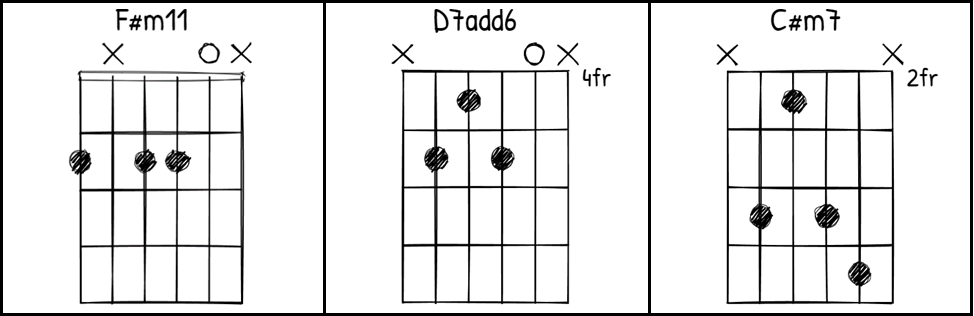
Transcripts
1. Class Introduction: Hey, there, Steve,
hope you doing well? First of all, I want
to say a big thank you for making a decision
to take this workshop where you will
master the basics of Maro chords Mf rock
chord progressions, and we will take
a look at some of the most commonly used
drumming patterns by Math rock guitarists. I've been helping guitarists
like you get to grips with the basics of Mthroc guitar
for a few good years now. Be this via my one to
one lessons or just interacting with
guitarist online or talking to guitarist
on live streams, or it might have been just
talking to guitarist in my Mf rock discord,
or it could be, of course, from one
of the many videos that I've put out on this
topic on my channel. Seeing the results
that guitarist got from my one to one lessons, my personal interactions,
from my content, always kept me motivated
to keep going, and knowing that I was
helping and hopefully not adding to the confusion
was always a great feeling. My hope is you're
going to get to the results that you want, and you're going to do this in a lot shorter time,
a lot less effort, and you're going to save
yourself the headache of having to try and work
this all out for yourself. So the structure of this
workshop is as follows. First, we'll look at
mastering the basics of commonly used chords in
Maroc and Mist West sema, and of course, related styles. Next, you will see these
chords and action by learning some core progressions across a range of Maroc style songs. Lastly, you will put these
chords into action once again by learning some valuable functional core progressions, and these are going to help
you start writing song ideas, and you will combine
these with some of the most commonly used
strumming patterns used by MFrock and Midwest ma guitarists to further
spark song ideas. Really excited for
this one. I hope you're going to find
it super useful. Grab your guitar, and
let's get stuck in.
2. Part 1 - What are math rock chords?: Typically a mafroc and
mafroc adjacent music, guitarists will make use
of dissonant chords, and we will also make use of
lots of different tunings. But for the sake of simplicity, and as this is an introduction, we're going to just
stick to standard tuning for this workshop. And this doesn't mean
because these chords are dissonant that
they sound nasty. Basically, they have more
harmonic information because we're adding
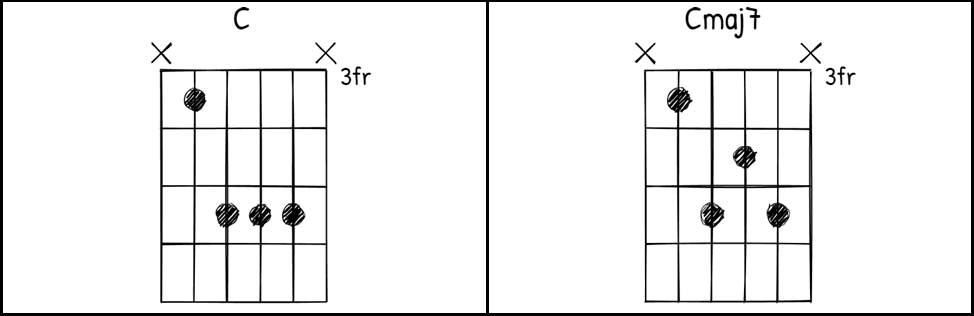
notes to these chords. For example, if
you note this like C major bar chord shape here. If we were to add
an extended chord, By changing this one note, we've introduced
this seventh note. If you listen carefully has dissonance to it, it does clash, and that's what we mean by some dissonance
added to this chord. There is extra
harmonic information. This extra information, this extra feeling
that we put into the chord is often more suited to Mfrock styles
of guitar playing. The coords that
you will learn in this section are largely
derived from jazz music. However, their
application is very different to jazz music
and you'll start to see why they sound less
jazzy the more that we play them and apply them to
math rock styles of music. If you're worried that
this is going to be a bombardment of theory in
this section. Rest assured. I'm only going to
give you what theory I feel is completely
necessary to help you understand the
application of the chords and situate them within
a chord progression. Also, it's worth pointing
out that there are many different variations of the chords that I'm
going to show you here. Chords that I've
included are chords that I've noticed over my assessment of many different
songs that are in standard tuning in math
rock and associated styles. These are the most commonly
used chords that I've found. I like using them to, and
I'm sure you To place these chords in terms of
where you would learn them in your chord
learning journey, let's say, we're looking
at extensions here. So I'd put these just
above bar chords. If you can play this,
that a major bar shape, which I know is a
pesky shape to learn, especially as a
beginner guitarist. If you can do that, then
you will be completely fine with the chords that
I am about to show you. So for each extended chord, I will go through this process. First, we'll look
at how we can play each chord starting
from the low E string, the A string and the D string to give
you maximum coverage. And no matter where you
are on the fret board, there'll be one of these chords
available to you to use. Second, I'll show you the
best fingering practices for each of these chords. And lastly, we'll
practice moving between these cord shapes across the EA and the D string by using some common
patterns of accent. So you can think of them as really simple
strumming patterns. These core shapes can be a
little bit tricky at first, but that's why we're
going to go through this three step process
just to make sure you're well on your
way to mastering them by the end
of this workshop.
3. Extended 7 Chords and Practice: To begin with, the most
common extension that's found in Mafroc is the
seventh extended chord. These are pretty much straight up jazz sounding in nature. I'm not going to lie,
but the approach to different strumming patterns, different pegating patterns. The overall different sound
of the instrument itself, the way that we might
apply effects or the different types
of guitars we use, all add to it just dist distant distancing That
took me a while to get to. Distancing distancing
distancing itself. I've forgot how to speak the
English language from jazz. Anyway, so it's not
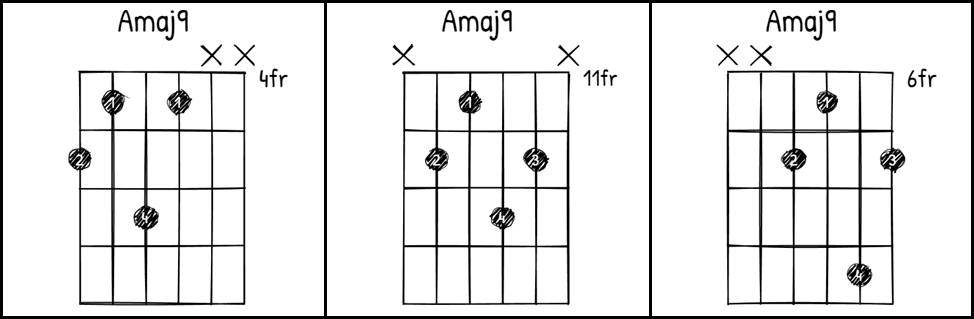
going to sound like you're playing a jazz piece at the end of this rest assured. So to begin with, let's
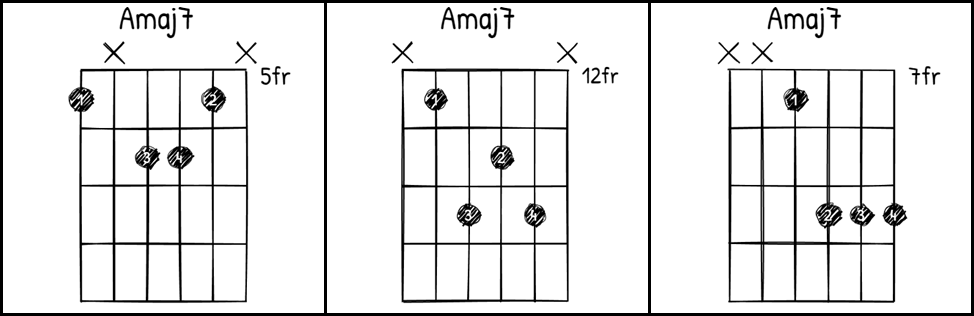
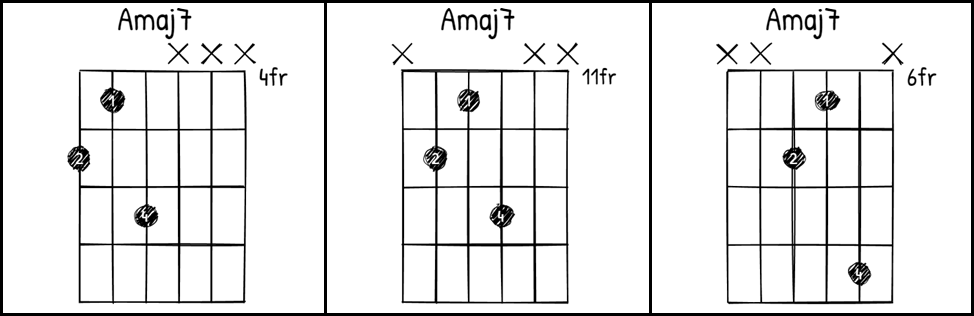
look at this major shape. We're going to have our A notes, and we're going to
look at that in the f places from the Lowe, the A string, and the D string. So we're going to start
with here for this shape. A really easy way
to get this is. If you're familiar with
that A bark shape, you've got the shape in there. I want you to move that to the D string and down one fret. And then bring in your
index finger up here. Moving down to the
A string here, we're going to start from
the 12 t of your index, then your ring
finger on the 14th, then your middle
finger on the 13th, and your liddle
finger on the 14th. It's kind of like that bar shape you're probably familiar with. But this note The major seven is there,
so it's flattened. And for the D string, our A note is here, and this one is
not too difficult. If you think of that major
shape that you play there, we're just going to
move that here instead. Because of the B string, we don't need to move
that middle note anymore. And if you're up for
fingering with this one, you can bar these
last three strings by sorry, your ring finger here. Let's go through these
slowly together. A from the string,
A Major seven, from the A string,
A Major seven, and from the D string
A major seven. These are all
movable shapes, say. You can obviously
move them around and play anywhere on the
fret board that way. So, you know, the core shapes, now aware of some of the
best fingering practices. Let's practice some simple strumming patterns to
move between this. And because we're doing
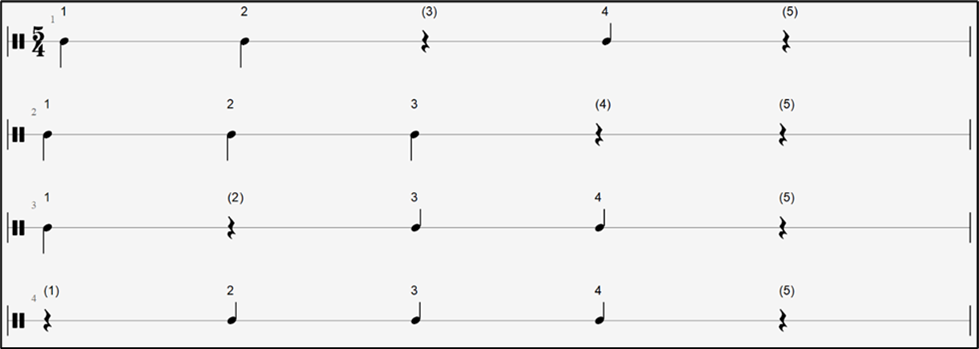
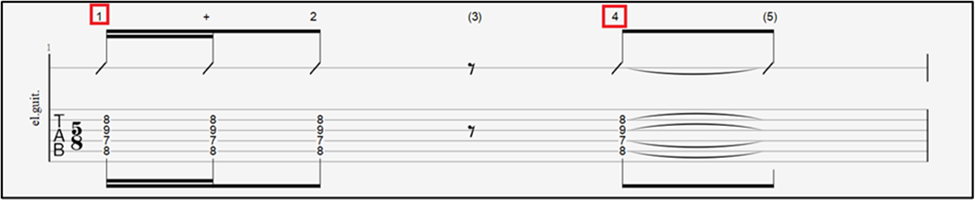
ma frock, let's try 54. And we're going to try and
accent different beats and 54. So for this first progression, we're going to accent beats
one and two and four. So that's going to
sound like this. Two, three, four,
five, two, three. And five, two, three, five, two, three, four, five. Now, what to get comfortable
with me doing that. 02, three, four, five,
two, three, five. Okay, let's do four, and then move to our
next chord. Five. Two, three, five,
two, three, three, five, two, three, five, two, three, three, five. Three, four, five,
two, three, four, five, four, five,
two, three, 45. And we move to our last shape. Three, four, five, two,
three, four, five, one, three, four, five, two, three, four, five. What we're going
to do now is put let's put some dead
space in between. So, for example, one, two, three, four, three, four, five, three, four, five. Five, three, five. Let's practice that again, four on each of these courts, four cycles, I should say. One, two, three, four, five, two, three, five. Three, five, two,
three, four, 53, four, five, three,
five, two, three, five. Two, three, four, five, three, four, five, one, three, four, five, one, two, three, four, five,
one, two, three, 45. Alright, good. Let's move on
to look at the minor shape, and you're always
more than welcome to rewind and just
play along with me there with that
strumming pan with those major chords as
many times as you want, and you need to move
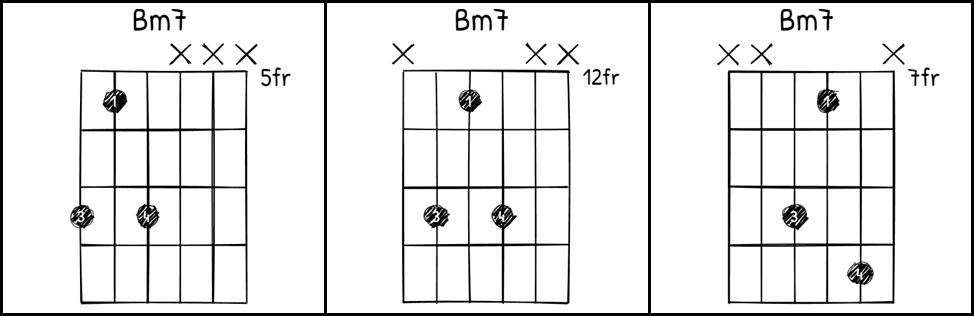
on to this next shape. So we're going to look at
the minus seven shape now. We're done major. Let's
look at the minor. And for this one, again, we're going to do the
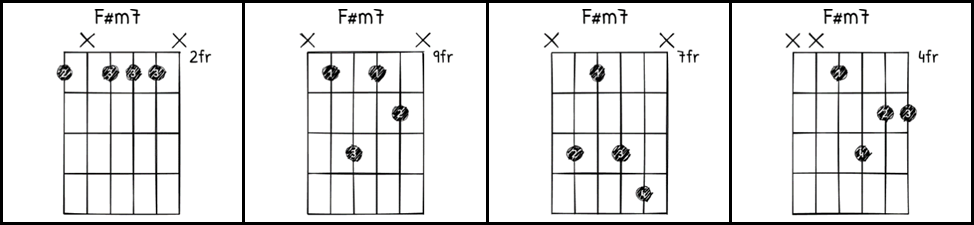
A in D. And we're going to start from the F
sharp on the second fret here. So for this chord
shape, if you're familiar with your
minor bar chord, It's actually quite it's a lot easier than
that, to be honest. You fingers go in
order of each other, so you have your index on the second on the
low E on the second. Your middle on the D string on the second fret on the G string here with your ring finger, second fret again, and then with the B string again on
the second fret there. Now again, if you're
feeling up to it, you can bar these three strings with your ring finger instead. So that's the minus
seven shape there. And we find the F sharp up here, and you're probably familiar
again with this bar shape. Here, we're going to remove our little finger and bar a cross with our
index finger instead. Let's remove that finger. You don't have to
play the e string. And that is your minor
seven variation here. And another variation that mapo guitarists use often
is this shape instead. Same chord has a
different flavor, right? And the reason is because you can play this minor
shape along with it. So this one starts with
your middle finger here. On the ninth fat, and then your index on the
seventh fret on the D string. Ring finger on the ninth. And then your little
finger on the string s and your little finger on the
B string on the tenth. And starting from the D string, going to come up here,
index on the fourth here, little finger on the sixth fret, and then your middle
on the fifth, and then your ring finger on the fifth as well on the string. So it might be a little tricky this one. But take your time. It will become familiar, obviously, the more
you practice this. Let's go for each one.
The alternative shape. And Alright. Now, let's practice
again with a strumming, well, an accent pattern, let's say, in 54. So for this one, let's
do a little bit simpler. Let's do one, two, three, and not play on the
four and the five. Okay. Let's try this out then, 52, three, four, five. 453, four, five, one, two, three, four,
five, two, four, five. Get that riml ing grain
into, two, three, four, five, two,
three, four, five. And then we'll start practicing moving between the core
shapes again. So you ready? One, two, three,
four, 53454, 545. T452, three, 45,
two, three, 4545. Please try the alternative. 45. Two, three, 45245. And the last one,
get that again. 02, 45. Two, four, five, five, four, five. So now let's try and practice
up four times around again, but we'll not put any gaps
in between the chords, and we'll play that
alternative 22345. Five, p two, three, four f. Two, three, four, five,
two, four, 52345. That's it three, four, five, one, two,
three, four, five. Got the alternative? I get the
cord 45, two, three, 4545. Last one. 3 454-545-4545. And let's practice this now
without learning it ring, but I want you to play dead notes like this for
the four and the five, k. So, for example, 4524,
five, four, five. Two, four, five. Okay. I think you can do it. So let's try this together. 02, three, four, five. Four, five, two. Five, four, five. Four, five. Two, three, four, five, two,
three, four, five. Two, four, five, four, five. Two, four, five, four, five, one, two, four. 42. 45. Four, five, 12, four, 542, four, five, 42, four, five, 42. Four, five. Really locking in here. F, great. Okay, let's move
on to look at the next. So our next variation
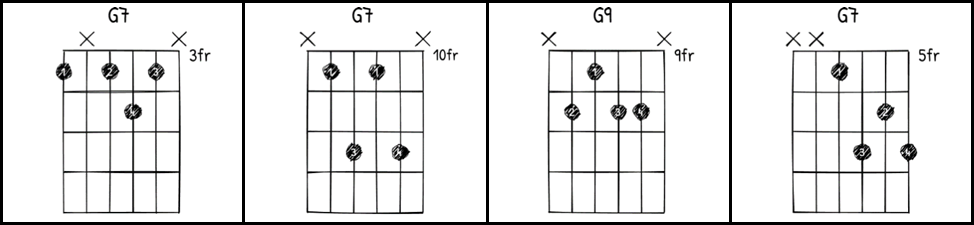
is a dominant or. These are very jazzy in nature. We're going to be going from
the G string on this one. It's like our
regular major chord, but we're going to do instead of this going to bring
in the seventh here. So the fingering for this one, very similar to the minor chord, but we're going to bring
up this note here. And to finger this one, we can go index on the third
front here on the string, middle on the third front here, our little finger on the
fourth ft on the G string, and our ring finger on
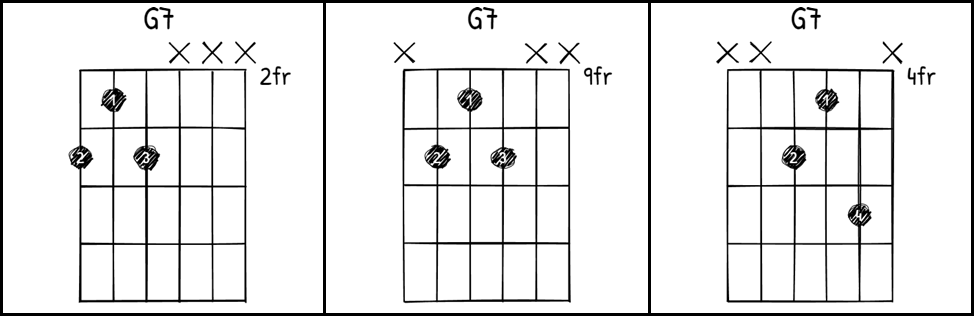
the B string there. And then the G down here, For this one, it's very much
like the Major seven shape. But you already
learned. But this sevens going to flatten, so you're going to bar it
instead across like that. It's a little tricky at first. I must admit to get the strength here with this
finger with your index. An alternative that
guitarists will use is called a
dominant nine instead, which is a bit easier to finger. Middle index ring
and little finger. 109, 1010. It just offers a little
bit of a different flavor, and it's a bit easier to play. Going from the D
string, Agena up here, and a wonderful fing is here. It's actually that same
shape as you know, the major seven shape, but
just played from the Dan. So you're already
familiar with that shape. So that makes things
a lot easier. Here's the chord one
after the other. The variation. And let's again, practice
them with a 54 pattern. This time, let's do a variation
on that first pattern. Let's do one accent beats one, three, and four instead. All right. So here's
an example of how that's going to
sound, F four, five. 245. 45s. 451 2345. So familiar with that, let's do four cycles on each
of these chords, including that variation,
the nine chord. Four, five, four, 545-234-5345, one, two, 345, 345-555-5454, five. Four, five. Yeah, I can keep going there, but you get the gifts, and let's practice
that again as well, but we'll put the
stops in between. Four, 524, five, 25, two, 345. 554, five, three, four, five, three, four, five. Five, three, four, five, f two, four, five, 12, four, five, two, three, four, five, four, five, 22, four, five, 94, five, f 555. So moving on to our last
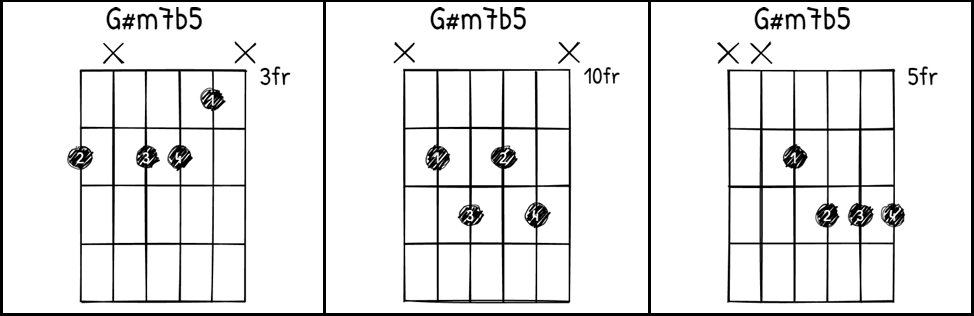
extension for the seven courts, this is going to be a
minus seven flat five, so it's basically a
half diminished court, and they have this kind of,
like, attention to them. Very dark sounding. And they need to be well, they sound like they want
to be released, right? In Maproc, they do occur, and one way that is often used this day have thrown
either a semitone up, so one threat up or one threat below a chord that
you are using. So, for example, if I was
playing this major chord here. I would throw in this that diminished chord
there the half one. Or I could go the other way. I just add this unexpected bit of coloring to a
cor progression, so you could move chromatically. And again, let's learn these shapes on the E
eight and the D string. So starting this
one, we're going to go G sharp, which
is the fourth fret. And it's kind of like
your minus seven shape, but these fingers here
are shifted up this way, and your middle finger
jumps over the A string. So you've got four fret
with your middle finger. And then you've got four ft with your ring
finger on the string, and then G string with
your little finger. And then your index is going
to be on the third fret here on the B string. Okay And the good news, our G shot one,
like we've noticed, is very similar to the
Major seven shape. We'll just bring our index
finger up one threat. And then we go. And then for from the D string as well,
it's relatively easy. Again, it's like that major
seven shape, but guess what? Comes up a fret again. You can finger that one
like this in a row. It's really easily done. Or you could use your
ring finger to it again. So, that. And for maximum coverage. Let's practice one last time. B do 54. But this time,
let's not accent the one. Let's make it a little
bit more tricky. It would do two beats
two, three, and four. So I'm not going
to be playing on the one and a five for this one. Okay. So let's get
that first shape. So be like this one, two, five, one, 21, two, one. Five. Now are you
familiar with that. Let's try shifting
four cycles on each of them. One, two, three. 51. 5151. F one. 51. 51. 51. F one. 51. 51. 51. There we go. Let's try that
as well without letting it ring 234 5151. Five. F one. One. Five, one. 51. 51. 51. 512 I got
carried away there. Five, one, one. T five. One. And again, I just went all
the way through there, but you get the gist. That's the pattern I would
like you to practice. So if you have got a
metroon, set it to five and just try and do Well, you don't have to do just
that strumming pattern, of course, but it's one that
we can practice together, just to become familiar with
moving between these shapes.
4. Extended 7 Shell Chord Voicings and Practice: Moving on, another type of seven cord that is commonly used in math rock and associated styles is something called
a shell voicing. This means we take a cord and we use just the necessary notes, minimal amount of
notes we can use to make that cord sound
like the cord. It should be. Put simply, we're stripping away
notes to just leave the bare bones the shell
of that cord shape. They sound great with
a bit of gain applied. There's some good news.
These cord shapes are a lot easier to finger because we only have three notes per cord. And a lot of the shapes, as we move them across
the different strings, they follow a similar
pattern, too. So it makes them just so
much more easier to learn. And that's I think
why they're so attractive just to start using, you know, from now
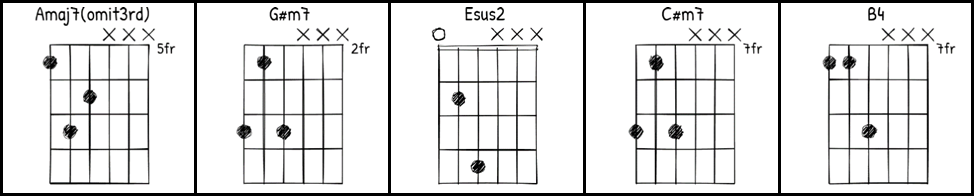
on, basically. Going back to A, the A major seven shell voicing middle finger
on the a string, sorry, on the string
on the fifth threat. Your index on the fourth
threat on the A string, and your little finger here on the six threat on the D string. And you could use your
ring finger here instead. But there's a reason
why I like to use my little finger instep
because play the A there. Same shape here.
From the 12 that. Same fingering as well. But when we come
to the D string, because of this B string, we have to move it up one to stop it being a dominant
chord into a major chord. And that's a bit of
a hard stretch to use to use your
ring finger there, so that's why I'd
like to just keep the fingering the same
for each one of those. Let's practice moving
between these shapes. Because these core shapes
are a little bit easier, let's practice a
shorter time signature. Let's go 34, and we're going
to try and just play on the beat one of every chord
at the beginning. On. 31. And we can staccato
it like that or we can strum it like that, by. I like this kind of
marching forward sound. And let's practice
move into the as cord. F 01, three. One. One. In the last one. And another thing I'd like it to practice is a triplet rhythm. I Pegating these cores
instead, if you're up for it. So I'll show you what
this looks like, one, two, three, one, two,
three, one, two, three. So every down beat you go
to hit that E string with the A mam. The try this one out. If you can't play it like I am the man instead,
do it like this. Hold the core shape
and pick over the strings and up down
alternate pattern. And then we'll s e. D D D. In that way, it's great to get used to
this string skipping pedio, which again is a great potential
of these shell voicings. So moving on to the minor variations for
these shell voicings. Again, we've got quite
similar patterns repeated across the fret board. We'll go B minor for this one. And this goes seventh fret
here with your ring finger. And then your index finger on the fifth fret
on the A string, and then your little finger on the D string on
the seventh fret. That's a sound you're
gonna get there. If we move B down here. Same fingering again, from the
14th fret on the A string. And this is where it
changes a little here. Because of the B
string. Same fingering, but just slide your little
finger at one fret. And then you get maximum coverage over the
strings that way. And again, let's do that
triple rhythm practice. One, two, one, two, When you're comfortable? Practice moving to
the next board. Let's move again. Try it fast. Alright, great. Making
great progress here. So let's try that triple
peggio pattern again to free. Triple T trip trip trip. Again, if you can't
play it this way, let's let all other strings ring this way. Nothing
wrong with that. And then when
you're ready again, you can practice giving strings. A b. Moving on, we've got our
dominant core voicing. For this one, we'll do G. So it's very much
like your major, but this seven, it's going to be flattened to get
that dominant sound. So middle on the third fret, your index next on
the second fret, and then your ring finger on the third again on the string. Again, this is a
good movable shape. And of course,
again, when we come to you have to slide that
one fret for the B string. So? Of course, let's practice
that with our 34 rhythm. T one, two, 31. O. O. Last one. T. Let's move. Let's move again. Let's back toe that trip that
trip it rhythm. Alright. Excellent. So there is no minus seven flat
five shell voicing. That fits into this free
finger fingering anyway, because because of
the minus seven flat five has four notes in it. Instead it has the root the flat third flat fifth
and a flat seventh as well. So there's no way to really make that as
a free note voicing, because you're just
going to end up with the the minus seven. So you could just use that minus seven shape in its place and not have to worry about it at all when using shell voicing.
5. Extended 9 Chords and Practice: For the last of commonly
used chords in MFroc, in stator tuning, we have
extended nine chords. So we're going to add
another note to our chord. And they just add this bit more flare to them than the
major seven counterparts, and the major nine chord is personally one of
my favorite chords. And for this one, we're
just going to look at major nine and minor
nine variations. So again, we'll start
with the A string here, we're going to have A Major nine, which is played like this. And that's going to
be you have to bar, but you start off
on the E string here on the fifth ft
with your middle finger. Then you're going to bar
the free strings here, the fourth ft with the AD and the G strings
with your index finger. Then you're going to bring
your little finger down here. It's a little bit tricky on the six frot here to
put the major seven in. That's a lovely
little cord there. Then for the variation start
from the A string here, you're going to start again
with your middle finger, and that's going to be
on the 12 foot here. Then you're followed by your
index finger, on the 11th, then your little finger
on the 13th on G string, sorry, and then your ring finger on the 12th
ft on the B string. It's a little tricky to finger. Now for the last one
again from the A, so again it's this shape, but we're going to move up
because of the B string. We're going to bring
up our little finger. It's the same fingering. So that one's a little bit
tricky because of the stretch. The lovely called that one. And for this one, we're
going to go to 68, and we're going to practice this This nice rhythm that
you can use in 68 time. It's going to sound
like this for 56 try that one with you. This A D. W comfortable. M to the A st. I say again. That
little tricky stretch. I it's easier for
you. Can let it rain. M56. That might be easier for you. Ops. And moving on to the
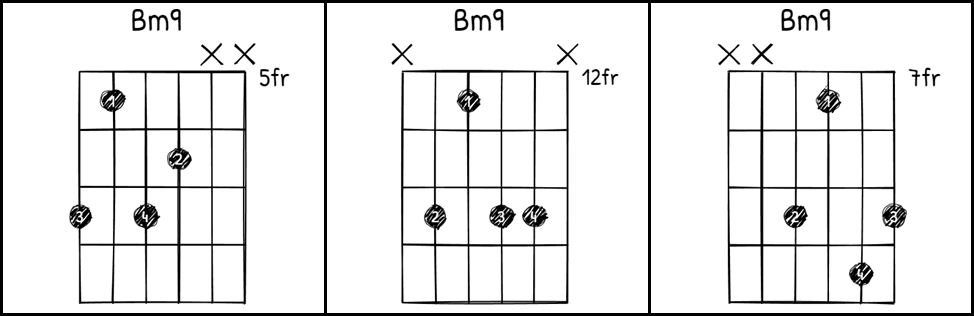
minor nine variation, we're going to do
B for this one. And I love this or.
Sounds like that. And we're going to start from the seventh threat here with our ring finger
on the string. Then I'll index on the
fifth fret on the A string. Then our little
finger down here. So it's like that shell voicing. I should put it that
way. It's a lot easier. But we're going to
add this note here on the sixth threat with
our middle finger. It might be a little
tricky to finger at first, but persevere, 'cause it's
a wonderful sounding shape. And then good news is it's
quite easier down here. So if it goes to B, you're gonna have to move your
finger shapes a little bit. Sorry, position your fingers a little bit different
for this shape, but it's relatively easy. Middle finger on the 14th, 12th on the D string
with your index finger, and then f for the G and the B string with your
ring and little finger. And for the last one, again, this one can be
a little bit tricky. So for B. Because of
this B string side. It's almost the
same shape right. It's definitely a bit easier than the major counterpart
that we looked at. Fun. Okay, so again, let's
just go through those. So from the string. A string. And lastly, the D
string like that. And let's practice that
with that 68 rhythm. One, two, three, four, five, six. It's lovely, that one. Has a lot of ambition
to a core, right? Imagine that of a nice bit
again. It comfortable. Move it down to the a string. Completion with the D stream. All right, a lot for you to unpack a learn in this section. I have included a
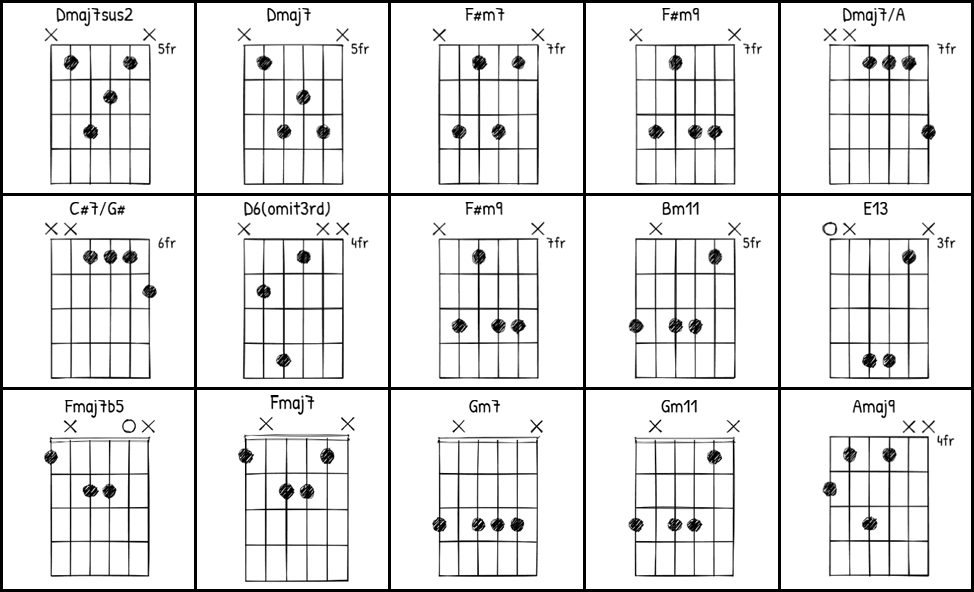
handy cord chart down below with all the
chords for you to reference. So I do suggest go through them one more time, get
familiar with them. When you're feeling comfortable, you can start to jump
into the next section. And in the next section,
you're going to see these cords in
action by learning some popular progressions from math rock songs. See you there.
6. Part 2: Essential Chord Progressions and Strumming Patterns for Math Rock & Midwest Emo Introduction: Now you are becoming
familiar with the basics of maproc chords. You've looked at some
core progressions. It's time to move on to the last segment of this workshop, where you will learn some
functional core progressions that you can put into action. By functional, I mean they can serve a purpose
within the song. These core progressions
are already situated in some kind of idea. For example, I might say this
kind of core progression. Is more suited to being a
chorus section of a song. Nevertheless, I just want to make it explicitly clear that these corp aggressions
can be indeed used in other functions
for other songs. I do encourage you
to use them and experiment with them
in your own ways. Also, it's common
for MFra guitarist, Midwest ma guitarists, and styles that are
associated with it. Not just to strum corp
aggressions, they will peg ideas or perhaps they combine them with
some other techniques, they might embellish chords, adding or taking away notes. I just want to say
there's more to it than just drumming chords. However, like in
any guitar journey, and in my experience,
it's better just to take things one
step at a time. Therefore, let's
just concentrate on strumming patterns for
now, and then later on, you can start to look at the different
techniques you can use and the different ways that
you can use these chords. Hey, who knows, by the
time you're watching this, there might be a workshop that's already dedicated to that. These coord progressions
are all titonic, meaning they all
stick within one key. This makes it much
easier for us, and it's a great
logical starting point. To clarify, let's say
we're in a key of C major. Can build certain chords from
each degree of this scale, and we have major minor
or diminished chords. The one, four and five are
considered major chords. We can build major chords
from those scale degrees, and from the 23 and the six, we can build minor chords. For the seventh, that's going
to be a diminished chord. Musicians often refer to these chords with
Roman numerals, and that's exactly what we
will do for this section. Take a look at three
functional core progressions. For each one, I'm
going to give you two variations of strumming
patterns that you can use, giving you more to use
and demonstrating how changing the
strumming pattern can radically change the feel
of a core progression. I ask that you grab your
guitar and let's strum a log.
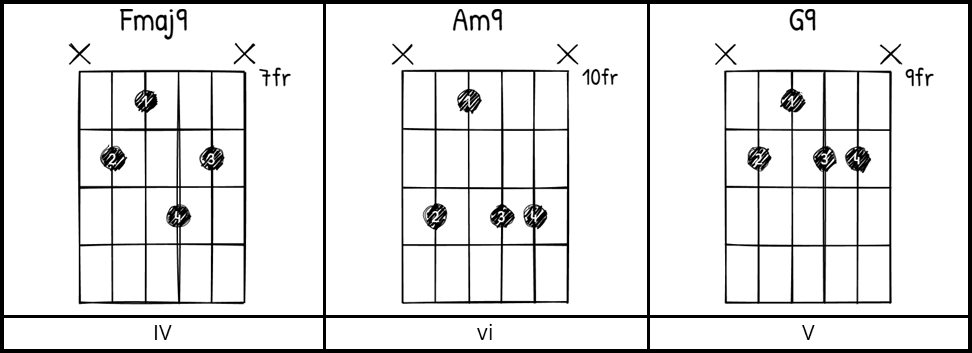
7. Functional Chord Progression & Strumming Patterns 1: For the first re progression, we're going to stick
to the same string just to make things
a bit easier. And for this one, we have
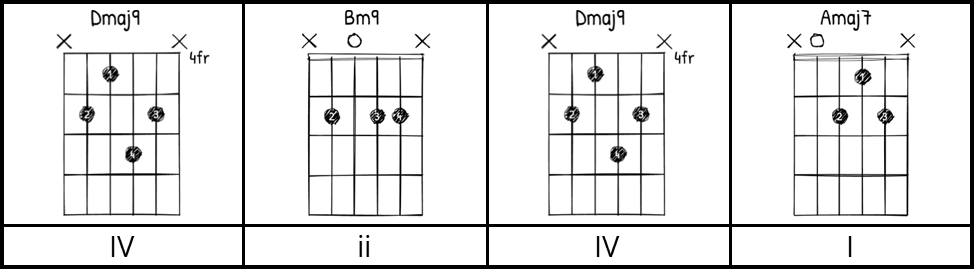
a 4241 core progression, and these are the cords
that we're going to use. For the four, we're going
to use this D major nine for the two, a B minor nine, and
then back to the four, that D major nine, and then
to our one and A major seven. And this core progression really reminds me of
the bands good game. I guess they have
this progression in some of their songs, and it also reminds me of, like, kind of upbeat kind of Midwest Emo song
sections, too. So with that in mind, our
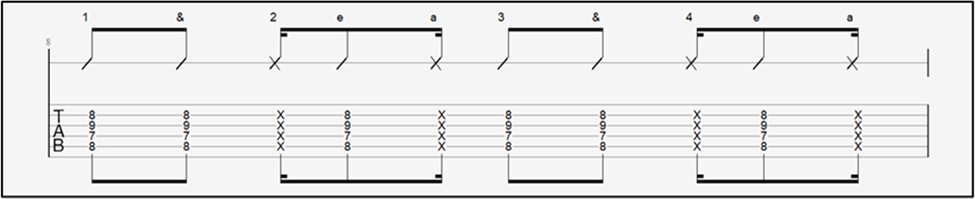
first strumming pattern for this functional core progression is quite upbeat in nature. We're going to be at 80
BPM on the Metro name, and we're going to be in
44 time for this one. So let me demonstrate
that for you with this four called the
d92, three, four. So the key to this one
is getting me off. Try and strum along. And now, let's practice
this four times round, if I can keep cout, and we're practice moving
between the core progression. And we're gonna do two cycles on each chord, I
think with this one. So, one, two, three, four. Let's move. Okay,
back to the for. Now, the one. Okay,
one more time. A Excellent. Hope you get in the
hang of that one. So let's try that again. But
this time, on the offbeats, I want you to put you know,
dead space like that. So the idea here is, as you hit the cord, release
the pressure off the cord. Like that. So that's
gonna sound like this, if I give you an example. One, two, three, four. Okay, let's try
that one together. Two, three, four Alright. Excellent. One thing
I forgot to say was, if you're trying to mite
this into the low e string, I tend to use my thumb or the underside of my
middle finger to do that. And to stop this high e ringing, then that's been taken care with the underside of
my index finger. But I am aiming just to hit these four strings in between here from the A to the B string. Nick in here, if we speed
that core progression up how it starts to become
quite energetic, right? Okay, let's move on
to the next one. For our next drawing pattern, we are moving to 34 times, so it's going to
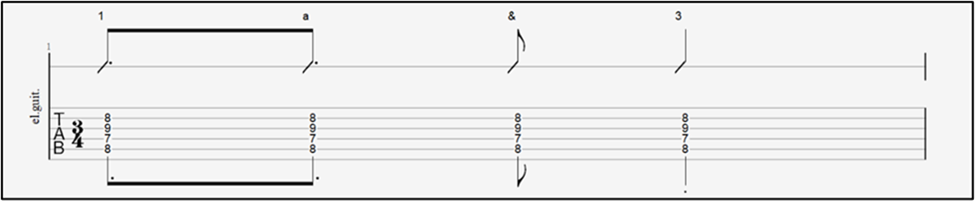
feel a bit shorter. And for this drawing pattern,
we're going to accent the first and the third beats
in the progression. And that sounds like
this. We're using the same core progression again. One, two, three. The key to this one is making
sure we cut that last one. That last beat is going to be staccato again, so cut short, so we can do like that, if you want to
practice, and just take the pressure off the cord. You can also, as
you can see here, I'm using the underside of my
palm here to mute as well. So let's practice this one,
then going through all of our core progression
to free one, two free. One more time. I keep talking in time with the, of the strumming pattern. So, again, you can imagine
if you speed that one up, as like More of agree to it. So let's move on to our next
functional progression.
8. Functional Chord Progression & Strumming Patterns 2: So for our second functional
core progression, we have a 465 progression. And in my experience,
it has this kind of very mathy kind of
pop feel to it. And you hear this
progression a lot in mid to late 2000
British math rock. Used by a lot of British math
rock bands, I should say. And the chords we're going
to use for this one are an F major nine, and A minus nine. And now we're going
to use a dominant for the fifth. We're
going to use G nine. And we're going to stick to the same string again for this one, starting from the A string. So for our first functional
strumming pattern with this functional
core progression, we're going to go for
a very upbeat field. This strumming pattern
is inspired by the song, Bird House by the band,
tiny moving parts. It can be a little
tricky at first, but persevere because it
feels great once you nail it. So we're play it again
at a slower speed. And this one, we are
back to four, four time. One, two, three, four. So, this one can be
a little bit tricky because of the dead notes in
between with this rhythm. The key to nailing this one is keeping it as
clean as possible. So as you release
pressure on the cord, you can hit those dead
notes more accurately. And again, you can
use your firm here or the underside of your
middle finger to meet the low and the underside of one fing finger here to
get that high string. We want to nail it and
speed it up like that. It's a very upbeat and real cool strumming pattern
that you can use. So, let's practice
this together, and we'll practice moving
between the three shapes. M one, two, three, four. St stop stop the S S So So moving on to our second
functional stroing pattern, we're going to go to use
some shell cords instead. We're going to keep the same
progression of course day, but we're going to
use these instead. And we're going to apply
a straing pattern, and we're going to change
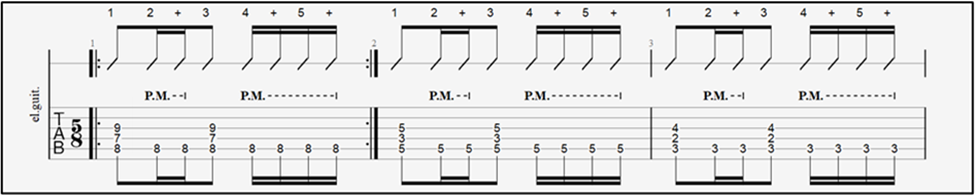
to 54 for this one. And this patterns
go to accent beats one and three with p
muting in between. One, two, three, four, five. B. Two f, one, two, four. Two, and 34 and five, and one, two and
three, four and five, and one, two, and three, four and five, and one, two, and three, four and five. So that's going to be
the count for it there. So let's practice moving between those three chord shapes. And remember, we're using
shell voicings here, and we're just going to
pal mute that string, the top, the lowest
note of each chord. One, two, three, four, five. D. D. D. D, D. D. O. Could be a little
tricky that one, but it's a awesome
picking pattern. 24 and 500. 24 and 500. 24 and 500. And it gives you something
to play in 54 as well.
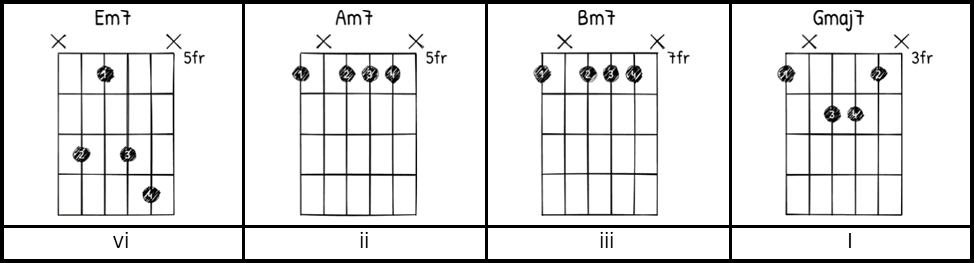
9. Functional Chord Progression & Strumming Patterns 3: Let's move on to our last
functional chord progression. This one's a bit
more moody because we're going to start
on a minor chord. For this one, it's
going to be a six, two, three, one progression. That sounds like this. We use that alternative
shape on the E here, so we've got an e minus seven. We're going to go a minus seven, so this one we're
actually going to move to different
strings as well. B minus seven, and
then a G major seven. This one sounding
quite jazzy in ate, which is completely fine if that's what you
want in your song. But again, I'll show
you a couple of different strumming patterns
and different ways we can use this to make it a sound a little bit more
MF rock in style. We will continue to
use 54 for this one, but we are going to use shell
chord voicings instead. So we're going to change to
an e minus seven shell voice. A minus seven, sorry. B minus seven and
a G major seven. And instead of strumming
it all the time, we're going to practice
accenting beats one and four, and we're going to put a
picking pattern for beat one, and there's going to be
a bit more of a gap. So this is going to really
work on your timing to get this correct playing on each of these beats
correctly, sorry. So let me give you an example. One, two, three, four, five. Can leave it ringing
like that, too. I like the sudden stab, the dramatic dramaticn of it, if that's a word. Pick
and pan for this one. I recommend down down. For all of them. So, let's try this all the
way for the progression. One, two, three, four, five. D. D D. D. D. D Yeah, you can imagine how that
would fit in a song, and you could slow it down even more if you wanted
to a speed a per. We go play. For a nice dramatic
effect like that. So, for our last functional
strumming pattern in the same chord progression, we're going back to f four. We're going to 100
BPM for this one, and we're going to use those
full sized chords as well. And this is how that
progression sounds. One, two, three. I like to play it with, space in between the strums,
one, two, three. Try this one. Alright, there's one
alternative to this, as well. If we change back
to shell voicings. Let's our peg. In this pattern, S's so. First two notes of the chord. No back to the first one. And string skip to the last one. You can't. Define the notes in
that manner, then. Just colick it. Let them
bleed into each other. One, two, three T. So let's practice this together. One, two, three. I. D, D. D, D D D But you can imagine the faster
you speed that up you get. This noise grief. Multiple so parts. Just go da. Nice. Alright, so there's a number of functional
core progressions and functional stroing patterns
that you can take away and use as initial song
sparking ideas. Like I said, that was my
hope for this section. You've got all of
these new ideas, jumble around in your brain,
and hopefully they're gonna come out in
your own songwriting. As with previous sections, I'll leave some handy
materials down below, so you can look at the
core progressions and the sting patterns that we
look covered in this section.
10. Part 3: Real Math Rock & Midwest Emo Chord Progressions for Newbies (Introduction): Now that you are becoming
familiar with some of the commonly used
chords in MFroc, the next logical step is to start learning these
chords in application. To do this, we're going to learn some songs that
contain these chords. The following examples cover a range of mafroc style
songs, let's say, and they contain some of the chords that
we've been learning, but they do contain other chords that we haven't looked at yet. A few reasons why I
didn't teach some of the unfamiliar
chords that you're going to see in these examples. One being that they are
quite unique to that track, perhaps they're not used again really in any other MFR track. Another reason is
they could just be subtle variations of the chords
that we learned already. The third reason is well, I
don't want to overwhelm you by just giving you a chord book and asking you to
learn them all. However, if any of these
chords grab your attention, then I suggest that you
take them and get them into your own core
vocabulary and start experimenting with them
within your own song ideas. Video below to see
the song along with the core progression and me playing the guitar along to it. You're going to see
all of this in action. I've listed the songs
in order of what I think is easier to
more difficult. Again, this is just to help you self assess where
you currently are, and if you can work your way
through easy to difficult, then you can see your
progress as you go along. How fun with this one?
In the next section, we're going to look
at how we can put these chords into further
action by teaching you some functional core
progressions along with some useful functional
strumming patterns. Good look, and I'll
see you there.
11. Gulfer - Heatwave (Easy): Oh. D D
12. tricot - POOL (Intermediate): Pen five s. Aura. Sura. Sura Surya. The the ppp the p p the the
13. CHON - Sleepy Tea (Difficult): H. H. O. O.
 Let's Talk About Math Rock, School of Math Rock