Transcripts
1. Promo Video: Do you want to learn
how to improvise and know the fret board, or do you want to play
with other people over any core progressions
and know where to go? In this course, you can do that. This course, which is
an incredible 6 hours of video lessons, over 200 exercises, and 20 backing tracks will help you to learn
how to improvise. At first, we are going to learn the C major scale through
music theory lessons, minor six, Major six, minor seven, and major seven. Musical exercises, which will help you to master the moods and the positions Improvisation techniques and exciting backing tracks. After we will have a
look at other keys, so you will have
more opportunity to improvise over
other progressions. And finally, we will have a look at what you can do
in a key change. Sign up for my course and
improvise from today.
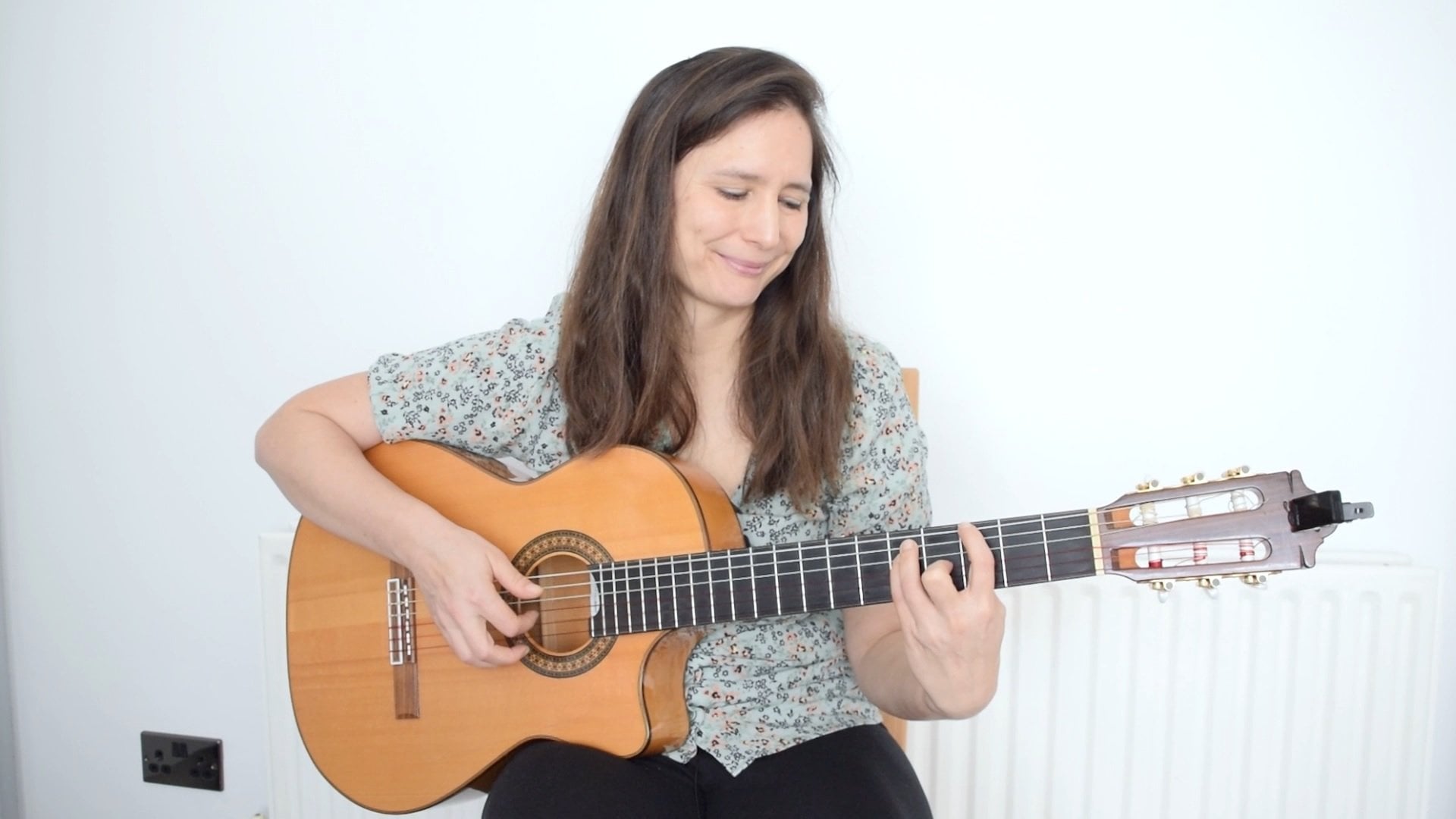
2. 1. Introduction: Hi. My name is Adina, and thank you so much for
signing up for my course. In this course, we
are going to learn the major scale and
improvisation techniques. At first, we will look
at the C major scale and all the modes positions
with different exercises, and they are available in PDF and guitar pro
format as well, and a lot of different
backing tracks. Then we will go and look at other keys as well and how
to deal with the key change. If you ever decide
to record one of your improvisations over
one of my backing tracks, please feel free to share it with me because I would
love to have a listen. Enjoy this course
and keep jamming.
3. 2. Technique: Before we start with the scales, it is important to
know how to play them. And there are two
methods to play them, and one is with a
pick or a plectrum. And when you play with
a pick or a plectrum, you do an alternate picking, which means you play from the top and after
from the bottom. Also try not to touch the guitar body when
you are playing with the pick because you need
more free movements, and then you can
go faster as well. Although, I'm going to play everything with fingers
because I'm more comfortable, but you can do the whole
course with a pltroom, if you wish to
because it will be exactly the same knowledge,
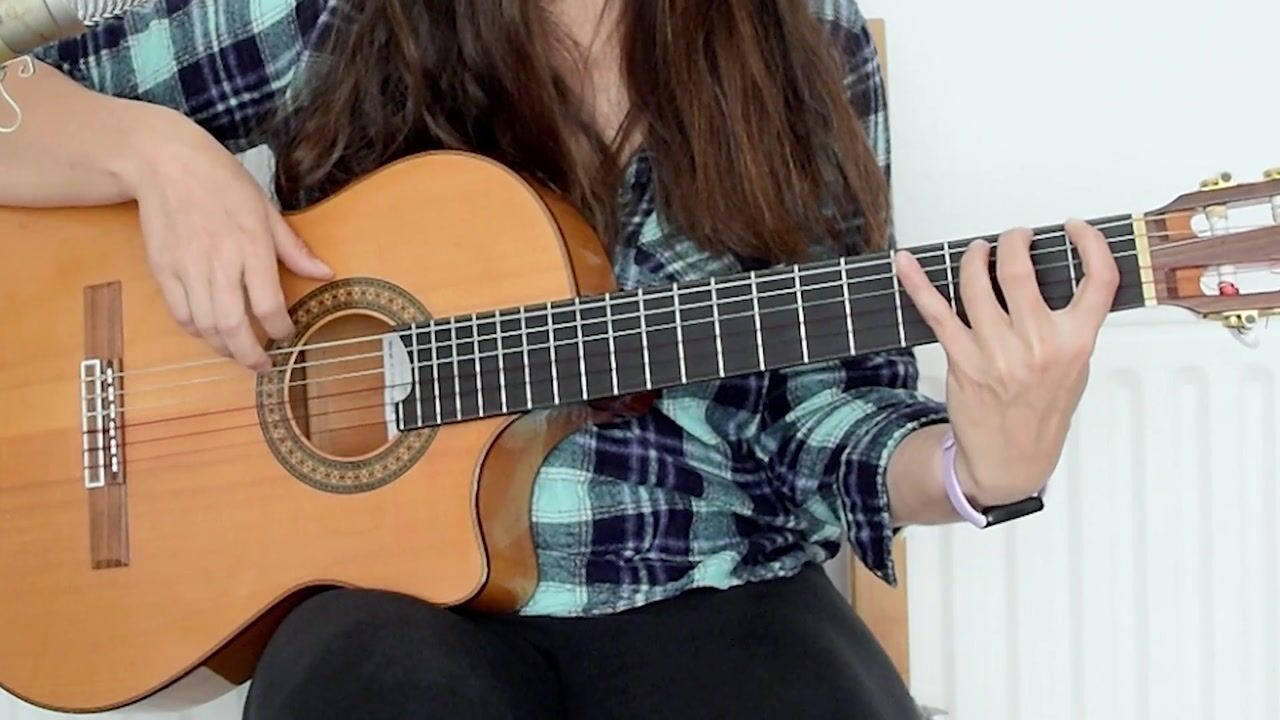
but different technique. When you play with fingers, you can play it with picado. Picado is an alternate picking between the index
and middle finger, and you are pulling up your
finger to the next string. You are always alternating with the index and
middle finger, and when you start
to go upwards, it is important to stay in
the same position so you can just lift up the whole
arm to keep the position. So it will look like this. Your thumb can be
on the east string, but once you start going upward, then you can use the
guitar body for a support, and then you can just
push the thumb onto the guitar board and
pull the whole hand up. When you play with picado, it is important to do the
movements from the bottom. So you can be faster
and it won't be so like when you just move
one part of your finger. Now I'm going to show you a few exercises to practice
the alternate picking. This exercise is called three
note per string exercise, and everybody is doing them. All the guitarists that I know, all the guitarists that
I ever played with. It is a speed exercise, and some people can do
this really, really fast. The exercise will be
that you play with your left hand index
middle and ring finger, and then you go to
the next string. So you play three
notes per string. You play three notes per string because you want to
switch all ways with a different finger or a
different way with the plectrum. So that's why when
you play three nodes, then you always use the next finger to
play the next string. So if you start with the
index, it will be index, middle index middle
index, middle. And then again,
index middle index. When you're going down,
you are going forward. Once you are in the bottom, you push everything up and
you start to go backwards. You can do this exercise
going all the way up on the fretboard or you can just
go backwards after a while. So once you are here, You can do few things to practice the switch because that's the most important thing. You need to make
sure that you are always doing an
alternate picking. So to practice the
switch between positions and going
forwards and backwards, you can practice it
only on two strings. So you can do this exercise. So only on the
bottom two strings, or you can do exactly
the same exercise on the base two strings. This can be quite difficult if you are not used to playing
and alternate picking. But it's very important to train your fingers for
alternate picking. Otherwise, it will be very
difficult to go fast later on. Before we put on the metronome
and play this exercise, we need to do few things
to reduce the movements. On the left hand, when you play, don't lift up after you play, which means you play
with the index and stay and then middle
finger and you stay. Many people play like this. This is wrong, and you add
too much extra movements. So the best is just to stay once you played and do you move
when you need to move. When you are going upwards, you can do reduce
movement exercise. So instead of moving one by one, you can move together with
the ring and middle finger, and then it will reduce the movements that you
do on your left hand. This will take a little
time to get used to, but it will really
improve your speed. Now, let's play this with
the matronom, at 100 bpm. One e per beat and let's
see how does it sound. Once you are comfortable with these and you can
follow the metronom, you can switch to three
nodes per beat exercises. So you will have less clicks, but you need to
play three notes. Let's try to do this at 6:00 P.M. You can also count to
sp, so it will be like this. O, two, three, one, two, three, one, two, three,
one, two, three. To sound good in improvisation, it is important to
push the speed up, and you should be
at least 130 BPM. But some people can do this super super fast, like 200 BPM. So I will show you how
it sounds at 100 and m. This speed is not going
to happen overnight, and it will be quite
hard at the beginning. So I recommend that you
try to find your speed, and once you found your speed, you try to work it to go faster. So if your speed is 80 BPM, then try to practice it at that speed for a while and then try to push it up
a little bit more like 90 BPM and try to keep up. There are a few tricks
that you can do. For example, try
to go to 90 BPM. I your speed is 80 BPM, even if you cannot do it
and try to follow it. And even if you cannot do
it, it doesn't matter. But once you go back to 80 BPM, it will be a little bit
easier because you were pushing it so hard to
try to follow 90 BPM. So, for example, I can put
my speed up to 150 BPM, and then it means that I
will be better at 140 bm. So this is quite, you know, challenging at this
speed, and even for me. So that's why I need to do quite a lot of exercise
to get to this one. But now, when I try at 140
bm, it will be easier. You can do another exercise
for the alternate picking, which is very
similar to this one, but now we are going to
different directions. So instead of going forward, at the beginning, we
are going backwards. So it will look like this. And once we go to the next
f, then we go forward. These two exercises
are quite important. So I recommend to practice
this every day or whenever you start to play
the guitar, at least five, 10 minutes before you
go on to the scales, it will help you to
train your brain for alternate picking exercise and also to train your
fingers to faster. Now, let's go on to some other exercises to
practice the alternate picking. H
4. 3. Alternate Picking Exercises: Let's have a look other
alternate picking exercises, which will help or technique, and it will involve
some string changing. One way to do that one, you can hold third, which means that you play two nodes in a third
apart in a scale. We will go into that later on. But in this case, we can just hold
the seventh fret of the E string and the eight
fret of the B string, and then we can play three nodes on a way that
we will start with E BE. T. Let's do the same
exercise with the metronome. It is at 60 b pm, and we will play
three notes per bit. One, two, three, one, two, three, one, two, three,
one, two, three. We can play certs as well on a way that we will go
down in the fret board, and we will just add different type of certs
and after we go back up. So this exercise will look
like this, and of course, the tabs are available, so you can download them
and have a look at them. Now, let's do the same
thing with the metronome. The second exercise
will be quite similar, but we add some melodies
inside as well with the certs.
5. 4. Playing with the Thumb: Another technique
that you can use for improvisation and it is
playing with the tub. You can use two technique
to play with the tub. One is ending up freely and
just plucking the strings. The other one is called
pull gar when you end up on the next string on a
way that you pull it down. Both technique is going to work, but I prefer the second one because it has a stronger sound. Usually, when you play
with the tum also, you are only playing the
top three base strings. But you can also use the picado or the platform on any
of the other strings, but with the um, you have a
little bit different sound. Let's do an exercise on this, and we will do a string
skipping exercise, which means that we will play the E string and the D string
and the E string again. You can hold any barry position, but don't hold the full
barry on the e shape, and then we will play B You can also do the string
notes per beat exercises, but only do it
until the D string. So let's see how
does that sound. Now, let's do again, the
string string exercise, but this time did they go
to the other direction. D d d d d d Playing with the
Tum can be quite exhausting because you are
not switching fingers. So that's why it
is better to play with picado instead of the tup or when you are
playing with the tom, it's good to add some
her and pull off. And in your next lesson, we will have a look at
those techniques. T
6. 5. Hammer-on, Pull-off, Slide and Vibrato: Tremendously improve
your sound when you are improvising when you use some
other techniques as well. For example, you
can do hammer on, pull off, slides, and vibratos. Hammer on is when you
play one note with the right hand and you add a second note with
another finger. With pull off, you
can do the same, so you will play
one note and you add the second note
with another finger. To make pull off sound good, it's good that your finger is already there where you
need to do the pull off, and you literally pull the
string down and release it. Lot of people do pull off on a way that it's like
a backward hammer on, and this is wrong.
So it's like this. The sound won't be
as strong as when you literally pull it off
to the second string. Now let's do a few exercises
on hammer on and pull off. The first exercise we'll be playing on the C
major scale nodes, and we will play
on the B string, and it sounds like this. The second exercise will be
on the C major scale again, and we will use the first mode, which is the e region. We will learn this later on, and we will do four
notes per beat exercise. And we will do four notes, and then we go to the
second step of the scale, and then we do four notes again. And again, we can do the same thing going
down with merons. The next technique that we
are learning is called slide, which means that you play one node and you slide
it to another node. You can slide it backwards
and forward as well. So let's do an exercise on this. The next technique that we're
going to learn is vibrato, vibrato is elongating a
note on a way that we are sliding either sideways or
up and down very quickly. If you're playing
an acoustic guitar, it is used more when
you slide up and down, but on an lon string
guitar slide sideways.
7. 6. Music Theory: Before we go onto the
next part of our course, we need to learn
some music theory. What is a scale? A scale is a sequence of nodes. For example, a C major
scale sounds like this. In the end, I played an octave, and I played C EFG
AB and C again. What is a chord? A chord when you play two
or more nodes together. For example, a C major
chord, sounds like this. What is an arpedo? An pedo is when you
play on the scale, the first, third and fifth node, we also have seventh arpgos
when you play the first, the third, the fifth, and the seventh
node of the scale. A C major arpgo
sounds like this. And a C major seven
pago sounds like this. How many nodes a
scare consist of? There are different
types of scares and different type of scares
have different nodes. For example, I'm pretty sure that you heard about
the pentatonic scale. Pentatonic means
that it consist of five nodes and the blue
scale is pentatonic. But what we are
going to learn here in this course is a
heptatonic scale, which means that it has
seven different nodes. Let's have a look at
the C major scale. So it consists of C d E F g ab, and the eight node
will be the C, but it is one octave higher, and that's where it will repeat, and it will be in a higher tone. What is an interval? Interval is a distance
between nodes. It is very important when you are learning about
improvisation and scales because an interval can signal if the scale
is major or minor, and it is also great
when you make up different courts because they always have the same intervals. That's why some courts always sound the same
even though they are in different keys because they all have the
same intervals. It's the same with the scales. Some scales sounds very
similar or they are similar. Because they have
the same intervals, but they are in different keys. To really understand the
intervalic at first, we need to understand the
sequence of the nodes. Now, let's have a look at the
sequence of the nodes from the C because we are learning
the C major scale first. We have 12 nodes on the guitar, and these 12 nodes
from the C will be C C sharp, D, D sharp. E F F sharp, G G sharp A B flat B. Some nodes can be
called sharps or flats, it depends on the context, but for now, we are just
going to use this sequence. Let's match it with
the intervals. Every cord and scale
starts with the root node, and this will be in this case C. But if we go to
a different key, we will change the root node and everything
will be different. And then we have minor second, major second, minor
third, major third, perfect four, flat
five, perfect five, minor six, major six, minor seven and major seven. Let's highlight what the notes
are in the C major scale, and let's see what
are these intervals. As you can see, the intervals
will be in this case, root note major
second, major third, perfect four, perfect five, major six major seven. That's why you can hear
that every intervals are major except the perfect
four and perfect five. That's why the scale
sounds very happy. Let's do an exercise, and let's make up
the G major scale. So in this case, we are going to list the sequence of the
nodes from the G, and we are going to match
it with the intervals, and we can see what kind of nodes are in the G major scale. So these nodes will be G A, B, C, D, E, and F sharp. The G major is the scale
which has only one sh. Now I have one exercise for you. Make a major scale, major scale and F major scale, doing the same method
like we did before, so you need to list a
sequence of the nodes from the root node and tell
me what are these nodes. You can stop the video and after I'm going to tell
you what are the solution. There is one more thing
that we need to cover in this music theory lesson and these are the modes.
What are the modes? The modes are sequences
within the scale. It means in C major scale, the sequence is always the same, but the starting point can be in a lot of different places. For example, in
the C major scale, there is the A minor scale, but in this case, the scale starts
from A instead of the C. But it sounds
quite different. C major scale sounds like this. It sounds very happy. But the A minor scale
sounds like this. The sequence of the nodes
was exactly the same before, but the starting point was different because the
major scare started, C E Ab, and the minor
scare started on A. It was ABEG. Great. Now, let's go on and learn about the
individual modes, and let's do some exercises
with these modes.
8. 7. C Ionian: Learn the positions
of the C major scale, and let's learn the modes, and we will start
with the first mode, which is called C ionian. All of the modes are coming from ancient Greek names and the ionian is
exactly the C major. Let's list the
sequence of the nodes, and let's match it
with our intervals. As you can see, I highlighted the nodes
and the intervals, and these will be root
node, Major second, Major third, perfect four, perfect five, Major
six, and Major seven. Now, when we are looking
at the positions, we will always look at the positions from
the east string, and we will do at
least two octaves. So the C node on the eat
string is on the eight ft. So that's where we
start or scale. And the nodes will be eight, ten, seven, eight, ten, seven, nine, ten, seven, nine, ten, eight, ten,
seven, eight, ten. The second octave would
stop on the eight string of the bottom e string because
this is two octaves away, but we can add some more notes, so we have a little
bit more variety on our improvisation. The first step to practice
this scale is just to go up up and down until you
definitely know the sequence. The next step will be that we
will put on our metronome, and we will do exactly the
same with the metronome. I set the metronome to 60 b pm, and we are going to
play two tes per beet. The next exercise will be
switching between the beats. So you will play exactly
the same sequence, but you will switch
from two nodes to three nodes and
to four notes. This will be quite challenging, but I'm sure with practice,
you can do that one. And the metronom is
set again to sim. The next exercise
will be the steps, which means that we are going
to go two step forward, one step backward, two step
forward, one step backward. So you can do this exercise
on a way that you can't outlo and then you can
do it with the scale. So it will be one,
two, one, two, back, one, two, back, one, two, one, two, back, one, two, back Once
you are in the bottom, you can do the same
but going backwards. Now, let's do the same
thing with the metronome. This exercise is a
little tricky with the metronome because once you
switch and you go upwards, then you go on to the offbeat. But if you keep the same pace, you should be able
to do that one. The next exercise will be, which means you the f, the th, and then the
second and the fourth no. And it looks like this. You can do the same exercise
again with the metronome, and when you are practicing
with the metronome, it is good that you
do it in a lot of different speed and you
try to push up the speed, so it sounds quite nice. The next exercise will
be the fe exercise. It means you play
four notes and you go to the next step and
you notes again. This time we are only
going to go from the bottom till the top.
It sounds like this. And finally, we are going
to play the arp goes. At first, we are going to
play the normal arp go, which is the, the third, and the fifth of the scale, and it sounds like this. And now let's play
the seventh pedo, which is the third, third, fifth, and seventh
note of the scale. Again, you can use the
metronome to push up the speed of any of
these exercises, and these exercises
really help you to muster the shape and
really know the notes.
9. 8. Playing the Exercises at a Faster Speed: Exercises before we're
in a quite slow speed. So I just want to show you how an exercise sound like when
it is in a faster speed. Do.
10. 9. D Dorian: We are going to look at the second position
for the C major scale, and this is called D dorian, which is also the second mode. Let's list the
sequence of the nodes, now starting from the D.
Let's highlight or sequence, which is the same sequence
as the C major scale, but starting from the
D. Let's see what kind of root node and other
intervals we have. Our root node is D this time, and the intervals
are major second, minor third, perfect four, perfect five, major
six and minor seven. Let's see the positions
on the guitar. Again, we are going to
start from the E string, from the D, which is
on the tenth fret, and the sequence will be ten, 12, 13, ten, 12. Nine, ten, 12, nine, ten, 12, ten, 12, 13, ten, 12, 13. Again, the first step will be to practice the
scale up and down, and then once you are
comfortable with the position, you can put on the metronome. So let's see how
does that sound. Now, let's do the
second exercise, and it will be that we set
our metronom to 60 BPM. And then we are going to
play two notes per beat to switching to three notes per beat and switching to
four notes per beat. The next exercise
will be steps, again, which means we go
two steps forward, one step backward, two step
forward, one step backward. The next exercise
will be playing, which means in the scale, we will, and after the second
and the fourth and so on. Now, let's see how
does that sound. The next exercise will only be again from the
bottom to the top. We will play four notes, and we go to the next step
and we play four notes again. Again, you can do this
exercise any speed. But if you want,
just try to push it up so it will
sound so much better. And the last exercise
will be the R Pad joys. We are going to play the
normal pad joys, which is the, and the fifth of the scale, and the seventh pad jos will be, fifth, and seventh
notes of the scale. And the seventh or pago.
11. 10. E Phrygian: X mod in the C major
scale is e fgion, and actually, we are
going to look at two different positions of
the e region on the guitar. But at first, let's
see what kind of intervals we have
on the e rigion scale. As you can see, I
listed the sequence of the nodes and I matched
it with the intervals, and these are root
node minor second, minor third, perfect four, perfect five, minor
six and minor seven. The hygien scale is also
the Spanish flamenco scale because it is used a lot
in this kind of music. So if you listen to
this kind of music, you might recognize the sound. Now we are going to look at
first in the first position, and after we will look
at one octave higher, starting from the 12 t from
the E to look at this scale. Open one free open. Three, open, two, three, open, en, one, three,
open, one, three. Now, let's have a
look at the scale, but one octave higher, starting from the 12 t. If you don't have
a cutaway guitar, you don't have to play that because it's quite
hard to reach. 12, 13, 15, 12, 14, 15, 12, 14, 15, 12, foe, 12, 13, 15, 12, 13, 15. We will do the same exercises
like what we did before, but we are going to do it
in two different positions. The first exercise will be just to learn the shape of the scale, so we will go up and
down on the scale. We are going to put on
the metronome at 60 bm. And we are going to do
two notes per beat, switching to three
notes per beat, switching to four
notes per beat. Our Now, let's repeat the pattern
one octave higher. The next exercise is the steps, so we will go two steps
forward, one step backward, and we will do it again in
two different positions. F f f f Oh. The next exercise
will be playing, which means we will play the, the third, and then the second, and the fourth and so on. And the next exercise is the four steps exercise starting from the
high E to the low E. Oh. And the final exercise
will be RP jaws. At first, let's look
at the normal RP jaw, which is one, three, and fifth not of the scale. And now, let's have a look
at the seventh ped jaws, which is one, third, fifth, and seventh
note of the scale.
12. 11. G Mixolydian: Next position is G mix solidan. Now this is a quite
important mode because this mode can be a clue which key you are in when you are
learning a new song. Now let's have a
look at what kind of intervals we
have in this one. I listed the sequence of
the notes from the G, and I highlighted the nodes
for the C major scale, and the intervals
will be root node, major second, major third, perfect four, perfect five, major six, and minor seven, and the nodes are. Third fifth, second, third,
fifth, second, third, fifth, second, fourth, fifth, third, fifth, sixth,
third, fifth. Again, the first
thing you need to do when you are learning
a new skill that you just go up and down on the scale until you
know the sequence. We will do the same exercises
for this scale like before, for all the other scales. So we start with the
beat switching exercise, Metronome is on 60 BPM, and then we are going to
play two notes per beat, switching to three
notes per beat, switching to four
notes per beat. The next exercise is steps. We will go two step forward, one step backward, two step
forward, one step backward. The next exercise
is playing thirds, so we will play the
first, the third, and then the second
and the fourth note, and then the third and
the fifth note and so on. The next exercise
is the four notes, exercise, we will
play four notes, and we will go to the next step and we play another four notes, and we just going to play it from the bottom till
the top in the boar. And the final two exercises
will be playing RPD jaws. At first, we will play
the normal RPD jaw, which is the fir, the third, and the fifth note of the
scale, and it repeats. And the seventh RP
js will be the, fifth, and the
seventh of the scale.
13. 12. A Aeolian: Exposition that we are
learning is the A Am, and it is also called A minor
or the natural minor scale. You might wondering
why we are learning the minor scale because we
are within the major scale. But once you know the intervals, you will understand
why it sounds minor. Now, let's have a look at them. So I listed the sequence
of the notes from the A, and I highlighted the notes
for the C major scale, and the intervals will be
root node, major second, minor third, perfect four, perfect five, minor
six, and minor seven. Now, let's have a
look at the position. It will be five, seven, eight, five, seven, eight, five, seven, four, five, seven, five, six, eight,
five, seven, eight. So at first, you need to start
again playing up and down the scale until you memorize
the sequence of the nodes. Now, let's do the exercises on this particular
position as well, and we will start with the
beat switching exercise. Oh. The next exercise
will be the steps. So we are going to
play two step forward, one step backward, two steps
forward, one step backward. The next exercise will be
playing, so we will play the, the th, and the second
and the fourth, and so on on the scale. The next exercise we'll be
playing four notes per beat, and then go to the next step and another four notes per beat. The next exercise, we'll
be playing PD joes. At first, we are going to
play the normal RPD joe, which means the first, third, and fifth
note of the scale. And finally, the seventh
RP jos will be the, th, fifth, and seventh
note of the scale.
14. 13. The Final Two Modes: The final two modes that
we need to have a look at is the F Dian and the B Locrian. The reason why we skipped F dim before because you can play
this from another position, you just need to start
on the second node, and for the Bcrean, you just need to add
an extra node and you can play that one from
another position as well. So let's have a look at
the intervals first. I listed the sequence of the
nodes starting from the F, and then I highlighted
the intervals, and this will be root
node, Major second, Major third, flat five, perfect five, Major
sixth, and Major seven. You can play the scale
from the E frigon shape, but this time you
need to start on the F. O the final mode that we are looking
at is the B locrin. I listed the sequence of the
nodes starting from the B, and let's have a look
at the intervals, which will be root node
minor second minor third, perfect four, flat five, minor six and minor seven. This mode is very different from the other modes because this is not a major
or minor mode, because the fifth
node of the scale is not perfect five,
but a flat five, and that's why this will
be a diminished scale, and it will be a
diminished chord as well. You can play the scale
from the C ion and mode, you just need to
add the B to it. So instead of starting on
the C, you start on the B. I'm not going to give you
any exercises to practice these two modes
because you already practice these positions
from another mode. But of course, if you want
to feel free to do it.
15. 14. Three Notes per String Method: Fore we learn the courts and
some theory behind them, I just want to tell you there is another system to
learn the major scale, and it is reed the three
nodes per string method. This case, you will play
exactly the same nodes, but you will play three
nodes per string always. Now, I'm going to show you two exercises that you
can practice, this, but I prefer the method
that I taught you, but you can use both of them, they work fine because it
is exactly the same nodes in both cases. Oh.
16. 15. How to Make a Chord: Now that we learned all the
modes and the positions, let's have look what
kind of chords you can use to play all
of these scales. And to do that one, we need to use the intervals and learn how we can make up accord. You can make up accord
two different ways. One is to use the first, the third, and the fifth
note of the scale, and then you can make
a different chord a little bit more complex
chord when you use the first, third, fifth and seventh
note of the scale. Let's have a look
at some examples. For example, a
major chord always has three intervals and
they are root node, major third, and perfect five. A minor chord always has
three intervals as well, but these are a little different
because it is root node, minor third, and perfect five. Now, let's have a look it looks like when we plate
it with a chord. So let's make an A major
and an A minor chord, and let's have what
are these intervals. When we make an A major chord, the root node is A, and then we have
the major third, which is C sharp or D flat, and the perfect
five, which is E. A, A, C sharp or D flat, A E. For the A minor, the root node is A, the minor third is c and
the perfect five is E. A, A, C, We can also make seven chords, but in this case, we will have four different intervals
instead of three. And the intervals depends on what kind of
seven chord we have. We can have major seven, minor seven and
dominant seven quarts. When we have a major seven, we have root major third, perfect five and major seven. Then we have a
minor seven chord. We have root not minor third, perfect five, and minor seven. And the dominant seven chord
has root note major third, perfect five, but minor seven. Let's make the chord
examples like before. At first, we are going to
make an A major seven chord, and we have root node A. Major third, C sharp or
D flat, perfect five, E, and major seven will
be G sharp or A flat. A G sharp, C sharp, A, Now, let's make a
minor seven chord. So we will have root
not a minor third, C, perfect five, E, and minor seven will be g. A, B, g, C. Finally, let's make a
dominant seven chord, so we have root
node a major third, c sharp or D flat, perfect five, E,
and minor seven g. A, C sharp or d flat,
17. 16. The Chords in the Major Scale: Let's have a look
at the modes of the major scale and let's
make all of these chords. Let's make a chord
from three intervals, and let's make a quart
from four intervals. First mode is C ionian, and we have root note, major second, major
third, perfect four, major six and major seven, and we can make a chord
from root no major third, perfect five, which
means or root note is C, so we have a C major chord. Then we use the first third
fifth and seventh interval, we have root node, major third, perfect
five, and major seven, so we can make a
major seven chord, which is C major seven. The next mode is D dorian, and we have root
node, major second, minor third, perfect four, perfect five, major
six and minor seven. So we can make major
or minor chord. So we have root node, minor third, perfect five. So this is a D minor chord. Also, we can make a seven chord, which will be root node, minor third, perfect
five, minor seven. So this will be a D minor seven. The next mode is E phrygian, and we have root node, minor second, minor third, perfect four, perfect five, minor six and minor seven. So we can make the first chord, which will be root
no minor third, perfect five, which
is an E minor. And if we look at
four intervals, it will be root
note minor third, perfect five minor seven, so it will be an E minor seven. The next mode is F lidian and we have root
note, major second, major third, flat five, perfect five, major
six, and major seven. We can make the first chord, which is root note, major third and perfect five. So this is an F major chord. Or we can make a seventh chord, which means we will use
root node, major third, perfect five, and major seven, and this will be F major seven. The next mode is G mixolydian, and we have root note, major second, major third, perfect four, perfect five, major six and minor seven. The first chord
will be root note, major third, perfect five, so it will be a G major. If we make seven chord, it will be root
note, major third, perfect five, and minor seven, it will be g dominant seven. The next mode is A A on, and we have root
nought, major second, minor third, perfect four, perfect five, minor
sixth and minor seven. So let's make a chord from
the first, third and fifth, which is root not minor
third and perfect five, so we have an A minor chord. And if we make from
root no minor third, perfect five and minor seventh, we have an A minor seven chord. Our final mode is the B locrian, and we have root
node minor second, minor third, perfect four, flat five, minor six,
and minor seven. So if we make a chord from
the first third and fifth, we have root no minor
third and flat five, which means we have
a diminished chord, and this will be a B diminished. And if we make a chord
with four intervals, it will be root node, minor third, flat five, and minor seventh, so we will get to the B half
diminished chord.
18. 17. Chord Progression and Improvisation: Now that we learned all the
courts for the C major scale, let's make a chart progression. How do you make a
chart progression? Basically, you can use any of these charts
within the scale, and then they will
all sound good. You can experiment just to
play around these charts, but this time, I'm
just going to make a simple art progression
and it will be. S A D N G. And I will do a backing
track for you as well, which will be like a
Spanish backing track because I'm going to play Rumba. And I'm going to do now an improvisation so you can
see how it sounds when I'm using a lot of
different positions on the C major scale. O
19. 18. C Major Pop-Rock Backing Track - Am, C, G, F: Fact a factor factor factor. A for a a fact Data Deft deft for for or factor factor a
20. 19. C Major Rumba Backing Track - C, Am, Dm, G: Oh Oh, Oh H.
21. 20. A Minor Classical-Latin Backing Track - Am, C, G: Oh O Oh. Oh
22. 21. Song on A Minor Backing Track - Bluebird: [No Speech]
23. 22. La Bamba Backing Track: Oh. No. No. Oh. H h. Oh.
24. 23. La Bamba: Foto.
25. 24. 3rd and 6th Harmonies: Now that we learned all of the charts and the
positions on the guitar. We can move on to
the next step in our course and we will
learn the harmonies. What are the harmonies? A Harmony is when you
play together two notes and they are three or six
notes away from each other. So we have third and
sixth harmonies. Now they sound
good when you play them on the bottom three
strings of the guitar, so we will only look
at those positions, and they also sound better
when we have a backing track, which is a little bit
more minor oriented. So I recorded two
more backing tracks for you to practice
these harmonies. We use a lot these harmonies in Spanish
guitar and flamenco guitar, and they sound really,
really amazing, so it's really
worth to know them. Now, let's have a look at first, the positions of the
third harmonies. At first, we are
going to have a look at of the G and the B string, and the first harmony will be the two open string because
they are three notes away. One, two, three second position will be two and one because they are
again three notes away. And after we go on
to four and three, five and 57 and six, nine and eight, ten, ten, 12 12. It's good to move a little bit over and go further
on the guitar. I know some of you won't be able to reach it,
but if you can, then learn those positions as well because they
sound really amazing. These will be the same pattern
like in the first few. The next position will be. And after we have 16 15, and finally, 17 17. Now, let's have a look at
the B and the E string. The first position
will be first and open because it's three, 153-658-7108 and 1210. And of course, you can go again further on the fret
board and play the rest. So it will be 13 and 12. And 15 and finally, it will be 17 and 15. Now I'm going to show you how it sounds when it's played
with a backing track. Now, we are going to have a
look at the sixth harmonies, and there are six notes of A. The first position will be the open G string and
the open E string. One, two, three, four, five, six, and the next position
will be two, and one. One, two, three,
four, five, six, and then we have four
and 35 and five, seven and 79 and 81010 and 12 12. And again, you can
go further on. So it will be just the
same shapes like before. So 141316 and 15 and
finally 17 and 17. And now I'm going to play
another melody using the sixth harmonies with a different backing track
so you can hear hoy sound.
26. 25. Spanish Guitar Picking Backing Track Dm, Am7: Oh Oh The Oh. Oh.
27. 26. A Minor Rumba Backing Track - Am, C, Dm, Em: A
28. 27. The CAGED System for Harmonizing : Our next lesson, we are
going to have a look at the ge system to
harmonize quarts. What is a ge system? It is a way to play the C AGE orts in the
first three frets, and then using the same
shapes and the bar, you can play any other arts
all around the fret board. Now, let's have a
look at when you play them in a major shape
or in a minor shape. If you play them
on a major shape, you can play it in
five different ways. Let's have a look at
each of these shapes. The first one is C. The root note will
be on the A string, and this is 3010. Then we have the A. And the root note again on the A string, and it will be 02, two, zero. After we have the G, root note is on the e string, and we have three, two, zero, zero, zero, three. Or you can plate three, zero, zero, three, three, they
are the same quarts. And then we have the E major, and the root note
again on the E, so it will be zero, one, zero. Two. And finally, we have the D major
chord or the D shape, and the root node will
be on the D string. So it will be 02, three Let's see how
it works in practice. Let's play the C major chord in all of these five shapes
all around the neck. So the first shape
will be the C, which is the base shape, so you don't have
to do anything. You just play the shape
that we just went through. And after we have the A shape. So we need to find the
C node on the A string, with cheese on the third front. And that's where you
are holding the barry, and you are holding
also the A shape, and then this will
be a C major again. These two chords are the same, but this is a little bit higher. You will see why it
is important to play higher and lower nodes
when you want to have different sounds
in your improvisation. The next shape will
be the G shape. Which is not really used in Spanish and classical
guitar because of the neck, but you can still use
it for harmonizing. So when you do this one, you need to find the C node on the e string because that's
where the root node will be, and this is on the eight t. So then you just need to
hold the shape of the G. So this will be eight, seven, five, five,
five, and then eight. It's quite difficult
for me to hold it. The next shape is the E shape. We again need to find the root note, which
is on the eight, and then we just
hold the E shape, and this is the C major. Our final shape is the D shape, so we need to find the
root note on the d, which will be on the tenth fret, and then you just need to hold a barry there or just a note, and then you can play
the s in the D shape. When you are harmonizing, you mainly play the
bottom three strings. So it is just easier to remember the shapes on
the bottom three strings. So the first shape
will be C shape and the bottom three is
just zero, one, zero. Second shape, A major, so we will just have 553
third one, g, shape. So we will have 558, or you can have 588. The next shape is E shape, so we will have 988. And finally, on the D shape, we just have 12 12. Let's have a look at the
minor quarts as well. In the minor quarts, we only have three shapes for harmonizing and these
will be a minor, which is zero on the A string, 10, and we have min starting
on the string 0000. Finally, we have D minor
starting on the string, so it will be 0231. Let's use this knowledge
with a backing track. We are going to use
the same backing track like we used for the
sixth harmonies. So the backing track will be the A minor Rumba backing track, and the quartz will be A
minor C D minor and A minor. So Let's find a way to harmonize over this before we put on
the backing track. The first chord is a minor. We can, for example, plate in the D minor
shape, which is here. You are playing
nine, ten, eight. This will be your first chord. Second chord is a C major, so we can use the E shape or the C major
because we are quite close, and then we have D minor for
D minor, we can go here. So this will be A
minor in the A shape. And finally, we
have E minor and E minor is here in the A shape. So the harmonizing will be. Now, let's put on the backing
track and see how this sounds when you play
with over Cort. It sounds good as it is, but it sounds even better if you are harmonizing it
with finger picking. So I'm going to show you how it sounds when you are
finger picking. At first, I'm going to play
you eight notes over them, and after I will
do eight triplets, so we change the rhythm a b. To This is quite nice. Now, let's find another
way to harmonize this. We can harmonize the
A minor, for example, here, which is the E shape, so it will be just 555. After we can harmonize the
C major, it will be 53. And then we have min. So we can go back here. And E min will be here. Okay, so let's go through it before we add
the backing track. Let's see how does it sound with finger picking harmonizing. Now, let's combine
the low and high together because it will
sound very, very nice. Of course, there are endless
possibilities with this one, and changing the rhythm between the harmonizing helps as well. Also, you can add
additional nodes, so it will sound even better. For example, you
can add any nodes which is in the C major
scale here with the shape, so you can do, for example, we can add the ten and 12. I will sound like
this. The same thing when you go to the C shape. And then you go to the D min
shape and to the E shape. Let's see how does it sound
with a backing track. Now, let's move on
to our next section, which will be the
improvisation techniques.
29. 28. Improvisation Techniques: Let's use all of the
knowledge that we learned and use it
in improvisation. The first exercise will be
playing over a backing track, and you can just go up
and down on the scale. The main thing here is to hit the right notes and
just be in the key. The next exercise
will be playing nodes within the C major scale, but these nodes shouldn't
be next to each other. It is quite difficult comparing
with the first exercise, but this will really make you think where are
the nodes within the. O. O. O The next exercise will be playing different
rhythms within the beat. I'm going to show you how
some rhythm looks like here. The first exercise we'll
be playing eight notes. Now we will play some triplets. And finally, let's
play some 16th notes. It is very nice to switch between rhythms when
you are improvising, so it will make it
much more interesting. And that's why I made
another exercise for you, which will be a clapping
exercise that will help you to switch between
two notes per bits, three notes per bit,
and four notes per bit. Now, let's do an exercise when we switch between
four notes per bit to two notes per bit or
16 nodes to eight notes. And although it sounds
it is triplets, but it is not exactly 16 nodes, but playing kind of triplets
within the 16 notes. It is quite nice to
switch rems regularly, so it makes the improvisation
so much more interesting. To play, for example, two dotted quarter notes
and one quarter notes, so it will be like this. Da. Let's see how does it sound. Of course, there are so
many written variations that you can do within the beat. So it's really great to switch between rhythms and
see how do they sound, and then it will help you to
gain your own sound as well. The next exercise will be
using mers, offs, and, and slides, then it will be a little bit more interesting
when you are improvising. The final exercise will
be to develop a melody. A melody is a little bit more recognizable
than everything else, and this can be the theme
of your improvisation. And also, you can just develop it on a that
you have the same noes, but you variations, so it sounds different each time
when you are playing them. So this is my melody, um, um, era tum. And then I go down. Tum Tatum. Now, let's add variations
to this melody. O. Oh. Now, let's have a look
at Hardy sounds like when we play a little
bit more famous song. So let's put on the backing
track for La Bamba, and I'm going to play
the main melody, and I will add
different additions, so it's a bit more interesting.
30. 29. Clapping Exercises: Our next exercise, we are going to learn how to
switch within the beat. At first, we will
set our metronom to 90 BPM because this was the
speed of our backing track, and we will clap
two notes per beat to three notes per beat
to four notes per beat. Before we move on, I just
want to say there are few things that you can
do to be more on time. For example, you
can clap a little louder when you
hear the metronome, so it will be like this. Also, you can move your leg, especially if you
are a beginner, so you feel more rhythm
when you are on the beat. Now let's move on
and start clapping three nts per beat and
then 24 notes per beat. Four not pit. Back to three. And two. Now we will do two, and we go to four to four. Two. In the next exercise, you can do two runs on each one, so you will clap
two tools, two ses, two fours, and then back
to two ses, and two tools. Now, this is something
that you need to practice a lot to be able to
switch within seconds, and you really need to feel the difference between the twos and three specially because this is a very hard thing to do. Also, try to be
even all the time. Some people clap
tools like this. This is not exactly on time. It is like three, but you are skiing one,
claps needs to be even. It is the same when we are
using the backing track. I'm going to show you how
I can switch 2-3 to fours. I hope you find this
information useful. Now, let's move on to the
next step of our course, and this will be using the
major scale in different keys. So we are going to
have a look at the A, G E and D keys as well.
31. 30. A Major Scale: We will have a look
how the major scale sounds in different keys. The first key that we will
look at is the A major scale. Before we start to
look at the positions, we will have to
look what kind of nodes we have on
the A major scale. I listed all the nodes
starting from the A, and I merged it
with the intervals. Let's see what are the nodes
and the intervals together. Root note A major second, B, Major third, C sharp, perfect four, D, perfect five E, major six F sharp, and Major seven, G sharp. This is the scale
with three sharp, which is C sharp, F sharp, and G sharp. Let's have a look at what are the mods or positions
on the guitar. Again, we will have a look at five different positions or
five different intervals, and then we can have a
look at the seven as well, but we will do that later on because from these
five positions, you can play everything. The first position will be Ed. We have open. Four pen. Four open. Four, one, two, open. Three, open The next
position is F sharp. Two, four, five,
four, five, four, one, two, four, two, three, five, four, five. The next position is A. Five, seven, four,
five, seven, four, six, seven, four, six, seven, five, seven, four, five, seven. The next position is B Dorian. Seven, nine, ten, seven, nine, six, seven, nine, six, seven, nine, seven, nine, ten, seven, nine, ten, And the
final position is C sharp rig. Nine, ten, 12, nine, 11, 12, nine, 11, 12, nine, 11, nine, ten, 12, nine, ten, 12. Actually, there is
one more position you can do if you want to. It is playing the E M
solid one octave higher, so we are going to
start from the 12 fret. 12, 14, 11, 12, 14, 11, 12, 14, 11, 13, 14, 12, 14, 15, 12, 14. And of course, there
are two more modes, which is the Dan and
the G sharp locion. If you play the G sharp loc, you just add an extra
node to the Aionan. So basically,
instead of the five, you start from the four, Otherwise, everything
else is the same. Or in the Didion scale, you can play the
phrygian position, but you start on
the second note. So instead of starting
on the ninth fret, you start on the ten. You can do the same
exercises like we did before in the other scales. But I'm not going to show
you all of the exercises for you because you already
did most of these shapes, but we can do the exercises
on the first position, which is the Ex sodion because this is somehow
a little bit new. The others are the same
shape like you did before, but we just moved it few
forward or backwards. So let's do the first exercise, which will be just going
up and down on the scale. The next exercise will be
the beat switching exercise. We will play two
notes per beat to three notes per beat
to 4 knots per beat. Now, we will do the steps, two steps forward,
one step backward. 30304050 The next exercise, we'll be playing third, so we will play
the third, third, and after the second
fourth and so on. The next exercise will be
the four notes exercise. We will play four notes, and we go to the next step, and we play another four notes. And finally, we will
have the R ped goes. At first, we will play
the normal arp go, so the fir, the third and the
fifth nodes of the scale. And after we will do
the seventh pedo, which is the third, fifth, and seventh nodes of the scale. And the seventh po. Let's see what kind of
chords you can use. You can just easily make up
the chord progression for the scale on a way that you list up the
nodes for the scale, and you add major
minor minor major, major minor and diminished. And then you can also
do the same when you use four nodes
to make up a chord, so it will be major seven
minor seven, minor seven, major seven, dominant seven, minor seven and hold diminished. Let's see the chords,
first chord A major. And then we have B minor C sharp minor D major E major, F sharp minor, and
g sharp diminished. Let's have look at the
seven chords as well. The first chord will
be A major seven. And then we have
B minor seven and then C minor seven D major seven and E dominant seven F sharp minor seven. And finally, G sharp
half diminished. And finally, I made up
a core progression, and I'm going to do
an improvisation so you can hear how this sounds, and the core progression
will be A major. F short minor P major. O
32. 31. A Major Scale Exercise: Like to share with you
one very nice exercise, which is a steps exercise, which using several different
positions on the guitar, so you can practice the
A major scale bit it. Now I'm going to show you with
the metronom and the tab, of course, are available.
33. 32. A Major Rumba Backing Track - A, F#m, Bm, E: D.
34. 33. A Major Fingerpicking Backing Track - Amaj7, E, Bm7, F#m7, Amaj7, E, D, C#m7: M. Oh. Oh. M. Oh. M. M. H. Oh. Oh. M. Oh. M. Oh.
35. 34. A Major Ska Backing Track - A, D, Bm, E: T
36. 35. G Major Scale: Next key that we are
learning is the G major key. In this lesson,
I'm going to show you all the positions
on the neck, what kind of cords you can use, how you can practice
it, and in the end, I'm going to do an
improvisation as well to see how it sounds. At first, let's have a
look at what kind of notes we have in
the G major scale. The first note or the
root note will be G, and after we have A B C, D E F sharp. So this key has one sharp
because the F is sharpened, and that's why it is different
from the C major scale. But because of this difference, we will have different
kind of quarts as well. Now, let's have a look at the position starting
from the first fret, and the first position
will be E Allan, and it sounds like this. We have 03, zero, two, three, zero, two, four, zero, two, zero, one, three, zero. The next mode will
be F sharp Locrian, but we always play the Locrian
with the ionian scale, which is the next mode, which is G ionian, or G major scale. So we can add the F
sharp S an extra, and then we get to
the Locrian scale. But otherwise, let's
just have a look at the G ionian or G major scale.
And it sounds like this. So we have three, five, two, three, five, two, four, five, two, four, five, three, five, two, three, five. The next position will be A Dorian and it
sounds like this. We have five, seven, eight, five, seven, four, five, seven, four, five, seven, five, seven, eight, five, seven. The next position will be the B, and it sounds like this. We have seven, eight, ten, seven, nine, ten, seven, nine, ten, seven, nine, seven, eight, ten, seven, eight. The next mode will be C Dion, but you can play the CDN
from the B fgion scale. But instead of
starting from the B, which is the seventh
fret on the eat string, you start on the eight
fret of the east string, which is C. The next shape will be the mix lidian
and it sounds like this. We have ten, 12, nine, ten, 12, nine, ten, 12, nine, 11, 12, ten, 12, 13, ten, 12. And if you have a a guitar, you can play one more scale, and this will be one octave higher the E Aan and it
will sound like this. 12, 14, 15, 12, 14, 15, 12, 14, 11, 12, 14, 12, 13, 15, 12, 14, 15. We will do the same
exercises like before, but I'm going to show you
only in one position, which is the E AOM because
this is a new one. You did all the other
positions before. So the first exercise will be in this position just to go
up and down on the scale. The next exercise will be
the beat switching exercise, so we will go two notes per beat to three notes per bet
to four notes per beat. The next exercise will be steps, two steps forward,
one step backward, two step forward,
one step backward. The next exercise we
will be playing sirs, so we go 1-3 to two to four
on the scale and so on. The next exercise will be
the four notes exercise. We will play four
notes on the scale, and we will go to the
next step and repeat it. And finally, we have
the R Pad joys. At first, we will play the third and fifth
note of the scale. And then we will play
the seventh pad joys, which is the third, fifth, and seventh
note of the scale. And the seventh Rp Jo. L et's have a look
at the chords. We can make charts in
two different ways. At first, we will
look at the charts when we make it
with the root note, the third and the fifth note
of the scales or modes. And after we will make another
more complicated chord, which will be the third, fifth, and seventh notes of
the scales or modes. The first chord will be
g major A minor B minor C major D major minor and F sharp diminished. Now let's make the seven quarts and then it will
sound like this. G major seven A minor
seven B minor seven, C major seven d dominant
seven E minor seven, and F sharp half diminished. I made up a court progression, and I'm going to do
an improvisation over this court progression,
and the courts are.
37. 36. G Major Scale Exercise: Would like to share with you one exercise on
the G major scale, which is on the B frigon, and it is called
agility exercise. In this exercise, you are going to play four
notes forward, six notes backward when
you're going upwards, and then you will
go down normally, and then you will
go back up inserts. It is pretty challenging, and I'm going to show you
in two different speeds. At first, I will
play it in 80 BPM, two notes per bit, and after I will do 80 BPM,
four notes per bit. So you can hear how it sounds when it's a
little bit faster.
39. 38. G Major Fingerpicking Backing Track - Am, Em, G, D: Oh a h O. O.
40. 39. G Major Strumming Backing Track - G, Em, C, D: I.
41. 40. E Major Scale: Next key that we are looking
at is the E major scale. In this lesson, we are going to look at what kind
of nodes we have, what kind of positions
we can play on the neck, how you can practice it, what coords can you use? And in the end, I'm going to
make up a core progression with an improvisation so you
can learn how it sounds. At first, let's have a look, what kind of nodes we have. We have root node E, and then we have F sharp, G sharp, A, B, C sharp and D sharp. This care has four sharps. Now, let's have a look
at the positions. First position, E ioni
and it sounds like this. We have 0240, four, one, two, four, one, two, zero, four, 04. The next position
is F sharp Dan, and it sounds like this. We have two, four, five, two, four, one, two, four, one, four, two, four, five, two, four, five. The next position
is G sharp gon, and it sounds like this. We have four, five, seven, four, six, seven, four, six, seven, four, six, four, five, seven,
four, five, seven. The next mode is Adian, but you can play
the same position. But instead of starting
on the fourth, on the G sharp, you start on the A. The next position is B mix livian and it
sounds like this. We have seven, nine, six, seven, nine, six, seven, nine, six, eight, nine, seven, nine,
ten, seven, nine. The next position is C sharp, an, and it sounds like this. We have nine, 11, 12, nine, 11, 12, nine, 11,
eight, nine, 11. E nine, ten, 12, 91112. And finally, we have
the D sharp Lcrean. But we can play that
one from the E ionian, from the first scale, but
we will play the E ionan, starting on the 12 rat. But if you just want to
play the D sharp locrean, you just start from the 11. But let's have a look at
the an on the 12 rat. So it will be like this. So we have 12, 14, 11, 12, 14, 11, 13, 14, 11, 13, 14, 12, 14, 11, 12, 14. We will do again the usual
exercises like we did before, but we will only do it on the
first position because this is new and everything else you already learned
in a different key. So let's just play
these exercises. At first, we will just go
up and down on the scale. In the next exercise, we will play 2 knots per beat to 3 knots per beat to
4 knots per beat. In the next exercise, we will do steps, two steps
forward, one step backward. Ir. The next exercise,
we'll be playing, so we will play the, then the third
note of the scale, and then we go to the
two to the fourth. The next exercise, will
be the four notes. Exercise, we will
play four notes, and we go to the next
step and repeat it. And the final exercise, we'll be playing Pd jaws. At first, we will play the first third and
fifth note of the scale. And now let's play the
fifth and seventh note of the scale or the seventh Jos. Okay L et's learn the chords. At first, we will
make the chords with the first third and fifth
notes of the modes. And the first chord will
be e major F sh g s A B C sh minor and D sharp diminished. Now, let's make the chords on
a way that we use the fir, third fifth and seventh nodes of the modes or litle scales. E major seven F short minor seven g sharp minor
seven A major 7b7c sharp minor seven t and D sharp half diminished. Now, I made up a
Cort progression, and I'm going to do
an improvisation, and the Cort progression is. 1014.
42. 41. E Major Rumba Baking Track - E, C#m, G#m, B: O h O
43. 42. E Major Fingerpicking Backing Track - C#m, G#m, A, B: Oh Oh. Oh Oh. Oh. H. Oh Oh.
44. 43. E Major Strumming Backing Track- E, A, B, A: Oh. Oh a Oh. Oh
45. 44. D Major Scale: Final key that we are looking
at is the D major scale. In this lesson, we will look at what kind of nodes we have, what positions you
can play, the scale, how you can practice it, what chords can you use. In the end, I'm going to
make a core progression and the improvisation to
show you how it sounds. At first, let's have
a look at the nodes. I listed all of the nodes and I matched it
with the intervals, and then we have D E, F sharp, G, A, B, and C sharp. So this scale has two sharps. Now, let's start to
look at the positions. The first position
will be E dorian, and it sounds like this. We have open three, open, two, four, open, two, four, open, two, open, two, three,
open, two, Three. The next position is F sharp Phrygian, and
it sounds like this. We have two, three, five, two, four, five, two, four, five, two, four, two, three, five,
two, three, five. The next position will be Gian, but you can play this
from the frigan scale. You just start on the third ft instead of the second and
you just play the scale. The next position
will be a mixolydian, and it sounds like this. We have five, seven, four, five, seven, four, five, seven, four, six, seven, five, seven, eight, five, seven. The next position
is B A or B minor, and it sounds like this. We have seven, nine, ten, seven, nine, ten, seven, nine, six, seven, nine, seven, eight, ten,
seven, nine, ten. The next position
is C sharp Lcrean, but we always play this from the Ionian scale or
the major scale. So let's have a look at the D ionian mode. And
it sounds like this. We have ten, 12, nine, ten, 12, nine, 11, 12, nine, 11, 12, ten, 12, nine, ten, 12. And finally, you can play the E one octave higher as well. So it sounds like this. We have 12, 14, 15, 12, 14, 11, 12, 14, 11, 12, 14, 12, 14, 15, 12, fen, 15. Again, we will only do the exercises on
the first position, which is the E dorian, because you already did the
other shapes in other keys. So let's do the exercises
like we did before. The first exercise will be going up and down on the scale. The next exercise will be
the beat switching exercise, we will play 2 knots per beat to 3 knots per beat to
4 knots per beat. The next exercise will be steps, two step forward,
one step backward. The next exercise will be, so we go from one, two, three, to two to
four, and so on. The next exercise is
playing four notes, and then go to the
next step and repeat. And the final exercise, we'll be playing RPD jaws. At first, we will play first, third and fifth note. And finally, we have
the seventh RPD js, so we will play, third, fifth, and seventh
notes of the scale. Let's have a look at the chords. We will make up arts
with the third, third and fifth
notes of the modes, and the first chord
will be and we have A major E minor F G major A B minor C sharp diminished. Finally, let's make
charts with the third, third, fifth and seventh
notes of the scales. And the first chart
will be D major seven E minor seven
F sharp minor seven, G major seven A dominant 7b7c sharp half diminished. I made up a core progression and I'm going to do an
improvisation on it, and the core progression is
46. 45. B Minor Rumba Backing Track - Bm, G, D, A: T. Oh.
47. 46. D Major Fingerpicking Backing Track -D, F#m, Em, A: Oh. O. Oooooooh Oh. Oh. Oh. Oh. Oh. 0000 To o. The A. O
48. 47. D Major Build-up Backing Track - Em, Bm, A, D: O. O. Oh M M M M M M M M H. O M M M M M M. M. M.
49. 48. Key Change: Far, we only looked at core progressions that
fit into a certain key. But what happens when you get a core progression and it just
doesn't fit into any key. Now, in this case, you switch. At first, you can figure out what is the keys that you need to use in these
core progressions and you switch
where you need to. I prepared for you two different core progressions
as an example. Let's have a look at
them and let's see what kind of scales
and switch we can use. The first progression
V b a minor g F D minor B flat major goes back to A minor. This chord progression can
fit into two different keys, and it is C major and F major. I listed all the chords for
the C major and the F major, so we can see where
we can switch. For the C major scale,
we have d chords. C major, D minor, E minor, F major, G major, A minor and B diminished. For the F major scale, we have these chords. F major, g minor, A minor B flat major, C major and D minor. So it means when we have
our ort progression, you can use C major scale for all of the arts
except the B flat major. That's where you need to switch, and you need to use
their F major scale. For the F major scale, you can use all of the
arts except the G major. That's where you need to switch. Now, let's have a look at some positions and
some ways to switch. At first, let's have a look at the first position
where you can switch. This will be in the C
major scale, the FDM, which is the second mode
on the scale because it starts with the e region and
then the next will be FDM. This will be like this. One, three, open, two,
three, open, two, three, open, two, open, one, three, open, one, three. When you switch, you can use the F major scare
or F ionian scare, and this will be. One, three, pen, one,
three, open, two, three, open, two, three, one, three, open, one, three. Another way to switch in
this exercise is playing an A minor or A A en scale
and switching to Agon. A minor scale Afgon scale. Oh. And the third position
where you can switch is the Dan and you can switch
to a D minor a Dolan scale, which is in the F major key. So the Dorian sounds like this. And you can switch
to D minor or Dan. Now, let's put on
a backing track, and let's see how this
sounds in practice. A Let's have a look at
another progression. And this time, the arts
will be G major. A minor D major F sharp
minor and B minor. This or progression can fit
into two different keys. But the main key will be the G major because
we start with the G, and the g major quarts
are g major A minor, B minor c d E minor. So basically, all of these quarts fits into
this or progression, except F sharp minor
In the F short minor, we can use an other key, and this will be the
d. In the d key, we have D major E minor, F short minor, g A and B minor. We can use the D major scale everywhere except
on the A minor. Let's have a look at
some positions where you can switch in between
these two scales. The first position
will be G major to g lidian it sounds
like this when you play G major, and the Gian. The second position
where you can switch is switching
from B region, which is within the
g scale to B minor, which is within
the D major scale. So B region, and B minor. The final position
will be switching from the mix oldn which is
within the g to D major. D mid to D major. Now I'm going to do an
improvisation so you can hear how it sounds when you sit
between these two scales. Oh. Another method to tackle switching
within the key is to play the G major scale only
over the so progression. But when you are in
the F sharp minor, you just play the nodes which is within
the F sharp minor. And these nodes are F
sharp C sharp and A. Also, you can memorize some positions for
the F sharp minor. Whenever you are on that chord, you can play the pad does there. The first position for the
F sharp minor is here. So it is the E minor shape with the barry starting
on the second fret. And the second position
will be the D minor shape. But this time the D minor is shifted towards the sixth
fret on the G string. And the third position
will be to play the A minor shape
of the F minor. And this will be here. And this is starting on the
ninth fret on the A string. Now I'm going to do another
improvisation to show you how it sounds. Oh.
50. 49. Key Change Spanish Guitar backing Track - Am, G, F, Dm, Bb, Am: A wait a Oh O h Oh
52. 51. What's Next: That you arrive to this
point in the course, you can ask yourself the
question, what's next? I would transition now
to another system, which is called the
harmonic minor, and there is only just
one node difference between the major scale and
the harmonic minor scale. But this will make
the whole system different with different
arts and scales. Also, there are melodic
minor scale as well, which is again a different
system from this one. There are pentatonic scales, which is only five nodes, not seven, and this is
again a different system. The possibilities endless. Also, if you feel like that you still do not sound good after learning all of these skills and exercises and
improvisation techniques, why not learn some of your
favorite lead guitar? If you really like a song, it's really helpful to learn the lead guitar node by
node and analyze it, so you know what this person played to
make it sound so good. Well, I hope you will
carry on learning more skills and improving your improvisation
in the future.
53. 52. Other Recommended Courses: Rats on finishing this
course, this is amazing. If you want to learn some more, I have other courses
for you as well. Spanish guitar
strumming techniques has 19 different lessons, and you can learn how
to strum exciting, which will go well with
your improvisation. You can learn
techniques, for example, Flaming quatr plat, asgiado, Rumba, and so on. If you would like to learn
some more music theory, I have a course called Music. Learn to read rhythm. And in this course, you will be able to learn how to read rhythm through 14 different exercises
in seven different levels. And in the end, I will
have one guitar song for each level so you can
hear how it so as well. One and two and three and four. One e end, two e triple 3e4e da. If you want to learn
more about courts, I have two courts
courts for you, and they are called
learn courts with songs. And at first, you
can have a look at the major minor
and barre courts. But I think you already
know that one because it's a little bit more advanced this
improvisation course, and it is good that you
already know this courts. But if you have problems
with your barry hold, then you can try that course. These courts have a lot of different songs that help
you to master these courts, and also court chart exercises, and ear training games. The other Cort course I have is called learned cohorts
with songs the seven Cort, where you can master the major seven minor seven and dominant seven le songs or and exercises
and ear training games, and of music theory lessons. Thank you again, and I hope
to see you in another course.
 Edina Balczó, Award-winning Guitarist