Marker Basics for Beginners: Pumpkin Sketch and Easy Layering Techniques with Alcohol Markers | Anna Ostapenko | Skillshare

Playback Speed


1.0x


  • 0.5x
  • 0.75x
  • 1x (Normal)
  • 1.25x
  • 1.5x
  • 1.75x
  • 2x

Marker Basics for Beginners: Pumpkin Sketch and Easy Layering Techniques with Alcohol Markers

teacher avatar Anna Ostapenko, Watercolor & Marker artist

Watch this class and thousands more

Get unlimited access to every class
Taught by industry leaders & working professionals
Topics include illustration, design, photography, and more

Watch this class and thousands more

Get unlimited access to every class
Taught by industry leaders & working professionals
Topics include illustration, design, photography, and more

Lessons in This Class

    • 1.

      Welcome to the Class!

      1:21

    • 2.

      Materials You’ll Need

      1:33

    • 3.

      Layering Basics: How Markers Work

      3:09

    • 4.

      Sketching the Pumpkin

      3:32

    • 5.

      Coloring the Pumpkin – Part 1

      6:50

    • 6.

      Coloring the Pumpkin – Part 2

      8:20

    • 7.

      Final Word

      0:42

  • --
  • Beginner level
  • Intermediate level
  • Advanced level
  • All levels

Community Generated

The level is determined by a majority opinion of students who have reviewed this class. The teacher's recommendation is shown until at least 5 student responses are collected.

62

Students

3

Projects

About This Class

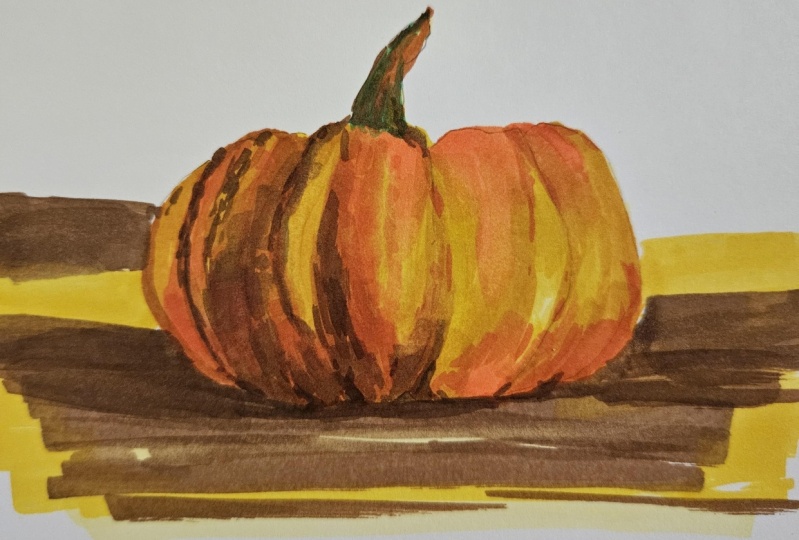
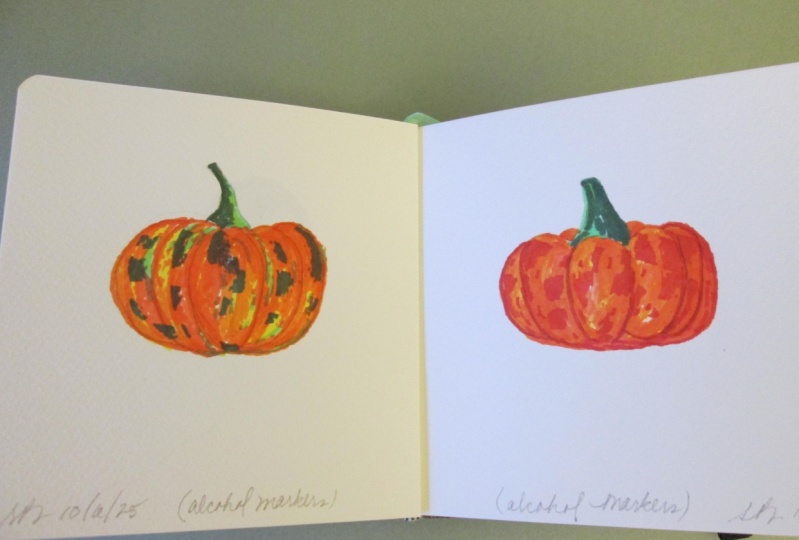
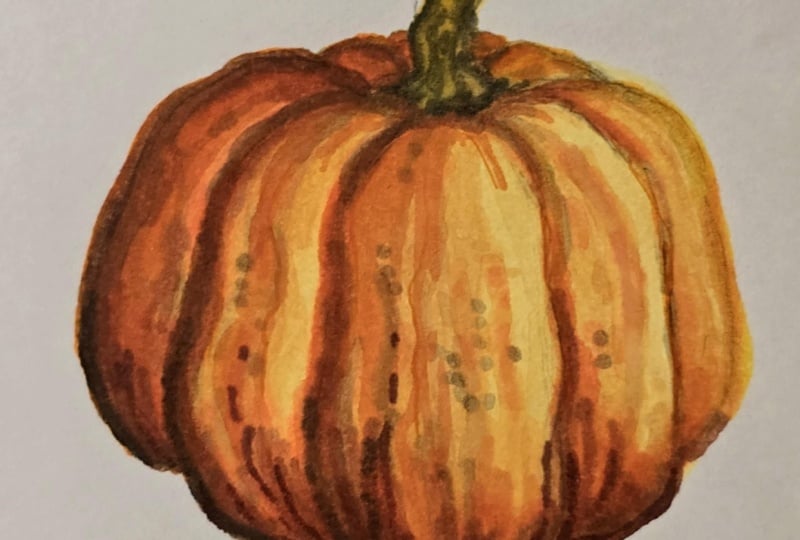
This is the second class in my Marker Basics series — and in it, we’ll focus on one of the most useful skills for alcohol marker art: layering. In this easy, beginner-friendly class, we’ll explore how to work with alcohol markers step by step and create a bright, dimensional illustration of a pumpkin.

You’ll learn how to sketch the pumpkin, layer from light to dark, and build smooth transitions between colors. I’ll also show you how to add shadows, highlights, and textures that make your pumpkin look more realistic and full of autumn mood. Before starting the main project, we’ll practice an easy layering exercise to help you understand how markers behave when stacked.

This class is broken down into clear, bite-sized lessons — from gathering materials and sketching to coloring, layering, and final details — making it perfect for beginners or anyone wanting to improve their layering technique with markers.

Whether you’re just starting your marker journey or looking to add more vibrant, seasonal illustrations to your sketchbook, this class will help you build confidence and create rich, dimensional marker art.

Note: I’ll be using Bristol paper, but you can absolutely use any marker-friendly paper you prefer.

Want to explore more? Check out my other marker classes:

Meet Your Teacher

Teacher Profile Image

Anna Ostapenko

Watercolor & Marker artist

Teacher

Hello everyone! My name is Anna Ostapenko, and I'm a Ukrainian artist traveling the world. My adventures and the places I visit inspire my art--I've explored over 40 countries so far!

Through my watercolors, I show the beauty of nature--tender flowers, amazing, breathtaking landscapes, and peaceful seascapes. Each painting is a way to share the places that inspire me and the feelings they leave behind.

I also enjoy working with markers, especially when creating bright, playful illustrations like candies and desserts--it's a fun way to explore color and texture in a completely different style.

Here on Skillshare, I'm excited to share everything I've learned along the way--from watercolor techniques and color mixing to marker basics, composition, and finding your own ... See full profile

Level: Beginner

Class Ratings

Expectations Met?
    Exceeded!
  • 0%
  • Yes
  • 0%
  • Somewhat
  • 0%
  • Not really
  • 0%

Why Join Skillshare?

Take award-winning Skillshare Original Classes

Each class has short lessons, hands-on projects

Your membership supports Skillshare teachers

Learn From Anywhere

Take classes on the go with the Skillshare app. Stream or download to watch on the plane, the subway, or wherever you learn best.

Transcripts

1. Welcome to the Class!: Oh Hi, everyone, and welcome to the second class of my Marker Basics series, Easy Layering Techniques is alcohol Marks. My name is Anna Ostapenko. I'm a watercolor and marker artist. And today, I will show you how to color pumpkin step by step using alcohol based markers. This class is designed, especially for beginners. Even if you have never worked these markers before, you will learn the basics of layering, blending, and adding texture. And by the end, you will have a beautiful pumpkin illustration that you created yourself. We'll start with a quick look at the materials you will need. Then we will go on an easy laying exercise to understand how markers work. After that, we'll sketch the pumpkin together and color it step by step from the lightest ones all the way to the darkest shadows. Finally, we will add texture and details to bring your pumpkin to life. This project is perfect for practicing smooth laying, building depths with color, and learning how to make your marker drawings more vibrant and dimensional while also capturing the cozy feeling of autumn. I'm so excited to share this with you. So let's dive in and get started. 2. Materials You’ll Need: All right. Let's go over the materials you'll need for this class. First of all, paper. I'm using a one sided Bristol paper, which, in my opinion, works beautifully with markers. But you can use any other market friendly paper, whether it's single sided or double sided. Next, you will need a regular pencil. You'll also need two types of erasers, a kneaded eraser and a regular eraser. The regular eraser is for removing harder lines while the kneaded eraser helps lighten the pencil sketch. And, of course, markers. For this project, I will be working with just six colors. The first one is the lightest yellow, Y 11, which I will use for the brightest areas of the pumpkin and as an undertone for the stem. Then I will need a medium more vibrant yellow. In my case, that's Y 15. Next comes a bright orange, and especially for the shadow areas, I will use this orange brown YR 18. This darker orange, which you can see in my swat chart here, you can easily replace with a brown, for example. Finally, you'll need two greens, an olive green with a yellowish undertone and a dark green. If you don't have a dark green, you can also substitute it with a dark gray. That's everything. Let's get started. 3. Layering Basics: How Markers Work: Now, let's talk about how we actually work with markers. We always build our colors from light to dark. That means we start with lighter yellows, then move into mid oranges and gradually build up into darker tones. For example, I might start with Y 11. Then layer a darker shade on top. Then move step by step into even darker ones. This is how we slowly deepen the tones while keeping smooth transitions. Let me show you why this is important. Here I have my lightest yellow Y 11. If I layer a darker color on top, like orange, for example, You can see how the tone becomes richer and more solid. It looks smooth, natural, and works really well. The same happens if I use a mid yellow. The layering still give us a nice result. But now let's see what happens if you do the opposite. Here is my darkest orange brown YR 18. If I try laying a lighter orange over it, you'll notice that it doesn't make the color richer. Instead, it actually breaks it apart and lightens it. Almost like washing it out. That's because when you apply lighter colors on top of darker ones, they act almost like a blender. They lift and dissolve the darker pigment underneath. Here's another example with mid yellow. You can see how it pushes the darker color away, creating an uneven patchy look. For our illustration, that's not what we want. Of course, this effect can be useful in some creative cases like creating rust or special textures. But it's not what we will be using here. Here's a close up so you can see how uneven the field becomes when you go light over dark. That's why for our pumpkin illustration, we'll stick with building layers from light to dark. This way, we'll keep smooth and even fell. Now that you understand this principle, we are ready to move on to our illustration. 4. Sketching the Pumpkin: Let's begin with our pencil sketch. First, I'm outlining the general shape of the pumpkin. And marking where the stem will be. Now, I will use a kneaded eraser to lighten the sketch, and then I will start refining the details. I draw the top part under the stem. And from there, I bring a flowing line down shaping the rounded section that make up the pumpkin. Then I mark the bottom of the pumpkin. I continue sketching these curd segments, starting with the central one. And from that, I work to the right and left, adding more parts of the pumpkin. I keep the shapes a little irregular and round, so the pumpkin looks more natural and interesting. Now, I move to the left side and draw the sections one by one here as well. Next, I lighten the stem and sketch it with more detail adding some texture lines to show its surface. Then I raise the extra pencillines Finally, I use the needed eraser again to soften the drawing, so the graphite won't much when we start working with alcohol markers. That's it. Now we can move on to color markers. 5. Coloring the Pumpkin – Part 1: Let's begin working with markers. I'm starting my lightest yellow Y 11. And lay down in the brightest areas. Remember, with markets, we always build up from light to dark. I also use the light yellow as a base stone for the stem. Now I switch to the chisel nib and start covering the pumpkin. I fill in the areas where I see the lightest parts of the pumpkin. Next, I pick up a slightly darker yellow Y teen and play over the shadowed areas, blending into the lighter yellow. I'm still working with the chisel nib since it helps me cover larger areas quickly. The bottom of the pumpkin is much darker, so I add this color there as well. For now, I block it in with this shade, but I know we will need darker tones later to push the shadows even more. On the left side, I can pretty much cover the whole area with this yellow since it's already quite dark there. I'm even starting to hint at some pumpkin texture. With the chisel nib, I add a few lines and dots to suggest the surface details. I also refined the silhouette just a little here. Now, I take a darker orange Y zero, four and begin working on the lower part of the pumpkin where the shadows are deeper. I add it in the areas where the pumpkin sections overlap because that's where the shadows are the strongest. I also darken right underneath the stem. Step by step, I'm slowly building up the volume of the pumpkin. The far left side is very dark, so I cover it fully with this orange. Then I go back with yellow to soften the harsh transitions between orange and yellow. I also deepen the yellow itself, since laying marker color multiple times naturally makes it stronger. Now I want to bring in my darkest orange brown before turning to the lighter shades. I take YR 18 and place it in the deepest shadow areas I can see in our reference. These darkest shadows are mostly on the left side along the pumpkin ridges. Using the brush nip, I carefully work into these areas, blending slightly into the lighter parts to create interesting texture. The bottom of the pumpkin is also dark, so I add more shadow there. On the left side as well, I build up the shaded parts. Here I'm refining the shape and slotte of the pumpkin with this Darkaton. 6. Coloring the Pumpkin – Part 2: Oh now I return to the orange and soften the hush transitions on the left side. I also want to darken this entire section, adding both shadow and a bit of texture. Then I go back with yellow to blue and smooth out the transition. Again, I take the orange and continue laying using it to show more ation. Switching to the chisel nip, I add small dots and spots hinting at the raw skin of the pumpkin. I play some of these textured marks on the left side, then move to the right side to build texture there as well. In the shadow areas, I add even more vibrancy, making those parts stand out. I keep working with the chisel nip to create texture. And then switch back to the brush nip to add more lively details, short lines, dots and strokes that make the pumpkin look more natural. Now, I take my darkest orange brown and add even more texture across the pumpkin. Then I return to the mid yellow to soften the transitions again. With orange, I refine the pumpkin silhouette and sharpen some edges. Finally, I use the lightest yellow to blend out the transitions in the brightest parts. Next, I introduce an olive green and add touches of green into the pumpkin. I place it mostly in the shadowed darkest areas, layering it over the texture I created earlier with orange, which helps unify the color. On the right side, I add just a little green where I can see hints of it. And then I move down to the bottom to play some there as well. I blend these as back with orange. Then deepens the shadows once more with my darkest orange brown. Also refining the silhouette where needed. Now, I move on to the stem. With olive green, I add texture and shadow to the top, leaving a few yellow highlights. Then I take light yellow and soften everything out. To push the shadows further, I add a dark green or you could use a dark gray to mark the deepest parts. Going back with olive green, I darken a few more areas. To tie the stem into the pumpkin, I use a deep orange on it as well. This unifies the top with the bottom and gives a more paint feel. At this point, I raise the extra paint lines. I evaluate the drawing and notice I want to add a little more a cream into the stem. Then I refined the silhoutte of the pumpkin again with orange. And I soften one last time with meat yellow. And that's it. Our pumpkin is finished. 7. Final Word: That's it for our pumpkin project. I hope you enjoy learning the easy learning techniques is alcohol markets, and that you now feel more confident with, blending and adding texture. Now, it's your turn. Create your own pumpkin illustration and share it in the project section. I would love to see your work and give you feedback. If you enjoy this class, don't forget to follow me here on Skillshare. So you'll be the first to know when the next lesson in the market basic series is released. Thank you so much for driving with me today. Happy sketching, and I will see you in the next class.