Transcripts
1. Hello!: Hello, everybody, and
welcome to this course. This mini course will
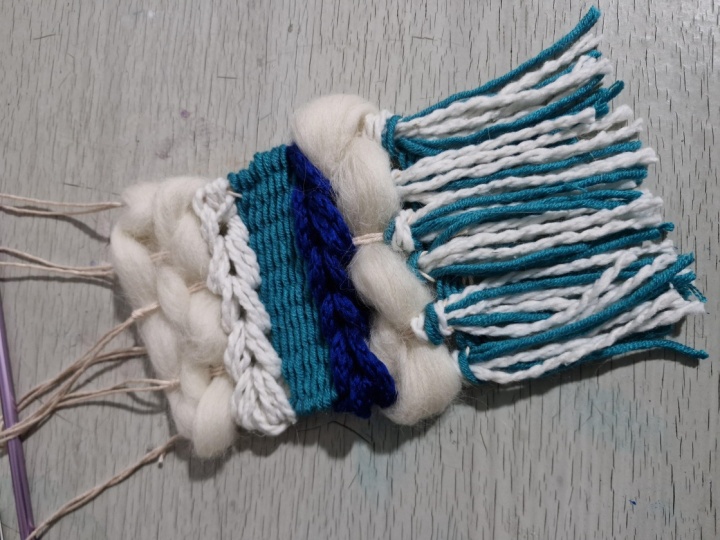
teach you have to make a beautiful wall
hanging that you can repeat again and again to
make beautiful gifts for friends and family or
just for your house. I keep these little
wall hangings in my daughter's nursery
and they just look amazing. I really really love them. They're easy to
make. Some people sell them and nets as well, just something you
could try doing. You've got the creative
business already, that could be a
little idea for you. Just to quickly introduce
myself. My name is Alena. I'm from creative field Designs, and my business focuses on calligraphy and
business coaching, but I also really, really love getting creative and doing lots of different
mindful activities. I've created this
class as part of my mindfulness box and I thought I'd share
it on here as well. I really, really
hope you enjoy it. Let's get started
with a first lesson.
2. Getting Familiar With Your Tools: The first thing we
want to do is put together this frame loom. To do that, we're just going
to take these two sides. You'll see that have
like dent in them, and we just want to put them
side by side like this. Then we're going to grab
these little bits that have more dent in them, and we're going to pop them inside to create a little frame. So just put this in, make sure they're
in that nice study. We also have this little
comb that we're going to use to make sure our weaving is
nice and close together. We've got this little needles. I call the needles, so it's like a stick that we're going
to use like a needle, and there's a little
stick as well. If we're going to hang
our wall hanging on, so we can need our
later. And this. So this is something
you like put through to separate your thread. But I actually prefer
using a pencil for that. So if you just
have like a wooden pencil, that'll be great. So yeah, get that ready as well. Okay, so once your
frame is ready, we're going to start with
this little white thread. So yours is a little bit
thinner, mine bit thicker, which doesn't make difference, but I think it'll be
easier for you to see if I use something
bit thicker. So this is called a
cotton warp tread. So we use this as a
base to create a warp. So warp is lots and
lots of strings on your u loom. That's
what we're going to do. We need to create this
base of weave through, and this is called a wap. We are making a smaller one. We're not actually going
to fill in the whole frame because we are making
a really small wall hanging because otherwise, you can just take a
bit of time and I didn't want to create a
huge project out of it, but trying it and by
making something small, you might fall in love with it, you know, and it's just to try. So leave these three
little rectangles and then start on
the fourth one. So there's one gap, two gaps, three gaps, and the fourth one is where we're going to
start tying our string. Okay? So this
little fourth dent. So we want to take our white
tread and tie a little knot, double knot to begin with, to make sure that it
is a double knot. Who wants to be really
sturdy them. There we go. That's a double not done. Now, we want to create
a bit of tension here, so I just making sure
that my frame is nicely aligned. There we go. Count three and then put it
in the fourth one like this. And then we're going to
wrap it around at the top. It's going to look
a bit like this. So we wrap it around at the top, and then we go back. Again, it's really stretched, so you can definitely
it's like guitar strings. That's how stretched it is. Then we're going down and we're doing the same
thing at the bottom. You might want to
hold it down with your finger and then
just pop it around. I just keep doing this.
We're going up again. So again, nice stretch. I'm applying quite a lot of
pressure that to stretch it. I'm doing the same
thing at the top, going around this little
rectangle, now going down, stretching it, and just keep
going like this all the way until we get this bit
of yarn on this one. So keep going like
this. All the way. Let's see, we might leave again like three or four at the end, let's just see how far we get. The thing is that you want to
finish back at the bottom. Let's aim 412 vertical
thread here like this. So you might have a bigger gap on the
right, so we have one, two, three, four of these little holes
here, which is fine. We can just have this
side a bit shorter. Yeah, as long as you have
12, that'll be great. We're finishing back
at the bottom here, and we're going to
do the same thing. We're going to tie
a double knot. So, again, this is a bit
tricky here at the end because you do want it
to be quite stretched. So try your best to
not make it too loose. So definitely wants to have
a bit of tension there. Again, double knot there. And then we are ready to go. So that's the first step. Make sure you get
your warp ready, and we're going
to start weaving.
3. Preparing Yarn for Fringe: So the bottom of your frame, this is where we tied
the double knot, is going to be the
bottom of your weaving. Normally, we'll start to weave with a fringe and it's a
really really fun part. We're going to grab some of this gold yarn and this white
yarn and mix them together. This is s que sparkly,
quite pretty. And we're going to
mix them together, and I'll show you
what I normally do. Take your white
yarn and ravel it. Just make sure it's
all unraveled. And then take your gold
gold one as well. Okay. So now we're going to take this chunky yarn together with this gold, like sparkly one. I make sure that it's all
unraveled, nicely hanging down. The best thing to
do is like wrap your yarn around something. I can just use our hand. So if you just like create
like a big opening like this, so use the biggest
part of your hand, and just wrap it around
lots and lots of times. By doing this, we'll be able to create a similar length tread. That's what we want. So I'm just wrapping it around lots
and lots of times. And I want you run
out of your yarn. We are going to just cut it. Find a place where you want
to cut it and just make sure that you're just doing
it all at the same place. You might need some
good scissors for that. See, I'm just cutting this. Like into half. There you go. Then
we get lots and lots of these like same length, treads, and this
is what we want. Tie the up a bit safe, you need to get
rid of something. But that's the idea.
4. Plain Weave Technique: Before we start in the fringe, I usually like to do a plain
ve at the bottom here just so hold everything into place a little bit better. That's
what we're going to do. We're going to take some
of this gold string, and we're going to put it onto our little wooden
needle. I like to call. So just do this, load it up like this, and now we can use
this to weave through. To do plain ave, it's
really simplistic. We're going to separate this
p to create an nice opening, which is called the
shed in weaving. Let's use our pencil to do that, so we're going to go
over the first one. Under the second one
over the third one, and then under the fourth one and just keep
going like this alternating until you come out on the other side and we
get this like opening now, that we can go through with
our needle with our stick. Now that this opening is here, I'm just going to
pop this through. Lovely. You might need to
drabble a little bit more. Yeah, there we go. Now we
have this string in here. Lovely. Now we can
remove the pencil. And we can create
another opening. I'm leaving it a bit
higher up here on purpose because when
we secure the bottom, we want to have a bit more room, see if you can keep your
first ave quite high up. Now, we are going to create another opening that's
like the other way around. We're going to go under the
first one over the second one under the third one
over the fourth one. Carry on like this
with your pencil to create another
opening, there we go. And now just make sure your
string is long enough. Now we can pop this
under and true here. Lovely. Now we have
two little aves here, and we're going to use our
comb to just calm them down. This is it. That's how you
do it. Super simplistic. You just need to take time
and alternate your warp, so you create the
correct opening. Now, let's do another one, so we're going to go over
this time, under. Keep going. There we go, and let's
pop this through now. Try not to dense it too much. So try to keep your string
really low as you go through. None of this, we don't
want to tighten it at all. Definitely wants
to be quite low. You can use your comb
to just do this where you bring them all together
a bit more. Keep going. We have a lot of fluff
here. Keep going. So we're going to
go under again, under and over, so
the other way around. I'll let you do a few of these, maybe let's do four more. So starting there. Popping through.
It's nice and lose. It's nice and lose. Press it down,
doing another one. And keep going like this. A few more times. I out they get like a
nice chunk of. Okay. And I might do two more. Actually, I think that's plenty, you can do four or six lines, and I think this is quite good. Perfect. Now we're going
to cut off the excess. When you cut, you always
want to cut fast, and then you can wrap it around if you like to hide
it a little bit better. So just wrap it around this fast thread and
just hide it behind, and I'm going to do the same
with this fast one as well. We're going to tidy
them up later, but for now, we can
just pop them behind. There we go. Perfect. Now we're going to
take the pencil out.
5. Adding The Fringe: This is where we're going
to start adding on fringe. I've taken four threads. So two gold ones
and two chunky ones like this and making
sure that we align them. So they're fairly aligned. We're going to be working
with two threads at the time. So we are going to place like the middle section of the f of this bundle of four on top. Now we're going to take the right side and
bring it to the middle. T through, it comes through, it comes out in the middle. Then we just pull it
gently to the right. Now we're going to take the
left side and do the same. Going to go over
the second thread, and I'm just using my
right hand to cuch it underneath and bring
it to the middle. Then we create this little
knot and you can tighten it carefully by just using your fingers really and
then bring it down. And that's our fast, why not. We're going
to do the same thing. We're going to
grab one gold one, one white one, another gold one, and another chunky one. Now we've got to work with
the next two threads. We're going to do the
same thing, placing it over where the middle is, and taking the right side, popping it under this string, wringing it out
through the middle. Now, taking the second. String and also
popping the left side under and through the
middle and tightening, tightening it. There we go. So we have two beautiful
chunky textured knots. Now, we're going to do the same thing and
just keep going. So working with the
next two threads. There we goes to two, picking them out, so it's easier to see. I'm going to show this
very slowly once again. Putting my bundle of
four string here on top. Now going under with the right side and
taking the middle. Now taking the left side, and going under this one again and back
through the middle. Then we just need to tighten it. And kind of take it down. So yeah, yes, try
not to, you know, go down, try to keep a little gap here at
the bottom if you can. Just do that to all of them, so if you got one, two, three more to go, okay? So I'm just carrying on. I. There we go. It might look a
little bit uneven at this point, which is fine. We can always trim it later. But that's the whole idea, and this is our fringe. It's all done, and
if we lift this, we'll still see we'll still see our little
V at the bottom, just like securing it for now. Yeah, we're going
to leave it there. So I just love how this
just creates a lot of texture instantly. There we go. So that's our little fringe. You might have some leftover. You can just put
it aside for now.
6. Using Roving: So all of you also have this like thicker yarn in your box. And this is called roving. So roving is when the
fiber is about to be spun into yarn, right? So it can be cotton
or it can be wool. And yes, it's like one step
before it's spun into yarn. So, you know, it comes
apart fairly easily. It's quite chunky,
and it's really textured and you just create this really beautiful effect. When you use it on your weaving. So we are going to do
a plain ave with it, and we're going to use
because it's so chunky, we're going to work with two. Two strands at this time, and they're going
to use our hand. They're going to
go on the two from the right side over
the next two, so over, then under two again, Over the next two,
under the last two. And then, you know, that's pretty much
the length we have. And I love just kind of fluffing it up with
my fingers like this. And this first one,
you can just tuck it, you can like wrap it
around and tuck it behind, so it's not too visible. And yeah, try to do the
same here at the end, so maybe wrap it around
the last set of two, and just use your comb to
like press everything down. And fluff it up so you can
even use your pencil to just bring bring it out a
bit more like this. It looks really like
little bubbles. It's like super
chunky, quite pretty. Lovely. We're going
to leave that
7. Braided Weave: Now for the next step, we're
going to use some yarns. Yours might be a
different color, but I've got this purple. We're going to take
a good chunk of it. I would say, one, two, three, four, five, six, seven, eight, nine, ten
bits of your frame, I'd say, and then we're
going to cut it off. And fold it into half
so I just all the edges and then fold it of
and then cut the fold. We have two strands that
are the same length. We have two strands here and
Mae it even more chunky, we're just going to measure out. We're going to take our
yarn and just measure out two more strands that
are the same length. We just want it to
be super chunky. We look much better when
it's a bit more chunky. Now we have four strands, but we're going to keep
them all together. We're going to start
from the left, and we're going to take the
shorter side into our hand, so the left into our left hand, and then the long string is just on the right
of hanging there. We're going to walk with
two warps at the time. As we walk this long side will get shorter and
shorter and shorter, you'll see, so
we're going to pick up two warps, we're
going to lay it. Over, and then
we're going to take alongside and go under, and then pull it through so that it is on
the right again. So we're just wrapping
it around pretty much. We're going to walk
with the next two. We can let go of the short side. We're going to walk
with the next two. We're going to go over fast, then tuck it under and come. So it won't look like anything until you do like two or three. So let's carry on so two. If this fast, one is unraveling, you can just tuck it in again. Maybe wrap it around
once more so that it's nicely behind
your V at the moment. Now, let's take the next two. We're going to go over,
then under. And return. And tighten it,
just make sure that these are again on
the right side. So the next two,
going over and then under and I'm pulling
it out. There we go. And two more to go, next two. And you can be quite loose here. You don't have to tighten
too hard for sure. Rs the last two, going over. Then under catching it here with my right hand and making sure I bring the read
to the right again. Okay. So that's how fast round. It looks really good. So now, this is where it gets a
bit tricky at the end because you want to start
to go the other way. So we want to go the other way, so we're going to hold our
string like this, okay? So, this will be
getting shorter now as we wrap the string
around these warps. So we're going to
pick up two again, a, and we're just going to go under these two and to the left. So we're going to pick up
the next two, go under, pull it out on the right
and then just make sure we return to this left side. The next two, going
under over and under. Then tightening it slightly over and under the
next two again, returning to the
left, ors reposition. You are pointing this
bundle to the left. Again, over the other two under to the right and
back to the left. And there we go. We are
back where we started. But now we have this
beautiful braided look. So this is called a stoma
knot, and it's really pretty. And here it looks like
it's a little knot, so you can unravel it slightly
just for your fingers, and it would just
look a bit better. There we go. You can use your comb to take
it all down nicely. There we go. Yeah,
quite a nice technique. Again, add a bit more
texture into our weaving. And then you can cut
off the end and we're going to hide it Behind
the best we can. We're going to deal
with that a bit later. Tucking it in for now. There we go. Okay, so now, I think we can just
do some, like, simple, simplistic white weaves. Again, just tucking
in this one as well. So it starts to look
quite interesting. If you ask me, definitely.
8. Chunky Yarn Weave: So I'm going to create
an opening there, so I'm going to go under, under, over from the right side. There. I'm just going to pop it on the side here like this, so I can guide it, but I'm not going to wrap it around loads because it's really thick. This is just to help us
get it through there. You can also use your
hands to be honest. There's one row. And again, leaving will end, we're going
to deal with that later. Can use your calm to make
it all nice and flat. Now we're going to go
over and over and under. So alternating,
before we come back. Now just make sure
that your stick is pointing the right way
before you come back, the long strand is behind you. Again, just using our hand
to help us get it through. Let's do a few rows of this, keep going until you get
a nice section there. Now again, going under
over, so alternating. The pencil is in
before we come back, so just pointing it this way. The long strand is
behind us on the right. And keep going like this. I'll say maybe do
four or six more. I might speed this up and I'll catch you when I do four, six. So let's see how it goes. See, we get a good
section there, quite a few rows, which
looks quite nice, I think. That. Beautiful. And we're going to
cut this off on the right and tuck it in again by wrap it around and hiding
it behind for now. Lovely.
9. Continuing with a Soumak Weave: And now, how about we use this
white chunky one to create some more of this like
braided so Mac, I'm not. So I'm just going to use it as it is because
it's quite chunky, but I am going to kind of fold it over a little bit so I
can see how much I need. There we go. So we get
get this much here, and we're just going to do
the same thing as before. Let's start from the left. So again, we have the
long side on the right, the short end on the left, and we're positioning this
like over the two warps here. So we're going under
with the longer side, and then just pulling it
out and back to the right. So again, going
over the next two, going under to the left, pulling it out and just making sure that we reposition
to the right. Again, the next two, going over. Under and come back and
really gently tighten. So again, over under O under. Over under. There we go. And now
we've got to go back. So we're going to take the
long end and then start going over these two and
then under to the right. Okay. So again, going
over the next two under to the right and
reposition to the left, going over the next two under. Starting to get
this braided look, which is really nice. And just do it out all of
them until right to the end. Okay. Well done. We're going to cut this off. And again, tuck it behind. Talk it behind for now.
Let's use our comm. Okay, starting to come
together, I think. So you probably have some more
of the chunky chunky bowl. How about we use that just
to create another row. Maybe another two rows. We can start and
derive, you can go under over two warps at a time, under over, under, over. That could be one.
Again, fluffing it up, making like little
bubbles out of it. Here at the beginning,
again, you can wrap around and just hide behind
and same at the end. Wrap around wrapping around
and just hiding it behind. And we have one
more here so here, we're going to start
by going under. If you have enough,
you can keep going and then add more
wherever you run out. But it is quite
short this rowing. But you can just use it all up and if you can go one more row, go ahead and do it if you
have enough. And there. Here we go. I think
we can leave it here. You can always get creative
and you can add any other of these techniques to
wherever you want. But I think this
looks quite pretty. I just leave mine here, like really chunky
looking, nice. So, I'm quite happy with this. Now is a time we need to tidy it up a
little bit, clean it up.
10. Last Steps - Tidying Your Weaving: So let's just start by
taking off the top part, and then make sure
there is enough room. You do want to have
a bit of room here, so you don't want to weave
all the way to the top. Now take them off individually
and just do a little knot. So do the knot, then
slide the knot down. So it's as close as
possible to your roving. I'm going to do that
to all of them. I'm taking them off one
by one and doing this. You don't want to
move too much here or do anything else
for now because it's really easy to misshape
it or just kind of ruin it by stretching it too much
or handling it too much. So we're just being
really careful, taking them off one by
one until we're all done. Okay. Now we're going to take our stick and pop it through
all of these slopes. So here's a wooden stick and just pop it through all of them. Now it just stays where it
is and we can't ruin it. Okay, so that's a top part. Now we just need
to do the bottom and then tidy up the back. Okay? So this is how
we will be hanging. Now, the bottom part, we want to lift the fringe. And hopefully, you have
a bit of room there. You can always, like,
use your fingers to to stretch it
up a little bit. You can see these part here are quite similar,
just like at the top. We can start taking
them off one by one, and you can use your finger to gently pull it
up a little bit. The idea is that we cut it, so we want to cut it into half and then tie a double knot. We're ignoring the first one because it's tied to the frame, and we're going to deal
with that in a minute. But for now, let's
just take all of these individual ones
off. Cut in a middle. And just tire a double knot and keep going like this
for all of them, except the first one on the
last one because there. Well you do something
else to those two. Okay. So now let's deal with the fast
one and the last one, so we just want to cut it off. So we get a little string there, and we're just going to tie it to the one next to it. Okay? Again, let's do a double knot, just so it's all secure. Let's do the same thing with the fast one. Okay. So, there we go, I'll
be taking it off, but that's a huge step. Now, yes, it will
look a bit messy. So we need to tidy the back. So turn it, flicked around, and you'll see what
needs doing here. So A of these sides, all of these little ends. Try to wrap them like
this and then pop them in somewhere like hide it behind a bit of a string or just
tuck them in if you can. Sometimes it might be
visible at the front, so just yeah always check. But that's the idea. If
you have two longer ones, you can tie them together
into a double knot. Again, very gently, we're
not pulling anything. Double knot, and then you
can just cut this off. So it doesn't show at the front. Okay. So we have a
bit of roving here, which is quite easy to talk. If you have one of those
embroidery needles, those like really big needles. You can also use that
to just like take the end and hide them and loop them into
the actual weaving. But even just doing this is
really helpful, I think. So that's a bit of fringe dm. There we go. So I just need
to deal with this part. Again, I might just
tie a double knot. And then maybe tuck it
actually in here somewhere. So just trying to hide
everything the best we can. Just remember that this is
going to be on the wall. We're not going to like move it around too
much or anything. So I just need to walk with
the ones here at the top, so I just to wrap it around
and take it to the back. At the top, you know, it's quite tricky here at the
top because it will it will start coming apart if you don't
tuck it in properly. So again, you can flof it
up with your fingers a bit, so it looks a bit more bubbly. If anything comes out again, just Try to find a space
for it on the back. It's definitely the whole
idea that it looks a bit chunky and like
with a lot of texture. So I quite like it. So you can always fluff
some things up with your fingers if you need
to like, correct anything. Now, the fringe, it
might be a bit uneven, so you can like cut it
to the side you want. Again, I'm being
really rough about it. I don't mind that
there are some longer. Strand actually
looks quite nice. That it's a bit uneven. So it's got like a few
layers at the top. It's like doing a haircut.
I love this step. Okay, so now we just
need our little string, so just use a bit of this, so you can attach
it to the side of your stick and tie
it double knot. And do the same on
the other side. So measure out how much
you want to leave to hang. I think it's so pretty. It will look really
nice on the wall, or if you have children
in the nursery. I have some of
these in my studio, and they always
brighten up my day. I just love I just
love the colors. There's definitely
something about them. And there we are, guys. This is a finished look.
It does look quite, you know, handmade and a bit
messy, but I quite like it. You can always bring this
down a bit more the top. I hope you're happy with yours, and I can't bear to see. Or if you're struggling with anything,
please let me know. I'll be more than happy to help. But there we go. This is so much fun. I hope
you enjoyed it.
11. Well Done!: Hank so much for joining me. I really hope you enjoyed
this little mini course, and I would love to see what you created. Please
please share. Maybe you have different
color combinations and maybe yours looks a
bit different from mine. I would really love to
see the end result. Thank you so much and
I'll see you soon.
 Alina Snepste