Transcripts
1. Welcome to the Class: At times, even adding a single stroke can
help you create magic. In this class, we're
going to create a minimal artwork using
the medium of gouache. There are going to be
two beautiful paintings that we are going to
create using line art. Let's explore the medium of gouache together.
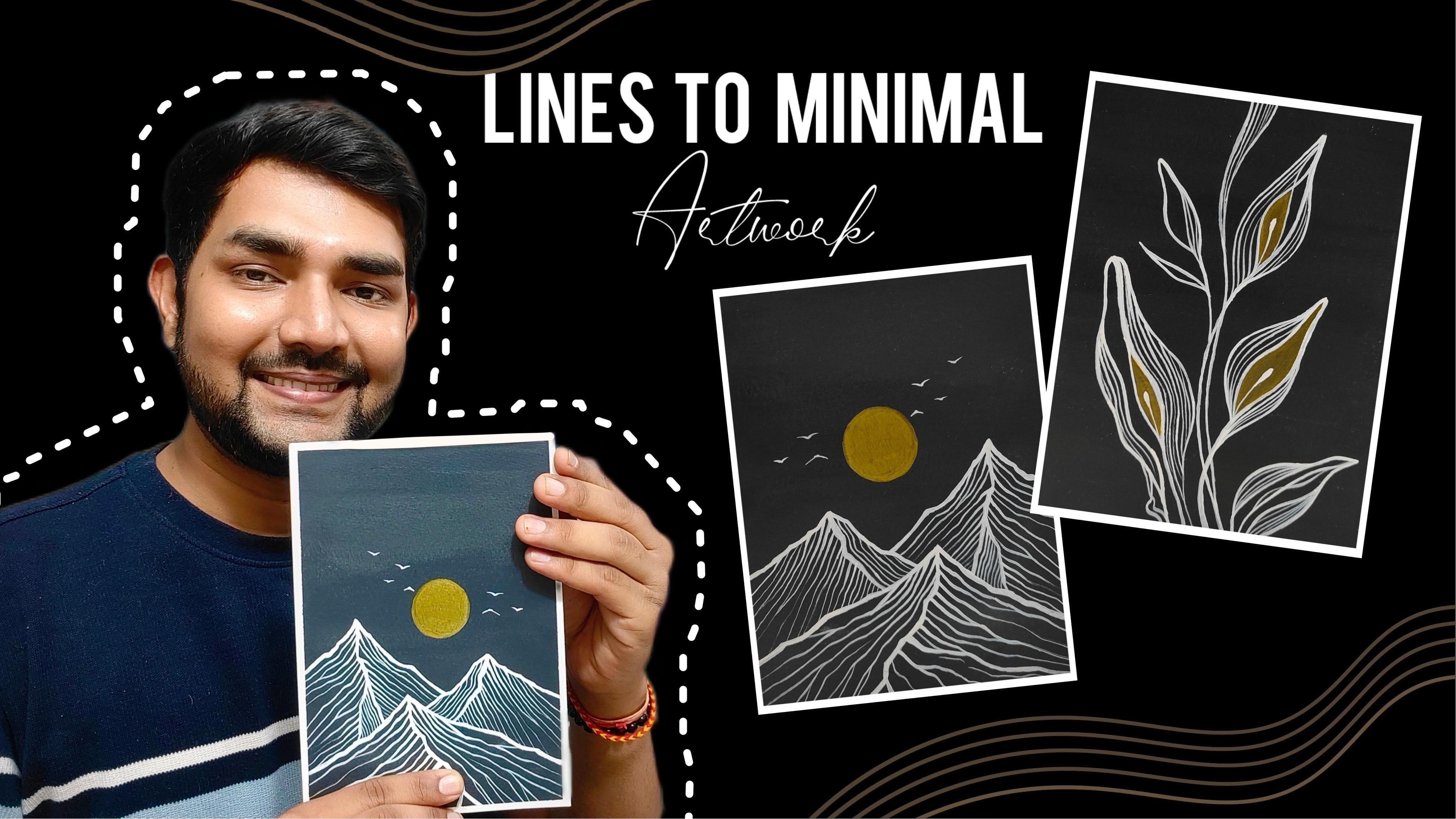
Hey, everybody. You're most welcome to my new
class, myself Rudick Patel. I'm a self taught
independent artist and an interior
designer by profession. I personally love to explore different art forms and styles and not stick to
one particular thing. So if you are joining
me, you'll find a variety of classes
that I create. You're going to start
by understanding the class projects in detail. There are going to be
two different paintings that you can explore
and experiment. I'll be giving you
the details about all the art supplies that you will need for
the entire class. No need to worry at
all. In case you're missing out on any
particular art supply, you'll find it very easily in
any nearby local art store. The first step is to prepare the paper by adding the tape on all the sides so that we get a nice white border
when we remove the tape. The first step is to create a solid black background
using the medium of gouache. Then we are going to create some mountains and a golden sun. You're going to enhance
the mountains by adding minute white lines and details which will enhance
the painting even more. Allo, putting in a
very little effort, we are going to complete
the entire painting. The next painting
is minimal florals. Again, combining
these white lines and putting a very
little effort, they're going to create a
beautiful floral painting. No need to worry
about the output, enjoy the process of creating. It's a short class that will
not take a lot of your time, and it will help you to
explore gouache as a medium. So without any delay, grab your art supplies and join
me on this creative journey.
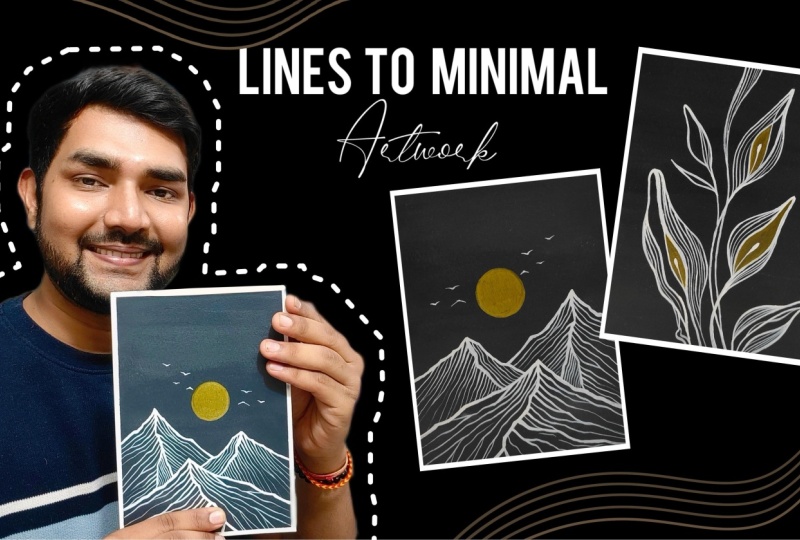
2. Class Projects: Hey, everybody. Now let us talk about the class projects in detail so that you can get an exact idea of what
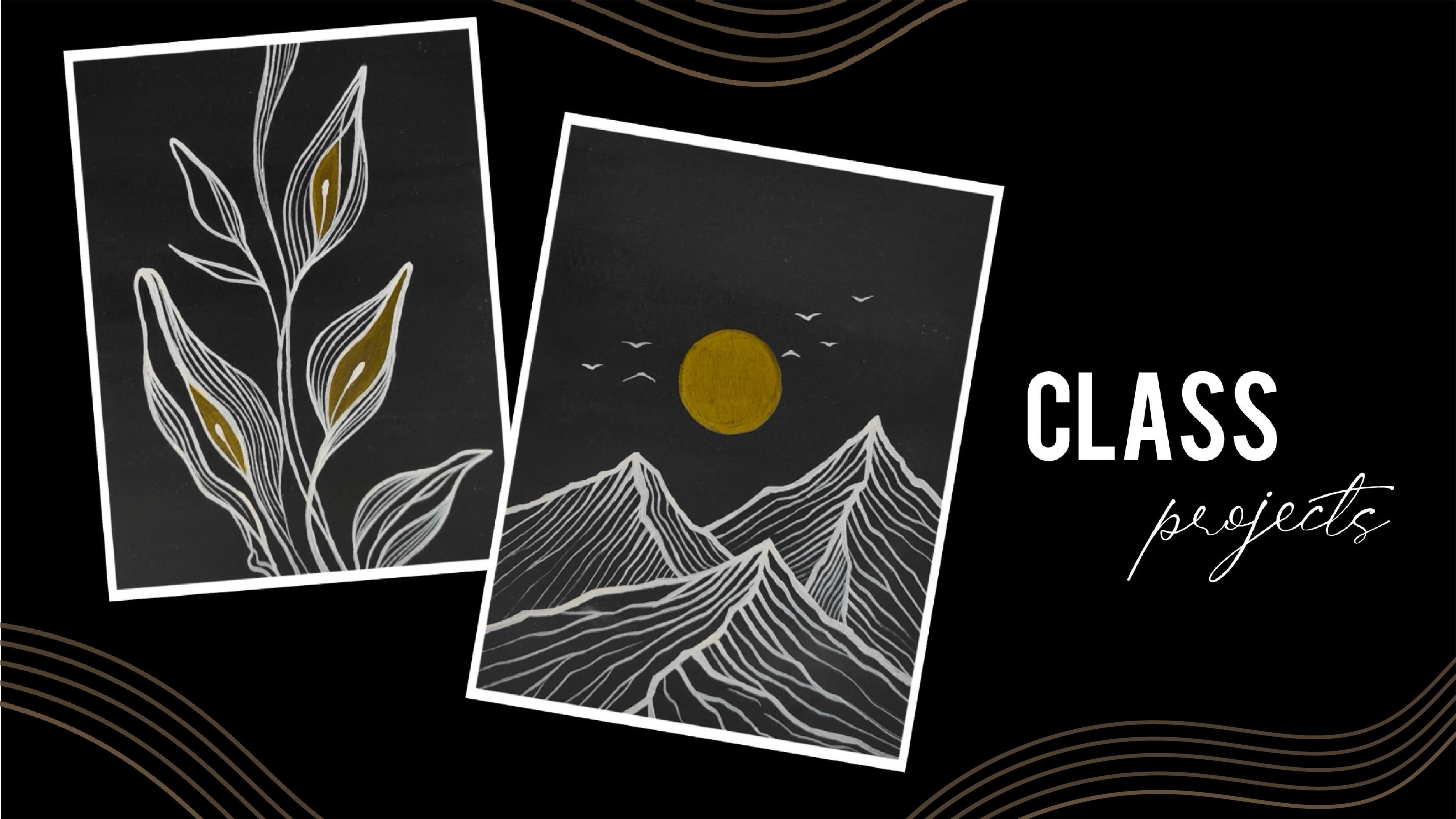
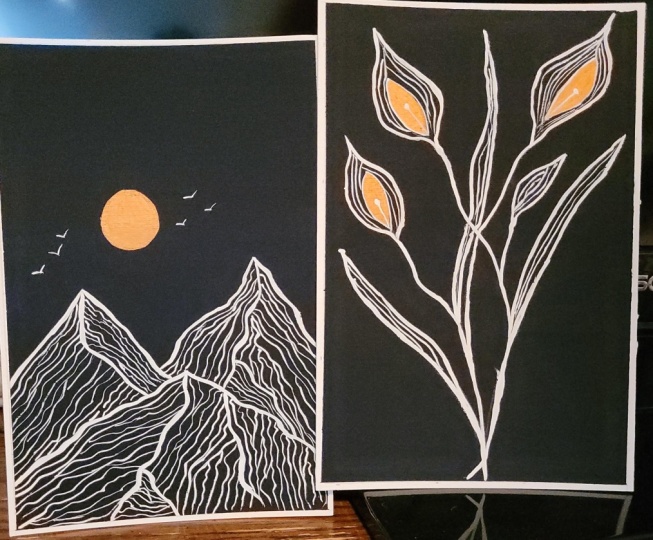
we are going to paint. So the first class project
is abstract landscape, which is one of my
favorite class project. You can observe it is having a beautiful solid black
background that we have created using the
medium of gouache. Then we have these
little white birds, which creates a
noise contrast with the black background and
a beautiful golden sun. Then comes the most
interesting part, which is having a lot
of details in it. So you can observe the mountains that we have painted
on the bottom part. It is having a solid white
line which is thick, which gives a nice outline
to the entire mountain, followed by these
little thin lines, which will add minute details
to the entire painting. So combining these minimal
elements together, we are going to form
this first painting. Then we have the
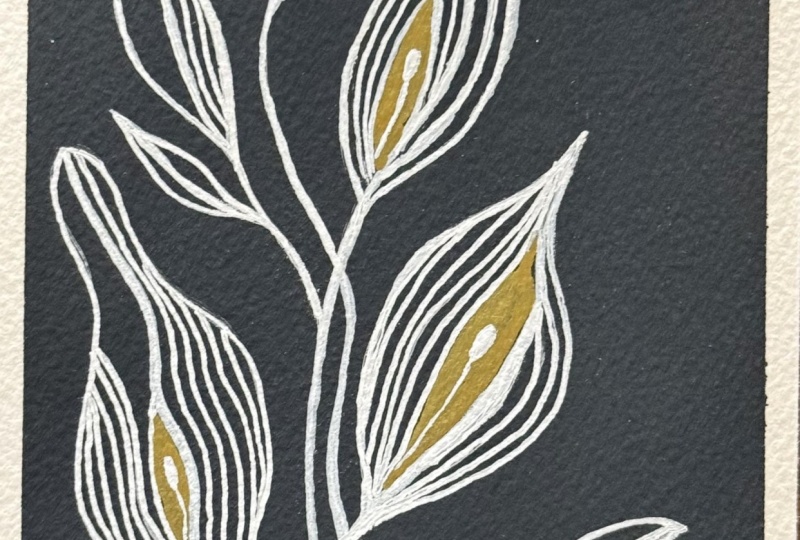
second class project that is abstract florals. You can observe it is having these beautiful white
lines which are combining together to form a nice abstract floral pattern. Then we have added
a little bit of gold and some
details in between. You can observe that it creates
a beautiful contrast with the solid black background that we have created using
the medium of gouache. All over, it is going to be
a very interesting process, and you'll definitely enjoy adding these minute
details together. You can observe that it is majorly line artwork that we have used to complete
both the paintings. No need to worry
about the output, enjoy the process of creating. You are free to explore and experiment with the entire
class project as well. Now let us move
towards the next part.
3. Art Supplies: Hey, everybody. Now
let us talk about all the art supplies that you will need for
the entire class. You can observe the
way I have placed all my art supplies in
a systematic manner. Let us talk about
the first art supply and the most important
one as well, the watercolor paper that
we are going to use. So the watercolor papers that
I'm using are from Canson, and it is A five size. In case you want to
use a different size, it is absolutely fine. And the important thing
is that it is 300 GSM. So the GSM is basically the
thickness of the paper so that you can apply heavy
washes and color on the paper. Let me show you the
class projects. So these are done on the same watercolor paper
that I have showed. Now, in case you want to use
any other good alternative, it is absolutely fine. Just make sure that it
is 300 GSM minimum. Then comes the next art supply, which is the brushes that
we are going to use. So here I'm having a
round brush of size zero. We are going to use this
particular brush to add minute details to
the entire painting, which will help us to create little thin lines
to add details. Then comes another round
brush of size one, which will help us to
create a nice thick line. Then the next brush
is of size three, or you can consider
it as four as well, which is basically a flat
brush which will help us to apply a solid black background to the entire watercolor paper. Now let us talk about the
white pen that we are going to use to create a rough sketch before
we apply paint. You can observe it is
having a nice thin tip, which will help us to
create a nice basic sketch. In case you do not
have a white pen, you can use a white
pencil as well. Then we have a metallic sketch
pen that you can observe. It is having a golden tip. So it's basically a gold
color metallic sketch pen, which will help us to paint a beautiful sun in the sky area. You can consider it
as a moon as well. Now, in case you do not have a metallic golden sketch pen, you can use solid white color as well. It is absolutely fine. Then we have a simple
mechanical pencil that will help us to create a
basic sketch in case needed. Now comes the next art supply, which is a simple, transparent color palette that
you can observe. It's a simple acrylic
color palette. You can observe that I
have taken out the colors. Just make sure that
your color palette is having enough space to take out multiple colors in it and
some mixing space as well. Then we have a simple glass
container in which you can already observe some dirty water that I have already used. It helps to clean the brushes and use water wherever required. Then we have two basic gouache colors that
you can observe. One is titanium white, another one is lamp black. So the best part is that
for the entire painting, you will need only two
basic gouache colors, which is black and white. So you can also consider
it as achromatic. In case you want
to experiment with the color palette, it
is absolutely fine. You are free to explore
and experiment. You can observe
the way we can mix both the colors to create
a nice gray shade. Then comes the next art supply, which is a simple tissue paper. It is always good to
keep a tissue paper nearby whenever you're
working with any medium. It will help you to
clean the brushes or dab it to remove excess
amount of water from it. Then I have a simple sellotape that you can observe
that we are going to use to add on the borders of
the entire watercolor paper. Once we are done painting and we will remove
the sellotape, it will give us a nice,
beautiful white water. Also, it is one of the most
satisfying part as well. Then comes the last art supply, which is a simple rounder
that you can observe. So rounder basically helps us to get a perfect circular shape. It will be required in one of our class projects to
create a circular shape. You can observe that it
is having a pencil on one side and a needle
on another side. It is also known as a compass. You can find it very easily in any nearby local art store. So we are done with
all the art supplies. I hope that you got
an exact idea of all the art supplies that you will need for this
particular class. In case you are missing out
on any particular art supply, you'll find it very easily in
any nearby local art store. Now let us move
towards the next part.
4. Lets Place the Paper: Hey, everybody. Now let
us place the paper, which is basically preparing the paper before
we start painting. So as you can observe
that I have placed my watercolor paper
on the desk surface, it is a simple
rectangular sheet, and the size is a five. Now I'm going to use a simple
sellotape that you can observe over here to place
it on all the four sides. Now take a little piece of the sellotape according to the length and
width of the paper. Now, we are going to place
it on the bottom part. Now, make sure that you
keep some part of the tape onto the watercolor paper and some part on the desk surface. Now, once you attach the sellotape to the paper
in a parallel manner, just apply your finger, add some pressure, and stick it. Now, similarly, we'll be adding another piece of the sellotape
on the topmost part. Make sure that you align the sellotape in a parallel
manner with the paper edge. Keep a little bit of
part on the desk surface as well and apply some
pressure using your fingers. So now you can observe
that we have placed two pieces of the sellotapes
on the top and bottom part. Similarly, we are going to add another piece of sellotape
on the right and left part. You can observe that I have taken a long piece of sellotape. Keep a little bit of part
on the watercolor paper, align it with the paper edge, and apply some pressure
using your finger. Now comes the last edge. You have to make sure that
you apply the sellotape in a nice manner so that once you are done painting and you
remove the sellotape, you get a beautiful
parallel white border. So we are done adding the sellotape on
all the four sides. I hope that you
got an exact idea about how to do it. No
need to worry at all. In case you do not
have a sellotape, you can use a paper
masking tape as well. So we are done preparing the watercolor paper
onto the disk surface. Now let us move
towards the next part.
5. Painting 1 - Abstract Landscape: Hey, every buddy. You're most welcome to the first
class project, which I have named as
abstract landscape. So you can observe
that we are going to use two basic gouache colors, which is going to
be black and white. I'll be using my flat
brush of size three to mix the colors well in
the color palette area. We are using a bigger size
flat brush so that we can paint the entire surface
a little bit faster. So now let us take
the first color, which is going to
be solid black. And then similarly,
I'll be taking some solid white color in
the color palette as well. So you can observe that
we have two basic colors. You can use a spare flat brush
to mix the colors as well. So you can observe
that I'm adding a little bit of water
to loosen the color up, and I'll be adding
a little bit of solid white color in black to create a nice
dark gray shade. Since we do not want a complete
solid black background, we are just making it a
little less saturated. In case you want to use a solid black background,
it is completely fine. You can put up the shades
on watercolor paper to get an exact idea about which shade works
for you the best. When you start increasing the amount of solid white color, you'll get a nice gray
shade on the color palette. You can observe
that I'm creating a few more shades on
the color palette. You can observe in the
color palette area that I'm increasing the
amount of white color, and this will help you to
get a nice gray shade. Now, once we are done, creating a beautiful dark gray shade, I'll be using my flat
brush of size three, take some good amount of
color from the color palette, add a little bit of water, not in an excess amount, and try to get a
nice consistency of water and color together. Now start applying the color
from the topmost part. No need to hurry at all. You can observe the way I'm moving my flat brush in a
horizontal direction. You just have to make
sure that you do not leave any space between
the sellotape and the watercolor paper because it will not look nice once
we remove the sellotape. You can observe that I have almost covered half of the area. I'll take some more paint
from the color palette. And slowly, I'll be moving
towards the bottom area. You can still observe the horizontal
movement of my brush. Now, no need to hurry
while you're applying a background color
because we want a nice even background. So make sure that you apply the color in a slow
and steady manner. You can observe that
having a bigger flat brush helps us to apply the
paint in a faster manner. So you can observe
that we are almost done painting the entire
solid black background. Or you can also consider
it as dark gray. I'm slowly covering
the entire bottom part and just make sure that there is no space left between the sellotape and the
watercolor paper. Now let the entire
surface dry for a while. Once the entire surface is dry, we are ready to create a basic
sketch on the bottom part. So I'll be using a simple white
pen that you can observe, which will help us to get
a nice solid white line. So we are going to create
the outline using this pen, and you can observe that I have created a random mountain
on the bottom part. Similarly, I'll be adding another mountain on
the left hand side. Add a single line
in between as well. Then we are going to
complete the mountains by adding a last mountain on
the right hand side as well. So you're free to compose the mountains according
to your convenience. Now let us draw the sun, or you can also consider it as a moon using this
simple rounder. You can observe that
it is having a needle on one side and a
pencil on another side. Just simply place the needle and try to create a
simple circular shape. You can set the radius
according to your convenience. I hope that a simple pencil
circular shape is visible. I'll be using a simple
metallic golden sketch pen to paint the entire sun. Now, in case you do not have
a golden metallic sketchpen, you can use solid
white color as well. It is absolutely fine. I'm using a golden color
because it creates a beautiful contrast with the entire painting and the solid black
background as well. So once I'm done
with the outline, I'll be filling in this
solid golden color in the inner portion. No
need to hurry at all. Take your time and try to paint the entire
surface slowly. You can already observe a beautiful contrast of the golden color with
the black background. So I have almost covered
the entire sun area. You can be a little
bit careful near the outline so that you get
a perfect circular shape. So I hope that you
got an exact idea of how you have to create
a sun in the sky area. Now let us start painting the mountains in
the bottom area. This is going to be a
very interesting part, and you'll definitely
enjoy the entire process. So you can observe
that I'm using my round brush of size zero. It is having a very thin
tip that you can observe. Now using this
particular round brush, we are going to paint
the solid white line, which is basically the outline of the entire mountain first. So this particular
solid white line is going to be a little bit
thicker that you can observe. Supply a little bit
of pressure when you are using a round
brush of size zero. You can also use
a round brush of size one as well. It
is absolutely fine. You can observe that I
have added a nice thick, solid white line to the
mountain on the left hand side. Similarly, we are going to
add this beautiful thick, solid white line to all the mountains
that we have created. So I'm just following
the white line that we have drawn
using a white pen. You can observe the way I'm painting carefully and
no need to hurry at all. Try to paint in a very
slow and steady manner. So I hope that you
got an exact idea of how we are going to add a nice solid thick white
line to create the outline. Now, we are going to add thin white lines to add details
to the entire mountains. So it's an abstract way
of adding minute details. You can observe
the way I'm using the tip of my round
brush of size zero, and you can observe the way I'm adding a very less
pressure on the brush. This will help you to get
these little thin lines. No need to hurry at
all. Take your time and try to paint in a very
slow and steady manner. In case you find that your color is getting finished
from the brush, you can take some more color
from the color palette. And in case you find
that your brush is moving a little bit rough on
the surface of the paper, you can add a little bit of
water in solid white color. You can observe
that I have added minute details on one
side of the mountain. Similarly, I'll be adding these little thin lines on
the right hanside as well. You can observe how beautiful
the entire mountain looks once we add these
beautiful, solid white lines. Now, similarly, I'll be adding these little white lines on the remaining
mountains as well. You can observe the details carefully and the
movement of my brush. Again, let me tell
you the same thing. No need to hurry at all. Take your time, try to paint in a very slow
and steady manner. Enjoy the entire process. You'll definitely feel
it like a therapy. And in case you find that your color is getting
finished from the brush, feel free to take some more
color from the color palette. And in order to
loosen the color up, you can add a little
bit of water in it. You can observe that
we have completed the second mountain on the
right hand side as well. Now comes the last mountain, and you can observe that
I'm adding a little bit of variation in these little
solid white lines. Now, in case you want
to experiment with the entire scenery and create your own composition
of the mountains, it is absolutely fine. You're free to explore
and experiment. So we are almost done adding minute details to
the entire mountain. We are left with the
right hand side surface. So let us start
with that as well. You can add these little lines
which are not completed, and you can leave them
in between as well. Now slowly, I'll be completing
the right inside surface. You can observe it carefully. In case you find that your color is getting finished
from the brush, feel free to take
some more color from the color palette. No
need to hurry at all. Try to paint in a very
slow and steady manner. And the nice painting tip is that whenever you want
to get a nice thin line, try to apply very
less pressure on your brush and make sure that you keep your hand
very much loose and free. Now, I'll be completing
the upper surface as well. I'm following the main
solid thick white line and moving slowly
towards the bottom part. You can keep a little bit of distance in between two lines. You can also attach them
in case you want to. So we are almost done adding these beautiful
solid white lines, and you can observe
how beautiful the entire composition looks. So it's a combination of
three beautiful mountains, having a nice line artwork, a beautiful golden sun. And then we are going to add
few birds in this eye area. Now, let us remove
the sellotape. It is going to be a very
satisfying process. Just make sure that
you remove the tape in a very slow and steady
manner and in an angle. So you can observe that we get a beautiful solid
white border once we remove the sellotape and how beautiful the
entire painting looks. Now comes the last element
where we are going to add these little birds
in the sky area, which enhances the
entire painting. So I'll be using some
solid white color, and I'm going to use my round
brush of size zero only. It is going to be a very
easy painting technique. You just have to create a
little V shape in the sky area. So try to use the tip
of your round brush, apply very less pressure on it, and simply leave the stroke. You can observe how beautiful it turns these little strokes
into a nice bird element. So I'm painting it randomly. You're free to compose
according to your convenience. You can observe the
way I'm leaving these little strokes to
form these little birds. In case you want to practice
it on a rough scrape of paper initially and then come towards your
final painting, it is absolutely fine. This will help you to develop
confidence while painting, and the chances of making
mistakes will be very less. So I have created a cluster of birds on the right hand side. Similarly, I'll be adding a nice cluster of birds on
the left hand side as well. You can have a
variation in the size. It is absolutely fine. Let us add one more on
the left hand side. You can observe how
beautifully we have created a composition
of birds near the sun. We are done with the
entire painting. Let me take you a
little bit closer so that you can observe all
the details carefully. You can observe the
way we have combined these minimal
elements together to form a beautiful line
artwork painting using the medium of gouache. I hope that you enjoyed the
entire process of creating this particular painting and
got to learn something new. You're free to explore
and experiment with the entire scenery and the
color palette as well. Now let us move towards
the next class project. I
6. Painting 2 - Abstract Florals: Hey, everybody. You're most welcome to the second
class project, which I have named
as abstract florals. So I'm ready with
my watercolor paper with the elutape on the borders. We are going to use our same
flat brush of size three, and I'll be taking
some good amount of solid dark gray color
from the color palette. As you can observe, you can also consider it as solid black. I'm starting from
the topmost portion. You can observe the way
I'm moving my flat brush. It's a simple
horizontal movement. Make sure that you do
not leave any space between the sellotape and
the watercolor paper. You can observe that
I'm trying to apply a nice even coat of this
beautiful solid black color. No need to hurry at
all, take your time and slowly apply the color
on the entire surface. In case you find that your color is getting finished
from the brush, feel free to take
some more color. The best part about
gouache is that it gives you a beautiful matte
finish when it dries. So you can observe that we are
left with the bottom part. So slowly, I'll be applying the color in that
particular area as well. Just make sure that there is no part left on the
entire watercolor paper. Now, let it dry for a while. Once the watercolor paper
is dry with the base coat, you're going to use
a simple white pen to create a basic sketch. The reason behind
using a white pen is that the pencil line
won't be that much visible, but in case you're not
having a white pen, you can use a white pencil, or it is also good
if you use a pencil, but you have to be a little bit careful because it won't
be that much visible. So you can observe
that I have created these beautiful random florals. It is not at all compulsory for you to draw it in
the exact same way. You are free to compose
according to your convenience, and in case you want to
follow the way I am drawing, that is also absolutely fine. So I'm just trying to create these beautiful
petals around, and it's a completely
abstract form of painting, so no need to worry
about perfection. So as you can
observe that we have created these beautiful petals
on the right hand side. Similarly, I'll be adding a huge petal on the
left hand side as well. You can observe the way I have randomly added these strokes. So now we are almost done
creating a basic sketch. These white lines will help
us to paint carefully. So I'll be adding a little petal on the left
hand side as well. You can observe, it's a
very random way of drawing, so you can do it according to your convenience,
absolutely fine. So now we are done drawing
using a white pen. We'll be using solid white color and have variation in the
thickness of the lines. But let us add some nice
golden color in certain areas. So I'll be using my
golden sketch pen, and I'll just add the nice solid golden color in this particular area to
enhance the entire painting. In case you do not have a
solid golden sketch pen, what you can do is you can use a solid white color as well. So you can observe how beautiful this golden color is looking. It creates a nice contrast with the white lines and the solid
black background as well. Now it's time to add beautiful lines to
the entire painting. For that, we are going to
use solid white color. And since there is a variation in the thickness of the line, that's why we are going to
use different size brushes. But before that, in
case you want to add few more lines using your
white pen, you can do that. This always happens with me. I always find that there can be few more elements that we can
add to the entire painting. So we are done with the basic sketch and the golden color. I'll be using my round
brush of size one. And let us start by creating thick white lines that are
needed in the entire painting. No need to worry at
all. You just have to use your round
brush of size one. Take some good amount of solid white gouache color
from the color palette, try to create a nice combination of water and color together. Make sure that you have a
nice thick consistency. Try to have less amount
of water and more color, and use the tip of
your round brush to paint this line that
I'm painting right now. So there are only going
to be few thick lines. We are not going to
give the outline to the entire painting with
solid line, basically. You can observe the way I'm using the tip of my round brush. Whenever you are
trying to paint in a detailed manner where there
are thin lines required, always make sure that you
use the tip of your brush. Try to hold it in a very
loose and free manner. No need to make your
hand very much stiff. Also, it is always great in
case you're not that much confident enough to paint directly on your final painting. What you can do is
that you can practice on a rough scrape
of paper initially, and then you can come
towards your final painting. This will help you a lot to develop confidence
while painting, and the chances of making
mistakes will be very less. Now, I'll be adding
the solid thick line in the petals as well. You can observe the way I'm
adding a nice solid thick, white line using my brush. And in case you find that your color is getting
finished from the brush, you can take some more color
from the color palette. Also in case you
find that your brush is moving a little bit
rough on the paper surface, you can add a
little bit of water in the color and loosen it up. You can observe how beautiful the solid white color creates a nice contrast with
the entire background. I'll be using my
round brush of size zero to get some
nice thin lines, and we are going to enhance
the entire painting. You can observe the way I'm moving my round
brush of size zero. It gives us a beautiful
thin white line. Whenever you're applying a nice, solid, thin white line, again, you have to be careful that
you have to keep your brush very much loose and
free in order to get a nice, seamless line. We are just following
the white pen line, and we are just making
it a little bit more attractive and in contrast
with the background. So once we apply these
beautiful outline, we are going to give some
internal lines as well, which will enhance the
entire petal even more. You can observe the
way I have added two little strokes in between. Similarly, we'll be
adding few more strokes. Now, while you are
adding these strokes, you have to be very precise and paint in a very
slow and steady manner. Similarly, let us add these details in the
above part as well. And trust me, you are going to find this very therapeutic. You'll definitely enjoy
the entire process. Now, one thing that I can
tell you is that while you'll be giving these beautiful little thin
lines to the entire painting, you might feel that it is
difficult, but trust me, it is going to be very easy
in case you're not that much confident enough to apply these strokes directly
towards your final painting. What you can do is you can
take a rough scrape of paper, create a nice black background, practice some strokes
on that first, and then you can come
towards your final painting. This will help you to develop
confidence while painting, and the chances of making
mistakes will be very less. In fact, you can also
practice thick and thin lines by just having a difference
in the pressure. Whenever you want to
have a nice thin line, try to apply very
less pressure on your brush and use the
tip of your round brush. And in case you want to make your line a little bit thicker, you can apply a little
bit of pressure. So you can observe how beautiful
the entire combination of these beautiful thick and
thin lines together looks. It is not at all
compulsory for you to create the entire painting
in the exact same way. You're free to explore
and experiment with the entire painting.
It is absolutely fine. In fact, you can compose it according to
your convenience. In case you want to experiment
with the color palette, that is also absolutely fine. Now, in case you find that your color is getting
finished from the brush, you can take some more color
from the color palette, and in case you find
that your brush is moving a little bit rough
on the entire surface, you can add a little
bit of water in it. So similarly, we
are going to add these little thin lines in
certain areas of the petal. You can observe them
carefully and try to follow these steps slowly
and in a steady manner. You can observe that we are done adding these
beautiful thin lines. You can create some
variation if you want to. Now, once we are done adding these beautiful little
thin white lines in the entire petals, what we are going to do is
that we are going to add few more random strokes around that you can add according to
your convenience, as well. It is absolutely fine. Now what you can do is that you can observe the entire
painting carefully. In case you find that there are any strokes that are a little bit rough and
not that much smooth, you can use your round
brush of size zero again. Take some more solid
white color in your brush and you can finish that particular
stroke carefully. I'll be adding a golden
patch in this particular petal as well to make the composition look a
little bit more aesthetic. In case you find that
your golden color is a little bit on
the white outline, you can take some
more white color and finish that particular area. Now, I'll be adding a little
bit of detail in the petals. But before that, let us
remove the sellotape. We are almost done with
the entire painting. Be a little bit careful while
you remove the sellotape. Try to remove it in
an angle so that you do not end up tearing
your watercolor paper. You can observe a beautiful
solid white border that we have got once we
remove the sellotape. And it is also very
satisfying as well. You can observe the entire
painting carefully. There is a little bit of element that we can
add in the petals. So what I'm going to do
is that I'm going to take a little bit of solid white
color in my round brush. But before that, let us observe
the painting carefully. It's a nice combination of
all the petals together. And that's why I named
it as abstract florals. So now what I'm
going to do is that I'm going to add
a little element in the petals where we have added this
beautiful golden patch. So I'll be taking my round
brush of size zero again. I'll take some solid
white color in it, and we are going to
add this little stroke in all the three petals. You can observe how beautiful
the entire contrast becomes between the
solid golden color and the white color. No
need to hurry at all. Take your time, try to make the tip a little bit thicker and then followed by a
little thin stroke. So we are done with
the entire painting. I hope that you enjoyed creating this particular
painting as well. You can observe the
way we have combined these little solid
thick and thin lines together to form a nice
abstract floral painting. You're free to compose and experiment with the
entire painting. It is absolutely fine. You can experiment with the
color palette, as well. No need to worry
about the output, enjoy the process of creating. Now let us move towards
the class conclusion.
7. Class Conclusion: Hey, everybody. You're most welcome to the class conclusion. I hope that you enjoyed the entire class and got to learn something
new and creative. Wash is a really nice medium to explore and you'll definitely
enjoy the entire process. While I was creating
this particular class, I made a lot of mistakes, and that is something
that I always tell my students never to be
afraid of making mistakes. It's part of the
learning process. It would be really great if you add your projects into
the project gallery. I would be really excited to see all of your class projects. It would be really great if you leave a review
for the entire class, as it encourages me a lot and my class can reach many
more students like you. At the end, I would like to say, keep learning, keep practicing. Thank you so much for joining the class and no need to
worry about the output. Just enjoy the
process of creating.
 Rutvik Patel, Artist and Instructor