Transcripts
1. Class Intro: Art journals are notebooks for artists that contain anything and everything. Like ideas, reference materials, photos, sketches, swatches, and more like a notebook where things are bound between pages. And art journal can be filled with interactive elements and things that are tucked inside the journal are meant to be explored. Hello, I'm Daniela Mellen and author and artist in today's class. Journal embellishments, journal insert. We'll create a paper insert that can be tucked inside a journal. We're completely stand alone. This insert has pockets for holding small papers, ephemera, and swatches. And best of all, it's made from a basic office supply, will use a Manila folder to create our insert. In class, I'll show steps needed to make the journal insert. And it'll show a couple of ideas to embellish it and how to add a hidden pocket or two. And lastly, some things that you can talk inside your insert to make it useful to you. So gather your supplies and let's get started.
2. Class Supplies: So here are the class supplies that we're going to use to create our journal insert. Now the journal insert is nothing more than something you can stick inside your journal. And it's a kind of a self-contained folded book with pockets in it. Then you can hold various things. I use it to hold recipes or tickets. But there are lots of things you can use, especially for paper artists and art journals. So I like to have just a couple of sheets of paper. They can either be identical or coordinating. And here I have two identical sheets are just 12 by 12. But here's some to other sheets that kinda coordinate with them. I only need two sheets total by like to have my options open. So I always go for more sheets. I have a pencil and an eraser, a ruler. We're not going to do too much measuring, but just enough pair of paper scissors. I have a corner rounder, It's a punch, not necessary. And then I have my adhesive. I like just choose this scrapbook adhesive. It's permanent and it's very easy to use. Now for the base of your journal insert, we're going to use a file folder. File folders come in all sorts of sizes. These are standard US letter sizes that hold a piece of standard copy paper. And then of course there's the long legal size. You can use whatever size Manila folder that you have, whether it's the actual Manila folder or it's decorative card stock or just colored. And then the last thing I have is a paper trimmer and I like to have a nice straight edge on it fairly long enough to fit my entire folder. The next chapter, we'll start cutting up our folder.
3. Cutting the Folder: So as I said, you can use any file folder you want, but there are certain things I like to do to my file folder to prep it. So I'll use this orange one here today. Now, file folders have tabs and inserts, so they're not straight. I like to cut them and make them straight. And I like to make them even if you don't have to do that. So the first one that I'm going to show you is I'll cut it and make it even. And then I'll do another quick version where I show you what it's like to have the tabs. So the first thing I like to do is make my folders even. So I just find the part that is the shortest on this one. Because you can see this tab goes in. I just don't want the tabs. So I line up my folder with my straight edge. And then I'm just going to cut that off. And so now I have my folder evenly spaced. Both pages are equal. Now the reason we use file folders is one, they're a little more durable, made from a hard card stock. But also when you open them, There's so much larger than a standard piece of paper or even a 12 by 12 piece of paper. So it just makes it convenient to use this very easy to acquire office supply. So what I'd like to do is I'd like to start by folding up and making pockets. So it really is up to you. You can make it the size to fit in your journal. If you know you have a specific size art journal, or if you're gonna use it as a standalone object and it doesn't matter, just choose a spot to make your folder, your pockets. I like to fold up from the center. And then I gently go to one side and I just burnish it with my finger. And you can use a bone folder as well. And I do it on both sides. And then I gently fold it closed and burnish it again. Now I'm not trying to force the paper fighting it. I just gently continue to rub it and burnish it until it goes into the shape that I want. And because it's paper, it will be somewhat forgiving. So I have my pocket for my to hold my ephemera or my recipes or my paper, my tags, whatever it is I want to hold. So that's the first fold. Now I'm going to unfolded so that it's just like it was when we cut the tabs off. And I'm going to take each side and fold it just barely to the center. I want it to just be shy of the center. And that can be an eighth of an inch, a half of an inch, or anywhere in between that you want. So I fold it to where I want it to be, keeping it straight up top. And then I press down in the center of this edge. And then I press up and down. And then I like to fold it over one more time and press it down. I'll do the same thing to the other side where I fold it just shy of the center. Doesn't have to be exact. When I'm comfortable with where it is. I'll just drag my hand across, folded up and down. And then I fold it closed. And there I have my journal Insert. I'll open it up all over again. Fold up my pocket. And then I'll gently fold each side in over that pocket. Again, I burnish one more time. And then I fold to the center. And that is the journal insert in a nutshell. Now there are other elements we'll add to this, but that's the basic premise to make that journal insert. In the next chapter, we'll create a second file folder using the tabs and making it a little asymmetrical compared to what we have here.
4. Folding Method #2: So now if you want those tabs left on and it's kind of asymmetrical. You just fold it without any of the cutting. And here I have a bone folder just to help that along. So again, I notice where my tablet that's sticking out is up top. So I'm going to fold on the area without the tab which is down here. And I'll fold up whatever depth I want. Fold up. And I lightly burnish out from the center across. And then I'm going to fold in. So I opened it up and I fold in just slightly away from the center line, and I use my tab as my guide. The widest part of this fold. So I fold it and then I burnish it. Flip it over and do the same thing. Again, using that tab as the guide. Now from here, when I fold it in, you can see it doesn't line up perfectly and that's okay. I just fold up my pocket and then I can fold in my sides. Once again, I read burnish them and fold them over. And then I have my alternate journal insert that's a little uneven, a little stepped, but it produces a wider pocket and narrower pockets. So go with whichever one you prefer. In the next chapter, we'll start embellishing our designs.
5. Embellishing the Insert: So now to embellish our designs, if you want to line the back of these pages where the pocket folds up, you'll cut your paper, your pattern paper to this size first before we adhere the pockets down. So to do that, I take whichever paper I want to use for my background. And I think I'll use this small print. And I take my pencil and I just eyeball how much of a border of that orange background I want to show. I know my folders here and I want a little bit to show. And then I'll go to my next section. And again, eyeball that. And I keep doing this so that I know exactly how much paper I need. And then I'll cut those out. So now that I make sure that they fit just to double-check, I'll go and I'll cut them so that they're the right height. And I save all my scrap pieces of paper, including the little ones that remain. So these happened to be eight inches tall, each one of them, but the widths were slightly varied. So now I have my remaining scraps leftover. I can make pockets right here or it can use some of the other papers that I have because I want them lined up, going to adhere them right to the background first. So I open up my folder and now I just put tape on the back of each one of these right at the edge to adhere it down. And when I set it down, I don't want to go over the fold. I want to leave it at nice little space. So that will fold nicely. So now once I have my background paper adhered, I can start by making the pockets. Again, I just take my adhesive, whether it's permanent adhesive or glue or even if I'm going to sew it closed and I just put it on either end, just from the top to the bottom. I gently press it down in the center even though there's no adhesive there. And I press across. And then I like to just repress it. It will move the paper. And as you can hear that was the tape resettling. And now I have that the inside background paper covered. So I'm not sure what I'm gonna do for the front of these pockets. If I'm going to leave them blank or if I'm going to use different paper. So right now I think I'll set that decision aside and I want to cover these pieces of paper.
6. Covering the Pages Hidden Pocket: And I want to cover this part of the pocket. So again, I could measure it with my ruler. It's eight inches tall. We know that from the inside and about 33 quarter inches long. This folder happens to be. So I can cut a piece for that. And I'll just double-check that that's the same measurement over here. And it is. So I think I'm going to use this large print for my inside pages here. Now I'm going to do these a slightly different way. I'll cut them to 33 quarter inches. And I'll make to stress. And then I want them eight inches tall. So now I decide which paper I want on which side of this booklet and I'll adhere it down. But I do have some options. I can adhere it flush with my journal insert, or I can just adhere a few sides and make a hidden pocket. So if I wanted to make the pocket on the side here, I would leave this side without tape, without adhesive. If I wanted to make a U-shape, then I could slide things up and down. But I know from experience that it's much easier to slide them in on the larger side. So I'll put my adhesive over here, kind of in the shape of a C. So I'll set that down. Putting it exactly where I want furnishing, where I have the adhesive and now I have a little tuck spot where I can have a secret pocket. I'll do the same thing to this side and hearing this down. And again, I'll leave the interior open for a secret pocket. Oh, I'd hear that down. So now I have these two, my interior. And now for the exterior, I can decide what I want to do.
7. Covering the Cover: And now for the exterior, I can decide what I want to do. I could cover these up. I can leave them blank or take a bit of take this pattern paper. And again, I'll just double-check the size. 33 quarters by eight. I'll cut them and adhere them to my journal insert both the front and the back. And so now I have my journal insert covered more or less. I want to cover in here these pockets. Think I'm going to use the big print for this. So again, I'll measure out the size, cut each down and then adhere it. So now I adhered down all the paper to cover my journal insert and it's ready to be filled with whatever paper I want to add. I do want to do a couple more things. I cut these small little scraps of paper just to hide in those secret pockets. And I made them so that you wouldn't know necessarily that there was anything in them. And if that's a problem, you can always just cut a little notch and that will indicate that there's something there. I'll fill this with goodies when I'm ready, but I want to make something that will hold this journal insert closed. It's not required, it's completely optional. If you're going to tuck it into a journal, it'll be just fine. But I just took one of those strips of paper that we had leftover. And I folded it around and made what they call a belly band. And I like to make it a little loose that way. It's easy to get on and off. But also as my insert fills up, there's room for expansion. So I just fold it around. Then I take some tape on one edge, put it on the thickest part, and then meet, put it on loosely and just burnish it in place. And I could add more tape as needed. But then I have my belly band holding my insert closed. In the next chapter we'll do a class wrap-up. I'll show you the finished piece of our journal insert with the tabs, just how I covered it with paper. And I'll show you some variations using the same techniques and file folders.
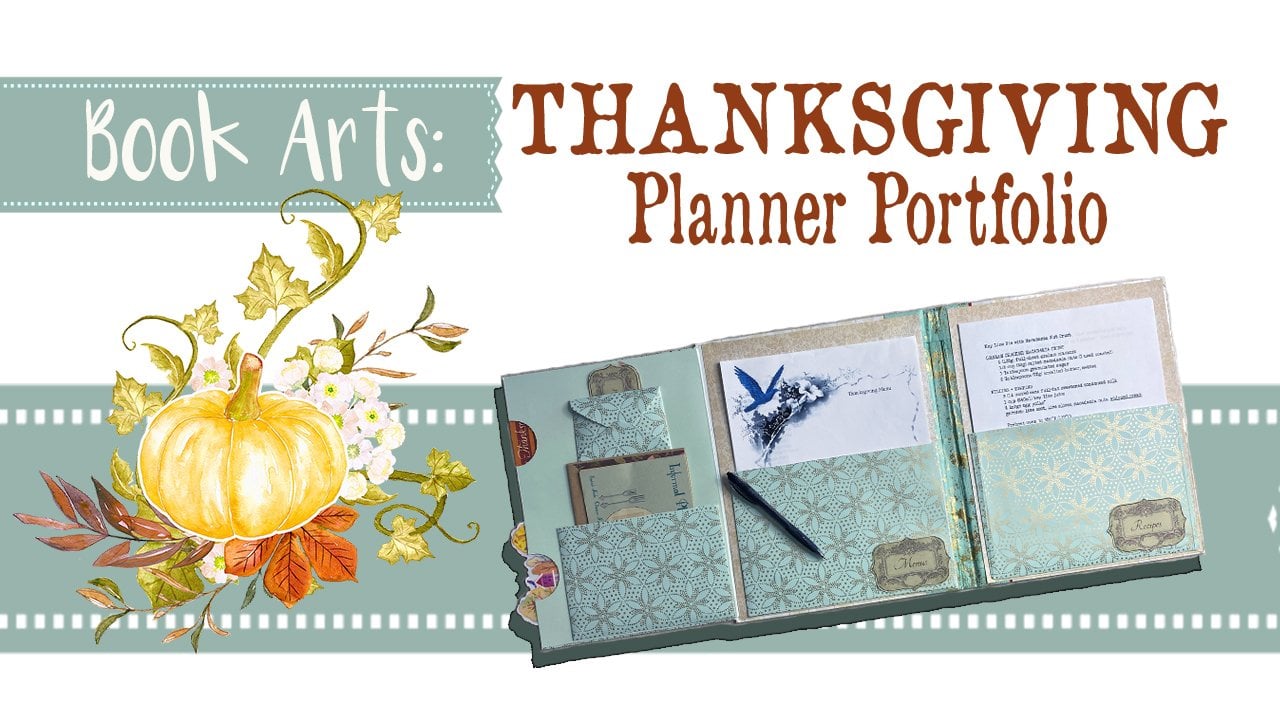
8. Class Wrap Up: So here is the journal insert that we created in class along with our belly band to hold it together. We folded up the file folder. And this one, in this case I used an orange one. And we have all these pockets that you can tuck things in, along with a finished edge and secret pockets as well. And these are just variations that you can do on a basic theme that we created with our file folder. If you don't line up the file folder tabs, by cutting off the tabs exactly evenly, you'll get this little lip, which is interesting in itself. Here I did the same technique to, there are no secret pockets in this. And on this one I just filled it with various tags that I wanted to save. So it's kind of an ephemeral folder here. Again, it's the same technique and I have that belly bands to hold it all together. Now I have a few more to show you. A couple are made the way we did the first one with our cut flush and the other ones have this little step. So on the ones that are cut up flush, I have this one where I didn't even cover my file folder with paper and I have just recipes tucked in here. I took this in a cookbook and I can use it as needed. Now for this one. Very similar setup to our first one. And just by choosing the different color paper, you get a different mood and a different effect. For these two. This one's a themed one for Halloween. I just embellish the back and the front. And then here instead of secret pockets, I just taped piece of card up here. And so I can pull this up and write a note. And I did this on either side. And I just have more themed Halloween cards along these pockets. Have my belly band that I can use to hold it all together. And for this one it's just a simple steps journal insert. And I kept very interesting pictures here, very Parisian inspired pictures. I hope you'll try your hand at one of these journal inserts, either as a standalone paper art or something to tuck inside your art journal. Please be sure to follow me here on Skillshare to get notified of future classes, please consider leaving a review and snap a photo of your work and post it in the project section. Thanks for joining me today.
 Daniela Mellen, Artist & Author