Transcripts
1. Introduction - How to teach others - Part 1: hello and welcome to this three part cause with the title. How to teach others. What you need to know. This three part cause will give you a good overview off pedagogue and methods, theories, tools and practical tips regarding teaching others in real life or on the Web. It will be suitable for you if you work or want to work as a teacher if you want to hold your own courses or if you want to learn how to teach others overall. But who am I? And what qualifies me to teach you about pedagogy and did tactics? My name is Nicolas, and I work full time as a teacher here in Sweden. I have a master's degree in pedagogy from Gothenburg University and Academy of Music and Drama in Gotham, and I have been teaching for 10 years in the Subjects Off Music, Crofts, drama and history. I am also specialized in computer science and development and also in research regarding formative and some motive evaluation off students knowledge. This is the first part off the three courses. Every part will consist off several lessons and will have different types of orientations and project, but they will also be closely connected with each other and have projects that will help you evolve. As a teacher, I must emphasize that you will have the best experience and progression. If you take the courses in chronological order, I will now give you the class outline. We will, of course, start at the beginning. First course will entail these specific topics assessment for learning, formative and some motive assessment. This is a very important subject that will help you immensely on your journey as a teacher . Relational learning. This will address your sentiment regarding your students. Feet up, feedback beat forward. So important you surely have heard about feedback. But there is more to this than you may think. Unified foundation off knowledge. How do you and your students relate to knowledge and how can you get the same understanding regarding this peer assessment and self assessment Assessment is a big part off the learning process, but it can also take many forms re understanding. Meet the students where they are. Everyone in your class is a different individual, and we must take this into account in every group with teach Project one out of three landing your own project or course in the first project, we will plan our own course class or project. We will later juice this in the next project after we have gone through course, two out of three. Here is a quick overview off the other two courses. In the second part, I will speak a little about these topics, the importance of reflection and evaluation and how to use it. The importance of varied forms of learning, the importance of metal language discussion models, then diagrams and circulating beehive. No hands up and collective answers, lesson planning, how and why and finally the second project where we will use our first project to plan a new lesson. The third course will entail the following parts the importance off source criticism, no impact treatments, the importance of student participation, how to construct and correct tests, formative method, illegal cooperation and interdisciplinary learning, high expectation and cognitive challenges. And lastly, we will have the third project evaluation Off Project one and two. I will end every part with some final thoughts and tips. If you find any of the videos especially interesting, I will be happy to make a more detailed class on any of the subjects. There is always much more to say about all of this. But these three part cause will give you a solid based stand on regarding pedagogy did tactics, theories, methods and practical use. So I will see you in the next video.
2. Assessment for Learning - Formative- and Summative Assessment: Welcome to this video regarding assessment for learning in this first part of my Siris on how to teach others, we will take a closer look on how to use assessment. Four. Learning instead of using assessment off learning. There is a big difference there on. I will be your humble guide on this journey so way will begin at the top. What is the difference between assessment four Learning and assessment off Learning To really get to the root of this question, we have to begin asking ourselves what is assessment. To answer this question, we start by splitting it up into two different forms of assessment, namely formative assessment and some motive assessment. Some motive assessment can be described as a final assessment. Something has been done and a final assessment is made by, for example, a teacher. Another example could be that a student is done with a specific course or task and will now get her or hiss final grade. It is the word final that is the core word in this type off assessment. Formative assessment, on the other hand, has the word progress as its core word, and always focus is to give the student. The best conditions to grow into advance in the subject task and or skill formative assessment and formative learning will take place when the teacher and the student work together and uses tools as, for example, peer assessment, different types of feedback. Discussions about the foundation of knowledge. Why do we learn something and relational learning? Throughout this course, I will guide you through all of these different types of tools and explain them in detail. But for now, we will just state the facts that if the students and the teacher worked together thoughts a common goal, they will both get much better results. Current research tell us that success factors linked to formative learning and assessments are efficient feedback. The students are engaged in their own learning process. The learning process are adapted to the results of both forms off assessment, formative and some motive. The students are training to assess their own capability. The students are aware off what is expected of them and how they can improve that the students have enough time for learning and also get several chances to improve and show their skills. I will add, though that there is no contradiction between some motive and formative assessment, both of these types of assessments are needed. For example, we could use some motive assessment to make formative decisions. Use both types when needed, but also know when to use. Which one. Do you have any questions regarding this video? Feel free to comment in the comment section or send me a message. I am very interested in what your thoughts are regarding this video. Now we will dig deeper into different types of methods to juice regarding teaching. Others. Let's move on to the next video.
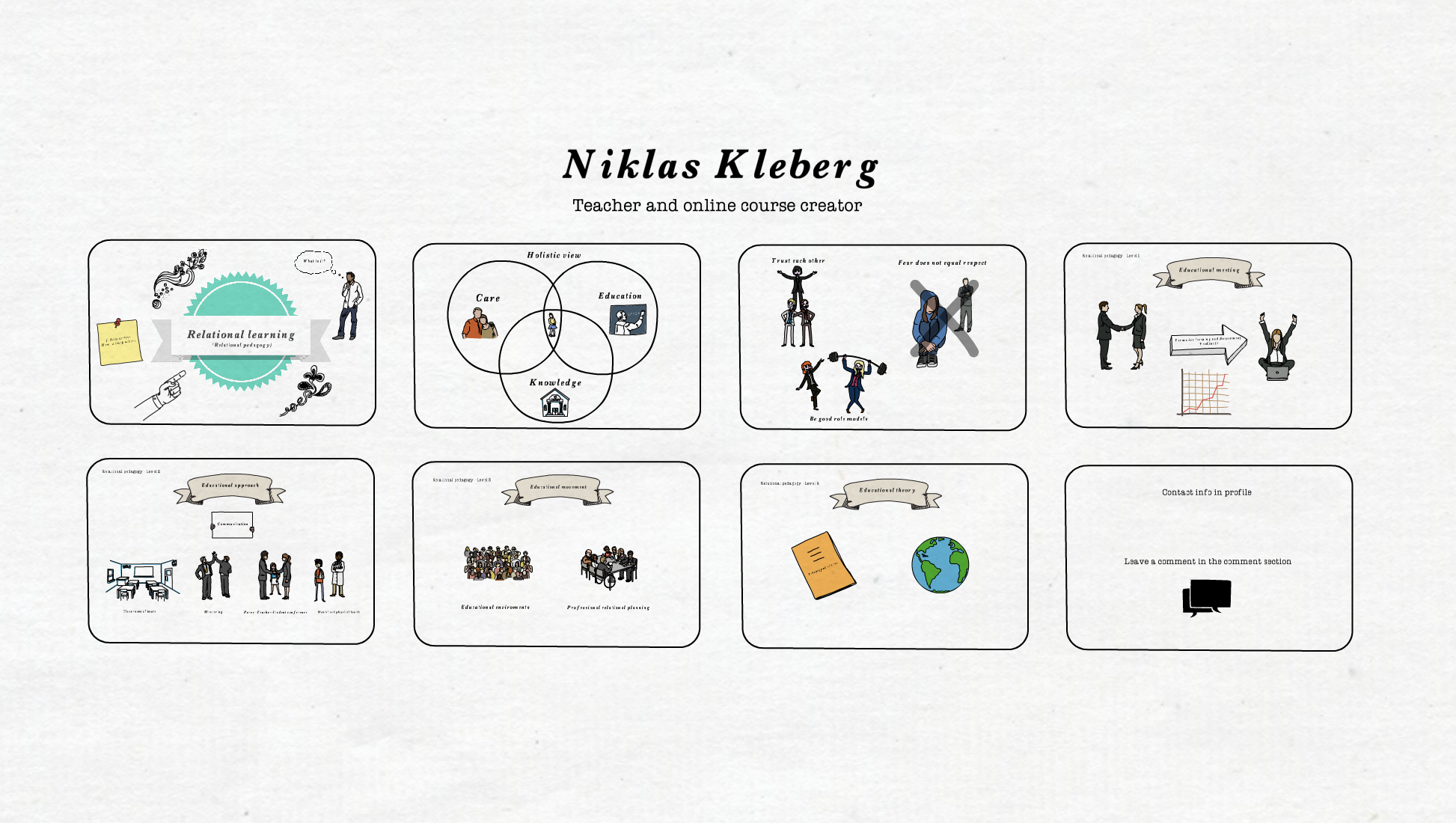
3. Relational learning: it is now time for the second video regarding how to teach others. Last time we touched on the subject assessment for learning, which, in my opinion, is an essential aspect for an a teacher to have a good understanding and knowledge. About this time, though, I will talk about something that is also a very important aspect off teaching others, namely relational learning and thus less time. We will begin with a question. What is relational learning? Or, as it also can be called relational pedagogy? Relational learning takes a holistic view on knowledge, care and education, which are integrated together. If we look back at our lives, we often see that if a relationship had trust, care and creativity in its core, it also thrived the most. This is true in all forms of relationships. I am not saying that we should be friends or pouts with our students. Know it is very important to have a clear line where you are. The teacher and the students stay on the other side off that friendship line. Otherwise, it will be hard for you to be objective in your assessment and or teaching methods. But I am saying that we as teachers and care for our students and help them to evolve and grow as much as possible. We also want them to trust us, and we should be able to trust them. I can't help to quote Joey in that Friends episode, saying it's all about giving and receiving, receiving and giving many young people as a misconception about what respect is and how it waas. Respect is not fearing another human being and to be afraid off some consequence. No respect is about a feeling off admiration for someone or something elicited by their abilities, qualities or achievements. Therefore, we as teachers should be good role models, don't you think? Sometimes we talk about four levels of relational learning. I will now refer to Eunice a splint and Stan Patterson's book about relational pedagogy. And yes, they are from Sweden S. M. I. First, we have educational meeting. On a fundamental level, Relational learning stands for a meeting between two people, which one part will help the other part to grow and evolve. They both share the process and that reacts to each other. Teacher assesses the situation and adapts the lessons to help students move further we'll talk more about this in the video regarding different forms of feedback. Second level is educational approach. This level focuses on the teacher's ability to stimulate the students learning process in an educational context. Communication is the core word in this level to create this type of context or learning situation. We could work on our classroom climate, which I will talk more about in another video. But we could also focus on mentoring, parent teacher, student conference or student care with focus on both mental and physical health. In short, you could say that this level focuses on knowledge that grows in the communicating space between teacher and student air go formative learning rather than something passing from one person to the next without reflection. Level three is educational movement. In short, you could say that this means that students moved through different types of social gatherings and educational environments. All of these types of environments are led by professionals that are also planning it all. With relational learning in mind, Professional talks with colleagues are important to grow us a teacher. The final level educational theory in short, pedagogy off relation. In this level, we est aegis see the benefits off, keeping an eye on new research regarding relational learning both nationally and internationally. I will speak more off how to apply these types of pedagogy further head in this course. But if you have any questions regarding this video, feel free to comment in the comment section or send me a message. Now let's get on with the next video.
4. Feed back, Feed up and Feed forward: In this video, we will get more hands on on how to use formative methods in an educational setting. As previously has concluded, both the students and the teacher get much better results if they work together towards a common goal. It is in the formative dialogue between the students and the teacher that really can get these good results. Ah, handy educational tool to accomplish this is different types of feedback. We will divide these types into three categories that work together. Feedback beat up and feet forward. If you give a student feedback, you talk about where they are in their learning process. At the moment you are here now, and these are your results. After this, we moved two feet up. Where are you going now? What is your goals? What is the next step in the students development? Be sure to communicate this well so that both you and the students are on the same page. Lastly, we have feet forward. How do we reach our goals? What methods, tools and or theories can we use to move forward? This is an important step that is best accompanied by discussions regarding why we learn certain things I will speak more of this in the next video titled Unified Foundation of Knowledge. Through my own school years, I often only got the first category of feedback and therefore the education was mainly summited in its form. We need all three forms of feedback to move forward in a formative manner. We will now connect this feedback tool to the next video about the foundation of knowledge . But if you have any questions regarding this video, feel free to comment in the common section and or send me a message. See you in the next video.
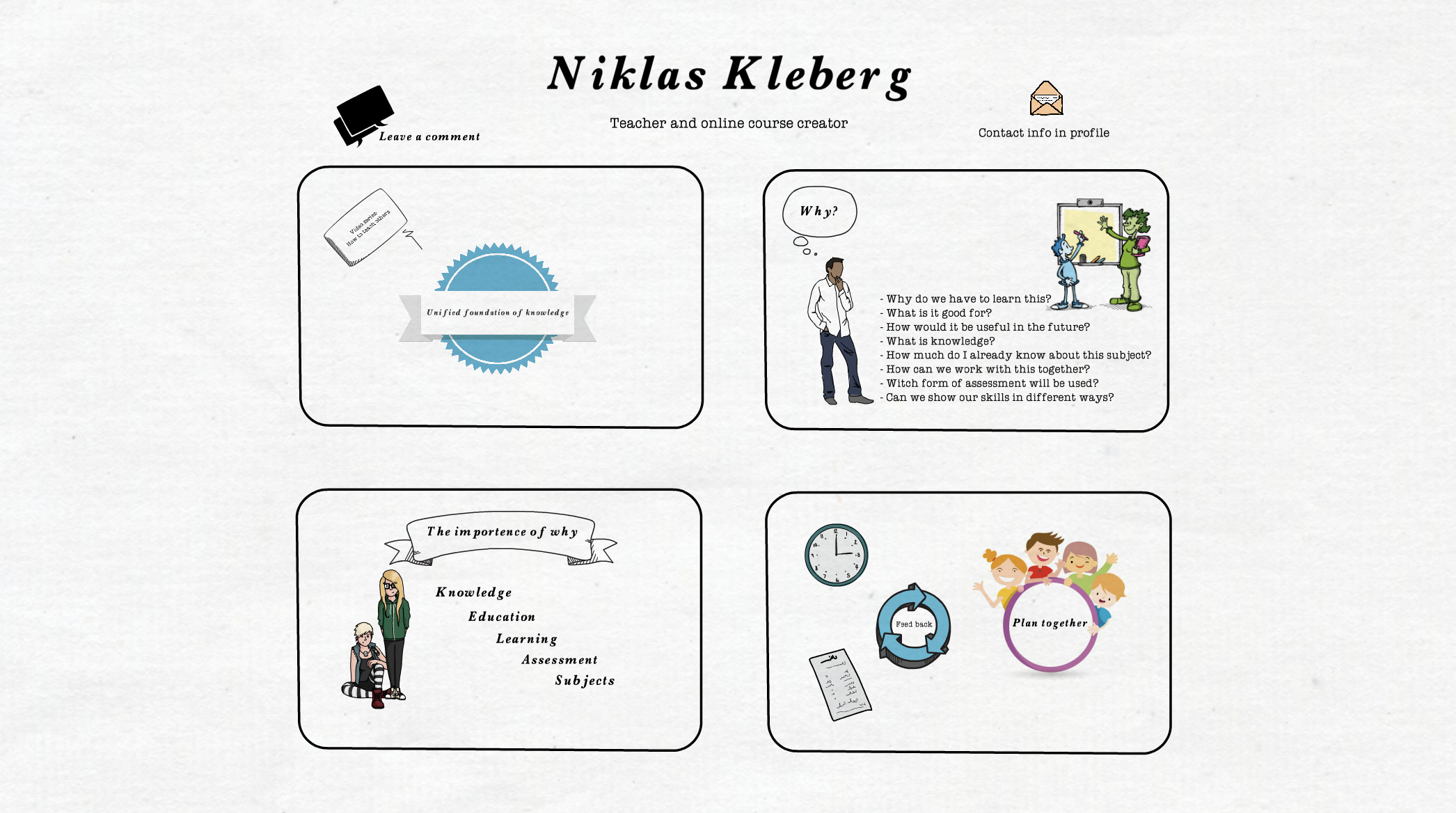
5. Unified foundation of knowledge: a unified foundation of knowledge for the grand sentence, but nevertheless it is very important. In short, we could say that this is an educational tool that answers the question Why research shows that students and a teacher have regular conversations regarding knowledge. It would greatly benefit insults. For example, you could work with these types of questions. Why do we have to learn this? What is it good for? How would it be useful in the future? What is knowledge? How much do I already know about this subject? How can we work with this together? Which form of assessment will be used? Can we show our skills in different ways and so forth? The importance of why should never be underestimated when it comes to the students motivation regarding learning new things. These types of talks will ultimately give the student and the teacher a unified foundation of knowledge guarding, for example, knowledge, education, learning, assessment and subjects. If you have the opportunity to also plan someone the education together with students, this will also benefit your results greatly. Research shows that students that arm or involved in their own learning process will get much better results than students that all if all of the teachers lesson U. S a teacher, know the task, skill or curriculum that all schuettler. But if you in some way could plan a portion together with your students, it will give you a long way. Maybe you could plan the time frame or some form of assessment or test. Let us always. I am only a guide. How do you accomplish these things If you choose to use the methods is entirely up to you. Have any questions regarding this video? Feel free to comment in the common section or send me a message onward to the next video.
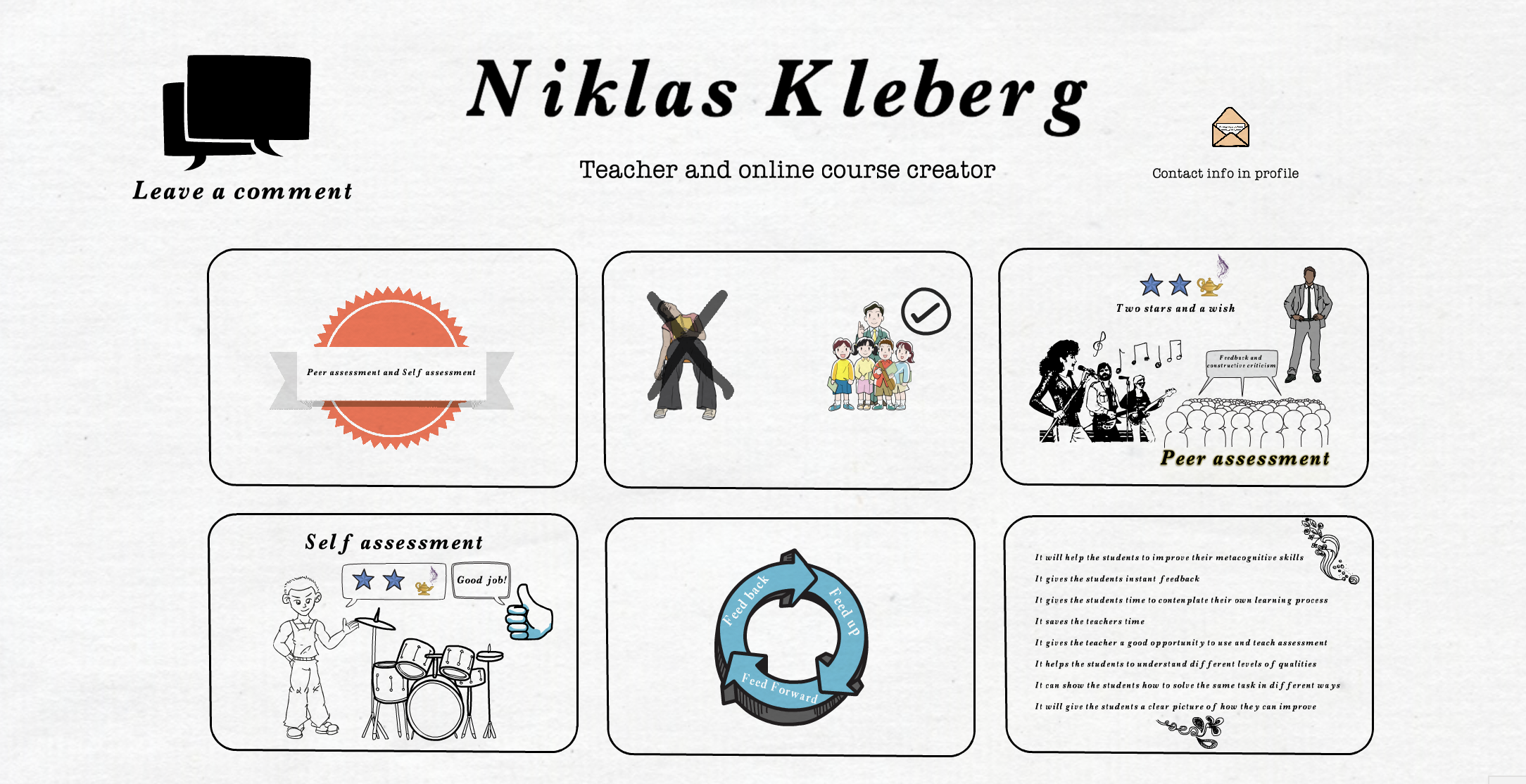
6. Peer assessment and Self assessment: in this video, we will get to know the methods off peer assessment and self assessment A little better. As always, we will start at the beginning. What is peer assessment doesn't mean that the teacher just takes a break from teaching to let the students assess each other's performance instead. No, that's not how it works. But students will have a big role in this form of assessment s tail with shoot on the take part in their own learning process. To make this a bit more down to Earth, I will give you an example on this court assessment when I use pay assessment in my own classes. It could look a little like this when I start a new project or task and make sure to tell the students, among many other things, that we will speak more about regarding lesson planning later on that it will contain peer assessment. In this scenario, we could picture that the students have been working in different groups and have all learned to play a new song off their own choosing in pop and rock ensemble. Fast forwarding to the last day of the project, the first group takes their place on stage and performs this song in front of the other groups is sure to know that U. S A teacher assesses both the people on stage and those in the audience Often this performance the teacher, me in this case, if the word to the audience using this simple method two stars in the wish. What this means is that the students in the audience will give the group their assessment in the form of two good things. They did a k a, the stars and one thing they could work on until next performance. I wish it could let all of the students in the audience on. So if the word by random, let them raise your hands. Four, let them answer as a group. How you do this depends on the group and how familiar they are with this form of assessment . It will get easier with time. It is off out most importance that the wish is in the form of constructive criticism or else this will not work properly. The teacher is always present and are helping the students along the way. During this process, when the audience have said all that was on their minds. The teacher let the group that played the song assessed their own performance self assessment, using the same principle to stars and wish. Hopefully, you'll have a good discussion and a fun learning session together and be sure to lift their spirits if they are not so pleased with their own performers. We learn by failing from time to time, and it has to be okay to do so. Lastly, the teacher gives his or her first old formative assessment feedback feed up and feed forward, and it's them time for the next group to take their places on the stage. And hopefully they now have a lot of new tips to make yourself when playing their instruments. Then why should it use this type of assessments? Here is why it will help the students to improve their meta cognitive skills. It gives the students instant feedback. It gives the students time to contemplate their own learning process. It saves the teacher time. It gives the teacher good opportunity to use and teach assessment. It helps the students to understand different levels off qualities. It can show the students how to solve same task in different ways. It would give the students a clear picture off how they can improve. The method can be adapted to almost all forms of learning processes. For example, it could be used in writing when several students share the same documents with the teacher . There is always much more to say about this, but this is the fundamental process of Pierre, and self assessment is sure to let me know. If you want to know more about this, you can now continue to the next video.
7. Preunderstanding - Meet the students were they are: this video will take a different form than the previous videos. I will address the fact that your students all will have different forms off pre understanding one day. Enter your classroom or online course, for that matter. Let's say that you are teaching the students about the different types off fish living in a specific lake. Off students know what fish are, but I don't know anything about different kinds of fish or how they function on the water. Some of the students are used to fishing in this bad time, but only half of them have been fishing in the lake. The other half of the fishing students on Lino both fish from the sea. Some off the students have been to the lake you're talking about so they can picture it very well. Two students in the group have never heard of this strange creature you call fish so they can't even pictured in their heads and so on. If said, teacher now ignores this fact that the students also are individuals with different backgrounds and therefore begins by explaining why fish have gills. He or she will have already lost many of the students, all of these students have different kind off pre understanding off the subject, your teaching and if it's your job as a teacher, to acknowledge and adapt your teaching methods accordingly. This is not an easy task, but it is a one off the most essential things that makes us good teachers. If we don't adapt and change our teaching methods after the fact that students have different kinds of pre understanding, we will have a big problem both with the group but will also lose a lot of students in the course along the way. But it is time consuming is something that I'm her teachers say many times it is understandable that you may think this way, us even if it takes both time and a lot of effort from the teacher, the results will be much better in the end, are there for that? Several off the techniques and methods that I now show you will help you along the way. The important thing to note is that all students are different and it's also this factor that makes the job as a teacher so exciting. Time for the next video
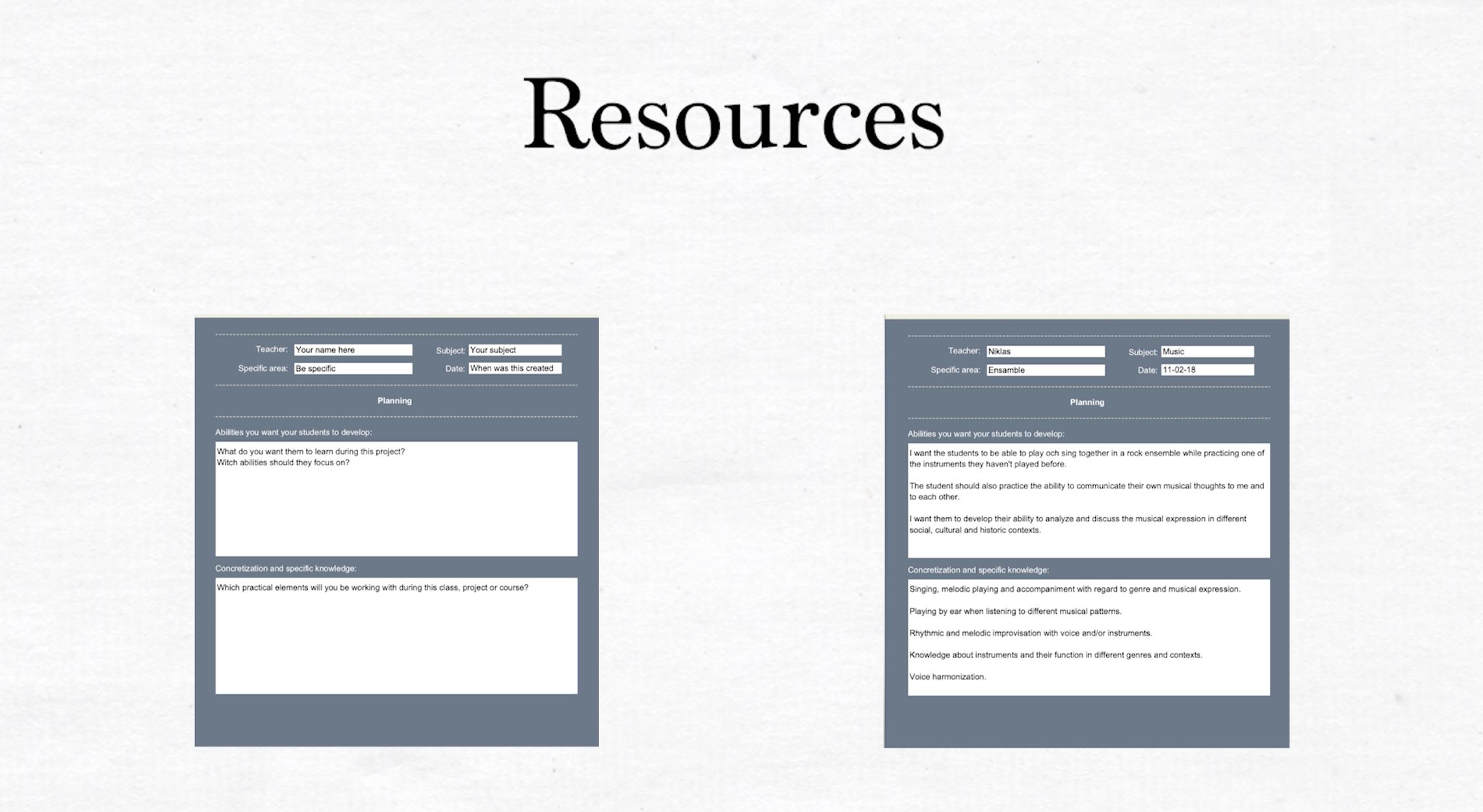
8. Class Project 1/3 - Planning your own project, class or course: In this first project, we will explore the practice of constructing a new course class or project. Together, we will then use this project in part two off this course where we will break it down into smaller parts For lessons in the resource section. For this class, you will find to rideable pdf documents. You will have to download at least the one labeled how to teach others Clear Berry teachings Project one. When you have opened this document, it will, together with this video, help you complete the first project in this three part course. The second document has already been filled in by me to give you an example on how to use properly. Let's take a closer look at the document that you're going to use for this task. We will start by filling in our name. This will be your own creation. After all, in the field named subject, you simply fill in the overall subject that you are teaching in. For example, it could say music, math history or simply engineering in the field name specific area. You should specify what part of your subject you're planning to teach. For example, if you previously have chosen math as your subject in this field, it may say trigonometry or multiplication. In my example document that I have included in The Resource is I have written music as my subject and because I want to teach students to play music together in smaller groups, I have put down ensemble as my specific area. Finally, we should write down when your document was created. This could later on be an indication to you that it may be time to update or review a document that was made some time ago. It is now time to start the real planning. We will first write down the abilities that we want the students to develop. What did you want them to learn during this project? Which abilities should they focus on? In my example document. I want the students to learn how to play instruments. So I write down the following. I want the students to be able to play and sing together in a rock ensemble while practicing one off the instruments they haven't played before. The students should also practice the ability to communicate their own musical thoughts to me and to each other. I want them to develop their ability to analyze and discussed the musical expression in different social, cultural and historic contexts. In this way, I make it clear both for myself and fold students what it is that we're striving for together during this project. In the box below, we want to come criticize what special knowledge we want the students to learn. Which practical elements will you be working with during this class project or course? This may, of course, vary a bit from students of students. In the example document, I wrote down the following singing, melodic playing and our compliments with regard to genre and musical expression. Playing by ear when listening to different musical patents. Rhythmic and melodic improvisation with voice and or instruments, knowledge about instruments and their function in different genres and contexts. Voice harmonisation. The voice parts, of course, only applied to the students that would sing during this project. The project is now taking form and we have a clear goal and focus for both students and teacher. Okay, time for skills and requirements. What is the minimum requirements and skills a student has to achieve to pass the course class or project this box may be irrelevant for your project. Maybe all students passed your course regardless how much effort they put in. If this is the case, you should leave this empty. In my example Document I wrote down the following The student are practicing during the lessons, is following along and are developing his or her musical skills. The student can participate in the ensemble with her or his instrument or voice. With some timing, the student can listen to the music and adapt his or her parts to the group s whole students adapt their part to the musical genre. The student can interpret the music and improvised his or her own musical parts. This is important to really communicate to your students. It is our job as teachers to make all the students know exactly what is expected off them every time they participate in our lessons. We're almost finished with our documents, but we have two boxes left. Let's fill in the box with the title evaluation, examination and timeframe. How will you evaluate and examine this course together if possible? Plan this together with students? I wrote down the following timeframe. Six lessons. 60 minutes each. Formative discussions This is a given for me for months in a group together with peer assessment and the method to start on a wish. The teacher will, of course, give feed up feedback and feet forward, and exit tickets will be used during the lessons. Now we know how the project class or course will end and can start working towards this together. The final box informs the students what materials and re sources that are available to them . During the lessons I wrote down the following in My Box Cheat music with courts, melodies, instructions and lyrics, musical recordings on digital media instruments for rock ensemble, musical materials and aid for tuning. No, we're finally done with our planning and will now save and upload this document to the project section. I will give formative feedback to all of you that do this and we will learn and evolve together to recap. We now have decided what abilities students shoot, develop what specific knowledge sets. They are going to work with what skills and requirements that is needed to pass the course , how it should be evaluated and which form of extermination that will be used. How much time it will take and finally what resource is and materials were going to use. We will also use our new documents in the next project in how to teach others. Part two. You will surely edit and change some things in this document as we go forward on our journey through pedagogy ended acting's and that is how we grow as teachers. Let's move on to the final video in this close where I will give you some final thoughts and tips.
9. Final thoughts part 1: I once heard about a woman that got new neighbors living next daughter. One day, the new families little girl came over to say hi. The woman let the girl in and asked her if she wanted to have some cookies. Told Glass Little girl Waas off course. Delighted and accepted this nice off while they were sitting there eating the cookies, the woman asked the little girl. And how old are you, my friend? Girl, you stared at the woman without saying a word. Maybe she didn't hear me properly. The woman thought and asked again. I said, How old are you? Once again, she will Smith with silence. The woman dropped the topic and they ate the cookies speaking about other things. But when the girl was about to leave, the woman tried one more time and said, I was wondering, How old are you? My friend? The girl gave her an angry look and said promptly, I am not old. I'm four. The moral off This story is, of course, that we can't keep asking the same question and also expect a new answer each time. Way have to change our methods to get new and better results and adapt them to the person that we are trying to communicate. This concludes the first part of this course after you have finished your project, be sure to post it in the project section. I promise that I will give some formative comments to help you along the way. And don't forget to join May in Part two and three off these courses about how to teach others. And be sure to let me know if you have any questions or thoughts about these videos. I will also recommend that you go back to the videos from time to time. Repetition makes the master you know, that's all for this time I see you soup.
10. Part 2 Introduction: Hello again and welcome back to this three-part course
with the title, how to teach others
what you need to know. As I have previously stated, this three-part
course will give you a good overview of
pedagogy methods, theories, to practical tips
regarding teaching others. In real life or on the web. It will be suitable for you if you want to work as a teacher. If you want to hold
your own courses or just want to learn how
to teach others overall. If you for some reason
has chosen to start with this second part of the course without
viewing the first one, you need to know who
I am, don't you? My name is Nicholas and I worked full-time
as a teacher here. I have a master's
degree in pedagogy from Gothenburg University at
Academy of Music and Drama. And I have been teaching for ten years in the
subjects of history. You see drafts and drop. Also specialized in
computer science and development and also in research regarding formative and summative
evaluation of students knowledge. You are now watching
the second part of the three-part course, every path will consist
of several lessons and we'll have different types
of orientation and projects. But they will also be
closely connected with each other and have projects
that will help you evolve. As such, I must once
again emphasize that you will have
the best experience and progression you
could take the course. I will now give you the outline or the second
part of the course. The importance of reflection and evaluation and how to use it. We have to learn how
to use these tools in an efficient way to help
the students move forward. The importance of varied
forms of learning. All your students are different
and we therefore need different forms of learning
in our classrooms. The importance of metalanguage. I will go through the
importance of metalanguage and how and why you as a
teacher should use it. Discussion models, Venn diagram
and circulating beehive. I will teach you different
ways to use discussion models, which are students, no hands
up and collective answers. Here, we will give you
some methods to help your students speak more
freely in a large group. Lesson planning, how and why. It is important to plan our lessons correctly
to get good results. And finally, we have
the second project, Project, Two out of three, where we will use
our first project, your overall plan
for your course, to make a new lesson. In other words, we will take your overall plan
for the course or subject and begin
breaking it down into smaller parts as
individual lessons. And as always, I will also give some final words of encouragement
and tips along the way. Now, if you missed
the first course, here is a quick overview. We spoke about
assessment for learning, formative and
summative assessments. Relational learning, feet up, feedback and feed forward unified foundation of knowledge. Assessment and self-assessment. Pre understanding, meet the students
where they are. Project one out of three, we planned our own
project or course. The third course we'll later
entail the following parts. The importance of
source criticism, low-impact treatment, the importance of
students participation. How to construct and correct
tests, formative method, collegial cooperation and
interdisciplinary learning, high expectations and
cognitive challenges. And finally, the third project, evaluation of project 1.2, right out and get
constructive feedback. If you find any of the videos
especially interesting, I will be happy to make a more detailed class
on any of the subjects. There is always much more
to say about all of this. But this three-part
course will give you a solid base to stand
on regarding pedagogy, did tactics, theories,
methods, and practical use. So I will see you
in the next video.
11. The importance of reflection and evaluation and how to use it : We all know that we
have to reflect and evaluate to evolve in
any type of situation. It is when we take a
step back and think about what we are doing and
how we're doing it too, that we get in touch with
our metacognitive cells. This is also why I love teaching about teaching, aka dedactive. You will have to really think carefully on how and why
you teach as you do. In order to teach
this to someone else. You turn off your autopilot. But how can we use this? In our daily work? As a teacher? We often give the students some
form of evaluation. They have taken a
course or subject. This, I mean that they evaluate what the cause
was like for them. This always happens when we are finished with the task at hand. What we want to do is to use
this type of evaluation, if not daily, at least
very often in our classes. I will give you two of my best tips doing just
that in this video. The first one only works good if you have a good group
climate, the class. That is also something
to really strive for because it makes everything so much easier on every level. After you have present
something new in your class. E.g. you could have shown how to solve a new kind
of math equation. We should stop and
let the students reflect on their
own understanding. You could now ask them, how many of you found my explanation a
bit hard to follow. You could say really quick. Everyone with me on this. The students now
have three options. They can show you thumps up, which means I get this. I'm with you. They can show you a thumps down. This is still a bit hard for me. I have trouble following
the last option, thumbs to the side. It makes sense. But I'm not there yet. If this is done often
and quite quick, the teacher can make a split-second decision
on how to proceed, e.g. Okay. I can see that
everyone gets this. I don't need to go through
these one more time right now. Oh, several of the
students don't get this. I have to go over it again in some other ways so
they can understand. This way. You don't lose
any students on the way. Another method of
evaluation that can be used this exit tickets. After you are done with
us specific class, you could give all the
students what posted each and then give them
a question to answer. E.g. you can ask him, write down one thing
you have today. Write down one thing that you think the teacher should
repeat next lesson. Then collect all the posters by the door when
the students leave. It is important
that the students don't write the names and the posttest that it is
completely anonymous. You will be amazed
how well this works. After while. You learn so much, what works and what have to change to reach the
students in a better way. You could even use
the two stars and a wish on the exit
tickets if you want. And it is of course
possible to do this with a digital form
or mail if you wish. Do what works best for
you and your students. Have learned a lot of
things doing this. One time one student wrote, I have learned
that I need to eat breakfast before I
go to school and go out the dog much earlier so I don't get to
class too late. This answer was not
what I expected, but the student had learned
an important lesson that day. Sent me a mail. If you want to know
more about these types of reflections and evaluations. It's good to now go
on to the next video.
12. The importance of varied forms of learning: I once saw a picture that made fun of an old form of pedagogy. In it I could see
a teacher teaching different kinds of animals
in the same class. The students consisted
of a seal, a goldfish, a dog, an elephant, a bird, and a monk. They were all sitting
under a big tree. And the teachers, For
a fair selection, everybody has to
take the same exam. Please climb that tree. Every one as well can understand all of
the animals will not make it up the
tree without our help. Some of them will make it
just fine. The goldfish. That's a tricky one thing is that this exam was wrongly
designed from the start. And we should really ask ourselves what the
purpose with it was. If the goal was to teach
the animal students to work on their
endurance and stamina. There are better ways to
teach that to a seal, then climbing a tree. The seal will only get sad
and fail this type of test. But if you said to seal, you will show us your
endurance and stamina by swimming through these wild
currents to the finish line. And you, Mr. elephant, will lift this tree
up by its roots and laid on the ground
before us and so on. The thing I'm getting
at is that a teacher should be very specific
about what the goal is. Then helped the
students get there in different ways that suits
their specific skills. Really understanding
conditions and so on. We have to meet the
students where they are in their learning process and acknowledge that we are
different in so many ways. With this said, you should also bear your teaching methods. E.g. some students best show their abilities by writing
tests or a report. Some do the same by
practical demonstration, and some by speaking
in front of others. Have this in mind when you
give the students new tasks. And if it's all possible, let them choose how to show
you what they can accomplish. Let's take this with
us to the next video.
13. The importance of metalanguage: Another fancy word
often used regarding pedagogy and teaching
is metalanguage. But what does it mean? And why do we want to use it? In pedagogy and dedactive? We often speak about the
subjects own metalanguage. To be a little more specific, you could say that
you have to use the right words that is accompanied to the
subject at hand. E.g. if I were to teach my
students how to build a house, they are going to be
carpenters in the future. We would have to use the right words and
language for this task. If a student were to tell me, I don't know what
I was doing wrong. But when I use the bunker to put the metal pain in
the wood, it bends. It would take time for me
to decipher that statement. And if the student left
my class not knowing the right words or language
used by carpenters. He or she would have a hard
time working with others. If the student had used
the right metalanguage, this type of subject, it would have
sounded a lot like, I don't know what
I was doing wrong, but the nail beds, when I use the hammer
to attach to the wall. You could say metalanguage is the language about language. And you as a teacher could,
with your questions, help the students to reflect about their
own learning process. You can't reach
the higher levels of thinking in any subject. If you don't know how to
express yourself correctly. This applies to everything
you are teaching. E.g. I don't let
my students say, I need to use a plastic thing
when playing the guitar. That plastic thing
is called a vector. That is what we use to name it. The same for more
complex statements. If a student refers
to a minor chords, characteristics as darker
than the major chords, I will correct them because I know that they really mean that the chord sounds more sad
than the major chords. That sounds more happy. It is quite a distinction
between dark and said. Even if you know what
they really mean. In short, use the right words for whatever you are teaching and teach the students the importance of using
them in the right context. Now, let's talk a
little more about different discussion model you can use with your students. Onward to the next video.
14. Discussion models - Venn Diagram and Circulating Beehive: I have mentioned the group and, or the classroom climates
several times now. And it is because it's a vital component to reach as
many students as possible. In this video, I will therefore speak a little about how you can improve the discussions and overall group learning
in the class. When you want the students to converse around a
specific topic, you could use different kinds of discussion models to
help them along the way. I will give you a couple
of examples in this video. First up, we have the
Venn diagram method. This is the type of
diagram that shows the logical relations
between different sets. And it was popularized by
John Brennan in the 1880s. With this method, you could e.g. illustrates simple set of
relationships in probability, logic, statistics, linguistics,
and computer science. Let me show you how it works. If you separate your students
into different groups, you could let them use
the Venn diagram to start their discussions
on a specific topic. Let's say that they
are supposed to talk about two different things. In this method, you use different circles to
compare different things. Where the circles
are overlapping, they are alive, where
they are not overlapping. They are different
from each other. Let's say that you
let your students compare water and coffee. Let's list some of the traits
for these two beverages. Coffee, liquid, dark, warm, water, liquid,
transparent, cold. Drink. Now let's draw two circles and assign one of them to
coffee and the other one to alter the things that differ
them from each other. We put in the circles areas, and in the middle, we put things that they have in common. If we want to make
it even more clear, we could put different
colors on the circles. And if you have more
things to compare, you could make three or
four circles that overlap. In the beginning. It works best with two though. In conclusion, by
using this method, you can help the
students to summarize, compare, or comprehend
information. Another good method for
constructive discussions is one that I myself has chosen
to call circulating. We could e.g. say
that you have for big subjects that you and your students have to
discuss in some form. Begin by assigning for leaders for each of
these four topics. They now spread out two
different tables with a big paper and a pen each day. Then write the names of the topic in the
middle of each paper. This is done. The other students now can move freely in the room for a while before deciding which topic they
want to start with. Each group start discussing
the subject by giving one person time to speak
without interruptions. When he or she is done, the other may give
some short comments on what has just been said. They now move to the next
speaker until all of the group members
has had the time to speak without interruptions. All the while, the
leader put down some keywords and
notes on the paper. The teacher then rings a bell, and all of the students moved to a different HIV or table. The leader stays behind
and begins to explain, in short to the
new group members what they have
previously discussed. The new group selects
a new leader that now we'll add new
keywords and notes. When everyone is circulated to all four tables,
you as a teacher, it takes the papers and you all take a moment to discuss
each subject's keywords. With this method,
all of the students get to give input on
the subject at hand. And it also saves time both for the students
and the teacher. Try it out and see
what you think. It is now time for a new video.
15. No Hands Up: So in this video, I will address two
different methods that will help your
students to be more outspoken in discussions in your classroom or in some
other form of gathering. First up, we have the
method, no hands up. How many years all
over the world we as students have
been told to raise our hands when we want to show that we know
something about something. In other words, to show your
skill and get good grades, you should be comfortable to
speak in front of others. We know that this is not
the case for everyone, especially if you are an introvert with the
method no hands up. This practice is flipped and everyone can get to
answer every question the teacher can ask
anyone in the classroom and the students know that
this is the case going in. At first, you may think that this will have the
opposite effect on the students and give them
even more stage fright. But this is more
often not the case. The first time they will
maybe be somewhat reluctant, but this will pass. Now they instead asked me to use this method because it
releases the pressure of being on your toes to get the right question in the
right time and so on. Now, this method could be modified in many different ways. E.g. you could write down the names of
all your students on ice cream sticks that you then draw to know who will
answer the next question. You can also use two
decks of cards and distribute one of
them to the students, and then draw cards
from the other deck. Which year did the
Second World War and Queen of Hearts? Do
you know the answer? Of course, you can use tubes to randomize
names on a screen. This last one has been very
popular with my students. I also have added some additional things
to this method, e.g. when one of my students gets a question and don't
remember the answer, they have the possibility to ask one of the students
sitting right next to them so that they can
help each other with the question they are
learning together. I also add some
ice cream sticks, cards, and digital notes
with the phrase, hands up. When this comes up, all the students
have the opportunity to answer the question. If the raised their hands. If a student passes and
don't know the question, his or her name goes
back into the pot. Just remember that
the classroom, digital or in real
life, it's a workshop. Workshop we can and should
make mistakes to learn from. And it is our job as teachers to show the
students this fact. Another method to help the
overall discussion climate in the classroom is a form
of collective answers. The students get to discuss a specific topic or question
in a group of two or more, and then gets to give a collective answer
to the whole class. This format discussion often
helps the students that have difficulties
to speak in front of other because
they are afraid. You get the answer wrong.
But it's always get easier. If instead of being my answer, it is our opposite. If you want to know more about different ways to help
students to speak their minds, just let me know so I can do another video regarding this. It is now time for
the next video.
16. Lesson Planning: When I started my
career as a teacher, I often got an inspiring thought regarding lesson planning. This will be a good
task for the students. It seems like a
good exercise with a lot of fun parts to carry out. We should never underestimate the power of joyful learning. That should not lose focus. The goal at hand either.
More than often. After when they were
done with the task, I had thought off, I often found myself not knowing
what to assess. Why did we do this task? What was the point? It is not unusual for
teachers to think of exciting and upon task or
the students to go through, but not really
asking themselves, Why are we doing this? It is extremely important
that both the students and the teacher knows why the
task at hand is important. How it will be, what is expected of both
teacher and students, and how it can be connected
to the current curriculum. But there are more
pitfalls for the teacher. It is, as I have
already mentioned in part one of this
pedagogue series, easy to make the
mistake of focusing on the things that are easy to measure and not on what
is most important. E.g. it is easy to
focus on easy answers, too easy questions like, when did the First
World War starts, and when did it end? Here, it is clear that we have a specific right
answer in mind. It is easy to measure. It can be wrong or
it can be right. But what is it that we want
the students to learn? And what skill is it that
we want them to develop? Their ability to remember
dates and years? This useful in this day in time? Yes. In some degree,
I guess it is. But a far more
interesting question for me would have been, why did the First
World War start? And what was it
that made it stop? Here we want the
students to work on the skill to see
the meta picture, and the ability to see
cause and effect, etc. If we want to get even higher, we could also ask them, what do you think was the most important events that led to the start of
the First World War. And do you think it
could have been avoided? These types of questions are much more harder to
measure because we are training the students to use their ability to analyze
and develop their skill. Think for themselves. Often, there is no
right or wrong answer, but different degrees
of showing this skill. But if we as teachers
from the start are well aware of which skills we are looking to develop
for the students. It is much easier to see the
different levels in answers. And also be sure to answer your own questions first before you give them
to your students. Believe me, this
will help you a lot. In conclusion, always plan
your lessons and task after you have clearly defined what skill you want the
students to develop. Let's try this out in the
next video, lesson planning, project two in this series
of how to teach others.
17. Class Project 2/3 - Plan your own lesson: It is now time for
the second project in this series regarding
how to teach others. We will now write
down our new course, project or class that
we planned during the first project into
smaller parts or lessons. In the resource section
for this class, you will find two
writable PDF documents. You will have to download
at least the one labeled how to teach others about
your teaching project to. When you have opened
this first document, it will, together
with this video, helped you complete
the second project in this three-part course. The second document in the resource section has
already been filled in by me to give you an example
on how to use it properly. We will also, as
previously said, Jews, our documents from part 1.2 in the final project in how
to teach others Part II. You will surely edit and
change some things in all of the documents as we go forward on our journey through
pedagogy and didactic. First up, we have the formalities where you will
fill in your name, class, subject subject matter, and the date when the document was
created or last reviewed. The difference between
class subjects and subject matter can be
described as follows. When you fill in
the class subject, you focus on the
overall subject as e.g. math, history, crafts,
or as in my case, music. In the subject matter, you specify what part of the subject you are going
to focus on as e.g. subtracting the Middle
Ages or as in my case, ensemble, play
together in a group. Now we will specify
our lesson goal. What do you want the students to learn and develop
during this lesson? Try to set realistic goals and
be as specific as you can. I wrote down the
following lesson, one, play or sing in
different music genres? Compose, arrange, and express their own musical
expression and ideas. Analyse and discuss musical expressions
in different social, cultural, and historic contexts. We will then move
down to assessment. How will the students be Assist, be sure to talk with
your students about this and work on your unified
foundation of knowledge. If you need to refresh your
thoughts regarding this, I talk a bit about this subject in how to teach others part one. I wanted to give
this information to my students
regarding assessment, formative, and
individual discussions. Cooperation in smaller groups. Peer assessments,
feedback freed up, feed-forward, and a mini concert in class
on a later date. Preparation and materials. What do you need
for this lesson? I will need the following
notes from previous projects. Large number of prepared songs for the students to choose from. Instruments. Guitars, bass, drums,
pianos, Mike's, cetera. Digital aid with
recordings, sheet music, reference material, lyrics,
and flip classrooms. Some of you are especially interested in
flipped classrooms. Just send me a message
and I will make a video. And finally, list of students. We will now fill in one of the most important
parts, lesson layout. Here we will describe
our listen layout. Remember that the more
specific you are, the easier it will
be to improvise. I wrote down the following. Start the lesson with
suitable MOU seeks to get a good atmosphere in the classroom before
everything starts. Greets and welcomed
all of the students. Show and discuss
the project plan together with the students. Presents all of the songs that the students
can choose from. Short to discuss assessment, examination and peer assessment. The students into
different groups and let them discuss
what song to play. It is a democratic process. Now, do not let two groups
choose the same song. Play the same song, they will be compelled to
compare their performances. Lets us students choose instruments that they
have not played before. Be sure to take notes. Let the students start their practice in
different rooms and show how to play the different instruments
for everyone in that group. All students will be
present during all of the walk-throughs
in their own group. Circulate between the
groups, discuss, support, and start formative talks with the students and the
lesson by telling the students what to expect
during the next lesson and ask the students what
they have learned today. I want you to skip the field formative evaluation of
your lesson this time because we will use
this in project three of this course regarding
how to teach others. Lastly, we have the field other. Here you can take notes
of everything else you need to think about when
preparing for this lesson. I wrote down, do not forget to tune all of the instruments
before the lesson starts. Okay? Remember to always plan your lesson and
task after you have clearly defined what skill you want the
students to develop. And do not forget to upload your new document to the
project section in this class. I will give formative
feedback to all my students that do this till that we
can learn together. I am really looking forward
to read your lesson plan, so don't hesitate to upload it. Now, let me give you a new story and some final
thoughts in the next video.
18. Final Thougts part 2: There was once a man standing under the street
light in the middle of the night searching with
something on the ground. A police officer saw the man and thought that he looked troubled and therefore
wants to help the man. Can I help you with anything? They offer some ask kindly. Yes. The man hours. I have lost my keys. Can you help me look for them? The officer agreed to help the man and they search
for a long while. But finally the
police opposite got tired and said, I'm sorry. But I don't think that
we will find your keys. Are you really sure that
you lost them here? The man looked up from where he was searching
on the ground. Oh, no, I didn't lose them here. I lost them in the park. The policemen was
stumped for a minute. But after a while he
said a little irritated. But why are you looking for
them here then you fool. The man, looked up
once more and said, But it's dark there. And here is where the lightest. What do I want to say
with this story? Then? It is easy to look
where there is light and the answer
is known beforehand. It takes more effort to search where there is a bit
harder to see the answer. But the reward is even greater when you find
what you are looking for. That was all I had for this
second part of the course. After you have finished
your second project, be sure to post it in
the project section. As always, I promised
that I will give you some formative comments to
help you along the way. Don't forget to join me in the last and third part of the course about
how to teach us. I will also answer any questions you might
have regarding all of this and be sure to go back and review the videos when
you forget something. Practice, make perfect. That's all for this time. I see you in Part three of
how to teach others. Bye.
19. Part 3 Introduction: Hello and welcome back
to the final part of this three-part
course with the title how to teach others
what you need to know. Once again, this
three-part course will give you a good overview
of pedagogic methods, theories, tools,
and practical tips regarding teaching others
in real life or on the web. It will be suitable for you if you want to work as a teacher. If you want to hold
your own courses, or just want to learn how
to teach others overall. If for some reason you
have chosen to start with this third and final part without viewing the first
or the second one first, I would like to
introduce myself. My name is Nicholas and I worked full-time as a teacher
here in Sweden. I have a master's degree in pedagogy from
Gothenburg University, Academy of Music
and Drama in God. And I have been teaching for ten years in the
subjects of music, crafts, drama, and history. I am also specialized in computer science and
development and also in research regarding formative and summative
evaluation of students knowledge. You are now watching
the third part of this three-part chords. Every part will consist
of several lessons and we'll have different types
of orientation and projects. But they will also be
closely connected with each other and have projects
that will help you evolve. As a teacher. I must one final time
emphasize that you will have the best experience
and progression if you take the courses in
chronological order. First one, then two, and lastly, this one, the third. I will now give you the
outline of the third part. The third course will
entail the following parts. The importance of
source criticism, low impact treatment, the importance of
student participation. How to construct and correct
tests, formative method, collegial cooperation and
interdisciplinary learning, high expectation and
cognitive challenges. And lastly, we will
have the third project, evaluation of project 1.2. Here is a quick overview
of the other two courses. Will end every part with some
final thoughts and tips. If you find any of the videos
especially interesting, I will be happy to make a more detailed class
on any of the subjects. There is always much more
to say about all of this. But this three-part
course will give you a solid base to stand
on regarding pedagogy, dedactive theories,
methods, and practical use. So I will see you
in the next video.
20. Source Critisism: In this day and age,
we don't have to look far to see that the flow of information has become
so vast and fuzzy that it's often hard to see
what is true or false. Often we find ourselves
somewhere in-between. The famous gray area. Because of this, it
has never been a more important to use source
criticism in our schools, but also in our daily lives. I will end this video, touch on this subject briefly. But as with many of
the class videos, much more can be certainly. If you've watched one of my
videos and want to know more, please let me know so
that I can help you with this and maybe make a new class
with the subject in mind. As a teacher, it
would be easy to say that source criticism
is something that students learn
in history class. This would not be a
correct statement. It is the responsibility
of all of us that is working in the schools or
teaching in some other manner. To incorporate source criticism
in everything, we do. Just look at the Internet
capacity to spread integral false rumors that people is all too ready
to accept it as fact. You as a teacher, have to use source criticism as a
tuple in your class. And I will give you a checklist
you can use for this. It is commonly used in
the Swedish schools. It can be implemented
in everyday world. Source criticism. What is the purpose of the
source that you are using? Do they want to trick you? Spread and opinion? Not facts? Sell something, or entertain. What can you see
regarding this source? Does it have any
contact information? Does it have any working links, any credible references, and
a date for its publishing? And is it still relevant
and credible information? Can you find the same
information somewhere else? Have you compare the information with other known and
reliable sources? Have you fact check
with any other source? It is important to have collegial cooperation
regarding this. If you are working in
a physical school, please let me know if
you want me to do them. Depth video regarding this. Now to the next video regarding
hello, impact treatment.
21. Low Impact treatment: It is time to talk a little
about low impact treatment. Now, this is something
that has been more and more topical
during the recent years. In my experience, I must
say that this method, as all methods, does not
solve every situation. But often, it is a good mental strategy to use when approaching a
problematic situation. In short, pedagogy and
ecological methods, As always been
focused on how could change the behavior
of people that creates problematic situation or has confrontational behavior. But sometimes it
is not possible to change the behavior
of people because we're all born
difference and can even have your psychiatric
problems that is constant. It is often the people
around the person that is experiencing the
problematic behavior. Another way to goal is for
you to try to help the people around the person to handle the situation
and the problem better. Rather than try to change the person that
is creating the problem. Theories that we can help
the person that are creating the problem by focusing on
the people around him or her. Problems does not
exist in a vacuum. It is a part of the
environment around us. The method of low
impact treatment will give us tools to handle situations without
escalating them further. Help us evaluate and
determine what went wrong. Helpless to change
the situation next time around so that
it does not happen. Again. Some people or
students have problems to regulate their emotions. Often they respond with exact same emotion that
are directed against them. Most of us learn how to differentiate our own
emotions from others, but some of us simply
can't do that. If we yell at them. They will therefore
respond in kind. Low impact treatment. In this pedagogy form lets us
shape and environments with calm and positive
expectations in order to reduce stress,
problematic behavior. In this, we should always consider our thoughts
and practical approach, such as the physical distance
and cognitive evaluation. If we dig a little deeper, the theories of low
impact treatment, we can see the following. One person's behavior
that change in the moment is you have
to take a step back. Let's see how our own behavior is influencing the situation. To. You must have control of your own emotions
before you can give over the control to someone
else who most help, e.g. the students to gain
control over his or hers. All emotions before they can let go of their frustration
and control. No one's control becomes
stronger through violence, disciplined, and power loops. Three, people that
can behave just so that everyone can
behave in every moment, but then choose not to, then we will have a lot
of problems to solve. But if we believe that
a person that are not behaving in the moment does lack the necessary skills to do so, then we can try to help
them get that skill. If we adapt our pedagogy
methods and demands, we can create an environment
that helps the person to take responsibility
for their actions. Another example of this could be a confrontation with a parent
to one of your students. If you have called
them to tell them that their child had
misbehaved at school. Many parents respond with defensiveness and
questions like, was he the only child that why does the school not do
anything about this problem? Or even this has
actually happened to me. Why does even stones exist
in the school job then? By telling them
about the incident, the parent's anxiety
level races, and they go into either
defensiveness, attack mode. But if we, as teachers
don't start to do the same, we can severely decreased
the parent's level of anxiety and find the
common denominator, the well-being of their child. I know that this is not
an easy task when you feel that either you or your school has
done nothing wrong. In the long run, the results
will be much better. This was a short overview of
the low impact treatment. It is not always easy to master, but can be helpful
in many cases. Let's move on to the next video.
22. The importance of student participation: For anyone that has ever
spent time teaching others, the importance of
student participation does not come as a surprise. All research done
in this subject shows that students are part of their own
learning processes. They will get much
better results. We want to help the students to understand their
individual learning. Sometimes we, as teachers, have a tendency to teach
the students the way that we sell to best
learn the task at hand. In doing so, we may lose
a lot of the students. And the way I spoke a lot about this in the third episode of the second part
of this course, the importance of varied
forms of learning. If I e.g. have students that
have not completed a test, in a way, I could
let students take the test again if he or
she wishes to do so. But it is not always preferable
to let the students do the same thing twice and
expect a different result. Albert Einstein is
widely credited saying the definition of insanity is doing the same thing
over and over again, but expecting different results. So instead, I can have a formative discussion with the students so that we
together decide how to proceed. Maybe before she
wants to fill in the gaps by talking about a
subject who write a paper. Maybe there is some other way. But the important
part is that he or she possesses the monkey
quiet in their own way. The same calls to
planning together. I have spoken about
this earlier too, but it doesn't hurt
to say it again. You as a teacher, should decide the overall
content of the course. But if possible, it is a
great help for the students. Motivation if you
include them in different aspects of the
class are planning, e.g. how to accept the course, what methods to use
for the timeframe. If not all, maybe it's some of the aspects can
be planned together. This is also a great
opportunity to discuss and learning and what knowledge
is with your students. We should not underestimate
the student's own ability to tell us about their
own learning process and what works for them. But of course, you are the teacher and you always
have the final word, regard to the plant. Let's move on to the next video.
23. How to construct and correct tests - Formative method: I will now be a
bit controversial regarding the old way
of correcting tests. When I started teaching, I had different tests with
the points to every question. I also have different levels connected to the
students points that told me how many
points you needed to have to read these levels. Every test was downgraded, and the students often compared each other's results
with one another. But the more I have
been teaching and also research this
form of grading, I have come to another
conclusion regarding the student's results and how I correct and construct tests. I spoke a little about
this in previous videos, but we'll go more into
depth on this one. But how do I construct tests
with a formative approach? Then you may ask, I differentiate
the questions and often mix in a few fact
questions together with a lot of analytic and
describing questions all to get inside of
the minds my students. I want to give them several ways to show me that they persist skill required and also help them accomplish the
best results possible. I then never use the
points on my chest. I use comments instead. What did you do? Well
here? What did you miss? And how can you get
better next time? Feedback, feedback,
and feed forward. I also always correct the same question for
all my students first, before I move on
to the next one. I therefore think exactly the
same for all the students. I always correct
the same question for all the students
are the same day, were exactly the same reason. We teachers are humans. And we made think a bit
different later on a work day on Friday or early
morning on Monday. Don't you think? At first the students miss the old
way of correcting tests. But after a while, they always realized
that they grow so much more with the commons
than with the points. If you get three out of five on a question,
it does not tell you. It tells you that you
have gotten a part of the question, right? What part? It also tells you that you
have missed something. What did you miss? It does not, however, tell you how to do
better next time around. Can I use both comments,
points you may ask. You could do that.
Not all research regarding this showed that
if you give them points, very few students
really read the colors. You should also have a validity in mind while
making your tests. What does validity mean? It means that Did you really measure the thing that
you set out to measure? I also often let
the students draw their own conclusion
of how well it went on the test after we have discussed the different
comments that I have made. Are you satisfied with
the results of the tests? Why is that? What should you think about next time
you do this type of test? Do you want to complete the
test in some other way? And yes, this takes more time. But trust me, you will get much better results from
this type of tests. I do, however, think
that points can be used sometimes in different
types of mathematic and you often have a
right or wrong answer. May work. But I do always prefer the commons,
the points flipped. Do you think about this? Please let me know
in the comments and then head over to the next.
24. Collegial cooperation and interdisciplinary learning: Collegial cooperation is
a key aspect of teachers professional development
and a good way to increase teacher's knowledge. If you isolate
yourself as a teacher, you will stagnate in your learning process your professional growth,
and develop. Collegial communities can also create a co-operative
climate that heightens the level of innovation and enthusiasm
among teachers. If a teacher embraced
the word privates, much good teaching goals. While teachers who work in legal settings become
more open to new ideas, teaching methods, and resources. Collegiality stimulates
enthusiasm among teachers and reduces
emotional stress and colleague your cooperation also bring experienced
and beginning. It's closely together
to reinforce the competence and
confidence of the beginners. It is stated that teacher who work together become
more flexible in times of change and cope better with new demands
that would normally exhaust the energy and resources of teachers
working on their own. Studies made on this subject
report that there is a lot of positive outcomes of
collegiality for teachers, which include more positive
attitudes towards teaching, open communication
among colleagues, high moral and higher levels. It is also suggested
that school tie 11. Teacher illegality have
high achievement scores. There go. The schools with teachers take collective responsibility
for students. Achievements was to show
great again, subjects. Conclusion. Teacher collegiality
is necessary in an era of continuous
change and improvement. It is seen as an
opportunity to involve many individuals in solving the complex educational
problems of modern times. Now, talking about
collegial cooperation, we should also speak a little about
interdisciplinary learning. Interdisciplinary
learning studies involves the combination of two or more academic disciplines into one activity or project. It cross knowledge on several other fields
like sociology, anthropology, sociology,
economics, music, and so forth. It is about creating something by thinking across boundaries. And this type of projects
have several advantages. Here are some of the
students, the entire picture. And that's the subject. We cannot see the whole. If we can't see the smaller box and we cannot see the smooth, without the big picture. Both the students and
the teacher saves time. The students can show their ability in several
subjects at once. Paper regarding your
favorite rock star made in Spanish class can be part of both the Spanish teacher and the music
teacher evaluation. Third, is fun, just as simple. It is now time for the
next video regarding high expectations and
cognitive challenges.
25. High Expectations: I believe that high expectations for students development together
with clear instructions, formative teaching
methods, good guidance, and a good lesson. But the students cannot
reach our high expectations. If we do not use these methods and approach in the classroom. If we do not use relational
learning and do not use trust and communication as a guide through
the learning curve. The students cannot reach our high expectations and
cognitive challenges. We should also have high expectations on
ourselves and our colleagues. In the same way
that the students should respect the time
spent in the classroom. They should also be able to
expect that we, as teachers, are doing our very best to give them the knowledge
that they deserve. Not to forget for all of us, that it's always okay
to make mistakes. In conclusion, to get the
students to reach high goals, push through the cognitive
challenges we give them, and also develop the skills
we wished them to develop. It is not always only about the expectations
we have on them, although they are
very important. It is also about the expectations they
have on you as a teacher. It is now time for
the final project. Well, this entire
three-part series regarding how to teach others
what you need to know. Let's move on to the next video.
26. Class Project 3/3 - Evaluation: It is now time for
the last project for this three-part series
regarding how to teach. In the first project, you've got to create
your own project. In the second one,
you got to plan a new lesson closely connected
to the first project. It is now time to evaluate
how it all works out and do not worry if you have not yet had the time to
test out the lesson. You can do this project anyway. That's a good exercise. Who wants to come in the future? If we look at what I like to
call the circle of learning, we can see the following. First we do, then we think. Then we improve. Then we would get, we should therefore now evaluate our own effort in this process. In the class resources, you will find a document with several questions that will
help you do just that. In the document will
find these questions. Did you have the
time to go through all of the knowledge based
learning that you plan to. Did you encounter any areas that was especially
hard for the students? If so, why do you think
that was the case? Have you the method or
lesson on several students? If so, did you notice
any difference? You have any
possibility to evaluate the student's results
together with other teachers? Did the documentation
for the lesson work? Well, did you use
any exit tickets? If so, what did the students
think about the lesson? Did the students get to be part of different
parts of the planning? What can you do better
next time around? And finally, space for
other node's value. And if we look back
to project two, you may remember that I left
one box, MT evaluation box. You can now, if you want
to use my questions in that box to complete
the entire document, be sure to post
your evaluation in the class project
section so that we can keep on
learning together. I am looking forward
to hear from you and we'll be sure to
give you feedback. Now, let's move on to the final video of
the entire series.
27. Utro: You have now hopefully finished the entire course regarding
how to teach others. It has been my pleasure
to be your guide and colleague on this journey
through pedagogy and didactic. I hope that you
have found that the time spent watching
my videos have given you many new tools to work with and also some new
teaching inspiration. Be sure to post your last project in the
project section below. And I will be sure to give you feedback,
informative manner, and would also like to
have some discussions regarding pedagogy and
didactic if you were up to it, collegial cooperation
are important key to evolve in
this profession. You know, that was all for now, be sure to follow me here on this site and also
on social media. If you want to know more
about upcoming classes, now, go out and teach the
world and spread your knowledge. See
you again soon. Bye.
 Niklas Kleberg, Teacher, Musician and tech-savvy