Transcripts
1. Welcome To The Class!: Hello everyone. My name is Will ask them and welcome to my Skillshare class. Just like you, I'd
always wanted to learn how to create
beautiful paintings. But when I started, I had no
idea what supplies I needed, how to mix colors, or even how to start a painting. For this class,
I'll be guiding you through a complete
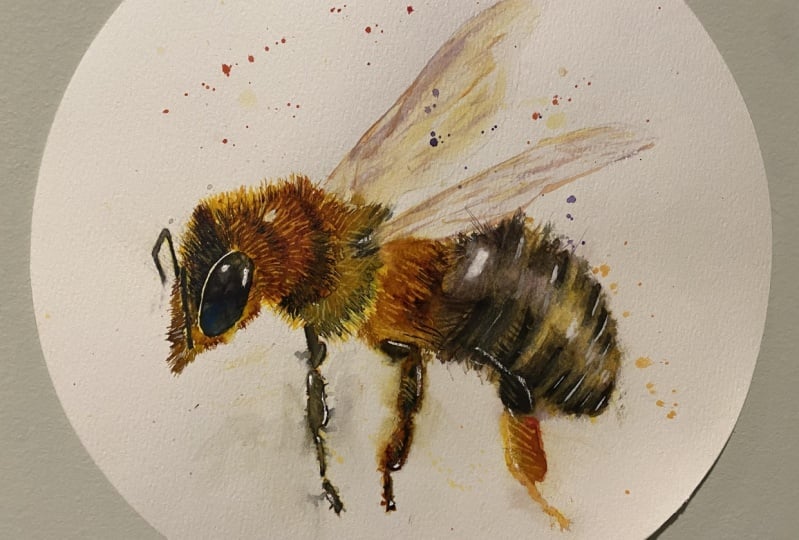
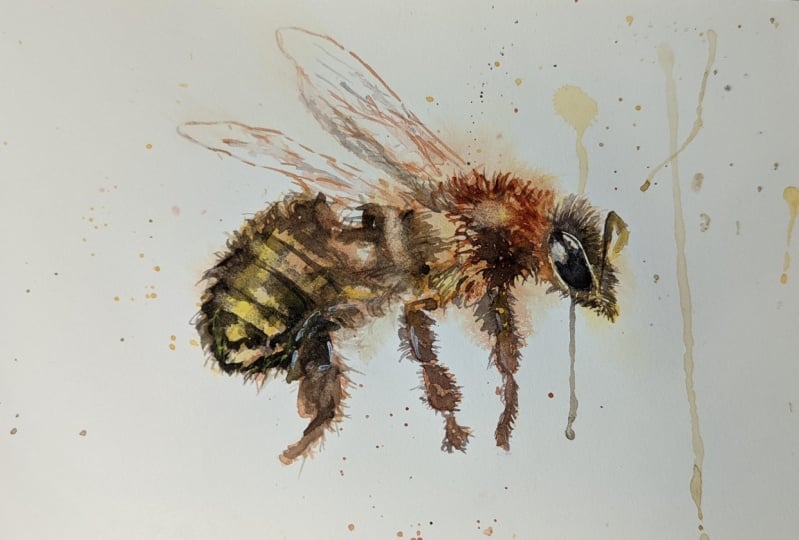
painting of a honeybee. Whether you're new to watercolor or already have some experience, you'll be able to
follow along at your own pace and improve
your paintings skills. Join me whilst we explore a variety of fun and
expressive techniques. Being a professional
watercolor artist for many years now, exploring many
different subjects, from wildlife and portraits to cityscapes and
countryside scenes. I've taken part in many worldwide exhibitions
and being lucky enough to win awards from well-respected
organizations such as Winsor and Newton, the international
watercolor society, the masters of
watercolor Alliance, and the SAA artists
of the Year Award. I also have collectors that by my paintings around the world. Watercolor can be
intimidating for beginners. So my aim is to allow
you to relax and have fun learning this
medium step-by-step. Hopefully, by the end, you'll surprise yourself
with a nice painting. This class fields too
intimidating or too simple. Please check my
other classes as I have them available
across all levels. My approach to watercolor
starts off loose and expressive with no fear
of making mistakes. Because we're just
creating exciting textures for the underlayer. Then as the painting goes on, we'll add more details, bringing the painting to
life and making it pop. I tried to simplify
complicated subjects into easiest shapes that
encourages playfulness. Are purposely chosen a
honeybee, as I feel, it's a great subject with bright colors and
lots of movement. But the same principles apply to any insect you want to paint. So you're welcome to use this approach with any
reference you have. When you enroll in my class, I'll give you the
photo reference I used for this painting, as well as a high
resolution image of my painting to
use as a guide. Today's focus is about
painting rather than drawing. So I have included templates
you can use to help you sketch out the
drawing before you paint. I'll also include
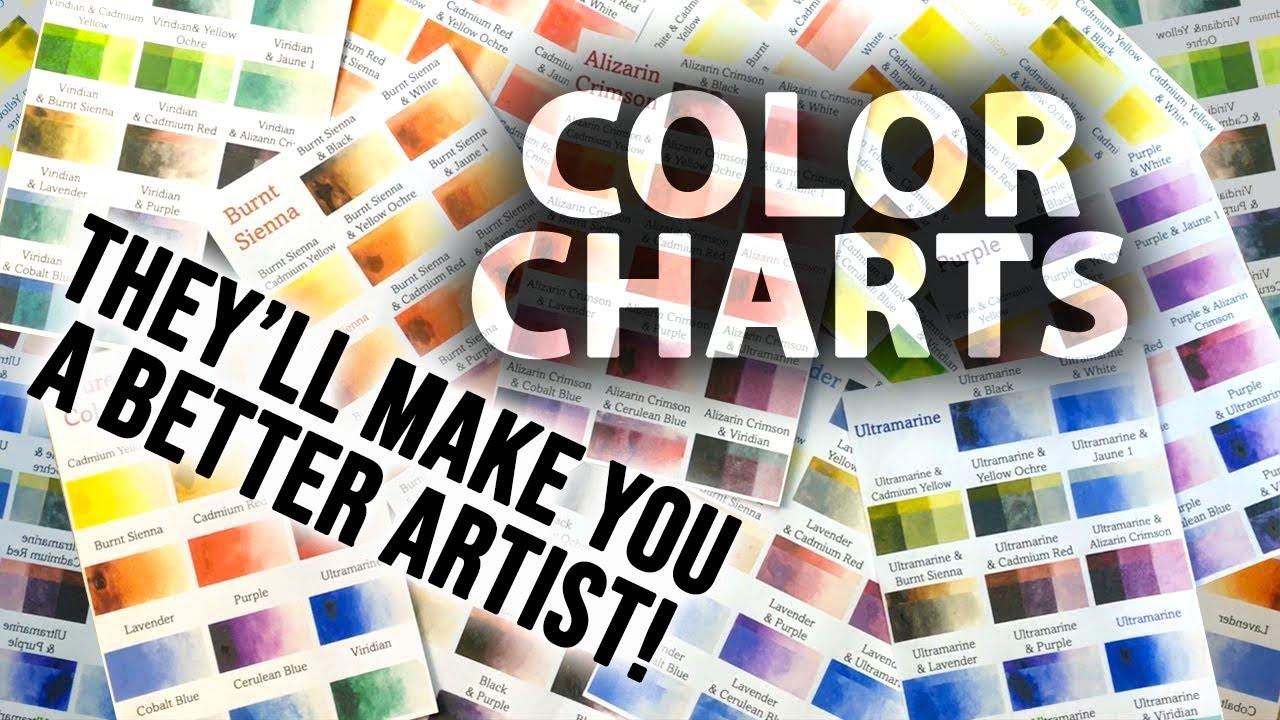
my color charts, which are an invaluable tool when it comes to choosing
and mixing colors. Throughout this class, I'll be sharing plenty of
tips and tricks. I'll show you how to use
mistakes to your own advantage. Taking the stress out of
painting and having fun. I'll explain which
supplies I'll be using. So you can follow along exactly. I'll also cover how to choose
and mix harmonious colors. I'll be splitting everything
up into short videos, so it's easier to take in. You can also pause at any moment if you
undertake more time. If you have any questions, you can post them in the
discussion thread down below. I'll be sure to read and respond to everything
you guys post. Don't forget to follow me on Skillshare by clicking the
Follow button at the top. This means you'll
be the first to know when I launched
a new class, post giveaways, or just have an interesting announcement
to share with my students. You can also follow me on Instagram to see
my latest works. So if you'd like to create
your own expressive work of art full whilst learning fun and exciting
watercolor techniques. Please click Enroll as I'd
love to have you in my class. Now let's begin.
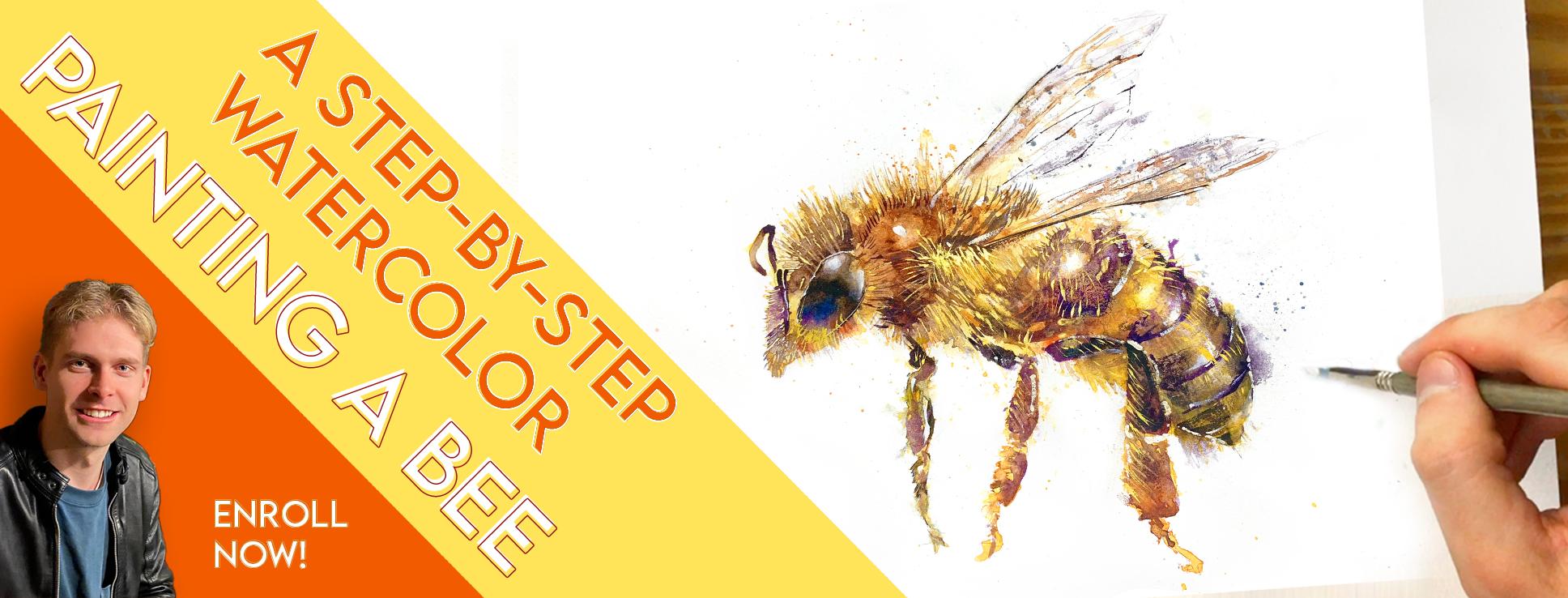
2. Your Class Project: First of all, thank you so much for enrolling in my class. I really do appreciate it. We're going to learn a
lot about watercolor using a fun, easy
getting approach. As seen in the
introduction video. Today we're going to
paint a honeybee. I think it's a great subject for painting because they have
so much movement and energy, will have the opportunity to
use bright, vivid colors, as well as experimenting with different textures and
techniques from the status of pollen that adds a level of debt to the dry brush technique
you use on the wings. The style we're
painting in today doesn't rely on a heavily
detailed drawing, which means there's less
stress and it gives us more freedom to express and
explore new techniques. This means you'll learn more and end up with a
better painting. You can choose to paint as loose or as realistic
as you want, depending on your level. You're welcome to copy
my drawing and follow it exact or experiment
with your own. I will put my painting in
the resource section so you can use it as a reference
throughout the process. You can also find
the reference photo that I'm going to use in
the resource section. I use photos as a guide. However, I do deviate and
stray from the reference. When I think of all the
different watercolor effects I can take advantage of. There's also a template
you can use to trace and transfer
it onto your paper. Don't feel guilty about tracing when using it as a guide
for learning how to paint. It's important to have the
under drawing correct, so that it doesn't
inhibit your ability to practice and learn the
watercolor medium itself. Whichever way you
use this class, it would be great
to see the outcome and the paintings you
create in this class. I'd love to give you feedback. So please take a
photo afterwards and share it in the student
project gallery. You can find the gallery under the same project
and resources tab. On the right, you'll see a green button that
says Create a Project. Tap that. Once you're there, you'll
have the option to upload a cover photo and a title and
write a little description. I would love to hear about your process and what you
learned along the way. Once your project is uploaded, it will appear in the
student's project gallery. You can view other
projects here. And I'd highly encourage you to like and comment on
each other's work. We put so much time and effort into creating
our paintings. Why not share it with
the world and help support each other
along the way? Now that you have a good
idea of this class, Let's get stuck into it, starting with the equipment
and materials I'll be using.
3. Materials & Supplies: Let's go over the materials and supplies you'll need
to follow along. We'll start with
the colors I use. Unlike most of the materials
we'll be using today. It's a lot to do
with preference. I have 12 stable colors in my palette that I
fill up from tubes. They are cadmium yellow, yellow, ocher, burnt sienna, cadmium
red, alizarin crimson, ultramarine blue, cobalt
blue, cerulean blue, lavender, purple, viridian,
black or neutral tint. And at the end of the painting, I often use white gouache
for tiny highlights. I don't use any
particular brand. These colors you can
get from any brand. Although I personally
use Daniel Smith, Winsor, and Newton
or Holbein paints. Let's move onto brushes. To keep things simple. In this painting,
I'm only going to use a small selection
of brushes. First is this mop brush. Mop brushes are good for broad brushstrokes and filling
in larger areas or washes. But they also have a tip
for some smaller details. So they are one of my
favorite types of brushes. Next, is this, a
Skoda per brush. I use various sizes, but for this painting, I'll use size eight. These brushes allow for
more precision because they have a finer tip and
last quite a long time. And for even more precision. When painting final
touches or highlights, for example, I use a
synthetic size 0 brush. All brands have them and
they're super cheap. This here is a solid
brush or a rigger brush. It's quite long but thin. It's only used for
very small details, much like the size 0 brushes, but it holds more
water and pigment, saving time and
effort refilling. The only drawback is it's more difficult to control
as it's more flimsy. And that's it for brushes. You're of course, welcome to use your own favorites as well. Onto paper. The better quality
your paper is, the easier it will be to paint. Cheap paper crinkles easily
and is very unforgiving, not allowing you to
rework mistakes. Good quality paper, however, such as cotton base paper, not only allows you to rework mistakes over multiple times, but because the pigment
reacts much better on it, the chances of
mistakes are a lot lower and you're more likely
create better paintings. I use arches because it's what's available
in my local art shop. Next are some various materials that will come in very handy. A water spray is
absolutely essential. By using this, it
gives you more time to paint the areas you
want before it dries. Also, it allows you to
reactivate the paint if you want to add smooth lines
or remove some paint. And lastly, masking tape. And this of course is just
to hold the paper down onto the surface to stop it from sliding around
whilst painting. That's everything you need
to know to paint along.
4. Sketching it Out: So let's start with a drawing. And the first thing I'm gonna do is draw out the main shapes just to get the spacing right. So that it's in the
center of the page. That looks the best position. Very rough, just
doing very light. Big shapes can edit out, rub out, and fix the shapes at this stage because we're
only drawing in lightly. It's impossible to get
it right straight away. So that's why we do it
thin and do it broad. Then once you've got
the main shapes, you can go down to small shapes. Holding the pencil like this. You don't have to use
to holding the pencil like this because
the lighter it is, the more you can change your lines if
you hold it like this, it's quite difficult
to light lines. And also your arms much more free to do movements
smooth and movements. Starting to also
lead to add that. My pencil is not really leaving
the pencil on the paper. So connecting each lines connecting because I'm
trying to keep it all fluid. And that's how you keep a drawing and then
painting after unified, because everything connects
and relates to each other. Draw here and then a
different section here, then you're not necessarily
connecting it to that. Well, because a lot of drawing is to do with
intuition that you learn. Also a master of time
through practice. So I'm not consciously
thinking about it. I'm letting the mind work
it out on its own way. But of course, I'm not expecting
you to draw a perfectly, especially if you're a beginner. That's why I've included the tracing templates in
the resource section, which you shouldn't have any guilt about using
those if you want to print them out or if you've
got a big enough screen, if your paper is thin enough, you can hold it up
against the screen and trace it directly onto
the watercolor paper. Now i'm, I'm pretty sure
I've mapped out the drawing. So I'm going to go
in a bit thicker now with the smaller details. The first stage is the quickest, but it's also the
most important. Now that we're getting into details takes a bit more time, but it's easier to do and there's less
margin of error now that we've sorted out
the main shapes. So I'll speed up
certain parts to save time because the main part of
this video is the painting. But I thought I'd show you how I draw it out to
begin with anyway. Because I'm adding
the fluffy hairs. Before we actually paint, I will use the rubber
to license these marks because this is just
a little guide, the water color, the
paint and pigment. That's really what
we'll be using. And when we come to paint, we don't have to
stick to these lines. Were trying to paint in a fun, expressive way that's nice
and relaxed with no pressure. If we put the pencil
marks too heavy, then won't feel like we want
to go outside of the lines, paint outside of the
lines which we can, we can do whatever we want. The good thing about
painting wildlife, there's more margin
for error we can, we don't have to
paint it exactly for our minds to
understand what it is. We can draw it in
a cartoony way. That's why it's a great
subject for beginners. To move on to the legs here. You can see it starts off
with just a very rough line, but it's just mapping it out. It looks quite difficult to draw when you
first look at it. Again, when you
break things into different stages, simple steps. And it simplifies it all these
details and the legs can be broken down into a
first a single line, then three big blobs. And then you can enhance the line on those
blobs, like details here. Make it easier to draw. I'm adding lines
here that accentuate the curvature of the
back of the b here. Although in the photo, they're all different
colors. Black, right? Black, yellow, white. When it comes to
painting, we can be a bit more free and adventurous. And even now while I'm drawing, I'm thinking about
the painting stage and where the darks will be. And that's different sections
that I'm thinking about. I'm not just drawing
it solely. A drawing. I'm drawing it with
the painting in mind. Where are the different
textures can go here or we can use a tiny little brush. Here. We can use a thicker brush
and paste on heavy color, that color, vivid color. And then we can do
some splatters here. I think I can do a
bit of a correction here. It's a bit too big. That comes a bit
closer in like that. So it's okay for mistakes
to happen like that. It doesn't take long
just to fix it. Well now I think it's just about ready to
start the painting.
5. Starting The Painting: So I'm gonna start with
this small mop brush. And the first thing I'm gonna
do is fill it with water so that it's almost
dripping by itself and just do some random splatters. Because I want the water to burst into areas and
create some nice effects. So if I spotted some water
and put a stroke of paint, it'll flow into these
little gaps and create nice little effects. But it
doesn't have to be a lot. It's just just a
tiny little thing. I'm going to mix
some cadmium yellow with some yellow ocher
here to get a gold. Look. I'm starting
with the yellow because it's a lighter color. I don't want to start with
a dark yet because you can't then put the lights
on top of the dark. So I'm starting with the yellow. But being that precise
at all at the moment, just trying to fill in, doesn't matter if you
splashed some bits there. Even Flickr a bit if you want. Because you don't want to
be caught up in detail. It's nice to feel
that loose energy. I'm looking at the
reference image, just looking at the
brightest areas. I'm almost putting the
paint on randomly. But only in the areas
where it is yellow. I'm not putting my brush
strokes and he says in order just always scribbling the paint
home scenarios. I wanted to be a
bit more orange. I'm just taking a
bit of the red, tiny bit of the
red because quite powerful. I'm putting in there. Then cleaning the brush. I'm just going to
splatter some bits. Or even a gonna take
pure water brush, brush full of water
and just roll it next to the ink and
just roll it into, and then the paint will
bleed out into it.
6. Adding More Colours: I've also got this water spray. I mean, I think
it's going to dry spray it to keep it alive. Now I'm going to swap
to a thinner brush. I'm going to use this one. It's going
to point to the edge. It doesn't have to be that one. It can be like that as well. Anything that has a
pointy edge that's going to get this burnt sienna,
maybe a bit of red. Just drop it in
some of these areas because it will bleed out
as long as it's so wet, it will smooth over. Didn't have to be that specific. Pure water again, more yellow. We don't need to think about
details at this stage. Because later on, we can, I'll show you a trick
how to get details back. We can wait for
the paint to dry, wet it with water
and then rub away. Going to take this
rigger brush is very pointy end and just start bringing it back and forth like that to give the feeling of little hairs that
these bees have. Just have to make sure that
when you put this for, you're going in the
direction of the hair. So if it's, for example, with this part of the body
there, like a sphere. A sphere, you're putting your head in the
direction of the surface. So when you flip it, the more water on at different
stages it can cauliflower, which sometimes you don't want, but sometimes you do because
it adds nice textures. That's the atmosphere.
7. Finishing Off The Underlayer: I'm going to fill in
the legs a bit more, filling in the middle, and then being a bit
more careful when it comes to the lines, the edges. I always liked painting wildlife for more expressive paintings because we're even beginning when I was first learning
how to paint watercolor, because you can get away
with more mistakes. It can be a bit more abstract. You don't have to be as
accurate. When you're painting. People, pets, or
scenery, landscapes. Things look more obviously
wrong If you make mistakes, but when you're painting in this style is kind of impressionistic, vibrant,
splashing style. You can get away with things that aren't meant
to be, aren't realistic. Have more creative license. Some flickers, they're
adds a bit of depth, I guess having, having flickers. And then I have flickers
of quite thick pigment. Then I dilute it a bit of
water and flip it again. And having these
different ranges of splatters creates a bit of depth like atmosphere in
the air, like pollen maybe. So never one painting
can be the same. So if you're painting along with this or plan to
paint along with it, don't try while you're welcome. I have no problem with
you trying to copy it exactly as close as you can. It's just, watercolor is such a, has such a mind of its own. It'll be impossible to
paint it exactly alike. So it's more about
seeing what I'm doing or how I'm doing it and
then trying to do it. To your own drawing. Because certain
things can happen, silly little mistakes or things that weren't
meant to happen. And you've got to always
will compulsively really. Some things will happen
to your painting, that won't happen to mine. And even if I tried
to pay that paint, that's exactly the same. It wouldn't be exactly the same because the water
might run differently. The splatters might be
in a different place. So it's more about the
principles, the basic idea. Okay. Now, I can do a tiny bit of the wing
to paint in the wings, but I'll put a very diluted bit. I just wanted to indicate the wings there. I tried to do my best to explain which colors I'm going to use. But when I actually start
painting and get into the mood, getting into the feeling of it. I don't use conscious thought. I kind of feel the vibe, feel the energy of what
I'm trying to express. And then I get a used colors that I went initially
thinking of using. So it's probably best to watch the painting
first the whole way through to know which colors
are brushes I will use, depending on how it ends out. So we're getting towards the
end of the first stage here. The first stage is filling in with vibrant colors,
nicely ill effects. Not worrying too
much about details, just getting a nice vibrant
colors, the underlay rarely. And then the next stage, once this is dry,
we're going with the darks being a bit more
conscious of details. Then the final stage will
be popping the details and making sure there's
no outstanding stakes. So I think I'm going
to get the hairdryer now and dry it off and I'll come back
when this part is dry.
8. Starting The Second Layer: Now it's all dry and I'm happy with the textures
that we've got. So I'm going to start on this side and work
my way across. I don't need to clean my
palette because I like to have it unified and keeping those colors there and maybe using a bit like this to mixing. The next colors
I'm going to use. As again, as I said before, I'm going to use some purple because it goes well
against the yellow. Now this, They don't be
afraid to go quite thick. Taking a look before I commit. So this table is a lot bolder, so we're getting quite dark. And the paint will look darker when it's
wet and when it dries. So you got to keep that in mind. I guess it takes a
bit of experience to know how it will look
like when it will dry. But if you paint too lightly, it will dry to Nike. So when I want to blend, I always just fill my
brush up with pure water, no pigment, and then I then connect that to the
rest of the paint. And it blends like that. I just leave it, let it, let it do it. Same magic. Not
going to test out. It's nice exercise to do these
ones because you can test out different effects is how you learned
about watercolor. The very end, I'll be going back with some white highlights. So don't be worried if you feel like you need to go
over the edge sometimes. So I look to where the
darkest darks aren't now. And then I fill those
darkest darks area in a block closest to kind
of let me start again. I look at the darkest
darks and try and make a shape out
of it like that. So that is the darkest
dark in that section. And then like that
section there, I have a brush with
just water in, lead it to that area, and then it bleeds out and kind of create a kind of gradation. I can tilt the paper like
that to help it bleeding. With watercolor, you're kind of you manipulate it more than half full
control of it. I guess. Good to see you just debit.
9. Painting The Eye: Now I'm not going for realism, but there's definitely a kind of gray area between
it being too abstract. You need to put in enough information to make
it obvious that it's a B. But you can get away with not putting in
that much detail. Just selecting the more
important things like the eyes. As long as you have the
eyes and the general shape. You can get away with a
lot of abstract painting. So I always have a
tissue in my hand. Because you don't know
when you need to dial out when there's too much water
or too much pigment on there. Hope this is helpful if
there's any questions. Leave a comment and I'll get
to them as soon as possible. Let me know what kind
of video you prefer, whether you prefer
me painting wildlife or you want me to concentrate
on landscape city seems.
10. Painting The Body: I'm gonna be quite
bold here and put on pure pigment as pure pigment directly from the
tube on my palette. Because you want to
mix up the texture is it's got some dry brush now. Burnt sienna that
I use by the way. Through doing quite a few of these different
wildlife paintings, you can really work out what the watercolor medium can
do, how far it can go. And then you can
start applying it to all different subjects, like people, both scenes, etc. Going with the Black Sea. A lot of when I was a beginner, at least I was going to
say a lot of beginners. There look at the
legs or dark area and I think that's what they
should paint straight away. But just doing that
first underlying area in orange or whatever color
it maybe depending on the subject, just gives you. It makes it more exciting. Because it has the
extra layer underneath. To play with. You can already see that the orange
bleeding through there. What I do, I put this down, I block it out, rather. Wait for it to dry
About 80 per cent. And then I rub it away
or dab it with a tissue. And did just create
some nice textures. Now, dries, I'm just going
to dab it like that. Maybe flick it again. Quite heavy flickers can even lead it out a bit. Turn it around because
I think I'm better at drawing the furs at this angle. That's also why I
didn't tape it down. So I can rotate. It. Doesn't get off.
11. Painting The Wings: Like the idea of having this dry brush effect on the wings. You just have to put enough to know an obvious that
they are wings. You don't need to put
in a lot of detail. As long as you put
in a good drawing. Or if you are beginning,
you can even do an outline. The paper that I'm
using is Arches. And I, although when I was, when I first started
when I was a beginner, I use the cheapest paper
I could find and it was good in order for me to learn
and get used to the medium. But then I found
myself not being able to progress much more. And I experimented with
some expensive paper. And it just made
everything so much easier. I could get so much
more out of the paper. So once you're comfortable. Or even if you want to
experiment as a one-off, you can try getting one of the more professional papers
and your art will improve.
12. Being More Abstract: Signage guy, bit more bolder
to go. Bold announcement. I don't want it all to
be as equally detailed. I've got the details
there now so I can afford to be a bit
more abstract around here. Sometimes it's easy to lose. The pencil marks are. But as long as you
want during strokes, drawing skills are okay. It shouldn't matter too much. Because if you're a beginner, you can trace out the drawing. But ultimately, it's best to not rely on it
because if you do lose the lines
during the drawing, then it'll be much
more difficult for you to work out
how to recover it. A bit. Too much.
13. Using Opaque Watercolour: Now I'm going to
use this Holbein, Naples yellow, which is
quite a thick pigment. I can drop it on
their pure pigment. And I think it will just
create some nice effects. Although it does
look very abstract. We are going to bringing
the details in a minute. Tilted it again.
Let that water run. Bringing some more yellow here. I'm going to dry it off again.
14. A Trick to Create Details: Now I'm going to go
back through and add a bit more detail
on the dry paint, putting on brushstrokes,
just a water, and then waiting for a
bit before running off. You can do this anywhere. Create marks like that. You can take a rough brush, rubbed them down, then
take them off again. Okay.
15. Making Corrections: I think his eye
needs to be darker. So you start off quite abstract and then you try and hone it in some order out of chaos. Some dry brush marks there. You really, you use
dry brush marks when you want to imply detail, but don't want to
actually put the detail in like blurred detail. Just trying to make the
drawing is correct.
16. Highlights & Finishing Touches: I need to make some highlights. Like the reflected light. Somewhere. Here. This is just water and then
rubbing away comes down. Taking that tough brush again. I'm gonna go in with this white. I don't want to a
very own digital. We have a lot of finesse to
take as much time as you need to get the highlights to pop. This is just to emphasize
the areas that have been lost due to the abstract nature. This is just a gouache,
white gouache.
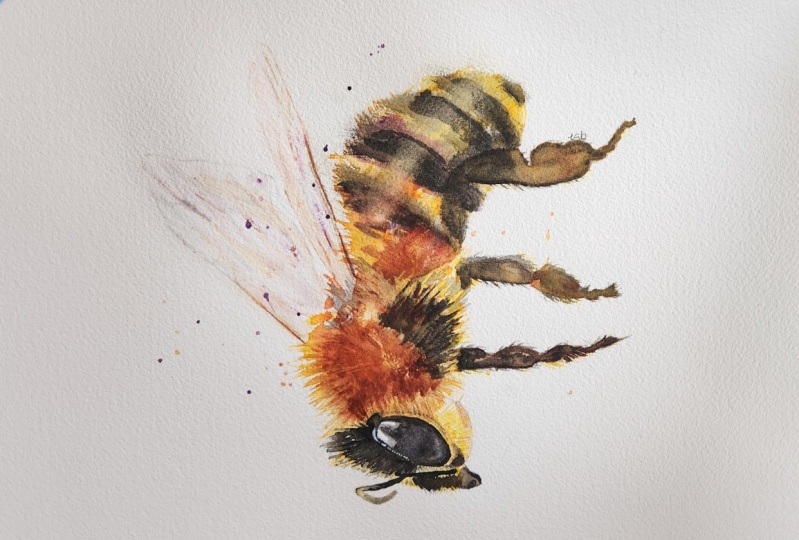
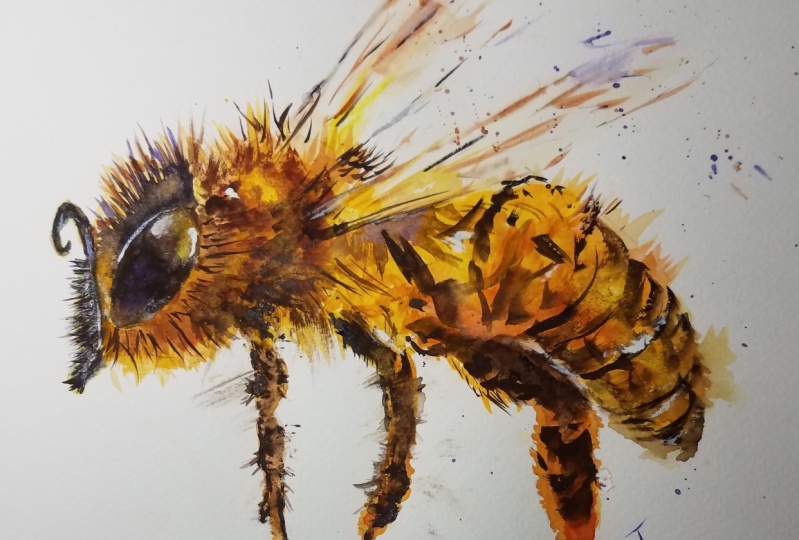
17. Final Thoughts: Welcome back. So now the painting is finished. Let's have a
close-up look at it. I hope you have a painting of your own to look at as well. Learning watercolor, it's
about pushing the boundaries. And to do that, you have to be willing for mistakes to happen. So if you're not happy
with your progress, don't be so hard on yourself. Be proud of yourself
for putting paint to paper and challenging yourself. You may have found
painting a beat to have some
challenging aspects. But by pushing yourself, you become a better artist. Try not to compare
your painting of mine has no two paintings are alike and everyone has their own individuality
and nuances. In fact, painting in
this style should be very liberating
because it encourages loose brush marks and it gives an opportunity to
discover your own style. The most vital aspect of learning watercolor
is to have fun, be happy, and remain
positive whilst painting. With watercolor being
so unpredictable, it can be easy to lose faith. However, having a playful
and bold attitude brings out the best qualities
of watercolor and allows us to create
better paintings. If you'd like feedback on your painting, I'd
love to give it. Or if you'd like any advice
related to watercolor, please share your painting in the student projects
gallery down below. And I'll be sure to respond. If you prefer. You can
share it on Instagram. Tag me at will elastin as
I would love to see it. Skillshare, I also love
seeing my students were so tag them as
well at Skillshare. After all that effort
we put into it. Why not show it off? Remember, please click
the follow button up top so you can follow
me on Skillshare. This means you'll
get a notification as soon as I published
my next class. We'll have important announcements
like free giveaways or sharing some of my
best student artwork uploaded to the project gallery. Again, thank you so much for joining me in
this class today. Please leave a
comment down below in the class discussion section. If you have any questions or comments about today's class, I hope you learned a lot and are inspired to paint more and
it's wonderful medium. See you next time. Bye for now.
 Will Elliston, Award-Winning Watercolour Artist