Transcripts
1. Introduction: Constantly struggling with
this big overarching pressure of finding our unique style. You know, you're
struggling with overwhelm. You're struggling
with consistency. I'm excited to bring
this session to you because it really goes beneath this surface level of seeing what styles
are out there, and we're instead going to look at how we can actually build tangible, efficient habits that will take us through
the long run that are effective rather
than having this stifle us just because we have an idea and then
we don't implement it. For those who don't know
me, my name is Peggy Dean. I am an author,
artist, and educator. My favorite thing in
the whole entire world is to bring you these
types of resources. So let's jump in.
2. Cultivate the Growth of Your Style: Excited to talk
to you guys today about a topic that I think
comes up time and time again, no matter where we
are in our journey, as creatives, as artists. There are things
that come up that I hear all the time from
people like, you know, you're struggling with
overwhelm for XYZ, you're struggling
with consistency. Creativity totally got me out
of an icky part of my life. And if I can do that, in any capacity
for somebody else, I am just elated. So thank you for being here. Thanks for hanging out.
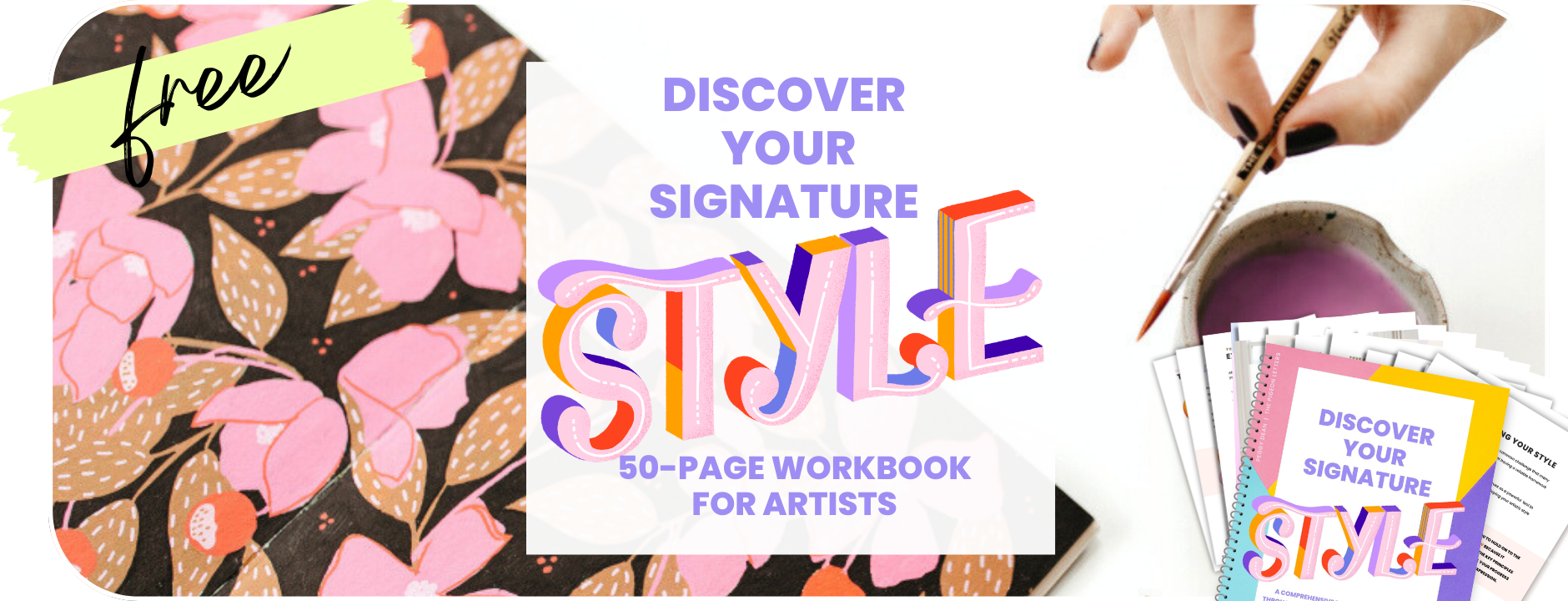
Have a workbook for you. It's 50 pages long. So
you're going to want that. That's going to get
you jump started, and it's going to
allow you to take this session much beyond this session, which is
what I want for you. We're going to jump into cultivating the
growth of your style. This is the first step
in what I'm going to provide you as stepping stones in these stages of development. And Again, this doesn't matter if you are in the
very beginning or if you're in the mid or if you're even already advanced
and you already had these clients or
you've established. I think that everything
that we're about to go over is relevant in any
stage that we're in. I'm going to give
you some acronyms. I love them because
I think they're tangible tools that we can
come back to and remember, sometimes it just takes the smallest way to say
something for it to stick. I'm that person. You can
tell me something 500 times and then one person will
say it just a certain way, and then it sticks forever. I'm hoping that one
of these will do that for you even just as a reminder. The first one that I want to
talk about with cultivating the growth of your
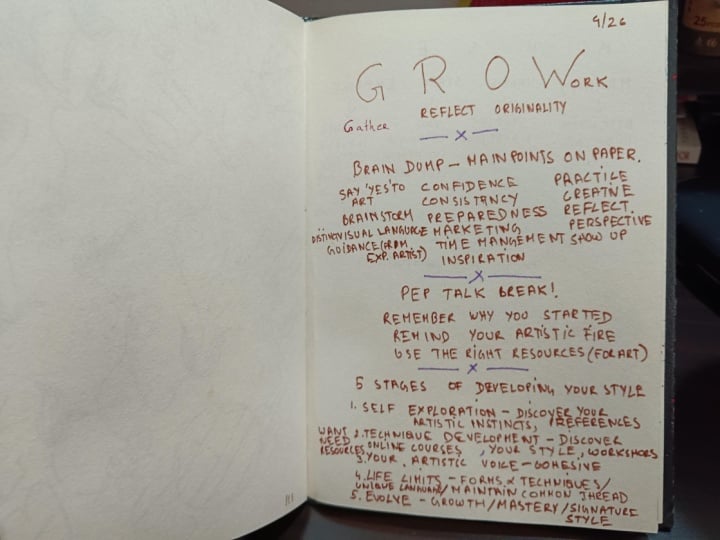
style is to grow. This is the acronym.
It's grow. It's easy. So the first one is
G, which is gather. You're going to
gather inspiration. So it's sourcing the techniques and the
knowledge that you need. The next is R, which is reflect. So after you're
going to reflect, it's about taking time for self reflection
and introspection. Something that I
know that I have a really hard time doing, but it is really
important to do, and evaluating our work, it's just a natural
part of it so that we can learn
to fail better. If you haven't heard
the acronym fail, I don't have that for you, but it's first
attempt in learning, and I love it so much and it makes me want to
fail all the time. I'm like, Yes, let's learn. Let's get better. Oh,
we have originality. So this is reminding us to
be true to ourselves and to celebrate our unique
approach as artists, and then W is to work. This is consistent. We work on practicing and
dedication to evolve in our creativity because when we commit to the long game and remind ourselves that
this is a process, then we are able to excel in what it is that
we want to do. So we're going to start off
taking action right away. In your workbook, the first
activity, if you will, your action item is to write down all of
the struggles that you have with finding
your artistic voice, your signature style. And I mean it when
I say all of them. I want you to brain dump until
they are all out on paper. Doing this exercise, I can't
tell you. I cannot tell you. We can think about all of
the things, all of the time. But the act of actually
just getting them on paper makes a
huge difference. So please do this activity. You don't have to
print the workbook. You can use it as
reference and write on scratch paper if that's easy. But the things that I have
noticed the most that I am always asked about or
told about or what have you. These are the primary ones. I know that I'm
sharing examples, but I still want you to
do this on your own. Because a lot of these go
hand in hand there is a lot. You know, I've isolated
these, though, to three main struggles, which are general
overwhelm, fair, right? The ability to stay consistent
and then confidence. So these three factors
feed into each other. There's a lot of overlap. I think that everything
here has some overlap, but we can usually assign
all of these all of the struggles into these
three things or one of them. So for example, overwhelm, it's caused by things
like creative ruts. It's caused by things
like the pressure of this big picture and what
success actually looks like, and then external
pressure because we see so much noise of our industry. We see so much of
it all the time. So it's like, Well,
where do I go with that? What's my role in that?
Is anybody going to care, which leads me to confidence? It's a tricky one
because we feel so strongly about what we do. But in reality, it is an easy
one to overcome if we can push past feelings of overwhelm and we can make dedicated
time to stay consistent. I mean, you've heard it before. Practice makes progress,
blah, blah, blah. But fear of rejection,
comparison, self criticism. These are things that
are very, very real. I'll tell you what,
you can easily squash overwhelm and
confidence with consistency. So not being consistent. It's caused by very
realistic things. I'm not excusing your excuses or my excuses because time
constraints are real, right? This is all real. But a lot of these you'll see
are highlighted when they aren't necessarily they don't make sense
to go with consistency, but other contributors
can be due to ruminating thoughts that those things keep us stagnant, struggling to produce
consistent style, lacking inspiration. These things are it feeds into this big ability to
stay consistent. Which also comes from
overwhelm, right? Like overwhelm feeds the
lack of consistency. Fair. Totally fair. I'm going to remedy
this for you. There was one thing I
wish that I had known when I was getting
into all of this. It's not even that
I would have known. It's something that I wish
I would have embraced more, and that's practice and play and being able to develop
my unique perspective. Really, truly. It's
something that is going to help us and learn to
incorporate into our work. Like, this is where you're
going to take time to reflect on personal experiences,
emotions, values. You don't have to try
too hard on, you know, making it relate so much to
anything that you see, like, not following trends, playing, playing and making
time to show up. And I've got just wait for it because I've got a
ton of prompts and challenges and whatnot for
you to explore to get you there because sometimes we just need accountability
and direction.
3. Develop Your Unique Perspective: So when it comes to developing
unique perspective, this is where we're going to take all of these
feelings that we have and give ourselves
time to get introspective. Think about what
makes us unique, what makes you unique as
an individual, you know, what sets you apart from others, as the beautiful
human that you are. And if you're feeling stumped, ask somebody for three words that they would use
to describe you, and then use those words as your kickoff point to your
brainstorming session. You're going to see
some action items, and I'll go over them with you. So what I want you to do
is go over reflection. This is going to be your
personal experiences. It's going to be writing down the types of emotions
that you feel that you might want to incorporate into your story that you
share through your art. Your values. What are your
values? Just write them down. Don't think about that
connection just yet, if you don't want
to, write them down. Uh, what makes you
unique as an individual? I love chocolate milk,
specifically Ripple. It's made out of peas. I don't know anybody else
that loves it, but I love it. And everybody knows it.
That's one of my things. I love the smell of Plato. So just things like
this. What makes you unique as an individual? And then what sets you
apart from others? What's your quirk? Like, celebrate your quirks. The second part of
this is to brainstorm. So this is what
elements from that can you incorporate
into your artwork? It's also how you can express those emotions through
your artwork and then it's how you can
infuse your values. So you're going to be
able to piggyback off of, and I wish that I wasn't
showing you this in a way because I want you to do those first worksheets first, but it's doing the work to get this all into play and
see how that connects. So do the starting work first. You got to do the prep
work to get to that point. Now, I'm going to
give us a PepT break. We've all experienced
these moments of self doubt and comparison, especially when it comes to observing
achievements in others. It's super easy to get
very overwhelmed and deflated by others successes because we haven't reached it. We don't know what that
looks like for us. However, it's crucial to
redirect your focus inward. So when we embrace where we
are in our artistic growth, you can trust that
you're exactly where you need to be right now. When you feel
unmotivated or stuck, you can give yourself the
grace to actually take a step back versus
taking a step forward, which I think is the problem a lot of times as we
think we have to take that step forward
because that's the pressure. But in reality, and I
learned this way too late, it's to take a step back. So this is where we engage in activities that
reignite our passion. It reminds us of why we fell in love with
art in the first place. So when we create from a place of genuine
inspiration and joy, you will find that
your artistic fire is totally reignited. I tell my students
this all the time, but you want to remind yourself that your creative
journey is personal. It's deeply personal and it
unfolds at its own pace. Sure. There are guides, there are motivation,
motivational resources, accountability resources. But you choose, you're making the choice to use those resources when it's
right for you. Whenever you're feeling yuck, whenever you're
feeling overwhelmed or the lack of consistency
or lack of confidence, bring yourself back
to this phrase. Remember why you started
in the first place. Remember why you started. That's the one that I have been reminding myself since day one. It's the one that I tell people. It's the one I hope sticks. If it's not phrased
in the right way, phrase it in a way that
will stick for you. Remember why you started
because that's why we're here. And that's where
our organic growth and magic comes from
and stems from. Okay. Pop talk breakover. We're going to go
into excuse me, the five stages of
developing your style.
4. Stages of S.T.Y.L.E.: Is going to be a fun one, and I'm going to walk you
through the whole process. I think that this is one that you don't necessarily
graduate from. It's ongoing, and you're
going to revisit it. Again, and again,
as we pivot and evolve later in life,
in our creativity. After you've loosened up on
the reflection exercises, the first thing I want to do
is lay down this foundation. Taking care of this
right off the bat, it's going to accomplish
these three things. You're going to gain a sense of purpose in your
creative journey. You're going to develop a
distinctive visual language that sets you apart and
you're going to allow yourself into the development of a strong and recognizable
signature style, which is very exciting. So let's look at what this is. Style is your acronym,
self exploration. This stage, it focuses on discovering your
artistic preferences, which is wildly important. We'll go over it in a minute.
Technique development. This is where you're going
to focus on developing and refining these techniques.
Your artistic voice. This is the stage where
you identify and weave in these elements that give
your artwork a consistent, cohesive, excuse me, and
recognizable identity. And then lift limits for L. This is where you
limitlessly experiment. This is where your
artwork can take on these various forms
and techniques, and you can still maintain that common thread. You
don't just get there. This is something that
has to evolve, right? So you have to go through all the other stages to
get into this point. And I think stage four is where a lot of people Stage three
and Stage four is where we try to dive into right
away before we're done or before we feel confident to move past
stages one and two. So just keep that in mind, and then the final
stages evolve. This is continuous, never ends. This is the exciting
part about creativity. So let's dive into
these steps, deeper. This is what's going
to help you address your initial struggles the most in this stage,
the first one here. You're going to cultivate
a deeper understanding of these artistic instincts. It's going to pave the way
for authentic expression of your artistic voice. Again, I've got action
steps for you, of course. See, the stage, it's the gateway to unlocking your
artistic potential. It's forging your
signature style from the get go, if you will. It's self exploration.
It's where you're going to dive in deep into the
depths of your creativity. You're going to embark
on a personal adventure of discovering your unique
artistic preferences, your unique inclinations,
your inspirations. By immersing yourself
in this process, you're going to gain
invaluable insights into what truly resonates
with you as an artist. It's time to push boundaries. It's time to
experiment fearlessly and challenge yourself like
you never have before. You're going to cultivate a
very deep understanding of these artistic instincts
and it's going to pave the way for authentic expression
of your artistic voice. So your first action item in
this stage is going to be a collector of things,
things that light you up. This might look like
images, photographs. It might look like artwork
that resonates with you. It might, it's going to look
like it could be tactile, but pin these to a physical
or digital board and let this be like a visual capture of your artistic influences
and preferences. This is where we're
totally allowed to get all the inspiration in
the world from any source. When you feel good
about this collection, you're going to make note of
each item in your workbook. You're going to identify what
calls out to you the most, and then you're going
to figure out why. And then I want you to really you'll be
able to feel this part, but I want you to
determine if there's anything that you wish that you would have
added, but you didn't. Okay. And then why not? It might be resources
like lack thereof, but you're going to feel
if something's missing. That's the part I think is cool. Okay, the second action
item I want you to do in this stage is very simple. You're just going to I won't even take you 5
minutes to set up. You're going to start an
artist's journal or sketchbook. It's going to be
dedicated to exploration. Sketchbook doesn't judge you. It's there for you
to dive deep into. So you're going to use it as the place that you can experiment with
different techniques, different styles,
different subject matters. If you work digitally, you can create a stack in Procreate, and that is your you can make the first
Canvas say sketchbook, have that be the cover, and
then you can go into that and use it to your advantage to
work as a digital sketchbook. So however you want
to set this up, this is where you can play. You can allow yourself to
freely express your ideas. You can use it to make mistakes. You can make many mistakes. I encourage you to
make all the mistakes because they might not
be mistakes in the end. How I really feel about it. Lastly, my favorite
ways, favorite ways, one of my favorite ways
to not only explore different mediums or
styles or subject matters, but also to break
creative blocks and also set up accountability for consistency is to
participate in a challenge. So in this stage, you're
going to set a challenge for yourself and create a series of artworks exploring different
themes or styles or mediums. And or how about? This is going to push
you to step outside of your comfort zone and explore
these new territories. The next stage we're going to go into is technique development. Before we even continue though, I'm going to give you a bird's
eye view of these stages because I want to show you
what's most important, which is the actual
implementation. So if we think about
how much we consume, what if we created for even
a fourth of that time? We took a fourth of
that time and we created with it. What if? Now, stay with me
on this wild ride. What if we actually
made progress instead of continuing to
fill our heads with things that we think we
desperately need to know? And I can say this because
I do the same thing, okay? I totally do. I've
been on both sides, and I have to pep talk
myself all the time. But I promise you that
you'll learn more about doing than any talk or
class that you listen to, including me right now.
You know what I mean? Okay. So stage two is a
transformative stage. This is technique development. So you have the opportunity to sharpen your artistic skills. You have the space to
refine your craft, right? It's a time of growth,
it's a time of improvement and expanding
your artistic horizons. As you embark on this journey, you're going to
delve deeper into the technical aspects of chosen mediums that
you want to explore. You're going to look at new
methods and approaches, ways to elevate your artwork. So to make the most
of this stage, it's essential to identify
specific areas that you feel that you see the need
for growth and improvement. So I would say, I
would encourage you to embrace a growth mindset, acknowledge that there's always room for progress
and refinement. Whether that's mastering,
particular brush strokes, maybe it's improving the
understanding of color theory, honing your perspective
for drawing skills or, you know, pinpointing
these areas is going to help guide you. Through these focused
practice sessions, engaging in deliberate and
dedicated practice sessions, so allocating that consistent
time each day or each week, because I know time is precious. I totally respect that
I feel the same way. Like, I do this for a living, and I create, you know,
once or twice a week. I get it. I that. So, you want to
dedicate and carve out that space to immerse
yourself in your craft. For me, that's
Wednesday mornings. Every Wednesday
morning, you will not find me doing anything
else but creating. It took me seven years. Of being an entrepreneur before I actually implemented this. I guess it was six
years. But either way. The other part, I want
to encourage you to take advantage of workshops, courses, online resources that provide
you valuable insights and guidance from
experienced artists. So that's not just consuming. That's making sure that
you have action steps. And sometimes that takes a
bit of research to make sure that what you're looking into
will give you that guide. But it's important
to have that, right? So seeking opportunities
to learn from others, that could be from mentorship. It could be just from critique. It could be
collaborative projects. These are things
that you can do to elevate this stage for yourself. So your action items,
there's three here. You're going to choose a maximum of three specific techniques or skills that you
want to improve on. From there, you're
going to identify areas that you feel that
you have or that you need. You feel the need for growth and improvement within
those three techniques. And then you're going to take
a moment to make a list of ways that you can participate to push
yourself creatively. So some things might be like local art classes or
online tutorials, workshops, challenges, 90 day projects, these
types of things. And I have added some of my recommended
resources, and by some, I mean pages at the end of your workbook, so
you'll see those in there. We're moving into stage three. This is an exciting stage. What you're going to
do, your goal is to identify and seamlessly weave in the elements that
give your artwork a cohesive and
unmistakable identity, adding your personal touch, your artistic thread to
each and every creation. This is what sets you apart and makes your art remarkably yours. Remember the journey
to discovering and nurturing your artistic voice
is this ongoing process. It's the dance between self
expression and exploration. It's a continuous evolution and it grows alongside
your creative spirit. So embrace the joy
of self discovery, celebrate this unique perspective
that you have and watch your art truly become a reflection of your
soul. It's exciting. And it doesn't have to look
deep on the front facing way. Like, this is just
something that when I started
reworking my own work, it was something that I felt
much more connected to, even if it was
light and humorous. So that being said. I know this can
feel overwhelming. So that's why I put these two
pages of ideas for you to play with as you create more
of a presence in your art. And you'll see those
in your workbooks. There's a ton of
options for you. And as we move into
the next stage, this is fun because this is where you do lift those limits. You're going to break out of that hard focus that
you've been focusing on. You're going to infuse your creations with
your artistic thread. You're going to establish
this unique visual language that deepens the impact
of your artwork. I know this can also
be overwhelming. It's like, Well, where
do I start and how do I find a common
thread that I even like? That's why I have included some examples for this
as well on how you can really elevate your artwork and how it can evolve and
showcase your growth. You're going to find examples like challenging traditional
notions of composition by experimenting
with asymmetry or unconventional cropping
or fragmented elements. Another example that
we have in here is to explore the intersection of different topics
like maybe art and science as an example,
incorporating scientific concepts. So basically, there's a lot of different ways that
we can play with this, maybe creating art that
addresses pressing environmental issues where you aim to raise awareness
and inspire change. So think of it as a challenge, and you're going
to have you have this resource available
to you in your workbook. You see it now. So it's just this is where you
can really blossom and find something that really
you can infuse all of the things that
you've learned from yourself practice
into your artwork. And then there's
stage five, which is that ongoing process, and this is where you
set specific goals for yourself to further develop and refine your artistic abilities. Indefinitely. You're
going to create a plan. It's going to help you
regularly practice and dedicate time to hone your skills and experiment
with these new ideas. You can give yourself
space to embrace a growth mindset and approach each creative endeavor as an opportunity for
growth and learning. So by staying committed to
this artistic evolution, you'll find that
your signature style will continue to
evolve and flourish, and it will reflect
your unique voice and artistic perspective. So as you embark in this phase, remember that this mastery
is a lifelong pursuit. It's not about reaching
a final destination. And when we remember that, it allows us to embrace
the process and enjoy the journey of our evolution as
artists so much more. When we stay open to
these possibilities, we can seek inspiration
from a diverse amount of sources and then continue
to nurture our passion, which brings us back to
remembering why we started. So this gives us
more action steps. I have the guide in stage five that I've created for you that's going
to help you start. It's basically tracking
your progress. It's staying focused, so including full commitment
to ongoing process. So you're going to
establish your daily ritual by picking three things that you'll do each and every day, and these can be super small, as long as they're intentionally moving you forward
toward your goals. Some examples might
be like engaging in a daily sketching or
warm up exercise. I'm talking 5 minutes a day. You have 5 minutes a day. This might be experimenting with a new technique or
a medium each day. It might be just exploring art related resources
for inspiration, which I know we spend too
much time doing sometimes. So make it intentional. What kind of art related
resource are we looking at? And how are we going
to implement that? The next step to the stage
is on a larger scale, so it's a weekly routine. You're going to pick three
things that you're also going to do regularly
every single week. Some examples might be
setting dedicated time for focus practice
on specific skills, minus Wednesday mornings and that gives me the space for
what I want to work on. This might look
like participating in art challenges or prompts, which I can't encourage
enough. It is so much fun. It could be seeking
feedback and critique from peers or mentors.
This is invaluable. I think that it's not only
helpful if it's helpful, but it also it is helpful
because if we feel resistance, it's like, Well, analyze why. Are we feel are we
feeling rejection? Are we feeling defensive
or are we feeling like, you know, what you're saying isn't resonating with what
I want this to look like, and I'm happy with my choice, which is like when
you flip a coin for chocolate or vanilla
and you get vanilla, and then you realize because, you know, heads was
vanilla, whatever. And then you realize, No, this actually solidifies that I did indeed want chocolate. So that's kind of what I mean when I say seeking critique. Like, it could be helpful, but it's also helpful in solidifying how we feel
about what we're doing. Finally, you're
going to commit to one big thing every
single month, and you're going to lean
into your creativity. So some of these examples
could be choosing a specific technique
or aspect to focus on a deep dive each month. So this might be attending an art workshop
or an exhibition. It might be a conference
of some kind monthly. So you're going to set this
up and have this monthly intensive in place
planned on your calendar. As a reminder, always give yourself time and space
to reflect on your progress. You really want to make
sure that you do this. So you're going to
use your workbook to write down these three
ways that you're going to reconnect with yourself
and your progress throughout the entirety of
your style exploration. And this looks
different to everybody, but a couple of suggestions
that I have are to keep a visual journal or
a dedicated space for documenting your
artistic journey, and then also seeking
constructive feedback from others because we
just never know, right? Pooh. Okay. Now that
that's out of the way, I think that it's super normal
to have the feeling of, like, Okay, assessing Sure. What Hmm. Let's dive into this deeper because I am not scared
of that resistance. Lay it on me. I'm
here for it all day. Remember these feelings
they turn into excuses. They're the story that
we tell ourselves, and then we start
to believe them. So, knowing that the web of lies is causing
this stifled progress, let's kick off the next
session with a game.
5. This or That?: Is a fun game. You are going to begin defining
your likes and dislikes. So we're going to
do this in a fun assessment inside your workbook. We're going to walk
through it together, but you're going to
use a scale to mark your preferences along a
continuum that looks like this. And it's totally okay to be
somewhere in the middle, but it's basically
indicating if you lean one way more
or the other way. It doesn't present
a final result that places you in some
sort of category or, as I refer to it,
box you in. No, no. Rather, it will help you gain insights to your
stylistic preferences, even more and guide you in developing your signature
style through those stages. So how fun is that? So the first one we're
going to look at, do you prefer symmetry
or asymmetry more? So that one is pretty
straightforward. You might enjoy both,
and that's okay. Go in the middle of it. The next one realism
versus abstraction. So I'm giving you these visual examples so that
you can just get a quick I think examples are
the easiest way to put this, but warm colors are cool colors. Simplicity or more
chaotic vibes. Delicate lines, or do
you like bold lines? Do you prefer something
that feels more serene or feels more energetic? So a lot of these are feelings, not necessarily specific styles. A natural textures, or do you
prefer smoother textures? Organic shapes or
geometric shapes, muted tones, perhaps
vibrant colors. I know that can also depend on a lot of, you know,
what you're working on. There's single focal points,
multiple focal points. I think that when
we think about, okay, well, it depends, it kind of takes away from our overall gravity
toward what we feel. So I want you to lean into
instinctual feeling like, Well, overall, I'm
going to go with this. It doesn't mean you don't
like the other thing. And then we have subtle
gradients, strong contrast, and right when you
think we're done, there's a whole
other page to this. So we have soft edges, hard edges. We have precision. We have more
gestural feelings in vibes minimal details
than intricate details, traditional subjects, and then unconventional subjects
or maybe just abstract. We have controlled brush work, and then we have
expressive brushwork, realistic proportions, or distorted,
exaggerated proportions. Traditional mediums on paper
or maybe digital mediums. Do you like nuanced
tones or bold color? Do you prefer something
more light and airy, maybe more dark and moody, maybe emotional themes or
more thought provoking themes that tell
a little bit more than the actual literal subject, harmony and balance,
maybe some loud contrast. So when you have gone through this and
you've more clearly identified a rather
large handful of what you're most drawn to, take a moment and reflect
on the discoveries. And as you look at
the preferences that you've marked along
that line scale, you'll begin to notice patterns or trends and
I can't wait for you to identify what these
look like and these particular aspects
that you're drawn to consciously or
subconsciously, we're always making choices
that consistently appeal to us and that's fun and that
makes us unique in that way. As you embark on these
exercises, independently, away from this session, take a moment to delve into the reflection
that they prompt. Connect the dots between your identified
preferences and how they align with your personal
artistic vision, as well as the message that you aim to convey
through your artwork. And then consider
how your preferences contribute to the overall aesthetic and emotional
impact of your work, whether they reflect truly resonate with your
desired artistic style, and they truly tell the story that you are
intending to tell. Now in the creative journey, there are moments where we
feel a lack of inspiration. We find ourselves trapped
in creative ruts. That's just part of it. And the spark that once fueled
our artistic endeavors, it can seem dimmed at times. And we might find ourselves
comparing our work to others. That leads to self doubt. That leads to a
sense of stagnation. But fear not, this is
easier than you think to reignite this creative
space, this creative fire, and then to find inspiration
in unexpected places, developing a personal
routine that truly nurtures and sustains
your creative spirit, which is why I'm introducing
yet another acronym, where you will be
sparking your muse.
6. Spark Your Muse: Feel daunting to constantly come up with fresh
and innovative ideas, comparing ourselves
to other artists or other work, comparing
our work, right? We can have this feeling
that we're falling short. It can also hinder our
abilities to spark inspiration. However, it's important to remember that that inspiration
is always around us. We just need to learn how
to tap into it better. Introducing muse. This is your new acronym
where you will magnify, uncover, spark and embrace. You're going to magnify the
beauty of the ordinary. You're going to be
paying attention to small details that inspire
your signature art style. You're going to uncover the hidden stories
and narratives. So delving into
history, literature, personal experience, even for a wellspring of
artistic inspiration. Then we're going to spark your imagination
through exploration. We're going to experiment
with different mediums, different techniques,
subjects to fuel your signature art style. And this is always this isn't necessarily
through a certain stage. You're going to seek
this inspiration in these unexpected places. So this might be street
art, everyday objects. You're going to find this beauty and creativity in the ordinary. And this is where
you embrace it. You're going to
embrace diversity, different cultures,
perspectives, artistic influences
to enrich and really shape your
unique art styles. You're going to be able to
express yourself fearlessly, this might look like
it's in your sketchbook, somewhere that's totally
safe for you to explore. You're going to be able to join art communities or participate
in creative challenges, engage with other
creative individuals that can help you
stimulate these new ideas, fresh perspectives, where
you can share your work, you can exchange feedback. You can inspire each other
along your artistic journey. One of my favorite ways to
do this is to text a friend and we just ask ourselves or ask each other,
what should I draw? That's it. We don't
have any explanation. We just tell each
other, and then we have to do it. No matter
what, we just have to. There's not a deadline, but we expect it from each other
in a couple of days, and that's all it
takes sometimes. So finding inspiration
is not a one time event. It's an ongoing process. Brings me to a ton of other resources that
are in your workbook. So to cultivate this
consistent flow, it is essential to
develop a routine that keeps you connected
to your spark. Bringing this back to creating your rituals for
your art practice. So this is where you can reflect on the things that
constantly inspire you. Is it a particular time of day? I realized that was for
me in the mornings. Maybe it's a specific
environment. Maybe you have to get out
of the space that you keep trying to create
because that's not your element that
you need to be in. Maybe it's certain activities
that trigger at you. So when you identify these personal triggers that
constantly spark creativity, you're able to design a
daily ritual that really allows you to connect with
your inspirational triggers. That could be, again, dedicating specific time each day for creative exploration. Maybe you want to set up a cozy little corner
in your workspace, and maybe you want to
engage in mindful practice, like meditation or journaling. As long as you
make it a priority to nourish your
creativity every day, you're totally on
the right track. Because there's so
much guest work in the world of creative growth, I'm inviting you
to join me inside Community of mentorship from me, full of people who
speak your language and industry leading resources, support for artists of all
stages with guest experts. Okay. That being said, do the work in your workbook. 100% every moment is an opportunity to change
your perspective.
7. Your Journey = Magic: So excited for your next steps. Thank you Thank you. Thank you. Thank you for spending
your time with me. Thank you for investing
in your creative journey. It's a magical one. So I'll
see you soon on the Internet.
 Peggy Dean, Artist | Author | Educator | The Pigeon Letters