Transcripts
1. Introduction: I absolutely love creating
seasonal drawings, and since we're now in October, how can I resist a new
Halloween drawing? I want to show you today how
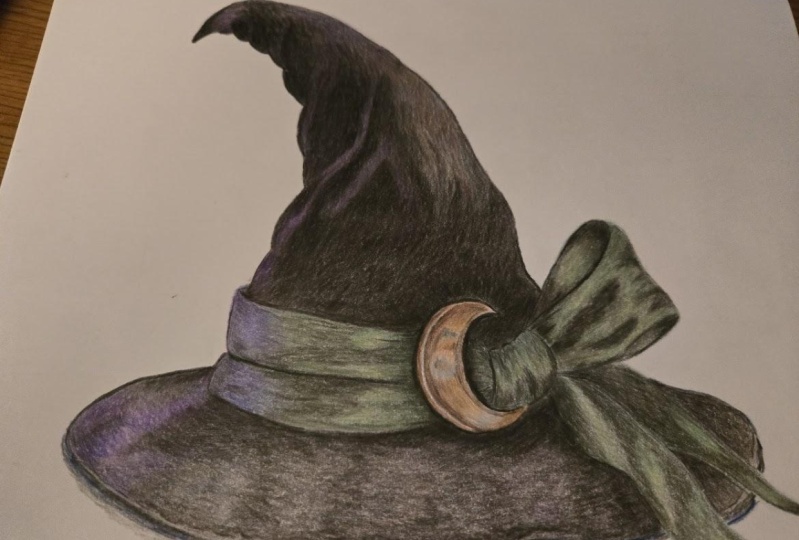
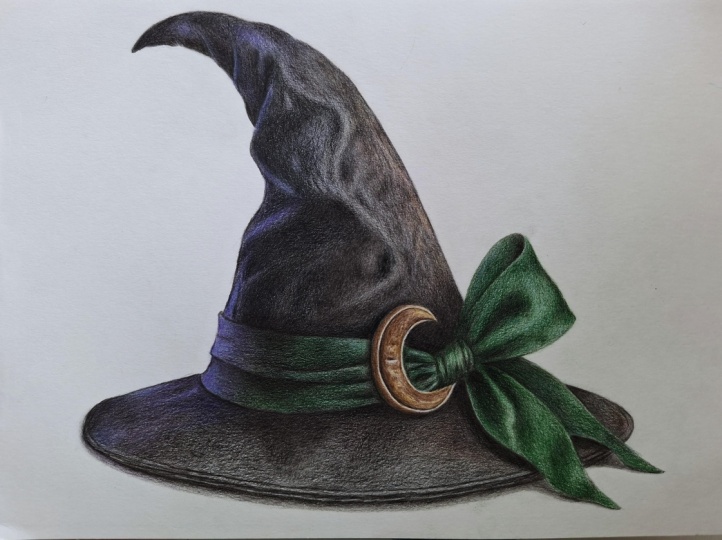
to draw this witch's hat. Now, this may look very
complicated, but actually, I'll show you if you break
it down into small sections, it's not as difficult
as you might expect. My name's Gemma Chambers, and I've been making online
art tutorial since 2020. I've helped tens of thousands of people improve their art. But today, I want
to get seasonal. We're going to
specifically focus on creating this fun
Halloween drawing. Now, I will show you
everything that you need to know to create this hat, including the materials you'll need and how to
make this sketch. And then we can start working our way through the process. Now, this witch's hat
goes hand in hand with a previous Halloween themed
class that I've made, where we drew a pumpkin. So don't forget to have
a look at that class as well as this hat.
Let's start drawing.
2. Class Project - Drawing a Witches Hat: Now for the class project, we will be drawing
this witch's hat. I've picked this hat
specifically for a few reasons. Generally speaking,
if you're trying to draw a witch's hat,
so it's black, if you don't pick
something that has a good amount of
particularly highlights, as well as the darker areas, it's going to look very flat. For this reference photo, I love that it's got
a huge amount of interesting and colored light
down the left hand side, as well as general lighter
areas on the right. And it's built up
of a lot of folds, which adds a huge
amount of interest. Certainly a lot more
color in this hat than you might expect
from a black hat. Now, way, we'll show
you everything that you need to know to
create this drawing, including how to
make this sketch. If you want to use my sketches, I have included them in
the class resources. When you've finished
your witch's hat, please do upload it into
the class projects. I would love to see
what you've done. Let's talk about
the materials that you'll need to
complete this drawing.
3. The Materials You'll Need for Drawing with Coloured Pencils: Let's talk about the materials you'll need to
complete this drawing. And the first most
obvious material you'll need is some
colored pencils. Now, for my drawing, I'm using polychromos
from the set of 60. But you don't need
to use exactly the same pencils as I am. In fact, you can make some
absolutely beautiful pictures with something
cheaper like crayola. I do recommend getting
a larger set, though, something like at
least a set of 36, just so you've got
enough colors to select the next material that
you'll need is some paper. And actually, the paper is, I would say, more important
than the pencils. In order to build up all of the colors that we can
see within the hat, what we're going
to do is build up the pencil in a series
of light layers, rather than just pressing
really hard with the pencil. We're going to need to mix
all of these colors together, and we're going to need
a paper that's going to be able to take
all of those layers. So I like drawing on something
called Bristol Board. This is a very smooth paper. It's almost thick like a card, and that is going to
work so much better than something like printer
paper or sketch paper. Next thing you'll need
is a pencil sharpener. It doesn't need to be anything particularly special or fancy, just something
that's going to make a really nice and sharp
point with your pencils. If you're creating
your own sketch, you will need a graphite pencil, a ruler, and an eraser. And I'll talk in a short while on how these are
going to be used. From here, the next
material you'll need is actually not
something you can buy, is something you're
going to need to make. This is a set of color swatches. For every set of
pencils that I own, I create a set of swatches. This is where I draw out a grid, and I go from as light
as I can go to as dark as I can go with each
color, and then I label it. And what that does it shows me exactly what each of these colors actually
look like on the paper, the kind of paper that
I'm going to draw on. I don't want to rely on the
barrel of the pencil or the lead of the
pencil because that doesn't tend to
be very accurate. We can then use these swatches throughout the
drawing to compare to the reference photo and the drawing to see which
color we need to select. Now, it is a reasonable amount of work to create
these swatches, but they're actually
not something that need doing very often. The swatches that I've got
here are at least 5-years-old. The final material that you'll need to complete this drawing is some way of looking
at the reference photo. Now, for every drawing
that I create, I work from a reference photo. Because I work realistically, I find this is the best way to create as realistic
drawing as possible. But I need some way of looking
at that reference photo. I like looking at the
reference on my iPad. I particularly like that I can zoom in to see all
of the details. But you don't need
an iPad for this. You can always print out
the reference photo. So those are all
of the materials that you'll need to
create this picture. Let's start working
through the process.
4. Studying the Reference Photo: Now before I start any drawing, what I first like to do is take a minute to look
at the reference photo. Really look at all of the
things I'm going to need to bear in mind when
creating the drawing. So let's do this now with the witch's hat reference photo, and hopefully you'll see
a bit better what I mean. So the number one main thing
that I'm noticing about this hat is the black
areas, the hat itself. It's not as solid one block
color as you May 1 expect. Firstly, because it's a
slightly crumpled hat, it's got a lot of lights and darks creating the
shapes of that crumpled I'm noticing that there's a lot of darker patches
over the left hand side. There's some kind of dark
almost triangular, I would say, shapes along here, and then a lighter line going all in a wiggly line along here. It's generally then lighter on the right hand side
and darker on the left. That said, on the
left hand side, we have this very bright, bluy purple, more of a purple going all down
this left hand side, which we're going
to need to add in. That's going to create
some really lovely light. Over this lighter
right hand side here, it's all very patchy. I'm noticing that we've got a mixture of kind
of a cool gray, I would say, maybe
a little bit of a blue around this
right hand side. But there's also lighter patches and darker patches
all around here. It's not a nice,
smooth, solid color. So we're going to
need to build up that patchiness
whilst also keeping this light line that's
going all through here and adding in these
darker patches on this side. I am also noticing that kind of surrounding these
darker patches, it has a bit of a hint
of a dark blue, I guess. You can see quite a deep
blue around here as well. Some of these darker
patches aren't so much standard gray. They're more of a dark
bluy gray, I would say. So I need to bear that in mind, particularly around the
top as I'm drawing. Even down the
bottom, you can see this whole left hand side here has a real
purple tinge to it, that same kind of bright purple. And then on the right
hand side here, we've again got a
similar kind of texture, maybe a bit darker here than
what we've got up here. But it's still generally
patchy and kind of mid tone, I would say around
here, but then we have some much darker areas
like the shadow here. The edge of the hat, I can see that there's a
line of stitching, and then it's much
lighter underneath. And then we've got some
darker lines under here, just creating the
seam of the hat. So all of these patches
and shapes will have to build up
bit by bit and kind of map in the shapes and then build up the
patchiness as we go. I think that's going to
be the easiest thing to. Let's now just have a look at this ribbon and the brooch here. The ribbon, I'd say
isn't too tricky. It doesn't look too tricky. It's generally got a lot
of lights and darks. It's obviously quite
a bright green. Well, maybe it's more of
a kind of bluy green. It's a funny mixture
of colors, I feel. It's not quite bright green. A lot of the greens in my set
are quite vibrant greens. But it's also not
blue. It is green. It's kind of a more
blue side of green. Going to need to mix a
lot of colors together, I think, to build this color. We've got some lighter areas, the darker areas, or the
midtone areas around here, I think are more of just kind
of a standard darker green, and then we've got
some much darker areas like in all of the shadows. On the most part, what needs
building up here is all of the folds that I can
see within this ribbon. A little bit of texture to the
ribbon, kind of stitching, but I think it's
going to be better on this ribbon to
build it up smoother. I think it will be
'cause it's not got any clear kind of stitching. It's just a slight
stitchy texture. I think it'll be quite
hard to build that up, so I think it'll be easiest
to build this up smooth. On this left hand side, again, at the edge here, it's
this very bright purple. We've lost all of the green. It kind of goes from that
light green to a very dark green and then goes to the bright purple on
the left hand side. So I need to think about
creating that gradient, but it's really really want to make sure that I
keep this purple because I think that's a
really interesting part of the drawing that's going
to give it a real pop. Now, in terms of the brooch, it's actually not too
tricky, I wouldn't say. It's got a couple of light lines that we're going
to need to be very careful to avoid around the
edge of the moon shape. You can see that it's got this darker shadow patch
over the left hand side. It's also shadows generally
around the edges of the moon. Most part, we're just
going to need to build up a few different browns
and kind of gold colors. I don't have a gold in my set, but we can build up some gold tones to make
this brooch look gold. So those are the main
things that I want to bear in mind to begin with. Let's create our sketch.
5. Sketching the Outlines: Before I start putting
down any color, I first off need to
create some sketch lines. I need to have a rough
template of where everything needs to go so that I know that my drawing is
going to be in proportion. Now, to do this, I always like using something called
the grid method. This is where I draw a grid on my drawing paper and I put a
grid on my reference photo, and I just draw what's in
each individual square. This stops me from drawing
this as a witch's hat, and I'm just looking at
it as a series of shapes. If I were drawing something
that's really simple, I could create really
big grid lines. If I'm drawing something
that's much more complicated, I can create smaller grid lines. Just like to work
through here one step at a time drawing in all
of these key shapes. Once I've created my sketch, I can then erase
those grid lines and I have my sketch outlines. Now, do bear in mind here that when you're creating
your sketch outlines, you actually want to make
them as light as possible. I've made them quite dark here, specifically, so you
can see them on camera. If you work much lighter, it will end up
looking much cleaner. You want to have your finished
sketch to be so light you can barely see it
because we don't want it to be showing through the
colored pencils at the end. Don't forget if
you don't want to create your own sketch lines, you can use mine that are
in the class resources. Now that we've
created our sketch, we can get started
with the drawing.
6. Build up the Base Layers and Key Shapes: This first section,
all I want to do is get something
down on the paper. I want to get some sort of color marked in in each section. So what I'm going
to do is look for the lightest color that
I can see in each area, and then we're going to build up a really nice and light
layer of that color. So let's start off by
looking at the hat section. And I want to be looking for the lightest color
within this hat. So I'm particularly looking
around here, for example, some of these lighter little
flicks all around the hat. I want to be looking
for the closest color in my set that
matches that color. So I would say the hat, generally speaking,
is quite a cool gray. I'm going to use the lightest
cool gray that I have in my set to go over
the whole of the hat. So I've only got two
cold grays in my set. This is cold gray, too. I want to be putting
this color down over that whole hat section as
lightly and smoothly as I can. So there's a few ways
that I'm doing this. First up, you'll
notice that I'm not holding the pencil
really close to the tip. I'm holding it roughly halfway
down the barrel of pencil. What this does is literally stops me from being
able to press too hard. If I hold it really
close to the tip, I can still press lightly, but I have to have a lot more
control over that pencil. Now, we need to be
pressing lightly with the pencil because we're going to need to build up
a lot of layers of color. If I just press really
hard with the pencil, not only would the color go
down really inconsistently, but it wouldn't be possible
for me to build up the amount of color and mix all the colors together that I'm
going to need to. Now notice that I'm going over even the areas where we will be adding that purple for now, I just want to put this
everywhere over the hat. Next up, in order to get this down as smoothly as possible, I don't want to just scribble back and forth with the pencil. You'll notice that
I'm working in some quite large kind of
circular or oval motions. So you'll see that I'm making these ovals, and that again, puts down the pencil in a much smoother and
more consistent way rather than just scribble. Finally, I want to
make sure that I'm always working with
a sharp pencil. The pencil will go down in a much more consistent
way if it is sharp. You'll see me
sharpening my pencil. Quite often, when I'm covering
a large space like this, I think I have
sharpened my pencil about three times throughout
just this one color. So I need to sharpen it a lot. It wears down quite quickly, and we're going to get a
better color by doing this. Now, it is quite forgiving when you're working with such
a light color like this, because if it does look
a little bit scribbly, it's not going to show as much as if you're
using a darker color. But we will move on
to some slightly darker colors in a short while, and you'll see, again, how important all of these
same techniques are. So I want to be carefully working my way
around the ribbon. So you'll see here I am going over this little patch
on the right hand side, and there's a little
patch between the two ends of the ribbon. I can go all the way along the bottom section
along here, once again, holding the pencil about
halfway down the barrel, using a light pressure, working with a sharp pencil and working in circular motions. I am being very careful where
I go around that brooch. For example, I don't want to be putting a block of
this color over there. I'm going to need a different
color for that section. I've got something down on
all of the hat section, we'll obviously be
building on this a lot. What I then want to do is look for the next section
and I want to be looking for the next lightest
color in the next area. So I think it'll all
become a lot clearer, a lot faster if I
fill in the ribbon. So I want to be looking
for the lightest color I can see within
that ribbon section. So I would say the
lightest color is probably this kind of color around here or maybe the
light sections along here. This is a slightly trickier one because I don't feel like I have a very close color necessarily
to this light green. I feel like a lot
of the greens in my set are very bright
and bold greens, but this is more of a
slightly bluy green, but maybe not as bluey
green as this color. But that's okay. What
I want to be doing is selecting the closest color
that I have in my set. I think the closest green
is this deep cobalt green. And what we can do later on, once we filled in all of the main shapes and
the main colors, we can then look at
adjusting this color, mixing a few colors
together to make it closer to the ribbon in
the reference photo. Now, this is a slightly
darker color than that gray that we were
working with to start with. It's still the lightest
color in this section. But it's going to be
much more obvious if I create a scribbly color. So once again, you'll see me holding the pencil
far back here, pressing really
nice and lightly, working in circular motions
and with a sharp pencil. You'll see as I work around this is not going to be perfect, I am going to try and get
it as smooth as possible. I'm not worrying at this
point about adding in any of the shadows for
the ribbon folds. I'm going to add those in as we work towards the darker colors. I just want to put down a
solid block of this color. Notice that I've drawn in the outline of this shape first. That helps me get my
bearings on where this ribbon edge needs to be
this section of the ribbon. I can then shade
up to that line, and it just makes it
a little bit clearer. So I can go along the edge of that line so I get
a nice clean edge. But still working generally in these circular motions to
try and make it smooth. It's important to make sure that we're mapping
things out correctly, but also try and make
it nice and smooth. Once I've drawn in this
little section of the bow, I can draw in the rest so I can draw in the knot of the bow, I want to make sure that I
am going around this moon. I don't want to be putting the green over
that moon section. Once again, you'll
see that I've gone around the edge of this area, and then I'm shading in
with those circular motion. Is exactly the same for
each section of the ribbon. So I'm using my
sketch lines to work out where the edges of
each shape need to go. And then once I've got a
shape clearly marked in, which again is far easier if
you've got a sharp pencil, I can then use my circular
motions to block an area in. So this is really all there is to the beginning
of this drawing. We're going through
this one section at a time and putting
something down. I think by putting the ribbon in as the second
color, hopefully, it makes the hat a little bit easier to see
where that's going to be. It is quite hard
to see the hat at the moment because it's such a light gray that I've marked in. But we will obviously be
building a lot of darker colors over the top of that to build
up the depth of the hat. So I again want to be marking around the shape of the moon. And then this time,
I'm not going to shade all the way up to
the edge of the section. I'm going to roughly
mark in where I think that purple area starts. So let's just put a
line all along here. And then I'm going to use
secular motions, again, to shade in this whole section
on the right hand side of I think the
whole initial base there is that we're
adding in here. This is the very
beginning of getting our bearings and working out what is going
to need to go we. We need to have
something down on the paper that we can then
start building off of. So once I'm happy
with the green areas, let's move on to the lightest
color in the next section. So let's put the lightest
color down on the moon now. Once again, I think
the lightest color here is still a gray. Around the edge here, I think the closest color in my set to this color is a gray. Different gray this time.
This is the warm gray, too, so the same kind of color, but this time, the
warm gray version. And I'm just going to block in this color over the
whole of the moon. Now let's move on
to the lightest color in the next section, and I want to get something
down for the purple. Now, again, the purple is
a kind of tricky color. It's a reasonably bright purple, but it's also, I would say, more on the blue side. I'm going to use this pencil. This is kind of
purply blue for now. And just like with
the green section, we can tweak the
color a bit later. So in some areas, I
might want to make the purple a little bit
more on the pink side. I can add that lightly
over the top here. Again, we just want to
get something down. I actually think this color
looks a little bit more purple in life than
what it does on camera. So you should see
yours looking a little bit more purple than what
mine is looking here. Now, as I'm filling in
these purple sections, I am also looking for any shapes I can see
within the purple. I want to get that marked. Note that it's not a
solid and smooth line going up the edge of the hat. It's kind of jetting out. So we've got some folds
coming along here, and then it goes around
and comes along here. There's kind of a curve
going around here, and then we've got some
purple going along here, along here, along here. I can start marking in
those shapes at this point, getting a bit of an idea on where these are
all going to go, and that's going to make
it much easier as we start marking in some of
the folds a bit later. So you can see it's kind of made a bit of a funny
shape up the side, but those are the
shapes that I can see. So that's why I'm drawing
them it also fill some of this color in on the left
hand side of the ribbon here. Ever so slightly
going over the green, but I don't want to blend these
colors together too much. We'll blend them much more later when I start filling
in those darker colors. But again, with this color, it's so important to be working lightly and in circular motions because if it looks scratchy, it will really show up later. So let's just blocking
a whole area of this purple down on this
bottom left section. We'll be able to refine some of the darker areas around
this a little bit later. Now, I'm generally happy with the lightest colors
in each section. Let's start building up some of the shapes that I can
see within the hat. So a lot of those folds, I want to get mapped in now. It'll be much easier if I can get them mapped
in at this point. As I say, literally,
the whole point of this chapter is to
put something down on paper but also get our bearings on what is
going to need to go well. Just before moving
on from this purple, use this color to
mark in some of those lighter lines going down the middle of the hat here. So I feel like this
light line coming around here has a real
purple tinge to it, and you can particularly see purple on this top section here. So let's get a bit of an idea
on where that wiggly line, that wiggly light
line is going to go. It may look a bit
kind of severe that I'm using this purple to
mark in that line now. But once we fill in all of the darker areas
around this section, this line is going to
look much lighter. It only looks quite dark in comparison to what we've got here, which isn't a huge amount. Just block in and put
down a little bit of this color on this patch here. And then let's make the bulk of the hat look a bit darker. So right now we've got that
very, very light color. I think it probably could
stand to be a bit darker, and we can block
in the same area with a slightly darker color. So I'm still working
with a cold gray here. This is the other cold
gray that's in my set, the slightly darker cold gray. I still don't think
it's a dark color, but it's certainly much darker than what we have at the moment. And I'm mostly just
going to block this color in over the whole
of the hat at this point. Let's go through this a
little bit faster because it is so similar to what
we've already done. I'm going to block this in
all the way down the hat, slightly going over the purple sections
that I've built up. And I'm using this to refine the shape of
the edge of the hat. But also just, as I say, give it a little
bit more darkness. I think it's looking too light. The very light areas that I mentioned right at the very
beginning of this chapter, I do still think
they are I think the general base color for the hat needs to be
made a bit darker. So go around this
light section here. And remember,
throughout all of this, you still want to
be working with circular motions and
pressing lightly. It's going to be important that we gradually build up
all of the colors here. As I say, there's so
many colors that we're going to be building up
one on top of another. So we don't want to
create something that's going to be really
scribbly and scratchy. So let's just block this
color over the whole area. And it will also make it easier to see where we're working. Generally, I think
it will make it a lot clearer on camera. Just shading this in
over the whole section, you'll see that I've
gone around the moon. I've created a nice clear line around that brooch so that we can just shade
up to that point. It makes it a bit clearer
where this patch, this slightly darker
patch needs to end. And once I've gone around
the top of the hat, I want to do exactly the
same along the bottom here. Before I move on from
this first chapter, I also want to take a minute to get the shapes of the hat
marked in a bit clearer. We've got the light, squiggly purple line down the center of the
hat at the top, but most of the shapes
aren't marked in here. I don't want to get everything
marked in perfectly, but I do want to get something, some kind of rough
shapes mapped. I want to do is
start looking for the next darkest color I can see in this section to
map in those shapes. And as I mentioned
earlier when we were looking at the
reference photo, I can see quite a
lot of dark blue. So I'm actually going
to use this blue. This is the dark indigo. This is the darkest blue
that I've got in my set. Going to use this
pencil to map in everywhere that is this
kind of blue or darker. So for a lot of the hats, particularly on the
left hand side, I do think it is generally
darker than this color. But I'm going to
use this color to start mapping in
those initial shapes, get the bearings on
what's going where. And then we can start
making it a lot darker in the next few sections. Start off by looking at the
very tip of the hat here. I want to be making a very clear line and marking
in where this line here is. But then you can see it's got this dark kind of curved shape, along here, then it comes up, and then it comes down,
and then up and down. There's a few other
very prominent lines like along here and along here. And generally, the tip
of the hat, I think, is a pretty dark and solid. Color. That is essentially
what I want to be filling in towards
the top here, marking in those shapes. Now, there's a few reasons
that I'm using this blue. Firstly, I do genuinely think in some of the more mid tone, some of the areas that
aren't jet black, they do look like this
kind of dark blue, rather than a very dark gray, I think it's a very dark blue. But even in the areas that are needing to be
a very dark black, like what I'm filling
in around here, that black is going to look
a lot deeper and a lot richer if it's got this
blue underneath it. I find if you just layer area of black,
it looks a bit flat. If you have some richer
blues mixed with that black, it's going to be a lot more
of an interesting color. And we need to create as interesting colors as
possible on this hat, because if we just block it
in with a series of grays, I think there's a risk it
could look quite kind of dull. Once again, remember to be holding the pencil further back, still working with a
sharp pencil that's so important and working with
the circular motions. And we can just continue to
look at the shapes within the hat and really think about what's going
to be going where. So it's important to note that I'm not trying to necessarily get everything marked in
absolutely perfectly. And I don't need to get every
single shape marked in. What I'm particularly trying
to do is get my bearings, so that when we move on to some of the much
darker colors, it's much clearer to see
what's going to go we. To mark in where
this darker kind of triangular shape here is. But I don't necessarily
need to make it perfect. You can see how
patchy this area is. So there's this triangular,
very dark section here. Then we've got a patch
here, for example. We've got a few
patches around here. We've got a quite
prominent patch here. We've got some patches
all around here, around and up to the
purple, and even here, we've got a darker patch in
the purple section, really. So I want to be
trying to replicate those patches as well as I can within what I can see
of the reference photo. Can use that purple line
that I've marked in as a little bit of a guide on where I think these
patches are going to go. Remember, because although this may seem like a dark
color at this point, we will be using some much
darker colors later on and generally building up more colors so they
look darker as well. If I get something
in the wrong place, it's going to be
reasonably easy to change because I'm still going to build up all of those
darker colors later. Think it's worth noting that although I filled in
shapes much lower than here and I'm
generally starting from the top and working
towards the bottom. If I feel like I need
to go back and add another shape like I'm
doing here, I can do that. I generally find
it easiest to work reasonably
methodically, I guess. Generally, I work either from the top to the bottom or
the left to the right, but that doesn't mean
that I can never go back and adjust if I need to. So I'm just adding a
little bit more on this right hand side where I want to build up some
of these patches, and hopefully that
will make my life easier in the next chapter. I get towards the
bottom of the hat, I feel like the main shapes we need to be marking
in are much bigger. I'm just going to mark
out roughly where I think the edge of this
section is going to go, looking at the shape of the
darker patch on the hat. So looking at this line
curving around here, I just want to mark
that in and then I can start shading in some of
these darker patches. It's kind of like a darker
triangle here again. And it's generally again, darker on the left hand
side, lighter on the right. I need to fill in some of
the shadows around the bow. And there's some darker patches
here and here and here. Just filling in these
shapes gradually. So I would say that this is quite a time consuming process, but it will be well
worth it when all of these shapes are
built up because obviously this is very
key to the drawing. You want to make the hat have
all of these lovely folds, but we also need to build up the patchiness
that we can see. Do you remember this is
only the first chapter. We're not expecting
it to look amazing in color or in shapes, patchiness, all of this
that we're building up. I'm just trying to get something on the paper, and honestly, we will be able to adjust
it so much as we go that I really don't think it's necessary for
it to be perfect. So when I'm generally happy
on this area at the top, let's just have a look
at some of the shapes that I can see on the
bottom of the hat as well. I'm noticing around
the seam of the hat, it's firstly quite
kind of wobbly. It's not a very smooth line. This is supposed to be
quite a well worn hat. We've also got a line for
the seam around the edge. We haven't really got
any stitching here. It is just a line. I'm going to want to
add that line in, but also add a line along here and the line for the
edge of the hat here. I'm not going to worry at
this point about the shadow. We'll come back
and do that later. Also noticing that there's
a very prominent shadow along here just
underneath the ribbon, as well as under here as well, but it's a little bit
lighter in this patch. This darkness follows
all under the brooch, all along here and around
the left hand edge here. I don't want to build
up a huge amount of the color on this section, though, because this is
that much brighter purple. So you can see that I've
filled in that shadow that I've marked in
under the ribbon, and then I'm just
going to go along, following the lines from
the sketch where I can, filling in the lines of the
stitching and the lines from the edge of the seam
of the hat along here. I need to make this perfect, and I can tweak
this a lot later, but I do want to get something marked in along this bottom. I'm not going to
worry about filling in the shadow down the
bottom here as well. I'm going to add
that in a bit later. For now, I just want
to get the general hat marked in and we can adjust
and tweak things as we go. So it's also fill in
some of the shapes I can see on the left hand side. I think with this color for now, it's easier to
just approach this as we're just trying to
build up some contrast. I want to get the key
shapes marked in, get the lights and darks
in the right place. And then we can adjust and build everything up much
more from there. By the end of this
first section, you should have actually a
reasonably clear witch's hat. It does look quite patchy. It's certainly not
looking realistic yet, but we've got a
general template that we can then build on and add to. From here, we can start
thinking about building up the key shapes and colors more clearly on both the
ribbon and the brooch. I think when that
comes together, it's all going to
look much better. But that is the end
of this section.
7. Build up the Colour on the Bow: This chapter, let's
focus on building up a lot of the contrast
on the bow and the brooch. I generally want to mark out the main shapes a lot clearer. So I'm going to start
off by adding in a slightly darker pencil than that first
bluy green we used. I want to be adding in a color, sort of like I can see around here or around this
sort of color here. Essentially what I need
is a darker green. So I think the closest
green that I have to this color in my set
is the pine green. This is probably, I would say the darkest
green that I have. And I'm going to use this
to just start mapping in anywhere that is this
kind of color or darker. So I'm going to generally start actually at the right and work towards the left this time, but I'm also starting at
the top and working down. I'm beginning by focusing
on this fold on the bow. So I just want to focus
on this shape here. Now, I'm noticing that it's
much darker in this section and down the bottom
here and it's very dark around the edge. So let's lightly build
up some of this color. You'll see that I am mapping
in the edge of this section. So marking in where
that edge needs to go. It'll be easier to get
that mapped in first, and then I can use
circular motions. Start making some
gradual shading and building up some
of that darker color. Let's add a nice line
around the edge. As I said, it's much
darker along once again, we want to be doing this in the same way that we
have done before. I don't want to be pressing
really hard with the pencil. I want to be gradually
building up some color, working lightly in
circular motion still. And you'll see I'm still not holding the pencil
really close to the tip. Once I'm happy with
that first section, let's move on and look
at some of the lights and dark in this next section. So I'm looking at this
section of the bow here. I'm noticing that it's darker
along here and around here. There's also this darker
kind of triangle here. It's generally dark
down the bottom. And there's this dark
triangle here as well. But I want to avoid this
line all around here, which is much lighter. Literally just want to look at the shapes that I can
see within the section, and I'm just trying
to get the lights and darks marked in
in the right place. So firstly, I want to be
adding this pencil into any area that is this
color or darker, and then I'll build
a darker color over the top of this with
those darkest values. But this is really just
a good way for me to get my bearings and work out
what will need to go where. And because it's not a particularly dark
color at the moment, if I make a mistake, if I show something
in the wrong area, it will be reasonably
easy to fix. I think it's also
important to take note if I want an area to
be a darker green, I am still not pressing
harder on that area. What I want to do is
continually build up in circular motions going over
the same area multiple times, and that will make the section darker rather than
pressing harder. So just keep going over an area, building up the
color more and more, and that will make a darker. See here, I'm marking in the outside of this shape where
I think this needs to go, and then I can use
circular motions here to block in this area. And I'll just roughly mark
in the edge of this section. And then any other prominent
shapes I mark in bit by bit. You'll see I'm just gradually working one section at a time. I think it's often helpful to not think about drawing
a bow, for example. Rather than me focusing
on drawing a bow, I'm literally just looking at
the area that I'm drawing, looking at the shapes, the lights and darks
within this section, and I'm drawing those in, and it will come together
to look like a bow. So I'm not drawing a bow. I'm just drawing a
random series of shapes, and it will come together. I also think that mapping in these initial shapes is the hardest part of
the whole drawing, trying to make all of these areas look in the right place. Once we've got these shapes really clearly marked
in, from there, it's just a case of adjusting the color and
building things up, but we have a very clear
template on what we're working so I'm happy that I've got all of the
shapes marked in here. I'm just going to
generally make a lot of the bow here darker. I think it's looking too
light at the moment. I want to generally not go too much over those very light
areas around the bow, but I need to add a lot
more shading around, particularly the edges of some of the shapes
that I've marked in. I think that they
all look a little bit too harsh at the moment. Let's now focus on the
center of the bow. Let's look at the
shapes that are here. So on the knot in the middle, there is really only
a few kind of lines, stripes coming down, and
there's this line here. But it's actually
reasonably simple, I would say, on this knot. We've got this light
line coming through, this kind of glare
coming through, and then it's generally shaded
along the top and bottom. Again, on this section here, I just want to draw in all of these lines where
these are going to go. And then I need to add
a reasonable amount of shading around them, leaving the odd lighter patch. So I can start off by marking where I think those
lines need to be. I can still see my
sketch lines very, very lightly through here. So I'm focusing on going over those lines before I've built up too much color to see them, and then I can start
shading around. See I'm just adding
to the shading, building up the color
around those lines. Right now, I think it looks
a little bit peculiar, but it will look
better later when we build some of the darker
colors over the top here. The important part is to just focus on drawing
what you can see. I can see these lines going
through this section and I can see where the darker
areas are around the outside. So that's what I
need to be doing. So let's mark in where
these lines need to go on this section
here as well. And then I can add
quite a lot of shading around those lines. But I do want to be
extremely careful. I don't go over the
moon brooch here. I want to make sure I've
got a nice crisp edge. So let's carry on doing exactly the same thing for the last few sections
of the ribbon, and I'm going to go through
this a little bit faster because it is very much doing the same as what
we've already done. The most important
thing, as I say, is to be working in
circular motions, building up the color
gradually in a light layer, and working with a sharp pencil. The ends of the bows here, we've got a very deep shadow
around the top on this one, and generally all
along this edge. It's also very dark
around this section, but a bit lighter here. And there's kind
of a seam coming down here I'm going
to want to mark in. It's also darker in a
patch here and along here. There's a darker patch here from a little bend in the
ribbon and here. So let's gradually start
building up all of these shapes and gently
marking them in, working in these
circular motion. I feel like building
up all of these shapes can be a little bit
time consuming, but it does really form that basis and
make everything else so much easier when we start building up some of
the darker colors. It just makes it much clearer where everything
needs to be going. So once I'm happy
with this bow here, let's focus on this last
section of along here, we've got, again, a few
folds of the fabric. We've got a fold all along here, and we've got a little bit of a shadow along here and here, but it gets a lot darker on
this section, and in fact, I don't want to put any of
the green as we get anywhere near over here because this
is a much brighter purple. So that's marking that
central line and then start shading down
from that point. It's working circular
motions all along here, just building up
some of the colour. From here, I'm generally
happy with the bow. I think the colors not perfect, but we can continue tweaking
the color a bit later. What we particularly want
to be doing at this point is getting the main shapes
and contrasts marked in, and then we can adjust
everything else later on. So let's now start
focusing on the brooch. And I want to begin
by mapping in the main shapes I can
see on this brooch. So I particularly
want to start off by adding in this very light line, the light line around the moon. Now, I can't add in
that light line. What I actually
need to do is draw dark lines either side
of that light line. So I'm using kind
of gold pencil, this kind of coppery color to mark in the
shape of the moon, and then this outer
edge here, as well. And I want to be
building up the color anywhere that isn't
going to be very light. So like, here is very light and around here. Show
you what I mean. So in terms of the color
that I'm using here, this is the raw umber pencil. I kind of think it looks
like a gold brown, and it works very well on
this section of the drawing. So you'll see that here I am just mapping in the
edge of the moon shape. And actually, here
it's really clear how sharp my pencil is. It needs to be so sharp for times like this
because I need it to be so accurate on
where this is going. Let's also draw around here, just leaving that
nice thin light line. So I'm leaving a gap between the moon and the edge
of this section. I'm going to use some light
little circular motions to shade in between those
lines that I've marked in. So you'll see that I'm avoiding that area at the very top. But generally, I'm adding
this color everywhere else. There are some lighter and some darker sections
on the moon, but we'll mark those in with a darker pencil
because actually, quite a lot of the brooch does need to be really quite
dark, I would say. Let's just work around where that light section is
this light section here. So I'm just going to
avoid that section, but generally add circular
motions everywhere else. And then let's continue filling in down the bottom, as well. So this is already
starting to be a bit clearer on what is
needing to go where. Let's now also add some shading on the left hand
side of this moon. So I want to be filling in the other line around that very light outline
of this moon shape, and then I'm going to
shade in everything to the left of that line. This section actually will need to be a lot
darker than this, but we can add that in a second. But now I just want to
get a good idea on what's going where before I move
on to a darker pencil. So let's move on now
to a darker brown, and this pencil is
called walnut brown. This is the darkest brown
that I have in my set. I don't think it's hugely dark, but it is a lot darker than what we have here at the moment. And I can use this to add in all of the main
shading on the brooch. So you can see, there's
a lot of dark brown, particularly down this
left hand side here, a little bit around here. There's obviously this dark line just above that light line. All around the
bottom, and generally this whole left hand
section looks very dark. So there is quite a lot of shading that I'm needing
to build up here. But again, note that I'm working lightly and
in circular motions, and I can just gradually
build up all of these colors until I
think it's looking right. So also add this color in
around this left hand side. As I mentioned, this whole
area needs to be a lot darker. But adding in this
darker color is making that nice lighter color around the moon look
much more prominent. From here, I'm now happy
with that brooch section. I think the bow
and the brooch are all looking kind of
a similar level. They've got the lights
and the mid tones marked in and those
main shapes marked in. Let's now go through again and really build
up the contrast. So for the rest of this chapter, I'm going to use
the black pencil, and what I'm now
going to do is build up this color in all
of the darkest areas. So actually, generally
on this drawing, a lot of the drawing
is very dark. So we are going to need to build up a reasonable
amount of this color. Start in the same way
that I did before by building up on
this section here. So where we added in this very dark patch
around this loop, let's add some more
of this color over here and towards the
bottom, as well. You'll see that we are literally doing the exact same thing, but this is just
adding it in darker. Once I'm happy with
this first section, I can then start
building up some of the black on this next section. I want a lot of the
darker folds here to be a lot more prominent
than what they are at the moment.
So let's go over. I can see all of the
shapes I've marked in, so this is much easier this time because I'm going over
what I've already added. It's very much the same
as what we did earlier. Now, as I start
building up this color, some of the green will
get a little bit lost. It kind of is still
showing through the black, but it's certainly
not looking as prominent as it once
was, but that's okay. What we're going to do is
build up all of the contrast. Sure that we've got all of these darkest areas in
the right place, and then we can start
adjusting the color, building up that
green a bit more, and generally making
the whole drawing look more vibrant and colorful. So let's go over these
very prominent folds that you can see on
the ribbon down here. And I'm just really
focusing on trying to make sure that there's
no particularly harsh edges to the black. So where the edge of this ribbon needs to fade out
into the rest of the ribbon, I'm just trying to
make that transition that gradient as
smooth as possible. Can't stress how
much easier this is because I've already marked
in a lot of these shapes, I'm just going over what we did in the earlier section
of this chapter. Which is why I am now going
through this reasonably quickly because it is exactly the same as what we did before. So once again, go over those
lines around the bow here. And actually, I can
add a little bit of extra careful detail
with this black pencil. Just want to make sure that around the edge of this brooch, it is really nice and dark. That's going to help those
light lines that we drew in a second ago look much
nicer and brighter. So it's a very dark kind
of triangle down here, I want to make sure that
I'm marking that in. And then I can start shading in, particularly around the top and bottom of this central section, the central knot here, because those are the areas
that need to be much darker. Let's fill in the lines on
this central part here, going over the lines that
I added with the green. So as I say, it's very
easy to see where these lines need to go and
then I can shade from there. So I'm going to
keep working from the right here to the left. So let's go over
on the brooch in the middle here anywhere that
needs to be much darker. Again, I think the black
can look quite harsh, particularly going over
somewhere like this. But what we can
do is put some of the brown over the top of
this black a bit later, and it will calm down that black and make it look
a little bit less harsh. So although it looks quite
a lot at the moment, it will tone down
as we work through. Let's finally go over the folds on the
left hand side here, this section of ribbon. So going over the main fold. I'm going to add quite a lot of shading near where the brooches. That needs to have quite a
deep shadow around here. And then an area that we're going to need to
build quite a lot of color on is where the green
and the purple are meet. Can see how dark it is
both here and here. Let's build up quite
a lot of color on this area and kind of fade it into the purple a little bit. I will build up more
of this color later. But for now, I just
want to get an idea on where this darker
section needs to be. So by the end of this
chapter, you should have, actually, a pretty clear
looking bow and brooch. But I think these areas now look quite odd in comparison
to the rest of the hat. They look much darker
and more detailed. And in the next section, we're going to need
to get the rest of the hat to that same level. Just add a few little extra
bits of shading along here, make this a little bit darker, and then that's it
for this section.
8. Build up the Contrast on the Hat: Now that the bow is looking
much darker and richer, I want to do the same
to the rest of the hat. So I'm only going to use the black pencil for the
whole of this section, and I am going to work
my way around the hats, filling in any area that I think needs to be
particularly dark. So let's start off
right by the bow. And there is such
a deep shadow all around here and up
to around here. I'm going to start off
by filling this area in. So as usual, I want to go around the edge of this section, marking where the
edges need to be so you can see I've gone around
the edge of the brooch. I want to be filling this in in the same way
that I have before. So I'm still working
in circular motions. I'm holding the
pencil further back. You'll see that
with this pencil, it's quite a short pencil, so I'm using something here
called a pencil extender. This means that I can still
comfortably use this pencil, even though it's quite
small, and actually, I'll be able to use it until
it's a very tiny pencil. Just working again
in circular motions, building up the color
all around here, and it's going to make a
lot more sense next to the bow once the hat's
up to a similar level. So really, the goal of this is to try and get the contrast of the hat to match
the bow at the moment, the bow looks very dark, it looks a lot more detailed than the
rest of the picture. This is all made a lot easier than it would otherwise
be because a lot of the shapes that
we're marking in in this chapter have already been marked in with that indigo blue that we used a little while ago. So it's quite clear really
what needs to go where. So once I've worked around
that first section, you can see me starting
to add in some of the shapes just
above this area. Sometimes I think it helps to look from a little
bit further away. If I'm really zoomed in, I think it's harder to see some of these different patches. I can see a line that's going up here and a line along here. I want to add that in, and then I can start adding some of the darker
shading that is generally around the
edge of the ribbon here. On the most part, with this hat, I'm noticing that it's
lighter on the right. The main areas where
we need to build up, a lot of color is generally
around here, around here. And that's where I'm
really going to want to build up that contrast. Let's add in a nice crisp
line around the edge of the ribbon and then start
shading up to that line. My general plan here is to
start shading at the bottom of this section next to the ribbon and then
I'm going to work from here up and then I'm going to finish
the bottom of the hat. I think it makes most
sense to start filling in the shading around the area that we already have the black, so around the ribbon, rather than just starting at the
top and working down. Once I've got this section around the very edge
of the ribbon sorted, I'm going to start
working my way up. Again, I just want
to be following the patches that I can see here and that I've already marked in with the dark indigo pencil. You can see how
gradually I can build up the color by following all the methods that
we've been talking about. So let's go through
this a little bit faster now because it is going to be so similar to what we did with
that dark indigo. To particularly focus
on building up a lot of the shading on
this dark triangle. So, as I've mentioned
a few times, there's a few triangles
along the hat and generally along here
that are just much darker, I would say, than the
rest of the hats. As you can see,
I've already gone back over that first triangle. We will build up some more darker color there in a second. Just add quite a
nice and crisp line along the edge of the hat. There's a dark line
around the edge. It is a little bit fluffy. I'm not going to worry
about that right now. But it's darker around the edge, then it gets a bit
lighter for the purple, and then it's darker again
closer to the right. So I'll add in that darker
line around the edge here, and that's going to
really help give some firm edges to the shapes. It's going to help make the hat stand out a bit
better on the back. Find the more of this
black that I build up, the more that the purple we
added in looks very muted. I feel like you can barely see the purple where it's next to
the black, but that's okay. We can build up a lot of those brighter colors in
the next few sections. Now, as I say, I'm going through this chapter reasonably quickly, but filling in all
of the black on the hat has taken
about 45 minutes, so it's not hugely
time consuming, but it's not a fast process. I'm genuinely happy with a lot of the hat towards the bottom. Let's build up this triangle, as I mentioned, to
make it a bit darker. Now, just like I said
in the last chapter, if I want an area to be darker, I just want to go over
it more times with the same color rather
than press much firmer. So you can see I'm
going back over this section that I will
want to be really dark. And you can see I
keep going over the same areas over and over again to build up
more of the color. Now, don't worry that it looks quite patchy
at the moment. That will become less so as
we build more colors up. To begin with, in comparison to the lighter areas,
looks very patchy. Add a little bit of detail to the right hand side, as well, although I don't need
to add a huge amount on this right side with the black because so much of what's along here needs
to be so much lighter. And then I can keep
working my way up. So you can see I'm still
going along both sides, adding this darker outline. I can see it on both sides. And then I can start
going over some of the shapes that I can
see along here as well. I say, it is literally
a case of going over everything we did with the blue but just
making it darker. Now, the blue in some areas
is still showing through. It might need to
be made a bit more prominent in some areas later. But I do think that adding
it underneath the black is making the whole thing look much richer and
more interesting, or it certainly
will do by the end. So as I work along and up here, I'm going along some
of these folds. So again, you can see how
prominent and dark it is, particularly around the edge of this section and the same along here and up here
and on the tip of the build up a lot more
of the color here. The goal isn't to make
this area look jet black. I just want it to be much darker than what it
is at the moment. And I'm just going to mark in very clearly the
edge of the hat, the end of the hat here, really looking at
where the kind of lumps and bumps are
in this section. You can see me marking in those shapes and then
shading up from that line. And then I'm going to go
back over these same areas to make some parts a
little bit darker again. That's generally the top
of the hat looking better. Obviously still needs a
lot more color added, but I think the main
lights and darks are in, and it's kind of matching
the bow section much better. Let's just work down
and really build up some of these darker
areas a bit more. So going over those
darker triangles that I mentioned,
making these darker. So you can see I'm just
working down the hat, making some of the
areas a bit darker. And we will build on
this further as we go. I certainly don't
think this section of the hat is done at this. Once I'm happy with
this top section, let's move on to the
bottom of the hat. So I'm once again
focusing on going around the brooch to begin with. There's a lot of dark
shadows around here. I have talked about them before when we were doing
the blue again. But I would say that the darkest
shadowed areas is around the underside of the
brooch and to the left of the ribbon tails
that are coming. Let's add a lot of
shading all along here. And then once I've generally
marked this section in, I can then start smoothing
out the edges and blending it a bit better
into the rest of the hat. Going all around the
edge of the ribbon. I want to build
up quite a lot of shading over on this
left hand side. So around here, again,
you can see how much the color that we had before with the purple has been lost. Where we've added in now a much darker colors just less obvious
where the purple is, so we will need to
build up a lot more of this purple in the
next few sections. That's okay. We'll gradually
add to these colors. So let's just add a bit
more shading on the ribbon, particularly this
darker section here. I added a little
bit, but when I add some more of the black
around this section, you can start to see how much
more black we need to add. And then I can start adding some extra shading on the hat. So, generally speaking,
a lot of the hat, I don't think needs that darker shading sort of
towards the middle. The main areas that need
attention is, as I mentioned, around the brooch and around
the tails of the ribbon, but also around the
bottom edge of the hat. Let's go over these lines
that we added in before, make them a lot more prominent
and generally tidy up, along with the
stitching, as well. And then I feel like
the main hat kind of template is now
looking pretty clear. What the hat is missing is a
lot more of the mid tones, maybe some details on the
lighter areas as well. But more than anything,
it's missing color. It's missing the
purple sections, for example, as well as a lot of the brightness
on the green. So we can start adding
that in and building that up a lot more in the
next few chapters. But the important area of building up the contrast is
now looking a lot better. Just tidy up and smooth
out this area along here, make this a little
bit less abrupt. And then that is it
for this chapter.
9. Brighten up the Colours: So now we've got the general
template of the hats. Let's start brightening up some of their underlying colors. I'm not worrying at this point about making the black darker. We will have to add a lot
more black into this. I want to look at
all of the maybe slightly more obscure colors, the general colors that
need brightening up. So let's start off by drawing in this purple reflection
down the left hand side. As I mentioned, we put
this color in before, we added some purple in before. But now the extra colors like the black has
been added in. It's not looking bright enough. So this is actually
a different purple to the purple I used before. The last one was a little
bit more on the blue side. I actually think we
need at this point, a bit more of a purple. So, this is the
purple violet pencil. I think it is the most sort of standard purple that
I have in my set. And I'm just putting
a light layer of this color down pretty much
the whole left hand side, anywhere where I want to
see some of this purple. To go along some of these
lighter lines all along here. But I also want to add some of the purple to the
area around the top. So this little light
patch here, I think, should have a little bit
of a purple tinge to it. And I also want to
have a little bit of purple around this
top section here. We have added purple
in here already. But as I said, I think it
looks too light now in comparison to some of the other colors that
have been added. Now, it's the same as
we've already been doing. I still want to be pressing
lightly with this color. I still want to be working
in circular motions because I still want
this to go down as smoothly as possible. And I'm still working with
a nice and sharp pencil. And already, I think that looks a bit better,
particularly at the top. It just has a bit more of
an interesting color up. Also add a little bit of the purple around some
of these lighter lines. Again, we've added
this in here before. I just want to add a bit more. So particularly along the
edge of this darker section. And then I'm going
to add some of the purple on the left
of the ribbon here, making sure that I get a
really nice crisp line along that left hand side. So I'm drawing in the line
first and then making some nice light circular
motions from that line to kind of add some of the extra purple generally on the left hand
side of this ribbon. I am adding this color
a little bit over that darker section
towards the middle where we added the extra
shading on the ribbon. But I'm going to tweak all
of that a little bit later. So as I'm happy with
the top section, I want to do the same down the
bottom of the ribbon here, and I think already this purple is looking a lot brighter. It's looking much better. Let's also add some of this purple to this
area on the left, down the bottom of the hat here. So now, for every
color that I add in, I think it's going to
make the next color that we need to add look
a bit more obvious. So once I've added
in this purple, I can think about what the
next most obvious color that's missing is from here. Actually, I'm going
to switch on to the other kind of purply tone. So still on the same idea, I think it did need to be
more of a pinky purple. But now I want to mix that color with the purple
I used at the beginning, that's slightly
more blue purple. So I'm going to add this
color over the top, add some light shading over the left hand side
of the ribbon here. I'm going to work my
way up just adding a slight little hint of this
more bluey purple color. So mixing these two
colors together to brighten up this
left side even more. I think because it's
generally speaking, a reasonably plain black hat, if we don't add in these
more interesting areas of light and really make these look as vibrant as they look
in the reference photo, we'll end up with
quite a kind of boring or not as
interesting as it should be draw I really want to make
sure that where there's areas like this that do need to be quite nice and
bright and colorful, that I am building up a decent
amount of the pencil and blending these
colors together so that it looks really
nice and vibrant. So it's going all along
the areas at the top. I'm going over everything
that I built up a second ago. So going all along this area
towards the tip of the hat, I do feel like the
more colors that I build up over the top
of what I've got here, the more it does show that we're going to
have to build up a lot more black on this
hat, but that's okay. We can look at doing that
in the next section. I will go over these
areas here where the black is just to give it that little
extra bit of depth, just like we talked about
earlier on in the drawing. It's going to be
more interesting than if I didn't
put this blue here. And then I don't want
to forget to add some of this color down
the bottom here as well. So as I say, I'm going over everywhere where
I added that more standard purple and just mixing the colors together to make this slightly more bluey purple. I'm happy with the purple section down the left hand side. Let's think about any colors that need adding down the right. And you'll see all
along here there is this other kind of brown color that's showing through
through that black. So around this side and along here is
more of that purple. This is a kind of still
a little bit ready, purply, brown, I would say. It's kind of got a
similar tone here to the maybe gold tones in the
brooch, it looks to me. So I'm going to add
a very small amount of the raw umber to start with just
to give a hint of that kind of gold
look from the brooch. I feel like this is
the underlying color underneath all of the
black that's there. And you can see how lightly
I'm building this up. I want to add a
hint of this color. I don't want it to be
really, really prominent. But adding colors like this is the sort of thing
that's going to add all of that extra interest and variety at the very
end of the drawing. I'm also going to
add a little bit of this color just under here. I don't need to add a huge
amount onto the hat itself. Just a little bit
on this section. I don't want to go adding
it over the purple on the left hand side
because they're kind of mixed together to make brown. So I'm happy with this color. I can think about the next
color that's missing. I do think it has a little
hint of purple to this, as well, maybe slightly
more on the red side. So let's use the
red violet pencil, which is kind of rich
reddy purple, I guess, but mixed with the raw umber, it's making a very interesting
and rich color that I think kind of matches reasonably well that
undertone of the hat. I think it can be tricky to
see some of these colors, but if you can see a hint of it, even if it seems a bit peculiar, I think you should add that in. Once we build up
all the contrast and all of that black over
the top of this section, it won't look as bright and colorful as
it does at the moment. It will make a lot more sense. So you can see me just smoothing this color out towards the edge. And then what I add
onto the top section, I want to be adding
the same to the bottom of just going to add a little
bit along here as well. With circular motions, again, to lightly build up
some of this color, and it just mixes
really well, I think, with that raw umber and
creates a bit more of an interesting color underneath what will be all of that black. So you can see, I've built
up a reasonable amount of the color nice and lightly, and I'm just fading it out. I don't want to go over
that area on the left. I don't want to
adjust the purple. I just want them to kind of almost meet on this
bottom section. So add a little bit round
here because it does have a hint of this color on this
section of the hat as well. And then I once again
want to be thinking about the most obvious
color that's missing. So I'm looking at the very, very light area between
these two sections, between that purple and the more reddy brown on the right. And all along this
section, all along here, I feel like it's got quite
a kind of subtle blue. It's not a really bright
and colorful blue. It's kind of a tone
down blue, I guess. I'm doing is adding a
really nice and light layer of the dark indigo. This is a pencil that we used right at
the very beginning. I've said a lot of times
that I can see some blue underneath all of the
different colors in the hat. What I want to use
this color for is to add a bit more of
a hint of that blue, but also just
generally kind of tone down the light areas. So at the moment, we've
got this very light strip running through the
middle of the hat. We need to make it a
little bit darker, have a darker kind of foundation that we're
then in the next chapter, going to build up
all of the black. When we add the black
on, at the end, that's where the whole hat
is going to come together. We need to build up all of these underlying
colors so that we're not trying to build black on
top of too light of a base. So you can see how
much this blue is just toning down
those light areas. I am leaving that
very light line that kind of zig zags through
the middle of the hat. I'm avoiding that for now. We will tone that
down in the future. But for now, I want
to focus on some of the areas around this line. I think the most
important thing, though, is to remember that
we're not building up loads of the color. I don't want to create
a really harsh color. I just want to generally
tone down the actually, I am going to add a little
bit of this color over this reddish brown on the right hand side to
tone that down a tiny bit. I think that's
looking much better, and it's kind of matching
the rest of the hat. You can still see the
colors that we built up. They're just not as
rich as they were. They're mixed with this
blue to tone it down. So it also adds some of this blue towards the
bottom of the hat. It's amazing because you think where you're
adding in a blue, it's going to look really
bright and vibrant, but it doesn't because we're building up
this light layer. It's not a really bright
and vibrant blue anyway. But also, we're adding such light layers that
it's not going to create a really
vibrant color just by adding a small amount
of this color. So I'm particularly
adding this blue here towards the bottom
of the section, and then just slightly
adding a little bit higher up at the bottom
of the hat here. The main goal is
to generally tone down how light the black of
the hat looks, the hat it. I'm generally happy
with the hat. Let's take a minute to focus on brightening up the
bow and that ribbon. So I have already built up quite a lot of greens and
other colors on here. What I now want to
do is add more. So I'm going back
to the dark green, the same dark green
that I used before, and I'm going to do
exactly the same process, but I'm just going to focus
on making the mid tone, particularly colors a bit
brighter and a bit richer. So I'm going to work through
this just like I did before, going through it one
section at a time. So starting off on the
loop of the bow here. Going over any area that I
think needs to be made darker. Generally speaking, I
think at the moment, the bow looks very, very light. So I can go back over all of the shapes that
I added before, add in this slightly
richer green, going over all of those darker areas
and just adding more. I think this is the
benefit of building up the color slowly
and gradually. We can add a little bit, and then once we've changed some of the other colors
surrounding the section, it becomes quite clear where
you then need to add more. Once again, don't forget to frequently sharpen your
pencil as you're doing this. It is key to creating a really lovely and smooth color rather than creating something that's going to look scratchy. I'm happy with that
section of the bow, I can then move on to
the knot along here and making this darker
and a richer green. So it is a time
consuming process. It's exactly the same as
we've done before, though. We are literally
just adding more. I do think adding this green
over the top of what we've already got maybe slightly
tones down the contrast, so we can adjust that in
the next chapter, as well. But it is making this bow have a much richer color to
it. Go all along here. Now, you'll see that I am starting on some of
the darker areas to use more like
a medium pressure rather than a really
light pressure. The more color that I build up, the more I have to start
pressing a little bit harder just so the color
keeps building up. But I would like to
stress that I am absolutely not pressing hard. I don't want to be going through here pressing full
force because it will end up making a really
scratchy look again. Let's go over these sections
of the ribbon here. So this is probably the vast
majority of this section, this chapter is
filling in the green, and I've gone through it
reasonably quickly because it is exactly the same as
what we've already done. You can see quite
quickly how much darker and richer this
can end up looking. So once I'm happy
with this green, when I'm happy with the bow, I want to be thinking about
if there's any other colors excluding black that I think
the drawing would benefit. Now that I've added
in that dark green, I now think the
lighter green sections are kind of looking a
little bit too light. I think they've lost a lot of that green that we had
at the very beginning. So on these lighter sections, I think it's more like a bluish green rather
than just a green. So let's add in some
more of this color. This is the deep cobalt green to just slightly
brighten this area up. So I'm just going over some
of these lighter areas, and it's just toning it down, removing some of that
very bright lightness and adding a little hint
of this bluy green. See, it's not overpowering. It's not washing out everything that we've
already added in. It's just toning down those light areas and adding a little hint of extra color. So let's do the same to the
ribbon on the left hand side. I want to go over
the whole ribbon. And now let's think about the most obvious color
that's missing from here. So I now want to do is start to blend everything together
and have a slightly softer, more solid base on the hat. So I'm actually
going to go back to the darker cold
gray that I used a little bit earlier to add a light covering of this
color over everything. What this is going to
do is not only tone down a lot of the colors
that I've added in already, but also generally
smooth everything out. And I'm just wanting to create a really good backbone for me in the next chapter to make all of the black areas a lot darker. So I'm just going over the top of everything that
I've built up here. You can still see all of the patchiness that
I've already built up. But also it still shows, but it looks smoother, as well. I can go a little bit onto the purple section
at the top up here. It also wants to be
going down generally around that light wiggly
line towards the middle. So you can see it's just giving a much more solid and nicer color that we'll
be able to work on. So I want to keep working
my way down the hat, generally smoothing out a lot of the areas that
we've built up, as well as toning it down, and then do exactly the same
on the bottom of the hat. So if you think about where this drawing was at the
beginning of this chapter, it's looking so much better. We've got a much
more solid color, and we'll be able to
build so much more on top of here in the
next chapter as well. Once we're using this color all over the purple on
the left hand side, it's so important to see that this is really
smoothing everything out, but it's not taking away all of that purple
that I've added in. You can very much still see it. Now, before I move
on from this color, I'm also actually going to
mark in all of the shadows. We haven't got the
shadows marked in anything at the moment, but that's really
going to help make the hat look like it's
sitting on something. So we've got a little
shadow showing along here, sort of coming down
and then along. There's also a little
shadow coming on here, and then there's a
line going all the way around the edge and then
coming in about here. And it's also worth noting how much purple there is
on this left hand side. There is a lighter
shadow than coming around this left hand
side and fading out here. So I want to be
marking this in to start with this
darker, cool gray. We can add to this and
add to the depth a lot, though, in the next chapter. I just want to get
the general shadows and where they're going marked. I want to forget to go around this left hand side, as well. And then, as I say, for
every color that I add, I think it makes the next color that is missing
look more obvious. So still forgetting
about the black. We're not doing that
in this chapter. I'm going to go back
to the purple instead. So starting off going back to the sort of brighter purple. Purple violet pencil.
And as I mentioned, there is some purple on
the shadow down here, so let's add that in. Only really around
this left hand side. And then, actually, I'm
going to go back to the more purple blue pencil and make this whole left hand
side look more vibrant again. So I'm really wanting to
mark in the lights and darks on the left hand side of the hat on the ribbon here, as well as just brightening
up all of this left side. So now that I've
built up a lot of the gray elsewhere on the hat, I think it shows
that this area on the left does need
to be brighter. So I can work my
way up the hat in exactly the same way
as I have done before. At this point, I
feel like all of the foundation on the
hat has been laid. It's all been built
up really nicely. The only thing now that I
think is missing is the black. It needs to be so much darker than what
we've got at the moment. In fact, a lot of the
black that was added in in the last chapter
looks a bit muted now. So in the next chapter, we can think about darkening
all of that further.
10. Increase Contrast and Add Final Details: Let's focus now on adding
all of the darker areas in, again, much more prominently and generally finishing
off this drawing. So for the vast majority
of this chapter, I'm going to use
the black pencil. I'm going to start at the
top and work my way down. So, as I've mentioned
a few times, a lot of these folds
towards the top are really, very dark, particularly
around the edge of the fold. So you can see I'm starting off. Using, I would say, a medium
pressure now to really block in this focusing to begin with
on going around the edge. I can then use circular motions in exactly the same way as I have been before to gradually
build up this color. And I'm just focusing on looking at this little
section here to begin with. So this little section in here, I can see that it needs to be pretty much
completely jet black, but particularly
along this line. I want to keep it a
little bit lighter around here where there's
some purple showing through. And I want to have
all of these lines along the top marked
in nice and dark, but also fading out around
see me going over all of these areas with these
circular motions to block in this section. And what we're essentially
going to do is focus on one little
area at a time, making the area darker
where necessary, going over the whole
of the drawing. So you can see on that
first section how it now looks like a nice
solid block of color, and that's because we've built up this color with the black, nice and smoothly, but also so much color has been built up underneath
this section. All of those base
layers we were building up not only in the last chapter, but throughout the
whole drawing have led to a really
lovely solid color. Let's work up into this next
section on this area here. It's again, very dark, particularly on the
bottom section. It's not so dark along the top, and it's very dark around
the edges, I would say. And then I can move on
to the next section. So towards the top of the hat, I would say this whole
top section is all pretty dark except for
maybe one little light pat, which we have drawn in before. You can see me
gradually building up this color with
circular motions, gradually building
up the contrast, particularly with a drawing like this where it is so dark, so much of it is black. Contrast is going to be the key to this looking
nice and realistic. Now, I want to make
sure that I'm really careful when going
around the edges. I want to maybe slightly
adjust some of the shapes around the tip of the hat here if I think they're not
looking quite right. And then on the most part,
on this top section, I really just need
to block it in. As I say, I would say I'm
using a medium pressure now on particularly areas where
it does need to be a solid block of black,
like up the top. Let's start working
down the top side. So there's a very prominent
black line around. I've talked about it before. I would say the whole
edge of the hat. I want to draw in
that prominent line and then shade out
from that point. So you can see me just
lightly shading to make it a little bit less harsh. And then the very
top of this hat, I now think is
looking pretty good. Let's just keep working down and working section by section. As I say, this is all made
a lot easier because a lot of these shapes and sections
have already been marked in. I've already marked in
this very dark section that I'm starting to fill
in here, for example. I want to be following a lot of the curves that I've
already marked in, but making sure that I'm
keeping nice and soft edges, I'm fading out nicely from
these darker patches. I'll do that over the
whole of this patch. So as I say, it's very similar to what we've
already been doing. So much of this has been done. We're just needing
to add in more, more of the dark, particularly more of this black to build up that contrast
and smooth everything out. Again, I want to have a
really nice solid line around the outside of the hat. So I'm just making
sure to mark this in with a really nice
and sharp pencil. Going the whole way
down, it's down both the left and
the right hand side. Now, it is worth
mentioning that because I'm filling in so
much black here, it is making the
pencil smudge a little bit more than it normally would just because I'm working
with such a dark color. Now, you can either lean on something like tracing paper
while you're doing that. I'm not leaning on anything. I just at the end, I'm
going to go around with an eraser and
tidy up any smudge. They actually probably look more obvious in real life
than they do on camera. But as I say, you can either
lean on something to protect the paper or go around with an eraser at the
end. Either is fine. So starting off
here by going all the way down the left hand side, particularly that very
dark left hand side, there is so much of the black that needs
building up here, and it is very time consuming. I'm trying to go through it
reasonably quickly because it is the same process that
we've already done. And once I'm happy with this
very dark left hand side, we can then start building
up the right hand side, which is a bit more textured, but also less dark. Just build up some of
the shapes here as well. I think all of the
really dark areas are probably marked in now, and I think the left
hand side of certainly the top section of the hat
is now looking really good. I just want to start adjusting
some of the shapes and just gradually building up the color a bit more
in this section, for example, which
isn't as dark, but it is still much darker than what I've
got at the moment. Now start focusing on
the right hand side, and I'm going to start at the
top and work my way down. Once again, I want
to be approaching this one section at a time. So I want to look at this
area here, for example, to the left of that
squiggly line and look at any darker patches that
I need to be adding in. These are very much
the same patches that we've already been adding. I'm just going to
go over them again, make them more prominent again, and generally add
extra shading on this right hand side to make
the hat look like a patchy, kind of black gray color. So you can see me
going over all of the patches that we've
already added and then generally adding some
light shading around those patches so that they
are not looking as harsh. But it's important to keep these kind of patchy
shapes because that is very much the material of the hat and how the hat looks. See that I've been
shading in all of these little kind of patches, and I can then go over
the top of them and add general shading over the top to make the whole thing darker. You can see how important
it was to build up all of those underlying
colors in the last section before we did this because it would look really
odd if we tried to fill in all of
the black before we had more of the
base layer underneath. Keep going with these patches
around the bottom here. I feel like again, for every patch that I add in, it makes the next section a bit more obvious on
what I need to add in. So it might be that I
need to keep working my way over some of the higher
up sections of the hat. Once I've added in
this bottom section, it might become a
bit more obvious that I need to add more shading. It's particularly
important that I add enough black around
that moon brooch, because it generally does have
a lot of contrast around. Is what's helping the lightness
of the moon stand out. So you can see I'm just
gradually building it up going over the
same area again and again until I think the top
half of the hat looks right. It looks dark enough,
but also textured enough that it matches
the reference photo. I do think it's worth
saying that you don't necessarily expect it to match the reference photo perfectly. It is quite a tricky texture, and we don't expect
to get all of these patches in exactly
the right place. But if I think it's looking about the same
as the reference photo, that's good. That's
what I'm going. Notice that I have toned down that light zig zag a lot
because I think it was looking way too light in comparison to the rest of
this section at the top. So now I'm happy with
the top of the hat. Let's keep working our way down. So I now want to focus on making the darker areas of the
ribbon look much darker. So these are the same areas
that I've already marked in. But I need to build
up more of the color. They're not looking dark enough. So the fold on the ribbon isn't looking
rich enough black, especially now that I've
done the top section. Also want to add there's some pretty prominent lines around the left hand
side of the ribbon here. So let's go over this
and generally all of these folds around
the bottom, as well. And then I really want to make this patch towards the
middle much darker. So I'm going over it in the same way as I did
over the rest of the hat, slightly overlapping
that purple section, so it blends a bit better. But this section towards
the middle of the ribbon needs to be so much darker than what I've
got at the moment. It's looking way too
light right now. And you can see
how just building up over the section over and over again has made a huge difference to
this part of the ribbon. It looks so much darker, richer, and it matches the
rest of the hat much better. So let's work towards the left. And I want to go over all of
these folds on the ribbon that should be really dark but are not looking dark enough. Again, this is all
made reasonably simple because I've built up so
much of this already. We're just doing the same as we've already done.
Just adding more. Start to go over
all of these very prominent curves and lines on the left hand side of this section before then moving on to the
rest of the ribbon. I think this is
the third time now that I've built up
these same shadows. And hopefully this
demonstrates how important it is to be layering these colors on
top of each other so that they do
look nice and dark, how it takes more
than just one color to add the richness that we
need to an area like this. Once I'm happy with the ribbon, I want to be building up the black on the bottom
section as well. So going over the
shadow once again to the left of the
ribbon tails here, making sure that I do
blend out around the edge. I don't want to have
a really harsh line. And then I generally
need to build up a lot more black down
the bottom, as well. But I think the main areas that need to be
really jet black, where I need to build up a
lot of color is generally under that brooch and to
the left of that ribbon. I'm just going to
build this up in the same way that I did before. I want more down the bottom. Need to build up too much
over the purple section on the left because
that's generally a lot lighter than
the right hand side. But there is a
really dark patch. You can see I've added in
on the very left hand side. Honestly, throughout
this whole process, the most important thing is to keep sharpening
your pencil. You will find that you'll go
through quite a lot of black for It's obviously the main
key color of this hat. But it is well worth it to get that contrast looking right. Now, once I'm
generally happy with the shading on the
bottom half of the hat, I also want to just work around
the seam of the hat here, making this a lot
richer, as well. So I've already got the edges, these lines marked
in on the hat, but it's not looking
dark enough right now. I want to go over these lines and make them a lot
more prominent. As I've got this black pencil, there's also a lot of
extra shading that needs adding to the
shadow along here. You'll see that we've
got at the moment, just it's a reasonably
light really cold gray. Although it is the darker
cold gray in the set, it's not that dark of a color. And particularly around
the outline of the shadow, I think it needs to
be a lot darker. So I'm building up some
of this black pencil. All around the outside
here to make it darker. I also want to be
building up a bit more of the black on
these shadows here. And it's important to note where the darker areas are
on these shadows. It's actually generally only down the bottom because of how the ribbon is making the shadow. And then I'm just going
to build up and add a lot of extra black
on the ribbon. So we're starting to get to
the point now where I think the contrast is looking
right on this drawing, or it's certainly
looking very close. We've gone over the
whole thing again with the I think helps at this point is to
take a step back and compare the drawing
to the reference photo, really look at what's here. So actually, I think
that the bottom of the hat is not still
looking dark enough. I'm going to build up more of this color along
the bottom here, just lightly going
over this whole area, keeping all of the general
patchiness that I've added in, but just making the
whole thing darker. Actually, before I carry on, I'm just going to use
an eraser for a minute to just tidy up around
those edges. Like I said. If you find that you've
smudged your drawing, like how I feel I have, I do think it helps to
just go over here. Look at how much brighter the paper looks for
just tidying up. You can do this at the
very end if you'd prefer. But, you can see that it's just lifting up a little bit of the smudges that I've made on here and making a much nicer
and cleaner background. You don't have to use a party
eraser for this like I am. Any eraser will be fine
just to clean that up. I'm going to just
take a minute to focus on the brooch again. So I think now that all of the contrast has been
built up around here, this area is looking too light. I think it would be too dark to add all of the shading in
with the black pencil. So starting off using these exactly the same
colors that I used before, this is the worn up brown,
that quite dark brown. To just go around the
edges of the brooch, make this look a
little bit deeper. Then moving on to
the raw amber to add that kind of
gold look to here. So just lightly going
over the top of here with these light
circular motions again to add a little hint of this color anywhere that
has that gold style. Before then switching
back to the black, and I'm going to add some
more down the bottom here. So you can see I
just need to keep going over the same areas, gradually building up more of the color until I think
it's looking right. Think about adding in some
absolute final tweaks now and I'm once again looking
at the purple section. I think the purple
is now looking too purple and we need to make
it a bit more of a blue. I'm actually going to
use the Tharlo blue to just go over all of the purple sections to add a little bit more vibrant
and brighter blue tone. I still think it has a
certain hint of purple to it. I just think it matches that reference photo a
little bit better. I'm going to work with my
whole way up and this also helps blend out any final
bits on this left hand side. Want to forget to
add a little bit of blue down the bottom here, and then that is the
end of the tutorial. I hope you've enjoyed this
Halloween style drawing, and I look forward to
seeing you in the next one.
11. Summary: That is the end of the drawing. I do hope that you've enjoyed
drawing this witch's hat, and hopefully you
see that if you break it down into
smaller sections, it's actually not as tricky
as you might expect. Now, don't forget
if you do want to create another
Halloween drawing, check out my pumpkin class. I've added a link
into the description. And don't forget to upload your drawing into
the class projects. I would love to see
what you've done. If you've enjoyed this course, please do leave a review, and I look forward to seeing
you in the next class.
 Gemma Chambers, Pencil Artist