Transcripts
1. Introduction: Are you anything like me? You bump into things, you drop things out for
your hands regularly, and even things over. It's so easy to get
stressed out by this. But do you know that
messy accidents and clumsiness can
lead to beautiful art, fun, and a peaceful mind? I'm an artist, I'm a professional mesmer and
I'm a teacher and I'm going to show you how you can make art from messy situations. We're going to make
some mess together, maybe sometimes
even intentionally, because it's going
to be so addictive. You want to make more
fun Zen art with me. The only thing you need in this course is
a piece of paper, a glass of wine or
a cup of coffee, and something to draw
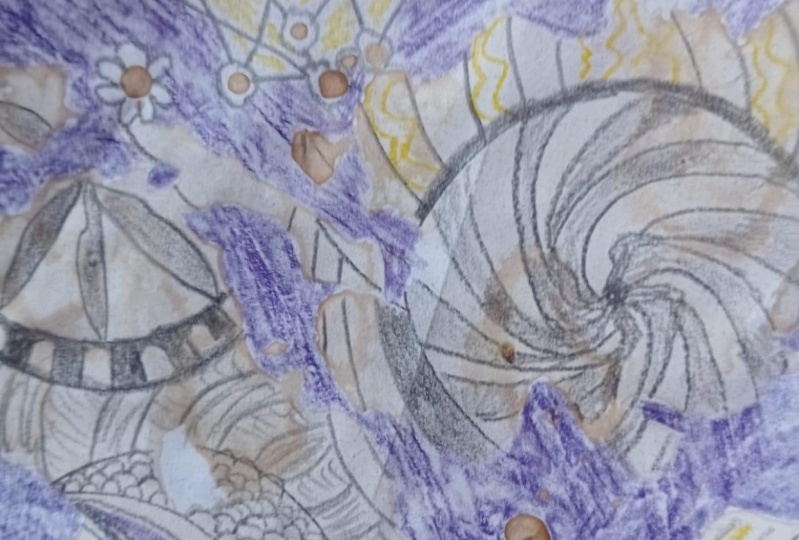
with like a marker, a pen, or a crayon. We can go from this to this. Are you going to join
me and play some more?
2. Class project: In this project we're going
to use some stained paper. Either that happened accidental or that you created yourself. And I'm going to show
you how in this course. Then you're going to
embellish it with Zen art in a way you learned in this lesson.
Think of yourself. The things you need
are a piece of paper, a glass of wine, or
a cup of coffee, and of course,
something to draw with like a marker and
crayon or a pen. Then your mindful
art will emerge, which you can upload in
our project section. Just submit project with the
blue button with this course and then you can type
in whatever you need and upload the image so
I can give you feedback. I would be so
grateful if you leave a review not only for
my future projects, but also for other students, so they can find this
course more easily.
3. Accidental stains: Oh, that's probably
your first reaction? Well, it definitely was mine and I start to clean
up everything. But Is that really necessary? Yeah, I know it all causes stress and it ruins everything. But how can we be mindful
about it even in a way that we start to do those accidents intentionally, like we do here? Because look at those things, They look so organic and actually they're beautiful
in their own way. What if we can explore it more and maybe make
it more beautiful? The ruined stains, ruined paper, will lead to mindfulness
instead of stress. That's what we're going
to do in this course. Well, let's not ruin any
more wine, let's drink it. Let's head over to coffee. Because you probably
had this happen to you. You were just thinking
about something else there. All of a sudden it all falls over and you get stressed again. Oh, no. What happened here? Yeah. Well, I can understand
it is a mess and sure, you want to clean it all up, but can we salvage
something from it? Because sometimes
when we make stains, we can see it not as stress, but we can see it as an
opportunity to play, an opportunity to experiment. Don't wipe this out. Look at this stain.
It has a shape, it has a peculiar shape. It has a shape that I
want to explore more. I'll try to put down
more of those shapes. None of them are the same. They're all different because of the fluidity of the coffee. I actually get a
little surprise here. That little drop. Maybe
I'll explore more drops. I'll just take a spoon
and see what happens. All of a sudden, those accents
aren't accidental anymore. They make me zen.
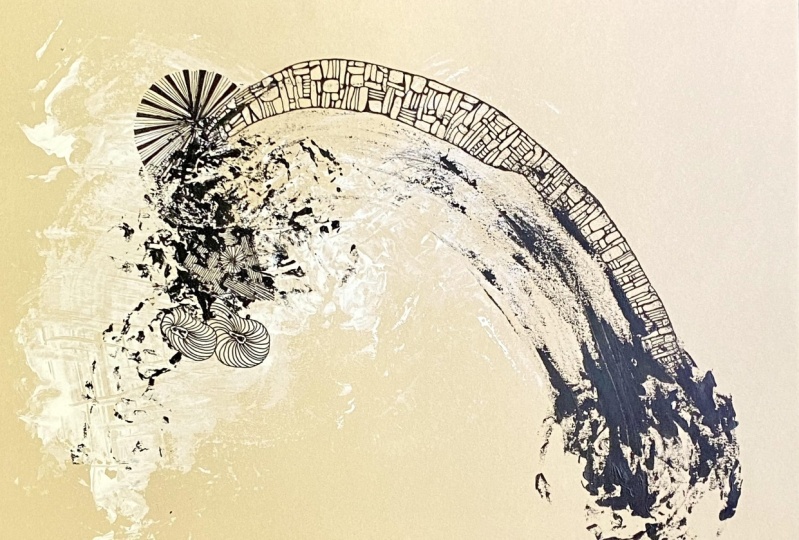
4. Mindful art out of a wine stain: I think our stains
have dried up already. So we can make a work
of art out of it, even though their work of
art out of themselves. You can just take a simple
pencil or a marker. This is just an Ka one, but you can use
anything you like. You can even just a pen. A regular pen, but I'll choose a fine liner. No
particular reason. Just because I like working
it and it fits the stain. I think the thing
that I'm going to do, I'm going to look
where I want to start. The only thing I do here
is follow the line, the line of the stain. By doing so, I'm not
thinking of anything else. I'm just thinking of the stain. The stain just shows me
the way I have to go. There's no particular way I
have to follow that line. Here I see a stain
within a stain, and I just decide to follow that one and see where it leads me. I'm not thinking about the
outcome of this project. I'm well, actually I'm not thinking
anything. I'm just following. It doesn't matter
where you start, It doesn't matter in what
position you keep your artwork. Sometimes you even have to turn it around and see
where you want to go. You don't even have to follow every line if you don't want to. I'm not really following
it too precise. Sometimes you just see a little dot of
white from the paper showing through
because I was flowing. Or just following the
flow, following the stain. I'm speeding up the video a little bit so you can
still see the process. You can still be
mindful about it, but it's just a little bit
quicker so you get it quicker. End result, but please don't do so when you're
making it yourself. Don't hurry up, Just take your time and make it
a mindful artwork. Just keep on following
those lines. You see that the sting gets a whole different shape by
just adding those lines. It almost looks like
a map of a country or something or of the
world. I don't know. Almost every time I
start at the point where I stopped the last line. Sometimes you just go and sit back and watch your artwork. Sometimes a different spot will call out to you and you
just start at that point. That's what I do here because
there's that little drop. I decided, well, I need
to go to the little drop, I don't need to go the rest. Probably your project would look totally different because
you have different stains. And that's the beauty
of those stains, the fall in their own way, they will all shape
in their own way. Sometimes you to keep the
stains the way they are, sometimes you just do nothing. And sometimes you say,
well, this speaks to me. I want to do something with it. Within this course,
I will show you different ways to look at the stain and make
something out of it. And this is the mindful way, this is just the stain following the art,
following the wine. While I'm circling all
those little drops, I decided maybe not to
circle all of them. It's okay if you don't do so
because it's your artwork. Maybe it's not even going to be. Maybe art is a weird term here. Just mindful because
if you think of it as being a piece of
your perfectionism will probably be in your way. And it's not about
perfectionism. If you work with
stage, you can't really be perfect about it. It's just like. But going with the
flow and maybe take a peaceful mind in your busy
day sometime for yourself. Sometimes you don't even see
the stain within the stain. You look at it first time. But when you start
moving the pen around, you see the stain in a way
you never saw it before. You probably feel by
watching this video, imagine how would,
how mindful you would feel you start
doing this yourself. No pressure.
5. Zentangle out of a wine stain part1: Yet another accident we're going to turn into a happy accident. This time we're going to
use a different technique. We're not going to
follow the lines, but we're going to see
what we can make with this shape in a entangle way, maybe a pattern way. One of the things we could
use is like the wine glass. Again, because I wanted to
do something, the circles, but I think maybe it
would be too big. Well, let's see, a I can grab
a marker again or a pen. But yeah, I'll start
with the marker. Let me see what happens if I draw a circle
with my wine glass. We just keep it in one theme. Well, that's a circle, but do I want to
make another circle? I can make it next
to it, inside it. I'm not sure. Maybe the wineglass
is just too big to use. With this marker, I decided
to take a smaller bowl, maybe a smaller pen, and see how that turns out. There's no plan. It's just going with the flow. Just like the other exercise, but it's more thought out. While I'm doing this, you see there's a tiny accident
happening again. I don't mind. I'll just
go on with the exercise. I'll just take the smaller
circle from the ball and try to do it my pen
or with my fine liner. But it's not as easy as I thought it would
be at the first. I'm afraid of tiny accidents
will happen again. But the beauty of this
course is it doesn't really matter if you
make an accident. We just make it into
a happy accident. Yeah, this number rely a circle, but I think we can make it
into a mindful centangle. Centangle is just
a mindful way of drawing and using
repeated patterns. Now I'm just using
those small lines. I'm not spacing them out evenly. Well, maybe I should, I'll
just go with the flow again. It's about a happy mind
like we did last exercise. Sometimes I just turn
the page just to make it easier for me just to
make all those little marks. I don't mind the
accidents I made earlier with the fine liner
because I'll show you, you probably won't even
notice them when we're done. Again, I won't keep in mind
that it will be an art form. I'll keep in mind that I'm
doing something relaxing, that I turn my accident
into a happy accident here. You already see that
the small accident I with the fine line and before I turn it into a small line so he
won't even notice it. It's all part of
the project now. Okay. Now I'm done with
the outer line. Let's see. I think I'm going to take the
marker because Yeah. Well, there are just too
many accents in this circle and I don't really care if it's like the even
perfect circle. It's a craft and then
when it's head made, it doesn't really
matter if it's not perfect, it's a circle. And it's mindful already, the accidents look a
lot better right now. But I'll tell you it's going to look even
nicer when I'm done. Small.in the middle and don't
measure it, is eyeball it. Because I did lines
from the outside. I decided to take
another shape on the inside to keep it more
interesting to the eye, but also to the mind and
to the way I use my hands. I decide to make it into flower shape because
first I make the small use like
a little flower. And then I start
the U on the top of one leaf and then I'll end at the top of the other leaf. So it's like a leaf in between
the previous two leaves. They don't have to be equal. It's about the mindful exercise. It keeps it interesting for the eye if you want to
turn it into an artwork. If it's not all perfectly
lined up, don't overthink it. It's not the art that
counts. It's the process. In part two of this lesson, I'll show you how I incorporate more different patterns
for this mindful project.
6. Zentangle out of a wine stain part 2: We're going to pick it up
where we left off last time. Going to get the ball again. Well, this side,
not the other side, because that side
wasn't working and I decide to place it all
for the other circle. When I do this, I
don't get two circles. Well, actually I do. But I
get other shapes as well. And those shapes
can be surprising. And I can fill them
in a different way, different centangal
way, than I did before. Let's see how this
one turns out. Well, the circles a lot
nicer than the first one. Let me see. We I want it. Yeah.
Well, why not? I'll just do another circle. I'm getting the hang of it. You don't need to
do this in circles. I love to work with circles, and especially because the
contrast with the wine stain. But of course you can
do it with squares or triangles or which
way you prefer. Now I got three circles, but I also got the
spaces in between. I think I decide I'll
take this one because those overlapping circles
make me think of a leaf. The thing I do, I just
draw a line in the middle. Then I'll draw some lines
following that line. But I start at the same point and I end at the same point. But I have to bend the
lines to follow it. They get even more bent
when I get to the end. Just because I have to start at the same point and end
at the same point, it makes the leaf
look even more like a leaf because I follow
the previous line. It's really mindful to do this. I could do a whole piece of
paper just by doing this. You even see the shape change. It's almost like a three
D instead of two D. But since I've done
stripes a few times, I'm going back to circles again, like I told you before, to keep it interesting to
the eye but also to my mind. And just the way I move my hand, I make little circles, but I also make
circles that are a bit bigger just to
keep the variety. When I'm done circling, I'm going to fill up the
space between the circles. Now you get a contrast
in color as well. Not only in shape
but also in tone. Well, not really
color because it's all black that I'm drawing. But some lines are
thicker than others. You get a contrast in
tone and in shapes. Again, to make it look
more interesting, I'm going to finish
off this flower. Put some extra leaves
between the petals. I call them leaves earlier, but there are petals. I'm not overthinking it. This is not a, something I thought of doing before
I started this project. The reason why it's mindful because I let the
process guide me. I'm just wondering my
eye over the stain and just see what calls
out to me and where I want to start here. I decide not to draw
the whole pedal of the whole leaf
because it's behind the other circle that makes
me build up different layers. Even if I did here, I
decide to fill this all up. Again to keep a contrast
in tone as well. This reason why I'm
making thicker lines here because I had lines
in the outer circle. These are different lines in a different direction,
different thickness. When I do lines
here, it just looks too much like it's the same. So I decide to make them into little squares because I follow
the shape of the circle. They're not perfect squares. Like they get not
really a three D shape, but they get some
way squared pattern. I'm not only showing
you this because it's the thing I would
like to do over here, but also I want to show you different kinds of
patterns you can use. Think of loads of
patterns yourself. If you go outside or you
read books, picture books, and you see different
shapes, different patterns, you can all use them in your centangle or
your mindful drawing. Keeping it fairly simple here after I'm just doing the lines in the
circles at the moment. But I do like the bigger
balls or the bigger circles, the dots, just because the other sides are lines that are next to
this part of the circle. Because I have
lines here as well. I'm not sure if I want
to do real lines. That's why I'm doing
those wavy lines because then they're
different, different shape. I decide not to do
the full circle, but I decide to stop at
the end of the wine stain because I can decide what I want to do and
where I want to go. If I want to fill up the full circle or
if I don't want to. It's my drawing process project. Again, they're not even
and they're not perfect. They're just a fun way to
draw the wavy lines and these little dots just make it stand out Just
a little bit more then when I look at this. Yeah, I want to do this small spatter because
I like it there. Just look at it. Is it finished? Is it not finished? Well,
I think for me it is. You never know when
it's finished. Your gut just tells
you it's done. It's done. I'm curious what you made out
of your wine stain. I'm curious what you
think of a entangle. Just load it up at a project section and
I'll comment on it.
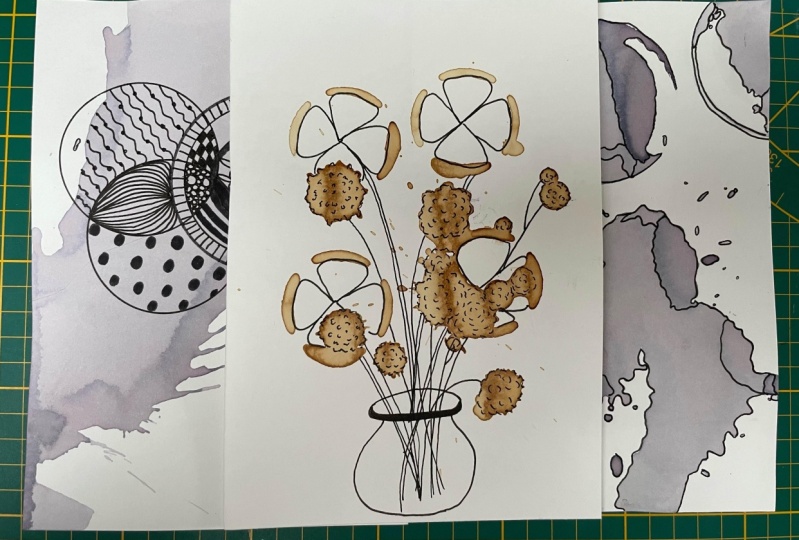
7. Bouquet out of a coffee stain: This time we're going to take the coffee stain and I'm looking for the different
shapes in them. Because I'm not going
to do entangle. I'm not going to do
the mindful sketching. I'm just going to look
at the shapes and see if I recognize something and I want to
make something out of it. I think I see flowers. I'm going to start with
this one because it looks like one of those puffy balls. You sometimes see
a flower bouquet. I don't even know
what they're called, but I want to make those
puffy, flowery balls. The only thing I do is
make some V and shapes, just some shapes to give you the illusion that
there are fluffy balls. Instead of making
them really precise, I decide to do it with
all the round stains. Again, I'll do some
of the outlines, I sometimes skip a
little bit and then I go to the center in a circle. I make those V shapes. They follow like the shape
of the bowl gives it depth. I do with the smaller
ones as well. You make some organic shapes. Because flowers are organic, none of the flowers
are all the same. I decide to make a
flower out of this too, because I set is going
to be some bouquet. I take those rims from the
cup as a base for my leaf. Those little petals
connect in the middle and do this one behind
the fluffy flower. Again, I let the staining of the accident guide me in what way to go to make the
accident a happy accident. But this time it's going to
be more recognizable shape, since I'm going to make
flowers out of them. And maybe they're
not real flowers, but they have the
shape of a flower. They're recognizable
as a flower. You don't have to do the
precise roses or tulips, You can make your flower. Everybody will notice it's
going to be a bouquet. Turn it into shape you prefer. Of course, you can go
over those stains, but I decide to
go to stay under, it's like a covered flower. Then I decide, okay, in this big stain on top, I'm going to make
more fluffy balls. Since I don't have that shape, I'm going to make that
shape with my fine liner. By just doing those V shapes, I'm going to make
those larger ones, but I'm also going to
do the smaller ones. I'm going to let the
stain guide me which way to go and what my next
flower or petal will be. This one is underneath the others by the direction
in which I place my marks. You know which fluffy ball is first one and which
one is lying underneath. So it's not only the marks you make but also the
direction of the marks. By giving them stems, you see the flower come alive with those
petaled flowers. You give them a little
bit of a larger stem. The main flowers
or larger flowers. It's in the flower world, none of the flowers
are the same, none of them are equal,
neither are the stems. Like I said, they are
the organic shapes. I let them all come
to a same point, like you do with a bouquet. If you have a binded bouquet there at the end of the stems, they all come together. That's because I don't
know if it's going to be just a bouquet or
if I'm going to give it a go give it a. They all need to fit in there. Of course, you can go
over the flowery fields, or maybe you didn't
even see flowers. Maybe you thought you
saw fluffy things and you thought of cotton candy, or you thought of something
totally different. It's up to you because
this is my stain. You probably have
a different stain, or a different mind, and
therefore a different project. All the stems come together. N vase. This is the double stem because this one belongs to
the large flower. Let me get these
some smaller stems. If I don't give them all stems,
it doesn't really matter. It's illusion.
Again, that counts. And I'll check if
it needs something, because all those lines
go through the vase. I wanted to mark this
rim, make it more black. Gets more solid rim. You see that the stems
go into the vase. Instead of laying
on top of the vase, creating another dirty flower, fluffy flower, this stem
comes off another stem. But I mean, that's what
flowers do by filling it up. You see what it needs and you see what your next
step is going to be if you need to do something or you can
just leave it as it is. Yeah, I think I'm done. It's a totally different
project than the others, but I love this
technique as well. And I'm curious which
one you like the best, and I'm curious what
project you will make.
8. Conclusion: Are you Zen for
making mindful art? Are you excited that you made beautiful art out of
these messy accidents? I would love to see
what you have made. Please upload your work to the project section so we can
all see each other's work. Comment on it and just enjoy.
 Anna Berends van Loenen, Professional Messmaker