Transcripts
1. Course Overview: Hi, everyone. My name is well, Jeffrey, and welcome to my course Agile retrospective. How to prepare for retrospectives. I am an agile coach, helping teams to get better and doing what they love. The retrospective structure helps the team to follow a natural order of thinking, take a comprehensive view, understand different points of view, allow the discussion to go where it needs leave with concrete action and experiments. In this way, a retrospective provides a collective telling of the story and a mining of the team experience for wisdom. To achieve such a successful outcome is no accident. Before we can finally start to facilitate our first retrospective, we need to prepare a few things, such as who should take part, prepare the room or make sure that the right material is available in this class. I'll go through all the necessary steps to do so. Never underestimate the value of investing in proper preparation. It helps you to run the whole event more smoothly. Alexander Graham Bell. Before anything else, preparation is the key to success. An actual retrospective is a meeting like any other. Even though is a relatively short meeting, usually lasting about an hour. I find that most facilitators do not set aside sufficient time from their other tests to properly prepare for a retrospective. If you are planning and leading a retrospective, you'll make a series of decisions about the goal, the flow and the logistics of the retrospective. Some of the major topics we will cover include the need for setting aside two blocks of preparation time. The first is to decide the purpose of the retrospective. The second is to design an agenda around it, complete with a schedule of anticipated timings going through all the necessary steps to prepare for the retrospective in the next sections, we're going to cover the following items. What is the two stage process to decide on an appropriate purpose for the retrospective, one of the benefits of a careful selection of activities? Where are the tips to take into account regarding the materials? Why consider moving to another physical location? Last but not least, who should take part
2. The Goal: the goal. Decide on an appropriate purpose for the retrospective in Heartbeat retrospectives, the topics should come up naturally. A declared goal is useful when the topics that surface air getting stale or a retrospective is being used to tackle specific problems. Deciding on appropriate purpose for the retrospective is a two stage process. Investigate the context. Shape the goal. Check your assumptions about the team's history and morale and about the state of the project. Investigate before making a decision. Take a second look. Investigative techniques notice what artifacts information radiators are available in which are missing. Task board velocity charts, etcetera. Talk to formal and informal team leaders. Technical lead test expert. Helpful questions to understand the dynamics of the team. What this sprint produce? How did the result meet or not meet expectations? What's going on elsewhere in the organization that affects the team? Are there rumors of layoffs? Has there been a recent merger? A cancelled product? What is the history of previous reviews and retrospectives? What happened and what was the follow up? How has the team worked with facilitators before? One other relationships between team members. How is their work interdependent? One of their personal connections and working relationships. What our team members feeling one of their concerns or anxieties? What are they excited about? What kind of outcome will achieve value for the time invested, both for the retrospective sponsor, management and the team? This information will help you formulate a possible goal for the retrospective. A useful goal helps answer the question. What will achieve value for the time invested? A restrictive goal. Axa's a blinder pre determining what actions or direction the team will take. A broad goal. Leaves open possibilities for your team to think creatively about their experiences. Uncover root causes of mishaps, discover insights that are important to them. Useful goals already mentioned in previous part bulls of the process. Discover what we were doing well and accentuate. Understand reasons behind miss targets and mitigate. Find ways to improve our practices. Find ways to improve our responsiveness to customers. Rebuild damaged relationships. Pro tip. If you do have a goal for a retrospective, you need to announce it in the invitation More later. You presented at the beginning in the set. The stage phase if the team doesn't buy into the goal. Asked the team to describe a goal
3. The Flow: the flow design an agenda around the goal, including the activities you plan to run. They're sequence a schedule of anticipated timings. Meetings with no agenda are largely ineffective. They produce no. Designing an agenda involves selecting the activities and determining their duration within the retrospective flow definition activities. Air time box processes that help the team move through the phases of the retrospective activities. Provide structure to help your team think together and have several advantages over freewheeling discussion. Benefits of careful selection encourage equal participation. Working in smaller groups makes it more likely that people will hear and be heard focused. The conversation. Frame the conversation. Need to reduce drifting off at a tangent. Encourage new perspectives. Bring people outside their day to day. Modes of thinking Can encourage new ideas. How to get the best out of your activities. Keep it fresh. If you're bored with an activity, chances are your team is too alternate sitting activities with ones where people move alternate pair activities with group activities, etcetera less likely to fall into habitual thinking. You don't want habitual thinking. You want creative thinking. Pro tip. Have a backup choose to activities for each phase one short and one long substitute. The shorter activity of time is tight. Be prepared to scratch an activity completely and try something that would better fit the current situation. You must know the activities inside out, knowing the goal of each activity, how long they should last and how best to carry them out. Be able to answer any questions the team might have about the activity. Be able to help the team to use the activity effectively to get results. Nb Fruits are blood oranges, dragon fruit, rambutan, Another tropical fruit. Not the same old, same old, but you might need a backup. Also best you know when they're ripe and how to eat them. How long will the retrospective be? Direction. 90 minutes for a two week sprint. An average sized team 7 to 9 short Cutting time means cheating results. Be practical. Add more time for more people. When more than 15 people are in the room, everything takes longer and the retrospective early. If people identify meaningful improvements and finish their plans before the planned end time, you've achieved the goal. Don't prolong. Avoid rushing people through conversations or cutting short a retrospective. Allow enough time for group discussion as well as time for between activities. Have a time box for each phase. This is just a example giving an idea of the general proportions of the phases. Remember some activities cover multiple phases. Set the stage five minutes. Welcome chicken Working agreement. Gather data 20 minutes. Hard data feelings. A quick review. Generate insights. 30 minutes Why, in fact patterns decide what to do. 20 minutes Solutions filter plan. Close the retrospective five minutes. Document Retro The retro shuffle Time. 10 minutes total. 90 minutes Pro tip. Take breaks when there is a logical stopping point when energy drops or when people express a need. How long does it take to prepare for a retrospective? Just asking What went well and what should we do differently? Doesn't take long to prepare, but retrospectives go beyond that. You've seen that you need time to determine the goal, select activities and prepare to lead. The retrospective Preparation will differ from retrospective to retrospective, depending on golden activities. The amount of time you need for preparation also depends on the length of the retrospective itself. For an hour long retrospective, you may spend one hour preparing with time You may get more efficient when preparing, but you'll never get to zero preparation time. Still, some things to take care of prior to a retrospective. Decide on logistics materials. Venue participants. This is covered in the next section. Now that we have an agenda, do you have any ideas on how we would we make good use of it? Sharon. Distribute an agenda beforehand with invitation for occasional attendees. Show it make the agenda visible to keep the retrospective focused. Scribble on it. Keeping it as a checklist is helpful. As you start out to ensure you don't forget anything, take off each of the points on the agenda as you deal with them.
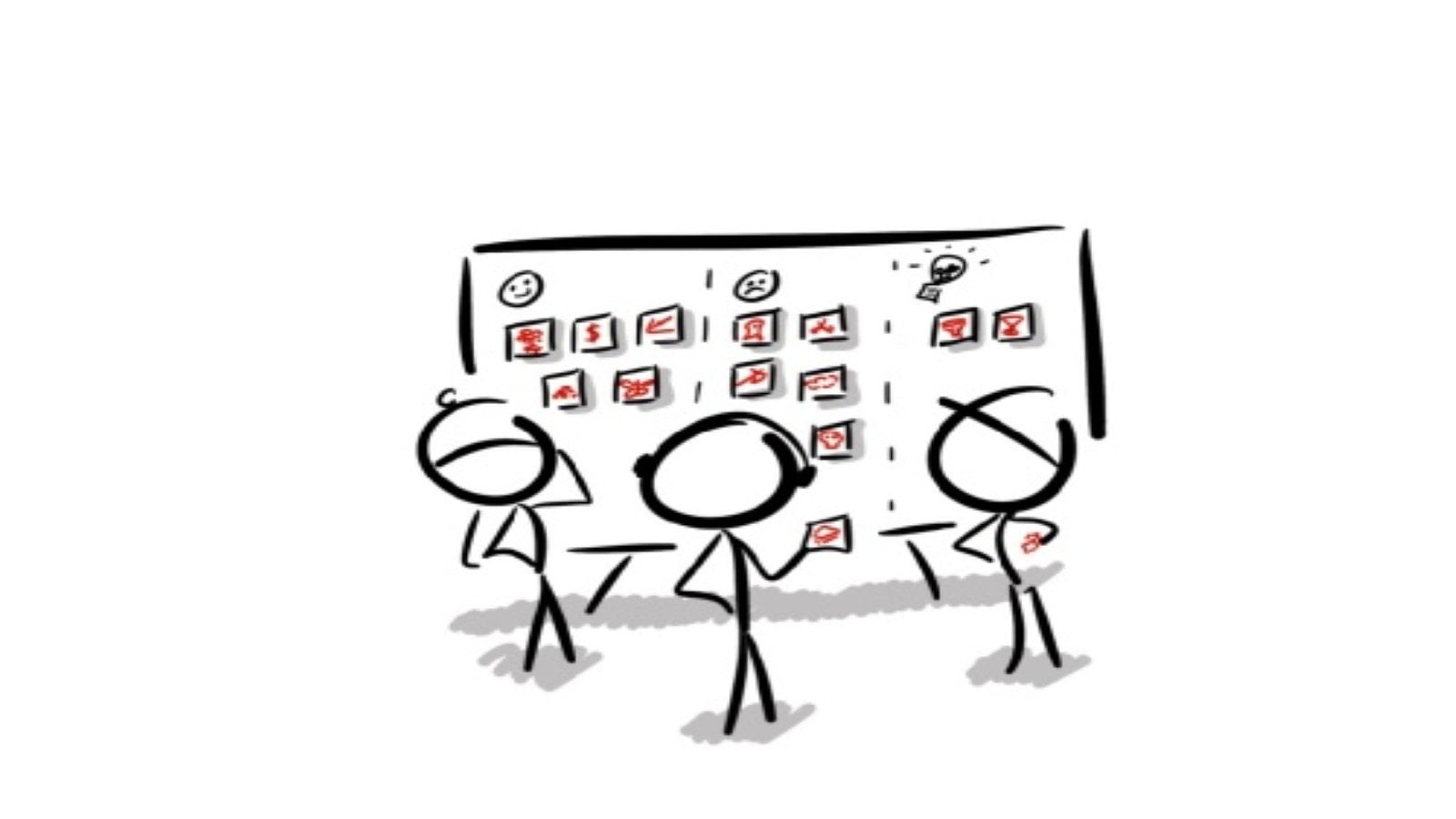
4. Materials: decide on the tools you're going to need. Choosing the stationary, considering the advantages of consistency, capturing and radiating the results. The output. Considering the impact of office policies and complain when it comes to choice of stationary, the underlying principle is that you want more pairs of eyes seeing all the data. You cannot control the quality of everyone else's handwriting, but you can control the pens and papers that are used. Use marker pen instead of an ordinary ballpoint pen, improve visibility and tend to turn out better in digital photographs. Use paper the contrast with the pan color and be some participants. May of color blindness, Pro tip plan for pens to go dry and bring spare ones enough for all. Seems obvious. Consider the advantages of using color consistently brightens the activities and keeps it more engaging. People should feel like retrospectives. Air, different from other meetings. Helps with pattern matching. If necessary. Ask people to rewrite contributions that don't match. For example, all went well. Sticky notes of same color helps improve safety, increasing anonymity hard for a participant If they have the only blue pen. When everyone else has a black pen, you need to capture retrospective results effectively display output from each activity to act as visual reference for later activities can help to form links between concepts previously discussed or to trigger an insight that applies across topics. Pro tip whiteboards air fine for transient information, But if the team needs the information for the remainder of the retrospective, use a flip chart. Capture retrospective output with a camera to radiate information throughout the following Sprint Much quicker than transcribing agent Every word written up can embed into the reporter Wiki page. You're right after the retrospective Mawr, engaging them. Plain text Pro tip. Use different angles. Choose best image later before you get any drawing pins or sticky tape out. Do check whether there are any rules in place that prohibit hanging anything on the room walls. An alternative is to have a role of painter's tape or masking tape for hanging Flip chart paper up around room without leaving residue on the walls.
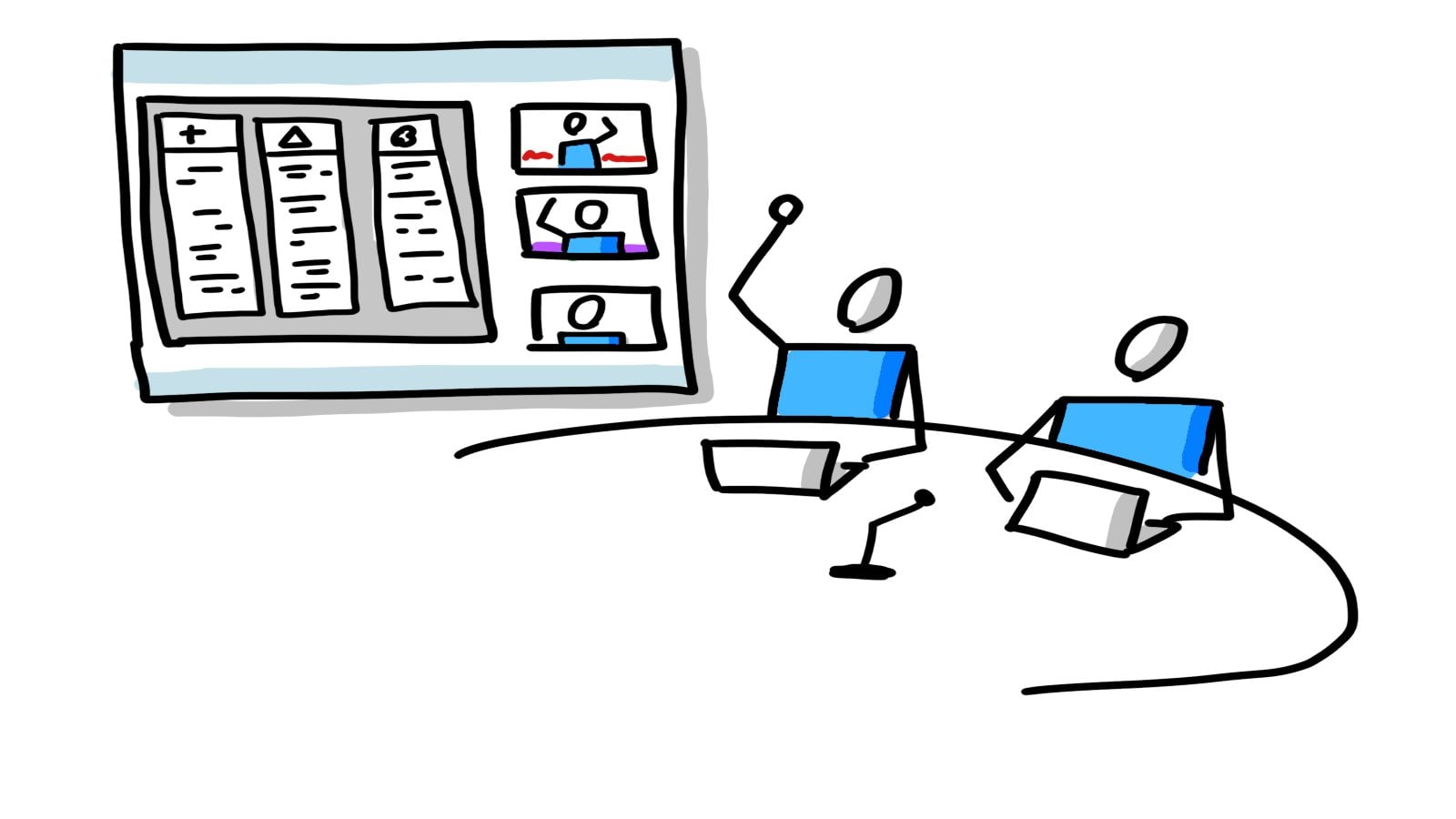
5. Venue: decide on where you will hold the retrospective evaluating the essential requirements. Considering the furniture considering alternative venues. Setting up the room slash venue, visit the space in advance or find out by other means. Do not assume the space will have standard equipment. Consider the following sighs enough space so everyone can move comfortably. They won't be seated the whole time. Lighting. Consider which materials will work with the lighting sound. There should be freedom to speak and discuss without bothering others. Wall space. It should be easy for people to see the agenda. Data charts, flip charts and other information. Find a room that is one long, blank wall, or at least a sufficiently large white board to post timelines, charts and flip chart pages. You want to arrange furniture for better interaction about chairs. Principal participants should see the outputs in each other. It is preferable if the chairs and tables can be easily moved around. A circle or semi circle of chairs. Encourages participation. Seating in rows. In another words looking at back of head can stifle interaction about tables. Principal people should be closer together rather than farther apart. Tables can be a physical barrier that big old table will inhibit creative collaboration tables arranged in a U shape with a big gulf in the middle, create distance and make it hard to move around. Should you use your normal workspace for retrospectives where everyone sits on a day to day basis, the advantages are that the artifacts are all there, and it feels like business as usual. This is a good thing, although fun. This is not playtime trying to achieve a result. Consider the advantages of moving to a different physical location. Can radically help focus minds away from daily tasks. And to start thinking about the past and potential future can help people notice different things helpful when retrospectives have gone stale. Illustration. Most of us have had the experience of driving or walking a familiar round and arriving at our destination without noticing anything along the way, effective when you need a fresh perspective. In another words not business as usual, for example, for an abnormal sprint termination for missing a sprint goal or for an unproductive conflict within the team. Pro tip meeting Outside plan for the wind. Robust tools. Your shelter Secret place with shade sunglasses are a barrier allow additional time for participants to get there. Now is the time to prepare the space. Reserve the room for a least half an hour prior to the retrospective, as well as for some time afterwards to set up for the retrospective later to allow for previous meetings over running into your teams Valuable discussion time. Prepare flip charts or whiteboards in advance and hang them around the room. You can cover pre drawn charts with playing flip chart paper to avoid distraction. Another benefit of flip charts police a pen together with any materials to kick. Start the first exercise in front of each chair. You will distribute further materials as the retro progresses. Ensure the room will be a comfortable temperature. Adjust air conditioning, windows, etcetera distributed. Retrospective. Check the equipment beforehand. Nothing worse that's struggling with electronic devices or waiting for applications to load with everyone watching
6. Participants: make sure the attendees will add value and derive value, considering who should take part and adapting accordingly. Preparing the participants for involvement. Creating a congenial atmosphere Who should take part? Some sources recommend. The best practice is to have everyone involved in the project in any way participate in the retrospective My Direction. It is important for all of the stakeholders in anyone else that is not a member of the team to leave before the Sprint retrospective starts, each team needs to privately review their performance and process to see how to improve every sprint. What do I mean by the team? A k a. The scrum team, all members of the development team, the facilitator, a k a. The scrum master, the actual coach and the product owner. The development team includes everyone who is designing, building and testing the product. I eat programmers, documentaries, testers, UX requirements. On occasion, someone from outside the team may be working very closely with the team on development tasks. Should they be invited, The team itself should always make the decision whether to have people from outside the team participate. Contact the team before sending out these sorts of invitations and be knowing the participants gives you an advantage. For example, knowing who likes to be the center of attention and talk a lot and who them or introverted team members are enables you to plan accordingly. It is really important everyone turns up on time and it is ready to participate. Deviations Other meetings late nous Absenteeism should not become the normal course of events. Work with the team leader to identify a minimum set of criteria for postponing the retrospective. For example, four of nine members missing Send invitations from an electronic calendar to all participants. You may have a recurring meeting request for team members, but don't forget any invited attendees from outside the team. Request confirmation of attendance on the day. Especially helpful with vacations, conventions, other meetings, etcetera. Create expectations on the day by using whatever communication mechanism is commonly available. For example, Daily Sink to remind everyone off the time and location of the retrospective. The expectations for everyone participating, especially when not business as usual, includes something. Do we, especially when needing to build team spirit warning too much food or focus on food might become a source of distraction. Just snack slash little things like some fruit, nuts, guns or Pressel's. Once again office policies may apply benefits. A relaxed atmosphere. Better results. Increased popularity of your retrospectives, fewer late participants. Let's stomach rumbling.
7. Wrapping Up: Louis pastor, said that fortune favors only the prepared mind. Good preparation is the foundation of good retrospectives, like a good jazz musician. On Lee. When you're well prepared, you are able to improvise. A musician knows the music inside out and has practiced his scales for the various chords thousands of times. Only then can he play a good, coherent solo without having to think about every single note. Good preparation means you can tackle your retrospectives with the same confidence as the master musician, thus making the atmosphere more relaxed and more creative. Time invested in preparation always pays off. A checklist can be helpful to ensure you've covered all the bases. Do you know why you're facilitating this retrospective? I e ago. Have you been briefed on what might come up? I know the participants. Do you have an initial agenda? Are all the activities you've chosen practicable? I Enough time. A RCs criteria Attention, relevance, confidence, slash confidence, Satisfaction. Are you expected to do anything after the retrospective? For example, write a report, distribute action items, etcetera. And have you got time for that? Has the agenda been publicized? Do you have enough materials for everyone for example, pens and sticky notes. Do you have enough flip chart paper or is there a whiteboard? Two. Depends for the flip chard with a white board work. Have invitations been sent to all participants? Do you know how many people will turn up? Do you have confirmation that a quorum is present? Optional? Is there something for the participants to eat and drink? Have you reserved the space, including preparation and rapid time? Does the space accommodate your activities in the number of participants? Are your artifacts including agenda clearly visible throughout the room? Does your technology all work, including a camera to capture output room facilities? Hardware software? These actions may seem small, but each helps to set up the retrospective for maximum impact and success. You know the goal for the retrospective, how long it will be the activities you'll use to help the group think and solve problems together where the session will be and who will attend. Now all you have to do is stand up and lead the group
 Will Jeffrey, Agile Mastery Beyond AI