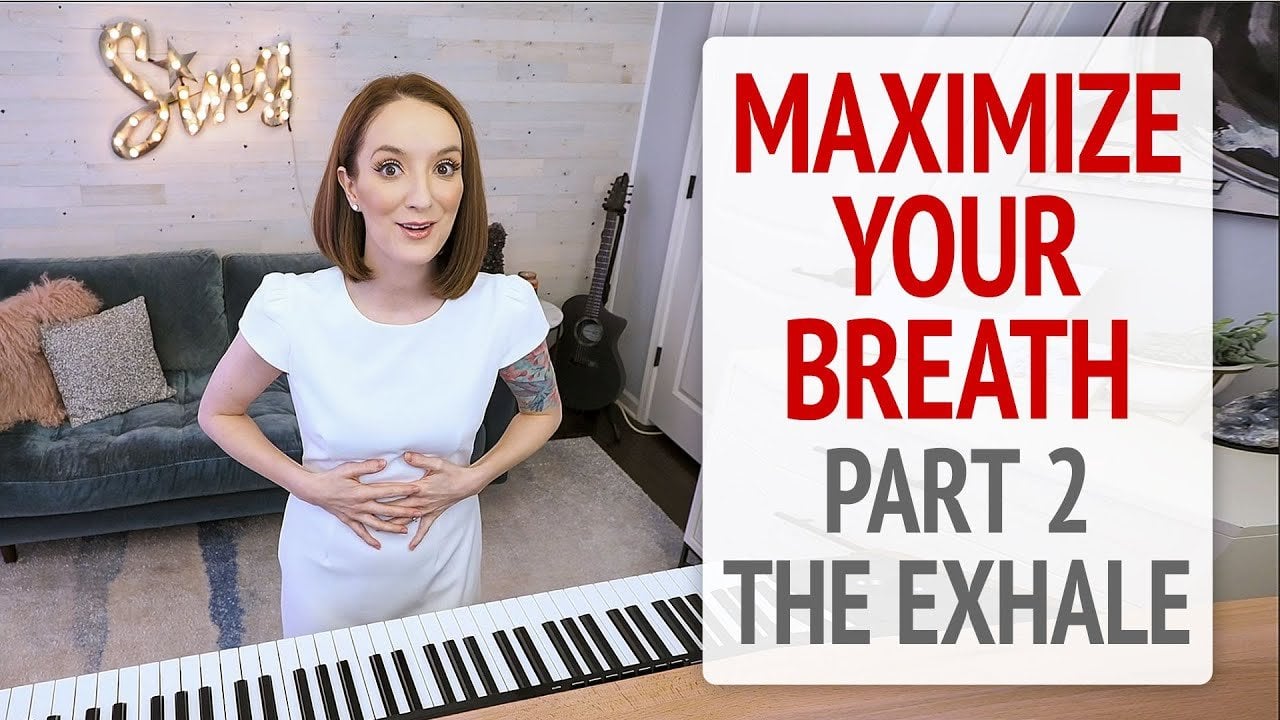
Transcripts
1. Intro to Free Your Voice: Hi guys. I'm Madeline Harvey,
and thank you so much for taking
out this video. Over the course of many years
in my vocal coach practice, I am asked the same
types of questions from both beginners
and professionals. And those questions are
something like this. Why is singing so hard? Why does it feel like
my voice is always stuck inside of my body? Or sometimes it feels
like there's a ceiling of my voice that I can't push
past no matter how hard I try. Why does it feel
like my voice gets so fatigued and
tired so quickly? Why does my voice feels so
unstable and inconsistent? And what can I do about it? Welcome to this very special
three-part vocal series called free your voice. This lesson series
is designed to be a complete foundational
understanding of voice. So if you are new to singing, This is the best place to
start to ensure that you have the best practices for a beautifully strong, consistent,
healthy instrument. But if you are an
industry professional, this is also a really
great place to be as well to uncover perhaps any gaps in your learning or in your
own practices at home. So let's really quickly, Let's break down
how each lesson is special and what we're going to learn in our first
lesson together, we're going to go over what traps the voice
inside of the body. How can we relax the
muscles that can govern the voice so that we can restore the
voice to more flow, more confidence, more
power, more range. And our second lesson together, we're going to go even deeper
into the experience of the body and talk
about vocal registers. We're going to feel them as acoustic spaces within the body. Then we're going to
blend them together into a full body vocal experience. In our third lesson together, we're gonna go even deeper
still into the vocal cords and the muscles that govern both pitch and range
and stability. This is going to give
you more consistency and strength and stability
with your voice. So having said all of that, I encourage you to
follow the system. As a system. The exercises within these
lessons are fairly simple, but they're highly
sophisticated. So don't let their
simplicity distract you from their sophistication. Keep working until you feel
that you have commenced these exercises into a
muscle memory sense of self. Once you've done that, feel
free to move on or come back. Come back to these
lessons to keep practicing and brushing up
on your skill-building. Having said that, I just
want to thank you so much for including me in
your vocal journey. I'm so happy to be on
this journey with you, and I cannot wait
to think together.
2. Part 1: Relax Into Your Natural Voice: Hi guys. I'm Madeline Harvey,
and thank you so much for hanging
out with me today. Welcome to free your
voice part one. This is the first lesson in a three-part series
where you and me are gonna be deeply exploring
what freedom feels like. How can we engage
the voice so that we can free it from the body, giving you more power, clarity, authenticity,
range, confidence. More and more and more
is very exciting. As we work together today. We're gonna be relaxing and engaging the voice
and the body deeply. As we do, the voice may wobble, it may break, it may feel very unsteady and I know that
that's a little scary. I encourage you to
stay with this in keep engaging your voice
is deeply as you can. Let this process really play out and fully experience
this for yourself. I'm completely confident by
the end of today's lesson, you're going to have reoriented, retuned yourself into
freedom. From there. We can build whatever
sound we want. So it doesn't matter
if you are a seasoned professional or if you're
a complete beginner, feel free to use today's lesson as a
resource tool for you. Come back as often as you
need to until you feel you can completely anchor the sensations in your body
before moving forward. Like I said, it's
going to give you more of everything that you know
that you're capable of. Are you ready to get started? So just jumping right in. There are three things that we're going to be taking
away from today's lesson. I'm going to give you the first
one now, repeat after me. Tension is resistance
to what is, let's say that again together. Tension is resistance
to what is. Now that's gonna be
very, very useful. That is our building block
from today's lesson. Now why is this so important? Well, first and foremost, the voice is completely
controlled by the nervous system. So anything that we're feeling
or anything that we're thinking has a direct impact on the way that we
experience the voice. So when we're scared
of what's going to happen or we're trying to make it happen a specific
certain way that causes the nervous
system to impulse, electrical impulses
through the muscles, which then act like throwing
a lead blanket over a bell. And the experience of the
voice becomes just like that. So this is where
we have to begin, completely have to begin. We have to first become
consciously aware of where we get fussy, where that movement
starts to happen, then we can deeply, deeply relaxed that movement. So today we're going to
dive into an area of the body that is probably the most impulse when it
comes to making sound. And that is the jaw, the tongue, and the
back of the throat. Now the reason why these specific three things are so impulse when
it comes to sound is because these are the
elements that we actually interact with the air in
order to make pretty sound. So when we're hearing some
of our favorite artists and we hear their
signature sound, we can identify it as
a signature style. They are moving jaw, tongue, and throat to give them a very specific configuration
to create that sound. Now, that's all well and good, but we cannot tell friend
from foe just yet. We cannot tell if the
movement from the jaw, tongue and the
throat are actually keeping the voice
locked in the body. Or if they're good movements and good tensions that are just giving us the style
that we need. So since we cannot
tell friend from foe, we're just going to take
them all away today. So let's go ahead together and let's see what
that feels like. So you do not have to sit
or you do not have to stand or you do one variation of
either. I'm okay with it. All that I ask is that
you take a moment to take a breath and just come
into your own experience. That takes a minute, doesn't it? Feel your nervous system turned down like
I'm going to sleep. You can feel your body's
processes just slowing down. You're in a good place. Now from there, can
you feel gravity? Calling against the body. And we're trying to
balance, just stay upright. Now let's see if we can feel
gravity pulling at the jaw. Yeah, that's good. That's good. Face gets a little dumbfounded
and that's wonderful, relaxed or hey, now can you feel gravity
pulling at your tongue? Just let the tongue rest
inside of the mouth. Nice and heavy. You may need a moment to really feel what that feels like. Good. Now, just feel as if
the back of your throat. And just lay there. Just loop, loop, loop and
just really let this relax. Deep, deep, deep relaxed. From this place. Take two breaths and notice how the breath goes in, goes out. And it does not require that
these elements move at all. Just feel the breath
in and breath go, wow. Okay. Okay. Can you get the sense of
what it would feel like? I know it's unrealistic, so we'll use our imagination here. Can you get the sense of
what it would feel like to not have a tongue
or a bottom jaw. Now, when you're ready, we're going to apply
voice to this. Now, it's very, very tricky because we're
just exploring sound. But the sound should feel. Sound should sound a
little on the dole. Kind of dumb sounds style like completely unimpeded by any interference with
the back of the throat? Like if I if I
maneuvered the back of the throat just to give you a sense of what
that sounds like. You're going to hear
some quality coming in. So if I go, oh, oh, can you hear how
my throat is doing something to interact with
that air as it comes out. Good. Now we don't want that. We don't want that at all. So as we relax, it's going to feel a
little dumb sounding good. But it does really feel great. It feels like deep relaxing. Let's try this together. Relaxed. Released some voi. Good. Now, did you
notice anything move? If it moved, it will feel
you'll feel like a little zap. Like you'll feel the movement. Go ahead and try again. One more time. Good. Okay, Let more time. Good. Now you have to actively
keep feeling relaxation, keep feeling relaxation,
keep feeling relaxation. Which brings us to
our second thing, our big takeaway
from today is can I, can I be so still that I only feel the vibrations and the breath interacting
with my body. That is going to really serve us in questions are wonderful
thing to ask the body. Because in the body
answers, right? So as we did that note, as we offer that note
over and over again, did you notice that the
first time it was shaky? Because as we're engaging the breath and we're
deeply relaxing those muscles that are so used to being impulsive
and getting involved. But as they don't get involved, the influence of the sound, the response ability
of the sound then gets transferred to the
flow of the breath. And as we offered the sound, once, twice, three times, the breadth started behaving in ways that was more consistent, more steady, more stable. Then the sound
started to amplify. Now that's a lot that
I'd like you to notice without telling you that I
wanted you to notice it. So now let's go ahead
and try it again. Now we're just exploring. It doesn't matter what
pitch you choose. You can choose whatever
pitch you want. But just keep these influencers, jaw, tongue, and back of the
throat completely relaxed. If you want. I
really enjoyed this. You can take your hands and
just harass them on your way. It's really pretty
faces that we make, but just rest them there. And then let the
weight of your hands assist you in deeply relaxing. So from here, take a breath, just feel what that
relaxation feels like. And let's touch the
voice. Here we go. One more time. Now that's very satisfying to me because I feel that that's a full
body experience of the sound. Which again feels very exhilarating and very
satisfying to me. If you start to notice that
there's movement happening, remember our first takeaway, which is tension is
resistance to what is, okay? So if you notice
constriction happening, that is just resistance
to what is happening. That's so helpful to know
because your body is having a, o God, a scared response
or a protective response. And you can engage that. You can deeply engage that
and go shush, Now, it's okay. It's okay. That's why
we're doing this. Before we just jump
right into exercises. We are soothing and
soothing ourselves. Tension is resistance
to what is, when you notice it. You're resisting something. Then number two, can I be so still that I'm realizing I
don't need to get involved, I can just let this happen, which is actually number three. Feel that difference between make it happen and
let it happen. There's nothing you need to do. Just give yourself the
experience of your own voice. Okay? So with that in mind, let us go ahead and try
this one more time. Hands on the face, and then we'll apply
this to an exercise. Alright, can I feel
so still good? I can feel vibrations and breath interacting with my body. Okay. Maybe, maybe
let's see, let's see. Take a breath. Any note you want? Yeah, I think I was pretty
still that time. Okay. Now let's try
a different note. Now. We're just guessing you
can pick whatever you want. Good. Yeah. I think we can
manage the stillness part. Where we are we ready to
put this into an exercise? Let's go ahead and
do that. Okay, So we're going to continue with our vocal exploration work by putting it into an exercise. Now remember, first takeaway is tension is resistance
to what is. So if you notice that you are moving around what is happening, or if you're reacting to the
process of making voice, then number two, can
I be so still that I can only feel vibrations and breadth interacting
with my body. This is the best way to make a solid relationship
with your voice. So our exercise is this. We're gonna say huh, H, UH, as we say Huh. That is a wonderful way to keep the back of the
throat disengaged. Because H. H offers
no vowel placement, it's the best sound to just
encourage the jaw, tongue, and throat to stay relaxed
as we offer sound. So we're going to start
here and we're gonna slide very messy like down. Now, if that is to
jump in when it feels a little bit more more
consistent with your voice, a little bit more
where your voice is. So if you want to keep
your hands on your face so that you can feel
that steady influence of gravity relaxing. I strongly encourage that. Strongly encourage that. So I'm going to offer
this up for you as we descend. Voiced, loves D, sunshine, and that's how we associate, really the day I had, right? So as you descend, it's not about control the
sound control the sound. Number three, feel
the difference between let it happen
and make it happen. Do not try to control the sound. Just keep relaxing
as you descend. Let your body explore. What relaxation and voice making feel like simultaneously. So one more time for your ear. Now we do it together. Ready? Can you feel that exhale? Just carry the sound out. Try it again. Good. Now really want
to encourage you. Do not push the voice. Remember number three, feel
the difference between let it happen versus may get her up. Okay. It's exaggerated. I know. Let's try it together. Just really let it
happen, let it happen. Don't be resistant to what is good. Now, if you notice a shake
or a wobble, stay with it. It's very joyous news. Very joyous, wonderful news to have
something shake and wobble. Because what that
means is you've just allowed movement into a place. You did not allow
movement before. Very big deal. So let's try that one again. Feels amazing to just
let the voice go. Good now, if we're in a
place in range right now, that if you were Tenzing, you would hear it. If you're still not sure, quite sure how to feel
your way through things. Because maybe that feels
new to you to feel the voice you can definitely
hear when tension shows up. And just for your ear, I'll
show you relaxed, tense. You start to worry about me. Gosh, I hope she's okay. So don't worry about it. Tension is resistance
to what is. So can I be so still that I only feel vibrations
interacting with my body. On your own. Don't react, don't get
involved, don't resist. Just be still. Feels. Let's take it back down. Your voice wants to change.
Go ahead and let it change. Yeah, it's a very
powerful thing, very, very powerful thing to allow, just allow the process of voice. That really is at the essence of all of these big
takeaways today. Now, just as a reminder, the very first one
is that tension is resistance to
what is that one. We cannot get anything
else done with the voice if our
voice is tensing. But it's so helpful
to recognize. The process of making sound is something
we participate in. So it's very, very helpful
to just be able to recognize I'm feeling tension, I'm feeling maybe scared, maybe I'm trying too hard. And it's again, very
helpful to recognize, recognize what
tension feels like in its early subtle stages so that it doesn't fully manifest in a complete
shutdown of the voice. We can retune, reorient the voice into
something that's co-operative. So the way that we do
that is number two, can I at least be still
enough or just can I be still enough to feel vibrations or feel breath however
it is you feel it. Just interacting with the
body from that place. We can reorient ourselves
into our proper position, which is not a must
make the voice. It's the guide of the voice. I can guide. The vibrations,
but I've gotta be able to feel them first. And then number three is more about the
relationship of the voice. Can I just feel that
there is a difference between making it happen
and letting it happen. There's a little bit of
a sacrifice in that. Because when we let it happen, sometimes again, the voice
wobbles and it breaks, and it wobbles and it breaks. And that may be scary, really, really, really scary. But this is why, this
is where we begin. If we can begin
our training here, we can tune ourselves into
openness and support. Then we're not
resisting anything. We're fully cooperating
with our voice. So now that I've done
that exercise with you, I'm going to offer it
up to you by yourself. In your practices,
you can just skip to this particular
place and we'll leave maybe if we can a little timestep stamp for
your practices later on. So I started you right
here on that HQA h. We're just going to run
through it and I will zip it, lock it, and put
it in my pocket. Here we go. Take moment here, the note. Take a breath. Remember just a couple of
minutes ago how we said, your voice loves things
that descend because it associates that
DSM slide to relief. So what we're gonna do now
is we're going to go from low to high and
back down to low. We want to continue that theme
of just staying relaxed, feeling deep, deep, deep relief
as we let the voice move. Instead of thinking low note. High note, low note. I'd much rather you just
experienced a circle of sound. And remember, we want to let whatever happened
completely happen. It is very important that you not tense, don't get involved. Just let some breath and let some movement into the voice. So continuing our HU H sound. And I strongly encourage you to keep your hands on your face. To keep the influence
of the jaw, the tongue, and the throat
and nice and relaxed. We're going to start here. Slide upward here,
and then slide back. Now that you have a little bit of experience with relaxation, I want you to actively see if
you can relax even deeper. Can I relax even deeper as
you complete this slide? So if I'm to give
you the example, that would be one and see
if I can relax even deeper. I don't know if you heard
a difference there. Imagine that you did because
my experience of it was much fuller at a much
fuller experience of my voice when I asked myself, can I relax a little bit more? So since we just did
our first exercise and I bet you're getting
really good at it. See if you can take
it up a notch by cannot relax a little bit more. Let's do this together
starting right here. Now ask yourself, can I relax a little bit
more and try it again? Funny, right? Can I relax a little bit more? Can I relaxed? A little bit more? Relaxed? A little bit more. Relax, a little bit more relaxed a little bit. Relax. Relax a little bit more. Extra solute, a bit more. Hi, Let's try that one again. There's a deep utility to
trying each slide twice. Because even though it
feels highly simplistic, it's a different experience for your voice with each half step. Totally different ball game, totally different
space in the body that your voice is
experiencing something. So if you have a little
bit of a sense of cooperation and you're not tensing in resistance
to what is, as you're practicing
this exercise. When you ask yourself, can I relaxed a little bit more? You're getting more cooperation from the body as you practice. This is so important
because we talk about muscle memory
with singing. But that's just basically
when you've demonstrated, you've demonstrated what
you'd like from your voice. And then that's become tuned in, are oriented in your muscles. And your muscles behave
a very specific way. So they carry that behavior
further into your singing. That's what we're looking to do. So as we go down, just continue that work
of I'm trying my slide. And then I'm gonna do it
again and ask myself, can I relax a little bit more, just a little bit more, even if it doesn't sound
that much difference. If it feels more relaxed, you're well on your way. So let's take it
from right here. Again. Yeah, right there is
a really good example of don't make it happen for
me. I don't make it happen. Let it happen. Let it happen in the best I
can do right there right now, is to just be with it, just be with it as the body tries to relax into
this new place. So give yourself
that same grace. Same patients just don't make anything happens to let
it happen. Let's try that. 11 more time together. Good, good. This is not about being pretty. This is not about
being pretty at all. This is all about freeing
the voice from the body, allowing movement, where we did not allow movement before. So now that we've done
that exercise together, I'm going to offer
it to you with just the piano so that you can use this as a tool
in your practice. I would love for you
to do each slide twice and take your time
with it asking yourself, can I relax a little bit more than I did
just a second ago? So we'll start here. So now that we have a
really solid frame of reference for what vocal
freedom starting to feel like. Now, we're gonna
take our intervals, which just means spaces between the notes that we've
been exploring so far. In our first exercise, we went from high to low. The second exercise
we went from low to high and back down to low. And the whole
purpose for both of those exercises is to allow the voice just the
simple pleasure of easy on interfered
with movement. Yeah. So now we're gonna work
on a little bit more of a accurate way. Now we need to take that
feeling of ease and flow and movement and start to make it a little
bit more detailed. Yes, because this is how melodies are made and
what our melodies, well, that's the part
that we sing in a song. This exercise is really
going to help you transfer what you've learned today
into your song work. All songs consists of
melody or intervals. Of course they
consist of melodies. But intervals, meaning we
may have a space between the note be very little,
or it may be very big. So as we begin to
just flow our voice, we flow it in lots of
different ways so that we can feel that there is
always a difference, does not matter how
low the interval is. Those notes. Do not exist in the same place. We know that those notes don't
exist in the same place. So our job is just to feel that difference
between I'm gonna make it happen and I'm going
to let it happen as we explore interval spaces. So we're just going to keep
this nice, nice, and small. It's relatively easy, but because we're gonna
go a little slower, it's going to take more
breadth than you may think. We're just going to do. We're just going to do it now. Arpeggio, which if I'm playing this chord, I'm playing 135. This will not be on a test. But we're just going from 135. And we're just going
to take our HA, and we're going to March, or sweet sounds up the
interval and back down again. Now, our job is first-off to notice any tension
because that means what? Tension is, resistance
to what is, and when we're resisting what's happening, why would we do that? Well, in this exercise, maybe to control
what the voice does. But then that leads
us to number two. Can I be so still? Can I be so still
that I just feel vibrations and breadth
interacting with my body. Yeah, yeah, we're
capable of that. Stardust where we've been
starting all day, right here. Seems very simple. It's going to take more
breadth than we think, or breadth and we think
the key that jaw, tongue, and throat, nice, relaxed on our Hassan. Your job. Aside from staying relaxed, notice that those
nodes happened in different places from each other and you're going
to permit that movement. There's that feel the difference between make it happen
and let it happen. Let's try it together. Hi. Yes. Yes. It's taking a lot of
air to be able to carry this musical
phrase around. Now, high. Why is it taking so much air to do this kind of
movement with the voice? Well, you remember at
the top of the lesson, we said that the
jaw, the tongue, and the back of the throat are the way that we interact with the air in order to make a
style, a stylistic sound. When we start interacting
with that column of air, simply because that
movement is happening, it actually focuses, but
also slows the air down. So it kinda down steps
the flow of the air. So if I were to go. I would kinda be using
less air when I did that. Because I'm interacting
with the air which is actually holding
some of it back. It's kind of pinching
it off a little bit just because that
interaction is happening. Because we can't always tell. We can't always tell
friend from foe, meaning good interaction
that creates pretty sound. Versus I'm just going to pinch the voice off entirely
by interacting with it. Then we just go ahead and
take everything away. We take all the influences
away from the voice, which restores that response
ability back to the breath. So who we're seeing
that right now, you're not doing anything
wrong if you're noticing this is taking a lot of air. So as we take it back down, if you need to take
a breath as you're working through these arpeggio. Feel free. Feel free. Permit yourself to experience the experience that you need, but whatever it takes
for you to stay relaxed. So let's start
Chewbacca right there. And we'll take it
down from here. Good, Very good. Now since we just did
that exercise together, I'm going to play
it now for you on the piano so that you
can practice at home. Here we go, starting right here. This one's for your ear. Okay. Now. Yeah. So there you have it, guys. I hope you've enjoyed
today's lesson. Before we end today, I just want to recap some
things that we said in terms of our three things I
really want you to remember as you're
practicing at home. Number one, tension
is resistance to what is let that be
written on your bones. Take that in deep. Know that whenever you are
feeling tension in your body, there is something
that is trying to push or something that is
trying to control the voice. So as soon as you
can notice that, you can immediately relax. And then you'll
notice number two. Can I be so still that I only feel the vibrations and the breadth interacting
with my body. That's wonderful. We are wind, acoustic
instruments. We have to feel the voice so that we can then
guide the voice. And then number three,
as you're practicing, just noticed from time to time, can I feel the difference
between I'm going to make it happen versus I'm going
to let it happen. This is just a nice check-in as you are
singing in your songs. A great way to transfer
what you've learned today into song work
is to take the song, take the words out and just take them right out and
sing along with the original singer
with hands on face, relax the jaw,
relaxed the tongue, relax the back of the throat. And just your, your melody line. This is you demonstrating to your body what you would like it to feel like as you've seen. And as soon as you've
oriented or tuned your body to that nice
neutral position. Thin, you're in a place
where you can start to design your sound around that because you've
established flow. There you have it. I hope you've enjoyed today's video as much as I've
enjoyed making it for you. Please be sure to check
back soon for part two and part three
of your voice. Thank you again for
hanging out with me and I will see
you again next time. Bye.
3. Part 2: Explore Your Vocal Registers: Hi guys. I'm Madeline Harvey,
and thank you so much for joining me here at part two of our
three-part lesson series called free your voice. Now the objective of this entire lesson
series is to engage your body and to explore just how we use our
body in order to sing, giving you a full body
vocal experience. In our first lesson together, we talked about
muscle tension and how the exterior muscles of the body can
behave in ways that trap the voice
inside of the body. We work to release the influence of these muscles and
these muscle groups, giving your airflow more ease, more stability, more
comfort, more flow. In today's video, we're going
to go a little bit deeper into the body and
explore acoustics. Just how the sound
bounce around the body. This is going to really give you that full body vocal experience
that we're talking about. So it doesn't matter if you are a complete beginner or if
you're an industry pro, please come back to this video
as often as you need to, until these behaviours
consider themselves, muscle memory. Totally use this as a resource
as often as you need to. Are you ready to get started? Here we go. What
does it really mean to be a wind
acoustic instrument? Well, I would like
for you to meditate on the image of a guitar. You know how when you
strike a guitar string, those vibrations reverberate and bounce around on the
inside of the guitar, giving it its sound. Will your body works
in a very similar way, but the strike is
being made by the air. So what we wanna do
now is we're going to attempt to map out your
acoustics in your head. Now we're going to break
this down into two spots. One is the mouth and
one is the nose. But what we want to
feel is that every note as we move from C to C, isn't a completely
different acoustic space. Now this is exploratory work, so it's gonna, it's gonna
get crazy and wild. And our sound that we're going
to work with is h. H. Now, why HU H specifically, our most neutral sound? Neutral meaning that it does not require that the
jaw, the tongue, or the throat, move in any way to give us that vowel sound. So if we just feel
what that feels like, we can feel that the
H carries the breadth forward and keeps everything
nice and neutral. That way we don't run into
any exterior tension. So we're going to
start here on middle C. And as we explore
the acoustics, like I said, we're
going to feel that every note as we climb up is gonna be in a completely
different acoustic space. If you'd like to. You can feel, you can imagine
this as a ladder. You're gonna notice that
as the frequencies change, as the pitches increase, the sound is going to climb upward as if it's
climbing on a ladder. We map this out so that we can feel where our
target spaces are. And in our next exercise, we're going to just target, practice them until they
get really, really strong. But we've got to know where
we're aiming first, right? So on middle C, using HU H, you're just
going to psi it out. And I want to see
if you can tell where that middle
C is happening. So if I go, oh, ah, can you get a sense of where that
middle C is happening in my acoustics and my
head. I'll do it again. Ah, getting ideas. I feel it happening in
the front of my mouth, right around my hard palate. Now you have a different
skull than I do. Thank goodness for that, right? So you may feel your acoustics happening in a different spot. So you give it a try and
see where you feel it. Ready. Next note. Now let's just pause
for a second there. Because you might
feel that that's an, a totally different
acoustic space. And if you didn't,
if you're a little confused by all this, let me show you right next to each other
what they sound like so you can really hear how far away they
are from each other. So if I come here that trippy right? Good. Now let's try those two nodes in your voice so you can get a sense of where you're
feeling them happening. Try here. Now here. Feel how
that's a different spot. Good, good. Now let's continue
and try from here. Really relaxed, stays
calm as possible. Let your air tell you where
it needs to go. Again. Next note. Again. Next time. Next note. Good. Now we're halfway
through our C to C. Right now we're on G. So I'm just going to
pause because this is, this is a very significant
space that we're in. And I'll try to do
all of these notes chromatically for you in my voice so you can hear how
the sound is climbing up. And what's so significant about this note and why
pause right here. Let me see if I can show you. Try that again for your ear. If you've guessed that this g is the last note right before, into the space behind my nose. Then you've got it right. This g is the very last mouth dominant space in my acoustics. So if I go to this G, to a G-sharp, can you hear how the sound has climbed up into the
back of the nose? That is a very slippery
doorway, friends. That's why we
stopped right there. That's called the nasal port. Now the nasal port is its own special little
place where it's neither mouth dominant
or nose dominant. It's kinda hanging
back in the doorway. There may be a small
cluster of nodes for you that kind
of live back there. And if you can get a
sense of these nodes, then you can really bring
the mouth and the nose or the chest voice and the
head voice closer together, if that terminology
is familiar for you. But let's try g one more time and
then see if you can feel it go up
into the G-sharp. So let me give you the
notes for your ear. Now remember, don't push it. Just let the breath tell
you where it needs to go. Now this is very difficult
to do with a neutral head. So here we're going to
discover how we can use the alignment of the
head and the neck to give us a little bit of
assistance so we can keep our air nice and focused
as we go into the nose. So go ahead and go
neutral for me. And just take a snapshot with your muscle memory of what your throat feels
like right there. Feel that good. Now, gently, bow your head. Feel how that changed the
shape of your throat, but you didn't have
to distort it at all using your jaw,
tongue, or throat. So this little assistance
is going to help narrow our throat for us so that if we do have a
hard time accessing these nasal port or nose
nodes of our acoustics. We don't want to go. We want to go here how the air is free to travel into that acoustic space without
any influence. Good. So go ahead and bow your head. Keep lengthen the back of your
neck for me nicely along. And then breathe out that HUAC and imagine
that the sound is coming out your nose. Good. Now let's try that again
because it's just slippery. Very good. One more time. Excellent. Now let's go to the next note. One more time. Again. Again. Excellent, excellent. So now let's go nice and
slow through C to C. Now I'm going to give
you each note twice. First time because it may feel a little unsteady second time so that you can isolate
it a little bit more. Okay, here we go. Middle C, keep the
head nice and neutral. Huac side out. Ah, again. Ah, Again. Good. Very good, excellent,
excellent job. You'll get a sense as you play with this that
it kinda feels like your head is hollow. It's a very, very good, That's a nice, open, free, clear, acoustic space. So what I would like you to do is utilize this as
often as possible. Remember that tension is
resistance to what is. If you can feel when
you're tensing, then you can be still. And let the air tell you
where it needs to go. The more you practice with this, the more you'll be able to feel that difference between make something happen and
let something happen, which is really the gateway
to total vocal freedom. What you might have
noticed as we've mapped out your
acoustics of your head, is that when you
play with HQA h, that the sound is very neutral, which means it lacks
a lot of quality. But I want you to think of
it a lot like spaghetti. The spaghetti noodles. There's a lot of substance, but there's not a lot
of flavor, not yet. We will work together in later lessons to really
add a lot of tone quality. But this is the way that you can strengthen your acoustics. Keep it nice and
relaxed and neutral. Okay, So now that we have mapped out your acoustics of your head, now what I would like
for you to do is use this exercise as a
target practice. So very much like our last exercise where
we tried each note twice. I would like for you to
try each note four times. Because the first time you touch it might be a little unstable. The second time you touch it, you may notice that the breath
is nice and it's flowing. But the third and the fourth times you touch that
acoustic space, you will notice that your
breath is very stable, very stable, and
your voice becomes a very strong that way. So now that you have an
idea of where to aim, let's do our target practice. It's no different from
the last exercise. We're just going to do
C, two, C, four times. And I'm just going to
play this for you. So you can use this exercise by yourself
without my voice. So start writing here. Two more times. Remember to use the heart
to carry the breath. Here we go. Keep it nice and steady. The breadth till you
were at any scale. Your airflow nice. And even. Now about the head, relax the jaw,
tongue, and throat, and allow that air to feel as
if you're drooling it out. Just pour it right through your nose. Keep exhaling. Just keep your back
nice and steady. Keep relaxing those
jars, tongues and roads. The breath behave in Greece. Good, very, very good. So once you know
where you're aiming, then you want to be very
diligent about target practice. You want to foster behavior
that the air knows where it's going and can
freely move through your acoustic spaces
of your head. Are you ready to
explore the body now? So now that we've mapped out your head spaces and we took a look at your
acoustics of your head, understanding that each node has a different
spot in your head. Now we're going
to take a look at your throat and your
chest resonators. As we engage this
part of the voice, we're going to adjust
our sound away from huh, into that gee sound is going to help bring
those chords together in a relaxed fashion so
that we can feel them grumbling around in
the chest spaces. Do you remember just a second ago that we played with
the alignment of the head going forward for
higher notes so that we can narrow the throat and
focus the air into the nose. Now we're gonna
go the other way. For the lower notes. You can utilize your hands to support the
weight of your head. So just interlock your
hands right around that soft place in
your head and just let the weight of your head
gently fall into your hands. Keep the muscles in the front. Nice and nice and
really that good. So right there, I just want
you to relax your jaw. And just notice,
notice how you can feel like your acoustic space
in the middle of your body. Just get a sense of
that acoustic space. Take a couple of breaths. Pretty wild right? Now, once you're
comfortable and you've got a good sense of this space. I'd like for you to
grunt out on your own, just like you would talk it. A nice lower
conversational note. I'll demonstrate just to
give you a reference. I go. Yeah, not pretty, but conversational
feels really good. Go ahead and try any
note of that you fancy. Ah, experiment there. Try, try a couple
of different nodes. Ah, ah. Now as you just experiment
on these nodes, can you feel what it
feels like to have the chest and the
neck nice and open. Ah, we're just touching we're just touching the space. We're not making
anything happen. We're not reaching down
for those lower notes. Oftentimes when
we try to go low, we end up really empowering that tongue to push,
push it the larynx. I'll show you what
that looks like. Oh, it's crazy, right? It's a little weird and wild. So we just don't want to push the larynx down
to get those notes. We want to stay as still as possible and just
allow your body, allow yourself to
get a sense of how the acoustics bounce around
your torso and your neck. So let's come back
to this space. We're going to start
on a note together. So I'll start here. Before we do hoping that throat feel how it's nice and hollow in
the center of the body. Now just for me. Ah, again. Ah, ah, ah, you may notice the quality of your sound change a little bit the
more you relaxed. It's like it has a depth to it. So don't let that throw you if it starts to change a little. Ah, ah, ah, ah, that feels nice. That is different. Ah, ah, ah, I'm just going to
let that grumble out. Ah, yeah. We're just we're just interested in touching it acoustically instead of trying to
give it any sort of quality. So let's go back. Let's go back and rewind
for just a second. Do you remember in our
previous exercise where we targeted the scene and
the C-sharp and the D, just to observe how much space
was between those notes, even though they were
so close together. So let's do that
again for a B-flat. So if I'm coming
into that a sound, I'm going to tilt my head
slightly up and back so that I can feel
that hollow sensation. Ah, I noticed that I can really feel
that pinging off of my chest right
there in the center. Ah, now as I go
from a to B flat, just see if you can hear how much space is between
those notes in my voice. It's quite a different space. Feel, the a happening here. And the B flat kind of jumps
to the top of my neck. Ah, ah, yes. So now you try and
see where those notes exist for you. Good. Now let's go a and B. Probably going to
take a little bit of air. Stay nice and still. Again, those three notes. Ah, you see how this is beginning to manifest in a nice open chest d sound. Full body sound is what I'm trying to say.
Let's try that again. Those three notes together. Ah, good, Very good. You don't have to push this part of your voice.
Just sit with it. Let it marinate. Let's continue our
exploratory work going down. So
starting at the beat. Let's trace, try that together. Remember, just as a
reminder, head back. Like, oh, that's a
terribly uncomfortable. It's kind of up to two. But look at the corner
where there's this, the ceiling and the wall
meet ah, here that openness. Yeah. Let's try it again. Ah, ah, ah, take your time. Take your time. Ah, ah, ah, ah, ah, ah, again. Ah, again. A good, it's a lot of fun. A lot of fun just to
play with these notes. If you can go lower. Experiments, just experiment. You don't necessarily
need this as an exercise. Once you have an idea
of the sensation, you can just relax your head
back and relax the head. Let it grumble. Grumble. Just see how relaxed
you can be as you intonate, as you come into sound. This is really going to foster that relationship with the
body as you make sound. Excellent job guys. So just like you had a
target practice exercise for the head spaces, Let's do a target practice
exercise for the body. So remember the first
time you touch the sound. It's just to get a sense of the subtlety
of the sensation. As you work with
the body spaces. Primary objective is, can I relax more? Can I relaxed more? Can I relax more? So that's
what you're gonna be asking yourself as you
repeat the target practice. So let's say we started this B. You'll go ahead and make the B. Then can I relax more? And then carry forth
with Ken, I relax more. Every time you touch it, you will be shook with how you will feel your sound
coming into your body. It's gonna be incredible. So this is all on your onesies
without me each 14 times. I'll count to seven
in-between each one to give you plenty of
time for sensation. Here we go. It's for your ear. Just a reminder that if you need to tell your
head backwards, that is not all the way back. It's just lifted up, supported by your hands. If you need that
assistance, carry on. We'll go a little bit lower. Let me give you an opportunity
to practice there. Good job, very good job. You've had successfully
activated your body resonators. Want to put them both together,
the head and the chest. Good, Let's do it. Okay. You made it. Here's our final exercise. In today's lesson. We've activated the head spaces. We've gotten a sense of how to map out our acoustic
spaces here. And we've activated
our body spaces, and we've target
practiced each of them. So there is a frame
of reference for what this all feels
like at this point. Now, what we're gonna do is we're going to work on seeing if we can
bring them together. Now, we're not
going to get fancy. We're just going to bend notes that are a semitone
apart from each other. Because I really want you
to feel that each note, regardless of how close it is, is on a totally different space on your resonating ladder, ladder climbing up and down. So we're going to start on C and then we're just
going to work down to we're gonna go in
chromatic intervals, meaning they're semitones, they're right next
to each other. And we're gonna do each one
three-tenths, three-tenths. Now, we just want to
reinforce that we can move evenly from one to the other, one to the other. One to the other. So it's kinda like a target
practice for relationships, for studying the spaces
between the two nodes. So we're going to start
at C, which means we're going to bow the head. Just a reminder because
we've done a lot since then. We want to relax the jaw, the tongue, and the
back of the throat. Now we're just
going from C to B. And we're going to
repeat this process three times. You ready? Here we go. Again. Next. Again. Good. Now so far, what we're noticing as we're
going down is that we can hear the nose and the mouth
start to act like a unit. So let's try this last one
together because we're going from the nasal port
into the mouth. And we just want to feel if
we can bring those spaces, the familiarity of those spaces closer together.
So let's try that. 11 more time. Good. Good. Now we can bring
the head neutral. Not try not to make
anything happen, just let it happen and
see if you can feel this whole experience
in your whole body. Keeping everything
nice and loose. If you need to, again, tilt the head up
and slightly back. Let's try that again. A, a, a good, very good, very quick exercise. But you just want
to see if you can bring notes that are
right next to each other. If you can reinforce the
movement from one to the next. So we start at the top and
then we go down to the bot, to the body, to the bottom. You will notice that
this really starts to sound like it's a
full body experience. Like there's nothing you
got to do aside from be still and let those
vibrations do their thing. And as they do, your breath will reinforce, your tone, will get stronger. Good, very good job guys. So let me walk you through that exercise on your
onesies with just piano. So here we go with that one. Here we go. Last exercise
of the entire lesson, we're going to target
practice this four times. I'm just gonna be
playing the piano. I'm gonna give you
seven counts of time to give you plenty
of time for sensation. Do not feel you have to hold
it out the entire time. I'm just giving you lots
of room for sensation. So we're going to start
here, head is down. We're gonna that way you can feel the spaces
between those notes, even though they're
so close together, they're so far
apart. Here we go. If you want to, you can
bring your head and trunk. Now if you have to
lift your head up on these lower notes,
remember it's up, slightly up and back, just to fill the openness of the throat. We go for your ear. Let it happen. Great, great. I feel like Target later. All of a sudden, you
have just discovered exactly what it means to be
a wind acoustic instruments. This is such a big deal. Oh, you're well on your way
to having more clarity, more power, more authenticity,
more confidence. Feel free to use today's video as a
reference in your practice. Whenever you need it. Come back and practice it daily. And when you feel that you've incorporated
these exercises as foundation and they're just happening like muscle memory. Then feel free to
visit me for part three of the free your
voice lesson series. Thank you so much for
hanging out with me today. I'm so proud of the
work that you've done and I cannot wait to
see you again next time. Bye.
4. Part 3: Develop Pitch, Range & Stability: Hi, I'm Madeline Harvey and welcome to part three of the free your voice lessons series. So as we've moved through
these lessons together, I would like to give
you a visual of just how many dimensions
the voice runs across. So imagine if you would, that is very similar to one
of those Russian dolls, where it's a dull with
an adult, with an adult. So in our first lesson together, we explored just how sensitive your voice
and your body are. Two muscle tension, particularly the
muscles around the jaw, the tongue, and the throat, how they can be restrictive,
limiting influences. We relaxed their influence and restored your voice
to a nice even flow. In the second lesson, we got a little deeper
into that second doll. We discovered how stillness can really accentuate
our acoustics. So we learned what
it was like to be a wind acoustic instrument. We explored how the sound
bounces around the body, really opening up voice into
a full body experience. In today's lesson, we're
gonna go even deeper still. We're gonna get inside
of the larynx and discover the muscles that
govern the vocal process. We're going to isolate these
muscles and strengthen them, giving you more accuracy, more control, more competence. So as I've said before,
across these lessons, it does not matter if you're a complete beginner or if
you're an industry pro, there's something here for you. So be sure to use these lessons as a resource tool in
your own practice. Come back as often
as you'd like, but practice these lessons individually before you
move on to the next lesson, really give your
body a chance to absorb these exercises
into muscle memory. So having said that, let's just dive right into this muscle conditioning
work that we're gonna be doing today. You
ready to get started? Okay, so today's work is
going to consist of diving deep inside of the larynx. Now the first thing that
we're going to discover is something that is called
in Hillary level j, which technically means
inhale the voice. Now while we're not
actually going to be inhaling the voice, what it really gets to
the heart of the matter of is just how to prepare for the note in a way that includes opening
the throat gently. Now, I may call this
the vocal track. So as we open that vocal tract, we want to make sure that as we touch breath to vocal cord, that the larynx isn't
moving at all about. And believe you me, as we get to touching
some pitch today, you're going to see just how
fussy your larynx really is. So our objective today, our first one is to open the throat and stabilize
the larynx a little bit. Now while we want to work
with stabilizing the larynx, we do not want to incorporate a lot of tension in doing so. I emphasize that we're going to gently open the throat
because we don't want to become like we don't want to pull the
throat open where it become, can become a source of tension. So we're just going to
gently open the throat. So take a moment and
in your mind's eye, travel down, down, down, down into your throat. Now, I like to touch
my larynx just because it's my way of
letting my body know that I'm paying attention
to my body can really behave a lot more when I'm
actually looking at it. So I'm going to remain
with my fingers here. But if it freaks you out,
you don't have to do that. But just gently feel what
it feels like to yawn. Feel how open the
throat can be when we just gently yon. Good. Now that's our most ideal
position to put the voice into. You may notice that as you as you go to
yawn that you are, you'll feel a little bit of
movement dipping downward. That's very, very good. That's a nice lowering
of the larynx. That vocal tract opens up and is ready for the air
to pass through. So let's try this together. We're going to gently
yawn and then we'll hold it for about four counts. And then we'll relax. Gently yon open and hold it for four counts,
and then relax. Let's do this a total of
three times together. Here we go. Good. Very good, very good. So we're just feeling, can we sense that
the throw is opening gently and can we hold
it there as we do? Now, that really was
very easy, wasn't it? But believe it or not, it
actually takes a little bit of strength for the muscles to open and hold it because
they're not accustomed to that when we all were like
and then it's over, right. So we want to open the throat
gently now, hold it open. So now we're gonna
go to eight counts. Holding open for eight counts. Relax three times. Here we go. Open it up. Okay, Very nice. Now this is just a nice gentle
activation of what we want the throat and the
vocal tract to feel like before we
touch the sound. But now that we've done that, let's touch some sound. So we're going to start
with a sound that is G, a, H. Before we even touch that, I would like for you to
take your fingers and put them right here
on your larynx. And just GGG, GGG for me. And notice what you
notice. Cool, right? So G has a natural little
dip to the tongue, comes up, touches the soft palate, builds a little bit of air
pressure back there when it releases the gaga, gaga, gaga, the larynx dips. So we're going to use
this as a jump off point. What we're gonna do right
now is open the throat. We're going to hear a pitch. And then we're just going
to go that one pitch. Now what I want you
to pay attention to is that fuzziness. I don't want your larynx to go. No. That's called Searching. When the larynx moves up and down to try to find that pitch, we don't want to search. We want to position
the voice that includes that openness
at the onset. And then we're just going
to touch on that a note. So we'll start here. We'll
do each note three times. We go. Again, open. Ah, ah, good. Now keep in mind, It's okay if it moves around
a little bit for now, you're going to get
really good at just isolating those muscles
a little bit where that movement is not
really necessary. But I really want
to encourage you don't stress the voice either. God, Don't stress it. It's okay if it dips or
moves around a little bit. I'm talking to a
millimeter or two, but we just want to
eliminate that Slidy bid. Okay, So here we go Three times. Well done. Open. Now just notice how open that sounds and it doesn't
sound distorted like not I'm not pushing
or pulling on anything. I'm just really trying to
go for as much gentle, easy openness as I can find. Oh, Good, Very good. Now how are you doing so far? The only thing we're
thinking about is, can we open the throat? That when we come into the note, we include that
openness in the note. And can we intonate, which just means
come into the pitch without that larynx trying
to bob up and down. If you said yes to
all those things, then you're doing a
great, great job. Let's keep going. Here. The note, you may need water. So far as we've moved through
this, through this work, we're seeing like, yes, it's entirely possible
that we can keep that vocal tract
and nice and open. We do not need to move around or search around
for those pitches. The only thing that we
want to feel is can I feel that my throat
is nice and open? And that as I touched the page, that a lot of movement is
not happening on the inside. So we're just gonna do a
couple more. Here we go. Here that a Last one. Good, very, very, very good. And it doesn't have to be big
and loud or really heavy. If you, if you feel that certain notes
want to shake for now, let them shake because
you're focusing on just can I open can I
open up that vocal tract? Can I feel what? Intone eating, which means entering the
note coming into the node, feels like when I include
that openness in my onsets. And as we touch each
note three times, we want to eliminate
that nervous energy that comes from the larynx. It's going to blow our minds at just how
much that larynx. Moving around, moving
around, moving around. And that creates
a very unstable, unstable environment
for ease and flow. So as you work, just touch, just touch. Include that openness. Hold it, hear it. Touch. Very good.
Now let's move on. Now that we've done the exercise together, let me say that again. Now that we've done
that exercise together, I'm going to do just the
piano so that you can isolate your practice
at home by herself. So we started here on a so we're going to do
each 13 times. Here we go. Urine open. All right. Very good. So I just want to say really
quickly before we move on to making this exercise a
little bit more difficult. You know that the larynx and
the muscles are engaging when it immediately
destroys the sound. Let me give you an example. If I'm right here on
this last node and I go like you can really immediately hear
the evidence of that. Now what that is is
the muscles that are connected to the larynx have suddenly jerked and
they've lifted. The vocal tract has collapsed. That's what we're
fighting against. We want to keep everything open and stretched so that we can go. We can open the vocal tract, but we just want to include that in our onsets,
include that work. So now that we've isolated this, let's make it a little
bit harder, shall we? So now that you
have a good idea, a working frame of reference for what it feels like to
open that vocal tract, open the throat, and stabilize the larynx as you
come in to sound. Now we want to go a little bit deeper and isolate the muscles that will govern pitch
making and range making. So I'm gonna give it to you
as a visual representation. So let's pretend
that this is what the inside of your
larynx looks like. Pretend for me that
your vocal cords is stretched across the space
between my hands here. So my thumbs would be a muscle called the thyroid
muscle, repeat after me. Thyroid muscle. They will govern the low notes. So as we go to make a low note, that muscle begins and
contracts the larynx, making vocal cords
shorter and thicker, much like a guitar string. Now, to go to a high note, we need to activate a muscle
called the arytenoid muscle. Go ahead and say that with me. Art noise muscles, so weird, you don't have to remember this. But just in case I refer to these muscles again,
you'll know what I mean. Now the arytenoid will
be my fingers up here. So it pulls against the
thyroid and stretches the vocal cords into
thinner, longer strings. So that way we get
higher pitches just like a guitar
string as well. So what we wanna do, and this is why we needed a nice open space for us to
be able to isolate this, this kind of movement
going in and out, in and out or forward and back. We'll see what that
means in just a second. So take your fingers, placed them are right
here on your larynx. I would like for
you to just sort of make a nice low note for me. But remember that we're not going I'm not pushing my
larynx and downward at all. I want to keep the
larynx nice and stable. So I'll see about this note
here. Let's make this G. If it's too low for you, then come back
when it's a little bit more comfortable
for you. If we go. Can you get the sense that the thyroid muscle is
contracting the larynx? And this is all kind of
playing out in this direction. Let me see if I can even
myself out. There you go. It's going like this. Inside. Like literally. That's what it's doing inside. Yeah. So the thyroid
muscle is very close. If you're a guy, you
have that Adam's apple, that's also known as
the thyroid cartilage. That thyroid muscle is right
on the other side of that. Now for ladies, we don't
have that so much, but still the same thing. Our thyroid muscle is right on the other side of
that thick cartilage. So as we go we feel the contraction happen forward close to the
front of our neck. Let's go ahead and
try that again. Good. Now let's bend right there. So we're just gonna
go from there. Could you feel that
that higher know, even though it was
just one step, two in here, they're
pulled back. The arytenoid muscle pulled
back towards the spine. Yeah. Let's try it again and let's see if
we can feel for that. Yes. This is groundbreaking because it's very
helpful to know that low notes don't go down and
high notes don't go up. Now they do with air pressure, but they don't with
chord attention, which is what we're
playing with. The courts do not see
high notes as being up. They see high notes
as being back. And they see low notes
as being forward. So as I've been playing like
this with shadow puppets, I would also like
for you to see it if this is a better
image for you, like a bow and arrow. The thyroid, what would
be the strong arm? And the arytenoid
would be the muscle that pulls against it. If we go. We can really isolate and string than these
muscles as we do. Now be forewarned. This exercise is a little
bit harder than it looks. A little bit harder
than it looks. Try to keep your muscles constantly or keep
movement constantly going. We want that we want that constant movement and
isolation for those muscles. That's called time
under tension. Much like going to the gym. And speaking of which when
you go to the gym and you're isolating and
working muscles, they have a tendency to shake. So do not be alarmed if suddenly you feel like it just
shakes on the inside. You're really challenging, challenging those muscles
that govern this. So go slow. What you can do slow. You can do fast very easily. And that's my evil, my evil
plan in today's lesson. I want to really go
as slow as possible. So having said all that, let's start our exercise here. We're going to bend
the note two times. So it's going to
sound like this. A little bit harder. That's a little bit
harder than we think. You may feel like you're
going to run out of breath. If you need to take
a breath halfway in-between the note
band, you do it. Okay. You take your breath. But go slow. We're going do this
together. Here we go. Ah, ah, goodness so far. Can you see how we're controlling the dynamic,
meaning the volume? We're not going louder
as we go higher. We want to try to keep it along the same plane with
respect to volume. Here we go. Good. Now I just want to say
this really quickly. Because you might notice
that, that if this is low, this is high and we're moving
in a step-wise motion. You may already feel that boop, boop, boop, boop, boop,
boop, boop, boop, boop. Like the larynx, is already
stretched at onset, meaning the first note is already in a stretched,
stretched Parisian. It's really hard for me to
say stretched position. Yes. So take your time. Really feel that you can
give your vocal tract, your voice what it
needs to get started. Feel, feel how when you hear this F that your vocal cords
are already stretched, ready for the air. They're ready for the air. Go ahead and notice that
Let's try this band together. Yeah. Did you feel that your
larynx was already nice and stretched your chords
already in that position. Ready for that note? Good, Very good. Let's continue. Even at a year. The air. Now, if you feel that you are running out of
the air at the end of this, I just want you to
think to yourself, just keep exhaling,
keep exhaling, keep x. Do not use the muscles to grip, keep them right where they
are and let them struggle. Just let them struggle. Yeah. You don't want
to give them any help. You want to isolate them
so they get stronger. Good. Now from here we're actually going to
continue this section of my exercise down because we're here and where you're doing a great job at
isolating that stretch. And now we want to return to isolating the in-between to the, to the contraction
on the lower notes. So let's take this down. Just keep exhaling. Good. A ah, ah, ah, ah, a, a. That's just about my
favorite exercises ever. I love to isolate these muscles. Remember, go slow and
let your voice struggle. If it needs to struggle,
do not get involved. Just keep exhaling with
a nice open throat. So now that we've
had an opportunity to do this exercise together, I'm going to offer
you just the piano. Now, remember to
go nice and slow. Keep your dynamic nice and even you don't want to go
louder as you go higher. And if your voice struggles, shakes, just let it just sit there for a minute
and let it ready. So we're going to start
right here on the G. We're going to bend three times Correction. We're just going
to bend two times. Now that we've tuned your voice effectively using both of
these exercises today, you are officially
ready to apply what we've learned
today into songs. So let me guide you as best to doing song work
with these concepts. Now the first thing that
you want to remember is that the work that we've done
today is incredibly subtle. And it's very exact
and it's very small. So the best thing
you wanna do is go as slow as you possibly can. If you're applying what
we've worked on today in a song, remove the words. Remove the words from your musical phrases
of your song work. This will be a little
bit of a challenge because it will
test just how well you actually know
the song now that you don't have the word to
associate the pitch too. But it really allows you to isolate your experience
to one thing. And that is, can I keep my throat open
instead of having to navigate the intricacies and the nuance of style
and language. You can just keep
that throat nice and open and keep it
Isolation work on. So first thing that I want you to practice is your onsets. We want to be able to
include that openness of the throat or the
inhaler level che, into the onsets of sounds or
songs or musical phrases. So as you do that work,
practice a capella. That way you don't feel pressured to keep
up with the song. So you'll open your throat. You'll hear the music
in your mind and then begin practicing
specifically on the onset. When you sing your
musical phrase and you take your breath, you have effectively changed,
reset that mechanism. So you'll have to practice it again as you begin each line. But once you've done that, then you can get inside
of that experience and fill that forward
and back movement. As you work with the same thing, acapella, without the
words, without the music, then you can feel very
subtlety just how nuanced that forward
and back movement of that musical phrase
is that melody with respect to how your
muscles move pitch. Once you can feel an
isolate this movement. Oh my gosh, you're just
going to love what you hear. It's going to go into, feel amazing and it's
gonna sound amazing. But you will have to go
nice and slow with this. Practice acapella. No music. Practice without the words. Keep your throat nice and open. I just want to say
one more thing. What we've done today is very
simple, very, very simple. But I said nothing
of it being easy. So do not let the simplicity of today's exercises distract
you from its sophistication. Once your body gets a
sense of what this is like and it's had
prolonged exposure. With these concepts. It's just going to
start doing this as a defaulted muscle response. You're going to
love what you hear, more openness or
strength or power, more clarity and authenticity. And it's just gonna
be a lot of fun. So having said that, feel free to come back
to this video as often as you need to in
your own practices, use these videos as a resource in your
skill building work. I just want to thank
you so much for including me in
your vocal journey. I'm so excited to
watch you grow. Feel free to check back and see. I'll be posting
more videos often. So feel free to come back
and learn from me again. Thank you so much
for including me and I will see you next time.
 Madeleine Harvey, Vocal Coach