Transcripts
1. Welcome to Free Expressionism!: Hi there. I'm Christopher Clark, and welcome to my
painting course Free Expressionism Painting
Like I Just Don't Care. And today, we're going
to work on how to be free and uninhibited and exciting and spontaneous with our painting because we just don't care what happens,
that we have no result. No one's going to
see this piece. It's not for sale. It's your
own private little world. It's your own way to
put a big pile of you onto a surface and really
get a chance to see it. It's very cathartic. I'll go through the four paintings
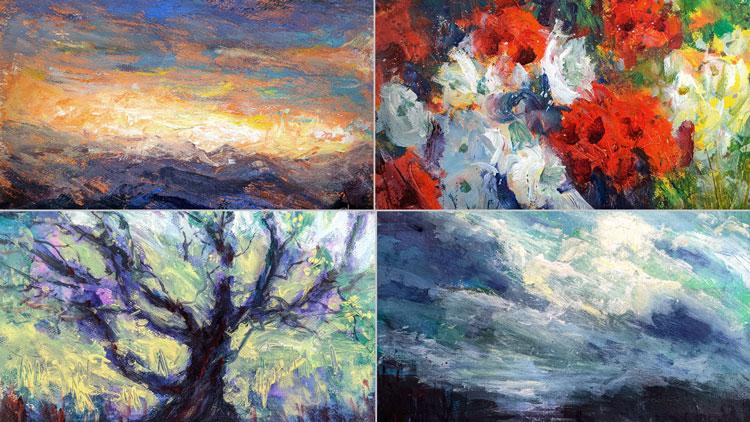
that we're going to do today. First one is a beautiful
mountain scene based on a photo I just took
riding my bike one day. So here's that one. These are all just
gonna be done on I did them on watercolor paper. You do them on whatever
materials you want. This is a fun flower
scene that I did. I snapped a picture with my
phone on a walk one day. Um, and, you know, just cheap watercolor paper. You can use whatever
materials you want. These are done in
acrylic. This is an old tree that I saw and actually was somewhere in
Ireland. I can't remember. But just something a little
more somber and quiet. And maybe if you feel that
solitude feeling, you know, you need a different sort
of mood sometimes, um, and then the last one we'll do is this was actually
an afternoon scene, kind of end up looking
like a little more like a nighttime moonlight,
but that's okay. I had no intentions.
Whatever came out came out, and that's what
we're gonna work on. There's no painting style. We're not You know, you can say, Oh, this is very
impressionist or whatever. I mean, that's not
what we're going for. It's joined for just, um, not thinking too hard about what
you're doing and not being too concerned
about a result, just really using your
favorite colors and grabbing whatever color is
intuitively exciting for you based on a hint of what
you see in your reference, how to completely depart from a reference and not
stick so close to it, where you have to
reproduce the picture perfectly. That's not
what painting is about. And this is a really
extreme version of that of just using the reference as an idea as a suggestion, you
know, as a guide. And eventually, you
just stop looking at it and you just focus on
your own little thing, and it's really fun and freeing. Um so that's what we're
going to work on. I'm using acrylic, which is a different kind
of class for me. I usually teach in oils. But acrylic, that way, this class is a lot more maybe accessible to more
people because I'm using big piles of cheap
paint that anyone can get using old cheap
brushes that everyone has. You know, don't throw
away your old brushes, hang onto them because you can use them for
stuff like this. And cheap surfaces. I'm just
using watercolor paper. You could use cardboard.
One of them, this last one, you'll see I actually
used the back of the cover of the watercolor
block that I was using. Because it doesn't
matter. You know, no one will ever see these. And that really
changes the way you paint when it's just
private and for you. And it's really fun. You know, painting can be really fun and not tedious and not stressful and not like you're
trying to impress somebody. You're just looking at
yourself in the mirror. You know, you're painting a very spontaneous self portrait is what we're doing today. It's really gets a
lot of stuff out. So with that, we'll go to
the easel and get set up.
2. Painting 1, Mountains: Okay. And our first
scene I've picked is just a fun sunset scene I
saw riding my bike home. I live near the Rocky Mountains, and I saw this scene.
It was lovely. I stopped and took a
picture of it from my bike on a freeway
overpass, you know? So this is just a fun
little moment for my life, and we're gonna try
to just throw it on a canvas and not
really think about it. You know, I don't care. Whatever happens happens. This painting isn't for sale. No one's ever going to see this. I'm not gonna post it online.
I'm not gonna show anybody. No one's watching me
do it except for, you know, all you guys. But you know what I mean? So it should be very liberating
and just relaxing. Um gonna start with
a big giant brush. If you don't know where
to begin on a painting, like, Where do I start?
Do I do the mountains? Do I know, right now, just
pick your favorite color. My favorite color is orange. I'm going to pick my
favorite color orange. I just fling it on here. This is just an old Hanka
watercolor paper. That I taped to a cardboard, and I hope it stays
on the thing. Okay, look, there were started. And maybe I can wash
that off a tiny bit. I just got a couple things
of water over here. Maybe I'll jump in to, you know, I don't
know, maybe it's here. I literally just don't
think too hard yet or ever. Ooh. Did you see that?
Some paint just flung. Wear a shirt that you
don't care about. I wear an apron,
too, just in case, and just use a lot of paint. Just really throw it
on there. You can even, you know, fling. Do this in a place you
don't really care. You make a mess
because you will, and that's really
fun and exciting and relieving, you know? Let's see. You
know, I don't know. What's the next color
that's interesting to me? Sort of this blue
of these clouds, you know, orange or something. Just like, don't think
too hard about it. Um, just grab your favorite
color and just mix them. I have all my favorite colors. Did I have paint on
my face already? Wow, I just smeared it. You know you're working hard when
you get paint on your face. Well, I guess you guys
get to enjoy that. Wow. I'll look at it later. You know, there's
mountains and stuff here. I don't know. Is clouds
that are happening. This is just acrylic paint. It's cheap paint so that I don't really
have to worry about it. I'm not worried about what
it's gonna look like. I can use a lot of it and
not get all concerned. You know, maybe I'll use a maybe I'll use
a palette knife. Just grab some whatever
colors in here. Maybe at the top, it
gets kind of purple. I don't know. Um, this
is just a big old flat, like, Bob Ross shaped
palette knife, you know? Maybe these are clouds here. And then I'll use the same one for maybe these
mountains right here. I like that it's kind of orange. Palette knives, as Bob Ross
has shown us many times, are perfect for
making mountains. Palette knives just really
fling them on there. And I love how this kind
of gets, you know, darker. Well, use some brown, too. I don't know, doesn't matter.
Maybe I'll get that wet. I'm going really fast, but feel free to take the time all
the time that you need. To make this your
own experience. Again, I'm I don't really
care what's happening. I'm just flinging
paint on the surface. I'm not trying to
copy this picture. I'm not trying to make a
finished beautiful painting. I'm just having fun.
That's something that we don't give ourselves
permission to do anymore. It's just have fun
without a result in mind, you know, um, that's what's really great
about this kind of exercises. There isn't a goal or a result. I'm just flinging paint. I have a reference, of course, because sometimes that's
helpful as, like, a guide. Here, I'll put some white here where this is where our sun is. Maybe there's some clouds. Hal and abs are really
fun for just, like, smearing a lot of paint onto
a surface really quickly. And it gives some
great chunky textures, if you want goes up like this. I love this sort of angle. There's this swoopy quality. Maybe there's, you know, a couple other little
cloudy moments here. And you'll find yourself, you know, look at the
reference less and less. Just kind of do
whatever you want. You know, I don't know. Maybe there's some maybe
there's some green over here. I was telling my friend
who inspired this course. You can't paint a sunset without green. Well, here you go. I don't even know if it's
in here if I see it, but it is now. Maybe it's in these
mountains here now. Just grab whatever colors work. And you can get the dip your palette knife in the water and mix some watery color, just, you know,
fling it on there. That's always kind of
fun. And you can use your finger and blend things. This is acrylic, so it
will dry fairly quickly. But you do have some
time to push it around. I can blend this and
make it disappear. I'm dipping my
finger in the water, and I can push
some stuff around. I don't want to blend
everything because I love all these moments that
are happening right now. I'm not thinking really hard. It's like, you know, streaming consciousness
writing where you just go and you don't
really pay attention. Maybe I want maybe I want it to be a little darker.
How about some purple? I haven't used that
yet. Maybe up here, it gets a little purply. You can hold a brush
at different angles, and, you know, you can, like, smack it on there, like, just have fun. Can you take all your
aggressions out or, you know, you're sighing a lot. You're just like,
This is so relieving. And I don't have to I don't
care what happens at all. And, you know, it's like, I almost said if it
doesn't look good. That's that's not
the concept at all. This This isn't
about looking good. This is about getting yourself free and just
throwing the paint on there. However spontaneous it happens, um, there is no looking good. That metric doesn't
apply here today. Trying to make
paintings look good is what's holding
you back, probably. And maybe, you know, in
your life in general, doing things where
other people are judging you and you're
afraid to really just let go and be yourself,
that's holding you back. So, forget it. Don't
worry about it. Don't worry about looking
good for anybody. Don't worry about
impressing anybody. You're not impressing anyone. 'cause no one's ever
gonna see this. Right now, you're just
looking in a mirror. You're like, I love this color. Ooh, ooh, this is fun. I love this color. You're like
a kid playing with paint. You know, I love
all these colors. I'm gonna throw some even
darker ones down here. In my picture, they don't get nearly that dark,
but I don't care. Like, I just want some kind of trying to get to the
bottom of this paper here. It's starting to,
like, you know, it's just taped onto this thing. So it'll warp a little
bit. I don't really care. Um, Uh, maybe we'll take some
of this and add it into the clouds for some nice, really dark, stormy clouds
this beautiful sunset. I'll dip it in the water, and I'll just smear some
watery stuff on there. Ooh, I got a little
drip, drippy drip. I can smear that around. Um, you know, who cares? Here's a fun technique that
I haven't done yet today. Take, you know,
whatever I'm using crummy old bristle brushes that might have ended
up in the trash. Um, so I like to take some paint and get
a lot of water on it, and then take another brush. Like, I use, like, the back of the handle,
and I can just, like, use that to flick spots
of paint everywhere. You know, it's kind of fun.
And I can take some yellow, do the same thing,
add some nice color. I can use what's on the handle, I can, you know, take that. This is just the handle that I just had paint splattered on. Um, you can use your
finger to smush it around. Maybe I want to Ooh like that, brush gently with your finger. You know, make a
mess. It's okay. You're just playing. Do this in a place where you can make
a mess, and you don't mind. Um, you know, put
plastic on the walls, put a drop cloth on the floor, and just go to town and wear clothes you don't
care about, wear an apron. And just play and have fun. It really is liberating, just to not care what
anyone else thinks at all. I don't have to worry
about posting this online. A my followers gonna like it? Am I going to lose followers? Am I gonna gain more followers? Maybe someone's gonna
want to buy it? You know, like, you have
all these expectations, and that changes
the way you paint, and it makes it, like,
not nearly as fun. I like some really sharp,
bright whites here. Then maybe some yellows
along the edges here. I'm just maybe here
or two. I don't know. I'm just taking this brush
and sort of smushing it around where smush
I'm just smushing Mountains, you know, carve a little more
mountain out of here. It's really fun. I've picked
up some of that purple. Well, I'll run with it, I guess. I don't know. Is this
a mountain scene? Who cares? I'm
having a good time. I'll use this, you know, I'll use another brush that
had some darker on it. Clean your brush off
against the wall, get some of this dark paint. Maybe you'll try to make some
of this darker down here. I had some lighter stuff. Mountainy, who knows what? This is, you know, abstract impressionism,
whatever you want to call it. It doesn't matter. It's really just for you. It's
really just to play. And if it comes out, you know, looking pretty as far as what we'd consider
a painting, great. But that's even I hate even saying that cause
now you're judging it, like, Is this a good painting? I don't know. You did it
so much better than me. You know, it's not
about that at all. And when you hold yourself
to that judgment, you're defeating the
purpose of the exercise, and it is not nearly
as fun anymore. It's not about Is it
a pretty tainting? I don't want mud, necessarily. It's really did I enjoy
myself and did I have fun? Scratching stuff on here,
seeing what happens. And I'm just letting it all out. And whatever happens
happens, you know? This is you're looking
into a mirror right now. Whatever comes out onto
this surface is you. You're painting a self portrait. I, you know, that's
existential as that sounds. It's kind of true. This is
a self portrait of you. And in your inner
mountains that are really just wanting to be proud and stand out
there and be beautiful, um cause maybe no one's
acknowledged them yet, and they're just like, Hey, I'm here and I'm pretty
and I'm awesome. And now you're letting them out. And you're like, you're right. Damn. Why didn't I
notice you earlier? So spend some fun time with
your beautiful mountains. Um and, you know, as you kind of slow down, you take some breaths,
you sort of, like, you can get close and look
at it and check it out and see all these really great
things that have happened. Beautiful, like, intricate piles of mess that are just all your
favorite colors in there. And, um, you know, I didn't know I had
that inside me. It was really just this turmoil, but it's beautiful,
and it can be calming. You can spend as long
as you need on this. You can sit there and just,
like, gently brush for hours, take a little bit,
and, you know, I just using my finger, and you can just
caress it gently. And, you know, you're
caressing your own thoughts. You're just sort of massaging yourself. And it
can be really nice. Dip your finger in the water. This is just on
the palette here. I'm just massaging
my own thoughts. And it feels really nice. Both tactilely, you know, to get your fingers
in some paint. And, you know, emotionally, you're getting out some stuff that's been in
there for a while. You can spend all the
time you want on it. You know, just lose it. Just lose yourself. I got a little bit
left on my finger. I don't know what's
happening there. Um meditate on it. Just play and push
and, you know, create your own little
world that's been inside your head needs to
come out and you can see it. Now you can look at it and you can now it's a
conversation, you know? When it's in your head,
it's this horrible, like, repeating monologue that never ends and you just
stew on it forever. But when you get
it out, you know, now you can actually
have a conversation with yourself and
figure some stuff out. It's therapy, right? Most
fun therapy I've ever had. And I've had my share
of therapy like everyone should. It's
very good, actually. So yeah, this one might
be done, I guess. When you're kind of
you said everything you need to say,
maybe you're done. It's really up to you, you know, when you're finished
with this, throw it in a pile and don't
look at it for a week. And then pull it out
and look at it and go, Wow, I had all that inside
me, and I had no idea. Or, you know, crumple it up and, like, tear it up in 1 million
pieces and throw it away. You know, whatever you need
to do to get it out of your body, that's
really up to you. It's your choice. This
is your experience. So you can save it can
give it to a friend. Like, I made this
and I thought about you and I made this or,
you know, whatever. Um, or literally no one
ever has to see it. I'd say burn it, but
it's, you know, paint. So burning paint probably isn't the best thing
for the environment. But you can save them all and put them
all up on the wall, have a whole mural of
all your fun, you know, spend, you know, ten or 15 minutes doing this or spend an
hour or whatever. Then you collect them all
and put them all and have this whole mural of you and
your emotions and stuff. So Oh. That was fun. Okay, well,
I'll clean up here. Spritz if you're using
acrylics, which I am right now, just take a regular live
spritzer bottle and sprit some with water. That's
not working at the moment. And then you can clean
up. If you need to clean up your palette just spray
the whole thing down and take your any palette
knife you've got or a paint scraper and you can scrape them all up and you can get ready for the next one. We'll do three more.
Today. So this is a really super
easy way to clean up. I do use a glass
palette because I like I like that it's
very easy to clean up. But you can use a
disposable palette. You know, you can use if you use wood or it doesn't matter,
really, whatever you choose. This is a real easy way to clean up and just
dip it in some water. And, hey, we're ready. I can refill my paints here, and we're ready
for the next one. Soho. Cool. Take a break, walk around, and we'll see you guys back here in a second.
3. Painting 2, Flowers: Okay and here we got a fun little flower
scene that I took from somebody's garden just walking down the
sidewalk one day, really beautiful flowers just blooming and fun little colors. And I just, you know, it's not a very good
photograph at all. I just took it with my phone,
but it's really inspiring. It's fun and vibrant, so we
thought we'd give it a try. I don't know, when you don't know what color
to start with like, there's so much going
on in this painting. Just pick your favorite color, you know, just
start with a color. I'm gonna start with,
like, sort of an orangy. Oh, I guess it's more, you know, like an earthy, greenish yellow. Just cover the canvas
with anything. Maybe it'll fade to, like,
orange or something. Um, I don't know. So, okay, good. Now
you've started. Now you've ruined the paper. You might as well
keep going. Don't let yourself get inhibited
by anything. You know, I love these.
Let's put this one down and there's I'm
just gonna hit red. I see this. And there's some
great moments of red here. I'm just like, Oh, there's red. There's red. I don't know. Maybe these are more pink over here. I'm not drawing flowers. I'm just making fun shapes. I'm just trying like,
oh, I love red. That's what you're doing
right now. Ooh, squirrel, you know, like, doesn't matter. Here's my little flicky thing. I'm just flicking
some red paint. All over the place.
'Cause it's fun. Dip it in the water. Andy.
Just have some fun with it. Look, we've got a big
pile of funness already. We haven't even
hardly done anything. I got some extra paint on here. You know, maybe I can, look, I'm kind of carving
into the things making some fun little shapes. I bet you've never
done that before. This is just the
back of the brush. This is just some crummy
old little brush. Um, I don't know what I'm
doing. I'm having fun. Just play. You have
permission to just play, and it doesn't matter,
because we don't care right now.
Today, we don't care. We're just having
fun. Um, you know, there is a lot of green. I'll take another brush. And, you know,
there's some really great bright greens in here. Maybe I'll get a
little water on there. Maybe maybe they're a little
lighter than that, even. Actually, no, I
think they're not. They're not that light. They're just sort of I'm just going to scratch
some color on here. I'm kind of painting
around the flowers. You know, there's gonna
be some yellow ones here, I think, so I'm leaving
those a little space. I take it back. I
think the green is kind of dark in this
painting, actually. So there's gonna be
some white ones there. And then maybe
there's some dark, like, shadowy purply moments. I'm just really smooshing
the paint in here. I don't know. I'm painting
like I just don't care 'cause I don't
that's very liberating. Maybe I'll wash this off, maybe do a light or
something right here. Alright, wow, we're at it. Just fling it on
there. Who cares? And, you know, make sure
you're not gonna get make sure you're not in a
place where the walls are gonna get totally
destroyed and messy, 'cause that's
inhibiting also, right? I don't want to ruin my
nice carpet or whatever, which understandable,
put a drop cloth down. I've already got
pain on my arms. This shirt is kind of ruined, but it's just some crummy, like, goodwill
shirt that I found. There's some pretty
white flowers in here with, like,
yellow in them. And I'm just like, you know, uh, there's a flower.
I don't know. There's a big juicy white flower right there. And
here's some here. Um, I'm just playing. I'm just smooshing. And you can take all
the time you need. When I'm in this mode,
I'm kind of, like, really spontaneous and really exploding and it just comes out. And I don't mind letting it
sort of happen like that. People will take some pure
white for some of these. And maybe sometimes you
just want to, like, just have fun and take
a big splotch of paint, just, you know, enjoy that and enjoy every little like smoosh. Look at that and all the
colors mixed together. Just do it once and just
enjoy this experience. You know, it's
like taking a bite into a big juicy something. That's your favorite thing. Just imagine that slowly to sink your teeth into it,
There's nothing like it. And look at how much
paint I've got on there. This is fairly cheap paint, so I don't care, right? That's the whole point
of this exercise. And I got so much
paint on this brush. You know, maybe I'll
use that for later. And maybe I need some what was
my greenish sort of brush. Maybe I need to fill in some of these areas with some dark to make the lighter
ones pop out. I am, you know, I guess I am it being a little more specific
with this reference. I am placing them, but I'm kind of moving
them where I want. I'm not measuring
anything. I didn't grid the thing over
first, you know? I'm being pretty loose with
it. I don't really care. I got my red brush here. I got a different brush for all of my, like, major colors. Maybe some of these flowers
have some dark spots here. Um, who cares? I'm not really painting flowers,
and it painting shapes. Painting fun, big,
beautiful shapes. And I got paint all
over the handle. It's getting slippery. So, remember, we don't care. We're doing this just for fun. 'Cause no one's gonna
see this, right? So I don't care
what it looks like. I'm painting a picture
of myself right now. And right now,
myself I love red, so I'm gonna put some
more red on there. And, uh I'm gonna do the paint flicky thing
again, 'cause it's really fun. Maybe around this red. Um, it's very freeing
and liberating, when no one is ever going
to see what you're doing. You're kind of hiding in
your little corner and you're doing little thing and, you know, kind of
giggling to yourself. I like this was fun. The paint that got on the handle from my
little flicky bit, I'm going to use that
and smear it around. Um, Yeah, it's fun when you're hiding
and doing your own thing, and it's your own
secret little world that no one can see. And it definitely means that it's it takes a lot
of the pressure off. Like, is it supposed
to be good or not? If you want if you want to
get more specific, you know, I can just make some blue or, you know, I
don't know, something. Maybe if you want to do like, Oh, look, that's the
inside of a flower. If you want, if you
want to just do shapes, that don't really look like
anything, that's fine too. I think it's kind of fun.
I'm just rolling the brush. Sometimes you can
do that to roll it. So they almost
look like flowers, but they really don't too. If you get close,
there's just a mess. There's no flowers
here. Maybe there's some stems or something.
I don't know. Maybe a little tiny leaves here. If this makes you happy,
then you've done it right. If you are just enjoying yourself and having fun,
then you're doing it right. You know, That's
what this is about. It's having fun.
You're not making a perfect painting for sale. You're not making a
perfect Instagram post. Oh, my God, Instagram is, like, destroying people's,
like, self confidence. Really great for discovering
and finding art and things. But it makes people
so self conscious about everything they do care everything's under a microscope. And, boy, you can just really suck the creativity
right out of you, you know? So this is just your own
personal little journey. Maybe some of these flowers
have orange on the tip. I love orange, and I
haven't used any yet. Um, yeah, this is fun. Let's do a little
flicky white action. Where's my white brush? That was is that it? I
do try to, you know, keep my colors a little
separate so they're not just complete mud when
I want to use them. They are actually,
like, you know, a nice clean, bright color. So I'm trying to keep I have different brushes for
different colors, sort of my whitish brush, my reddish brush,
my greenish brush. Oh, look, here's some
paint that's now on here. Just so I get some nice
bright vibrant colors. You know, if you
use the same brush and really don't
clean it really well, you might get some mud,
which could be cool. Mbe you need to get all the
mud out of your system. So, I don't know. And, you know, sometimes you
just start to slow down. You're like, I don't
know where I'm going. Maybe maybe I'm just, like, slowly kind of finishing and coming to a place
where it's done. And you can step
back and look at it. You know, I'd say, don't
judge it too hard because this is really about just
being a spontaneous adventure. It's not about making a
finished painting at all. You know, you might say, Oh, yours looks so much
better than mine. That's that's not
the proper metric. I use that a lot you're not measuring this
against anybody. This is your mind coming out. And this is your complete
fun inhibited self expressing on whatever
surface canvas or paper, cardboard or, you
know, whatever. So there is no
judgment. There is no better. Yours is beautiful. Whatever you just did, if you follow it along
with me or, you know, if you watch this
and did it later, whatever you did is beautiful, because, you know, you
had an inspiration that was in you and you just
let it come out and let it just flop all over the surface. And, you know, it's your own mind
looking back at you now. And you're looking at
yourself in a mirror and you can say,
God, I look good. I didn't know I
was this much fun. I didn't know it was
this spontaneous and, like, vibrant and alive. You know, I thought I was just, you know, I thought I
was asleep in there. But, man, I really I got some stuff going
on that I didn't know. Look how much you know,
look how much fun I just had and how
much fun I am. And no one can take
that from you. Um, when you make this for the idea of this
has to be a perfect piece, then someone is controlling that and it takes a little bit
of it from you, you know. But when it's really
just you and you alone, no one can take this
energy from you. You just put it out there and you experience
it for yourself. Yeah, I'm slowing
down on this one. Sometimes I'm like, I don't
know. I think I'm down. This is really all
I wanted to say. Now I'm just getting in here and enjoying it
and looking at it. You know, maybe I could I
kind of like the tip of this. I kind of like using
the surface of this. Hey, let's put some
purple in here. Maybe they're like, little
sticks and twigs or something, get it wet. Maybe some come in front. You never thought you
could use the stem stem, handle of your brush like a
tool, but you totally can. It makes some really
great textures that you might have spent a long
time with a brush doing. You know, maybe these are
some stems coming up. Or you can use a palette
knife, get a little bit, and, you know, Maybe this is
some grasses or something. So just pretty little
plants coming up to say hi. It's almost spring. When I'm recording
this right now, it's just about spring, and I can't wait to see
what blooms, you know? You work hard on a garden
for a long, long time. And when it finally gets to
bloom, it's like Christmas. It's like you get to see the
treasures that the Earth held that you helped
bring to life. The Earth is thanking you. For your hard work.
That's a beautiful thing. Yeah, I think this one's
finished. I don't know. For the sake of my video. Oops. The Brush. Brush down. For the sake of this video, I, you know, that could be done. If you need to, you can
sit there and, you know, sort of push around with
your finger and just play and spend all
the time you need. Get that tactile feeling of having real paint
on your hands and a real surface and away from your phone or away
from digital painting, you know, just like real
organic experience. When you leave it all out
there, and there it is. So, great. Well, let's
sprit our paints. And you can clean
up a little bit. You know, just take
your palette knife or a scraper. And clean up. And we'll do that and we'll
come back in a few minutes for I think we'll
do another more of a somber number for the next piece in case
you need to express that, too, because maybe you have maybe you got that
going on, you know? And a lot of the pieces I'm
doing in these videos are, you know, pretty
simple, landscapy, flowery, whatever
kind of things. I find I think if
you wanted to try this with more of a complex, um, more technique sort of
subject like a person, like a face or a figure.
You know, that's fine. And I might explore that later, but I think if you're just
that does add a lot of pressure if you're
an amateur painter or if you're just getting
back into this after, you know, having not
done it for a while, or if you're brand new at this, it can be a little
intimidating to try to paint a beautiful
portrait or a figure or, you know, an animal or whatever. It is nice to keep
it simple right now the landscape is very forgiving. But we might explore a more
difficult piece and see how we might tackle that if I really wanted to get
that out there, you know, if my emotion was a
sad figure, you know, or something or
somebody, you know, holding their arms up in joy or any number of
poses like that. If that's what I need
to express myself, um, for this course, we're just going to do
simple forgiving flowers and trees and things,
just to keep it simple. So anyway, go clean up
your brushes and stuff, and we'll see you back here
for the next painting.
4. Painting 3, Old Tree: And this one's going to be a little more of a somber piece, if that's really
what mood you're in. This is just some old tree I saw on a trip somewhere once. And maybe that's how you
feel, just a lonely old tree. You want to express that. I
realize I didn't really go over my materials so far because it doesn't
really matter that much. I'm just using, you know, cheap acrylic paint,
your favorite colors, you know, yellows,
oranges, reds, purples, blues, greens. Just,
you know, lay them all out. I like them this order so
I can really, you know, get them where I know where
they are. It's organized. Um, and then I was using
cheap old brushes, big old giant chip
brush, you know, just cheap old bristle brushes. You can use softer ones,
whatever you want. I'm trying to stick to
larger brushes for these, so I can really just
move the stuff around. Mbe tiny ones for little
stuff at the very end. But in general, I'm
trying to stick to big brushes and block in stuff
quickly instead of, like, minutely, like, you know, starting with these
little tiny things, just to keep it free and moving. So, this piece, let's start with something
a little more somber. I'm going to just go
with some purple. Big brush, you know, just adding some
water to my paint. And this is just a piece
of watercolor paper. You know, use whatever surface that's available that's handy. Doesn't really matter, because this is just an
exercise for fun, you know, um, sure, there's some green on here.
We'll make that happen. You can fling some
I just love this. This is just fun.
You add a lot of, like, fun texture really quickly by just literally
flinging the paint on there. Maybe we'll drip it. Get a
lot of greens on here and, you know, push them
in and let them drip. Let them run. Doesn't matter. So we're getting somewhere. I don't know what we're doing. We're kind of just going. Maybe we'll sort of
start blocking in. I can switch to a
smaller brush if I want to I'm trying
not to overthink it. I'm literally just trying
to go stream and conscious. I'm just picking dark
colors right now. Maybe my tree is, like, here. I don't know. The
tree is kind of organic, fun, flowing thing. I'm not even I'm not doing
meticulous branches yet. I'm just kind of, like,
feeling the shape and letting it sort of just push
me where it wants to go. I don't know. Um, I
realize there's this, like, lighter colored
path on the bottom. This is where, you
know, you depart from the reference image. This is just a
reference. It's an idea. It's a thing just to sort
of nudge you forward, to get you moving
from the, you know, if you were sitting in front of a blank canvas and trying to have a fun painting exercise,
I don't know what to do. I just, you know, plain color everywhere, which
can be really fun. But having a reference sometimes can just give you a little idea, a suggestion that you don't
have to stick to at all. You know, you can just play and depart and do
whatever you want. This doesn't look
I anything like the picture so far,
which is fine. But, you know, it's steering. It's a guide. And, of course, here's this fun
miss I love this. It's so freeing and exciting. And there's no mistakes here. You know, there's
no right or wrong. There's, you know, this
one's better than mine, and that one's not as good. It doesn't work like that.
It's like taking it, you know, you watch a
child finger painting. Do they know what it means to make a mistake
until we tell them? They don't know what that means. They're just
having a good time. Oops. That happens too. Oh, here's maybe that turns into a fun little
moment. I don't know. My little splotch that
fell there. Who knows? Maybe I'll paint
some of the light through the branches now. I have no idea what
there's a light here. You know, maybe maybe
you'll start to see the lights poking through. And you can approach
however you want. Maybe you want to
do the light stuff first and add the tree later. That's your choice.
It's your playground. You know, you build
it however you want. It's your little like Bob Ross says. Here
he is over here. It's your world.
You're the creator. You can let magic happen here. Just all it takes
is practice and patience and painting is fun. Thanks, Bob. Thanks.
Happy painting. And God bless my friend. Thanks, Bob.
Appreciate the advice. Bob's always here to to remind
me to have a good time. Just let it be free and
have fun. Well, we are. Good thing Bob is here 'cause
sometimes you forget that. Like, it's easy to
forget, you know? There's all kinds of greenness happening back here, I think. Um, maybe there's
I do kind of like how there's a little bit of the brighter sky, maybe there's, like, some bright like
moments poking out here. I do kind of like that. You can change it
however you want. You can design it
however you want. And, you know, you can paint over it, if
you don't like it. Just keep going back and forth until it's
something that you like. It doesn't really matter at all. Once you realize
that this painting right now doesn't matter at all, you will start to get the point, and then it'll be a
lot more freeing. I'm going to go in with
more of this fun yellow. It doesn't matter what
brand of paint you use. Really doesn't would
suggest something inexpensive so that you can
use a lot of it and not feel constricted by how much
paint you're using. Maybe I'm going to
stop looking at the reference now and
just enjoy myself. Maybe you'll do a little
more light through here and you really get a see I'll glance at it now and then. And maybe I'll use the back. Maybe some of this there's some sticks and
twigs and things. Hey, maybe there's sticks and twigs all coming
through the tree here, and you can see them.
Start to move it around. Did I have a dark brush? Yeah. I do try to keep my
paints Brushes separate, so that, you know, if I want some nice bright,
clean color, I've got it. It's not it's not
just mud, you know, Okay, maybe can do fill in some more specifics on
these branches now. Okay, you know, I'm just
gonna stop looking at the reference because I'm just gonna make this tree talk to me. That's gonna tell me
where it wants to go. This is a pretty fat brush
for doing such little things. See how gently, I'm
just holding it, you know, just letting it sort
of dance around the page. Maybe it comes all
the way out here. It's just stretching. Trying to find a friend. Maybe that's what this
painting is teaching us. It's just reach as far as you got to go
and you find a friend, 'cause the friends get you
through the hard times. You know, I'm going through
a hard time myself. I admit on this video to the public where people
watch and are painting, you know, I lost someone
very close to me recently, and I'm just trying to reach
out and find some friends. That's what it's all
about sometimes. Maybe I'm feeling
a little dark and somber and just trying to
hang on here are my roots. Maybe they're a little twisted. You know, maybe I'm a little
crooked. That's okay. 'cause my friends will find me. And that's what
this is all about. Just finding the voice inside you that wants
to say something. Maybe I can smooth some of this, take your finger and blend. This is acrylic, and it
dries fairly quickly. But, you know, if you're
using a lot of paint, it should still be soft enough and alive enough where
you can smear it around. I'm not gonna smush and
kill the whole painting because I do like that there's brushy moments
happening everywhere. Here's, you know, what
could be perceived as the sky beyond this
mountain or something. I don't know if I
like that idea. And maybe here's some more greeny, leavy things happening. Just this poor old tree just
hanging out by himself, trying to trying to
figure things out, and the world is turning and turmoiling all
around him or her, it could be an old
two, you don't know. It's just reaching for a friend. And then here we are. We're
friends with the tree. 'Cause that's what it needs. We'll do I like I always love this splashy kind of moment. I want some nice
bright yellow, though. Sometimes I really
want to choose To wash my brush really well
and have some nice color. I love this because it's really
liberating, and it's fun. And you can get some glowy
things happening, too. Maybe I'll use these to make S little yellow specks
that landed on the trunk. I'm going to push them around
and turn them into detail, turn them into, like,
bark and stuff. I didn't plan that, but it
works pretty well, actually. And maybe this is glowy things happening through the branches. Look at all that bark
detail I just did. I'm just using my finger with the splatteries that landed. You know, some people
might think, I ruined it, but there's yellow everywhere. I'm like, No, you
just made it better. You just found the one
secret little moment that you didn't realize. Look at all those fun. Now, it's like,
twisting up, you know? Um, and now I've got some
yellow on the tip of this maybe I want to add some more scratches
and little twigs. Like Bob Ross would say,
just little sticks and twigs for all the critters
to run and hide and play. Maybe I do want some
small little guys. So take your little tiny
brush that you got and just, you know, trees can be,
like, super meditative. Just do this. You can spend hours just making
little branches. You can get it wet
if you need to. Just, like, let them noodle
off into everywhere. And it'll pick up some of
the paint that's back there. That's okay. Yeah,
you can do this. This is fun. Just
close your eyes. Watch. I'm really not looking
at the painting right now. I have no idea what's
going on. That was fun. I've never painted with
my eyes closed before. Maybe a little tiny bits of dried stuff
hanging out there. Um, maybe we'll do that. Maybe there's some
little tiny, you know, golden yellow leaves still
just hanging on from summer. Whatever you want to do. You can just do this, speck
them in there. Just play and experiment. This painting means nothing. This is your own mind
coming out here. With no mistakes. This is your inner child finger painting before you knew that
mistakes were a thing. You're just having fun. Kids don't know about error or self consciousness or shame or mistakes or they don't know that stuff
until we teach them. So do yourself a favor and bring yourself back
there for a couple hours, you know, or in this case, this has been like 13 minutes so far. Bring yourself back to a place
where you just don't care. And have fun. And No mistakes. Just fun and play. And it's very and
you can leave it all out on the painting, you know? I'm gonna hit that where
my whiter brush go. I do have, you know, this is acrylic, dunk them
in a bucket over here, full full of lighter colour sorry full of water,
lighter colored brush. So that way, I don't dry out. You can do this with oil
paint, too, if you want. Um, certainly I would use cheap oil paint so
that you can use a lot of it, which I do have. Maybe I'll do another class
later when I'll actually use oil just to try it out. This is a new
experience for me, too. This only came about after
talking with a friend who wanted to get back into painting and was
just very inhibited. And this has been a fun, cathartic and exploratory
experience for me, as well. I mean, let's do some more dark. See, I'm just like
scratching in, you know, this whole
bottom section. Maybe this tree just, like, keeps turning
and twisting. And maybe the roots come
all the way down here. I don't know. I'm
making this up. Of this, you know, suggestion of a picture that I took
randomly on a walk somewhere. Um Whoa. There it goes. Hey, look,
look what I just picked up. My brush landed in
the lizard crimson. Hey, o I'm gonna use. Instead of cleaning it off
or freaking out, like, you know, this happens
to me at least once a painting session,
I drop my brush. Happy little accidents. Right, Bob? Here we go. So now there's, like,
flowers or something there. I don't know. We'll
make it go up the tree. Look at that. It's getting harder to
get off the handle. So I just turned a funny
little accident into. I'm like, I like that. I want to use that, actually.
Let's put some more. Didn't see that coming. Did we? But I introduced a new color to my painting on
accident. That was fun. Maybe I'll just hint at it a
couple other little places. Yeah, that's exciting.
Maybe I can soften. See, it's already getting
dry in some places. But, uh, dip my finger in the water and maybe
soften a little bit. The tactile experience
of just painting with your fingers and touching
a real surface, you know, we're so detached nowadays on our phones and sitting
in our cars and traffic, you know, or digital painting, which is great,
which I do also now. And it's really powerful.
But, God, it is so sterile. You know, you're holding
a piece of plastic and you're sitting at a piece
of plastic, and, you know, you're adjusting settings
and sliders instead of, like, just dipping your
finger in another color. It is a very, very
different experience. And, uh I'm really happy to be able to
take the time to do an organic process like this. I want to maybe make some
more barky things with the leftover yellow
I've got on my finger. It'll mix with some stuff
that's there already. And, wow, look at this
just crazy twisting, majestic tree we've
got going on. It's I didn't expect this. I didn't know what to expect. And you can kind of sense
yourself slowing down. You know, maybe you're
just sort of feeling done. Um, you can noodle on
it as long as you want, you can spend all
day playing with these things cause no one's ever go to see this
painting. It's not for sale. You're not going
to post it online. No one's watching you do this. You're home in your own little
private corner somewhere, having a good old time,
and you're just playing. Takes all the
pressure off of it. This is just for
you and you alone. This is looking at yourself in the mirror and you love what you see because
I didn't expect this. I didn't know this
was inside me. But, man, it's really fun. I didn't know I
was this much fun. I didn't know I had
this sad old tree in me just waiting to
come out, find a friend. Well, maybe he can now. Now that I can see
him he's being heard. We all need to be heard,
and maybe this is how you can at
least hear yourself so that you can start
telling other people. Hey, look how beautiful I am. But you have to know
it first, you know? Okay, so we'll clean up, and we'll we'll see something
fun to end the day with. Clean up and, you
know, take a stretch. Take a sigh, and we'll come
back in a few minutes.
5. Painting 4, Clouds: And here's a fun, bright movie cloud sort of scene
that we can end the day with. As you can see, I'm proving that you can do this
on any surface you want. It doesn't have to be
expensive or nice. This is literally the cover for the watercolor book
that I was using earlier. I just taped it on here, and I made it upside
down, so at least the letters are upside down
so you can't read them later. And we'll see what
happens there. It doesn't matter
what you do this on. I'm going to pick
green for this. I might have to use
more paint than usual to cover up some of this stuff, but hey, that's a fun
challenge, right? We'll see if we can make this
turn into something cool. Maybe I'll use some yellow 'cause there's a big
bright sun up here, and I want that
to shine through. Yeah, we might have to
do a couple more layers of stuff happening,
but that's okay. Um, maybe these little
lines and letters will add a fun texture that I
wasn't expecting, you know? I do like the green, though. We'll do some blue over
here. Sure, why not? This is just a big
giant chip brush. No idea what's going on. We'll throw some
purple down here. You know, all your favorite
colors, whatever you want. Um, I'm sort of filling in this space
with some fun colors. Um, you know, maybe this maybe this dip some
back into this yellow. Maybe it can smoosh
all the way down here. Who knows? Um, let's
maybe try, I don't know. There's some blues or
something up here. There's some really crazy. Maybe we'll keep
them kind of yellow. I'm just gonna go for it. And maybe it gets
really, really bright. I'm sort of I love the
brightness of this area, so I'm just gonna
put the whole area with some bright happening. You know, let's do this. We'll use my plastic wrapper. And I'll paint with this
for a while, just for fun. Maybe it'll make some fun cloud shapes that I wasn't expecting. I try some yellow here, too. And if I don't like any of
this, I can paint over it. In fact, that's
kind of the idea, especially since I'm
trying to cover up the, you know, the cover this
Canson watercolor paper thing. I can take this and really blend it and make this
great moving quality to it. Look what we got
already. Oh, my God. That is so much fun.
I'm having a ball here. Um, maybe I'll go into some of the clouds to I'll use
a different color brush. You know, I don't really care or know what
color these clouds are. I just sort of, like, oh,
there's like a purple. Um, Purple coming out here. I'm just being really
free and like, I don't care. Whatever
happens happens. I'm, you know, you can
take your time and you can really just
explore this if you want. You don't have I'm
kind of just smearing. Maybe this direction of this
painting seems very moving, like it's windy or exciting, you know, so that's kind of what I'm doing
with my brush strokes. I'm not really
holding them back. I'm just letting him
kind of scratch and play all over the
canvas or paper. You know, this isn't
even a canvas. This is just This isn't even something you
would buy to paint on. It was the cover of
the watercolor thing. So you can paint
on old cardboard, you know, I've seen an artist who does
it on cereal boxes. The inside he likes it's, like, kind of an off like the
tan color of cardboard. He paints on those, and uses them in a
professional environment. Kind of funny. Maybe we'll come back to some of our lights. Maybe I want to actually wash
the brush and fling it off. We'll come back to some of
our really fun bright colors. Here's a sun up here. There's there's some really
bright clouds happening. Um, you know, just let the brush play and dance and have a good time 'cause we're
just having a good time. Put on some fun music
and breathe and just, you know, really just
maybe do one of these. I just love this.
It's so much fun. And then you can I
don't know, do that. Um, maybe there's a little
some cloudies down here, just kind of dancing
around, just chowing. I don't know what we're
doing. They don't look like that old Canson
paper anymore, does it? You can still see some
of the letters and stuff up there at Dusty.
It's kind of fun. Maybe somebody who
looked at this, if anyone ever looked at this 'cause I don't plan
on showing it. That's the concept that you're, that's the mindset you have. Something like, W Wait a minute, Is there
writing under there? What What was on here before? And you're like, That's
my little secret. Um, 'cause, again, you know, we're doing this under
the mindset that I'm not gonna show
this to anybody. This is for me and for me alone. This is my little revelation that I don't share with anyone. That is liberating, and
it makes you really able to just relax and do
whatever happens. And if, you know, you
don't necessarily love it, you know, who cares? That's not really
what this is about. This isn't about, like, I'm
making a beautiful painting, and I hope it comes
out right that just kills the whole process. That really makes it so you're already inhibiting
yourself, you know? Um, maybe we'll make it so you can actually
see some of the bottom of some of these areas here indicate some landscapes or
something. I don't know. Wow, this is, you know, I don't paint like this
normally, and it's really fun. And, like, I would have never expected to
see something like this come out of a random
little crummy photo that I took while I was driving, which I don't recommend, but sometimes you
just got to do it. Just be careful. I
didn't tell you that. 'cause it's really
not the safest thing, but maybe we'll use a
palette knife down here, 'cause I like doing that
for landscape parts, scratching and pushing around. You know, this is a freeing, even tactile experience of just pushing paint around
with reckless abandon. Remember, we're
not we don't care. We are painting like we just don't care because
we don't right now. We're just having a good time. Having a party? Uh, maybe some of this kind
of I'm just making this up. This really doesn't
look anything like the reference
is just a reference. You know, I glance over it to see if it gives me another idea. But I'm not painting
this picture at all. I'm just playing. That's just an idea. It's
a place to start from. Sometimes you're staring
at a blank surface, and it's like the
blank canvas of death, and you just, you know, languish on it because you don't
know where to start. You don't know where to go. Well, this is how you fix that. We'll put some red down here. I haven't used azarin
in this one yet. The reference is just a place. It's a suggestion. You
know, it's an idea. And it doesn't have to
be a great photo at all. Um, if you are using a photo, you can paint just from memory
and just do something fun. Just let your fun
colors just happen. You know, that's exciting, too. Um, can be whatever you want. I'll make some of these
clouds a little darker. I do like that that's happening there. I forget
what I was saying. Must not have been important. I love the angle
of these clouds. It was really beautiful. Caught my attention that day. And it makes me I
remember this day now, this day is forever sort of embossed in my memory because I get to just
explore it and play with it. And it's my own little
my own little world. I want to make this sun
really nice and bright. Really hit those hard. And maybe it's a little more
glowy out here. It's not such a
hard edged thing. That's fun, right? That's all we're doing
is just having fun. Maybe you had these, you know, crazy, wistful clouds in you, and they just needed
to come out and see if you can look at them and process them and
stuff, you know? Maybe sometimes you
just take a second and think sometimes you can feel yourself sort
of slowing down. You can spend as much
time on this as you want. You can still see some of
the lines under there. It's kind of fun. Adds an
extra little dimension. So, yeah, it doesn't have to be expensive
material at all. Choose cheap material and
cheap paints, if you got them, so you can use a lot
of it and not care because that's really the
point of this exercise, just to let it all out. And loosen up, you know? So maybe, you know, you can use this idea when you're doing a real painting that you're
trying to work hard at, and you want it to be amazing. Well, you can make an amazing painting by just
having fun and playing, and you'd be surprised at
how liberating that is, even for a nice finished piece that you maybe do want to sell. I like this, the
flicky painting thing. It's one of my
favorite things to do. Maybe we'll take some of
these other little droplets that came out and sort of smush those around. Maybe
I'll do that. Same thing with I just
keep grabbing new brushes. So I I try to reserve a brush for each color so I can have some nice clean, crisp
color if I need. I'll flick some lazarin
down here because it's pretty little specks
of lazarin crimson. Um, yeah, maybe you'll discover, you know, since there's no rules here, there's no mistakes. Maybe you'll discover a
technique that you love. And you would have
never tried had it been like your nice normal
painting setup, you know? And then you can actually expand your painting horizons
because you just gave yourself permission
to play and have fun, which we're so it seems like we're not allowed
to do anymore, you know. Everything has to be the
perfect Instagram post and make sure that, you know, everyone loves this piece and
you're going to sell it or what's hot right now? Clouds are hot right now. I'm
gonna do a bunch of clouds. And, you know, orange is
really popular color. I'm gonna paint everything
orange. Oh, forget that. Paint whatever you love and paint, whatever
you're feeling. 'cause that's
really what art is. That's what people want
from your art anyway, you know, they want
your expression. I'm not trying to
copy this picture. I can just post a picture
online, and there you go. There's the picture. You know, people want to see your
interpretation of it. They want to see what
you felt when you saw this painting or
when you saw this place, this time, this
moment of your life. You know, I'm not trying
to copy the picture. I'm trying to emote. You know, immote in paint. So when someone else sees this, they felt what I felt
when I was there. They feel what I was going through when I
painted this painting. You know, it can be the
crazy gestury you know, swirly clouds and wind and maybe there's a calm moment
right here with this little, you know, little
reflection of something. I don't know what
this is. And then, you know, there's some
purple moments down here. There's all these
little moments, and, you know, none of these
are in the picture I took. It's just not a very good
picture, but it doesn't matter. It got the idea across, and I took it to a new place by letting myself just
immote with it. I took it to a place no one's
ever seen before, you know? All the history of the universe, no one's ever been at that
exact spot at that time with me and my experiences and
my loves and my fears. And then I put it out on a surface in a way that no
one has ever done before. That's what somebody
wants from your art. And that's what
hopefully this is also teaching you how to do, how to be free and tell this story that someone else can relate to and
connect with, you know? That's way more than
a photograph or a photo realistic
painting can do, I think. And you just stretch and look at it and let it
kind of sink in. You can feel yourself
start to slow down, you know, and you're done
whenever you're done. So yeah, made a big mess. You know, you get messy. That's right. We can
clean all this up. So yeah, I think this is all the wild painting that
I can handle in a day. We'll come back here
in a minute and recap all the four
paintings that we did. And, you know, try this with your own random
pictures that you take. If you see exciting moment, take a picture and come
back later and just spend 15 minutes and bam. It just explodes out
there and you get it out. Or do it from memory, or, you know, you're
really just playing. You're a little kid,
finger painting, and there is no mistakes. There's no right or wrong.
You're just having fun. And that is like, so okay, you don't even know. Um, so cool. I keep saying that
I keep wanting to, like, play with it,
but I think it's done. You make sure to
breathe and kind of spend some time in there looking
around at your creation. Like, Wow, did I just do that? I didn't know I was
capable of doing that. I didn't know I had
all this turmoil in me that needed to come out. I just needed to you know, I needed to look at it
and it's looking at me, and we're assessing each other, like, mm, I like
where this is going. We're you're showing
your own mirror what the beauty that
you had inside you was that you didn't
know this was in there. I didn't know this was in
there. And, man, it's cool. So you got one of
these in you too. You just need to let it out and then look at it and
look at each other. It's the big pile of you. This is the big pile of M. Now you go make the big pile of you. Okay. We'll come
back in a second, and we'll recap with all of our really exciting
works we did today.
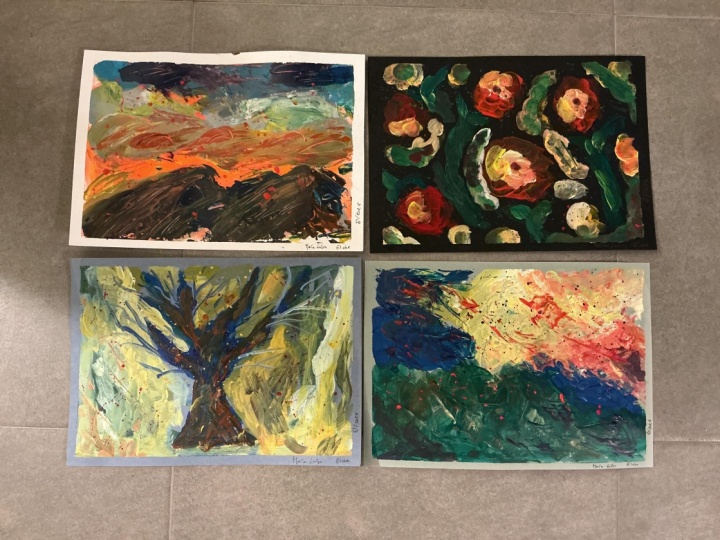
6. Summary: Okay, that was a really
fun day of painting. Here we'll go through all the four pieces
that we've done, as I can point it at the camera. So this is one we
started with just a lovely mountainy
cloud sunset scene, based on a random picture I
took riding my bike one day, and nice place to start
vibrant colors and, you know, a lot of sketchy, scratchy things, really
exhilarating just to move the brushes and the palette knives and the things all over
the canvas and, you know, this case, paper
just to have fun with it. Not really any
specific goal in mind, not trying to make a
beautiful finished painting, just having fun to
make something that's your own private little
world that no one's going to see that no one has to buy, that doesn't have to
be Instagram post. Just do whatever you want and just use your
favorite colors and sort of let it fly. So
here's the first one. Then we did a fun little flower scene from just taking a picture
just on a walk one day. I don't even know what
kind of flowers those are. Actually, somebody
could, you know, you know, they were just
pretty. I love the colors. I loved the bright reds and then the whites and
yellows and things. And yeah, it was just really flowers are really fun and
innocent and vibrant and, you know, you can
get a lot of joy by, uh by just flinging
that color on there. And, you know, I tried to indicate a little bit that they actually were flowers. You could leave
it more abstract, if you want, you know, do
whatever you want to do. The idea is just to
get you moving and get you painting, you know? And if you don't know
what color to start with, just throw your favorite color on the surface first
and go from there, you know, ruin it by just
throwing some color on there. Uh, already it's
already tainted, and I might as well
keep going rather than getting the paralyzing, you know, perfect
white Canvas syndrome, whatever you want to call it. So there's that one and
then we did something that, you know, started out as
a little more somber. I guess is kind of
interesting energetic piece. I didn't really intend it
to be. I didn't know what. It was just an old,
lonely tree that I thought would be a
different kind of mood, you know, started with
some more, you know, the somber purple
color that, you know, I guess I added a lot of those bright yellows that
kind of livened it up, but it's still just kind of, you know, a lonely old
tree sitting there. Maybe it looks a little
windswept or something. But, uh you know, just having fun with the colors. There's all kinds
of purple in there, and that wasn't in the picture. I'm not trying to
copy the picture. I'm not trying to, you know, the picture is just a place to help to start a little guide. You know, you can glance
at it once in a while, and maybe eventually you stop looking at the
picture, your reference, and you just go with
what's in your mind, and whatever's in your heart,
whatever needs to come out. You know, you tell
your own story, you tell it your way, and you do it without caring
about what happens. That's really a fun way
to get moving, you know? And then here was our last one, this great cloud scene. Well, let's. There we go. That was based on a picture
I took while I was driving, which, again, I don't recommend. I admit I'm guilty
of doing that a lot because I see really
great scenes in the car, and I just, you know, grab
my phone and, you know, I try to be really
careful about it, but, you know, I don't
recommend it necessarily. But this one had some great
angles to those clouds. I just, you know, flung some green on there and just
kind of went with it. It wasn't a green scene at all, but sometimes you
just throw a color on there and push it around and reach for the next color
and do it intuitively, you know, like stream
of consciousness, whatever occurs to you,
just just go for it. Don't and think too long about what it should
or shouldn't look like, but what colors belong and what colors don't
in harmony and, you know, forget
about theory and technique and all these things. That's not what this is for. This is just to get
you moving if you're stuck or just to
help you express all those things in your mind and your soul that needs to come out. That's
just locked in there. So I remember, this
one was done on the cover of the actual
watercolor pad that I was using. I just used the cover
because it was, you know, it's actually still the
same kind of paper, had the printing on it,
and you can't even tell. There's a couple
little you can see some hints of some of the
lines and some of the letters. Maybe somebody who looked up close would be able to see it. But yeah, so that was a really fun cathartic process of just moving. We
can do one more. Nice, long look at each of these beautiful sunset
piece mountains. And, you know, this doesn't necessarily It's very abstract. It could be, you know, it's not really even
clouds in the sunset. It is, but it isn't
at the same time. It's kind of fun how it's
it's a complete mess, but it is still sort of
reminiscent, you know, it gets the emotions, but it's not
necessarily the object. Here are those flowers, which I quite like how
this one came out. It was really fun and
bright and exciting. A lot of paint splattering, you know, here's this
lonely old tree, poor guy. He's just looking for a friend, just like Bob Boss says. Um, so maybe that's what
you're feeling today, is just a lonely old tree, and you need to now that he's there, now
you're his friend. So, uh, he found the
friend. It was you. And then here's this nice
vibrant, cloudy afternoon. That almost could be a moonscape,
too, I guess, you know, I didn't intend it
to be that somber, but I didn't intend
it to be anything. That's the whole
point, you know. So anyway, I hope this
was a fun lesson for how to be more spontaneous
with your artwork if you just need that exercise
or if you're just stuck, and you need to get
painting, you know, you need to shed that
timid quality and those inhibitions
for just how to move and how to just
grab color and use it. And it's really liberating. And it could help
your painting process in general when you're
doing a real like, more precise, intentional
work that you do intend to finish and
show or sell or whatever. This could be a
great place to start because I could take
any one of these, and then I could refine
them all I want. Let's say if I come
to a nice place, I could sit there and
noodle it all day. But just to get a running
start, boom, you're there. And then I can sit there and
fine tune it if I want to. Rather than fine tuning
it from the beginning. That's where I think
people get stuck. You know, you sit down and you get your tiniest brushes first, and you're noodling, you know, that's a very inhibiting
slow, like, painful process. Do the fine tuning
at the very end, and you'll have a lot more fun. So thank you so much for
joining me for my class. Free Expressionism, painting
like You Just Don't Care. I'm Christopher Clark,
happy painting, and I'll see you next time.
 Christopher Clark, Professional fine artist and instructor