Transcripts
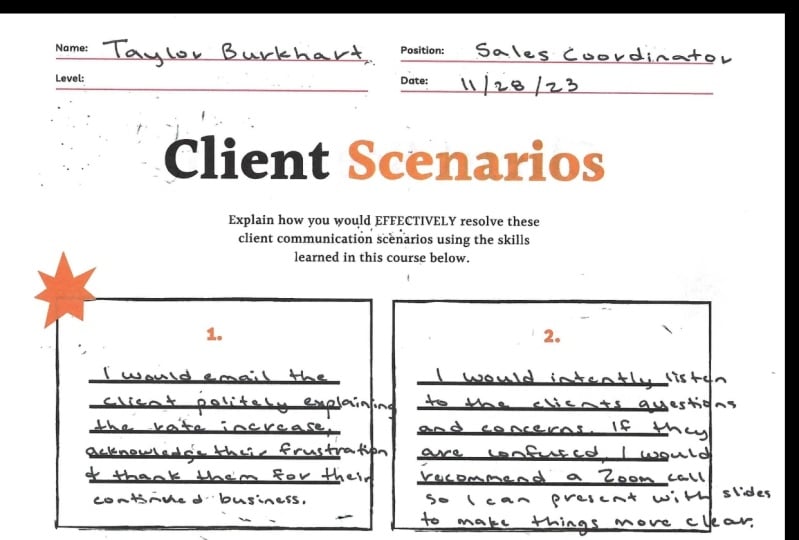
1. Intro: The Role of Communication: regardless of your role at any company, chances are you're interacting with other people. Therefore, effective interpersonal communication skills are extremely important, especially in client facing roles. Hi, my name is Joanna Guston, and I am a self employed copywriter and content strategy coach for small business owners blowing into my class on effective climate communication for sales professionals. Prior to starting my business, I spent five years and various kind of facing roles, from sales executive to marketing consultant, where I managed several client portfolios, each with their own unique communication style and relationship preference. In this course, you will learn how to effectively communicate with your clients with the goal of creating a seamless and positive customer experience. This class is ideal for anyone in a client facing role, such as an account manager or a marketing consultant or a client success rap. Our class project consists up a worksheet that details out several clients scenarios where you will use your skills learned in this course to identify the effective communication strategies. Are you ready to get started up next for diving into the five pillars of effective communication? I'll see you there
2. The 5 Pillars of Effective Communication: in this lesson will be evaluating the five pillars of effective communication. Let's start by defining effective communication. Effective communication is the ability to convey information efficiently via strong verbal , non verbal and written skills. Essentially, effective communication occurs when the center conveys information in the form of a message that results in a positive and progressive interaction with the receiver of that message. Effective communication is like an engine. It has several parts that come together to make it work properly. Those parts are called pillars, the five pillars of effective communication. Our self awareness, transparency, consistency, emotional intelligence and flexibility in the next few slides will dive into each pillar and their role in effective communication. Suffer awareness is pretty straightforward. Although often confused with conscientiousness, it's having an awareness of yourself, so your emotions, reactions and habits. While conscientiousness is being aware of one's environment and oftentimes, body and lifestyle suffer. Awareness is a recognition of that awareness. So in a nutshell, self awareness is how an individual conscientiously knows and understands their own character feelings, motives and desires. So how does this play into your client facing role? Self awareness helps you understand your lane utilize that awareness to set boundaries and your client relationships. Your client is the head of their business and ultimately runs it, whereas you have a smaller role where you run a portion of that business, there's a specific power dynamic there. So in the following slides will cover two ways that you can implement Self awareness in your client facing role as a sales professional tip Number one is to let the role you play inform your interactions with your clients home into your subject matter expertise and just stay in your lane by relaying messages through that lens. Tip number two is to pay attention to your tone of voice. The goal should always be toe. Leave your quiet happier than you from them. It's not what you say but how you say it. Make sure that you don't sound disinterested or annoyed when you're speaking to them. You definitely don't want to sound like you're on your 15th call of the day, so show some enthusiasm and signs of engagement. Whenever you are sharing something with your client. The second pillar is transparency. The Business dictionary defines transparency as a lack of hidden agendas or conditions accompanied by the availability of full information required of collaboration, cooperation and collective decision making. You should always share the good, the bad and the ugly. This policy builds trust and loyalty over time, and the following slides will cover two ways. That you can implement Transparency in your client facing role as a sales professional tip Number one is to share your screen whenever you have a check and meeting or quarterly call that involves visuals or data. Make sure to share your screen when you let your client see what you're seeing. You build trust. You also streamlined the conversation and allow for your client to bring up things you may not have known were important Important to them. Tip number two is to be thorough. Make sure to cover the information from all angles and make it digestible for your client. If there is bad news or strategies that underperformed, make sure to disclose them. Don't be afraid to because your client is relying on you to help them understand this area of their business. Just make sure that you also come with solutions. The third pillar is consistency, defined as quote conformity in the application of something typically that which is necessary for the sake of logic, accuracy or fairness. You are a representation of your company's brand. In most client facing roles, you are the first and often primary point of contact. Essentially, you are your your clients. First touch point with the company, so consistency allows you to create a seamless and positive customer experience with each interaction. And the following slides will cover two ways that you can implement Consistency in your client facing role as a sales professional tip Number one is to make a great first impression. Your first impression with your client will ultimately set expectations for your future interactions, so make account. Making a first impression is definitely important. However, follow through is key. Be consistent and creating great customer experiences for your client. Tip number two is to set firm expectations. Put your client at ease by studying expectations for your meetings and interactions. The best way to do this is to establish a routine. Here are a few examples Number one. You can send an agenda ahead of time. Sir. Client knows what is being covered number to share your screen during the meeting, so everyone remains on the same page and number three some The presentation deck and meeting Recap notes following the meeting no later than the next day. This will help tie it all together. Give your client a day or two to process the information shared in the meeting and then reach back out for any questions or potential concerns. The fourth pillar is emotional intelligence. Emotional intelligence is the find as quote, the ability to recognize, understand and manage our own emotions in addition to recognizing understanding and influencing the emotions of others in the following slides will cover two ways that you can implement emotional intelligence in your client facing role as a sales professional tip Number one is toe leverage. Personal accountability, understanding your emotions and the impact they have on others can help you better navigate high pressured environments. Tip number two is to use the S O s method when situations get a little tense when dealing with other people, you're bound to get into you know, less than favorable situations. So by using your emotional intelligence, you can defuse the situation by one. Stopping the impact of the emotion by removing yourself from the trigger to oxygenating by taking a breather. So counting down from 10 as an example and three seeking information about what would best serve you in this situation, what's the positive route to the angle that you're trying to achieve? The fifth and final pillar is flexibility defined as quote, a willingness to change or compromise. There's true skill and being able to adapt to situations and environments, And the following sides will cover two ways. That you can implement flexibility in your client facing role. Tip number one is toe. Understand that every client is different. Each quiet will have their own communication style and working relationship preference. You have to be flexible with the many different personalities that will come across your way. Some clients may want to get to know you on a personal level, and some may be strictly business, so just adapt accordingly. Tip Number two is to speak their language. Let your client decide the communication style and then follow their lead if they use formal tone. Respond in a formal tone. It's worth noting that this doesn't mean that you're changing who you are at all. Part of being an effective communicator is practicing adaptation and flexibility in summary used these new skill sets to improve efficiency in your client relationships with the goal of fostering good relationships. In our next lesson, we're diving into active listening. A huge part of communicating is in taking information processing and then responding clearly and concisely.
3. How To Practice Active Listening: I'm sure you've all heard the same. That listening is not the same as hearing, and that is absolutely fact. Listening actually takes skill, Whereas hearing is something that happens of consciously, you don't even have to think about it. It's a physical reaction for just being human, whereas with listening it's defined as the ability to interpret messages in the communication process. And that's where you're actually filtering in what is being given to you. You're processing it, and then that allows you to accurately provide a good response. So based off of that definition, you can see why Listening plays a crucial role in being an effective communicator. Miscommunication happens when the receiver doesn't actively listen to the center. So what happens is the center of the message is trying to send their message, and the listener or the receiver is supposed to interpret and process that information. When that receiver doesn't process properly, the center then gets frustrated and just gets in the situation where they don't want to communicate more, and that's where the communication broke down occurs. In order to avoid that communication breakdown, you need to be an active listener. For example, if there is a situation with a colleague or in this case, maybe with a client where there is something that you're trying to explain, right? And you make sure that you use all of the knowledge that you can about the person to make sure that you're creating a relevant message to that, something that they can understand easily. And you take the time. And usually we like to touch base in the middle of communicating something so we'll stop and say, right just to ensure comprehension on the other side. And then the person will be like, Oh, sorry, I wasn't listening. I wasn't processing. That is the most frustrating thing. Do not be that person. No client wants to work with someone who is going to do that. You need to make your client feel heard. In order to create that great customer experience and the positive customer experience, you have to be willing to actively listen. Good listening skills lead to better customer satisfaction. Increased productivity with fewer mistakes, as well as an increase in shared information which convention generate innovation and creativity. Here are three ways to be an active listener. Number one pay attention and it seems super easy and obvious. But what isn't obvious is the many distractions that don't allow us to accurately process information to, for example, for speaking with a client over the phone. Make sure that you don't have your computer screen on with all these different tabs, and you're trying to also email while you're listening and responding to what your client saying on thumb don't have that destruction. Make sure you give them your undivided attention so that you can process their information and give them the appropriate response, which will, of course, increase their customer satisfaction number to reflect. Before you act, make sure that you're taking the time to understand and interpret the message that your client has given You. Don't feel like you have to answer right away. If you haven't had enough time to actually process, it's OK to tell your client. Actually, I'm not 100% sure I want to make sure give use a right answer. Let me take, you know, a few hours to go ahead and process this and find the correct answer, and then I'll get back to you. They'll appreciate that because they know that you're taking the time to make sure that you give them the right answer to solve their problems. Number three Don't interrupt When we think of active listening, the active part is being quiet, actually, and listening and processing what is being provided. Teoh don't interrupt, because what you'll do is you'll kind of shift the power dynamics in the conversation and narrative is now about you and not about your client who's trying to express a need to you . So a lot of this may have the tendency to show that we're listening by charming in and saying, Yeah, right. I understand this because of X, Y and Z Refrain from doing that. Let your client say their piece and then process and respond up next, we're getting into emotional intelligence.
4. Emotional Intelligence: emotional intelligence is the one part of the human psyche that we can actually develop and improve their increased skill sets. There are four competencies of emotional intelligence. Number one is self awareness. Self awareness is exactly what that's like being aware of yourself. So this is about understanding your emotions as they develop and evolve. Number two. It's self management. This is all about managing your emotions proportionately and appropriately. So this is all about self control and conscientiousness. Number three. A social awareness Social awareness is all about exercising empathy, which is understanding the needs and feelings of others and being able to see things through their lens through their point of view. Number four is relationship management. Relationship management is all about using the awareness of your emotions and the emotions of others in order to create a positive social interaction. Utilizing all of these core competencies of emotional intelligence makes you a very versatile individual, being able to develop and hone in on these skills that allows you to work with anyone. And that is perfect for a pious facing role because clients come in all shapes, colors and sizes up next, we're talking about how to avoid communication failure
5. How To Avoid Communication Failure: in this lesson will be taking a closer look at what is involved in communication failure and how to avoid it to get our footing. Let's define what exactly is considered a communication failure. Communication failure or miscommunication happens when information isn't received in the way the center intended. There are a few common things that lead to a breakdown in communication. Here are five things that often lead to communication failure Number one is failure to listen. We just covered how active listening plays a crucial role in being an effective communicator. Number two is failure to articulate. Take your time to properly enunciate number three is failure. To be honest, make sure that you're constantly being transparent. Number four is failure to compromise, practice empathy and understand the receivers. Point of view. Number five is failure to show respect. Watch your tone so that you don't send the receiver into self defense mode in the next few slides will cover four primary ways to avoid miscommunication. Number one is pay attention to your word choice. Make sure that you think before you speak, choose your words wisely. Consider whether or not the words are appropriate for not only the conversation. But the person you're speaking with intercultural communications goes really come in handy here and the next following slides will cover two ways that you can implement. This tactic in your client facing role Tip number one is to be intentional. Ensure that every piece of information that you share is relevant and important. Don't waste your clients time or cloud their judgment with irrelevant information. Make sure everything that you say to your client has a purpose and has the goal of pushing their business in a positive direction. If it's not going to push the conversation forward, don't muddy the waters with a relevant information. Tip. Number two is to be clear. Practice consolidating and summarizing information in order to present to your client and a digestible format. Avoid fluff, fillers, industry jargon or acronyms unless entirely necessary. The second way to avoid communication failure is to think ahead. One way that you can do that is to anticipate your clients. Questions in the following slides will cover two ways that you can implement this tactic in your client facing role. Tip number one is toe. Always be prepared. Take advantage of the walk around the statue approach. Look at the information from all different angles. When preparing for your client meeting, put yourself in your client's shoes and dissect the information in the presentation through their eyes. What questions would you have? What information would need to be clarified? Tip number two builds off of the first tip. Use an industry lens. So after you use the walk around the satyr approach and look at the information from all angles, take it one step further and look at the information as if you were someone from that industry. Make sure to use examples of relatable data date things as a way to explain a concept in your presentation. The third way to avoid miscommunication is to properly format. Your presentation. Information can easily be misinterpreted if it isn't presented in a easily digestible for man. Pay attention to how you format your information, and the following slides will cover two ways that you can implement This tactic in your client facing role. Tip number one is to make your information digestible. Formatting is crucial. Just like UX design. It's all about how information is presented. Don't write paragraphs like blocks of content. Instead, use bullet points and imagery. Tip number two is to match your presentation to their learning preference as much as possible. Extra client How they prefer to receive information. Do they prefer decks, Excel sheets of raw data or a real time virtual walk through of their back. And reporting the fourth way to avoid miscommunication is to create easy interactions with your clients. The overarching goal should always be to make things easy for your client, And the following slides will cover two ways that you can implement this tactic in your client facing role. Tip number one is toe. Always have a plan. When you have things figured out, your clients get to sit back and just enjoy the show. One way that you can plan ahead is to send agendas ahead of time. This will allow your client toe add on any additional things they would like to discuss before the meeting. Tip number two is toe. Always send a detailed recap of what was discussed in the meeting. This allows your client to see what was processed and understood as important on your end and allow for them to confirm if that is the same sentiment on their end in summary used these new skill sets to improve transparency in your client relationships, which will lead to a seamless and positive interaction with your client. Up next, we're diving into effective email communication.
6. Effective Email Communication: in this lesson will be taking a closer look at what makes email communication effective. Let's first identify the elephant in the room. Many people don't actually like a males, and it's probably because on average, office employees receive 80 emails a day. Yep, you read that right. 80 emails a day. So if you plan to use email as your communication method, make sure that you email with intent and make it count before you hit. Send Here are five things you should act yourself. Number one. Can this be a chat message Instead? A chat message doesn't have to be via slack or G chat. Necessarily, in most cases, you're probably not communicating with your client through those channels, however, many shared documents like Google Docks have chapped functionality. Or you could simply leave a comment as a way of communicating Number two. Can this be its own email? If it's something that a super simple or short and sweet, maybe it's not worth sending and bombarding your clients in box number three. Is this too complicated to explain? If you find yourself re writing sentences in an effort to be more clear, it's possible that the message you're trying to send is not meant for email, but maybe better communicated via a phone call. For example, Number four. Can this wait until the next time we chat like point number two? Maybe it's too short of a message to stand on its own and could potentially be added to the next meeting. Agenda number five. Does this have a clear action item? Will your client understand what they need to do from the email you've just sent? The goal is to avoid a scenario where your client has to respond back, asking what exactly their action item is. A big part of being an effective email communicator is setting the right expectations. The first thing you should do is verify if email is even your clients preferred method of communication. If not, make sure that you keep your emails toe a minimum, perhaps a weekly update email that consolidates all of the account updates and action items . Consistency also plays a major role. An effective email communication. Make things easy for your client by presenting your information in a digestible way. Keep your email formatting consistent. Create sections with bulleted points. Make sure to highlight bold or italicized important information. In the next few slides, we're going to cover four do's and Don't of effective email communication. Number one. Don't over communicate by email. E mail Shouldn't be your primary method of communication. Remember those 80 emails on average a day? So ask yourself if this should be a call instead to help decide wether or not, your message should be a call. First, determined your messaging if you have bad news or something that includes bad news that should ideally be delivered in person or over the phone at a very minimum. If you find yourself writing a super lengthy email that resembles, like a standard blawg, definitely pick up the phone instead. A major tip for effective email communication is to be concise. Don't write a whole bunch of words to say something that you could have said in less words . Edit out unnecessary words and keep it brief but informed. Number two. Contrary to popular, believe the subject line is a great place to initially present your message to your client . So do take advantage of the subject line field. It serves as an opportunity to summarize your email, and your client can quickly reference it to see how urgent the messages. Here are. A few tips toe Optimize the subject line. Tip number one is to avoid one word. Subject lines like meeting or recap. Understand that you aren't the only person that your client is communicating with. So in order to be helpful, you need to include more details like the meeting topic, the time the meeting was held, or even your company's name. Tip number two is to include a C T A. Or call the action in the subject line, especially if an email needs immediate attention. So, for example, attention clients. Name. Please sign in close agreement before November 1st. Don't use slang. It's not a professional representation of your company brand or your personal brand. Make sure that you spell out your words. Always keep it professional. A Laissus, an industry acronym like C T A. Spell out the word in its entirety When drafting an email. Always make sure to greet your clients before you start communicating your message. For example, good afternoon clients name And yes, you should also do so even when you're replying to an email chain, for example, thanks for your quick response client name. Number four. Do proof Read by a proof reading. You avoid opportunities for miscommunication. Here are a few tips that ensure you send a grammatically correct email tip. Number one is to read out loud when you read your email out loud, you have a better chance of catching any missing words, as well as misspellings and grammatical errors. Tip number two is too short in your message where you can keep things simple with bullet points. Categorize your information into small, well organized sections to make her email easier to digest. Here are a few examples of juice and don't for subject lines on the left, you'll see an example of what you shouldn't dio on the right. You'll see an example of what you should dio for Number one. You can see in the do example that it includes the meeting topic and what the email entails , which is a recap of that meeting. After mentioned for number two. You can see that the do example includes the client's name along with the C T. A attention. It then concludes with what kind of agreement and the action item on the client's end, which is quote pending signature for number three. You can see that the do example details what is included in the email quote, a creative brief and what it's for. Quote Tuesday's meeting. It then concludes with the action item quote. Please review. In the next few slides, we're going to review a few standard email templates that many people and client facing roles use as a time management tool. The first email template is for scheduling and rescheduling meetings. Using this is such a time saver, you can see that both subject line variations are included. Dear client name. I am writing to insert schedule or reschedule a meeting for insert date and time at insert location. Afterwards, you should insert if the media is over the phone, zoom, audio conference or online, and then ensure you provide those log in details or contact information during the meeting . We will cover the following areas Right after this. Insert a list of key items that you want to cover or goals for the meeting. Please let me know if you have any questions. Thank you. Sign your name. The second email template is for answering questions that were posed during a previous meeting this template allows you to have all of the information of one email response so, as you see here, subject lines answers as requested on area or topic. Dear client name. Thanks for your questions about cheerier topic. I am delighted to answer them in this section. Repeat the questions that were acts by the client and then right after that, provide exactly the information there after Onley include as much information as a client has requested to answer the question. Also, make sure to use hyperlinks of possible to show references. Then you end the email with please let me know if you have further questions or would like more information. Thank you. Signed your name. The third email template is for informing clients oven important account update, such as an increase renewal rate, which is pretty common in all industries, says as you see here, the subject line. Attention client name. Important account update enclosed dear client name was a greeting. I'm writing to let you know that as of a date 30 days from now, so make sure you give your clients that leeway. Our race will be increasing from whatever the old rate was to the new right, however, to thank you for your long standing relationship with us. Your company name will be grandfathered in and will be able to keep booking us at the current rate until blank hopefully it six months from now. But whatever that date ranges, you will include there and then you'll say whatever the extra amount of months is in. This case is five extra months before the new rate kicks in. Thanks for helping make us a success, and we look forward to continuing to work with you. Sincerely, your name in summary used the's new skill sets to improve consistency and your client relationships, which will lead to seamless and positive interactions with your clients in our next lesson , were discussing effective phone communication.
7. Effective Phone Communication: in this lesson will be taking a closer look at what qualifies as effective phone communication. It's important to note that in any industry, good telephone skills will always impress and are highly valued. As we discussed in our previous lesson on effective email communication, you can't always rely on email to be your communication method. Sometimes, and some would argue most times, having a phone conversation can often yield better results. Preparation is always key when stepping into a potential communication scenario. Here are five things you should dio before you place the call number one. Write down your three main points or questions. It's imperative that you have a plan for what messages you need to relate to your client. It doesn't take much to get distracted. Walk away from a phone call still needing, but you called for. To begin with Number two. Have a note pad and pen ready or, if you're more of a digitally inclined person, have no pad or a blank document opened on your computer so you can take notes of your clients responses in any action items needed on your end. Number three have the client's account easily accessible, depending on how the conversation goes. You may mean toe look up information in their account toe. Either answer a question or use a reference number four. Have your calendar easily accessible. You may end up needing to schedule follow up meeting and should have your counter available to compare schedules while you still have your clients attention and number five be ready to recap action items was the conversation is coming to a close. Be prepared to recap what was discussed as a last effort to make sure that you both are on the same page about whatever the topic of the conversation is a key part, and communicating effectively via phone call is toe. Always confirm what your client's expectations are. The goal is to double check, even triple check important information. Since you don't have the nonverbals, make sure that you run everything back by your client to ensure that you understand what your next steps are. Patients plays a major role in being an effective communicator. You need to have the ability to refrain from speaking or jumping the gun so that you can practice active listening. Wait for your client to finish their thought, even if you know the answer to their question or have a solution to their problem. Just wait. You run the risk off throwing your client off and having them forgets what they plan to say by jumping the gun and interrupting their train of thought, because you think you might have the answer. It's also important to know that in most cases this kind of comes across us and consider it . Many phone conversations these days are paired with virtual technology, whether you are doing a video conference, call webinar presentation or just sharing your screen with online meeting attendees. So when the next slides, we're going to dive into four ways that you could be more effective during a virtual meeting. Number one is to set expectations for how the virtual meeting will unfold. You can achieve this by being transparent about what will be covered in the meeting, along with sharing housekeeping rules like putting themselves on mute while the presentation is in progress. The best way to set expectations for a meeting is to send an agenda beforehand. We've covered this. The easiest way to do this is to attach an agenda to your initial meeting invitation. Your calendar invite. This sets expectations for what will be covered in the meeting and creates boundaries that will allow for a focused and productive meeting. Number two is to demonstrate complete transparency. Share where you are getting your information from By sharing the information you have, you enable your clients to easily follow along with you. The easiest way to be transparent, as we've covered in previous lessons, is to share your screen. When conducting a virtual meeting. Make sure to use green sharing technology from platforms like Google meetings or zoom or even free conference call dot com. When your client sees what you were explaining, it removes a barrier that would have otherwise caused confusion. Your client will likely remain on the same page with you as you go about your presentation . Now, if this is a quick call and it's more of a Q and A format than just send the presentation deck ahead of the call and they can follow along that way. Number three is to keep your clients engaged. The number one thing that can throw off a conversation is a negative tone of voice. Some mind your tone. The best way to keep someone engaged in a conversation is to be enthusiastic and speak clearly. It is important to convince the other person that you are happy to be speaking with them. You want to transmit your eagerness to help your client. You can even practice smiling while speaking. It nationally makes your tone sound more inviting. Don't get too excited, though, where you forget to properly articulate your words. Also practice speaking slowly and clearly. Number four is toe always summarize, which has been a recurring theme In all of our lessons. However, repetition is positive. Meeting recaps are truly a major key to creating successful client meetings as they allow for an opportunity to confirm expectations and goals. So how do you draft an impactful meeting? Recap First, you want to know all of the major points discussed in the meeting When you craft a meeting , recap email. Make sure highlight every major point discussed on the call. Major points include project deadlines, action items for either party and key highlighting from reporting documenting. This creates accountability on both sides and allows for a paper trail for feature access if necessary. In summary used these new skill sets to improve preparation in your client's relationships , which will lead to seamless and positive interactions with your clients in our next lesson , were discussing effective in person communication.
8. Effective In Person Communication: in this lesson will be taking a closer look at what makes in person communication effective . No matter the industry or position, chances are you're interacting with other people and person. Interpersonal communication is the process by which people exchange information, feelings and meaning through verbal and non verbal messages. It is essentially what is commonly known as face to face communication. Therefore, you will always need interpersonal communication skills in your everyday professional and personal life. Interpersonal communication consists of over 50% nonverbal cues. Nonverbal communication consists of a package of expressions hand in our movements, postures and gestures, which should be interpreted along with speech. Every interpersonal interaction is different. However, There are four things to keep in mind when you're trying to communicate effectively. Number one. You're nonverbals. Be aware of the energy you're giving off in the conversation. Make sure that you aren't given off closed off energy, but having your arms crossed around your chest or looking into the far distance, as if you're thinking of being somewhere else. Then engaged in the conversation. Number two is your tone refrained from sounding annoyed or bothered? Number three is your tendency to interrupt. Let your client get their complete thought out before responding. Number four is your active listening skills. Make sure that there aren't any distractions and that you're listening attentively and number five your confidence. Be sure of your subject matter expertise and convey that confidence in your knowledgeable advice to your client. There are a few ways to set up for a successful in person communication scenario. The first is to be approachable. You can achieve this by making sure that you greet your client with a smile, regardless of whoever it is that you're interacting with. A smile is a universal symbol of reproach ability in person. Meetings are often held on site at the client's company or on site at your own company. You may also find yourself doing impromptu in person meetings while at um and Industry Conference, for example, or at a nearby coffee shop. While you're in the city for a conference setting, the scene plays a huge role in your client's comfort level. Make sure that you choose a location that is comfortable for your client. Their comfort should be determined by how easy it is for them to see what you're presenting , whether there are beverages and light snacks available and restroom availability. The goal is to eliminate any distractions, and the next few slides will be covering four ways that you can be more effective in in person meetings. Another re occurring theme that we're seeing an effective communication is to pay attention to your nonverbals. You want to make sure that your body language is giving off the right vibe. A great way to do this is to use nonverbal cues that show your present. You've probably heard the saying the first impression is the last impression. It definitely has the potential to be if you make a bad enough first impression. The goal is to make your client feel your engagement with what is being discussed in the meeting. So what nonverbal cues should you be using? Well, here are a few examples. Number one eye contact number two nodding while listening to your to your client. Make a point number three. Avoiding your phone in your hand or near you. Number four. Maintaining and engaged and enthusiastic facial expression. Number five. Keeping your chest area open refrained from crossing your arms. Number two is to pay attention to your tone of voice. Also a re occurring thing. Your tone of voice is the find by pair language, which consists of aspects of the voice apart from speech such as pitch tone and speed of speaking, that concept, the tone of any environment. The goal should be to maintain an even keeled tone, which is meant someone or something is working or progressing smoothly and steadily without any sudden changes. Number three is toe acts. Questions. When you acts questions, you confirm comprehension. The goal should be to make sure you all are on the same page after each topic or section of the presentation. Make sure to pause and verify that your client understands the information that has been presented. Take the opportunity to take questions as well. Number four is toe. Always summarize another recurring theme in being an effective communicator. Be sure to recap each section of the presentation or topic discussed. Doing this helps to confirm that you were all on the same page. Contrary to popular belief, repetition is key. People retain information better when it has been repeated a few times. Make sure to drive home starting points by repeating them in your summary of what was covered in summary used these new skill sets to improve presence and your client relationships, which will ultimately lead to a seamless and positive interaction with your client. Our next lesson is our final lesson. We're talking about next steps for continued effective communication.
9. Next Steps for Continued Effective Communication: Congratulations on completing the course. You did it. You made it their all the different modules. You should be extremely proud. Here's a recap on a few of the main elements we've discussed. Number one. Self awareness is key. Make sure that you understand the role that you play in every client interaction. Number two. Transparency is the cure for every miscommunication. Make sure that you're being completely transparent in the data and information that you're using to help solve your clients problems. Number three Consistency is key. Make sure that you're setting expectations for your client in order to create a positive and seamless client experience. Number four Emotional intelligence is extremely important. Those skills will help you positively navigate interactions with different kinds of people . Number five Flexibility is a necessity. Be prepared toe. Alter your communication skills based off loves the type of client that you're working with . Don't forget to complete your class project. Make sure to print out your work sheets or to complete it digitally. They used so much for taking my class. Please feel free to share any comments or questions and reach out to me directly. Please also leave a review and before to see you in the next class
 Joanne Augustin, Copywriter & Content Strategist