Transcripts
1. Welcome To The Class!: Hello, everyone, my name
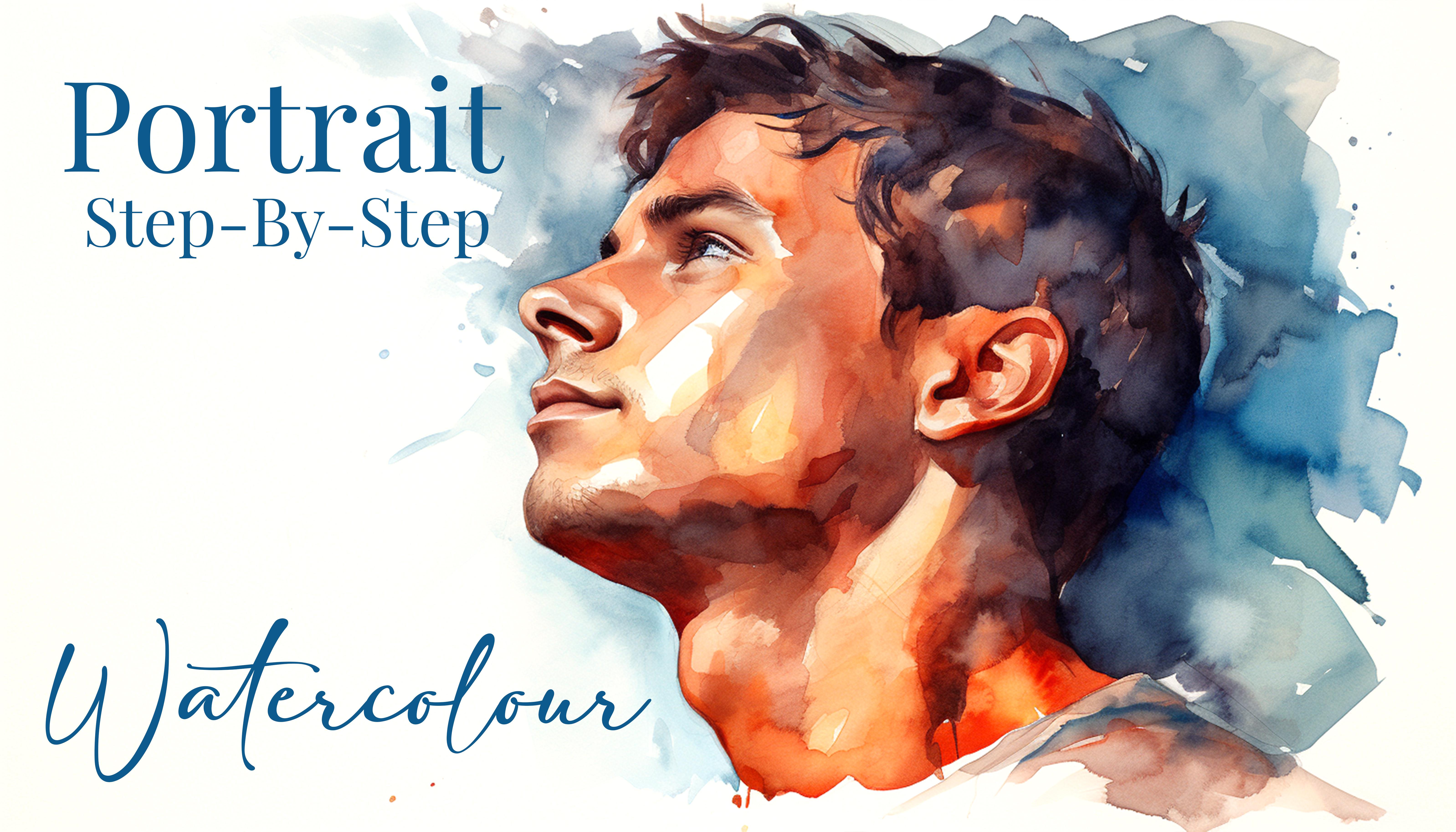
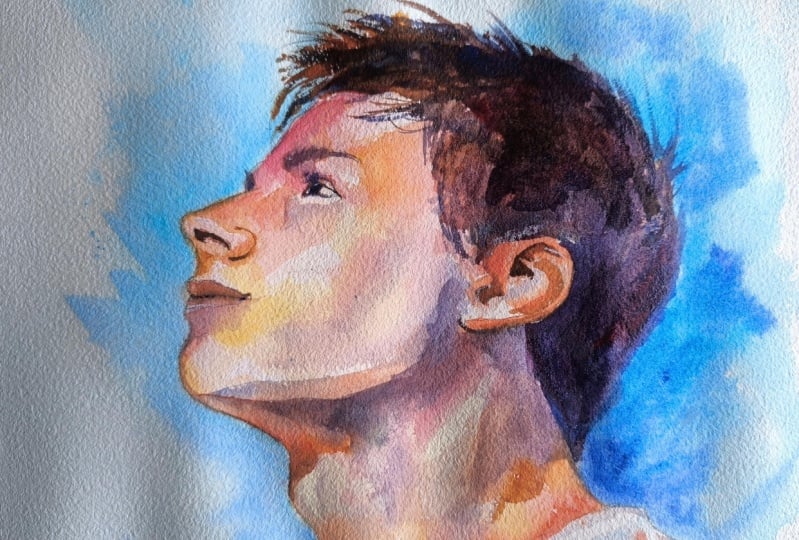
is Will Elston, and today, we'll be capturing
the exciting emotion and character of
a human portrait. Painting a portrait allows us to celebrate the
intricate details and expressions of the
human face while exploring a wide range of
watercolor techniques. Don't worry about
feeling overwhelmed as we'll be using a loose
and relaxed style. Throughout this class,
we'll delve into techniques such as
wet and wet blending, glazing, and lifting, as we bring our portrait
to life on the paper. I've been a professional
artist for many years, exploring lots of
different subjects, from wild life and portraits to cityscapes and
countryside scames. I've always been entranced by the possibilities of watercolor. But when I started, I had no idea where to begin
or how to improve. I didn't know what
supplies I needed, how to create the
effects I wanted, or which colors to mix. Now I've taken part in many
worldwide exhibitions, been featured in magazines, and been lucky enough to win awards from well
respected organizations, such as the International
Watercolor Society, the Masters of
Watercolor Alliance, Windsor and Newton, and the SAA. Watercolor can be overwhelming
for those starting out, which is why my goal is
to help you feel relaxed and enjoy this medium in
a step by step manner. Today, I'll be guiding you
through a complete painting, demonstrating a variety
of techniques and explaining how I use all
my supplies and materials. Whether you're just starting out or already have some experience, you'll be able to
follow along at your own pace and improve
your watercolor skills. If this class is too challenging
or too easy for you, I have a variety of classes available at different
skill levels. I like to start off with a free expressive
approach with no fear of making mistakes as we create exciting textures
for the underlayer. As the painting progresses, we'll add more details to bring it to life and
make it stand out. I strive to simplify
complex subjects into easier shapes that
encourage playfulness. Throughout this class, I'll be sharing plenty of
tips and tricks. I'll show you how to turn
mistakes into opportunities, taking the stress out of
painting in order to have fun. I'll also provide you with
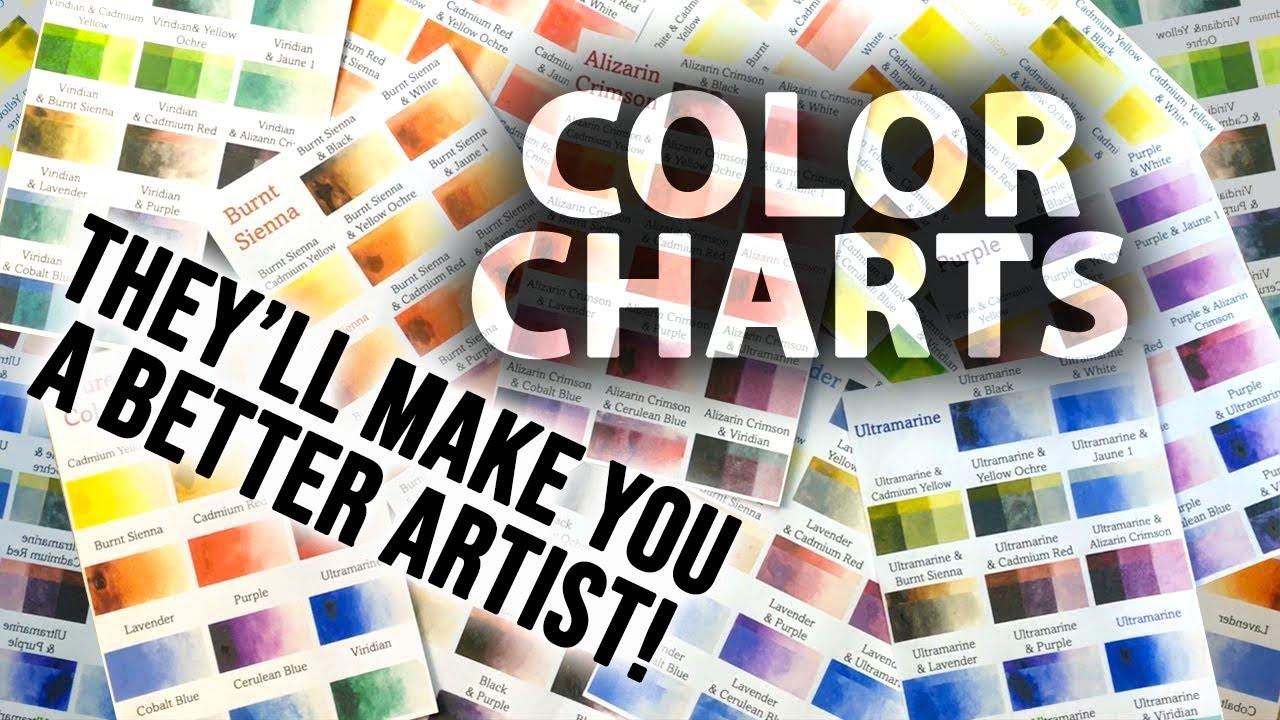
my watercolor mixing charts, which are an invaluable tool when it comes to choosing
and mixing colors. If you have any questions, you can post them in the
discussion thread down below. I'll be sure to read and respond
to every think you post. Don't forget to follow
me on Skillshare by clicking the Follow
button at the top. This means you'll be the
first to know when I launch a new class
or post giveaways. You can also follow me on Instagram at Wil Elliston
to see my latest works. So let's get started with
learning fun and exciting watercolor techniques
and how we can use them to paint your own
beautiful portrait.
2. Your Project: First and foremost, thank you so much for choosing
to join this class. I'm thrilled to
have you all here. Today, we're
exploring how to use water color to paint a vibrant and expressive
human portrait. What captivates me about
portraits is the way you can capture a person's essence through color, light and shadow. This is an opportunity
to use a variety of colors to create
depth and realism. We'll also look into the
interplay of light and shadow, the harmonious blending
of cool and warm tones, and the creation of depth
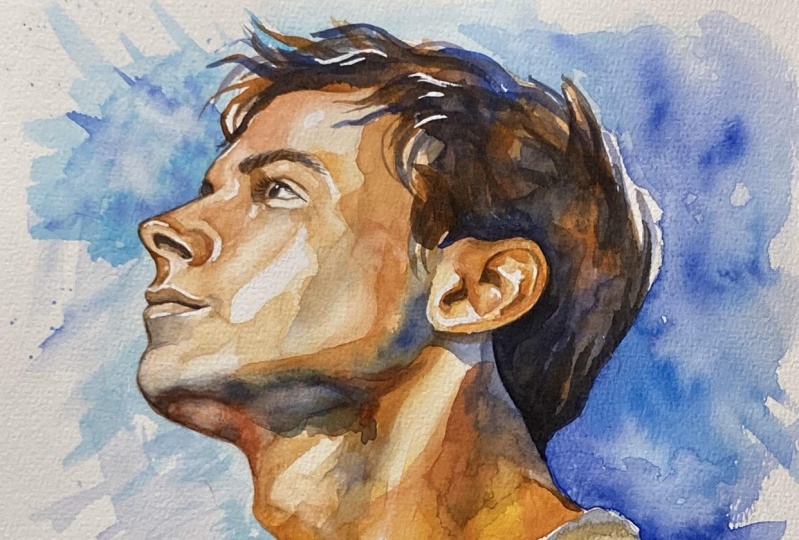
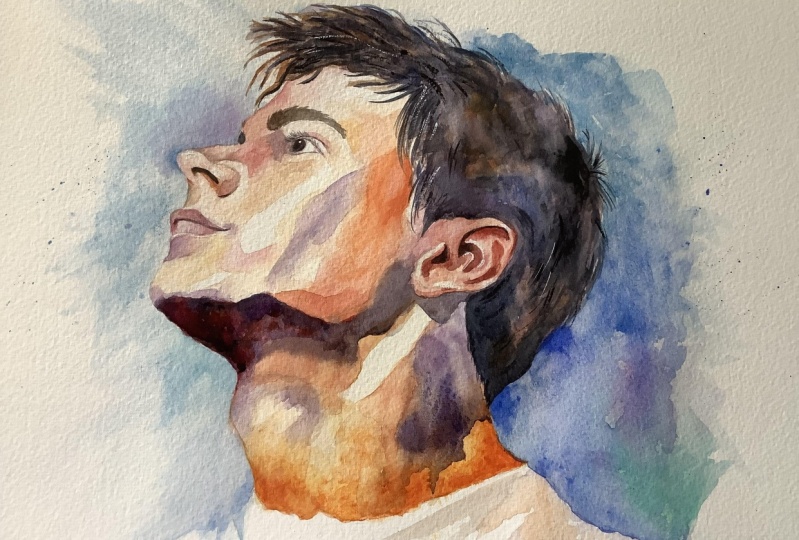
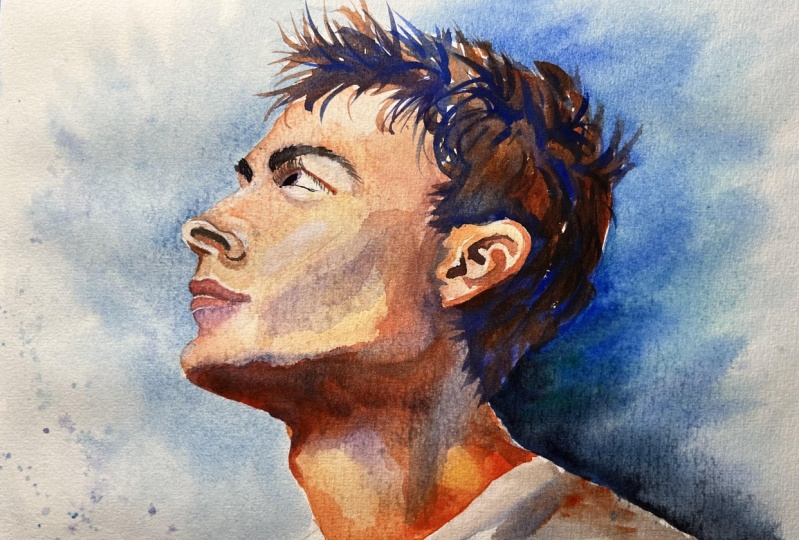
and emotion in our artwork. In the resource section, I've added a high
resolution image of my finished painting
to help guide you. You're welcome to
follow my painting exactly or experiment with
your own composition. As we're going to be focusing on the painting aspect
of watercolor, I've provided templates
you can use to help transfer or trace the
sketch before you paint. It's fine to trace when using it as a guide for
learning how to paint. It's important to
have the underdrawing correct so that you can relax and have fun learning the
watercolor medium itself. Whichever direction
you take this class, it would be great
to see your results and the paintings you
create through it. I love giving my
students feedback, so please take a photo
afterwards and share it in the student project gallery under the project
and Resource tab. I'm always intrigued to
see how many students have different approaches and how they progress with each class. I'd love to hear
about your process and what you learned
along the way, or if you had any difficulties. I strongly recommend
that you take a look at each other's work in the
student project gallery. It's so inspiring to see
each other's work and extremely comforting to get the support of your
fellow students. So don't forget to like and
comment on each other's work.
3. Materials & Supplies: Before we start the painting, let's go over all the
materials and supplies I use. Having the right materials can greatly impact the
outcome of your artwork. So I'll go over all the supplies I use for
this class and beyond. They're very useful to have at your disposal and we'll make it easier for you
to follow along. L et's start with the
paints themselves. And like most of the materials
we'll be using today, it's a lot to do
with preference. I have 12 stable colors in my palette that I
fill up from tubes. They are cadmium
yellow, yellow cha, burnt sienna, Cadmium
red, lysarin crimson, ultramarine blue, cobalt
blue, cerliu blue, lavender, purple, Vidu black, and at
the end of the painting, I often use white guash
for tiny highlights. I don't use any
particular brand. These colors you can
get from any brand. Although I personally
use Daniel Smith, Windsor and Newton,
or Holbein paints. So let's move on to brushes. The brush I use the most is
a synthetic round brush like this escoda Purl brush
or this Van gog brush. They're very versatile, because
not only can you use them for detailed work
with their fine tip. But as they can hold
a lot of water, they are good for
washes as well. They're also quite affordable, so I have quite a few
in different sizes. Next are the mop brushes. Mop brushes are good for
broad brush strokes, filling in large areas and creating smooth
transitions or washes. They also have a nice tip that can be used for smaller details. But for really small details, highlights or anything
that needs more precision, I use a synthetic
size zero brush. All brands have them and
they're super cheap. Another useful brush to have is a Chinese calligraphy brush. They tend to have long bristles
and a very pointy tip. They're perfect for
adding texture or creating dynamic lines
in your paintings. You can even fan them
out like this to achieve fur or feather
textures as well. And that's it for
brushes, onto paper. The better quality
of your paper, the easier it will be to paint. Cheap paper crinkles easily
and is very unforgiving, not allowing you to
rework mistakes. It's harder to create
appealing effects and apply useful techniques
like rubbing away pigment. Good quality paper, however, such as cotton based paper, Not only allows you to rework
mistakes multiple times, but because the pigment
reacts much better on it, the chances of mistakes
are a lot lower, and you'll be more likely
to create better paintings. I use arches paper because that's what's available
in my local art shop. A water spray is
absolutely essential. By using this, it
gives you more time to paint the areas you
want before it dries. It also allows you to
reactivate the paint if you want to add a smooth
line or remove some paint. I also have an old
rag or t shirt, which I used to clean my brush. Cleaning off the paint
before diving it in the water will make the
water last a lot longer. It's always useful to
have a tissue at hand whilst painting to
lift off excess paint. Also, you never know
when an unwanted splash or drip might occur that
needs wiping away quickly. I also have a water dropper
to keep the paints wet. When you paint, it's
important to have them a similar consistency to what
they're like in the tubes. This way, it's easier to
pick up sufficient pigment. A hair dryer is useful
to have for speeding up the drying time and controlling the
dampness of the paper. And lastly, masking tape. And this, of course, is just to hold the paper down still onto the surface to stop it sliding
around whilst painting. Also, if you plan on
painting to the edge, we'll allow you to create
a very crisp clean border. And that's everything
you need to paint along. I encourage you to experiment and find out what
works best for you. Now let's get ready to
start the painting.
4. How to Sketch It Out: I'm going to use this
mechanical pencil with a thick lead
for my drawing, and I'm just marking out the parameters of the head at
the moment using a circle, and then I mark out
the front of the face, follow underneath the chin and jaw where it
connects to the neck, and then where the jaw line is, the hair line, and it wraps
round at the top there. Then I roughly mark out where the ear is, which
is halfway down, and then I divide the face into three sections into thirds. That's roughly how you
mark out the face. You can take your time of this, or we can, of course,
use the trace template. Then I'm marking out
the next level details. So we got the main
proportion sorted out. Now I'm marking out
where the eyebrows are, where the nose is, the
angle of the nose. The point of the
nose. The eyebrows are in the top third section, and the nose starts
at the top and connects to the bottom
of the middle third, and then of course, the lips and the chin
are in the bottom third. Then I'm going around the back of the head to add the hair. The ear is basically the length of one third or
the height of one third. Y But I'm keeping it quite
loose at the moment. Even though you can
see the lines there, I could easily rub them
out with my rubber. That's why I use a thick lead so that it doesn't indent
the paper that much. So I'm just correcting
this chin area, just going over it a bit. And now I can go and swap to my finer pencil and add
a bit of a darker line. Now that I'm happy with some of the areas I
can commit to them, like the eyebrow, the eye here, which on a slight angle. Coming down with the nose. And then after I've done this, I use a rubber to rub out the light pencil markings underneath to leave the
pure correct lines. And I basically continue
this the whole way. Going back and forth from adding details to rubbing
away the details. And it can take quite
a long time to get right, but that's okay. If you don't have the time, you can just use the template. I'm going to finish the rest of this off camera and
get it all nice and I'll get all the
important lines in there including where the shadows be and where the textures in
the background should be. See you when we
start the painting.
5. Starting The Underlayer: The main colors that we're
going to use to create a realistic looking
flesh tone or skin color is burnt sienna, alizarin crimson,
and yellow cha. Basically, we're
going to use these in different quantities and different strengths
and weaknesses, dilutions with water to achieve the right tones and colors. They all look quite
similar at the moment. One of them a bit more red and one of them
is a bit more yellow. Start off very lightly, we're just going to
do an underlayer. I'm just testing out
what this pigment looks like on the white of the paper and I'm quite happy
with that at the moment. I just dab a little bit on there and then I clean my brush, fill it up with water and then drag the whole of that out, and you can see it loses
its strength a bit, which is exactly what
I want at this stage. I don't want it to be so strong. I'm using water just to weaken it out a bit and spread it into the
areas that I want. Like I always say,
it's useful to have on your phone the final image
of my painting that I put in the resource section
just to have as reference so that
you can see what it looks like once I've finished. Now I'm going to
leave that section to dry and I'm going to
get a bit of yellow, make a yellow influence into the paint here and paint an
under layer on the neck. Because there's some areas that are going to remain light, but there's still a
little bit of tone there, so I have to do those bits first and the some bits
that are pure white. Just below the nose
on the cheek area, it's going to be the
pure white of the paper. So you can see that's where we're going to preserve the white of the
paper in that section. This area here, the yellow area we're
painting at the moment, it's going to look
very light in the end because we're going
to come back with some very strong shadows. Again, looking back
and forth between my final painting image
and this is useful to see where my mind is at
because it's difficult to explain sometimes when I'm
painting it in the moment. And sometimes my choices change. Halfway through, I might
be painting something and then get rid of it or
paint on top of it. There's not one correct color to paint skin tones because
there's so many variations, and even one person
is a whole mixture of different color skin depending on the part of the face
or part of the body. So it's nice to have a variety. Now there's little patches
on the hair on the head where I've the come like this orange because I think I'm going to paint the
hair brown or dark brown, at least, and I'm going to
have a bit of blue in there, so having blue and
orange together, which are complimentary colors will make it quite dynamic. So that's why I'm
putting a bit of orange into the hair
at the moment, too. Now, I'm going to take a
bit of alizarin crimson, make a bit of a redder hue now. I'm going to go back
to the forehead area, and it's such a hot day with me today that it's already
starting to dry, so I can go back
over there without it blending out into the rest of the first
layer we've done. I'm just softening
out the edge there. Adding a bit more orange onto my brush and then connecting up there to try and convey the sense of form
going on around the nose.
6. Light Tones First: We'll leave the darkest
darks to the very end. At the moment we're working
from light to dark. If you're using good quality watercolor
paper, cotton based. You can correct your
tones all the time. You can go back and rub away. Of course, it's
not going to have a nice fine finished look if you keep on messing
around with it, but a good quality paper gives you the ability to do that to practice working
on your tones, to help your observational skills because at
the end of the day, this is just practice we're
just having a bit of fun. You're learning about
the watercolor medium, training our eye to see
the tones the correct way. So we don't have to have a highly polished
painting at the end. It's just about exploring
how to paint a portrait. You can look back and forth
from the screen and think, Does that tone match my tone
that I got on the paper? If it's too dark, then
add a bit more water, and if it's too light,
add a bit more pigment. So we've got a bit of
a darker section here. Of course, underneath the nose, there's a shadow because shadows are obviously where
light doesn't get to. So the darker the areas are are the areas where
least light gets to. When it comes to tones, you've got to think
about where the light source is coming from, and of course, it's coming from above in this
particular portrait. So generally speaking,
the lighter tones will be on the top and the darker
tones will be on the bottom. Just softening up
that edge there. There was a bit of
a hard line there, so I'm going back with pure water and just
scrubbing slightly. I'm not overpowering it with
water so that it runs wild. Just a tiny little bit
just to agitate it. You've always got to be aware of the wetness of your paper. Because if you surge or add too much water into an
area that's almost dry, it'll be uneven.
It'll be too late. If you are going to do it, if you're going to
go back and correct the tones by editing it, you have to make sure it's wet enough or completely dry
and go back over it. It only turns messy if you're
trying to edit something with too much water
on your brush compared to how much
water is on the paper. Now, of course, underneath
the eye, it's a bit of shade. But as it curves
into the eyebrow, there's not a hard line, there's a curvature
of the shade. So above the eye to the eyebrow, I keep a kind of soft
kind of transition there. I'm kind of just
picking little patches, little areas and covering them with this kind
of at the moment, all the tones are
pretty much even. It's kind of a light to
mid tone at the moment. It looks like a mid tone
at the moment, actually, but this is, in fact,
is my light tone. We'll come back with mid tones and then dark tones
at the very end. And it's not super clean
and I don't want it to be. I'm trying to create
a kind of impression. I want to be expressive. So I don't mind there being some dirty lines every now
and again and unevenness. As long as the general
tones are okay and placed in the right
position, it should be fine. And if your drawing is well out, if you use my template to
make sure it's correct, then that helps a lot, too.
7. Mixing Skin Tones: Now, around the
lips and the chin, I'm adding a bit
of a more pink hue rather than the orange. But I do need to balance it out, so I am adding a
bit of yellow in there to make sure it's
all in harmony together. The way I think about skin tones and finding the right color is basically every single skin tone is in between red and yellow. And in between that red and yellow are different
levels of vibrancy. Of course, red and
yellow make orange. So you've got orange in there, and then a desaturated
orange is in fact brown, and you can have a reddish
brown or a yellowish brown, and in that kind of
triangle between, I guess, black would ultimately
be complete desaturation. You've got black,
red and yellow, and everything in between, and that's what I work around when thinking
about skin tones. It's a bit more shading underneath the lip
where it curves down. So I'm adding a bit
more darkness there. It is a nice soft
transition there too, just taking some pure
water to soften that edge. Go over and softening a few
edges that I don't want hard lines with
scrubbing the paper, and using a tissue as well to pick up some of that pigment. Now I'm mixing a very
vibrant yellow and adding some red to make it an orange because at the
bottom of the neck, we're going to do a
nice vibrant patch. Nice thick pigment, and I'm
leaving a little white gap in the middle. You'll
see what I mean. As I go around both sides, I'm not painting the middle. I'm leaving that white because
I'm going to surge it with water and allow the water color to do its magic and
connect them together. But at the moment, I'm just
painting the two sides with this vibrant orange. I'm not trying to
keep the colors absolutely realistic here. Of course, no one's skin
is that vibrant orange. I'm using a, very watery yellow
to connect the two here. Agitate it a bit and allow
it to do its own thing. Soften the edges there to going all the
way to the bottom, careful not to go
over the collar line. And I have to
apologize because I didn't realize that my camera
shut down in that section. It's a very hot data day and
it keeps on overheating. It's over 100
degrees Fahrenheit, almost 40 degrees Celsius today. And the air conditioning
isn't working, so my camera overheated and shut down without
me realizing. But you can see what we've done basically by allowing the
watercolor to do its own thing. You can see an instant change from when it was wet
to how it dried. We connected that wash all
the way to the other side of the neck just
below the jaw line. And now that's completely dry, I'm going back to the top, up to the forehead
with a pinker hue now, a more reddish hue, using a lizard crimson. By the way, to mix
that vibrant orange, I used cadmium yellow
and Cadmium red. But you can also buy
pure vibrant orange like Daniel Smith's,
perennial orange.
8. The Mid Tones: This use of orange really fits the time of year
that I'm painting this, which is scorching summertime, a very hot day and. Because it's so
hot, all my paints are drying very quickly, which helps with the
speed of painting. It really makes it a faster experience when you're forced to work before the paint dries. Now, right in this
corner above the eye, there's a burst of
orange with a soft edge. So I wet around the
outside and I just dab a bit of orange
in the center and it just blurs
out, blends out. Now I'm going back
with a bit of brown, a a reddish brown. The line around the nostrils. It's the nose is actually one of the more
difficult things to paint the nose and the ear because there's a
lot of smooth forms. So it's not so easy as just painting a shape,
blocking out a shape. You co create the
illusion of curvature. With a lot of
smooth transitions. So on the top, you got a smooth transition that goes up the
shaft of the nose, and then by the nostril, you've got to kind
of round curvature, with shading at the bottom
and then light on the top. So you can take
your time of that. Then at the very bottom is where the dark
dark shadow goes. To a small little sliver, a fine line of darkness. And of course, the
nostril itself, and pre wetting it a bit with water because I want there to be a slight soft edge. First of all, I'm doing a lighter color because
eventually at the end, I'm going to use black to paint
the whole of the nostril. But I want there to be
a slightly soft edge of a lighter color
just to begin with. And we'll paint the rest
of the nostril later on. I'm just I'm always going from the lightest colors to the mid tones
and then the dark, and that's what we're doing now. You can see gradually we're getting darker and
darker with our tones. That's at why watercolor
can look very incomplete until the very last few minutes because for most
of the painting, the tones are wrong because you're not using dark
tones until the very end. So it just looks very off and you're not sure whether
it's going to be a success until the very end. But you just have to
put your faith that as long as you're checking the tones and they're matching, that at the end,
it will work out. I'm not being so accurate. I'm being inventive
with my tones through knowledge of anatomy and
drawing figures multiple times. You get a sense of the
overall proportions and positions of the shapes and shadows and the
features of the face. Once you memorize where
these things are, then you can be quite
inventive with the shapes. They don't need to follow exactly the model or the
photograph that you're using. Again, my camera cut off there. That's why there's a jump.
9. Why Painting Portraits Are Useful (Compressed): Usually, if there's
a bit of a chin, there's a bit of shadow in between the lips
and the chin there. I'm trying to emphasize that. It's okay to take your
time going back and forth, step by step, not overdoing it. There's parts of the
painting that cool for being expressive like down below in the neck
where you can be quite suggestive and not so specific, but when it comes to the
lips, the nose, and the eyes, you have to make sure that
your tones are correct, so you can do it step by step,
like what I'm doing here. I've gone over this bit
already three times, just making sure I'm in
control or not overdoing it. For most of the painting,
we're using the white of the paper to achieve
the highlights. Of course, watercolor uses the white of the paper
to create the vibrancy, the tent nature of watercolor affects the way
we have to paint things. Because if it was
acrylic or oil, we can just layer on top. Painting the temple
of the head here, where there's kind of a
sharp change in the angle. That's why there's
a darker tone there because it's slightly more
shaded than the other angle. If there's a soft edge, it's because there's a curvature to the shape or the area
that you're painting. But if there's ever a hard edge, it's because of course, it's not curvature,
it's an angle. It's a complete shift in
the angle of the surface. That's why painting
a portrait is a good exercise for practicing
your skills because there's a whole mixture and combination of soft
edges and hard edges. And I advise everyone to give it a go even if
you're a complete beginner. Of course, if you're
a complete beginner, you're not expected to paint a complete masterpiece.
That's not the goal. It's really to push yourself to understand how to
manipulate the medium, and it's such a
fun way to do it. I'm no means by saying you
can't create a masterpiece. You you could do with the right expression,
even a beginner. If your mind's in
the right place, if you're feeling spontaneous and you've got no apprehension. If you convey that
boldness into your work, then it'll be very expressive, even if it isn't
super realistic. Often, I find I've seen in my students who are
complete beginners, often their first
paintings are very, very good just because
they feel very liberated. They don't have any
Their mind hasn't created any hurdles
or assumptions yet. So they're quite free and bold. It's only when we
start becoming a bit more intermediate or a bit later into our journey that we lose touch of the playfulness
and the freedom of it. We try and think our way into pain niice paintings rather
than feeling our way into it, which is very easily done. I do that a lot, too, even now. It's very easy to fall in the trap of thinking your way through a painting
rather than feeling it. But when I look at
my collection of favorite watercolor
paintings that I have saved on my computer from
all my favorite artists, all my favorite paintings, you can see are done through feeling it rather
than thinking it because some things
are impossible to paint by conscious thought. It's just done through
impulse from spontaneity.
10. Breaking It Down Into Shapes: And I'm painting the upper lip, and as you can see it's close to black in
the center of the lips, and then it just fades
up to a lighter color. Of course, again, because
there's no light at the bottom, as occurs, it
catches more light. I keep on bouncing back and forth through different
areas of the face. While individually the shapes don't look like they're
going anywhere, collectively, you can see it's starting to take
a bit more form. It's starting to make sense now. So that's what you can do when you attempt this
painting yourself. You can watch this painting
through completely, and then you can
have the painting on a different device on your
mobile maybe and go back and forth looking at
how what I'm painting right now ends up
being in the very end. And then if you're going to attempt this
painting yourself, you can go through the
video again, pausing, seeing which section I paint and then relating it to how
it looks like in the end, because really, I'm
always breaking things down into
different steps. When I first started painting, it might have taken me a whole day to paint
something like this, but now it I think this painting
took 2 hours, 2.5 hours. And the reason it sped
up my work process, my time of painting is because I'm more aware of the different wetness of the paper and the drying times, and I'm a bit more
all over the place because I have my eye on different sections and how
wet different sections are. When I was a beginner, I
used to paint that and wait for it to dry completely before moving on
to the next part. But now, it takes a bit of a learning curve to build up that kind of
coordination of knowing what's going on in
different sections. But It's understandable if you're not happy with
how long it takes you. If you feel like
paintings take a bit too long, it's perfectly fine. It'll speed up naturally the more that you paint
because you'll have a intuitive understanding of which areas are wet and
when to work with them. Of course, like I said, today is a very hot day without
air conditioning, so it's all drying very fast. So that's also helping me
paint a lot faster today. I haven't had to
get the hair dryer out hardly at all
in this painting. So there's a little shadow
here underneath the eyelid. And I'm painting some
details around the eye. And apart from the eye lashes and the eyebrows,
which are hairs. They are of course lines. I'm going to paint
those as lines, but everything else that is a line is some kind of shadow. Like if you think about a
wrinkle around the eyes, there where the eyelid closes, that's where the skin folds
over and traps the light. So that's why it
looks like a line. In nature, there's no
actual natural lines. They're just very thin shadows. Further defining that edge, whether Adam's apple
is on the throat, the neck area needed a
bit more tone down there.
11. The Best Type Of Lighting: When painting a portrait, it's important to find the right reference
because you need the light to be
quite harsh so that the shadows and tones
are easy to detect. If you're using soft lighting, then there'll be barely
any tone or form. So it's difficult to
convey that end painting because it all just relies
on the fine details. It's still possible to
use paint to paint it, but it will lack all emotion
because you can't do all the expressive things that tones allow you to achieve. So now I'm starting to paint
the shadow of the draw line, which will go into the chin. And I'm using quite
a reddish hue for this and even a bit of blue. Blue of the red makes a purple. And I try to put a bit
of purple in my shadows when I paint portraits
because of course, like I said, orange and brown is the center
of skin tones. It all revolves around orange and blue is the complimentary
color to orange. Having that in the shadow
makes it nice and dynamic. And then to think a bit
more deeply about it. If orange is the center, then you can influence
a bit more yellow into there and the complimentary
color of yellow is purple, so you can have a more purplish
blue to complement that. Or if you go the other way around from orange,
which is red, the complimentary
color of red is green, so you can have a
greenish kind of blue. So now I'm painting the ear. And there's lots going on here, and sometimes it can
be overwhelming. So what I do is try
and simplify it by just roughly looking at
where the tones are, and splitting them into
dark mid and light. Just thinking about the
three tones roughly. So I'm just blocking out where the mid tones
are at the moment. I'm trying to do it with
some level of control, but as you can see, I'm not taking all the time in
the world to do it. I don't want to lose the energy by getting
lost in the details. I've sketched out the
different sections and I'm roughly
trying to follow it. And we're about halfway
through the painting now. Of course, at the end, we
can come back over with white guash to really make
the highlights stick out. Now I'm going back with
pure water on my breath just to soften out
some of the edges. I don't want so many
hard lines here. Especially if I'm not
being so accurate, I can just obscure it a bit, and I want to imply the details of the
ear rather than actually directly
paint them all. By obscuring it, it's like a cheat or a little trick
that stops you from having to paint all the details while the viewer still understands
what it is meant to be. It still understands
it as an ear. I'll forget the ear
for the time being, allow that bit to dry and
now with this bright red, I'm going to paint
underneath the chin. Starting off with this red, and then I'll add
some dark brown or black to really make
the tone stick out. Using the tip of my brush because I want to make sure
the shape of it is correct. And then we later on, we can soften out the edge.
12. Adding Blue: Now I'm actually adding blue. Ultramarine blue, which is a very dark blue
when used with red. Now I'm using pure water, just soften it out
so that there isn't a hard line. Hard edge. Although it's difficult to tell from looking at the
camera dead on, I'm actually putting
a lot of water on there so that by
the time it dries, it will run and
mix in a fun way. I'm going to add a bit of blue seran blue into
this section here. Again, because I
like influencing blue into my portraits, too. And the blue with the red
obviously turns into a purple. So now this area is
pretty much done. I'm going to get
my hair dryer out and completely dry up before
moving on to the next step. It's only the main tones, the three main tones of light mid and dark
that are important. Everything falls
into those three, even though you've got a whole array of tones
in between them. What I do is I simplify them and only think
of the three tones, the light and the
mid and the darks. And a good way to do that
is to squint your eyes. If you look at the painting now and slightly squint your eyes, you can easily divide the darks. You can see the darks
underneath the chin, the nostrils, the
lips, and the eye. And then you can
see the light is on the cheek at the moment. And of course, the mid tones actually cover the majority of the painting
still at the moment. I've gone over this cheek
area about three times an now just because I want to
make sure it's correct. I don't want to overdo
it with heavy pigment. So I just I'd rather go
back and add more layers than mess up with one big
layer at the beginning. And I'm going to connect it with the chin and jaw line here. I'm trying to preserve that bed of blue on the d jaw line, but I don't think
there's a way around it, so I I want the tone to be
darker and it's too light, so I'm going to have
to go over it again. Mixing burnt sienna
and a lizard crimson. Just dabbing more pigment and letting it fall off my
brush onto the paper. There we go, I'm
going to have to paint over that blue now. Right on the edge of the. I
want to define define it, so I have to make
it a bit darker.
13. Painting The Jaw: Now, adding a bit more
yellow to make it a bit more orange as we move
up into the cheek. A nice, purply
blue connecting to that orange and then transitioning it out to
where the hairline will be. Every now and again, I
splat some pure water on there just to keep
it expressive. A little bit more blue into that section while it's still wet. Now following it along
underneath the ear. See, the ear at the moment looks like it's dark on
light, but actually, we're going to go with this
dark shadow underneath and make the ear lighter
in contrast. In context. But I think we can leave that bit for now because
we're going to come back at that area with a
darker pigment later. I'm going to go back to the ear right now now that
it's and add in the darkest tones which is I actually put a bit of black into this pigment to
make sure it is very dark. And now we're
starting to see how having full range of
tones brings it to life. Making sure there's
still a tip on my brush. I have to rotate it
every now and again, just to make sure the tip is pointy because sometimes it flattens out every
now and again. So far, I've been using this brush the whole
way and you can find out this is a sco brush
size ten, I believe it is. You can find out
more about that in the materials and
supplies video. You can see how the layer underneath this was quite
messy, not that detailed. And as soon as you start
adding the dark tones, it gives it context, and it makes it
believable as a as a ear.
14. Painting The Ear: I think that ear is the most challenging part
to paint because of all the obscure shapes
and forms it has inside. But the good thing about watercolor is that you
can take advantage of the elusive side of the medium and get away with not
adding true details. You can be a bit more
inventive and creative. So like I said, at the moment, the ear looks quite dark. But when we come round with the black hair
and the shadows, it'll actually I'll actually
look like it's light. Of course, there's a fine
line of shadow where the bottom of the
ear connects to the face because the ear is very close to the
face at that point. But as it moves back, the shadow spreads out
and it becomes softer. Because the closer the two
sections are in the shadow, the harsher the shadow will be. Mixing more purple again, by using alizarin crimson
and ultramarine blue. But really, any red and any
blue will make a purple. It depends what
kind of purple you want and connect it
with burnt sienna. Strong shadows down here. Again, doing a similar
little effect here of painting either
side and then just connecting the middle with pure water and letting watercolor move the
pigments themselves. And when it's wet like this, I know that the water will
even out the pigments. So all I do is just dab. I dab the pigments on. I don't even need to do
much thinking about it. I just allow the
water cooler to do its thing in sections like this. I. Again, my camera shut off
because of overheating. But at least this time,
it wasn't that much. It just basically showed how it when it was wet and
then jumped when it was. Going back to the lips. No much more work needs
to be done on there, just defining a bit more
of the shadows there.
15. Starting The Background: Now I'm going to go
back to the ear, and I'm just going to scrub out some of it with a light bit of water just because
there's too much contrast between the lights and the
mid tones and the darks. I think it's improved it a bit by softening
it out like that. Now I'm going to start
painting the background. I've changed my brush now to this Chinese
calligraphy brush, which is larger, but
you can also use that mop brush. It's
a similar thing. Anything that can hold a lot of water and still have the
little tip at the top. Again, I'm using pure water just to cover the area,
where I want to go. Because if I went
with pigment now, then it might dry
before I've decided where I want the water to go. So by just adding the water
to the beginning of it, it gives me a bit
more control and time because it could dry right
now, and it wouldn't matter. So I just clean my palette, and I'm using a nice
Cerlean blue for this. One pan is going to
be more saturated, the other pan is going
to be more desaturated. I had to a bit too
much water there, and because of that, you can see it's not going all
the way to the edge. I have to drain out some
of the water or spread it along so that it goes
all the way to the edge. And now I'm just doing some expressive lines
just at the edge, maybe a bit of d bruh. Adding a bit of
purple at the top, maybe connecting into there. And this seran blue
is from Daniel Smith, and I do like it because it
has a very thick pigment. It's very thick of its granules so that it has a lovely
texture when it dries. It's not like ultra marine blue or alizarin crimson
or burnt sienna, which the pigments are so small, you can't even see them. It's just a pure color. With this cerlian blue, you can actually
see the pigments move like little grains. The little abstract lines are roughly following the
direction of the gaze, the direction of the eyes,
they're looking upwards. I've just moved over to
a smaller brush now, just to make sure the
pigments going to the edge. This blue, I think, works very well against the
orange of the skin. It really makes it pop. Just surging it with a
bit more water there. Now, in this lower section, I'm going to leave it
quite light, I think. I'm going to leave
the dark blue up at the top and then just to
have a subtle hint of blue down here because
it's already down here. At the top, we're doing dark
background on light skin, and at the bottom,
we're going to do light background
on dark skin, that makes it quite dynamic. Few spots.
16. Negative Painting: Now working away
from the bottom up, we're using negative painting to paint the color
of the T shirt. It's a white T shirt. We're just painting
around it to create the illusion of the
shirt that's there. Then it kind of fades out. Using water to transition it
to the white of the paper. As long as you get the details right in the correct places, for example, the eyes,
the nose, the mouth, and the ears, you can be quite expressive
with the rest of it. We've spent a lot of time making sure those details are correct. Now we can be quite expressive
with the rest of it. For example, the hair will only take a short amount of time to do
because we're going to allow that to be a bit
more free flow and loose. I did a little
swipe of blue just to create a little bit of a under layer because
I want to be there. I want there to be
multiple layers for this blue background. Slightly. I want to
keep it dynamic, so I want to have some sections drying combined with some
sections that are very wet, and by connecting the, there'll be a of as interesting
things going on there. Again, using this cerlian blue. Doing an obscure
kind of borderline. Trying to feel my way through it rather than think
my way through it. Of course, you have to think
whilst you're feeling it, but I'm trying to
tap into what I'm feeling and then
I think about how to convey those feelings. I'm adding a bit of green
down at the bottom here. Making it a bit to aise. Then we don't have to worry so much about going
over the edge here because we're going
to come back. I used a hair dryer
to completely dry it. So now we can go over it
again being a bit more bold. And I'm going to do a bit
of negative painting with the hair down here. Keeping it quite rough, we don't want to add
too much detail, spend too much time on it. I'm adding lots more pigment than the other
side because again, I'll be painting the hair
almost black or brown, so I need to compensate
by painting extra dark. The reason I of course, painting the background is
because it's underneath. I won't be to paint
it afterwards. I do like using this
calligraphy brush because it just makes me feel a bit more liberated
to be expressive and free.
17. Letting Go: This is where you can
really let go and push your creativity
and expression. Not being scared to
use thick pigment, not being scared to
splash on piles of water directly on an area that's drying or already
got loads of water on. There's literally no
rules in this part, just exploring what
the medium can do, scrubbing bits that are most I'm trying to actively almost make it ugly. I'm trying to create texture. I'm trying to do the
complete opposite of what we're doing before instead
of making things smooth. I'm trying to create distortion. Maybe mix in some black and
even do a few splats pigment and then let it dry. But you need to be careful
when letting it dry. If it's got loads of water
and you use a hair dryer, you don't want it to run off into some important
part of the painting. Now I'm mixing some of the hair color, which
again is brown. We're going to start
off with brown and then going to add other colors
to it as we go along. Starting off with a
broad brush strokes, and then moving to thinner
strokes as we get to the end. This burnt sienna always looks more vibrant when it's
wet than when it dries. There's a few little strands of hair that I'm going to
apply in the shadow. Leaving a few little gaps
in between the strands. I don't want to cover
the whole area. And now I'm applying purple on top of that brand to
make it interesting. So I usually start off
with a broad brush and then change to a smaller brush to connect it with
smaller strands. Using purple in this
section with blue, a lot of the time I use the
paint that's already on my paper so that it's
nice and harmonious. Some strands are
lighter than others, some strands are darker.
18. Painting The Hair: As I move further along, the first brush strokes that we did on the hair have
started to dry. So we can go back to them and it'll allow a more softer line. When we first painted it, it was pure wet, and that means that whenever we add more paint, it'll
just spill out. But as it's dried, or drying,
when we go back to it, the line will hold
its shape a bit more, and when it's completely dry, then it'll just be a pure
second layer on top. So the different wetnesses
of the paper can affect how the
brush strokes look. When it's wet, it's going to
interact with it as if it's the same layer all
the way until it transitions into
being a second layer. Painting the
silhouette of the ear. For the hair, we're not
using natural colors at all. We've got purple, orange
and blue in there. But as long as you get the tones right, it will make sense. Being very careful not to
go over and paint the ear, the surroundings,
the outline of it. Orange and blue when
mixed together because their complimentary colors
makes a kind of gray. They neutralize each other,
as you can see there. I swirl my brush out, so all the thick pigment falls off because the thicker
the pigment is, the harder it is to
get off the brush, it just wants to stay on there. I squeeze it out by just rotating the brush and let
it fall out onto the paper. It's more like scraping the pigment on the
rather than brushing it. I try to keep the strokes in
the direction of the hair, always allowing gaps
between the layers, and combining thick
strokes with thin strokes. Because we build up the
space with thick strokes, and then by adding a few
thin strokes in between, that's what gives the is
all a bed of hair really. There's a strong edge where the hair line meets
the neck here. I've got to decide whether to keep this hard line
or to soften it out. You can see now we've
painted in these darks, how the background looks light. Before we painted it,
it looked very dark. And now I completely
dried it off. And that's what it
looks like afterwards. So now let's move on to the
dark on the facial features, the eye behind the nose, just a simple shape, but it gives the illusion.
19. Painting The Facial Details: It suits its purpose. Just painting that
little section there. Now for the eye, the iris, I'm just going to do a
curved circle and ellipse. Then just a few lines that
suggest the shape of the eye. Then maybe a few eye lashes. It takes a bit of time
and patience just to observe what to paint
before committing. You need to take
your time, back and forth and then just go for it. And now we can start painting
the eyebrow and to do that, I'm just going to use the tip of my brush just to
create some lines, lots of little lines, and
then I'm going to soften them out a bit because it looks a bit a a harsh
lines like that. I want to have some
softness in there, going to break it up a bit. Get the tones right
first actually. Then I can take some pure
water and just soften it out. This is the pure water on
my brush, but not much. I dabbed it out with a tissue just to make sure
it doesn't spill out, and that should be fine. Now I'm going to go back to
the hair with the desks. I'm mixing pure black here just to get the
full range of tone. Not many lines. You just enough to give accents
to the shadow. Just like we'll do high
lights in a minute. I'm just doing the low
lights, so to speak. S. I want it to be really
nice and dark down here. I'm going to mix
in some more blue. Now we can soften it up and connect it to the
top bed a bit better. A a bit more water so
that it is a soft edge. I think it needs a bit more definition on the top as well. It's a bit too abstract, so I'm going to add a
few more lines just to give direction to the hair. And then wet it out again. You see I'm rotating
it around the edges. I don't want any hard lines or at least I want
to vary my edges, so some of them are hard, and then some of them are soft. Now, moving on to the collar, I don't want to
leave it pure white. I'm just going to paint in a few shaded areas
using a monotone brown. I don't want it to
be completely flat. I'm adding to a slight bit of
abstract shading in there. Then using the edge to paint
the shoulder or the back. Mixing in a bit of
blue into there. Be blue and orange
looks so nice together. I try and do that all the time. If I'm going to use orange, I put a bit of blue, and
if I'm going to use blue, I put a bit of
orange just because they're my favorite
color combinations.
20. Finishing Touches: Now we're coming
close to the end now. I'm just reviewing the painting as I'm finishing these details, thinking about what
else needs to be done before we move
to the highlights. Dropping a bit of texture
down at the bottom there. Now drying it out completely. Softening up some edges. When you get to the stage
where you're actively looking for things to do and
you're not sure what to do, you know you're
pretty much there. Even if the painting isn't
exactly how you intended it. When it comes to the point
where you're struggling to think of ways to improve it, you're pretty much done, and you can call it done, and you can move on
to the next painting or what I tend to do is, I disconnect from a while, I stop what I'm doing, and I come back with
a fresh eye later on, and sometimes not
much has to be done, or sometimes I do a
whole new section, and completely transform
the way it looks. Because when you're absorbed into a painting for a few hours, you have a bit of tunnel
vision and it's difficult to see outside of the box. So disconnecting for a few
hours or days really helps. Now I'm moving to my, my gash. It's a bit too dry
in my palette, so I it straight from
the tube and I'm using it in my palette to get it to the
right consistency. Now I'm going back over some areas where I painted
over to get the highlights. We could have painted around these areas to get
highlights before, but it would have been it would have been too
restrictive with the brush. We wouldn't have been
able to be so expressive. So it's best just
to come back at the end brush to add
all the details. The little pops of highlights. Just a few thin lines
every now and then, where there'll be a
reflective surface. It's like adding polish. It just takes it
to the next level, adding these white
little highlights. Refining some of the edges going to the hair, maybe having a few streaks on the hair. But it's easy to overdo. I'm trying to have a little
bit of self restraint and not overdoing it because
it's a bit difficult to go backwards with
this whitewash. It's difficult to wipe off.
Then going to the ear. Another reason why it's
good to just step back and disconnect is because you can overdo some things
like for example, the ear, now, I'm thinking, is it really necessary
to add these highlights? I think it was all right before. And if I were to
just disconnect, I'll have realized that, but I just carry on
adding a few highlights, and it overdoes it. It takes away from some of the more expressive
magic we did before. I think I need to sort out the hair line down at the bottom where the
hair reachs the neck. I need to restructure it a bit. Because the hair just folds in to the neck at
the wrong angle, so I'm just going to
smooth it out a bit, make it a bit more curved. Get rid of that highlight too.
But that's pretty much it. Let's take the tape off and
review what we've done.
21. Final Thoughts: Welcome back and
congratulations on completing this watercolor class on
how to paint a portrait. I hope you enjoyed
the journey as much as I did guiding
you through it. From capturing the
subtle expressions to depicting the delicate details
of the facial features, we explored the essence
of human expression. Throughout the class, we
experimented with a variety of watercolor techniques to
bring our portraits to life. From wet or wet
blending to laying, and using lifting techniques, each method played a crucial
role in creating depth, texture and expression
in our paintings. Remember, watercolor painting is not just about technical skills, but also about expressing your creativity and
personal style. I encourage you to continue
exploring, experimenting, and pushing your
boundaries to create your own unique
watercolor masterpieces. As we come to the
end of this class, I hope you feel
more confident and comfortable with your
watercolor painting abilities. Practice is key when it comes
to improving your skills, so keep on painting
and experimenting. I want to express my gratitude for each and every one of you. Your passion for watercolor
painting is so inspiring, and I'm honored to
be your teacher. If you would like feedback on your painting, I'd
love to give it. So please share your
painting in the student project
gallery down below, and I'll be sure to respond. If you prefer, you can
share it on Instagram, tagging me at Williston, as I would love to see it. Skillshare also love
seeing my students work, so tag them as well
at Skillshare. After putting so
much effort into it, why not share your creation? If you have any questions
or comments about today's class or want any specific advice
related to watercolor, please reach out to me in
the discussion section. You can also let me know about any subject Wildlife or scene you'd like me
to do a class on. If you found this class useful, I'd really appreciate
getting your feedback on it. Reading your reviews
fills my heart with joy and helps me create the best
experience for my students. Lastly, please click
the follow button up top so you can follow
me on Skillshare. This means that you'll be
the first to know when I launch a new class
or post giveaways. I hope you learned a
lot and are inspired to continue working with
this beautiful medium. I look forward to
seeing you all again in future classes until
then happy painting.
 Will Elliston, Award-Winning Watercolour Artist