Transcripts
1. Let's Build a Daily Habit: We've all been there. You get hyped for a daily
painting challenge, only to have life, work, studies, or chores
get in the way. You start strong, but
finishing feels impossible. If you want to develop a consistent, rewarding
art practice, but struggle with finding time, then you found the right class. Hi, I'm Bianca, an aspiring watercolor artist
from Betangas Philippines. And I have been painting
every day since 2018. And honestly, no, I am not
always inspired nor motivated. But over the years, I've built a powerful habit
and commitment to my craft. It started with a
simple question. Can I paint daily
for just one week? Then weeks turn to months
and months turn to years? They say that magic
happens when you show up daily and
enjoy the process. And I can attest to that. I went from simple doodles to
painting full compositions, working on bigger paper, and living my dream part
time job teaching art. This consistency
changed everything. This class is designed
for every artist who wants to develop a
regular art routine, but feels overwhelmed with responsibilities and priorities. I will share the
exact same strategies I use to paint or draw, even if I was super busy, tired, sick, traveling,
feeling unmotivated, or even on my wedding day. In this class, you will learn actionable daily
tips that can be applied immediately to
keep your momentum, simple prompts and exercises to ensure you always know what to paint next and how to
redefine daily practice. It doesn't mean finishing a
masterpiece every day, okay? My own paintings sometimes take weeks or
months to complete. So don't worry about finishing 14 paintings
for this class. Focus on showing up. While I work primarily
with watercolors, I encourage you to use your own preferred
style and medium. No prior drawing or painting
experience is necessary. Once you master this simple, sustainable daily art habit, you can apply the same core
principles to reading, journaling, learning
a new language, or any other practice. So if you're ready to make art an unshakable part of your life, then I'll see you
in the next video, and let's get started.
2. Class Project: Our goal for this
class is simple. Establish a regular art routine. We aren't aiming
for masterpieces, but for consistent practice. We recognize that
daily life such as school work or simply being tired makes
finding time difficult. But setting aside a
moment to paint or draw is also crucial for
improving our craft. To help you succeed, each day will provide tips for overcoming real life hurdles along with a flexible prompt
and a quick demo. You can also choose
which prompt to work on Color Swatches or
simple still life. Before we get started
with Day one, I strongly encourage you
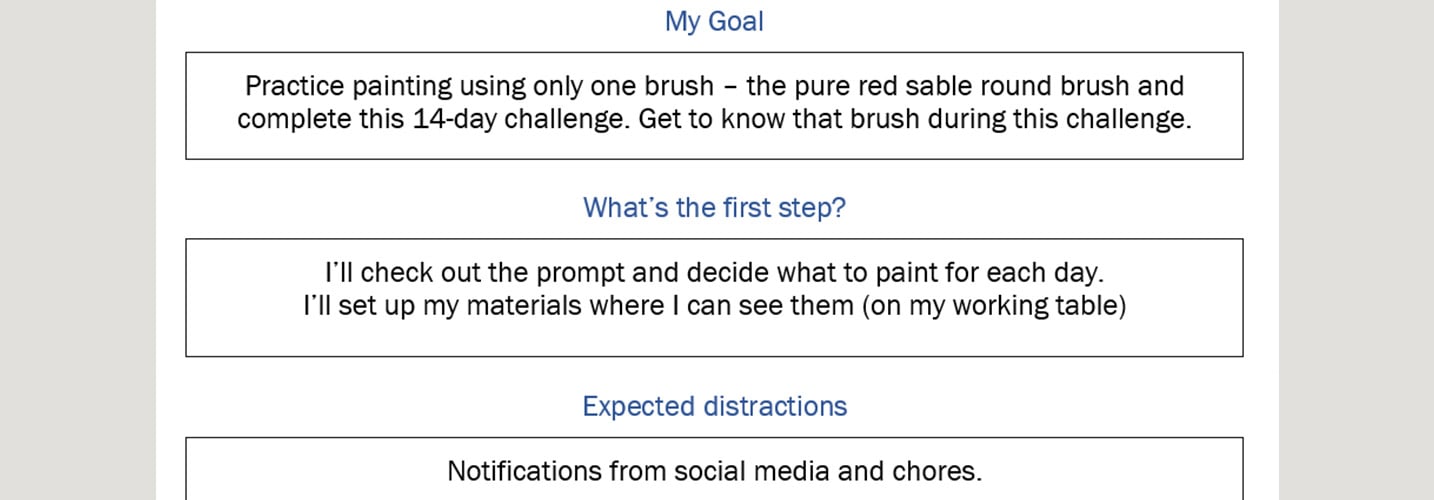
to fill up this form inspired by Charles D Higgs
book Smarter, faster, better. This form will help
clarify your goal, define your first step, address distractions,
measure progress, and determine your next action. Now, for our class project, you can either upload a snap
of the completed form or a photo of your doodles or
swatches or even include both. Are you ready? Then I'll see you in the next video
and let's get started.
3. Day 1 - When We're Excited: Kaizen method is a
Japanese philosophy and strategy for
continuous improvement, focusing on small incremental
changes to a process
4. Day 1 - Demo: Okay, let's get on to
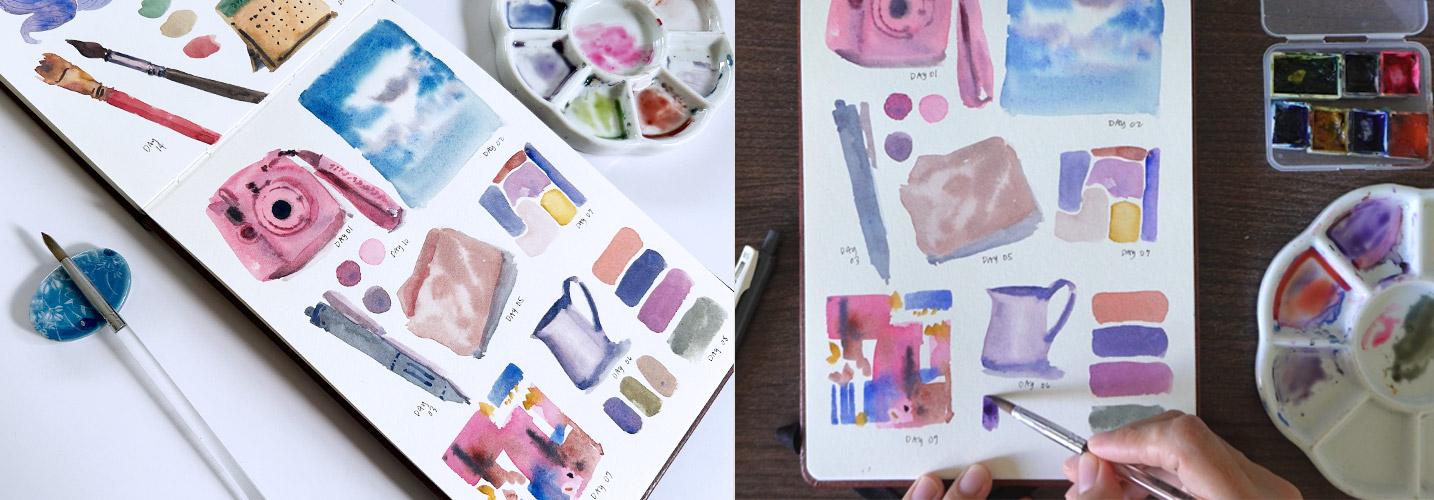
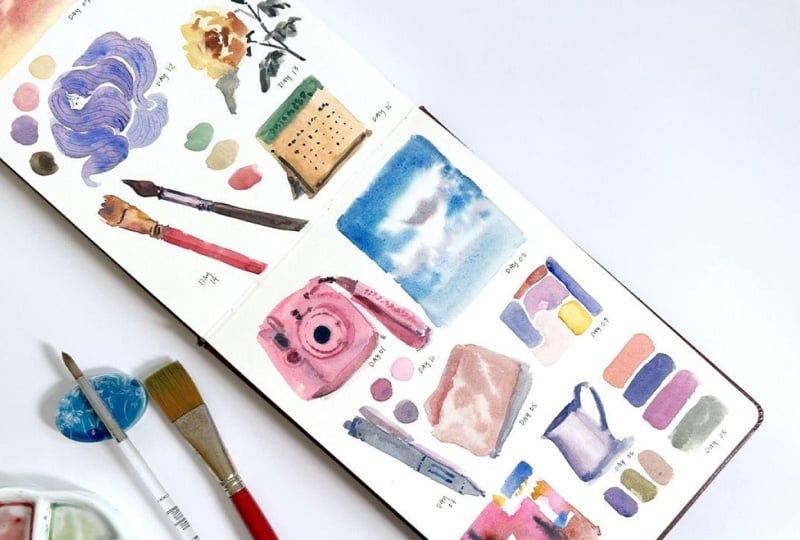
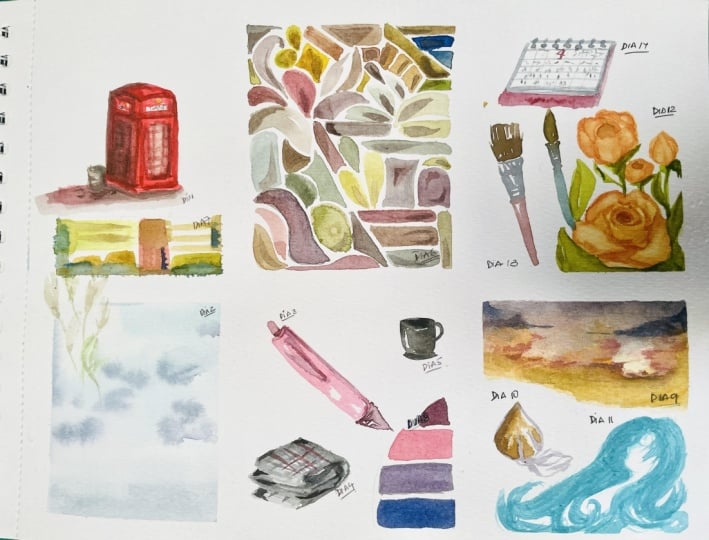
actual art making. Welcome to day one. This is the sketchbook
that I will be using. There's no particular
theme for this sketchbook. I'm just painting
whatever I wanted. Again, these are my
watercolor materials, but feel free to use
your medium of choice. Interpret the prompt,
however you like, and use your own style. Our prompt for today is
something with bold colors. I will be using this
limited palette, along with a few brushes. We will try and divert our excitement by painting
an item with bold, exciting colors like
this pink camera. And we will really
focus on keeping this short, simple and small. I'll begin by painting
the silhouette of this camera with a
light pink color. No need to copy the
item 100%, okay? As long as it resembles the object that we are
trying to portray, that is good enough. I'm now adding a bit of blue for some shadowy areas and
loosely paint them. Let's not worry too much about the technical details
of this camera. Next, I'm mixing in sepia with blue for a
dark neutral color, and I'll block in the
dark parts that I see. I also switch to
a smaller brush, so it's easier to paint
those tiny details. Add pink to the same mixture, slow down, and
paint more details. I know most of you are excited, but instead of spending too much time like 1 hour
to 3 hours for today, paint for a few minutes or
whatever your schedule allows, but make sure that you can allot that same time on
the days to come. If not, then it would be really hard to
sustain this habit. A few more touches,
and we're done. An alternative prompt
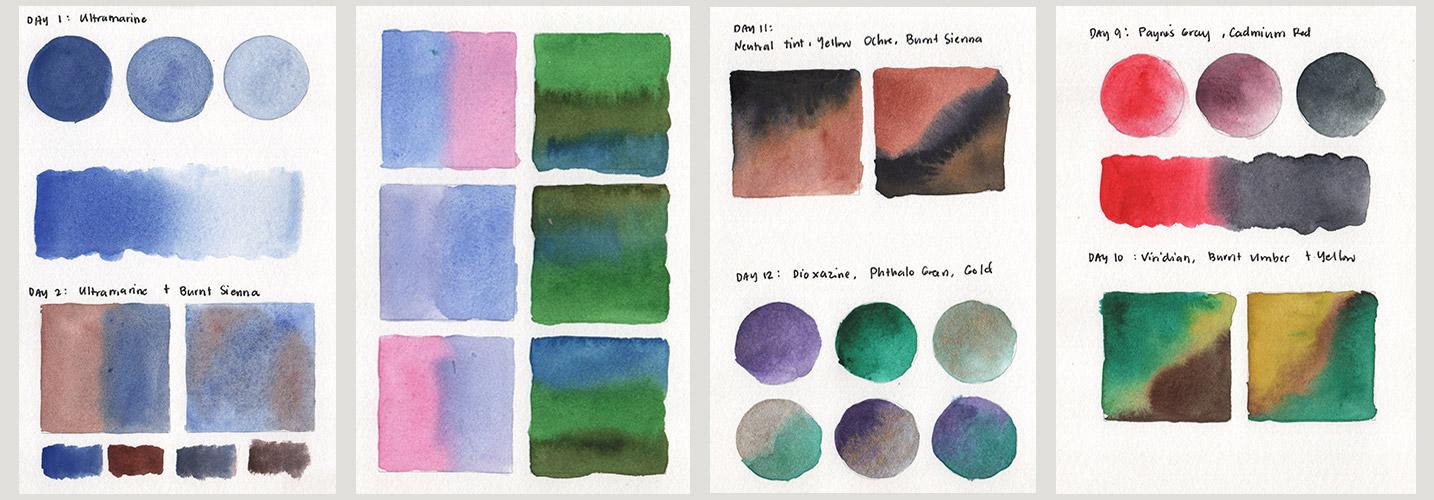
would be to paint a swatch using a single color or what we call the
monochromatic scheme. Like, in this case, I
used ultramarine blue and explored the different shades I will get from this one
by adding more water. A quick summary. When we're
too excited with a challenge, we have to take it slow. Paint something with
bold colors instead, and remember the Kison method, small incremental
improvements over time.
5. Day 2 - When Undecided: The greatest amount of wasted time is the time
not getting started. This quote is attributed
to Dawson Trotman and emphasizes the importance of
taking action over delaying. Do you ever feel the urge
to create something? But you spend so much
time in deciding what to paint or draw that you end up scrolling
through social media. This leads to frustration. Discouragement from seeing other ridiculously good artists and eventually distraction
by real life demands. That 15 minutes you
wasted on deciding what to do could have
been time spent painting. Statistics confirm this. The longer you delay
starting a task, the less likely you
are to complete it. This is why during my first
weeks of habit building, I heavily relied on art prompts. I've provided a list of
prompts to get you started, which you can interpret
in any way that you like, or choose a series of
studies like painting roses for a couple of weeks
or even painting cars. The choice is yours. If you choose your own focus, your task shifts from finding a daily prompt to
planning ahead. In my case, I find
it very effective to dedicate Sundays to browsing, selecting, and
sometimes even printing my reference photos
for the week ahead. By planning ahead, you eliminate the daily stress
of deciding what to paint, allowing you to use your precious creative
minutes on actual art making.
6. Day 2 - Demo: Welcome today too. Now, whenever I am undecided, I just look around me and paint whatever I
find interesting. Since I love clouds, I will paint what's
outside the window. Feel free to grab any small item around you and
focus on portraying that. Right now, it's
sunny and there are big white clouds against
a bright blue sky. And using my limited
palette, I'll paint that. But I will also remind myself
that within a few minutes, I will only be able to
finish a small study, and that's totally fine. I'll start by preparing
my paper with clean water so that the
shapes will be softer. And I have also mixed my blue with water for
the background color, starting from the top
and moving downwards, but I will leave out white
spaces for the cloud shapes. As I reach the bottom, I will change the
shade of this blue for visual interest and also to create an
impression of depth. Next, mix in purple by
adding a bit of pink with blue and use that on the bottom part of the
clouds, the shadowy parts. My paper is still wet, so it's soft and fluffy. A few more touches, and I will consider this a day conquered. An alternative prompt will be swatching a
complimentary duo. I used ultramarine
blue and burnt sienna, since burnt sienna is considered orange and its complimentary
color is blue. You may also use green
and red or yellow and purple. A quick summary. When undecided, use prompts. We can paint something around us and remember to always plan ahead since the
greatest time wasted is the time not getting started. We
7. Day 3 - When We're Busy: How do we paint during
our busiest days? We define our list
acceptable win or law. My law is simply painting
2 minutes a day. If I manage to paint
for at least 2 minutes, that means that
day is conquered. By doing this, we're focusing on the process rather
than the output. Tell yourself just 2
minutes and you're done. The amazing thing is that this minimal commitment
often turns into five, ten, or even 30 minutes. The physics principle
holds true. Objects in motion tend
to stay in motion. The trick is to
just get started. Don't think, do it. If it feels horrible
after 2 minutes, then by all means, stop. You still won. But if you feel like continuing for a few more minutes,
then keep going. If 2 minutes still
feels impossible, then lower the bar to 1 minute. The goal here is
to be consistent. Just don't skip a day. By defining your law, you can squeeze in the
practice needed to develop your daily
habit. I believe in you.
8. Day 3 - Demo: W since we're talking about how to continue
on during busy days, then pick an item that you used most or we use most
during the day. It's a pen for me. Mixing in blue and
orange or specifically ultramarine blue and Venetian
red to create a gray shade. Just like what I
did with a camera, I will only focus on
the overall shape of the object and don't worry
about the teeny tiny details. If you've noticed, I'm not
even sketching the items, but they're rectly using
the brush to paint. Because, ideally, during the early days
of habit building, we should remove anything that might cause us
to delay starting. And in my case, that would
be sketching because I tend to want to make this sketch perfect first before painting. You also saw me using a paper
towel to correct a mistake. But for the other errors that
we might accidentally make, just let go and let them be. Assuming that we are
really busy for the day, let's keep this as
short as possible, but it should still
amount to something. It should still
help you improve. Like, in this case, painting a pen really tested how much I can control
my brush stroke, and with the limited palette, it also helped me
review color mixing. Okay, as promised, as short
as 2 minutes, and we're done. An alternative prompt will be to swatch a warm primary trio. Here, I used lemon yellow, permanent rose,
and zarin crimson. It is indeed a warm
colored selection. A quick summary.
When we're too busy, let's paint for at
least 2 minutes and then choose an item that we used most for the day and remember our list
acceptable win.
9. Day 4 - When We Feel Lazy: Naturally, we hate losing
money that we worked for. That's where negative
reinforcements come in handy for days when
we feel extra lazy, when it's rainy,
when we're busy, or just feeling extra cozy. These kinds of days pose the biggest threat
to new habits. I personally hit this wall during my second month
of the challenge, especially during
the rainy season. To combat this, I usually implement the lazy jar strategy, which uses financial
disincentive as a motivation. The rules are simple yet
effective. Set the penalty. Choose an amount that you genuinely wouldn't want to lose. For me, it was $25
or 1,500 PSAs, which is my weekly allowance. I work from home, by the way. Then define the duration, set a time frame,
could be a week, couple of weeks or a month. Choose the beneficiary. Select a recipient, like a partner or a
friend who gets to keep the total amount accumulated
after the duration. The trick here is to let that beneficiary know
about the challenge. So he or she will
hold you accountable. And of course, we set the rule. You must pay the penalty for every single day that you
skip painting or drawing. Losing my weekly
allowance for a day of laziness is a
powerful motivation. This external pressure
is sometimes necessary. The result, I happily handed my husband an empty lazy jar
at the end of the month.
10. Day 4 - Demo: Right. Welcome to Day four. We will still paint, even
though we feel lazy. I want you to grab anything
that comforts you, something that you
want to hold or look at when you
feel extra cozy. For me, it's this
fluffy blanket. And then we'll try to portray that object as simple as we can. I'll start with a
diluted orange color for the base of the blanket. Though you can see the
whole thing in the camera, it's just a folded blanket. I'm painting a slightly
deformed square shape for the overall silhouette. Now, adding more orange and
mixing in a bit of blue for the darker shapes for the folds and the
shadows that I see. Considering that we are painting on a supposedly lazy day, let's not spend too
much time analyzing the shadow shapes and
getting everything right. Our goal here is
to simply maintain the daily habit and keep
going no matter how we fail. Let's finish this off with a shadow color and place it
on the bottom right part. And we can call it a day. An alternative prompt would be swatching a cool primary trio. This time, you can see
a mix of halo blue, hansa yellow, and
quinacridone magenta. They are indeed a cool
trio. A quick summary. When we're feeling lazy, we can try negative
reinforcements and paint an item
that comforts us. And remember the
lazy jar strategy.
11. Day 5 - When We're Unmotivated: What about those days when we
feel extremely unmotivated, which could be because
of self doubt, rejection, or simply
generally feeling down. But the goal remains, which is not to break the
daily painting habit. When you hit a
motivational wall, try these two key strategies. First, paint something familiar. Choose a subject
that you know well. It could be the first flower or the first still life
object that you painted, since familiarity
reduces decision fatigue and often boosts confidence
during low periods. And then use positive
reinforcements. Instead of punishing
missed days like with the lazy jar method,
reward completed tasks. The thought of a
long challenge can be daunting, so break it down. Just focus on painting for
at least 2 minutes today. Then immediately
pair that tiny win with a small, satisfying reward. It could be another
TV episode or eating chocolates or even
your second cup of coffee. It might sound simple, but this positive reinforcement
is highly effective. By rewarding yourself for metting your minimum commitment, you train your brain to associate
painting with pleasure. What small reward will you
choose for your daily win?
12. Day 5 - Demo: Welcome to Day five. I'm so glad that
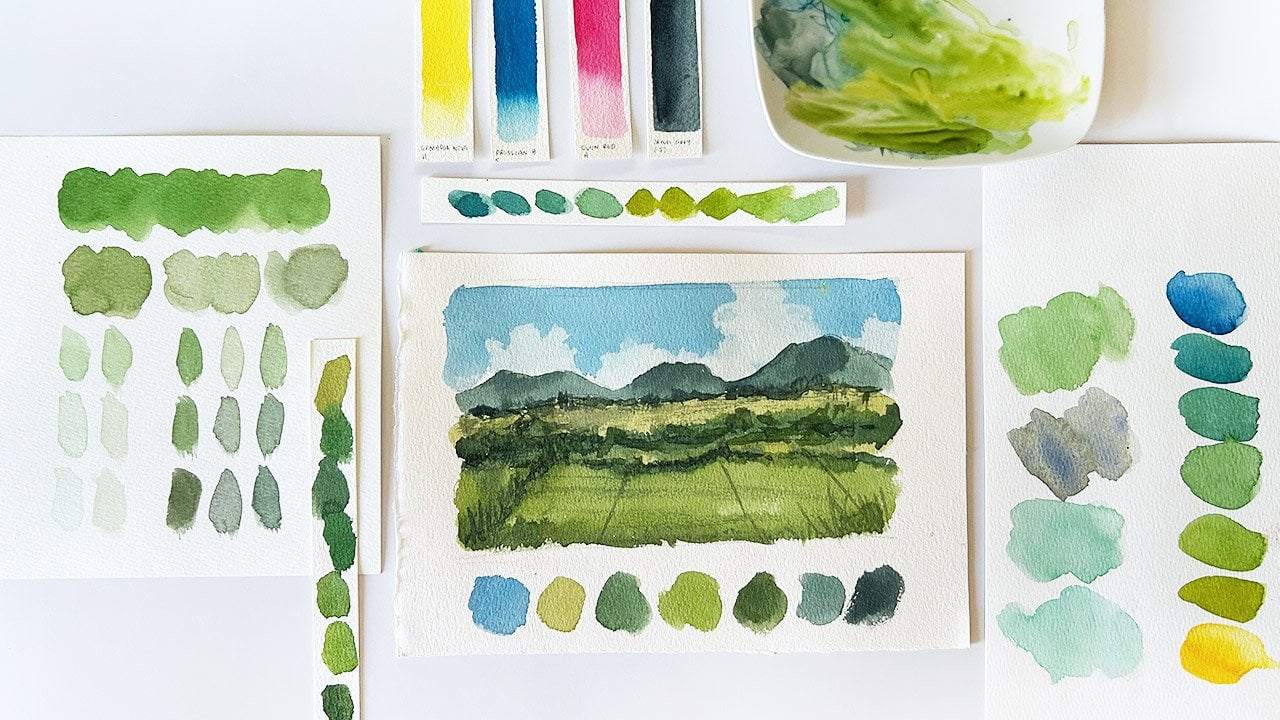
you're still here. Now we will paint
a small reward, so pick up any item that
feels rewarding for you. I initially wanted
to paint a tea cup, but I opted for this small
ceramic cup as a replacement. I got this from a
Japanese thrift store, and hunting items as cute as this is a small reward for me. So feel free to choose your own, or you can paint along. I know this is white, but I don't want to use
negative painting technique, so I will just change the
color into something I love. Purple. Then focus on painting its shape and use
this item as a reference only. Let's start with a
light purple and paint the overall shape
as we always do. We won't even bother recreating what's written
on this tiny cop. Let us focus on showing up, increasing our brush
or pen mileage, making little
improvements, and doing it daily again and
again and again. Okay. I'll mix darker colors
and paint the darker areas. We can use the same
color for the shadow. And makes a darker neutral by combining brown and blue and
retouching the top part. And then we can call it a day. An alternative prompt would be playing with split
complimentary colors. Here, I chose sap green with cadmim yellow and permanent
rose. A quick summary. When feeling
unmotivated, think of a reward and then
paint that small item. And remember that
we can also use positive reinforcements
to keep us going.
13. Day 6 - When We're Too Tired: A common misconception is that daily habit means one
successful painting a day. This is just so unrealistic, especially when
balancing work, school, or other responsibilities, unless you're a
full time artist. But I think that would be
a challenge for them, too. Some of my compositions have taken weeks or even
months to complete, since I only have ten
to 15 minutes a day. On days when you're physically
or emotionally drained, the goal is just to
maintain the streak, not to create a finished piece. I highly recommend 20 effort
tasks for these days. You can paint random
shapes or go abstract. These tasks require
minimal effort. They don't need to look good
and are easy to complete. The strategy is just to pick your brush and apply
the 1 minute rule. Tell yourself for 1 minute
and then I can rest. This small act keeps your habit going and prevents burnout. If you can push yourself
for that single minute, then you have
succeeded for the day.
14. Day 6 - Demo: Welcome to Day six. Going strong, aren't we? Okay, I mentioned 20 tasks we can do on days when
we're just too tired. Let's go for random
shapes this time. You can see samples I
did at the left side, and these ones are ones that
I painted when I'm just too tired and I haven't worked
on my daily habit yet. On those days, I still
pushed through knowing that even though I am just painting random shapes
like jellybeans, I am still adding to
my brush mileage. And if you see here, I am trying to leave a very small space
between the shapes. And that was so hard for me when I was just
beginning with watercolors. Pair that with a
limited palette, and once again, our color
mixing skills are tested. If you'll give this a try to, take this opportunity to test
out different combinations, give a second chance to colors that are
your list favorite and see if you can achieve shapes with narrow
spaces in between. And then call it a day and rest. Congrats on conquering day six. An alternative prompt for today
is watching muted colors. I just love muted colors. And here I went for raw umber, Indigo, and Sepia.
A quick summary. When we're too tired, choose zero effort tasks
like random shapes. And then remember
the 1 minute rule.
15. Day 7 - When We're Sick: But when you're sick,
like in my case, I usually suffer from
migraines and you know that you cannot produce
anything decent for the day, then do not try to create
something beautiful. Your standard for
the day must shift. I recommend the
visualization method when our bodies are failing. Imagine the action.
Before physically moving, I visualize the simple steps, getting up, picking
up the brush, getting my paper, preparing
my palette, and doodling. And then I visualize
completing the task and filed the satisfaction of having painted and conquering that day. Once the visualization
is complete, I actually get up and
execute the simple steps. The resulting art might be ugly, terrible and dull, but
that is totally fine. As long as I can sit up and hold a brush and I'm not in hospital, I will paint how I feel
through semi abstract work. It's impossible to meet high
standards every day anyways. The key is acceptance. Be kind to yourself when
you are not feeling 100% physically or emotionally. Except that you will make
bad R today but learn from it and simply paint
what or how you feel.
16. Day 7 - Demo: Okay, welcome to Day seven. We're halfway there. Let's
work on semi abstract shapes. Since we're trying to portray what to do on days
when we're sick, I will start with a
bigger flat brush this time to cover more space
quickly and get this done. I have no guide here. I'm just going to
paint how I feel. And since I'm not actually sick when I
was recording this, the colors are vibrant and
this piece looks happy. But on actual days when I'm
suffering from migraine, I'm just cribbling
with darker colors. And sometimes I use old brushes and really go hard and
push it on my paper. Surprisingly, during those days, I learned to appreciate my old brushes and discovered that they
can still be used. As discussed earlier, don't worry about
creating good art today, but focus on showing up and achieving brush or pen mileage. An alternative prompt
for those who love color mixing would be to
focus on pastel colors. These are a combination
of cobalt blue, opera pink, and lavender. What a dainty combination. A quick summary.
When we're sick, we should shift
our standards and just focus on showing up
and painting how we feel. Remember the
visualization method.
17. Day 8 - When Not in the Mood: Unrealistic expectations like
needing every piece to be perfect or waiting
for inspiration to strike quickly
lead to frustration, turning fun into difficult work. On days when you're not in
the mood to create anything, the goal remains, do
not break the streak. Instead of painting
a finished piece, you can focus on
testing your colors, creating swatches, and
then calling it a day. Initially, I didn't consider swatching as a productive
part of my habit, but I realized its
critical importance. Color knowledge. It helps you
test pigment compatibility, learn effective mixing and find your favorite combinations. Saving time later in the
actual painting process. Surprising discoveries. You can discover unexpected
combinations like cadmium red orange and ultramarine
blue for a gloomy sky, that you wouldn't have
planned using before. Personally, what began as a
Just get it done mindset, where I filled sketchbooks
of swatches actually led to significant improvement
and enabled me to offer these
color mixing classes. It may feel like lazy swatching, but consider it a vital part
of your learning process. So show up for yourself, grab your brush,
and start creating. Even if that creation
is just a color test.
18. Day 8 - Demo: Welcome to Day eight. I'm so glad that
you're still here. There will come a time when
that initial excitement will fade and we will not be in the mood to create
anything at all. I have so many days like that, especially after giving
birth to my daughter. My motherly instinct is telling me that the
baby comes first. But deep inside, I know that I wouldn't
want to stop painting, though realistically, I cannot paint anything
descent at that time. That's where I discovered that color swatching is the answer
to combat days like this. Testing your colors, trying out combinations you
haven't thought of before, taking notes of your discoveries
and being able to design your own palette is in itself
a rewarding experience. So for today, focus on that. Show up and do color swatches, however you like them. You can even go back to
the earlier doodles we created and remix
those colors again. Paint them beside
our mini studies. This might feel like
we are wasting time, but after filling sketchbooks
of color swatches, I can now feel that my
mixing has improved, and working with limited
palettes is easier. By instinct, I also know which pigments to pick to
produce a certain shade, any shade that I need
for my art project. It doesn't matter what
I'm painting flowers, portraits, landscape,
still life. I don't worry anymore
about my colors. So just have fun and
do your swetches. For alternative prompt,
try analogous greens. Check the color wheel and see what pigments
lie beside green. In this case, I chose
Hooker's green, olive green, and palo blue. A quick summary when
not in the mood, still decide to show up. Paint swatches instead and remember to lower
our expectations.
19. Day 9 - When Stressed: Seth Godin defines
stress as the result of wanting or feeling like you have to do two things
at the same time. You may not want to
do those things, but you feel the
pressure that you must. At the same time, your
confidence dips and you're not even sure that you can do
those tasks well or on time. I can totally relate to that. When faced with
competing priorities like painting versus
working overtime, I recommend choosing
which one to do first. If you choose painting
or drawing first, you can view it as your
daily mini vacation, a time to pause, meditate
and relieve stress. Then you can tell
yourself, okay, I will work overtime, but first, I will paint or draw
for a few minutes. If you choose work first, remind yourself of the mantra. Do what you have to do until you can do
what you want to do. The key is to make a choice and then immediately move
on to the next task. This eliminates the internal conflict
that creates pressure, ensuring your commitment to daily art making remains intact.
20. Day 9 - Demo: Welcome to Day nine. Time to work on another page. Let's pretend that for today, we're stressed because we
need to work overtime. The sun is setting
outside the window, and for this day, let's assume that we
will choose to paint for a few minutes first
before continuing work. Of course, I acknowledge that your situation might
look different. So just do whatever
works for you, okay? I have prepared my colors here, yellow, orange, and purple. Let's begin by preparing
the paper with clean water. Starting at the
bottom, going up, fill this wet area with yellow, then with orange,
and finally purple. Now switching to a smaller
brush and loading it with red violet to
portray some clouds. This doesn't need
to look realistic. Interpret the prompt,
however you like. Then mix orange again and use
that to paint more clouds. I am choosing a loose
painting style so that I can complete this
as short as possible. Add more blue to the red violet mixture
and use that to make the top part of the clouds darker since they are
receiving less light. Now you can either stop here or continue by
getting a paper towel, crumpling it, and using it to lift a shape that
depicts the sun. In this case, the sun looks like it's hiding
behind the clouds, and I think it's kind of cute, so I'll leave this
B. I'll just make the adjacent clouds
even brighter by adding more pink so
that the focal point, which is the sun
will pop out more. Then we can color it a day, and I can go back to work. An alternative prompt will be choosing two contrasting colors. In this case, we have paints
gray and cadmium red, and they really pop out
when placed side by side. A quick summary.
When we're stressed, let's choose which task to work on first and
proceed to the next one. We can paint sunsets or
anything that calms us down and remember
our priorities.
21. Day 10 - When We Have an Event: When you have a
big event and you know that that day
would be too busy, the problem isn't about
time, it's perception. Just as how we break down
long numbers like 00, zero, five, two,
three, three, 7692, we break it down to 0 005-233-7692 for
easier memorization. You can chunk your schedule
into small manageable blocks. This strategy works even on monumental days like
on my wedding day. Here are the steps
that we can follow. Analyze the schedule, review how the day's
timeline looks like. Then we can identify
the quiet chunk. Find a block that
is undisturbed, unrushed and safe from chaos. I chose the first
chunk of the day. I woke up 15 minutes
earlier than what I planned before
anyone else was awake, and then I painted
my wedding bouquet. Then we define the action. You should decide whether
you will paint or draw before or after the event. You don't even need
to start a new piece. On big days like this, simply retouching an old artwork for a few minutes
is good enough. I managed to plan and paint
during my wedding day, so I am sure that
you can do it too. Make a small commitment into any busy schedule by breaking
the day into chunks.
22. Day 10 - Demo: Welcome to Day ten. Today, let's assume that
we have a big event, so there's no need
for a new doodle. Just go back to the
earlier ones we did and retouch some of them or get an old artwork and
rework on that one. Let's say this camera
looks a bit flat and dull. I loaded my brush with pink, and we'll redefine the
shape of this part. Use the same color for the bottom bit and
retouch the strap. I have been retouching old
artworks every time we have a big celebration or we're expecting visitors or we have
a scheduled appointment. Let's just remember that we are still achieving brush
mileage by doing this, so we don't need to feel
like we are cheating just because there's
no new doodle that is added on the spread. You can stop here or you can also look for the other
doodles that need some retouching
like this blanket that really looks dull for me. I will add a glaze of a more saturated orange
on the shadowy parts. Then use blue violet and
add shadows here and there. I also find it more effective to work on my habit first
thing in the morning, on days when I feel like
I have no time for it. Usually, this is the first and most quiet
chunk in my schedule. But for those of you
who are night owls, feel free to do it whenever
you feel the most productive. Okay, I've retouched the pen and the tiny ceramic cop too. Now I can call it a day. An alternative color prompt would be going for
the earthy colors. Here I used idianGreen, burnt umber, and Gambochnova. Any earth colors will do, but make sure to add one
green. A quick summary. When we have a big event, let's analyze our schedule. We can retouch on old
artwork instead of creating a new one and remember
the Chungking strategy.
23. Day 11 - When Traveling: When routine is broken
by travel or busy life, we use a self
regulatory strategy called implementation intention, introduced by psychologist
Peter Golwizer. The strategy takes the if then form or creating a
mental contract. This counters common
goal hurdles like failing to start or
getting derailed. The formula is simple. If blank, then I will blank. Some examples of daily life, if I get home early from work, then I'll paint
before doing chores. If I have a long lunch break, then I will eat fast and
do a quick painting, applying it to my Japan trip, knowing that travel fatigue and spontety will
be the challenges. I made a clear and
simple mental contract. If we have nothing
to do after dinner, then I will paint while we're
planning for the next day. And to set a reminder, as soon as we arrived
in our place, I unpacked my things and placed my art materials
beside the bed. This mental contract
worked like a charm. It eliminated the daily
decision fatigue, asking myself,
shall I paint now? Do I have enough time? I think I'm too tired. You can even announce
your contract to others. Have your travel
companions remind you. Hey, I thought you said
you're going to paint after dinner while we're planning
for tomorrow's activities. This makes the intention
even more robust. This strategy works.
Give it a try.
24. Day 11 - Demo: Welcome to Day 11. Let's imagine that we're out somewhere and we are traveling. On days like this, it's
so easy to get inspired. Let's assume that I have just bought these two
lovely brush rests, and I will paint them
to remember this day. You can also paint a
photo that you took, a new food that you tried, a gift that you bought, or even something small from the place that
you're staying at. Okay, these brush rests are pretty
straightforward to paint. Let's start with their
basic geometric shape, a square for the top one and
an oval for the bottom one, and mimic the design that
we see with a single color. And then to add some volume, I will paint their shadows too. Depending on your
energy and schedule, you can keep this
habit short and sweet, so as not to really disrupt
the hype when traveling. You can also decide
whether or not you'll draw or paint something fairly easy or a challenging
and complicated subject with lots of details. Whatever it is, focus on keeping the habit alive and achieving
pen or brush mileage. As you can see here, I'm not too concerned about copying
the design 100%, but I'm also making sure
that I'm practicing my brush strokes by
painting thin lines. For the second brush rest, the background color is darker
while the design is white. But I decided to change the colors around since
I will assume that I'm either tired from the
trip or I only have a window of a few minutes to
finish this before we leave. I started with the light
blue oval shape and use the darker blue shade instead
for the design that I see. I'm even doing this wet on wet. But if I had more time, I would have tried negatively painting around
those dainty marks and let this layer dry to add another glaze of blue green. An alternative prom would be
going for an urban palette. I want for neutral tint, yellow ochre, and burnt
sienna this time. I've never tried
this combination, but now I'm loving it. A quick summary. When traveling, use a mental contract. I then paint something from your journey and remember the implementation
intention strategy.
25. Day 12 - When We Got Extra Time: When you find yourself
with extra time, the greatest temptation
is to binge paint, making it an excuse to
skip the next few days. I don't recommend doing this. This approach is ineffective. It's like consuming a seven
days worth of meals and then thinking that you
can skip the whole week without eating
or drinking anything. Habit formation demands
daily repetition, not sporadic intensity. Instead, we can
use our extra time for quality improvement
and completion. During those days when you
have enough free time, you can finish a
particularly difficult piece or try a new technique
like negative painting, glazing or layering
and softening edges. We must keep it contained. Still limit the session to 10 minutes or
whatever your schedule reasonably allows while
respecting your daily commitment. While I can now spend 3 hours on weekends
on a single piece, this only became
possible after years of daily painting and moving this habit higher on
my priority list. The rule remains keep your practice short
and do it daily.
26. Day 12 - Demo: Welcome to Day 12. Assuming that we've got
lots of extra time today, I would really encourage you
to take this opportunity to experiment and try
out new techniques. What I'm going to show you
today is called scratching. I've been wanting to do a full composition
emphasizing this technique. But first, let me share
with you how I do it. For this to work,
you'll need to get a somewhat sharp object and work on the paper
while it is still wet. I will be using a used up pen, one that doesn't write anymore. I am trying to paint a cute
little girl with big hair. I'll paint one part and make sure that
shape is still wet. Grab my used up pen
and scratch lines or design on this shape. It looks like I'm
drawing using ink, but what really happens here
is that the tip of the pen pushes the pigments harder on the paper, leaving darker lines. Isn't this technique fun? Since I am painting
on hot pressed paper, this will drive faster
than a cold pressed one. So I will work on this simple
illustration part by part. Now we'll continue
and add more hair on this character and do the same
thing over and over again. We're not in a hurry today, so take all the time you need to explore and try
out something new. Someone once told me that we shouldn't always do
serious art all the time, or what others call
all work, no play. Some days should be allotted
to playful learning, like what we're doing today. You might be wondering
what mixed media will look like or have heard about
negative painting or masking, or maybe you're curious with metallic pigments or pouring. Whatever it is that you've
been wanting to try, this is the perfect
time to do it. Now, if you can think of any new technique
that appeals to you, then I recommend you focus
on quality for today. Do some serious studies, finish a complicated piece, or try realism or detailed work. Spending more time
today doesn't give us an excuse to skip
the next few days. Habit building is about
consistency, okay? Not sporadic bursts
of inspiration. So show up for yourself, hone that talent
that was entrusted to you and be
surprised what you'll be able to achieve in the
next few months once you get the hang of working on your
craft every single day. For alternative color prompt, let's focus on
portraying deep jewels. I chose bright colors close to precious stones like
dioxazin purple, halo, green, and gold. I'm not really into
metallic colors, but doing this watch, I think I'll change my
mind. A quick summary. When we've got extra time, we focus on quality. We can even try a new technique, and let's remember to
still keep it short.
27. Day 13 - When We're Stuck: When negative feelings
like laziness, lack of inspiration, fatigue, strike, motivation can vanish. As social beings, for
Maslow's hierarchy of needs, we have an innate
need to belong, which can be leverage
to sustain our habits. In 2020, I found that connecting with fellow
artists became essential. I created a small group chat
where we shared progress, ask questions, and provided
non art related support. Getting a painting
body or joining a community makes habit building easier and a lot more fun. By doing this, you can remind
and encourage each other, hold quick painting sessions and share resources and
art related stories. If you don't personally
know other artists, you can join social
media art challenges or engage with the projects
posted in this class. Appreciating others work and realizing you are not alone in the struggle fosters the sense of belonging that
keeps you showing up. Let's use this class
to engage with each other's work and offer
encouragement to others.
28. Day 13 - Demo: Welcome to Day 13. When we're stuck, I recommend working with
something familiar. In my case, roses. I cannot count how many
times I've painted this flower ever since starting
my watercolor journey. So whenever I don't
know what to paint, even after planning
or researching, or when I'm not in the mood or when I'm questioning why I am even painting
in the first place, I will go back to roses
and just get moving. As always, I'd like to
start with its silhouette, focusing on the big shape first, and then load my brush with thicker pigment and paint
the folds wet on wet. I'll also introduce
the shadows early on to add volume to these roses. Okay, now I mix migraines using yellow
ochre and ultramarine. We can also add sepia to
make it darker and muted, and we will use simple
strokes to paint some leaves. But what if you don't have an object that you're
really familiar with? Then let's focus on painting something
that we really love. Personally, I find
myself painting cats cute to the cat illustrations
whenever I'm stuck. I also remind myself
to keep it loose, and I tend to avoid
realism whenever I'm stuck because it will only make the feeling worse if
I don't get it right. The goal for us is
to keep moving, keep painting or drawing and keep showing up no
matter how we feel. Few final touches, and we
have conquered this day. An alternative prompt would be working with
complimentary orange. So grab some blue and an orange. For these watches, I used cadmium orange and
ultramarine blue. The ones I used for gloomy
skies. Aren't they lovely? A quick summary.
When we're stuck, let's find a painting body. Paint something familiar and let us engage with our
fellow artists.
29. Day 14 - When We Forget: It is normal to forget a new habit if it's not
yet a top priority. I once jumped out
of bed at midnight, realizing that I've
forgotten to paint. To ensure that we
don't miss a day, we can use visual cues
or unusual reminders. Remember, out of
sight, out of mind. It's been my practice to place my art
materials where they are instantly visible
and easily accessible. This creates a constant
reminder and minimizes the preparation time for me
to start drawing or painting. We can also set
unusual alarm time. For example, 6:10 P.M. Instead of 6:00 P.M. This signals
specifically that it's time to paint. Don't worry. We don't need to do this
every day on days when we anticipate getting swamped
or easily distracted.
30. Day 14 - Demo: Welcome to day 14. Okay, for today, we will assume that we have
forgotten to paint, but that's totally fine. So let us paint an art
material as a reminder. I'm going to portray this flat brush and
a round tip brush, but it can be anything. A pencil, marker, stencil,
eraser, Ssurs, glue, special paper, something
that you could play somewhere visible to remind you to work
on your craft. Okay, the colors are pretty
basic for these brushes. I started with an
orange for the hair, desaturated that for the furule and went for a bright
red for the handle. For the other brush, I
mixed in a bit of pink with my brown so that it's not too dull and use it on the
hair and the handle. For the ferrule, I went for a light purple color and
laid down the shadows first. Then I'll retouch
the two as needed. As mentioned earlier,
it has been a habit of mine to play some of my art materials near
the workstation, so I will get reminded of
my goal to paint every day, and it has been
really effective. Adding some shadows to depict volume and retouching
the darker parts. We're covering the spread
pretty nicely, don't you think? How about yours? I'm so
excited to see your version, so don't forget to
share it, okay? For alternative prompt, let's
go for luminous palette. Pick any bright and light
pigments like aolin, permanent rose, and turquoise. A quick summary. When
we're forgetful, we can set an alarm. We can also paint an art
material to remind us. And then let's remember
to set a visual cue, like putting our art materials where we can easily see them.
31. Bonus: Day 15 - When We Miss a Day: Inevitably we will miss a day. I'm speaking from experience. But the question is, do we stop? Absolutely not. Don't be discouraged. The few days that you missed are nothing compared to the
days when you showed up. We use the Seinfeld strategy
for recovery and motivation. Let's mark our calendars. Get a physical
calendar and visibly mark each day that
you have conquered. An online calendar works, too. Then we build the chain. Our goal is simple. Do not break the chain of marked days. But how do we recover
if we miss a day? Do we reset to day one? Simply continue the next day. The length of your broken streak becomes the new benchmark
for you to beat. This strategy acts as
a powerful motivator. It's a positive
reinforcement to see the chain grow and a powerful disincentive you would want to avoid the pain of
breaking the streak, which acts as a
negative reinforcement. By consistently
marking your wins, the habit becomes
hardwired and automatic.
32. Bonus: Day 15 - Demo: Bonus Day, welcome to Day 15. Last day of our challenge class, but hopefully not the last
day of your habit building. Okay? For today, let's
paint a mini calendar. I'll start with a flat
brush loaded with orange to quickly
cover its base shape. And then let's try to
mix the same green that we can see here for the top part and quickly lay that down. It's also okay and acceptable if we don't
get the right shade. Now switch to a
smaller brush and retouch and use it to
work on the details. Adding brown to
my orange mixture and working on the stand, use that same shade for the shadow on the
left and lower part. This is also the same color that we'll use for the details. But since the calendar
is still wet, we can look for
something else to do. This bread has
some blank spaces, so why not put our
color mixing to test? Let us, once again, try to remix the
colors we used for the other doodles and fill
in the empty spaces here. One common complaint I hear from those who are just
starting with watercolors is that their patience is tested in letting
each layer dry. So I'm showing you one
way to conquer that. If you want, you can
use a hit gun or a hair or blow dryer to
speed up the drying process, or you can work on multiple
things at the same time, like what we're doing here. We're swatching
while waiting for the calendar to dry so we
can paint the details. This is a small version
of what I actually do, but when I get really impatient, I switch from one
project to another. Now that the calendar
is fairly dry, let's use a single
stroke to add the dates. I won't even worry about
making it legible. Just an impression of
the real thing will do. Let's keep it loose and don't get too caught
up with the details. Some final touch,
and we're done. How do you feel right now? Are you proud of
yourself for showing up every day? You should be. And if you have identified
some areas that need work, why not make it your next go? An alternative prompt for
today, it's a free day. Experiment with any
colors that you like. Since I loved how
the metallic colors look in our earlier prompts, I went ahead and played
with them a bit more, and I love the results. A quick summary. When we
miss a day, we continue. We can paint a calendar and remember the Seinfeld strategy.
33. Before You Go: Congratulations on
completing this class. Your journey to a daily art
habit doesn't end here. Continue painting daily until
grabbing your brush or pen becomes automatic regardless
of your mood or schedule. I also use the same
strategies we discussed, paired with prompts and a
calendar to build my habit. Let's remember our tools. When we're feeling tired, sick, or unmotivated, let's revisit
our list acceptable win. We can do swatches, doodles, or even go for semi abstract. When we're lacking motivation
or feeling lazy or stuck, let's try negative or
positive reinforcement, like the lazy jar
or a simple reward. And when we're too busy
or have extra time, we can do chunking
and remember that quality over quantity
is more important. So we can retouch old
works when we're too busy or try a new technique, but keep it short when
we've got nothing to do. I've included a
list of prompts for the next 14 days to keep
your momentum going. And I also have different
challenge classes that I published
here on Skillshare. So I hope I'll see you there. Let's keep the connection alive. We are painting bodies now, so don't forget to upload your project in the
projects gallery, and let's encourage one another. Your feedback and
reviews are also appreciated as I
develop future classes. Keep creating. And together, let's make this world
a little bit more colorful with our artwork.
 Bianca Luztre, Watercolor, Productivity, Color Mixing