Transcripts
1. Introduction: If you've ever tried
to design characters, you may have run into
something frustrating. You draw a character, but it's not clear who they are. Hi, I'm Maria Avramova. I'm a writer, character designer,
director, and animator, and I've been a part of many projects in both character
design and animation. In cartooning, clarity
is everything, unlike many other forms
of cinema and art. Cartoons often rely
on strong contrast we can guide the viewer
to understand the character before
they even move or speak. That's why I have designed
this class for you. Here we are going to
explore how to design good and evil characters
with very simple techniques. You will learn how
personality traits translate into visual design, how animals and shapes can suggest good or evil characters, how exaggeration and deformation create heroes and villains, how visual contrast help audiences immediately
understand the character. So I hope to see you in this
class, and let's begin.
2. Designing a Good Character Using a Simple Round Shape: Hi there, and welcome
to my lecture about character design,
good versus evil. Here I'm going to show you
some useful tips and tricks of how you can turn
your character evil and how you can make
them look good. So I'm going to start with a
very, very simple example. Just drawing a sphere. We are going to
turn this character the sphere into a character. I'm going to just start
rounding up the sphere. That's an easy way
to start sketching your character without worrying that the sphere will
not be a sphere. So this is going to
be our character. And now let's find out where the face and the facial feature of
this character is. To do that, I'm going to draw a line in three quarters
in the middle of the face. If you have been my
previous lectures, there I explained that this line is
signifying the sphere, the roundness of the sphere like a globe and also help you to find the middle part of the face so you can place
the features correctly. Now we are going to design
a good character here. What makes the character good? When someone is good, he or she are open,
they're childlike. They're cute. You can
describe them cute, likable. And what is more likable
than a kid a baby. Usually cartoon characters
always look like kids. We're going to
place the nose over here and I'm going to draw another horizontal line to signify where the
eyes are going to be. This is just an easy tip if you want to keep the character's
face symmetrical. Let's draw the eyes to large spheres like kids
eyes and another one on the other side and this
is a little bit smaller and squashed because there is a perspective change as
the head turn this side. Now we can draw the pupils and we are going to make the
character a little bit cross eyed because kids look as if
they're cross eyed because their eyes are so big in
comparison to their pupils, and that's why
they look so cute. And all the puppies
and small kids, they look cross tight, but if you see they're
not really cross tight and most of Disney
and Pixar characters are drawn this way. So you see those, you
immediately start liking this character without even knowing who
this character is. It's just a ball with a nose and eyes and large acute eyes. So let's describe what makes a character also
liable when they smile. We immediately react to
positive emotions and positive expressions on the face by mimicking this expression. So those kinds of expressions
make us feel good. So let's draw a character
that is smiling. And we are going
to draw a smile, a wrinkle here for the
smile so that it is more cartoony and also there is an application of perspective
here on the mouth, and we are going to draw
the mouth down and we are going to draw teeth
very schematically. It is a very common cartoony way to draw teeth like
that, and a mouth, we are going to close
the mouth like that and maybe even make some teeth
here and just fill this up. With black. Immediately, we get a
cute character that we already like without
knowing who this character is. We assume this character
is a good person. So let's build up on this
character, add some features. We are going to make a cute like bow and we are
going to draw some legs, draw stick figure legs
to start with so you can experiment a little bit with the posture and
the legs are open, he or she is standing
steady on the ground. Let's have arms directly
stuck into the bowl. This character doesn't
have really a body. And have the hands
being opened like that. We can assume that the other arm starts on the other side
approximately here, but on the other side
of the character. We don't see it where it
starts here and make this also open up here
we are going to draw something spherical
like the palm. And we are also going to
draw some thumb and fingers, just like a stick figure. This is the easiest
way to actually practice designing
any characters. Just keep it as
simple as possible. You will do the
complex things later. Here we're talking
about character, mood, posture, and
all this stuff. What else can we add to make
this character look good? But let's add some hair. Like flickering some
hair that is opening the character's
facial expression and maybe some ears and
maybe we can add eyebrows. Open up pouches and characters, are we assume that they're good. It doesn't matter if
this character is evil. All we want to do is represent
a character of openness, innocence, mood,
expression, which is happy. And this makes the viewer immediately assume that
this is a good character. Now, let's do the same thing. This is the end of
our first character. You see how simple it is. Let's do another simple
example over here, but let's make exactly the
same sphere, the same ball, turn it into an
evil character and talk about what makes
character looks. Evil. I'm going to do
that in the next lecture.
3. Designing an Evil Character Using a Simple Round Shape: So we are back. Let's now draw the same
kind of sphere over here. I'm going to do it in one paper, so we have the same
kind of characters, but this one is
going to be evil. So you don't need to strive
to draw to draw a ball like, you know, like super precise. Just be loose, you know,
with your drawing. I'm always talking about just being sketchy
with your drawings. That's how you will
learn drawing. No one has started
thought drawing. You started from
somewhere and improve and improve and improved
until you get better. The more you improve, you
will understand that there is always another level
of getting better. But now we are going to be
simple here and loose and just focus on what makes a character good and what
makes the character evil. Here we are going to
draw the same line. To signify the middle of the
sphere and the character. But this time, we are going to focus on features that would signify closeness,
evilness, basically. What do you think is when
a character is evil? It's basically untrustful
expression, angry expression. For that matter, we're
going to place the features of this character lower down when we see someone closed in someone really with very
untrustworthy expression. We assume they are evil, which is, I mean, everyone knows that we are very much a contrast for beings, we can be happy one day
and unhappy another day. But in cartooning, you need
to go to the extreme and make it look as if this character
is happy or constantly evil. Because in cartooning, usually things are pretty
much black and white. So to do that, we are going to draw a nose that hides the
characters facial features. Let's draw around nose. But assume that the
face is sunk down. So this is going to be
maybe a long nose and the character's features are hidden under this expression. What else we are going to do? We are going to
start the eyebrows from this point of
view and we are going to draw an angry
eyebrow expression. Making the eyebrows thicker will make the expression
even more clear. I'm going to draw very evil
and angry eyebrows and just color them or shade them black like that and connect
them here to the nose. The thing is that when you
design your characters, you are the one that
orchestrate the features. That's why when you want
to do for your character, for your books or
your animation, or you just want to
experiment with characters. This is something that you
need to decide for yourself. Now, let's draw the
big eyes again, but now we are going to draw
just half of the spheres of these eyes because they're
hidden under angry expression. You see that without
even having the pupils, the character
becomes very angry. You know that angry birds have
this very angry eyebrows. It's like look like
reminds of that, but it is very common. If you see all the characters, they tend to have larger
eyebrows because you can make the eyes and the shadow that fall under the
eyes much larger, making them look even angrier. What else can we do? Let's do some lines here of an angry expression
and the mouth here is sunken downwards. It's an angry mouth. Even though the face is round, you can see that this character appears to be an evil character. And now what else can we do? One thing to add to evil characters is
pointiness, like sharpness. You see where you
have to you can find sharp edges here is sharp edge. Here is sharpness. The nose is like triangular. Sharpness signifies, symbolizes something
painful like a knife. Adding for example, sharp
ears to this character. Make him look even more evil. So roundness, around features are associated with goodness, with softness. That's why we like cuddly
round fluffy animals. I mean, you can have
a very mean cat. But when it looks
fluffy and cute, you kind of tend to pet it. You cannot be angry at an angry cat because
it looks cute. You can't be angry at them. So here, let's have the poacher. What else signifies anger? It's a sunken poster. It's an angry
poster, closed down. You are not trustworthy and
you don't trust anybody. So the poacher is not open. It's actually the
other way around. You may be tighten your fists. For that, we're going to
draw a stick figure and just tight fists like
that and maybe you can make like a stick
figure of these thumbs and fingers as if you can see them in
perspective like that. What else can we add? Let's add maybe some hair. Another thing that signifies an evil characters
are deformations and things that are associated with something that
is not healthy, unhealthiness is something that we actually think
it's something evil, which doesn't have
to be, you know, it's just how we are because our biology
is looking for, you know, when you look at
someone where the stars, the movie stars, you see them, made up and healthy and young and you
assume they're good people. If you see someone
that has some kind of um that's why it's like the cult is youth and when you see people that have some
deformation on their face, you assume, yeah, there is something that
you can't trust them, which is all human nature. But in character design, we can take that kind of features and turn
them into characters. And you'll see, for example, in despicable me, Grow
has these features. He looks like very angry old guy and he behaves like that. So this is something that we assume that this
character is evil, but most of all, the characters posture and expression together with all the other features. Now we have our first two
characters, one good, one evil, and we don't have
the bodies and everything. We just started from a
simple ball sphere and went ahead in
thought process step by step in designing
these characters. Let's see how we can involve
this in the next lecture. I'll see you there. Okay.
4. Drawing a Friendly Girl: Designing a Good Character: Welcome back. So let's
go ahead and expand on knowledge from the
previous two lectures and now design a full character. How can you do that very simply? So let's start from what
we know around sphere. And now we're just going to make a stick figure.
That's right. So how do you design a good character
with a stick figure. What we talked about in the previous lecture
is that we assume that a character is good
when it has an open posture. So we are going to make the posture of this
character open. We'll have open arms, just designed very slightly
just a stick figure, the the spine is straight and open up if the character is
trustworthy to the world. Here we can make a line to
signify where the hips are. From the hips, we are
just going to draw two lines of the legs
that carry this posture. So they are not straightforward, but they are a little
bit tilted this way. And that makes the character keep the balance of its body. And this is the good character
that is open to the world. And when you see a character
that is open to the world, you immediately
want to trust them. You want to get something from their energy,
you like them. So let's also think about
who is this character. We are going to design a
different character than before. So let's start with
drawing or middle line. The best way to draw character
is not straightforward. It's a little bit
tilted from the side, when you want to take
a picture of yourself. You seldom want to have the
picture straightforward. You want to have from a
flattering angle and it's always one of your sides you think is better
than the other. At least I'm like that, and I think many others. That's how are the character. We're going to make
the character's face opened up to the world. Higher up and another
thing to think of when you draw good characters is
what are their personality? Besides that, that
they're happy, that they look cute? What do they work with? Who are they as people? Let's make a girl here
and let's make the nos. The little nose in the middle of these two lines where
the two lines meet, and we'll draw her eyes. And now she's looking
up a little bit. So we're going to have this eyes squashed
even on this side because of the
perspective change here and the other one here, and it is covered a little
bit by the nose like that, and it's on the line. Here that separates the upper
part from the lower part. And let's have this girl
looking towards us. One eye is crossed eyed and another one is looking towards us and shaded
slightly with dark, the eye looks good. And now we are going to
make the broad smile. This is a girl that
she likes to learn. She likes to go to school. She likes her friends. Uh, mostly she thinks
about things that she likes and how happy she
is about doing things. So good characters
are characters that are open to new experiences
and to the world. So you can put that in
their personalities and kind of go from there. Let's draw the
cartoony mouth that we drew before and some
cartoony teeth, and some cartoony teeth on the lava pouch and
shade that pouch. This is a very general
cartoony smile which you can easily draw and just get your cartoon
character already there. So now, at this time, we don't really know if the
character is a girl or a boy. We just put the
features that make the character a good character looks like a good character. From here on, we are
going to also draw some features that make
the character who she is, and why do we tell
that she's good? So the features that
the character take is usually represented
in their posture, in their clothing in the
haircut that they have. So let's have this girl be a
careless, sweet little girl. We are going to use
the same chunks of hair falling loosely
on top of her head. And now we are going
to make a long hair instead of short hair like with the bowl on the
previous lecture. So let's make an
easy haircut that is just a haircut falling on top of her face and going
around her head. So there is a chunk of hair. This is a simple way to make haircuts and don't need
to draw all the hairs on her head to make the
haircut and just expand that line as if
the hair is going behind her head and maybe
even shade it a little bit. Everything that you shade, on the character, makes it look as if it's
behind another shape. This shape that is shaded looks as if it's behind this shape. This is an easy trick to
make volume to characters. Now we have a good character. Now let's experiment with
what kind of clothes she has. If she likes to learn, maybe she likes to go to school. So we are going to draw just a form to give this
character some body. And this is also an easy way
to build your character, and we are going to draw lines
on each side of this line, it doesn't have to be
precise because these are just your guidelines for
where everything is. Now you have to really
feel and think, how do you want your
character to look like? Does she have normal legs, or do you want to have
more small cartoony legs or this is different designs. But we are going to go with
something in the middle. She's opened up and let's
make her arms here opened up, and let's give her some palms, open arms at the end of
her arm, spheres, spheres. Simplify everything. When you are a beginner, you're really just very
scared to make mistakes, and there is no
way you can learn drawing without making a
mistake is just a myth. Whoever told you has been
lying to you and yeah, you're doing it through a lot of mistakes, a lot of drawing, so we are going to make
some fingers here, and this is in cartooning, you have the character have just three fingers as if
four finger is one too many, but it actually looks good, and we are going to make three
fingers here or four with the tomb and place the
arms like open open arms. She is welcoming
everything in the world. She's curious. She
wants to learn. She's open. She's ready for
new adventures. She's awake. Let's give her some
proper clothing, a blouse, a sleeve
that goes up to here. She'll be like common girl
but very knowledgeable. Let's give her some
school clothing. She likes to go to school. On top of everything, we are going to draw a skirt and now we know
where everything is. Here we can do some
shoes on both sides. And the shoes can be like
these cartoony snickers and the leg is maybe
a little bit too big, or it is just perfect. Sometimes the foot,
not sometimes, always. Things that are
closer to us appear bigger than things that
are further away from us. Not too much, just slightly. But this is the rule
of perspective. This is also something we
train here as we go along and draw evil versus
good characters. Let's make the snickers, maybe some socks,
like the school girl. Now if you want, you can go ahead and maybe
erase inside of her body. Now my eraser is dirty
because I seldom use it. I don't use the erasa a lot
and I encourage you not to. But here we want to have
some design that is in her skirt and maybe have
this skull like skirt, design for this girl. So this is something
that you have to think about when you
design your characters, no matter if they
are good or evil. You have to think about
who your characters are. And that will define
will give you resolution about how
they're dressed, how they carry themselves
and who they are. So we are going to just thicken
the character's features. Now that we have drawn loosely, this is something that will
enhance your character. Everything is in place now
and the character looks happy and good and a happy little
girl that we can trust, and we can yeah, we say that she is
a good character. We can give her some, some kind of cute features like that and graphic elements that will enhance
her personality, looking good, looking
young, looking funny. And even though she is
not a princess character, because you
associated princesses they are always good characters. No, this girl is goofy. She is studying a lot. She is not really a
character that you like. She's the queen of the party. No, she is a girl that likes to study and she cares
about her friends. She's friendly. We give here the
texture of her socks. You see that when you draw loose lines
and on top of that, you draw the lines thicker, you don't see the
structure here anymore. It doesn't really bother you. This is our good character. In full body, I hope you
had fun with this lecture. Don't worry if you don't
get this from the first go, you just follow and
do another character. It is going to take some
time or for some of you, I hope it just goes from the first time I'm
doing it step by step. But now let's go and draw
our evil character here to see the step by step thought process
about how we go about. I'll see you in
the next lecture.
5. Drawing an Evil Character: Designing a Villain Boy: Hi there. So let's go ahead and draw the
evil character here, the same way, drag
drawing a stick figure from the sphere and
the head that we drew. But this time, we
are going to think, who is this character that is evil and we
are going to use the same principles as in the first lecture for
drawing evil character. So we're going to draw loosely the sphere and we are going to draw the middle line again. Here. But let's draw
the pouter first. For an evil character, the poutre is basically
shrunken posture. The shoulders are shrunken. The pouter is closed up. The character does not trust
anyone and the hips are moved forward as if trying
to protect his stomach, when we are upset, we shrink in shrunk
down and the pouch becomes more closed in there trying to protect
our inner area or stomach, not to be exposed too much, not open to the world. Everything signifies
that this character is sad is untrustworthy. The arms are not open. They may be just hanging
next to the body. He doesn't want to see people. He doesn't want to open up, he doesn't want to do anything. He's not curious. He is
stuck in his own views. Who is this character? Who thinks like that? Who does these things? Let's think of a personality. We don't know who
this character is. Let's first do a face that is slightly higher up
than we did before, so we can see his features but much lower down because his
head is tilted downwards. From here, we are
going to start a nose. Let's have a pointy nose. You remember that sharp
things signifies danger and they are also features
of evil characters. A thin sharp nose will
make this character evil and untrustworthy at once. We are going to make
eyebrows that are angry. Let's make thin eyebrows to start with until we discover who this character is and the eyebrows are angry
towards the nose. Now let's have some kind of a dialogue towards with
these two characters. This character will
look at the girls like, What are you laughing at? The world is mean,
the world is evil, and there's nothing
to be happy about. These characters
are not trusting. So their posture shows that when you draw
such characters, choose posture that signify
untrustful characters. So he's looking at her, and we are going to make
his pupils smaller, just to get away from
the child like, um, the child look the cute look, we are going to make the
white of his eyes larger, the characters that just open up their eyes
and they look evil. They don't look cute anymore. The pupils are smaller, the eyebrows are hanging down and this is going
to be maybe also. A character that sits at home
and don't go out so much. So he's not fashionable. He is just standing
in his old ways. Let's make him as
young as her, though, so you can see the difference
and his mouth is closed. And what else can we do to
make this character more evil. We are going to start maybe
with some haircut and just have a hair here front sharp towards
angled towards the face. This is a boy that
is maybe unhappy. That's why he is evil. If you try to find out why
the characters are evil, you're layering more features on top of them and make
them more diverse. It's not just he's
evil, just like that. He's evil because maybe he
has had unhappy childhood, maybe he's been brought up
in unhappy circumstances. Let's get this going
and we are going to make his body sunken down. Let's just create a body that is leaning this way and
let's draw the legs. Here we are just shaping
the thickness of the legs. We haven't decided yet
what he's going to be dressed and we are just going to thicken
this stick figure. We have some flesh to work with. But we already have
the construction there and things are just
changeable as we go along. So what else can we do to
make this character Evo is that he's stuck in
old ways to do that, we can design some shirt
that is out of fashion. It's old fashioned. And for such a young character, he wouldn't wear such shirt. We are going to put him in such shirt like maybe, you know, a triangle here on opening
here like the way that old man dress which was maybe very popular in the 70s
and 60s, but not anymore. Put him in such clothing
signifies this guy you know, is not open for new trends. He doesn't care about
looking good or merging in. You know, he wants
to be left alone. He he doesn't want to
play with other kids. And maybe something
like despicable me, for example, his mom
never trusted him. He never thought he
was good for anything. And this turned
him so disturb him hateful towards other people. So we're going to
extend the sleeve. Here next to the body and
let's make his hand falling down make the fingers
just like a shape and here this hand just like
a small shape like that, two shapes and then
just two lines. That's it. And this hand
should be turned towards us, make the thug and two lines, that's enough to create a hand. Try to simplify everything. Don't make everything
too complicated. Simplify and combine
one shape with another. And here we think about posture, we think about clothing. We think about who
this character is. So we're going to
make this clover that is old fashioned and
maybe old fashioned pants. He doesn't have jeans. He doesn't dress in jeans. Jeans is too. Yeah,
it's too popular. He doesn't need to or his mom
hasn't bought it and that's why he feels that he
is not merging in. We make his shoes even larger, his feet larger as if he's
wearing old fashioned shoes, but they're also maybe
his dad's shoes. He doesn't have new
shoes and these are elements that makes
him hate the world, things that he can't have
because others have it. Think about the psychology
of your character. Every time. Now, let's continue
with his facial features. Let's make his ears
maybe slightly pointy. Here we don't see the other ear and the hair got old fashioned, maybe just point above the ear and extend the
hair slightly above the line of the head that we already drew
because the hair has volume as well and it frames
the face pretty well. You see just this pointiness, just make him look more sharp. The sharpness really takes
away from the cuteness. And this is another thing. These are two characters, maybe from the same school, but they have different
perspective of life and to the viewer that
represents something. So that's how you go about drawing evil
versus good characters. And now we are going
to shade the pants. They are not chins.
We don't need to have any specific
elements on them. You see that you
can change really the shape of the
legs at anytime. The stick figure is there to
help you find the posture, and then on top of that, you find your character, you shade it and it looks
like as if it's one shape. And here are these lines
that you have underneath, they don't really
bother you anymore because when you have found your characters and you
thicken the other lines that are important for
the character designs. But if you want, you can go and maybe clean up your character, put it in Photoshop or maybe
another digital software and just clean it up and redraw
it to make it better. Now we have two characters starting from a sphere and
they have different design, different feeling
to it and you can easily take a liking to one
character versus the other. I hope this was fun. Let's continue with
another example in the next lecture.
I'll see you there.
6. Drawing a Bunny: Creating a Good Character: So I hope you had a nice break
from the previous lecture. Let's continue with
the next lecture. Here we are going
to draw good versus evil character
taking some animals, and they trade to enhance the goodness and the
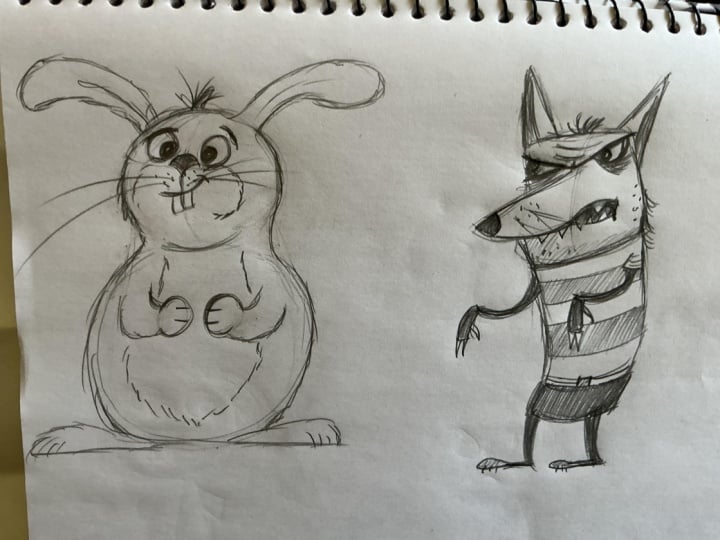
evilness of our character. So we are going to draw a bunny. I mean, what's not cuter. What is cuter than
a bunny and what is better and more
good than a bunny. We're going to start with the sphere and
just draw loosely. You see how I hold my hand. This is the secret
of drawing well, drawing loosely, drawing messy. We are going to have our
bunny and write off, we are going to design
the bunny's body. So another feature
that you assume that the character is good is when the character is more fluffy. We like warm and fluffy things. We like fluffy animals,
around shapes. It feels safe, and that's why it feels that they're good when
we talked about the cat, you know, you can't
even if the cat is evil and want to bite you, you want to pet it because it looks cute, it looks fluffy. So let's get that feature. To design a good character. So when you have an assignment and you want to create a
character that is good, you can start with just assuming animals who are
liable to start with. So I've designed I've drawn the head and the
body as one blob, and I'm just going to draw some lines for the legs
just as a structure. This is basically enough to start building up
your character. So let's start with finding the helplines that will help
us build that character. And animals are not
as different as, and not as different as humans
in designing characters. In fact, to design
atun characters, we put human features on top of the animal features to create believable characters that
we like because we associate always with characters that
look like us, like humans. So here, I'm going to draw a line for the
placement of the ear. And the other ear, I'm just
going to draw another line, and you can follow me in
that drawing structure. So a good way to learn drawing is basically
to repeat someone drawing and then
you will understand the thought process behind
what I'm doing basically here. Let's design a good bunny. What we want to do is have the
bunny have big white eyes, gullible, able ice and
we'll have this bunny nose. So it doesn't matter
how the bunny nose looks like we will try
to make it liable. So we'll have a small nose. Let's design round childish ice on top of this middle line. To create a more
childlike appearance of the body of the bunny and
let's draw the crossed eyes. Crossed eyed pupils and
shade them a little bit, so we know everything is
in place and round up the eyes here and we have the nose and now let's
create the mouth. We are going to create
a cute little mouth slightly twisted to the
side because like say, small sneaky smiles on
good characters look cute. The same sneaky smiles on evil characters look extra evil. Isn't this interesting? So we are going to
have a wrinkle here signifying that there
is a chunky check. And also, to make this bunny extra cute and add
some bunny feature, we'll add some large
teeth on the front. And our bunny characters
character start shaping up. Now, let's enhance the checks. We are already seeing them over here because
they are part of this sphere and let's
round up the bunnies. Head now we have the helplines, and let's draw the ears. Again, you know,
the good character has round ears soft and around which symbolizes
safety, safety and cuteness. Babies are soft, small
animals around and soft, and that's why we like them. You take care of them
if they weren't so soft and so cute, maybe that would be extinct. We wouldn't take care of them. And this applies to
character design. The character designs
that we like are rounded. They have softer features than the character designs
that are more sharp. We'll have a chunky bunny and let's give him more
of a bunny features. Now we are not going to
make a character that has this open gesture. Instead, we are going to make his pause closer to his body. Cuteness. We are looking
for more cuteness. To signify what the
pause are going to be, we are going to make two round spheres approximately below his face and just make small
arms here on each side. To signify that these
are the bunny's arms. And here, when we already
define the arms and hands, we are just going
to make two lines, and we are going to
get small bunny pole. And this is our cute
bunny already shaping up. And now let's make
a real bunny feet. Like that. And from one side and around them up here
and another foot here, round it up and
connected to the line. And it is almost done. Now, let's add details to
make the pose of the bunny. Here, we add one, two lines and here
one and two lines, and we've got a nice bunny pow. Here maybe we'll add some fur the center of the bunny
usually is even fluffier. Let's add four you add
four by just drawing these small triangles in the direction of where the fore is so inward
towards the body, will extend the
arm a little bit, we know that the fore
and the fore area here is below the
body, below the arm. Like that. Now let's define
this bunny even more. Just make it blacker,
press a little more, change pencil to softer
pencil I have here six B, which is pretty soft. The more the higher the B, the softer the pencil, eight B is even softer, which means it gives
you blacker lines. Thicker lines with
less pressure. If you have two B, for example, which is commonly
sold in the stores, they are kind of very hard, and the lines that you
make are very pale, so you can't make a very
thick lines with them. So we're going to give the bunny some chunks of hair
here to make him even cutter and we'll give him some texture for
the whiskers here, the bunny whiskers, which
will make him even cuter and maybe give him some fur
here as well on the cheeks, it has furry cheeks and even on the other side that goes
out from the bunny's face. We have this cute little
bunny and there is no way in the world we can think
that this bunny is evil. It is just a cute
a nice character. This is another way to approaching your character
is perceived as good or evil is to choose an
animal or a character that is already assumed to
be good to be cute. Cuteness is associated
with goodness. Yeah, no matter if you can, if the character is
even evil, is cute. So yeah, and then we
can have some eyebrows and eyebrows are tilted
upwards like innocence, happiness, a wonder
towards the world. That is what it symbolizes. So that is our good character. Now, let's go ahead in the next lecture
and find an animal that we assume is evil from the stories
from our perception, and we'll do that in the next lecture.
I'll see you there.
7. Drawing a Dangerous Wolf: Designing an Evil Character: Hello, there. Now, let's draw the evil animal
character here. And that will be, for example, a wolf. Yeah, we have the red
riding hood and the wolf. The wolves are always
evil because they eat bunnies, they are evil. Let's do a different kind of character approach
for the wolf. We can start with adding a longer face not using
the round shapes. We'll see how we can get
this character to look evil. Immediately, we are not going to place the cute features
inside his face. Instead, we are going to
make a large nose that is also an a triangular nose
like that immediately. I cartooning characters,
the designs you choose, they can be anyway
you want them. You don't have to follow
some rules really. There are so many ways to
design a character and the characters you used to live with and see on Disney films. It's one way, but there
are also many other ways. So I'm encouraging you here
to do different approaches, and this one is kind of like using the approach of
having one flat surface or one part of the wolf
being here and his nose sticking out just to make him
more sharp and more evil. So we are going to
around them up a little bit here in a very angry mouth. Also, we are going to make this wolf being just
one shape and just tilt his body like that
and we are going to make the wolf
actually, a skinnier. I mean, he's not going
to look like a wolf. He'll going to
stand in two feet. We are going to
draw his two feet here and they're going to be a little bit crooked, smaller, we're going to exaggerate
his body and look the wolfy look he's going to tilt
his claws like that. He's not going to have
the cuteness of the bunny and hold his paws over here and he's going to be a dracul showing his sharp
teeth like that. We are going to just start
by drawing this pouch, the dracula pouter with
very simple lines like that and we have his skinny
body and his crooked body. You remember we talked about the body being
tilted forward, is not open to the world. He wants to be scary. He wants to scare out little
bunnies, for example. So here, how do we
build the eyes? We are going to approximately
have the line over here. And just to start with, we are going to add
the angry look of the wall by already drawing the angry eyebrows and
we are going to draw the half eyes on both
sides to make him angry. And we are going to
make the pupil smaller. Remember what we talked about, that means that we
have more exposure of the white of the eyes and people who expose the whiteness
of their eyes. They look angry, scared, evil. They look on edge. People and characters
who look on edge, they assume to be evil. So let's just flatten
this wolf's head even more and now give him
some pointy ears sharpness. We are looking for
sharpness here. And here we can add to the
other ear some sharpness. So if this was a
cute little wolf, it's probably going to
have a round face and the ears would be
somewhat softer. Here we are going to have him
maybe give him a wrinkle. It makes it even worse and just an angry this eyebrow here. Maybe that's too much,
but let's experiment. Let's now draw the nose of this wolf here up front
and now connect the nose. To the mouth and he
has an angry mouth and the mouth is slightly
open and you see that the nose actually
looks flat on the surface, and this is allowed in
coronic characters. Now let's give him
some sharp teeth, very sharp teeth, and just
maybe two teeth here as well. And just shade the
inside of the mouth. That's why the teeth look even sharper because they stick
out from that shape. And yeah, give him some of
these dots like the whiskers, but they are not happy
whiskers like that. Well we forgot the whiskers
of the bunny hair, like that. A little bunny cute whiskers on these whiskers are
not happy whiskers. They even point
downwards and upwards. They're sharp,
they're not curvy. Everything that you
can think of to make the character scarier,
use these features. And here, we can even give
the wolf some eyebags. Eyebags make the eyes, the white of the eye
pop up even more, and it ages him as well
when we haven't slept, for example, we do not we are
not pleasant to be around. We are even evil, so the eyebags are a sign that
something is not healthy. The wolf has been thinking
all night who to eat, how to eat the little bunny. As you go, just refine your
character, thicken the lines. Think of new things
to add as you go and just improve
prove improve. Here we have this
body connected to the wolf and let's give him some pause we said he's going to be with
close like that. So to do that, always simplify the shape, create a round or
rectangular shape and start by giving him
some clothes like that. In cartooning, everything
is possible and for you to train how to make cartooning characters
evil and good, choose the easiest way around. That's why I have
designed this course, which is much easier. It doesn't have too many roles. I hope you think so and I go step by step explaining
everything I do. So let's give him because it looks like he
has some kind of shirt. Let's give him this jumper, like thiefs in the movies, you have this thief with jumpers and just
thicken the lines. On around the stick
figure lines, it's the easiest way and you already start shaping
up the evil character. So let's give him maybe this checked or line kind
of shirt and very, very small lower perch a bigger upper parch
all the way down. Here is the end of the sweater like that and
some lines here as well. He is always cold and also
he is skinny, you know, I mean, what else does it tell you mean
skinny wolf is hungry. I mean, we are evil when
we are hungry, right? I mean, I am. So yeah, people on a diet
are not very nice. So use that as a trait. I mean, someone on a diet, a skinny person on a diet. Yeah. Um It can make you evil,
even if you're not, the bun is not evil, is fluffy, well fed. That's something to
think about as well. Think of all the traits you can think of to make
your character. Look the way you want them to. What else does it make you, evil or angry or sad. Put Doc in your
cartoony character. So we're going to have him
dress black pants like that, like a criminal, kind of not
black pants is criminal. It's just that he is
not really like a wolf. Well, make him some small ps. He's not going to have shoes. But here it comes
some wolf kind of features and some cloth
even here as well. Whatever you can add
some sharpness to your evil character, do that. And yeah, you can have
some idea around it. You can even make him have
some knuckles here for the design depending on how involved you want
your design to be. You can add some knees that can exaggerate even this shape, to make it more sharp, give him more sharpness, even more than what
you already have, maybe give him some belt
here because now he has dresses is dangerous
wolf with a belt. Uh, yeah, dangerous,
hungry wolf, on a diet. He hasn't had bunnies. Maybe, maybe he went on a
diet eating just vegetables. And now he's become evil. Why why has this
world become so evil? You can think of some
stories around it, or is this character
lonely, the wza lonely. So he's not used to
human interactions, really, so all he
cares is himself. And that's why he doesn't care if the bunny is
cute and likable, he hates cute unlikable
things. They annoy him. You know, how people
when people are upset, seeing happy people
just annoy them. And that's what the world is. Find all the kind of features
and traits that you can think of to create your character and maybe give him some abnormalities here. So hairs like that
sticking out evenly, people who and characters who doesn't take
care of themselves. It is a sign of mental
mental health really. And you don't know
what mental health is, ma we do not make fun of
people with mental health. But these kind of abnormalities on the face and
unevenness on the face of your characters just suggest features from the get go that this character is not very nice and he doesn't
take care of himself. He just wants to eat fluffy, small bunnies. And that's it. You see the difference
between these two characters and the thought process we
went about to creating them. Now, let's design
some more characters and I'll do that in
the next lecture.
8. Drawing a Princess: Exaggerating Beautiful Features: Hello, there, and welcome back. Now here we are going to talk about exaggeration
on both sides, how to exaggerate to make
a character good or bad. We are going to start with
the good character as usual. And let's talk about
let's draw a female. We are going to
start with the face, and here we are going to exaggerate the
female's features. To draw a good character. So we're going to start with a shape like an egg like that. And we're going to draw the body by drawing
the upper part, draw the neck on one side
like a stick figure, draw the part of the
chest with a line, connect that line with
another line a spine and draw another sphere
to signify the hips. Now we are going to draw the long legs just
like stick figure. Two legs that are a little
bit tilted inwards. Now, when we draw
good characters, we exaggerate their
positive features. If we assume that we look at female with small waist and long legs as
something positive, we exaggerate those features
in a cartoon character. We draw her legs even larger, her waist, even smaller. Well, I think that's
probably have to change because these
are not healthy features, but let's just see what the standard looks like now for designing good characters. They need to exaggerate
their tender features. Let's draw a line to signify
the facial symmetry here and a line approximately
on that side to draw where the noes are going
to be ND eyes from here. We are going to start by drawing the little tiny nose
and large eyes. Even if she doesn't
have such a large eyes, we are going to exaggerate
the feminine large eyes, and we are going to make
mark where the mouth is and just draw a tiny
cute little mouth. And now let's draw
the pupils inside the eyes like a
child kind of eyes, crossed eye and enhance
the features of the nose. And now let's enhance the upper part of the eyes
because it is an older adult. We don't want her to
look like a baby. We want her to look like
a baby with the eyes big, but just enhance her upper
lids to make long eye lashes. And just a lower leads to
enhance the lower eyelashes. And now we are going to slim the face a little bit
around this egg shaped. And now let's add some hair
few strokes, it's enough. We have to draw everything
together when you draw a good character,
especially female. The features become a
little bit more difficult because symmetry
requires more precision. And that's why I enjoy drawing bad characters because you
can twist them around. But let's get on with it. So here, we are going to
give this girl a waist. Let's draw a line where the arms are
going to be on top of the chest area and
just a line to signify the arm here and the
other arm on the other side. Now let's draw her waist by just defining where
the chest are going to be and give her a really small
waist and her chest here. Now, let's draw maybe some kind of a
princess or something. We don't need to draw her
legs here, draw her dress. Let's give her some fashionable, maybe Chanel kind of
dress that goes down. So we dress her like a mannequin and make
the dress go out here. I mean, character
design go hand in hand with really cloth design. That's really fun part. Now let's give her some heels. Or just the tip of the shoes that we
may see that's enough. We can give her
even smaller waist. Now let's design
the dress here with some puffy sleeves like a
princess and thicken head, her hands and give her some small hands on
the end of this line. And the other one
on the other side is going to fall
behind that dress, and you can always
move the features of the hand when you are done, when you feel that well, she needs to her hand
needs to be more behind. So it's a very simple way
of drawing a princess, basically, a good
female character, let's give her some cleavage
here around this area, I mean, it's very easy to draw when you have placeholders. So whenever you want
to start a character, just draw the placeholders, the stick figure,
the round shapes, where the hips are
where the line, where the shoulders are don't complicate it with
just starting from the get go with these shapes. Now it's easy to basically
just draw her shape, her hair, maybe, I don't know, give her some bow here or just a part of the hair
falling like that, very cute. The thing is that when we
see symmetrical features, the more symmetrical
the features are, the more we trust. That person or character, we assume that this character is going to be a good character. Maybe sometimes we are
out for surprises, but it's not really like that. That's good to know in films. If you draw a book or
something or your character, that maybe you can break
this pattern by turning the character into
a pretty character into an evil person. But anyway, the things that make the character evil
or good is basically their expression because
even a pretty character can look evil when they have
very evil expression. Here, what I'm doing is just making some chunks of
hair, shaping her hair, and shading this place the hair, the thickness of the
hair that goes behind her her head to
create more volume. Now I'm going to draw her innocent eyebrows,
thicken the features, give her some lips like that, and you can add as many patterns as you
want there on the dress. Maybe if you want to clean
up now, the stick figure. She is more clean and
just enhanced features. Now we can be lazy
and maybe draw some princess dress and give
her some ornaments here. The how the dress look like, maybe some patterns, maybe
she's the bride on something. And she looks nice because
she has this expression. She has the open eyes, the cute eyes, the symmetry, the innocence of expression
and youth and symmetry. So this is one way to draw, especially if you have
stars of your characters, the stars they need
to be likable, the stars of the show,
the stars of animation. Usually, they are the most beautiful symmetrical
people in the show. But that's starting to change. But as I said, this is all exaggerated in a way to make
the characters look able. Now, let's exaggerate
the other way around, making a female character exaggerate her to look
as an evil character. I'll do that in
the next lecture.
9. Drawing a Witch Character: Exaggerating Deformation: Okay. Now, let's exaggerate
the other way around. Just have a female character, which we deform and exaggerate
to make her look evil. So again, when you
draw evil characters, you try to make them
disproportionate and deformed and add
to the postures in a way that they would
look, um, threatening. We are going to
make a lady that is rather large here I'm
going to put her head, draw a sphere or an egg also, but draw the top of her torso even larger
sphere and maybe draw her hips smaller and
her legs, even smaller. And she is going to
be ready for fight. She is a heavy woman
on the upper part, exaggerate the upper part. She wants to put things
right and she is very angry, we are going to have her
posture be up this way, but she's not going
to be sunken in, like said, but she's going
to be aggressive, angry. That's going to
make her look evil. So we are going to put her arms like that and maybe already, we are going to put her in an angry pus by just
drawing her hands and enhance the hands with just the stick figure with just the lines and
her legs here. This is basically enough to give us some character features. Now, let's start
designing this character. Let's place the nose
higher up just to give more space for this area here that will give
her a double chin. Let's make the nose
as large as possible. Try to deform and twist her features in a way
that she will look basically very evil
or disproportionate. So we are going to
make the nose larger front and smaller and the back just like
some kind of a bird, maybe, and we are going
to make her angry face and we are going to
give her these round eyes. Now even we don't see the
eye on the other side, just draw this eye
here and now let's draw her mouth higher up why Because we want her
to have this double chin. So so we are going to draw one
mouth here, one line here, and we are going to
draw another line, just lower down and make
this angry expression. Just make her teeth show up the same way that
we made a smile. But this time it just twist the mouth downwards instead
of upwards like a smile. This is very common way to basically show
anger in characters. Let's give her some
deformities here, some unevenness and
exaggerated expression. She is angry with
this little girl and let's give her a couple
of double chin layers of fat. As we can imagine she has not taken care
of herself or something and just exaggerate everything that can push this
character to look angry. And we are going to
give this haircut of curled hair while she has tried to look
good or something, if you think of an
angry neighbor. Everyone have had
some angry neighbor that is always annoyed with the way everything is going and you can imagine how this
angry neighbor looks like. It's not really the appearance, but all the appearance is basically exaggerated when
they are angry at you. Our faces do not look pretty when we are
angry, basically. So exaggerate that make it disproportionate to
what it actually is. So we'll give her some maybe some ears that
you can see and even, you can give us some earrings, something that is
not very tasteful. To exaggerate this balance
of this character. Now let's draw her body. Now we have this
upper part here. Let's exaggerate it, so we have the chest and just connect it to the lower
part of the body. That's all you have to do
and draw address here, here, just round it up to this part of the body
and give her a dress. That's all you have to do. Now let's define where
her chest are going. There is a volume on this chest. If you want to make your
catal moti dimensional, you have to try to find
these lines where the volume plops out like we
do with the face. And we can round out the fist, just make her thumb here. We see the squeezed fingers and we can have the
hands and here, the thumb goes in here and all you have
to do is just one, two, we're going to make a
normal hand here for her. And with here is
too many thinkers, it happens easily and
basically you're almost there. So let's round up
the arms around this stick figure around this stick arm and just
give her some bulkiness. I mean, here, this shape
here is already nice as her just pointing
her anger at this girl. So she kind of almost
looks like a man, like an angry animal
or something, like a buffalo that has
this power pointing at the little girl and her posture is determined
to basically do harm. And just shape her chest here
and let's draw her feet. We can have these
chunky legs like triangles and some kind of
disproportionally small feet. You can do that by just drawing
some triangles like that for the heels and you see how silly it looks on her
and small angles, that makes all her body
even more disproportionate. If you want to to make something look bigger
than something else, just make something in
relation, much smaller. You can if you want to just
clean up a little bit or just get your drawing into some digital to shop or procreate, if you want to clean
it up, color it. Give it some more texture
or anything else, but you basically have your
character already in place, maybe you can give her
some large necklace. She is this woman is
entitled of her opinion. She is important and
that's why she is angry. Um, something like
that exaggeration that makes the character
look less pleasant. Also you can give her maybe
some facial abnormalities. Something like that, a hair or an evil which
has abnormalities, something that will
make her less liable, that will draw the
attention and just work in a subconscious way that
she is not very likable. So it can shade the hair a little darker so we can
see the ear here with a big earring hanging out
and that is basically it. The harder part is
actually drawing harder than her because here
you can twist the shapes, you can play more
with the proportions, while in this case, you have to be more careful and gentle with the
proportions you do. But that's just another example.
10. Planning the Scene: Creating a Composition with Stick Figures: Hello there, and welcome back. Now we are going to
take another approach to good versus evil character, and we are going to create
a scene basically of our characters with
a heroic character and an evil character. So to do that, we
are going to draw everything first with stick
figures as we've done before. It is very easy, especially if you are a beginner and even if
you're not beginner, I still do that all the time to draw your scene and
place your character. Your characters in the
scene with stick figures. We're going to have
a heroic scene where a character is being
attacked by a dragon. And to do that, we need to know where everything is placed. Draw the little character
with just a stick figure ahead and we are going to
draw the heroic pose first. W line signify
what the spine is. The spiny is open, here is going to be or dragon. And the character is
defending himself. This is the character's arm, and this is the
character's fist. From here, we have the
swarge of this character. Now we can place the pulse. The character is keeping
its balance with one leg like that,
slightly bend. Try to take this pulse really yourself and see how
are you standing. And copy it or find
poses that will help you see how we stand when we defend
ourselves when we fight, and we have the other hand here and draw another arc here. And this is approximately the heroic pose that our
character is taking. Now, before we even try to make the features
of the character, we are going to
place immediately the character of the dragon, so they have good interactions. We do that because if you
start with just one character, you may find that
you don't have space or the composition
is not really right. Let's start with
placing the dragon and it's obvious
really bad character. We do that with placing the head here and connecting with a long
neck to the body. As I said, everything
can be described. By spheres, by lines, stick figure, everything is allowed to help you
draw your character. This is the tail,
some long tail, and these are going to be the claws and the
legs of the dragon. And the other line
is going to describe the back legs of the dragon approximately here and this
one on the other side, we're going to do
some small wings here because obviously
we ran out of space. Yeah, I could make the character
smaller but I want you to be able to see really
in a larger scale, how you draw the character. Now we have our composition, and from here, we're going to start
building our characters. This is already showing
you the power here, this character is
attacking this one and this character is
defending himself. So there is distribution of power which immediately makes this character whoever
he is or whatever it is, evil because we don't
want to be attacked. But I'm going to continue with the characters
in the next lecture.
11. Designing the Boy Character: So, welcome back. Now we can add the personalities and the
features of our character. And this character is going
to be the good character, and now we have a
clear direction of this character's
face this way. So we are going to place the face a little bit
again in three quarters. This is usually a good place to have the characters features, so we can see almost both
eyes of the character. The more you can see the
eyes of the character, the better you have the
connection to your audience. So instead of having
the character profile, I choose to have the face
turned towards us and that's because I
want the character to connect to my
audience better. So as a character designer, you should think about that
and that's a little bit, a little tip that
you can think about. So I'm going to draw
the features here, and this character
is going to have strong but very cartoony, very nice features,
even features. So I'm going to design this little boy the over hero looking like
a cartoon character, but he's going to be
brave and handsome. To make the boy
even more handsome, I'm going to give him a very thick hair that is a little bit flying
in the air and you do that by just drawing
streaks of hair like triangles like that around the face and let's
draw the mouth now, so the character is not happy, is basically struggling
to win over the dragon, but the character
is very determined. So it is brave. And this is basically an action scene that we
put our main character in and distributing the power here that the
character is winning. And the thing is about,
character and protagonist, which is the name we call the
good characters in a movie, the protagonist and antagonist. The more the bigger and
the more evil antagonist, the bad character is, the braver, the good character appears and the stronger he is. Now we can draw his body
here as we did before, flesh it out with a body
around the hips and the shoulders and you can
also draw the arms like that. Just another line around the line that you
already drew, the curve. And here we'll have the hand draw small fingers like that. And here we have the
sword, basically. So we'll just draw a thumb and just two lines to signify
the fingers and that is enough and you draw even the skeleton of
the sword and we draw the legs of the guy and the feet just like we did
with the other characters. If you want to know more about how to put
characters in motion, you can check my other lecture, figure drawing for
cartoon characters, where I extensively talk about how to put your
characters in motion, pretty much using the stick
figure like we did here. And now, besides that, the character has a body. Now let's put him in a costume. So this character is
a brave young man, maybe from a fantasy, film. So we can have him have these fantasy clothes
that are maybe typical for maybe a village boy facing this evil dragon
to save the village. We can give him large boots. So just draw on top of the legs. You have everything
already in place. And what you need to do is just use your imagination
to draw clothes. What kind of clothes
do you want to put in. Maybe you have a special uh, time or error that you want
to place this character in. When you have the structure
of the body already, you have pretty much everything that you need for the movement, the from here on, you can just imagine
who this character is. Where does he come from?
And what time does he come from and just put
him in such cloths. So I'm just rounding up
the trousers and I'm going to shape them because this character is pretty
small here in this paper. And if you draw on Photoshop, for example, you can even
go in and do other details. But I'm just going to give
him some sleeves here on the hand to put more emphasis on the costume design that he
has his clothes and make him look more heroic and you can go ahead and maybe even erase
these patterns here. He has some kind of
old fashioned vest like they had in the village. We have our character
pretty much done and here. You can also shade his hair, the chunks of hair in a way
that makes his face pop up. Because when you draw
in black and white, you have to think
about silhouette, you have to think
about contrasts. If you draw in color, well, things become much easier, but if you draw in
black and white, then things like
contrast becomes important and now the character
is small on the page, but you already see that
he is the hero here. He has the even features. Now as a contrast, we are going to design the dragon and I'm going to do that in the next
lecture. I'll see you there.
12. Designing the Dragon Character: So now let's draw
the dragon here, and we already see
that the dragon is going to have along your face. We're going to try to place in here this kind of lizard
feature with big nostrils. I'm going to place
the nostrils on both sides here of this sphere. And here I'm going to place another sphere to make the
eyes, this reptile ice. And here I'm going to split this This line in two and just draw the mouth and we're going
to make him evil. Let's place the
nostrils here for the inner part of the dragon
and for the other part. I'm going to even place the eyes and just
make the eyebrows a little bit evil and angry the way we talked about
throughout these lectures. And we don't really
see the other eye, but we are going to
just see the angry eye and make the eye of this dragon. Really sunk in into the flesh, and that will give
him the angry look. And here we are going to
place some sharp teeth. And here where the
sharpness come from, round up the mouth to make him open his mouth and being even
more threatening and scary. So the features of the dragon being a reptilian
and knowing that reptilians are scary is already giving
the dragon a scary look and the character scary and
bad reputation, basically. We're going to draw
maybe a tongue, a snake tongue splitting into and we can draw some
teeth on the lower part. Of the dragon's face
and make the silhouette as if the mouth is just here
and we see this open space, do this intentionally so that the silhouette
becomes more threatening. Now just extend
the dragon's neck and connect it to the
other part of the body. Which means the main part
of the dragon's body. This makes it easier because you just think about how
the dragon looks like and add this feature around the stick
figure arms that you have and give him some
clothes here from here, it's just easy because you
have everything you need and here another Chloe hand or
I don't know what you call this feet for the dragon and let's do that
for the back legs. If you want to know
more about how to draw Tony dragons together, not just scary ones,
also cute ones, you can check my lecture how
to draw your dragon here. And see what you can learn there if you
want to have more fun. Now, let's place the stomach and we don't see the other leg. We just see this part of the leg and let's do the clause,
the triangular shape. It is easy when you
draw a scene like that. To have this dynamic between the characters and here we
are going to draw the tail. Again, just thicken it on both sides of the
curve that we draw. It is that easy and the rest is just
practice, practice, practice. What is the most challenging is basically have the thinking of how to place these poses and the easy way to know how to place them is to observe life, to draw people, and
the more you draw, the more you have a bank of memory in your mind
of how the poses are. It is hard to think about it if you can't draw
when you struggle, but trust me, that's
how you learn, that's how you know.
How things are. Here I'm going to draw just normal wings to as a
placeholder and from here, let's make the wings
like bat wings and just connect this structure to one another to make it look
more like a dragon wings. Here is the same thing
and just connect it. Just to make it look
like dragon wings. Now let's draw these tags on the dragon surface
to add more structure, to add more character, make it more evil, the taggy and sharp
elements that we add to evil characters and O dragon
is that very, very evil. So think of what else can you think of when
you draw your characters? What is your protagonist
or good character? What is your antagonist?
Who are they? Where do they live? What
do they eat for breakfast? What is their motivation for
being good or for being bad? Often just try to find out different elements
of why are they bad, not just the common
things that we know. Here's our dragon. I can now erase the
help lines a little bit and here to play some
more texture to that dragon. But this is basically
all you need to have. It was easy, I hope, it was easy but
even if it is not, don't beat yourself up. Drawing is about experimenting
and trying over and over. I've chosen some simple designs. So we can follow along.
What else can we do? You know, reptilians
have this kind of flaky skin underneath. So it's going to make it
look more like a dragon. Add these elements
on the skin of the dragon to suggest
that it has such skin. They have maybe different
kind of skin on top. They have one skin underneath
and a different one on top. Make it maybe taggy or
create your own dragon. What kind of skin do you
want your dragon to have? Now if you are on
digital program. You can clean up your drawing, you can paint over it and
just add more elements. If you do that on paper, you will need maybe
a thin pencil. I'm still doing
everything we just six D. I want to show you
that you don't need fancy pencils to draw. You just need one
pencil and a lot of creativity and a will to
draw and to have fun. Because drawing is
basically having fun. This is a part of it. What else we can do? Maybe a tag here, he has things coming out of him. Fences or whatever they are, something that makes him even
more scary and threatening. Here we have that
scene with our hero, the good character, and the
dragon, the evil character. This scene is
basically just black and white of good and evil. I hope you enjoy this lecture. You can look around. In my other lectures, I talk a lot about how to draw cartoony characters and a lot of other stuff if you want
to learn more drawing. I hope to see you around. Great.
 Maria Avramova, Illustrator/Animator/Filmmaker