Color Harmony: Triadic Mini Paintings - Learn Color Theory in Practice | Tamas Benko | Skillshare

Playback Speed


1.0x


  • 0.5x
  • 0.75x
  • 1x (Normal)
  • 1.25x
  • 1.5x
  • 1.75x
  • 2x

Color Harmony: Triadic Mini Paintings - Learn Color Theory in Practice

teacher avatar Tamas Benko, Drawing & Painting Classes

Watch this class and thousands more

Get unlimited access to every class
Taught by industry leaders & working professionals
Topics include illustration, design, photography, and more

Watch this class and thousands more

Get unlimited access to every class
Taught by industry leaders & working professionals
Topics include illustration, design, photography, and more

Lessons in This Class

    • 1.

      What's in This Class?

      1:37

    • 2.

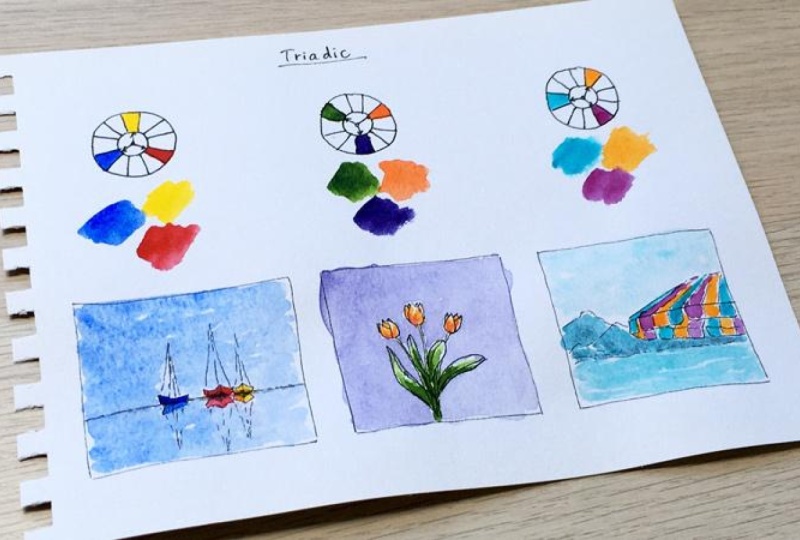
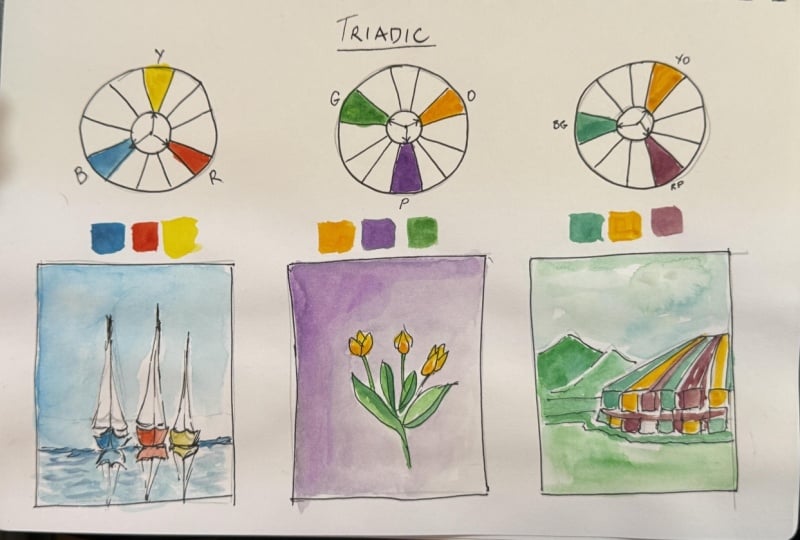
      Triad from Primary Colors

      9:05

    • 3.

      Triad from Secondaries

      7:40

    • 4.

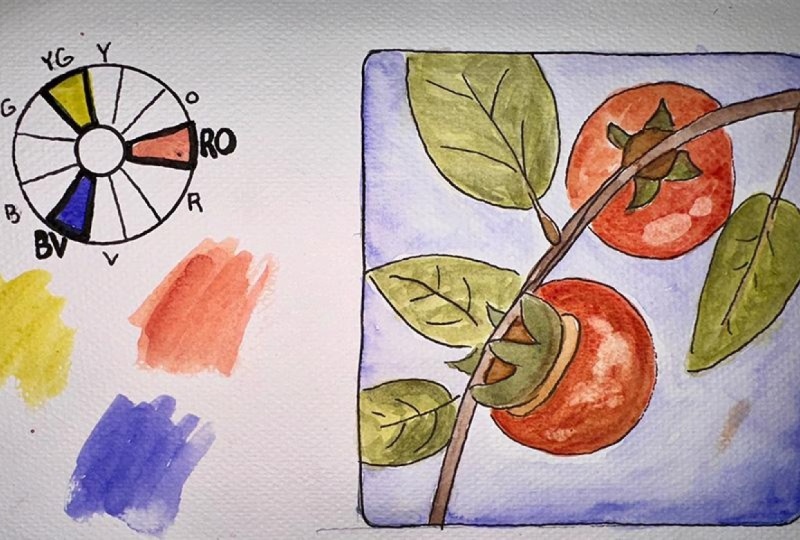
      Triad from Tertiaries

      8:45

    • 5.

      Let's Color Our Subjects

      7:44

    • 6.

      Finishing the Sunshade

      6:41

    • 7.

      What's Next?

      0:49

  • --
  • Beginner level
  • Intermediate level
  • Advanced level
  • All levels

Community Generated

The level is determined by a majority opinion of students who have reviewed this class. The teacher's recommendation is shown until at least 5 student responses are collected.

12

Students

3

Projects

About This Class

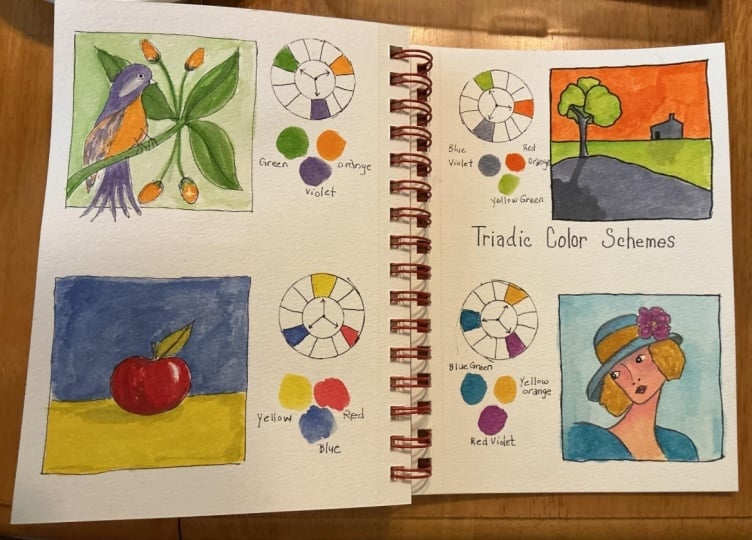
Let's explore how we can create aesthetically pleasing Triadic color combinations easily. This session is part of my Color Harmony series to help you understand color relationships better.

Links for other episodes:

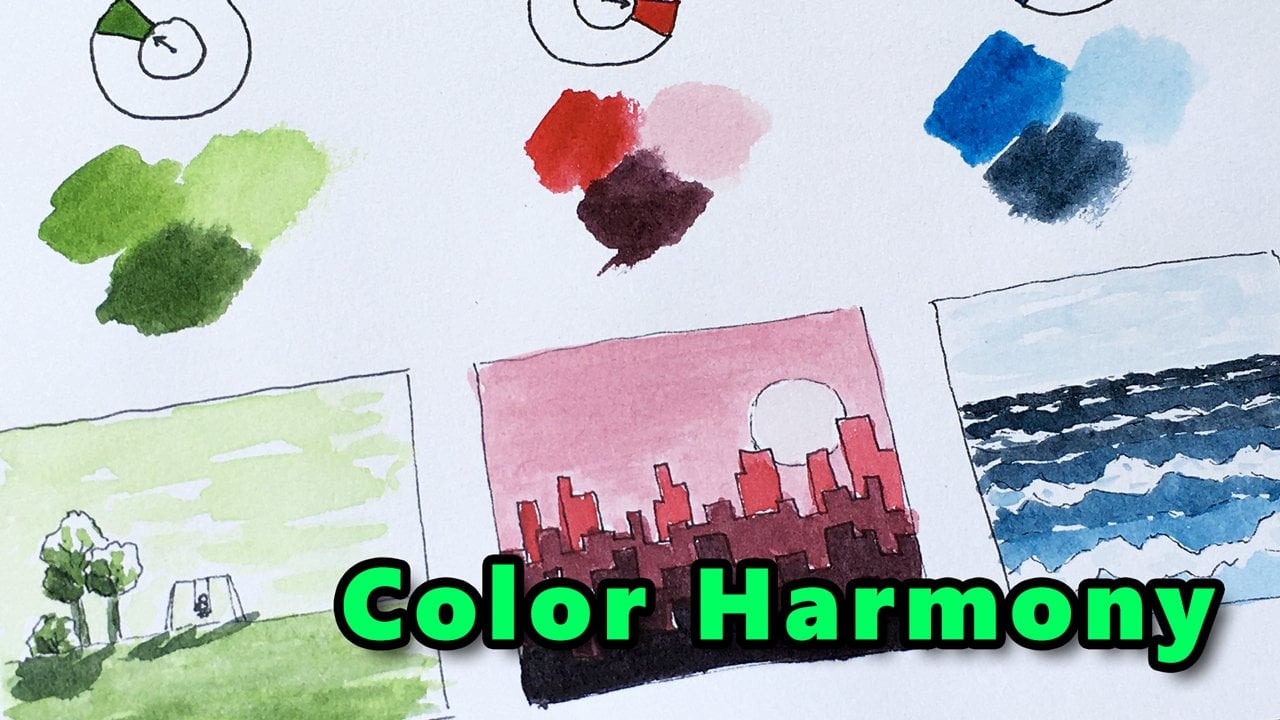
  1. Color Harmony: Monochromatic (start here if you're new to the series)
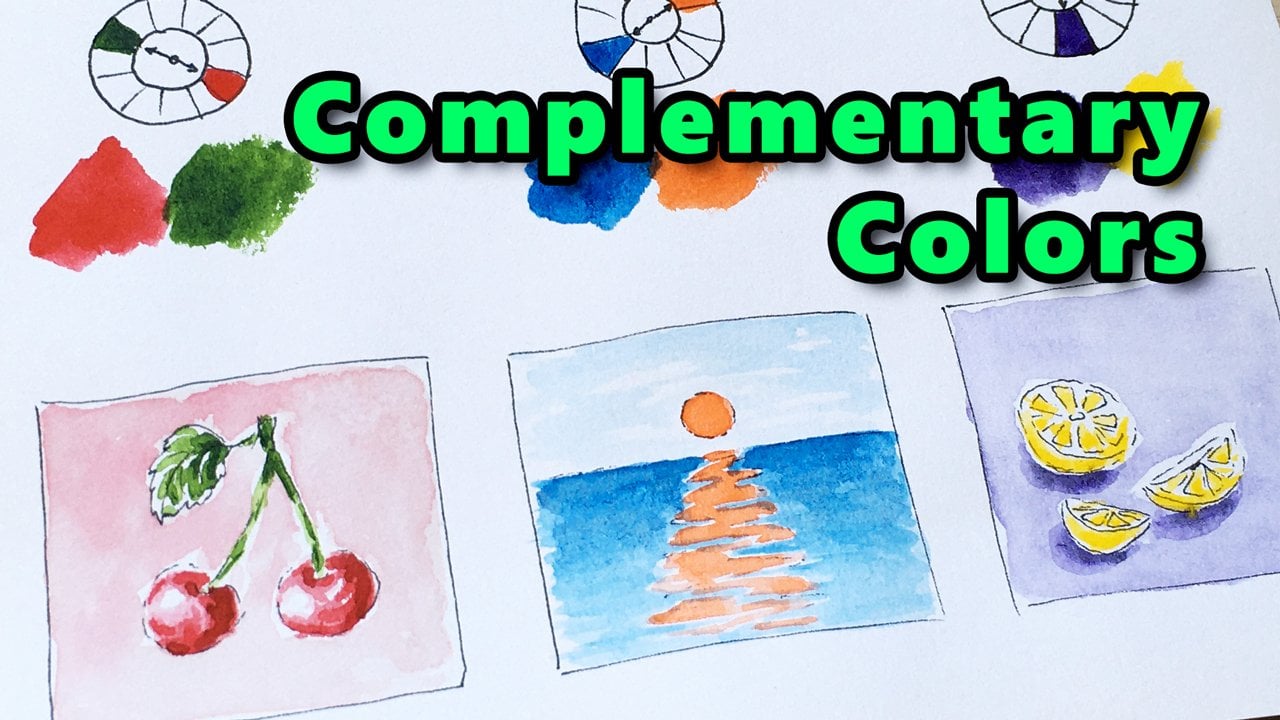
  2. Color Harmony: Complementary
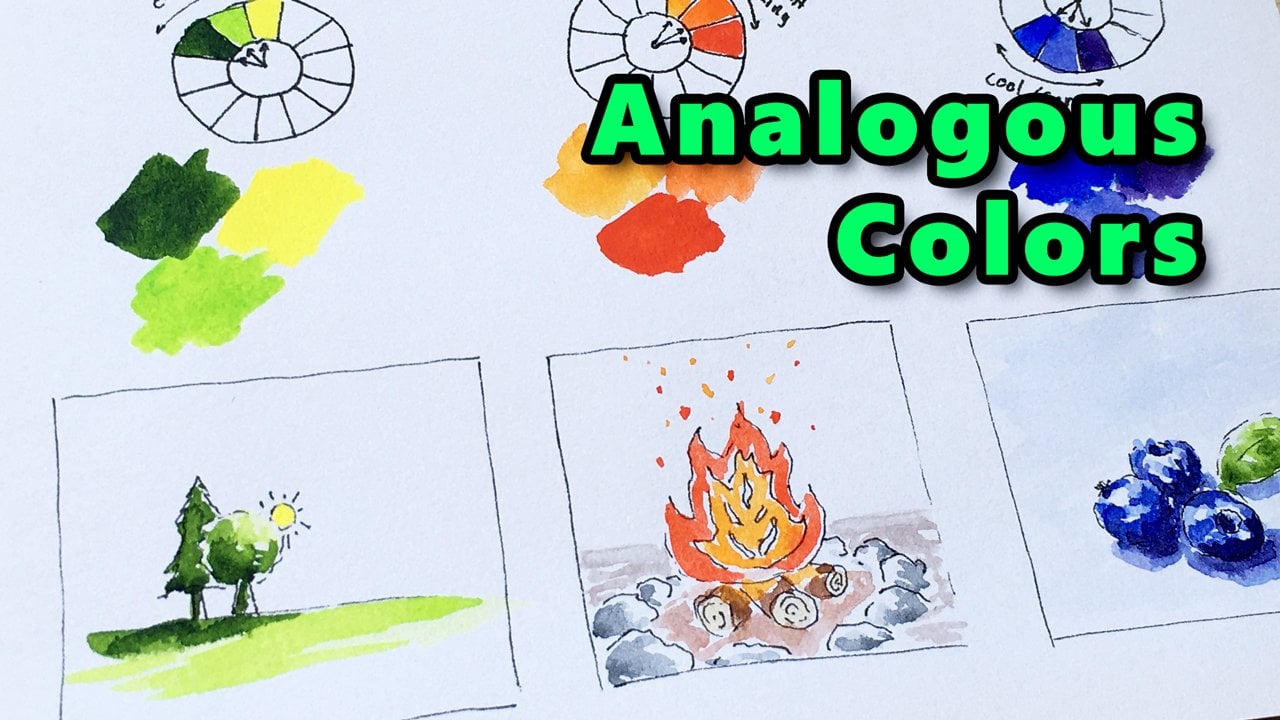
  3. Color Harmony: Analogous
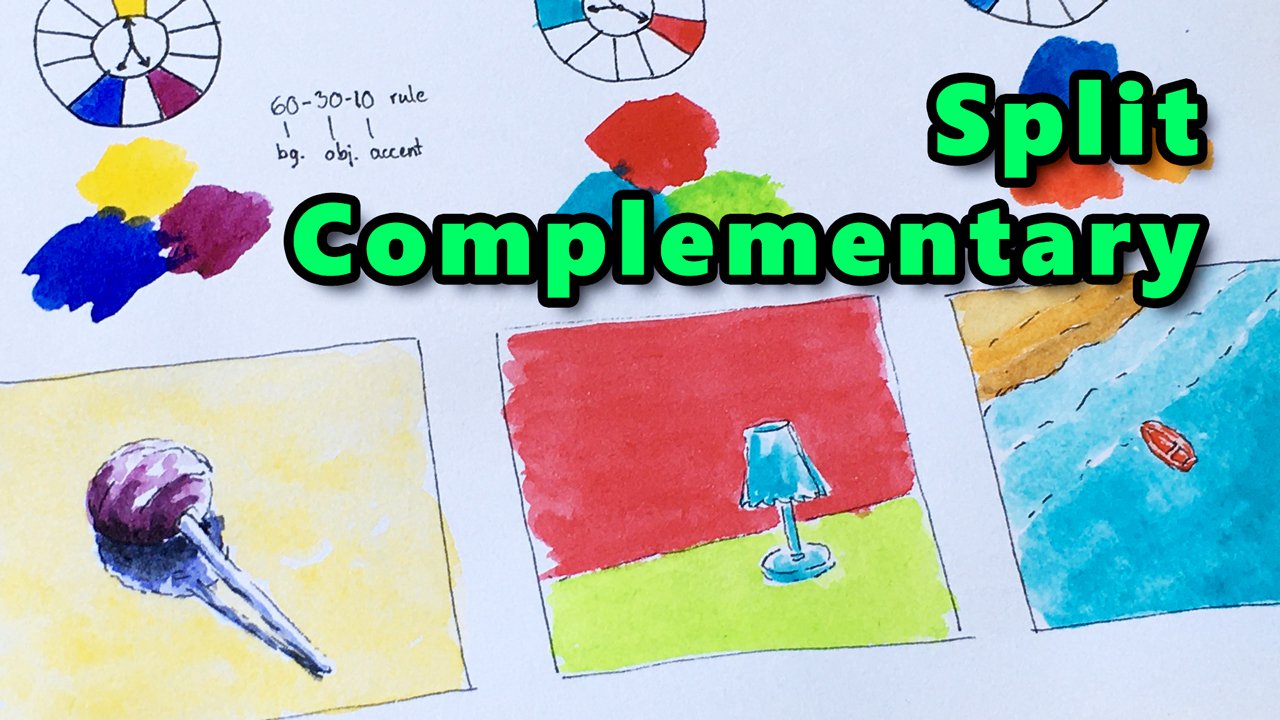
  4. Color Harmony: Split Complementary
  5. Color Harmony: Double Complementary
  6. Color Harmony: Triadic (you're watching now)

Who this class is for

This class is for you if you'd like to get familiar with Color Harmony basics through hands-on style projects.

What you will learn

For a beginner, it's useful to know the most commonly used color harmony types. In this episode, we’re going to explore the Triadic color combinations. We will paint 3 simple mini compositions to see how these colors balance out each other. So, I encourage you to come with me, and let’s continue our journey in Color Theory.

What tools you need?

We’ll be painting in watercolor. You need the basic accessories:

  • some sheets of A5-size sketchbook paper, 120 gsm.

  • a water-resistant archival ink or permanent marker with a thin tip

  • a watercolor palette with the 6 base colors (like yellow, orange, red, violet, blue, and green) + black and white

  • a size-8 round brush for painting the minis

  • and some common tools like a water container, and some paper towels.

Learn & practice

I hope you’re excited. Whenever you’re ready… I’ll see you in the first video.

Meet Your Teacher

Teacher Profile Image

Tamas Benko

Drawing & Painting Classes

Teacher

I'm Tamas. I love to teach new skills to students. Join one of my drawing or watercolor painting classes for beginners! Learn the fundamentals of drawing and painting, and your journey in art will be less frustrating, and much more exciting.

Don't forget to hit the +Follow button to stay up to date with all my new classes.

See full profile

Level: Beginner

Class Ratings

Expectations Met?
    Exceeded!
  • 0%
  • Yes
  • 0%
  • Somewhat
  • 0%
  • Not really
  • 0%

Why Join Skillshare?

Take award-winning Skillshare Original Classes

Each class has short lessons, hands-on projects

Your membership supports Skillshare teachers

Learn From Anywhere

Take classes on the go with the Skillshare app. Stream or download to watch on the plane, the subway, or wherever you learn best.

Transcripts

1. What's in This Class?: Welcome to my introduction to Color harmony series. My name is Tomas, and we are here to explore how we can create aesthetically pleasing color combinations that just feel right to the viewer. If you are new to this series, I suggest you start with the first episode. You can find link to that in the about section right below the video. Today, we are going to look into some triadic color schemes. We will paint three simple mini compositions to see how these colors work together in practice. I encourage you to come with me and let's continue our journey in color theory. I'll be painting with watercolor, but our focus will be on colors and not on the technique, how we apply them on paper. If you choose to use watercolor, you just need the very basic supplies. I'll be using some sheets of A size sketchbook paper, 120 GSM, the water resistant archival ink. Alternatively, a permanent marker with a thin tip will also do the watercolor palette. If you have the six base colors like yellow, orange, red, violet, blue and green, plus black and white, you'll be just fine. A size a tram brrush for painting the minis. And some common accessories like a water container and some paper towels. I hope you are excited. Whenever you are ready, I'll see you in the first video. 2. Triad from Primary Colors: I'm so glad you are taking this class. Today, we are going to paint another interesting color harmony type called triadic. The triadic color scheme is a combination of any three colors that are spaced evenly around the color wheel. They are forming an equilateral triangle. This approach balances high contrast, vibrant, energetic visuals without the unsettling effect of direct complements. To avoid chaos, it's best to use one color as the dominant and the other two as supporting accents to maintain balance. Think of the 60, 30, 10% rule we have already talked about. On the 12 step color wheel, you can form four different triads. We are going to see an example for three of them. As usual, let's start off by drawing the color wheel. First, let's take our primary colors yellow, blue and red. Let's paint the samples. Now, let's make our in sketch. We are going to have a horizon line in the lower third. I'm drawing three simple sailboats in front of you. This will be in the front Let's draw another one slightly behind. So it'll be a bit smaller. And the third one somewhere here in a kind of three quarter view. To make the composition more interesting, let's draw the reflections on the water surface. We need to mirror these shapes vertically. Something like this. Okay. Good. Now, let's paint the sky with a light blue. I'm using water to create this tint. Let's make sure the boats remain paper white. The water surface reflects the sky, so we can paint the reflection with the same color. No, I'm adding some variety to the surface. Playing with the paint to water ratio. H. This thinks good. So I'm cleaning my brush and let this layer dry completely. Okay. 3. Triad from Secondaries: Now let's see our secondary colors. That's a try the color scheme. These are orange, green and violet. Let's paint our samples. This combination is often used in nature where warm oranges appear in the foreground, greens in the middle ground, and violets in the distance. This color scheme is also effective for creating attention grabbing yet mature logos and branding. You can aim for a highly vibrant look or a more muted pastel tone version of these colours. Our composition will be a bouquet of tulips this time. This flower has a very characteristic shape, including leaves, so it's relatively easy to illustrate. Um, um, Good. Now, let's paint the background with a diluted toilet. If you use plenty of water like me, your brush strokes will disappear. If you want your brush strokes to be seen, use a dryer brush. O. I'd like to have some gradation on my background layer, so I'm adding some darker shade primarily on the left. I'll let this later try so we can paint flowers later. 4. Triad from Tertiaries: Finally, let's see the three tertiary colors as a triadic color scheme. Et's paint our samples. I'm using my cobalt turquoise as a blue green component. My golden paint is an orange yellow. And Miquinacridon lilac as a let thread. This approach creates a more sophisticated, modern and nuanced palette. Blending warm and cool colors this way are allowing for both harmony and vibrant contrast in the same composition. Now let's see an example for this. This time, I'm making a fancy sketch first because I'm planning to draw a sunshade in perspective, which can be a bit tricky with all those segments. This looks good to me, so I'm taking my pen and drawing over. These are the main segments. And each segment will include three different colors. Similarly in the back. This is our foreground. Now let's draw the background theme. It will be very simple, a coastline with some mountains. Yeah. We can erase the pansia marks. Now, I'm filling in the background with a very light turquoise. This will be the sky. Is it be the sea or a lake? O. Now with a touch of black paint, I'm mixing a muted version to paint the mountains. Something like this. Good. Let's make this even more desaturated. And I guess that's it for the background layer. It 5. Let's Color Our Subjects: The paint has already dried on our first mini, so let's return to the boats and paint the first one with ultramarine blue. Reflection is included. This one will be yellow. And the one in the middle will be red. A Now, let's add the base layer for our tulips. I'm using my golden paint diluted with some water. Light green base layer for the leaves. Leaving some paper white for the highlights, of course. Now, let's add a darker orange yellow to the petals. Similarly, a darker green to the leaves. One Like so. Let these layers dry. Now, let's paint the stripes on the sunshade, starting with the blue green. I'm using a pretty intense version of my paints here. Uh, right. Oops, this was not a good idea. I have to fix this. Let me repaint this area. Actually, I wanted to paint over the boats with a more saturated color above the water surface, so I would have done this anyway. Now I know red is not part of Detroit, but it will blend with the orange, so I guess it will fit into this color scheme. Kind of artistic freedom. Textbook is one thing, but never be afraid to test out other combinations. Some dark green to the leaves. Illustrating some shadows. I 6. Finishing the Sunshade: I guess my turquoise on the sunshade is already dry, so I can paint the second color this orange yellow. Loops, I made an accident. No problem. I can lift off this paint. You know what? I repaint the turquois stripes. And there's not much else to do on the other thumbnails, I speed up the drying process with my hair dryer here. Good. Now, let's continue with the orange yellow on the sunshade. I guess I'm adding some more yellow to this boat on the right. All right. Let's try these paints. Good. Now I'm adding the cert color to the sunshade. In the back, we can apply a less saturated version. I think I repaint the water with a darker shade of turquoise with a tunnel value that is between the sky and the mountains. And Finally, I'm mixing a mid gray from black and water and painting some shadows for the boats. I'm doing this maybe with an even darker shade. Wonderful. We have completed our triadic color harmony studies. A 7. What's Next?: All right. I hope you enjoyed this color harmony painting session and you made something that you like. Now I'd really like to see your own beautiful colors used in this painting session. So please upload your work in the project section right below the video. If you found joy in this activity, please leave a review on the review tab below the video player. Your feedback is important to me and it will also help others to find this class. If you like my teaching style and you are interested in other topics, I definitely have some more drawing and painting sessions for you. Make sure you check them out on my profile page. I hope you had a good time with me, see you in another class. I