Transcripts
1. Introduction: Hello. Welcome to How to chase
your dreams as a writer, a class in which I break down
and help bridge that gap, that all consuming
terrifying gap between being a hobby level creative writer and a professional
creative writer. Spoiler Eller, it really is much easier than
you may think. My name is Dakota, and I am
you guessed it, a writer. In 2023, I won B creators
Book Creator of the Ye year, and in 2022, I was a finalist, the Good Reads Choice Best
Poetry book of the Ye year. There's not much advice in
the world about how to bridge that gap between hobby level and professional level
creative writing. And so as someone who claimored my own way out of the depth, I want to give you
my best advice, all of my tips, all of my secrets, all of
the child. Dos and don'ts. We're going to be
exploring what I found to be most imperative
in my journey. And that is confidence
and vulnerability, defining goals to work
towards an outcome, creating an online
portfolio to represent you and your voice
and breaking down the terrifying process
of submission to literary bodies to have your
work published elsewhere. Of this class is to
demysify and simplify the process of pushing your
art out into the world. For our class project,
I would love you to upload your portfolio
once created and curated, and I'm going to show you how to do that to the project gallery. Not only is this a
good method itself of separating the art from yourself and sharing
that with the world, but it's also garnering
community with everybody in this class who's
doing the exact same thing. Can support one
another. A quick, important note is
that this class is for creative writers
interested in exploring professional writing
opportunities and further establishing their hobbies
into a potential career. Thus, we will focus
less on the act of creation itself and more so what to do with
these creations. Because I presume, I hope safely that if you're
looking for advice and pushing your work
out into the worlds that you already have some work
banked up behind you. If you're watching this nude
to the world of writing, I recommend you skip away, hone in on your voice,
your creative style, what you actually
want to make bank ups and work behind you and
then come right back. I'll be waiting for
you right here. It is important to keep in
mind that in such a unique and very in demand industry that each experience will
differ massively, and this class is
more so guidance and encouragement than a strict how to with
guaranteed results. So let's take it a step further
and talk about setting up your workspace and more
importantly, perhaps mindset.
2. Setting up your workspace (& mindset): This lesson, we're going
to focus on setting up your workspace
and your mindset. Perhaps obvious that what
you'll need to prepare for this class is completely
up to preference. Materials and
workspace are entirely subjective when it comes to the art of writing, and
that's the beauty of it. I'm sure I don't
need to say this, but in the age of technology, if you are somebody
who prefers to write pen to paper or
via typewriter or whatever you will You are more than likely almost
definitely going to have to retype this out onto
something digital so you can send it off in an e mail
or upload it to a site. In a bonus little tip, this is actually a great
method of revising to retype something you will begin to notice things
that you want to change, whether they're
errors, whether it's tweaks in the body of the work. As for workspace, this is, again, entirely up to you, whether you prefer to work
in a busy crowded space or something more private and
secluded. Tailored to you. I'm sure you can see behind me. This is my little reading
slash writing area. It's a very sacred space to me, and it has taken me a
long time to curate, and so I'm don't expect everybody to have
something like this. Regardless of materials
and workspace, the most important thing I say that you can prepare
is your mindset. The act of creating
requires you to drop into a focused and
vulnerable headspace, and it does take lots of practice for you to be able to drop into
that voluntarily. Perhaps I am a little
superstitious, but I am a ritual enthusiast. This doesn't mean anything
large or extravagant. It can mean something
as simple as having a specific
candle that you like. When it's time for
writing or listening to a particular song or playlist that you've created
for a project, setting up your space in
a very particular way, just small acts to signify the
act of creation beginning. Although when
focusing on mindset, I believe the most important
thing is confidence. Confidence in your work, confidence in
yourself as a writer, confidence in the inherent
vulnerability of pushing your work out into the world and separating it from yourself. Being an artist in
any way shape or form is terrifying. Naturally. The act of separating your art, your work from your very being, and offering it up to the world and others in hopes that they'll find some kind of solace or they'll relate to it
in one way or another, or they'll just at least
enjoy it is terrifying. But worst it's terrifying, it's intimate and it's special, and it can't be compared
to many other things, and If you want it so bad, then that's kind of
the only option. With exposure to this act, which I am going to
talk about more, you will learn to
endure the thrill, as it becomes a part
of the process. As you begin, your
submissions and your posts, and everything you do to build this portfolio of yours
will feel more daunting, but you will learn to relish
in this because this act, this feeling is just as
important as the final outcome. Speaking of, let's talk
about the final outcome. Let's talk about goals,
how to recognize what you actually
want to achieve, so you can break it down, and we can work out with little steps that it's going to take to achieve this goal as a
professional creative writer.
3. Recognising the goal: This lesson, we will be talking about
recognizing the goal. And I believe the most crucial
and overlooked step when chasing your dreams in any
sector is to define the dream. From there, we can recognize this ultimate goal and
begin to break that down into smaller goals that
we need to achieve and work towards in order to
achieve this ultimate goal. Does that makes sense.
The first step, recognize your goal when it comes to what you
want from writing. This might sound
simple and obvious, but most people when asked, what do you want from writing, simply say, I want
to be a writer. But what do you want to write? For whom do you want
to write it for to what degree do you want
writing to govern your life? Do you want to write fiction? Do you want to
write non fiction? Do you want to publish? Do you want to traditionally publish? Do you want to self publish? What do you want
to do with this? Why do you want to do it? It really is
important that after you think about it
and you cover what, the who, the where, the how, that you have a very big
think about the why. Why do you want to write
I want you to really think about this because a lot of the other answers
will come from this. Of course, these
dreams and goals will naturally wax
and wane and grow and evolve with us as
we're near these goals and discover things about us and define these goals much clearer. Obviously, lived experience
is the most important thing, but we can't have
lived experience if we don't start working towards a
goal in one way or another. So don't think these goals
have to be so rigid, but it is important to start
somewhere and have something to be able to strive towards,
at least at the beginning. A little personal anecdote here so I can really jal it in. When I first finished school, I thought that I wanted to be some kind of
freelancing journalist, submitting writing to pre existing literary bodies of a particular topic that
they would request. And I learned via
trial and error and lived experience much
trial and error. I must reinforce that this
simply wasn't for me. Being told what to write about and when to write
about it really took away the act of autonomy for
me when it comes to writing, I'm a very intuitive
writer myself. And so this really did
squash my passion. So my dream shifted
from writing for other people to writing
exclusively for myself. Thus, I created my blog and
I created my own portfolio, and more goals were
defined from there as I aligned with the
path that I truly wanted. I'll give you another
hypothetical example of recognizing and
breaking down these goals. Say, for example, your
goal is to publish a book. The first goal is to find what
you'd like to write about. The second goal is
to write the book. The third goal is to submit this manuscript to literary
agents and or publishers. Obviously, there's lots of
steps in between these goals, but these goals or add
clarity to the steps. And also saying this,
presuming you have found and honed in on
your literary niche. If you're still not sure
of your personal style and preference when it comes
to the act of writing, it's important to explore a plethora of
voices and mediums. Poetry, fiction, essays, governed articles for other
literary bodies and so forth. What brings you the most joy? What do you feel like
you're most confident in? What do you want to do? And let me come back to that big why Why do you
want to do it? Do you right to
share your story? Do you write and detain? Do you right to
connect with others? Your medium and your voice
will be rooted in this. After you've defined
what you really want as a professional,
creative writer, it's time to build or refine a portfolio that
best represents this. Let's talk about that
in the next lesson.
4. Curating a portfolio: Last, we're going to talk
about the act of creating slash curating and
portfolio that best represents you as a writer. Rather than going on
a little monologue, stressing the importance
of having some kind of accessible online
portfolio representing you and your work and your
devotion as a writer, I'm going to give you a little
anecdote about my story and the way that
having a portfolio shaped my entire career. In 2019, I created a block. Just a website. Just
a website for myself to post whatever I wanted
when it came to my writing. I posted various poems, I posted fragmented
journal entries. I posted streams
of consciousness, lists of things that I
both despised and loved. There was no real theme. I wasn't trying
to sell my words. I was writing it for myself, but I wanted to
have a collection of things that I'd
written to keep track. It felt completely
natural because writing was the only thing
I've ever really wanted to do. And so by posting these and
by sharing these posts to my social media platforms to which I did
not, by any means, have a large following
on at the time, it was teaching me
the act of pushing this art out into the world and separating it from yourself, even if it wasn't
getting engagement. Years. This blog only had
ten to 20 subscribers, so I don't expect
numbers quickly. The most important thing
is that you create a portfolio for yourself to keep track of your work
that represents you. Whilst the ten to 20 subscribers were everything in more to me, the crux of it is that you're
doing this for yourself. Rather than be
disheartened by the lack of exposure or growth when
it came to this blog, I chose to keep it and use it
as some kind of scrapbook. Experimental portfolio
of my work just for me. So I kept posting anything and everything I
wanted even if it made no sense and guess who happened to
eventually subscribe. The future publisher of my
first poetry collection, the future publisher
of my debut book, my entrance into the literary published world was a subscriber of By Blog after a few years of myself posting and using
it as a portfolio. Things like that,
they add up and you don't see immediate results, but that's the important thing is that you push
through and continue. What's more, after I started to reach out to other literary
bodies to work with them, after I had begun to
gain a following. I had this portfolio
that people could be directed towards with years and years of my bank do writing. Thus positioning myself as an established writer well before my first book
was actually published. If you don't share your work, if you don't have some kind of accessible online portfolio, be it a blog or a social media
page or anything at all, you're not going to be
noticed by any people, let alone the right people. It's as simple as
that. Let's talk about what a
portfolio looks like. I'm talking specifically about accessible online portfolios
to direct people towards, whether it's people you want to collaborate with, work with, write for people who you
want to read your works, this can look like just about anything and consist of
just about anything, but in a modern world, it's best this is obviously I have
been seeing online. The best way to do this is by creating some kind
of site or blog or social media page
because not only are those formats accessible
and easy to use, but they can gain followings
and subscriptions, and that's going to help
you build an audience. If the idea of a blog
or site terrifies you, or it seems like a step Not
quite yet, but a step soon, I recommend creating
a social media page or using your current
social media page to start getting used
to the process of sharing your work
and splitting it from yourself and
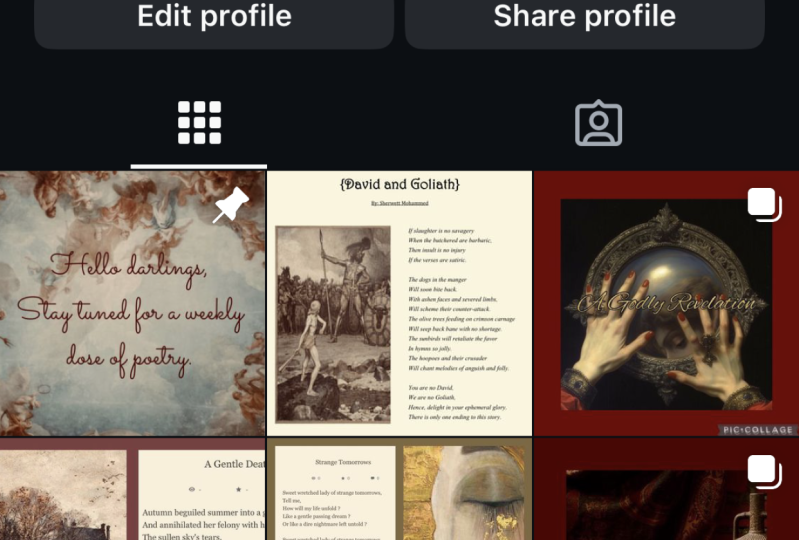
putting it out there. Social media, as I've
experienced, firsthand, can be incredible for sharing art and spotlighting yourself, but it's not necessary
if you're not a fan of the whole self
commodification stick. If you up to share your
work on social media, I still really recommend
creating a blog or site to supplement this because
the more evidence of commitment to your
art, the better. This is my ideal version of contemporary accessible
online portfolio? Keeping a site or a
blog in which you can post all of your
writings and gather in a separate tab all your
writings that perhaps have been published for
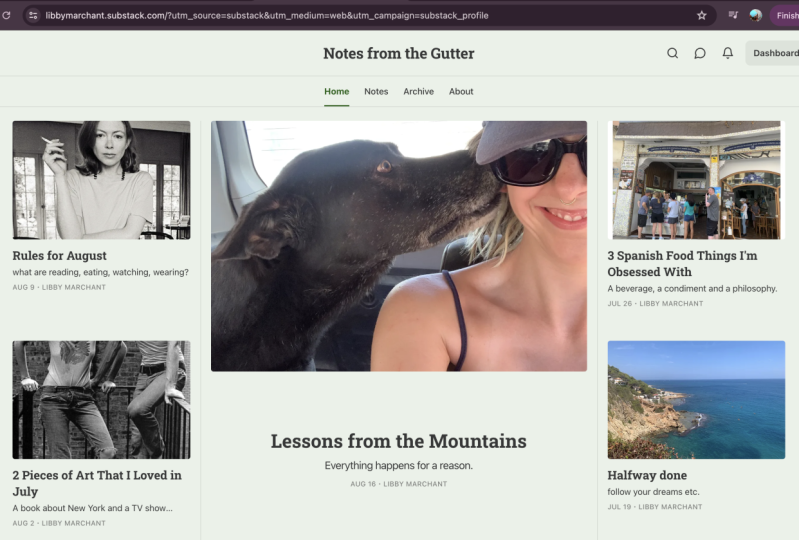
other literary bodies more on that later. They're very easy to create
with so many platforms, including sub stack, square
space, Wordpress, Wicks. There's others, and you can look into that yourself
because in this lesson, I focusing on creating and curating the portfolio
rather than the platform. I'm sure you're
thinking once you've established your platform,
what should you post? What should you put
in your portfolio? What should your portfolio
showcase That's the fun part. Well, it's the fun
part, but it's also the tricky part because
this is the part where you must refine your
vision and hone in on your voice,
consult your goals. The goals we set in the last
lesson, consult those goals. Go through your
pre existing works and round up what you think is a good representation of your writing style and what
more you have to offer. You might want to implement
a posting schedule, center around
predictable topics to harbor an audience who
will know what to expect. For example, posting
every Tuesday, an essay about all the films
you've watched that week, or for example,
the first Sunday, every month, posting
your interpretation of current pop culture
trends and events, or for example, every
Friday, posting a poem. Your goal is to
gain an audience, having a consistent
posting schedule and a more refined niche of topic and or voice will obviously be much more
beneficial to you. A hot tip that I've learned
in my years as a writer, a very chaotic integrative
writer is that when I have implemented
schedule and consistency, this has garnered
the most interest, the most growth,
the most outreach. Audiences seek consistency. Readers like to know what
they're signing up for. It's a way of building trust. Once you have
created and created this platform slash portfolio, you're feeling good about it. You like the way
it makes you look, you like the way
it makes you feel. You think it's a strong
representation of you and your voice as both a
person and an artist. I want you for the class project to upload this to
the project gallery. Not only is this a great
means of accountability, we can take advantage
of the community of Ode garnered simply
in this class. Writing can be a
very lonely art. So I think we should
support each other. Community is a wonderful thing, and we've already
created one here. Perhaps a screenshot
of the home page would be best because we're not
focusing on the actual writing. The classes in
about your writing. We're looking to explore each other's setup
for our portfolios and how people
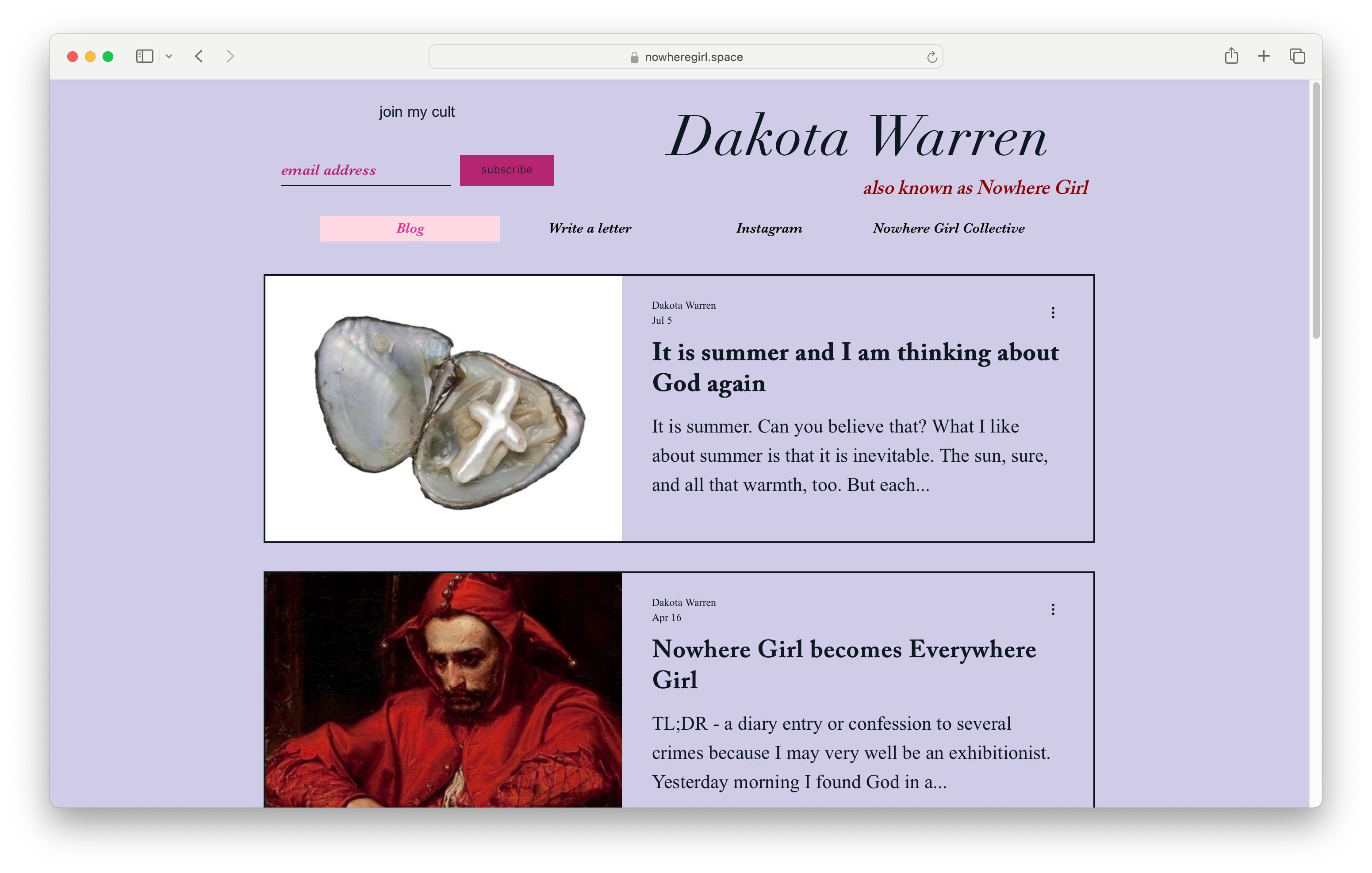
have created this. I'm going to show you the
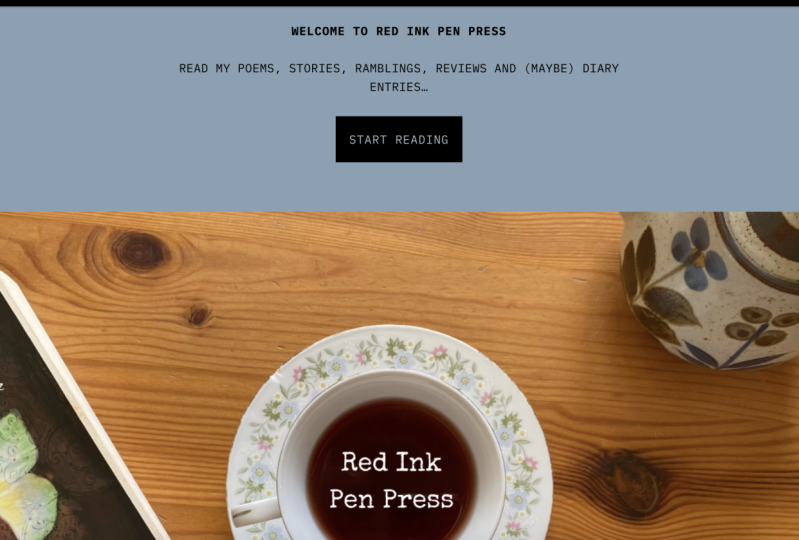
blog that I created in 2019, and I'm still using
semi religiously. This is my blog here. And the layout has
obviously changed. Many times I've edited it much. The background used
to be Mananas. I first created the blog. So I have the home page, which is the blog and
the poster himself. I then have write
a letter to me, which is a means of contact, a link to my social media pages. This didn't always
look like this. Before this, it was blog, and then it was a
link to a list of all the works I've published
in other literary bodies, and then I had an A page
with a fact about myself, what I do, how you
can contact me, what I want to do
that kind of thing. Let's talk more about that
published works page, because in addition to
having your own post, having your works
published elsewhere is a very important step to not only fatten up your portfolio, but to gain important
industry experience. So let's talk more about this submission process
in the next lesson.
5. Submitting to literary bodies: Lesson, we're going to
talk about the process of submitting to other
literary bodies, pre existing literary bodies to have your work
published elsewhere. Let's talk about it,
demystify the process, and this can include literary
journals and magazines, both online and in print
to publishing houses, if you want to jump
straight to writing a book. Obviously, you can focus on the direction you
intend to go in, whether that's writing
articles or books or both, but based on my
lived experience, I strongly recommend
submitting to literary bodies, even if your sole intention
is to write a book. No loss whatsoever.
You'll gain experience. You'll have more
to include in your portfolio and share
with your audience, and it's great for getting used to comfortability
with invulnerability. And perhaps most
obvious thing is your work is being pushed
out into the world. You're already
garnering an audience, harboring a name for yourself. The first step is to
do your research. Research, literary bodies. If you don't know
where to start, you can simply Google literary journals to submit to and
created lists will come up. A little inside tip from
my lived experience is hunting down the social media pages of these
literary bodies. For example, you might
find a magazine press. Think is very cool,
would like to write for, and you find their
Instagram page. Go through their following. Go through their
following because obviously there's going
to be a community of other literary bodies there. Create a list of literary bodies relevant to your work and
what you have to offer. I recommend including
both dream bodies and smaller slash,
more local bodies. It's also absolutely crucial that you research
what they're about. The kind of work they're
seeking and read up on the previous works they
have posted and or published to see if or where
you are able to slot in. Once you've created your list of literary bodies that
you'd like to submit to. Next up, we prepare
the submission. Some literary bodies will
have prompts that change with each issue and mandated
submission periods. If the literary body has
a submission process, it should be all
laid out for you. Using my own literary and
arts journal as an example, here is an idea of what
might be expected of you. There are the confinements
of submissions. There's the submission
period, the limitations, such as one submission
per person per prompt, how to lay it out, exactly
how to lay it out. Format the post should be in. What to include,
for example, name, age, location, and
original cover image, how to attach the words, the fact that the work should be original and unpublished
and so forth. Other literary bodies
may be more easy com, easy go, or on the other
side of it more exclusive, but have the same approach where they rely on you to contact them with your idea for
them and your portfolio. In that case, I've created a template for the
latter based on what I used to submit with when I was building my own portfolio. To real concern
at literary body. Introduce yourself.
This is your name. You admire literary body. You're a writer. You want
to submit your piece. Make sure you outline
what your piece is, the genre of your piece
and what the piece is for, whether it's a prompt
or an issue versus if there is no prompt or
issue and it's more easy, easy go, introduce yourself, introduce your work,
and then please see my proposal and
submission below. Pitch the work one
or two sentences. You need an immediate
attention hook. Pictures are very
easy. If you don't know how to pitch
or what a pitch is, Google it. It's very simple. There are hundreds, thousands
of very incredible, accessible websites that are going to teach you
how to do this. It's just one or two sentences.
You win about the work. It's important to give a
little brief about yourself. And when I say
brief, I mean brief, you're introducing yourself and what about you is relevant
to the industry only. This is a great
place to bring in your other works that
you may have published, any awards that you
might have won, but the best and
most important thing to bring in here is
your online portfolio. Obviously, this doesn't
have to be so rigid, and if everybody uses this template for the
same literary body, it's going to look suspicious, so I recommend reframing
this on your own words. My tips are that each segment should be one or two sentences. Keep it very brief.
Literary bodies like this get a
lot of submission. Be upfront and concise. You want to stand out, you want to be simple, you
want to be easy. You want to make it
simple for them. Send this directly in the
e mail body with your work attached in whatever
format they request. If they don't request a format, PDF is generally the
most accessible. Keep it simple. No
fancy fonts, no colors. Most magazines and
literary bodies have a preset kind of look
that they upload with. You might get a
response. You might not. A lot of magazines when they
don't accept your work, simply don't respond rather than sending a rejection.
Get used to that. It's scary, but it's fine. It's completely fine. It's
a part of the process. We've all been rejected before as writers in the industry. It's a write of passage.
6. Submitting to literary agents: Some of you might be
sat there thinking, but Dakota, this is a wonderful. I don't care. I want
to publish a book. Wonderful. You want
to publish a book? Write the book. Have
you written the book? I bet you haven't.
Needless to say the first step to
submitting the manuscript for a book is to write the book. You'll be shocked at how many
people ask me for help with a publishing process before even conceiving an idea
for their book. Technically, you can submit to literary agencies and publishers with less than a full book. If you truly believe it's
going to be incredible, and they'll fight for
it and be invested in helping you shape it,
but more often than not. And when I say more
often than not, I mean, the vast majority of the time, that's just simply not the case. Write the book,
whether it be poetry or a novel or a
secret third thing and proof read and
edit incessantly until you feel that you have
done all you can to it. You can obviously
do this entire step on your own completely
by yourself, but it is very beneficial. Do you have other
eyes on your work in the editing process? This can be friends or family, if you don't have access to an editor or anybody
in the industry. Comes to publishing the book, you can self publish the book, or you can try to traditionally
publish your book. As we're discussing the
submission process, I'm going to stick
to demystifying this process for
traditional publishing. There are plenty of incredible resources out
there for self publishing. You can easily find these
with a little research. It's getting easier and easier to self publish these days, especially with the chance of virality across social
media platforms, but that's not what
this lesson is about. This lesson is about the submission process
for publishing. Let's talk about
traditional it you can submit directly
to publishing houses, and if you'd like to do this, go in the publishing houses site, and there should
be information on how to do that. It
is recommended. When I say it is recommended,
it's recommended by many, but also very much myself
to get a literary agent. Literary agent is somebody
who's going to represent you in pitching you and your
book to publishing houses. They'll have your best interest
in mind and advocate for the best deal because that's beneficial to
everybody involved. They'll also be able to
offer guidance and support when it comes to editing
and tweaking and polishing. To inquire with
literary agents is very similar to the process of
submitting to literary bodies, which is why I recommend
doing this regardless. As I said before,
do your research, create a list, Google, literary agencies in your
city or a city near you. If you live in a small
town, that's fine. It doesn't have to
be local to you. The more agents you
submit to the better, because obviously you
have more of a chance of accepted by one of
them or some of them. But as I said earlier, the most important
thing is that you really focus and refine your list, so it's
relevant to your work. See what else have published and see where your
work slots in, see if they even publish the
genre that you're after. Most agents have great
about mes and buyers, give you a little
glimpse into them and see if you'll be
a compatible match, what kind of
literature they enjoy, what kind of literature
they're looking for. Little industry hack is to check the acknowledgment pages
of your favorite books. The acknowledgement pages of your favorite authors most likely are going to
thank their agents. You will thus find
out their agent. Perhaps, if you think
your book is offering the same energy or something
completely different, but you think would be
beneficial to them, you can submit to your
favorite author's agent. Just like with the submission
deliary bodies, in general, the agency site should have a page with submission
requirements. This is going to
differ, of course, it always does, but generally, you send an e mail
with a pitch synopsis in the first three chapters or 50 pages or 10,000
words of your manuscript. And don't think to
yourself, Oh, it's okay. I've got plenty of time.
I'll send this now. Finish the book later when they ask for the
full manuscript, if they asked for
the full manuscript. Don't do that because sometimes agents get back to you
within a few days, and if you haven't
written the rest of the book, you're in trouble. Make sure you check for
the specific requirements that differ from
agency to agency, but I'm going to share with you the querying letter
template that I created triald and True that got me an agent for
my upcoming novel, so this is what worked for me. My agent told me explicitly that this querying letter that I created stood out very much in their own books,
and is very strong. So I'm really spilling some
industry secrets here, but also I'm spilling my
own secrets. Dear agent. I'm dek representation for give an example,
my romance novel. A titled a quill and a rose. This is a genre
piece of word count. Then you're going
to have your pitch. Again, get used to
these pictures, one or two sentence
pitch to pull them in, get them excited for it. This part is optional,
but I recommend it very much to make
your letter stand out, and that is having a
quote or review extract from an editor or a reader who is relevant
to the industry. For example, I'm very lucky
that a lot of my friends are authors and in the
industry or reviewers, so I sent them the manuscript. Even if it's just what
you submit to the agent, the first 10,000
words or whatever, have them give their reviews and their quotes
and add that in. When I say relevant
to the industry, I mean it It's not going
to really do anything at all if you put in a quote from your mother who's just
very proud of you. And then we introduce
our work at more length. Introduce setup, setting,
premise, characters, stakes, a little about the books angle, why you think it will slow into the current market,
really sell it here. Talk a little about
why you reach out to this agent specifically. You've read their
taste in literature. You have familiar
with the authors have worked with what you're
looking for in an agent. This is your chance to
butter them up a little. Let them know that
you've researched them, and you genuinely want to work. You're then going
to want to include a brief about yourself, again, focusing on what's
relevant to the industry only. A great place to bring in
your online portfolio. Once more. Then we're going to have our outro, our conclusion. A tips for this is that this should be no longer
than one page. This again, should not be a massive read because you
want it to be concise. You want it to be direct. You want it to be
clear. You want the agent interested quickly. You want the agent
to be able to skim over it and immediately
feel intrigued. Send this directly
in the e mail body, but then attach separately your synopsis and your manuscript,
whatever they request. I suppose we can't talk
about all of the above without talking
about the magical thing that is rejection. Rejection is just as much as a part of the process
as is the creation and curation and the separation of the art from
you to the world. Don't let rejection disharm you. I know that's so much
easier said than done, but creative writing is a very competitive and very
oversaturated industry. Let that fuel you. Better yourself in the meantime, build up your portfolio, result in the creative industry, take time and utmost dedication. With that, let's move on
to our final thoughts.
7. Final thoughts: That, my friends is
what I have to offer you on your journey to
professional creative writing. As I mentioned in the
introduction video, with such a unique industry. The creative
industry, in general, each experience is going
to differ massively. These lessons in this
class, in general, was not a strict how to, but more so guidance,
encouragement. I want to reiterate that, yes, there is a formula that
might help and there are things you can do that will
help you achieve your goals, but the most important
thing you can have is devotion and confidence. Another massively
important thing that everybody should have in
this industry is community. That brings us back
to our class project. Where I would love to
encourage you to share a screenshot of your online portfolio in the
projects gallery. This will not only
help and support and inspire others when
creating their own, but it will garner
community. Don't worry. I'll go first, of course. I want to say good luck. I want to say chase your dreams like your
life depends on it, but more than anything,
I want to say, thank you for spending
this class with me. I am Dakota, and this
was how to chase your dreams as a writer,
to go chase them.
 Dakota Warren, Author & poetess