Botanical Sketching: Draw a Hydrangea with Alcohol Markers | Olga Sh | Skillshare

Playback Speed


1.0x


  • 0.5x
  • 0.75x
  • 1x (Normal)
  • 1.25x
  • 1.5x
  • 1.75x
  • 2x

Botanical Sketching: Draw a Hydrangea with Alcohol Markers

teacher avatar Olga Sh, Sketch Illustrator | Master Coach ICI

Watch this class and thousands more

Get unlimited access to every class
Taught by industry leaders & working professionals
Topics include illustration, design, photography, and more

Watch this class and thousands more

Get unlimited access to every class
Taught by industry leaders & working professionals
Topics include illustration, design, photography, and more

Lessons in This Class

    • 1.

      Introduction

      1:10

    • 2.

      The project

      0:30

    • 3.

      The anatomy of the flower

      2:41

    • 4.

      Pencil sketch

      6:16

    • 5.

      Working with the color

      24:50

    • 6.

      Finishing touches

      5:29

    • 7.

      Final thoughts

      0:48

  • --
  • Beginner level
  • Intermediate level
  • Advanced level
  • All levels

Community Generated

The level is determined by a majority opinion of students who have reviewed this class. The teacher's recommendation is shown until at least 5 student responses are collected.

152

Students

6

Projects

About This Class

About This Class

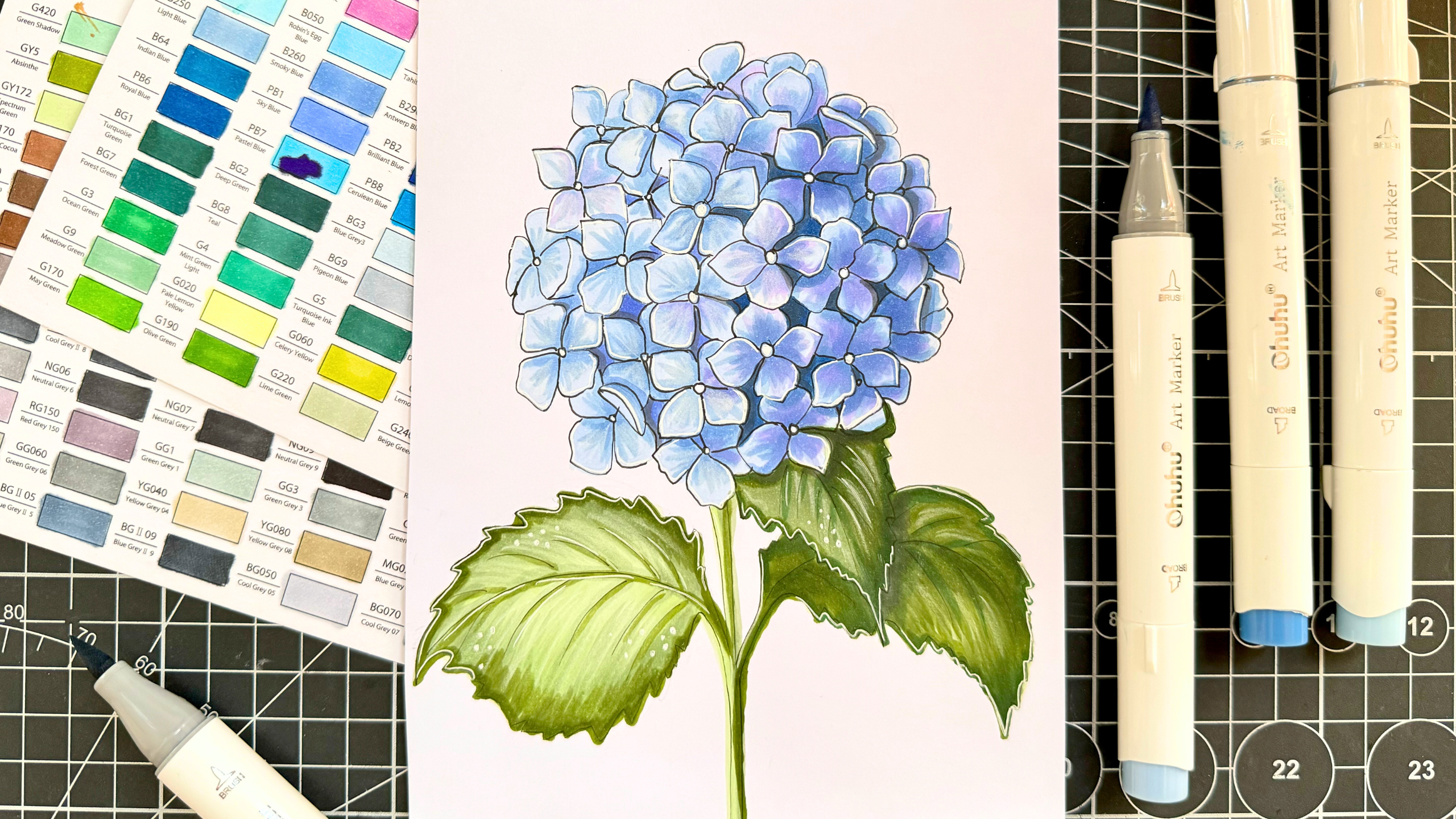
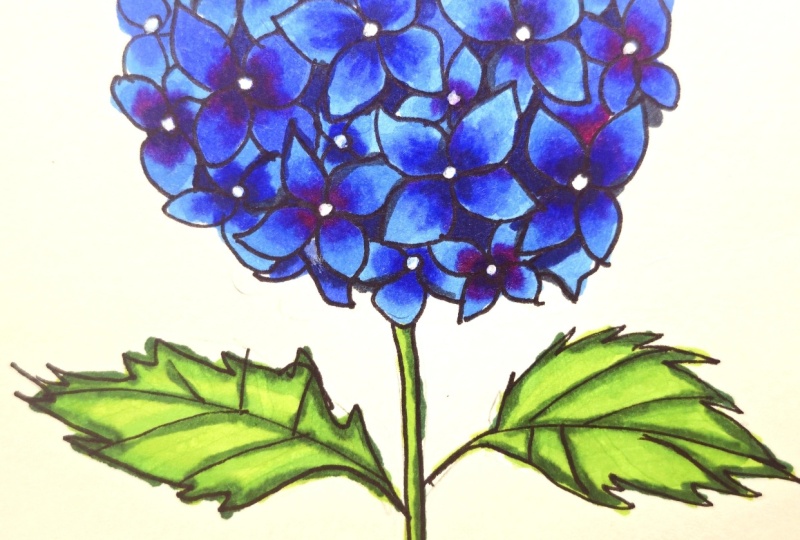
Learn how to draw a realistic flower sketch with markers.

This class will take you step-by-step through creating a flower sketch: from sketching out the basic shapes to blending vibrant colors that make your flowers pop.

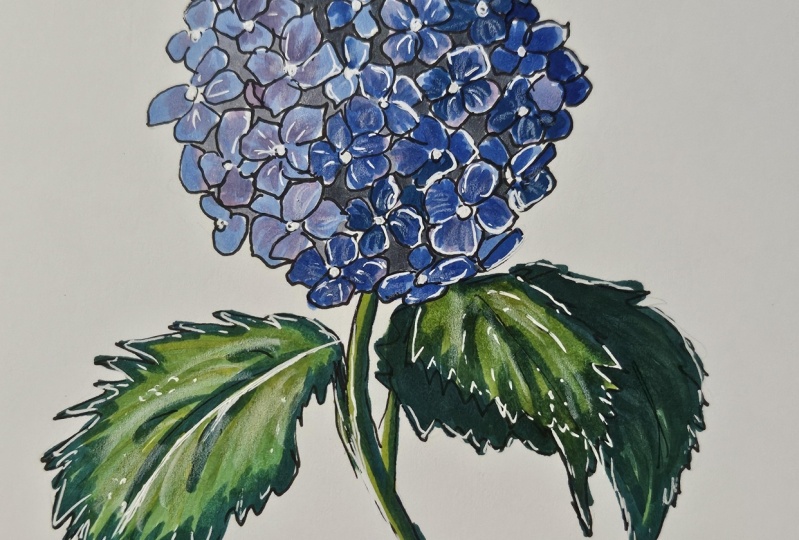
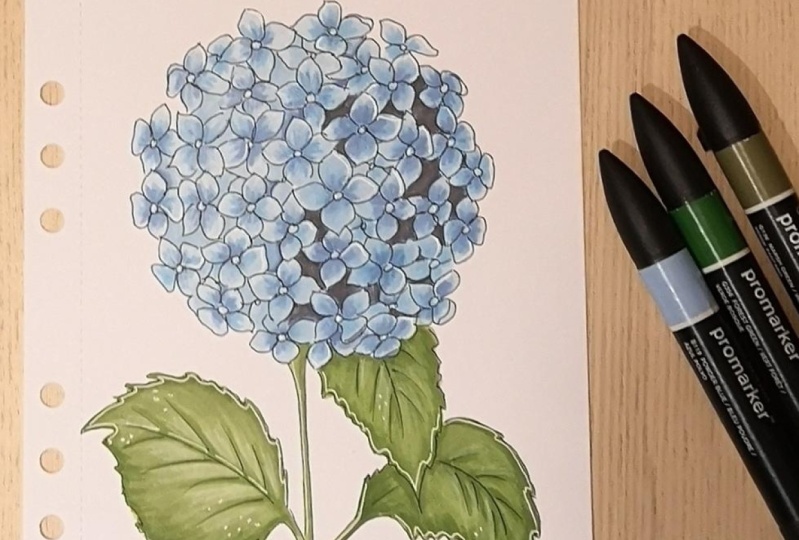
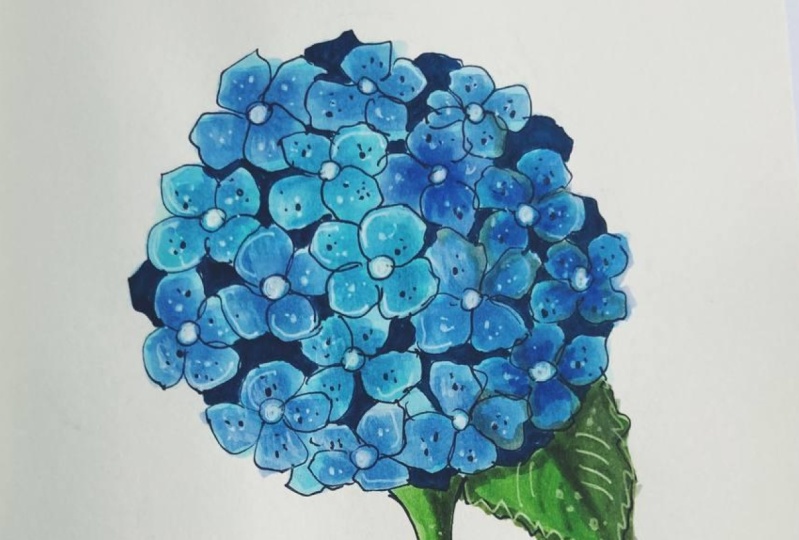
By the end of this class, you will draw a bright hydrangea sketch illustration with markers.

This class cover:

  • how to work with references properly
  • how to understand flower structure and simplify it to simple shapes
  • how to transfer an image from a reference to a paper
  • what are the steps of the color elaboration of the drawing
  • how to show textures
  • how to add details to your sketch

This class is perfect for you if you want to master or improve your marker skills, pick up some cool tips for flower illustration, try something new, or chill out and have a good time.
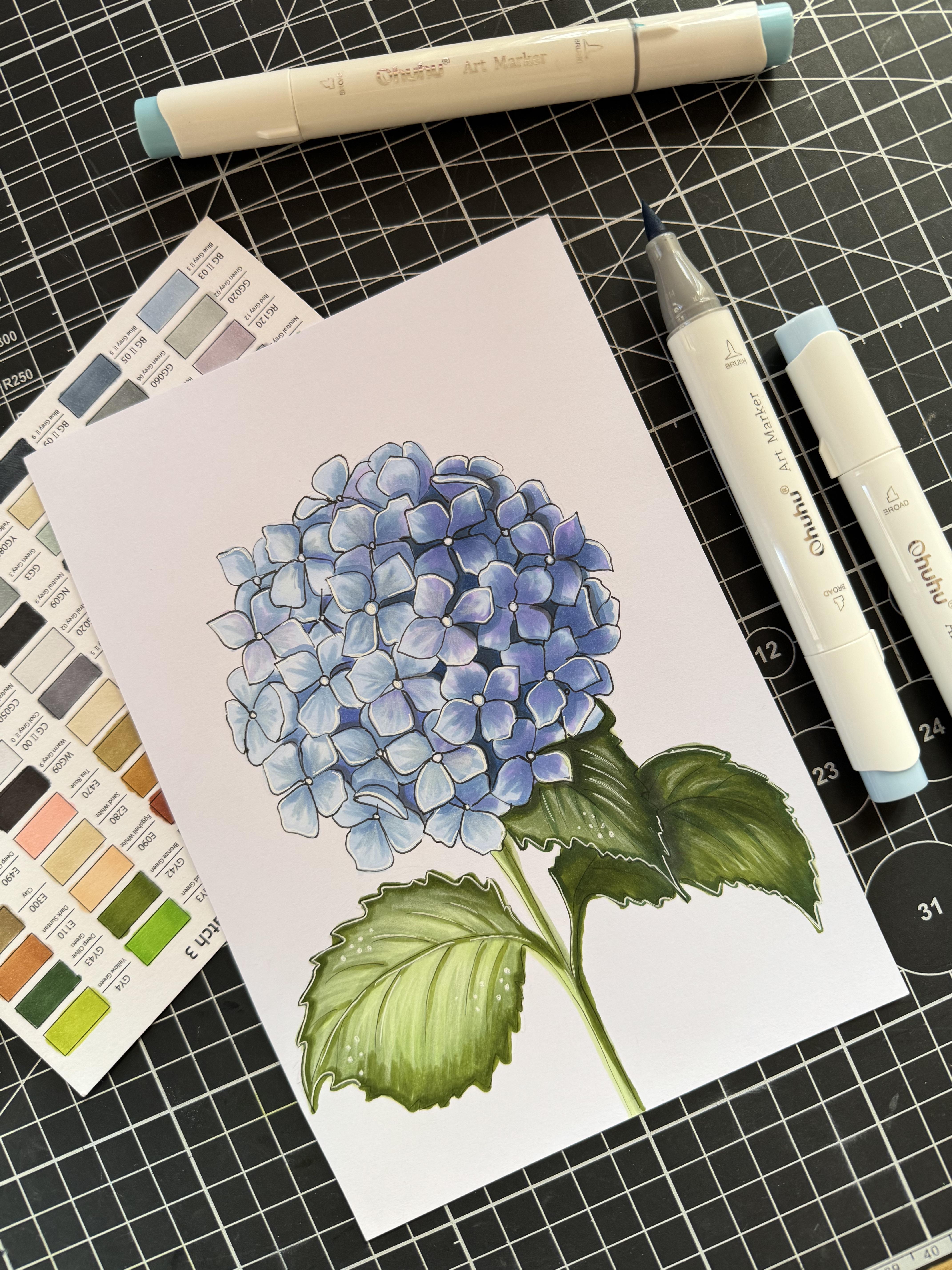
I will use alcohol-based markers. And you can use your favorite tools, like watercolors or colored pencils, and you are free to mix them. It’s always fun, and you can achieve great results.

And if you aren't a premium member here, on Skillshare, I prepared I prepared15 free-enrollment links for you.

I appreciate your positive review and feedback, and I am always here to help you)

So, grab your markers or any materials you have on hand, and let’s dive into the world of hydrangeas. Enroll now, and let’s create something amazing together!

You can check out my other Skillshare classes on drawing with markers here:

Sketching Basics: Drawing Shapes with Light & Shadow

Sketching Basics: Drawing Textures with Markers

Sketching With Markers: Draw a Sweet Cupcake

Sketching With Markers: Draw a Piece of Cake

Sketching With Markers: Draw a Croissant

Sketching With Markers: Draw a Cotton Branch

Sketching with Markers: a Winter Composition

You can also follow me on:

Instagram

Pinterest

Meet Your Teacher

Teacher Profile Image

Olga Sh

Sketch Illustrator | Master Coach ICI

Teacher

Hi, I'm Olga, a sketch illustrator, Certified Master Coach ICI, and educator with over 9 years of experience here on Skillshare. Having inspired thousands of students worldwide, my mission is to bridge the gap between technical skill and creative confidence.

What We Create Together

My favorite tools are alcohol-based markers. I love their vibrant flow and the way they bring subjects to life. In my classes, I break down complex illustrations into simple, approachable, and fun steps. Whether you are a complete beginner or looking to refine your style, I'll show you how to create art you're truly proud of.

The Mindset Behind the Art

What sets my teaching apart is my background as a Certified Master Coach ICI. I don't just teach you how to hold a marker: I help y... See full profile

Level: All Levels

Class Ratings

Expectations Met?
    Exceeded!
  • 0%
  • Yes
  • 0%
  • Somewhat
  • 0%
  • Not really
  • 0%

Why Join Skillshare?

Take award-winning Skillshare Original Classes

Each class has short lessons, hands-on projects

Your membership supports Skillshare teachers

Learn From Anywhere

Take classes on the go with the Skillshare app. Stream or download to watch on the plane, the subway, or wherever you learn best.

Transcripts

1. Introduction: Welcome to the first class in the drawing flowers with Markers series. By the end of this class, you will draw a bright, high ranger sketch illustration with Markers. We will go together through every step from sketching out the basic shapes to blending vibrant colors that make your flower pop. This class cover, how to work with reference properly, how to understand flower structure and simplify it to simple shapes. How to transfer an image from a reference to a paper. What is the steps of the color elaboration of the drawing? How to show textures? How to add details to your sketch. Whether you're a pro or just getting started, this class is perfect for you. You will pick up some cool techniques and boost your confidence as an artist. So grab your markers or any materials you have on hand, and let's dive into the old of hydrangs. Join now and let's create something amazing together. 2. The project: As a class project, you will draw a high range. Feel free to use the references I've prepared for you in the project and resources section. Of course, you can use your photographs, find some nice pictures on pinterest, or even draw from a real flower. And don't forget to share your sketches in the project section. Can't wait what you come up with. 3. The anatomy of the flower: In this class, we will be drawing a hydranga. Yes, it's not the easiest flower to draw, but we will go step by step through everything in detail. Here, I will take this photo as a reference. From here, I will take the basic shape, for example, I will take the leaf from this photo. In general, I will draw hydrangia from my head. References I need only for general understanding of how flower is organized. To begin with, I want to show you how hydranga is formed. Basically, hydranga is a circle inside which there are inflorescens, which are also have the shape of a circle. Inside this small circle, we form p tails. They can be three or four, and we can show them like this. Now I'm showing you this very roughly. Let's take another look at the inflorescence separately. Here we can draw a circle. And inside it. We mark axis on this axis, we draw petals that expand in the middle and nerve at the bottom. Also, the circle can be in different plants. For example, the flower can be located like this sideways. Here the petals will be more flattened. Such a flower can be located, for instance, on the side. Or for example, the inflorescence can be arranged like this. Here, the petals will also have a changed shape. And then we already put them on the big flower. Once again, the inflorescence is such an ipse in which we simply feed the petals. And the flower itself has the shape of a ball on which of there are these inflrescences. 4. Pencil sketch: So let's start drawing. My hydrangea will be in the middle of the sheet, and first, I draw a big circle, the flower itself. And now I draw the stem. And I'm going to a a leaf here. Another one. And let's say another one live here. Now I will move on to the inflorescences themselves. First, I draw these little circles, and around them, I form the inflorescence. And the closer to the age, the the circle of the inflorescence changes. Now in each circle, we begin to form petals. I don't use a reference here. I just draw the petals from my head. Again, notice that each petal has an uneven shape because the flower can be perfectly even. Well, here is our pencil sketch of the flower itself, and now we can detail beliefs. They have this kind of torn edge. Like this and also we can advance and the same here. Oh. Okay, our pencil sketch is completely, and now we remove the top layer of pencil, and we can outline our sketch with the liner. S S. So, our sketch is ready, and I think it's already looks beautiful. And now we can move on to the color. 5. Working with the color: Let's start working with the color. I'll be referring to this photo. My hydrangia will also be blue, and the light here is on the top left. So a shadow part will be on the right. I pick three blue shades from light to dark and will probably add a purple shade. I take the lightest bloom my E 220 and deplete in strokes like these along the shape of the petal. Now I take a darker blue B 250 and carefully added with strokes from the center of the pal. Something like this. A and now even darker blue, B 260, and I add it in the same way. At once, we can add a little bit of purple here. I take PB 75. And we can add this purple, but not in every flower. This one, for example, we will add it. Here is our flower, and in the same way, we paint the rest of the influrecences. Yeah. In the shadow part, I add a little more dark colors because it is in the shadow, and it's better to show it on our sketch. O M Now I'll take the darkest blue B 200 and add it in the darkest part here in the space between the petals. That's how we show the tips of our flower. D. And again, I had a little bit of my purple BB 75. Now I'm going to take an additional blue B 300. It's not necessary. It's just an option. And I'll go it again in those places where one cats a shadow on the other. And now, again, with my B 260, I'll go over the right part of the pails again as if separating the pals one from the other. B And with the same color, we can add more texture to the pets because now the marker and lighter. And I want to emphasize the shadow part even more. That's why I add a bit of P P 260 again here on the right. T. Okay, let's leave the flower as it is for now and move on to the leaves and stem. For the first color layer, here, I G 172, and I paint the stem and the leaves come with it. Thank you. Now I take the next green, G 204 t, and I will show the shadows with it. I paint this completely because it's all in the shadow. And I do the same stop leaf because it's also in the shadow. Now to the leaf, which is in the light. Here I show the ns and the cont of the leaf itself. Now, with my lightest one G Y 172, I mix colors with such strokes. And with even darker green G Y two, we can additionally work with the ans and edges of our leaves to emphasize them even more. Like this, now I take a medium green G two, and with it, we mix colors with such strokes so as not to lose the texture of. O M. Mm hmm. Add the lightest GY 172 with the same strokes and mixed shades. Now, I take again my GY 42 and begin to work through the leaves set in the shadow part. Here, I can add more of these dark green. Hi. Hi. Hi. Hi. And with the medium green, G 240, I blend the colors again. Here we can add more of darker green, M G Y 43 and deepen the shadow nuances on the leaf. S. Now I take G Y 42 and mix the colors and strokes as well. I ad the same shade to this upper leaf. I take G Y 43 and deepen the shades with it even more. S Now G 240, and I keep blending the colors and strokes. Also, I want to use it to add strokes to the leaf that is in the light. H And we can even add a little bit of dark green G Y two. But again, with such thin strokes. An. And blended with the lightest green G Y 172. In general, our hydranga is ready, but I still want to add a dark gray shade, for example, C G six, and go with it again in the shadow part of the hydranga itself. And I will also add the shadow that one leaf casts on the other one. And we can add it also somewhere on the leaves. Here. Here. Here. And I think we can also add a little of CG five in the light part of the hydrange. Don't be afraid of g. They help us better show the volume. Our hydrangy is almost ready. All that's needed is to add the finishing touches with a white pencil and a white gel pencil. 6. Finishing touches: Welcome back. Now we will add details and style to our illustration using a white pencil and a white gel pen. We will start by adding a white pencil to the leaves. Now our leaves have already become more voluminous. With the same pencil, we can lighten the pets. So to lighten them and make our voluminous and realistic. O Now we can additionally go with a white gel pen on the edge of the details. This will decorative and illustrative feel to them. Also, we can highlight the centers of the inflorescences with the same white pen. O. We also add a white pan to the leaves. F. You can do somewhere. This again, will lead to our sketch illustrative look. Something like this. So I think in general, we can stop here. Our hydrangea. There go 7. Final thoughts: Grads on finishing this class. You've gone from pencil sketch to a beautiful vi brat hund ranger illustration. I hope you had fun and learn some awesome new techniques. Remember, the more you practice, the better you will get. So keep at it, and don't be shy about sharing your sketches with our community. We'd all love to see what you've created. Thank you for joining me on this creative journey, keep drawing, stay inspired, and let your artistic talent shine. And if you enjoyed my class, I would really appreciate your positive reviews. It helps me as a teacher and to other students find and chose the right classes. See you in the next class.