Transcripts
1. Announcement: Welcome, everyone
to our video series How to perform Tea ceremony. In this series, I'm
going to give you all the steps necessary to
perform a tea ceremony, as well as teach
you what is tea, how to choose the right
tea for tea ceremony. What are the things that
you need for tea ceremony and even the history of
tea ceremony so that you are well equipped with
the knowledge and the skills necessary to start making tea for yourself
and your friends. So join us for this
course and start bringing the magic of tea
ceremony into your life.
2. What is tea: Hello, everyone. My
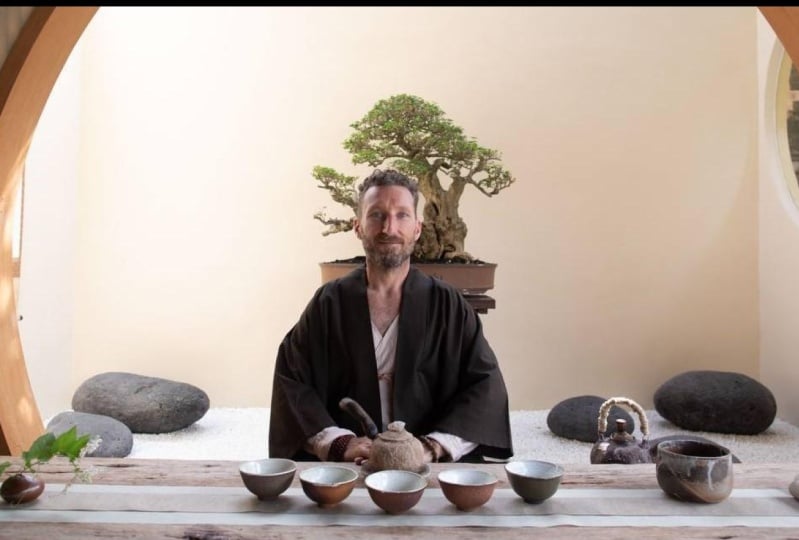
name is Barry and we're here at Dragon Te
Temple in Bali, Indonesia. Today, we're going to learn how to perform a tea ceremony. In this first video, we're going to
talk about what is T. So what exactly is T? Well, T is the common name for one species of plant,
Camila sinensis. When we refer to T, we are talking about one
specific plant, Cameia sinensis. Its scientific name tells us a little bit
about this plant. Camila means it is in the ameela family and
Snensis means China. We know that it is a cameela
from China originally. Nowadays, the word
tea gets used very loosely and gets used to refer to any plant steeped in water. But to be technically correct, any plant other than the tea plant would be
considered an herbal. We don't say the word tea
unless there is tea in it. If we are drinking
an infusion of mint, then all we need to say is
that we are drinking mint. If somebody asks you, what are you drinking and
you are drinking lavender, all you need to say is,
I am drinking lavender. Just like if you were drinking
tea and someone asks you, what are you drinking? You can just say,
I am drinking tea. So what are the
main types of tea? So there are seven main
types or genres of tea. Those genres of tea are
green tea, white tea, yellow tea, long tea, red tea, black tea, and Hua Tea. So Hua wasn't always considered
a genre or type of tea, but many people
nowadays consider Poa its own genre of tea. The difference between all
of the genres is simply how the tea is processed after
the tea has been picked. Even though they are all
the same type of plant, the way that they
are handled and processed makes all the
different types of tea. Of course, everywhere you grow tea tea will be
different and there are some different varieties
of tea out there and this all has an effect
on the quality of tea. But the difference mainly
between all of the genres is simply how the tea
is processed and made. So now that we know what T is and what are the
different types of T, let's learn how to
perform a T ceremony.
3. What is a tea ceremony: Hello, everyone. In this video, we are going to talk about
what is tea ceremony. I think it's important to define what is a tea ceremony to distinguish a tea ceremony
from casually just making tea. I hear this word tea ceremony used very loosely
and usually people are referring to when
they are just making tea and calling it a ceremony. I would like to attempt to bring some clarity and some definition to what is a tea ceremony. So what exactly is
a tea ceremony, and what distinguishes it
between casually making tea? Well, to make it a tea ceremony, there are a few key aspects involved that would
help to distinguish it. One of those aspects
is structure. I like to see structure as
maybe a certain time frame or a clear beginning and a
clear ending to the ceremony. I always like to start my tea ceremonies
with the sound of a bell and I will end this
tea ceremony in the same way. By beginning and ending
my ceremony this way, it gives a clear structure, a clear beginning and
a clear ending to it. So another key aspect to
ceremony would be Ritual implies that there are
some techniques or some structure that we are
repeating over and over again. By bringing in that ritual that we practice and do
over and over again, that helps to define
it as a ceremony. Another key aspect to ceremony would be
intention and mindfulness. Here at Dragon T Temple, when we do tea ceremony, most of the time
we are making it a practice of mindfulness itself. We sit with that intention to
cultivate full presence and full awareness when
we are doing T. With that intention to make
it a practice of mindfulness, this gives an aspect
of ceremony to it. I hope this helps to
bring some clarity into what defines a T ceremony.
4. What is the origin of the tea ceremony: Hello, everyone. In this video, we are going to
talk about what are the origins of tea ceremony? Tea originally comes from China or what is known
as present day China. But tea existed long
before China existed. The place that tea come from, people have been cultivating
and consuming tea there long before it was ever known
or became part of China. But we can say tea is
originally from China. But tea ceremony itself is not actually part of
Chinese culture. It is not technically
a Chinese invention. We as Westerners
sometimes we imagine that everybody in China is sitting
around doing tea ceremony. But the truth is tea ceremony is not actually common in China. Tea is ubiquitous in China. People are drinking tea
everywhere every day. The taxi driver you get in is
drinking tea from a bottle. You might go to a laundromat and they might have a tea table and they might offer you a cup while you're waiting
for your laundry. Tea is everywhere, but tea ceremony itself is actually
not a common practice. Then where does tea ceremony
actually come from? Well, tea ceremony itself is actually more of
a zen tradition. It was actually
the Zen monks who invented and practiced
tea ceremony regularly. How did this occur? How did
they invent tea ceremony? Well, to be a Zen monk and to practice and live
a Zen lifestyle, that means that basically your life is ceremony for
a zenmnk eating breakfast, brushing teeth,
mourning rituals, everything can be a tea ceremony because their life
has structure. Their life has so much ritual
and everything they do, they make a practice
of mindfulness. That is how tea
became a ceremony. When the monks found tea Tea was a perfect
compliment to their lifestyle. It fit in perfectly with their
daily lives and routine. Naturally when a zenmnk is
going to sit and make tea, he is going to bring in all of those aspects that
make tea a ceremony. F in fact, there's even a
famous saying called han ha we Zen and tea are one taste. This means that making
tea or the act of tea ceremony can be an act
or a practice of zen itself. So we now know that tea ceremony itself
is actually more of a Zen tradition than
it is a Chinese or any tradition of any
culture or nationality. Although many people say that tea ceremony comes from China. So what is a traditional
tea ceremony? Well, the truth is there is
no traditional tea ceremony. The only culture or
ethnicity that actually has a structured and
choreographed tea ceremony would be Japan. But in China, the style
of tea preparation, the style of making tea is actually as diverse
as the people, the culture, the food,
the geography itself. Everywhere you go in China, the tea is prepared a
little bit differently. The way that people make tea is prepared a little
bit differently. The food is a little
bit different. The only culture or
ethnicity that has a choreographed or
traditional tea ceremony would actually be Japan. So where is tea
ceremony done in Japan? It is mostly performed
at Zen monasteries because it was actually the zen monks who
brought tea to Japan. Brought when they
brought zen and the teachings of the
Buddha to Japan, they also brought tea, and they brought tea
in the way that it was commonly practiced in
China at the time. Japan has since carried on that tradition and created their own tea
ceremony out of it. And so Japan preserves that style of tea ceremony
and ritual to this day, while China has actually evolved and created different
styles of tea ceremony. What are the styles of
tea ceremony in China? Well, the styles of tea are actually as diverse in
China as the food itself. It would be like saying Chinese food when you go to
China, everywhere in China, the food is as diverse as
the culture, the language, the people, and the
geography itself, and tea is no different. Everywhere you go in China, the style of tea, the way that people prepare it, and the way that people
perform and prepare tea is different according to the different regions
and different places. There is no real traditional
Chinese tea ceremony.
5. What do I need for a tea ceremony: Hello, everyone. In this video, we are going to
talk about what do you need to perform
a tea ceremony. To perform a tea ceremony, there are going to be some
vital or crucial items that are absolutely necessary, and then we will have
some complimentary items that complement a tea ceremony that
add to it but aren't necessarily vital to the
tea ceremony itself. Let's start with
the vital items. Well, first of all,
you're going to need a vessel to
steep the tea in, which is a teapot. There are many types
of teapots out there. It doesn't matter what
type of teapot you have. What you want to make sure is
that your teapot is made of high quality materials and is made in a way so
that it functions well. In this way, you'll ensure that your teapot actually makes good tea because not all
teapots make good tea, like everything, you
get what you pay for. If you buy the cheapest one, don't expect a high
quality performance out. So another vital item
that you will need for doing tea ceremony is
a tea tray or tea table. There are two main types
of tea trays out there, ones that drain and
ones that don't. If you have a tea tray that
is equipped with a drain, that will allow you to pour water or tea directly
onto the table itself. If your tea table
doesn't have a drain, you'll just have to be more mindful of how you
pour or spill tea. Another important item, and this is a very
important item for me. I never do tea
ceremony without it. It is called a gente
or wastewater bowl. This is where you can put leftover leaves and all
of your waste water, which you will always need
during a tea ceremony. This is a very important item. This item can be put on
the tea table itself, or I often keep it under the tea table and just bring
it out when I need it. Another important
item is teacups. Of course, you will
need some teacups. For me, it is best to choose a teacup that is made
out of glazed ceramic. This gives a neutral quality to the tea and ensures
that you're getting the most precise or the truest
flavor of the tea itself. One more crucial item to the tea ceremony will
be your tea kettle. You want to, again,
make sure that your tea kettle is made of
high quality materials. Kettle is actually just reserved for heating
the water itself, which is why you
wouldn't want to use a food pot or something else to heat water because you don't want the taste of anything else. You want pure clean water. You want a kettle made of high quality materials so
that it functions well, but also keeps the integrity and quality of your water and doesn't add any
additional flavors. In addition to all of our vital components
to the tea ceremony, there are some
complimentary items too, which I like to use. One of those is cha Do. They call this cha
Do or tea tools. Here I normally just use one, but you'll see there is
many different tools that are used during
tea ceremony. I just use the one simple one, which is just a
scraper and a poker. Another non essential item, which I think plays a
very important role in a tea ceremony is
known as ha hu. Cha hu is your tea
presentation vessel. I think it's great in tea
ceremony because it allows you to show off the beauty of
your tea to your guests. You would put the dry tea into the cha hu and
you would be able to pass it around so everybody
can visually see the tea, see how beautiful
the tea was crafted and even smell the dry
fragrance of the tea. So another item would
be a tea towel. Always have a tee tile present
so that you can wipe up any mess that might occur
during the tea ceremony. So another item would
be a T pitcher. A T pitcher is not
a crucial item because you don't necessarily
need it for tea ceremony. You can pour directly
into the pitcher or you could pour directly into
the tea cups themselves. If you are new to tea ceremony and you are just starting out, I say it is best to
start with the pitcher as this makes it easier
to do the tea ceremony. If you want to practice
a little bit more advanced or as you get
a little bit better, you can try pouring the tea directly into the
tea cups themselves. One more item that
I like to have at tea ceremony is a bell. Remember, I said that I
like to start and finish all of my tea ceremonies
with the sound of the bell and this
helps to give structure. So during my tea ceremonies, I always have my bell present. I hope this helps you
in your preparation and for getting started to perform
your first tea ceremony.
6. How do I choose a tea for the tea ceremony: Hello, everyone. In this video, we are going to
talk about how to choose T for a tea ceremony. So how do you choose the
right tea for a tea ceremony? There are many
different reasons and ways to choose tea
for a tea ceremony. You might want to choose tea according to your
guests or the occasion. Of course, you're going
to want to serve tea that you think your guests
will really enjoy. Another way to choose
tea is according to the weather or the
present conditions. If it is cold or rainy, you might want to choose a
tea that is warm or dry. If it is hot and sunny outside, then you might want to choose
a lighter more cooling tea. If you are new to tea ceremony, then you might want to choose a tea that is actually
easy to prepare. Some teas are much
more forgiving and easier to prepare than
other types of tea. If you're just starting out, I recommend that you start
by choosing a black tea like shop ware or a very
dark oulong or a red tea. These teas often
tend to be easier and more forgiving to prepare since they don't bitter so easy. A tea that you wouldn't
want to start with would be like a green
tea or a yellow tea. Those teas bitter very easy, are very unforgiving,
and they take a lot of skill and
practice to prepare well. Make it easy on yourself. Choose a tea that's
easy to prepare. One general rule for
choosing a tea would be to choose a tea that you
are already familiar with. Never start with
a tea that you've never made before and
serve it to your guests. You want to learn the ways of a tea before you prepare
it for other people. So I hope that helps
you in choosing a T for your next tea ceremony.
7. Steps to perform a tea ceremony: Hello, everyone. In this video, we're going to outline the
steps to perform tea ceremony. Step one is to bow. We have the physical
prostration of bowing. I always like to start
a tea ceremony with a bow because it reminds me of the internal prostration that I need to do to perform
a tea ceremony. What is that internal
prostration? Remember, tea ceremony itself is a practice or
tradition of Zen. In the spirit of Zen, we will do a tea ceremony with compassion and reverence
for all living beings. Every time I bow, it is a reminder to put myself in that
place of reverence, to put myself in that
place of compassion, kindness, openness
for all of my guests. That is why I always
start with a bow. The next step I like to
do is to ring the bell. This isn't a required
or important step, but it helps me to
give structure to the tea ceremony itself and
give a clear beginning. Everybody knows that the tea
ceremony is beginning now. The next step that
I like to do is to display the T.
At this moment, I like to pull out the display
vessel holding the T and I like to pass the tea around so that everybody can
look at the tea, see how beautiful, how
well crafted the tea is, and then smell The dry Began. I will pull it out.
I will smell it, and then I will pass it
to all of my guests. The next step to
the tea ceremony is to rinse all of our teaware. Of course, our teaware is clean, but this is a ritualistic
and ceremonial rinsing of the teaware so that we show to all of our guests that
the teaware is clean. This also helps to warm our teaware and prepare
it to make tea. So first, I will add
water to the teapot, and then I will add water
to all of the tea cups. Now that I added water
to all of my tea ware, I need a place to
put that water. This is the point
that I bring out the enchu or wastewater bowl. Okay. So now that I brought
out the wastewater bowl, I will go ahead and
empty my teapot. Speech. Okay. The next step that we will do before we
prepare our tea is we are going to add our te to the
teapot and give it a rinse. I start by removing the lid. Now it is our
natural inclination to hold the tea towards ourself, but get in the habit of displaying the tea
towards your guests. In this way, they get
to see and observe how beautiful the tea is
as you add it to the pot. To rinse our tea, I simply want to add enough water just to cover
the leaves themselves. Without hurrying and
without any reason to wait, I will immediately pour off the rinse water
into my tea pitch. So at this point, I
want to make sure that all of my tea
vessels and tea ware have been emptied of water so I can make the
first steeping of tea. So now that we've rinsed
our tea and our tea ware, we are ready to do
our first steeping. So to steep the tea, I'm going to fill the teapot
to about 90% capacity. How long do I steep the tea? That depends. It depends on how much tea I
put in the pot. How big is my pot. What type of T it is. All of these factors will determine how long I
steep the T. Knowing how long to steep the T is
an intuition that is learned through skill and
through practice. I know. When I'm ready to pour the tea, I'm going to pour the tea
directly into my pitcher. I always want to make sure I pour all the tea
out of my teapot, there's no water
left in there and the tea doesn't continue
to steep and get bitter. Next, I'm going to pour
the tea into the tea cups. Here I can go ahead and
serve the tea to my guests. M. Now I want to re steep the tea. I have a couple of options here. To steep the tea again, I can pour directly into the pitcher and then
pour into the cups, or I have the option
to bring the cups back to the table first
before I pour tea into them. There's no right or wrong. It's up to you to choose. I always like to bring
the tea cups back because it helps to
bring more structure to the tea ceremony and
it helps to bring more togetherness as we are all drinking our cups
at the same time. So now I'm going to
do another steeping. How many times can
you steep the tea? Well, that's actually up to you. As long as the tea has good flavor and you
are enjoying it, you can continue
to steep the tea. If you are no longer
enjoying the tea, then you don't have to repeat
steeping it any longer. How many times you steep
the tea is up to you. When we finished
steeping the tea, I like to bring all
of the cups back to the table so that we finish
the same way that we started. This brings in the aspect of
structure and also ritual. It also tells all my guests that the tea ceremony is ending. Remember, there's not one
right way to do it and it is up to you to decide how you want to conclude your
tea ceremony as well. And the last step to the tea
ceremony is to conclude with a bow and a ringing of the bell so that
all of my guests know that the tea ceremony
has now been concluded.
 ChaTea Club, a place for tea friends, servers, spaces