Transcripts
1. Intro: Creating art and
sharing it online can feel like riding
a roller coaster. You never quite get up. One moment, you are frilled
because someone loved your post and wrote
a very long comment. And the next, you're
panicking because your last reel disappeared into the void and no one saw it. There is this constant push to stay visible to hop on
trends and to create content on a scale that very rarely matches your
real creative energy. And let's say it loudly. That's very
exhausting sometimes. I've been in this
game long enough to know the highs and the lows. Be Bernard is sneaky, it creeps in very slowly. One day, you're happily creating your art
because you want to, and you are really
excited to do it. And the next, you feel
like you have to, even though you don't feel it. And, of course,
the funny thing is your career and your
art can benefit enormously from
being present online and staying visible and
sharing what you create. None of these wins will matter
and will be sustainable if you are too tired and too
uninspired to enjoy them. So the real question is, how do you show up
on social media regularly without
losing yourself? That's exactly what we are going to explore today together. I have a lot to tell you.
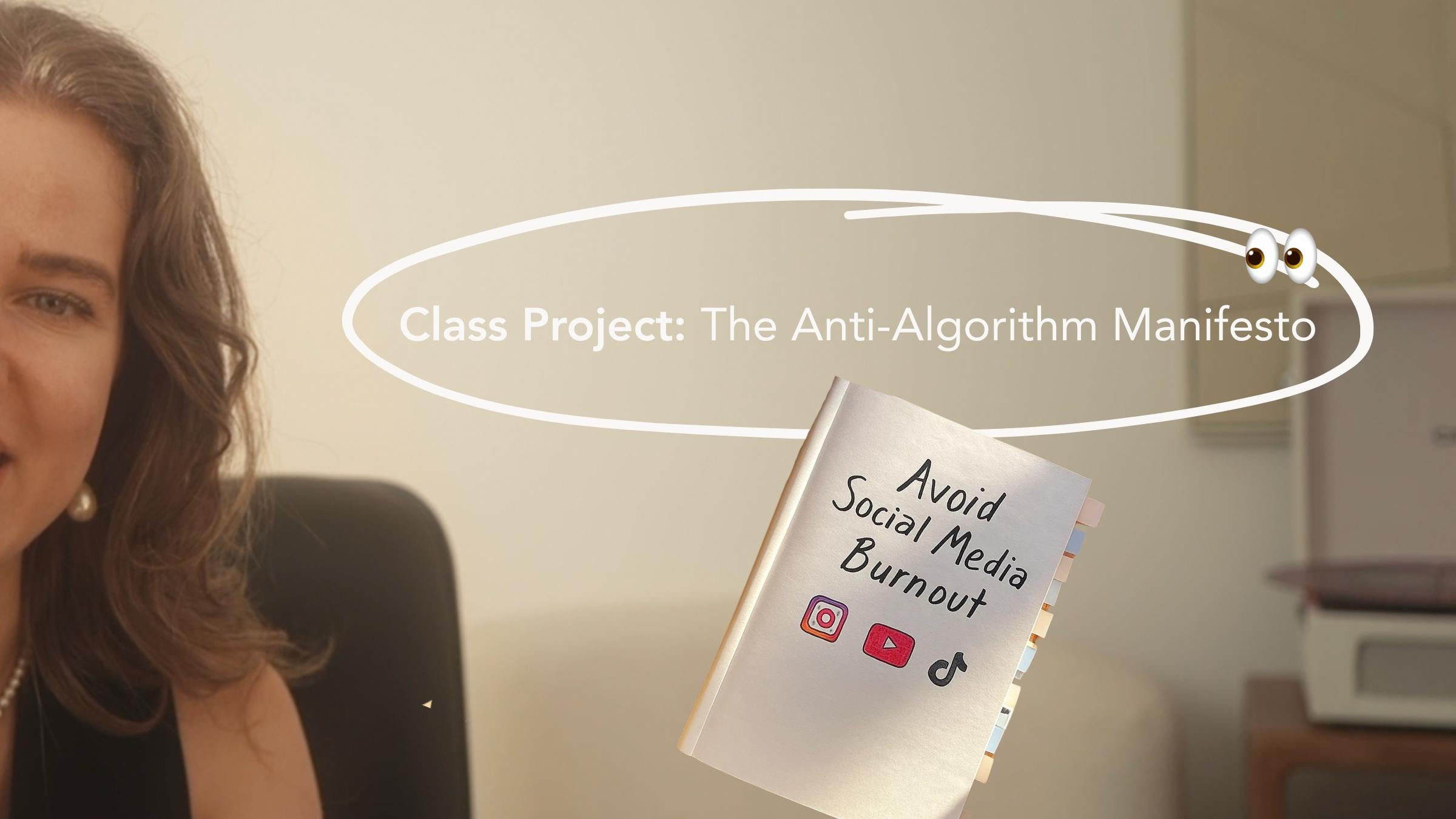
2. Class Project: Class project. Okay, this might be the most
important part of the whole course because I always repeat it
like in mantra, I think it has already become
a mantra of my courses. Watching the course
is not enough. I once heard that
watching a course is another form of
procrastination if you don't take the action. And when first heard it, I was a little bit skeptical. I was like, Okay,
productivity Gurus just found another way to shame me and to tell
me I have to act quickly. But the longer I live and the longer I create
and the longer I work with talented people from many industries,
the more I see it. Indeed, it is a form of
procrastination when you watch several courses
one after another, and then you don't
change anything. You feel like watching
the course is the change. But watching the course
isn't the change. You have to do something
after finishing the course. So now I also
repeat those words, even though I was skeptical at first that watching the
course is never enough. So I really hope this course
sparks reflection on you, motivation and pushes you
towards a positive change, a change to make your life easier and more enjoyable
because I think that's the ultimate
success to have a life you can enjoy
on daily basis. When someone asks me, What is a success for
me is to lead a life. You don't want to escape and to lead a lifestyle
that is sustainable. So that was a moment
of Kaia Cello. But back to our class project. This course is about avoiding burnout as a creative,
as an artist, posting on social media
and trying to grow a successful presence
presence that you can benefit from the
presence that gives you many opportunities to grow
as an artist as a creative. And I think burnout
is kind of forgetting about why you are doing it and why you enjoyed it
in the first place. And then if burnout is
kind of forgetting, this class project is about remembering because I hope after watching the course
and after doing all the parts of the challenge we will discuss together today, and after answering all the
questions I prepared for you, after doing all the tasks
I prepared for you. I want you to create the
anti algorithm manifesto. Okay, it sounds very mysterious. So why I want you to do this? When I hit my own burnout
well more than once, even though I didn't
realize it at that moment, when it hit me, I realized
something uncomfortable then. I've been shaping my
creativity around what perform well and
my job my social media, for my clients, not
what felt like me. And, of course,
sometimes we have to do this because that's just
the world we live in. But when you do it
for a long time, you forget who you really are, and I think your
creativity is stuck. So back then, even after I
recovered from the burnout, it was a little bit hard
to find my way back to the original reason I ever
wanted to make it all. So that's what this
project is for you. It's a little rebellion. So I want you to write your
anti algorithm manifesto. Okay. Okay, let me
explain what I mean. It's about defining
yourself on your own terms before the Internet
tries to do it for you. So what I want you
to do exactly. I want it to be a note
to yourself and maybe to other creatives you admire
about why you create, about why you want to share what you create
on social media. And more importantly, what
matters more than performance, the number of likes, although, of course, that is
important for your growth, and we'll also
discuss how to become friends with social
media algorithms, how to make the
algorithms work for you, how to work smarter, not harder. I'm a little bit tired
of this cliche phrase, but, you know, I sometimes
have to use it too. So your anti algorithm manifest two doesn't
have to be long. It just has to be true to yourself and how
you can write it. There are a few starting points as an inspiration
you can play with. I create because my art
doesn't allow anyone. Even if no one saw this, I would still I'm
not here to impress. I'm here too. I'm done measuring my worth by. Or even here's what I want to do anymore to choose
to chase growth. As an artist, as
creative as you are, I know you might
want to experiment with this manifesto to
make it more yours, to make it more meaningful for you to really express
what's on your mind. So, of course, you can
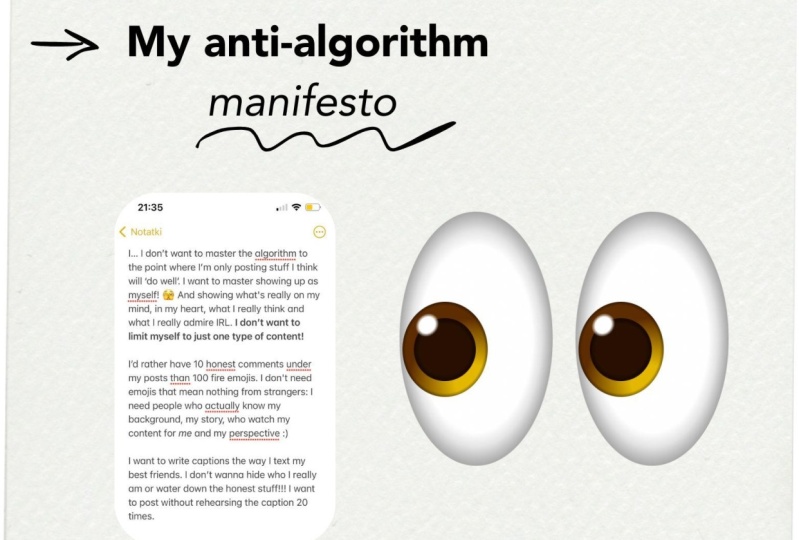
write it as a poem. A messy note on your phone, a voice message transcribed
into a few lines. A doodle with one bold
sentence in the middle. A kind of fake Instagram caption you would never actually
post, but maybe you should. So as you can see, there is no one right way to do
this class project, but the goal of it is to express those feelings
if you have them and to hear your
own voice and to be able to write
down those feelings, not filtered, not the
polished version, not the version
you think how you would write it on your
Instagram stories so other people
wouldn't judge you. No. This is the place the class project to be
really honest with yourself. This is the and here
are my examples from me and from a few of my
clients to inspire you. What I have in mind,
you can use it as a starting point if
you agree with them, if you can relate to them, or you can create something
totally yours from scratch. I create, so I don't
lose track of what's real when everything
feels like a performance. I don't need my art to go viral. I need it to be mind and
meaningful for the people similar to me who
enjoy seeing my work. I'm not building an audience. I'm building a community
of like minded people. I know that when I
create from my heart, they will find my
content someday. I don't want to
focus on algorithms. I want to be good
at showing my work, and I want to be proud of myself and what to do with it once you've
written it all down. That's up to you, of course. Can share it in a class
project gallery if you feel brave and I
deeply encourage you too, because I really
love to be proud of you and see what you think. So sharing deep thoughts
is a form of connection, and I really appreciate that. You can print it and
tape it to a wall to remember about those statements,
about those confessions. Can hide it in a folder called reminders for when
you next spiral, or you can whisper it
to yourself because posting anything just
like a creative prayer, a little bit, just
like your mantra. Because when a burnout
big or small creeps in, it really helps
to have something to come back to, to look at, to read, something like a
reminder that you don't have to care so badly about your reach that your goal is much
bigger than that.
3. Understanding Burnout as a Creative: Standing burnout as a creative. After observing so
many talented people, there is this one thing I show. Burnout is so, so sneaky. It's not like one day you wake up and feel
totally drained. Instead, it kind of
creeps up on you. At the beginning is
the tiny compromises, saying yes to one
too many trends, forcing yourself to pose when
you have nothing to say, and you are forcing yourself
so much and comparing your numbers to someone else's and seeing that their
grass is greener. And most of all, I think Bernard is losing this very
special touch with why you started
creating and showing your art or sharing what you
create in the first place. And unfortunately, it's much more common
than you would think. Pretty much every artist and
every creative I know who is active on social media and who is trying to
grow their presence. Has hit this wall at some point. The good news once you
recognize the signs, you can do something about it. But I think the word burnout is repeated
too much nowadays. I started to lose its meaning. So let's start with
the basic truth. Creative burnout doesn't usually look like lying on the floor, sobbing into your keyboard, like we see it in movies. More often, it looks like
opening a blank dog, opening your phone notes, staring at it, and
feeling nothing or worse. Feeling dread, like your
brain has just coasted you. There is this assumption that burnout means being
done, like, you know, a final crash when you think you don't you just
can't do it anymore. But the reality, I
think for most of us, when we are burnout, we
are still functioning. It's like a high
functioning burnout. We are still posting. We are still replying. We are still making everything work because we feel
like we have to. And indeed, many of us have to. We are still checking
off the boxes. But underneath you
know, we are cronky. We have these
frustrating thoughts. We are secretly the
dreaming about deleting our accounts and starting a
candle business on Iceland. No social media, no marketing, you and some locals there. So here's what I want
to say of France. I know those feelings
are horrible. And I know that many
times when you feel it, you think that there's
something wrong with you. Like you are talented, you are creating art. You are doing what you've been dreaming about
doing before. But you still feel bad like
something shifted in you. And when you think,
you might burn out. It doesn't mean you're broken. You're not broken. This doesn't mean you're not cut
out for this work. It just means you are tired
in this much deeper way, one that creativity
alone can't fix. And today, we'll
focus on how to avoid the state and what to do
when you are already there. Creative burnout
can have many pass. I think the most common
ones I've seen while collaborating with artists
and creatives are these ones, the messy one. The messy one. And unfortunately,
I think that's the one I can
relate to the most. You have 140 types open, free abundant projects, and zero motivation to
finish any of them. And you're not sure if
you are distracted, exhausted, or just
existentially over it. And many times it's just the mix of all the f the overwork type, you've been pushing
through for weeks. For months, showing up,
grinding, hustling, producing. But now you're running on fumes and it's
hard to slow down, but you feel like you
are so tired inside. So you're physically upright, but mentally
absolutely exhausted. This type. I think this one is trickier because you are doing the work. You are doing everything right, everything that you have to
do. But you've lost the joy. And no matter what,
you can't find it. You are doing all the things
that brought you joy before, but you don't feel it anymore. Everything feels stale. Your old ideas, even the most dreamy ones, don't excite you anymore. And what's the worst? The things you used to love, the things you used to adore
now feels like a chore, you are obligated to perform
to keep the business going. Like, for example, posting on Instagram or just
showing up on stories or just filming some behind the scenes to
show your followers. Now, take a moment to reflect. Does any of these
sound familiar? Why this happens. Okay, there is a lot of
psychological discuss, but I want to show you a
little bit of my perspective, and I think there's a mix
of things at play here. Sometimes it's just overworking, and I think I'm guilty
of this one as well. But more often, it's
complex. It's layered. One layer is this
creative pressure to always be coming up with new
ideas that perform well, and it's inevitable that
not all ideas perform well. Unfortunately, at the
beginning, very often, many of our ideas don't perform
the way we want them to. It's also this
algorithm anxiety, chasing engagement, reach, chasing new
comments, chasing new. And you are overwhelmed
with all the new trends that you feel like the
others from your industry, from your niche are doing. But you just don't
have the energy to keep up with
all the new ones, and it feels exhausting itself. Having blurred boundaries
between work and life. And I know so many creatives are guilty of this
one and having unclear goals that leave
you doing a little bit of everything and feeling
like nothing is enough. And sometimes this constant
performance of being fine and not being overworked is its own
kind of exhausting. Also, we don't always
factor in transitions. The in between season when you're not quite
launching something new, but you are not resting either. Like, for example,
when you wrapped a big project and think you
should be bouncing back, but instead feeling like
wrong out this class. And I think those
phases are very often right for
Brenes. Many times. How do you distinguish
between burnout and just a funk or
just a worst time? I think here is a way
to tell the difference. Of course, I'm not
a psychologist. I just tell you
what I've observed, what I've been
observing while working with creatives and
working with artists, as I help them grow their online presence,
grow their businesses, and build the
sustainable lifestyle that is making it
possible to monetize their online presence and
making it easier for them to be successful and not worry
about the business side. I think I can put it all
in a nutshell that way. You have to observe yourself and be totally honest
with yourself just to identify if this is just a bad week or is
something really going on. So it's about recognizing the patterns before you
lose all the excitement. So if you've been
feeling that way from the right side of the column for more than
a few days or weeks, it's not just a
passing bad moment. Time to shift something because you can't feel
that way forever. So what's to shift and how? We are not trying to fix everything today because
that's not possible. For now, we are just
naming what's actually happening because that's
the first step to change. So I need you to remember that
creative burnout is real, and if you feel that way, you're not making it up. You can still be working
and be highly functioning and be burnout because highly functioning
isn't flourishing. It doesn't mean you are
enjoying what you are doing. There's definitely more than one kind of creative burnout. Source of it matters, and the solution does, too, and we will discuss
that in a moment. And you actually allowed to feel tired of the things
used to love, the things you used to dream of. That doesn't mean it's over. It just means
something has shifted, and we need to come up with solutions to bring
back the excitement. Now, I have a tiny assignment
for you, a task to do now. Wrap your notebook if you prefer the traditional
way of writing things down or open your
notes up and reflect on this. Where in your
creative life are you forcing something that
used to feel fun? What kind of burnout feels most familiar to you right now? The messy one, the overwork
or the disheartened. What was the last time
you made something for social media without thinking
about how it would perform? You know, the last time you did something because you actually enjoyed the filming process,
the creating process. So you need to answer those questions because in
this part of the process, we are just noticing you need to analyze how you feel so
we can move through it, not just push it to the side
and pretend it's nothing. And in the next chapter, we'll talk about social media, how it unexpectedly went
from fun went from having this genuine joy to full
time job for some of us and what it might look like to take some of
the pressure off.
4. A Quick Check-in with Yourself: Quick check in with yourself. Okay, before we jump
into solutions, let's do a quick check
in with yourself. Let's see where you
stand right now. And for that, I prepared
a quick burnout quiz. Okay, it's not that quick, but it has ten questions. And maybe this quick
part of the title is misleading because I need you to take your time to
answer those questions. As I already told you, watching
the course isn't enough. So I really did my best to prepare a very actionable
course for you. So you don't just watch
me talk, talk, talk, and then come back to your normal life to creating and feel
like nothing changed. I really want to spark and
wake this reflection in you. And to do that, you have to answer questions and
reflect on them. So answering those questions is such an important step today. Only rule to follow
be fully honest. There is no score to aim for except honesty
with yourself. That's really the
most important thing. So reflect on the past
couples of moms and answer. Yes or no, you can also come
up with much longer answers, but at the beginning
of each answer, I need you to answer yes or no. Do you feel guilty when you
take a day off from posting? Do you often check your
phone first thing in the morning or last thing at night to look at your analytics? Do you feel frustrated or disappointed if a post
doesn't perform well? Have you caught
yourself creating words specifically to place the
algorithm on gain followers, even if it's not what
you truly like to make, even when you don't feel this particular
trend or type of post? Do you feel obligated to share every stage of your creative
process with your followers? And does it make you
feel really exhausted? Do you ever feel anxious about keeping up with new
trends, new features, and new updates from
the Instagram team, Tik Tok Team or YouTube or
other social media platforms? Have you sacrificed
sleep, breaks, time with your loved ones, your personal downtime to keep up with your
content schedule. Do you sometimes feel creatively empty or uninspired after
spending time online? Do you often feel drain after engaging with your
followers or post in? Have you thought about
quitting social media entirely at least once in the past six months
due to exhaustion? Okay, now I really need you to take your
time to answer to this. And once you have your
answers and you have analyzed how you feel
about the questions, here is a little
guide how to use this quiz and how to
identify how you feel. So if you answered yes to four or more of
these questions, it might be time to
make some adjustments and to shift something
in your life. Because burnout can
sneak up on all of us. None of us is above it. Especially in this hyper
hyperconnected world where creating and promoting can feel like one and the same. And if you answer yes
to most of these, it's a sign you need
a serious action. And don't worry that's exactly
what this course is for. I will keep reminding
you that it's okay to want an
audience for your work, for your creative work, and also want your sanity
and peace of mind. Those two don't have to
be mutually exclusive. Now, let's dive into the
next chapter to explore my practical ways to make
your artist on social media, your creative journey on social media thing feel sustainable. And enjoyable, again,
5. Reframing Social Media as a Tool, Not Your Boss (How to Stop Performing and Start Creating): Framing social media as
your tool, not your boss. I think most of us didn't consciously sign up to
work for social media, but somewhere between uploading
our first playful post and checking our 17th set
of analytics this week, we kind of become
full time employees, and many times we don't realize. We are checking our
analytics so often. We are doing the research,
we are scrolling. We are thinking about
what to post next. It really is like our second
full time job many times. But at the same time, there is something very weird
about this job. It doesn't feel like we are traditional full time
employees because we are working on
social media without any fixed salary,
without any hours. Oh, and with a boss that changes the rules
almost every week. The worst part that boss lives in our pocket or on our screens. And I think many times we tend to forget who really
is in charge. For example, years ago, and I also observe it
many times in my clients. So this is only a
personal story, my confession about
the tendency I had. But these times I observe it in my
client's life so often. I kind of scares
me a little bit. But it also gives me
this satisfaction, like this satisfying feeling that I know what we have to do. So years ago, I had a
content plan so rigid. Might as well have
been a job contract. I had posting windows,
engagement checklists, and a whole spreadsheet that told me what
to say and when. I think I was doing
everything right, but I have plans a lot,
and I was doing it. I was executing it, but I didn't feel in control. I felt like I was reporting
to a silent authority, one that judged me every time my reach dropped or
my real didn't hit a certain number
of s. It affected my mood so much and
my motivation level. And one night after I get another scroll spiral and a mini complaining
session, I asked myself, What would it look like for me like to use social media
instead of letting it use me and affect my mood and my weeks so much and
my free time so much. And I think I didn't realize
that at that moment, but that question is a very important question
and that changed everything, and it shifted my perspective. Of course, it wasn't
like one colleague. No, but from that moment on, I was just more aware of the way social media and the
results affect my mood. So today, after years of
working with creatives, after working with solopreneurs, with freelancers, they want
to grow on social media. Today, here is me with
this huge reminder. Social media is a tool for you. Help you thrive. It's not a
test for your self worth. Because I think we treat platforms like
performance reviews. I also see it in ID device. For example, even
apart from my job, my boyfriend tries
to do YouTube now, and he is also posting
rails on Instagram, and he's checking his
analytics all the time. And he's really
happy when the views are high and when
someone says he's real. But when no one does, he gets really frustrated
and he keeps spiraling, What if I chose the wrong font? What if I chose the
wrong trending audio? What if the cover of
my real isn't good? You know, I really
affects the mood so much. So I think we really very
often treat those platforms, and every post of
ours like a review. Is it good or not? Tell me. Show me. Show me the analytics and
tell me, was it good? Did I do well enough? Was this real smart enough, fast enough, engaging enough? Was the hook good enough? Do I deserve to be seen? But this is so dangerous
for our mental health. Social media was
never supposed to be a metric for your
worth or your talent. It's a distribution tool, a megaphone, a gallery. It's not your identity. It's not the work.
Just one way the work travels and just one
format of distribution, three ways to reclaim social
media as your creative tool. I know very often it's
easier said than done, but I think it will spark
a reflection in you how you can change the way you approach social
media from now on. And I really want to
encourage you to use it to capture, not perform. So instead of
treating Instagram or all other social media
like stage, you know, where you have to
put full makeup on, put your best outfits
and be on best self. Treated like a sketchbook. Share fragments behind
the scenes progress, but not the polished progress. Let it reflect your real
rhythm of your creativity, of your daily work,
not just those super, super, super polished pigs. You are not a performer
in a spotlight. You're an artist.
You're a creative. For example, in a studio, who occasionally leaves the door open for others to see
how you are working, what you feel, what you think. Because nowadays,
the research shows the feeling of loneliness
is now increasing. And I think it's
also very layered because now we live
in the era of AI, and AI content is everywhere. So many people are
publishing content, but it's not written by them. It's not written, you
know, from the heart. So many essays online
just feel off. Like, you know,
there is this name and surname next to an essay, and there is this smiling face, but you just don't feel connected to what
you are reading. This is also a very huge topic. There is also this research that social media is very
harmful for the way we see ourselves that we tend to feel much worse after scrolling,
for example, for an hour. We are seeing those
highlighted real of someone's reality and we are comparing it to
behind the scenes. And, of course, it turns out we are always the worst ones. Like, you know, we feel not
so pretty, not so talented, not so easygoing as the people we see on our Explore
page in reals. So I think, especially now when the feeling of loneliness
is increasing, and there is this
plug of AI content, what matters now is
your authentic self, your feelings, your
imperfect self, what you are a little
bit ashamed to show. But I think many times, when we show you things we are a little bit ashamed to host, because those moments just
show that we are human, that we are perfect, that it's not staged, it's not polished. It's a cathartic feeling for you and for your audience as
well. They are trusting you. They are trying they
are starting to trust you because they see that
this is a safe place. This is a place where
you are not trying so hard to be your best
self to perform, just to pretend
someone you're not. So I think it's
very, very important to remember that it's your opportunity in today's era of AI content to be
yourself to be human. Because I think nowadays today, this trend will be on
rice, vulnerability, and authenticity
and real voice and personal stories and what
people will be looking for more and more because
they will get tired of AI content that lack personal
stories and lack depth. So this is really your chance, your opportunity to grow
your profile and attract the people who really
appreciate you as a human being, as an artist, as someone who is imperfect,
but who is relatable, who is talented and who just is brave enough
to be themselves, to be yourself and not to hide the things
that make you human that makes you an artist
decide its role in your world. If social media were a tool
in your creative toolbox, what would it be for promoting, connecting, getting
feedback, write it down. Social media is a
tool I use for. Of course, it can be a
mix of all the four. But if your current habits don't match that definition,
it's time to adjust. If you want to use it for getting feedback
about your work, you need to focus
on hearing back from people who are
your loyal followers. Even if there are only
a few of them now. You need to focus on them. You need to spark
interaction between you. You need to be open and let
them know that their opinion matters because if it's important for you
to get feedback, you need to give signs that
you are looking for it. Make it serve your values. So you need to ask yourself, what matters for you more? Speed or depth. Growth or Enlightenment, even
if it means slower growth. Rich or resonance and number
of saves, for example. Because when your actions
on social media tight, matching your actual values, what you think, what
you value the most, the pressure at
least partly drops. Of course, going
viral is amazing. It's an amazing feeling. You know, the notifications,
the excitement. Recently, I heard a story from YouTuber who usually
posted about creative topics until one day he made a video reviewing
the new iPhone. That video blew
up. It went viral. Suddenly he gained tons
of new subscribers, and on the surface, it looked like a huge success. He even made more
than 40 K dollar from selling iPhone lots, color grading filters
because the viral video drove traffic to that
section of his online store. But in the long run, he admitted that the video actually hurt his channel. Why? Because it brought in
the wrong audience, people who weren't interested in his usual, very
creative content. They came for gab reviews and even started demanding
more videos like that. But his channel was never meant
to be about tech reviews, and he didn't want to
go down that path. So when he returned
to posting his usual, very creative videos, those new subscribers
didn't watch them. His engagement rate dropped and his community felt disconnected. So sometimes going viral
looks like a big win, massive numbers,
overnight success, but it's worth zooming out. Sometimes it can actually
do more harm than good. Remember that you don't owe
the algorithm anything. One of my clients
told me she once felt like she was in a toxic
relationship with her audience. They only pay attention when I post certain types of things. That's what she discovered. And then I feel trapped
into repeating it, even if it doesn't
light me up anymore. So we had to work
through a mindset shift. People who only stay for one very strict type of post aren't your
people, probably. And your work is totally
allowed to grow, to change, and stretch. You're not supposed
to keep posting only one thing, only one format, only one very strict kind of post type of post in order to make a small group
of people happy because that way you won't
attract your dream audience. You won't attract the
people who really like you as a human
being, you as an artist, you as a bigger because you are living evolving
creator and you can't stick to one format to one type of post only for
a small group of people. Also, the algorithm or
actually many algorithms. Unfortunately, they
don't care about your peace of mind
or fulfillment. So stop trying to
create only for it, only to impress the algorithm. Of course, we need
to keep the hook in mind what to do to make
the real perform better, but that's not the only
factor we should focus on. Use this knowledge we
have strategically, but with boundaries and honoring
ourselves as creatives. Okay. Now there's
a task for you. So grab a notebook, or your notes up and write a personal social
media confession. And I need you to
finish these sentences. The kind of artist or creative
I want to be online is, write down whatever
comes to your mind. Social media supports
my creativity when? I'm no longer available for, for example, constant
performance, compresson loops, chasing trends I don't
really like and write it down and if you can keep it somewhere visible if
you feel like you need it. For me, my confession
would sound like the kind of creative I want
to be online is playful, forever curious and not
afraid to experiment. And without needing to
monetize everything and feeling frustrated when I
can't monetize something. Kind of artist, the kind of creative I want to be online is a safe space for other creatives to feel
seen and feel safe. Social media supports my
creativity when it gives me connection with like minded
people, not comprising. I want to treat it like a
studio window, not a stage. I want to share
what lights me up, not what boxes me in. And sometimes I need
to log off right after posting instead of spiraling
through the numbers. I'm no longer available
for measuring my creativity only in
likes instead of impact. I'm tired of editing out my personality to seem
more professional. If you want, I'd
really love to see your thoughts and what
confessions you write down. So if you like to share them, feel free to share them in
the discussion section. I'd love to read them.
And I think it would be a great encouragement for other creatives to share theirs. Here's what I want
you to remember. As I've already told you, but I feel like
it's so important, I need to remind you it several
times during the course, social media should never have the final say in your
creative self worth. Okay, you absolutely have every right to post things
that you won't perform, but still matter to you deeply. And in the next chapter, we are going to get even braver. We will talk about what happens
when disconnecting for, for example, few days, is the only path
back to yourself.
6. Dare to Disconnect: There to disconnect. I think there is this
very strange paradox in the creative life online. Sometimes, the more
we stay connected, the more we stay online scrolling through
other people's real, the other people's stories, the other people's short
movies, short films. The more disconnected we become from ourselves, from our ideas, from the joy we once felt when we first picked up
camera, a brush, stylus pen or our iPad with Procreate or whatever else you create and use for creating. You've ever posted a reel and
then immediately spiraled into comparing it to five others or opened
Instagram just for a second, just to check if
someone saved it. I need to know and came out 1 hour later with a
mild identity crisis. You know exactly
what I mean, right? I've left this loop, too. Oh, I did. And as a
creative strategist, I've worked with so many artists who swow they were just going to take a short detox and
everything will fall into place. They will stop
comparing themselves. Everything will get
on the right track, only to feel even worse
when they came back. Of course, they were
again in the same track. So sometimes we
promise ourselves, I just need a short break. But what if the simple
break isn't the answer? What if what we really need is to stop
treating the platforms like a lifeline and start treating our life
like the main event. Of course, unplugging for
a bit is a power move. Not all of us can do it. For example, if you are running a business and you
have to show up in order to gather sales
because you have to live. You have pay your bills. It may not be possible
for you to just log off. But for some of us, when
you are posting every day, and you start to lose track of what your creative
work really is, doing a little break
can do wonders, but it has to be an
intentional break. A year ago, I went online for a few months without
posting, without replies. And I also limited my
time online watching other people Everyone from my
circle said, You are crazy. January is peak time.
You have to come back. Of course, they were right. January is a peak time. But also, they were wrong. Those months of wearing treat, it was really needed because
I focused on my ideas, how I want my social media to look like, what I
want to share there. You know, I wasn't
just taking a break. I just needed to take some
time to analyze everything, who I am, what I want to share, what I want people to feel
when I see my content. Even though I'm
leading others and I'm a creative strategist
and marketing strategist. So, you know, I don't have
to be visible online myself, but I feel like I want to. But it was after locking off, I felt it that I need the space, but I needed to be more myself, so I can feel good there. So I simply studied noticing how long it had been since I created something
without asking, would it perform well? I think that was my curse because I'm in
marketing strategy, so I know what can
perform and what doesn't. So my mind is just
trained like this, and I had to fight it. So we have trained our
creative energy to be reactive to feed off likes, saves, shares and speed. But when you slow
down a little bit, enough to listen you will
hear the silent whisper. You didn't become
a creative only to entertain an algorithm and
worry about it so much. So I'm really sure our
brains need space, not more stimulation
because many times, especially when we are young, many times, we treat our attention like
an endless resource. Wish it was less, but it's not. Our brains are constantly
overstimulated nowadays, and I dare you to start noticing how it
really feels to be overstimulated
because sometimes we just want to avoid this feeling, and we are telling ourselves
it's not there, but it is. Constant pinks, flashing
reels, compresent traps. Even when we are
resting in beds, we are often scrolling and
we are doing research, what we can recreate, what
real we can recreate. Even when we are off, our
minds are still online. There's also real
research behind us. 22 study found that
even the presence, even the presence
of a smartphone, not using it, just
having it nearby significantly reduces
our cognitive capacity. Oh, no, I have my
phone right here, so I guess it was a wrong moves. But I have to control time. So I don't end up creating a
4 hours long course because, you know, I have a lot to say. Well, I just have
to limit myself, so I tell you everything
I need to tell you. But I don't infuse it with
too many personal stories. So, you know, you
will get hungry and you will have
to go for dinner. I want to make
this course short, sweet and short, so it's doable. And I can have you full attention because
when the course is longer, it's a little bit more difficult to keep that attention. A right? So yeah, back to the study. Also showed that the average
person touches their phone 2,600 times plus per day. Wow, we don't even
realize we are doing it, and 73% of us feel anxious when separated
from our devices. So as you can see, our
brains aren't broken, but they are very, very full. And when it's full of noise. There is no room left for
real creativity to launch. So we really need to rest away from thinking about creating
content for social media, away from scrubing because
the best ideas the best ideas will come to you
when you don't have your mind occupied with
all those thoughts. Because the best ideas
don't scream for attention. And what's super super confusing
and surprising at times, they come in the moments
we are not trying. They come when we
least expect them. They show up when we are
walking aimlessly with a dog, sitting with a cup
of favorite coffee, sitting with a cup of
favorite tea before work or during the
weekend, for example, Sunday, and watering
plants on a quiet balcony, for example, our grandma
balcony. What is funny? One of my clients, a designer who after hours, also plays with her
own creative work and passion projects and, of course, shares them on
her Instagram profile. A point where she couldn't
even look at her sketchbook and her iPod without
thinking, feeling and gut. So she stopped forcing it. She took her dog on daily noticing walk because
we were discussing it. And I know this idea sounds
a little bit ridiculous. But I have to tell you, I'm really a little bit angry
when I see people walking their dogs and they are keeping their phone and there you know, they're scrolling Instagram or TikTok, and they're elsewhere. They are not here and
now with their dog. They're online. Their
attention is somewhere else. So those noticing walks with a dog or if you
don't own a dog, you can borrow from your
neighbor or from your family, or maybe you can just walk with your coffee or your favorite tea in a mug and back to my clients. One day, she saw
the way a shadow cured against a stonewall and
it was really unexpected, and it sparked a new motif that ended up in
her new collection. And I think I know,
that's very individual. But sometimes that's how real creative recovery can happen. You start noticing things again. You let yourself find
something that is inspiring or beautiful to
you and you focus on that. And, of course,
you're not able to do that when your
brain is constantly occupied with something
else and you are not present because the
more occupied you are, the less you notice,
unfortunately. Now I've prepared
another task for you, which I think is
really important. So please don't skip it. And it's design your
disconnection ritual. So before you unplug, don't just say, I'm
taking a break. I need you to design
a little ritual. And here is how first, he's a of window. Pick a day, a block of hours this week where you
will go device free. I know it can sound
terrifying. I get you. I completely get
you unfortunately. So start small
because even 1 hour, even 2 hours can be enough. Just to start. Set a
visible intention. Write it down or say it aloud. For example, you can say, I'm
not logging off to escape. I'm logging off to
return to myself and to be present and to start
noticing things around me. And the thing is, I want you to replace, don't just remove. So what will you do instead during this
hour, for example? It could be drawing for fun. For example, I'm really
terrible at drawing. Trust me, I am, but it
relaxes me so much. So I feel I need to
do it more often, but without judging myself, because that way, I let
myself be creative. I'm doing something that is not exactly work related. It's not. But I just give myself time to do something for a
pure enjoyment of it. In that way, I can let
my mind relax a bit. And once a mind is relaxed, it's really so much easier
to notice the reality. The inspiration around
me and around you. It can be rearranging
your workspace or taking a long
walk with no phone. It can also be watching
the clouds from your Taras instead of looking
at your notifications. It's up to you, but I
need you to notice. I need you to let
your mind wander. And then write
down what came up, ideas, feelings,
observation was at heart. Not everything will be profound. Probably it won't. And
that's not the point. You just need to let yourself
be bored without the phone, without the endless scrolling
without your tablet, without your laptop,
without your phone. I just need you to notice
where your thoughts are wandering and what you
start to notice around you. Of course, you might still feel twitchy the first few
times you step away. You might reach for your
phone unconsciously. You might feel like you
are missing out like this hour without your
phone, they might need you. And I need to tell
you I also feel massive fear of missing out
every time I try to do that. But that was so much
harder at the beginning than it is now because
here is the quiet truth, I think we all need a
reminder of the Internet, the social media
will still be there after this 1 hour of unplugging. But your creativity
and your sanity, on the other hand,
might not wait forever for your
mind to be relaxed. Because the longer we
ignore how tired we are, how burn out we
feel, the heaviness, the brain fog, the resistance, the further we drift from our
creative artistic center. Dining and going chores. So I also need to share
a few habits that help keep this connection
part of my life, even when I'm online again. Advice free morning
routine is very hard, but even just for
the 20 minutes, so I can drink my morning coffee in peace because otherwise, it's very shameful to admit it, but sometimes I drink coffee so quickly when my
mind is elsewhere. For example, when I'm
already thinking about work, about all the things I
need to do that day. About all the conversation
I will have about all the problems I will
be solving that day. I just hold my mug with coffee, of course, smaller
than this one. And suddenly poof the coffee
is gone without noticing it. And I'm so surprised the coffee is empty.
The cup is empty. Like, How? And it goes like, Whoa, who drank my
coffee? But it was me. I just did it on autopilot, and I wasn't present
here and now. So I didn't notice
drinking my coffee, and I didn't even realize how it tastes because my mind
was somewhere else, and I was already
doing the work or I was thinking about something that caught my
attention earlier. So it happens very, very often, and my boyfriend gets scared
every time I do this, and he says, you
have to or present. And of course, I get a bit angry for him for saying that.
But I know he is right. And I also notice
the same pattern, and I know my coworkers have the same patterns and my
clients have the same patterns, and it's all a sign that
we are not here and now, and we let our lives go by, and we don't notice it
because we are not present. We are always, always elsewhere. Also on airplane mode sprints
for the creative work. I know that for some
people, it works wondrous. Keep a notebook that never
gets shed just for joy, for doodles, for your
private thoughts. Because I think the artist inside you doesn't want
to be famous first. They want to feel alive first, and feeling alive is so much more important
than feeling famous and trying too hard to get famous because when you
are true to yourself, when you are sharing your when people can feel that
you are authentic, that you are sharing
something you really enjoy, the success is
almost inevitable. But if the burnout
is too serious, you may just delete your account and then all the efforts will
be gone forever. So you need to take
care of yourself. And if you've been feeling
dull, numb or overwhelmed, maybe it's not
because you are not working hard enough
because sometimes you feel that way that once
we achieve certain success, we will feel alive again. Maybe it's because you haven't
had enough skillness to hear what wants to come through and what you really want to share
on social media.
7. Building a Sustainable Posting Schedule. Make it Work for Your Creativity, Not Against it: Let's build a sustainable
posting schedule because we want to make it work for your creativity, not against it. So let's get this out
of the way first. If your current posting
schedule feels like sprinting on a moving treadmill
with a blindfold on, you're not doing it wrong. You are just doing it
the way most of us were taught by Instagram gurus,
by productivity gurus. And I know they repeat post ten stories
every day or people will easily forget about your existence and your
reach will drop post more, post faster, post consistently every single day
or be forgotten. Somewhere between
all that pressure, your creativity just got a
panic attack and it got shy. So we need to relax. And you tell you this chapter is not about creating a strict, a very strict and rigid
content calendar. I really hope it
will be much more about reclaiming your
creative calendar, the one where you set the pace, where your creative work and
your lifestyle set the pace. Because I'm sure the goal
isn't to be just consistent. It's to be sustainable
consistent, so you can do it long term, so it can be a long
game because there is this huge huge
difference between a schedule that keeps you grounded and you feel okay with it and you
feel it's doable. And a schedule that slowly
eats away your sanity. And the first one gives you
a real chance for success. And the second one
gives you stress. And I work with so many clients who used to
think that they have to post seven times a week and post ten things on their Instagram
stories all day all behind. Behind what? Nobody could tell me in more than one sentence, but the fear was real. And I think the moment
of surprise come when people have to skip
posting for a week. And when they back, it turns out nothing broke. No one canceled them, or they even got
more engagement on the next post because it
came from a real place. And they had something
interesting to say instead of posting
something just for the sake of posting because every brain and your brain
too has creative season. So your schedule shoot too, because unfortunately, the
creative energy isn't liner. It cycles through
high output phases when the ideas are simply
flying out of you. The processing phases when you
are gathering inspiration, testing ideas, they
dreaming a little bit, recovery phases when it
gets more reflective. But I know most content schedule ignore this because we
are trained to treat our creativity like
a machine with endless energy and
zero fluctuations. And I think that really
is a setup for burnout. And I observe it so many times when I talk with my
clients and colleagues. Instead of fighting
your rhythms, you need to start
designing around them. So how to build a
posting schedule that respects your energy. You need to start
with your capacity. And for that, you
need to ask yourself, how many posts can
I honestly make each week or each month
without resenting the process? What kinds of posts
actually excite me? What kind of post
I enjoy creating? How much time do I need
for experimentation? And am I giving
myself this time? Now you need to reverse engineer your content
schedule from those answers, not from a random seven
times a week role. Of course, to not
feel the pressure to come up with something when
you have to post something, I really encourage you
to build buffer posts. Like you build savings. You future self will thank
you so you can create 24 extra posts per month and stash them away
like rainy day funs. And they need to be not time sensitive because you don't know when you will have to use them. So let those posts not be based on trends that
can be outdated. Just evergreen content, honest content that
feels like you, and you know you will be able to post it, for
example, a month from. So when life happens and
you know who it does, you will have backup
and something to post quickly without
taking much energy. A little client snapshot. One of my freelance clients, a beautiful, beautiful girl. She was also an agency model sometime ago who loved to dance, was crushing it on
reels until she wasn't felt like every video
hashed to top the loss. And once she told me,
I used to feel fun. Now I'm doing
choreography for views, not for myself and
fun of dancing. I don't enjoy so I
very often think to myself and I also say loudly
that during the process, we tend to lose this
excitement and joy. And this is a very, very simple recipe for burnout. So we have to do everything we can to keep the
excitement alive. It's not always possible.
It's not always easy. I'm not telling you it is,
but we have to keep it. We have to focus on that, and we have to keep
asking ourselves, do I really create what
I'm exciting to create? Because most of the time, I think the audience can
feel what really brings you excitement and what you are doing just for the sake
of creating something. Task for you, create
your sustainable rhythm. So this week this week, I need you to track
your natural rhythm. When do you feel most creative? Monday morning before
work or maybe maybe in the evenings after you know you don't have
anything to do, and your mind can relax a bit. When do you feel most creative? Know your best days and hours and also try to notice
if it's a pattern, it's a very random thing. I also need you to audit
your content energy. So write down every
type of content you posts, stories,
carusel videos, and write down what
series you are creating or what you are showing
in every post format. And now rate them.
What feeds you? What feels neutral to
create and what drains you? Now, look at the list. Look at the ratings
and ask yourself, can you reduce or replace anything that's
mostly draining you? For example, when I was
growing my own social media in my mother tongue in
my native language, so I'm not sharing it because my native language is
very, very strange. And if you're not
from there, you won't understand anything, so I'm not sharing it right now. But I remember that creating carusels was the most
draining thing for me. And I knew I could just skip creating so many carusels
and focus on als instead. But sometimes we are too
afraid to skip something or to double down on what
excites us the most. Like, we are afraid to break
the rules, but what rules?
8. Crafting Healthy Social Media Habits: Creating healthy social
media habits. Okay, okay. Now, let's be honest
with ourselves. Most of us open
social media too. Oh, quickly check one
thing, one creature. And then, one or 2 hours later, we are having this crisis and we are thinking about buying
something we don't really need. And we have a vogue sense that everyone else is doing life better or every creative is so much more
successful than you. And you are doing
something wrong and you suddenly feel very, very overwhelmed and also
a little bit depressed because people out there are
so successful and I'm not. And that's not your fault. Those platforms are engineered
to keep you hooked. But for creatives,
the cost is higher. It's not just time
we are losing. It's our confidence,
it's our direction, and many times just a good day because what we just
saw affects our mood, and many times that mood just keeps being bad afterwards. So this chapter is not
about quitting cold turkey. It's about building
micro boundaries. So you can use social media
without it using you. I also was a highly
functional dumb scroller. For a while, I
convinced myself I was doing research
every time I scrolled. But in reality, I was
comparing, absorbing even without realizing it. And slowly, my original voice and my own ideas started to feel quieter because I had a headful
of other people's ideas. So it wasn't until
I edited my habits, and I realized I was spending more time consuming
creativity than cultivating and it started affecting
my mood, my creativity, the way I interact with
people in real life, for worse, of course,
unfortunately. So I think I'm really sure habits matter more
than with power. You can't out discipline your dopamine system
because our brains, your brain will default
to the easiest, most familiar patterns,
especially when you are tired, overwhelmed, or looking
for inspiration. That's why it's very
hard to fight it, and that's why I think willpower
isn't the only solution. Environment, good environment
and good structures. Because healthy social media isn't about heroic self control. It's about tiny
repeatable shifts that make the right
things just easier. So I want to share habits
that have changed the game for me and for many
creatives I worked with. The pause before you open rule. Here is the challenge for you. Before you tap that
app, I can ask, why am I opening this to post, to research, to gather inspiration or to
escape something? If the answer is, I don't know. Oh, I'm bored. Close it. Yeah, that's the most
difficult part of the that three second pause sometimes
requires the Autopilot. So we need to be
more intentional about all the times we
are opening Instagram, Tik Tok, YouTube up. The office hours hack such dedicated windows
for being online. Outside those hours, look out. I recently saw this post, this note on SubtoC
I can't agree more. I think the society would be much healthier
if it worked that way. If outside those hours, you feel this temptation, this rising temptation
to open the up. You can hide it
up in the folder. You can create a password. And I think creating those
digital office hours reminds your brain and remind yourself social media
is a task for you, not a 247 job or your duty. So you have to be on
duty all the time. The three to one
rule for engagement. This one encourages you to interact with
other people work. So you are not blindly
consuming and scrolling through 1,000 reels without even noticing what
they are really. Oh, I encourage you.
Every time you post, respond to a comment on, for example, free other creators work, but with intention. No MOD is only comments. No, no, no, no, M it real. Make it honest. What you
think about their work? This turns social media
back into a conversation, a real meaningful interaction. But hey, here is the deal. Write the comments yourself. Not using AI. I really
need you to appreciate other creatures and use your brain to think about
why you like their work, what you appreciate
in their work. What catches your attention
when you look at it. Create before you consume. Even just 10 minutes. When you feel the very, very strong urge
to open Instagram, TikTok, give yourself
five or 10 minutes to do something
creative, sketch, right. Take a photo, scribble an idea. Touch your own creativity before they will class
your head with theirs. And sometimes even one
boundary from this list is enough to reset your rhythm or to stop
acting on autopilot so much. So now I have
another task for you to redesign your
digital rituals. I know it sounds a little bit, it's not a pleasant
activity to do, but you want to
feel better, right? You want to feel more
present in your life. You want to feel like your days are longer, and you
are doing enough. In social media,
a silent thief of satisfaction and yeah,
of life of time. So we really need to do this. So try this simple three part challenge over
the next three days. Audit. Track your scroll time
every day and be honest. Where are the peaks? And
how do you feel after? Interrupt. Choose one
interrupter habit, for example, moving the up to
hidden folder using screen time limage or pausing
before opening and test it. Test which habit breaks the
pattern for you the best. And replace. Find a go to activity to replace
dumb scrolling. For example, every time you feel the urge to scroll for some
reals, you can journal. It can be only 23 sentences
or maybe read a page from a good book because dumb
scrolling really is a thef of your time and you
don't feel better after. Other story is
when you opened up intentionally to find
inspiration for your next real or to see how others from your niche are performing and
what can work good for you. But when you do it unconsciously and on
ntopilot, it's a sip of time. Social media isn't the enemy. No, not at all. It can be
your biggest opportunity. It can be your door
to your dreams. But unconscious
use is your enemy. Very easy to blame platforms, but the real shift happens when we stop using them on autopilot. When we open them
with intention, we protect our energy and our originality and
our creativity. And today, in the era
of AI, everything, our originality
and our creativity is almost all we've got.
9. Leveraging Content Repurposing. When a Carousel Can Become a Newsletter, Then a Reel, Then Stories: Leveraging content
repurposing. Many times, you don't need to create more. You need to reuse what already works in a way that feels
aligned with your art, with your creativity
and don't make you feel like a content
factory that you have to come up every day with a totally fresh idea
because let's face it, trying to generate
100% fresh content for every platform is a very, very fast road to. So this chapter is all
about learning how to extend the life of your
best creative ideas. So you are not constantly
starting from scratch, wondering if you have
anything left to say today. My personal turning point, one of my favorite
pieces of writing started as a ten line Instagram
caption, so it was short. Only a few thoughts
blended together, but it got really a lot
of direct messages. So I decided to
reuse this idea and the newsletter and elaborate
on that a little bit. And now I'm also thinking about recording a voice node
and turning it into real, for example, because I
really think our best ideas, we have to use them
in different formats. So it will be the same idea,
just different formats. And I really used to
think repurposing means meant being
repetitive, being boring. Now after observing
the patterns and after observing the analytics and
how people's mind work, I think it means making your
best work travel further. So why repurposing isn't lazy? If you are still a
little bit hesitant, if it's a good idea, I totally get it because artists and creatives often resist repurposing because
we associate it with recycling or
being original. But here is the thing I tell
my clients all the time. Repetition with intention
is equal to resonance. People don't remember what
you posted last Tuesday. Remember what you repeat with
clarity and with emotions. So sometimes, instead of constantly chasing
something new, ask yourself, what do I
want to be known for? Now, say the same thing you want to be known for in
five different ways. Try to do that. I
know it isn't easy, but it's really beneficial to
train your mind like that. And saying the same thing with different formats and
in different words, that's intentional repurposing.
That's not copying. That's not posting
exactly the same, and that's really powerful. Now, let's discuss five
repurposing methods. I think you will want to
use after seeing them. The first one is my
inside out method. So start with one deep
idea you had, for example, an idea for a blog post, a podcast or a long caption. And then extract
smaller pieces from it. So you can break it
down into three quotes. You will use, for example, under your carousel on
Instagram, one mini tip, for example, to share
on Instagram stories, one carousel slide, one
behind the scene reflection. So as you can see from
one longer piece, for example, a long newsletter
or one long block post, you can extract so many
very, very meaningful posts. And you will have
so much to post, and your audience will love it. The second method is the
flip the format method. That way, you just change
how same idea is presented. For example, a ti promo Instagram Stories becomes a
real or the other way around, a real becomes a story
Instagram story. Instagram story
becomes a caption. A good caption becomes
a newsletter intro. These are the words, of course. So it's a very similar idea you are using the idea
you still relate to, you still agree with. But it has this new entry point. This one is brilliant. It's one of my favorites. It's the common goldmine. So scroll through your comments and direct messages and analyze. What are people responding to? What are they asking you? And you can turn the replies
and turn those topics, turn those discussions
into new post. So it's still your voice, but now it's shaped
by real connection, by real connections
and real discussions. And the first one, the visual remix method. So take an old
visual, for example, an old carusel and reframe
it with a new perspective. Of course, use a
different part with a voiceover maybe to give
it a totally new format. Add new context, here's what
I didn't share when I posted this or maybe make it then
versus now reflection. So as you can see,
using those methods, those methods purposing
really gives you so much options to use your best ideas and show your audience what
they really enjoy, but in new formats and
surprise them with your creativity with new
insights, with new formats. And really, you have to
repeat what your values are, what ideas you had
because people see so much content every day
that they need this reminder. Now I have a very
important task for you. We will build your
personal content stock. So the first step is to find a piece of content
you are really proud of. The one you still really love. Preferably something recent
that got good feedback. And now list three
ways to remix it. For example, new format. It can be from carousel to a
video to a real. New angle. For example, maybe you shared
something very general, and now you will add
a personal story, a personal confession to. Now, maybe you can
list down new tone. If your post was a little
bit instructional, maybe now it will
be more emotional. So create one remix
version this week. Don't overthink it, try
and see how it feels. You can also create your
very own content bank in your notes or in your
notion or in your mel notes. Every time you create something
you are proud of, add it. That's your golden
mind for the future.
10. Prioritizing Meaningful Engagement & Redefining Success Beyond Metrics: Prioritizing meaningful
engagement and refining success beyond metrics. Okay, I want to be
really honest there. There were moments, and I know there were
moments like this in my clients lives where
I would post something, close up, pretend I didn't care. Just to open it up
5 minutes later, open it again, check
the lights, refresh. Scrawl to see if any
new comments came in. Wonder if I messed up something. I I messed up the timing or the caption or maybe strategy
of the post went wrong. And I would tell
myself, It's fine. It's just a part of the
game, and that's life. But it didn't feel like it. It felt like this
slow leak in my self worth that no amount of
planning or batching could fix. So that's what I want to
talk about in this chapter. The weird sometimes shay part of being an artist,
creative online. The part where your brain
starts equating s with value or where a quiet post
feels like a quiet rejection. And listen, I very, very well know the
logical side of this, and I've told clients this. I've written long articles and courses explaining how
engagement isn't everything. But, you know, the
emotional part. It doesn't always follow the
logic because we as humans, we want to be seen, we
want to be appreciated. We want what we share to land somewhere real for
someone to relate to it. And when it doesn't post
disappears into the void. Oh, that's when the
questions sneak in. Is this even good?
Did I lose my voice? Am I just shouting
into the void now? So I think we are no
addicted to likes. We are addicted to what
we think likes mean, that someone understood that someone saw a part
of us and said, Oh, me, too, that we are not crazy for caring that
much about something. When that's not mirrored back, the silence feels
heavier than it should. And here is where I think you
have to unlearn some stuff. Not everything you share
is meant to be loud. And when it comes to me, some of the most meaningful
connections I've ever made on social media
came from posts that didn't perform because
sometimes all you need is just one special person to read your post
and feel something. Maybe you will got a direct
message from someone who will tell you that she or he cried reading one
of your caption. Or that something you shed
made someone feel less alone. This is the ultimate success, and those are the
moments you can miss if you judge your
work only by numbers. So I think success should
really look different for you. Not just did this post blow up? Let's check the stous. It should be D it feel
like me when I wrote it? I say something I
actually believe, not just what people want to read or something
that is trending, that one person just one could be enough,
tell me it helped. I know some days it
doesn't feel like enough, but it is Because at the end of the day,
when it comes to me, I'd rather be someone
who's fell deeply by a few than vaguely consumed by
thousands of thousands. So let's talk about
engagement for real. I don't mean the strategy side, not pose these many stories
or comment on 20 reels a day. I mean the relational part. The part where you remember this whole weird
Instagram or TikTok or YouTube machine
is made of humans because many times you
don't need more engagement. You need more
meaningful engagement, people who really
care about your art, people who really care about
what you are creating. And I really think that
it's all connected. And sometimes when you give good energy to the creators
you admire the most. You send good energy, and this energy
comes back to you. So this might mean
sending a voice note to someone who inspired
you to tell them, leaving a comment that is really honest and isn't
performative at all. Maybe sending a direct
message to a smaller creator, saying, Hey, this post really
hit me hard. Thank you. That's the kind of
engagement we want because it builds
people back up. And I think when it comes to me, that's the version of
success I'm chasing. That's the version
of success I'm trying to show my clients, and maybe maybe you need it too.
11. Creating an Emergency Burnout Toolkit: Creating an emergency
burnout toket. I don't know about you, but when I get really deep in a burnout spiral, I
don't want advice. Advice gets on my
nerves many times. I don't want a checklist. I don't want someone telling
me to just take a break. What I want and really need
is someone to say, Hey, I've been there, too.
It's not permanent, but let's not pretend
it's nothing. So this chapter is about what to reach for when you don't
feel like yourself. When your brain goes blank, when your creativity feels like, Oh, it's somewhere far away. When everything you try to
create feels flat, fake. When you keep picking
up your phone, like maybe maybe this time,
the answers will be there. They rarely are. So I call
it my emergency tool kit, but really it's more like
a creative first age. And to be honest, I
made it during one of the most busy months of my creative and
professional life. That kind of burnout,
where you go from, I love this to I think I
hate this in less than a where you start resenting the things you used to
crave and love so much. And you feel like a
fraud because you still showing up and
you are smiling. But, you know, deep down, you are topped out
like beyond tired. And that's when I
started building this. The first thing on
the list a don't do, don't do, don't do it List. Used to be obsessed with
optimizing everything. But when I'm burned out, I don't need more tasks. I
need boundaries. I need a reminder
that what I do is enough and I don't have
to pit everything up. So I made a short
list that says, Don't check Instagram and
your email inbox in batch. Don't say yes to collaborations or office
that make you feel heavy. Don't open analytics
when you are tired or frustrated or nervous. Don't try to catch up with
all the emails in one day. As you can see,
it's very simple. The rules are simple,
but when I see it, kind of stops me from falling into the same loops
because there is this reminder that it
was harmful for you before, so you shouldn't do this again. A feel something playlist. Okay, not a
productivity playlist. No, you know, blue noise or gray noise to make
you more productive. No. No chill bits to focus more. I'm talking about the kind of
music that make you cry in the shower because you can
relate to the lyrics so much. The kind of music that make
you dance in your socks. Songs that help you feel alive when you felt numb
before. And don't judge me. For me, that's group
coverage because that's the techno band I used to
dance to when I was teenager. It always brings the
good emotions in me. I always just makes me feel
alive, like the beats. They are just so uplifting
and they bring the memories, and the memories brings ideas. So think what this playlist
should be for you, right? A creative reminder
for yourself. Honestly, this one took me
years to realize that I need one place where my creativity can go
to not be judged. So for me, it's voice messages, just talking out loud, rambling into my phone like I'm sending a voice
message to future me. It's very personal.
It just works for me. So for someone else, it might be drawing messy
sketches or writing haiku or taking moody film photos on a little walk around the
neighborhood, for example. Something that will remind
you that you are creative, even when you are not
producing anything useful. So here is the thing I wish
someone told me sooner or I wish I had
realized it sooner. That your creativity
isn't broken. It's something that
is in your DNA. But when you feel burned out, your creativity
turns cold and it needs warm and self
care, not pressure. And really, really,
really loves of kindness. No more generic
productivity hogs. So that's what this
toolkit is about. Giving yourself this warmth and self care in whatever
form you can handle. So I really insist, make your own emergency
list, not for the worst. Just for the moments when the
glow goes a little bit dim. So ask yourself, what do I
need when I feel burned out, when I feel a little bit empty? What usually soothes
me, even just a little? What can I reach for that
doesn't require me to be on? You don't need to use it now. Just make it, write it down. And when the holidays come, you won't have to figure
it all out from scratch. You will have a starting point.
12. Long-Term Burnout Prevention & Social Media Growth: Long term burnout
prevention and growth. I used to think the goal
was to bounce back. Like, if I could just
rest hard enough or take a few days off or post
something inspiring again, I would return to this
high functioning version of myself, creative,
productive, energetic. Full of fresh ideas. But here is what
actually happened. I would rest just long
enough to stop panicking. Then I would jump straight
back into everything, and slowly, sometimes quickly, I would find myself
in the same spiral. So it wasn't recovery. It was he said button on a system that
still doesn't work. And I think for a lot of
creatives, this is the pattern. Wait until the crash. Then we treat the symptoms, and then we get back to the same tempo that caused
the crash in the first place. So what if the point
isn't to bounce back? What if the point is
not to need to recover so often in the first place?
But I want to be clear. Burnout isn't always avoidable. Life frou stuff at you. Sometimes this stuff
is really heavy. Projects stuck. Client
goes, trends shift. The financial stuff isn't
always the way we want it to. But there is a very
big difference between situational exhaustion
and a structural burnout. And for example, I realized some time ago that I
built a structure, a whole creative system
that only worked when I was at 100% energy. It didn't leave any
room for slowness. It didn't leave room for bordo. It didn't leave room
for slower days on more busy days when
my professional job is really demanding and most of the day so every film I
made was based on momentum. And the moment the
momentum stopped, the whole thing
started to fall apart. So I had to ask myself some really
uncomfortable questions. What kind of social
media presence am I building if it
constantly depletes me? Do I actually like the version of me that people are following? Am I building a future I can
still love in five years? I'm just surviving this year. So as you can see, those
were hard questions. Long term burnout prevention isn't always so
sexy. It's quiet. And honestly kind of invisible
for the world outside, but it's very, very much needed. So, for example, it could
be saying no to a friend you know would get abuse
because you don't feel it. You don't feel as yourself. It's protecting your two
slow mornings a week, even if you could be
editing during this time. It's letting go of the
groove hugs you don't feel and trying to
do it your way. Because I know it myself. It's so tempting to overcome
to overwork yourself, to say yes to everything
because you are feeling good. But real growth happens
when you don't overcome it. When you hold space for
your future self to not be on and say
yes to everything. That's how you make
burnout much less likely. You don't wait to feel
empty, to make changes. And one of the sneakiest
way the burnout happens, the burnout creeps
in is when you outgrow the version of yourself you've
been posting about. But you keep
performing it anyway. You know, the creative type you think people
expect from you, the voice, your followers know. Opinion you already
changed your mind about. But you pretend you're
not. You haven't. The aesthetics of pose, you're scared to change. So that performance, even if it started from something very
real, it can become a trap. And if you never
update the story, the aesthetics, you will burn
out trying to stay inside. So I'm really sure about it. Long term sustainability looks like letting yourself change, letting your creativity change, letting your audience change, not being so afraid about it. Because, yes, not every
followay will stay with you. Not every followay
will like you. Some followays will maybe
get bored or maybe they will change their mind
about what interests them, but you aren't for everyone. And the ones that will stay, they're here for the review, even through the
changing seasons. So here is a small thing
I really want you to try. Take a moment to imagine your creative life
one year from now. And I don't mean the goals, not the numbers or
the viral hits. I mean the feeling of it. How do your days actually feel? What kind of energy
you wake up with? What do you no longer
force yourself to do? What's no longer on your plate? Now imagine the version of you that is happy
with what you are doing, with the way you
approach social media. Now ask yourself, what needs to shift now to make
room for that future, so that future is
possible a year from now. I know. That question,
it might stink a little, but take your time to analyze
that. Take your time.
13. Final Words & My Question to You!: Final fuzz and my
question to you. Okay, here is my last reminder for today that you were never
meant to create a machine. And if you made it
all the way here, I hope you filed it by now. That this course wasn't
built to push you harder. It was created to give you the space to be who
you really are deep down because I know how loud it gets out there
on social media, the pressure to be valuable, to be relevant all the time. The worst part is that nobody really tells you how
much it can cost. Not in hours, not in
effort, but in yourself. The way you shape
your creativity around an audience instead
of your own creativity. The way you start to
measure your wealth in saves and chess and scene boys. So as you already know from the course, I've done it, too. I've watched myself
turn art into content, play into roles, I thought
would perform better. Here is what I've
come to believe. You really can grow and be so much successful without
grinding yourself down. You can show up without
splitting yourself in two. And you can take
a break and still be a real artist,
a real creative. And no platform gets to
decide that for you. Of course, you will
compare yourself to someone who looks
more together. You will overwork again, even after watching this course, and that's fine, because
I will probably too, because this isn't a contract
you signed in black. It's a practice. And you come back to it
again and again and we try again to take care of
ourselves better this time. And there is no batch for
avoiding burnout perfectly. But there is freedom in recognizing when it's
slowly and quietly creeping in and
choosing to meet it and do something with self
care, not with shame. So if there is one thing
I want you to live with it's this don't owe the
Internet your consistency. You owe yourself your capacity. So protect that. You deserve a creative life that doesn't
cost you your well being. And I will be there all the time quietly cheering you on
whatever you are posting, whether you are
posting every day. Oh you are still an artist. Always have been,
always will be. And before you go, can I ask you for something if this course
resonated with you, even just a single
sentence or a chapter. I'd love to hear what
lended the most. Your feedback helps you more than you think shape
future content, future courses that
actually support you. That supports all the brilliant, talented people who watch my
courses and what I create. So here is what I'd
really love you to do. Leave a short review of rat and share your favorite moment
or biggest insight in the review section or in
the discussion section and share the course with another creative
who might need it. Maybe someone silently
holding it all together. And if something didn't work for you or you didn't like
a part of the course, I want to hear
that, too, because I'm not trying to be perfect. I'm trying to be helpful and
I'm trying to be honest. So tell me, I really
need to know, and I really appreciate
your feedback. And for now, thank you so much for trusting me with
your creative energy. Thank you for giving
yourself this time.
 Kasia Pilch, Online Strategist & Marketing Specialist