Transcripts
1. Introduction Hilma af Klint: Hi, I'm Elisabeth and welcome to my arts inspired
series class, focused on Hilma Off Clint. I've been teaching on
Skillshare since 2021, sharing classes that show the different art
exploration and ideas that I'm exploring and playing
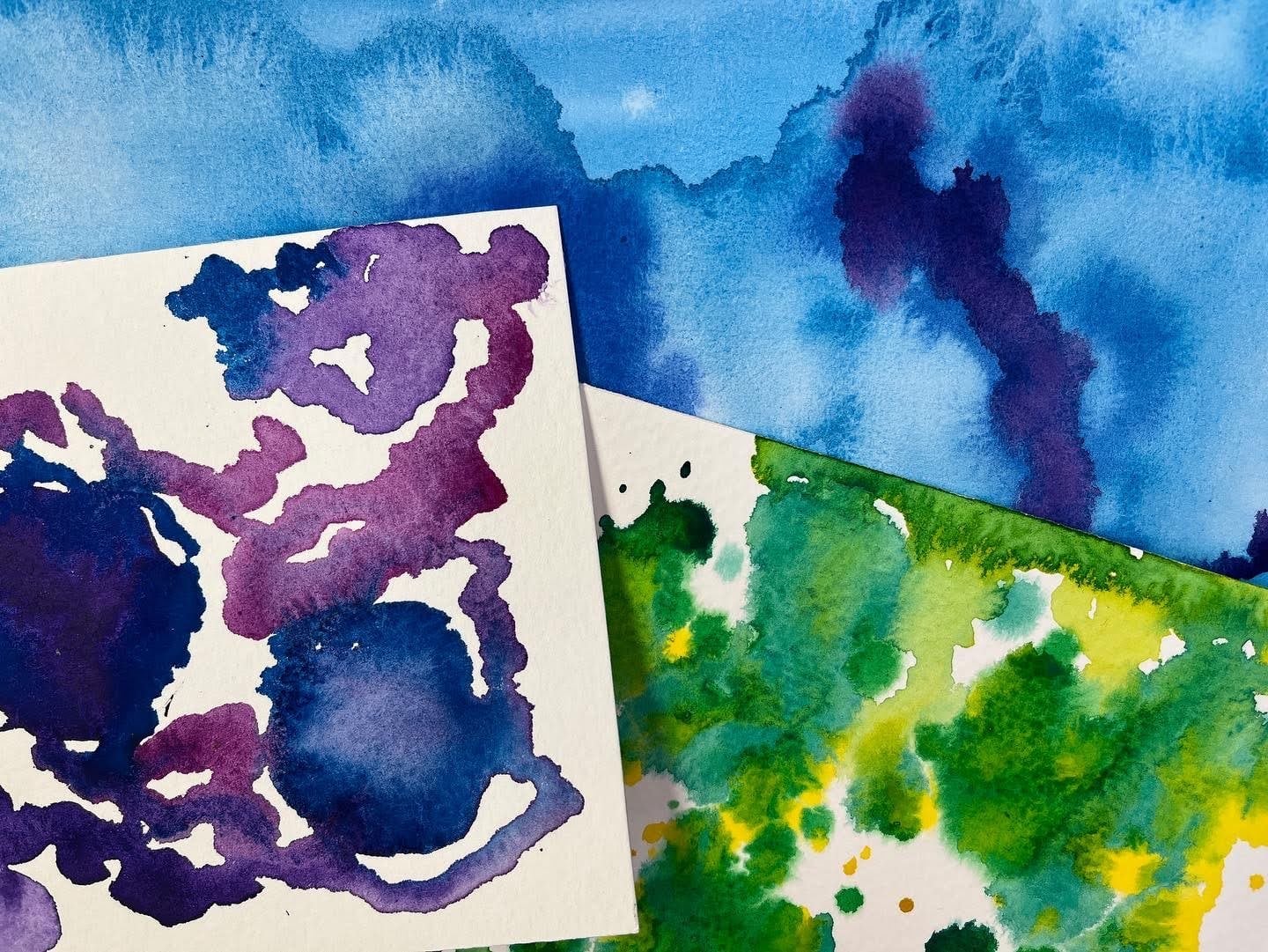
with in my art studio, as well as my artist inspired series class where I am sharing different
artists that I'm looking to from the past and the present and how I'm
getting inspired by their work and their
artistic journey as I look at that through the
lens of my own art journey. In this class, we are looking at the amazing abstract large
scale works of Hilma Hilma is an amazing
artist who was exploring abstraction long
before many others, long before people even knew that someone was
exploring abstract art. She predates those that we have often considered to be the
inventors of abstraction. Our class project is going to be a really fun play of how we
can use shapes organic and geometric and play with
color and scale to explore all the different
lovely aspects of abstract art and how we can
put our own spin on that. I hope you will join me
in class as we learn more about the life and
art of Hilma af Klint. Can head on over to the
next lesson to learn more about our class
project. I'll see you there. A.
2. Class Project: For Chris project,
I want to lean into some of the
subtle values that Hilma was playing
with and her play of color and shapes and
different mark making. I'm going to be
doing essentially a experimental watercolor for the basis of my class project, and then I'm going
to work back into that watercolor with
different drawing media. I want to really embrace the
intuitive art process that I think Hilma was leaning into and one that I also
enjoy exploring as well. I want to lean into the
mark makes that she was playing with and her
play of color and value. She has some very soft colors and I tend to go
quite bold and dramatic. I want to see what
happens if I tone that down a bit and encourage myself to play with a more
mellow color scheme and a less dramatic softer
application of color. You can do your class project in any art media that you like. On the projects and
resources section of class, I share a list of art
supplies that you might want to consider playing with for your Hilma af Klint
inspired piece. You can head on over to
the next lesson to talk more about those art
supplies. I'll see you there.
3. Materials: Mateials for Hilma af Klint inspired artwork are
going to be mixed media. She was a painter and she did
everything really large on canvas with oils and
watercolors in her sketchbooks. I'm going to go ahead
and work fairly large because I want to
have a lot of space to work with for the different
symbolism and imagery that I want to pull from off Clint's
work and put into my. Going to be using watercolors to get some base color
down very thin. I've got watercolor
or mixed media paper. Either one will work. Watercolors, relatively
large brush, and then a cloth
and a cup of water. Once that is dry, we're going to add a lot of symbols
and imagery inspired by her work and we
can even add some of our own imagery and symbolism
inspired by whatever we. So for that portion, I'm
going to have my fine liner. I've got a couple
different brush pens because I really like the play of the transparency of the brush pens with the play of the transparency
of the watercolor. I think those work
really well together. And then I've got some
colored pencils so that I can add a couple bold
pops of color too. You can work in whatever other additional mixed media
materials that you want to. You could also do this
project digitally. And there's a lot of
different aspects of programs like
Procreate that would work perfectly for a digital
inspiration looking at Hilma are the materials
I'm going to be using for my Hilma af
Klint inspired project. Go ahead and gather those
up, and when you're ready, heading over to the next lesson and we will learn
some more about Hilma's art and where she took her inspiration from.
I'll see you there.
4. About Hilma af Klint: Hilma af Klint is an artist who was relatively unknown
during her lifetime. She was very private about the
art that she was creating, and this is very fascinating because she was
making abstract art before others that we consider to be the
inventors of abstraction. So the fact that she
was doing all of these amazing artworks and
had this really robust, incredible journey and created so many pieces in her lifetime, she was doing it known
to other people. She kept her work private and we think of all of the
ways that other artists, especially those that
explored abstraction, were sharing that
out into the world and revolutionizing
what others were doing. Here Hilma was having this very revolutionary
art journey of her own, but it was happening privately, which I love that it was a secret and more
personal to her. His earlier work focused
on botanical illustration. She was very interested in
the natural world and how to represent it through her
drawings and her paintings. When she became 18, she had some different
things happen. Her younger sister died, and this kind of started her interest in all
things spiritual, the meaning of life and death. She began to study
theosophy which was an influential spiritual
system at the time. We had the idea of
the whole universe as one single entity, and humans have seven stages of consciousness and the
spirit gets reincarnated. She became very involved
in mediums and seances, the spiritual world,
ritual practices, and things along those lines. She became part of a group
called De Fem, the five. It was five women that
formed a group in 18 96. They held seances
in Bible studies, and they felt like they
were making contact with spiritual leaders that
they called the high Masters, and they would document their seance experiences
and notebooks. And although the group
didn't last very long, it kind of disbanded in 1908, it had a lasting
effect on Hilma, and Hilma made a lot of
artwork during that time. So there was all this different imagery that was related to the different spiritual and theosophical things that she was studying and practicing and kind of focused on during
this time in her life, and it bled over into her. So that's what happened
with a shift in Hilma work. She started doing
automatic drawings, kind of like an
intuitive doodling. You start with a
mark and one mark leads to another mark until
you filled up the page. Then these would become
foundation pieces for her large scale paintings. In total, she has a body of work within her whole body of work called the paintings
for the Temple. She made 193 artworks 1906-1915. So in a very short
period and she felt like she was
channeling the spirits and they were
inspiring her work. She did pause the project
for a short period of time in 1908 to take
care of her mother, but she really felt like one of the high masters was
commissioning her to make pieces and that she
was making them as a reaction to his
influence upon her. She has pages and pages of her sketchbooks where we can see different art concepts and different theosophical
concepts explored. Then those were notes and ideas
that came to her and they would be the visual
language that she would draw from to create
her large scale painting. It's a collection of the
idea of the natural world that she was very inspired in drawing and painting
when she was younger, then these geometric forms and textual elements and all of the symbolism that
she was pulling from the different belief systems
that she was interested in. We can use some
inspiration from that too. Even though we're not looking at the meaning behind those images, we can look to them for different ways that
Hilma was using line and color and creating pattern and balancing out her canvas and the composition that
she was working with. There's a lot of
structural things that we can pull
from Helma's work. We can look at it from an art
inspiration standpoint on a much more base level of art making to create our own
beautiful abstract pieces, too. You're also welcome to explore your own take on this and your own symbols that
you want to pull from, whatever is inspiring you, whatever you feel
personally connected to, or you can just play
and have fun with shape and line and pattern and texture and all
those great things. Now that we've learned
some more about Hilma af Klint life and journey, let's head it over to
our next lesson and begin working on our class
project. I'll see you there.
5. Watercolor Background: The The first step in doing my helmet off
Clint inspired artwork, I really want to lean into the very subtle color
palette she worked with. She did have some
very bold paintings, but she also had some
really nice soft pastels and I thought that
would work really wonderfully with watercolor. I'm going to do a streaky
watercolor application. I've wet my paints
and I'm going to just pick up a little bit of
color and start dusting it. I don't actually
want an even coat. I don't even really want
it to get to blend it in. I want to play with a
little bit of texture. And I want to do a little bit
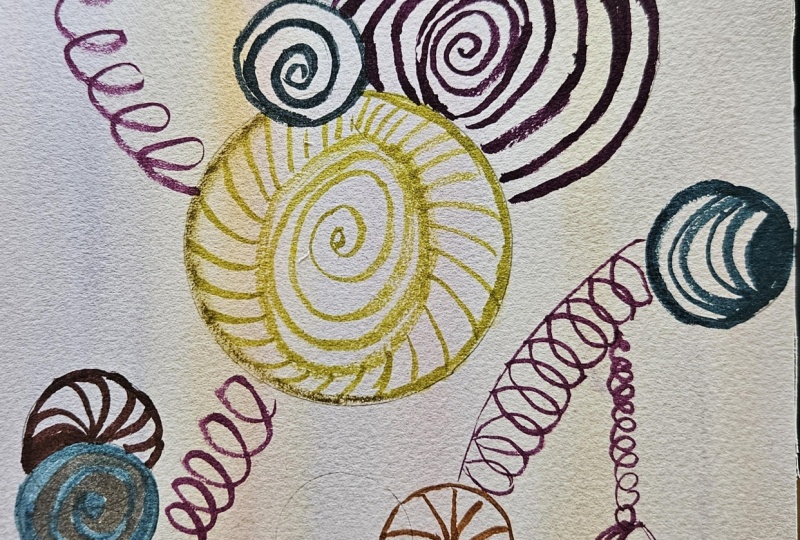
of variation of the colors. And the first piece
that I did inspired by Hilma was working with
blues and purples. This one I wanted to warm
it up a bit and play with adding some reds and some
pinks and some oranges, some yellow, just to
have a brightness. I'm going to go ahead and
lean into the qualities of my watercolor flat brush and let those add some different
textures as I go. This super super
thin application. I really did want it to go
all the way to the edges. I could have taped this down. That would have been great too. But I really like when I'm
doing processes like this, I like them to go all
the way to the edge. I'm just going to let it
curl up a little bit. I'm not going to worry
about it too much. Actually, I'm going
to go a little richer with my paint color and I'm going to show
you how you can pull that up using your cloth. I'll drop in a little
bit more pigment. Not worrying about
getting it too clean. Don't worry about brush strokes. All that stuff is
great. I'm going to put a little bit more yellow. In there, and then I'm
going to wash my brush. Then I'm going to take a
clean cloth and I'm going to pull back some of the pigment. You might get a couple of fingerprints in there
as you're doing it. But it's going to
make it dry faster, but it's also going to
take a little bit of the excess pigment off while it's also
taking off the water. Right now, it's got
some subtle color. I might want to go a
little bit darker, but remember, we're going to
be working back into these. So it's okay to let
it be war mellow. Then you can play with
adding a little bit more and you feel like if you want to
beef it up some more, whatever you feel it needs. But this is just our background. So we're going to have a lot
of fun adding on to this. Then again, I am going
to be pulling up some of what I've put down
just dusting over it. We don't have to
pull up everywhere, but I do want to just kind of
mellow out the color a bit. You can go back into this as
many times as you want to, but I'm pretty happy with that. I might do a little bit of yellow there just to balance it out and then pull that up too. A yeah. I like that. All right, one more. Just kind of pull up the
pigment a little bit. And then I need this to dry
before I start drawing on it. So you can set it aside
and kind of let it dry or you could get
out a blow dryer or a heat gun and you could
kind of make it dry. I'm going to go ahead
and get my heat gun out, and I'm going to make
it dry so that I can get to the next
step of my project. I'll meet you in the
next lesson where we're going to start
drawing back into it as we look at the different
marks and symbols and lines and shapes that Hilma
played with in her paintings. I'll see you in the
next lesson real soon.
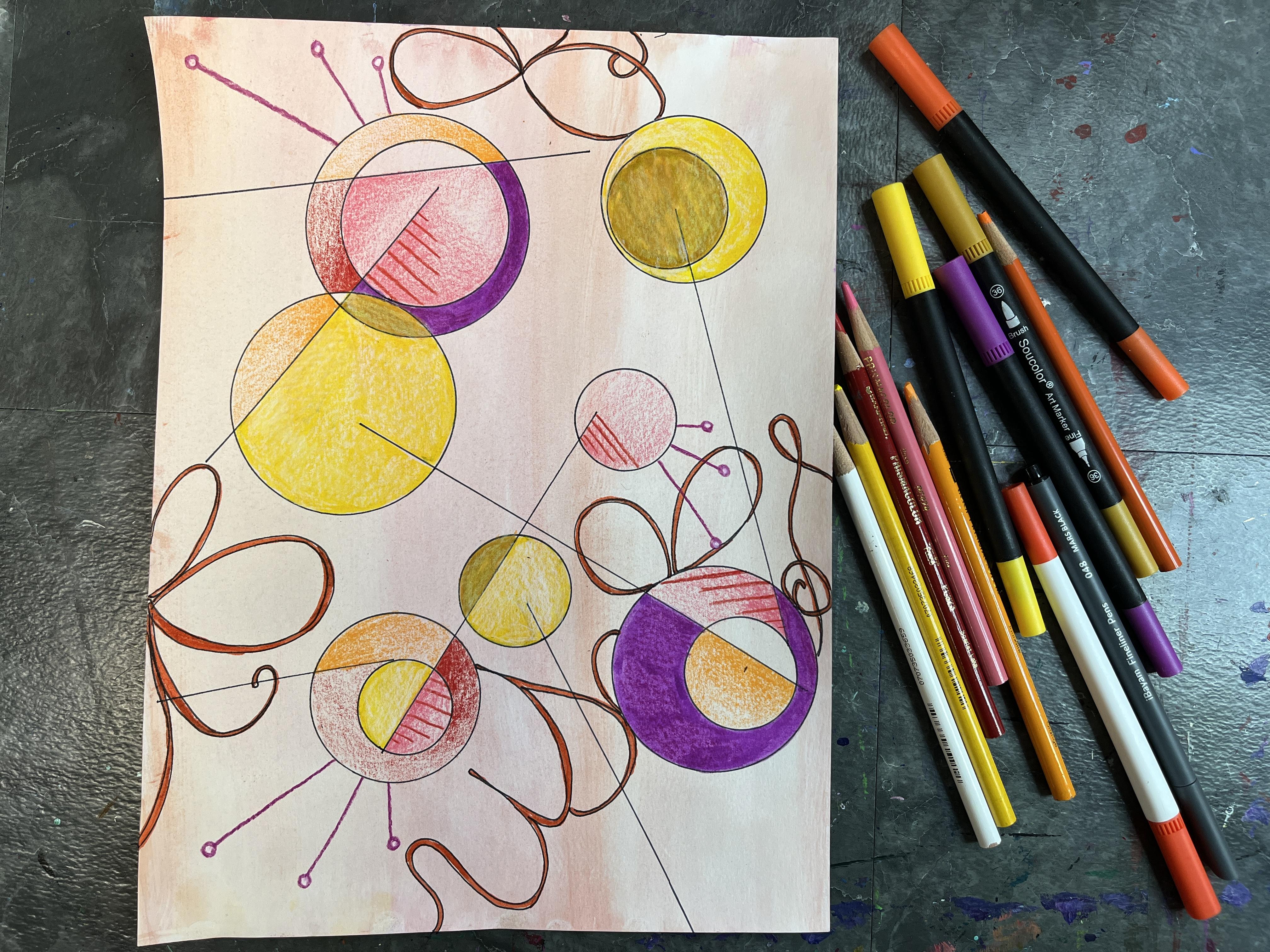
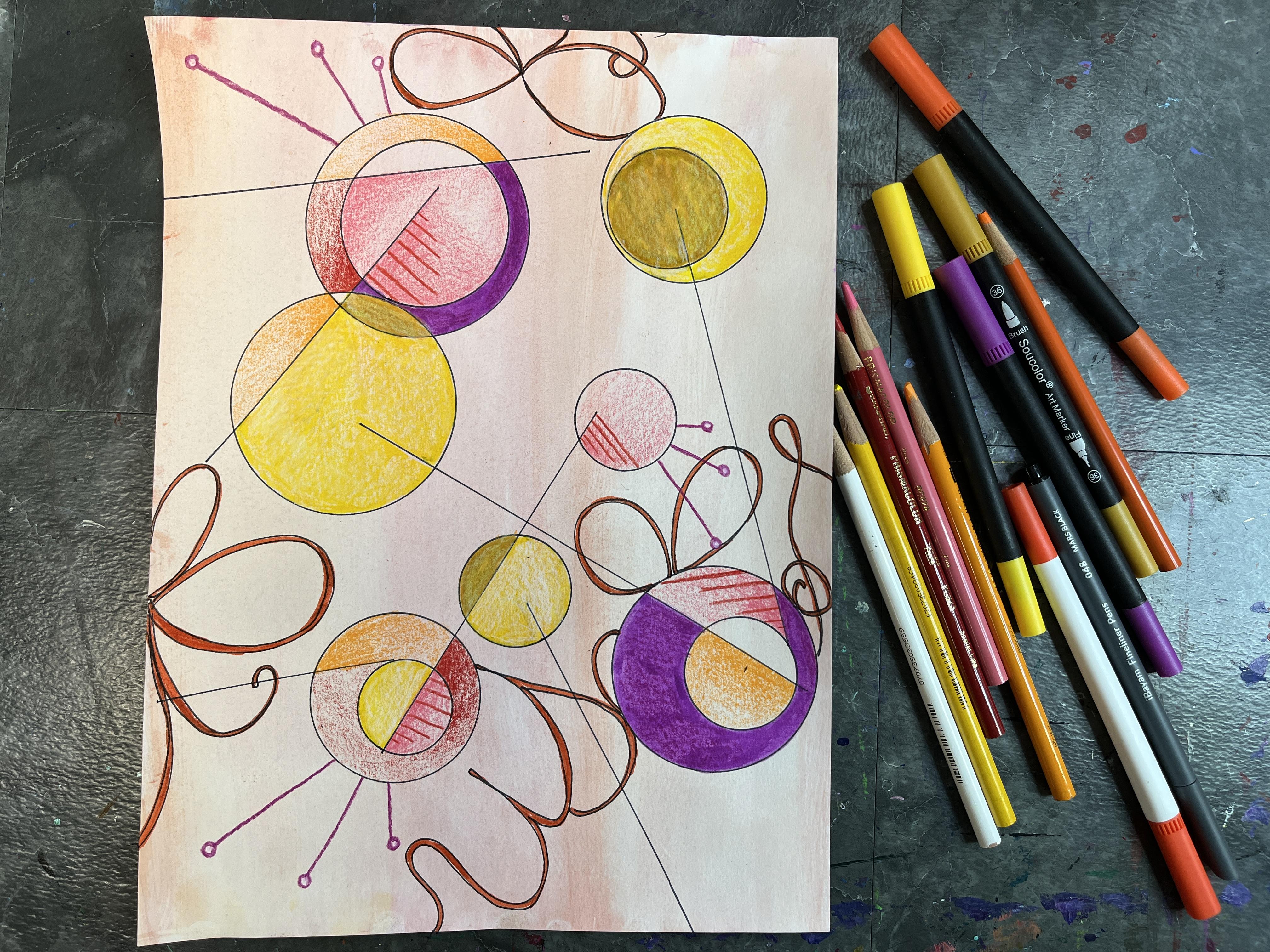
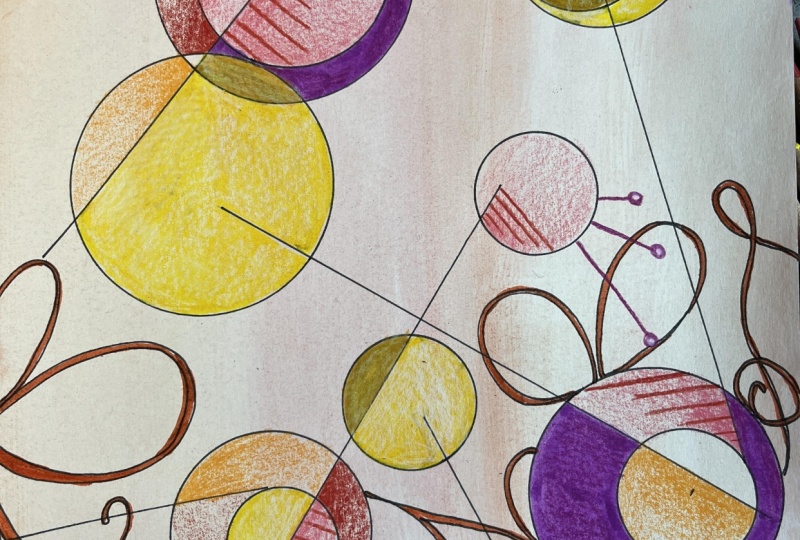
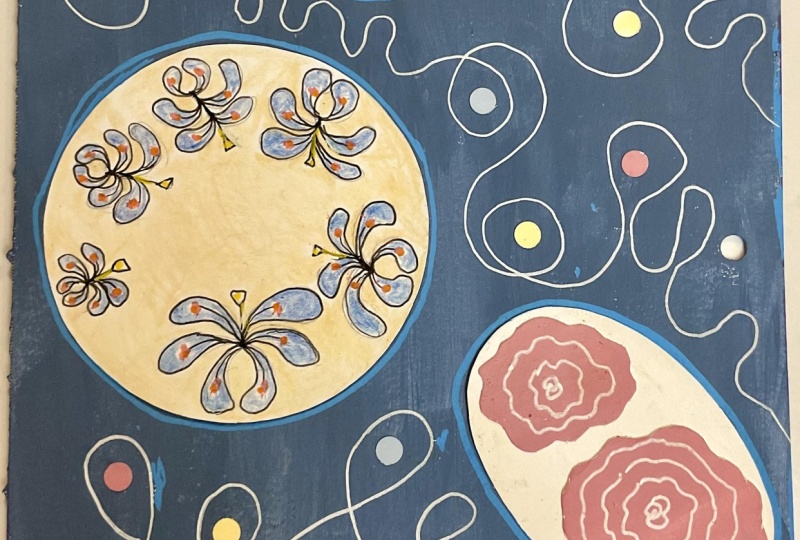
6. Drawing Designs: This is the first piece that
I did, inspired by Hilma. I treated the background
much the same way that I did for the
demonstration here. I did a little bit more with letting the dry
brushing effect happen. I think I did a few more layers
as I worked up my values. Then I started drawing in with fineliner, some
of the base shapes. I started with the circles
and then connecting them, and then I started going back in with colored
pencil and brush pen. To pop in some brighter
color and to create a little bit of
depth and separation between my imagery
and my background. I want to do something
similar for this piece. All of Hilma's pieces are very tall verticals,
for the most part. She has some
horizontal pieces too, but I really like
the idea of working vertically and having
this structure to it. If you want to get
really crisp circles, you can use a circle stencil if you have those
or you could trace around a roll of tape or a cap or if you
have a container. That's circular. There's lots of different ways to get
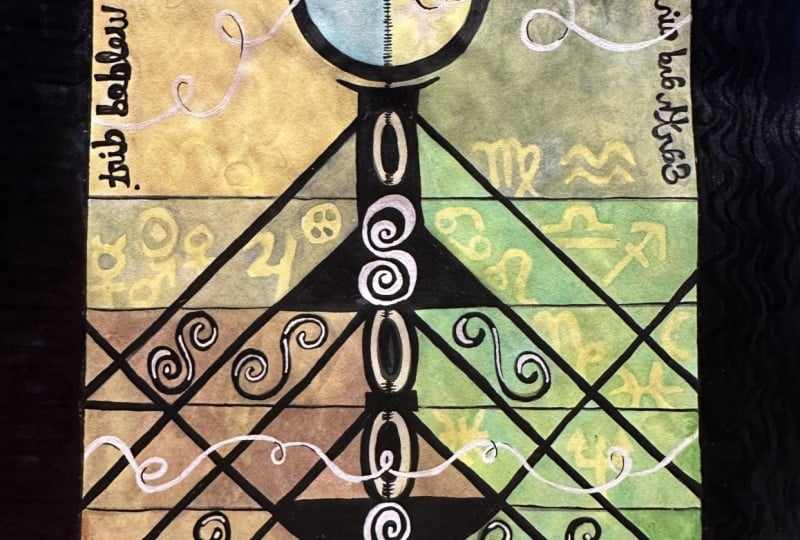
really crisp shapes. She has a mix of these really
strong geometric shapes and some natural organic shapes. I want to play with a
mix of those things too. She also has a lot of
overlapping shapes, shell forms, and then some different
letters that represent the male and the lots
of symbolism in there. You can definitely check out the Google Slides presentation that I share on the projects
and resources section of class to dive a little bit more into what Hilma was
getting inspired by and what was
influencing her work and how that came about and different examples of what
that looks like in her pieces. I'm going to play with some angular lines and
some curve lines, I think. Start with a linear structure. Last time I started
with the circles, but I think this time, I want to lean into line and then maybe connect
them through circles. Was getting inspired by all
of these spiritual elements, but I also feel like
there is a lot of intuitive process to the way that Helma was working.
And I really like that. That's something that I
enjoy in my own work, too. I'm just going to start
heading some circles. Play with some different scale. The pen I'm using is not water but if you are
using a waterproof pen, you could paint back
into this, too. So because I'm getting into this step now I have to
stick with dry media, but you could also play with
what happens when you add water with a non permanent n. I do want to keep
kind of an openness because I feel like that's
one of the things that I like about her work is that a lot of times the
background is left pretty simplistic so that
you can kind of focus more on what's happening with the imagery
and the symbolism. I'm also going to go ahead and
break the page and go off. So the overlap is giving me different shapes different
from the spaces to play with. And then I liked the different
imagery that she's got. So I'm going to look
at some of her work. She also has circles
within circles. I kind of like that
idea. Then I can always to bigger circles around
my smaller circles. I started filling in with some
color with my brush pens, and then I'm going
to see what other drawing elements I want to add. Now I feel like I've got a lot of geometric stuff going on. I want to add a little
bit more of the organic. So I'm going to
grab my fineliner. And Hilma got some design, some linework,
some almost words. So I'm going to kind of add a little bit of
that, too, I think, just kind of play
with a curved nature of what I see in hers. And then she usually
fills those in. So I'm also going to. And then it's just a matter
of deciding when it's done. And when you're at
a stopping point. I love this. I think
this is just great. I feel like I want to try
to lighten up some of my mustard yellow a little bit. Great. Awesome. I love how this turned
out. I had a lot of fun getting inspired by the mix of natural and geometric and play of color and the lightness, but the boldness
and the repetition. There is absolutely no symbolism whatsoever to my artwork. I just drew from things in
Hilma's work that I really enjoyed visually and then put my own spin on them with
what I like to do, too. I hope you have a ton of
fun working on your Hilma af Klint inspired artwork,
I can't wait to see it. So let's have it over to the next lesson to wrap up the
class. I'll see you there.
7. Final Thoughts: Thank you so much for
joining me in class as we learn about the life and
art of Hilma af Klint. I hope you are
feeling excited and inspired by the
exploration that she had in abstract art and
what we've learned about the very early stages
of abstract art that weren't known at the time
and how those kind of contrast what other artists were doing with abstraction. Soon after Hilma's time or after she was getting
started with abstraction. I hope you had so
much fun creating your class project and
I can't wait to see it over on the Projects
and Resources section of class up in the
student gallery. Be sure to check out the
work that others create. It is amazing to get inspired by the artists that
we are focusing on, but it is wonderful to
also get inspired by the artwork that you and your fellow
classmates are creating. Also really appreciate it if you took the time
to leave a review. Your feedback helps
me grow as a teacher, and I really take it to heart and make improvements
from class to class and lend possible
circle back and add those ideas and inspirations
to previously made classes. It's also the best way for students to find
out about the class and for them to join us on our artist inspired
series Adventures. Thank you so much for taking
the time to take the class, to share your project,
and to leave a review. I'd love to stay
connected so make sure that you click the
follow button below, so we're connected
here on Skillshare. You can also follow
my art adventures over on Instagram and
on my YouTube channel. I can't wait to see
you in another class real soon till next time.
 Elisabeth Wellfare, Artist, Art Educator