Transcripts
1. Welcome to the Class: Are you someone who loves
to explore watercolors, especially when it comes
to painting landscapes? In this class, we
are going to paint a beautiful abstract
watercolor landscape using easy and simple
painting techniques. There is going to be a beautiful,
minimal color palette. And some beautiful
minute details that will enhance your painting. Hey, buddy, you're
most welcome to my new class, myself RuwikPil. I'm a self taught, independent artist and an interior
designer by profession. I personally love to explore different art forms and styles and not stick to
one particular thing. So if you are joining
me, you'll find a variety of classes
that I create. You're going to start
by understanding the class project in detail and all the elements that
we are going to use to combine and form this
beautiful abstract painting. You're going to talk about
all the art supplies that you will need
for the entire class. I'll be giving you
the details about the brushes, the watercolors, and the ink that we
are going to use to add some minute details
in the entire painting. You're going to talk about
the watercolor paper, and in case you are missing out on any particular art supply, you can go for any other
good alternative as well. The first step is to create a beautiful abstract
background using a combination of blue and
black color together. Then we are going to add
some beautiful elements like pine trees using some
easy painting techniques. The pine trees are
going to combine with the abstract background becoming a part of the entire scenery. Using easy brush strokes, you are definitely
going to enjoy the entire process of
painting the pine trees. The next step is to paint a beautiful house which
is going to be a part of the entire salout adding minute details like
a small window, some beautiful stones, which creates a nice contrast
in the entire scenery. It's a short class and it
will not take a lot of your time to create the
entire landscape painting. It will help you to
explore watercolors in detail and to paint in
an abstract manner. I'm super excited to share
this class with all of you. Class is absolutely
suited for beginners and also intermediate and advanced
level artists can try it. So without any delay, grab your art supplies and join
me on this creative journey.
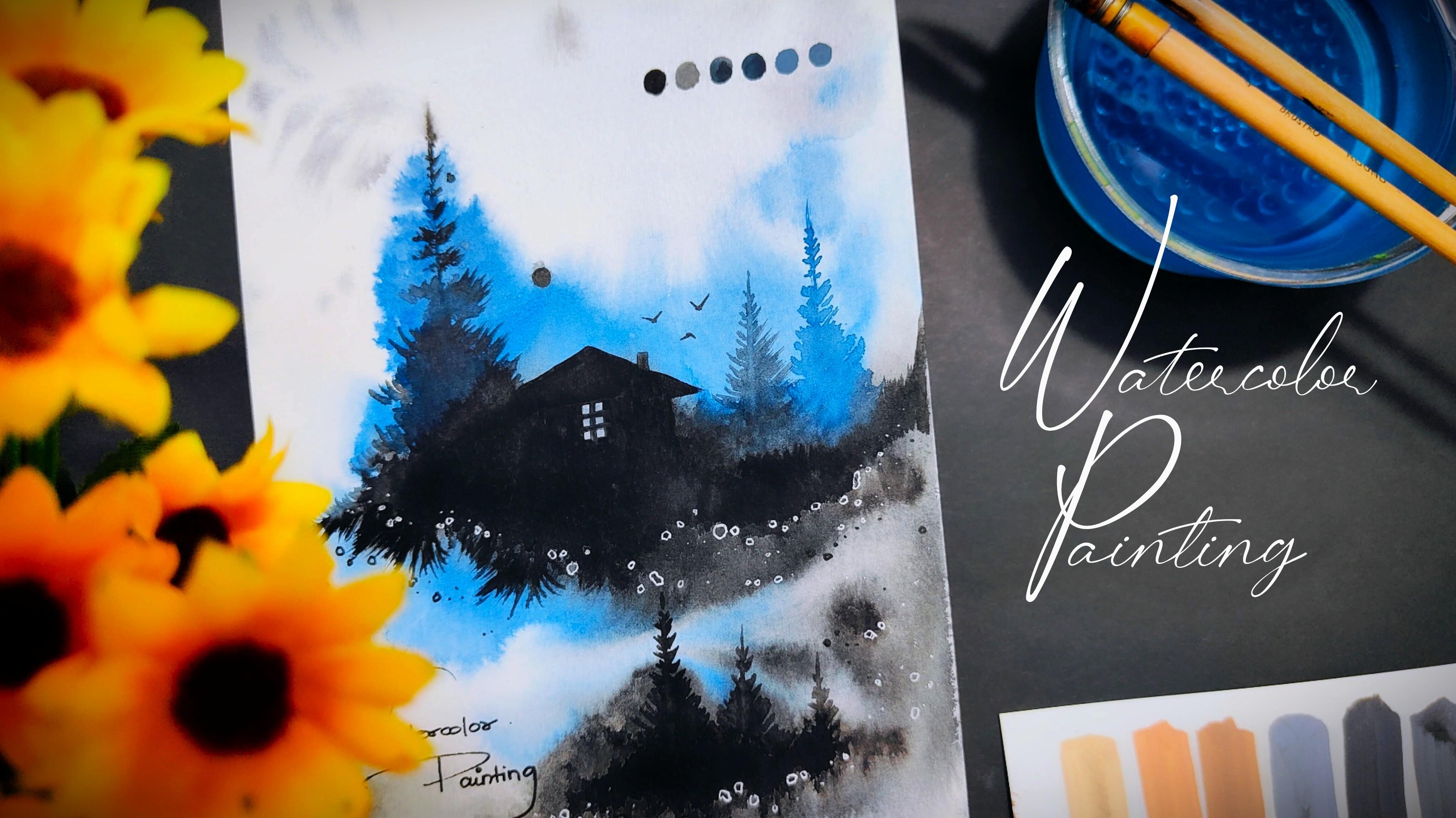
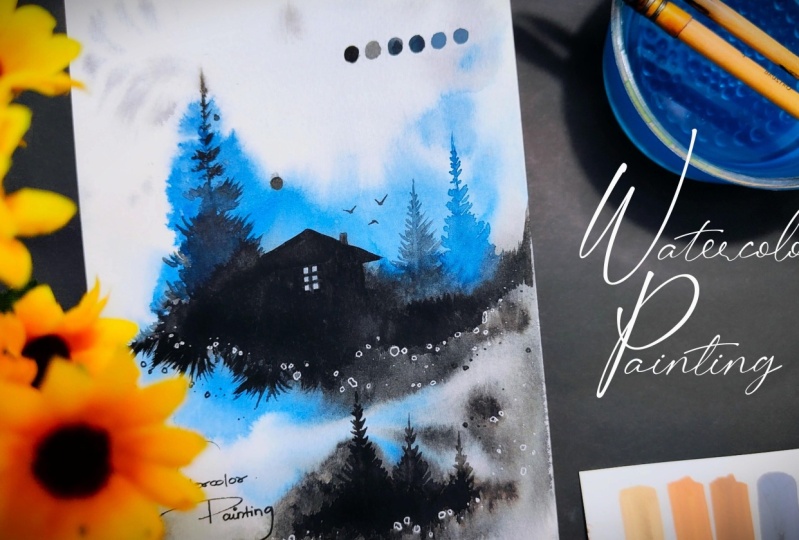
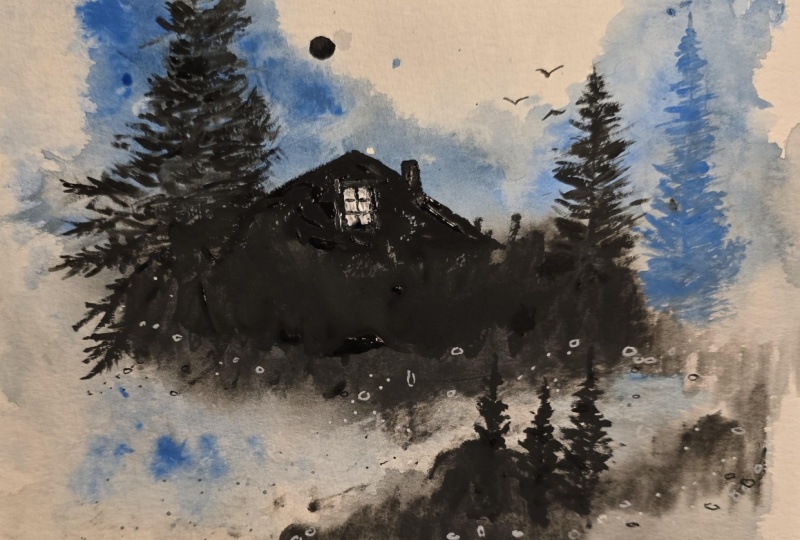
2. Details About the Class Project: Hey, everybody. Now let us talk about the class projects
that we are going to create. No need to worry
about the output, enjoy the process of creating. As you can observe,
I have placed my painting on the desk surface. Let me take you a
little bit closer so that you can observe all
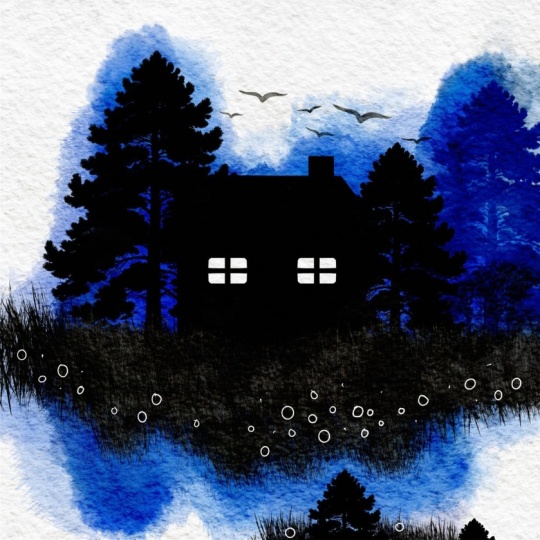
the details carefully. So if you observe, there are these beautiful
elements combining to form this entire
abstract landscape. There is going to be
an abstract background using black and blue
colour together. There is going to be this
little color palette that I have added on
the top right corner. There's going to be
this huge pine tree in black and in shades of
blue that we have created, which is combining with
the background color. There is going to be these little details that
we are going to form, which includes this
beautiful house and a little window in it. There's going to be this sun, or you can consider it
as a moon, as well. There are going to be
these little birds and little stone elements
that we are going to create using a white
pen and a black pen. You're going to write
watercolor painting on the bottom left corner. You can write any other text
that is convenient to you. Then, as I said, there is going to be this little
color palette on the top right corner
that we are going to use to add some aesthetics
to the entire painting. So combining all these
elements together, we are going to form this
beautiful watercolor landscape in an abstract manner. The painting is very easy
and simple to create, so no need to worry
about the output. You're free to explore and experiment with the
entire class project. Now let us move
towards the next part.
3. Art Supplies: Hey, everybody. Now
let us talk about all the art supplies that you will need for
the entire class. I'll be giving you the details about the art
supplies one by one. No need to worry about having
the exact same art supply. You can go for any other
good alternative as well. So as you can observe, I have placed all my art supplies in a systematic manner so that I can give you the
details one by one. So let us talk about
the first art supply, which is going to be a
simple tissue paper on which you can already observe that I have dabbed my brush, and you can remove excess amount of water and color
using a tissue paper. It is always good to
keep a tissue paper nearby whenever you're
working with watercolors. Then I have this simple
transparent color palette that you can observe is
having a lot of colors in it, and you must have
a color palette that is having enough space for taking out multiple colors and having a little bit of
mixing space as well. Then comes a simple
glass container in which you can observe
some blue colored water. Of course, we are going
to take some clear water. So water is definitely required whenever we are
working with watercolors. So take any simple container
that works for you. Then there are going
to be only three basic watercolors that
we are going to use. The first one is Prussian blue. Then we have white and black. So you will need only
three basic colors to complete the entire abstract
watercolor landscape. No need to worry
about the brand, use any good alternative
that works for you. The one that I'm using are from Bonfll and it's a
beautiful watercolor set. Now, let us talk about
the next art supply, which is the inks that
we are going to use. So there is going to
be two basic markers, or you can consider it as inks
that we are going to use. The first one is from art line. It's a simple black
marker, which is of 0.8. Then we have the next marker, which is from sakura jelly roll. And it basically gives us
a beautiful white tip. So we are going to use
this particular pen to add minute details to the
entire abstract painting. Now, let us talk about the
most important art supply, which is the brushes that
we are going to use. So there are going
to be two basic quill brushes that
you will need. The first one is of size four, another one is of size two. It would be really
better if you use a quill brush whenever you want to create an
abstract painting. In case you're missing
out on quill brush, you can go for a
round brush as well. Now, let us talk about the watercolor papers that
we are going to use. The one that I'm using
are from Canson. It is E five size
sheet and 300 GSM. You have to take care about
the GSM because it will be the thickness of your paper so that you can apply
heavy washes on it. No need to worry about the size. You can go for any
other good alternative. Just make sure that it is
having a good amount of GSM. So these are all
the art supplies that you will need
for the entire class. Now let us move
towards the next part.
4. Painting the Background: Hey, everybody. Now let us
start with the first step, which is painting
the background. You can observe that I'm ready
with all my art supplies nearby and the watercolor paper placed in the center portion. I'm ready with two basic colors, which is prussian
blue and black in the color palette I'll be using my quill brush of
size four right now, load it completely
with water and try to apply a nice coat of water on the entire
surface of the paper. We are going to
place the paper on the desk surface so
that it will not move. That's why I have applied
a good layer of water. Now flip your paper and put the water side
on the desk surface. Now again, load your brush with water and apply another coat. This will let your paper stick completely to the desk surface. Now, on this particular side, try to apply a nice, even coat of water. Since we want to create a
beautiful abstract background, we are going to use a wet on wet technique in which
we apply a nice, even coat of water on the
entire paper surface, and then we are going
to apply color. So you can observe that I'm reapplying the water because I want a beautiful thin layer of water on the
entire paper surface. Now, let us take a lot of prussian blue in
the color palette, load your brush
completely with water. You can add a little
bit of black in it to create some
nice dense effect. You can absorb the way
I'm taking a lot of water because I want my color to
spread in a beautiful manner. Be a little bit quick
because we do not want the water on the
paper surface to dry. So you just have to apply the color in this
particular manner. You can observe the way I'm
using the tip of my brush. I've created a simple
vertical stroke right now because we want a nice pine tree in
this particular area. Now, simply apply
these vertical strokes moving towards the
right hand side, and you'll observe
that the color will automatically spread. You can carefully observe
the way I'm moving my brush, and this is really very satisfying
process because you can observe the way the
color is spreading. Apart from wherever you
want the pine trees to be, you can randomly apply the brush in certain
areas as well. Right now, we have created a beautiful abstract
prussian blue color. Now you can increase
the amount of solid black color to create
some nice dense effect. So now I have taken a lot of black color in
my quill brush, and I'll just move
these vertical strokes, and I have started from
the left hand side, slowly moving towards
the right hand side. And similarly, the
black color will also spread combining with
the background color. You can put these little
dots in certain area. You can also add the
landscape in the bottom part. One thing that I want to tell
you all is that no need to worry about getting the
exact abstract background. There will be minor differences, and it is absolutely fine. So now you can observe
two basic colors. The one that we used
initially was prussian blue. The second one is solid black, and you can observe
the way I'm using the tip of my quill brush and adding these little
dots to create some nice abstract effect
in the entire painting. And you're free to
explore and experiment. You can do it in your
own way, as well, so no need to worry about doing
it in the exact same way. I'm taking a little bit of
more solid black color. And in order to make sure that the saturation of the solid
black color is maintained, I'm going to reapply it in that particular area
so that we get a nice, beautiful, solid black color
when the entire color dries. One thing that you have
to remember whenever working with watercolors is that the saturation of the color that you are seeing right now when the color is wet will be one
shade lighter when it dries. So similarly, I'll be adding the black color in the
bottom portion as well. You can observe the way I'm
moving my brush carefully. So we are almost done creating a beautiful
abstract background. Now let us platter some color to get a beautiful abstract effect. Just dab your finger
onto the brush so that it will spread in this
particular dot manner. You can observe the way I
have added these little dots. No need to hurry at all. Do
it with a lot of patients. You can dab your brush
onto the tissue paper in case you find that there is
excess amount of water in it. So we are done creating
the abstract background, let it dry for a while and let us move
towards the next part.
5. Painting the Pine Trees: Hey, everybody. Now let us
move towards the second step, which is painting the trees. So once we are done with
the abstract background, we have let it dry
for a little while. There is still a little bit
of portion, which is wet, which you can observe is
having a shiny surface, which is solid black color. But no need to worry about that. I'll be using my quill
brush of size too. Take some good amount
of solid black color. You can take a little bit of prussian blue in it as
well if you want to. Now, create a simple
vertical line where we have this beautiful abstract
prussian blue background. No need to hurry at all. Use the tip of your quill brush and apply very less
pressure to create a simple vertical
line connecting with the solid black color
in the bottom portion. Now slowly start adding
these little strokes, starting from the
topmost portion, slowly moving towards
the bottom area. Now, as you move towards
the bottom area, simply increase the size of the strokes that
you're making. This will help you to develop a beautiful pine tree
in an abstract manner. You can already observe a beautiful contrast with
the background color, and it looks as if it's a
part of the background. In case you find that your color is getting finished
from the brush, take some more solid black color from the color palette and in case you find that your brush is having excess
amount of water, simply dab it onto
the tissue paper. That's why it is
important to keep a tissue paper nearby whenever you're working
with watercolors. You can observe that we have
created the first pine tree. I'll be adding little strokes on the left hand portion to create some beautiful
branches around. You can observe the way I'm using the tip of my quill brush, making it a part of the
entire solid black color. So right now, you
can observe that we have completed the
first pine tree. You can add some
minute details on the topmost portion by
adding these little strokes. The entire process of
painting the pine tree is going to be very satisfying
and you'll definitely enjoy. Now, similarly, we are going
to have two more pine trees. So I'll be creating the
vertical lines initially. The vertical line
basically helps you to know the exact
position of the pine tree. Since we are going to have
a house in the center part, that's why I'm adding
a vertical line which is shifted towards
the right hand portion. So this time, again, we are
taking a solid black color. I have created the
vertical line, start adding these
little strokes. From the topmost portion, slowly move towards
the bottom area, increasing the size of
the strokes that you're making and simply blend it
with the solid black color. So that it looks a part of
the abstract background. Now let us take some prussian
blue and create a pine tree which is a little bit less saturated and having
a different color. I'll be taking a little bit of prussian blue in my quill brush, dab it onto the tissue
paper in case you find that there is excess
amount of water in your brush. Now, simply create
another vertical line which is a little bit
bigger than the first one. Then we are going to just
add these little strokes, starting from the
topmost portion. And as you move towards
the bottom area, you have to increase the size of the strokes that
you're making. Again, I'll combine it with the abstract background
in the bottom portion. So now you can observe
that we have created a beautiful cluster of pine
trees on the topmost portion, combining with the
solid black background. No need to hurry at all, take your time and paint
the pine trees. You can observe these
steps carefully and slowly observe the movement
of my brush as well. It is not at all
compulsory for you to paint in the exact same
way in case you want to change the composition
and decide the position of the pine tree according to your convenience, it is absolutely fine. Now, once we are done with
the above pine trees, I'll be adding few pine trees
on the bottom area as well, where we have another
solid black patch. So I've taken some
more solid black color in my quill brush of size too. These steps are absolutely same. You just have to create these little strokes and as you move towards
the bottom area, increase the size of the
strokes that you're making. Simply, I'm adding
one more pine tree, which is a little bit smaller, and you have to repeat
the same steps. So I hope that you
got an exact idea about painting the pine trees. Now let us move
towards the next step.
6. Painting the House: Hey, everybody. You are most
welcome to the last step, which is painting the house. So we are done painting the abstract background
and the pine trees. Now, we are going to
paint a beautiful house, which is going to
be combined with the abstract solid
black background. So I'm going to take my
quill brush of size two, take some good amount of
solid black color in it, try to have less amount
of water and more color, and simply try to create this triangular roof on
the topmost portion. Now simply add solid black
color in the bottom part. You can create a nice corner on the right hand side in between
the roof and the wall. Now you can observe
that we have created a beautiful blend of the abstract background
and the house sellout. Let it dry for a while. Now, we are going to just paint a little chimney on
the right hand side. So you just have to create a little rectangular shape
coming out of the slope. Just use the tip of your quill brush to paint
in a smaller manner. Now you can observe
a beautiful sellout of an entire house in
between the pine trees. You're free to compose and experiment with the
entire scenery. Let it dry for a while and use your white pen to add some minute details in
the solid black color. It is a very simple
and easy step. You just have to create
these little round shapes. There is no specific
way of adding them. You can add it
wherever you want to. So I'm just creating
these little white dots to create some nice
abstract effect, and you can observe
the way it is creating a beautiful contrast with
the background color. Similarly, you can do
this particular thing in the bottom part as well. It will help you to
make the entire scenery look a little bit more
aesthetic and attractive. No need to hurry at
all. Take your time and try to compose in a nice way in case
you do not have a white when you can use
solid white color as well. Now we have added
these beautiful dots. Similarly, we can
use a black pen, and you have to do
it in the same way. You just have to create
these little dots around. You can observe
the way I'm adding round shapes in a random manner. So we are done creating these little stone elements
in the entire painting. You can do it in the bottom
part as well if you want to. Now let us paint a little
window in the house area. It is going to be a very
easy and simple step. Take some solid white color
in your color palette, add a little bit of water, try to have more amount
of color and less water because we want a
highly saturated white color. Now, we are going to create
a little rectangular shape in the center portion
of the house, which is going to be the window. No need to hurry at all, take your time and paint
with a lot of patience. Try to create a
rectangular shape using the tip of
your round brush. No need to worry
about the edges. We are going to finish it
well with black color. So I've painted a beautiful
rectangular shape, as you can observe, let
it dry for a while. Now clean your brush in water and take some
solid black colour. I'm using my same quill
brush of size too. Now using the tip
of the quill brush, we are going to create
the edges in a nice way. Since there is background
color in solid black only, you can just sharpen the edges and make the rectangular shape look a little bit more better. Now using the same quill brush, we are going to add the framework
for the window as well. Now, this step is going
to be very much precise. So try to paint in a
very careful manner. Try to create a simple
vertical line in between and two
horizontal lines. Now you can observe
that the window looks a little bit more
attractive and aesthetic. We are done painting
the window as well. Now we are going to add
a beautiful sun or moon. You can consider it
whatever you want to. Just take your black pen and create a simple
circular shape. Using the same black pen, I'm just adding these little birds on the
right hand side. You can create the birds
creating these beautiful shapes, and you can compose them
wherever you want to. I'll be writing
watercolor painting on the bottom left corner. You can write any other
text that is convenient to you in any calligraphy that
you are comfortable with. So it basically creates a nice aesthetic in
the entire painting. We are almost done with
the entire painting. Now I'll be just adding
the last element, which is the color palette
that we have used. So let us start with
solid black color. Just try to create
a circular shape. Now you can add a little bit of water in it to
create a gray color. And again, you have to
draw a circular shape. This is how we are going to
add a little color palette. You can add all the
colors that you have used using prussian
blue and white as well. This basically adds a nice element to the
entire painting. So we are done with the entire abstract
watercolor landscape. Let me take you a
little bit closer so that you can observe all
the details carefully. I hope that you enjoyed the entire class and got
to learn something new. It's a short class
which will help you to explore watercolors
in a different way. Feel free to experiment
with the entire scenery. I'll be very excited to see
all of your class projects. No need to worry
about the output, enjoy the process of creating. Now let us move towards
the class conclusion.
7. Class Conclusion: Hey, everybody. You're most welcome to the class conclusion. I hope that you enjoyed the entire class and got to learn something
new and creative. One thing that I always
tell my students is to practice on a regular basis and no need to worry
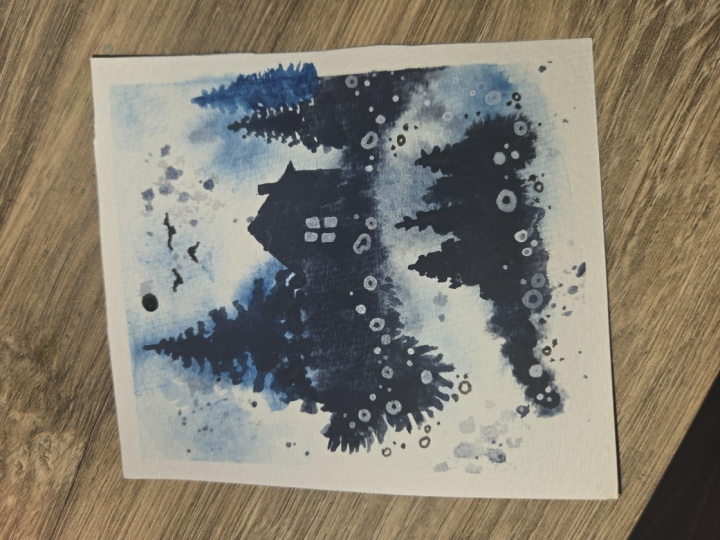
about the output, enjoy the process of creating. I would be very
excited to see all of your class projects into
the project gallery, so do not forget to add them
into the project gallery. It's a very humble request from my side to you to
leave a review for the class as it encourages me a lot and my class can reach
many more students like you. At the end, I would like to say, keep learning, keep practicing. Thank you so much for joining the class and happy painting.
 Rutvik Patel, Artist and Instructor