Transcripts
1. Introduction: Hello and welcome to this brief guide to
prompt Engineering. My name is David
argument, that is, and I'm a software
developer n mathematician. So why from the engineering, AI is now a crucial component of bold or daily lives and our businesses and the fast
development AI tools over the last few years has had
an unavoidable impact on our daily lives and only keeps getting smarter
and more functional. So this technology has altered how we
communicate with people. A robot's, the communication
between humans and machines will need to improve as this
evolution progresses. It can get us one step closer to realizing the full potential of AI if we properly comprehend
how to interact with it. And a theorist salt, we will be able to get fresh insights and extract
better information, increasing our knowledge
of a variety of topics. So understanding
proud engineering is crucial to obtaining
these benefits.
2. What Is Prompt Engineering?: So what is prompt engineering? The ability to
communicate with AI effectively is
crucial as we set. This involves
writing Prout's that serve as commands for the AI. And prompt engineering is the process of
creating inputs that remind the output of a language
model, Lake Chad, TBT. And to achieve good results, it's important to provide
high-quality inputs. On the other hand, only
the fine prompts can lead to inaccurate or
negative responses. Prompt engineering
covers a broad range of applications,
such as chatbots, content creation tools, language translation tools,
and virtual assistance. However, you may be curious
about techniques utilized by the AI technology to
produce its responses. So let's learn how
these models work.
3. What are LLMs?: So what are some going
to cite the Microsoft here is tense were
large language model. And this is a term that
refers to AI models that can generate natural language texts from large amounts of data. Enlarge language models is deep neural networks
such as transformers, to learn from billions
or even trillions of words and to produce tax
on any topic or domain. Large language models
can also perform various ventral language
tasks such as classification, summarization, translation,
generation, and dialogue. And we have examples here. The most famous one is GPT-3, but there are others
like bird eggs allow Excel net and a
little, a little a. I'm not sure if I
pronounced that correctly, but yeah, the L
stands for large. In the case of LLM,
it means really, really large, can be millions, billions, or even trillions out. The L stands for language, which refers to the
fact that the word sentences by breath leave at the core of how these kind of semantic AI works is
it stands for models. And they're high-growth
dimensional mathematical representations of large amount of
written information. So what does tend to be
d have to do with LLM, okay, we already establish
that connection there. The chat, typically
the system is powered by an LLM AI model, invented Open AI based
up on the GPT-3 model. So the model here
is actually GPT-3. And right now we
have GLUT4, Right? And chat GBD is just the
application that Open AI built. So you can think of chat TBD as an application built
on top of that LLM. That it has been specifically tuned to engage rural
directors chats.
4. Supervised Vs Unsupervised learning: So diving a little deeper on machine learning and artificial
intelligence in general, there are two primary
learning methods based on the language model. Supervised and
unsupervised learning. Supervised learning
in bulbs using a labeled data set containing
data with a right answer. While unsupervised learning
is its own labeled data, requiring the model to analyze undetermined,
accurate responses. So typically four
or GPT-3 relies on unsupervised learning
to generate responses. That's why they
don't always have the correct data or
the correct answer, because they are not trained
with correct answers. Language modeling is a
fundamental component of the various AI language
applications that enables a model to create texts
according to the given prompt. And here we have an image of
classical machine learning. We have the supervised learning, classification and regression,
ie the urine economies. Mathematician or engineer, you might have heard of
linear regression. So that's actually as
supervised learning. You are doing machine learning. We're in New York
doing regression and unsupervised learning
in the classical sense. You can see it this clustering association
dimensionality reduction. This is actually a very
simplified explanation of supervised versus
unsupervised learning.
5. Information Seeking Prompts: So now let's take a look at the different categories
of prompts we have. So the most basic one is the
information seeking prompt. And these problems
are specifically designed to gather information. And the proms mostly answered
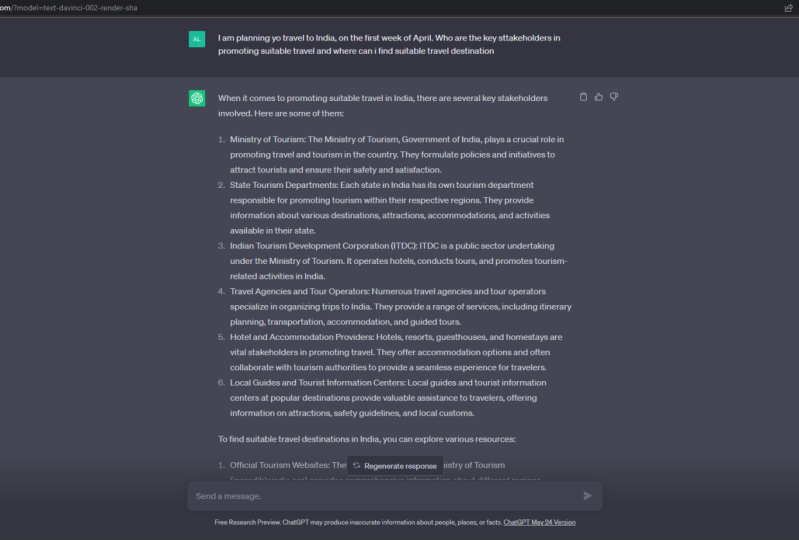
the questions what and how. It's like we are using Google. So we have some examples here. What are the most popular
tourist attractions in Ecuador? How do I prepare for React
job literature review. What are the most common types
of cyber attacks and how can individuals and organizations
protect against them? So you see, this prompt is
a little bit more detail of the result we want and we're going to talk
about that later. What is the history
of the Olympic Games and how acid both of retirement. So all of these
prompts are its output of information seeking prompts.
6. Instruction based prompts: Now we have instruction
based prompts and you have been using them
for quite a few years, is to give instructions to the model to perform
specific tasks. A good example of such promises, the use of Siri Alexa
or Google Assistant. So Chad DBT is very recent, but you have been
using instruction based prompts quite a few years. E.g. when you tell a lexical that you are given
structure-based prompt. And he viewed tell
tap DPT called that. Obviously, it's not going
to know who is that. And it's also not going to be
able to make a phone call. The latest episode from my
favorite TV show, again, Chad DBT won't be able to
play the latest episodes from your favorite TV show because it's not
connected to a TV. But Ted TBT can answer. The other examples like provide a step-by-step instructions for assembling a piece
of furniture for a flat back kids such
as ikea dresser. That's something that Chad GPT, can I give you the answer? Right? A tutorial on how to use popular software
programs such as Adobe Photoshop or
Microsoft Excel for a specific task or project. And F. But here for a specific
task or project, because if, if you'd
tell chat the beauty, give me a tutorial of Adobe Photoshop that's
going to be too general. You need to provide. What do you want to learn? Specifically? Because learning Adobe Photoshop
is very complex, right? The guide for practicing a
relaxation techniques such as mindfulness meditation
or deep breathing for reducing stress and
promoting mental wellness. That's an also an example
of instruction bits prompt.
7. Context providing prompts: Now we have contexts
providing prompts, a given context and examples to the AI
is pretty important. These prompts provide
information to the AI to help you better understand what the
user needs to serve. False. Here we have an example. If you're planning
a party and need some decoration ideas and
activities for attendees, you can structure
your prompt like so, and planning a
party for my child. What are some decoration ideas
and activities that yet, and these might do to make
it enjoyable and memorable. So what's the context here? The first sentence, I am
planning a party for my child. That's the context.
Now, the AI knows that you are having
a party, right? And it can better give
you a better response.
8. Comparative prompts: Now we have comparative prompts. These tools aid in comparing and evaluating various options presented to the
model for assisting the user in making
a fitting session. So this is very easy. Timber sale is compare a and B, which is a better investment
as dogs or real estate in terms of long-term financial
growth and stability. And actually, if you do this chat tip of tea or
whatever is going to tell you, I'm not going to give
you financial advice. These are the pros and the cons. So that's very good
because having proximate cause is
basically a way for you to make a better
decision because you are the one who's going to take the decision at the
end of the day. You can use pros and cons
explicitly in the prompt, like in this example, what are the pros and cons
of using a credit card versus a personal loan in
terms of interest rates, fees, and credit score impact. Again, it's going to
give you pros and cons. It's not going to tell you, Hey, this is the
best thing to do. You are, at the end of the day, the one taking that decision. What advantages does
a hybrid car have over gas-powered car in
terms of fuel efficiency, environmental it
back and cosine. Again, hybrid car
has pros and cons. Gas-powered cars
have pros and cons. At the end of the day,
you're going to have your own opinion base
and the pros and cons. So in this sense, tools like Ted to be
terrible or impartial, so good for that.
9. 09 Opinion Seeking Prompts: Now here comes the
interesting thing, opinion seeking prompts. So before I continue, I must tell you that the AI
doesn't have any opinion. Remember, the AI is
just trained with a lot of data and that data actually
comes from the internet. So the answer is going to be based on someone else's opinion. The purpose of these
prompts is to elicit the AIS perspective on
a particular subject. One example is, what
is your opinion on the use of social
media by teenagers? You delete it, has positive or negative impact on your mental health as
social development. By asking chat DBT, these exact question,
look at the answer. As an AI language model, I don't have personal opinions, but I can provide
information and insights on the topic based on
research as studies. And then it will
give you the answer. Got the question, right. So that's very
important to know. The API doesn't have an opinion. Here we have another example. In your opinion, what are the most pressing
environmental issues facing the world today? And what steps should be
taken to address them. Or in your opinion, what are the most important qualities of effective leadership
and whether you believe embodies this quality
public or private sphere. Again, I have to remind you, the AI doesn't have an opinion. This is people from the
Internet, something. So there can be bias, which we're going to talk later.
10. Role based prompts: Now let's talk about
the role-based bombs because these are the
most important prompts. There are so important
that the official API for Chet GPT assumes you're going to use these
kind of routes. So if you're into that, you can read the API
documentation and you'll find that these
role-based prompts are very important. And in general, if you do let role-based prompt
every time that you are fine because it's very useful at treated has worked for this
particular category, is making the use of
the five Ws framework. Cool is the first one. Science or role you need. The models play a role like a teacher and of all
birds have and so on. What that refers to the
action you want the model to do when you're at
this art timeline to complete a particular
task where it refers to the location or
context of a particular prompt. And the y refers to the reasons, motivation or goals for
a particular prompt. And usually include information about why do you want to learn. We have to be
specific about that, that duration of
your learning period and your learning
goals for the prompt, providing more details we will result in more
personalized or rebel event. Make fan, please make sure
to read this in English. This is not required, but it's better if
you do it in movies. In general, LLMs will work better if you
do it in English. You have Translate
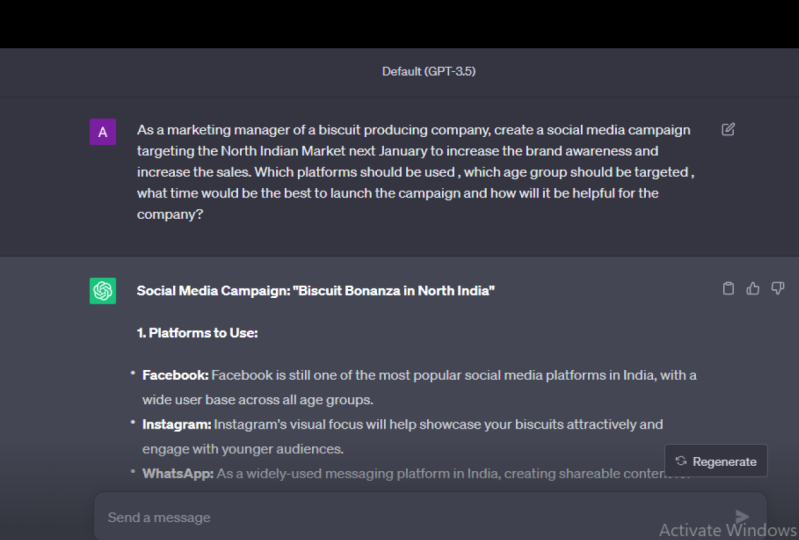
tools that can help you with that. Again. So let's see an example. The coup marketing manager. What create a new
social media campaign when next quarter, July, September or whatever, where targeting North
American market and the y increased brand
awareness and drive sales. So the prompt can be
something like this. As a marketing manager, create a new social
media campaign targeting the North
American market. In the next order to increase brand awareness
and drive cells, you have the $5 there will be responsible for
implementing the campaign. What platforms will be used? When will it launch? Where will it be
targeted and why it is important for the
company's goals. So you have to be very specific. Only if you ask this
to chat, to pity, you will have this answer, which is pretty long and
it's pretty detailed. And I think this can
place a lot of jobs. So you have to learn how to prompt these
kinds of effects.
11. Perplexity.ai: Now a little warning. It's important always
in every category, in every prompt to verify the accuracy of
the models responses. If you're uncertain about
the subject matter at home, if you didn't know about
the topic beforehand, you have to verify
responses because it relies solely on
the model's output may not delta
correct information. Since the model isn't
always accurate, be sure to cross-reference the information with
other sources to bother. It's a curious. So how
do we achieve this? Chat DBT doesn't give
us the answers, right? So we have these tool
called perplexity.ai. So you can go there
to the website. And it's basically
like tat typic d, but d of z sources. Also Google bar, which is like
the competition for chat. Tbt, will do this, but it's not right now at the time I'm
recording these videos. It's not Bartlett to everyone. So e.g. I. Asked Amy is create sharp, give me five websites to search worth
psychology articles. And it gave me these things. And it's nice because you can click on these links
as well, right? And if you click on
these brackets here, It's going to give you
the sources of where this thing collected
the correlation, right? Because this perplexity tool can also connect to the
Internet, right? And that's useful because it doesn't have that
plenty 21 cutoff, knowledge, cutoff, like
chat to pick a tree.
12. Stop using the Google Search pattern: Okay, now we have seen all
of the categories prompts. Now, how do we make
these prompts effective? So first of all, we were taught by Google because
Google is a big company. It has been in the
market a lot of years. And they have improved their search engine so that it works with less words, right? So the last iteration we get
to Google, the better e.g. u. Dot as Google. When did the French
Revolution take place? You ask French Revolution
date and that's it. And you can also put quotes so that you can have exact
matches and all that stuff. But we have to totally forget this way of
searching information with chatty PT or other applications
built on top of LLMs. Because it's the
complete opposite. We want. Now as much information as we can
provide AI to give contexts. Example, the five W's
and all this stuff. So please forget about searching like you were
doing it with Google. So the first thing, clarity. If you are in a relationship, you'll find that clarity
is very important. And in every type
of communication, actually, clarity is
pretty important. So as it says here, clear communications crucial in any setting, including
prompting nunnery. So to create an
effective product, it's important to clearly
define your objective, is will ensure that the AI can precise responses to your proud.
13. Context And Limitations: What other thing is active? Given context and examples, as we showed in the context
providing prompts category, supplying additional
information can see is the AI in comprehending the
tenant goal of the problem, which made yield more
presets for salts. What else? Set limitations. So the AI must be given
boundaries to operate within his increases accuracy and avoids irrelevant
the provision. And I went to give
you a nice trick. You can set limitations while this is not the only
way you can do it, right? But if you put t l colon, the semicolon, semicolon
at the end of the prompt. Then you will have like the too long didn't read version of what Jabhat,
of what you want. So give me a summary of
the French Revolution. The French Revolution obviously
is a big historic event. So a summary is very ambiguous. It can be ten pages of PDF
and that will be a sub-array. But if you say the are too long, didn't read is going to give you a short paragraph of what
the French Revolution is.
14. Break down queries, rephrase and iterate: What else is effective? Rake down queries. These binding queries into smaller, more manageable blocks. Canon has AI ability to
handle the information. By doing so, the model
is able to grasp each query bearer and
generate improve responses. So what does this mean? You don't ask too many
questions at once. The AI is going to work better if you ask one
question at a time. Okay? Now, iterate and rephrase. If you're unhappy
with an AR response, try rephrasing it and provide more context or Martin
samples per improve results. If you want to do this, you can obviously copy the
proud and paste it again. But actually in chat
deputy, you're using that. You have these little
button where you can edit your prompt as
submitted again. Okay? Another thing is requests to
step-by-step explanation. If you require
in-depth details were a breakdown concerning
a complicated topic, you can frame your prompt in
a manner that directs the AI to provide comprehensive as answers by dividing inch state. And this actually pretty, pretty useful because
Lee humans understand better when we are given
instructions in an order matter. So the AI is capable
of doing that. So don't hesitate in asking a step-by-step explanation of some procedure or some learning.
15. Prioritize important information: Another thing you can do is to prioritize import
that deformation. Highlight the most important
information the product. By doing this, you're telling the AI develop you
some providing responses that are relevant to the heightened edit
inflammation, e.g. here, and make it a list of
the best soccer players. However, the best soccer
players are massacres syndrome, Alto, Maradona ballet, you know. But I'm saying put at the
top, the younger players. So it will switch the response. It will provide
my response where the younger players are the top of policed and this
only giving me ten, I can ask more. And probably it's
not going to list a messy or persona and Aldo, because there are more younger players
that are very good. So the first one
is urban Callen, which right now he must
have like 23 years old. And again, always check,
double-check the answer. He doesn't play in
Borussia Dortmund, n bar. So this answer is
partially correct because Arlene Cowan is
the best younger player, but she doesn't
play in Portugal. Then you have killed
and then by pair which is still planning
periods syndrome. And at the time of recording this video and these other guys, I don't know too much about
soccer, so excuse me.
16. Be careful of the bias: Before we finish
this brief guide, I have to tell you
the AI bit fulls and limitations that you have
to take into consideration. The most important one
is definitely bias. The accuracy of machine-learning
algorithm depends on the data provided by his data
can lead to biased output, highlighting the need to
review that just print data for possible biases
early in the process. So this image summarizes it. If you put this thing in, you're going to
receive thing out. That's why you will
hear in the news that all the AI is racist or it's
discriminating some more. And that's because there are lot of things like
this in the Internet. So we didn't have
control about that. We didn't have
control about what people put in the
Internet, right? So we can't do
anything about that. But there's another
kind of bias, which is pretty, pretty color. It's important to keep in mind
that when interacting with a given incorrect information may lead to the I
agreed with you, even if you're wrong. And this has happened
to me a lot of times where I insanely
that I am correct, but really I am not. So it's recommended I have some understanding of the
topic before asking the eye. Again, you have to double
check the sources. If the AI provides an
incorrect response, it could be helpful to
rephrase the question and provide additional context. So again, we have
control about this. Don't think you are the
smartest kid if rho, if you are not certain
about something, than try to rephrase
your prompt so that Tad to pity or whatever is lot unconsciously agreeing with
incorrect information, if that makes sense.
17. AI doesn't have feelings: Another thing that is obvious is filling the API
doesn't have feelings. It might, you might think it has been because sometimes
ted TBT tells you, Hey, I'm sorry, I apologize. It's not feeling anything. So I often struggled with complex language and in isolated
human emotions since it lacks the ability to feel
its decisions pertaining to typical human behavior may not always be accurate and reliable. So don't be surprised if
it gives you some nonsense or very cold hazard problem because it's not going to
take into account the fields. However, that doesn't
mean that you cannot rewrite the tank
with a certain tone. You can re-read
the texts so that it seems that you are happy. It's syndrome, work
professional, more sad. So eight eyes are
capable of doing this. You can achieve this
with this quilt bot, which is a Chrome extension. Or you can do it
inside TO may app, which is actually
the app I'm using. Procreate these slides.
18. Conclusion: Okay. So what is the conclusion
of this brief guide? Well, I'm not good at
running completions. So I asked chat TBT to write a conclusion for an online course about
prompted generating. In conclusion, this
online course has covered the essential aspects
of prompt engineering, providing a comprehensive
understanding of how to create effective prompts that the illicit desired
responses from users. That's right. We have explored the key
elements of prompts. He couldn't language,
timing and context, and learn how to
tailor prompts to different user groups
as situations. Through practical
examples and exercises, we have gain hands-on
experience in design problems that engage user and
facilitate the side behaviors. By completing this course, you now have a
solid foundation in prompt engineering and are
equipped with the tools and knowledge to create
effective prompts of Dr. users engagement
achieve your goals. Whether you are the
sign-in prompt for a website or other
digital platform. The principles and
techniques covered in this course we will be valuable
assets in your toolkit. With practice and
experimentation, you can continue to refine their property engineering
skills and create even more compelling
prompts that delight your users and drive
business success. Pretty nice. I hope you liked
this brief guide. See you in the next course.
 David Armendariz