Transcripts
1. Introduction: Welcome to a new class
where you'd be learning everything about camera lenses. It doesn't matter if you're a photographer or
a videographer. If you're a struggling to find the perfect lens for you or if all the numbers and units on this lenses if
they're sounding a little complicated to you, you have come to
the right place. My name is Andy Sing I'm a professional videographer
and a photographer, and I've been working with
camera and lenses since last five or six years
and I know this struggle. When you have just started, you bought your first
camera and you've got this little kit lens with the
camera and you'd be like, why is the photos
from your mirrorless or DSLR it's not as good as the photo what
you see on Instagram from other people,
from the same camera. It's not the camera. It's the lens what
you have chosen or it's the lens what you've
got with the camera. Today, we will be learning everything about camera lenses, so that next time if you
see online a camera lens, you exactly know what
it is for and you exactly know everything about that lens in just one glance. Let's start the class.
2. What is a Focal length?: [MUSIC] To master the knowledge of all the lenses in the market, first thing you should
be learning is, what's written on these things. If I pick up this lens, the first thing it's
written here is F1.8. There's also something
written 35 mm. These two are the really
common number which you would see on all the lenses. It could be F4, F5.6, F2.5 to 5.6 and 35 mm, 40 mm, 50 mm. What are these numbers? Let's learn about
them one by one. The first thing we're
going to be learning is the focal length of the lens. Say for example, if I'm
picking up this lens, it says here 18, and here 55. If I'm turning the lens, it goes from 18 to 55. Which means that the
focal length of this lens is 18 mm until 55 mm. What are these numbers? Here is what an 18
mm image looks like, and here's what an
55 mm looks like. Which means that you
can zoom this lens from 18 mm of distance
until the 55 mm. If you're going to
go much more wider, here's what a 14 mm looks like. The lower the focal
length is of the lens, the more wider the
lens would be. In the market there are
also lenses which is 7 mm, 8 mm, and you would see this dome look on
top of the lens. Those lenses are called
wide-angle lenses. That's focal length for you. Focal length is literally
the distance what you can zoom in or zoom
out with these lenses. For some lenses, it just
has one focal length, but we're going to
learn about that later. I hope focal length
is clear to you. Focal length, it also
does one more thing. The more you increase the
focal length of the lens, which means that the
more you zoom in, you get more compression in
the background of the image. I know that sounds complicated, but I'll show you
with an example. This is a 24mm image. As you can see in
this photo is that, there is a little bit of
fisheye effect on my face. If you would see that
as I zoom in to 35 mm, that fisheye effect
is a little bit gone. Let's compare it side by side. You see in 24 mm, my face has a little
bit weird shape. One thing you can also see
in this image is that, the trees in the background, they came a little bit closer
when I zoomed in to 35 mm. If you're taking
any portrait shot, and if you want a close-up
shot of a subject, it's smarter to go a little
bit back and then zoom in. So that the face shape
would look a bit neutral than how
it looks at 24 mm. Look at the background. As you can see that, the background is
also coming closer. The background
coming closer to us, that makes the image
look more compressed. Because, if you see
on the first image, you can see a lot of
background at 24 mm. But if you see the 70 mm image, you'll see barely
any background. Also there is one more thing, what focal length
it does is that, it increases the blur
in the background. If I compare the 24 mm
image to a 70 mm image, you can see the blur
difference in the background. I know there's a
lot of things which I told which needs
to be learned, but let's go through it
one more time super fast. What is a focal length? Focal length is the
zooming range of the lens and whatever the
value is written on the lens, that's the zoom
capacity of lens. Here is an 14 mm example
which is super wide, and here's an example
of a 70 mm lens, which is super zoomed in. Changing focal length, it does two more things. First thing it does is that, as you zoom in, it's bringing the background
closer to your subject. One more thing it's
also doing is, it's increasing the
blur in the background. I hope this is all clear to you. The focal length of your lens is also dependent on the camera. Say for example, this
is an 18-55 mm lens, but it's a crop sensor lens. Now you're going to ask
me, "What is that?" With the cameras, there is two types of sensors, the full-frame sensor
and a crop sensor. Which means that the sensor of this camera is a
little bit smaller. The full frame, the sensor of
camera is at 35 mm length. All the crop sensor of a camera
would have a crop factor. This camera has a
crop factor of 1.5, which means that if I'm putting an 18 mm crop sensor
lens on this one, it's going to multiply
the 18 mm into 1.5, and that's the range
it's going to give me. An 18 mm lens would now act as a 27 mm lens on this camera. This camera has a
lens which is 50 mm, but the 50 mm on this camera
it's not acting as a 50 mm, it's actually acting as a 75 mm. But if I use this lens, which is a full frame lens, on this camera, which
is a full frame camera, it does not have
any crop factor. It has one crop
factor which means that there wouldn't
be any value of zoom change if I put the
50 mm lens on this one. Before choosing any lens, you should first check what is the sensor type of your camera? Is it a crop sensor or is
it a full frame sensor? If it's a crop sensor, what is the crop
factor of that lens? I hope this is all clear to you. I'm sure it would be
super new to you, but the more you learn about it, soon you're going to be so
much expert about this thing. Most of the time
focal length is not dependent on the camera body. The only time it is
dependent on is when we have a full frame
sensor and a crop sensor. Before buying lens,
you should also make sure that lens is also
not a crop sensor lens. Because this lens is a crop
sensor lens and if I put this lens on this camera,
it's not going to work. Or if it works, there would be a really crazy
vignetting on the edges. Because the sensor
of this lens is really small and the sensor
of this camera is super big. If I compare the full
frame lens sensor, you see the difference between
the sensor of these two? Because it's going to fit the crop sensor size
and it's going to fit the full frame sensor size. Now we know everything about focal length and what are the things you need
to keep in mind, before buying the lenses. I would also talk about
different types of lenses and who these are for in
the later section. But now, let's move
on to the next unit. What you would find
on these lenses is the aperture range.
3. What is an Aperture?: [MUSIC] Aperture number could
be found on the lens. This lens has aperture f/2, this lens has aperture 1.8, this lens also has
an aperture 1.8. The lens what I'm filming
on at the moment, it has an aperture 2.8. What are these numbers? Let's give you an
example and let's compare the aperture with
the pupil of our eyes. If you can know the
pupil of our eyes, what it does is that
if you go outside, if it's nice and sunny outside, the pupil of your
eyes become smaller. The reason why it becomes
smaller is because your eyes doesn't want so much light
coming in your eye sensor. That's why the hole
narrows so that we only need little bit of light because it's already so
much light outside, but when you come
in a dark room, your pupil becomes a bit more bigger because that
time your eye sensor needs a lot of light
coming in because there's already not much light
inside the room. That's what aperture does. If this lens has an
aperture of 1.8, this is how the lens
would look like, but say if I put
the aperture to 10, you can see that the hole
in the lens shrinks down, which means that if I'm
putting the lens at 1.8, this hole widens up, and it lets a lot
of light come in. If I shut down the
aperture to f/10 or 11, the hole narrows
down and there's not enough light coming
to the camera sensor. Aperture determines
how much light should hit on the camera sensor. If it's bright outside, I would want to put
my aperture to f/6, f/7, even f/10, and if
it's really dark inside, I would put my aperture to 1.4, 1.6, 1.8, just like that, but all the lenses have a limit
to their aperture number. Some lenses have limit
to aperture f/4, some lenses have limit
to aperture f/2.8, which means that
you cannot change the aperture number
lower than that. You can increase the
aperture number, but you cannot lower the value. That's why the lenses which
has lower aperture number, which means that the
lenses which would act really good in low light, those lenses are a
little bit expensive. That's why your 20 MM f/4 lens would be way cheaper
than a 20 MM f/1.4 lens because the 1.4 lens would act really
good in low light. I hope aperture is clear to you. One thing also what
aperture value does is the amount of
blur in the image. If I show you a photo
we just shot at 1.8, this is how it's going to look. If the same photo if
it's shot at f/6 or f/7, this is how it's going to look. You see the changes in the
blur value in the image, so that's what also
aperture does. If the lens has the ability
to go lower in number, it would increase the
blur in the image. Two things aperture is doing; it's controlling how much
light would hit the sensor, and it's also
controlling the amount of blur you would
get into this image. If you see this image, if I have my lens
at aperture 1.8, then the focus range of that
aperture is really narrow, but if I increase
the aperture range, you can also see that the
object which is behind the first object that's
also coming in focus. Now as I'm increasing
the aperture number, the focus range is
also increasing. I'll give you a
really quick example. When do you need a
lower aperture number? If you are taking a portrait
of a single person, and if you also want their
eyes to look super sharp, and if you just want
them to be in focus, then you can use aperture 1.8, or 2, or 2.8. But if you are taking
a landscape photo or if you're taking
a group photo where most of the people are not at equal distance
from the camera, then you would
increase the aperture and take a photo
that way so that the focus range of the
lens is a little bit wider as compared
to aperture 1.4. I hope now aperture and focal
length is clear to you.
4. Variable aperture lens: [MUSIC] In this section, we'll go through different
types of lenses and which lens is best for you. The first type, which is
the most common type, which most of you
would have gotten with your first DSLR or
mirrorless is the kit lens. This is the kit lens
and it says 18-55, it has this zoom range from 18MM-25MM and [NOISE] it also
has a variable aperture, which is from F3.5-F5.6. This lens is called variable aperture lens and the aperture varies in this one and that's why these lenses are
not that expensive. If you have your first
mirrorless camera and if you're using this lens
with that camera, you wouldn't see that much blur because the F value is 3.5-5.6. Why there is a range in this? The thing is that
as you saw at 18MM, it's going to be F3.5, which means that you will
see a little bit of blur in the background and this
lens would still act better in low light
as compared to F5.6. As I am zooming until 55MM, which is the maximum
zoom range of this lens. Now, the F would stand at F5.6. What does that mean is
that, first of all, you wouldn't get image as bright as how you
were getting at 18MM and the second
thing is that you would also lose the blur
in the background. That's why these lenses are super cheap and they
come with the camera. I also had this lens with my first DSLR and I was
super disappointed. I was like, I spent
so much money on the camera body and I'm
still not getting the results, which I always see on
Instagram or social media of such a cool night photos or such a cool blur
in the background. If you are looking for
that kind of image, then kit lens is not for you, but if you are a
landscape photographer or if you're a
landscape videographer, then kit lens is perfect because for landscape
photos or videos, you wouldn't want the
F to be super low, and most of the time you
are taking landscape outside so you wouldn't need a lens which is
good at low light. For those kind of
photography or videography, this lens is good
or at the moment, if you cannot afford
an expensive lens, it's good to learn everything about your camera
with this lens. Once you might have
mastered your camera, and if you feel
like you want to up your level and then you
can buy the lenses, which I'm going to
talk about next.
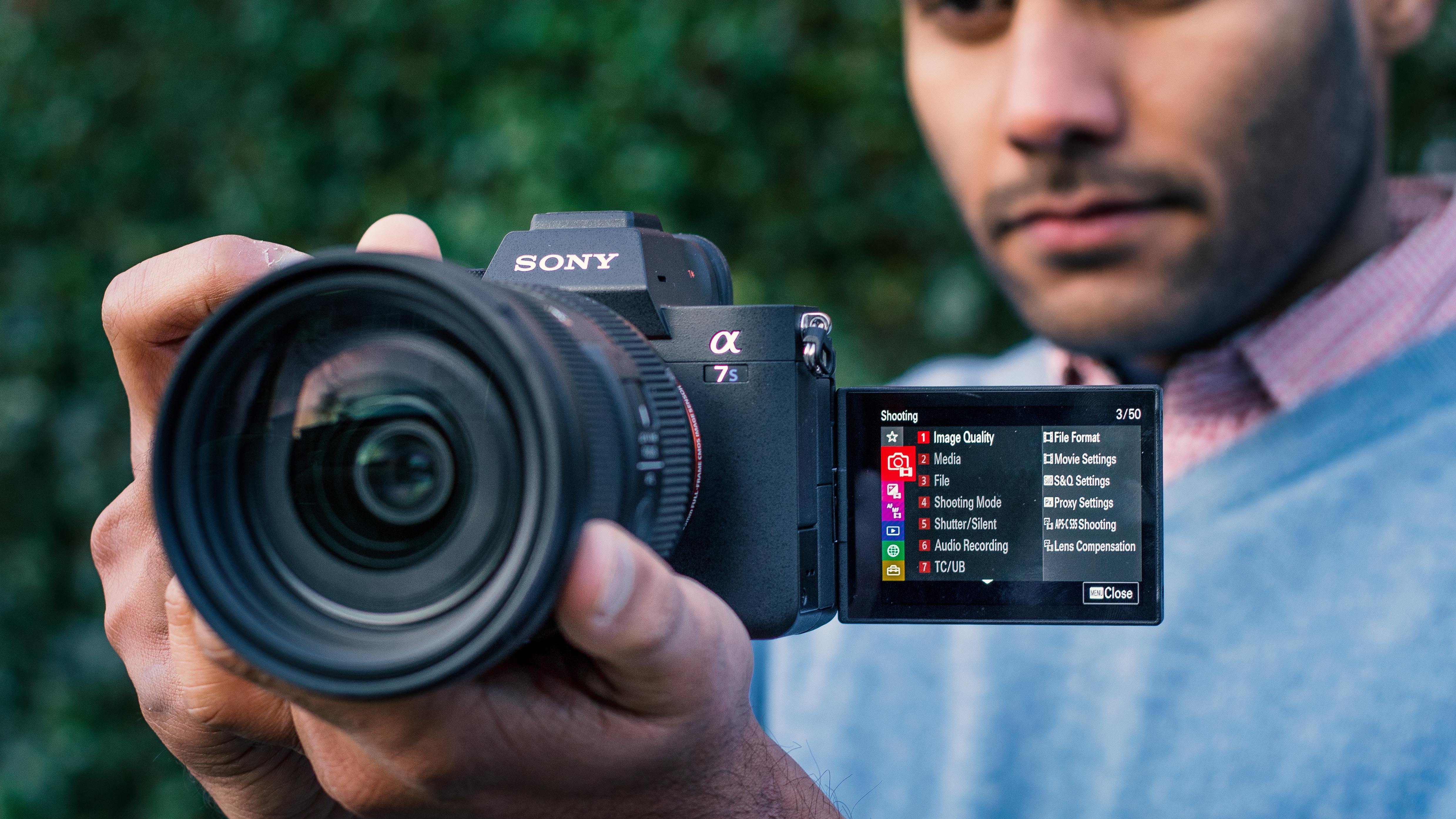
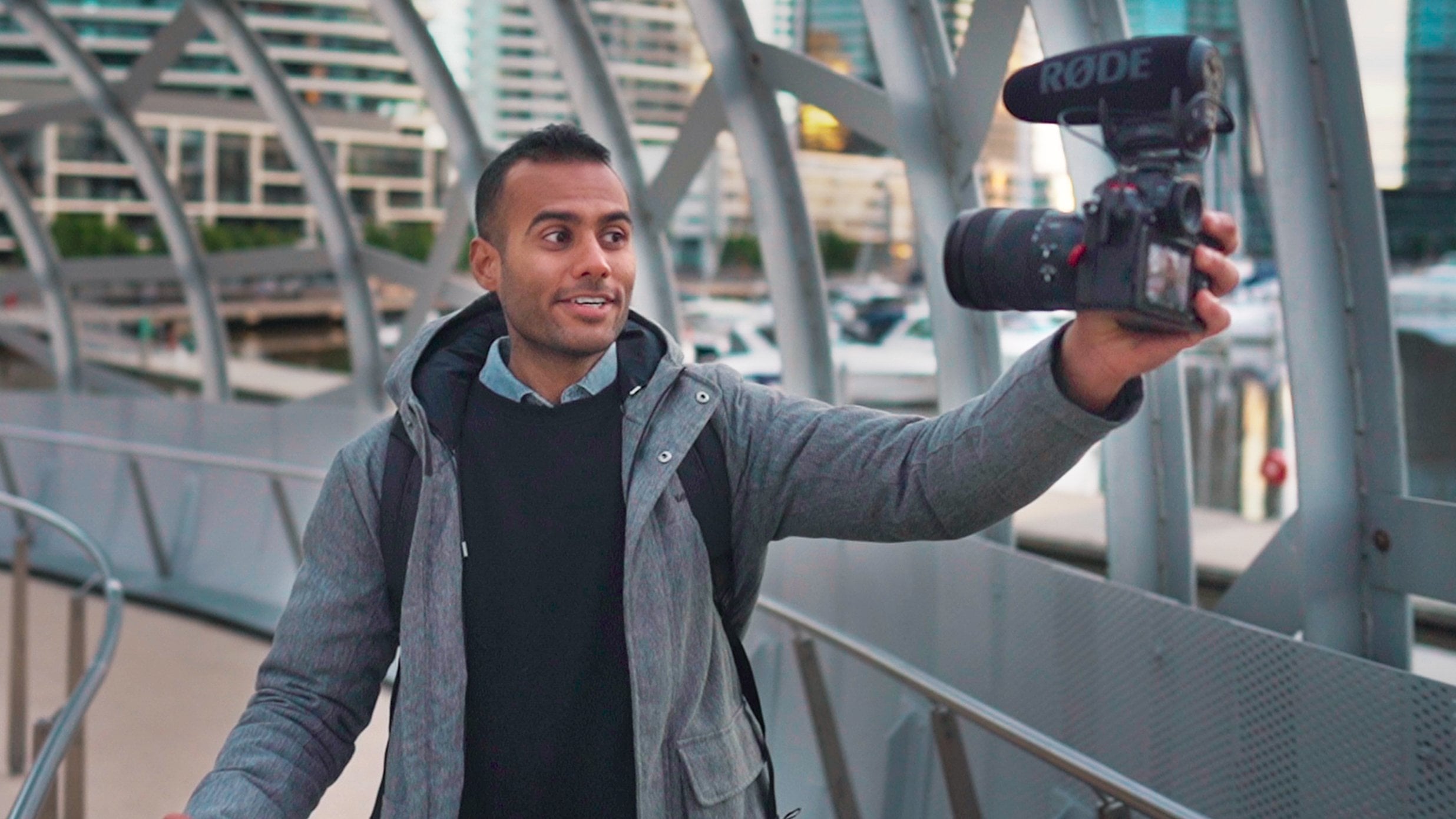
5. Fixed aperture lens: [MUSIC] Now the next lens, what is on my camera at the moment is a
fixed aperture lens. When I was comparing this lens, this was a variable
aperture lens, which meant that
as I'm zooming in, the aperture value
was also increasing. But the fixed aperture lens, as the name suggests, even if you zoom in, the aperture value
would stay consistent. The lens, what I have is 24-70
mm and it's fixed at F2.8. You can see that
the focal length of this lens is also really friendly for the
purpose what I do, which is mostly filming
company videos or if I'm filming any YouTube videos
for my YouTube channel, 24 is wide enough to be vlogging or to be
filming any landscape or any real estate videos
and zoomed in at 70 mm is also really good
to take those tight shots, and I'm still at F2.8. As I discussed before, as you zoom in, the compression value increases, the blur in the
background increases. When I'm all the way
zoomed in at 70 mm, I could get those really
crazy blurs with this lens, so that's why I
prefer this lens. If you are serious about
videography or photography, and if you just want to
carry one lens with you, I would highly
recommend these lenses. Some of the lenses, they
also come from 16-35 mm, F2.8, 24-70 F2.8 like that, you can also get lenses
in this range 24-70 F4, but that lens would be F4, so you're not going
to get as much blur as how much you
would get in F2.8, and the lens would also
not be good in low light. That's why I prefer this lens
and this is my go-to lens. I would highly recommend you
guys to buy these lenses. It's a bit of investment,
but for long-term, you would find
yourself just using one lens for all your
needs, whether it's photos, videos, whether it's
portrait or landscape, or product photography
or videography. I do everything with this lens.
6. Prime lens: [MUSIC] The next type of lenses
are prime lenses. This lens, it says 85 MM. It's not saying
85 to what number or 24-85 is just as 85 MM. It says F2, which means that you cannot do any
zoom with this lens. It's fixed at 85 MM zoom
and even the aperture, it's fixed at F2. Same with this lens what I have, this is a 35 MM F1.8, which means that the lens
is zoomed in F35 MM. Same with this 150 MM, 1.8, the lens is
zoomed in at 50 MM. Why would people
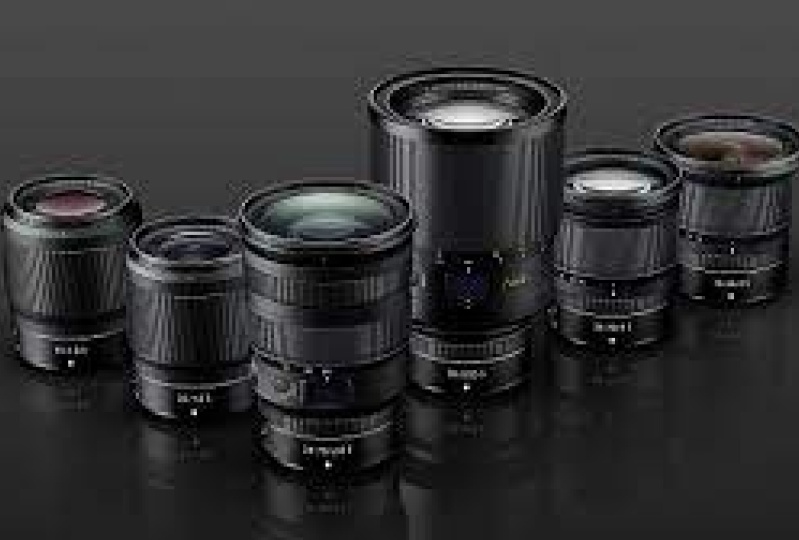
buy these lenses? See the thing is that the lens, what I discussed before, which was F2 0.8 24-70, which I'm filming on, it has a variable
focal length as well. You can zoom in and out. If you want the lenses, which is also F1 0.8 or 1.4, you cannot get any zoom
value in that lenses. It would be fixed lenses. Who uses this lens is
mainly photographers or videographers who really want that crazy blur in
the background. I also do professional
videography. I use this kind of lens because sometimes I want that
blur in the background. Sometimes I would be working in extra
low-light environment, then I would want this lens. Also these lens are much
sharper than as compared to F2, 0.8, because obviously the
aperture value is very less. You can see really sharp eyes and you will see crazy
blur in the background. These types of lenses are
totally for professionals. If you are just starting out, I would recommend to
get just one of these. For example, if I just had 35
MM or if I just had 85 MM, my zoom range is locked. I cannot do anything above
that or beyond that. Say for example, if I
wanted to take a landscape shot or if I want to take
like a real estate shot, I cannot do with
this lens because 35 MM is too zoomed in. If I want to take a
super zoomed in photo of a wildlife photography
or videography, I cannot take with this lens because it's not
super zoomed in. It's fixed at 35. That's the con of this lens. If you are buying this lens, you would need some other
lens as well because one prime lens is not going
to fulfill all your purpose. That's why if you see
wedding photographers or videographers, they would have 2-3 cameras hanging around them so
that in one body they have a 35 MM or a 24 MM
to take those wide shots, and in some lenses
they would have 85 MM to take those
zoomed in portrait shot. These lenses are for
professionals and they also cause a little bit more and it also gives
you a good results. We do food photography, we do video product photography, and 35 MM or 85 MM
it's perfect for that.
7. Macro lens: [MUSIC] The next type of lenses
are macro lenses. For this lens what I
talked about was 85mm, and it also said that
it's a macro lens. What does that mean? Macro shots looks something like this. That's why even the
camera of my iPhone, it also has one
macro lens at 14mm. All these lenses, if
I take this lens, it also says here 0.17 meters. If you are taking a photo or a video closer than 0.17 meter, it wouldn't be able
to focus the subject. It's same with
your eyes as well. If the subject is super
close to your eyes, you cannot see the
subject at all. But if it goes
slightly further away, then you can see the
subject from your eyes, so the camera lenses
works the same way. All the lenses, they also
have one more number, which is how closest you can come to the subject
to take photos, and that's where
the macro lenses they shine because
with macro lenses, you can come super close
to the subject and take those really detailed shots and if you take some photos or
videos from macro lens, it just looks really
impressive as well. The cool part about macro lenses is that you can also use it as a normal lens. Macro type is just an
additional feature of these lenses and if
a lens is a macro, it's not going to
affect anything if you just want to use these
lens for non macro shots. So it's totally fine.
8. Auto and manual focus lens: [MUSIC] One more thing you should be really careful
before buying lenses is the autofocus lens or
manual focus lens. If you are a beginner, I would really
recommend not to get the manual focus
lenses because it is such a pain to put
the subject in focus, and just when the
subject is in focus, the subject is gone. That's why if you're a beginner, I would highly
recommend to choose the lenses which
has also autofocus, that is the most
important thing. If you buy an autofocus
lens you always have a switch which you can change from autofocus to manual focus. But if you buy manual lenses, they are a little bit cheaper
than the autofocus lenses, but I wouldn't
recommend to buy those. Be very careful before
buying any lens. Or whenever you are
buying the lens, you can just email the manufacturer or you
can just email the shop, that here I have
this camera body, would this lens or
would this mount, work on the camera body or not? Also with the thing with camera
lenses and bodies is that the lenses from Sony is not going to work on the
lenses of Canon, or the other way. You would have to
buy an adapter if you want to use the
Sony lenses to Canon. The reason is because they
have different mounts, because the Canon's
thread is super different than how
the Sony threads is. Also depends on the model. This is a DSLR and this
is a mirrorless camera. I cannot use the lens from a
DSLR to a Canon mirrorless. Even if they're from
the same organization, I cannot use it because
they have different mounts. You would see EF
mount, ER mount, a lot of different
types of mounts, so you should also be really
careful with that as well. It all can be really confusing. [LAUGHTER] If it's
still not clear to you, please message me
or please reach out to me on social
media platforms, or on Skillshare itself, I would be happy
to reply to you. I hope that you got
some value from this and next time when
you are buying lenses, you would know exactly
what you want. Thank you so much for
watching this class and I would see you
in the next one.
 Adi Singh, Videographer and Youtuber