Transcripts
1. Introduction : Hello! My name is Billie Gardner and I'm a Virtual Assistant Mentor. I am also the founder of Desire to Done and the Introvert VA Club. Back in 2014 I really wanted to quit my job. The problem was I wasn't making enough money with my side hustle. Maybe you can relate? It wasn't until I became a virtual assistant that I was able to earn enough money to justify quitting my job. In this class. I'll show you how to turn your passions, skills and talents into services that clients want. This class is perfect for you if you're an introvert, a stay at home mom or dad, a college student or you just want to learn how to make a home-based business that you'll enjoy. You can use what you learn in this class and turn it into a full-time business or a side hustle where you can make some extra money. For instance, if you're an artist and you want some additional income as you build your art business. If you're already a virtual assistant and you're not enjoying the services that you're doing or the clients that you're working with, this class is for you too. A workbook is included with this class that you can fill out as you go along through the lessons. And at the very end, I'll have a little project for you. So be sure to check that out. At the end of this class you'll have a clear picture of the type of VA business that you want to have, the services that you want to offer, and the people that you want to work with. I'm so excited to go on this journey with you. Let's get started.
2. What is a Virtual Assistant?: Welcome to my Skillshare class - Create Services That Sell. I'm so happy that you decided to join me. Now this is a beginner class, so I'm going to cover what a virtual assistant is, the services you can offer as a virtual assistant, and who's hiring. So a virtual assistant, or otherwise known as a VA, is a freelancer who provides services remotely, which means you can work from anywhere. So if you like to travel, you can bring your laptop along and work on the road. Or if you prefer to work from home on the sofa, in your home office, or at a coffee shop, you could do that too. So, VAs typically work with online businesses, but it's not always the case. You can also work with local businesses. So you are your own boss, and you can work wherever you want. What type of services can you offer as a VA? One of the great things about being a VA is that you can offer services that you enjoy doing, which is part of the purpose of this class. I want to help you figure out the ideal services for you. You could choose from a variety of skills such as creative work, technical, administrative, or a mixture of these. Some of the services that I offered as a VA were I coordinated interviews and assisted with the cover design for an online magazine. I would reach out to interviewees. I would gather their materials and get the interview ready to publish. I also helped with the design of the magazine covers each month. It was a really fun job. It was one of my favorites. I also helped a health coach with her social media. I assisted with product launches every season, and I did website updates for her. Another client I assisted with payroll, customer service, and onboarding new employees. And I also helped manage Pinterest for a variety of businesses. There are tons of different services you can offer is a VA, so I wanted to share a few with you to inspire you. One of them is creative writing. You can help right blog posts. You can write sales copy, otherwise known as copyrighting, for sales pages and websites. You can write emails or email funnels, social media posts, product descriptions like Etsy and online shops. There are people out there who are needing help with this. They don't have time, or they don't have the skills to write proper sales copy. There is really an art form to it, and it pays really well. Social Media posts is another thing. Not everyone knows how to write posts that convert or that engage people. If you're a graphic designer, your skills can come in handy. You can create ad graphics, social media graphics like Facebook, Instagram, Pinterest. You can design ebooks, and ebook and book covers. Amazon books are really hot right now. Lots of people are creating them, and they need help with their book covers. You can create slides for workshops and webinars. For instance, the slides that I'm using in this class. You can create printables, and people use these for opt in freebies. They'll put it on their website and ask people to sign up for the freebie in exchange for their email address. You can create products, and you can create catalogs. Social media. Social media services are one of the most requested out there. People know how important it is to be on social media, but they just don't have the time to do it. And they also don't have the time to learn all the newest things about social media cause it's always changing. So you could write, design, and schedule posts for Facebook, Instagram, LinkedIn, Twitter... all the social media sites out there. Or choose specific ones that you want to focus on. Set up and manage Pinterest accounts. You can design pins for Pinterest. You can create and run Facebook ads or Pinterest ads. Facebook ads are really popular too, and it would be a great thing to get into and it pays well. And there's also Facebook group or forum management. Memberships are also really hot right now, and people need help managing their groups. The conversations in the forum. Marketing. Some marketing ideas for you would be to pitch brands, influencers, and sponsors. So business owners out there, they need to get the word out about their business. And a great way to do that is to get onto other websites to get in front of new audiences. So you can help them with that. You can help them get on TV, podcasts, guest writing opportunities, speaking gigs. You can research the places that are best for them and then help them get onto these TV shows or podcasts or get onto a blog that they can write a guest post for. You can write and set up emails for sales funnels. Again, there is an art form to email sales funnels that people will pay you for. Ad management like Google ads and product launches. If you are in any way techie, people will pay for this because a lot of business owners are not techie at all. Some of the services that you can provide would be to update and backup websites and plugins on WordPress websites. You can offer video editing, YouTube videos are really big right now. People are trying to get their message out more using video, and so that would be a great thing to do. You can assist with webinars and workshops. You can do Google Analytics. You can set up or migrate email lists. For instance, one of the persons I had hired for my business knew ConvertKit. So, when I wanted to transfer over to ConvertKit, I hired her to do it because I knew it was going to be a big deal to do, and I knew I didn't want to do it. So I hired someone who was familiar with ConvertKit. You can set up newsletter opt-in forms and sequences. You can streamline and automate systems. You can create digital magazines, and you can also create ecourses or memberships. Research. If you enjoy doing research, you can do research for business owners out there. You can research PR opportunities for them. You can research travel arrangements, events. Keyword research is very important or product or market research. Bookkeeping. If you have bookkeeping skills, you can offer this as a service. You can process orders and refunds. You could make collection calls, handling payroll, billing and invoices, anything that has to do with bookkeeping. Admin. So when you thought of a virtual assistant, you may have thought that VAs only do admin work. That's not true. As you can tell from all the other examples of services that you can offer, admin is just a part of it. And if this is something that you have skills in, already from a previous job or something that you enjoy doing, then you can offer admin. You can do customer service. You could organize email inboxes, data entry, appointment setting, make travel arrangements, create resumes, manage online communities, transcription, personal shopping, any admin tasks that needs to be done. I already touched upon some of these already. But what's hot right now is social media management, memberships, like Netflix is a membership where someone pays a monthly fee to get access to movies. For instance, I also have a membership site for introverted virtual assistants, and they pay a monthly or yearly fee, and they get access to all the courses, the templates, and the support within the membership. So if you can tap into something like this, you can set up membership sites. There's a lot of tech involved with that. You can manage the forums and, like I have someone who posts a question of the week every Monday, and she just every morning, she pops in there and she sees what's going on, and she helps answer questions. She also writes and sends out my newsletter. Now also self publishing on Amazon. So many people are writing their own books now. It's so easy to do. Before you had to get approval from a publisher. Now anyone can publish a book. So there are people out there who need help editing, writing, and also formatting their Amazon books. YouTube videos. Like I said before, videos are really hot right now. And Social Media, they're putting more importance on videos, so it's becoming more and more important for people to do videos. And then tech. Tech is always something that people will need. So, who is hiring? There are tons of people out there who are hiring. Business, life, and health coaches. They are always needing people, and they're typically not techie people. Online magazines and publishers. Speakers. They need help with website, social media, lots of different things. Other graphic designers. Web designers. Event and wedding planners can use a virtual assistant to help out. Artists. Photographers. Natural healers. Realtors. I worked with a realtor listing farm properties on his website. It was a really easy and fun job to do. Authors, bloggers, beauty salons, and other virtual assistants need help. Small business owners and entrepreneurs all over the world are looking for people to help them with their day to day tests and special projects. Hiring a virtual assistant is more cost effective than hiring an employee because the business owner doesn't have to pay employee taxes or benefits. It's also a great solution for small businesses that can't afford to have a part or full time employee and only need someone to help occasionally or only a few hours a month. I hope your brain is buzzing with exciting ideas on what to offer and who you want to work with. In the next lesson, I'll be covering the types of traits that make a great VA. See you there.
3. 11 Traits That Make a Great VA: Welcome to lesson 2 - What makes a great VA? Over the years I've noticed that there are 11 traits that make a great VA. These traits are important for growing a successful VA business. Don't worry if you don't have all these traits or only so so at some of them. Most of them you can improve upon if you feel you're lacking. For instance, I'm always working on my time management, but having these traits will really help set you apart from other VAs and will help you get more clients because you'll have a great reputation. Boss material. First and foremost, you must want to be your own boss. VAs are freelancers, so that means you have to feel comfortable running your own business. Some people are cut out for this and others are not, which is perfectly cool. But in order to be a VA and run your own business, you have to embrace being an entrepreneur. Part of being an entrepreneur is making sure that things are getting done in your own business. That means you have to make time to send invoices, pay bills, market your services, file taxes, all that good stuff. So you have to be willing to do that. And to be honest, I feel that it's totally worth it. And I've been on my own as a VA since 2015, and I can't say I could go back to a job. It would be horrible for me because I enjoy being my own boss. Organized. Running an efficient business takes organization skills. You'll have to organize and juggle multiple clients and projects. So it's a good idea to find ways to do so efficiently. One of the things I like to do is manage my tasks and clients in a project management tool called Trello. There are other tools out there like Asana that a lot of VAs use, and I recommend getting to know some of these organizational tools. Good at time management. Time management is a tricky little fellow. Let me tell you. It takes practice tweaking and seeing what works for you. When you're a VA, you need to learn how to manage your time properly because, like I said before, you'll be juggling different clients and projects. So it means taking time to sit down and actually doing your work, even though you have other non-work related things you want to do, like tidy up the house. So FYI, this is something a lot of entrepreneurs struggle with, including myself. I especially struggled with time management when I became a VA and got really busy quickly. Again, it takes practice and patience to work it out and, of course, tweaking as needed. Motivated. Motivation... Let me tell you. Some days you have it, some days you don't, right? And as VA, you'll need to know how to tap into your motivation when you have an important project due, and you're just not feeling it. When you work from home or on the road, if you're a traveling VA, you'll have distractions that try to take you off course. I have found that having a plan and knowing what gets me motivated helps. So that might be working from bed when it's a rainy day, and I don't feel like working. I would rather be reading, you know, and snuggling with my puppy dogs. I'll just work from bed or the couch and snuggle with my puppy dogs there. So having a plan really does help. Focus. Working on your computer or online can be very distracting. Just working from home in general can be very distracting. This is where mindfulness comes into play, like being in the present moment and focusing on one task at a time. Taking frequent breaks is also important to staying focused. I like to set a timer and work for an hour and then take a 10 minute break. It gives my mind a break and then I can refocus when I come back to my work. Good at setting boundaries. As a business owner and a VA, you need to know what you'll tolerate and what you won't. This can be the type of people you work with, the days you work, or tasks you do. These boundaries can be laid out in a contract, but sometimes you'll need to speak up for yourself, or fire a client, or say no. Clear communicator. Your clients need to hear what you're working on, what you finished, or even when you're going on vacation. Make sure you keep them in the loop with what's going on so they don't wonder or, worse yet, worry. This also means saying something if you're struggling with a project or if you have a personal problem that could affect your work. Don't leave your client hanging and wondering if you're okay. It's your responsibility to let them know what's going on. Not afraid to ask questions. Another part of communicating is asking questions when you're unclear. If something doesn't make sense, speak up. Ask for clarification. Repeat what you heard. Ask for an example. You don't want to be mid-project and realize you have it all wrong because you didn't ask for clarification. And by the way, I had a client tell me that one of the things she didn't like about her previous VA was that she didn't ask enough questions. So don't be shy. Speak up and ask away. If you find that a client is bothered by this then maybe they're not the right client for you, and we will be touching base on this later in a lesson on figuring out your ideal client. Detail oriented. As a VA, you have to be detail oriented. You are helping clients with their baby. They are nervous about handing it over to strangers. They're worried someone won't treat it as kindly as they do, and they're afraid someone will make mistakes. And the truth is you will make mistakes. Everybody does, but the least amount of mistakes that you could make the better. Handing over work to a VA can make business owners very nervous. They are usually control freaks. I'm not judging here because I'm one of them, so you have to be on point and make sure you check your work and then check it again. Willingness to take initiative. This one separates the good VAs from the amazing VAs. This means looking beyond the scope of the project and offering solutions or ways to improve it without someone asking you. It means getting inside your client's head and figuring out what they want next and then offering it. It's improving a system or process so it runs smoother or eliminating steps to make it better. It's going the extra mile because you care which leads me to the final habit of successful VAs. Caring. I'd say that caring is the number one trait of successful VAs. This not only means genuinely caring about your client and his or her business, but also caring about yourself. Like you cheer on your client when something good happens, but you also set boundaries for yourself in your business and personal life. When you genuinely care about your client and believe in what they do, it shows, and it makes you work much more enjoyable. That's another reason why you need to know who your ideal client is. Caring also means taking time to improve your skills and listening to feedback on your work without getting defensive. When you love what you do, it's not hard to care. Now that you know the traits that make great VA, let's start building your business.
4. Determine Your Why: In this lesson, we're going to cover how to determine your why, what it means to know your why, why it's important, and how to figure out yours. This is a really important first step to creating your business. What does "your why" mean? Your why is the whole reason why you're starting your business. For instance, my why, when I became a virtual assistant, was to set my own hours. I wanted to choose who I wanted to work with. Offer the services I wanted to offer. Work alone because I'm an introvert. Work in my jammies on the couch with my puppy dogs. Do work that I'm passionate about and help people at the same time. I really wanted to be my own boss. And I love blogging, creating ebooks, learning new skills, and tinkering around with my website. And I wanted to do more of that. And I also wanted to make money and have control over how much I earned. Why is important to know your why? Your why will keep you inspired. Getting clear on why you want to be a VA will help you build a business that fulfills your desires. It will keep you focused. It'll keep you focused on your priorities as you build and grow your business, and it will keep you motivated. Starting and growing a business can be challenging at times, but if you keep your why front and center, it will help propel you forward when you need some motivation. How to figure out your why. Let's cover some ideas for your why. I'm going to show you a few popular whys that VAs have for starting their own businesses and working from home to inspire you to write your why. There's a workbook included with this class that I want you to go through with the rest of the lessons, and there's a section in there where you can write down your why. So let's go over some ideas for your why. You might want to stay home because you have kids or you're going to have a baby, or you have pets that you want to be home with. You want the freedom to fill in the blank here. There's so many things. You wanna work where you want. You want to have a flexible schedule. You want to drop your kids off at school and pick them up. Um, you want to take care of family members that need help. You know the freedom to do what? Be your own boss. I mean, it's great being your own boss because you get to make your own rules. You get to be a leader, and you get to be the master of your own schedule. You might want to make a difference in the world. You know, supporting entrepreneurs doing amazing things and supporting people and causes you believe in is really a wonderful why to have for starting your business. Working with people you want to work with. Choosing who your clients are and working with a team of people you believe in is a fantastic reason for your own why. You want to have control over how much money you make. You know you don't want to wait for someone to give you a raise. You want to raise your rates when you choose that it's time. You want to do work that you actually enjoy. A lot of times with jobs, people don't enjoy what they're doing, or they might just enjoy part of it. When you have your own business, you get to choose what you do, and it's very rewarding. When you write your why get super specific. The more specific you get, the better. What's your why? In the workbook, you'll find a place to jot down your why. Let the examples that I gave you inspire your why. Next, I'll be covering how to identify your niche.
5. Identify Your Niche: In this lesson, we're going to work on identifying your niche. We're gonna cover what a niche is, why it's important, how to figure out yours, and how to really stand out as a VA. What is a niche? A niche is what you specialize in. It's a specific type of service that you offer to a specific type of target market, and it's one of the first things you'll want to do before anything else in your business. My niche as a virtual assistant, when I first started out, was an online business manager or an OBM. And I offered a large variety of services to support business owners. And they would, they were on a retainer rate with me, so I worked with them every month, and I would just do whatever they needed done in their business. This is very valuable to them, but honestly, it was also pretty exhausting to me because I didn't have one specific niche, you know? I could do lots of different things, but it was very tiring. I later switched over to being a Pinterest manager, and this, when I started to niche down to a Pinterest manager, things got easier. I was able to focus on one thing, and I was able to get really, really good at that one thing. It was also easier to scale for me so I could hire someone to help me out with the service. Why is having a niche important? So for one, it helps you stand out. Virtual assistance is a growing field, and zoning in on your niche will help you stand out in a crowded market. It adds value to your work. Having a specialty makes you more of an expert. It justifies a higher rate. Because of your experience, you're an expert, and so you will get paid for your expertise. It allows you to fine tune your skills. This means you'll have a streamlined system of how you do things that will save you time and energy. It will make marketing easier. Writing your web copy, blog posts, and social media posts will be easier because you have a focus and you know what you want to offer and who you offer it to. It will make your business easier to scale. There will come a time when you can't physically take on any more clients, yet you might want to make more money. When you have a niche, you can easily create an agency if you like. Or you can hire subcontractors to help you with your business. Figuring out your niche when first starting out can be difficult. You may find that you want to offer a large variety of services and can't quite narrow them down. And that's okay. Once you launch your business, you'll get a clear idea of the direction you want to go in. When first starting, you can offer a variety of services and then just narrow it down. How to figure out your niche. In the workbook, I have a bunch of questions for you to answer, and I'm just gonna go through some of these questions with you now. So you want to brainstorm. What do people ask you to do because you're so good at it? What do you enjoy doing in your free time? What do you like to study in your free time or read? What would you do if you didn't have to work? And what sort of things do people know less about than you? These are all great questions to get a little more clear on the niche that you wanna go towards. What do you enjoy talking about. What do you like to give advice about? What type of skills would you like to learn? What kind of skills did you learn in your current or past jobs? And what type of software are you familiar with? How to stand out as a VA. You want to stand out because you want to have clients hire you. So there are a couple ways you can really stand out. One is your magic potion, and this is a combination of your unique skills, talents, and your personality. It's your gifts. It's what comes naturally to you that doesn't normally to others, and we all have them, and it may be hard to figure out what your gifts are. You can always ask your friends. They'll know, or family members, and they can help you out. And these sorts of things are your magic potion. They are you, and they are your authentic you. Your software knowledge. What types of apps, programs, and software are you familiar with? Because this can help you really stand out and help you figure out your niche. So what will your niche be? Grab the workbook and go ahead and fill out the section on your niche.
6. Decide on Your Ideal Client: In this lesson, we're going to decide on your ideal client, why it's important to know yours, how to figure out yours, and your not so ideal client. So what's an ideal client? An ideal client is the type of client you enjoy working with. It could include their personality, their likes and dislikes, the industry they're in, and much, much more. When I was a Pinterest manager, my ideal client was a female blogger. Her age was between 20 and 40. She knew the power of Pinterest. She either wanted to get started with Pinterest or already had a Pinterest profile that she managed herself. She blogged regularly and wrote amazing content. She trusts my expertise and listens to, and implements my suggestions. And her side interests are clean eating, minimalism, and fashion. So why is it important to know who your ideal client is? When you know your ideal client, it determines where you'll spend your marketing efforts. You won't be wasting your time marketing and promoting your business in places where your ideal client will not see them. It helps you speak to the pain points of your ideal client. When you know your ideal client, their pain points, and you have a solution for them, you can speak directly to them and their problem, and they just then want to instantly hire you because you have that solution to make them feel better. Knowing who your ideal client is makes it easier to know when a potential client is a good fit or not, because you don't want to work with people who are not a good fit. But when you know your ideal client is, and also who they aren't, then you can determine who you want to work with. And more than likely, you're going to have a great relationship. And working with your ideal client just makes your job more enjoyable when you work with people you enjoy hanging out with. I mean, it's easy. It makes life easy. It makes work easy, And so knowing your ideal client just also makes your job just more fun. So how do you figure out who your ideal client is? In the workbook, I'll have a series of questions for you, but I want to cover some of them here. So what type of professionals would you like to work with? Who do you like working with and why? What type of traits do you like about your friends? What does your ideal client like to do in their free time? What brings joy to their life? What's their age? What's their gender or pronoun? Where do they live? Are they married? Do they have kids? Do they have pets? What's their yearly income? What type of music do they listen to? What types of TV shows and movies do they enjoy? Also, what types of blogs or magazines do they read? What do they Google, personal and business? What do they struggle with in life and biz? Where do they hang out online, and where do they hang out offline? You might think these questions are kind of silly, but they're not because you really get to know your ideal client. And again, it makes marketing to them easier. So when you write your website copy, you know them. You can say, Hey, you're missing yoga classes and you want to go. But I can help you get that time back in your life because you know specifically that they are into yoga. So it's really important to get to know your ideal client inside and out. It's a great idea to reach out to a few people who match your ideal client profile and ask them some of these questions. For one, you'll gain a lot of great insight this way, and you can score, maybe even your first client, and it just gives you an idea if you're going in the right direction. Social media is also a great place to do research on your ideal client to see what's important to him or her. But I really do prefer reaching out to people and connecting with them because again they might become your first clients. Now let's cover your not so ideal client. Just as important is knowing your ideal client is, is knowing who your not so ideal client is. Knowing who your not so ideal client is will reduce uncomfortable situations. Having to terminate a working relationship with a client because you're not the right fit is uncomfortable, and it's totally preventable. When you know who your ideal client is, and your not so ideal client is, you know who you should and shouldn't be working with. And when you work with someone who is not your ideal client, you know, and you pretty much know from the beginning, and it doesn't get any better. So you can totally prevent that by not working with your not so ideal client. Aggravation. Working with someone you don't click with is aggravating, and it's a waste of energy. Wasted time. Working with your not so ideal client means you don't have time or space for your ideal clients. Remember, when you say no to your not so ideal client, you are saying yes to your ideal client around the corner, and this has happened to me many times. Someone would approach me. They want to work with me. I had to tell them no because I felt that we were not a good fit. And not long after that, my ideal client came about. And if I would have worked with the person who was not my ideal client, that space would have been filled. I wouldn't have been able to take on that other client that was a better fit for me. Who is your ideal client? Grab your workbook and fill out the ideal client section to determine who yours is and isn't. And if you have any questions during any time in this class, go ahead and add them to the discussion board
7. Create Your Services: In this lesson, I'm going to simply give you a few tips for creating your services. And then afterwards you can go through the workbook and figure out the type of services that you want to provide. Tips for creating your services. You don't need to be an expert. You just need to know a little more than someone else. New VAs can feel intimidated and worried that they don't have anything to offer. But everyone does, and you might feel like you're not an expert. It's OK. You can still help someone out even though you're not an expert. You know more than what they do. And as time goes on, you can fine tune your skills and become more of an expert. Only offer services that you enjoy, that you're good at, and feel comfortable with. There's no point in offering services that you don't enjoy doing because your heart is not going to be into it, and it's just gonna show. Keep your ideal client in mind and offer packages or services that he or she needs. This is really important because if you're not offering services that your ideal client wants, then you're not making money. So you have to have the two connect. Always be upfront about what your service includes, and you can always charge extra for something that's not included if you want to. So this is important when you're creating your packages. You can create packages specifically for your ideal client, and you can have a la carte items if you need to. You can create a list of services that your ideal client can choose from depending on their needs. So when you're starting out, it can be kind of weird creating packages because you don't know what to include. So when starting out, you might just want to have a list of things that you can provide to your ideal client, and then they can choose what they need. You could charge them like an hourly rate. Then eventually you can fine tune things, and you can create packages and continue offering the services that are doing really well. Consider combining a few of your skills and offering a unique service package that your ideal client would love. This can help you stand out by creating something that is specific to them, that when they look at it, they're like this is for me. This is great. Don't stress. You can always change your service offerings or discontinue them. If something isn't working, you can always try something else. So don't feel like you have to have it all right from the beginning. Don't be afraid to ask your ideal client what they need help with. This is just part of market research. You don't want to offer services that they don't want. And so asking them what they want is perfect for figuring out what you should offer. What sort of services will you offer? In your workbook, you'll find a list of service and package ideas to get you inspired. And if you have any questions, go ahead and ask them in the discussion area. In the next lesson, we're going to cover how to price your services.
8. Price Your Services: In this lesson, I'm going to cover how to price your services. I'm going to go through the average rate of a VA, some pricing tips, and different ways you can set your rates. Pricing is usually one of the trickiest things to figure out in your business, no matter what industry you're in. So if you are struggling with this part, you're not alone. But I have some tips for you to make it easier. So what's the average rate of a VA? The average rate of a US based VA is anywhere from around $20 to $100 an hour, and this all depends on your skill set. Keep in mind that a higher skill level equals a higher rate. General admin duties such as data entry, research, and calendar management will not pay as much as specialized skills like web design, social media management, and copywriting, or specialized platforms like Leadpages and ConvertKit. So if you're wanting to make $50 an hour, you're probably not going to get that for general admin duties. So let's go over some pricing tips. Figure out what you need. How much do you need to pay your bills. Charge enough to cover self employment taxes, health insurance, and business expenses. And you can find a rate calculator online. You can Google and find all kinds of them that you can use to calculate your hourly rate. You can research your competitors to see what they're charging just to get an idea. But remember, they might have more experience or less, and you have certain needs on how much money you need to make. So just take it with a grain of salt. Base your price on your expertise and skill level. So if you are an expert in something, be sure to charge accordingly, and you can always raise your rates. So let's cover the four ways to price your services. The 1st one is hourly rate. For an hourly rate, you can offer, say, a pack of 10 hours for $400. So your rate then would be $40 an hour. And the ideal client for something like this would be someone who needs help here and there and not a dedicated assistant. Now this hourly rate is just an example, so you'll have to figure out your rate for this. Now the pros to offering an hourly rate is it's an easy solution for business owners who need a few hours here and there. And it's the easiest way to price when you're a new VA. The cons are there's no guarantee of ongoing work once the hours are used up. So the client could use up five hours and then don't need hours for a few months later. So you're not having that steady income flow. You will have to track your hours, and it's not the best way to scale your business. So now let's cover the project rate. An example of a project rate is, let's say you do an ebook design service for $200, which you calculate will break down to $50 an hour. The ideal client for something like this is someone with a specific need that you offer. They want an expert to handle the task. Some pros for the project rate is that it has the potential for the highest hourly rate, and this could be an ongoing service if you offer a monthly service. You don't need to track your hours unless you want to for your own sake. And as you gain experience, you'll become quicker and more efficient. So let's say it takes you five hours to do a task. But as you do it more and more, you're gonna get quicker at it and more efficient. So then it only takes you four hours. So, in essence, you've gotten a raise because you're charging a project rate fee for the whole thing. You're not charging hourly. So that five hour task now takes you four hours, and you're getting a higher rate per hour now. Cons of a project rate is if it's not ongoing work, you'll need to constantly get new clients, and your hourly rate will be lower if a project ends up taking longer than expected. So it's good to figure out how long it's gonna take you, maybe add a little cushion to that. To figure out your project rate, you'll take your hourly rate times the amount of time it takes you to do the project. Don't forget to include the time it takes for you to onboard and offboard the client and be clear of exactly what's included. So then there's the package rate. The package rate is very similar to the project rate and as an example, let's say you write and format 3 blog posts for $225. Part of your package includes writing the blog post, but the other part of it includes formatting and publishing the post. So you have different services that you've put together into a package rate, and the pros and cons are very similar to the project rate. So the last one I want to cover is the retainer rate. An example of a retainer rate would be, let's say you offered 20 hours a month for $600 which breaks down to $30 an hour, and this would be every month. An ideal client for this is someone who needs a dedicated assistant on their team each and every month. So when I started out as an online business manager, this is what I offered. So I only worked with people who wanted a dedicated assistant each month. The pros to this is that you have steady work, which means more steady income. You can rely on that monthly money coming in, and you'll develop valuable and very fun relationships with your clients because you get to know them because you're working with them consistently. You'll work with the same clients each month, so you'll spend less time marketing to find new clients. Some of the cons are you will have to track your hours still, and clients may expect a lot of work all at once. Like at the first of the month when their hours renew or during a launch or something like that. So your hours can kind of fluctuate during the week. And you're paid a flat rate for any of the tasks you do, no matter the skill level. So if you're offering task that are different skill levels, you're not getting a different rate, so that can be a con. How will you price your services? Fill out the pricing workbook to figure out how you want to price your services. I'll see you in the next part of this class, where we will cover what your project is.
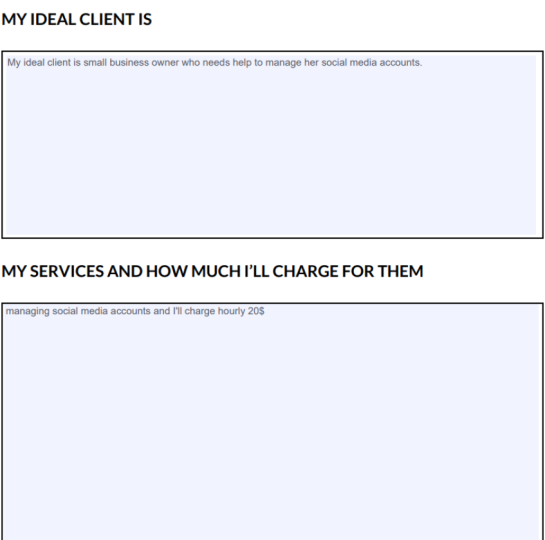
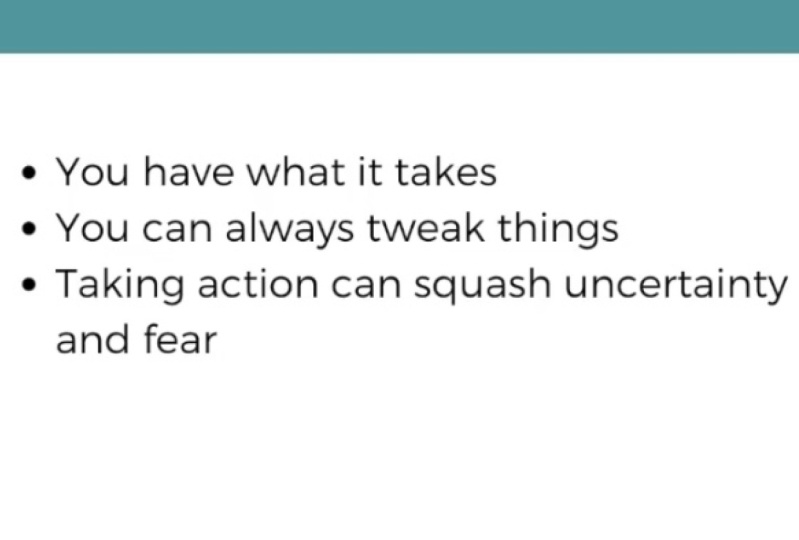
9. Project & Final Thoughts: In this section, I'm going to cover what your project is and some final thoughts. So for the project, I'd like you to fill out and share the summary page from the workbook to the project section of this class. It's the very last page of the workbook, and you can just simply take a picture or take a screenshot and upload it. Before I end this class, I want to share some final thoughts. You have what it takes. You have value and you have skills that people will pay you for. You can always tweak things, don't get hung up on things and stress out. Taking action can squash uncertainty and fear. If you are having fear about something, you're not sure how something's going to go, just start. Just take the first step. Let me know if you have any questions. Go ahead and drop them in the discussion section. Follow me to be notified of future classes. I would love a five star review. It really helps me out. But if you feel that there's something missing in this class, please by all means, message me. I'm also open to suggestions for future classes. Thank you so much for taking this class. I enjoyed making it, and I hope to see you in future classes.
 Billie Gardner, Virtual Assistant Mentor