The Good Hour Issue 012: Collective Creation
Creating alone, creating together.



Alone, Together
Most of my creative breakthroughs happen in the shower. Call it solo practice (or basic hygiene), the beauty of this kind of creativity is that it can be dreamed of and explored alone. It’s where skills get identified and refined, with or without running water.
Every so often, I towel off and head out to make something with others, even if it feels challenging or less convenient. It recharges my sense of creativity, which I then bring back home with me.
Skillshare is, ultimately, about empowering solo learning. But sometimes, the things we learn on our own become most meaningful when we have a chance to practice them in shared spaces, whether online or in person. Care to join me?
– NAOMI SKWARNA, EDITOR
We Want It:
Shareable hair clips, a John Lennon-inspired tee, and a gorgeous book about seeing and being seen.
Some links in this email are affiliate links, which means we may earn a commission if you make a purchase.
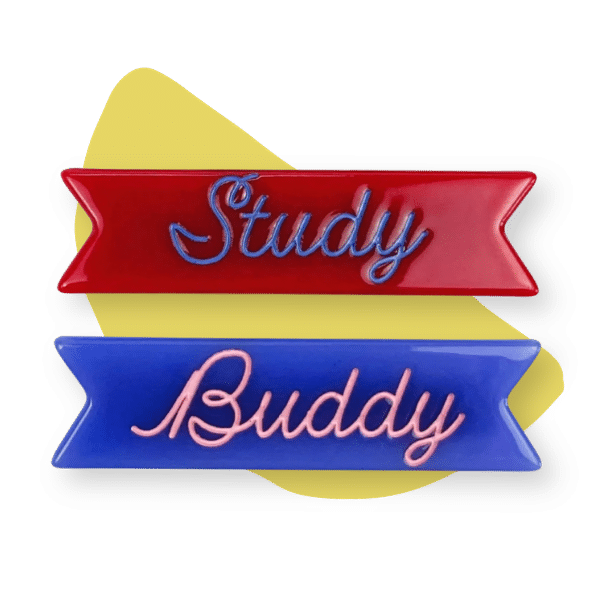
Study Buddy Hair Clips
Why we like it: Sure, Eugenia Kids’ vintage-inspired barrettes are technically “for kids,” but rules are for fools. Gold alligator clips on the back!
Why it might not be the right fit: Too many to name.
Verdict: A perfect early stocking stuffer.
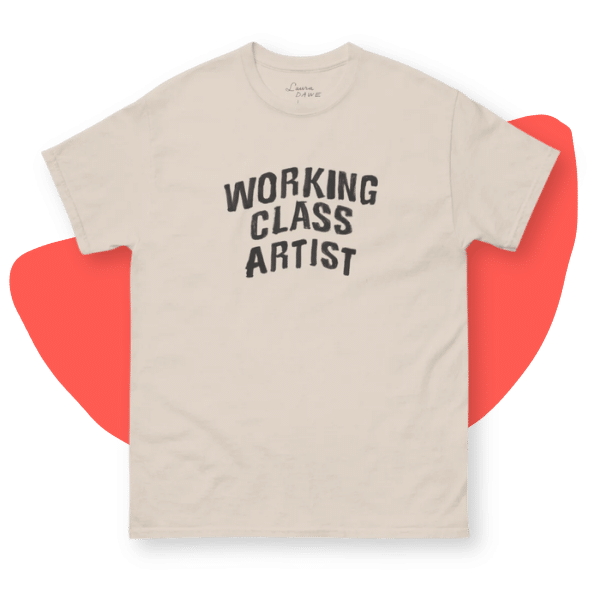
Working Class Artist Tee Shirt
Why we like it: A cheeky riff on John Lennon’s “Working Class Hero” shirt, polymath artist Laura Dawe’s 100% cotton tee speaks to the dreamers flying high without a safety net!
Why it might not be the right fit: You’re more of a Columbo fan.
Verdict: Simple, elegant, goes with everything.
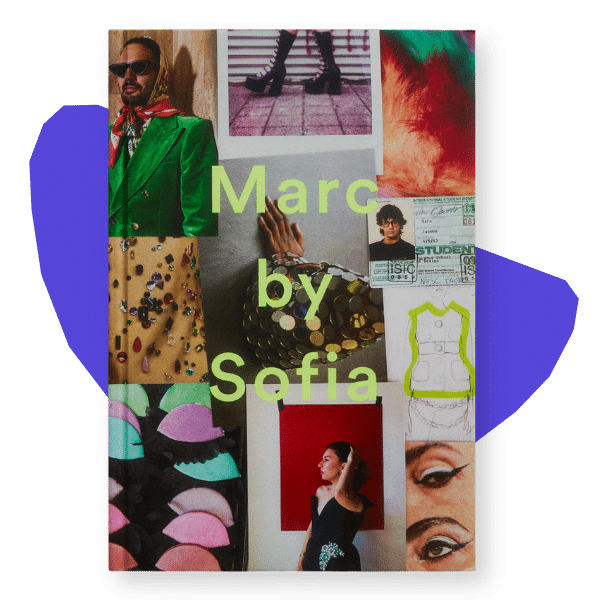
Marc by Sofia Book
Why we like it: When Sofia Coppola first met Marc Jacobs 20 years ago, they became fast friends and frequent collaborators. Now, accompanying her documentary, Coppola pays tribute to Jacobs’ life and work from her intimate perspective.
Why it might not be the right fit: It’s not a Columbo shirt.
Verdict: A beautiful and personal reflection on creativity and friendship.
The Conversation
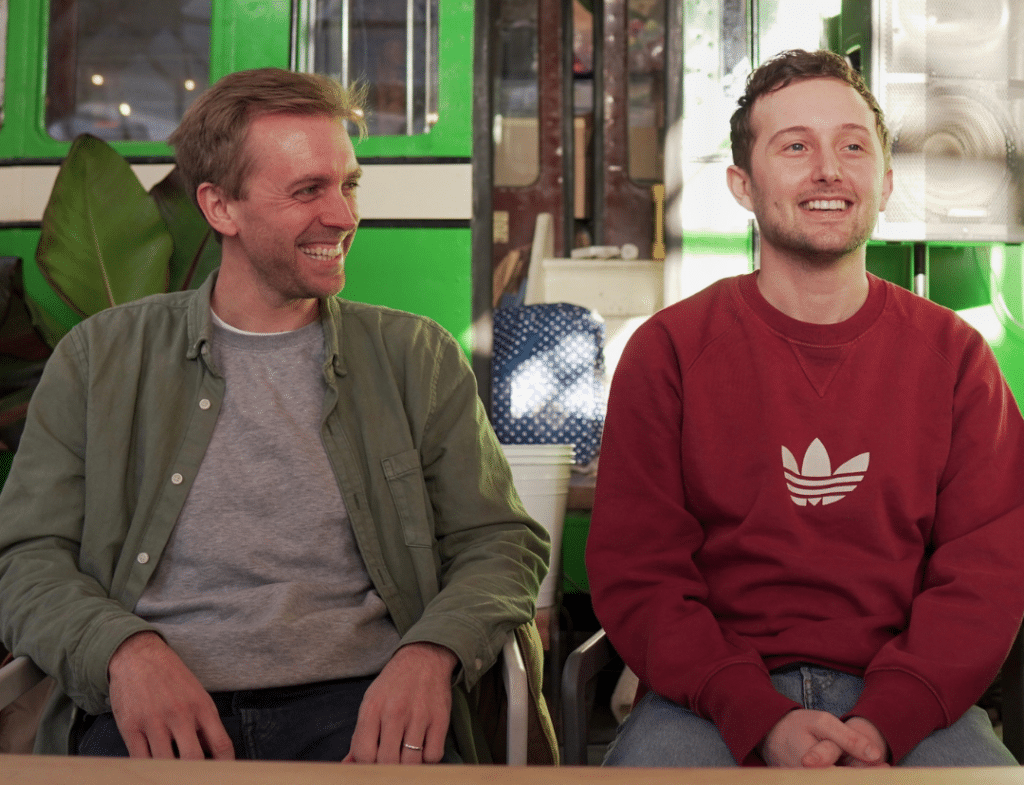
UK-based Top Teachers Marc Barnacle and Mike Barnes are friends, bandmates, and business partners. Separately, they have careers that resist tidy definitions. Marc is a musician and author of the Creative Confidence newsletter; Mike is a musician and farmer. They met playing music together, and that lead to forming TIME (Together in Music Expression), an inclusive non-profit music organization born from local sessions that now extend to care homes, schools, and day centres across Essex. What began as a drop-in grew into an expansive non-profit shaped by a shared aim: to make music accessible to people with different needs.
Their work doesn’t stop at the session room. During the pandemic, Mike turned his GarageBand know-how into a Skillshare class, inspiring Marc to teach guitar on Skillshare, too. From there, their teaching broadened into creative careers and business, drawing on what they learned building TIME. More recently, they’ve explored how using Substack and AI tools can take some of the weight of administration off creative work.
Recently, we met with these two affable instructors to discuss collaboration, communication, and evolution in their many fields.
SK: For readers meeting you for the first time, how would you describe what you do, inside and outside of Skillshare?
Marc: I’m a musician and teacher who shares guidance on creative careers. I started on Skillshare teaching guitar, then added bass and ukulele. Over time, I wanted to share what I’d learned as a music charity founder and about building a business. That’s become part of my work: helping people learn an instrument, build a creative career, or start a business.
Mike: I often say I have a bit of a mess of a career. I grew up on an arable farm, and I’m still involved in farming. I also play music and help run TIME, which began as a local drop-in where people with special educational needs could make music together. Music helped me find friends and community when I was young, and I saw how it could benefit other people, too.
How did TIME begin?
Marc: When I was about 19, my mum invited me to play guitar at a special educational needs school. Some of the young people came close to the instrument, put their ears to the sound hole, and felt the vibrations. It was an eye-opening experience. I saw that music could offer a way to communicate that I hadn’t thought about before.
I began leading a weekly session at the school. A few years later, we started a drop-in for people with disabilities, and Mike joined us. [Marc and Mike co-founded TIME with a third partner, Rob Fillary]. Mike was like a missing piece, and meeting him was a game changer. He brought a lot more youth to it, for one, and his approachability and adaptability helped Rob and I see how this could become a career.
Mike: We saw how much music could do for people. I’d experienced its social and therapeutic side myself. We wanted other people to have that opportunity. The voluntary club grew into a company, and then into a charity in 2020. We now run sessions in care homes, schools, and day centres, as well as a weekly club night where people can make music, dance, and socialize.
What does the team look like now, and how do you divide up the work?
Marc: For a long time, it was the three of us. Now the core team is five, with a music instructor and a fundraising manager, and we also work with freelance instructors. Some of us are stronger in particular settings. I’ve never been a big singer, so working with people who are confident leading songs has been important. Others can adapt a session for children, teenagers, or older adults.
Mike and I take more of the lead on grant applications, administration, finance, and strategy, while other team members deliver more sessions. It’s helpful to find people whose strengths complement each other.
What is it like to run TIME while juggling your other roles?
Mike: It takes up most of our time, and it can be hard to switch off in the evenings or at weekends. The work is rewarding, but it doesn’t pay loads, so we try to make other things work alongside it. Every year, we take a step toward helping more people and securing more income.
You have to look for different sources of income. If you rely too heavily on one, you become vulnerable. And when people rely on your services, you want to make sure those services can continue. It can be scary, especially when staff and their families are depending on the work, but it’s a beautiful thing to be part of.
You’ve collaborated together for years. How do you handle disagreements?
Mike: I can’t think of a major disagreement! We’re lucky to work with kind, open people who listen to each other and communicate well. I think that’s one reason the relationship has lasted so long.
Marc: We’ve been respectful of something we all care about. We can step back, let someone speak, and acknowledge that we won’t know the answer to everything. We’ve also found ways to take on roles that suit our strengths.
What advice would you offer people thinking about working together?
Mike: Meet working relationships with openness and kindness. You spend a lot of time with colleagues, so treat those relationships with importance. Strong communication makes it hard to go wrong.
Marc: If there’s something you feel drawn to do, try it. Time goes quickly, and your situation can change. But that doesn’t mean every creative passion has to be monetized. Making a start can show you what kind of career is possible. I wanted to make music, and trying to do that every day helped me discover other ways to earn a living through music.
How did you come to teach on Skillshare?
Mike: During COVID, I was looking for something to do and a way to earn money. Friends had asked me how to use GarageBand, so I made a class from the kind of Zoom call I was already doing with them. I was nervous about being on camera, but students responded warmly and shared the songs they made. That was exciting. Marc is a brilliant guitar player, so I encouraged him to make classes, too.
Marc: Mike inspired me to try. I’d never done much video editing, so I used a Skillshare class to learn Final Cut while I filmed my own. It was a nice cycle: I learned how to edit, then used those skills to edit my class. Skillshare gave us support and helped us feel encouraged to keep creating.
You have recently started teaching about business and AI tools as well as music. How have these tools helped you both?
Mike: We’ve learned a lot from running TIME. I use tools like Claude and ChatGPT to help with emails and spreadsheets, and to make tasks like cash-flow planning less time-consuming. They can help people spend less time on administration and more time doing the work they care about.
Marc: Teaching also makes you stop and reflect on what you’ve learned. There are people just starting out who can benefit from that experience. You don’t need to be a professor to help a beginner take their first steps.
How do you see TIME changing in the not-too-distant future?
Mike: One thing we’ve found through our sessions and workshops is the sense of community that forms around them. It’s important to have a regular music session, whether that’s every Monday or once a month at a home or service. If we could get a musician into every dementia home in Essex, that would be a huge achievement.
We really believe music should be accessible to anyone, no matter who they are. Whether you’re 89 with dementia or five years old with learning difficulties, there’s so much to gain from music.
One Small Practice
The You-Finish-It Swap
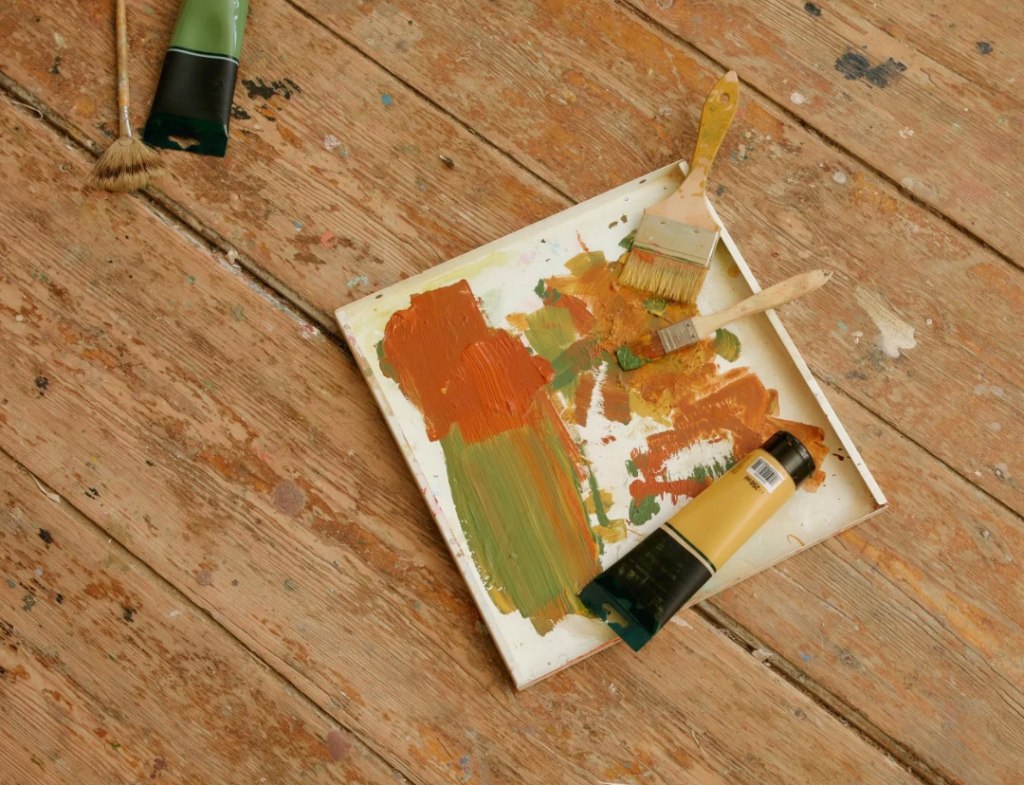
Pick something you started and abandoned – think half-knit sweater or partially-edited video. Send it to a creative friend (or better yet, enemy) with one rule: they get 15 minutes to add one thing. A line, a color, an un-stitch, a slow fade. No explaining, no apologizing for the state of it. Then they pass you something of theirs. You don’t have to like what comes back. The point is the surprise of someone else’s hands in/on your work, and a reminder that finishing a project can be a team event.
Dig something up. Find a project you started and abandoned.
Send it off. Pass it to your partner with one rule: 15 minutes, one addition.
Let them add. Even a bad idea. Everything counts.
Trade back. Ask for one of their half-finished pieces and return the favor.
Skip the disclaimers. No explaining, no apologizing for the state of it.
Sit with the surprise. You don’t have to like it. Just notice what someone else’s hands did to your work.
Keep going. Find someone else to do it with, on a new piece or the same one. Forever!
Final Thought
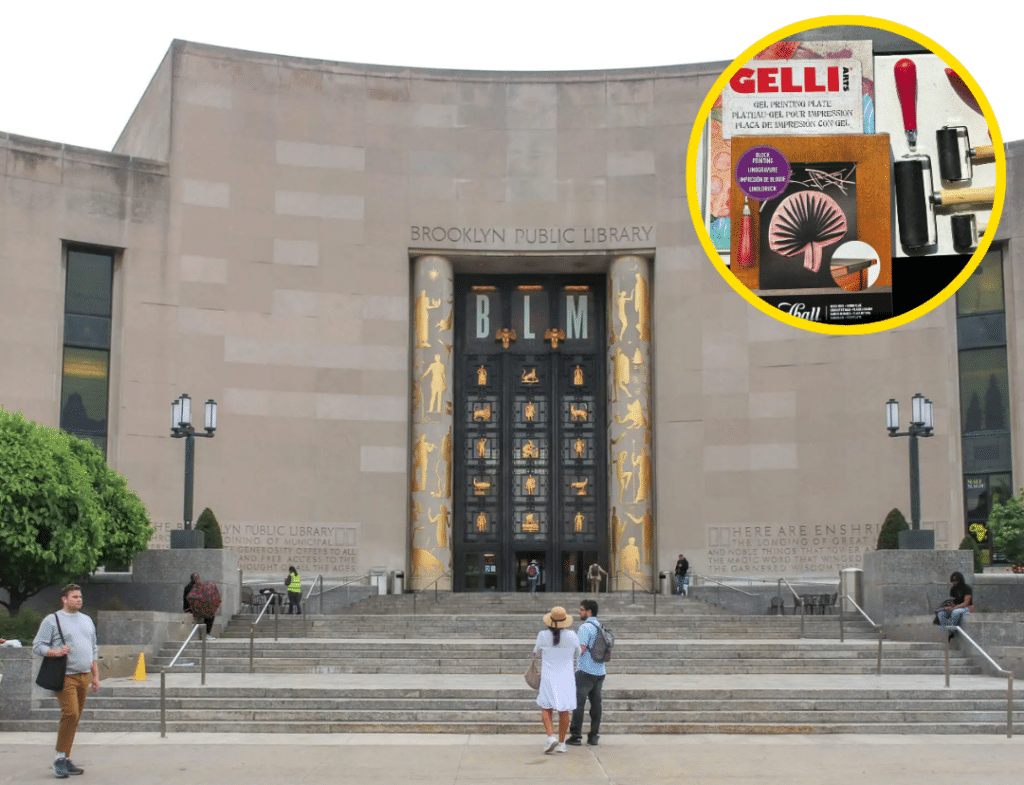
Learning a new craft often starts with a shopping cart: the loom, the cutter, the kit you’ll use twice. Brooklyn Public Library has a better idea. Its new Craft Supply Library lets adult cardholders borrow craft kits and tools free from Central Library, and invites locals to donate gently used gear, so yesterday’s abandoned hobby becomes someone else’s first project.
Not in Brooklyn? Ask your local library about its “library of things,” or look for a tool library, a creative reuse center, a community makerspace, or a Buy Nothing group. That’s communal creativity at its most practical – a shared shelf of possibility, passed hand to hand. Your next craft doesn’t have to start at checkout. It can start with a little help from your neighbors.
🪚🪚🪚
The Good Hour
A biweekly dispatch for creative humans and their brains.
Try Skillshare for free! Sign up for a 7 day free trial today!
Get Started- Unlimited access to every class
- Supportive online creative community
- Learn offline with Skillshare's app