Surrealist Painting 101: Techniques, Styles & Creativity
Where logic ends, surrealist painting begins. Tap into the dreamscape and paint what reality can’t touch.



Welcome to a world where clocks melt on tree branches, trains emerge from fireplaces and the subconscious mind reigns supreme. This is the world of Surrealism, a revolutionary art movement that sought to unlock the hidden depths of the human imagination. More than just a style of painting, Surrealism was a radical philosophical and intellectual rebellion against the constraints of rational thought and a society still reeling from the chaos of World War I.
To help you understand Surrealism in all its bizarre glory, we’ll journey into the heart of this transformative movement, explore its origins, meet its most iconic figures and discover the techniques you can use to start experimenting with Surrealism today.
What Is Surrealism, Really?
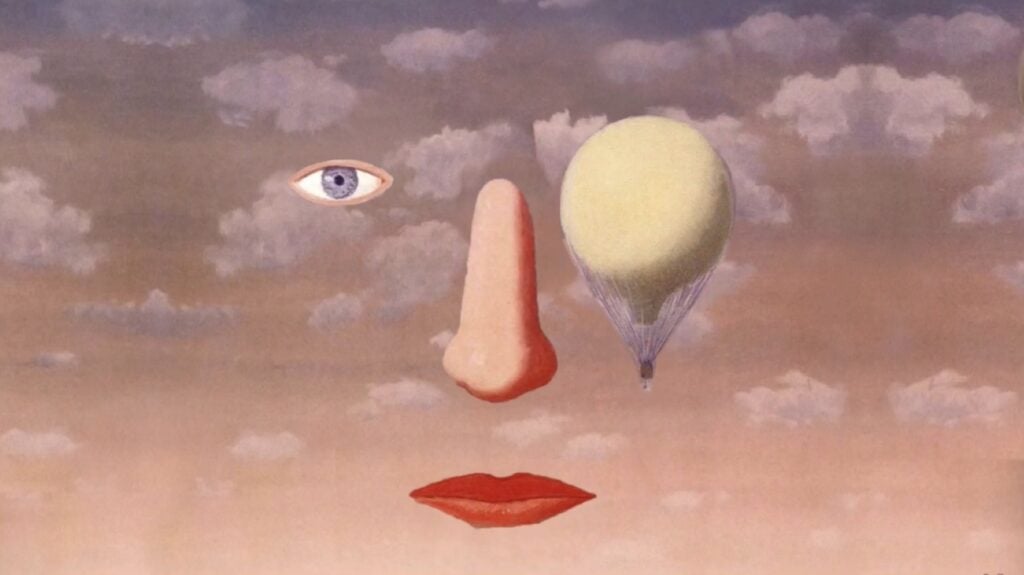
At its core, Surrealism was an artistic, literary and intellectual movement that sought to unlock the power of the unconscious mind. Emerging in Paris in the 1920s, it grew out of the earlier Dada movement, which was a chaotic and anti-art response to the horrors of World War I. But while Dada centered around destruction and nonsense, the Surrealists wanted to build something new from the wreckage. They were deeply influenced by Sigmund Freud's psychoanalytic theories, particularly his ideas about dreams and the subconscious. For the Surrealists, dreams were not just random nighttime occurrences; they were a window into a deeper, more authentic reality.
As a result, the main goal of Surrealist artists was to bypass the constraints of rational thought and conscious control. They believed that by tapping into the subconscious, they could create works of art that were more truthful and profound than anything made with logic and reason. This often resulted in bizarre, dreamlike and even unsettling imagery. Think of a melting clock in a barren landscape (Salvador Dalí's The Persistence of Memory), a train coming out of a fireplace (René Magritte's Time Transfixed), or a giant mechanical elephant towering over a headless mannequin (Max Ernst’s The Elephant Celebes).
Surrealism wasn't just about painting, though. It was a holistic movement that embraced writing, film, photography and even political action. The Surrealists sought to bring this new way of thinking into all aspects of life, believing that it could lead to social and political liberation. They experimented with techniques like "automatism" (writing or drawing without conscious thought) and "exquisite corpse" (a collaborative game where each person adds to a drawing or text without seeing the whole), all in an effort to unlock the mind's untapped potential and reveal the truly marvelous and uncanny elements of everyday existence.
A Brief History of the Surrealist Movement
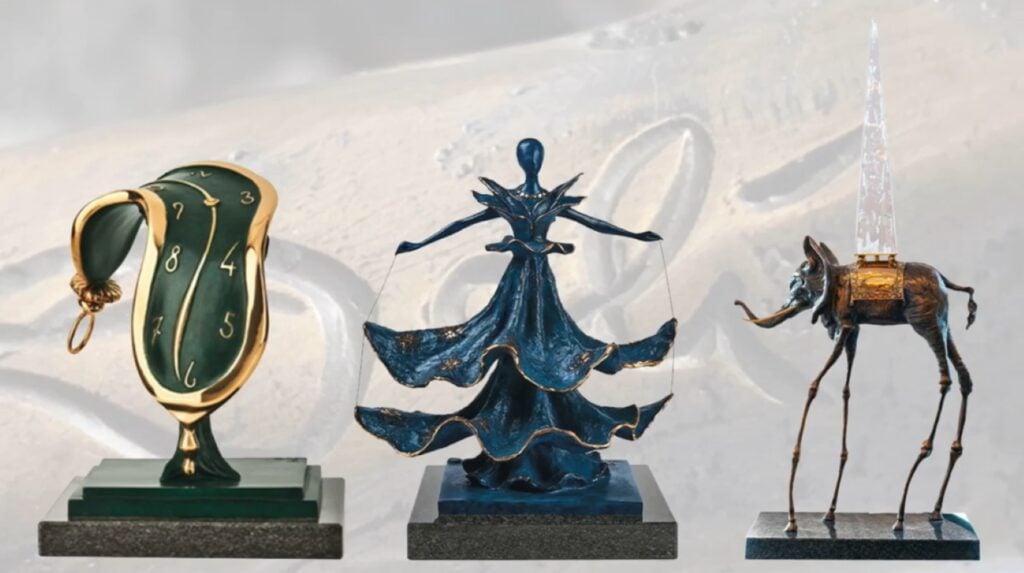
The birth of Surrealism can be traced back to Paris in the early 1920s, when it rose from the ashes of Dadaism. André Breton, a poet and former medical student, declared himself to be the "Pope of Surrealism" and defined many of the movement’s core principles. Along with Louis Aragon and Philippe Soupault, he penned "The Surrealist Manifesto" in 1924, and by doing so officially launched Surrealism. This manifesto wasn't just an artistic declaration; it was a call to arms for intellectual and social revolution, and emphasized the liberation of the subconscious.
Initially, Surrealism was more of a literary movement. Writers explored automatic writing, a technique where they would write without conscious thought, letting their subconscious guide the pen. However, it quickly expanded into the visual arts, and along the way attracted a diverse group of artists who each brought their unique vision to the Surrealist ideal.
Here are some of the most prominent Surrealist artists and their styles:
- Salvador Dalí: Perhaps the most recognizable Surrealist, Dalí's style is characterized by his "paranoiac-critical method." He meticulously rendered bizarre, dreamlike scenes with hyper-realistic detail, and was an expert at making the impossible seem tangible. His works often feature melting objects, vast desolate landscapes and strange, distorted figures. He was a master of self-promotion and became the face of Surrealism for many, though his commercial success eventually led to Breton expelling him from the official Surrealist movement in 1939.
- René Magritte: In contrast to Dalí's theatricality, Magritte's style can be described as "realist Surrealism." He presented everyday objects in unusual contexts, and aimed to challenge viewers' perceptions of reality and language. His paintings are often deadpan and thought-provoking, and play with irony and paradox. For instance, his famous painting The Treachery of Images depicts a pipe with the caption "Ceci n'est pas une pipe" (This is not a pipe), which forces us to consider the difference between an object and its representation.
- Joan Miró: Miró's approach to Surrealism was more abstract and lyrical. He developed a unique vocabulary of biomorphic forms, vibrant colors and childlike symbols. His works often evoke a playful, almost cosmic energy, and draw inspiration from dreams, Catalan folk art and the natural world. Unlike the narrative precision of Dalí or the intellectual puzzles of Magritte, Miró's paintings invite viewers to experience a more intuitive and emotional journey into the subconscious.
- Frida Kahlo: While not a formal member of the Parisian Surrealist group, Kahlo was embraced by Breton, who considered her work to be purely Surrealist. Her paintings, which are deeply personal and rooted in Mexican culture, combine fantasy with brutal reality, exploring themes of identity, pain and death. Her style is a unique blend of folk art, autobiography and psychological symbolism.
- Max Ernst: A master of experimentation, Ernst pioneered several key Surrealist techniques, including frottage and grattage (more on those later). His work often features fantastical landscapes and bizarre hybrid creatures, which he created using those innovative methods. His style is a constant search for the unexpected, and uses chance and accident to reveal the unconscious.
- Man Ray: Primarily a photographer, Man Ray brought a sense of wit and rebellion to Surrealism. He experimented with techniques like solarization and rayographs (photograms created without a camera), transforming everyday objects into mysterious, abstract images. His work often explored themes of the female form, desire and the line between dreams and reality.
- Marcel Duchamp: Though an original member of the Dada movement, Duchamp's influence on Surrealism was profound. His "readymades," everyday objects designated as art, challenged traditional notions of aesthetics and authorship, and paved the way for the Surrealist belief that any object could become a source of creative and psychological meaning.
- Yves Tanguy: Tanguy's paintings are instantly recognizable for their otherworldly, desolate landscapes populated by strange and ambiguous biomorphic forms. His work transports viewers to an alien world and is often bathed in a soft, ethereal light. Unlike Dalí's meticulous narratives, Tanguy's style is more about creating an atmosphere of psychological dislocation and a sense of the infinite.
- Kay Sage: A prominent American Surrealist, Sage's paintings share a sense of profound stillness and geometric structure with Tanguy's, whom she later married. Her work is characterized by architectural and draped forms set in vast, empty landscapes, often evoking feelings of isolation, melancholy and quiet contemplation.
Unlike many of its contemporary movements, Surrealism was less concerned with form and more with content. While movements like Cubism and Futurism were focused on dissecting reality through geometric shapes and representing motion and technology, Surrealism looked inward and sought to explore the landscape of the human psyche.
It was entirely unique in its explicit connection to psychoanalytic theory—no other major art movement of the period so directly adopted the ideas of a specific scientist or philosopher. The Surrealists weren't just influenced by Freud; they saw his work as a tool they could use to dismantle the status quo and liberate the human imagination. This intellectual grounding gave the movement a deeper theoretical framework and a specific purpose beyond the canvas, setting it apart from movements that were primarily about stylistic or formal concerns.
Surrealism Today
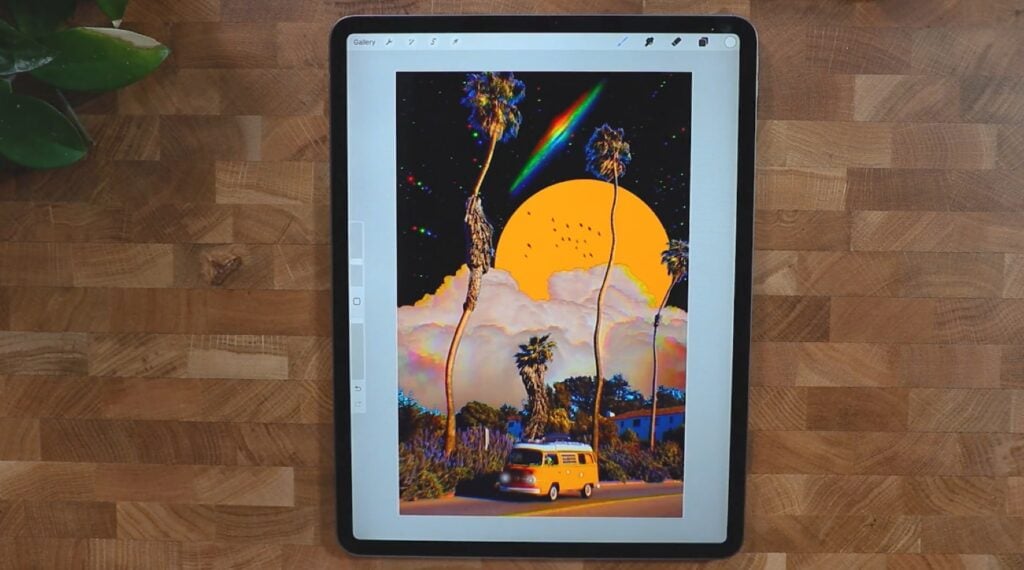
While the original Surrealist movement officially dissolved in the mid-20th century, its core ideas are arguably more relevant and accessible today than ever before. In a world saturated with digital media, social media filters, virtual realities and AI-generated content, the line between what is real and what is imagined has become increasingly blurred—a central theme the Surrealists explored in-depth.
The movement's focus on dreams, the subconscious and the bizarre juxtaposition of objects resonates deeply with a modern audience that’s accustomed to the fragmented and often chaotic visuals of the digital age. In that way, Surrealism provides a visual language for the anxieties, hopes and psychological complexities of contemporary life.
The influence of Surrealism can be seen in a vast range of modern art and popular culture, from music videos and fashion to advertising and film. Filmmakers like David Lynch and animators like the creators of Adventure Time and Rick and Morty have built entire worlds on Surrealist principles, creating narratives that defy logic and revel in the uncanny. And in fine art, a number of prominent contemporary artists continue to use surrealist elements in their work.
Here are some of the most compelling modern-day surrealist artists:
Julie Curtiss
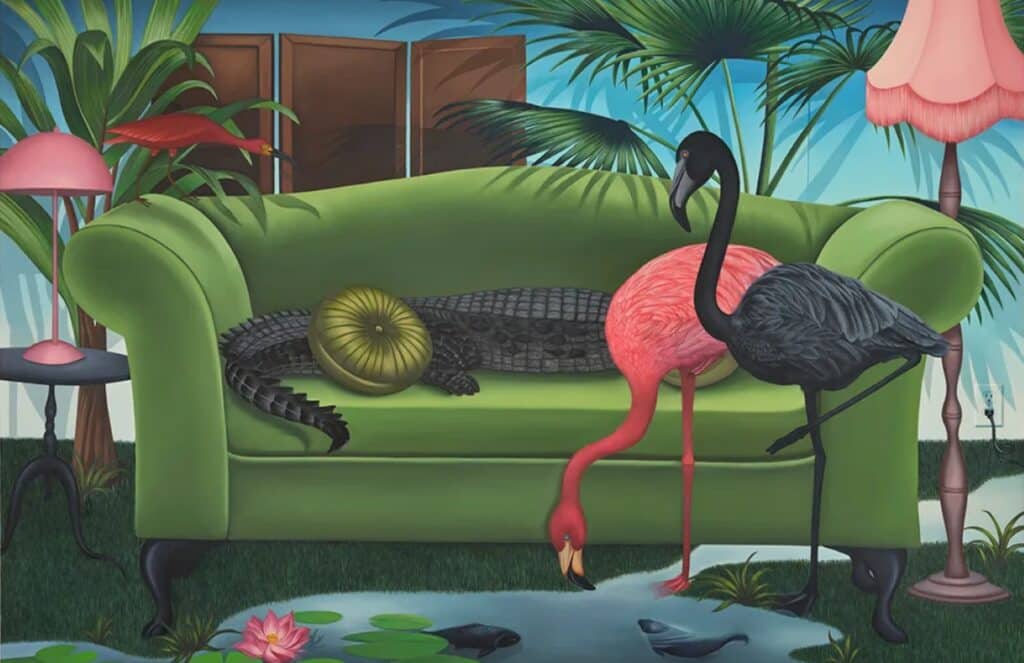
The French artist Julie Curtiss creates paintings that focus on unsettling juxtapositions of body parts, animals, objects and natural textures.
Xidong Luo
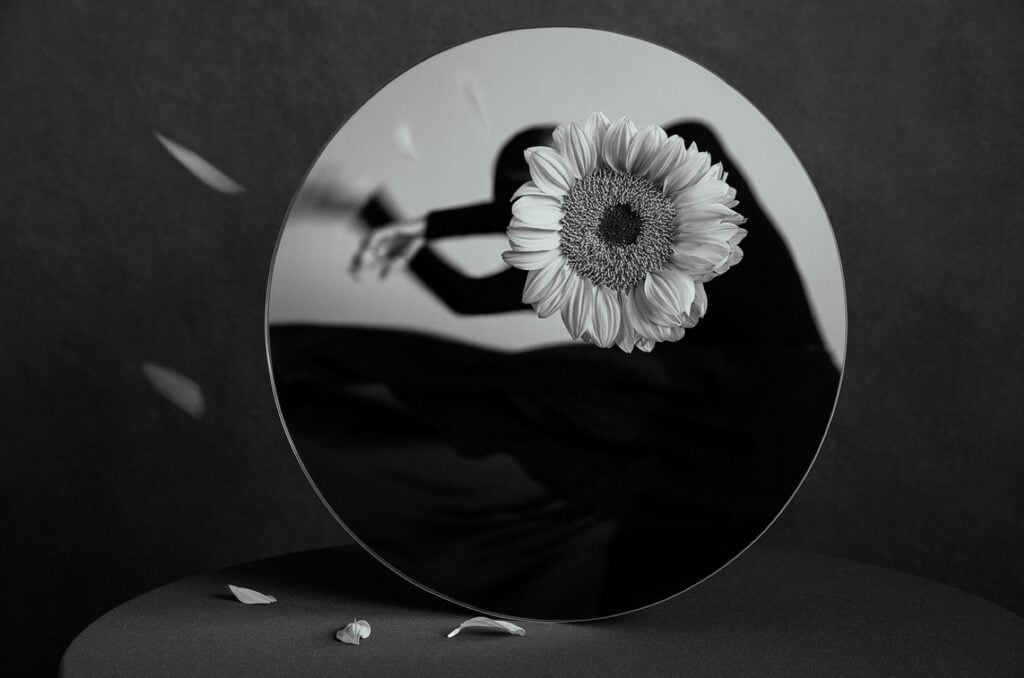
China-based photographer Xidong Luo uses mirrors, flora and her own body to create fantastical self-portraits that explore femininity, the transient nature of life and the relationship between women and the natural world.
Jacek Yerka

Polish painter Jacek Yerka creates dreamlike scenes that combine hyper-realistic scenes with fantastical elements. Think a city perched atop a floating island, a house built on the crest of an ocean wave and a giant snail with a cozy cabin on its back.
These artists, and many more of their peers, prove that Surrealism is far from being a historical relic. Instead, it’s a living, breathing influence that continues to challenge our perceptions and stimulate our imaginations.
Bring the Surreal Into Your Own Art
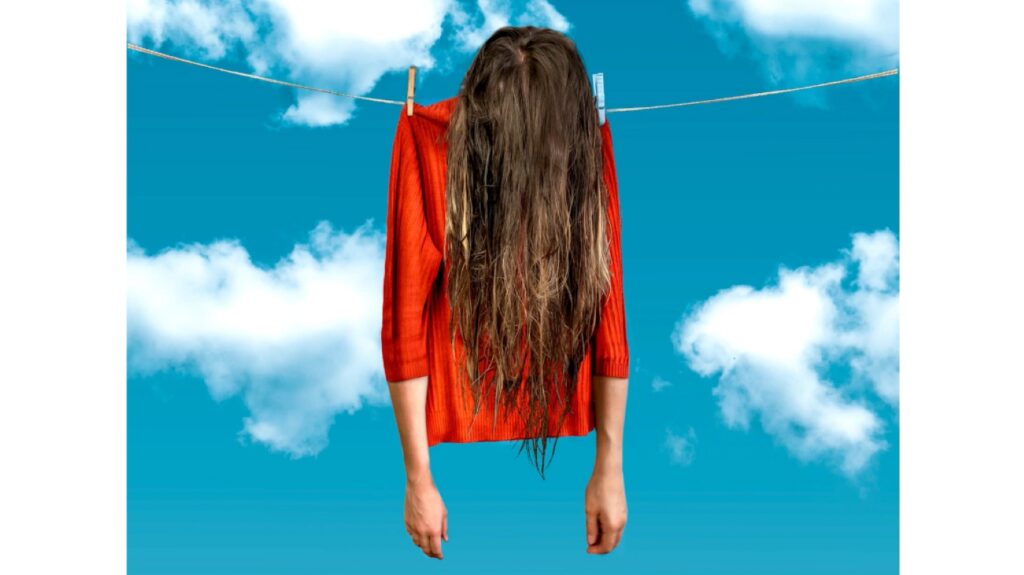
Surrealism isn't just for art history books; it's a living set of ideas and techniques you can use to transform your own creative practice and create stunning Surrealist pieces of your own. The beauty of these methods is that they don't require technical mastery, just a willingness to let go of control and embrace the irrational. Here are some detailed techniques, ideas and prompts to get you started:
Exquisite Corpse
First created in the 1920s by André Breton, this is a collaborative game that can be played with two or more people. In a nutshell, this game involves multiple people contributing a piece to a drawing or text without seeing the others' work.
- How to do it: Fold a piece of paper into three or four sections. The first person paints the head of a creature or a figure in the top section, then folds the paper over to conceal their painting, leaving only a slight hint of lines at the bottom of their fold. The second person paints the torso, and so on. Unfold the paper at the end to reveal a surprising, and often hilarious, collective creation.
- Prompt: Try this with a group of friends or family members. For a solo version, paint a head, fold the paper, and the,n without looking at your original painting, draw a body.
Automatism
The goal of automatism (i.e., automatic drawing or painting) is to let your hand move freely across the page without conscious thought or intention. This technique allows you to bypass your logical mind and let your subconscious guide the process.
- How to do it: Close your eyes, or simply unfocus your gaze. Put a paintbrush to the paper and start making lines, squiggles and shapes. Don't lift your hand until you feel the urge to stop.
- Prompt: Once you have a finished automatic painting, look at the tangled lines and shapes. What do you see? Can you find a face, an animal or an object hidden within the chaos? Use this as a starting point to turn the abstract doodle into a finished, detailed painting.
Juxtaposition and Displacement
This approach involves taking two or more unrelated objects and placing them together in an unexpected context. It’s the cornerstone of Magritte and Dalí's work, and can instantly create a sense of wonder and confusion.
- How to do it: Think of common objects and swap their typical settings. For instance, a fire hydrant in the sky or a computer submerged in water. You can do this in drawing, painting, photography or digital art.
- Prompt: Try to create a scene where something mundane is made extraordinary. What if your coffee mug was the size of a building? What if your home was carpeted with a green grass lawn? Use these ideas to create an intriguing new painting.
The Dream Journal
Surrealists believed that dreams were an invaluable source of artistic inspiration. By recording your dreams, you can tap directly into your subconscious mind and uncover some truly unusual ideas.
- How to do it: Keep a notebook and pen by your bed. The moment you wake up, before you're fully conscious, write down everything you can remember from your dreams. Don't worry about grammar or logic; just get the images, feelings and events down on the page.
- Prompt: Read through your dream journal entries. Pick a particularly striking image or event and use it as a basis for a new piece of art. Can you paint the feeling of flying? What about the unsettling image of a family member the size of a skyscraper?
Paranoiac-Critical Method
Developed by Salvador Dalí in the 1930s, this method involves purposefully inducing a paranoid state of mind to see the world in new ways.
- How to do it: Find a random object, an abstract shape or a piece of crumpled paper. Stare at it and let your imagination run wild. What could it be in an alternate universe? Does it look like something else? What hidden images can you find within its form?
- Prompt: Find a cloud in the sky. Look at it until it starts to resemble something else, such as a dog, a monster or a human face. Paint what you see, and then try to see something else entirely within the same shape, and paint that too. This exercise trains your mind to find new meaning in the mundane.
Decalcomania
First invented in the 1700s and later adopted by Surrealist artists, this technique involves pressing paint between two surfaces to create a random, textured pattern. The artist then looks for images within the resulting design and develops them into a finished work. In other words, it’s a way of creating art from completely random shapes.
- How to do it: Place a blob of paint on a piece of paper. Fold the paper over on itself and press down to spread the paint. When you unfold it, you'll have a symmetrical, unpredictable design to work with.
- Prompt: What do you see in the splotch? Do the patterns look like trees, a face or an alien landscape? Use a pen or fine liner brush to highlight the images you discover.
Frottage
The name of this technique comes from the French word "frotter," which means "to rub." Pioneered by Max Ernst in the 1920s, frottage involves creating an image by rubbing a pencil, crayon or other drawing tool over a textured surface.
- How to do it: Place a thin piece of paper over a textured object, such as a wood grain, a leaf, a coin or even a piece of lace. Rub the paper with a crayon, pencil or piece of charcoal, and the texture of the object will be transferred to the paper.
- Prompt: Use a frottage rubbing as the foundation for a new painting. Perhaps the rubbing resembles a city map, or can serve as the texture of the sea.
Grattage
A variation of frottage, grattage (from the French word for "scraping") involves scraping or scratching a painted canvas or surface to reveal the texture of the underlying material or the paint layers beneath. And like frottage, it was also created by Max Ernst.
- How to do it: Apply a thick layer of paint to a canvas or paper. While the paint is still wet, place a textured object (like a piece of crumpled paper or a wooden board) underneath the canvas. Use a tool like a palette knife or a comb to scrape the paint, revealing the texture of the object you placed beneath it.
- Prompt: Try using different tools and textured materials to create different patterns and marks. What kind of landscape can you create using only scraping?
Fumage
A favorite of Surrealist painter Wolfgang Paalen, fumage is a technique that uses the smoke from a candle or oil lamp to create a smoky pattern on a piece of paper or canvas.
- How to do it: Hold a piece of paper above a lit candle. As the soot from the flame rises, it will leave behind a random, smoky pattern on the paper. Just be very careful not to let the paper catch fire, and keep a large bowl of water near your work area just in case.
- Prompt: Use the resulting smoky patterns as a guide. What images or figures do you see in the smudges and shadows? Add details with paint to bring them to life.
Embrace the Bizarre with Surrealism
More than a century after its invention, Surrealism's legacy extends far beyond the canvas—it’s seeped into the very fabric of how we think about art and creativity. It taught us that logic and reason are not the only paths to truth, and that the strange, illogical world of our dreams and subconscious is also a rich and valid source of inspiration.
The movement's techniques, from automatic drawing to the playful accidents of decalcomania, are not just historical footnotes; they are practical tools that any creator can use to break through creative blocks and discover new forms of expression. By embracing the irrational, you can discover new meaning in everyday life and be inspired to create paintings you might have never thought of before.
Related Reading
Carrie Buchholz
Carrie Buchholz is a freelance writer who lives in Northern Colorado with her husband and dog.
Explore Your Creative Side with Skillshare – Start your 7-Day Trial
Start Your Free Trial Today!- Creative pursuits for all levels
- Unlimited access to all classes
- Learn from experts, at your own pace