Necrófago
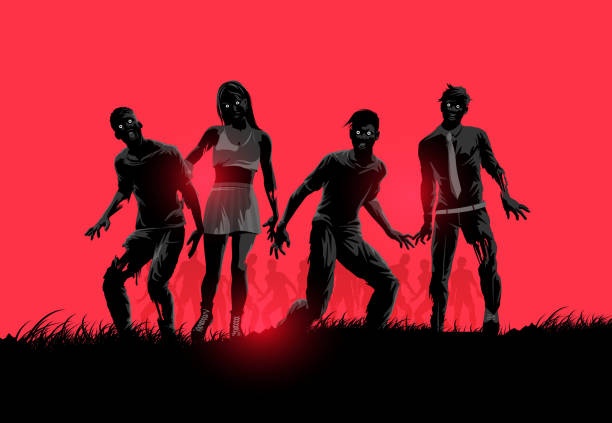
Here is the short story I wrote using all that I learned throughout this class.
I, Emanuel Esqualla, have woven a tapestry of terror, dear devil. I have condemned Earth to a dark fate, and if you would spare me a moment and put down your whip, I will illuminate you. I beg of you, Lucifer. Allow me to reveal to you how I unleashed a plague of unmatched horror that would make even one as twisted as you quake in your boots. So if you would sanction me, witness how I erased humanity's footprint from the Earth and replaced it with corpses.
*
Everything began to go wrong the day after I celebrated my fifty-seventh birthday. I should have seen the warning signs. I should have heeded my coworkers' warnings and halted my quest then, while opportunity still knocked. Yet, true to my nature, I pressed on, driven by a relentless search for answers to the puzzle I had created. What propelled me forward? You might ask. Was it ambition? The allure of knowledge? Or was it simply my own ego, swollen and unyielding? Indeed, it was all these—and yet more. My fervour and fierce determination were the true instigators. As a diligent man of science in a realm awash with politics, I yearned to leave my imprint on this fragile planet. And imprint I did.
I conjured something that may ring a bell. They've sauntered across screens all across the globe. You know them well—zombies, the infamous undead. But here's the twist: mine did not crave flesh. Instead, they feasted on hatred and jealousy. Hatred for me, the man who woke them from slumber. The man who brought them back to family, to friends, to this slowly fading earth. And jealousy? Oh, it was directed at anyone with a pulsing heart. I had sensed that unmistakable glimmer in their eyes as we passed. They did not see us as mere meat; oh no. They viewed us as warm, pulsating vessels that could rescue them from their endless, shivering void. I left them trapped in a relentless frost, and with every glance, they yearned for release.
About six months back, a daring escape unfolded beneath the cover of chaos. They had been keen observers, more intelligent than they let on. They had been studying our every movement, waiting for their moment to strike. One fateful night, as thunder roared and darkness swelled—the storm stole the district's power, and they vanished into the night. A lone guard was all that stood between them and freedom. But by dawn, I found only shattered remnants of him in the security room. His flesh and bones bore witness to a chilling message intended for me and the world beyond. In my office, his disfigured head lay as a testament to unspeakable agony. A grotesque display of horror etched across his face. Meanwhile, his limbs were carelessly strewn down the street, left as stark reminders for passersby to ponder.
Chaos erupted when breaking news filled the airwaves, causing confusion to sweep through the streets. The public panicked, wildly speculating about a terrorist or a killer. Then, another body appeared. It was hauntingly intact, except for one gruesome detail: the woman's innards were gone. As the situation took a turn for the bizarre, the atmosphere grew eerier. The severed guard's head twitched, snapping at the air as I observed it in my laboratory. Its lifeless gaze locked onto me, as if it craved to rip my throat out. Suddenly, it spoke – not in coherent words, but in a rabid, machine-like mumbling and sputtering. But that wasn't all. The mutilated woman stirred back to life, shuffling through the city streets like a crazed spectre. Onlookers were horrified by her blank expression, incoherent ramblings, and missing organs. One day, as the news flickered in the background, I saw her live on screen. I learned then that she and the guard seemed more connected than I had ever imagined. She gargled and blurted out a jumbled mix of sounds. At that very moment, the guard mirrored her every move. I leaned in, curious, comparing them side by side. Their heads bobbed in unison, blinks perfectly timed, tongues twitching together. The guard was either cleverly copying her or their minds were somehow connected. They moved in sync, almost like they were choreographed. I jotted down this remarkable revelation and added the head to my collection of experiments. Why hinder progress? The man was an employee, and I was his boss. He was just doing his job – keeping me safe in the long run. After all, that's the essence of a security guard: protection. The more I understood about him and his kind, the zombies, the better my chances of survival. So I worked tirelessly, day after day, week after week, unravelling the mystery of these decaying marauders.
Meanwhile, the free-roaming hordes thrived, unleashing chaotic assaults. Chaos spread rapidly around the world, turning innocent people into the living dead. They were building a strange army, though its purpose eluded me. As they ventured further away, the head's condition worsened – rotting and reeking of decay. It was ghastly and profoundly wrong. Its bond with the others had nearly disintegrated. No longer did it speak; it merely blinked randomly. This flicker was my only sign of life – well, perhaps not life, but undeniable movement. I managed to keep a few other pets, trapped in chambers where the others had fled. These ghouls seemed more feeble-minded than their liberated counterparts. They stood frozen, staring at the mirror reflecting their own grotesque forms. It was as if they were caught in a trance, entranced by their own eerie appearance.
As weeks turned into months, time slipped by like sand in an hourglass. I reached a fiery conclusion: to destroy them, I needed to ignite their insides. My subjects became my unwitting test subjects. I shot a few in the head, only to see them rise again like defiant weeds. I tried to hack one's brain apart, but it was more interested in nibbling its own thumbs than feeling the saw slice through its skull. Just for fun, I stabbed another through the chest with a wooden stake. I forgot that trick only works on Hollywood vampires. It gave me a good belly laugh. But when that ghoul toppled over, oozing a revolting mix of pus and blood, the stake shot out of its chest like a xenomorph on a caffeine rush.
It wasn't until I ignited one, like in Romero's 'Night of the Living Dead', that they fell silent. The flames devoured them, a fiery vortex swallowing flesh and bone. It was a captivating sight; one moment, the corpse writhed, wild and frenzied, as flames embraced it. The next, only dust and scattered bones remained, whispering of what once was. After wrapping up my analysis, I decided to test fire again. Could it truly obliterate them all, or had I just fluked it? Every great scientist knows: experiments can yield a range of results. They seldom play out the same way twice. So, I torched another four zombies—those already on the brink. I started with the two I'd shot; their heads erupted like overripe watermelons! Perhaps gunpowder lingered within their skulls, propelling the explosion, or maybe I missed a crucial detail. Next, I tested the one I had staked. It died slowly, agonisingly, much slower than the exploding lot. What this told me was fascinating: each undead met their fiery fate at different rates. Some took their time to perish, while others flared and fizzled quickly. Finally, I set the guard's head ablaze.
That's when things took another peculiar turn. As flames licked at its hair, it howled in agony, crying out just like the guard had on that fateful night. I sat transfixed, watching it burn, ensnared by its agony. The scene was perplexing. Others had perished with mere groans, but this one was different. My dear guard met a bloody fate, torn apart by zombies. His screams echoed, haunting reminders of that harrowing night. It felt like he was reliving that torment. Once the four zombies had crumbled to dust, I reached out. I called anyone who would listen: police, news, even my colleagues who had deserted me, terrified of what we had done.
In the days that followed, I immersed myself in tales and videos. They showcased brave souls setting the living dead ablaze. The public hailed my efforts; I seemed to have found the answer. They thought I had saved them. But by the time I grasped the truth, it was far too late. The zombies, those escapees from my facility, had amassed an unstoppable horde. They devoured anyone in their path, birthing even more of the undead. So, I changed my quest; I stopped the hunt for destruction. Instead, I sought a remedy—a way to breathe life back into them, to restore their humanity. In my final days, I experimented with various formulas. Some yielded impressive results, while others fell flat. One special concoction revived a woman, restoring her colour like a blooming rose. She transformed from a ghastly grey to a radiant pink, a sight to behold. Another mixture worked wonders, bringing life back to a man's heart. It throbbed steadily in his chest, painting his face with warmth for longer than hers.
Each trial revealed a delicate dance between science and vitality. My formula could infuse life into the lifeless. Suddenly, the undead could move their arms, legs, and mouths on their own. They broke free from their mindless chains. Then, a woman's voice enveloped me like a warm embrace. It was the most beautiful, tender sound I'd ever heard. She didn't recognise herself or her surroundings, yet she spoke, moved, and smiled – a beacon of hope amidst the shadows. At this point, it felt like an eternity since a real human had dazzled me. She was radiant; her essence sparkled with beauty. But just as swiftly, that shimmer was extinguished; the consciousness I had nourished vanished in an instant. The vibrancy drained from her face, her heartbeat slowed to a mere whisper, and she slipped back into nonsensical chatter. I fought to reconnect during those heart-wrenching hours. One man, full of stories, held on for what felt like days before his light dimmed too. Then, just when the shadows of despair began to close in, a woman stirred, acted, and spoke with perfect clarity; she even remembered her name. I was left in awe.
For those final hours, I watched her glow. She spoke, she moved, she laughed – life pulsed through her once more. I had achieved the unthinkable; I had bridged the gap between the living and the dead. But it had come too late; they were outside. I could hear them – the undead, a chorus of the damned. They clustered like shadows, peering through the glass, their hollow minds fixed on me. Their blank faces oozed menace, transforming into a wild hunger as I met their gaze. I stood at the glass door of the facility, a barrier to nightmares. The lead zombie, a man in a tattered, mud-streaked business suit, locked eyes with me. That lingering moment stretched like an eternity, heavy with dread. I braced for the inevitable storm; there wasn't time to conjure more cures. Not enough for this horde, not in a thousand lifetimes.
I longed to make my mark, to shine like the stars, leaving a legacy that would echo through time and be remembered by all. Like a Shakespeare, a Caesar, or a Napoleon, I wanted to be unforgettable. Yet, my imprint will only fade into obscurity, lost in the shadows. No minds lingered to recall my existence. Only hollow, undead creatures wandered around. They played with my remains for a moment, then forgot I ever existed. The one thing I desperately desired eluded my grasp. I was not to be remembered.
*
My relentless ambition has only gnawed at my soul since then; I feel nothing but despair. Oh, torturer of mine, I can still recall the spark that ignited my journey. One I shared with my colleagues. We dreamed of resurrecting the departed, not as mindless creatures, but as vibrant, living souls.
I still remember the day my colleagues first voiced their concerns. They urged me to stop. Yet, my ambition blinded me; I thought I was so close to a breakthrough. Yet finally, when I achieved the unimaginable, I stood alone, the last remnant of humanity.
So here I am suffering for all that I have done. Rightly so, I know that now. But do I regret it? The more I think about it, the more I realise I could never have veered off this path. I yearned for a legacy, a reason to persevere. Without it, what meaning could my existence hold? I suppose I could have drifted into another field, or desired a different breakthrough. But I longed to leave a mark on my world. I wanted a testament written of my journey.
That being said, would it have been better for me to be born and forgotten, like countless others who have been lost to time? Would I have been okay with that?
Unlikely, and because of it, I am where I belong.