Transcripts
1. Introduction: Are you nervous about putting your face on TikTok
and Instagram? Are you scared of being judged,
saying the wrong thing? Maybe feeling a bit embarrassed? I used to feel all
of those things too, but fast forward a
couple of years, and I've been able to
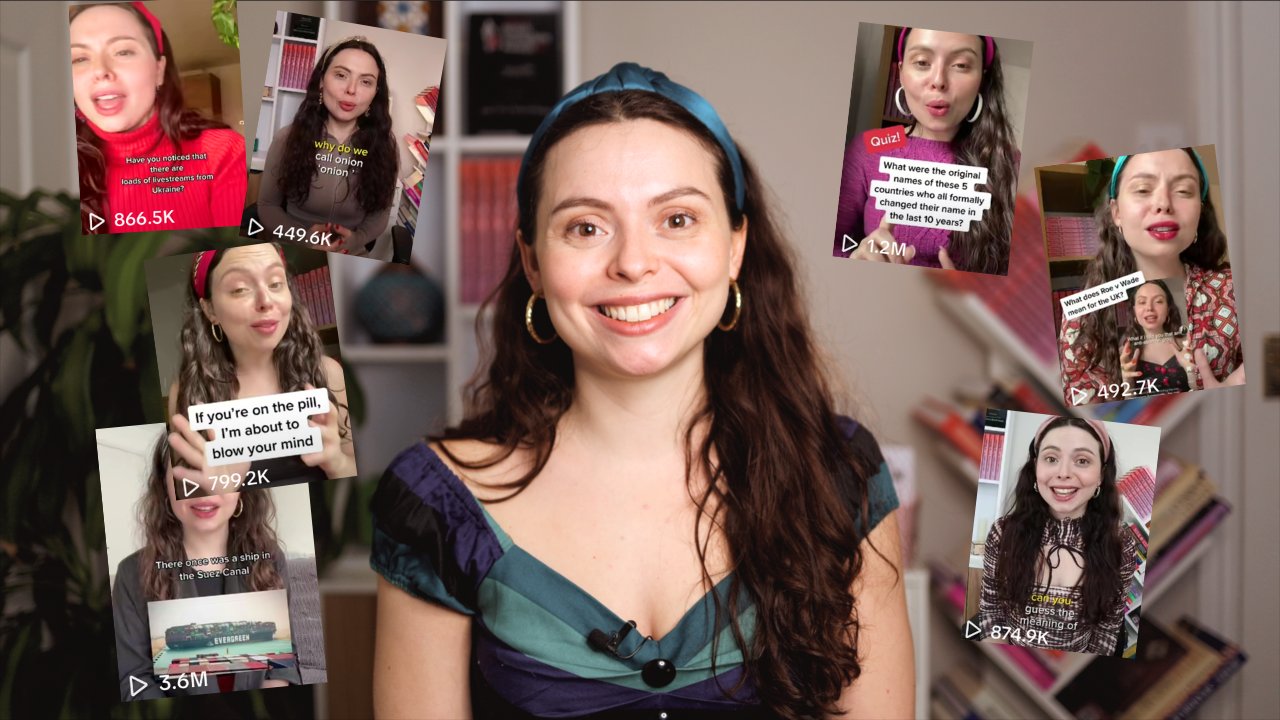
get 160 million views on both of those platforms. You can, too. How? Well,
I'm going to show you. The good news about
camera confidence is that it is a skill. It's something that
we can practice that we can work
on, and in fact, there are just a couple
of simple tricks to get over camera shyness. Camera shyness on social media is a lot easier to get over when we understand what the role of social media video is today. Camera confidence on there
is completely different to camera confidence on say
traditional television. I'd also say there are important
differences compared to public speaking as well if
you have experience of that, or if that makes you
feel a bit shy, too. I am a broadcast journalist, I am a public speaker, and I'm a content creator, so I'm going to be
walking you through the specific tips
and tricks that are going to help you tackle camera shyness on
social media video, which is informed by all
my other training as well. In fact, my first skill
share master class was a staff pick. It's helped so many people with little to no
video training, make their first video, or make the kind of
social media video that they had never been
able to make before. I really hope that this class can help you on a
similar journey, and in our next video, we're going to be
looking at what we'll do for our class project.
2. Class Orientation: This is the class orientation. This video is all about what we're actually
going to be doing and what the class project
is that we will be making. The class project
that we're going to make is actually very simple. It's going to be a short video that we prepare for ourselves, where you get to practice a script that I have given
you the template of. This is all to start building that really important skill
set of camera confidence. I know it might sound counter
intuitive to put yourself on camera if you're feeling nervous about
being on camera, but I promise this is
like exposure therapy. Do not get better at skill, you don't get to address your fears unless you
actually give it a go. This is a safe space. The only place that your
video ever needs to go or ever needs to be seen by other people is if
you want my feedback. That's why when
you do the video, you can then upload
it to Skillshare, you can upload it to this class, and you get feedback
directly from me. I wish I could have
had feedback like this when I was making
some of my earlier videos, trying to work out what kind of style I was going to have
on TikTok and Instagram. That is an opportunity
that I would love to be able to give you at
the end of this class. More on that later,
first of all, we're going to talk about why people might be feeling
nervous when they put themselves on TikTok and
Instagram and explore some of the data that debunks a lot of myths associated
with camera shyness.
3. Why we get scared of making TikToks and Reels: So in this video, I'm going to try and set the scene about what
we know when it comes to TikTok
and Instagram and making short form
social media video, and why some people might be feeling a bit less
comfortable doing that. I'm going to begin by using
one of my favorite things. Data. Data that I gathered
myself as a journalist, training other
journalists how to make TikTok videos
and Instagram reels. When I asked some of
the journalists who weren't platforming their
work on Tktoc and Instagram, why they weren't platforming their work on Tktoc Instagram, these were the answers
that they gave. You'll see that two
of the main reasons why journalists struggle to put their videos onto
platforms like Tok and Instagram is because they feel like it takes
too much time. They also feel like
they don't have the required video
training to do so. I'm not surprised by that. In fact, if you're
not a journalist, you might be surprised at
how little video training a lot of us get the
chance to have. And we have such busy day jobs. I'm also not surprised that people said they feel like
they don't have enough time. But the thing is with
more video training, especially learning how
to script write properly, you do end up taking less time
to make TikTok and reels. This is actually why I made my first skill
share master class, which is all about the
basics of script writing for social media video as well
as a guide to editing. But look, there
is a third reason and it is that they
are camera shy. It is that they feel
like they don't have enough confidence
to appear on camera. I think this is
particularly interesting and valid for non
journalists as well. You might assume that
all journalists feel comfortable being on camera,
but that wouldn't be right. There are lots of us who feel far more comfortable
writing or maybe appearing on radio rather than on TV or on
social media video. I am actually one of them. I feel far more confident
and comfortable actually. It's not always about
confidence, it's comfort. I feel far more
comfortable doing radio or writing than
I ever do doing this. Doing video and doing social media video was probably one of the most alien skill sets that I had to develop early
on in my career. Because the thing is, if
you know anything about the collapsing news
media industry or about the relentless
content competition with social media platforms, it is that if we don't
platform our work on YouTube, TikTok, Instagram, et cetera, no one
is going to see it, or the probability of the people who need
to see it seeing it. Just radically decreases. If you use social
media video correctly, you have a chance of reaching
way more people than traditional television or
radio or print media ever can. For example, as a writer
and a journalist, it's existential for me to put my work on these platforms
to make sure that the audiences who I do my best to serve actually
get to see it. It's about making our work as accessible as it
possibly can be. Short form videos like tiptops, and reels do so much better when there is
someone's face in it. Actually, years of data
even from news websites and still photographs that are associated with news pieces, tell us that people are more likely to want to
click on a story if they see a human face in the photograph
associated with it. Simply put, we are people and we really like seeing and
connecting with other people. It's face to face. That's why this isn't only
about making video. This is about putting
our faces and ourselves, our true authentic selves
on the video as well. The good news and the fun
that you can have with all of this is that the
more video you make, the more relationships you are going to build
with other people. The bigger a community you are going to make
around your work, the more connections you were going to establish
with people who are interested in the
things that you do or make. These are powerful
benefits for any industry. It's not just journalism. I thought it might also
be helpful to share with you some things that
my followers told me. I posted online that I
wanted to build training around tackling camera
shyness on social media, and I asked for any
experiences that people might like to share or reasons why they don't feel confident. These are the many different
responses that I got. Some people told me
that they really don't like the way
their voice sounds. Lots told me that they
struggled to feel relaxed, and part of that is
because they're scared, they're going to say something
wrong or even offensive. A lot of people are
anxious about what people in real life might
think of their videos, often more so than how people they'd never met
would think of their videos, like anonymous
Internet strangers. Some were worried
about their content looking superficial or like
they were showing off. Some are worried that they appeared to be rambling
when they were making content and that
they didn't have the kind of fluency
that they would like to have or the kind of fluency they perceive other
creators to have. That is a lot to break
down and you may have found that you identify with
one of those statements. You may have thought, Oh, yeah, I agree with
all of those reasons. Not only would I say that
all of those anxieties or worries are things that we can overcome, which is great. I would also say that
they're quite valid. By that, I mean it is
right that you are concerned or even just thinking about the
quality of your work. It is absolutely right
that you want to make the best quality
content that you can. It is a good thing that you want to be represented fairly on social media and that you want the content you make to be
of benefit to other people. It's important to
acknowledge that a lot of these anxieties come from
a really good place. Tackling camera shyness is
all about addressing some of the fears that are actually behind that barrier
to camera confidence. That is what this class is going to be all about discussing, opening up, tearing apart, and introducing a new world
of camera confidence to you. As a result, the next couple
of videos are going to address some of these
concerns one by one. I'll be giving you
some specific tips and even exercises to address
and overcome these, and I hope that gives you a
bit of encouragement too.
4. “But I hate how my voice sounds!”: I hate how my voice sounds. There are a lot of people who don't like the way
that they sound on TikTok videos or Instagram Reels because there's
something that they don't like about their voice. Did you know that the
way our voice sounds to other people may sound different
to how it sounds to us? This could be down
to two things. One of those things is
what's physically going on, and the other thing
is connected to our perceptions
around the voice. Let's start with the physical. When I am speaking right now, my voice is coming out
into the air and I'm hearing it in the ether,
in the air around me. I am also hearing my own voice in here through all the flesh, all the bone, it's resonating
throughout my mouth? Some people think that
means I hear my voice with slightly lower
frequencies compared to how you are hearing my voice. Obviously, when a smartphone or a camera is recording you, it's picking up the voice
in the air as well. Some people believe
that voice has slightly higher frequencies to what you might be
listening to yourself. Now, That is one theory. It could be that you don't like the way your
voice sounds in a recording because of a perception that you have
around your own voice. I had to work with a very
good example of that when I interviewed my own dad for
a BBC documentary once. I will never forget
when he listened back to his own voice when the
documentary was broadcast. He was really surprised and
shocked at how he sounded. He'd never heard his
voice recorded before. The reason he was
shocked is because he clearly had an idea that to speak on the radio meant that you needed
to sound Posh. I'm not surprised because
I think the majority of voices that we do here on
the radio are pretty posh. My dad doesn't
have a posh voice. When he listened back to
himself, he thought, Oh, my goodness, I really sound
like the opposite of Posh. From my perspective, obviously, I didn't have a
single problem with the way that my
dad's voice sounded. The most important thing
to me, my journalism, my documentary, was that my
dad was his authentic self. On top of that,
our radio stations should be sharing
voices with us that are representative of
the entire country and not simply a small
subset of people. That had nothing to
do with the content of what my dad was saying. That was all connected
to his own perception of how he thought people are
supposed to sound on the radio. There is no one way that
people are supposed to sound when it comes to
any broadcast format, but especially not social media. Social media is all about being as authentic
as we possibly can. It's all about putting
our true selves forward. It is never about pretending
to be someone else or doing the accent you think you hear more amongst
content creators. Another great example of this actually comes from
social linguistics, so you may have read about
the uptalk phenomenon before. When people are saying a sentence and then they
go end at the up of it, it almost sounds like they haven't finished
what they're saying. Maybe they're going on to say
something else afterwards, or maybe they're searching
for your approval. It's a common linguistic feature that you see in
content creation. I actually once wrote an
article all about it. There are some people who
think that's really annoying. There are some
people who associate that with the way
that young women speak and like it's a bad
thing. It's not a bad thing. Linguists have even
described it as linguistic innovation
and certainly from a social media perspective. When people are doing
that, they are keeping you interested because it feels like the sentence
isn't finishing. If we're thinking about
retention rates in video, that is again a good
thing, not a bad thing. Again, that has nothing to do with the content of
what someone is saying, that has nothing to do
actually with their voice. There's nothing wrong
with their voice. There are just
perceptions out there of some people finding it annoying or thinking that
it's not a good way to speak. Do not let judgments, your own or other
people's interfere with how your voice truly is. I would say the most
important thing to think about is being understood. Generally speaking when that comes to speaking
on social media, that just means not really
rushing your words, it's speaking a
little intentionally, a little bit mindfully. That is all about making sure that anyone can understand you, including people for whom your language is not
their native language. You're helping them understand
what you're saying. In conclusion, there are really two important things to
take away from this class. One. Our voices are always
going to sound a little bit less familiar to us when
we hear them in a recording. That should happen
because we are used to hearing our
voices in a certain way and it is always
going to be jarring when we hear our
voices in another way. The more you hear that
version of your voice, and the more that voice also becomes your own voice as well. That's what's
happened with me. The second thing to take
away from this class is that the most important
way for your voice to be or for you to
sound is like you. Don't let anyone's judgments or let anyone
Misconceptions frankly about how people
should and do sound on content creation affect how
you speak to your audience. People want to hear
your true voice, so let's show them. Oh. Extra SSG tip. If you're happy with your voice, feel free to skip straight
to the next class. But if you'd like
to work on feeling more comfortable
listening to yourself, then I have some extra
things to take away. The first is that I recommend
you record yourself. Your smartphone
should have a kind of voice memo app where you can record yourself doing anything. And I would suggest going on
your favorite news website and reading out some articles
out loud to yourself. When you're finished,
have a listen back to it and ask yourself. Was it easy to understand? Did you sound like yourself? If either of the answers
is no, try again. But if the answers
are yes, well done. You've already gotten a lot more familiar with
how you sound, and it should be a lot less jarring when you work
on a future video.
5. “But I look weird!”: I look weird. There are some people who might
be lacking a bit of camera confidence
because they have seen themselves in
social media video, and they think, Whoa, do I really look like that? Firstly, it's the same
thing as the voice issue. We are not used to seeing
ourselves recorded. If you are not in a job
where you've had to record yourself on video loads or you
haven't grown up doing it. Of course, that's
going to be weird. You are right to find that
experience really unfamiliar. Again, we do get over
that bit when we simply make more
video of ourselves, so don't worry
about that at all. When I make content,
I basically put the same makeup on that I would if I was going out
to do some shopping. I make sure that there
isn't any spinach in my teeth or something that I wouldn't
want to be there. That's it. I don't really do anything special
when I put myself on video other than just make sure that I'm
happy with how I look. Does that mean that all of
my anxieties or concerns about my appearance that I have irrelevant of whether
I'm on camera or not? Does it mean that
they will disappear when I make social media video? Of course not. But the
reason that I don't let them stop me from making video
is I think of this. I think is my appearance actually remotely important for what it
is that I'm doing? Is how I look part of the high quality content
that I want to make. At the moment, the
content that I make is mainly about languages, language learning, or it might be connected
to my journalism. I want people to finish
watching that video, having learnt something new
and interesting and fun. I don't want them to
finish that video simply thinking sop weird or
thinking Soph good. I don't want them
thinking that because that's not actually relevant
to the work that I make. I want my video to be judged by the quality
of its content, not how I look, and actually reaching that threshold
of looking presentable. Reaching that threshold of looking as I am comfortable
looking in public, means I can actually forget
about how I'm looking. It means I can focus
on what is important, which is making a good video. One of my followers shared a really nice idea with
me, if you like it, which is that she
introduces a ritual, that's part of her
content creation that might be connected to
her appearance as well. For example, putting on a certain lipstick or
a certain mascara, or putting on a hat, maybe you want the hat to
be part of your gimmick. Most people know me for
wearing a head band. It's never occurred to me that the head band is part
of my content ritual. Maybe it is and I never
even realized it. Some actors even spray a particular perfume when they
want to go into character. It could be that you want to bring one of these
things in to help you get yourself going
before you make the video, a little bit of self encouragement
like you may have once done before a school
race or before an exam. The last thing I
want to say goes back to the voice thing. We're not familiar with
hearing ourselves recorded, and so it sounds weird. Remember that depending on how you are recording yourself, whether it's a
smartphone, a camera, whether it's a selfie camera that's filming you
or a rear camera, the way you look is
going to change. By that, I don't
mean that anything about you is changing. I mean that it's either
going to be showing you a mirror reflection
of yourself. Or a true representation
of yourself. None of these mirror flipping
or inverting that happens. Just like we are
most used to hearing our voice in our own heads, as it were, we are used to looking at
ourselves in a mirror. When we record
ourselves with a camera that is not showing us
our mirror reflection, but is actually
representing our true self, that can seem jarring because
we're not familiar with it. Rest assured, it is how you have always looked
to other people. You're you're totally
allowed to think, gosh, I look weird, unfamiliar. Actually it's how
you've always looked. There's nothing to worry about or overthink about.
It's how you look. The way we look between a mirror angle and
the true reflection. It isn't much at all. I
have an asymmetrical face. I know that there is a
slight difference when I see these two versions of
myself, but they're both me. It's absolutely fine. Again, you get used to it the more that
you film yourself. The wonderful thing is that this class project is going
to help you do that. It's going to provide
a safe space for you to film yourself and
get a bit more practice and familiarity with
how you look and how you sound on
social media video. Once you make a lot of
videos, as I have done, you actually realize
after a while, now I'm sitting here
and thinking about it. When was the last time I
actually thought about my voice, or my appearance
when I made a video? I can't tell you the last time. It is an anxiety
that disappears, so don't worry about it. Let's move on to the next video. SSG Extra tip. If you're happy with how you
look on social media video, then please skip straight
to the next class. If you'd, however, like an extra exercise to
work on helping you feel more confident
and comfortable on camera, then I've
got this for you. I recommend you record a
video of yourself telling an imaginary listener
about where you grew up. You are going to film this
video on your smartphone, and the video needs to last at least seconds because we want to make sure you get
good practice out of it. So feel free to really
get into the description. Once you're finished,
watch the video, and think to yourself, you know, A your teeth clean? Do you look like you're
sitting comfortably? Do you look like you're
enjoying yourself, or you're interested
in what you're saying? They are honestly the
most important things. So if the answers are, yes, yes, yes, yes, yes. Wonderful. If the answers to any of those questions
are just asked and no, try recording it a
couple more times, see if it helps you feel a bit more confident
and comfortable. Once you've done this,
you have already built more camera confidence or preparing you for
making a future video?
6. “I’m worried what people I know will think”: I'm worried about what
people I know will think. This is a really
interesting one. I completely relate to it by
the way. Let's get into it. If you are worried
about what people you know in real life will think about the videos that you make. The question is why? Let's take, for example, some of us who might
be worried that people think we're showing off
or being superficial. Think about it. If your work is
reflective of you, if it is authentic to you, and it is representing you in a way that you want
to be represented, what is there ultimately
to worry about? Is it superficial or showing off to share your work with
other people online? I really don't think
so. If anything, I think it's
profoundly humbling. You have the courage to
open yourself up and share something that you're likely very proud of
to lots of people. Some of those people are
people that you already know, and some of those people are complete Internet strangers who could become internet friends. But they are all people who are probably going to make a judgment about
what you're doing. Hopefully, they are going
to see you share your work, and think, that's cool or
think that's interesting. I don't believe that
any of that is about being superficial
or showing off. In my experience, I can tell you that the
people who do think it's superficial or showing off have never made a video
in their entire lives. If you go back to one of the earlier videos
in this class, and you will also know
that that means that other people probably are very unfamiliar with their work. Because if you're not putting your let's say
journalism, for example, if you're not putting that
out on TikTok and Instagram, then the general public are
not going to know about it. Anyone who has made content, anyone who's involved in the content creation industry knows that there is
so much pleasure to dive from sharing part of yourself out there
with other people because of how
much you get back. Content creation isn't just
about you talking to a camera or you talking to people online and it being a one
ended conversation. This is very perhaps
not face to face, but certainly face
to comment section. I have had so many
really fun conversations in comment sections with people who've watched videos of mine. There's a great connection
that you can build out of it. It's an exchange.
It's a relationship between creator and audience. A tip that I would
like to share when it comes to feeling more
comfortable with the idea of people
you know watching you would be to watch
content yourself. You might not want to
introduce this into your smartphone diet forever. But for the purpose
of this class, and for the purpose
of you getting a bit more familiar with
content creation, I want you to make sure
that you are scrolling on TikTok and Instagram at
least for an hour a day. You need to be watching people, you need to be
getting familiar with content creators in all the different
kinds that they come. There are some people who
seem to do it for a living. There are other people
who are They're like just normal people who also happen to make some
videos on the side. Some people thinking of some of my favorite creators,
some of them are doctors. They're spending all day
doing this really tough job, and somehow they managed
to find the time to make an interesting video for me and for all of
their followers. I think the minute that you
see people take pride in their work like that and be willing to share
it with other people. For me, that's always
been infectious. It's always made me think,
I love how they did it. I would love to
emulate them and I would love to share my
work in a similar way. That's more relevant
and fitting for me in my style and my identity. You definitely feel
more encouraged to do it when you've seen
other people do it, especially other
people like you. So make sure you are
spending time actually watching and consuming a
lot of social media video. When you see a video
that you've enjoyed, think, I wonder what their
mom thinks of that video. I wonder what their brother or sister thinks of that video. I wonder what their boss
thinks of that video. Now I'm thinking of the people whose content I really admire. I think all of those, that circle around them would also
love that video as well. If you're making content that is high quality and that
you're proud of, The people around you are
going to think the same thing. Remember, if you're still
at a stage where you're feeling like your video
quality isn't quite there. I'm not talking about
the camera shyness. I'm talking about perhaps you don't feel like your scripts are totally there
yet or you feel like you could do with
some editing help. Remember, I have an entire
skill share master class, all about script writing and storytelling to make
impactful reels and tik tok. Please watch that as well to compliment everything that
you're learning in this class. Now in the next video, let's
think about what people we don't know in real life
might think of our videos.
7. “I’m worried what strangers online will say”: Video is all about addressing
the great unknown. What will people who
have never met us in real life think
about our videos? Why might that make us
feel a little bit anxious? First of all, it would
be really negligent of me to ignore the fact that making social media video often opens you up
to hateful comments. This is something that happens
to everybody regardless of how much effort they've put into a video or how high
quality the video is. I hope to do all of those
things with my videos, and I still get loads
of hateful comments. Because I am so committed
to putting out video that represents me because I'm really proud of
the videos I make. They take a lot
of research time, a lot of script writing
effort, et cetera. When I get hateful comments, they tend to be quite varied. It could be that someone just doesn't agree with the
premise of the video. My videos tend to actually be quite impartial explaining
a bunch of facts. Some people really don't like the existence of
some of those facts. It's not even that they're
necessarily disagree with me. A lot of the time, the
hate isn't directed to me, but it might be directed to
something else in general. At times, there's loads of hate comments directed to
certain groups of people, often marginalized groups of
people, and that's awful. And I try and delete them
as quickly as I can. I have also had plenty of
comments about how I look. I've had comments
about my weight. I've had people telling me, Oh, you look skinny and I've had people telling me
you've put on weight, every possible option
I have been told. I've had comments
made about my teeth, I've had comments
made about my hair. I've lost count of all the weird comments that
people have made that they really didn't need to make, but they did it anyway. I have had a lot of sexual harassment and
sometimes that has come in comments or videos
more often than not that actually
comes in private DMs. When it comes to
dealing with that, or when it comes to thinking about Do I want to keep
putting these videos out? I with all the good, I get this bad stuff too? The thing is, it's
very well documented. For example, if we take
online harassment of women, it's really well documented that one of the outcomes
of that is that women are less likely to put themselves out
in the public eye, they're less likely to have a digital presence for fear
of that kind of harassment. That means that online
harassment of women leads to fewer women wanting
to platform their work? That is awful. When I think about
the possibility of I could really let some
of these people get me down. I could really let some of these people and
the things that they say stop me from
sharing my work. Stop me from building
a community, stop me from doing journalism or making original
content that I am proud of, and that will get me
opportunities in life. I have had book deals, I have had possibly even job offers and
promotions that I am not sure would have
happened if I wasn't platforming my work in the way that I do on
social media video. Isn't it scary to think that the opinions
of people who I've never even met could have stopped any of
those opportunities from being available to me? That's the first thing that I really wanted to make clear. Turn your frustration with misogyny or the hateful
comments that you get. Into an appetite to hold social media platforms
accountable, for example. That's how I use
some of this energy. Don't let it stop you from making content because
then they win, and we don't want them to win. I come back to the
point that I've made many times throughout
this master class, which is that if you
are proud of your work, if you have made
it high quality, if you've made it to the quality that you
are proud of making, it shouldn't matter what
strangers online have to say, especially people
who aren't even putting their real face and their profile picture
or their full name, and they are saying something
really nasty to you, like what they think
doesn't matter. I would say things have
gotten a bit better recently, particularly on Instagram when it comes to protecting
yourself from some of this. Because if we can minimize
it, that is helpful. I have found that
some limits and features that platforms
offer can really help. With Instagram, they have
a feature that means the only people
who can comment on my videos are people
who follow me. When I click that button, when I introduce that feature, the amount of nasty comments
diminished overnight. Don't knock some of the protection features
that platforms have. They could really help. A lot of this particular
video has been talking about negative comments from
Internet strangers. It's really important
for me to say that I when I think about
my whole content journey, I overwhelmingly think
about positive feedback. I overwhelmingly actually think about the Internet strangers
who I have reached, who because of a video
that I have made, I certainly don't feel like as much of a stranger
to them anymore. I can't think of
any other way in today's society to build as many meaningful
connections as possible as quickly or as well, than through algorithmic
social media video. That is really cool. And I appreciate that what I'm saying here is take the
positive feedback and ignore the hate comments. I know that can seem
a bit confusing. It's like, so I should listen to what these people are saying,
but not these people. It's honestly about working
out what works for you. In this video, I've explained how I've managed to
conceive of all of this, how I think about
the hateful comments against all the
positive feedback. I do take constructive
criticism seriously. I think it's important
to be able to see feedback that is not nasty, but might be challenging you on something
that you've done. It might be room
for improvement. I would encourage you
to be open to that. Ultimately, whatever is
going to help you make the highest quality content
possible is a good thing. I hope that's
constructive feedback. I also hope that's compliments. I hope that's lots of positive engagement
for you as well. In the next video,
we're going to address something
completely different, which is people who
think that they might actually be too old to
make social media video, and I'm going to explain why
that is completely wrong.
8. “I’m worried I’m too old to make social media video”: Worried I'm too old to
make social media video. I can't tell you how
many times people of really different ages
have said it to me. I've even had people say this to me who are
younger than me. I'm about 10:30. I can't believe that there
are people who think that they could be
in their late 20s, and that's too late to make
TikTok or Instagram reels. That could not be
further from the truth. People's social media
diets are different, and I first want to say
that I think the majority of people who I follow
online are older than me. First thing to
think about is how everyone's social media
diet is different and that will be based
on their demographics, which includes their age, but also includes things
like where they live, where they're based, their
gender, for example, I have to say that most of the
content creators I follow, or if you said to me, who's
your favorite creator, and I start thinking of
the people I really like, All of them are older than me. They're either
maybe near my age, or they are significantly older than me like
ten years plus. The reason we think that social media platforms are associated with young people is because audience trends and data tells us that social media is where young people flock to. That ignores or distracts
us from the fact that it's also the place where people of all
generations flock to. A good example of this is
about news consumption. Back in the early days of platforms like TikTok
and Instagram. They always used to say, A,
young people are getting all their news from platforms like YouTube,
Instagram, and TikTok. Yes, that's the case,
but also, guess what? Loads of adults who aren't
young people anymore are also getting their
news or a lot of their information from
these platforms too. There was some data from PU this year that actually
surprised even me. This is data and research
that they did in the USA. Where they found
that at the moment, people aged 35 to
49 are actually more likely to make
a TikTok video than someone aged 18 to 30. What we are seeing is, yeah, young people have a really
powerful audience stronghold on social media platforms, but the people who are
creating content on there, so not only commenting
or lurking or following, but creating actually often tend to be slightly
older demographics. I think that's surprising because when you
are a bit older, You know yourself a bit better. You've been able to
express yourself comfortably in the
working world. I don't think it's surprising
that that then lends itself to having a little bit more
comfort and confidence, explaining your ideas or
speaking to people on camera. Anecdotally, I'd also
like to share that, in my experience, when
I've been training people, when I've been
encouraging people in all different industries to consider incorporating
Instagram and TikTok into their lives, It is not an age thing, it's an attitude thing. There are plenty
of people my age. There are plenty
of people who are younger than me who do not feel comfortable making tiktok
and inscrim reals. There are loads of people
who are way older than me, who feel really
comfortable doing it because it's an
attitude thing, it's not an age related thing. That is the data and also
the anecdotal experience. The last thing I want
to say is if you are a little bit older, We need you. We need your expertise online. We need your experience
and your wisdom. We desperately need higher quality content
on social media. If you've spent any time
scrolling on social media feeds, you know there is a lot of low
quality content out there. You know that there
could be a lot of mis and disinformation. I urge you to consider yourself as being part of the change, being part of making higher quality content
for all of us, not only younger audiences, but all digital audiences who want to go to
these platforms for really good engaging educational and
informative content. That hopefully can be a
little bit entertaining too. That is it for all of the reasons that people
feel a little bit worried or don't feel super confident when they're
making TikTok or reels. I really hope I've
helped to try and debunk some of the common misconceptions
about all of this. Drum role, we are now going to make our class
project because you're ready. You've learned pretty much everything there is
to know about why people feel camera shy and
how we can combat that. Watch the next video to find out how we're going to make
our class project.
9. Tips for delivery & style: Getting ready to record
our class project, and you are first going to have a short exercise to do
before we get filming. The short exercise is to help you get more familiar
with speaking on camera and how we
deliver a script. Now if you're
thinking, a script, I have to write a script
for these things. You can, if you want
to, I recommend it, and script writing is part of my other skill
share master class. I really recommend
you watch that as well to learn how to
write a good script. But one of the
trickiest things about speaking on camera or delivering a script is that When you
normally talk to someone else, you're looking at another person and you are having a
nice conversation. It can be quite hard
keeping up the momentum and the expressions and
the normal delivery when you're just
looking at a lens. Anyway, all of that
is to say that a little bit of acting is
involved at this point. I find it very
helpful to imagine that whatever I'm
recording myself on, whether it's a
camera, whether it's a smartphone. Is that
there my friend? You will get more familiar with that, the more
that you do it. I know at the beginning, it just sounds a bit weird. But it's all because
of what happens when we think we're
speaking to a friend. If you were in a cafe right now speaking to
your best friend, your whole body
would be relaxed. Your voice would be engaging. It would probably
be a little bit excitable because you're
with someone who you love. And you're just chill. I don't know how else to
describe it. You're chilled out. It's not the way that we hold
our posture if we're on TV, or if we're doing public
speaking, where instantly, I wanted to sit up a bit straighter and I wanted to
be a little bit more formal. That is not what we do in the content creation
space or on social media. If the most important
thing is to be authentic and our true selves, then the style tends
to be a lot more familiar because that's what the platforms are asking of us. Going to do a little
exercise to help you feel familiar with this
way of speaking. You might also hear people
talk about this as intonation. The right intonation
that we should be having when we
speak on social media. Remember what I said when we
were doing the voice video, the most important thing is
you sound like yourself. Don't think about imitating how Sophia talks to
a friend of hers. You should be thinking about how you would speak to your friend. G to practice it
with this exercise. On the screen now,
you are going to see a sentence that I am going to readout three different times
in three different styles. After I have done it, I would like you to do
it. You have an option. You could just do
it to yourself. Perhaps you actually
want to film yourself saying these
things so you can start getting familiar
with how you look on social media video
and how you sound. The sentence we're
going to be using is, when I first started
learning Japanese, I found it really difficult,
then everything changed. We're going to do it in
three different styles. The first is if I was
delivering it totally monotone. We want to avoid this
because we want to add color in the
way that we speak. But first, we need to
know what monotone is. First is monotone. The second is I'm going to
pretend like I'm delivering this sentence as part of a big speech that I'm
delivering somewhere important. Public speaking style. The third way I'm going to deliver the line is
if I was speaking to a friend as if I was making
a social media video. Let's give it a go. When I first started learning Japanese, I found it very difficult
that everything changed. It's really hard for me
to do that actually. But what I tried to do there was completely deprive that sentence of any color or interest. That is the opposite
of how we want to sound when we speak
on social media. We want to sound like how we sound when we are interested or intrigued by something because that's how we want
the audience to feel. Second delivery,
public speaking style. When I first started
learning Japanese, I found it really difficult, but then everything changed. That is not how I would talk
to someone face to face, but did you see
that was more like how I would deliver a
speech to a large group of people who I need
to speak a slightly bit more slowly to to make sure that they
hear all of my words. I might not be audible, I might have a microphone. It had a lot of intonation. It had a lot of color and pause between what I
was trying to say. But I don't think
that felt familiar. I don't necessarily feel
like that was building a connection with you on the
other side of my camera. Now it's time for
the third delivery. I'm going to be delivering
this line as if I was speaking to a friend and as
if I was making content. When I first started
learning Japanese, I found it really difficult. But then everything changed. That is far more familiar, far closer to how we want to sound when we are
delivering content. When we do social
media, especially, we really want to
guide the listener to the point that we are
eventually getting to. We do that in public speaking, but in social media, you can
afford to be more familiar. You can afford to
sound more like you're simply having a
conversation with someone. I want you to practice
delivering it all three times. I want you to do the monotone, the public speaking,
and the familiar way. Feel free to give that personal familiar way a couple of goes. Do it a few different times. Get familiar with the way
that you would like to sound when delivering a
script with that style. In the next class, we're going
to do the class project.
10. Let’s film a practice video: Now it's time for
the class project. We've learned that
there are lots of reasons we might be
feeling a bit camera shy when it comes to making a tip top video or
an Instagram real, and that a lot of those
anxieties are based on very, very
justifiable reasons, and that a lot of it
is down to a lack of familiarity with filming ourselves and being used to seeing and hearing ourselves
on a social media video. This is all about just
getting some practice in. What I've done for you here is prepare a template for
you to write a script on, and that is available to
access on the class page. You will then record a video
delivering this script, and you will upload it to Skill share where I can
give you feedback on it. By the way, feel free to do whatever you want
with the video. I will completely understand if you don't want anyone
else to see it, this is a safe space for you. However, if you
put on Skillshare, Everyone's going to be nice and it's a way to get
feedback from me, which is a really
important opportunity. I also want to emphasize, you can upload that
video in any format. I don't mind if it's
totally unedited. If you've got a few fluffs and second tapes and mistakes
in it, I don't mind. You can also edit it
if you wanted to. It's another opportunity
to get editing feedback from me if you'd like that as well. This's
completely up to you. Anyway, I am going to
give the script a going myself so you can
see how I do it. I've just got the
script down here. I'm not editing this but now, you're going to see
all my own fluffs and mistakes because I think it's
important to share them. And be transparent
about all of this. I've got the script
down here on a laptop. So I'm going to be looking at the line and
delivering it to you. The scripture begins
with, what is the best piece of advice
that you have ever received? What is the best piece of advice that you have ever
received? I'll start. My name is Sophia, and
I am a journalist. I have to think
about the best piece of advice I've ever received. The best piece of advice
I have ever received was from a really good friend
of mine who's called Mega, and she told me that every
good story needs jeopardy. I had no idea at the time, but that advice hasn't only
helped me through doing reporting and
making my reporting interesting in taking
the audience with me. It's actually helped in pretty
much everything I've done. It has helped when I've
delivered presentations. It is relevant
whether I'm working on non fiction or fiction. Every story needs jeopardy. It's the best advice
I've ever received. What about you? What was
the best piece of b? I knew I'd fluff
it. What about you? What was the best what was the best advice that
you ever received? What about you? What was the best advice that
you ever received? That is all done and it didn't actually
take me very long, either, which is really nice. I hope it doesn't take
you too long as well. I recommend that you write out the whole script for yourself
so that you can focus on the delivery rather than trying to think of the blanks
to fill in as you go. If you want some framing advice, you'll also find it
in the same document that the script is in
for this master class. If you want even
more framing advice, there's plenty more of it in my storytelling master class.
Give that a watch as well. Now it's time to film yourself. I'm going to leave you to
it and when you are done, feel free to upload it to Skillshare so I can
give you some feedback. Now it's time for
our conclusion.
11. Conclusion: Oh. You made it a few hours ago, you had all of these ideas and
doubts and anxieties about making videos on TikTok or Instagram or frankly any
social media platform. It's possible that you still do, and that's completely fine
because in this class, you've only been able
to make one video. It's now time for you to fly
the nest and make many more. With every video you make, you'll find a lot of these doubts and
anxieties slip away. You'll realize that a bunch of them aren't anything
to actually worry about, and you'll also
realize that some of the negative
consequences that you were worried about
actually aren't that bad. You will realize that you also develop quite a thick skin when you put yourself out there and make
content like this. So I promise you, the best is yet to come, and you've set yourself up for that because
you've done this class. Just a few hours ago, you had doubts, you had worries. You had things that you
were thinking about, maybe even overthinking
about when it came to making
video on TikTok, on Instagram or indeed any
social media platform. You likely still do
have some doubts and concerns about making
video on social media. And that's fine because in this class, you only
got to make one. Now you can fly the
nest and you can go forth and make
plenty more and get increasingly familiar with doing what I have just absolutely adored doing
for the last five years, which is making high quality
impactful content online. Above all, you tackling your camera shyness is the
first step in your work, reaching millions of
people around the world, telling wonderful stories and even possibly
changing their lives, improving their lives,
and how exciting is that? Please remember to upload your project so that I can give you some feedback because I really would love to
give you some feedback and don't forget to
review this class. Please follow me for more. Perhaps you'd like to watch the other Skill Share Master
class to really get to grips with impactful storytelling on platforms like TikTok
and Instagram. If you want to make sure that
you always see my content, make sure to follow me
at Sophia Smith Gala on TikTok and at Sophia
SGala on Instagram. Thank you so much for watching
and I really hope it's helped you feel a little
bit more camera confident.
 Sophia Smith Galer, Journalist and Content Creator