Transcripts
1. Introduction : I've had more than 140
million views on Tiktok, and I didn't do it through
lip syncing or dancing. I did it through telling
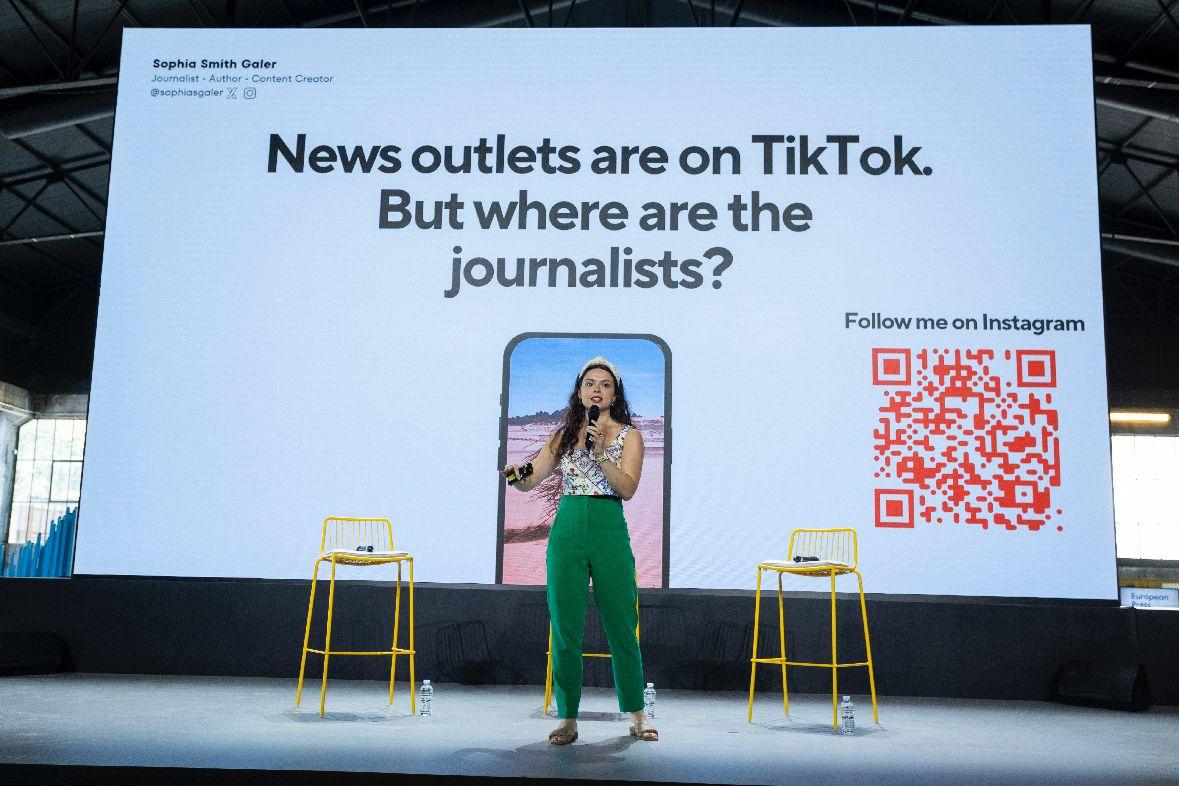
stories and explaining facts. I'm Sophia Smith Gala. I'm a journalist and
Tiktok creator and I helped to pioneer
Tiktok journalism the United Kingdom.
Where I'm from, I got famous using Tiktok to
publish original stories, journalism, and explainers
about the world we live in. I've gathered more than
half 1 million followers making this kind of content. And you can too without
thinking about it. You've already been
doing this storytelling for years with your
friends and family. Now it's about shaping
the skill that you will already have for the
age of vertical video. Vertical video is exactly that. It's smartphone friendly,
short form content, The kind we see on Tiktok in Instagram reels
and Youtube shorts. Social media has become one of our main sources of
news and information. So if you aren't platforming
your message there, no one is going to hear about it and no one is going
to share it further. I've also been responsible
for viral videos at my two former
newsrooms Vice News and the BBC, across
different platforms. And I've won awards for it, including that one over there, The British Journalism Award
for Innovation of the Year. When storytellers tell me
that they're struggling with getting to grips with
Tiktok and Instagram. Sometimes they say
they don't have the video skills for it or they feel like they don't have
enough time to do it, or they lack a bit of
camera confidence. I can make all of those
obstacles disappear. And that's what I'm going
to do in this class. I specialize in
Tiktok and Instagram. And as part of this class, you'll be uploading a
project which is a video in the style of either
a Tiktok or a reel. You'll be uploading a video
in my explainer style, either to Tiktok, Instagram,
or to both of them. I want to empower you
to pick up a phone or a camera and realize that that is your path to engaging millions of people with the stories that you have to tell. The next step is to
explore what we're doing for the class
project and think about what it is
you want to do with Tiktok and with Instagram reels. What is the story
you want to tell? What is the story that's
important to you?
2. Project overview: What is the class project
that we're going to be doing? Well, we're going to be
making an explainer video. It does what it says on the tin. You spend the video
explaining something. And I'm going to explore
why this format is so useful for us and why I've decided to pick it
for this challenge. These are one of the most successful video
formats out there. When you're explaining a topic, it really encourages people to get involved in
the engagement. So I'm talking about commenting, liking, sharing information, and news content is some of the most viral ammunition we
have as content creators. Two is that you've probably
already noticed they have a way lower
production value than some other popular video
formats in the past. I'm thinking, for
example, of logs. Think of all the amount of time and effort it takes
to film a log. Compare that to an
explainer that we sort of script film edit post, often even within an hour. Low production value means
fewer bells and whistles, and we can get them
out quicker and make more of them throughout
the average working week. The best way to start making
these kind of videos, or change your current
video strategy to making them, is
to just do them. I get a lot of people
telling me, oh, I really want to tiktok or I
really want to make reels, but I feel very
nervous about it. And when I ask those
people, especially, oh, well, have you made any
yet, they always say no. So the best thing you can do, which is why it's wonderful that you're watching this class, is that you're here to actually
just make one get over that first hurdle and it will be a huge confidence boost video. Really is technical, so it's not the kind of thing that you
learn a lot of in a textbook. It's great that because
this is a video as well, You'll get to see a bit of
how I actually do things. But you're really going to learn and benefit the most from this class if you
actually do the stuff. So I can't wait to get started. What do you need for this? Well, you need
something to film on. I recommend either a
smartphone or a camera. So if you're using a smartphone, I tend to just film
in the camera app. You don't need to
get anything else. Certainly if you're
just starting out. If you have a camera,
I, for example, use a DSLR with a
mirrorless lens and I can watch myself
as I'm recording. Slightly higher
production value. You really don't
have to do that. That's just if you decide that your style of
content requires it, you don't need lighting
or extra audio equipment. But in this class, we will
explore whether you would like to add some of those things to your current filming set up. And indeed, you may
need to if your sort of usual filming
environment doesn't have the best things in it for you
to create the best video. In terms of software you're
going to need to edit. I never use the
in app editing of platforms like reels
and Tiktok one. That's because I'm making this video for
multiple platforms, so it's far easier to make
it off platform and then introduce it to social
media and video platforms. And the other reason is
that it's actually a lot quicker for me if
I can edit on desktop. It's also quicker
for me if I can use just a really decent
piece of software. So one that is currently
freely available is cap cut, so I recommend you get your
hands on something like that. You are going to need
about 20 minutes, at least, of storage or memory
before you start filming. So make sure there is the space on your phone or camera
before we begin. The last thing that
you're going to need is a Tiktok or Instagram account
or indeed both of those. I highly recommend
that whichever and whatever video you make
as part of this class, you upload to both
of those platforms. But I completely
understand if depending on where you live or
depending on your niche, your vibe, you may
prefer to just put it on one of them.
That's completely fine. Just make sure you have one of those apps on your
phone before you begin. I've had a lot of
fun also making some free resources for you
to use as part of this class. So make sure that you download them and then I think
we're ready to get started because they are worksheets that are going to
help you with a number of the exercises that we're
going to be doing to understand why it's important to make vertical video right now. If we want our storytelling
to reach the masses, we really have to get to
grips with how this happened, how the vertical video
revolution began, and how we can continue to
feed it and be a part of it. And so in the next
class I'm going to give you a bit of an
explainer on that.
3. Why vertical video? : In this lesson I'm
going to be explaining some brief facts about Tiktok and the social media video revolution
that it started. Because once we understand
what Tiktok did, we as creators do make better Tiktoks and
Instagram reels. It's worth pointing out that
the lessons I'm giving you are also useful for
Youtube shorts. It's just those videos
are slightly shorter. If you're interested in
making them as well, apply all the things you learn
to that platform as well. The growth of Tiktok has been exponential since
the app first began. Look at this graph for example, and how quickly Tiktok
grew as an app. Especially in comparison to how other platforms
like Instagram, Facebook, Twitter all
began and how they grew. No app has ever been
downloaded and used so much, so quickly as Tiktok. And this is what happened next. Tiktok demonstrated that it
changed the Internet with this hyper powerful
recommendation algorithm. And there was a shift, really, in social media from a social media environment where we were following people. Do you remember, for example, when Instagram, even Twitter, was far more about you following someone and then
you seeing their content. Tiktok essentially changed the social graph
of the Internet. So now we see far
more videos online of good content creators
making stuff that interests us based on
what we like to watch, who we may have never even
heard of in the olden days. We used to see a lot more of the people who we had heard of. The people who we were
already following. The Tiktok algorithm
is not about that. The Tiktok algorithm on
before you page will surface content to you based
on at least two things. It's based on a lot of things, but here are the two things. We won a game. One, it's based on content
that's going viral. It's based on content
that's driving a lot of engagement to anyone
who comes across it. And feeds are also based on
what we've previously viewed. So our existing viewing habits, the kind of subject areas
we've already told Tiktok, we like watching the content of feeding us more videos
that satisfy those needs. Really high quality content plus content that interests us. Because we like watching, let's say, I don't know
explainers about the news. You, the viewer will stay longer watching Tiktok because
you're interested in it. Average watch times for Tiktok
are getting pretty long. I remember even a couple
of years ago they were something like 53 minutes. We're spending longer
and longer scrolling videos on Tiktok because
they're really good. Instagram and Youtube were like, hey, Tiktok is having
all this success. We need to mimic it. We need to start serving
this kind of video as well. We need to start building
these kind of algorithms. That's why this class is
about Tiktoks and reels. Because I've noticed that the same strategy that
I'm using on Tiktok, the same strategy I've
been using for four years, is now going really
viral on Instagram. Because both platforms want to keep us watching for longer. Remember, this is how platforms make money off us
with advertising. Making good quality
explainer video for over a minute long is the
way to be going right now, to the point that
last week I made a video in the
explainer format in the same style and
techniques that I've been learning for
four years on Tiktok. And I got 90,000 followers
on Instagram in one week. That has never happened to me before in my entire
social media career. And it wouldn't be happening if Instagram wasn't
copying Tiktok so much. This increased time we're spending on the apps is also why I'm encouraging you
to start thinking of videos for over
a minute long. Apart from the reasons
I've just given, these videos are currently
at the time of filming, being the most sort of amplified
by the Tiktok algorithm. If you are a creator
who wishes to monetize, they are the videos
that are also the most monetizable
on the platform. And currently, Instagram is amplifying videos that are
up to a minute, 30 seconds. So that's the kind
of ideal length we're going to be
exploring here. Are shorter videos
still going viral, 100% right now on Instagram, I'm seeing a lot
doing very well, but we're actually seeing less
of them being amplified on Tiktok than we used to say
a couple of years ago. I used to make shorter
videos all the time. I have had to change the kind of video output I make as
the algorithms change. That's just the
way it is on here. And I encourage you to
also be adaptable to any algorithm changes that happen in the future.
Because they will happen. So let's start thinking
about the kind of stories that you want to
tell on these platforms. People tell me all the
time that they want to Tiktok or they want
to start tiktoking. And I say to them, okay, what do you really want? Because yeah, we want to Tiktok. But actually we
want to be on there because we want to get
something out of it. So go to your
exercise worksheets. We're now going to brainstorm a bit about what it is exactly you want to get out of
making vertical video. Is there a job that
you're after that has asked for Tiktok
expertise, for example? Is it more that you want?
Loads of followers? Is it that you want
the perceived fame or prestige that comes with
having loads of followers? Is it that you're trying to sell an idea or a product
and you're trying to get more people
buying the product or believing in a certain
idea or concept. Knowing what it is
you want to get out of the platform is going to just funnel the style of storytelling that
you do slightly. You having that little bit of
direction is going to help your audiences understand who
you are and that's really, really valuable in the
world of vertical video. So please take a
couple of minutes to decide what you want to do. And don't feel like this
is the goal or ambition. You feel like you have to stick to forever
because you don't. My goals and ambitions
have changed on there. My one caveat is that there are two things that audiences really crave on these platforms,
personality and authenticity. This is an example
of what audiences most enjoy watching on different
social media platforms. And as you can see, when it comes to all of
the platforms that are now serving vertical video, Youtube, Instagram, Tiktok. They want personality, which brings me to
my second point. They want authenticity. So if you go on these platforms and you start sort of
trying to make out that you're someone special or that you're someone
that you're not. Audiences are really savvy, they're going to spot
it straight away. And they may just think, oh, this is frankly to trad media, or this isn't the kind of vibe I'm after on this platform. Having a personality or showing personality does
not mean extra version, It just means being yourself and imagining
that the camera, the phone, the whatever in
front of you is your friend. So once you've figured out
why it is you want to Tiktok, we're going to do
something very briefly called a competitor analysis. This is going to
be really useful for you to work out where it is your content is going to sit in the social
media ecosystem.
4. Competitor analysis : If you haven't developed
your own taste on Tiktok and Instagram, and by that I mean that you haven't decided the
sort of stuff you do like and don't
like, you need one. This is the time
to be judgmental. This is the time to think, ooh, I really like what
this creator does. I wonder if there's a
way I can emulate it. And this is also a
time to be like, I really don't like
what this creator does. Perhaps it's their delivery that I think is a little
bit unnatural, or I really don't like how
they frame their videos. Developing taste is going to make your content a lot better, but also it's going to
start helping you to work out who else is making
content in this space. You might, for example, be in a niche where you realize, wow, actually all the
other creators in this space have a really
high production value. Therefore, if I want to
make content in the space, is that something I almost
have to compete with? On the other hand, you
might be in a niche where everyone has a really
low production value. And so in order to look
the most organic and be the most authentic to what is going viral
in the space, you might think the opposite. Another thing about the
competitor analysis is to try and work out what your unique selling
point is and why someone might want to watch your
videos over someone else's. This is a time in social
media and I'm thinking especially of vertical video on platforms like
Tiktok and Instagram, where they are already quite highly saturated
with good stuff. So when I started on Tiktok
over four years ago, now, I was one of the only journalists on there in the UK. So it was quite easy to bring and actually
define this niche, define formats
like the explainer because there wasn't
much competition. What has happened since is
that now loads of journalists, loads of newsrooms
are doing explainers. And I have had to keep being distinctive against the
backdrop of all of that. To work out how saturated the platforms are
with the kind of content that you want to make, we have to start kind of
testing the platforms. I would be searching keywords
or questions in Tiktok, I would be searching keywords
or hashtags in Instagram. Let's imagine for example, you are a plumber. You want to start making
content about plumbing, you need to be
searching plumber, you need to be searching any phrases you may
know as a specialist in this field to see if there's already high quality
content in this space. If there is high quality
content in this space, are there plumbers on there of the same
background to you? Or do you offer perhaps
a bit of diversity? Something different
in this field, is it that There are
plenty of plumbers, but all of their
content isn't quite built for the Tiktok
real generation. Could you be that plumber? A way that I try to stay distinctive is that as
well as being a journalist and often historically bringing news explainers to my audiences. My audiences know that I love making content around languages, and I make language
news content. I do explainers around
linguistic facts. And a lot of people
in this space tend to be academics
or linguists. They do not tend
to be journalists. They're certainly not
British journalists. Can you see already
how it sounds like, Oh yeah, What Sophia's
doing is quite unique. You need to think about what's
going to make you unique. You already are unique because you're you,
we're all special. It's just about
logging into that. And if there isn't a
single plumber online, you need to start
looking for people who might be adjacent to you, whatever the analogy
is for your niche. So yeah, if I was a plumber and I found no plumbers online, I might start looking
for electricians, Gardeners, seeing the kind
of content that they make. Certainly as a journalist, I always looked
towards emulating brilliant storytellers
who weren't journalists. A lot of them were sort of
full time content creators or Youtubers who are amazing at telling social media
first stories in a way better way than journalists from
traditional newsrooms are. After doing all of this, you're going to be able to identify and name some people who make
content that you really like. So it's time to go
back to the worksheet. And I want you to identify three creators whose
content you really enjoy. One or two of them
should be in your niche. But for the third
one, I'll let you put someone whose content you
just think is really cool. And for each
creator, you need to identify why you
like their content. What is it that they do that you think is really good?
So this is great. You now know why
people are investing so much effort into Tiktok and Instagram videos
at the minute. You also know why it's
important to work out where you fit in the
social media landscape. It's time to come up with
your first explainer.
5. Picking your idea : This lesson we're going to pick an idea for your
first explainer. Now you can really kind
of do anything with this, but what I'm going to do is
give you a bit of direction, which is hopefully
going to help you create a really
interesting video. In this lesson, I'm
going to give you three formats that I've seen
performed particularly well. I do the first two the most, but the third one is one that I have seen literally transform the follower engagement fortunes of so many people online. And I think it's important
that you do it if you can. Okay, so the first one, my favorite one, the
information gap. Is there something that you
know about or that you found out about recently
that blew your mind? Because you were like, how
did I never hear about this? How do people like me
not know about this? Maybe it's a piece
of information that can change or
improve our lives. Maybe it's just a
really cool fact that you haven't been able to stop thinking about since
you learned about it. It's even better when you are the best person to explain
this information gap. So maybe you have
expertise or a specialism, or you have an identity
that makes you the best person to
talk about this fact. So I make a lot of content
about language and etymology and I have an audience
who follow me for that. They want to see me talk about words and where they came from. I wrote an explainer
talking about where the word onion
comes from and why our word for onion
is really different to other languages words
for onion in Europe. Why do we call onion onion? When most of Western Europe
calls it something like pull, it satisfied an information gap because people didn't know how their language got
their word for onion or why we say this or that,
language says that. So it did really well. In fact, on Instagram
it got 5 million views. And now there are a
lot more people in the world who know the
history of the word onion. Never thought I would be
responsible for that. Let's move on. The second thing that you could explain or tell a story about is a news story or something that is currently unfolding
in world events. I come from the news industry and I can tell you that news tends to be one of
the most highly performing content areas online. We're humans, we
love hearing about the latest thing or something
that's unfolding again, this thing that is
happening in the world. Do you have the expertise or the identity that
makes you the perfect person to try and explain
what's going on to audiences. Not only might you
be updating them on something that they've
never heard about before, which they would love
to hear more of. You might be explaining a detail to it that no one else
is talking about. Even that phrase, no
one's talking about this. How many times
have you seen that on a viral social media post? You could be the
one going viral, giving people this
urgent information. This actually happened to
me on a video that I made about a case that was
happening here in the UK. A video about
reproductive rights. Someone here had been
sentenced to prison. And I had a lot of
my colleagues in the kind of feminist
content creation space, informing the world
what had happened. So they were making this sort of updating news story
explainer, which was good. I saw a lot of them doing well, but I noticed that no
one was talking about a particular data
privacy point in it. And I am a journalist
with lots of experience reporting
on reproductive rights and technology. So I was in a really
good place to make an explainer where I was
telling people, hey, this story is happening, but no one's talking about this after yesterday's abortion
sentencing in England. I really want to have a data privacy conversation
about what happened, because you might have
heard that a woman was sentenced to 28 months
in prison in England, but you might not have heard
how she was prosecuted. That's an example
of one of my videos that got a really high
number of shares. This was not only information
that people had thought, oh, I hadn't heard
about this bit. That drove them to think
other people won't have heard about this bit as
well, so I better share it. We love that kind
of engagement on our videos because that's
going to encourage an algorithm like the
Tiktok algorithm or the Instagram algorithm to
boost it to new audiences. The third idea that might
get your creative juices flowing is telling a wild story. Are you someone who has had something outrageous
happen to you? Maybe it's profoundly dramatic, could even be upsetting. Could be something that
would make an audience feel angry or feel
sympathy for you, or feel very excited for you. If you have a
memorable experience, you'd like to talk about audiences really like
that kind of content, and if you don't, it
might be that you choose to tell
someone else's story. So it might be that you
decide to work in a kind of content space where you talk about interesting
figures from the past. Imagine for example,
there's a fascinating story about one of Henry eighths wives that no one
ever talks about. Telling that story could be
a really good content idea. Now, why? When people start
listening to a story, they do so because they want to listen to how it finishes. This is brilliant for
video retention rates, so the longer you can get
people watching your video, the again, more likely it is that a platform
like Instagram or Tiktok is going to amplify it on their discovery
algorithms. So do you see why you telling a wild story that
happened to you, or a fascinating story
behind a historic figure is going to keep someone watching for the full
length of the video. So maybe you want to
fill an information gap. Maybe you want to tell the story about something unfolding
in the world right now. Or something really
wild happened to you in the past that
you'd love to talk about. Whatever it is, I encourage you to think about how
your expertise and your identity can be
a part of this explainer. What I'm going to do
now is talk you through two different videos and how I came up with
them in the past. I'm at the stage where I
have lots of data, you know, I have loads of videos that have done well, have done less well. And I know that when I explore, how do you say this
in your language, that's a successful format. And I was actually
thinking the other day about how when I
learned Spanish, I learned that the At
Sign is not called, the At sign in Spanish
is called Roba. And I wanted to find out why. And then I realized,
oh my goodness, people around the
world really do have all these weird different
words for the At sign. So that's how I came
up with that one. What do you call this
sign in your language? Because it varies wildly
throughout the world. For me, it's the At sign. And linguists aren't
completely clear on where it came from before it began being used in
commerce as meaning. At the rate of, they think it might have come from a
religious scribe context. So medieval monks
writing manuscripts. And they think it could
have been a way of writing the Latin Ad, or
even the French. Both of them meaning
variations of at two towards. But then you get on
to other languages. In Spanish, this is
really cool, it's a. And va actually comes from the Arabic word b,
which means quarter. And this was a pre
metric unit of weight. Then we get to
animals in army mean, the out sign is actually
a little puppy, unique. In Italian it's a snail kaola. In Korea and they
were like, oh look, that is a work call Bengi and in Dutch it's an up
and start monkey's tail. But then some other
languages got hungrier. In Czech it's Savina roll mops, and in Hebrew it's Strudel. Maybe a Bosnian, And
you just looked at it and you thought,
that's one crazy. I think I might turn
this into a sort of keyboard etymology
and languages series. But what do you call the
atsign in your language? Here's another one.
I regularly check the news and I noticed
that news websites were covering the University
of Aberdeen and how they were thinking
about scrapping their languages degrees. As you know, I have
this language as niche. That is something I
care deeply about, that people are able
to learn languages. So I didn't explain it on that, that's had over 100,000 views. The University of Aberdeen may be scrapping their
languages degrees. And why should this worry
you if you're British, The university says it's considering axing
them because of the fall in student numbers and the high teacher
to student ratio. Even though MSPs and diplomats have spoken out against this, the university is
still considering it and it's even happening
at the same time as the Scottish government is introducing the Scottish
Languages Bill, intends to expand the
provisions around Gallic, but Gallic is one of the degrees that would be axed by Aberdeen. Why do I think this is
worrying beyond Aberdeen? Beyond Scotland? Well, if
we university does it, how many more might do it? There has been a
significant decrease in the UK of language learning
at undergraduate level. We're talking about over 6,000 people being accepted
onto courses in 2011 down to
under 4,000 in 2020. Do I think language lessons
could be more fun at school? Yes, But I also think we have
to analyze, as a country, why we are not more evangelical
about language learning. Do we lack language influences? Studying Spanish and Arabic? A university was the best
decision that I ever made and it is the reason I've been able to do the work that I do. What's worrying
about Aberdeen is if you live in Northern
Scotland and you can't afford to live too far away from home and you want
to study languages, you might not be able to if Aberdeen is your
only option and they ax them as the cost of living
crisis goes on and on, the language learning
options near to where we live get more
important, not less. We cannot let languages degrees
collapse because of it. So yeah, that's an example
of an information gap being satisfied and also a new
story that I shared. Great, I hope that's helped
you for your brainstorming. Go to the worksheet. Have a little think, put down the topic idea that you'd love to
make content about. And then we're going to
start doing the fun stuff. We're going to start
doing the script writing for your
first explainer.
6. Scriptwriting: Length : This is probably
my favorite lesson that I'm going to do because script writing is the bit that I had a huge head start with
because of journalism. When you are a journalist and you work in video journalism, in a radio journalism, you spend ages learning
how to write scripts. You're not going to
need to do any of that. You are just going to watch this lesson and have that head start to go forth and make
wonderful video content. So time to tell you all the sneaky things that I've learned. Firstly, we're going
to decide on length. As I told you earlier
in this class, the video lengths that we're
currently seeing performing well are between a minute
and a minute and a half. I typically make content that really does get close to
that minute and a half. So this is the time frame
we're going to work towards for both Instagram and
Tiktok. 90 seconds. I hope you're now thinking, how am I going to
script something that comes exactly to 90 seconds? Well, here's the secret. Radio people do
this all the time. We can roughly guess
how long someone is going to say something
simply by the word count. It roughly takes a second
to deliver three words, Do a bit of maths, and
you'll realize, okay, if I want to make a video
that's around 90 seconds, the word count of
my script probably has to be around 270 words. The more content that you make, the more you get used
to your editing style, you're going to realize that, oh, I actually speak
quite quickly. Maybe I'm a four word a second kind of person
or maybe your style. The thing that's most
authentic to you and your personality is like this slow delivery
with gravitas, which obviously
means I am taking longer to deliver the
words per second. You saw what I was trying
to do, that it was taking me longer to say the
words and as a result, I'd need a way shorter word
count for my explainer. That is one reason
why we script. Another reason why we script
is because I'm hoping that you are doing a little
bit of research for this. If you are satisfying
an information gap or you are telling a
story from the news, you need to make sure
that it's accurate. We are always more accurate. When we've done the research before, we've checked things. We've especially in my space, I've checked the
pronunciation of things and the script
writing time is for that. It's to make sure you are making the best quality
output that you can. Okay, so we've
decided on our idea, we've decided on our length. We now need to decide on the most important part
of your tiktok or real, which is the hook. The hook is where
someone decides whether they're going to
watch your video or not. It is so important and
it can actually be quite a challenge working out what the best hook
for your video is. And that's why coming up next, we're going to do a whole
lesson on writing hooks.
7. Scriptwriting: The Hook : Hook writing. This is the most important lesson
of the entire class. Something I also want to say
is that as a journalist, I don't really feel
like I got taught how to write hooks
as a journalist. So all that scripting stuff, I've had loads of experience, the hook writing stuff. I have learned that
in the four years of just pumping out content. So don't be afraid
or alarmed if you notice that's starting to
happen to you, seriously. The more hooks you write, the better that you're
gonna get at it. You're gonna develop
a special hook sense. You're also going to start
watching videos and realize, oh, they did a hook,
they did a hook. That person also did a hook. If you want to be really smart, you'd take notes of the successful hooks that
you see in the wild, ready to deploy them
yourselves in future content. Anyway, here is my advice for how I write hooks and how we should be writing hooks for compelling short
form storytelling. It seems quite simple. It should be a surprising
or shocking statement or it should be a question. The reason that shocking
and surprising statements are good is because it flags up information that
the viewer may not be aware of and that they
want to learn more about. If something is
shocking or surprising, it's emotionally activating
the viewer and that's the kind of behavior that will encourage them
to watch the video. A question sets up a curiosity. You're going to answer that question some
point in the video, but it gives a little bit
of jeopardy to the viewer. They're there thinking, oh yeah, they've asked a question that
I don't know the answer to. I'm going to watch
to find out both of those formats allow us to
set up a bit of jeopardy. And every good story
needs jeopardy. It's what keeps us interested. And watching, you
will find plenty of hooks online that are
neither of those two things. But for short form storytelling, they are really good starts. And when you get a bit more confident with the hook sense, the hook writing format, of course be experimental. Try out things that
you think could work. I really don't like the term click bait and I do not want to encourage to do the kind of click baty shocking
statements that are, for example, not based on fact, don't when
you're doing that. However, what can we
learn from the sort of digital storytelling online
headline Trailblazers? I'm thinking buzzfeed and vice. In fact, when I was
a vice reporter, I remember that a number
of the Tiktoks I made, the explainers that
I delivered around my reporting would simply begin with me saying
the headline. The headline was
the perfect grabby, surprising or shocking new piece of information that
would hook people in. So if it's helpful for you
to think about headlines, feel free to do so. Ideally, the length of your
hook should be really short. Imagine someone is scrolling and scrolling, and scrolling. They need to be hooked in before they have a chance
of scrolling away. Try and get your
statement or question in the first 5 seconds if you can. I will allow up to ten, but think about your own habits. Do you really wait
five or 10 seconds to decide to watch a video? Exactly, So you've got to
really hook them quickly. In literature, there's
a phrase, page turning. Oh, that was a real page turner. You want to be a thumb stopper, You want someone to be scrolling, and then
be like, wait what? And I would add that if you feel like you're
really struggling and that you can't come up with a good hook for your video, It may be that the
idea you had is not optimized or ideal for short
form video storytelling. A great way to help us
actually pick ideas. There are plenty of stories
I have done in the past. I'm thinking about my
journalism career that has been really vital and
important news reporting. But I've made the decision,
that's not a Tiktok, that's not a real, maybe
it's because I think, oh, digital audiences, they're not actually going to be
that interested in it. It's two outside of my niche. Or this hook takes
ages to explain, it's just really hard to
grab someone quickly. Hooks often improve with
collaboration if you can build up a little posse of people who you
can brainstorm with, so you might have other
creatives in your life. Or you can use the discussion
forum that's part of this class to push
some ideas around. I'm going to show
you a stream of hooks that I have used
previously in my videos. Are we gonna lose
the Winter Olympics? You could be alosexual. Why do you have no
idea what that means? 26% of male university
students think their union is doing too
much to tackle misogyny. Why do people in Mexico get
mad over a school textbook? And would you do the same,
this video that's gone viral from Madrid this
week is terrifying. Have you noticed that
there seem to be a lot of live streams happening
right now from Ukraine? Several countries
offer menstrual leave. And if you're wondering
why yours doesn't, you might want to
keep an eye on Spain. Why do se, many
languages use words that actively lie about
women's bodies? Russia are trying
to censor Tiktok, like old Italian roof tiles. Right, surely they couldn't
be hiding something. Portuguese words that
come from Arabic. Why is Ecuador called
Ecuador when there are loads of other countries that
are also on the equator? Did you know there
are languages where England is not called England? The NHS is about
to share loads of your medical data
with third parties. You need to see this dress code that's just been taken down because of the uproar that's caused. Do you know
what these are? And also the language that
you heard in the womb had an impact on your
linguistic ability before you were even born. Did you see that was a
real mix of statements and of questions and they did vary in length slightly as well. Okay, you've got your hook. You're now ready to write
out the rest of the script. Remember this word count length that you've established
for yourself? I'm going to leave a
screen up for you now of prompts to think of as
you're writing your script. Please pause on me and when you've finished
writing your script, play me again and
we can move on. This is fantastic. You've done your first explainer script. Give yourself a huge
pat on the back because that's a lot of the
effort that's now done. What we're going to double check first though is that you've got lots of little engagement
tricks in your script. And that is what we're going
to cover in the next lesson.
8. Scriptwriting: Engagement Drivers: So what is an engagement
driver and why is it important to include these in our scripts when we're
writing for vertical video? Well, remember what
I asked you to do at the very beginning
of this class. I asked you, why do
you want to Tiktok? Why do you want to
make vertical video? Why do you want a
real, I'm assuming it's because you want to
get something out of it. And that is what engagement
drivers help us do. Perhaps you have something
to sell that people can buy if they go to
the link in your bio. Perhaps you have simply an idea that you
think is just very important and it's valuable if your followers share
what you've said. We do have to encourage digital audiences
to do these things. Now we don't necessarily have to say it in a really obvious way, but reflect for a minute
on the history of social media and
video and Youtube. For example, how many times have you heard a Youtuber say to you, Please subscribe
we, for example, at the end of lots of reels and Tiktoks or even in the
middle of reels and Tiktoks, hear people say, follow
if you want to see more. A less obvious way of
doing this is saying, hey, this video is part of my
series on blah blah, blah. Because what does
that do? It instantly tells the viewer, Hang on. This creator makes
more stuff like this, so if I've enjoyed it, I want to see more
of their series. Engagement Drivers
should drive engagement. So think about things that
you can say to encourage people to like or
comment or share. I would say don't spam. Remember, you only have
about 270 words to say, what it is you want to say. You're going to keep
only a couple of words for your
engagement drivers. Another really valuable
engagement driver, which would encourage someone to share your content
or to follow you, is to say very clearly why you're the best person
to make this content. Again, you don't say I am the best person to make this content in the
middle of your video. So for example, in my
previous news explainers, you'll see I often
deliver the hook. And then I don't take
too long before I say I'm a journalist. I remember
saying things like I'm a senior news
reporter at Vice News and I've been following
this story for months. Why is that an
engagement driver? I'm instantly telling
the audience that, hey, I'm someone to
trust about this. I have a job where people
expect me to be trustworthy. And I said I've been
following it for months, so I possibly know
more about it than other content creators that
you're currently watching. That's going to encourage
someone to engage. That's going to encourage
them to watch for longer. They may like comment
or share it because they feel like it's
more accurate content, for example, than if they
shared someone else's. There's possibly something
about your expertise or your identity that you want to stress the importance
of quite high. So people know that they should follow you for more if they're interested in this
kind of content or that they should
pay attention to you because you have
some of the most valuable things to
say on the topic. And then remember this taste that I've been encouraging
you to develop. You know, looking
at content creators watching their stuff and
thinking, what does? Well, you're going to start hearing their
engagement drivers. Think about whether
you can emulate, never plagiarize, but think about how you can
adapt things for you. And there are other phrases
that I sometimes hear, like everyone has a
friend who does this. Sometimes you hear stuff like that peppered into the script. And can you imagine what saying
something like that does? It will fill the
comment section with people tagging their friends
because they'll be like, this is you. I love
it when that happens. And that is just
another example of a possible engagement
driver you might feel like you can sprinkle
somewhere in your script. In marketing, we hear a phrase a lot called the call to action. As I've explained
in this script, when you're telling a story, you really don't want to spend that much time spamming
people with calls to action. But it's helpful to think what you want to get out
of the video and how you can season the script with techniques to try and
help you achieve that. Ultimately, we're spending so much time on these platforms, investing all this effort, Of course, we want to
get something out of it. And don't freak out about getting every single
thing you want to try and achieve out of Instagram and Tiktok in a video. This is what long term
video strategies are about. You'll get them
all in eventually. Just make more content. We're finally ready to film,
so in the next lesson, we're going to talk
about how we are going to frame the video.
9. Filming: How to frame and light : I'm going to do now
is walk you through a demonstration of how I frame and do the actual filming
of the Tiktok, this shot. You can see at the
moment, the light isn't fantastic in here. I've got a window
there that I'm facing, but back here is where
I have to do a bit of lighting work in
front of me as well. The next shot that
you're going to see is going to be me sat down, framed properly lit well, and ready to do my filming. Here is the shot
that as you can see, I'm already filming vertically. I've literally got my
camera tilted that way. Then I have a ring light
now that is there, that is giving this
room a lot more light. But it's not the only
lighting we're going to do. I just have these
tiny little lights. I move around in position, in whatever setting
I find myself in. The most valuable thing for me is a little bit
of back lighting. I normally sneak one or even both of these
here that there, for example, can you
see that's already given a little bit
more ambience. Then with this one, I
sometimes also put it here that that does
a lot more work. I often might put
one of them here. If I move this, what do
I feel like doing today? I actually like that there's
enough light going on. I also have this
flameless candle that doesn't do
anything for lighting, but I just think it's quite fun. So why not? I actually find that this
bookcase here helps me frame. I always know roughly
when the camera is right, depending on where
what you can see here. If you have something in the
background to help you be your regular framing assistant,
that's always handy. So what I have in front of me is my DSLR that's been
tilted sideways, so it's already
filming vertically. I'm not going to be
filming this for Youtube, so there's no need to film this horizontally and
then make two cuts, a vertical video and
a horizontal video. I'm just going to
keep it to this. And that is why the DSLR that I'm using is
already tilted. But obviously if you're
using your phone, you just use your phone that automatically films
vertically anyway, if that's how you frame it. I've got a radio mic
that's on top of the DSLR that's capturing
high quality audio. And then I've got my ring
light just behind the camera, got my light sorted there, now I'm ready to go. I often get tempted to look at the screen when
I'm using a DSLR, but as you can see,
it's better to look at you there than there. Can you see my eye view? Slightly changes. Okay, we're now going to record my script. This is the video that I need
to put out probably today. It's just one of my
kind of average. This is something that's
happened lately in language news kind of videos and it's something interested in and that I know followers
of mine are interested in. It's about the Spanish language and it's also about ChatchPT. They're both areas in
which I want to create communities around my
reporting and my interests. Because I love talking
about this kind of stuff. I do a lot of work with
both AI and with languages, so it's the perfect
subject area for me. My script is pre researched
and it's pre written. And I have it teetering
precariously on my sofa, just there in big enough font that I can see it from
where I'm sitting. What's good about
this framing is that my eyes are in the upper
third of this shop. Any screenshots I
want to share or subtitles can go here,
they could even go there. If I want it, I'll probably
put them here like normal. Okay. And now I'm just going to start and you'll see some lines. I'm a one take
wonder some lines. I take several takes
to get it right or I think that
was like 95% good, Sophia, But you can make
it 100% good. Do it again. Chat GPT doesn't know
20% of Spanish words. Chat PT. Chat PT doesn't
know 20% of Spanish words. Okay. Are that took
tennis minutes? I'm going to stop recording
and it's time to edit.
10. Editing : If you film the
explainer on your phone and you're editing on
your phone, that's great. The file is already there. But perhaps you are editing on a computer or
you've used a camera, you now just need to
transfer that file over. So for example, from my phone, if I'm filming off my
phone, it's Apple. I use airdrop camera. Get your SD card
out and put it in. Get the file on
wherever it needs to be ready for you
to start editing. Please remember, never
transfer video using whatsapp. It's tempting, I know
in the news industry, I've only ever used it if
it's just a quick approval, you never use that file
to edit or upload. Why? Because Whatsapp compresses
the quality of it. So you don't want to do
anything to this video that's going to diminish all the
effort that you've just put in. So in case you're getting
any video from elsewhere, maybe a friend filmed you. Just make sure that
you're sharing it with some kind of we
transfer air drop, Google Drive,
anything like that is a much better method of
sharing the what app. I'm an Apple user, so I'll be using a lot of
Apple terminology, but just replace
whatever I've said with what you use on Android
or what you use on a PC. Okay, so hopefully the file is now where it needs to be
for you to start editing. And that's going to be what
the next lesson is all about. In this video, I'm going
to show you how to edit. And as you can see, I've
brought you into Final Cut Pro. This is the program
that I used to edit. As I've already said, you
can use Cup, which is free, or maybe you already use some other kind of
video editing software. This is a video that I
made last week that's gone on both my Tiktok
and my Instagram. And I want to talk
you through the edit. It's really simple. This took me in total maybe
between ten or 20 minutes. As you can see, one of
the first things that I do is I sync up the audio and the video because I was
recording the audio separately on that radio
mic on top of my camera. So you can see me there working out if I've got
it exactly right. And then I make
sure that they're together on my timeline and
then I'm ready to edit. The first thing is to start
chopping out all of the gaps. So you can see me having a
real slice of my timeline. You can see that I'm not
only chopping all the gaps, I'm trying to get to
as close as where the speech ends as possible. And this is a timesaver. This means that I can pack in as many words as possible in my script and say as much as I can within this minute
and a half window. What you can see
now is that this is a video of many jump cuts, that's an industry term. And a jump cut just means that there's no sort
of smooth transition. It goes from me saying
something to me saying another thing
in a similar position. But it's not this
smooth transition. This is a very typical sort of social media editing style. Again, in like
traditional news media, you see people hating jump cuts. It's all about having
enough pictures to sort of show cool transitions
between scenes. We don't do any
of that in social media filming unless
of course you do this sort of super high
production value stuff. All of my content is full
of jump cuts and I love it. So you can see that I'm bringing in loads
of jump cuts here. Now we're getting to a stage
where I've had a good chop. It's looking like
it's nearly ready. In this edit, I
actually was riffing a little bit during the
delivery of the script, and that was very naughty of me. Because what's happened
is I can see that the video length is over
a minute and a half. That means I have to go
back into the video. This is really, really quite
a pain. I advise against it. I had to go and listen to the whole thing
again and think, what can I chop where the
video still makes sense? This is something that is definitely going
to happen to you. I'm actually really
pleased it's happened in this edit that I wanted
to show you because I'm deleting things without making the script
turn into nonsense. I'm only cutting where I think everything
still makes sense, the story is still being told. And then I have to start
thinking about the sort of visual equivalent
of engagement drivers. How is it that you keep
people watching for longer? You have to keep it very
visually stimulating. How do we do that? As well
as all of the jump cuts? You're going to see that
I'm filling it with zooms. And I'm also filling it
with close ups where I'm just taking the same video and zooming into
it a little bit. And I'm doing sort of close
ups with a little bit of motion and all of that is just keeping a kind of rhythm.
Adding a rhythm actually. Because obviously
that rhythm wouldn't be there if I wasn't
doing this edit. So it's giving this
rhythm to the video. That's going to encourage
people to watch it for longer. Otherwise, it's quite tough
just watching someone explain something in exactly the same position for
a very long time. In the next video, I'm going
to talk about the music. But as you can see here, the last thing I do
is add the music. Because I've finished the video, I know how long it is and
I want to decide what the best sort of vibe
is for my video. So in the next lesson, we will explore how I choose that video is then ready
to put captions on. And currently I'm using
Cap Cut to do this. And I'm actually
going to show you how I add captions on my phone, mainly to just show you another
screen recording method. To give you an even broader idea of how it is we edit
on vertical video. And it's only after I
have all of that that I then have the final
finished product. Now that was the broad edit, there are some other
things we really need to magnify in that process. So the next lesson
is going to be about music subtitling and the cover.
11. Music, subtitling and cover : Music This is one of
my favorite parts of making content because you
get to feel like your own DJ, picking your own music for the vibe of the video
you've created. How I put music on my videos has actually changed over
the past couple of years. So early on, maybe
four years ago, I always picked viral audio
from the Tiktok library. And then when Instagram
reels became a thing, I would do the same. Then something that's
happened recently on Instagram is that it
appears to have allowed some audio beds to go viral before removing them for
copyright infringement. So that now means that a
bunch of my old videos now no longer have any audio on them because Instagram
removed the audio. And this is a problem
for me because it means you can't really
watch those videos anymore. In order to avoid
this happening, I simply now just always pick my audio from an
external music library. I now use audio beds that I
pay for the licensing for. So there are websites like
Epidemic Sound that I use. Plenty more are available
and I just go for audio beds that are long enough for the
duration of the video. I always make sure that
they fit the mood. So if I'm presenting
something a little bit mysterious or intriguing
in my explainer, I'll find music that suits that. If I'm talking about
something sad, I'm not going to use, you know, clown music or
something very happy. So what I mean, you
just try and capture the correct vibe for the
explainer that you're doing. You might be thinking,
do I have to use music for my
explainers at all? No, you don't. But what music can be is
another engagement driver. It's yet another thing
we can choose to use in our arsenal to try and
keep audience interest. It's why I always use them. So it's up to you whether
you want to do that as well. In the edit, make sure that
the audio bed isn't too loud. You don't want it to be
louder than your speech, otherwise people aren't going to be able to hear
what you're saying. I always choose
instrumental only music Because I find if you can
hear a voice in the audio, it overlaps too much
with your voice. I tend to, but not always, go for something with low BPM, low beats per minute, that
means it's a bit slower. Again, it seems to
suit the pace of spoken speech a bit more
than very, very fast music. I also avoid drums for
that reason if I can. Sometimes I find the
percussion of the drums is just sort of interferes
too much with my speech. I also mentioned we talk about
cover art in this lesson. Now, I personally don't put
cover art on my Tiktok, but on Instagram
because of the way that people consume or look at profiles a little bit more than I'd say how they
look at Tiktok profiles. You may want to put
cover art on your reels. And the reason this
is different to Tiktok is because at
the time of recording, the Instagram feed still
comes up as squares, not as vertical formats. So it means that if you
have vertical cover art and your eyes are up here, when it becomes a square,
it only sees that. So that's why we like
to design cover art. A lot of the time for Instagram,
I make mine in Canva. I normally literally just take a screenshot from the
video, put some text on it, make sure you can see my face in the sort of profile
view and that is it. I really don't put that
much thought into it, but it's a lot easier to make that before you get
ready to upload, which is why I am mentioning it. Now, the third
thing that's really important for your
video is subtitling. Why do we need to subtitle? I have always worked in
newsrooms and in all of those newsrooms they have
always subtitled their videos. You will see any self
respecting news outlet, media outlet, any publisher,
everyone subtitles them. It's for so many reasons. This is not an exhaustive list, but one of the reasons
is that people watch videos without
the volume on. People are watching videos when they're at school,
when they're at work, when they're somewhere that they don't want to disturb people, maybe they haven't
brought their headphones. Think about public transport. If they can't understand your video without
the volume on, they're going to scroll past. Another thing is accessibility. You are enabling
absolutely everybody to be able to read your video, especially if they
can't hear it. And another thing is
that, especially if you are an English speaking
content creator, never assume that your whole
audience who are going to be watching your video have English
as their first language. Subtitles really
helps lots of people around the world with lots of different levels of English, understand what it is
you're talking about and that helps you reach
even more people. We now live in an era
of bouncy subtitles, so I'm going to show you here
how I do that on cap Cut also gives you an example of editing on phone rather
than on a computer. And as you can see
I'm using the cap cuts auto transcribe feature. It's then giving me some
quite static subtitles. So I then go in and change them. I alter the animation to show me these white and yellow
ones that move a lot more. And I love the pace that
they give to an edit. There are so many subtitling
options with cat cuts, so you can go wild with the different offerings that they
have for you there. Chat GPT doesn't know 20% of
Spanish words booboo manner, and it is very
likely that this is a problem in other
languages too. This is a new research
out of Spain. And if you're using Chat GPT to help you write your
Spanish homework, you might want to think
again, at least for now, there are 90,000 words in the Royal Academy's
Spanish Dictionary. And Chat GPT was found to not
know about 18,000 of them. It's a huge gap and it
gets worse because of the 80% of Spanish words
that it did recognize. It actually misunderstood
the meaning, 5% of those This has
possibly happened because Cha PT learns from words it
finds all over the Internet, which real Spanish
speakers have written. And a Spanish
speaker, on average, recognizes 30,000
words in Spanish. It's not like everyone's
walking around knowing all of
these 90,000 words, but it does mean
that chachiPT does not use the words it
does not recognize. And this is obviously
going to limit the richness of the vocabulary of the lexicon that it provides. The study also looked
at how many words ChachiPT recognized in
the work Don Quijote. It recognized 90% of those
words full reference. Don Quijote has 22,632
different words in it. Side note is that I
love playing with Chap, the GPT store just
opened this morning. I had a play around and I
created Devil's Advocate, which is a GPT that anyone can use to test the quality
of their arguments. I would love to make a language learning GPT for
get flu with me. Tell me what you think would
be useful and I'll make it. Don't say something to help you improve your Spanish writing. It's now time to come
up with our caption and that's what we're going
to do in the next lesson.
12. Captioning : Writing captions is a lot more
important than you think. And it's all because Tiktok and Instagram are not only social
media platforms anymore. They are search engines. People aren't only passively
consuming content on them, they are actively searching for things to watch
on there as well. This means that now not only can your content be surfaced
on a discovery algorithm, like the explore
feed on Instagram or the four you page on Tiktok. Your video can be surfaced
in search results. So how do you get it there? Well, one of the techniques
is optimizing your caption. If you're familiar with
digital marketing, and you've heard a phrase SEO, search engine optimization, that's what we're
talking about here. We're talking about making sure that your
caption is full of those glorious keywords that are going to get it surfaced
in search results. Look at your script and imagine the sorts of questions
that someone might be asking in which they get your video as
a search result. If you have told an
interesting historical story about one of Henry
Eighth's wives, make sure Henry Eighth,
Henry Eighth's wife. If you say it's Anne of Cleves, Anne of Cleves, you'd make sure all of those mentions
are in your caption. A lot of the time
my hooks actually form the first sentence
in my caption, especially if I think the questions are the
kinds of things that people might
actually be putting into a search bar in the past. I think we used to put
loads of hashtags in stuff because that's how
content was surfaced. These days, it is a little bit more important about keywords, so just referencing the word without putting a
hash tag in it. That being said, I tend to use about three hashtags at
the end of my Tiktok. Captions generally do the
same for Instagram two. And those hashtags should capture the niche
that you're in. So for example, for a lot
of the content that I make, it will be hashtag language learning or hashtag languages. Your hash tags should
be more cattle terms, your keywords should be a
little bit more specific. So I might do a
video about Arabic. I've got to make sure that
Arabic is mentioned there. And then I might also
include it as a hashtag. Maybe at the end. Very important to include languages as
a hash tag at the end. And in the rest of the caption, I would make sure that I would sort of season it with keywords. Right. It is finally
time to publish. And I should tell you now that after I have researched an idea, by the time I have scripted it, filmed it, edited it, done all these other sort of twiddles to it and published it, That generally takes me an hour. So I used to do this a
lot in lunch breaks. If you're finding
that editing and filming and everything is taking you a lot
longer than that, don't worry, I used to
take longer as well. And what's happened is
over time with practice, I've really diminished
that workflow. I'm now pretty fast and
efficient at what I do. You do not get to that stage with anything other
than practice. So it's great that
you've done this class because you've already got some of those practice I was in. You are going to be so
much quicker the next time you do it and the next
time you do it after that, Even more quick and you're going to get
really good at this. You've got the finished package, it's time to release
it into the world. And that's what we're going
to do in the next lesson.
13. Publishing : We are ready to publish. Whether you've
decided to put this on Tiktok or Instagram or both, you have everything you need. You have the finished video, you have the
caption, Publish it. Now, I know it's really
tempting to just watch that video and watch
every single view, come in, every single
like and comment. This is what I recommend. Don't look at it.
Give yourself an hour where you just do not look
at the piece of content. You don't even go
on the platform. You put it aside and you make yourself a well deserved cup of tea or something.
Have a break. You probably deserve a
screen break anyway. What I'm about to say
to you is possibly superstition, or
it's possibly true. But there is a theory amongst content creators
that if you don't follow the progress
of a video in its first hour, it does better. I honestly don't
know if that's true, but I have been spooked too
many times by being obsessed about videos progress and then it completely tanking that. That's just what I do. You can take it with
a pinch of salt, could be completely inaccurate. If it also happens to you, then I don't know, maybe
there is something to it. What I can tell you for sure is that you're
not going to know the sort of viral fate of
the video in the first hour. Sometimes videos
get bombarded with views and then they kind
of plateau very quickly. I've had videos do nothing
even for 24 hours, really. That's very impactful and
then suddenly blow up. So in terms of having an ongoing healthy and happy relationship
with your content, I wouldn't put loads of
pressure onto yourself about why isn't it going
viral within half an hour. So whether my theory is
superstition or not, I 100% think it's healthy. Don't obsessively check it. Just ride the vibe and see
where the algorithm takes it. When the video is an
hour old or older, think about what you can
do to help the engagement. Can you be responding to comments if it's
an Instagram real, have you shared it to your
stories, for example? All of that is going to help
with the videos engagement. And now you've made this video. You have all of the preparation, all of the skills,
then go and make your second or third
or fourth or fifth. Over time, you're going to have the most precious thing a
content creator can have, data. You are going to have examples
of videos that did well. You're going to have examples of videos that did less well. You're going to have examples of videos that might have
gotten, for example, fewer views, but my goodness they got
shared a lot or wow. People in my niche really
commented on this one. Or my core group of
followers really loved it, even if the sort of wider
macro audience didn't. These are all the
different, very valuable insights
you begin to get as a content creator that help shape your
strategy going forward. You might find that
there are a series of ideas you should
really be investing in and other ideas that actually never seem to
resonate with your audience. Remember when I was giving
you ideas for content and I gave you information
gap or news story, or tell a memorable thing that happened to you to make a video. Today, you only
used one of those. So you already have two other storytelling avenues to explore. I really recommend
you do what I did at the beginning and what
I continue to do today, which is I throw stuff at the
wall and I see what sticks. Don't ever become formulaic or complacent with your content. Be experimental. That's also how I frankly have the
most fun on there. If I just made content in exactly the same way
every single time, I don't think I would be
making content anymore. Platforms change, they actually encourage
experimentation. My advice, roll with it. You've achieved such an
important milestone today, because so many
people who want to, Instagram, who want to, Tiktok, who want to do both don't, because they never
get the confidence or the skill set to actually
make their first video. You have done that, you've
done the hardest bit. All you have to do now is do it again and again and again. I am four years into
Tiktok content creation. It has changed my
life impossibly, you know, unfathomably, if I
actually think back at it. I have had professional
opportunities, I've had a book deal, I may have more coming
up, who knows, I don't know what
next opportunities in front of me and none of that would have
happened without the community I built around. The work that I do,
that is the power of storytelling and
you have it as well. Please feel free to
tag me in the comment of the video that you made
as part of this class. I would love to be able to go and give you a supportive
comment if I can, and give you some extra
engagement. Why not? The next class is
the conclusion. We're already there and a little opportunity
to think about your short form
storytelling future.
14. Conclusion : In this class, you've
learned how to take a powerful story and curate and craft it for
Tiktok and Instagram. You've learned how we
can structure stories for the vertical
video revolution. How we can drive
impact and engagement. How we can get views
and followers. This is how we build
community online. This is how we ensure good information access
for the entire globe. You've learned how to write a script in the
best way possible, How to deliver it authentically, how to edit it and publish it, and give it the best chance
that it can have to go viral and discoverable on
recommendation algorithms. We all want to see
what you've done, so please remember to
upload your project. There has never been a more
important time to bring life changing stories to the attention of
digital audiences. We live in an attention economy. Our content feeds are
busier than ever. We actually have more
algorithms than ever. Before deciding what
it is we watch, we need to make sure
that high quality, well researched, accurate
stories that have the power to move hearts and minds reach digital audiences. As content creators,
we have so much power. And I have seen this firsthand because I have worked
in the news industry. I have seen how traditional
media is often really slow to tell stories in the way that they
need to be told. It's also got a
track record of not being the most diverse
landscape that it could be. Content creation instead has democratized the kind of voices that we see
in the media space. We can be part of and push
positive social change, all because of a video that
we made in less than an hour. Think about that,
that's so profound. What other time in history
have we been capable of that? So much change in such
a short amount of time, all produced and
broadcast from our homes. Thank you so much for
watching this class. I hope that it's really
encouraged you to start seeing Tiktok and Instagram ultimately
as tools in your life. You know, they're not only
places to watch content. These are things that
you can use to really maximize opportunity
in your life and build community
around what you do. Please leave a review
if you've enjoyed this, because it will encourage
other people to also hopefully make a positive social impact on the
Internet as well. If you want to follow
me, you can find me at Sophia S gala on Instagram and at Sophia
Smith Gala on Tiktok. And I'll see you on
the four you page.
 Sophia Smith Galer, Journalist and Content Creator