Transcripts
1. Welcome & What You’ll Learn: Have you ever dreamt of
making money on YouTube, but felt tuck, overwhelmed and unsure of where
to start? I get it. The journey to
monetizing a channel can feel like a maze with
so many strategies, algorithms, and requirements to figure out. But
here's the good news. You don't need
millions of views or even thousands of subscribers to start making
money on YouTube. I've been in this
space for years, growing my own
YouTube channel and testing multiple income streams. And in this class,
I'm going to show you exactly how you can start
earning on YouTube, even if you are a
complete beginner. Hi, my name is Tessa Gamber, and I'm a content creator, digital entrepreneur, and an
online business strategist. I've designed this
class to take you beyond just creating videos. It's about turning your
content into income. I'll be working you
through different ways to monetize a
YouTube channel from ad revenue and sponsorships to affiliate marketing
and digital products. By the end of this class, you'll have a clear
monetization strategy that fits your niche,
audience, and goals. Whether you want YouTube to be a side hassle or a full
time income source, this class will equip you with the knowledge and tools you see, I've built a YouTube
channel with over 220,000 subscribers and
multiple streams of income. Through trial and error, I have discovered what
works, what doesn't, and how to make
money efficiently without waiting years for
platform monetization. This class is based
on real experience. No fluff, actionable
steps you can implement the we learn the
best ways to make money on YouTube beyond
just ad revenue, how to choose the
right monetization strategy for your channel, step by step guides for
affiliate marketing, sponsorships and selling
digital products. You will also get
actionable tips to start earning even
with a small audience. Now, this class is for beginners who want to make
money on YouTube, but don't know where to start. It's for content creators looking to diversify
their income streams, and it's also for anyone who wants to monetize their skills, knowledge or passion
through YouTube. So are you ready to turn YouTube channel into a
profitable online business? If the answer let's type in.
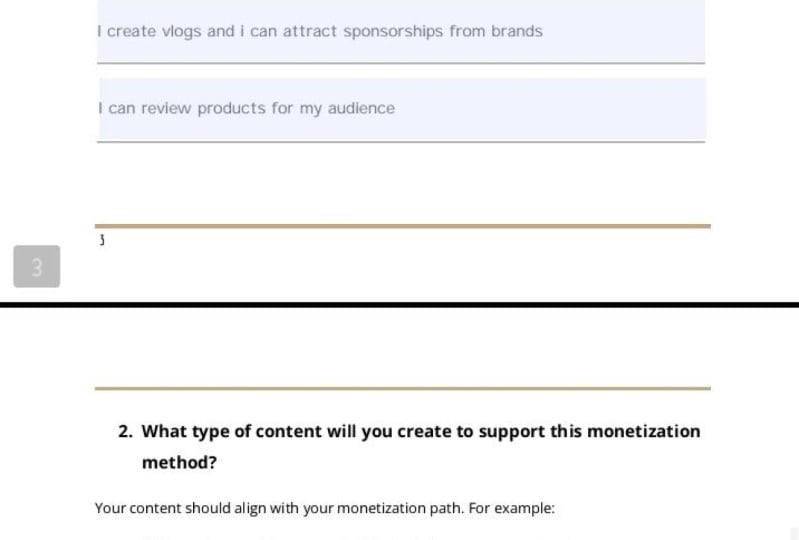
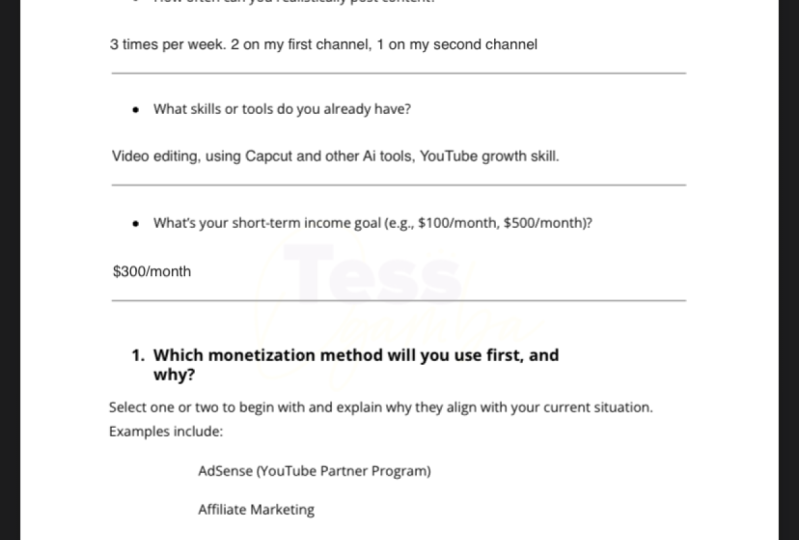
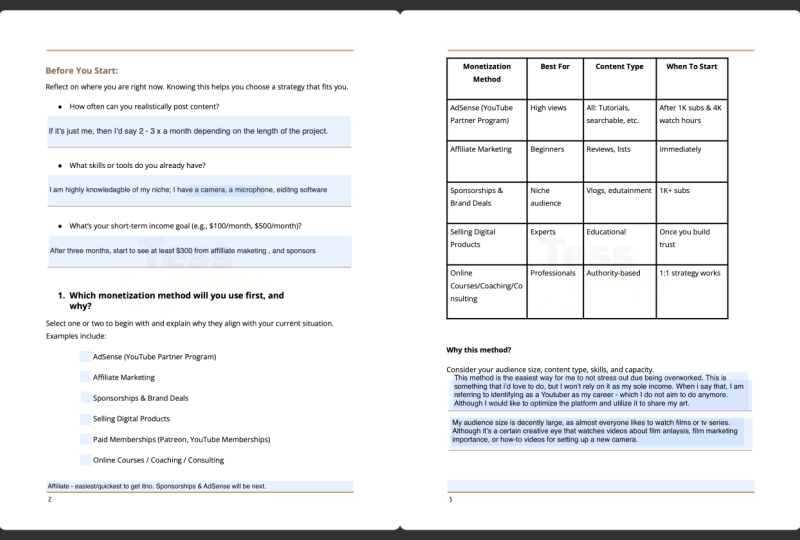
2. Class Project: Way to learn is by doing yes. So for this class project, we'll be creating a basic
YouTube monetization plan. This will be your
personal roadmap or guide to earning
money on YouTube. This project is
important because making money requires strategy. It's not enough to just upload videos and
hope for the best. By planning from the word goal, how you monetize your content, you'll have a clear direction
to start earning faster. For you to complete
this project, first download the YouTube
monetization plan PDF. It's in the projects
and resources section. Then answer the
questions in that PDF. It's just like three questions, but you have to follow along the lessons and answer
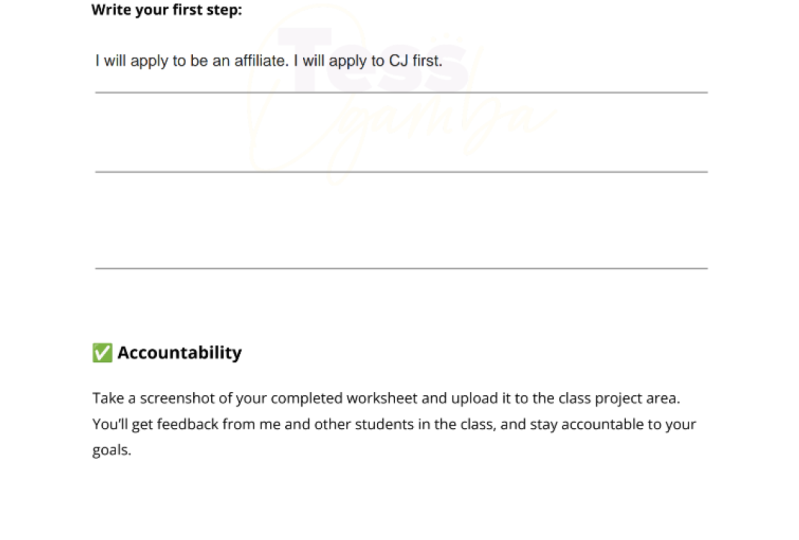
the questions as you go. Once you filled
out the worksheet, it's a one page PDF. Take a screenshot and upload it to the projects and
resources section. Uploading your project
is very important. It helps you stay accountable, and you also get feedback from
me and some of your peers. I have also provided
a checklist of action steps to
help you implement your monetization
plan even faster. Consider it a bonus.
You'll find it in the projects and resources
section as well.
3. The Reality of YouTube Monetization: Started just like you with no subscribers, no
fancy equipment. Even my camera
presence was wanting. But now four years later, YouTube is a big
part of my income, and I make money from
YouTube in several ways, not just add sens. In this video, you
learn the six ways you can make money from YouTube, and you also talk
about which ones are best for beginners. I will show you how much you can actually make
with real numbers, and we'll talk about
the fastest way to get monetized and start. Most beginners think
that the only way to make money on YouTube is to wait on ad sins for YouTube
to start playing ads on your videos,
and then you get paid. But that is why most
beginner creators are stack and have no money because getting
monetized takes time.
4. 6 Ways to Make Money on YouTube: Speak down the six
powerful ways to make money even with
a small channel. Now, the first one is the YouTube partner
program in ad sense. This is the most common,
and in my opinion, it's the slowest method
to make money on YouTube. Now, how this works is
once you get monetized, YouTube starts showing ads
on your videos and you start making a certain amount of money from each ad that
your viewers view. So in short, you earn when
ads play on your video. So if you've ever watched a YouTube video and
suddenly an ad pops up, that creator is monetized and is making money
from YouTube, partner program or
from YouTube ads. Not everybody is eligible to make money from
AdSense on YouTube. For you to qualify,
you will need to have 1,000 subscribers and to have accumulated 4,000 hours of watch time in
the last 12 months. This means if we start today
and work back 12 months, we should have accumulated
4,000 hours of watch time. You can also get monetized
from shots if you have 10 million public shot
views in the last 90 days. Reality is this takes time. Getting 4,000 hours of watch
time is not an easy fit. Getting a 1,000 subscribers
when you just get started as and nobody
on YouTube is not easy. It's not impossible, but it takes time. It needs patience. It needs you to be
very strategic. And most people give
up because of this. But once you hit
those milestones and your YouTube
channel gets monetized, you will be celebrating from here Timbuktu because
first of all, it's a cause for celebration because it means you've put in the work and actually garnered
4,000 hours of watch time, 1,000 subscribers,
or you've actually accumulated 10 million views
on shots in just 90 days. That is beautiful. So
once you get monetized, you start making money, how much you make will depend on the kind of content you're
creating and all that, I will show you my earnings
and we'll talk a bit more about the CPMs and RPMs
later in the video. Keep watching.
Also, make sure you have a notebook to
just, you know, write things that stand out for you so you
don't forget them. Now, takeaway here is
add sense is great. Once you get monetized, you can actually get a
significant amount of money. And if you stay consistent, your income can stay consistent, as well, but it takes time. The second route
to make money on YouTube is through sponsorships. This is where brands pay you, even with a small audience. People think you need 100,000 subscribers or more
or 10,000 subs or 50,000 Sabs to start
getting paid by brands to create content about
their products and services, but
that is not true. Funny thing is, I remember
when I was below 5,000 SABs, I was at about 2000 3,000. I got two brands
who would pay me every month to talk about
a platform they had. The reason they paid me even
when I had less than 5,000 subscribers was because I had sort of a targeted audience. My audience was right
or was a good fit for the product they wanted to
promote for their you see, brands pay you if the
people who watch your video are in line with the kind of customers they
like to target. Let me give you an
example. If you're creating content
about investment, you're teaching people finance, personal finance, and all that, even though you have 500
SABs or 1,000 or 2000 SABs, there's a brand out there
that can actually pay you to create content about a product
or service they have, why? Because they know
you have people who are interested in whatever
they have to sell. If this is a finance brand, they will most definitely consider paying you
to make content about their brand or service or product because you have
a targeted audience, an audience that they
want to tap into. Now, if your
audience is engaged, it doesn't matter how big it is, but you have like
1,000, 2000 people. And when you post a video, even though you get 500
views or 1,000 views, the engagement
people are liking. They are, you know,
commenting, saying, This video is so helpful
or just, you know, engaging with the
content that shows a brand that you have a
highly engaged audience, which is likely to kind
of engage with a product. Service they want to
promote on a channel. So ideally, when it comes
to brand sponsorships, the number of subscribers you have does not really matter. What matters is your audience. And this is in terms of quality of the audience you
have, not how big it is. This is actually the best way for beginners to
start making money. Later in the video, we'll
talk about how to get brands, how to pitch, and all. The sat make money on YouTube, even with a small audience
is affiliate marketing. Affiliate marketing is just selling products that
you don't really own. You're selling a product
like this phone, but you don't own phones. For you, you've
probably partnered with a company
that makes phones, and now you just promote them. And when somebody buys the
phone through your link, you get a commission or a
certain amount of money. Now, this is actually, I feel like the best way for beginners to get started
with making money. At least, that is
how I got started. When I hit 500 subscribers, I immediately joined
Amazon Associates. I joined, you know, CG. I signed up on Impact and joined so many affiliate programs and started putting links in
my video descriptions. And I even joined Junior
Affiliate program if you are in Kenya, Nigeria. I don't know what other
country Jumia is available in, but if you are in
those countries, you can actually join
Jumia Affiliate program. And I started making money started making
5,000 Ka shillings, you know, from Junior in
a week or in one month, earning, even just a
little bit from, you know, all these affiliate programs
I was part of gave me, you know, that motivation
and kept me going. Even when I was not yet
monetized on YouTube via AdSens and I was not making a lot of money
from sponsorships. I heard this, and the
beauty of, you know, affiliate marketing, it has
a low barrier to entry. So it is definitely
perfect for beginners. By the way, to make
more money from affiliate marketing
as a beginner, you have to be smart about it. Try making tutorials about certain products or
services or whatever. Like, if you're using
a certain tool, let's say you are part
of a program that promotes a MAG or a program
that promotes a software, how about you make a tutorial, showing people how to use
that software and then put your affiliate link in
the video desc video might not get many views, but because you have
a targeted audience, a significant number might be interested in that tool
and you make money. And there are so many
affiliate programs out there. I can't think of a brand that doesn't have an affiliate
program nowadays. You can join, To Body
affiliate program. You can join Amazon Associates. You can even sign up on CJ
formerly Commission Junction, and join more
affiliate programs. Like Flex Jobs Affiliate program is on Commission Junction. I am part of that
affiliate program. You can even sign up on Impact. It's an affiliate
network, just like, CJ and join more
affiliate programs. Like TNT is a transcription and they have an
affiliate program, which is kind of I
don't know who's it. I don't know the what
to use on impact. So I am part of that
affiliate program. Now, the fourth way
to make money on YouTube is to sell
digital product. This is a passive
income gold mine, and it doesn't matter how big
or small your channel is. You can actually tap into this. You can sell PDFs, eBooks, templates, guides on
anything, think recipes, think know how to dress well, think how to cook this, think how to
organize your space, how to elevate your brand. Like, you can create PDFs,
guides, notion templates. The number of products
you can create and start selling is unlimited. The beauty of this is as long as you have a
targeted audience, even if you have 500 people, but they're interested in what you have to say, that
is all you need. By the way, even online courses fall under digital products, so you can sell a
course on anything. It just depends on
what you're good at, the kind of knowledge you have, and how you package it. Now, where do you
sell this product? Depends on what you've created. If you've created a course, you can sell it on
Kajabi on teachable, on New Demi on Skillshare. If what you're
selling are guides, PDFs, and all that, you can sell them on Whoop. On Gumroad, on pay heap. There are so many platforms. You can even create your own Shopify store and
sell them there. So as long as your
audience is engaged and you have knowledge to share
or something to sell, it doesn't matter how big
or small the audience is. You can still make
a fifth way to make money on YouTube is through
YouTube Channel memberships. YouTube has a membership feature where people who like your
channel like your content, they can pay you monthly to
be part of your community. So they join as members, and you can maybe create
special content for them, or maybe community posts
specifically for them. They can get access
to YouTube videos like maybe a day or two
days before others. So you can give them parks here and there to just be a
member of your channel, and in return, they
support you by paying a certain amount
of money monthly. This method is powerful
because you get to earn recurging income from
loyal for example, if you look around My
channel right now, you can see a button
that says join. That's because I have turned
on channel memberships. You can join my
Channel as a member. So I have different tiers, and depending on
the tiers you join, you will get certain packs. So there's a tier where you'll get group coaching from me. There's a tier where you
get, member only videos. There's a tier where you get
member only community posts. It just depends on the tier. And by the way, what you give members on your
channel is up to you. The six State Make
money on YouTube is through super
things and Superchats. This is where your
viewers donate or doing live streams
or using super things. If they like a video, for instance, if you
like this video, there's a thanks button, so you can send something
just as a thank you. When you ash on a
live stream and somebody likes what
the creator is saying, they can also do a
super chart just, you know, to just support what they are doing
or something like that. This works best if you
do live streams often or if you have an engaged
community or if you do like educational content and your audience is engaged and
actually ready to support you by saying things and just supporting your
cause and helping you grow your which of these methods is
available to beginners, which is the best for beginners. I know I have mentioned
one or two here, but stay because I'm going
to dive deeper into, which will actually work for you if you're just
getting started.
5. How Much YouTube Really Pays Creators: Much money can you actually
make from YouTube. You're going to tackle
this in stages. One, we talk about the factors that determine how
much you earn. We'll also talk about something
called CPM and also ABM, and I will also show you my
earnings both on YouTube and maybe show you
earnings what I have been paid by sponsors
in the past. What most people don't know
is that we don't all get paid the same amount of
money to create content on YouTube via ad sins. There are several factors that determine how much you
earn from your video. The first one is the
topic you create on some topics or some niches, have higher CPMs, which we talk about and higher HBMs
compared to others. People create content on
different topics on YouTube from logs, entertainment
content, comedies, kids, educational content
like these kind of videos, finance content where somebody
is teaching you how to in others cretonRal estate, others Creton there's just so many
topics you can create on. But the thing is,
not all those topics pay you the same amount of
money when you create a video. Now, some topics are actually worth more on
YouTube than others. In terms of advertisers
are willing to pay more for other
topics than others. Let me give you an example. If you're creating
a video on fin your audience is, people who are interested in
managing money, investing, saving and all that. This means this is a high value audience
because first of all, you cannot be watching videos about investing money
if you don't have money to invest
or you don't have sources that make
you money to invest. So that means finance is a
high value niche on YouTube because advertisers
are willing to pay more to target
that audience. Now, if there's somebody else on the platform who
makes vlog content, you know, how I spend my days, cook with me and all that. According to YouTube
and advertisers, most of the people who watch this type of content
do not actually have disposable income or
they are not targeted. Like, anybody can
watch this content. So it means that creator
has all types of people. So there might be a small
percent of people in that audience who can pay for staff who have
disposable income, and others maybe like 60 or 50% who do not
have disposable income. The advertiser will not pay as much to show their ads
on this person's videos, the logs compared to how
much they'll pay to show their ads or their ads to get shown on a finance
creator's video. So you see what you create
about dictates how much you earn because the
content you create attracts a certain
type of audience, and that audience can either
be high quality audience to the advertiser or an audience that does not have
disposable income. See, advertisement is all about, I am promoting something, a product or service, and the end goal is, I
want you to buy. So if your audience is more
likely to buy something, you make more money when
ads play on your video. If your audience is
less likely to buy something because maybe most of them are struggling financially. They are students, they don't
have disposable income, you will make a small amount of money compared to
the other creator. Now, some niches that have
high CPMs are finance business and tech. And some of the niches with low CPMs are, you know, entertainment,
content, and logs. So topic matters, your
niche matters, too, where your audience is based or where the people
who are watching your videos are best plays a big role in how
much you get paid. Now, you see, we live
in different countries, and every country is
different economic. You have viewers from,
let's say, the US, the UK, the rest of Europe, you know, high
economic countries, you're more likely
to earn more from ads than somebody
who's being watched from low economic
countries like Kenya and other African
countries which are considered low economic areas. So where people are
watching you from also dictates how much money you
make from YouTube ad sense. So if you want to make
more, you target people, you know, in those countries, the high economic countries. Now, the video length and
watch time of your video also matters in that if you have a
video that is 2 hours long, that means you can put
more ads in that video. That means YouTube
can show more ads to people because if the
video is 2 hours long, you can put ads like
after every 10 minutes. That would be about
what? 12 ads. But if you create short videos, like 5 minutes long, 10 minutes long, you
can't really put as many ads in those videos, which means the person who's
creating longer videos gets paid more because more ads are shown on their
video compared to you, who's making short videos because you only
get to show a few. Now, also the type of
content you create, apart from the topic, I feel
like the type of content, if it's a tutorial or
educational content, I feel like you get a higher CPM compared to maybe a reaction
video, for instance. So there are so many
factors that play a role in how much
a creator makes, and that is why you will hear
other people complaining, Oh, my God, I've been
creating content. I have so many
views, but when they show their earnings,
they're very low. And another person who has
maybe a smaller channel and is getting half the
views this person is getting is making
more money than this so you will see
people creating logs, and they have so many views. Like Dormant, they upload a log. It has 100,000 views. But if you look at their
earnings, they are very low. In fact, these people
are still employed. They're not doing content full
time because they are not getting paid as much as somebody who's not
getting as many views, but is in a high valush
gets viewed by people from high economic areas
and creates long videos. Do you know that if you
didn't, let me know. Now, we are going to
look at how much money I have earned from
certain videos, so you can have an idea
of how much I make as an educational
content creator who creates content on making
money online and all that. The numbers I'll show
you today might be different from somebody who's
creating content that is, you know, logs or entertainment. So take everything you
see with a pinch of salt. Now, we look at our video
with over 100,000 views. We look at a video
with 500,000 views, and we also look at my
video with 1 million views. And then we're going to look
at how much I earn from maybe a shot with the most
views. So let's dive in.
6. Understanding CPM & RPM on YouTube: Before I show you how much I have earned from several videos, let's talk about CPM and HPM. What is it? CPM
is commonly used. ARPM is commonly used in
the YouTube corridors, and CPM stands for
cost per meal. So this is how much
the advertiser pays YouTube to show an
ad on your video. On YouTube, you don't
get paid per views. Just because 1,000 people have watched your video does not mean no you'll get paid an
equivalent of 1,000 views. You get paid an equivalent
of 1,000 ad views. So it's not the number of
people who watch your video, but the number of
people who watch the ad that is put
on your video. Now, for every 1,000 ad views, the advertiser will pay YouTube eight pounds for this video to show
ads on this video, and I get paid 55% of that. Now, YouTube keeps 45%
of the 8.12 pounds, and I get 55%, which is now referred
to as the ASPM, the revenue per 1,000 ad views. Also revenue per meal. I
hope you're following. As you can see, I
have earned a total of 58 pounds from this video. So far, that is equivalent
to 72 USD. It's not great. You see this video
was posted recently, and the thing about CPM and HPM, what I have noticed is that
it increases or reduces, depending on how people are
engaging with the video. So for this HPM to
increase over time, people will need to
engage with the video. So this HPM might
increase over time, or the CPM might
increase over time, but that will depend on how people are engaging
with the video. People are watching
the video for long and they are leaving comments
and liking and all that, that tells YouTube that
this is a good video. So the HPM increases. But if the video's engagement
reduces with time, then the HPM also reduces. So a video might start
with a high RPM, like five pounds for me, and then it starts
reducing because maybe the more people
view that video, the less they engage with it. And now I don't
know, somehow its negative sends negative
signals to YouTube. But I have noticed that the CPM and HPM does
not remain constant. Remember when I said that
CPM vary depending on niche. Now, this is what I
was talking about. You'll find that for
somebody who's creating logs or an
entertainment podcast, their CPM is low, like maybe one pound, two pounds, three pounds, which means their
RPM will be even lower because what is
55% of two pounds. So if you see a high CPM, it means your niche is more valuable than, you
know, other niches. Now, let's jump back to showing you how much I have earned
from different videos.
7. My Real YouTube Earnings Breakdown: From 20K to 1M Views: This video was posted
1.5 weeks ago. It has 19,500 views, and so far, I have earned
58 pounds from it. I feel like people are not
really engaging with the ads, so please don't skip ads. But also, I can't
really tell how this video will end
up performing because a video can actually pick up weeks or months
after it was posted. So the RPA might end up, increasing and the views increasing and how
much I make from this video might
increase or maybe it will stagnate and
just drop and die. I don't really know, but so far, this is how much I
have earned from this sample number two, this is a video I created a
few months ago in November, November 5, as you can see, and it has 180,000 views so far, and I have earned 812
pounds from it so far. In USD, this is about 1,000 USD. So it's not really
bad, but it's not great because it was
posted in November. It's been months.
So but this video, it started picking
up after some time. CPM for this video
is 8.90 pounds. It's slightly higher
than the previous video, and the HBM is quite high. It's 4.57 pounds. If we convert this HPM to USD, that will be six USD. So literally, I am getting paid about six USD for
every 1,000 AD views, which is really good, honestly. Now, that is a video
with 180,000 views. Let's look at a video
with over 500,000 view. This video is very special
to me because it's the video that actually
changed my life. It went viral when
I uploaded it, and the video after
that went even more viral and yeah,
it changed my life. So as you can see, it has
a total of 590,000 views, and I have earned a total of
2,855 pounds from it so far. It was posted in
November 12, 2021, so it's been on this channel for 2,855 pounds is
equivalent to $3,552. Now, that is how much I have
earned from this video. So far, let's look at the RBM. As you can see, it has
a CPM of 12.15 pounds. It's quite high. When I
first uploaded this video, the CPM was not this high. I know because I actually kind
of keep checking my videos time and the ch PM for
this video is 4.84 pounds. It's interesting because
the CPM is quite high, which means YouTube
is getting paid 12 pounds to show for
every 1,000 ad views, but I only get 4.84 pounds. This is probably because of how people are engaging
with the video. Now, the video might
be in a high valonish, but if the engagement
is not as high, then you won't really make much. Engagement is commenting how long they are viewing the
video liking and all that. Now let's look at my video
with 1.2 million views and see how much I have earned from
this video was a surprise. When I uploaded
it, I didn't even think it would
gain any traction. It was sort of a different video from what I was creating then. And then it started very low. As you can see this graph, it started really down like, it wasn't performing at all. And then it just picked up and turned out to be my
most viewed video. As of the day of recording, it has 1.3 million views, and it has made me 3,995 pounds since the
day it was uploaded. So I have converted that and
it is equivalent to $4,972. Now let's look at
the CPM and HBM. The CPM for this is quite
low, as you can see. It has a CPM of 5.54 pounds. It is quite low compared
to the other, two, three videos that
we have looked at the HBM is even lower. The HBM is 3.27 pounds. I don't really know why the video has a very
low CPM and HBM. Maybe it's the
topic of the video. Maybe Business Ideas does
not have a high CPM, but either way, it did make me a significant
amount of money. The beauty of this video is
that keeps getting views. I uploaded this on
September 8, 2022, and since then, it keeps getting views,
keeps getting views. And it's, I think one
of those videos that has really brought
so many subscribers. Like, look at this.
I have gained 28,000 subscribers
from this one video. So although it does not
make me a lot of money, it has brought in huge number
of people to my channel, and for that, I will
always be grateful. So I have shown you
how much I have earned from a video with
about 20,000 views, how much I have
earned from a video with almost 600,000 views. That is 590,000 views, and how much I have earned from my video with 1.3 million views. Now, let's look at how much my most viewed shot
actually made me. Now, this is my
most viewed shot. It has 31,000 views so far. It was uploaded on the
third of Feb, 2023. So literally a year ago, and it has earned me 0.91. You can see that is, oh, my God, diabolically low. And the RPM for the
shot is 0.03 pounds. There's even no need
of converting this. You can tell that
it's quite low. So clearly, shots don't make as much money as
long form video. So if you really want
to earn from YouTube, then it goes without saying that long form is the way to go. Now, you'll find that
some of those videos that I've shown you are
sponsored videos. Like the one with 1.3 million views was
a sponsored video, and I had been paid about
I think the sponsor paid me about 2000 USD
to make that video. I feel like sponsorships make you more money
than just ad cents. Because imagine making $2,000 to just mention a
brand in your video, and that video ends up
making you $4,000 from ads, but you earned 2000
from it already. So that means in total, you earned $6,000
from that video. So I hope from what you're seeing so far is
that making money on YouTube is not just
about going viral or creating a video with many views is really
about strategy. It's picking the right niche. It's making sure the
video is engaging. It's making a long
video and all that. So there are many factors that play when it comes to
how much you earn, including the audience,
where they are located, and how long they are watching the video
for and all that.
8. Make Money Before You Get Monetized: Most people think that
they need to wait to get monetized on YouTube
to start earning, but you don't have to. You can start making
money from the first day, and you need to actually position yourself to start
making money from day one. I remember when I
created my channel, the first thing I did when
I hit 500 subs is I started signing up on affiliate
marketing or affiliate networks. I started earning from affiliate
networks from my second, third month of starting to create content on
YouTube. That says a. Mentioned that affiliate
marketing is one of the easiest way or rather the best way for beginners
to start making money, even with a small channel. So if you're looking
to start earning for YouTube, start
Affiliate Marketing. I have mentioned the
platforms you can sign up on, but feel free to Google the best affiliate programs
and then look at them, read about them, join if you can, join as
many as you can, but stick to the ones
or the products or services that are easy for
you to kind of promote. If you're talking
about the best ways for beginners to make money, affiliate marketing
is one of them. To launch digital products,
start from day one. If you watched my
previous video, we talked about picking a niche and setting your channel up
for success from day one. Now, if you've
watched that video, you already know the topic
you're going to create about. Now, start thinking
about what products can I create that are in
line with this topic. Perform Google searches to
see what questions people ask that are in line with that topic and start
creating products. Products that solve
problems that people who are interested in that
topic are facing. So create guides, step by step
guides, create templates. If you are in the finance
niche, create templates, budgeting templates, you
know, expense trackers, ETC, create e books, tell
stories, guide people, start creating products from day one, start creating courses. If your niche is education, you are in a very good
position to start creating. So we said affiliate marketing is best for any
beginner creator. Long as you're creating content, there's something you can
promote to your audience. Now, for this selling
digital product, especially if you want to create courses and ebooks and guides, it's best for people who are creating
education or content, but don't let that stop you. If you can think of
a product to create, even though you are
creating vlog content, entertainment, or, you know, anything outside education, then do go ahead
and create that. So create products launch them. Three, position your channel for sponsorships from day one. When you're starting your
channel and you're thinking about your first,
ten, 20 videos, think about the kind of brands that can partner you
to create those videos. The videos you create, they have to be Like, if you want to
create tech content, start doing reviewing laptop, start reviewing tech products. That is how brands
see you they like. This person reviews products. Let us pay him to
review this product. So start positioning
your channel like that. Start thinking about
the brands that can actually sponsor
you to work with create relevant
content. Number one, make sure you have an email that businesses can
reach you through. Have that email in
your video description and put it in the profile
section of a YouTube channel. Like I showed you in
the previous video when you were setting up
your YouTube channel, watch creators who are creating the same
content as you are, especially pay attention to their sponsored content and the brands that are
sponsoring them. Those are the brands
that will actually or have the potential
to sponsor you as well. So start connecting with such
brands on LinkedIMTwiter. Ing their stuff, you
know, commenting. You can even tag them
if you're using maybe a product that belongs to
them or their service, tag them, let them
know you exist. And then feel free to
send these brands emails. Let me tell you I personally sent Skillshare an
email when, you know, I realized that they're sponsoring creators
here and there, and I was like, I also want
to work with Skillshare, too. I knew that my audience
aligns with their, you know, brand message or whatever and
their products. So actually sent them an
email asking them, you know, to work together. So don't shy away from
sending brands emails. Introduce yourself, talk
about your channel, your audience, what
your audience likes, talk about the kind of
content you create and what value you can
add to the company, and what value
your audience will get from partnizing
with the brand.
9. Content That Makes the Most Money on YouTube: We've talked about some niches having higher CPMs than others. We've talked about certain types of content like tutorials, having higher set
CPMs than others. So which are the best videos to create to maximize
earnings on YouTube? Now, the first type
of content that makes most money on YouTube is
evergreen how to videos. These ones have
high search demand, which means consistent views, which means you keep
making money over time. It's content that
people will always be searching I've given examples of how to make money online, how to start a YouTube
channel, how to do doo doo. Who will always be searching for how to do things
and not forgetting advertisers love
informative content because if you're making informative or
educational content, it's easy for them
to kind of promote their products and services as long as they are relevant
to that content. Evergreen content also
build your authority. Now, if you're teaching
people how to do something, how to do this, how to do that. It means you are good at that you are an
authority in that. It gives some sort
of credibility, and this attracts brands. So how to videos will actually attract brand
deals for your channel. Like that video with
1.3 million views. It was a sponsored content. It has a lot of views. It keeps getting
views over time. It was posted like
two, three years ago, but it's still one of
my most watched videos every month when I check
my starts on YouTube. Number two, niche tutorials
and product reviews. No, this is an affiliate
marketing gold mine. If you're making
niche tutorials, like tutorials about
how to use a software, how to do something, how
to use something specific, or how to navigate something, that means you can always
plug that product, put your affiliate link
in the video description, and people will buy that thing. If it's a software, a
product or wherever, a service, long as you're making a tutorial
about something, if I make a tutorial
on how to edit your first video as a beginner YouTuber and
I'm using cap card, I can put my Capcard
affiliate link in the video description. Once you watch that video, there's a high likelihood
that you'd want to use Capcard and
follow my process, and all you have to do is go to my video description,
click Capcard. And if you upgrade,
I make money. If you're reviewing
a product camera, a phone, even a microphone. People who are
watching such videos, they are ready to
buy that thing. They are thinking about it. They might buy it today, tomorrow or next month, and you plugging or putting your link somewhere in
the video description puts you at a very good position of earning money from
affiliate sales. And the thing about
this type of content, the Niche tutorials
and product reviews, they have high CPMs. Why? Every advertiser would want to show their product
or service or brand in this video because
anybody who's watching A tutor on how to use a specific
software tool or how to, you know, a review of
a certain product is probably thinking about
buying like I just mentioned. Hence the high CPM. Now, let's look at
the best niches for affiliate earnings Tech. So if you can create
product reviews around Tech or
tutorials around Tech, that is cameras, laptop, software, two,
business and finance. So investment apps, courses, ETC, three, health and fitness. So supplements, gear data
are great tutorials, product views
around these areas, and you'll be surprised how
high your CPM will be and how you will convert most
views to affiliate sales, not most, but some views
to affiliate sales. Content type number three that makes most money on YouTube, listicaals and
comparison videos. You see, listicals are
kind of easy to produce. They're great to watch.
Like, they're fun to watch and great
for monetization. Videos like top five ways
to make money on YouTube, five tools that will make your content creation
journey easier. Five tools you need to become
an online entrepreneur. Side hassles that
pay over $100 a day. Why do you think a
lot of people create content aboutsidehles, listing business ideas, edited. It's because they are
not only easy to create, but they are great for monetization and they are
easy to watch for the viewer. Actually, if you
want to get your 4,000 watch hours first, make such videos because normally they have
high watch time. People want to see
all the five things you're listing in that video, and they are great for
brand sponsorships. In my experience, I think
brands love listing of videos, comparison videos and all and, you know, they are
good for engagement. People would comment
probably like, No, number one is not that or I've tried number
three or da da da da. That is good for engagement. Shows YouTube that,
this is actually a good feeda because people
are engaging with it. Now, the fourth type of
content that will make you most money on YouTube is
personal case study videos, like how I earned my first
$1,000 as a student. First YouTube paycheck,
how much I earned, how I grew to 100,000
subscribers in six months. Like, these videos where you're kind of sharing a
transformation, something you have achieved. They get a lot of this because people want to see
what you achieved, how you did it, and all that. And they engage a lot of
these kind of videos, congratulating you, you know, manifesting, they
engage, they like, they comment a lot on
the kind of videos. And these videos are actually great one for
affiliate marketing. You can plug products you use or services you used to achieve
whatever you've achieved. And they also attract brand
deals because a brand would love to be featured
in that video where you're talking about a
transformation you gained, maybe how you lost
weight in five months and there's a brand
something that you used, and a brand will
actually be willing to sponsor you to mention
them in that video.
10. Your Step-by-Step YouTube Monetization Plan: That you know what videos
make the most money, let's talk about how to actually grow your channel and
get monetized first. Let me help you
create a roadmap, kind of a guide or something you can follow to just
get there faster. Before I dive into
this, there are three reasons why
most beginners fail. One, they wait on add sins and they wait
and wait and wait. Two, they post randomly
without thinking about the type of content
they're creating and why you have
to be strategic. I made a whole video about
this and even showed you my three part formula of
coming up with a good niche. So make sure you
watch that video. Number three, they give quickly or too early. Now, I want to
follow this kind of roadmap for you to not do
any of these three things, and hopefully you will hit your first 1,000 subscribers
and gain your 4,000 hours of watch time or get your 10 million public
short fills in no time and you get monetized and
start making money not only from adsens but from other
ways that I've mentioned. Even before you hit
these milestones, make sure you start working on making money from
those other methods. Now, for your first 30
days of content creation, lay the foundation for success. Create strategic videos. Your first 530
days is one month. So create your first
four or five videos. They need to be strategic,
well thought videos. Think about what people
are interested in. Look at what they are
searching for on Google, on YouTube, on Tubady. I showed you how to do
this in my previous video. So just make sure
you're creating videos strategically for the
first 30 days, to master thumbnails and titles. We talked about making sure
your thumbnails are clean, simple, they stand out, Your titles are short.
They're not too long. They spark curiosity,
and they are clickable. Use the first 30
days to actually learn all you can about
creating the best thumbnails, the best titles, the
most clickable ones, and just mastering and creating
sort of a theme for your as you're creating this content
in your first stay days, focus on high demand topics, content that people
really want to watch. Remember, I have talked
about the content that makes most money and content
that gets views over time. So think about how to
videos, listicals, videos where you
talk about having achieved something and
how you achieved it. Prioritize those videos. On the second and third
month on YouTube, start positioning
yourself to make money. Position yourself for brands, sponsorships, sign up
on affiliate programs. Join Commission Junction
or CJ Joinimpact. Google, affiliate programs
for beginners, join them. Two, start putting your links to affiliate products in
the video description. Three, start looking for keywords that kind of
summarize the kind of content you create
on your channel and optimize not only your
video description, but also your
channel in general. You can create a
product in this period, even just one short product, maybe a guide, an eBook, a PDF, do that. A short court. This is the
time you do that. Create it. It doesn't have to be perfect. It just needs to
get you started. On the fourth month, start reaching out
to brands that you think are in line with
the content you create. By the time you're hitting
your fourth month and you've been creating consistently
for the past three months, let's say you are
creating four videos a that means by the time
you're in your fourth month, you have about 12
videos already. It's not a huge number. I would advise you
to create like 30 videos to just
get that momentum, but 12 is a great start. Start reaching out
to sponsors brands. Most of them will
say no, because you probably don't
have as many views, but be as targeted as possible. Look at brands that
are in line with the kind of audience that
watches your content. This is where you start
now reaching out, engaging with people
who might actually sponsor your content
today or in the future. If you created a product during the first three months, this is when you launch it, market it aggressively, tell
your audience about it. Every time you
create a video, make sure you talk about
this product. Make sure it is accessible. It is in every video description of every video you've
created so far, and you're talking about it
as many times as possible. Now start driving sales for this product as you
fine tune your message, both on your videos and also on how you're reaching
out to brands. Now, once you've done
this, this is within the first four months of your content creation
journey on YouTube. Beyond that, your
goal is to create more income streams. If you got one
brand sponsorship, ask yourself, how can I get two this month instead of one? If your first
product is selling, you've probably sold ten copies of whatever
you've created, start creating a second one. Start asking yourself. This
was sold to ten people. How can I sell it to 50 people? What do I need to do better? Do I need to promote my
product more aggressively? Do I need to have an email
list and send my links? Like, now here, beyond
the four months, you're thinking about creating multiple income streams and creating that
consistent income for. Double down on sponsorships, create more products
and start thinking about the many ways you can
make money on the channel, beyond ads, beyond products. You can even start
offering one to one if you are in the
educational space. If you already have access to memberships at this point,
launch memberships. What I'm trying to drive at here is the more income
streams you have, the less you depend on adsens. Addsens is great, but even
when you get monetized, you will quickly learn
that the amount of money you make from AdSens
in a month fluctuates. And for you to make a
consistent amount of money, you will realize
that you need to keep creating consistent. Times that can get
that can be tiresome. Sometimes you need
to take a break while still making money. If this is important to you, you need to start creating more evergreen content and tapping into these other
ways to make money. Now, if you follow this plan, you are more likely to not
only succeed on YouTube, but to create consistent
income for you. If you are doing
YouTube part time, you'll be able to
now go into it full time and even create
more ways to make money. I hope this tutorial
has been useful. I hope you now know how
to make money beyond ads. You know that even though
you're not monetized, you can still make
money on YouTube. You just need to
be very strategic and be intentional about every
11. Final Thoughts & Next Steps: Made it. By now, you've learned how YouTube
monetization works, explored different ways to earn and even created your
own monetization plan. This means you are no longer just thinking about
making money on YouTube. You are actually taking
steps towards it. Now, the biggest thing I want you to take
away from this class is you don't need
a huge audience to make money on YouTube. You just need the right
strategy, the right mindset, and the will and
now it's your turn. Upload your project. I'd love to see your
monetization plan and even give you feedback that
will help you refine it. Also, if you have any
questions or any comments, please leave them in
the discussion section. I'm here to support you and
I'd love to engage with you. In fact, the discussion
section is where you also engage with other
people in the class. So feel free to drop your thoughts and
comments and questions. Did you find this class useful? Did it meet your expectations? Kindly leave a
review of the class? I will really appreciate it. Reviewing the class helps
other students find it, and it helps me improve
my future classes. And if you want to learn
even more from me, follow me here on
Skillshare so to not miss any of my
upcoming classes. And I have many upcoming
classes you can also check out my other Skillshare classes where I teach making
money online, how to start and grow
a YouTube channel, starting and growing
an online business and even creating or building
passive income streams. The thing about my classes
is they are not just theory. They are experiences. These are my experiences. I share what I have
learned throughout my ten years or nine years
of making money online. Thank you so much for
taking this class. I can't wait to see you succeed. Now, remember to hit
that Flow button, I will see you in my next class.
 Tess Ogamba, Creator & Content Strategist