Transcripts
2. The Role of Descriptions: Let's kick off our
exploration of effective descriptive
writing with a bit of a definition and discussion about the role of description in the broader
context of your story. And a few key
principles that I think are essential to keep in mind when you're approaching
your descriptive writing in order to ensure that those descriptions are
serving their function and have as much impact as possible. At first glance, this might seem like a bit of a
strange place to start because it doesn't
necessarily seem like descriptions
need a definition. Descriptions or the part
of your writing where you tell the reader what
something looks like, right? Move on. It's actually a little
more complex than that. The primary function
of descriptions in good storytelling is
to allow the reader to vicariously engage with the story and begin to
inhabit it imaginatively. There's a really
powerful process that science has
actually demonstrated. When someone really fully
engages with a story, their brain begins to process that story as though it
was happening to them. It becomes almost real. And I think most of
us have experienced that when you find a story that you
love and you begin really reading in
it pulls you in. You reach a point
where you're not actually remembering that
you're reading a story, you're just seeing moments
and Scenes play out. Your hearing characters talk and your brain begins to make that real in a way that is incredibly powerful and really engaging. And that's the kind of
the end state that we're shooting for in our
own storytelling. Descriptions are one of
the primary ways that, that begins to happen because without
effective descriptions, the reader is left at or remove from the
scene and the story. They can't engage with what it looks like or feels
like or sounds like, because there's no
sensory orientation. There's no way for
them to begin to fully invest themselves into the
scene that is unfolding. So when we get
descriptions right, it's a powerful way
to pull our readers in and sweep them along. The wonderful story
that we are unfolding. But when we get
descriptions wrong, It's one of the fastest ways to jar the reader's back out of that state and remind them that they're not actually
experiencing a story. They're just reading a book or they're reading something
that somebody wrote. And if we re-introduced
that level of friction and frustration
or disorientation, that brings us to
our first principle of effective
descriptive writing, which is to always remember
that your descriptions are less about the scene
you're trying to show, and much more about the experience that you're trying to create
for your reader. Keeping that reader focused perspective will really
help you to make better intentional decisions
as you're choosing what to show and what to not show in your descriptive
writing as you go along. Essentially,
descriptions are more about the feelings that they evoke than about the
specific appearance of things that you're
trying to convey. Yes, of course, we're partly using descriptions
to let our readers know what things look like
and what is going on in the scene and what is around
the characters and so on. But the second
important principle of good descriptive
writing is to always remember that descriptive
impact comes through feelings. The emotional state that the description begins to
create for your reader, or the tone or the
atmosphere that is established for
the characters. And therefore again,
for your reader. There's really two
primary ways that you can engage feeling
in your description. The first and probably
most important is to think about your
readers feelings. Essentially your
readers perspective or opinions or biases or memories or whatever is being evoked for them through the
description of your scene. But that presents a
challenge because you don't just have one reader. You'll have many, many, many readers who all come
from different backgrounds, who have different
life experiences, who have different
personalities, who have different
memories to draw on. So one of the big questions of effective
descriptive writing is, how do you ensure that as
many readers as possible are having the optimal
emotional experience of your descriptions. When you can't be sure where all of those readers are
coming from individually. That's one of the
things we're going to explore in more depth
throughout this class. But the short answer is, you, as the author, need to make intentional
choices about what you show, but also what you don't show. That you allow as much
room as possible for your reader to collaborate with you in their
own imagination. Fill in and populate
your scene with their own choices that their
own brains subconsciously will select based on the cues that you give so
that the scene that they're envisioning becomes the most impactful seen for them. One of the great secrets of great descriptive
writing is to create a scene that handles the key things that need to
be consistent for everyone. But that actually
allows the nuances of that seem to be different
for different readers because you're trusting
your readers and interacting with them
collaboratively rather than being sort of authoritarian and your
description and trying so hard to describe everything about your scene exactly
the way you see it, that it doesn't leave
room for your readers to participate in that
imaginative process and bring some of their own
deepest preferences and feelings and memories and
emotional impact to the scene. We'll get into that a
lot more in detail, but it's one of the best and most effective ways to create high-impact scenes by
always remembering to allow room for your reader to participate in the
descriptive process. But the second place
that you can begin to engage with feeling when it comes to creating
impactful scenes is also through your
character's feeling. Remember that whenever
you're describing something, more often than not, unless you're in third
person omniscient. But in most cases, you are describing something
through the eyes or through the perspective of a
particular character who is seeing or
experiencing that place. And that doesn't,
shouldn't just be a generic or blend description
because characters like people have opinions
and reactions and preferences that
can be drawn on and engaged in through
their responses to the things that you are
describing in the scene. Essentially, descriptions offer wonderful opportunities for
further characterization. You can take two very
different characters, placed them in the same room. If you're writing it well, their descriptions of that
room will be different. And that difference would
give you opportunities to show some different
elements of the scene, but also to show
different elements of those characters
and how they are, the way they are or
what they are like. As a quick example, let's say you were describing
the lobby of a bank. Okay? You could just go down the
list and say, you know, there's marble columns and large signs and tellers and
all the different things. Okay, That's what's there. But if you're describing
the lobby of a bank through the perspective of a rich widow. She might have different
opinions about the bank. She might have memories, she might have hurt her
class and orientation. Her life experience will give her different things
that she'll pick up on and different opinions
or reactions that she will have to those
things. Then e.g. if you were describing it
through the perspective of a criminal who had
just walked in and was about to try
to rob the bank, they would be noticing very
different things and we'll be having very different feelings
about what they're seeing. The really cool
thing about that is that even if those aren't
your readers feelings, your readers will engage
empathetically with the characters in their
process of having feelings.
3. Where and How Much?: So now let's talk about one of the biggest and most
ongoing questions that any author has to deal with when they're working on
descriptive writing, which is when to describe
and how much to describe. I guess that's technically
two questions, but they kind of go together. How much description is the right amount of description
and where should it happen in your scenes in order to be effective
without being distracting? Unfortunately, the answer
is a little bit of a ball of it depends. There's no perfect code that
will always, always apply, but we can break it
down and take a look at some of the different
elements in response to answering that
question that will orient you to some
key principles which you can apply
to your writing to make that decision
scene by scene. The first two big variables when it comes to answering
that question of how much description and when are your genre and your style? Different genres tend to
have different weightings, I guess you could say in, when it comes to description, epic fantasy, readers
are fine with and expect a certain amount of chunky description of
settings and locations. That's part of the fun. Whereas literary fiction
or romance might not necessarily ten so
heavily towards description. So knowing the genre
that you're writing in, ideally as a reader
first is really, really important
because that's going to help sort of guide
you by instinct on how much description is appropriate and where you
might expect it to have it. But style also plays a factor to remember that
you as an author, get to make your own
stylistic choices. And even within genres, there are different
stylistic approaches to the way that your writing. More description is a
certain kind of style. Less or sparse description
is a certain kind of style. Neither is correct. There is no right
answer to that, but it is important to
be intentional about it and then also to be
consistent about it. Once you have, you know, what genre you're writing in and you've made some decisions about the style of that
particular piece, novel, short story,
whatever it is, it's important to be consistent
with that throughout. So don't start and have one section that's
incredibly verbose. And you have these long
laconic descriptions and then you change
it up later because that starts to make it
look like you don't know what you're doing or
you're not doing it intentionally and you're just
kind of bouncing around, which in some ways you probably are if that's
what you're doing. So there's no correct answer to how much description to use. But it is important to
be intentional about your choices once you begin establishing that
for that particular piece. But even within those
very broad guidelines of well-know your genre
and know your style. There is a universal
principle to help answer this question
that applies in all cases. That's what I like to call the description Goldilocks zone. To borrow a term from science, which is to recognize
that description is kind of exist on a spectrum. And it's important to never
be at either extreme from either too little or
too much description. You want to aim for the sweet spot of just
the right amount. So let's break that
down a little bit. I think especially when you're starting out as a
writer and you're still getting your legs under
you and getting oriented, you're prone to either describe too little
or describe too much. I certainly did that a lot. I would either
underwrite or overwrite. And in both cases, I think the reason
that happens is primarily a lack of confidence. We underwrite because
we're worried that we are using too
much description. And so we tried to pull back and not over described
because we maybe have read in a book or heard in a class that over describing
his bad, which is true. So then we're worried that, oh, I don't want to
slow things down. I don't want to linger too long. I don't want to bore the
reader because people say long descriptions
are boring, so I just won't, I'll be careful not
to describe too much, but under describing leads to one of the biggest problems
in descriptive writing, which is what I call the
white room syndrome, where your reader is just
kind of in this blank white, generically
defined space. Maybe they know
they're in our room, but there's nothing
evocative or engaging for them to participate
in imaginatively. They just know they're
in our room with maybe a few very
generic features, but nothing specifically
interesting enough in the scene. And white rooms are
bad because they are both at disorienting
for the reader because they don't really
know what to pay attention to because there's not enough
there for them to go on. There are also really boring and they lead to characters
maybe interacting with each other or
having dialogue in these void spaces that
are just not interesting and can be avoided
by choosing to introduce the right amount
of descriptive writing. On the other hand,
over describing usually results from a lack
of confidence as well. Where we, as the authors, are worried that
our readers won't actually understand the scene
the way we want them to. So we spend so much energy
and words trying to show them exactly what we are seeing to make sure that they
see the same thing. But that shouldn't be the goal of your
descriptive writing. The end goal of your descriptions
shouldn't be to force your readers to see something the way you want them to see it. Again, going back to what we
said in the previous video, the goal of your
descriptive writing should be to focus on the emotional experience
of your reader and give them the optimal impacts, like the highest level
impact possible. Which doesn't come through
forcing them to see the scene the way you
want them to exactly. Because does it really
matter if they see all of those details exactly the way
you have them in your head? Or is it more important
that they see the scene in the way that is most interesting
and engaging to them. I would argue it's the latter. It's about your reader's
experience of the scene, not your breakdown of exactly what color
their drapes are and how many pots are on the
mental peace and all of those other particular
details which you see. But don't really matter as far as the reader's
engagement with the scene. That kind of over description very much can be
boring and jarring. And it pulls your reader out of the scene because you spend, your spending too much
time running them down a checklist of things
you want them to know about. Which kind of in a way
like an info dump. And it breaks the
flow of the story, which is really what we want our readers to be
engaging is what is happening right now in the scene that I'm trying
to describe to you, not just the painting around it. So you don't want to
under describe to create this kind of blank
space, white room syndrome. You also don't want
to overdo scribe striking that balance
means that you need to develop an intuition for that Goldilocks zone of the
right amount of description. In my experience, the
best way to achieve that, focusing on making some
intentional descriptive choices around what I call
anchor points, which are the specific
sensory details that you select to create a triangulation where you've described
enough vivid points of reference for your readers
to build the scene, but not so many that there's
no room left for them. Remember, in the previous video, I talked about engaging
with your readers and a little bit more of a
collaborative dynamic. Using anchor points is one
of the best ways to do this. You provide the
critical things that you as the author know
are important for them. Not again, not just
descriptively, but emotionally and
experientially to create the atmosphere that you are inviting your readers
to step into. But then you also leave blank spaces that you
are not describing. And what will happen
every single time it's amazing to watch is that
the readers own mind. We'll take the concreteness
of the details you have provided and they'll paint in the rest from their
own subconscious. And the details that their
subconscious provides will therefore be the
most interesting, the most meaningful, the most impactful details for
that particular reader. That's how you create descriptive scenes with
incredible impact, not just for one person, but for everyone who reads
because Everybody has the orientation that you need them to have within the scene. The same points of reference through the anchor
points you've selected, but also the opportunity
to fill in the gaps with the pieces that they will resonate with and respond
to the most strongly. It's an incredibly
powerful technique. And once you master it, you're descriptive writing
will go to a whole new level. So in this next video, let's break down those anchor
points in more detail.
5. Types of Descriptions: So now let's take a look at
the three primary types of descriptions which
you will most often be engaging in as you're
writing your stories. And those are indoor scenes, outdoor scenes, and
character descriptions. Now obviously there are always
exceptions to every rule. There are gonna be some types of descriptions that
don't fit neatly into one of these
three categories. But broadly speaking,
more often than not, you're gonna be doing one of those three types
of descriptions. So let's take a look at each
one in a bit more detail. Starting off with indoor scenes. Remember that whenever
you are describing a place that was
built like indoor, like inside a building, somebody built it and they
built it on purpose to achieve a certain function
with a certain set of intentions behind it. Even something as simple as a Fisherman's Hut
on the seashore was built to serve a function. And so when you are
describing an indoor scene, you're not just
describing a location, you're also
describing a contract and some backstory or some
cultural implications, different dynamics and
the contrast between your character and the
place that was built and why it was built and the
people who built it create really interesting
opportunities for some richness and exploration, either of your character
or of the scene itself. As an example, let's
say that you are describing a small town, Main Street in America. You could just go down and say, Well, here's a building,
here's a building. There's a thing,
There's some trees. That's what it looks like. Okay? But let's say that the
character who you're describing it from is a war veteran who
is just coming back home to their hometown
after many years away. We'll now some interesting
opportunities for contrast and even
conflict begin to present themselves because
the particular sort of take that you afford on what your character notices and how they feel
about what they notice creates richness
in your description. You could decide that
maybe your character as they're coming home has now been out and seeing the wider world. And they thought their town
was one thing when they left. But now as they're coming back, they're noticing how small and unimpressive
everything is there. Noticing that the way that
the buildings oh, yeah. Here's this two-story
building and he used to think it was this
big, towering thing. And now that he's been to Paris, he realizes how small
and unimpressive it is that makes him
feel some things. Or maybe he starts realizing
more about how he has changed in the time that he's been away and
as he's coming back. So again, the things that
you choose to focus on, not just your sensory
anchors, yes. But because you're describing
a built place like when he walks back into his childhood home
for the first time. And you're in this scene, this built place that was made to be a
certain set of things. You have all of these
opportunities to think about your character
interacting with a space. And remember that
the people who built it have had reasons
that they built it, have ways that they
feel about it, and ways that your characters
can feel about it, and ways that your
readers can feel about it because
it's a building and it's something that
someone created with intentions in mind. Remember, when I was writing
one of the scenes in the fifth of my book and my
farce or Chronicle series. Because my protagonist
and her friends were visiting the capitol of the
elves for the first time. And I remember writing a scene where they
were meeting with the ruling council of
the elves, charity. My character's perspective
on that scene played out in an interesting way where
she was observing how the hall that they were in was clearly initially meant to be very imposing and make the make of the person
standing in it feel small. And we've all been in St. Paul's Cathedral are lots of places, are buildings that
are meant to create a certain implication or
context for the person experiencing it and to show them in their place like it was sort
of felt that way. But then because she's a thief, she also started picking
up on all these details like places where paintings had hung before that they
obviously weren't there anymore or the ways that like the lamps that were higher up or dusty and not well-kept or just different ways
that as she started to realize that things
were in disrepair, she started connecting
the dots and realizing that maybe the elves were on harder times
which they were, and things weren't all the way that they wanted them to appear. And some of that
contrast in the scene of the way that the
characters were acting and even some of the
information that she was able to glean just from observing the setting of the
building that they were in. Both houses of the
original architects of that building wanted
it to be perceived, but also some of the
current realities of its disrepair created opportunities for
interesting again, characterization of her as a
protagonist, first of all, but also to create sort of seen and world-building and interactive dynamics for her in that moment and
for the relationship and her her perspective on these people that she was
meeting for the first time. All of those are setting and description details
that you can start to draw on if you're in an indoor
space when you remember that the way something was built and the way it is now,
or the way it used to be. All of the things
about a building. Have a story to tell. Next, let's look at what
I call outdoor scenes, which is basically
just a way of talking about any scene that
isn't in a building. Either if you're not in a
place that somebody built, then you're in nature, whatever that may look like. I mean, even if you're writing a sci-fi story and you're on
Mars, you're out somewhere, you're in a natural place
that was not built, but exists, was formed or created or came
to be on its own. So in my experience,
remembering that nature rarely if ever conforms to
rules or expectations, creates, again,
interesting possibilities for storytelling and story
dynamics in your setting. If you're in an outdoor space, stop and think about
whether or not there are any ways where the, the nature of the
space that you are in could help create conflict or obstacle or other kinds of dynamics that make the
scene more interesting. Instead of having it be Sonny, What if it was rainy? What if it was snowing? What would that do
to the scene and the fact that the characters
are out in this space. Now, I find that one of
the frankly cheapest, easiest ways to create some interesting
variation within your scenes is just a
very up the weather, which is, it's surprising how
often authors missed that. And don't afford
themselves of some of the interesting conflict and
tension creation that you can accomplish through just
messing with the weather in your outdoor spaces or the dynamics of
your outdoor space, making things harder or more interesting for
your characters. Both gives you more to describe, more interesting types of
sensory anchors to draw on, but also just can create
some great seen tension. Like if you're gonna
have a chase scene, why not have a chase
scene in the rain? And now it's harder
because the ground is wet and it's cold and
it's hard to see. That's already just immediately. That's like free conflict
and that you can incorporate to make your
scene more interesting. So just remember if you're in an outdoor space,
nature is bigger. It's kind of unrestrained
and wild by definition. And finding ways to
play off of that or utilize that can be
really impactful. The other thing that I
think is good to keep in mind when you're
in outdoor spaces, is to remember that people
we all have different, very strong, I would
say almost like evolutionarily imprinted
emotional responses or feelings or opinions
about whether and nature. And it's again, a really
easy and effective way to create emotional
environments and atmosphere and
emotional responses. If you describe a
beautiful meadow filled with wild
flowers in the sun, that's an emotional atmosphere
as well as a physical one. If you describe a
crashing rocky seashore where the ocean stretches out into infinity and the
waves are rumbling and white froth caps are
crashing against the stone. That's an emotional atmosphere
as well as a physical one. Even more so in some
ways than buildings. Nature prompts feelings
and responses. And so finding ways
to lean into that, not just as a place that
you need to describe, but as a feeling that you
can establish an invite your readers to respond to or invite your characters
to respond to. Again, it just creates
good variation and opportunities for higher
impact storytelling. So those are the two kind of physical location types of descriptions which you will
be engaged in most often. But the third category is
also character descriptions. And that's also
important to talk about in my experience as a
reader and as an author, I think character
descriptions are one of the places where either underwriting
or overwriting will happen most frequently. A lot of times I see
a lot of character overriding because the author wants to make sure that the readers know what the
character looks like. They just run down a checklist
of physical attributes, which I'm just going to
this is personal opinion. Maybe you don't care about that. Maybe you think it's
great. Personally, I think it's boring to just see, go down the list and find out that a character's eye color and hair color and height
and build and okay, and here's what they're wearing. Just a checklist of physical attributes
that you're describing. Yeah. It helps you know what
the character looks like, but how important are any
of those things really? If they're important,
That's fine. You need some because
on the other hand, you don't want like paper
doll cutout syndrome, I guess is the character
version of Lightroom syndrome. Like you don't want to
just constantly talk about your protagonist are constantly talk about their
mom or whatever. But like not have
any orientation for your reader to have a
visualization for the character. But remember, the most
impactful experiential version of the way that
character looks will be partly defined by what the
reader wants to fill in. So the anchor points apply just as much to character description as
setting description. Choose a few things. And as much as possible, focus on the emotional
or evocative elements, not just the laundry
list of how they look. So you might talk about
the way they're dressed, but if you do talk about it as describing or showing
something about the character, like maybe they dress sloppy
or super posh or whatever. If you're describing
physical attributes, pick one or two. Make sure they're strong
sensory anchors like don't just tell us that
she has blonde hair. This is an opportunity
for you to flex your descriptive muscles and
describe the blonde hair in a poignant or vivid
or interesting way that is different enough that
we go, oh, how interesting? And then that becomes a
marker of that character. And if you give us that
and maybe one other thing, we can fill in the rest about the character more
than well enough. In fact, that description and the image we hold in our
mind of the character. If you give us room to
just say anchor point, anchor point, an
anchor point, and then we fill in the rest. That character will
be more personal and more engaging for us as readers than if you
gave us like 16 things. We need to know about
how the character looks. One of the ways,
you know this is true is that very
often when you see a movie or TV adaptations
of really popular books, people have very
strong opinions. And it's interesting to see how often different
people disagree with the way an actor
looks portraying a character that they thought
looked very differently. But you'll notice they all kinda thought they looked
differently in different ways. And very often that sort of cherished image of a character that is being messed with by having it codified through
the visual medium of film is often not a
great feeling because the character
looked this way and that meant something to
you because the author had done a good job of giving specific anchor points
and then allowing you to collaborate in the
imaginative development of that character's
appearance and bearing and the way they feel as a character through good
character descriptive writing. So when you're describing
your characters, really focus on that
Goldilocks zone. Choose a few sensory anchors
and be creative here that you don't just have to tell
us all what they look like. You can talk about how
a character sounds, maybe how they smell. Different kinds of
sensory anchors that you might be able to utilize to create an
interesting and vivid, well-rounded description
of a character that still leaves room for us to
paint the other details in. Because you haven't
gone overboard with it and you've stayed in that Goldilocks zone for your character
description as well. So with this discussion of the three different
types of descriptions that you're going
to most often being engaged in under our belt. Let's go ahead and
now take a look at three different examples of
a scene that I've written up where we can see how all of the elements that
we've talked about in this class so far can actually be played out
in practical ways. And I think by
looking at some of those differences on the page, will be able to see
how they all combine and then you can apply
that to your own writing.
6. Same Scene, Different Descriptions: So in light of
everything that we have covered in this class so far, I wanted to end by taking a closer look at three different versions
of the same scene, which I wrote to
try to illustrate some of the principles
and concepts that we've talked about in this class and put
them into practice because it's one thing to hear about these ideas
in the abstract. And we've provided some
examples along the way. But I wanted to sort of
pull everything together and see if we can't show what some of the different
extremes that we've talked about can look
like in practice. And also what can happen
when you try to pull some of the best practices that
we've been learning about altogether into
one descriptions. So I'm going to read each of these and we'll
discuss and break down each one as we go and see what lessons maybe we can extrapolate together from them. So we'll start off with
version number one of this invented scene which I made up and I'm
now going to read. The room was shrouded in darkness with just
a little bit of light filtering through
the heavy curtains to illuminate the scene. A large bed filled
most of the space in the room with the rest
of voted to furniture, antiques and mementos from
his father's travels. Portraits and maps hung on the wall while the thick carpet muffle his footsteps as he approached the bed where
his father lay dying. Okay. So first thing to say
about that is that that scene is not actively bad. I don't think there's anything
about it that jumps out. And immediately it's like, Wow, this is terrible writing. But I do think it's
a good example of under describing
because to me at least that very much falls under that category of
white room syndrome. We have a setting that we
are in, in some characters. But what do we really
know about the scene? What, what is there that's
interesting or specific, or engaging enough
to elicit a reaction either from you as the reader or from the characters
who are participating. You'll notice there was no character experience
or character response. We got a character There's
a he and his father's room. He is now in wherever that is, but we don't know
anything about how he feels or responds to the scene. And also the things that were
described were described generally or generically enough that they don't really
fit any real function. We talk about furniture
and curtains and maps, like some things
were referenced. But the words that were used were super
vague and there was no really specific
or vivid detail to draw your minds i2 and give you something
to start filling in. What kind of room is this? How big is it? What time period are
we talking about? What cultural setting
are we talking about? There's a few maybe details, but honestly, there's
just not enough to go on. This is the kind
of scene I used to write a lot more when I
was just starting out the description I
tended to put on the page because I
wasn't confident enough to really give
myself room to play and to try to do my
best as a writer, to describe more specific
or more interesting things. I was afraid of saying something dumb or I was afraid
of over describing. And so a lot of my descriptions felt like this,
like serviceable. There's nothing actively
wrong with them. But so much potential is missing
from that first example. And we don't want
to do just fine. We want to do better than fine. So let's take a look
at example number two and see if that progresses. Things are improves upon
this first version. The room was
shrouded in darkness with just a little bit of
light filtering through the heavy red curtains trim with gold thread that covered
the large bay windows, which looked down on the
elegant courtyard below. A large for poster bed with a red and gold canopy and matching velvet drapes
took up most of the floor, with the rest devoted to an
antique dresser and wardrobe, which contain the
Duke's best clothes, and an imposing mahogany writing
desk loaded with papers, ink pots, and half
finished maps. Portraits of great figures
from their families long ancestry hung on the wall
along with the maps of crush, burger, Eastern hint and other wild and wondrous
lands which they had discovered or surveyed for
the crown over the centuries. The rich crimson carpet that
covered the floor muffled his hesitant footsteps as he approached the bed where
his father lay dying. Okay, So there are
definitely some things that that version does better
than the first one. It's certainly more specific. You can definitely
picture that room more precisely because
I forced you to. Because I went
around the room and basically described like this
is this piece of furniture. This is the exact color
and make of the windows. And here's this and here's that. You're seeing the room the
way I was envisioning it. But this version illustrates the overriding tendencies and I think you've probably
experienced some of the cons of that
approach to descriptions. It's very difficult
to know what to focus on within the noise of
all of that detail. First off. Because I'm describing so
many different things, it's hard to know which things really matter and which don't. So each thing you're listening to and trying to
place in the map, and then you get another
one and another one. And in a strange way, it can become almost
as overwhelming as the white room blankness
is underwhelming. So there's nothing for you
to really grab a hold of and respond to because you're constantly moving from
one thing to the next. It also slows the scene
down considerably. It's more than twice as
long as the first version, but the length is primarily composed of details that
don't serve the story. Did you really need to know that the curtains were
red with gold trim? I had described the scene and you had envisioned
brown curtains, would that really
have hurt anything? Now, if there was some way in which the red and
gold really mattered, Okay, I guess then you can
put some word count to it. But usually if that's the case, it matters because it matters to the character in some way. And I wasn't showing
you any of that. It mattered to me as the
author in my attempt to get you to see the scene
exactly how I was picturing it. So yes, it's more vivid. But there's also a lot
less room for you as the listener or the
reader to project some of your own preferences and stylistic choices and dynamics onto the imagination
of the scene. You're kind of
forced to see it the way I'm telling you to see it. And in order to do that, I have to slow the
storytelling down a lot. And frankly waste
time on words and details that don't really
serve the emotional momentum, the energetic momentum
of the scene. With those two extreme
examples out of the way, let me read you
the third version, which again, isn't perfect.
It's out of context. It's not part of anything else. But this is, the
third version is my attempt to get closer to what I would consider
effective descriptive writing, drawing on all the
lessons that we have covered in
the scene so far. So let me read it and
then we'll break it down. The room was shrouded
in darkness. A single shaft of golden
light pierce through a gap in the heavy curtains
that struggled to hold back the midday sun outside. It cuts through the
dark and dusty room to light the toe of his father's
slipper like a beacon, drawing him towards the bed
where the old man lay dying. As he moved to the room, he glanced at the portraits, maps, and other mementos
that decorated the wall. Each one concealed a story. The record of a lifetime of honorable service to the crown. In a few more minutes,
the weight of that record would come crashing down
onto his young shoulders. His father's Chambers
had always been a refuge of order and strength. He'd spent many happy
evenings lying on the soft thick rug at the foot of his father's
favorite armchair, reading or playing with a
favorite toy as he breathed in the rich sense of
pipe tobacco and wood smoke from the fire until
he drifted off to sleep. Now, only a thick Mosque of sweat and sickness
filled his nose, sapping the courage from his limbs and growing
stronger with each step he took
towards the bed. Okay. So I'm not going to claim that a perfect scene or
perfect description, but I do think it does several things much better
than the first two. It's a lot more vivid. There's plenty of detail there
for you to grab a hold of. But I chose a few
specific anchor points, like the shaft of
sunlight coming through the curtains and the contrasting smells of his memories of the
room as it was before, and the sweat and sickness that air are
assaulting his senses now. And that smell contrast gives some vivid placement
for you to attach to. But you'll also notice
that I did my best to not overdo scribe for details
that don't matter. And hopefully if I
did my job right, the pieces that I
did give you as more vivid anchor points
then allow you as the reader to
imaginatively fill in the rest with your own
particular versions of things, which would give it
the highest level of impact for you and will be different for you than they would be for someone else
who's listening to this. The other thing that it
does much better than the first two versions
is focusing on description as a vehicle
for feelings and impact rather than purely for describing what is there
and what things look like. I, I focused a lot
more on the way the character feels
about the room. Both how he has
felt in the past, how he feels about it now, and the implications of
some of the tension that is change that is about to
happen as his father is dying. And he's thinking about the things that he is seeing
on the wall as almost like a record or a visual reminder of all the ways that his
life is about to change. Like that's more
interesting because it's about a person and
their feelings and their changes and what
they're going through. Then a laundry list of factors
to show you in the scene. So for both of those reasons, I certainly think it's
a better version of the description
of the same scene than the previous two versions. You can certainly let
me know what you think. I'll drop a comment here for
the class and let me know if you agree or disagree on which version you think
is better or why, or if there's anything
else you noticed about it. But I hope that by giving you
those three examples, that, that would serve as a way
of really illustrating the critical role that effective description
writing plays. Because in all three
examples where in the exact same place and
the exact same moment, but the potential impact
of that place and of that moment for the larger
story that is unfolding, has everything to do with how the description of that scene in that moment are
being played out.
7. Class Wrap Up: Congratulations on
making it to the end of this class and writing
high impact descriptions. I hope you found it very helpful and useful to
you and worth your time. If you did, I would really
appreciate a review on the class to help other people decide if it might
be right for them. And the details of what you specifically enjoyed about it
or found helpful about it. And of course, if you
have any feedback for me on how I can improve, I'm always happy
to hear that too. Now that the learning
portion is done, I would highly encourage
you to take a little bit of time to complete
the class project. It'll give you an
opportunity to practice some of what we've talked
about in this class, in some specific
examples to play around with using anchor points and giving emotional point of
view for your characters and some of the other details
and put them onto paper. I cannot stress highly enough that one of the
most effective ways to really lock in your learning is to put what you've learned into practice as soon as possible. So take a minute. It should only take you
about 15:20 minutes, complete the class
project and then post it here in the
class I read and respond to every class project and all of my classes
that is shared. And I would love to see
your examples and give you some feedback and just celebrate your progress
along with you. Finally, I wanted to highlight the places that you could go to continue developing and learning on your writing craft. The first or the other classes that I have here on Skillshare, which I will link
in the description. And you can also find in my bio, I have a class on
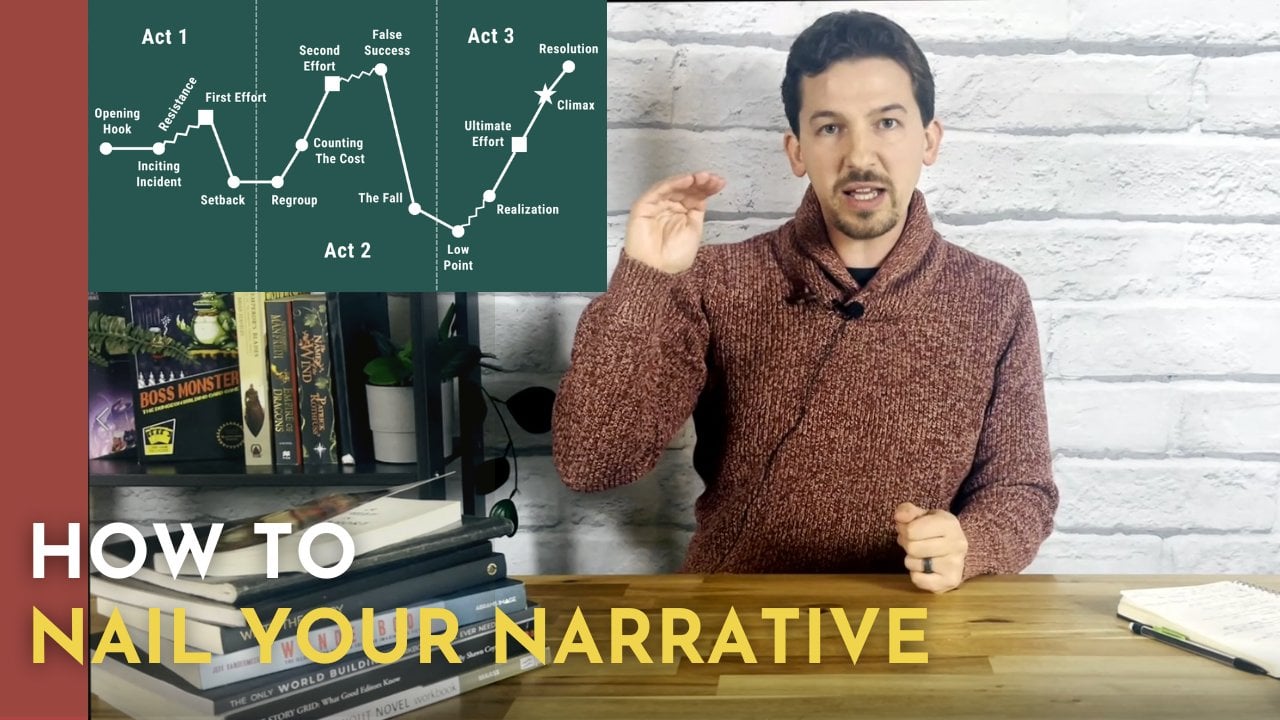
narrative structure, a class on writing
great characters, and a class on
writing faster and better by understanding the four primary
stages of writing. And all of them will serve to inform and enhance everything
that you've learned here. So I would encourage you to
take a look at each of those. And if you've had
fun in this class, I think you'll enjoy those two. The second is to point you towards my YouTube
channel where I post weekly videos not only about writing
craft in theory, but also just having
fun breaking down a popular books and
movies to see what we can learn from them
and just enjoy the process of discussing
great stories. So that sounds
interesting to you. Again, you'll find the
link in the description, and I didn't create it. You go check out the story
castle YouTube channel, subscribe there and be part of that fun interaction and conversation community
with me on YouTube. Finally, thank you so
much for your time and your intention as you
engage this class with me. And I wish you all the success in the world with all
your writing to come.
 Justin Fike, Author and Writing Nerd