Transcripts
1. Introduction: You've probably heard this
advice before, right? At least 1,000 words a day. But how, how are some
people capable of writing 50 or even 100,000 word novel in the scope
of mere weeks or months. The truth is, it's
all about habits. If you focus on the right
habits and make a few tiny and what's more easy
changes to your routine. You will be able to
write consistently. My name is Daisy
and I write books, short stories,
screenplays and develops. And I have to tell you that
when I started the book that I turned into my
biggest writing project yet, it took forever to get
things off the ground. I struggled to write 30,000
works in the scope of a year. In fact, it took me
even more than a year, the right dose, 30,000 words. But then something happened. I read a book called Atomic
Habits by James Clear, and I highly recommend
that you do the same. And it changed everything. I went back and with a few
small tweaks to my routine, I was able to write an extra 90,000 words in only 40 days. I essentially
finished my book and I did what I thought
was impossible. So after doing more
research on the topic, talking to other writers
about what's worked for them and using my own
personal experience, I wanted to help set
you up for success. Because the best way to
write that novel you've always dreamed up is
to just write it. This class is aimed
at anyone who's looking to put their
genius and paper. Because the best way to improve your craft is to
just write more. You don't need to have
any prior knowledge or experience benefit
from this class. Inside the lessons,
you will find useful information about how to shift your
perspective on writing. Along with the full
rules that will help you make small changes
to your writing routine. So you're able to turn writing into a habit and
write consistently. For a class project, your task will be to
implement at least one of the rules and make at least
one of the suggested changes. Are you excited? Let's get started. I'll see you inside
the first lesson.
2. Class Project: Before we dive into
the actual lessons, Let's talk about
your class project. Inside the lessons, we'll go over how long it actually takes to write a specific
number of words that you would need
for your first draft, on average, will be
doing some math. Then we'll talk about the
way habits are formed. And then we'll go into the
four roles which are one, number one, make it obvious. Rule number two,
make it attractive. Rule number three, make it easy. And rule number four,
make it satisfying. At the very end,
we'll talk about bonus tips for writing faster. Inside each of the roles, you will get several
examples of action steps. You can take the
implement a rule. Inside the projects
and resources tab, you will find your
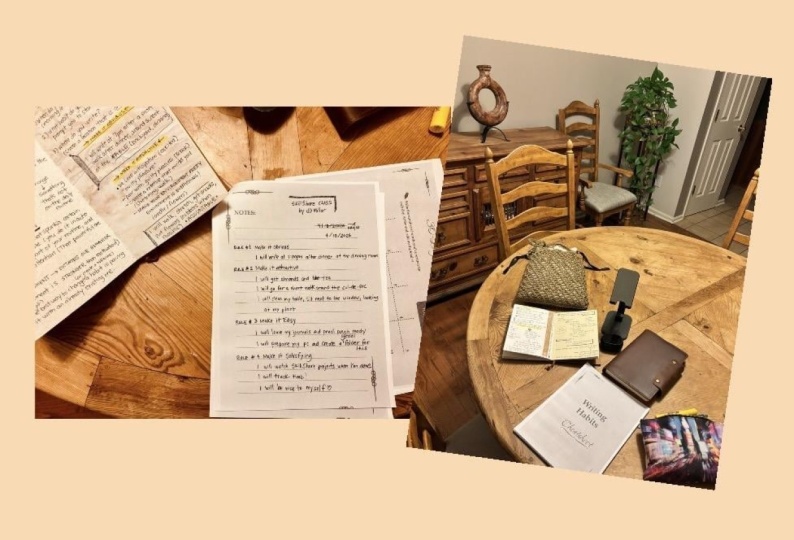
very own habits, cheatsheet, and the
writing habit tracker. Use the TTY to commit to
implementing at least one of the rules and let
your classmates and myself know what
the change will be. Upload a picture of
the actual change or just the picture of the
filled out cheatsheet. To upload your project. Just go to the Projects
and Resources tab. Click on the green button
that says Create Project. Then follow the instructions
and click on Publish. It's located in the
top right corner. Now let's get started.
3. Let's Do The Math: Before we talk about
roles and habits, Let's get a little
bit of a perspective. A basic rule of thumb is that to write a decent first
draft of a novel, you need to write
about 50,000 words. That's also the reason
why nano primal, which is the biggest
writing talent out there, also has that same goal. But how long would writing
50,000 words actually take? On average, it's estimated
that it takes only 20.8 h to write 50,000 words
in a computer and about 41.7 h to
write them longhand. That means that if
you were to sit down on your laptop and
write non-stop, it will take you less than a day to complete
your first draft. Think about it. How cool is that you
will live and get 3 h left to relax
and get some sleep. That doesn't sound
scary, does it? But of course, that's
not the whole story. Because at the end of the day, we need to take into
consideration that we're not robots and our minds wander. We get stuck into sentences and phrases and
even plot points. The question is, how
does the math for you? Let's take a moment
in the calculator. I went back through my
writing schedules and got an average of how long
it takes me to right. 1,000 words. Now, I don't have strict
writing schedules because sometimes I can stare
at the screen for 2 h and write 40 words. Literally. Other times it's happened
that dislike that I lose track of time and now
suddenly have 4,000 words. But what's the average? For me that is about
1,000 words per hour. That means that to
write 50,000 words, it would take me about 50 h. But I like to give myself a lot of margin of error
and a lot of leeway. So I would like to
double that number. In short, it will take me about 100 h to write
those 50,000 words, which would be my first draft. That is a little over four days if I were to write nonstop or approximately
three-and-a-half hours a day for 30 days in a row. That is my goal. Now, I know that if I want to
write my novel in 30 days, like if I want to
go on a 30-day run, it to take me about
three-and-a-half hours every day. Now, that might be a little too demanding for my working
schedule so I could extend the time period
and set aside 2 h a day for 60 days in a row. And I will still get
the same result. Now, let's do the math for you. When you finish this video, pause it and refer back to the writing
habits cheat sheet. There you will find Britain
basically the same breakdown. Now I will ask you to
think about how long it takes you to write 1,000 words. Now, let's multiply
that number by 50 to get the total number
of hours you would need. Then if you want to give
yourself some breathing room, you can double that
number just like I did. If not, we can work with
the original number. That's completely fine. If you want to go
on a 30-day run, you should divide that by 30. That way you will get the total number of hours
you would need to set aside every day basically to
complete your first draft. That doesn't look
that scary, does it? And now it's time to talk
about how habits are formed.
4. How Habits Are Formed: I'll start off by stating something you probably
already know, but it's important to
go over nonetheless. That is, we humans love
to do things by default. If something is easy
and it's already there, we prefer to take the
path of least resistance. And oftentimes, we do it without even thinking
twice about it. That's why changing a habit or creating a brand new one
can be so difficult. We're just not used to it. Think about your current habits. The ones not related to writing. E.g. you hopefully brush
your teeth twice a day, once when you wake up, and
once before you go to bed. So think about that process. If we were to break it down, we'll see that it follows
a four-step pattern of Q, craving, response and reward. The queue is you're waking
up or going to bed. The craving is to
brush your teeth. The response is
actually doing it. And the reward is the
feeling that you get, that feeling of freshness
and having clean teeth, which would lead to fewer
cavities in the future, etc. So the queue is the information
that's presented to you that suggests that there
is a reward to be had. The craving is your desire or your motivation to change
something to get that reward. The response is the action
you take to get it. And the reward is
the satisfaction or the dopamine rush that you get after you've successfully
accomplished your tasks. All that being said,
it's logical to think that if we already
have the craving, which is writing, will need
to change the queue so it can trigger the craving and then the response until eventually
we get the reward. Sounds simple enough, right? But that's not the whole
story because brushing your teeth is something
we learn from our environment when
we were toddlers, our parents thought that this is something
important for us. So they forced us to repeat
it until it became a habit. When it comes to writing, however, things look
a little different. Because maybe you grew up in an environment where writing was considered a useless
habit or useless hobby. Or someone made fun of you
about a story that you wrote. Whatever the reason might be, chances are if you're
watching this writing has not been a consistent part
of your daily routine. So to change that, we need to apply the four rules that
we already discussed. We need to make writing obvious. We need to make it attractive. We need to make it easy, and we need to make
it satisfying. Let's break down each of
these four roles and figure out exactly what they mean
for you in your writing.
5. Rule 1: Make it Obvious: Over time, the cues that spark a certain habit
become invisible. If we take the example
of the previous lesson, you probably don't even think
about brushing your teeth. You do it on autopilot
when you wake up. And have you ever gone to bed without brushing your teeth? It's happened to me a few
times and I can tell you, despite how tired I was, I always got up to brush them. It was as if my day was incomplete without
doing that one thing. That's how powerful
habits can be. So how can we make the
same true about writing? Obviously, since we're talking
about rule number one, we need to make it obvious. Go inside of your cheat
sheet and write down your current writing habits so we can see what
needs to be changed. If there's anything that we learned in the previous lesson, it's that environment
dictates our behavior. In fact, environment is
stronger than motivation. What's more, one of
the easiest ways to change a habit or create a brand new one is to pair it with an
already existing one. So set yourself up for success. Think about three things and answer these
three questions. Number one, when do
you do your best work? Do you do it in the morning, the evening, the afternoon? Be honest, don't just say I do my best work in the morning just because you wish it to be. So if you do your best writing can work in the evening,
that's completely okay. Number two, what habits
do you already have in that time of day
that will prompt you to start writing e.g. if you're right in the morning, your Q can be you're drinking
your morning cup of coffee. Number three, where
do you write and do do anything else at
that particular location? E.g. the right in
the bed, in the car, on the couch, on
the kitchen table. If you're right at
the place where we habitually do other things, you'll get confused and
we don't want that. So think of a location that will be solely dedicated to writing, that will build the
association that when you sit down in that
particular spot, you will be writing. And by the way, you
don't need to get a new desk or
anything like that. The change can be as simple as you go into the
opposite side of your current working
station, e.g. back in the day when I was struggling to finish
my first book, I didn't have a separate desk. I only had kitchen table to work with and I was sitting
on one side of it. So when I was going
through these rules, I realized that I set up the exact same spot
for everything. Eating, working, writing,
casual distractions. So of course, when the time came for me to sit
down and write, my mind was just wondering off. So I literally just started
sitting on the other side of the table and I was genuinely surprised to see how much
that helped me focus. It was just amazing. Now, it's time to
finish this sentence. I will write at time older
habit plus location. E.g. I. Will write every morning at
07:00 A.M. after I've had my cup of coffee and I will sit at the
opposite side of my desk.
6. Rule 2: Make it Attractive: Did you know that our brains
are wired so that they would want the anticipation of the reward more than
the reward itself. Think about Christmas gifts
were usually more excited by the wrappings in the idea of the gift rather than
the gift itself. Studies have shown
that gambling get x, get the rush of dopamine. And dopamine is the hormone that functions basically
as our reward center. Not only when they win, but also before placing the bed. In other words, we
love anticipation. So how can you make the act
of writing more exciting? There are three strategies
that work best. Number one, we're writing with a guilty pleasure,
e.g. snacking. You could say, I will only
snack while I write here. I would also like to add a disclaimer that
for best results, please try and choose healthy
snacks like fruit or nuts. Number two, create a
routine that excites you, do a small ritual
that brings you pleasure and makes
you feel good. E.g. when I was
changing my habits, I did the short
15 min session of yoga right before I
sit down to write. That helped tremendously. Number three, make your
environment pretty. If you love scented candles, why not put one next to
you while you're right? How about adding a tiny
plant that will bring you some joy into your life? As we said before,
environment is everything. Which strategy will you choose and what will be the
activity we'll do? Write it down in
your cheat sheet. Another important component to building a habit is
the environment. We mentioned it
several times already. But it's because
it's that important. You need to get yourself into an environment that
supports what you do. If you don't have people
around you who write the whole experience can
feel alienated and lonely. Or you could have
friends who write, but maybe they
just do it for fun occasionally and they're
not looking to publish. I can tell you from experience. The first time I met with writers who wanted to
publish their books, it was a game changer. The energy with completely
different and above that, you share a common goal
with those people. It can bond you really quickly. The most important part, those people can
keep you motivated and can keep you going
when you're feeling down. That's why accountability
partners are so important here. Now, let's get on to
rule number three.
7. Rule 3: Make it Easy: Denoted difference between
motion and action. When you're in motion,
you plan and strategize, but you're not actually
taking action. However, your brain is tricking you into
thinking that you are. Because taking action, such
as writing might feel scary. I mean, what if you were to put your thoughts on paper and they were not immediately
worthy of a celebrated price. It's much easier to think about writing than actually doing it. But you've probably
heard this before. You have to get the
bad writing out. That's what the first draft is. Just a draft, a sketch
of your book, so to say. And it's something
no one will ever have to see unless
you want them to. We know this. And yet we often subconsciously
put obstacles in our way to prevent us
from taking action. E.g. if you're writing
on your laptop, you might open it
with the intention of working on your manuscript. But an hour later and long before you've had a chance
to locate your file, you will find yourself
browsing random website, listening to acquire,
singing anthem to potatoes. Yes, that is a real thing
that happened to me. So how can you change that? The trick is to
reduce the number of steps between you
and your writing. In the previous
lesson, you decided when and where you're
going to write. So let's get back into
the example of your waking up and immediately
start writing. When you do that, make sure that everything is
prepared the night before. If you're writing
in the evening, you can do basically
the same procedure and the same preparation
just an hour before you sit down
to actually write, simply open your
manuscript so that it's the first thing you
see when you turn your, your laptop or your computer on. If you're writing on paper, prepare your sheets in pen. This might sound
extremely simple, but starting something
actually requires more energy and willpower
than continuing it. In other words, opening your
manuscript is much harder than actually putting down
the first word for the day. We want to minimize
the effort and remove as much of the decision-making
processes possible. The idea is that when
you show up the right, everything is already
set up and it's so simple that writing
becomes a no-brainer. Now, let's explore
rule number four.
8. Rule 4: Make it Satisfying: The first three rules so far
focused on making sure you set everything up for your new writing habits
to actually happen. Now this rule, rule number
four, make it satisfying, focuses on increasing
the odds of your new writing habit,
actually repeating. Because the truth is, we
repeatedly do the things we find satisfying and avoid
doing the things we don't. E.g. we might know that a cookie is worse for
us than a carrot. However, a cookie can offer a much more pleasurable
experience in the short term. In other words, we prioritize short-term satisfaction
over long-term results. That's simply evolution. That's why you should
focus on three things. Number one, give
yourself a reward immediately after you finish
your writing for the day. It can be a tasty snack, a walk in the park, or binge-watching an hour
of your favorite TV show, whatever it is, you
need to enjoy it. Number two, use the
writing tracker. You can download
the writing tracker that's featured in this course. You can print it out and
add a check mark for every day of the month that
you've actually written. It's again, very simple, but putting a checkmark will
give you a small rush of dopamine that will excite you and will help
you to keep going. Remember when small things
compound over time, they can create big results. Number three, and probably
the most important part, be kind to yourself. Because the way you talk
to yourself Is everything. Going back to the fact that we repeat things we find enjoyable. Imagine that you
had a friend who was constantly nagging you, that you didn't do
one thing or another, would you want to hang
out with that friend? Over time? It probably cut them
out of your life. The same is true
about creativity. If you've ever read
yourself constantly, that you didn't write enough or that it wasn't perfect enough. Over time, it will start
presenting the idea of writing. And that's definitely
not what we want. So be kind to yourself. If you skip a day of writing, don't think about it too much. It happened, it's in the past. Let it go. It's best to move on, focused on getting back on
track the following day. Small progress is
still progress. And little by little, you will get the gender
of your novel.
9. Bonus Tips to Write Faster: Now that we've covered
the four rules to creating a habit, I hope that you decided
to make tiny changes to routine that will have a
big impact on your writing. I know for myself when I made these three for small changes, I wrote 90,000 words in 40 days. Compared to the 30,000 words it had taken me over
a year to write. I'd say that was a pretty
big when change is possible. And if you follow the rules,
it's almost inevitable. But of course, that's
not the whole story. Because the best
way to get your, your story on paper is
to just write faster. So how can you do that? I will share the
three best depths, affect the belonged away. Tip number one, don't edit. I'll give you a
personal example to better illustrate this point. I used to write
23000 words a day, and I will start each
new writing session by re-reading what I had
written the day before. And now it makes more changes. Nothing major, just
the comma here, a spelling mistake there,
and that would be it. I thought this would help me. When I got to the second
draft of my book, I thought that would
make the process easier and faster. Well, it did not. I ended up deleting
whole scenes, merging chapters, and
adding new scenes. So in the end, I had
wasted a good amount of time editing something
that got cut. Anyway. That's the thing. When you're writing.
Sometimes you don't see the whole picture yet. That's why a second
draft is so important. I know there are
some writers out there that edit
as they go along. Can they prefer that? And that's great. If that works for you. Perfect. But if you're just starting out, I would highly recommend
that you just keep writing. Because once you
get that momentum, the story begins
to unfold itself faster and there's just no
better feeling in the world. Tip number two, time block, set up a timer for 30 min. It might seem silly, but sometimes the idea of
spending 3 h sitting down, writing, this might
seem daunting. So you can break up these
3 h into smaller sections. Say to yourself that
you will write for 30 min and you will take a
straw when the time is up. If, when the Timer buzzes, you still want to
continue writing. By all means, continue writing. Tip number three,
create an outline. I used to think that outlines where a major waste of time. But as it turns out, it's
exactly the opposite. While I was writing my
first murder mystery book, I wrote the outline in
the scope of a few hours. And basically the story
was done. Later on. It was so much easier
to write faster because I knew exactly where
the story was heading. Of course, that isn't to say
you cannot make changes. With this particular book. I had a certain person
pegged as the killer. And I was writing the
entire time under the presumption that they
had committed the crime. But at a certain point, things just didn't add up. So I had to change the killer. However, going back
to that outline, saved me so much time
just because I was able to see the big picture
from the very beginning. If you're looking
for ways to create an outline for your book, just by answering a
few simple questions, you can check out my
other Skillshare course. The link will be in the
description of this class.
10. That's a Wrap!: That's it. Congratulations. Lift your arm up straight
in front of you, bend at the elbow and pat yourself on the shoulder
because you did it. You learned about how habits work with the four-step
pattern of Q, craving, response, and reward. You also learned about the four rules for
creating a new habit. Make it obvious,
make it attractive, make it easy, and
make it satisfying. You also found out
the approximate time it will take you to write any number of words
based on your schedule. I hope you enjoyed the process and I hope you will implement at least one of the rules
for your class project. I would love to see a
picture of your new setup, or at least the picture
of your cheat sheet with your commitment to making
at least one change. Studies show that having
accountability like this really helps seeing
the task through. Speaking of accountability,
I would love to see you inside of our
discord server. There. You will be able to meet
other writers just like you. And perhaps you will be able to meet your new
accountability partner. Let's also connect
on social media. You can find me on Instagram
at facts and fantasy. If you enjoyed this class, please leave a review. I would really
appreciate it and it helps the algorithm
show it to more people. If you have suggestions
for other classes or topics that you would
like to learn more about. Feel free to let me know in
the comments section below, or on Discord or an Instagram. Remember, it's all about
the compound effect. Small changes over time
lead to big results. So keep making small tweaks
to your routine and to your environment until you
figure out what works for you. And it easier to
make the process, the faster you
will get it right. So keep writing and
until next time.
 JD Millar, Writer