Transcripts
1. Watercolor for (Recovering) Perfectionists: [MUSIC] Raise your hand
if you've gotten most of your life convincing
people and yourself that, Oh, I'm not an artist. Listen, when I was 10 years old, I consciously decided
to stop making art. One day, I looked at my
version of starry night and I realized it looks nothing like Van Gogh's so why
should I even try. Too many of us grow
up believing that true creative joy is reserved
only for the lucky few. But I have to tell you, as somebody who is now
a professional artist, what if you're wrong? What if you do have
that creative spark and all you need to reignite
it for 10 minutes a day? Hi there, my name
is Kolbie Blume and I am a self-taught
watercolor artist, author, and online educator. Through my books, my social media
tutorials and of course, my online courses
I have taught over 27,000 people to love
watercolor as much as I do. But up until a few years ago, I was an adamant all or
nothing perfectionist. I constantly told myself, either I'm going to do it right, be the best or I am
not doing it at all. That all changed when I
discovered watercolor. Watching pigments swirl
on my palette and turn my notebook into luminous
washes of color almost by accident helped me
slow down and think about what if it's not
perfection that I want? What if actually imperfection
is the most powerful? Developing a watercolor
practice has helped me realize that actually the biggest barrier to my creative joy is
not lack of skill, lack of experience, lack
of resources in fact, it is a loud inner
critic who is too afraid of failure to see
the magic in the mess. That's why I created this
seven-day challenge. If you paint with me
for just 10 minutes, every day for one week, I'll show you how watercolor can help give
you more courage and less fear as you build a
sustainable creative practice. By paring simple
watercolor techniques like mixing colors with vital creative mindset shifts like how to let go of that
all-or-nothing mentality, you'll learn how to write a new story one where
you are an artist. Because when it
comes to creativity, it really doesn't matter
how good you are, what matters is that
you're doing it. It's the process
that changes you. What do you say?
Let's get started.
2. Class Project: [MUSIC] What exactly are we going to do in this challenge? What's the day to
day going to look like? Let's talk about it. This challenge is go
at your own pace, which means that
you have access to all of the content
right upfront. Each video is earmarked for
one day of the challenge. In each challenge prompt we will tackle one limiting belief, one very common
mental barrier that is maybe preventing you from
jumping into creativity, and then we will contrast that with a creative mindset shift. We'll explore both the
limiting belief and the creative mindset
shift through a really easy
watercolor exercise. Even very basic rudimentary
watercolor artists can complete these watercolor
exercises successfully. I chose each exercise
intentionally to reflect the challenge and
the mindset shifts that we are going to be
talking about every day. See, the idea is that instead of creating one final project, we are actually helping
you build a habit. We're helping you build up strength in your
mindset and we're helping you see how you can use watercolor in
really simple ways, so that even if you only have five or 10
minutes every week, you can still paint something. All right. That about wraps up the explanation of what
the class project is, meaning what is inside
this challenge. Now, before we start painting, we'll take one last
stop to exploring our supplies and then
we'll get started. [MUSIC]
3. Supplies: Okay, my friend. Before
we get started painting, let's go over the
supplies that you're going to need for
this challenge. This is a little caveat, before I show you what
I'm going to use, you do not have to
use what I'm using. This is a challenge
not meant to show you very specific techniques where
you need exact supplies. This is a challenge where we are pushing against
perfectionism, pushing against this idea that we have to be
all or nothing. That includes being okay and seeing the magic with the
supplies that you already have. I'm not going to stop
you if you want to go out and buy
some new supplies. I love myself a good art haul but if you want to truly
dive into this challenge, you don't need the
supplies I'm using. That said, if you want to know exactly what I'm using,
I'm going to show you. Let's take a look
at these supplies. First up, the paint
that I'm using. I am using the primary colors. I'm using the CMY version
of primary colors, which means I'm using
cyan, magenta, and yellow. These are the brand
Letter Sparrow. It's a handmade
watercolor brand. I love using handmade
watercolors when I can. The owner of Letter
Sparrow, Kelly, created paints that
she actually left as a paste and inserted into a tube, which I
thought was really cool. You don't often see that
with handmade watercolors but the reason I'm using handmade
specifically is because, I like to use handmade
when I'm having fun. You do not have to use the brand of paint that
I'm using to be clear. You don't even have to use primary colors, if
you don't want to. I'm using primary colors mainly because they're
just easier to mix. It's a more familiar starting
point when you're mixing colors and we're going to be mixing quite a lot of colors
throughout this challenge. Again, I'm using cyan,
magenta, yellow, and then I also have a
brown in there to make some more muted shades
of these colors. That is that. That's the paint that I'm using. You don't have to use any
specific style of paint, you don't have to
use tubed paint. You can use just a cheapo
whatever kid's paint that you got from a craft
store a million years ago. It doesn't really
matter what you use. What matters is that
you're painting, what matters is that you are
actually creating something. Go out and find something
that is fun for you to use or that's handy,
doesn't really matter. The next thing is a sketchbook. This is Etchr brand, a watercolor sketchbook, 100 percent cotton, cold press. I really like Etchr brand
watercolor sketchbooks because they're super
handy and portable, and the quality of paper is
really good for a sketchbook. Often when you get
watercolor sketchbooks, it's more like student grade
quality, which is okay. If you only have student grade
quality watercolor paper, or if you don't even
have watercolor paper to begin with, that's fine. But I love Etchr, because it's 100
percent cotton paper but the paper also
dries a little faster than it normally would
on other brands, which makes it ideal
for sketching, so you don't have
really wet paper along. I love Etchr
watercolor notebooks. That's what I'm using, you can use whatever you have. Then finally, let's
talk about brushes. The most important thing to focus on for brushes is
knowing what shape I'm using. Although you don't even
have to mimic that, you can use again,
whatever you have but I'm using a round brush, and then in I think
two of the projects, I'm using a flat brush. That these two are
round Number 6, and then this is
a round Number 2. The 6 is more for
medium-sized work, because a lot of the
projects we're doing just fit in a small
little notebook. Most of the painting
I'm doing is going to be with
a round Number 6, either with this
Princeton Glacier Series, the one with the clear handle. Mostly because the
Princeton Glacier round doesn't really have
a point to it. At least not nearly to the
extent that this one does. I'm a little more heavy
handed with this one, especially with color mixing, because I'm not so worried
about ruining the bristles. Then the round Number
6 Heritage Series, which you can tell by the bright red handle
and the gold ferrule, is a little more soft, has a really nice
point at the end, and so I'm using this
one quite a bit too. Then the round Number 2 is
for more detailed work. This is also Princeton
Heritage Series. Then we're using flat brushes. It doesn't really
matter what size of flat brush you have, you can do a size 6, size 8, size 12,
anywhere in there. This is Infinity Arts brand. Infinity Arts is
another small business. I really love supporting small businesses
[LAUGHTER] when I do art, because it just makes me
feel more connected to the community while I'm also being connected
to creativity. Highly recommend
Infinity Arts as well, if you're looking to support another small business brand. Those are the brushes
that I'm using. Actually, all of these are
small business: Etchr, Infinity Arts, Letter Sparrow. Then I definitely use a ceramic mixing palette
throughout this class. Mostly I'm using this
Pitch Pine Pottery one, but this one also may
make an appearance. This is a little well
by Sylvan Clayworks. You do not have to use
a ceramic palette. Ceramic palettes,
especially if you invest in a handmade one,
they're an investment but you can use a
plastic palette, you can use a dinner plate, you can use whatever
you have on hand, I'm just showing
you what I'm using. The reason I really like
ceramic palettes are because the paint mixes
really well on them, and I just love
making art with art. Then last but not least, I have a little
artist cloth here, which you use to dry your
paint brush in-between, and some water off to the side. I always have two cups of water, one to keep clean so that I can have clear
water for mixing, and then another one to keep
most of the dirty water in. I think that about sums
it up for this class. If you want links
to all of these, I do have a supplies list. So wherever you're
watching this video, there should be a link
somewhere that you can press to pull up a supplies list that links to where you can
purchase any of these, or just check them
out, if you would like but once again,
just to reiterate, before we close out
this supplies video, you do not have to use what I'm using in order to be
successful in this course. It's not the supplies that
will make you successful. The whole point of this class is to confront mental barriers that are preventing
you from creating. We want you to create, no matter what that looks like, no matter what you have on hand, the point is to make something. I encourage you to find
whatever you have, find whatever makes you
happy and use that. Now that we have gone
over some supplies, let's get started. [MUSIC]
4. Day One: Mixing in a Palette: Hello, my friends and welcome to Day 1 of our seven
day challenge. Today we are going to confront I think one of the most
common limiting beliefs, especially when you are attempting to take a
challenge like this, which is, you don't have
time for creativity. If you've ever found yourself
thinking that to yourself. If you've ever found
yourself and making to-do lists and
continually putting, practicing creativity at the
bottom of your to-do list. Today is the challenge for you. Because in order to combat
that limiting belief, we are going to contrast
it with a mindset shift. The mindset shift today is, even a little bit of creativity can bring
me a lot of joy. In order to practice both this creative mindset shift of a little bit of
creativity goes along way with combating and deconstructing the
limiting belief that you don't have time
for creativity. Our exercise today requires
just a few supplies. You'll need a palette, you'll need some paint
and water and a brush, but you don't even need paper, because we're not
painting anything. We're just mixing
colors. That's all. You don't have to
really create any art. This is all about
the experience, and it only takes a few minutes. Let's get started. The
first thing that you need to do is pull
out a palette. It doesn't have to be like a fancy ceramic palette like
the one that I'm using. Any kind of palette, a kitchen plate, anything
that you can mix paint on. Then get whatever
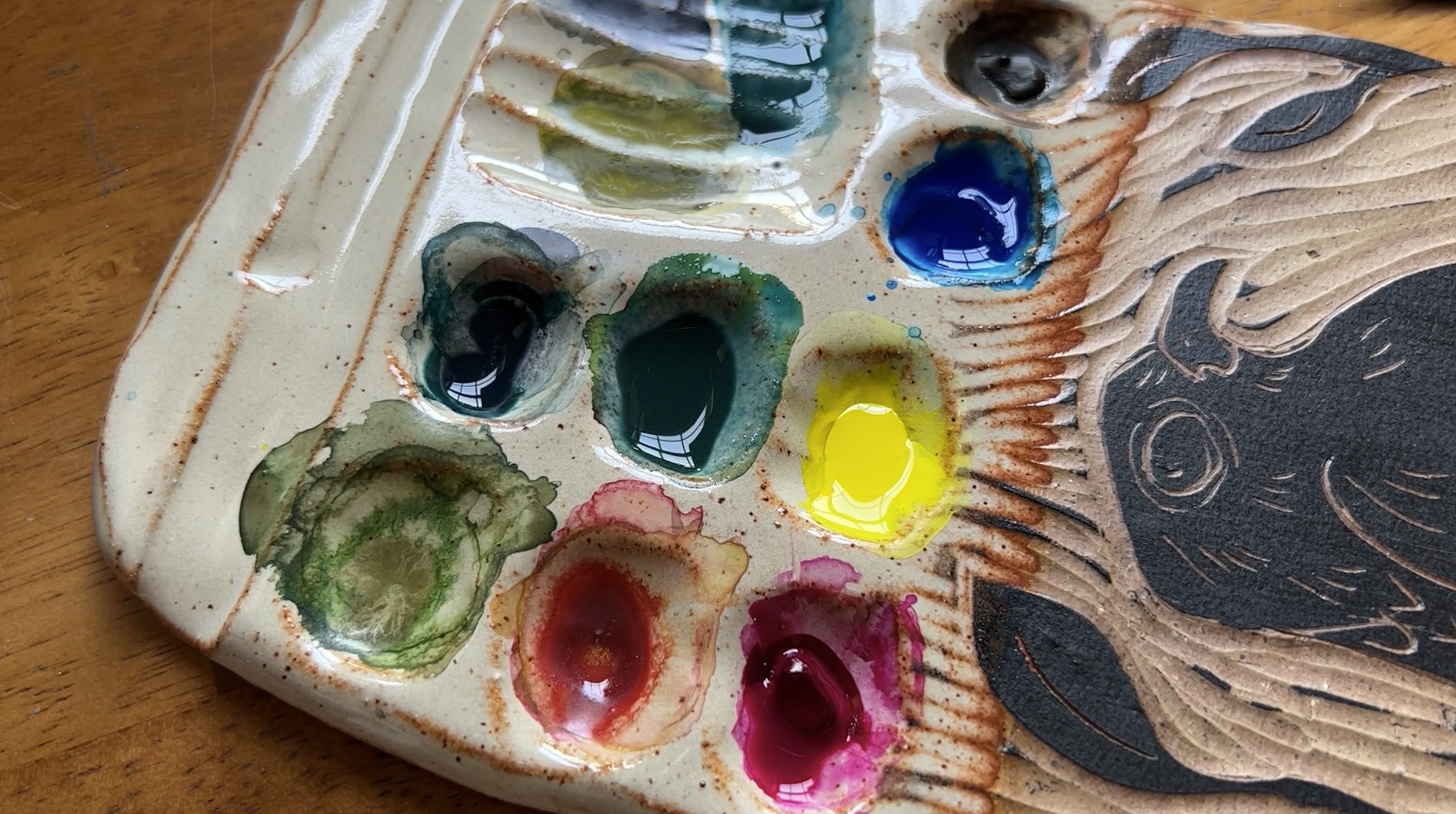
paint you're using. Like I said before, I'm using the primary
colors, magenta, yellow, and blue, cyan blue, and just start mixing. The beautiful thing about
mixing on a palette, is you don't even need paper, like I mentioned in the intro. You don't even need paper to see how beautiful the colors can be, how different they look depending on how much
paint you're using, and that's the whole point
of this very first exercise. If the limiting belief that
you are telling yourself is, I just don't have
time to be creative. I don't have time
to get out all of my stuff to sit down
and think of a project. I don't have time to
really do this justice. I want you to take
a beat and remember what creativity is for. Creativity is not for you
building some legacy. It's not for proving to yourself that you spend your time
doing worthy activities. Creativity is for you. Creativity is for
you to feel joy, and my friend, you always
have time to feel joy. While you are just mixing
colors on your palette, also remember that this
is not a waste of paint. You might be thinking
to yourself, but I'm just mixing and
then rinsing off my brush, and then mixing even more, because that's
what you're doing. As we are mixing
with watercolor, you need to rinse off your
paint every time and then, mix it a little bit
more on the palatte and so you're just leaving paint on your palette or leaving it in your water to dispose off later. I'm going to tell you, you're not wasting anything. You do have time. It's not a waste of supplies, because the supplies exist
for you to feel joy. The supplies exist for you to find tiny moments of wonder. One funny thing
about creativity, one funny thing
about growing up in a very productive focused world as a hustle culture world, is thinking that we need to create masterpieces
every single time. That the only value we're going
to get from creativity is if we are proving to the world that we can
make something beautiful. Yes, does it feel good to get
validation from the world? [LAUGHTER] Does it feel good to get praise from the world? Absolutely, it does. But what feels even better
is when you realize that this moment is the only one, you're guaranteed to have, this one right here
and it doesn't have to be about proving to everybody else that
you belong here. It can just be about
you finding joy. As you are doing
these exercises, especially on Day 1, I want you to focus on the joy, focus on what color mixes
really light you up, focus on asking questions. Because that's what I, hopefully this challenge
will help you do also, is to move past these
limiting beliefs. Move past whatever is holding you back so that you can let go of the expectations and let the curiosity come through. I want you to think of all of the things that you're
wondering about, all the things you might have questions about, what
you're observing. Because curiosity is really
where the fun starts. Start asking yourself questions. What happens when I have a different paint
to water ratio? Are the colors more
vibrant or more muted depending on what
colors that I mixed together. You don't even need color theory to really do this exercise. You don't, I promise. Thank you so much for
joining me for Day 1. I really hope that you enjoyed this time that
we spent together, and I can't wait to see
you for Day 2. [MUSIC]
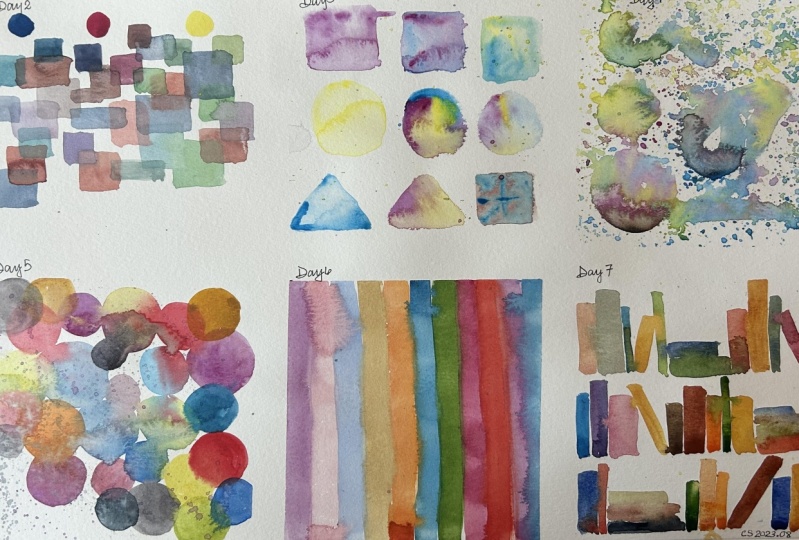
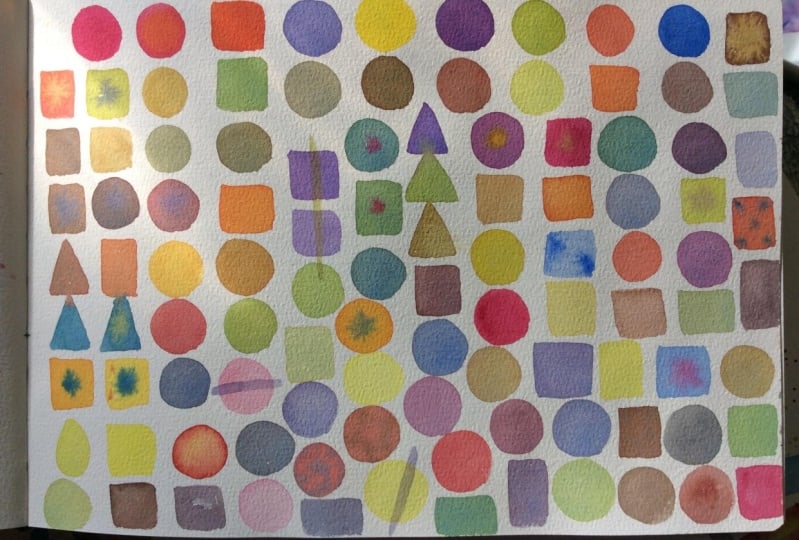
5. Day Two: Color Swatches: [MUSIC] Day 2. Welcome to Day 2 of our seven day challenge and
today we're confronting a limiting belief that
has definitely stopped me from making more times
than I care to count. Today, we're attempting
to deconstruct the idea that you don't
have unique ideas, and implicit in that assumption is that because you
don't have unique ideas, your creativity is
not worth pursuing. The limiting belief is, I don't have unique ideas. The creative mindset shift is every single thing you make
has never existed before. It's never existed before. Meaning, this exact piece of paper that
you are painting on, this exact mix of colors that you are
creating on your palette, it didn't exist before
you made it happen. That makes it unique. Every single thing
you do is unique, and every single time
you create something, you bring it into existence., it matters a lot. Through this
exercise, we're going to practice what
we did yesterday, which is mixing
colors on a palette, and then we're actually
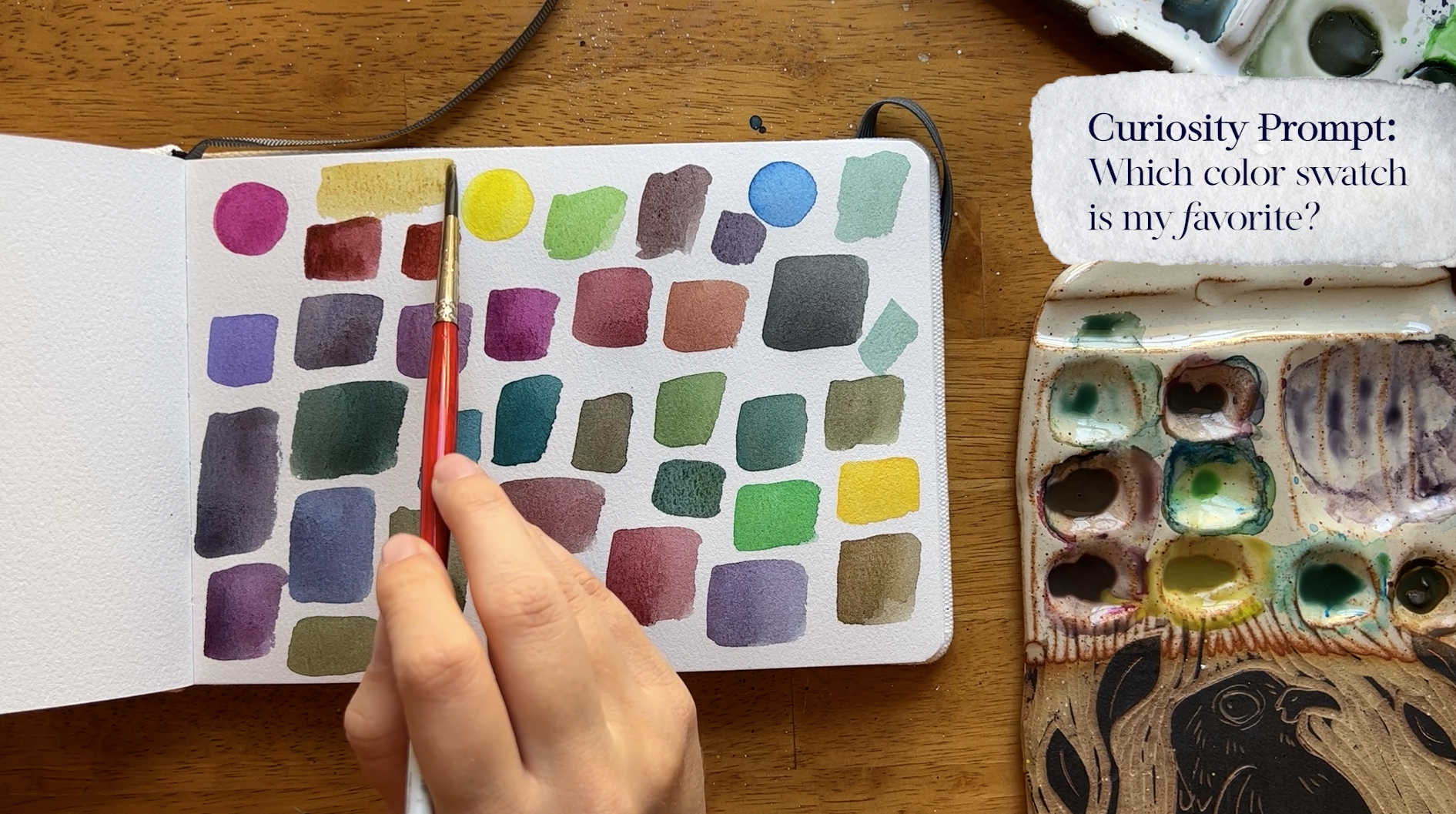
going to paint this time. We're going to mix colors on the palette and swatch
them in our sketch book but I don't mean like
meticulous color chart thing, I just mean random color mixes swatched everywhere
so that you can see every single mix you make is unique and beautiful
in its own way. The first thing that
we're going to do for our exercise is just
paint out the primaries. I'm painting them in
circles because these are the colors that we're
going to mix and swatch. Now, the only reason that
I'm painting these right now is because I just want to see what
we're working with. So I'm painting magenta on that left side and then
yellow in the middle, and then I'm going
to put blue on the right side and brown on the bottom because those
are the four colors that we'll be mixing
in various amounts. Sometimes it can be
a really fun way to swatch before you even start mixing is to just see
what colors you have, and it can be really relaxing,
really mindful activity. That is definitely a bonus
of these challenges, is we're not only tackling
these limiting beliefs, I'm also hopefully
providing you with an arsenal of very calm, simple, easy painting activities you can pull out at any time. Then we're going to
start mixing any mixes, any colors you want to mix, even with the existing
ones on your palette. I'm painting little squares. You don't have to
paint little squares, you can paint whatever you want. This is not like a color chart. If you've ever seen a color
chart where it's very intentionally mixing
colors to see the vast and very
organized kinds of colors you can
create by mixing them. This is not that.
This is a random slew of color mixes
because you're just letting loose and having
fun on your palette. You can jot down and remember the specific recipes
if you want, but that's not what
we're here for. Right now in this moment, we're here to think about the limiting belief that
we're tackling today, which is, I don't
have unique ideas. I'm not a person creative
enough to come up with unique ideas that are
worthy of being celebrated. If this is something that you've thought, you are not alone. I have thought
this so many times and I just have to tell
you that first of all, that's a lie because every single thing
you create is new. That square that I
painted just now, it did not exist before. Are there squares that have
existed similarly have billions and billions
of people painted some squares similar
to that swatch? Yeah, of course. It's not like you are
doing something that has never ever been done
before in a similar way, but in terms of the exact
thing that you are making, it has never existed before because you
are a unique person. You have never existed before. I don't know what your
spiritual beliefs are, but the reality is that you as a human with all
of your memories, and all of your experiences, and all of your skill set, and all of your perspectives
for all that we know, this is the only time
you have ever existed, and that matters for everything. Because in order to combat this limiting
belief, first of all, we have to recognize that
every single thing you create is unique
because you made it, and color mixing is
a really unique way to approach this concept
because with color mixing, it is nigh on impossible to
recreate exact color mixes. Even professional
watercolor paint makers, like all the fancy brands, Winsor and Newton and
Daniel Smith and Da Vinci. All of the fancy brands that use machines to grind the pigment
and create the paint. If you compare tubes
of the same colors, they are very
slightly different. They are ever so
slightly different because that's what
creativity is. Even if you try to do something
in exactly the same way, you would not do it in
exactly the same way because this moment only exists
now in this one time. As you're painting these
swatches, remember, actually this is unique. I'm unique. This moment has never
existed before, and by focusing on all of everything else that has existed that is
similar to right now, I'm just distracting
myself from the joy that I can find here in this moment, and that's why I
think creativity it's a really unique practice to really pull yourself
back to the present, to pull yourself back to
what your life is full, which is finding joy,
discovering passion, recentering with yourself so that you can remember that you belong here always regardless
of how unique you are. That brings us back to
even if you're making something that looks not great, like for example, I finished
painting those swatches, so now I'm mixing all of the colors together
to create brown. Even if it doesn't
look like amazing, it was still so fun. Even if a million people
have done this exact thing, it doesn't matter because
they are not you, and you get to do things
because you want to do them regardless of how
they compare to anybody else. Comparison is just
distracting you. You've heard that phrase, comparison is the thief of joy. Well, it is because it's
just a distraction from how amazing and unique your
creative experiences have the potential to be. Thank you for joining
me for Day 2. I had such a wonderful
time as always. Remember, you are completely
unique and that matters. I can't wait to join you for Day 3. I'll see
you soon. [MUSIC]
6. Day Three: Wet-on-Wet Shapes: [MUSIC] Hello my friends
and welcome to Day 3. I am so excited about this one, because it is a challenge that has continually plagued
me for most of my life. Today we are tackling
the limiting belief that because you don't
know what you're doing, that means creativity
is out of reach, or that means you're
not qualified here. So the limiting belief is, I don't know what I'm doing. The creative mindset shift is
uncertainty brings wonder. It's okay that you don't know
what you're doing because uncertainty is actually a
good thing with creativity. You're not supposed
to know what you're doing because you're
bringing something new, you're giving a new
experience to yourself. So throughout today's exercise, we're going to deconstruct
this limiting belief. Why you believe that not knowing what
you're doing should be a barrier to your creative joy. Then we're going to shift our
perspective to the mindset of uncertainty actually
is what leads to magic. Uncertainty is what
leads to breakthroughs. There's so much that you don't
know and that's amazing. So today, in order to practice
this with watercolor, we're going to practice
the wet on wet technique, which is notoriously the
most difficult technique to control with watercolor. Yes, it is a basic technique. But depending on how
much water and paint you have on paper or on your
palette and your brush. It is just so
difficult to maneuver. It causes a lot of frustration. So it's likely something you
don't know everything about. That's what makes it perfect
for today's challenge. We're going to
practice the wet on wet technique with
wet on wet blends and really simple shapes
and deconstruct this limiting belief in the hopes of transforming
your perspective. In order to tackle a very heavy
limiting belief which is, I just don't know
what I'm doing. We are going to focus on a technique that confuses a
lot of watercolor artists, a lot of beginner
watercolor artists, which is the wet
on wet technique. How to go about learning
about water control, and how to go about blending with the wet
on wet technique. So the first thing that
we're going to do, is we're going to
load up a brush. I'm using a round size six, load up our brush
with a lot of water, and paint simple shapes
just with water. So one important thing
about the wet on wet technique is concept, is the idea of boundaries. With the wet on wet technique, we know that paint is only
going to move where it's wet. So as we create intentional boundaries
or intentional shapes, where we know the paint
is only going to go. It can be a really
excellent way to study what the paint
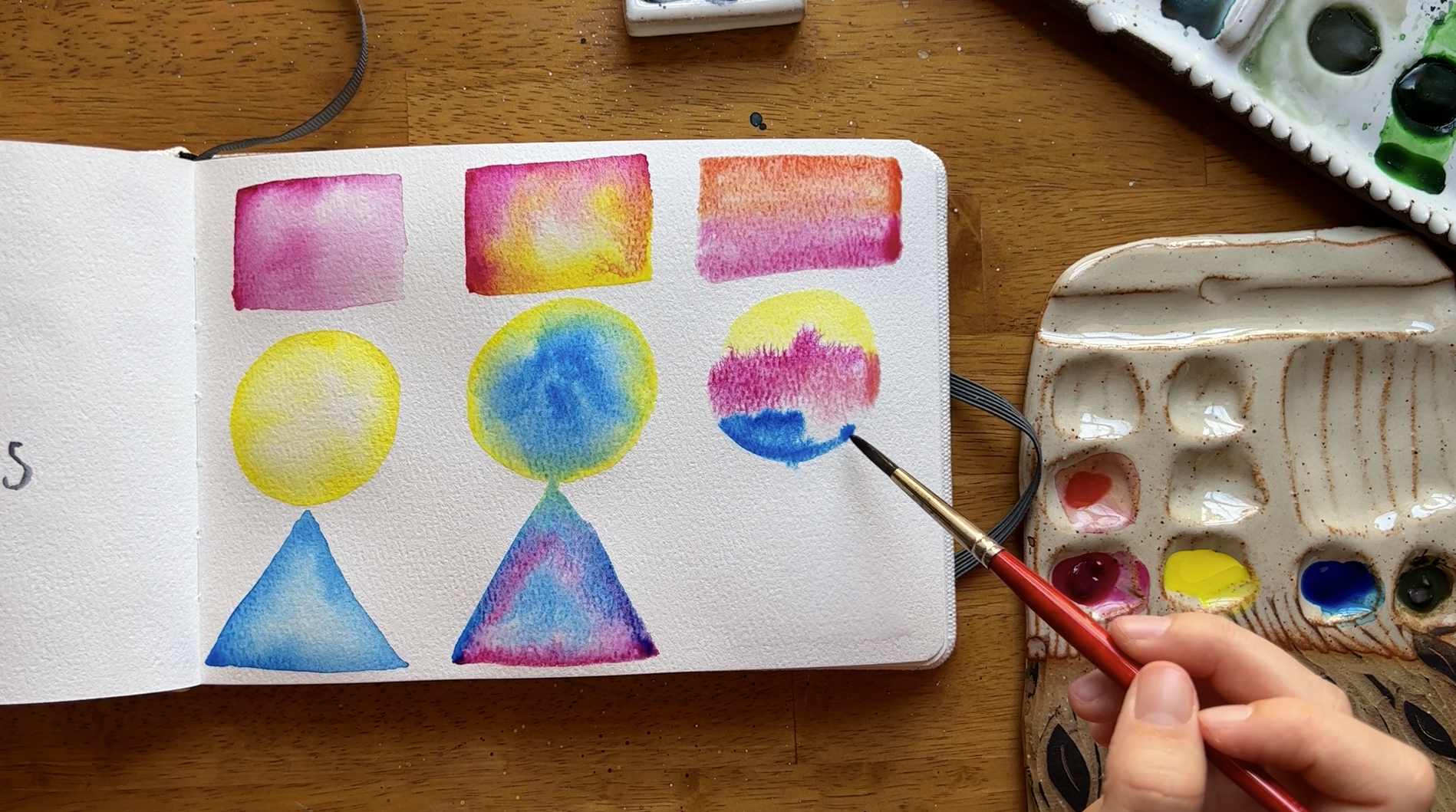
is going to do. So I created a rectangle and
a circle and a triangle, all in that vertical line. We're going to do nine of
these little mini exercises. For this first rectangle, I grabbed some magenta
paint and kind of just, I'm just exploring with
only magenta here. I'm putting the paint
along the edges to see how the paint blends out. I'm going to do the same thing with this yellow paint and then the same thing with blue paint in the triangle down there. So as we are painting this, I want you to remember
what this exercise is for. Yes, we are trying to explore
the wet on wet technique. We're trying to explore how the wet on wet
technique works. I want you to think about questions that you
might ask like, how much water is
on my brush and how does that affect the
blends on the paper? How much pigment is on my brush, and how does that affect things? Do the various pigments
that I'm working with, do they act differently? Does the magenta pigment work differently from
the blue pigment, from the yellow
pigment, et cetera. Asking yourself questions like this is how you're
going to learn. That brings me to yes, you don't know everything. Yes, you don't know
what you're doing all the time. But guess what? That is actually
exactly where you want to be as a creative person. Because every single rule, every single breakthrough
that has ever existed, every single guideline
that has ever existed was made up by a human at some
point in human history. It was made up by
a human who was experimenting and who
stumbled upon patterns, who found connections
and wrote them down, and passed them on so that other people
could learn them. So yeah, maybe you
don't know all of the very specific
art rules that have ever been recorded and
that have ever existed. I don't either. I don't know all of
them. That's okay. Because the way you're going to really learn them and find so much joy is not by
trying to learn everything, to learn as much as you can
before you start painting. The joy is going
to come when you step into creativity before
you know everything. Because let me tell you
something about wonder, that sense of wonder, that sense of all
that eureka moment when you figure out
something amazing. That only happens when you
don't know it's coming. You can only feel
that sense of wonder. If you are confident
and comfortable enough to live in that
place of uncertainty. So if you're going into
creativity feeling uncertain, that means there's magic ahead. That means if you're
willing to stay in this discomfort and get curious, then there's so much
for you to learn. That is one of the
most amazing things about creativity for me. It's also one of the reasons why I attribute watercolor to helping me recover
from perfectionism. Because yes, the high and
the validation you get from pursuing this elusive
idea of perfection. It can feel great. It can feel great when people praise you for the high level of excellence that you
put into the world. But actually, in my experience, the feeling of
discovering something, the feeling of wonder, that rush of emotion that comes when you make some
kind of breakthrough that happens because you've
just stumbled upon it. That feeling feels even more powerful than the
pursuit of perfection. It's something that
showed me that perfectionism is not the
only way to happy feelings. In fact, when you will allow
creativity to come through, when you allow yourself
the freedom to be uncertain and the freedom to say it's okay that I don't
know everything yet. Then you are preparing
yourself for that rush of excitement when you do learn something
new without any of the pressure of failing to
meet certain expectations. The thing that makes
learning and that makes uncertainty bearable is
knowing that you will be okay, if you don't hit
whatever goal that you hoped to achieve, that's okay. Because what if the goals
that perfectionism gives you. What if the markers that
make something perfect? What if they are
only one way that you can find happiness. Creativity says, no matter
what path you go on, there are an infinite number of choices that will lead to join. There are an infinite number of choices that will
lead to discovery, that will lead to happiness. Perfectionism says,
there's only one way. There's only one way
to get to happiness. There's only one way
to get to success. I don't know about you, but that just feels
really stifling. It doesn't feel very much fun. It makes learning not very fun when you feel like
there's so much pressure to learn something very specific way and the reality
is that it is a lie. You don't, you can learn something a whole lot
of different ways. As I've been talking, I've been painting in these circles. I've been trying out lots
of different combinations, lots of different
color combinations. Sometimes I outlined one of the circles in yellow, and then dropped blue in the middle. I tried to mix different colors together all while
the shapes were wet. And it is tricky to do this
because it's tricky to paint and maintain any kind of control on a wet surface
with watercolor. But that's actually what
makes it a wonderful exercise for embracing
uncertainty. So as you're painting
these shapes, as you are mixing lots
of different colors, I want you to remember
that the goal is not to arrive at any specific result. The goal is to learn something. The goal is to sit back and
let watercolor do its thing. That's one of the
coolest parts I think. The coolest
characteristics about watercolor is that
it doesn't need you. It doesn't need you to do magic, or at least it doesn't need
you to control everything. It doesn't want some
kind of master. It just wants a guide. It just need you to put water on the paper and then it
will explore itself. You just get to watch. So have fun exploring, have fun of watching. You can learn something
along the way. You can learn something here. It's okay to have fun and
learn at the same time. It's okay to learn knowing that learning doesn't
have to be the goal. Just pure joy and
wonder can be the goal. Progress doesn't
have to be the goal. Fun can be the goal. Progress can be a by-product. You can learn a lot
about what you're doing. But it's going to be so
much easier to learn, if you're also having fun. So that is Day 3. I hope that you
had a lot of fun. I hope that you learned a lot. I cannot wait to see
you tomorrow. [MUSIC]
7. Day Four: Splatters: [MUSIC] Are you ready
to make a mess? Your inner perfectionist is probably not going
to like Day 4, but here it is and I hope you'll lean in with
everything you have. Today, we're confronting the limiting belief
that it's not perfect. I'm never going to make it perfect so why
should I even try? We are tackling
perfectionism head on today and in order to do that, we need to get uncomfortable. We need to try something that has very little
chance of success. We're going to use splatters, watercolor splatters
to try to form shapes. Basically we're going to
make some wet on wet shapes, but just with clean water
and then we're going to splatter paint all over and see what the
exercise reveals inside of us and has the potential to
reveal on the paper. Because we are intentionally making ourselves uncomfortable, we are intentionally
making a big mess trying something that has
very little control, very little chance of success. The creative mindset
shift that we are going to work toward is understanding that
messes actually lead to breakthroughs, and that there's a lot of value in being willing to
stay in the mess. There's a lot of
magic and growth and self-compassion in the
mess if you're willing to stay there and if
you can tolerate it just a little bit longer. We're going to practice
that today. Here we go. This one is all about making a mess and truly
embracing uncertainty. Yesterday we focused a lot on what do you do when you feel like you
don't know everything, and today we're focusing on what happens when you try
and it's just so messy. Why should I even try? Why should I even go about learning when it's not
going to be perfect when I know I don't have the skill to complete whatever it
is I'm trying to do? Where is the fun
in imperfection? The exercise we're
doing today is, this is a round Number 10 brush. I'm loading it up
with a lot of water. The way that this works
is if you use a lot of water and so I'm just making a whole bunch of
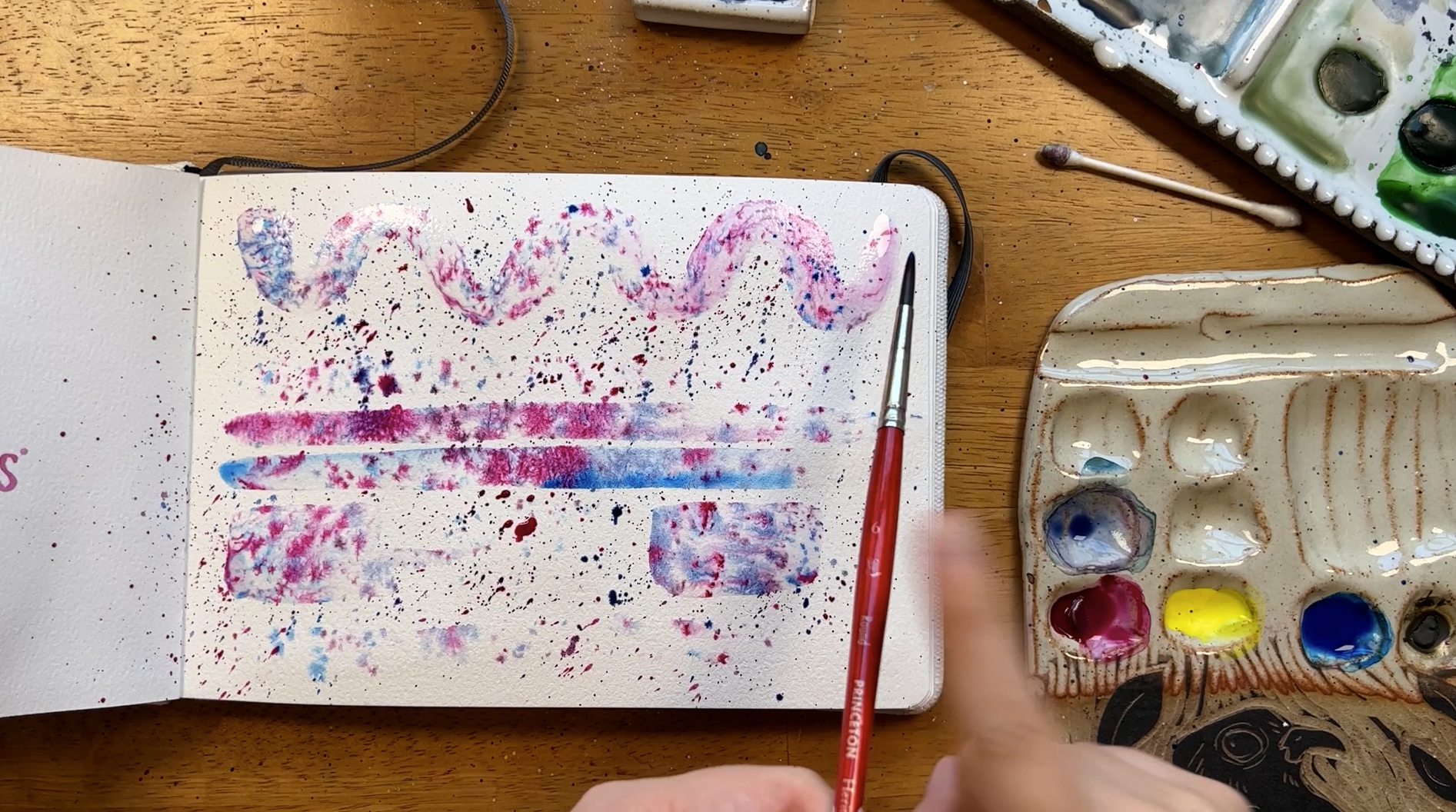
shapes with water. You can't really
see them very well because water is transparent. You can see the
reflection on the top. I made a little squiggle all the way across
the very top there. I made some stripes immediately underneath
the squiggle and then I'm making some rectangles
underneath those stripes. We want our shapes to
stay wet and so just keep a lookout for if your shapes are getting too dry, too fast. You can tell when light is
reflecting on the paper, that means it's still wet. If you bend over and look to see the light
reflecting and it's not reflecting anymore
that means it's dry and you need to go
back and add more water. Once you have these nice, very watery shapes just
outlined in clean water, I'm taking a round
Number 2 brush and basically we're just going
to splatter a whole bunch of colors all over the
page so that we can reveal the water
outlines on the paper. Now I did not really practice
this before I filmed this. This is me really putting my money where
my mouth is in that. I don't really know
how this is going to go and my first go at this is the splatters aren't
really revealing much. At this point, you
have two options. You can say, okay, this is not a success, I'm going to stop. I
could have done that. I could have re-filmed this, I could have kept going to
learn more and then refilm the diversion that got maybe more of the results
that I was wanting. But I didn't want to
do that because that would feel a little
bit disingenuous. This journey is
about learning for me just as much
as it is for you. What was I expecting? This is something that's
important to think about when you are deliberately
making a mess. What were you expecting? Well, I was expecting to
splatter some paint and to have the shapes reveal themselves after I've splattered
the paint on there. That didn't really work
the way that I was going. Why? Why do I think
that didn't work? This is the important
thing for you to remember. Instead of getting stuck
on that, it didn't work, instead of getting stuck on, I'm so disappointed
just think about, okay, it didn't work, why? Why didn't it work? I suspect it's because my
splatters weren't big enough. I think that if I
used a larger brush, the splatters might
have worked out well. I could have grabbed
a larger brush and, which is what I'm
doing right now, I could grab a larger
brush and see if adding more water to the paint or having larger splatters
makes a difference. The thing about a
larger brush is that it's not as easy to
control which is why I'm still experimenting
with how do I get the big splatters
where I want them to go and it's difficult. I just remember I
chose this activity, I chose splattering
on the paper on purpose because it is one of the least controllable
exercises with watercolor that you can do
and so re-center, come back to what's
the point of today? What's the point of Day 4? It's to make a mess. It's to be so wildly
uncomfortable. It's to learn to pivot
when you need to. It's to be okay with
changing the topic. I was planning to
just do splatters, but now maybe I'm like, I think it might be fun
to paint some circles or maybe grab some yellow
paint and ooh, cool. The yellow paint looks
cool when it lands in the painted shapes
that are already there. It's just about exploring. Once you get past the whole discomfort
around making a mess, that's when you can let the
questions come through. That's when you can let the
curiosity come through. But you're never going to
get there if you never allow yourself to make a mess
so practice with me. Practice making a mess, make the goal discomfort,
and remember that it's okay. It takes courage to make a mess, but messes lead to breakthroughs. I'll see
you tomorrow. [MUSIC]
8. Day Five: Circles: [MUSIC] Welcome to
Day 5 my friend, today we're deconstructing
the limiting belief that you don't have the skills you need,
and that means creativity and creative joy is not for you. It's this idea that you
have to qualify in order to be worthy of
engaging in creativity, and it's one that is
very personal for me because I have believed it and still sometimes find
myself believing it today. Obviously, the reality is
that you don't need to have skill or experience in
order to experience joy. One thing I really want you
to take away from today is that skill is not the gatekeeper
to creativity. It's not. In order to grow your skill, you have to learn a
little bit at a time. You have to keep practicing. You have to show up. That means the way
to grow your skill, the way to get to
where you want to be, is through self-compassion. Is through letting go
of perfectionism and understanding that
things take time. It's okay that you are still
learning. That's okay. We're going to
deconstruct this idea, shift your perspective by
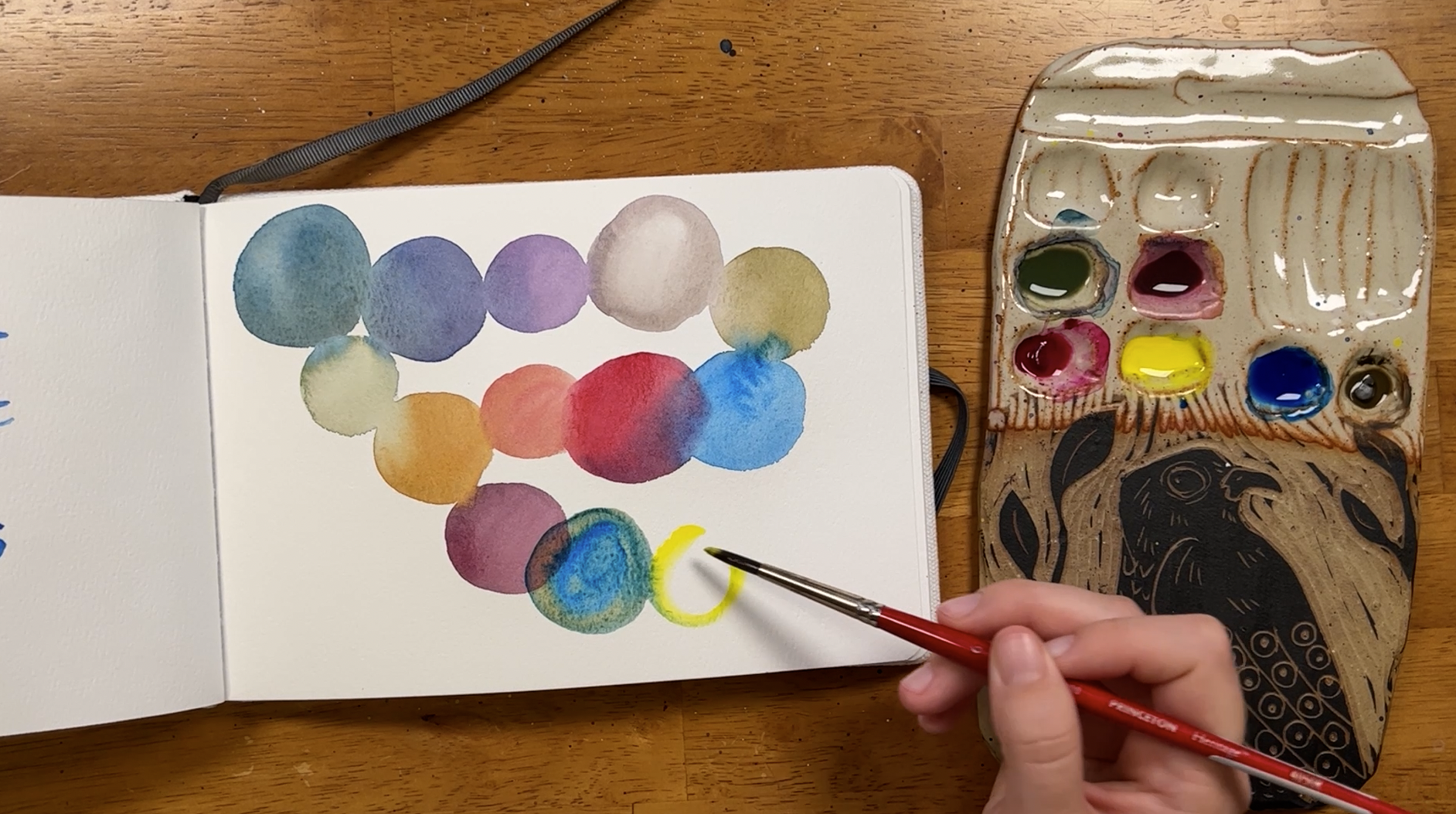
painting really simple circles. I focused on this circle shape because I think a very
common belief is that, professional artists can
paint a perfect circle. Not true. We're going
to practice circles, we're going to practice
various watercolor techniques, [NOISE] and I think we're
going to have a lot of fun. My friend, the prompt for
today is fairly simple. We're just painting a
whole bunch of circles, and because we're painting
watercolor circles, we're also going to
incorporate color mixing, we're going to incorporate
some wet on wet blends, meaning that as we're
painting the circles, we want them to be
wet enough that if we paint one circle next
to the other circle, and just barely touch
the two of them together the colors will
blend into each other. That's the goal with the first part of
these circles anyway. The reason that we're painting circles for this limiting
belief that is I don't have the skills
that I need is two fold. The first one is I think
it's a very common belief that real artists or professional
artists or whatever, can draw perfect circles and that maybe true
for some people, but I doubt it. I don't think it
that's really true. If you're letting something
like not being able to draw a perfect circle get in the way of trying something new, then this activity is
to help you practice, letting go of that expectation. We're also practicing
another element on the wet-on-wet technique. The wet-on-wet technique
we're trying to guide with the wet-on-wet
technique in a new way. I said wet-on-wet
technique many times. [LAUGHTER] That's okay. By barely touching each
circle to the next one, we are intentionally using
what we know about watercolor, which is that paint wants
to move where it's wet. Wet paint, which
watercolor is wet paint, wants to move where it's wet. If we paint something else
wet next to a wet circle, then the pigment should want to move into the next circle. If that doesn't happen, then instead of getting really
discouraged and thinking, man why isn't it working? It's supposed to work. It's working for Colby why
isn't it working for me? Remember take a step
back and think, okay, this is not about skill. This isn't really
about skill level. This is about curiosity. Why isn't this working? What did I expect from this? Then maybe even let go
of the expectation of success in the first
place and think to yourself what happens
if I do it this way? What if I lean into the mess? What if instead of
just barely touching the circle I overlap
them? What happens then? As you can see we have this blurry blend
between the two circles. Where I just painted
that big red circle on top of the blue circle. The goal here is to remember that skill is not a
gateway to creative joy. Skill is not a gateway to you feeling that thrilling
sense of wonder, and it's also remembering
that the only way people have gained skill
is to practice. That's the only way. In order for you to learn and
in order for you to grow, you have to practice. As we've discussed in other
days of this challenge, practicing is so much
easier when you let it be expectation free and
focus on the curiosity. I'm having fun. I
let my circles dry, and now I'm painting circles
on top of the dry circles. That is called glazing. When you paint something with watercolor on top of
an already dried layer, watercolor is transparent
and so it has this really unique
quality where you can see the layers underneath. It's a lot of fun to play
with especially with circles and if you have time
to let your layers dry. Now I'm just exploring
a little bit more, painting a little bit more, it looks like that blue
circle wasn't quite as dry because I don't
have that crisp line. That's one thing you
can also explore. What are the characteristics
of the wet on dry versus the
wet-on-wet technique? Well, the wet-on-wet
technique when you have wet paint
touching a wet surface, typically results in blurry
lines whereas when you put wet paint on a dry surface it results in crisp clear lines. If I try painting a circle
on top of another one, and I get really blurry
lines in-between the two, then I know both
circles are wet. Those are observations that you can only make when
you're open to them. You can only be open
to observations when your success
doesn't depend on them or at least it's easier to be
open to these observations. Remember that you
don't need to have all the skills you
ever want right now. You're going to gain them a little bit at a
time as you keep coming back to your paints coming back to your
desk again and again. At the end of this I decided
to do some splatters because I just love
splattering on things. I think splatters make any rough and ready
project even more fun. Almost makes the
mess intentional, so I'm ending this
little circle design with some splatters, and I hope that you had fun
painting with me today. [MUSIC] That's all we have. Remember you don't need to have all the skills you can learn as you go and have
fun along the way, and I will see you
tomorrow. [MUSIC]
9. Day Six: Stripes: [MUSIC] My friend,
it's Day 6 and we are tackling a big
limiting belief today. We are confronting the idea that creativity is
a waste of time, which I think is something too many people find
themselves thinking. Especially when maybe
creativity is not your job, when maybe you're not
a professional artist, it's easy to think that if
it's not bringing you money, if it's not bringing
you validation, if it's not bringing
you something that your whole life has
told you is valuable, then it's just a waste of time. It's also easy to think that if you're not creating
a masterpiece, if you're not creating
something that you might want to frame or give away or sell that
it's a waste of time. Too often, I find myself
trying a new technique, failing miserably, and
then feeling like, that was a waste of an hour. Obviously, because this is a
limiting belief that we're practicing in this seven-day
challenge that is not true. It is not a waste of time and so we're going to
shift our perspective from that limiting belief to
anything that brings me joy. Any moment or experience that
brings me joy is valuable. It is worth my time. Sitting here at my
desk is worth my time. We're going to practice that by painting just a really
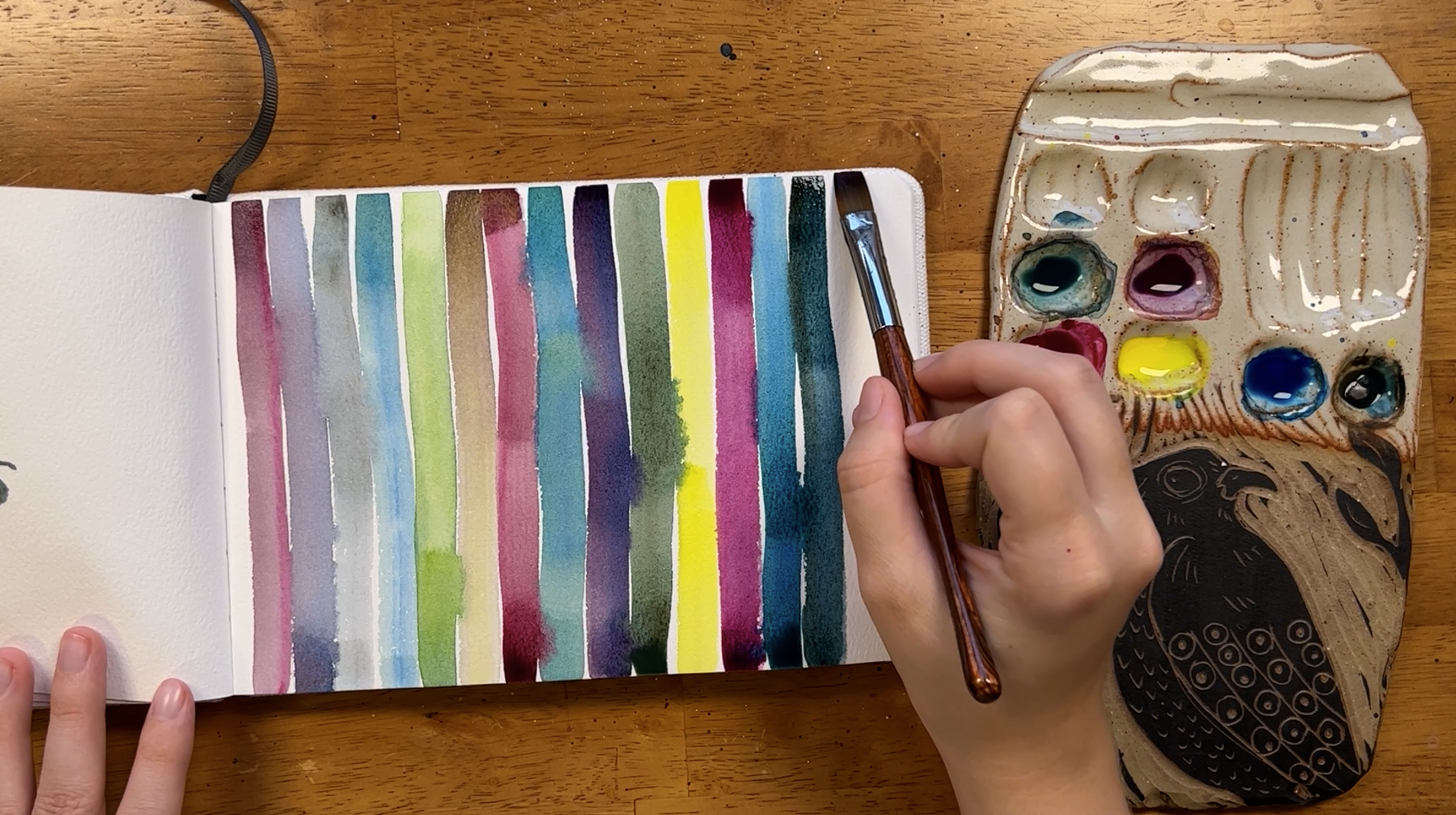
simple exercise. We're going to paint stripes
all the way across the page. It's one that you can use
over and over and over again. It's one that I pull out often when I know I
need to be creative, but I just don't have
it in me to paint a full landscape or
do some masterpiece. But I want to access the power that creativity
has to give me. It's simple exercises like this. Let's paint some
stripes and deconstruct this limiting belief of
creativity is a waste of time. All right my friends today
we are using a flat brush. You don't have to, but
I am because I enjoy painting stripes
with a flat brush and that's exactly
what we're doing. We're just painting a
whole bunch of stripes right next to each
other across the page. Super simple, a super
simple pattern. As we're painting these stripes in various colors, of course, with various mixes of the primary colors
whatever you want, I want you to barely touch the stripes
next to each other, similar to how we practiced
with circles yesterday. Let's compare and contrast. Let's try to see the difference. How differently the pigment
responds when we are using a flat brush versus when we use a round brush
for the circles. How differently the pigment responds when we're
using a different shape because we're using
long skinny stripes as opposed to circles. If you don't really remember
from yesterday, that's okay. You can have your
own curious feelings about this project on its own. How long does the paint
last on my paintbrush? How long before I have to
go back and fill my paint, fill my brush with more paint? Because you'll notice
if you try to do all of these stripes in one
go sometimes toward the very end you get
a dry brush texture. That's because at some
point the water and the paint leave the bristles on the brush and so we get this
natural gradient effect. Painting is not perfect, it's not a perfect thing and so that imperfection leaves you
so much room for exploring. That's exactly why
this exercise is the one I chose for confronting the limiting
belief that is, this is a waste of
time because, in fact, so many of the projects
that we're doing this week might seem
like a waste of time. We're using a sketchbook. They're not going to
be used for anything other than your own
personal edification. Especially if you are a person who has learned to
value productivity and results-based
activities more than anything else it might seem like these are just doodles
that aren't going to do anything when in reality, they are doing so much for you. Just sitting down and
putting the brush to paper is doing so
much for your body. Did you know that
creativity is one of the best ways for your
body to process emotions? I love doing stripes like
this when I am having just a terrible day and I need to relax because I get
to use my paints, I get to use my favorite color and I do something
that's really easy, that has a quick win. I love those tiny little
blends and bleeds that happen when you barely touch
those stripes together. I think it looks so cool. I think the imperfection
and messiness of the stripes in this
design are what make them beautiful because they just blend together in
this quirky, unique way. Is this the first time stripes like this have
ever been painted? Now, I've seen lots of people
paint designs like this. This is a very common
exercise to paint. What does that mean my painting, this is a waste of
time because it's not the first time anyone has ever
done this. Of course not. This isn't even the
first time that I have painted these stripes. It is, however, unique in that this moment
has never existed before. I'm going to use this moment
doing something that I love. Painting with
watercolor, exploring my tools, exploring my colors. No, painting and creativity
is not a waste of time. Even if at the end of the day
you hated what you painted. How you feel about what you painted is not as important as intentionally checking in with yourself while you
are painting it. Creativity is about the process. It's about how your body
feels while you're doing it. So many people make art
that is not very pretty, but that's not the point. The point of art isn't always
to make beautiful things. Yes, maybe that can
be one of the goals. But especially as
you're building a personal creative practice, the point of doing really
simple stripes like this, especially it's just
to get to painting. It's just to get to
your desk and to do something fun and relaxing. You can learn so
much along the way. This is an excellent activity to learn about color mixing, to learn about how different pigments
respond to each other, to open up questions, especially as you
do this activity over and over and over again. The easier it becomes, the more wrought the
actual painting becomes, the more observant you find
you are because you will be able to exert your
energy to asking even deeper questions about
what's in front of you. As you paint your
stripes or as you do anything mindless
but beautiful and simple like this
remember that this is absolutely not
a waste of time because your time
is valuable and anything that brings
you joy is valuable. Thank you for painting with me and I will see you
tomorrow. [MUSIC]
10. Day Seven: Minimal Bookshelf: [MUSIC] It's the last
day of the challenge, my friend, day 7. Today, I am wanting us to
confront probably one of the most tender and
sensitive limiting beliefs that exist in everyone. This idea that you are
not a real artist. If you don't sell your art, if you don't have
very much skill, if you don't have a whole
lot of knowledge or experience and
somehow that means, you are not a real artist, that you are not creative. This just hits at the core
of this whole challenge. This idea that you need to qualify in order to
be in this space, in order to belong
to your creativity. The reality is that you do not. You are already worthy. You are already an artist even before you picked
up your paintbrush. We're going to talk
about that today. The limiting belief is, I'm not a real artist. The mindset shift is, I am a real artist because I make art. It's
as simple as that. As we practice this, we're actually going to
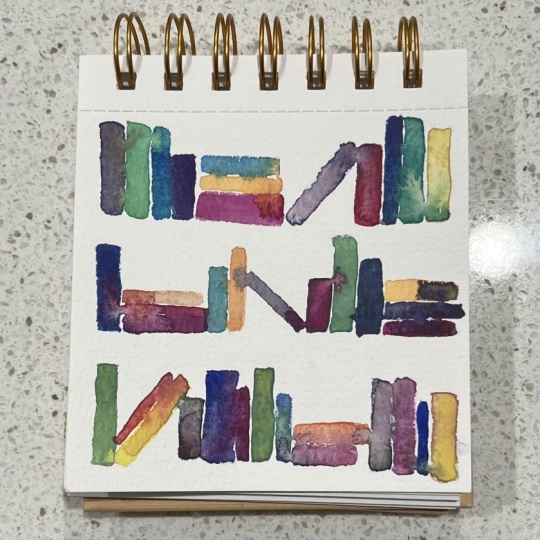
paint something that could be considered
a final project. It's a design that you
could potentially use as a real design to
gift or to frame or whatever or
painting a bookshelf. For painting a
minimal bookshelf, meaning we're only
using a few shapes, we're only using a few colors, we're using the techniques
that we've used, basically. Very subtle blends and bleeds
using really simple shapes. I'm showing you how you can use rudimentary skills in order to paint something beautiful
that's meaningful, and that a lot of people
will praise you for. The praise is unnecessary, but it does feel good sometimes. Today, remember you
are a real artist. Even beginner skills
can give you enough, can give you what you need to paint art that feels
like real art. Let's get to it. It's
our final project and today we are going to
paint something that you could theoretically
take out of your sketchbook and turn
it into some giftable, shareable, frameable piece
of art if you wanted to. I wanted to end our amazing week of painting and creativity
and developing a creative practice
with something that is an actual design that feels like a final project as opposed to lots
of process art. I think process art is important but today we're going
to take a lot of these simple shapes and simple techniques like
the wet on wet technique, like these rectangle shapes, I painted two with a flat brush, I painted that
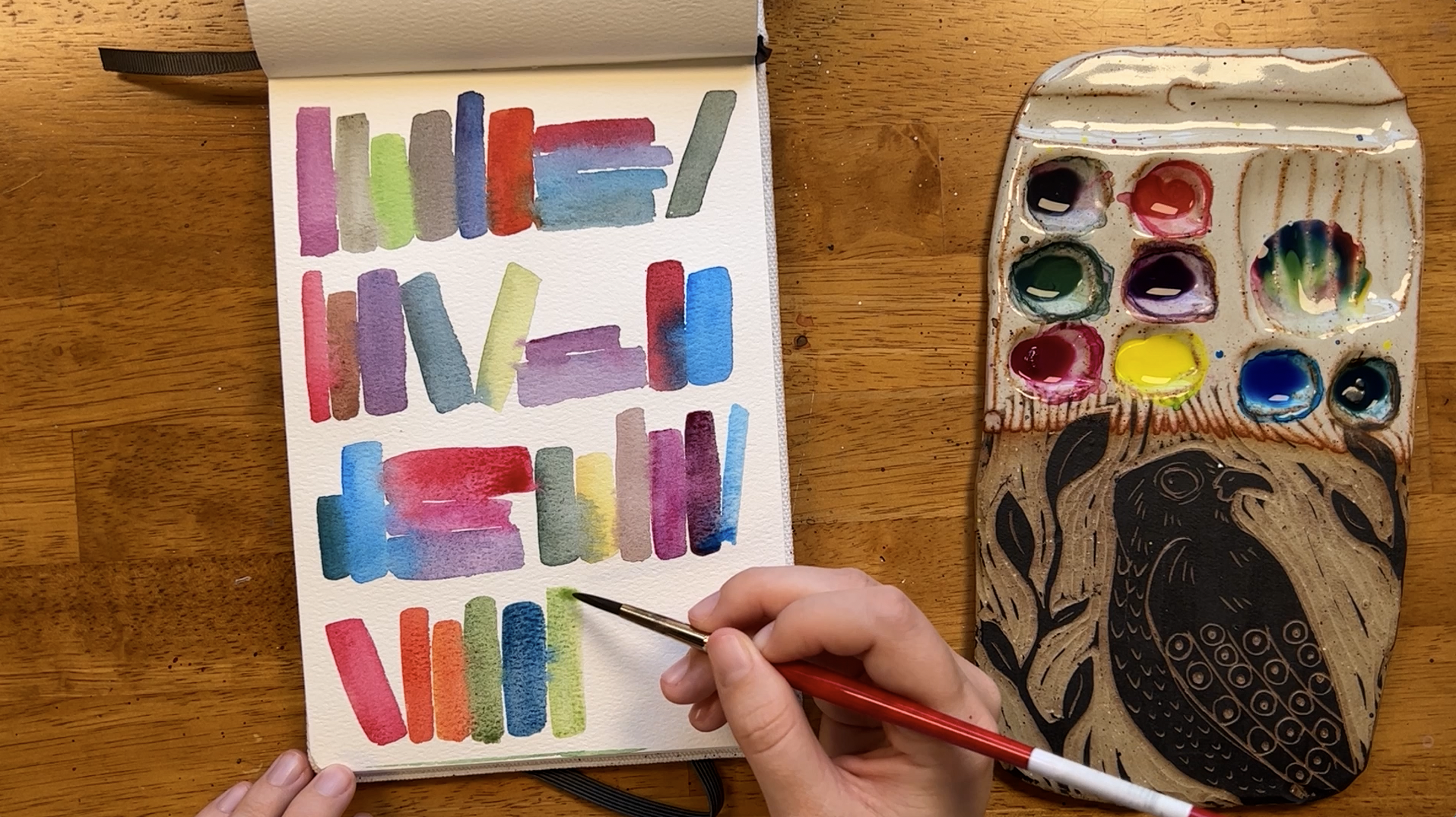
rectangle shape with my round number 6 brush over going to create a
minimal bookshelf. Just by painting a bunch of rectangles all next
to each other, just barely touching like we've already practiced in
some of the other days but creating the illusion
that we're looking at a bunch of books spines
across the shelf. Today, we are confronting the limiting belief that
I think is so common, especially with hobby artists, beginner artists, people who didn't go
to art school like me. It's so easy to fall into this trap of believing
that because you don't have all of these qualifications that
you think are necessary, you are not a real artist. It's so easy to think that
because you don't have the fancy supplies or because you don't have
all the experience, or because you just
barely started painting for the first time in
20 years or 30 years, or 50 years, that you're
not a real artist. I just have to tell you, that is absolutely not true. As we're painting these books, one thing to note is we're
using simple shapes, and we are intentionally
varying the color, varying the shape, and varying the angle
where the books are. This is something that
you can keep in mind, especially if minimal
painting like this is something you find
you might enjoy. Is you can create the feeling
of an object that exists in real life with just a few simple details and
whitespace and directions, like contrast and directions
that's something you can do to add realistic
imperfection. When you see books
lined across the shelf, they're not all the same size, they're not all the same shape, at least not on my
bookshelf they're not. Being mindful of that and
leaning into your imperfection, that is actually going to make
them look more realistic. It's one of those funny things that your brain tells you, you have to get the
details exactly right, you have to paint things
exactly as they are in order for people to believe
that this is a bookshelf but you don't have to do that. You don't have to get
the proportions right. You don't have to
paint all the details. You just have to put the paint down onto
paper and figure it out. The more you lean into
the imperfection, and the more you let go of the expectation or the belief that you don't have the skill, you're not a real artist, who do you think you are? All of those thoughts
are just distractions. Pick one or two things that
you're going to focus on. For me, the two details I decided to focus on
in particular were, changing the size of each book so that they're
not all the same height, they're not all the same width, and to change the direction. Some of the books are
leaning against each other, some of them are stacked
up against each other. I am very intentionally
making those variations. Because I know that actually
variation and imperfection are more realistic
than perfect lines. They just are, and I think
they're more beautiful too. You don't have to paint
the books if you'd rather paint something
else with the shapes, I highly encourage that the whole point of
this project is to remember that you don't have
to use all the details. You don't have to spend months and months on a
painting in order for it to be a real painting. This is real art. What you're painting right here, what you've done
this whole week, all of its real art, even if it's not art, you particularly want to save, or art you even if it's a project you don't
really want to try again, that doesn't mean
that what you are doing isn't art, because it is. That's because
creativity is a process. Creativity really
is just a vehicle. I think that it's easy
to believe creativity is some innate quality, some innate characteristic that some people have and
some people don't but the reality is that everybody has access
to creativity. In fact, I would argue everybody uses creativity just
in different ways. That's because creativity
is just connecting things. Creativity is looking
at two things like rectangles that you've
already painted and books on a shelf
and saying to yourself, those look like each other. I wonder if I could do that. Creativity is looking at
something you have never done before and
problem-solving your way into a way to make it work. That can be with
art or it can be with literally anything else. That's why I believe everybody uses creativity all the time. Creativity is a vehicle, a process for you to discover, wonder, for you to
discover growth, for you to discover joy. It's a way for you to create new connections
in your brain. In a way that excites you, or at the very least
just gives you new knowledge and information. As we conclude our
week together, I want you to remember that you are an artist
because you make art and you were an artist long before you ever
picked up a paintbrush. Even if you've spent
years imagining painting or you spent
years imagining creating something before
ever actually doing it, you were still an artist. You are still using
your imagination to create something that
wasn't there before. Does it feel probably
so much more satisfying to actually put
it onto paper? I'm sure but that artistic
quality never left you. You are always an
artist [MUSIC] and you always will be an artist. I hope you continue making
art and believing that. Thank you so much for
painting with me. In the next video, I'm going to talk about some principles you
can take with you to incorporate creativity
every day. I'll see you then.
11. Strategies for Everyday Creativity: [MUSIC] Well, my friend, you've done it. We're done. You did the seven-day
challenge and I am so proud of you.
How do you feel? I would take a few minutes, especially towards the
end of this challenge, to really sit with where your perspective
was at the beginning, where your perspective
may be changed or shifted toward the middle,
and where you land now. Maybe you're not
super confident. Maybe you still have
some of those fears. The reality is, it takes a little bit longer than
one week to break down decades of a terrified
inner critic telling you all of the ways
that you're going to fail. It takes a little
bit longer than that to deconstruct all of these negative mental
barriers that you've built over the years,
and that's okay. I'm going to tell you
the key to building a real sustainable, everyday
creative practice. If you want to do
something consistently, if you want to incorporate
creativity into your life consistently because you really believe that adds value and joy, you need to have self-compassion and practice that
self-compassion muscle. Now, self-compassion looks
like when you're painting, reminding yourself this
doesn't have to be perfect. It's okay that it's a mess. But self-compassion is
also reminding yourself, it's okay that I'm feeling
disappointed right now. It's okay that I'm frustrated. It's okay that I still fall into these negativity
spirals sometimes. It's okay if maybe
my anxiety and my inner critic win out
at the end of the day, maybe I don't pick up my art
supplies for a few days. It's all okay. Self-compassion
is basically just giving yourself
permission to be a human. To say, I understand
that I am trying my best and trying my best
looks different every day, and the worst way
for me to actually make progress is to shame
myself for anything. It's okay if it
took you more than a week to take this challenge, it's okay if you still feel like the fear
is holding you up. Just start a little
bit at a time. That's why all of the
videos in this challenge, were less than 10 minutes. It's because it doesn't
have to be all or nothing. That includes your progress, your progress with your mindset as well as your
watercolor skill. It doesn't have to
be all or nothing, even a little self-compassion, will go a long way. The other really important key to building your everyday watercolor
practice is flexibility. Consistency requires flexibility
because you are human. If you want to build
consistent habits, it requires you to be
flexible with yourself. As you continue going
about your day, going about your year, trying to take the principles that we've learned with you, remember that at
the end of the day you and how you feel about yourself, that's more important. Yes, creativity belongs
at the top of your list, and hopefully over the last
seven days you've seen why. Yes, creativity can
bring you so much joy. No, you don't have to be perfect because creativity
is about the process. Creativity is how engaging in the act of making
something that didn't exist before changes your
perspective as a human. It's all about you and your experience and the life that you are choosing
to build for yourself. All of those things are true. But creativity is not
the end goal here. The end goal is not for you
to be a creative person. The end goal is for you
to be a joyful person, for you to be a curious person. Creativity is just the vehicle. It's just one way
that you can access so much joy and
fulfillment in this life. If you find yourself feeling
bad or feeling ashamed about the fact that you haven't picked up your
paints in a while, please don't. It's okay. I go weeks without
painting sometimes, and not just because I'm busy, sometimes I go weeks without painting because I'm
getting stuck too. You're going to get stuck again. But now you have some real valuable tools to help you get unstuck
when you need them. I hope that this little
pep talk has helped you, and I want you to remember, it's okay. It's all okay. What is an actionable
thing that you can do next after
this challenge? Well, one thing you can do is to maybe see where
you can schedule in 10 minutes of creativity
every day to make a plan to intentionally do something that makes it easier for you
to get to your desk. Then remind yourself that it's
okay if you don't make it, you can always try again. I have one last thing
to share with you, and then we'll close out
this challenge. [MUSIC]
12. Wrapping Up: [MUSIC] Thank you so much
for joining me, my friend. Thank you so much for
joining me in this class, painting with me
for the last week and stretching your skill, stretching your comfort
level so that you can find more joy and confidence
in your creative practice. I am always so honored to paint with you and
to share in this journey with you because as has
hopefully been made abundantly clear, I'm on this journey too. I'm not trying to speak to
you from a pedestal saying like I've done it all and now you can
get to where I am too. I have a lot of
experience with this, but it's a journey. I'm still on it and it makes it so much more fun when I
can have travel companions. Honestly, that's a big part of the reason why I
made this challenge. I really hope that
you enjoyed yourself. If you loved this challenge
as much as I loved making it, I would love to hear about it. Please feel free to
post your projects in the project gallery any
of the days that you have practiced or even any
project that you have completed maybe as a result of the challenge;
that's okay too. We want to cheer you on. Me and all of the other
students in this class, we want to be here for you to support and provide
you that community. You can also share on Instagram. My handle is @thiswritingdesk. If you post about the
challenge and tag me, I would love to give you some supportive comments
and to share your work. Please feel free to do so, so that we can catch up and
be friends on Instagram. Finally, if you really
loved this class, it would mean a lot to
me if you left a review. If you went onto the Skillshare
platform and left me a review so that other students who might worry if this
class is for them, can have a real insight
into what's in store. That really helps classes get seen by other
students and it gives me a good idea of how I can keep improving and making my classes even better in the future. That's all I have for now. It has been such a pleasure and I will see you
next time. [MUSIC]
 Kolbie Blume, Artist