Transcripts
1. Intro: Hi guys. I'm Clare Dove, I'm a songwriter, vocalist, and Skillshare teacher and I am so excited to welcome you to my newest class, Unlocking Creativity for Songwriters. In this class, we're going to be tackling one of the toughest challenges that we face, not just as songwriters, but as creative people in general. You might call it being stuck, feeling uninspired, or having a case of the dreaded writer's block, whatever you call it, we're all familiar with that feeling of just having hit an absolute brick wall with our work. I've been writing songs for a whole host of artists and projects for nearly a decade and through a lot of experimenting, researching, and learning from other creatives, I've established a regular practice. That means I'm constantly creative and I'm constantly writing songs. There's a combination of things I do routinely and exercises I use when I need a little jump start and throughout this class, I'm going to be sharing them all with you. I hope they can become part of your regular process too and that you'll be able to unlock a whole new level of songwriting and avoid feeling blocked. If you're looking for help with how to actually go about writing a song, I really recommend checking out my first-class Top-lining 101: Melody & Lyrics in Songwriting, first, which you can find in my Skillshare teacher profile, and then heading back here. This class is for songwriters of all levels and you don't need any equipment. I'm going to provide you with everything you need and I'm going to be setting you a little challenge along the way. All the details of this challenge are coming up in the next lesson. If you're ready to unlock your creativity and write some songs, let's go.
2. Our Class Project: For our class project, I want you to take on a two-week creativity challenge. I'm challenging you to take on all the exercises and practices that I introduce throughout this class for two solid weeks. Throughout the challenge, you will do the daily practices every single day, your weekly habit on Weeks 1 and 2, and you're going to try out the two jump-start exercises that I'm going to give you. Now, I know this sounds like a lot, but I promise this isn't a huge time commitment and you can still do everything else in your busy lives. These are techniques that are quick, easy, and so much fun, but like anything, you will have to set your mind to it, and make a commitment to the challenge. Are you in? You absolutely don't have to wait until you finish the whole class and then throw it all together for the two weeks. Take as much time as you need to go through the lessons at your own pace, and definitely feel free to start introducing the techniques as you go. When you do finish the class though, I'd love you to take on the challenge and see what happens when you do all these things consistently for two weeks straight. To help you along the way in collaboration with the amazing illustrator Sophie Rose Brampton, I've created a digital handbook, especially for you guys to download and use alongside the class and the challenge. Use this to track your progress and note what you find helpful, and how it's impacting your songwriting and general creativity along the way. This handbook is something I'm so proud of that I hope you'll love, and use time and time again after the challenge is done. You'll find the handbook in the class project section. These are things that work for me, and I believe can be really helpful for others. With that said though, you might find some things more effective for you than others, that's totally okay. But promise me, you'll give it all a go for these two weeks and see what happens. In the Skillshare class project section, you can share the song or songs that the class help you to write, either after the challenge or just as you go along. Upload them as audio files or videos, whatever you prefer. I'd recommend using services, such as SoundCloud or YouTube to do this. Also, please feel free to keep me posted with your thoughts and what you're discovering along the way by dropping into the class discussion section. I'll be there to answer any questions and check out your songs. I really truly believe that these habits and exercises have played a huge part in my growth as a songwriter, and have really leveled up my writing and creativity. Honestly, more important, in doing so I'm having more fun with my writing than ever. I'm so excited to hear what this class does for you and your songs.
3. Writer's Block: Those dreaded two words. Writer's block is something that pretty much every writer, whether they write songs, novels, poems, or films, has experienced. Feeling lost for inspiration extends to literally anyone who makes anything. But just because it's common and we hear about it so much, does that mean it has to be inevitable? I actually believe that by introducing the ideas I'm going to teach you in this class, we can keep ourselves in a state of constant creativity and avoid the block. Now if that last sentence sounded a little woo woo to you I'm sorry. But put that thought aside and think of these as practical tools to keep you in shape as a writer. Imagine yourself as an athlete. As you continue to train and show up every day, you get stronger and faster. That's just how it works. That's how you need to think of yourself. Show up every time for yourself, do your daily and weekly practices and I promise that writer's block will be a thing of the past for you. When you do hit that occasional roadblock, that's when our jump-start exercises are going to come in. Let's actually get into these texts.
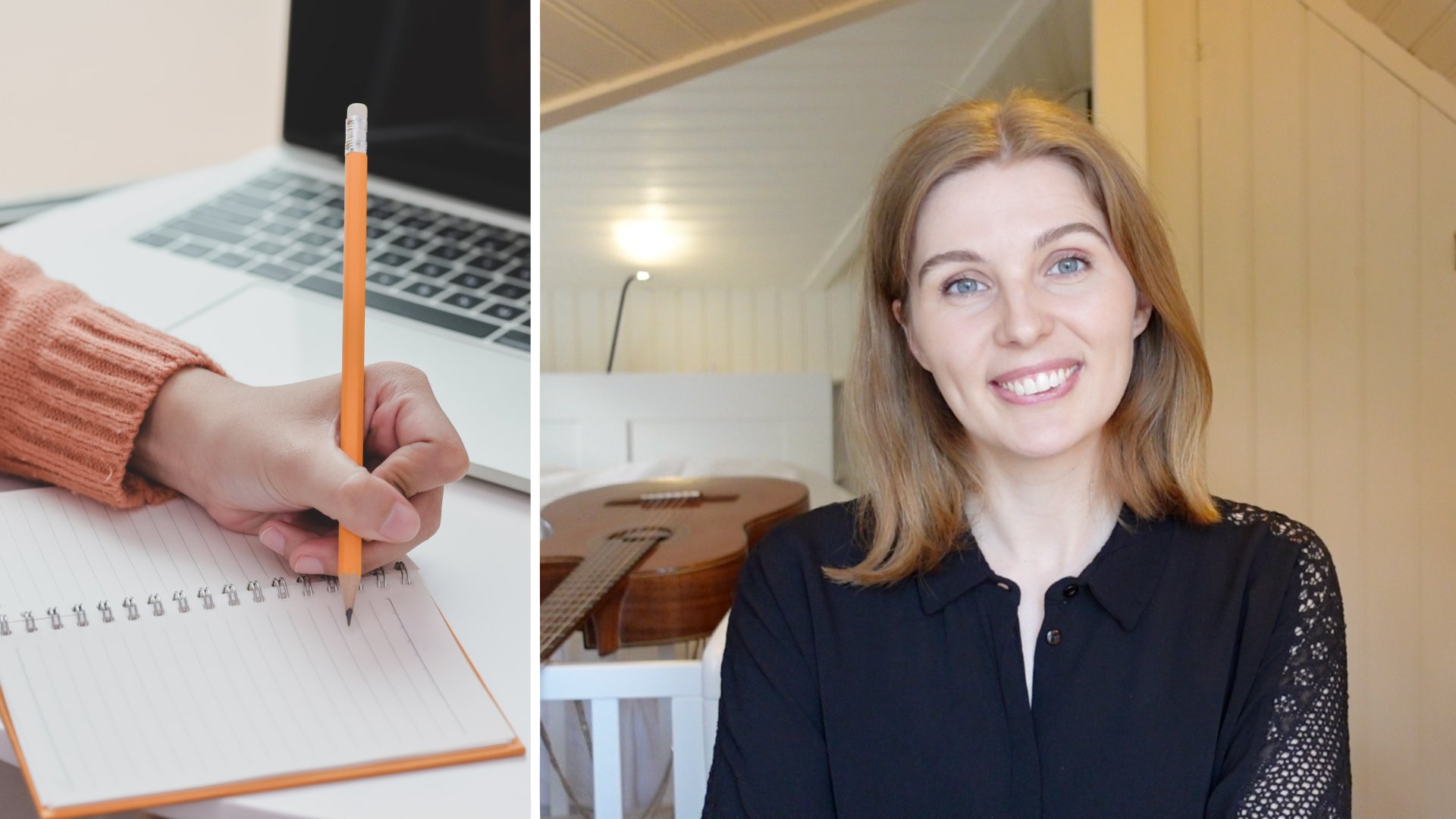
4. Daily Practices: It may or may not come as a surprise that our first daily practice as songwriters is in fact going to be writing. Now this is not just any writing though, some call it journaling, some call it freewriting, I actually call them morning pages. That's the name they had given by one of my favorite creative practitioners, Julia Cameron. Essentially, what I want you to do every single day when you wake up, before you scroll through your phone, but after you make a coffee if you're like me, is sit down and write. I think this is best done on pen and paper rather than on a laptop, if that's possible for you. We want minimal temptation to check emails, etc, during this and the act of actually putting a pen to paper is really cathartic and is part of what makes this exercise really beneficial. Don't worry if you're not a good speller or your handwriting is illegible, it really doesn't matter. Every day you're going to write three pages of anything. You can write whatever you want, how you're feeling, what you did yesterday, who you're annoyed with, what you're anxious about, how you have nothing to say today. You can describe what the carpet looks like, how your coffee tastes. It doesn't matter what you start with, the point here is not to write some beautiful piece of prose you're going to read back. The point is to prove to yourself that if you sit down every day, you can write. Even when you think you have nothing to say, you'll find that by the end of your three pages, you've ended up somewhere completely unexpected, maybe with a new idea or a new perspective, you might find today song in there. Another great thing about these pages is it gives us an opportunity to get all the bad, negative thoughts we might have going into our day out of our system. Get them all out on the page first thing, no one's going to judge you here and then you don't need to carry them through your day. Soon these pages will show you that you really don't need to wait to feel inspired to start a song. You can find great, completely unexpected ideas if you just sit down and start. You never, ever have to read these pages back, think of it as just one big sounding board or brain dump, spill it all out there. There's no need to ever come back to it. Please, at least for the two-week challenge, try and do these every day. If you do have other commitments in the home that you need to attend to, even if just for the duration of the challenge, ask yourself what you could do to find this time for you. If there's other people in your household, ask if they can support you in this and not interrupt you or help you at home just for that first half an hour of the day. I found these pages to be such a game changer for me, so I really want you to try and see what happens for you, so that is our first daily practice. Our second daily practice is seemingly nice and simple but you'd be surprised how often we don't make time for this, going for a walk outside. It can literally be 10 minutes, but just take a walk. This is different to the work you might take to work or to the bus stop, this is a little bit of time dedicated to your creative brain. Listen to music or your favorite podcast as you go, or just enjoy being with your thoughts. There's a couple of reasons why I think this daily walk is really helpful. Firstly, from a purely health and science-based view, we need fresh air and we need sunlight, we need to move our bodies. Song writers often spend long days inside windowless rooms staring our lyrics, thinking that this is the only way to find our way through a song, but it's not the only way and sometimes it might be why we're feeling blocked. When we move our bodies, even just by walking, our stress levels go down and our endorphin levels go up. Research suggests that even a 10 minute walk a day can greatly reduce the symptoms of things like seasonal effective disorder, anxiety, or depression. Us musicians are three times more likely than the general public to suffer from anxiety and depression. We might think that we write better songs when we're in those painful states because we have all these big feelings to write about. But honestly, you can write great work when you're happy and healthy and your creativity will be so much more accessible. Also, when we take a walk and switch up our surroundings, that in itself can be a trigger for inspiration. Who knows what you're going to see or who you might meet. I find inspiration for some concepts and lyric ideas all the time without even looking for them when I'm out walking or just enjoying listening music. Give yourself that time every day to consciously change your surroundings and move your body. I really think you're going to see how much this connects to your creativity. To sum up, your two new daily practices that you're going to do for 14 days straight and your two-week challenge, are free writing three pages every morning and a daily walk.
5. Weekly Habit: Now for your new weekly ritual, and this one is actually really fun. This is another idea I've adapted from Julia Cameron's teaching. Again, with the daily free writing, this is my take on it. In less than 10, I'll tell you more about how you can find her work. This weekly practice is all about quality, fun, creative time just for you. A creative date, if you will. Once a week, you're going to do something alone that feeds your creativity. You don't need the whole day. Although if you can, that's great. But even half an hour will do it. The date you take yourself on isn't going to be related to songwriting but is going to help you as a songwriter. Here's how. When we make time to do other creative things away from writing songs, we give ourselves an opportunity to actually discover more inspiration without having to work so hard to seek help. Of course, it's hard to find anything to write about when we spend so much time sitting and thinking about how to write. This helps to break that cycle. What it does even more significantly though, is to help keep us in that state of constant creativity. Creativity is fed by fun and new experiences. It might not be obvious how something like baking a cake could possibly help you write a song, but it can. Whenever we're doing something creative and fun, it's like extra nourishment for that part of you that's inspired to write music. You could be out having a lovely time, covered in pain, or hair dye and the next thing you know, the beginnings of a great song have started to form. Some ideas of creative dates you could take yourself on could be things like visiting an art gallery, going to watch a classic movie, rifling through a record shop or a vintage store. You could spend an afternoon painting your nails crazy colors or dyeing your hair. You could do some gardening, paint a picture, try and solve something. I'm sure you're getting the idea by now. The only rules are you have to do this every week and you have to honor that commitment to yourself like you would if it was a plan you made with someone else. When you make your day, stick to it. It has to feel fun for you. All those things I've mentioned are things that I've done or that I would do as creative dates. But they might not sound like any fun at all to you. It has to be something you really look forward to doing. You can't take anyone with you. This is for you and you alone. No kids, no partners, no friends tagging along, just for this little bit of time in the week. Your lives are busy. I know this, but even if it is going to be just browsing a shop for 20 minutes, that one that you always walk past and you've always thought, how you'd like to see what's inside one day. Well, that counts. If it's time for you and it feels fun and creative, then you're doing it. I try and make a rule for myself not to go on social media or start answering texts and emails at this time, which I would really recommend. There you have it. You've now got two daily practices and one weekly habit that I really want you to make part of your lives. I hope you loved them so much that they become part of your lives forever. But at least for this two-week creativity challenge, these are going to be the foundations of your new creative routine.
6. Jumpstart Challenges: Aside from what I hope will become regular practices in your life as a songwriter, I wanted to include a couple of what I'm calling jump-start exercises. Sometimes we still need that extra boost to get us into the writing flow. Sometimes particularly if you're in-between current writing projects, you might find yourself just flowing around, waiting for a reason to write a song. Well, there is always a reason. With each song we become better writers, and we feedback into that state of creativity that we're trying to stay in. Going back to my athlete analogy from earlier, it's like needing to keep your muscles warm. You don't ever want to stop for too long. The next two lessons are challenges that I made up just for fun. I started them on my social media platforms and I found them to be so beneficial and enjoyable that I wanted to share them with you. In the two-week challenge, I want you to give them each a go. These might inspire you to create your own challenges. If they do, let your classmates and I hear about your ideas in the discussion section, so we can all try them out too.
7. Jumpstart Challenge #1: For challenge number 1, we are going to pick a random word and use it to write a song around. Now it's up to you how to pick this word. You could open up a page of a book and randomly point to a word for example. I actually started doing this by using social media and asking followers to suggest words to me, and then just picking one at random. Let me show you how this works. Now, I'm going to move quite fast through the process of the songwriting itself here, but if you'd like more tips and guidance for songwriting, check out my Skillshare class, toplining 101. Let's get into it. In preparation for making this class, yesterday I asked my social media followers for their suggestions of a word for me to use in a song. I got lots of great ones, but the one I've ended up using is information. Now, this feels like an interesting place to start a concept from because it's not an emotional word and it's definitely not something I would have ever thought to use as the basis for a song. But that's the fun of this. I'm excited to see where it goes. When I'm first starting off with a word, I like to brain dump some thoughts around this and see where that starts to lead me to. Immediately the phrase information overload came to mind and the idea of feeling overwhelmed. I've shown you how to do this in toplining 101 and now I'm going to search for code sequence from Splice that gives me that same overloaded feeling. Remember, check out the toplining 101 class if you want to learn how to do this, or of course, you can produce or play your own chord sequence or just write an acapella song. I've got my code sequence and I'm going to start laying down some melody ideas next. I have a pretty good idea of the shape of the melody at this point and I'm really starting to get into the feeling of this song. Now I'm going to formulate my initial lyric ideas into lyrics that work with my melody. I think we have it. Now, this is just a short song idea and remember this is just an exercise in stretching our creative muscles. But you might want to turn yours into a fully fledged song. I actually really love this song concept, and I love that I never would have got to it today without randomly using this word that someone else suggested. To finish up the lesson, I'm going to show you what I've written today. When you've done yours, don't forget to share it with me in the class project section.
8. Jumpstart Challenge #2: For your second jumpstart challenge, you're going to write your own verse on an existing song. Pick your favorite song or artist right now, a song that would be a dream to be featured on and write the verse that you would have on that song if you were asked. Use your own melodies and lyrics, of course. But you need to think about what the artist has set before you and then find a way to develop that story further and introduce your own ideas. I think this is so fun and it challenges me to approach my writing in new ways by feeding off of that artist's work. Let me show you how this is done. Today I picked Harry Styles, Watermelon Sugar to write a verse on. Before we go any further, I need to remind you that we're just using this as a creative exercise and we can't release these songs that are based on other people's work without their permission but I'm sure you know that already. I've created a version with space to write my own verse after he sings. I'll leave a little step-by-step on how to create a version like this in the class discussion but you can just as easily do this exercise singing along to a karaoke backing track, which you can easily find on YouTube or if you play an instrument, you can of course, just play the chords to the song yourself. Now, I want this to feel like a real feature and to feed off of what's being said in the song already so that it all connects together. He uses lots of descriptive lyrics about taste and sweetness and imagery about summer. I want to build on that and acknowledge how I feel when he's saying this to me, as well as telling him how I feel in return. I need an original melody as well as lyrics too, instead of just using what's already there. I'm going to be using the techniques that I use in top lining, 101. Let's see what verse I end up with. I love where this idea has ended up. Again, it's not something I would normally write, especially at the moment as it's not feeling very summary in London right now but I love where his initial lyrics have led me. I also know the melodies of this original song really well. So it was a fun challenge to try and move away from them but still make it flow back and forth from the original melodies. I'm going to finish up the lesson by showing you what I've come up with and I hope it inspires you to try this out. You can share your work in the class project section or share your experiences in the class discussion section. Normally, I never want to dive right in but am swimming in you right now. Summer is nearly over but I can't stop thinking about how you make it so sweet all that I need. I never said enough of your love. Vision of you ten after tune all that I have been dreaming of. Summer running around honey I can't compare to your watermelon sugar, I can taste it in the air.
9. Creative Space: I wanted to talk to you just a little bit about creative space, by which I do literally mean the space where we write our songs. You might be like me and often write somewhere else like another studio or with another writer at their house, but it's still really important to have a dedicated space to create in. That's not to say you need a full writing room or studio in your home. This could be a coffee armchair or even a spot on the floor if that's your thing. I found that having even just a small area, this dedicating to be in the space that you create in, really helps you keep the creativity flowing. I think it's to do with the consistency of showing up in that space and knowing that when you sit down there, you're there to write, that helps the inspiration to show up when you're there. I'm a big believer in making your creative space somewhere that you really want to be. Make it comfy, make it pretty, make it so that you look forward to being there. Even if you don't have the room or the possibility to fully decorate the space, there're ways you can really make it feel creative. Top pictures that inspire you. Use your favorite coffee cup only when you're there. You could like, I can't do when you sit down. These little things really contribute to making your creative space somewhere that you want to be, which helps you show up there every day, which helps you feel constantly creative. Which helps you to write amazing songs. This week perhaps as part of your creative date, I want you to go and get one new thing for your creative space that you can look at, and that makes you feel happy to be there. It doesn't need to be something that you buy, you could find it or make it or just give something in your home that already makes you happy. A new spot in your creative space. It could be a plant, a picture, a pen, anything you like. During your two-week creativity challenge, explore if there are any other simple things that you think help you feel more creative. Maybe what you were, what you eat that day, what music you listen to in the morning. Make a note of them in your handbook and share your thoughts in the class discussion section.
10. Recommended Resources: There are some amazing resources that were pivotal in developing my own creative practice. I really wanted to share them with you too. Hopefully, this class and the two-week challenge have really helped you with unlocking creativity in your songwriting. If you're ready to learn and explore, even more, these are just some great places to find new ideas and inspiration. I'm not going to go into too much depth explaining their contents here. But I thought it was important to share where some of these ideas originally came from. I hope you'll check some of them out. For books, I'd really recommend The Artist's Way by Julia Cameron, The War of Art by Steven Pressfield, and Big Magic by Elizabeth Gilbert. There are also some podcasts that I'd really recommend too. Which are Magic Lessons hosted by Elizabeth Gilbert and Right to The Source hosted by songwriters Sarah Hudson and Evan Bogart. I'll post links to find all of these resources in the group discussion page. If you have your own recommendations, please add them to the comments. I'd love to know about them.
11. Thank you!: Thank you all so much for taking part in another Skillshare class with me. Don't forget my original class, Toplining 101: Melody & Lyrics in songwriting is out now. If you're feeling inspired, but still need some extra help with your songwriting itself, you can head over to there. Good luck taking on the two-week creativity challenge. I cannot wait to see how you get on and hear what you create. Beyond that, I hope you keep on incorporating these techniques and practices in your lives, and that they help you overcome writer's block for good, and lead you to write your best, most creative songs ever. Don't forget to download the Hamburg to help you and to upload your songs in the class project section. Keep me posted with your thoughts and feelings and discoveries along the way in the group discussion. If you want to say Hi to me outside of Skillshare, you can come and join me on social media, under the handle claredovewrites. I'll be doing some students shout-outs over there, and letting my followers know about the amazing work you guys are doing here. You can also now check out my new artist project an alter ego Grl Bunny too. I am super excited to share this with you as this is a project really born out of taking on the creative practices that we've just explored together. There are lots of fun things and new music happening there, including regular posts of me taking on and sharing my take on our jumpstart challenges. You'll see, I really do use them all the time. I'd love your support, so do say Hi over there, if you come and check it out. I can thank you enough for taking this class, writing songs is my favorite thing to do in the whole world. I'm so happy that I get to help you do that too. Keep writing, keep exploring all parts of your creativity. Don't forget to share your work and your experience with the two-week challenge with me. I'll see you guys in the next class.
 Clare Dove, Songwriter & Vocalist