Transcripts
1. Introduction: If you're anything like
me, from time to time, you feel brown this way and that by all the things
you want to do, or it feels like you're dragging 100 anchors along with you or that you're shackled
to the harbor wall, unsure of what to do, where to go or how to get there. You look at all the things you could be doing, should be doing. You compare yourself
to what others are doing or to what you were
doing five years ago, or even two months ago. Maybe you're judging
yourself or feeling guilty. My name is Rich Armstrong. I'm an artist and illustrator, and I've been through this
big time after having kids and many other times
because of my ADHD. Know what this feels like, not operating like you want to, not creating like you wish
you could. And that's okay. That's actually the first
step to acknowledge and accept that you're not
creating like you want to be. In this short practical course, I'm going to take you through
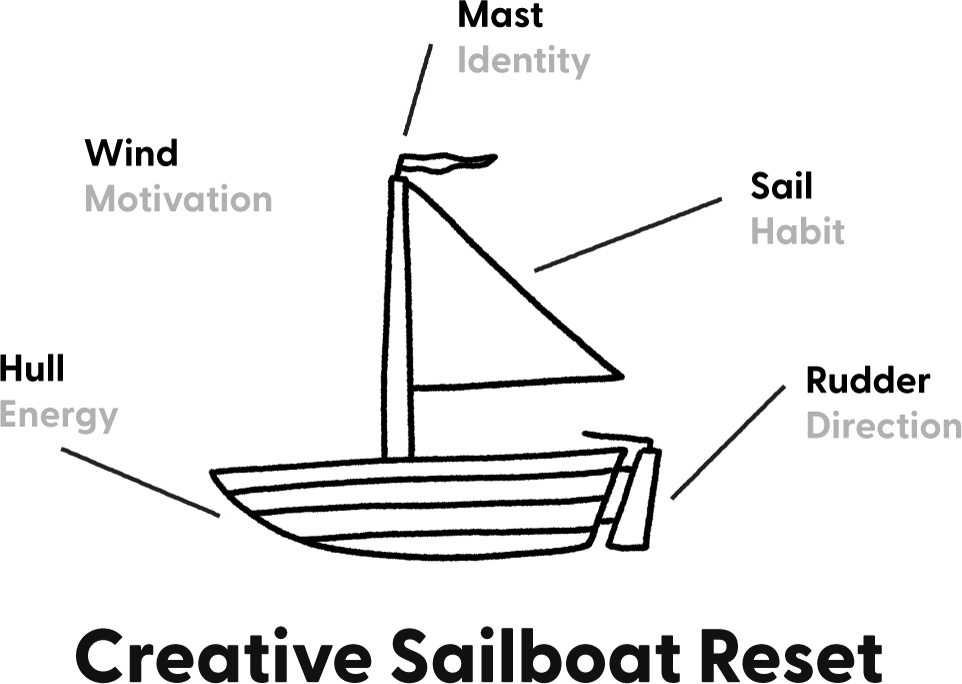
my Creative Sailboat Reset. There are five
exercises we'll go through together to get
you creating again. Gentle, guilt free,
judgment free creating. And by the end, you'll know exactly who you are and
where you are right now. You'll know where
you want to go, what you're going
to do, and what you're lovingly going
to leave behind. Most importantly, you'll
be creating a game. If you're ready to stop
dragging anchors and start sailing with a clear
direction, then let's go.
2. Where Are You?: Right now, you're not
creating like you want to be. Maybe you keep
changing direction, stopping one thing to chase
treasure in a far off land. Maybe you're trying
what used to work for you or what works
for someone else. Maybe you're scared or
fed up, frustrated. Maybe you're losing hope. Words like judgment, comparison, perfectionism,
burnout, overwhelm. Any of those sound familiar? I want you to know
something, though. You're not alone.
You're not broken. You're not lazy.
You're not behind. This happens to every
creative, including me. Before I had kids,
I worked in long, uninterrupted hyperfocus
sessions, not because I had to, but because I loved it
and had the space for it. With kids, that all changed. It took me a while to stop comparing myself
to who I used to be and learn how to create in the life I
actually have now. And that's what
we're going to do together in this course. The first thing we
need to acknowledge is that everything is different. You're different
from who you were. Your life is different
from what it was, and you're different from every other creative on planet Earth. So what I want you
to do now is take a deep breath in and out. Acknowledge that everything is different and accept that
everything is different. How do you feel right now? This is a good place to start, and by the end of the course, you'll be ready to
sail again in a way that's right for you right now. You'll feel lighter,
more focused, and you'll have a
clear direction. In the next lesson, I'll
take you through the first of the five sailboat
reset exercises.
3. The Wind: First exercise is all about identifying what
motivates you right now. This is the wind for your sails, and there's normally loads
of it, too much, in fact. But here's what's crazy. We
often row instead of sail. We row instead of catching the wind because
the wind is gusty, inconsistent, it
changes direction, and we crave consistency. But that's not how
the wind works and it's not how motivation
works either. We'll get to sails and
how to use them later. But for now, I just want you to capture what's motivating
you right now. The right now part is important. Not what used to motivate you or what usually motivates you. What's motivating
you today right now? Where is your creative
wind showing up? Is it in the Pintres bores
you're curating or trawling through the Instagram profiles you're jealously scrolling, a load of ideas popping
up for something? What can't you stop
thinking about? What are you insanely
curious about right now? Are you excited about something? Maybe something new, maybe
something a little bit risky, something a little bit weird, or maybe it's something you love watching other people do, but have never tried yourself. Things like acting, ceramics, canvas painting,
murals, anything. We sometimes call
this shadow artistry, the thing that lights
you up from the outside, waiting for you to try
it from the inside. So write down what's motivating you down
on a piece of paper. There's also a worksheet you
can download and fill into. Then circle and highlight the ones you really
can't look away from. If you feel bursts of excitement
but never seem to move, don't worry, you
have a sale problem. We'll fix that in
the sales lesson. And if you don't feel any gusts of wind right now,
that's okay, too. I'll share some strategies in
the make it easier lesson. But when motivation
does show up, write it down, capture it. Now, this is it. You found your wind. And the next lesson, we'll
look at your energy and capacity and why it matters
more than you think.
4. Your Hull: If your boat has a leak, you're either going to sink or spend all your time
bailing water, no matter how excited you
are or how good the wind is. Motivation plus a hull with
holes, equals overwhelm. You don't try to sail unless
your hell is watertight. When you're floating, then
you can sail stress free. Your hell is your
capacity and your energy. And sometimes, truly, the most creative thing you can do is take care of yourself, release the guilt,
release the judgment, and just take care of yourself. I'm not saying your
life needs to be perfect before you set sail, but sometimes taking care of yourself is your
immediate creative act. Other times, you can take care of yourself and create
at the same time. And sometimes creating is
taking care of yourself. What I want you to
do now is write down a few things that would give you more energy or increase
your capacity. Think about things like
getting better sleep, managing your time
more intentionally, maybe asking your partner for help or
offloading something, canceling plans you said
yes to but actually wanted to say no to clearing
your digital overload, you know those 487 open type, the 234 unread emails and
the 14 unfinished courses. Moving your body, daily
walks, yoga, weekly exercise, and dealing with
the distractions that hit you hardest, your home, your phone, your notifications, and your hot partner of
yours wandering around. Get rid of him. Writing down your mental load and getting
it out your head is golden. Eating a little bit
better and self care. Whatever that means
for you, the spa, a good series, a solo adventure. Now, these are just
ideas to spark your own. Write your list down, then pick just one to focus on this month. You can use the
worksheet if you like. A watertight hull
means you can sail smoothly without
worrying about sinking. That's it. With
your hull sorted, we can move on to your mast. I'll cover that in
the next lesson.
5. Your Mast: Your mask is your
creative identity. Actions follow who you are, and so do habits. But here's the biggest
problem I've seen and felt. We want to be too much or too many things
at the same time. Artist, author, content creator, student, illustrator,
pianist, coder, entrepreneur, all
wonderful things, but you can't be all
of them at once. You need to pick one
and do one at a time. Which leads to the
second big problem, we don't want to let go of who we already are or used to be. We cling to our identity
so tightly that we don't give ourselves a real chance at
trying on a new one. So here's what I want you to do. Just for this season,
for the next few weeks, allow yourself to temporarily try on a single
creative identity. It can be a new one, it can be an old one. It's not forever. It's just for now. Who would you like to be
this creative season? Here are some ideas to
spark your thinking. A student, someone who's
learning, a shipper, someone getting things
out into the world without worrying too much
about perfection, a scientist, someone experimenting,
testing, exploring, a kid, someone playing and
having fun, a collaborator, someone making things
with others, a crafter, someone going deep on the
details of their craft, and a teacher, someone
sharing what they know. Write down who you'd like
to be in this season, write down who you're not
going to be right now, too. It's a gentle way of honoring your other identities before putting them aside for a while. You're allowed to say not now. This doesn't define
your whole life, just as next creative season. So now that you've
got your mask, we'll go on to picking your
direction in the next lesson.
6. Your Rudder: Knowing where you're
going is vital. And knowing who you are this season will inform
exactly where that is. When you have a direction, heading, a goal, it
changes everything. It tells you how to position your sails, when
to hoist them up, when to pull them
in, when to ignore the wind completely
and hold your course. When you're sailing,
you don't need the wind coming directly from behind you to get where you want to go. You can tack and jib. You can work with the wind
from almost any direction. As long as you know
where you're headed. A clear direction also
simplifies your decisions. You know what to say yes
to and what to say no to. It's easier to ignore
rumors of treasures, avoid the sirens and stop
chasing every gust of wind. And if you don't know exactly where you're going
yet, that's fine. Head in a general direction and get more specific
as you sail. If you arrive somewhere and
it's not what you imagine, you can change course. At least you'll know
and have no regrets. So if this month had one creative direction or
destination, what would it be? You can choose a destination, which is a specific endpoint
or goal or a heading, which is a direction to move in. I personally prefer headings.
There's no finish line. You can move as fast or
as slow as you like, and you get to discover
things along the way. There's many destinations
in a direction. A few examples to spark
your own direction, watercolor painting,
destination, paint a series of
floral still lives. Direction promote myself,
destination, set up my website. Direction ceramics, destination, attender
class once a week. Direction, photography, destination, take Black
and white street photos. Direction, marketing, destination, share
eight posts online. Pick your own direction
or destination for this season and write it down on the worksheet
or in your notebook. Remember, where you're
heading will be shaped by the creative identity you chose in the
previous lesson. Now, you've set your rudder, and the next lesson, we'll
finally talk about the sails.
7. Your Sails: Here's the magic of sailing. Wind plus sales
equals movements. No motor, no rowing, just pure momentum
powered by the wind. In our metaphor,
sales are habits. Motivation plus habits
equals momentum. But it can be super tempting to add all kinds of
habits to your life. Habits you used to do,
habits others are doing, habits to catch
every possible wind. Nope. I want you to focus on cultivating one tiny
habit this season, one habit that aligns with
your creative identity, your direction, what motivates you and your current
energy and capacity. The wind does the work. You just need a
habit to catch it. Use your limited willpower
to raise the sail at the same time in the
same place each day. Here's the most important thing I'll ask you to do in
this whole course. Write down this sentence
and fill in the blanks. After hum, I will spend
amounts of minutes doing Hm. Seriously, write it down
now and fill it in. In your notebook,
on a sticky note on your fridge, make it real. You want a sailing habit, not a rowing habit. So start small if you need to. 5 minutes is great. You may plan for five
and create for five or you may plan for
five and create for 35. Over time, your
capacity will grow. Your sails will catch
more and more wind. The next thing I want
you to do is add this time slot to your
calendar, starting tomorrow. Then set a daily alarm for it. This tells your brain
and anyone else who wants your time that
it's actually happening. Then tomorrow, untie yourself
from the harbor wall, yank up the anchor and hoist your sails or sail
that little tiny sail. Start gently, take it
slow and have fun. That's the five sailboat
reset exercises done. In the next two lessons, I'll give you some
tips on making your creative habit even easier and when to
do the reset again.
8. Make It Easier: Here are four ways to make your creative sailing even easier. Number one, sail
with other people. Create with a
partner, a couple of friends or inside an
online community. When others are alongside you, creating becomes
more enjoyable and you stay accountable
without even trying. Two, join a flotilla. Sometimes you won't
have answers. You won't have an
identity or a direction. You'll feel lost like
you're bobbing in circles, maybe even ready to swear
off sailing altogether. When that happens,
join a flotilla. In sailing, that's where you
follow someone else's lead. They set the
direction, they guide. You just show up and do
what they're telling you. No decisions, no
habits to build. You simply sail under someone
else's flag for a while. This might look like
taking an online class, joining life workshops,
reading a book, and trying things out, ideally,
all with other people. At some point,
something will click. Something will feel like yours. That's when you
update your identity and set your own course. Three, ready your
ship before you sail. The hardest part of any
habit is getting started. So make it ridiculously
easy to begin. Put your paints out
the night before, charge your iPad and pencil, open the dock, whatever
your thing is, have it waiting for you. Four, tell someone
about your habit. When people know
what you're doing, they cheer you on, and they stop unintentionally
getting in the way. A quick, Hey, I'm
doing 50 minutes of drawing every morning
goes a long way. Alright. In the next lesson, I'll cover when and
how to come back to these exercises again.
I'll see you there.
9. Do It Again: Once you're sailing,
things will keep changing. The wind, your energy,
your directions, your interests, nothing stays the same forever. And that's
actually a good thing. You don't have to keep sailing
in the same direction. Come back to this reset whenever you feel pulled
this way and that, whenever you're
bobbing in circles, dragging anchors or clinging
to the harbor wall again. Or to make it more
rhythmical and intentional, use the 28 day project method. It's a rhythm I use myself, and it's become one of my
favorite creative rituals. The idea is simple. Focus on what matters most to
you for a month at a time. Do a mini review
every seven days and a bigger reset
every 28 days. It gives you enough
time to actually make progress with regular
moments to reflect, adjust and keep going. You can find out more about the 28 day project at this URL.
10. Conclusion: You did it. You did it. You did it. You did it. You did it. You did it. You did it. You did it. You've just done something most people never
do. You stopped. You looked honestly
at where you are, and you chose a direction
that's actually yours. That matters a lot. I hope you feel reset, aligned and a
little bit lighter. You feel ready to sail
the creative seas and the direction you want to go at your own pace and
on your own tomes. Now, could you do me a favor and leave a review
authors course? It means the world to me, and it helps other creatives decide if it's right for them. And if this resonated with you, please share it with a fellow
creative who needs it. For more courses and resources and to join my daily newsletter, visit Rich armstrong.net
and come find me online. I'm Rich Armstrong
almost everywhere, and that's an underscore
before the ONG. Alright, friend, happy sailing. I'll see you soon. Bye for now.