Transcripts
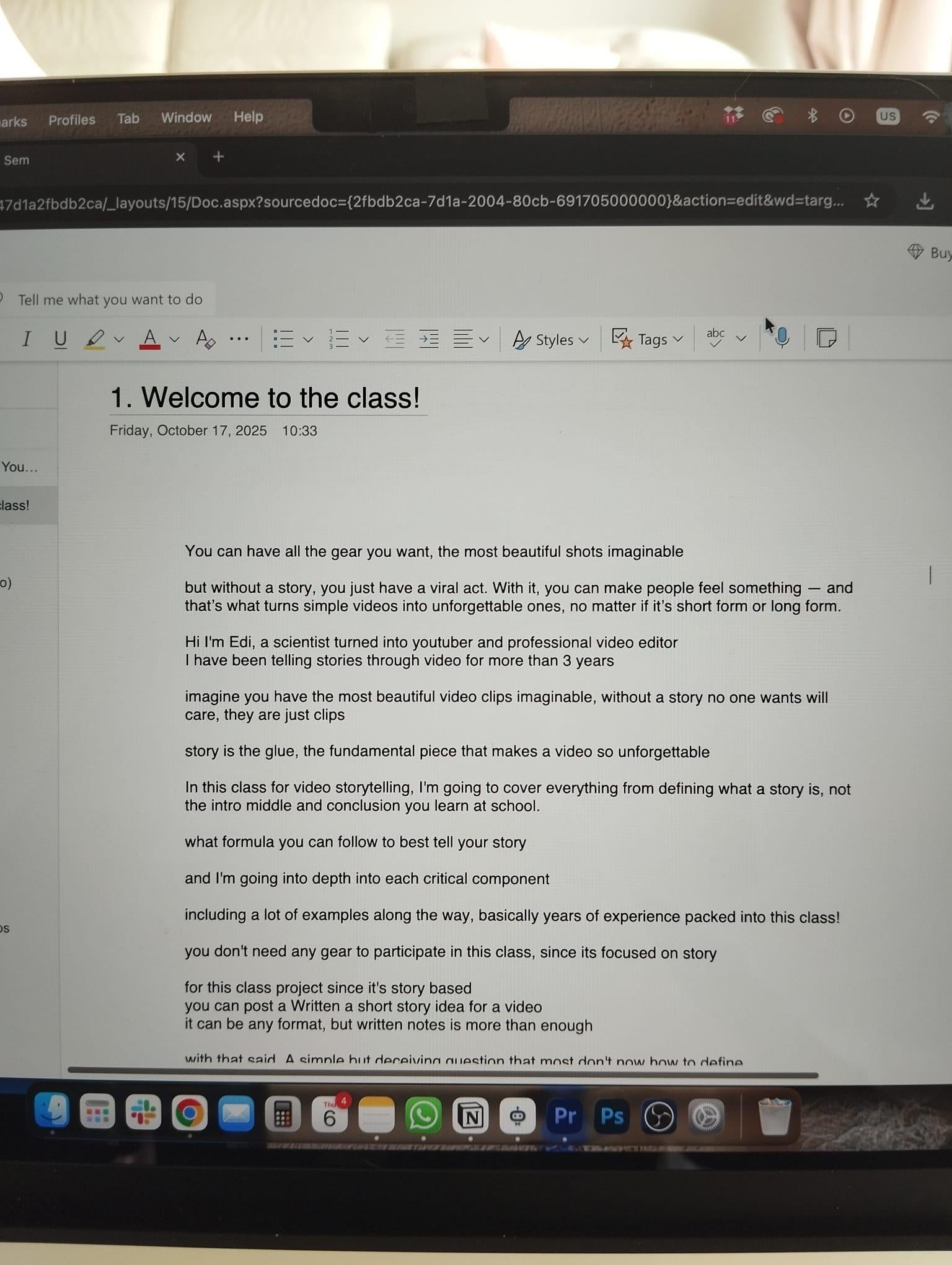
1. Welcome to the class!: You can have all
the gear you want, the most beautiful
shots imaginable. But without a story, you
just have a viral act. Story and video has the power to make
people feel something. And that's what
turns simple videos into unforgettable ones, no matter if it's short
or long-form content. Hi, I'm Eddie. I'm a former
scientist turned into YouTuber and a professional
video editor and producer. I've been consistently
telling stories through video for more
than three years. And for video, no matter how beautiful your
shots might be, without a story, they're just clips that no one will care. Story is really the glue of everything that makes the
video so unforgettable. So in this class of
video storytelling, I'm going to cover
everything step by step, starting from defining
what actually a story is. It's not the intromddle conclusion that you
learned at school. And instead, what formula you can use to best
tell your story. And there in depth,
I'm going through each critical
component showing you several examples of mine
throughout every part. Basically, years of experience
packed into this class. You won't need any gear since this class is
focused on story. And for the class project,
since it's story based, you can post a written outline of a video that you want to post using everything that you've learned
throughout this class. A simple but deceiving question that most don't actually
know how to answer is, what is a story? With that said, I'll see
you in the next one.
2. What Is a Story?: Here is a seemingly
simple question. What is a story? I say seemingly simple
because for me, the definition of story has changed throughout the
years of video making. So at the beginning,
usually at school, they all kind of taught us when we're writing a
story on a notebook, the same structure
for the story, and it is the following. It is usually the introduction, the conflict, and
then resolution. And while every video might
follow this structure, it is not in depth. And specifically,
this is more of a plot structure and not
necessarily a story. What I mean is that
this described what happens, but
not what it means. I'll give you a simple example
following these rules. So, for example, I missed
the bus this morning, and I ran to the bus station, but it was simply too late. I was mad. I had an important meeting,
and now I'd be late. I waited 15 minutes, caught the next bus, and
barely made it on time. In the end, everything
worked out. So that's a basic story following these three
simple structures. This structure doesn't
focus on meaning. It's predictable, and
that's why it's so boring. With that said, what is
actually then a story. But the thing is that
story is change. A story captures
the transformation that happens between the
beginning at the end. Remember the whole story,
the whole bus story. I wanted to catch a bus. Really, nothing changed. I mean, it is a story, but
it's a pretty boring story. But if I were to tell this
story in a video format, maybe it'd go a
little bit like this. I was very angry at first. I'm always rushing from
point A to point B. But while I waited, I just stood there doing
nothing for once. Watching the cars go pass by, I realized I hadn't
slowed down in months. The next bus came, and for the first time, I
wasn't mad at all. If you have no change, that means that you don't
have a story because change is what actually gives meaning and direction
to what happens. If nothing changes, then
you don't have a story. You just have a
sequence of events. Comparison to the first story, this one is a bit
less predictable. What made this story a story was the change in my mentality. I went, I did something, and after all of that, I
realized at the end something. I changed something in my mind. I realized change. That was the story. Of course, not all change needs
to be a mental. It can be something outside. What literally happens,
maybe an experience, or you can combine both. You can have an experience
and maybe realize something. Anything idea you have
usually has changed. The change is kind of the idea. For example, for a product
video, the idea was, Wow, this product is so cool. It really changed. The moment of change was
when I realized I could use this product to give photos to people and how
much fun that was, I realized that that was
changing my mentality. That's the story. That's
the idea, the video. Or I decided to rent
a friend in Japan, and I wanted to find out
if you rent a friend often enough if he could become your real friend
instead of a rented friend. And I try and explore that idea, and then that was the topic of change when I
realized, yes or no. Or maybe I wanted to
do a whole day in London without spending
a single cent. Maybe the story was how I got through the whole thing,
and maybe at the end, I realized something
my mind changed that this was only possible because of the gratitude of the others. If it doesn't have change, it usually isn't a story, or it is a story, but
it's just very boring. Every lasting
impacting video has some sort of change or some sort of
transformation going on, emotionally, visually,
or even functionally. Now that we learn that
the old structure that we learned from
school, so intro, conflict and resolution is predictable and is not that
well suited for video. In the next class, I'll
teach you and show you the new equation that you can use for all sorts of
videos of any type. With that said,
I'll see you there.
3. Story Formula (for Video): Now, in the last lesson, we learned that the classic
storytelling formula, intro conflict and resolution isn't the best suited
formula for video. In this lesson, we'll learn the new formula that we'll be using that is best
suited for video, a formula that I've been using and refining
throughout the years. And this works for
multiple types of videos. Of course, the
most obvious ones, so thought videos like something
change in my mentality, this type of storytelling
works very well, but also less obvious choices. So, for example, product
videos that I use this formula or travel
videos as well, even seemingly boring themes
that might sound dull. Do well because of storytelling. And, of course,
throughout this lesson, I'll give you various examples
of each of these types of videos for each
component so that you really understand how
the storytelling works. Now that we learn that
story is changed, the one global video
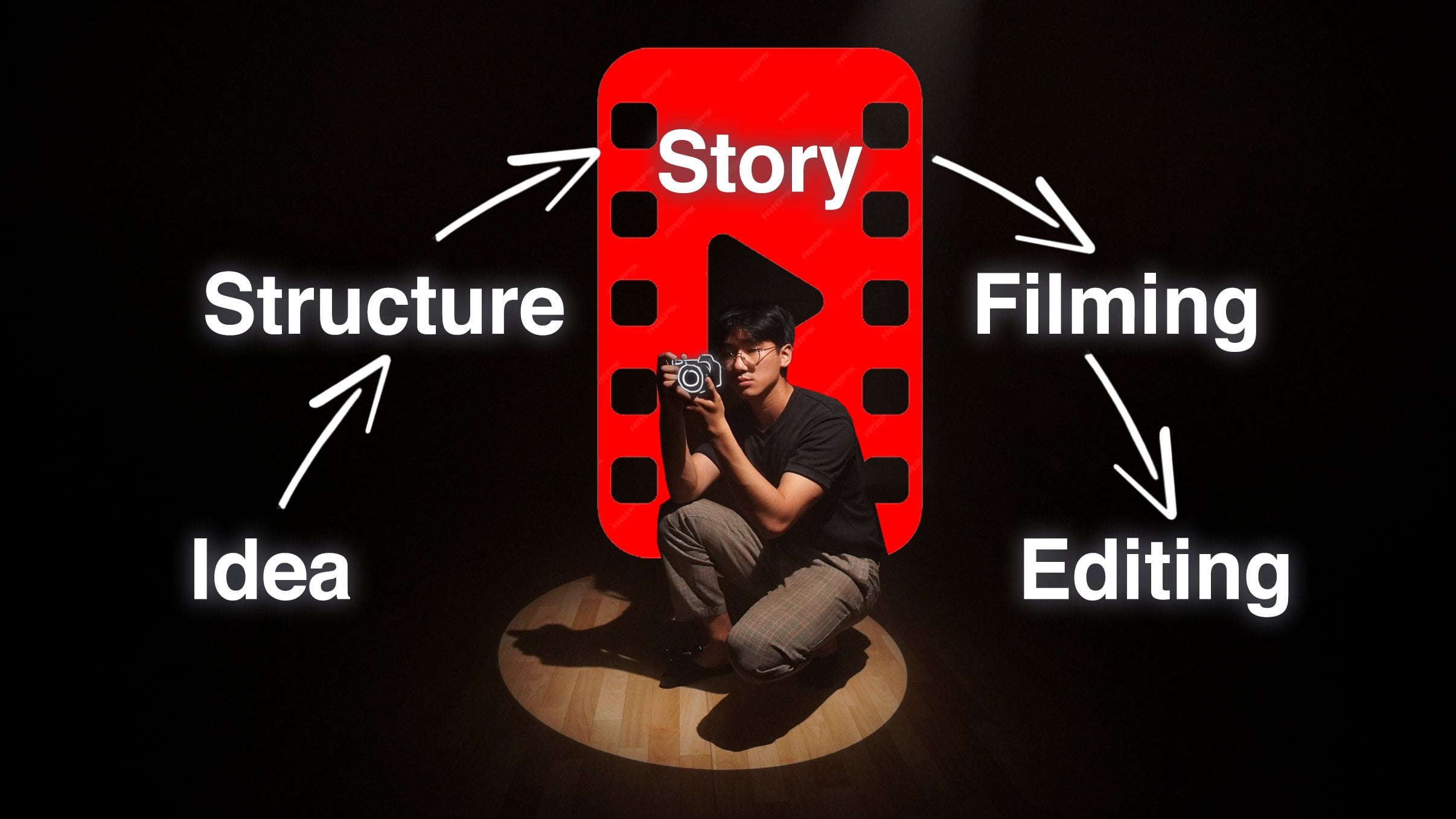
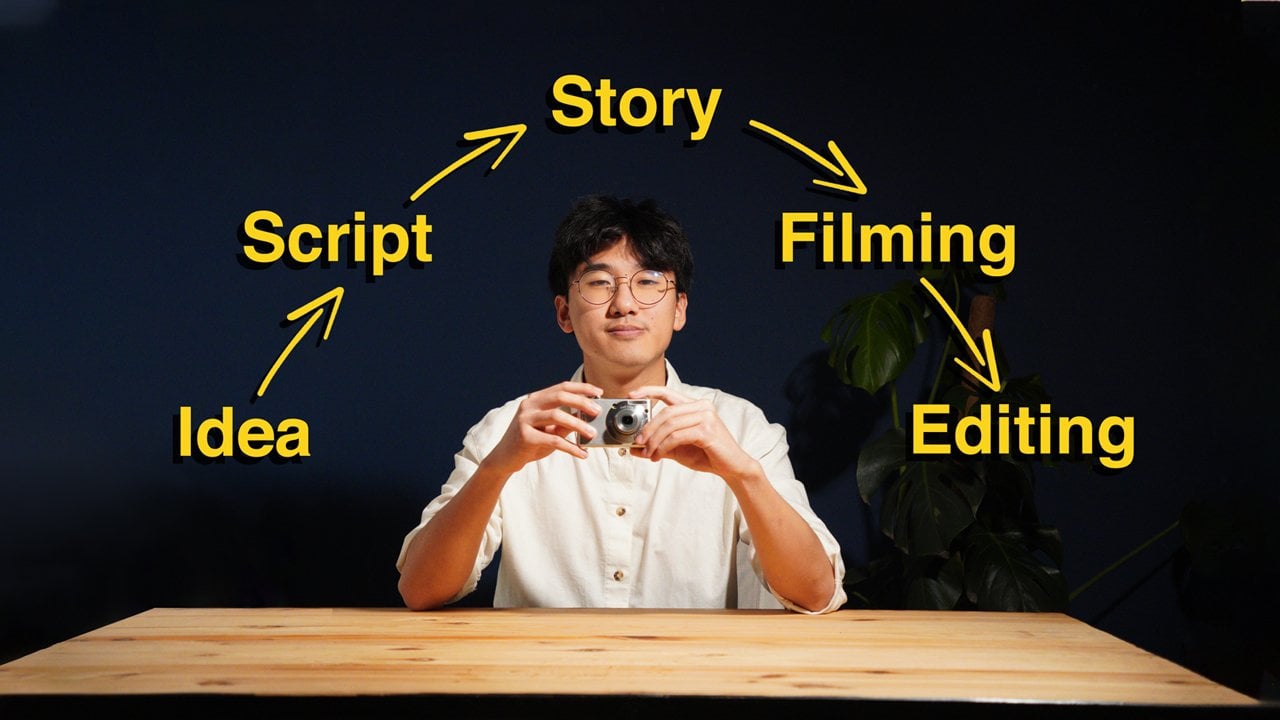
storytelling equation is more or less the following. Set up, build,
change reflection. Basically, the setup,
we introduce the world. Where am I? Why am I here,
kind of the whole thing. We built This is the
longest part of the story. It adds to the curiosity, the conflict, the discovery. What's going on?
Why did I do this? And then the shift, the change. This is basically this
really short moment where you build it up. You went through
all this conflict, and you realize, Wow. Okay, this is why. That's the moment of change. This is the climax of the story. And at the end, resolution, how was it after the closure?
What did I experience? What my thoughts are
kind of like that? So basically, you
see, for a story, you have a setup, how life was before the change, the actual moment of change. And afterwards, how's
life after change? How is it? Is it that different reflection?
Something like that? Of course, because this is a video and
throughout the years, I decided to add an
extra component. Basically, in very short, the hook is there, too, because in this fast
moving world, the video, people scroll past, so you really have to
focus on the hook. Sometimes these two
might get mixed up, but we'll go step by step, explaining everything in
detail so you can understand. Of course, knowing
the formula is great, but without the
proper understanding, you cannot use this formula
to its max potential. This is why in the next
following lessons, I'll go step by step
with several examples in depth for you to really grasp how good
storytelling works. Each of these components, they might have different
durations for every video, for every idea, they might
be a little bit longer. They might be a
little bit shorter, but they all contain these
ideas here, these components. That said, before we even go to the first
component, the hook, I'm going to teach
you something really important that actually most don't know when telling stories. It doesn't need to be
stories through video, but it can also be
stories told verbally. It's actually a small change
you can make that makes a huge impact on how
interesting something sounds. With that said, I'll see
you in the next one.
4. Stop Using "And": So this actually is something I do notice in other
people's video sometimes, or when my friends are
telling each other stories that really break the flow when you're actually
telling something. And I think this mistake
actually comes from a big misconception that you cannot use butts in an argument, maybe with your
partner, for example. Because these butts,
they create tension. For example, if you're talking
to your partner saying, Oh, I really like this, but this or I appreciate
you doing this, but this, this, this
actually isn't great. Notice how when you
talk like this, just by adding the butts, you create a lot of tension
between both sides, and it becomes almost
defensive in arguments. But this tension is exactly
what we want in the story. And really just by
talking like this, it makes the story more dynamic and creates
more suspense, which, in turn, makes the
story sound more interesting. You to understand
this concept better, I'll go to One Extreme, and kids do this mistake a lot when they tell
their own stories, which makes them
sound sometimes, well, a little bit boring. So I'm going to
tell this example where I stayed in Japan, instead of a hotel,
a 24 Internet cafe that was really cramped. So I went to visit Japan, and I wanted to have a
really cool new experience. And I decided to go into
this 24 hour Internet cafe, and they really allow
you to stay overnight. It doesn't cost you a lot. And I went there and the
space was really tiny. It actually they allowed
people to smoke, and it was really smelly, and I did not have
the best night. And that was the video. You understand how
boring that sounded, because I only use and and and that's the basic mistake that maybe kids do more often. They don't use other
types of words. I can very well imagine
maybe a 4-year-old saying the story and this
and that and this and that, which is not the most
interesting story to hear. And now I'll just simply
substitute it with but and therefore or
but and then this. I was really excited
to go to Japan, but I did not have
that much money. That's why I decided to
instead of going to a hotel, I decided to visit a
24 hour Internet cafe. But the thing is,
it's really cramped, and they allow people to
smoke cigarettes there. So therefore, the rooms are they really smell
like cigarette, which is not great. How was my night? And you already see just by changing a few words
in the sentences, when you write the script or when you tell the
story verbally, it makes it sound that
much more interesting. Use more butts in your story. This affects a lot how I write in my scripts and how
I tell my stories. During your daily
commute, you settle down, but I traveled Japan
completely alone. But it wasn't the
normal solo travel you usually see to just give away
photos to random people. But how does it actually work? Maps, notes, photos, A and one. Honestly, I thought
people romanticized them. But you know what? I
decided to try one anyway. Genuinely want to
spend more time, but my stomach has other plans, but now I'm really hungry. When you leave, people go
in to take your place. You can, of course, stay longer. The volunteers occasionally come and ask if you want more, but I was full already. With that said, I
hope you got to learn something really crucial
for your storytelling, and I'll see you in the
next one where we'll actually cover the first
critical component, which is the hook.
See you there.
5. All About Hook: Hook is actually something critically important for videos. If you're telling
a story verbally, you're in person
talking to people, then the hook isn't
super important. Of course, it is important, but nowhere near as important when you're using
it for video storytelling, because you have to
understand the mentality. You go to your computer or your phone and you're
searching for a video. You see a thumbnail
or something, or if you're using a shorts
you don't need a thumbnail. And you decide to watch give
this video an opportunity. You click on it and you
have your first impression. Your first few seconds
maybe first 10 seconds, 30 seconds, you give this person a chance and you get
to see the video. You want to learn what is
this video going to be about? And in this crucial step, a lot of people decide
if they want to watch your video or if
they want to get out. If you didn't grab
their attention or if you didn't hook
their attention, then people will just
leave the video. It is very normal when you
see your video statistics for short or long-form content for the graph to go
a bit like this. So 100% of people
watch your video, and immediately in the
first few seconds, it tanks to maybe 60, 50%, even after the first
30 seconds of the video, only about half the people that originally watch are
still watching it. And the goal of this is to make this drop
in the beginning as little as possible so that most people are
watching your video, keep watching your
video until the end. That's the job at the hook. And that's really
just the reality. In today's fast scrolling world, you and I give a few seconds to see if the
quality is good enough, if the promise is good, if the hook is good enough so that we continue
watching the video. So there's three things that you might want to
have in your hook. So first of all, is
good impression. So is your video
well lit, like now, or is the quality or audio good? They don't match
the expectation. If it's low quality, then I'm not going to
really watch the video. Second is they already wear the title or
if it's for short. They want to know what
the video is about. If in the first,
ten, 20 seconds, you don't know what the
video is going to be about, people are not really going
to stay and find out. They don't really
have that patience. And third, for a hook to be a good hook is to show
something a promise, but you actually have to deliver it at the
end of the video. So for every story you want
to tell in video format, the hook might have
a different duration or might have a
different structure. It is really up to feeling, and that's why I'm going to
show you a few examples, a few of my best hooks, and I'll explain in detail why I did it like that so
that you can understand. Capsule hotels are
the first thing that comes to mind when people
think about budget travel. But what if I told you
there's one level deeper? This is a 24 hour Internet cafe, and I will explore
everything that can be done. But why that was the hook. Basically, in the beginning, I tell Capsule hotels
Capsule hotels because I feel everyone knows what a
capsule hotel is in Japan, but I know that
people might not know about 24 hour Internet cafes. And I just show the room, the tiny, tiny room here. And here I'm kind of introducing
it. What is this about? This is. This is a 24 hour Internet
cafe with the clips, and I'm showing bits
and pieces here and there of different components
of this Internet cafe. So basically, I
show, Oh, you know, capsule Hotels, check this
out an Internet cafe. Check how tiny this is. I'm really going to
explore the video. And this in the
first 20 seconds. So you already know
maybe the quality, the music choice that
is higher quality. Second, you know what the
video is going to be about. And third, I promise
that I'm going to show you each and every
part of my experience. For the next example,
I'm going to show you a product video. So it's not an experience video. I feel like when
you show something, a new experience,
the structure of the video is actually
quite easy to manage. But a product video
might not be so obvious. So here, let's take a look. If I had to choose the best and most versatile
chip tool that has helped me throughout note taking and learning, it'd be this. It comes with three types of
roll colored pens, stickers. Well, anyways, the
most important part is this. You read it, right? I really start by saying
faithfully to the title, What is the most important journaling tool I've ever found? And I start by showing off everything that came
in the package, but remember the But? Well, anyways, the most
important part is this. And you have to understand
because it's a product video, people want to know what you actually get with the product. But what's the most
interesting thing is what it actually does. You read it, right? And I
show the most important part. First impressions, you already can tell it's a
high quality video. Second, you know it's going
to be about the product. And third, you're also
hooked to know what else or what uses you can
use with this product. Or, for example, in Japan, when I decided to rent
a friend for a video, for more than a week, I've
been completely by myself. Japan is a country that truly embraces
doing things alone. But it was getting to me.
Tokyo is a city of cities. Millions of faces, but
no one to talk to. This is why I tried this
unconventional method, not renting a car, not an
apartment, but a friend. Meet Rio. My rental friend
that cost 1,000 yen per hour. In 26 seconds, I
just had the hook. Basically, I'm in
Tokyo, and in Japan, they do a lot of things alone, and I've been alone
for a long time. That's why I decided
to rent, well, not a car, not an
apartment, but a friend. So one, you know the quality. Second, you know what the
video is going to be about. And third, now you're
kind of hooked. I promise you, Oh. I mean, maybe I
didn't promise you, but you're going to
know what is going to happen with this and you
maybe might be intrigued. So this last hook
I'm going to show, I'm going to really demonstrate the importance of that
curve in the beginning. You see, in the beginning, most people are watching
and then it drops. In order to keep
this retention a little higher so people
don't scroll away, is that you put most of
the effort in your hook, most of your best shots or effects or your effort
going in the beginning. That's why I have text and the best effects really at
the beginning of the video. Believe it or not, I used
to hate reading books. Ten years ago, when I was 16, I read my first nonfiction book, and it completely
changed my view. Ten years later, and
I read more than 100. You probably also seen this
for podcasts where they have a really long
video, like 2 hours. But right at the beginning,
that's where they really break it down and put, like, the best bits without
showing you everything. That's the hook, the
first 30 seconds for you to understand what the whole
podcast is going to be about right in the beginning, they know most people watch
and they then decide. And that's why the beginning has the most effort in the decision. It is up to you to
decide what to do now. You see, everywhere
I look around, I see people glued to their
phones, including myself. It is the easiest thing to do. So this effect of
this slow motion really took me
hours just to make. I came with the idea on the spot because the car and
the person came at the perfect time and the whole effect in making this
possible with that said, I hope you understand the
three most important aspects. With all these examples
I've showed you, I hope you get to understand how to better hook your video. This first critical component is the part that
most people watch. So it is really where you put the most effort into
these first few seconds. It is also a part where people
might have most doubts. In case you have some, always
ask in the discussion tab. I always watch the questions, and I can try and
help you if you have any doubts here or
in any other place. With that said, I'll see
you in the next part, which is the setup.
6. The #1 Hook Mistake (And How to Fix It): So after posting this
storytelling class, I was fortunate enough to have a lot of student
examples where I could read through their scripts and maybe give a
little feedback. And from all the things,
there was one thing that I noticed that I always gave
the suggestion to improve, and it has to do with the hook. So I took one of the
student examples. When I was a teen and up
into my early adulthood, I used to get into mash Bits. They made me feel alive. And they weren't exactly safe. But the point was dot dot dot. There's a line music and cross, where it stops being an
artistic spectacle that feels unsafe and starts
becoming genuinely dangerous. And then it starts explaining
for the rest of the video, basically the story
of many artists. And in itself, I think
it's a very good script. But for a lot of students, I always suggested
the same thing because the first few seconds
of the video are crucial. That is, when the
viewer gave you a chance to see what
the video was about. And often I see that it starts with something
that might not be exactly correlated to the video or it
doesn't hook as well. The good thing is, they usually have the hook
when they write it out, but they just don't
notice it yet. And this is because when
you're writing a story, the hook doesn't come that
naturally, but it's there. What I had to suggest
is that I noticed that the hook was usually
there a little later. So by rearranging, it makes the beginning of
the video more interesting. So by modifying a little
bit, let's remove the butt. What if the video
started off like this? There's a line music in cross, where it stops being an
artistic spectacle that feels unsafe and starts
becoming genuinely dangerous. Now, that's a hook. Now, that's how you really start the video and really
hook the person. And then later on, you maybe can explain something or
follow up with this or immediately go maybe into a little more personal
experience that you had. But literally just by
rearranging the lines, I made the beginning of
the video that little bit extra more interesting without
changing anything else. So if you're ever
struggling with the hook, maybe just write your story without thinking
too much about it. Most of the times you reread it, and then your hook
will be somewhere, and then you can
rearrange the lines. Thank you so much for watching, and I'll see you
in the next one.
7. One Hook Change That Instantly Feels Personal: For this lesson, I
want to give you one extra tip that helps your hooks feel more personal and therefore
hook the person even more. If you don't do this, I wouldn't really see it as a mistake, but as an improvement. And I'm very fortunate to have so many of you
submit your scripts. So this example comes from
a student that submitted a project and I wanted to share so everyone
can understand. So Emily is doing a video
about limiting beliefs, and it starts off with
a great hook already. What if I told you what
we think holds us back? I think this is great, but
it can be a bit improved because instead of using
I or we think or us, if instead we would
use you or yours, it directly connects
with the viewer. It makes it feel
really more personal, making the person hook
better for the video. Let me give you a few
of my suggestions. So, for example, instead
of what if I told you, what we think holds us back,
which is already good, I suggested what if what's holding you back
is what you think? It slightly connects
better with the person. Or, for example, this is
a more direct version. What you think holds you back. Imagine, that's your first line of the video, and
you're like, Wow. What if what's holding you
back is what you think? Because when the viewer
is watching the video, it takes an extra step off from the thoughts
when watching the video. Instead of thinking, Oh, what if her problem is my problem? It takes a step off and the viewer thinks the
video is targeted to them. Let me give you another example. This, for example,
will work for a short. I've struggled with skin
problems my whole life. I've struggled with skin
problems my whole life. So when I watch this
video and I hear this, my immediate thought is, do I struggle with this problem? Do we have the same problem? But instead of
saying I've and my, you substitute it
with you and your. If you struggle with skin
problems your whole life, then it's directly
to the viewer. So there's one last extra step, and it connects more directly with the person
viewing the video. So overall as a hook recap, we've learned that the
best hooks are direct. They don't linger
around the topic. And sometimes if
you're struggling, you can write your
text normally, and maybe the hook is
somewhere in the third line, and we can switch the order. This also helps to
make more clear. The viewer know
immediately what the video is about and also
removes the delay. The viewer doesn't
need to wait so long until it knows what the
video is going to be about. This is crucial for
short form content, but for long form content, the delay part is less important because we already have
the title and thumbnail. Now we just learn to connect
directly with the viewer to use you or your
instead of me and I. With that said,
I'll see you in the next one, which is the setup.
8. The Visual Hook: Until now in this
course, for the hooks, we've only focused
on audio hooks, meaning hooks that you hear by saying a sentence and
not giving the ending. But now in this lesson,
I really wanted to focus on the
second type of hooks. Since we're making videos, they're called visual hooks. Now, when you're
editing a video, you usually want to put really a lot of effort in the
first few seconds. For long videos, that means
the first 30 seconds, and for short-form content,
the first few seconds. Because statistically, that's
when most people watch. But for the editing part, I will go more in detail later on. Because for now, I want to lay the importance of visual hooks. Visual hooks are shots where people are
not used to seeing. You took the extra effort. You went the extra mile to get a specific shot that looks incredible or
is very uncommon, or the way you edit
is very well done. Because let me give
you an example. On the left side, I have the newest new TDS that
was released in 2015. And ten years later, I have here on the
right the AYNTor an emulation device that
is a complete beast, inspired by what you
see here on the left. In this video of the handheld
on my gaming channel, I don't see anything
particularly interesting. If I were to write
that on the script, it wouldn't come across to
me as something that good. But because of the efforts of the shots and the
type of editing, it really grips the viewer, because these are the
type of shots and editing styles that people
don't see that often. Of course, you can mix both
audio and visual hooks, but that is mostly defined
on the topic of the video. And here I'm showing you several different examples of videos where I really put a lot of effort on the visuals
in the beginning. A kid, I remember really wanting to have an MP three,
but I never got one. That kids later? Why is
everyone going back? Especially when this exists. Well, I really didn't
understand the point of it, but I bought the
D three anyways. You can do literally
anything you want, but from all the things, you decided to use Your phone. Sound familiar? Because
after a long day, it is the easiest thing. So, the hook for the video is not only
what you're saying, but also what you show and how you edit the first seconds. If you're interested in
creative camera angles and these unique shots, I've made a course called the seven levels of
creative camera angles. But with that said, we'll
move on to the next topic.
9. All About Setup: After the viewer has been thoroughly
impressed and hooked in the first 30 seconds
for long video or the first few seconds
in short-form video, this is where you get to set up just the
beginning of the story. It's your intro, if you remember the intro
conflict resolution. The intro is really just about giving the viewer just
enough information to know how life was before
or how the thing was before. If you're doing a renovation, you give enough introshots to
know how the bathroom was, like, before a renovation or how the kitchen was
before a renovation. It is really just your intro, but the most common
question I get is where do I actually begin? Because you can begin
here or a little before. It's really, like, the
most common question I get is where do I actually
begin the story? And my answer is always
you start as close as possible as when things
are about to change. And really not moments earlier. You really don't need to
give the whole back story. That's too much and actually
can bore the viewer. You just give enough for the person to understand
the baseline. When I say the baseline, I just say the information
that the viewer knows and needs to know before proceeding into
the rest of the story. So a quick verbal
example, don't worry. We'll go into the videos is I landed in Japan
two weeks ago, and I've been
exploring every day. So, for example, where I stayed overnight in the
24 Internet cafe, I could have started with I landed in Japan two weeks ago, and I've been
exploring every day, and I don't know. It's a bit too early. It is really it feels like the start of a Vlog intro
or something like that. It is giving too
much information of maybe stuff I've done before, which is irrelevant
to the story. If it's relevant to the
baseline, then put it. But if it's just too early or
just too much information, you might as well
just cut it out. Telling a good story is
about knowing where to put stuff and where to not put
stuff, especially for video. Sometimes you have a really beautiful shot of
something happening, but if it has nothing to do with the story or it is not relevant, it makes the story a
bit more confusing, you really have to cut it out. As much as that hurts,
I know it might hurt, you really just have to cut
it out to make the story more streamlined and less
confusing for the viewer, especially in the
beginning where the person is still giving you a chance to watch the video. And I wouldn't think of
hook and intro as separate. Sometimes they might
merge together, because in the hook, you're already showing a
little bit of intro. You're giving intro, as well, but not too much before. Sometimes they
might be separate, sometimes they might be merged. In this case, capsule hotels are the first thing
that comes to mind when people think
about budget travel. But what if I told you
there's one level deeper? You see here, when I'm
showing the one level deeper, it is already giving the intro. Is me entering the room and showing you where I'm
going to sleep for the night. It is in the hook
and in the intro. They kind of merge together. There is no rule for this. It's really just feeling. If you feel like this is the most interesting
thing of the video, you put it in the hook to
hook the person and see, Oh, what's going to happen. And, of course, this
also doubles as an intro because you're showing
what the room is about. This is a 24 hour Internet cafe, and I will explore
everything that can be done. But why Drinks are free. After turning on the power, enter this number to
unlock the computer. And immediately, I start off by really the entrance,
my first experience, and it was just me talking and
him the really nice worker who was so nice to me and translating everything with his phone and
explaining everything, that was also part of the intro. So the intro is in the
hook, I showed you, but it also starts before
the moments of experience, before the moments of change. And the moment of change
in this video is really my realization of how
this experience is. So I really started off by
really at the beginning, my first interaction,
and that's my intro. For a product video, I usually just show a little
bit here, here, here, but not everything at
the same time so that the viewer really knows how
this product works clearly. And this also sets the baseline. If I had to choose the best and most versatile
cheap tool that has helped me throughout note taking and learning, it'd be this. It comes with three types of
roll colored pens, stickers. Well, anyways, the most
important part is this. You read it, right? Now, before we go into all the
possible uses, let me show you a few. Or about this video I
decided to make about why everyone should
use a travel notebook. I used to think that travel
notebooks were useless. Why even bother when your
phone does everything? Maps, notes, photos, all in one. Honestly, I thought
people romanticized them. But you know what? I decided to try one anyway. It's bent from
walking everywhere. It has been completely wet. Notice I show bit by
bit and not everything. It just, you know, it builds up this curiosity. And also notice that this setup, I decided not to put me
buying the actual notebook or actually writing everything and just showing you the
finished product. That's something I
just decided to do. I feel like if I put
all the parts of the story where I wrote everything and
organized everything, it would make it a bit boring. Maybe in my view, maybe
I could have done it, and it would made the
story a bit longer. But at the time, this
is how I felt like it was the most interesting.
I made a mistake. I let my guard down and spent a little bit too
much money on one of the most expensive cities
in the world, London. Therefore, today, I'm just going to bring an empty water bottle and my phone for directions,
and that's about it. I have the whole day to spend, and I will take care
of everything I need just without paying
a single penny. The first thing I have to
clear out is transport. The setup for this
zero pound day in London is really simple. I mean, the hook
was very visible. The quality, you know what the video is going to
be about and the setup, yeah, you're going
to see the whole day without spending any money. And the setup, really the
baseline is immediately, it's written right
there, London 8:13 A.M. It's really where I started. If I started before, it
wouldn't make any sense. Why would I show you
me waking up in bed? That's all necessary. So I really show you the
moment I got out of the hotel, just as a quick recap. Usually, the hook and the setup, they're kind of
morphed together not entirely because where you start the video starts
after the hook, but you already show stuff about the video that gives
setup to the video. But make sure you
think about the hook and where to start the
video a separate things. I think that's really important. So with that said, once
you figure it out, the hook you want to use in
your video, really good. And then where the
point of start of the video of the setup
of your baseline, it is time to continue
the rest of the story. And this is the
moment where I'll introduce the next component, the build. I'll see you there.
10. Hook & Setup: What to Do (and What to Avoid): You just learned the
importance of hook and setup. This is why the
first 30 seconds are crucial to any video,
so important, in fact, that I decided to compile a
few good and bad examples of videos I've made along the years for you to
understand what is enticing, but also equally
important what to avoid. I went to Japan super excited
to experience many things. But amongst them all, I
wanted to buy a three DS. I previously only had ADS light, but after many hours
of extensive research, I was set on the new three DS. Because three DSs are
not being produced, you have to buy
them second hand. I just need one photo for me to plan everything
to go there and see it. In this case, it was a
bench located exactly here, right at the tip of Germany, and it's supposedly the best
placed bench in the world. So the bags were made, rented the cheapest car I could
find, and we set off. Driving through cloud. Welcome to the cheap
camera challenge, where I take one bad camera and I make the best out of it. Taking a look at the DSI camera, it has a whopping
0.3 megapixels. It cannot take video. You fail. But it can take pictures. As we go more and more digital, we're slowly forgetting
the art of simplicity, because I'm here to
show you something that changed my life in
the last three years. Yeah. I'm calling it
the life notebook, because it somehow
runs my entire life. I've tried all sorts of notebooks
for the past six years. Most I stop using, but here are three things
in my opinion that are really important to
be a life notebook. 0.1, size, a six, perfect to fit in your pocket. Two, hardcover, perfect to
throw it around without care. Three, simple white paper. No lines or limits, a clean canvas for
clear thoughts. This tiny simple thing
covers all three points. I've stopped using everything else and never
looked back since. In my case, what is inside
this life Notebook? In my life notebook. I have to be honest, it
really took me a lot of energy not to cringe
watching my old videos. My God, they were pretty bad. But I hope by watching
these examples, good and bad, you know what to avoid and maybe
what to do better. I'll see you in the next one where I'll explain the build.
11. All About Build: We have the hook and morph the setup and the
beginning of the video, the baseline, where it starts. You have these two components, and from now on, we can
really build on the video. A video without the build
really cannot impact anyone. This is the main
part of your story. This is maybe the longest
part of your story. You can build this as long or as short as you want.
But be careful. If you build it too long,
it might be too boring. If it's too short, then it doesn't really
feel that impactful. So you really got to
find a sweet spot. And, of course, the length is optimal for different
types of stories. That all comes with
feeling when you're just editing the video or
you're writing the script. So a video without this built looks a little
something like this. I have different types of notebooks for different
parts of my life. I've had travel only notebooks, study notebooks,
personal notebooks, even whiteboard notebooks.
But here's the thing. None of them were ever perfect, a bit too big for my taste. This one was too weak, so I decided to compile
every aspect that makes a notebook great and
combine them all in one, which means I have to
create it from scratch. So, no, this notebook
isn't perfect, but it means something to me. Perfection fades,
but meaning lasts. That's what makes it perfect. Perfectly imperfect. It looks absolutely
ridiculous, right? It's kind of like spewing
motivational sentences to students without
being a good student yourself because no one
would believe in you. It's also like when the
video game is too easy, there's no challenge,
then it stops being fun. And what's the purpose
of playing the game? Without the build, your video
would be just too easy. You'd have the intro and
immediately the reward. And what was that for? It doesn't make it satisfying. You need the build to make
the video satisfying. There needs to be some struggle, there needs to be
some time before the beginning and the
reward at the end. This is where the build
really comes into play because a good build
makes the change gradual. Without the build, it would
just make it immediate, and it would have no impact because it would
be just too easy. Once you hook the viewer and
you already start the video, you can build and expand
this story from here on. So let me start from that
example of the zero pound day. Therefore. And basically, for this story, I hooked you and I set up by
getting out of the hotel. Now the build is
the challenges I faced or whatever I
had to do to make this challenge
possible and spend the entire day in London
without spending any money. And I start point by point. Fortunately, there's a lot
of free water fountains, so I'm gonna go to one of those. About food, I'm not yet sure. I haven't yet to
spend a single penny. Plus, if you're rich or
poor, anyone is welcome. Yes. And these are things I
hooked you in the beginning. Oh, well, I do this. And the build is actually
when I show you the story. And this can take as long
or as little as you want. That depends on your own
personal style, on your story, how you edit, how you
write your script, how you make your videos. That really depends
on your story, and the feeling is
really more up to you. For a product video is
basically the same. I hooked you with, Oh, check out this cool thing. One very special feature this supposedly kids
camera has is this. And the beginning is
showing you the features. That's the beginning
of the video. And then the build
is everything cool that you might want to know in order for you
want to buy this, for example, and I show you every single feature or cool thing that I
can do about it. There. That's good. Oh, it kind of looks cool, but kind of weird. Oh. It's kind of dystopiansqu. I like this. Framing. That's really.
This is way better. Yeah. And, of course, the
rental friend video is I hooked you
with I was lonely, so I rented a friend, ha ha, cool experience. Tokyo is a city of cities. Millions of faces, but
no one to talk to. And the setup was right when I started when
I first met him. Meet Rio, my rental friend
that costs 1,000 yen per hour. He was nice enough to let me film us throughout
the whole time. For him, a normal experience. But for me, I wanted to dive
deep into whether it's truly possible for something
that starts as a rental friendship to
evolve into a genuine. Good weather. And the build was
the entire day. Of course, this can be as
long or short as you want. Personally, I edit a
little bit faster, but that is really up to you because this is really
what we've been working for. Since you got the viewer hooked
and you start the story, this is where you can
actually tell the story. And I think it's
the most fun part. Of course, in the first 30
seconds for a long video, that's when you really
put the most effort. Most people will watch this. And then once they're hooked, they're going to start
the beginning of the video and build it up. With that set, we'll go into the next section of the
storytelling equation, which is change.
I'll see you there.
12. Common ‘Build’ Mistake (And How to Fix It): Before we move on to change, I want to first thank all
the students that have been submitting all their scripts and also giving
really nice reviews. And by reading several of them, I can always find patterns
of most common mistakes that are absolutely avoidable by just switching something small. And this student
example started off really strong with a
strong hook and setup. It's a video about how
she changed to a new to do app and what changed. So basically, it starts as I didn't change my life by
waking up at 5:00 A.M. I changed it by
switching my to do app, pause, and I didn't expect
this one to actually stick. So if I was into productivity, I decided to click on
the video about the app, I would definitely be hooked. I'd be interested. I know what the video is about. It's clear. It doesn't really delay much. I don't talk around too much, and it goes immediately
into the hook. So I want to watch the rest
of the video, which is great. And then we go into what
she defines the setup. For the longest times, my days felt busy, blah, blah, blah, for example, but somehow nothing important was getting
done, notes app, something. So I decided to try
a new to do app, and then she goes
into the build. Now, here is where
the problem lies. She starts describing
this app is called this. What surprised me was
this and I C that. And so far, I thought
the script was ging really great right
up until this point, because to be a really
satisfying build, meaning a satisfying video
to watch at the end, we really want to implement or focus on where
the friction lies. For example, on her setup, what she actually
calls the setup, I will actually call them both, both the setup and the build, because if during the build, all we're talking about
is the description of the apps and what
it does best and basically transforms
this video instead of a story into an informative
video or a descriptive video. But in order to impact people, we really want it to be a story. So when we're thinking
about any story, we're always trying to focus
on where the friction is, where the problem lie, and what made us
feel frustrated, no matter how big or
no matter how small. And in this case, the problem
is actually quite big. So no matter how much the person felt busy during the day, nothing important was
ever getting done. Of course, how you approach this friction is up to
personal preference, but I would really hang
on to this feeling this contrast of before and
after. Don't get me wrong. You can always be descriptive of what the apps are,
what it does best. But the story line would
definitely flow better if the person would focus a little bit more
on the struggles. What were the stepping
stones for the change? Maybe this block could be describing how her
day felt before, and this tiny block
would be a description of something in implementation
that the app has. And this would be maybe another
problem of how she felt. And this would be maybe
another description of something cooler that the app has that the others
apps don't have. And at the end, maybe she realizes something,
but that's the change. Basically, don't be
afraid to take your time. Because the hook you
already hooked the person, watching, knowing what
the video is about. The build is where you can
actually take your time. Focus on the struggles. They're the most relatable, no matter how big
or small they are. And remember, without the build, the video does not
feel satisfying. I hope this helps, and I'll
see you in the next one.
13. All About Change: Reached the pinnacle of the
story part. This is it. This is the changing moment. This is what we built for literally. This
is what we built for. All this whole process hook, set up, build, and change. This is what we've built for. This is what the
story was all about. When you think of the
story, this is the idea. This is what was it all about. You hooked it with, like, Oh,
I was never really, like, a handicype person and
you set up the beginning, really just the beginning of starting to destroy the kitchen. And then the build was the whole process you
went through the kitchen. This part, the change, this is the pinnacle. It is after everything. You show how the
kitchen is afterwards. This is really just
a small portion. Sometimes a few seconds, maybe a few seconds
of realization, if it's a mental change. Of course, change doesn't
need to be physical. You can be also mental. Most stories can
be also like that. So you build the whole thing, and then you hit this moment, and that's the important moment. Of course, you can also
make it longer or shorter, but it's usually a moment. It's the moment of change. This is where the story
actually happens. You build it up for
it and you transform. If there's no change,
there's no story. Let me give you some examples. I'm going to start right
out with a product video, which is, if you think about it, it's not so obvious. If you do a video
about a product, how can you incorporate
storytelling into that video? And this is where I
decided to incorporate into this little camera
that you see right now. And, yeah, it's cool
and you show the build, you show all the
things that it can do. But it also builds
up the story part of the component, which is, I realized after using this whole thing that
it is super fun, especially when you're going out and about and giving
pictures to people. That was the transformation. It was a mental transformation. It clicked to me, like, Wow, this is so cool. It is especially cool when I use it and
give it to people. What it might lack in quality, it more than makes up for the most important
quality in any hobby. The only guilty I find Stepping back in
the mirror at night. Stock place Green. Ma because it's so cheap. Photography became And
without this change, without this click,
this mental click, then you wouldn't have a story. It would just be an
information video where you just show each
component, and that's it. Without this slight change, you wouldn't have the
impact that the video had. The moment of change for the zero pound day
in London was when, you know, I didn't need to. But after eating at the
Gurdara the free meal, you can offer to
volunteer at any place. I didn't need to do that,
but mentally, it shifted. You know, this day
was only possible. The whole build was
only possible because of fundings of other people
and the generosity of others. So I decided to contribute a little to my part
and also volunteer a bit. Extremely hungry,
because this meal was essential to this day. Yep. Okay. Thank here, equality is
such a fundamental part that typically all kitchens
run through voluntary work. Yeah. Neat voluntary worker that I completely
forgot to ask first. You go here every day? Sit close by. You
live close by? Yeah. He volunteers from time
to time in the Guruda. And you plan to live here? I do. Go back to the
next. Ah, really. Thank you so much,
huh? Nice to meet you. Maybe in retrospect I could have made this
a bit more clear, maybe with a voiceover and maybe the music a
little more like, with a little build
and it's like, Wah. And then, Wah, you know? When you reach this Wah
moment, that's the change. That's the storytelling
part of the video. The 24 hour Internet cafe video
where I stayed overnight, the changing moment was so I build showing everything in my whole night,
and then I slept. Really, the changing moment here is a bit mixed up
with the conclusion, but it's really my
thoughts of, you know, this actually wasn't so bad, or I really got to
see the real Japan. So in this case, in this video, the changing moment was like, ha ha, cool experience. Look how cool this is or
look how unique this is. Look how different
this is from a hotel. And then change is the mentality about
this whole experience, how it changed me as a
person, how I see Japan, or the social factors that really play into the whole community there
in that country. Why does this exist? And how can this exi?
That's the change. That's the storytelling part. You build it over all of it for this moment
of realization. I guess my only
complaints would be like, maybe the floor
mightn't be too hard, but I'm maybe not used to it. Maybe slightly the
smell of cigarettes. And for the package, they
provide you a towel, shampoo and body soap. And even the hair dryer. The room was dim. The air smelled slightly
like cigarettes, and the mattress was right. What stayed with me
wasn't all of that. It was what I saw. At 5:00 A.M. I watched people
quietly check out. So in business suits heading
straight back to work, their lives moving
without a pause, and others that looked like they were going
through a hard phase. With that said, I hope you
understand now even better how this whole structure goes from hook setup the build
and then change. This is the moment where, oh, I want to do a video about
this or something you realize, it doesn't need to be
a physical change. It can be a mental change. Usually, it's mental for me. But even in a
physical experience, you can realize something, and that can be your
idea for the story. The change is usually
where you have the idea. When you think of a story
to tell in a video, this is usually where the idea lies because without this part, you wouldn't have a story. You can have this experience. You can build it up, but
this is really the moment. And I hope you got to understand with the examples
how important this is and how this whole thing builds it up until this moment. And with that said,
we'll go after change. What happens? That's
the reflection. I'll see you in the next one.
14. All About Reflection: You went through it all.
You hooked, you set up, you built the whole thing, and then you reached
the pinnacle. Wow. That was the moment. I realized something,
and that's the change. But without the reflection, if you would cut off, it
would feel incomplete. Let me show you a few examples. In every movie, you see, like Shrek or something, he defeats the dragon. He saves the princess
and whatever. They marry and ends. It really feel
incomplete without the whole conclusion and after story or what
happens after. And that is a little shorter. Of course, the build
is the biggest part. Then you have change and
then the reflection, a little longer than change, of course, but not
so long as build. You want to know what happened before the transformation
of the story, the moment of transformation, and afterwards. What happened? How is life after change? Of course, it doesn't need to be as long, but a little bit. That's the end of the movie. A few minutes dumb dancing
and all happy, happy ending. That's the reflection.
Without it, it would make the story
feel unsatisfying. It is more important
than you might think, because when you
finish a piano song, the moments of the end,
when you end it nice, that's really the
moment that, like, marks the people the most, that impacts people the most. If you end it nicely
and satisfying, you make viewers satisfied. And that's really
the great feeling of this whole story progress. As an example, I'm
going to show you why everyone should use a
travel notebook video. But nothing felt quite
satisfying as one thing, something so simple, it can only be achieved by physical
pen and paper. And then the moment of change is realizing everyone
uses phones. But using notebooks, there's something you cannot
substitute it. There's physicality
of pen and paper. That's the moment of change. O. Slowing down gave me
something speed never could. It made me feel pretty excited even before
the trip even started. It enhanced the
experience during it, and it helped me live it
again after it ended. It lets me build the excitement, romanticize the little moments. And honestly, I made
everything better. Really, you see
how satisfying at the end that really was
or the rental friend. So for this, I built throughout the whole day every activity I did throughout the whole day, and I had some interview
questions intertwined between. And the moment of change
was I realized that, you know, maybe it
is possible that rental friends can become your real friends if
you rent them enough. What why not? Yeah, yeah, yeah. I never played baseball
in my life. Oh. You know we sports? We
sports baseball. Okay. After all of it, can transactional friendships
turn into real ones? Do you think there's
a moment when a rented friendship stops feeling like a rental
and becomes real? The hours we spent
together were a blast. Through really interesting
conversations, I genuinely believe that Dru and I came to understand
each other much better. The activities in retrospective were a bit redundant,
but they were fun. But as renters reach
to you, vida Moms. So you should touch to
Nando moeva Eugene Arima. Do I call you Rio? You show me how it's done. N. And if it ended there, it would be horrible. He was like, What? I crave more, and that's
why we need the reflection, the reflection of the thoughts, after thoughts or how
life is after the change. And that's what makes it the whole thing really satisfying. Now, according to Rio and me, we definitely agree that what starts as a
rental agreement, if it clicks correctly, can grow into a real friendship. And cut. It was good. That was
good. That was good. With that said, we've
covered every single aspect, and I really hope you get to understand in depth
how everything works. If, for example, you're
doing or you're organizing your own video and you
have doubts in any parts, feel free to always ask
in the discussion tab. I'm always here to answer. In any class, older class, I also answer any questions. So, in any case, feel free. Having covered every
single component will go into the broader area. Things that are outside this equation really help the whole storytelling
and feeling and how to make people
feel manipulating the feelings of people
and making just generally everything
towards the story to make the story flow better and feel better,
specifically for video. So with that said, I'll
see you in the next one.
15. Choice of Music: You already done videos, then you might
know how crucially important good music is. Music can really break
or make a video. If it fits perfectly, then it really makes the
video feel satisfying. Well, here we are. Three. Three. But if it has nothing to do with the feeling
you want to show, then it completely
breaks the video. So the crucial thing is here. You can use different
type of music for different types,
moments of the story. In order to use the
best song you can have, you have to first
think about what feeling you want to express
at this moment of the story. And the song has to
match that feeling. If it's curiosity, then the music has to
when you listen to it, it's like, evokes
feelings of curiosity. One year ago, my life looked
completely different. I was completely delusional. Then maybe the music has
to be something nostalgic. I never told that I
was proud of myself. I regret not celebrating
finishing Bachelor's. If it doesn't match, then
you're not using music right. Before at the end,
where I show you all different examples of
what part of the story it is, what feeling I want to evoke, and what type of music I used, a very common question I get is, where do I get my music from? And I've edited
professionally for clients, and I edited videos for me, and I use all music platforms. I use Artlist and
Epidemic Sound. And these two are, I guess, the two titans of premium
music that you can subscribe to and use it on your videos without
copyright infringement. And I have to say, using them both, they're
both very good, but I still prefer
Epidemic Sound because Epidemic Sound is
more focused on the music. I believe you can search
better for the types of feelings and emotions
in Epidemic Sound. But honestly, an
Artlist is very good, too. I use them both. They're perfectly fine.
But this is my preference. But if the budget is tight, then you can for years, I've used the YouTube
Creative Studio music, and that has been good enough. It's honestly better
than people think. But of course, premium music, you have more flexibility, and it sounds nicer. It is true. But again, you can
use free music, and it's completely fine as
long as the feeling you want to represent is matched by
the feeling of the song. With that said, I'll give
you just a few examples now. It's been three years since I've made the typing fast tutorial. But the problem is, I stopped practicing because
you're not typing alone. Ah. Shoot me in the past. Nay. God, damn it, I live. What the gut down?
Put the go down? Please, Dot please don't, D, D, too, do stump. Be a found least
dislikes the man. I ad. Please. It's the sum of these
big and small moments that define you. Don't
let them escape. De and
16. How You Talk Matters: This lesson, I wanted
to focus a little bit on how you talk
because if you're using a camera like this
and you're talking or if you have a microphone and you're doing a voiceover
on top of a video, how you talk will
really affect how much of the feeling is
portrayed in your video. I think the biggest and
most common mistake I see people or beginners do is that when they
talk to a camera, they don't treat
it like a person. They don't treat it like
this is really exciting. And if you're really excited, then you really talk
like this, right? And when they're doing a
voiceover with their phone, maybe it's late at
night and they're tired and they're like,
talking like this. And it's like, Oh, yeah,
this happened and this. And when you're
watching the video, you don't feel that energy. My tip to this is, if you can be alone in
your room, if you can, please have a bed or
curtains next to you so that the sound is absorbed
and it doesn't sound so echoy and reflective.
It sounds better. Throughout my photoshop work, I have been using more
and more shortcuts because between
you and your art, there is unnecessary stress
that can be avoided. Saving in the long run a lot of time if you use these
ten simple tips. And the second tip I really
want to give you is, don't be afraid to pause. Don't be afraid to
change the rhythm. If it's something
really important, for example, right now, if it's something
really important, take the time to say these
words like, really important. Then you pause or you, like, talk it slower and more emphasized because
you're not typing. Aw. The slower you talk, the more emphasis you
have on these words. But if I'm just talking
like this just normally, you can say the most
important things and people just like it would
go over their heads. But if you pause
and you say, Wow. Okay, this, what are
you going to do now? What to do now? You see everywhere
I look around, I see people glued
to their phones. It adds to this
dynamic of the story. You're changing the pace. It is not so monotonous and it makes the storytelling
more interesting. So I hope you got
to understand this, and I'll see you
in the next one.
17. How You Write Matters: We just learn how you
talk is important, but how you write or
more realistically how you type really affects
how the video feels. This is a mistake I
used to make years ago, and I noticed this on some of your beautiful
scripts that could massively improve by
using this little change. Throughout school, we're
taught how to write. Essays, for example, create bad habits when
writing video scripts. Because the viewer is
hearing you speak. When you write with
writing language, instead of spoken language, it sounds slightly unnatural. Me, the viewer, can't
really connect. If the person, for example, says, Upon arriving
at the destination, I was immediately struck by the cultural diversity and architectural
uniqueness of the city. This experience taught
me the importance of consistency and discipline in
achieving long term goals. It kind of feels
like I'm hearing someone read an
essay or an email. You can relax. Scripts aren't
supposed to be straight. It's just texts that can change. This is something
I will go on in more detail in the final
examples later on. But for now, let's hear some good examples when
you combine well, both how do you speak and
how you write for video. But it is so popular. Maybe there's something
I can't yet understand. It is meant to be used outside. So outside, I went. You can do literally
anything you want. But from all the
things you decided to use your phone. Sound familiar? To understand
exactly how we live, let me first show
you the kitchen. I hope you learn something. I will see you in the next one.
18. Filming for Storytellers: This is a comprehensive
update to the class. After hearing feedback, it made total sense to talk
about the video aspect, since this class is about
storytelling for video. I left it at the end of
the class because we have now covered all the aspects
of the story itself. Now we reach the very
exciting part of filming. I'm going to separate filming into two different
sections. And they are. First, the spontaneous filming. For example, you have the spontaneous filming
experience you want to show. You don't know what's
going to happen. How are you going
to film for that? What is the best method? And second, is the
premeditated things that you plan beforehand. If you plan something to show
maybe a certain product, you've probably
planned beforehand what type of shots you want. And what type and how
do you do this best? And for both of them, there is one very important rule that you and I have to apply
for any kind of video, long-form or short-form to make any story you tell for
video interesting. If you don't follow
it, it becomes increasingly more boring and
it looks kind of amateurish. So the rule is, try not to make a shot longer
than 10 seconds. Everywhere you see on TV professional videos,
big YouTubers, movies, Netflix shows, you'll see that 99% of shots they're
never longer than 10 seconds. They don't hold onto a shot
for longer than 10 seconds. And there is a very
big reason to this. Humans process visuals
way faster than words. So I can cut kind of
fast and you understand what's happening if
they're well made cuts, and it stops people from scrolling because viewers
understand instantly. Strong visuals, by the way, have longer retention
this means one thing. You have to take
care when filming, no matter if it's
spontaneous or not. You have to film several
different angles. And very basic in
the film industry, they divide shots into
three categories, the wide shot, the medium shot, and the close up shot. The white shot is
the setup shot. You see where the
subject or the person you want to focus or the
object you want to focus, where the person or the subject
is in their environment. This is to give context. Most shots, however, are
going to be medium shots. It's mostly just a
normal looking shot. Think about when you're ful
filming something normal, that's usually a medium shot. Close up shots are what the
name says, really close ups. You have to film really close
up and show the action. And if you decide to film
all three types of shots, you will have in the edit part, which I will show you
a full edit breakdown, you have way more
flexibility when editing. Of course, most of the time, shots are going to
be medium shots. From time to time,
it's cool to have a wide shot or a different angle or a close up shot
so that you're showing the actions a little
bit better for the video. If you only film one
thing and only show that same single angle or the same single shot
and don't cut it, then it becomes really boring, and the video looks amateur. That's why the simple fact
of filming different shots, yes, it takes more work, but by just filming a
few different shots elevates your video in terms
of visual storytelling. For the two types of videos, the first one is spontaneous. It's always important to maybe have multiple
cameras, if possible. If not, that's also okay.
You're just filming. Maybe you have a tripod
and you set up and you try and show everything or you
just don't use the tripod. You set it up on a chair
or different places. But important is to always show the action at different angles if you can, if you
have the time. But it's really just
keeping that in mind while you're filming the action
while it's happening. And for premeditated
planned videos, of course, this is where you have
the most creativity because you can think how
the video would look like, and then you mimic when you
film what the idea was. You can add fog to the scene, so it looks more cinematic. You can have sliding video. You can change the lighting
if you have a lighting setup. But this is where you have
the most creative freedom, for example, a product video. You hear, this is the script of this $90 journaling tool video. It's a product video, and I decided this was
very premeditated. I already had a product. I used it, and then I
decided to write the script. I could make very creative cuts here and there, very
creative shots. While you're writing the script, you have, of course, you have consciously, you
know where the hook is, the setup, and then where
everything else is. And that's why I write in parenthesis and maybe
different colors. And you see very
premeditated, very planned. These are two very
different style of videos. There is no better or worse. It's just this one, you get more creative process, you get more creative cuts, and the other one is
more spontaneous. A video can be both
at the same time, but the most important
part is really just filming different types of angles and different
types of shots. So wide, medium and close up. Then in the editing part, I'm going to show you
in the next class, a full edit breakdown, having all the footage. How do I compose everything, having the story
included in mind? So I'll see you in the next one.
19. Editing for Storytelling: After filming, editing is the most important
component to video making. That's because we have
our written script, and we have all of this
footage that we can use to play around in
the editing timeline. No matter if you have the
most beautiful shots, without the editing, you
don't have yet a great video. Now, having a
script helps a lot. And this is what
I'm going to focus. In this lesson, I'm going
to primarily focus on the script to video
translation while editing. So what I mean by that are my thoughts when I see
the script and the video, and how do I translate
that into the editing? And of course, the
editing itself, which might seem
daunting at first, but actually it's quite simple. By the way, I use
Adobe Premiere, but everything I'm
going to talk about applies to any editing platform, no matter if it's
premium or free, it comes down to the basics, and as long as you
can layer stuff on top with each other,
you're good to go. Where I'm going to show
you something that I don't really show many people. It is my editing timeline. Now, on the first look, it
looks completely insane. But don't worry. It is
actually really simple. First of all, this bottom
part is just the sound. And you can see the
second and third line is mostly just my voice,
my voice over. If I only play this track, as we go more and more digital, we're slowly forgetting
the art of simplicity. And basically, the
rest of the tracks are the music I use
throughout the video. For example, And this is a very common question
of where do I get my music? I use Artlist for
my videography job, and I use Epidemic Sound
for my own personal videos. And I have to say, I use both professional
music platforms, and I much rather
use Epidemic Sound. That's because it has a
greater focus on the music. And most importantly,
most of the songs in Epidemic Sound are
divided into tracks. What I mean is that,
so for example, I can just play the drums and
this is great, for example, if you have a song where someone is singing
and you want to remove the person singing
or gives more flexibility. Hello, so far. And having all the
tracks allows me to have this extreme
flexibility while editing. And the rest of the sound
clips are just sound effects. And when we watch everything
at the same time together, as we go more and more digital, we're slowly forgetting
the art of simplicity. And the top part is literally
just the video clips. You have this video clip here, me, this video clip of Portugal. Now, when you see
the entire timeline, you understand that
most of the cuts, most of the effort, are all
in the first 30 seconds here. The rest of the video
is a bit more simple. For example, if I zoom in here, it's mostly just
me explaining with a few clips on top.
Nothing too special. But compare this timeline
to the beginning, you see this is where
I use my best songs, my best sound effects, and my best clips and effects. This is where most
of the work will go. This is precisely because
this is the hook. This is where most people will watch and determine
if they think, I'll watch the
rest of the video. Now, if you're new to
editing, don't worry, because most of what
I edit is cuts. And from the previous lesson, you learned that no clip should really last longer
than 10 seconds. And this is why I overlap these clips on top
of each other. Telling you, this is
really a life notebook. Everything in my mind goes here because this was when I was
doing my master thesis. I was just scribbling ideas
and what to make it better. Clip is just me talking to the microphone here where I'm just explaining everything
that's in my notebook. Meanwhile, I overlap
with other clips. If I didn't do that, this
is how it would look like. This was when I was
doing my master thesis, I was just scribbling ideas
and what to make it better. Okay, I'm already bored. So that's why I overlap
with a few close ups here or a few other clips that match what
I'm talking about. It just makes the
video more dynamic. And when we go to the script, you realize that
this is not pretty. This is really not fancy. Basically, this part
here is the hook. And I tried filming this, but it didn't really
work out well, so I used another
clip that I have. But what I said is
still the hook. As we go more and more digital, we're slowly forgetting
the art of simplicity. And this video is just
about my life notebook, the notebook where I
have everything there. And after that, we still have the hook
and a little bit of the setup because I'm here
to show you something that changed my life in
the last three years. I'm calling it the
life notebook. I'm here to show
you something that changed my life in
the last three years. Yeah. I'm calling it
the life notebook. And that's the end of the setup. That's all the context you need, because the rest is basically just me explaining what
the life notebook is. But here are three things
in my opinion that are really important to
be a life notebook. And at the end, the change part, I realized after reading the book this is where
ideas were born here. My fears were exposed. The fun thing is, you get
videos, you get photos. But the memories you
had the thoughts, you never get to know them. You kind of remember, but you remember vaguely. The last part, of course, is
the reflection afterwards. The components are
in this script, but nothing of this is
really pretty or fancy. I just scribble down and film, and during the editing, this is where stuff
gets serious. But one thing that is
important for me is that the hook and the
setup are very clear, specifically with which types of shots to use and
precisely what I use, because this is the
most important part. Afterwards, it
becomes a little more relaxed because this is
all part of the build. This is part of the
spontaneity of the video. It's there. I just kind
of film, and then I edit. And the same translates
to the video. All of my best shots are
in the first 30 seconds, and then afterwards,
I relax the way, if you're interested
how I compose my shots or how I get
these creative shots, feel free to later on
check my other courses. So maybe what it felt very overwhelming about this
timeline, all of a sudden, when I decompose into parts, becomes actually
quite understandable, and I cannot stress this enough. Again, all the editing is
mostly made with cuts. 99% of the editing is choosing the right clip to
be on top of each other. Never let a clip be
longer than 10 seconds. Always cut to something else, which makes it more interesting. And any program can do cut. That's what I use
most of the time. And with that, I'll see you
in the next lesson where I show you really good examples, explaining everything with
the script next to it.
20. Final Example: Bringing Everything Together: This is where everything merges together. This is
going to be fun. And I specifically
chose this example of this Kodak camera
because it contains both the premeditated
parts of the video with spontaneous parts where I take the camera out and
then film a bit. So basically, I have a new
product, and honestly, I didn't understand why
people wanted to buy this camera because the
quality isn't really great. And that was basically
the story of this video. Just very quickly,
looking at the timeline, you see that the first
few seconds is where I put the most effort into
the types of shots, the cutting, the
music, the editing, being 100% honest with you, having most of the
gear that I want. I want to hate this
keychain camera. And then it relaxes
a little bit. Mainly, we just cuts and putting stuff on
top of each other. Your foam camera.
This tiny sensor will do so much better
than whatever this can do. And just as a brief overview of my script of this video, on top, I just use or write a few title ideas I have
or some thumbnal ideas. This is where the
script actually starts. Let me put it in
the middle. So for this very good example of a premeditated and
spontaneous video, I first took the camera and experimented with it to
get the feeling and I understand if I like
it or not because all of that determines
how the story will go. Afterwards, maybe
a few weeks later, I start by writing the
hook and the rest. In the actual script, I
start by writing the hook, which is in great
detail because it's a premeditated I thought
which shots I want to use, what lines I want to
use to really hook the viewer into watching
the rest of the video, I will follow line
by line the script. And then it gets a
bit more spontaneous. For example, the in Boxing part, that's something I just want to do in front of the camera. What's this? And if I say something,
then I add it. If I say too much,
then I cut it out. But I know a few lines that I'll use in between the parts. So after the in boxing, I know it's meant to be outside, so outside, I went. But it is so popular. Maybe there's something
I can yet understand. It is meant to be used outside, so outside, I went. And then, of course,
the rest here is my moment of change where
I realized something. But what this actually
is Then afterwards, the realization you have the conclusion or
the reflection. Because it was so spontaneous. You'll notice that not all the lines that
I've written here are going to be there because sometimes while I'm editing, I add a few extra lines. I take my camera,
and then I record a few extra lines that I think would really
add to the story. This is for you to
understand that the script is very flexible. It's very malleable. It doesn't need to be
100% fixed structure, but sometimes stuff can happen. Stuff changes. And
while you're editing, that's when you
have the feeling. You look back to the
video and you have the feeling of the
pacing, how it feels, if it's too boring or if it needs a little
more explanation, that's when you
add stuff on top. Yeah, the script looks ugly. It doesn't need to
look pretty at all, because where it needs to looks pretty is in your
editing process. And this is where I'm just going to let the video run through, and I'm going to
add a few notes for you to understand
my thought process. Being 100% honest with you, having most of the
gear that I want. I want to hate this
key chain camera. I got it delivered, and the
box has seen better days. My favorite are these two, and they advertise
seven photo filters. I don't really see myself
using any of these apart from black and white
and maybe warm and cold. And four photo
frames. Oh, come on. Right off the bat, I do
sound like I'm a hater. I do really like the aesthetic. They really went into
the nostalgia factor, even though I was born
way past this year. Cameras have gone through a lot, and I honestly don't understand because your phone camera, this tiny sensor will do so much better than
whatever this can do. So I'll try not to be
biased for this experiment. I'll give it a real shot. And what design is it? Oh, sweet. It's my favorite one. Oh, nice. And I'll tell
you what I feel about it. But it is so popular. Maybe there's something
I can yet understand. It is meant to be used outside, so outside, I went. I started off by
comparing the footage with my phone,
thoroughly hitting it. It's shaky, grainy, and
the microphone sounds, well, I wouldn't say terrible. I'd say nostalgia,
but I kept using it. Starting to get slippery. Oh, my God, this is so slippery. Maybe I expected too much
from this to begin with, because once it clicked to me that this will never
be the phone camera. That's when I realized
that this is, after all, just a key chain. I tried to hook this on several different places
throughout the day, and by far, my favorite is either the key chain
or my fanny pack. It's not trying to be better
than any other camera. It's just meant to be a
really cool looking piece to be used spontaneously. That's when the fun
actually started. Yeah. Hello, so far. Hi, Emer. On. How much can we take? I do have to admit
as a key chain, I'm very excited to have
a tiny model of a camera. That is very exciting for me. But what this actually is is a great key
chain, a great gift, a great piece to
pop out on your bag or anything that's actually
really cool and functional. Feel free to repeat
this part many times. I know I added a few too
many notes here and there, but I really wanted to
be thorough for you to fully understand
the whole process. I recommend watching
it again and focusing on one
component at a time, maybe the timeline,
and then the clips. I hope you learned
something, and I'll see you in the next one.
21. Thank You for Watching!: Thank you so much for coming along this whole trip
of storytelling. I hope you got to
learn new ways to think about how to
organize your video, how to script your video, on your editing, how to
best organize your clips. If you're a beginner, this maybe might seem like a lot at
first, but don't worry. Just keep doing videos one by one and you try and experiment
a little bit better here, a little bit better there, and
you'll get the hang of it. I personally create more
cinematic storytelling videos, as you've seen in my examples, so feel free to check those
out in my YouTube channel. But more importantly, I made
other classes about video, long-form video or
short-form video. They're both individual
classes where I go both step by step, every single aspect, ideas, scripting, story,
filming and editing. I go through everything. Of course, this class
right now focus on the most important part of any
video, which is the story. But there I go
through everything. Since we're in the
topic of this video, if you want to compose better and have
nicer looking shots, more aesthetically
pleasing, I also made a course about how
to compose your shots. Feel free to leave a
review of this course. I really appreciate it and
it really helps a lot. And don't forget
the class project. If you have any script online, you can share a print
screen or a photo of your handwritten notes over
the script of the video. Anything related to story,
you can just post there. And don't forget if you
have any questions, I'll always check in
the discussion tab too. With that said, best of luck or with your future
projects. See you.
 Edi Liang, Physicist + YouTuber