Songwriting 101: The Beginner’s 5-Step Blueprint
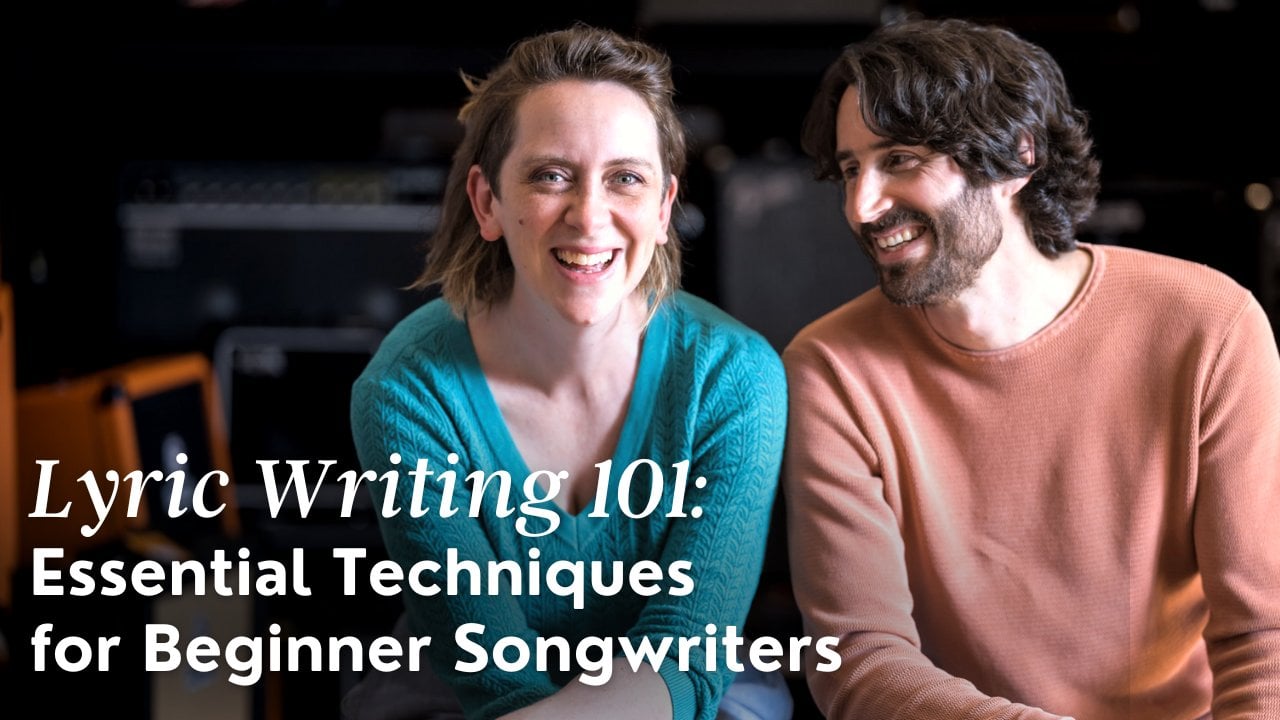
 Keppie And Benny, Helping you write your best songs
Watch this class and thousands more
Watch this class and thousands more
Lessons in This Class
-
-
1.
Lesson 1: Introduction
1:12
-
2.
Lesson 2: Start With Chords
2:01
-
3.
Lesson 3: Lyric Writing
11:51
-
4.
Lesson 4: Melody Writing
3:11
-
5.
Lesson 5: A Catchy Chorus
2:19
-
6.
Lesson 6: Bridges Provide Departure
2:35
-
7.
Lesson 7: The Finished Song
1:52
-
-
- --
- Beginner level
- Intermediate level
- Advanced level
- All levels
Community Generated
The level is determined by a majority opinion of students who have reviewed this class. The teacher's recommendation is shown until at least 5 student responses are collected.
396
Students
--
Project
About This Class
General Course Description
I have an idea for a song but where do I start? How can I turn my song from just a dream, into an actual piece that I can sing and play for people? There are so many things to take into account, so what should I put my focus on first?
These questions are extremely common for beginner songwriters. In fact, it’s entirely possible to be fluent in music theory, song structure and melody writing, but not know how to put those skills together to form a full and complete song.
That’s where Songwriting: The Beginner’s 5-Step Blueprint comes in!
Gone are the days of scribbling ideas that amount to nothing, because this course will discuss step-by-step, how to take your song from just an idea, to a finished song.
Among the topics we’ll look at are:
- Picking and writing chord progressions that work
- Melody writing techniques
- Lyric writing processes and tips
- How to write a chorus that shines
- How to write a bridge that builds tension
Plus, this course even comes complete with songwriting projects for each of the course’s lessons.
Keppie and Benny also put the steps into real-time practice, demonstrating a song written start to finish using the 5-step process to show you that it really works.
So, why wait? Join this course to turn your idea into a song today!
Lesson 1: Introduction
Keppie and Benny briefly go through what will be covered in this course and why the course has been broken down into 5 specific steps.
Lesson 2: Start With Chords
In this video, Keppie and Benny explain how to begin the songwriting process through chords. Among the topics covered are chord numbering, chord progressions and how to pick your chords.
Lesson 3: Lyric Writing
Here, you will learn how to find a title, how to pick a topic to write about, how to make your lyrics connect with your audience, and more.
Lesson 4: Melody Writing
This lesson covers the subject of melody writing. Aside from providing some simple tips on how to first start coming up with a melody, Keppie and Benny also go through how to ensure that your melody fits with the prosody of your song.
Lesson 5: A Catchy Chorus
Keppie and Benny go through what makes a memorable chorus, as well as some tips to help ensure that your chorus really drives home the main point of the song.
Lesson 6: Bridges Provide Departure
In this video, you will learn how to write a bridge that not only provides a departure to your song, but also adds extra dimension and depth to your song’s story. You will also be given some tips on how to make your bridge feel different from the rest of the song.
Lesson 7: The Finished Song
Here, Keppie and Benny combine all the parts they had written from the previous sections, to create a complete song in the form of Verse Chorus Verse Chorus Bridge Chorus.
Want some inspiration before signing up?
Download your FREE e-book with 5 amazing songwriting exercises here
You can find all our free tutorials here on our YouTube channel
Meet Your Teacher

We are Keppie Coutts and Ben Romalis, two professional songwriters, performing artists and teachers with over 40 years of collective experience in the music industry.
We have taught at some of the best contemporary music colleges in the world including Berklee College of Music, Sydney Conservatorium, the Australian College of the Arts, the Australian Institute of Music, the LA School of Songwriting and JMC Academy.
Between us, our music and collaborations have had over 10 million streams, and we have created music for major international companies and brands such as Penguin Random House, Adobe, and Cathay Pacific.
Our goal is to help people write better songs! Our experience, having worked with thousands of songwriters (many going on to find careers and success in... See full profile
Hands-on Class Project
This course comes equipped with 6 songwriting projects for you to complete. These projects are meant to be completed alongside their corresponding lessons, as follows:
- Songwriting Project 1: The Chords pairs with Lesson 2: Start With Chords
- Songwriting Project 2: The Lyrics pairs with Lesson 3: Lyric Writing
- Songwriting Project 3: The Melody pairs with Lesson 4: Melody Writing
- Songwriting Project 4: The Chorus pairs with Lesson 5: A Catchy Chorus
- Songwriting Project 5: The Bridge pairs with Lesson 6: Bridges Provide Departure
- Songwriting Project 6: Your Complete Song pairs with Lesson 7: The Finished Song
Want some inspiration before signing up?
Download your FREE e-book with 5 amazing songwriting exercises here
You can find all our free tutorials here on our YouTube channel
Project Instructions
Songwriting Project 1 : The Chords
- Download the free Diatonic Chords PDF.
- Pick ONE of the chord progressions in one of the 3 keys shown in the PDF. You can either pick a 4-chord progression to loop, or one of the 16-bar progressions included in the PDF.
- Practice playing the chords until you feel comfortable playing them on your instrument.
Songwriting Project 2: The Lyrics
- Choose a topic to write about by asking yourself some questions.
- Examples of questions you can ask are:
- What have I been thinking of lately?
- What matters to me right now?
- Is there anything that makes me emotional? The emotion could be anything ranging from anger, to sadness or happiness.
- Is there anything or anyone that I would like to celebrate?
- Try to choose a topic that is a universal theme rather than specific to you. For example, don’t write about “That time I dropped my sandwich and it really upset me”. Instead, write about “Disappointment”, “Helplessness” or “Anger”, which are all emotions present in that situation.
- Once you’ve chosen a topic, it’s time to pick a title for your song. Utilise one or more of the following methods to help you pick your song title:
- Free writing: Write down sentences, phrases and thoughts regarding the topic you’ve chosen. The only rule is to ensure that you try to structure your free writing in a song map.
- Brainstorming: Write down any phrases or words that come to your mind when you think of the topic.
- Using the thesaurus: Go online, look for a thesaurus website and type in your topic into the search bar. From there, look at the synonyms and antonyms, and write down any words that stick out to you. You can also look for the synonyms and antonyms of the words that show up in the search. For example, if you search for kind, the synonym affectionate will come up, and if you click on affectionate another list of synonyms and antonyms will show up instead.
This will help you not only find words that you could combine and use for your title, but also find words that you could use as part of your song lyrics later.
- Try to ensure that your title follows the at least some - if not all - of the following rules:
- 6 Words or less.
- Invokes an image.
- Inherently memorable/interesting.
- After you have your topic and title, start roughly drafting your lyrics.
- Once you have the first draft, start editing your lyrics by asking yourself questions such as:
- Is my problem/tension/conflict presented in the first two lines of the song?
- Are my lyrics all related to each other in terms of story?
- Have I accidentally jumped topics throughout the course of my lyrics?
- Have I changed tenses throughout my lyrics?
- Could my lyrics benefit from me changing to direct address i.e. in a “Me to you” kind of style?
- Could my lyrics benefit from me using present tense instead of past?
- At the end of this process, you should have a roughly drafted copy of your song lyrics. Note that it is completely fine if your draft is semi-finished, as you just need a rough structure consisting of a verse, chorus and bridge to be able to use for the next sections of the course.
Songwriting Project 3: The Melody
- Now that you have your title and lyric draft, determine the mood of the song that you’d like to express.
- Using the chord progression you picked in Project 1, decide on a tempo i.e. if this song will be fast, slow, mid-tempo etc.
- Play the scale of the key that you’ve chosen from Songwriting Project 1 a few times. You will be drawing your melody from these notes, so it’s important that you get a good feel of the scale.
- Record yourself playing the chord progression you’ve chosen, at the tempo you’ve chosen. This doesn’t have to be an absolutely amazing quality recording - even a rough phone voice note is fine.
- Play the recording and start singing a melody over it. A few good methods to try are:
- Matching the melody to the lyrics of your song.
- Develop a call and response. For example, you could develop a simple motif that revolves around 4 notes for the first line of your lyrics, followed by a motif that answers for your second line. So, maybe if your first line of lyrics ascends, then descends, then your second line can descend, then ascend instead.
- Just randomly free styling your lyrics over the chords, and seeing what combinations sound the best to you.
- As a tip, you should leave a device on record throughout this session. After all, there’s no way for you to remember every single melody you come up with, and this will ensure you’ll never have to worry about forgetting.
Songwriting Project 4: The Chorus
- Go back to your lyrics from Songwriting Project 2, and identify where the chorus is (Or complete/ write your chorus if you haven’t yet).
- Review your chorus lyrics and be sure that you’ve done the following:
- The title of the song is the first and last line of the chorus.
- The chorus carries the essence of the topic of the song.
- If you didn’t make the title of the song the first and last line, then ensure that the title of the song is repeated enough times in the chorus. Always remember, repetition is what helps make a memorable song.
- Once you’ve done that, pick another chord progression from your list of chord progressions you obtained from Songwriting Project 1. The only rule is that you must ensure that it is not the same chord progression that you used in Songwriting Project 3.
- Record yourself playing the chord progression you’ve chosen, at the tempo you’ve chosen. This doesn’t have to be an absolutely amazing quality recording - even a rough phone voice note is fine.
- Utilise the methods you learnt in Songwriting Project 3 to help you come up with a melody for the chorus. The only difference is that this time, you MUST ensure that the highest note of the song is in the chorus. In addition, it should also preferably be in the title of the song as well.
Songwriting Project 5: The Bridge
- Go back to your lyrics from Songwriting Project 2 and identify where your bridge is (Or complete/ write your bridge if you haven’t yet).
- Review your bridge lyrics and ensure the following:
- That the bridge provides further context to the song that isn’t mentioned anywhere else.
- It should create a sense of instability in the song/narrative, or provide a different perspective.
- Go back to your list of chord progressions that you had from Songwriting Project 1. Select a chord progression that satisfies the following:
- Does not start with a chord that either the verse or chorus has started with.
- Does not use the I chord.
- Once that’s been done, try to incorporate a chord that hasn’t been used throughout the song at all, but is from the key.
- Record yourself playing the chord progression you’ve chosen, at the tempo you’ve chosen, with a different groove or chord duration compared to the verse and chorus. This doesn’t have to be an absolutely amazing quality recording - even a rough phone voice note is fine.
Songwriting Project 6: Your Complete Song
- Combine all the parts that you’ve written throughout all the previous projects to create a song in the structure of Verse Chorus Verse Chorus Bridge Chorus.
- Record yourself playing and singing the entirety of the song. This doesn’t have to be an absolutely amazing quality recording - even a rough phone voice note is fine.
- Listen back to your recording and ask yourself the following questions:
- Is there any lyrical phrasing that feels clunky or needs to be worked on?
- Should you change the chord progressions in any way to further support the prosody of the song?
- Should you change the melody in any way to further support the prosody of the song?
- Did you manage to convey the meaning of your song clearly?
- Does your song have a clear narrative to it?
How to Share Your Project
- Upload the recording of your song to a sharing service of your choice. Examples are Soundcloud, Google Drive and Dropbox.
- In the Skillshare course, click on the tab that says “Projects and Resources”. Then, select the green button on the right side of the screen that says “Create Project”.
- Type in the name of your song as the title, as well as your name.
- In the text box section of the Project Description, type in your lyrics and chords.
- Attach a link to the recording of your song that you uploaded to a sharing service earlier.
Congratulations, because once all of this has been done, you’ll have written a complete song of your very own!
Regardless of how your project turned out, always remember that there is no right or wrong when it comes to songwriting - it is a process that you’ll get better at with practice, time and commitment. When it comes down to it, what matters is that YOU are happy with the end product.
Class Ratings
Why Join Skillshare?
Take award-winning Skillshare Original Classes
Each class has short lessons, hands-on projects
Your membership supports Skillshare teachers
Learn From Anywhere
Take classes on the go with the Skillshare app. Stream or download to watch on the plane, the subway, or wherever you learn best.