Transcripts
1. Welcome to Class: Hello, Skillshare.
Let's plan together. This isn't one of those
intense productivity classes to change your life and
become a millionaire. This is a simple,
but, of course, still effective monthly
planning class coming from a small business
owner who has run their own business for 15 years. When I say I've tried
it all, I mean it. I've tried gorgeous elaborate paper planners and
bullet journals, as well as digital planners
and tools like asaana. None of these ever
really worked for me and always left me
feeling like I wasn't being productive enough or would cause me to put
so much focus into the actual planning or finding the perfect system that would finally make
me rich and famous. So I didn't get any
work done at all. Not to mention obsessed that my planned pages had to be
aesthetically pleasing. That, of course, never happened, and it's a lot of pressure
to put on oneself, especially when running
your own business. It's hard enough we don't
have to plan perfectly, too. So I finally figured out
a system that works for me and I've been using this
for the past few years. In this class, I'm
going to share how I plan monthly to push my
small business forward, but without too much stress or huge expectations,
realistic goals. Maybe this method will be a
little life changing for you, but I'd rather not boast that. Hello, everyone. I'm
Kristina Hultkrantz illustrator and surface designer
from Maria Fred Sweden. I've been working as a full
time illustrator since 2010. So it's been a while. Welcome
to my CheeryPink Studio. I've had the pleasure of
working with huge clients like Hobby Lobby and American
Greetings to name a few. Figuring out what
I can manage to do realistically in one
month has taken a while. But now that I have all of my content is easily scheduled. I get all of my collections
done for my agent, and I even have some wiggle room for when the unexpected happens, like, I get sick
or kid gets sick, or have a doctor's appointment. Or sometimes you just have one of those off days,
and that's okay, too. And it's nice to
have a little bit of room in your schedule, and it's not planned minute
to minute or day by day. That's why I really love
working with a month at a time. Another huge bonus is
that I've scheduled in play art time,
my fun Fridays, so that I know that I
have enough time in the week in the month to get everything that
I need to get done. But I also feed my
arty soul by having a day each week where I can
play with art supplies, make paintings, make messes, experiment, watch creative
classes, et cetera. And that is really
important to me. This class is great for anyone who runs a small
business and would like a simple but effective way of planning their
monthly content. All right, come plan with
me. Let's get started.
2. Supplies and Class Project: The supplies that you
will be needing for this class are a wall calendar, a monthly wall calendar, and make sure that it has
a lot of space to write. So it doesn't have you need
to have some space to write, but it can be any brand, it can be any theme, it could be cats or
playing like buying. You will also need some
sticky notes, a pencil. And then all the
other materials are optional if you want
to use highlighters or colorful pens or stickers
and anything like that. But that's completely optional, and that's like
you do you, okay? And the class
project is going to be to share one of your spreads. You can of course
share your calendar spread without any of your personal appointments
and things like that. Please don't share anything
personal like that, but just share when
you've started to set up your page and if
you've decorated it nicely and you
feel like that, and you're excited about
planning your month with me.
3. Why a Monthly Plan: All right, in this
section, I'm just quickly going to cover why
I have settled on monthly planning as my way of planning and all the
other things that I've tried and why it
didn't work for me and why I think monthly planning
could work for you as well. So let's get into that. Alright. So without
boring you too much, I just want to go over quickly why I've settled on
working month to month. So previously, I have purchased beautiful printed
calendars planners. You know, the ones
that are bound, and they're like day
planners or weekly planners, and they're beautiful and somebody else has designed them. I also bought this
beautiful cover one year, and I used this for a few years, and you would buy the
inserts for that year. After I bought some like
pre bought inserts, I started making the inserts myself, but then
I started, like, obsessing with what pens and
what look and all of that. And it got just I just got
really obsessed with that, and I noticed that it
was just making me focus on the looks rather than actually
getting something done. So then I moved towards a digital planner because then
I could make it beautiful. Like, I spent some
time probably in Canva and found a
template that I liked, and then I made my own calendar that I
could use digitally. So I didn't have to
worry about, you know, wasting paper and printing it out and I could
easily have this. And I always have this with me because that's where I
work for the most part. But again, just I made
it too complicated, like with monthly reviews
and weekly reviews. And it just became too much
information to fill in. So again, I was planning more than actually doing
and getting stuff done. I just became a distraction from what I should
actually be doing, and that's not the point. I think a schedule or a plan should help you rather than inhibit you from actually getting what you're
supposed to be getting done. But anyways, I thought that
that was good for a while. But then finally, I settled on just using a monthly setup. So I've settled on using
a monthly calendar, just a simple wall
calendar that you can find in any office supply store. And these are just
really working for me. I have found these
monthly calendar pages. I used these for a
couple of years, and I thought that that
was really helpful, and I could just rip off the page when the month was
done, and that was over with. And this past year, I've been using this calendar
that it was quite pretty, but it's also very plain. It's just the months view, and there's room in each
day to write some things. And I just keep it simple. I just really like seeing
my months at a glance, everything that I
need to get done in one month rather
than focusing on what I need to get done in one day because that can change. So I just put in the
tasks that I want to get done on the days or when content is going
to be published. But it doesn't matter to
me if I got that done the month before or if I got it done the day
before or the day of. Like, as long as
it's getting done, it doesn't matter
what day it is. So that's something.
I don't plan my days on what I'm
going to do on each day. I just see what's
going on my calendar, when I need to fill out
for the upcoming weeks so that I always have
that wiggle room. I always want to be ahead of my content and the
things that I'm doing in case something happens like getting sick, et cetera. Like now, I feel like I'm
starting to get a sore throat, so I'm trying to get
through this class real quick so that I can
edit it while I'm sick. We'll see, maybe it's just
a weird winter thing. It is November.
Anyway, that's why I have settled on and
I just really love. Getting to see all
the things that I need to do in a month rather than that week because sometimes you get done with the
stuff that you need to do, and then you can get
the next week stuff. You can get on top of that. And then, so the next
week after that, if you feel like if you have
something else like here, when I've highlighted here, this is when my kids
go on some kind of, like, vacation
from their school. This was a Spotlov in Swedish. And so then I know, like, I need to get
these things done. Even though they're gonna
be posted that week, I have to get them
done sometime here or even in January.
This is February. So yeah, it just really works
for me to be able to see all this and I will go into
what I do and all of that, real soon with my posted
notes and figuring out what are the top
priorities of your business. These are the top priorities
of my business right now. But these are things
that can change. I also would like to
mention, for the most part, I don't write anything personal
in my business calendar. I use Google Calendar
for my appointments with dentists and doctors and coffee dates and kids'
activities and things like that. I make sure that that's all
digital, so that's all clean, so I don't have those
two worlds mixed up, my personal life and
my business life. So this is really just my to do lists and all the tasks
I need to get done for my different
content platforms and classes and my collections
and all of that. So yeah, I just want
to mention that I, for the most part, don't
write anything like that in. I will write in, like,
my kids' vacations, and that's usually
it that I put in, so I like, know stuff like that. So I just wanted
to mention that. So I just want to keep it
really focused and really clean so I know exactly what
I need to be working on. So the type of calendar that I suggest you work with is
a monthly wall calendar. If any type, it
can be any theme, it can be like birds,
or it can be plain, like the one that I'm going
to be using for my business, you just have to make sure that there's enough
space for you to write for each day.
I really like this one. This one's from
the Swedish brand. Bird Bird? I don't know where Gulers. Oh, this is Gler's trading. Whatever. It's a Swedish brand. It doesn't matter,
but you just find a wall calendar that you like to look of that has nice paper. Maybe it's not too slick and has enough room for
you to draw, not draw. That has enough room for you to write some things on each day. In comparison to this
beautiful calendar with birds that we're going
to be hanging just as a nice, like, arc piece. This one doesn't have
any room for writing, but this one we just
have as a visual, so you remember, like, what day? What day it is? In our kitchen. But I just wanted to
mention that. So this is the calendar that
I'm going to be using in this class to start
planning my my year next year, since we're getting close, it's November 2025 when
I'm filming this. And here's the current
one that I am using. So, this one's a
little bit prettier, but I quite like that this
one's even more plain.
4. How Much Can You Do in a Month: All right. In this
section, we're going to get into the nitty
gritty of the class. How can you figure
out what you can manage to do in one
month and what do I think that you
should be focusing on to move your business forward if you're
just starting out? I'm going to help you with as
many ideas to be productive and actually work
on the things that matter for your small
business. All right. Now it's time for me to chat with you a little bit about how to figure out how much you can
manage to do in one month. This course is going
to be personal to you, whether or not you are working full time with this, part time, you have kids, you can
work nights, weekends, it totally depends, but I'm
going to show you what I do, and then you can
work around that. I will also give you some ideas if you're just getting started in Surface Design or what I think you should
be working on. So for me, I have set my business up into three
sections, I would say. I have my pink light agency, and there I am required
under contract to supply 12 artworks per month. And I usually set that up as two collections
per month of six. So I do one collection
in a theme. Usually, also, I do this theme that I do with my patron group, and then another one I do whatever theme
I feel like doing or that my agency is
calling for something. So that's my top priority. I have to get two collections, ten per month, or I can also, set this up in different ways. I can do four collections of three or 121 offs
if I wanted to, but for the most part, two
collections per month. And again, if I
get those done on the first week, that's cool. If I get them done on
the last day, it's cool. So that's just my first priority because I am a working artist, and that's something
that I'm focusing on and working towards
thankfully because I am under what's it called? I'm represented by an agent. I don't have to do any
marketing of my work, so that section is
gone from my world, which is very nice because
pitching emails is not fun. But if you are just
getting started out, that's something you'll
have to be focusing on. And I would say that
would probably be your second tier that
you're working on. Because I love creating
classes and content, my second thing that I work
on is content creation. So I have these
Skillshare classes. I don't do them every month, so they're kind of
like an add on. So I don't know. Like, they're kind
of down here in my, like, news section or,
like, other stuff. It's hard to Hard to say. But anyway, so I have
my two patron groups. I have Collection Club. I'm sorry that this
feels like an ad, but I just need to
mention to you what I do. Yeah, if it's interesting. So yeah, I have Collection Club, where I do surface
design things, and then I have Fun Friday, where I post like RD
videos every Friday, we're talking about supplies and doing different themes
and drawing together. So that's what I do for that, and there's a lot
that goes into that, and there's a lot that
takes up my calendar. Because there's
certain content that I want to be published
on certain days. And this is the same
thing if you have a blog or something like
that or an online shop, maybe you also can apply
that so that maybe you have a goal of creating two
new products per month. And then you have maybe a blog or newsletter
that you write to your customers maybe twice
a month or once a month, and you are promoting your new things that
you're creating. And then I have other things. Like, I have my Substack, which is kind of like a
blog newsletter hybrid, so I do that twice a month. Or I do a few. No,
actually, I have several. I have the monthly newsletter. I have a newsletter
here on Skillshare. I promo my patron groups. I have a theme that I always
talk about in Substack. And then I have a feedback
session every other month, and then I write
a November recap. So I mean, these are all
stuff that just I don't know. You have to figure out what
you think is good amount of marketing on your website,
blog, a newsletter. I've built up to this, and this is the exact amount that I think is perfect for me. It's not too overwhelming, but it's enough that I
feel like I'm getting my artwork out there and
I'm getting not my artwork. I guess my teachings
out there because I'm not promoting my
surface design art. I'm more promoting my groups and my teachings
here on Skillshare. So that's what I focus on. Those are the three main
things that I focus on. And then when I have
class like this, then I'll have
another little post a simple post it that
this one right now, it's in November because
I'm filming it here. This just a simple can
add it on in here too, I guess. Yeah, we'll go. I have actually already
filmed the intro, so I'll check that off
because checking off stuff is really The best. Alright, so that is what
I plan every month. There's also certain things that are in my calendar that I
don't have on a posted. These are just my
main three things for my agent, my patron, and then the other
my blog, I guess, my Substack, and
Skillshare is on here too. So I have things like, um, I always look at my finances for the previous month on the first Monday or
the second Monday. Um, I always write money because I always
have to remember. That's something I
forget to, like, look in my accounts to
make sure that all of my my bills get paid
automatically, you know. And sometimes I, yeah, I don't want to
make I want to make sure that my bank account
has enough money. I have different accounts and saving accounts that I'm
moving money towards, so I don't always
have every all of my money in my checking account. That's just a little side note. I think those are the only,
like, those kinds of things. I pay pre taxes every month, so I make sure to write that
in my calendar as well. But other than that,
it's mainly just putting in my content and when
I want to put them in, and I check it off on the day when it has been
scheduled for that day. It's not the way I work, it's not like I want Oh, it's 7 November. I'm going
to do this and this. I hope that I've already done
all of these things before November even started.
That's how I like to work. So now today is I don't even know what day
it is. What day is it? Like? It's the 18th, I think. And so I need to I'm behind. I haven't done this yet,
but I'll do that today. I'll do that today.
I check that off. And yeah, then I start working on the next week and when those things are done, I work on the next
week and I'm just constantly being
on top of my work. I just really like that and
having that work for me. Okay. So you might do other things such as run an online store or
work on a freelance. Basis. So you'll
have to account for those things that
you want to be able to do in a month realistically. And I would if you're going to be doing this
planning with me, like, stick to what you
know, you can get done, especially with the time that
you can get things done, especially if you're
working part time, or maybe you're
working full time, so then you really
don't have much time to do your work as I do
who has a full workday. If you're just getting
started in service design, I highly suggest that you also focus on creating maybe
not two collections, but one collection a month, and then your next section is going to be finding clients. You need to schedule
in time in your month. Maybe the first week you plan your collection and you start
creating your collection. Then the last weeks when you're finishing
your collection, you also need to be
researching clients, and then the last week when
your collection is finished, you need to be pitching
to your list of clients. Then after a week has happened in the next month, most likely, you'll be following up on
your previous collection, and then you just keep rolling and you do a new collection, and then you find even
more clients to research. Maybe you give yourself the goal of five new clients per month. You research those, and
then you pitch them, and then you follow up and
you just have that rhythm. And then when that
starts feeling like that is totally doable
and manageable, then you can add in things
like starting a newsletter and a blog where you talk about your process or whatever
you want to talk about. Or just building up that list so that you can later if you
want to teach a class or if you want to
offer digital brushes or if you just want
to make it easier on yourself to pitch
your work to clients, you can build up a private
art licensing list that you send out a
newsletter to those people. You have to ask them
permission, of course, to put them as a
subscriber to list. But that's also an option. So, you just keep adding another section that
you could work on. Maybe for you, it's important with social media marketing, making sure that you post
every Friday on Instagram. But for me, I've fallen very out of love
with social media, and I have noticed
that it hasn't really done anything for my
business whatsoever. So I only use
Instagram organically. When I really want to
post something, I will, but I don't have a
schedule for that, but maybe that's something
that you want to focus on. Another great option
is Pinterest. I would actually love to use Pinterest more because I
do actually think that that would be very helpful and beneficial because I'm on
Pinterest every day all day, so I should have
my work up there. So that's another
thing. But again, start with the basics, creating new work and
getting it in front of clients, emailing
them directly. That's the way that
you're going to actually get your work in
front of buyers, not by posting on Instagram or Pinterest or writing a blog. But those are just,
like, nice add ons that you can work on once the
other things fall into place. So that's my easy setup for your month and what I think you should be focusing on. And then, of course,
if you want to do fun things like YouTube or Patron and Wow, those become even more
for your workload, but they're so much
fun, I have to say, I love my patron group. I love writing on my blog. I love creating these
Skillshare classes every so often, a
few times a year. It's so much fun, and it's a different type of creativity. So I just wanted to
mention that, too. But yeah, my takeaway
is start small, and then build up over time.
5. Setting Up Your Calendar: Alright, and now it's
time to actually get into setting up your
calendar with me. So let's get into it. In the next few sections, we're going to be
planning together. Alright, now it's
time to actually start planning my month. So I'm going to
plan January 2026 so exciting and my
new wall calendar. And I also want to mention I
don't actually hang this up. I just keep it in my
drawer and my desk. So this isn't something
I just pull it out and I think it's
quite easy to work with. I love that this one's
a little square, so it's even smaller than the
calendar I used last year. So Again, this one's in Swedish, but you can totally get
what's going on here. I mean, my weeks in Europe, they start with Monday
through Sunday. I don't do anything. I don't do any work
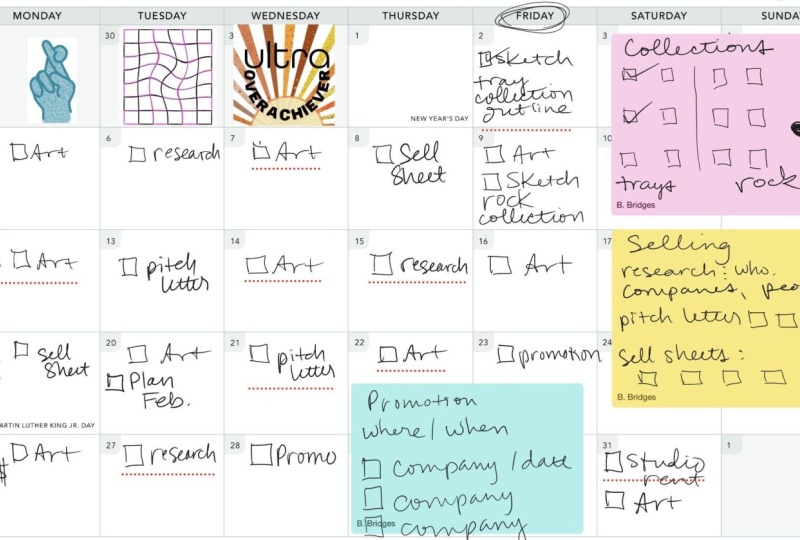
on the weekends, so that's why I cover up my weekends with my posted
notes that works for me. But a post it, I mean, they could be hanging
off the you can just fit them where,
you know, they fit. I use these sticky notes.
I just bought a new one. I like that they're color
coded for different things, only just because not because
really any other reason. So I'm going to just I separate them so that I
have the different colors. Yellow, I like to
use for my patron because 'cause I like yellow. It's funny. This is the same pack, but
they're different colors. They became even
more pastel now. Oh, well, and then pink for pink light for obvious reasons. And then blue for
the other ones. I also have green. Should
we go for green this year? Very difficult decisions,
but these are, like, just like, please don't
spend so much time. Should this be my color
pade? I think so. We can use the blue
for extra stuff, like, when I do Skillshare
classes and stuff. Alright, so I like to put
pink plate on the top, 'cause that's my
biggest priority. Yeah, I'm gonna align it, so it at least
looks really good. And then patron is
my second priority. I'm slightly annoyed that
that one's wrinkled, so I'll use lap for
something else. Since this is a video, I need to make it look nice. Alright, and then the last one, I swear these are
also, like, thinner. Like, they've become cheaper. Everybody's trying
to save money, and I guess that's good, and then they use less
paper. So we like that. Alright, so here's my
little post hits for later. And then I'll just
use I usually use just a regular pencil
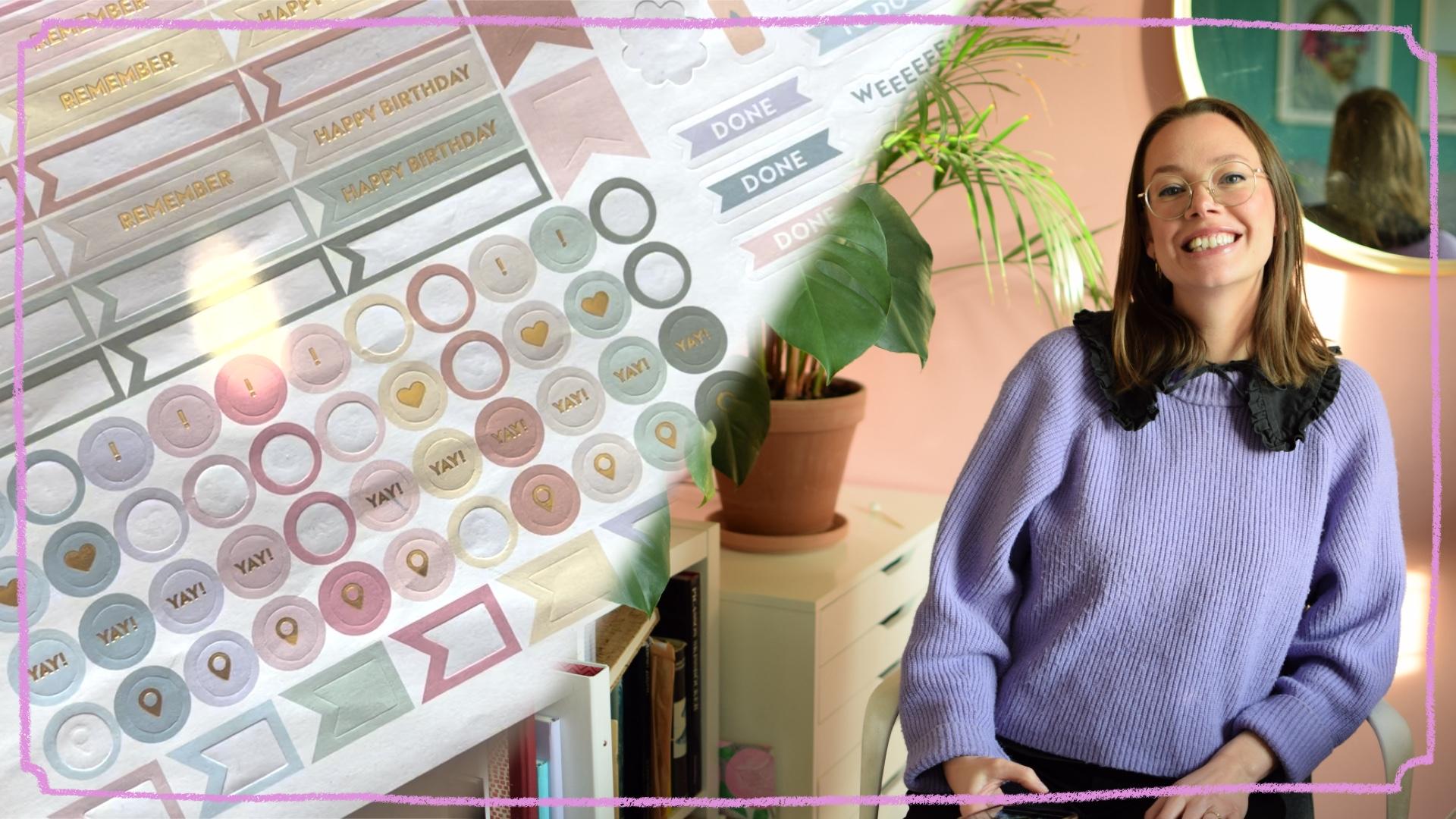
to pencil in stuff. I ripped out the stickers from my previous year's planner
just to use because why not? But, again, this is
totally optional. So let's decorate
just for funzies. Um, I don't decorate that much. Here, Frye. That's fun. So we'll just put that on
the Fridays 'cause obvious. And then what else should
we use to signify January? Usually should be
like a done bell because everybody
starts working out, but I don't I don't think so. We'll just do a little
star here. See? See? And then, like, this has
made me happy enough. Here it says atoraT
do. So that is nice. We obviously gonna do
some things to do there. Uh, I have let's see. Do I? What do I do? Yeah, up here, I usually
have some things. Like, I have a few things
that I write, like, my Collection Club
and my other theme, so I remember what I'm doing. Um, but I'll do that later. Maybe we can use these
beautiful remember. What color should we have for This peach is
calling to mean. Okay. Remember. Should
I do this over here? Alright. Again, so
that's enough of that. So using previous
months as my template, I'm going to figure out what
I'm supposed to be doing. So for me, again,
this is personal. Like, this is what
I need to get done, but for you, it
could be different. So I'm just going to
write pink light. And maybe yours is
your collection, and they're going to write
out how many you want to try. Like, are you going to do
just a mini collection this month with three things? I'm going to do I
usually set up with my two of six, but
this I can change. And because it's in pencil, it's easy to, like,
change, like, if I decide to do a
collection of eight instead, I just add some squares, or if I do four, I'll just add another
one down here and split it into
another section. You know, it's not
that important before I have written one, two, three, four,
five, six, but maybe I'm gonna keep it even
cleaner this year. Like, I can see
that this is six. I don't need to write six. And then I'll usually write the themes that I'm working on. I have no idea what I
want to work on then, so I will leave that
for another day. Okay. So that is that. And then
I move on to the next one. Also, I want to
mention this one, I don't put those into
my calendar at all. I don't know when I'm going
to work on certain things. So for me, like I said, I don't it doesn't
matter to me if I get the first
collection done, like, on the second or if I get
both of my collections done, like, on the last week,
it doesn't matter to me. I will figure out the time
to focus on that when I have all this other
content done, too. Like, I just figure
that out as I go, what I feel like doing on that certain day or
certain things like that. There are other factors for me, like when I create
content for my newsletter or for patron or Skillshare
when I need to film, I have to pick days where my husband is not at home
working because he's loud. And in the background, we
don't want to have, like, some dude talking, so I have to only film
on certain days. So, that depends week to week when he goes to the
office or not, you know. So those are sometimes
something that I can mark in. Like, usually on
Wednesdays, he goes in. So Wednesdays is usually
like my main filming day. But that can change. So again, that's why it's nice
to have this open. I'm just like, know when
I need to get done, and I can pull
certain things over. So here I have Patron
is my next one. And I have the two groups. I have Collection Club, and I have Fun Friday. And then I have lots
of to dos there. I'm not going to bore you with all the different
things that I do there. Also, it just feels like I'm
promoting that too much. But anyways, I have
certain things that I do, and I will pull those over into the calendar when I want
those to be scheduled. I usually schedule them like I've mentioned many
times beforehand. So I would fill
that in and I would pull all those dates
into the calendar. Like, on Friday, I always want to make sure that
they land on the Friday. So that's pretty easy. So
I know that I have one, two, three, four,
five this month. I need to create five content
things for Fun Friday. So that's how I do that.
Alright. Next step, we have, my other stuff. I call it news. It's
like my newsletter. I could call it Substack,
but it's other stuff. But okay, so I have my news. And this is, of course, you
could call it marketing. And here I have have
one, two, three, four, five things I only do
feedback sessions, whoops I and like, wipe
my eye makeup off. Thankfully, I can't see
my eyeballs anymore. Okay, five things
this month, I guess. Five. So I have my No, January. I'm in January. I have to remember that
I'm not doing December. So I will actually
have six things. Okay. January news. That's my general
newsletter that goes out on it will go out on the first.
So I could put that in. Jan News. And then I also do Skillshare news because I like to promote what I'm
doing everywhere else. Smart. I'll put that
in here, skill. On the first of the month, it usually has a lot
going on because I also promote when I'm in my patron what's happening for that month comes
out two videos. Okay, so I have, yeah, here, my Collection Club and on Friday promo on my blog,
Substack newsletter thing. And then I have a Substack theme video that
I do every month. And the promo here, maybe
I'll put that on the Monday. Because I don't want
it to be everything happening on that Thursday. It depends on how
the month is set up. Like, if the first
is on the Monday, then maybe I would do the promo
on Wednesday or Thursday, you know, whatever I feel like. It doesn't actually matter. As as long as you're
like, doing something. Alright, and then I have
so the theme video, again, I could, like, plan that I think is
gonna be like a review of review of 2025, like all the things
that I've accomplished, just focusing on
that, I don't know, all the artwork
that I created or my favorite things or
the books that I read. I don't know, stuff
that I did in 2025 that I'm very pleased with. I think that would
be a good video. And then I do a Substack
feedback session. I do free feedback sessions
every other month. So I do that, and
that's usually I always do my feedback session in
Patron on the last Wednesday. So here I can write
that in. I know that. Mm. So I do that feedback, and then sub feedback. So then I always make sure
that a week before that I announce feedback session. A week before, so people have
time to send in their work. So that's just how I work, like adding in the different things. And here, the first
Monday of the month, I told you I do my finances, so that would be
December finances. I make sure to
write everything in my little Excel sheet
and I do air table and I make sure that I've saved all my digital receipts and
all of that, being good girl. All right. And I, I usually
pay my pre taxes there, pre scout. Um, yeah. Again, I like writing to check my money
situation, the money. So they have everything for all my bills they get
paid on that week. Right. And then the
last thing was, I guess we can do 2025 recap rather than just December recap. On my blog, that's in
written form, usually. I don't do a video for that. So those are the things
that I do every month, and I just pull start
working on that. And this is just so clean and it's so easy
and it's not modeled up, like, with my blog. Some people, you know, you
can write a to do list, like, outline ideas. Write the post,
publish the post. Like, I don't want
to I just like when it gets done, completely. I don't need all
the small tasks, then I will check it off. So that's how I set up my monthly calendar without it feeling too overwhelming and without it being too
fancy and I can't get it done and I can't see everything that
I need to get done. That's just simply how I do it. I fill all these things in, I pull them over when the content's going to be published, and then I get them
done when I can. And hopefully, I get them done like a week in
advanced at least. But it's also okay if sometimes I get it done on that day. And sometimes stuff happens
and I don't get it done. And there's nobody except for me who's just gonna get
slightly disappointed. But obviously, your
followers are going to understand if
you get sick and you weren't able to post a video because your throat
was scratchy or, you know, something like that. Life happens. It's not the end of the world. So yeah, that's how I set
up my little calendar. And I hope that this system was inspiring and helpful and simple but also
efficient for you. And you set this up in
a way that's going to help you and your business,
like I mentioned, if you're a surface
designer like me, that you create a
collection per month or maybe two smaller
collections, doesn't have to be as
much as what I do. And then you do something
to promote that. By pitching, I
highly suggest that you promote your
work by directly pitching your work to art buyers via email
directly to that company. It does take a lot of
work to figure out how to find those art buyers. But once you do and
you can kind of, like, guess email addresses, it's usually the person's
name at the company.com. You know, I sometimes
you can get really lucky by doing that and using a little sleuthing on
LinkedIn to figure out who is the art director or
creative director or even sometimes they're
called art Buyers on LinkedIn for that company. Yeah, and then you
need to do something to do marketing on social media, whether that's Instagram, Patriot not Patron. Yeah,
it could be Patron. YouTube, um, a blog, a
newsletter, something, start something that
the one that feels the most fun to
you could be like a whole Patron group like I do, or a YouTube channel that
you want to get started. But again, focus on the two things that are
really, really important, which is creating new work and getting it in
front of buyers, and then you can
do the fun stuff on top of that like I do. Yeah. So happy
getting stuff done.
6. Planning Larger Projects: I wanted to quickly mention
when you are planning something bigger than can fit into your planner like
this or on a post it. Like, I showed you that when
I plan my Skillshare class, it looks like this, but I
want to be honest with you, like, no, it is
bigger than this. This is maybe just like my things that I definitely
need to get done, but I do actually have a bigger
plan, but that's digital. I write a doc, like a Google Doc every
time I'm planning a class, and I write all
the class titles, and I do all the sections. I write out my script of what I approximately want
to talk about in each section so that
I'm prepared and yeah, so it's not as simple as this. And I also want
to mention, like, using a simple to
do sheet like this, that's really cute that you can write to do for projects
that are bigger, such as if I think here I
was updating my website. So that obviously has a lot more to do than
just writing, like, website update, and it could
be nice to have something that also has a little
bit more information. So I just want to mention,
like, this is, like, the cleanest version of
what I'm doing every month, and this is usually like
my month to month things. But when I have extra stuff, like a class or if I'm
updating my website, I will use other tools. So I just wanted to mention that so you don't think that I'm like, I don't know. Magnificently organized. Like, I have
everything in my head, and I got everything
perfectly organized. So no, I obviously have I obviously also have
a running to do list. Like, the updating your website, I feel like that could
be constant, like, just a to do. Always. And, I mean, there's
always things to do. And there's, like, I have
a dream of opening up my my own online shop
again with art prints, and I just haven't
gotten around to that, but that's something
that I could put in work and start writing to do for, like, and then really write
it out, like, plan ideas. Make the prints,
set up the website, shop and then had listings. Like, it does help to break
down really big tasks. But these are the tasks
that I do so often, so I don't need to write
out that I'm going to figure out my ideas
for my collection. But again, if that's
something that you like doing, please go for that. If you want to do
sketches, final, and then I don't
know if you call it publish them to
your website maybe, or to your clients
or pitch them, that could be a little
list and you could write that in the calendar
if that works for you. Again, this is so personal
to what you want to do. Like if you have the idea of
all the first of the month, you figure out what theme your collection or collections are going to be for that month, and then you give
yourself a week to get the ideas drawn and your
color palette chosen, and then you use your calendar to give
yourself deadlines. I think it does actually work, but also if you get it done
before then, it's exciting. I really like that idea that you can check off something before you're even on that day. Yeah, I just wanted
to mention that too.
7. Getting It All Done: Alright, I'm going
to just chat to you about how to get this all
done. Just real quickly. I want to give you
a little pep talk because I know that you can, and I know that it
feels overwhelming, and I know that you can
definitely add to that toto list. But what if you really
just focus for a while on those really
important things like getting your work done
and getting it out there? Especially getting in front
of buyers to their email, not just focusing on
Instagram or other fun stuff. I mean, yes, those
can bring in tons of success and YouTube channels. I know they feel so
sparkly and amazing. We all follow some
creative YouTuber and their life just
seems so amazing. But anyways, you can't get
focused on stuff like that, focus on things that
are really important. And you can manage
to get it done. I want to mention
that I think you should work month to month. Maybe as the month is coming
to a close and the last week you start planning
the next month or maybe in the
middle of the month, you plan the next month
and just go from there. Don't plan out your full year. Sometimes it's difficult to
know what's going to happen in three months, five months, six months, all the
way to the next day, end of the next year, that
just seems so far away. So maybe at the most plan
three months in advance. Especially if it's
these kinds of things that you know you do
every single month, you can plan, like, when your content is
going to be published, but maybe you don't
have to exactly plan what themes you're going to be doing or what you're going to be talking about on your blog. Just know, like, well, you always post your blog on the last Friday of the
month or whatever, you know, something that
feels good to you and your schedule and when
you're not working. I mean, I feel like I'm just blabbing and you
can totally get this. I hope that you understood. Yeah, I think you
can get it done. Just set realistic
goals for yourself. Don't start off with creating two huge massive collections. I've been doing this for
six years with my agent. I think I'm actually
on my seventh year, I've created hundreds
of collections, and now two collections, I would say I would boast
that it feels easy. Now, I mean, sometimes
it's not easy. If I get really
sick, but of course, my agent is they're human, and they know, if I'm
really, really sick, like I had pneumonia one
year, really, really bad. I obviously couldn't
work for a few months, and I gave them one collection per month for a few months, and that was totally fine. So put realistic goals, make sure that you
have wiggle room. Like my Fridays, I didn't mention that in
the class, I don't think. I always make sure to have that open like I have
content scheduled, but I make sure that
it's always done. So on Fridays, I
can just play with my art materials and
paint in my sketchbook, take a Skillshare class, whatever I feel like
doing that day. That just feels like such a
beautiful end to the week. And before it felt
really self indulgent. But now I've realized
I get all of the stuff that I need to get done Monday through Thursday, even more efficiently and faster because I
know I want to have that day to myself on
Friday where I can just fiddle with paints and pencils. I I definitely makes
me more efficient. I think also being a m has
made me incredibly efficient. I know about time
management and doing too many things
at the same time. That's something also, if
you have to schedule around my workdays aren't as long as
people who don't have kids, and sometimes I forget to not compare myself to other
women who don't have kids, and I see that they're
working and creating these things or working
until ten at night, which, I mean, I don't think
is particularly healthy unless they got up at, like, 12 in the
morning, you know? Their life just is
different to, uh, mine. So yeah, also, again, I don't want you to compare
yourself. I've put in tons. Right now, it's empty, but my usual calendar is full of de dos and things that I'm checking
off and working on. But I have a full time
day, for the most part. I work from, like, nine t
two, so I don't have, like, a 40 hour work week, but I have plenty of time
to get lots of stuff done. Oh, right. That
is definitely it. Now I don't think I have
anything else that I can share. I think that I have, like, bared my planning soul, and I think that you're
gonna manage this so well. Thanks so much for
watching this class. This has been so
much fun to share.
8. Next Steps: Alright, that's it. Thanks so much for watching this class. I want to leave you with a few next steps so that
you feel like you know what to work on after creating this monthly
planner setup. And hopefully, this class helps you to feel more confident about what you can accomplish in a month and what you
should be focusing on, what I think you
should be focusing on, or what you think
you're going to try for a while and see how
that works out for you. And, of course, this
can be tweaked. And as that monthly schedule gets more and more easy,
you can add to it. So your next steps
are, of course, to follow this monthly schedule and plan just a few
months in advance. And then as this
monthly schedule feels when it starts
to feel easy, you can always add another step, or another task or another goal that you
want to accomplish. But just don't start off
doing everything all at once. It's really overwhelming. I also want to mention, please don't get caught up in all the bells and whistles
of different planners and all the different beautiful pens and stickers and things and
obsessing about themes, if that's something that you
really enjoy, of course, do if it's something that gets in the way for you
like it did with me, it just made me distracted. It just made me feel like I
had to start over my page. It just made me waste so much time that I
could actually be doing something that was
better or more important for my business than making my
calendar look good. I just wanted to
remind you of that. It's just a planner, and
this is just a helpful tool to just make sure that you're getting enough things
done each month. It doesn't have to be
aesthetically pleasing. You can just, like,
just use pencil. And then every so often, maybe twice a year, you can evaluate what you're
doing for your business. Has anything that you have
been working towards paid off? Has any of the marketing
that you've been trying or the pitching that
you've been trying helped? So maybe you should
amp up doing that. Like, maybe you should
pitch more or maybe you should market yourself
more in a different way, depending on what you've
been focusing on. So really take the time to
evaluate what you're doing, so you know that you're
not just putting tons of work into something
and it's not paying off.
9. Where Else Can You Learn with Me: So that's it. Thanks so much for taking
this class with me. I really hope that
it has inspired you. I don't I said in the intro, I don't want to boast
that it's life changing, but it could be if you've been
stuck trying to be, like, super hyper
productive and making the most beautiful calendar
planner in the world. And that just takes up
so much of your time. And maybe just this
simple wall calendar of monthly planning will feel like a breath of fresh
air. I really hope so. It really did for
me when I like, got rid of all those
other planners I was using, and it
was just too much, and it was this
became so simple, and it really helped me just focus on what
I actually need to get done and I can see how I'm getting it
done all in one place. Rather than flipping
through tons of pages of what I've done
and what I have to do. So I really hope that
you find it helpful. If you'd like to hang out with
me outside of Skillshare, you can find me on Instagram at Kristina Hultkrantz
or my website, Kristina hultkrantz.com. And if you would like some help with your Surface
Design collections, you can find me in
Collection Club. On Patrin. We work
on a different theme every single month to build your portfolios for
Surface Design. It's really amazing group. We've been going
for three years, so there's three
years of content. So it's like 36 different
themes that you can check out. They're all available
when you jump into the the group, the membership. And then I also have fun Friday. If you want to do some
art play with me, and I post fun little art videos also
with a theme every month, I would love to have
you there. That's it. Make sure that you are
following me here on Skillshare so that
you'll be notified when I post my next class. Bye.
 Kristina Hultkrantz, Illustrator & Surface Pattern Designer