Transcripts
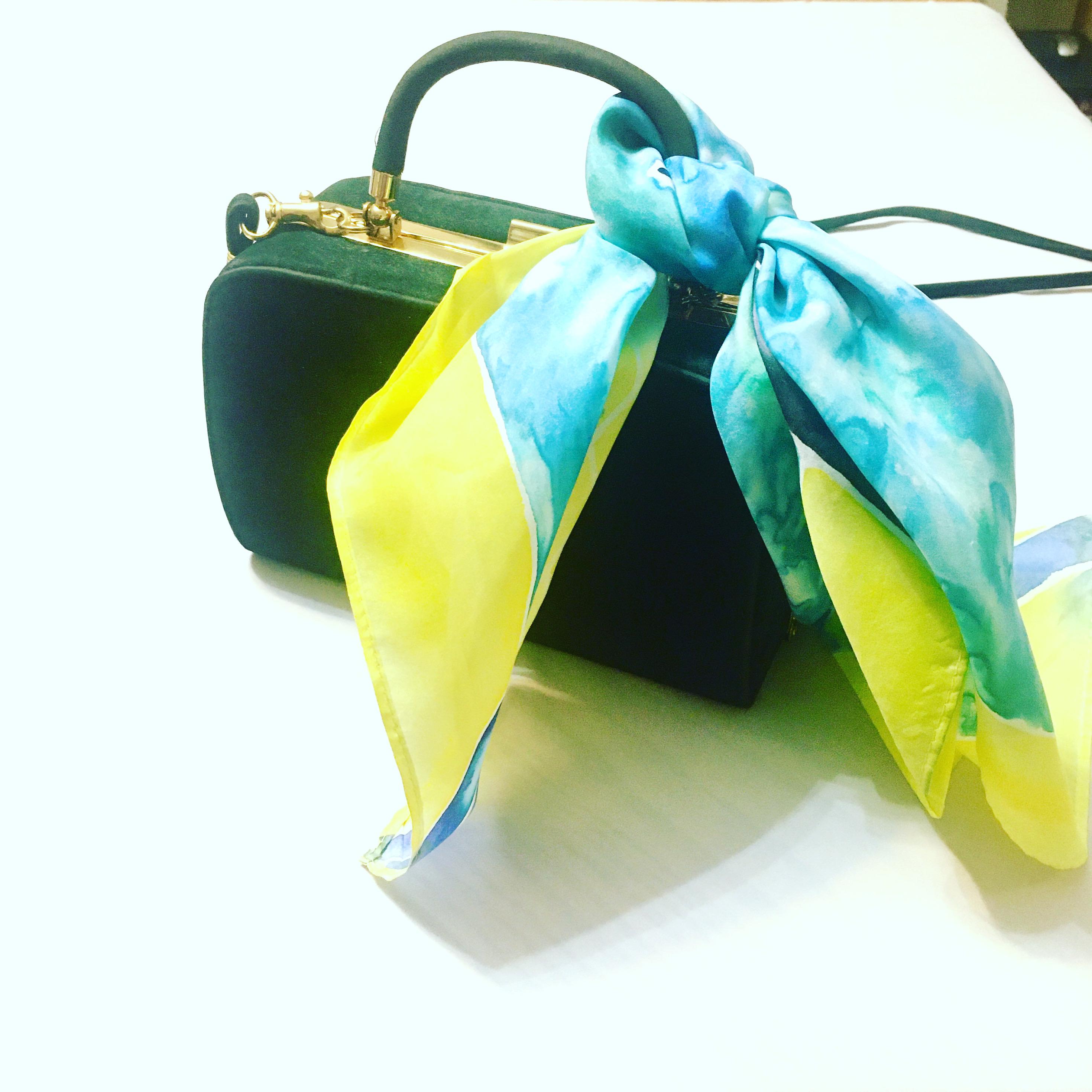
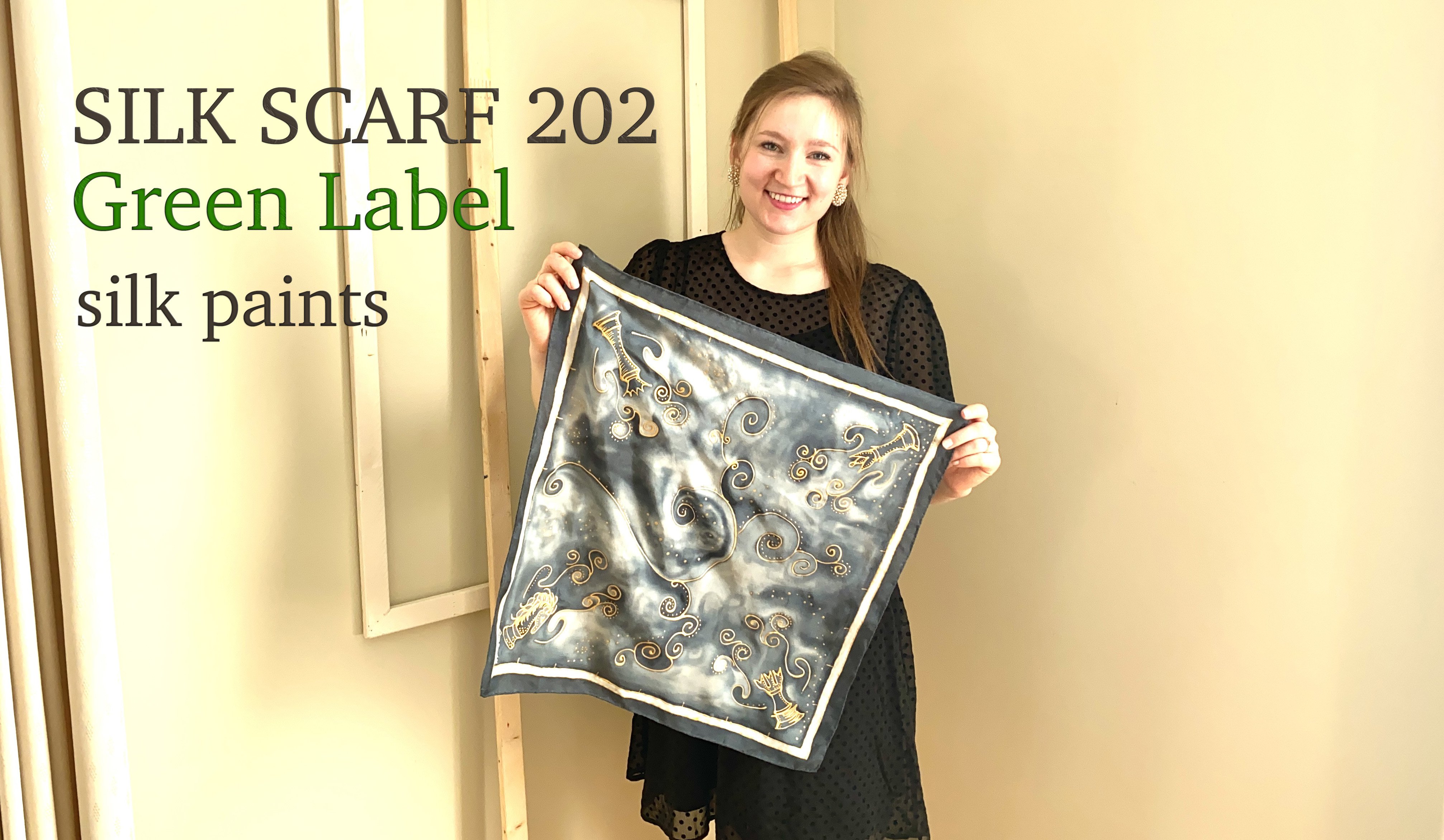
1. Silk Scarf 201: Hey, guys, Welcome to ours for all channel. My name is Anastasia. On in this class, I would love to teach you how to create one of thes silk scarves. So this is a habit ties silk scarred. I'll be teaching how to make this from start to finish. I hope you can join me in this class, and I look forward to seeing either.
2. Everything You'll Need: Let's talk about where you guys full need. First of all, you'll need your silk scarf. Okay, so this is a habit. I silk scarf. It is hand ham scarf, so that's an Italian style type of scarf. So here is the little square. It's 20 to 22 inches. Another option is to get a habit. I scarf. That's machine hand. So is just The machine went through it to him, the edges. So that's more like of a French style scarred. So whatever you prefer, you can get that next is we'll need to stretch out the scarf onto something. I suggest getting a bigger frame on which you can stretch. The scar on on my scarf is 20 to 22 inches, so this is, I believe, 20 by 20. Okay, then what I suggest is you draw a smaller version of what you want your scarf to look like a cardboard paper. Once you have that, you can transfer your design onto a bigger hardboard paper that you can see underneath the silk scar and trace over it. Of course you need your pencil. I can be to be or four b HB can work to just make sure it's not too pointy. You'll need your lovely scissors, and the important thing that you love that's knew that I tried is your cards Auto fade pen . So it's a blue pen. You draw over and on yourself. Once you put water, it disappears. Then you'll need. They're removable. Water based. Resist again misfires. Your card so that's resistant will draw on yourself to make sure that your color doesn't spread. For coloring options, you have so many different options he can use basic watercolors. I personally prefer using soak specific pains, one type of pidio, said a silk the day that has different types off sold painting or fabric painting Paints said a silk is the one that I use for some because it flows a little bit easier. It's more. Then I also use your cards dying a slow. It looks really great on silk as well, depending how big your scarf will be. I choose the different thicknesses of the brushes. I will have some smaller details, so I need a smaller brush for that now. Once you do have, you're one of base resist. You gotta make sure that you have an applicator bottle, which you can pour the resistant to. So I got these applicator bottles of Amazon, and they come in with different tips and different thicknesses of tips as well. Another option is could be a metal tip as well, which waas, which is what I've used in the past, and it works quite well. You will also need some safety pins to stretch her silicon. So just be careful of those nice little safety pins and a force. It's nice to have some salt or sugar, whatever you prefer for different textures that we'll see and you'll need some masking tape . That's it.
3. Sketching on the Silk: from Class 202: Let's start with stretching out the silk scarf. The first thing you wanna do with the scarf is you want to wash it just because there are some chemicals and the scarf that set it to look as nice that it is. So you want to wash it really quick and then iron it. And now you're ready to stretch the scarf. As you see, I raised my frame a little bit higher. And the reason why that is so that the silicon doesn't touch the table. So you do want to raise your silk up a little bit. As you can see now, I'm starting to cut up scotch tape pieces. There are different length depending how much a frame you need. So I start, I have a few smaller pieces and a few larger pieces to stretch out the entire scarf. To help use dry chose the scarf. All you wanna do is cut out for longer pieces and you grab each end of the scarf and you just stick it on top of the silicon, you stretch it out so it's already uplifted and ready for you to be pinned down with a Balkan. So here, the ball pens, there are many different kinds. Make sure they're not too thick, otherwise it's really hard to go right to the edge and outside of the tape through the edge again. And here's how we want to go ahead and put the pin through the tape through the edge of the scar pen back out. Now make sure you're living the tip out. You don't want that tip pushed in because if you do that, you will have sections of your scar that are not penetrated with a dye. Now you're all set up to go ahead and stretch out the entire scarf. Start with those four squares first, just to get full support of all the edges on the four corners. And then you can go ahead and stretch out the scarf. One thing I would suggest, when you are stretching the scar from one side to the other side, don't stretch them directly across from each other. Make sure you stagger the pins. So let's say one pin goes through here on the other side, it would just be a smidge over so they're not overlapping, but they have some space. Can last but not least, when you are at the stage about to stretch out the entire scarf, don't stretch it out to too hard. Okay? You want to stretch out the perfect square and it will be a little bit soft, but that's okay for the stage.
4. Design on: Autofade Pen: Now grab your sketch. You have drawn a sketch before the slumping to that You want to do whatever your sketches, You put it on a large piece of paper here that's a little bit thicker. And this large piece of paper goes right underneath yourself. You flip your silk around so the cynical literally touches the paper with the draft that you want to draw on it and you line it up as much as you can. As you can see, this look is not necessarily 20 to 22 inches. Some edges have less, but few millimeters. Some have more. So you just be aware of that. Now, what I'm doing is basically drawing the edges of the scarred I do. I've been thinking quite a few of the scars, so I did realize that I do want to have these. I just full of covering my skirt. So I'm just in my draft here, and basically I'm using the auto fate pen. But you really don't have to. You can just grab any marker, and I'm outlining the edges on the actual paper. Once I've done that, I'll be overlaying the draft right underneath the actual silk and I'll be ready to start drawing over the silk. What? They oughta fade right away, so you don't need to use your pencil. What I found with pencils is that they actually stay. And this scarf in particular, I do wanna have the yellow edges. So what I'm doing here is you can grab a long ruler, and I use it to guide my auto a pan to have these edges so it's okay if you're out of a pan , goes a little thicker. It's okay if it doesn't. Basically, it'll wash out in the end, no matter what. One thing you'll notice about thes silk scars wherever you get it. Whether you have it yourself, use a machine or your buy it already hand. They're not exactly 22 between two inches to the dot. So what I've been doing in this silk scarf is I've been adjusting, um, the corners to match. And now, as you can see him outlining my drawing, and basically I used a pencil to see right through the silk. If it's too tough for you to see the pencil, you can just use a marker and outlying your pencil, drawing with a marker than you can really see nicely under this. Look, whatever you prefer. So yet you just outlined with auto pen as you go and I'll show you what's next.
5. Water Based Resist On!: let's use the results to outline. Basically, before this point, you've been drawing on the back of this car with the auto fate pen. Now you'll flip it over to the front side and you use your resist. I use a water based resist because this resist will basically come off in the wash and there will be nothing left on your scars. So I have my applicator bottle right in front of you. I put the metal tip on it, and I use the little napkin to make sure that my business is coming out correctly. Now you start outlining your designs, whatever they are. With your resist, I was start where your designs that are inside the drawing, unless you're not doing that just like I have. So you draw everything inside the edges so your hand or your wrist doesn't smudge to resist , because once the resistance smudged, then it's no longer and this case protecting your resist. As you can see here, I started outlining the edges, and that was actually a mistake because it's so easy to smudge the edges. Once I started painting my dresses inside, so I did a line the edges. I warn you not to do that and outlying you're inside design first, and then you can do the edges. So as you're outlining, take your time. Don't go too fast. And if you have to go back and you think like there's not enough, resist on there, please do so. The applicator tip I'm using rate here is about point A millimeters. You don't want to go too thin with the tip simply because it'll really hurt your wrist because you have to squeeze out quite a bit. And there's no guarantee that the thin line of resist they put down is actually going to hold the color in in my just leak. True, just because there's not enough, so do you use thinker milimeter account 0.7 or 0.9 A really good and you go from them
6. Double Check; Leaks: Now let's actually check that this resist that we put on actually work. So you just grabbed water a small little brush, and you go right around your designs to see if any water leaks through the resist looks like here or not, and nothing's lived leaking through, which is perfect. So you keep going, and you carefully outline every single thing. You also start noticing that the weight of the water pulls your silly scarf down. So that's why you have the masking tape to adjust the weight of the water. And eventually it will be the pain that you'll be putting on and stretch out your silk a little more so it looks like nothing actually the leak through into my design. So now I just want to get rid of the auto fate pen. As you can see, just add water and the blue disappears. It's fantastic. Personally, I want to cover everything with water just so I know how much weight is actually on the silk so I can stretch out the silk accordingly and this water is just propping my next step
7. The Details; Group Project part I: one thing. Once you have your security to go and ready to be painted, you do want to put something wait underneath it so you can see the color really nicely because once you start putting on the color, you want to see what it actually is. The table that I had a do me this song would have really confused me. What what kind of color or shades on my putting on just because it's mixing underneath with the color of the table. So just put your big sketch rate underneath the silk that you used earlier, and here you go with my painting of a silk scarf. I do want to start with smaller details. First, everything on this car will be painted and wet on wet technique. So basically I have used water first, and then I start putting on the actual paint. Here. In this dress, we see that a color started leaking out, so I go to that leak right away just simply because when something weeks and the color dries, it stays there. It's very difficult to mix it in later, so once you've fixed the mistake, you come along to other dresses or other details. So I'm very careful with the details and smaller aspects of my design in the middle first. And then I care about the outside later, because if anything leaks from the smaller details inside the square, it doesn't matter because I can fix it and you paint as you go. And however, whichever colors you want, I didn't definitely suggest using wet on wet technique whistle painting. Just because the color flows so beautifully, however, you can use wet on dry technique. If you're interested in any of those techniques, check out the previous two classes there posted, which is introducing, painting or painting other fabrics like silk. So, yeah, I hope he gets endure this. So this dress over here is actually a little close to wet on dry techniques is because the detail is so small that I didn't want to use too much water. Once you do use too much water and then you put your color on top of that, it might leak through your resist. Just caution her, too. Yeah, yeah, carried out a weight on my shoulder, hand me going, never was told, you know, sold, you know, can't going like a much a soldier play my part, boy. I had a whole do hold it down. Tidal waves come around my foot. With what? You five foot. Would you back down a little hole, John? When the world is everything, No breakers for good way Tell me how this way What is? You know, I you
8. Wet on Wet Technique; Final Group Project: Now we're ready to get started with the actual rest of the soul scar. So I am doing wet on wet technique for the rest of the scarf. And as you continue here, I am starting with the address. So I'm gonna paint the edges first just to make sure that nothing leaks through. And I just for some reason think it's better you to start with a smaller part and then dive into the larger an interesting part of the painting with yellow. It's a very light colors, so you have to make sure that you do a few layers of the yellow color first. If you're using a light color versus something like purple or green or red, they take on the fabric right away. However yellow or anything later, they need some leery. Now what I'm doing is just putting water throughout the middle of this car. I do want to do what I went technique. The reason why I'm doing yellow on top of that is to see how heavy this car gets, just in case if I need to pull out on it a little more, as you can see right here, it's getting quite heavy. So I do pull it out just to make sure that the color doesn't end up on your table or else. And off you go have fun painting however you want, you can use. Don't you can use lines. I personally prefer dots, but yeah, you can put the assault as well after the first round, a few drops of darker color and you can layer sold at the end as you're finished with your drawing as well. Now you're going to see a very interesting thing that happens. Nothing is perfect. However, there is a way to fix a mistake. So there you can see one of the boom Dodds came into my yellow. You gotta act really fast. So grab a tissue paper with some water and daughter over, hoping that the color does come out. Luckily for me, in this case, the color did come out. However, if you do leave the splatter of different colors where you don't want it and they dry out, there's absolutely nothing you can do. So once you do, fix up your mistakes and get rid of the color. And especially for me, it's the yellow. Make sure you go over top with yellow, too. Fix up the colors to make sure that they're not faded out like you
9. Fixing Your Scarf & Post Care: you've got your scarf ready to go. So very exciting what you need to imagine to fix the color. So for 3 to 4 minutes, you're gonna grab your iron set to Cilic setting, and you iron it for three minutes just to fixed colors. You iron on the back, you don't are in on the front side. Then you put it through the wash just on delicate wash. You basically Warren, I wash out the water based resist, so you put it on just for 10 minutes. After 10 minutes, you take it out and you'll see that the water based resist has come out and there's no longer that texture there. So now it's just nice and silky smooth. So what you'll do now you'll hang it on. Let it air dry. And after a few minutes after sometime of air drying shirts dry, you can go ahead and iron. You spoke again. Trust back where we like. It's ready for you news
10. Finale!!! Thank you for watching :): Hey, guys, I hope you really enjoy this cores. I hope you love making this wonderful scarf. Let me know what you think. Please post any of this cars that you do make I hope to hear from you. And this was a lot of fun for me. So I look forward to create another class for you on slow painting in the near future on. Yeah, I'll see you soon.
 Anastasia Machinski, OursForAll