Transcripts
1. Short Films intro with website resources: Hey, I'm Jordan Name, a filmmaker who's written and produced dozens of short films. I was a sophomore
in high school. I've had a ton of fun
making short films. And today, anyone with a smartphone can make an
award winning short film. Back in the day, you needed
big bulky equipment, and you needed to be in
California to be a filmmaker. But now it's easier than ever to create content from
anywhere in the world. In this short course, I'll teach you how to
write a short film, how to find cast and
crew in your area, and how to produce your film and submit it to film festivals. If you have a weekend
free and a smartphone, you can write and
produce a short film. I've spent two recent
weekends doing just that. Now, stop procrastinating, and let's get started
on your short film. For free student resources
that correlate to this course. Visit my website at
www Jordan emola.com. There, you can also
find my ebooks, podcasts, script coverage
services, and a whole lot more. My website offers one on one writing sessions and
group courses over Zoom. Can teach you to write
your first movie TV show or how to write and produce
your series or film. I have clients who work
nine to five jobs, and have had ideas for movies
or TV shows for years, but they just haven't taken the action to put their
ideas into a script. And I can guide you on how to do that and make sure
you finish it. You can find more
information on my website at www Jordan emola.com.
2. Preproduction and Brainstorming Your Short Film: This first lesson is all
about coming up with your idea and making
sure it'll work. Use what you already have. If you want to
produce your content, then right with the
resources you already have. Think about locations you have. Do you have an uncle
with a fancy house? Do you know a park that's
pretty empty most days? Do you work somewhere
where the boss is cool with you filming there? The great thing
about small cities is people just love
helping each other out. Before I moved to Los Angeles, I made about a dozen
short films in Buffalo, New York, and all the actors
I had worked for free. And I even had access to free locations for
my short film, I'm 21, give me a beer. One of the actresses
worked at a bar. The owner let us film
inside the bar on a Monday because Mondays were more dead
than other nights. If you don't have a
lot of locations, that's fine. Use
the ones you got. Write down a list of all
the resources you have at your disposal
already for locations. Maybe just walk around
your neighborhood and take pictures of possible
locations you could film. After you make a list of possible locations and other
resources at your disposal, let's talk about money,
or lack thereof. The approach I will
take from most of this class is you have
little or no money. But guess what? Having no
money is a good thing. It makes you right
with perimeters. After thinking about resources and how much money
you want to spend, let's get creative characters. Think about a type of character you could have a
lot of fun writing. Keep in mind, the smaller
the number of characters, the fewer people you
have scheduled on set, give your characters flaws. Remember to give your
characters flaws. Nobody likes perfect
people, they're boring. Think about how to
give them flaws. And I've attached a
character questionnaire which I use for every project. Answering these questions in
the character questionnaire will really help draw
your characters, find your concept after
brainstorming characters. Brainstorm what your idea and concept are, maybe
you already know. But if you don't spend
an hour doing this, if you're the star, think
about what you're good at. Gifts and talents. If you
have a talented friend, think about what
they're good at. Think about the strengths and resources you already have,
or they already have. Play to those strengths. Come up with a log line. A log line is a very
short synopsis of the idea that you can easily pitch to your potential
cast and crew. Make this 30 words or less. Your log line might
change later, but for today, write
something down. If you want a better
idea at a log line, use IMDB and look at the short synopsis that's written for every film
and TV show there. Brainstorm a bunch and have fun. But remember, try using
what you already have, then come up with a log line.
3. Writing & Production: After you know your concept, it's time to write the script. If you need
screenwriting software, there's a ton of free script
writing software out there. My screenwriting software
of choice is Writer duet, And you can write your
first three projects for free at Writer Duet.com Pretty much all script
writing software uses the same keyboard strokes
to move things around, press the Enter key to change between action,
dialogue, and character. If you're new to script
writing software just dive in. It's not that hard
to figure out. And you can find tutorial
videos on Youtube. Usually, you'll
be able to master the basics after writing
with it for 5 minutes. In general, the
shorter the content, the faster it will
be to produce. Keep writing the script
until you have it finished. Don't worry about
making a project perfect, just get it done. First drafts are just that. First drafts, the script will change a lot between now
and the finished product. Judd Apto calls
his first drafts, omit passes because you're
just vomiting the story out. You can always rewrite
and make it better later. Find the schedule that
works best for everyone. The more people you
have for cast and crew, the more you have to
ask about schedules and find a day that
works best for everyone. I've always found
that weekends are easier because most people
are off work on weekends. I love filming on Sundays because people are
usually chill on Sundays and it's easier to film places and most locations
are less hectic. Although if it's
football season, you might want to work
around the football fans. But for the most part, I'd
recommend filming on Sundays. If you think you'll
need more money than you have to
make your series, then you can start
an online campaign like a Kickstarter
or go fund me. Just make sure you follow through because if you're
asking people for money, they're going to
want to see results. Tell the actors it's for
free as soon as possible. If you're filming this
whole thing for free, say this right off the bat. In my experience, most
actors will work for free, but just let them know
as soon as possible. There are no expectations making things just for fun,
how most people start. So let them know they're
not getting paid. But it is a lot of fun if you have a small roller
or two with a line, or if you just need
people in the background, I'm sure your friends
will do this for free. Let's be honest, most people want to act or at
least try it out. Maybe offer them pizza and
beer once you rep the set. But people like
seeing their names and the credits of
films and series. When looking for
people to help out, pitch them the log line and you want to work with
hell yes, people. This is something my friend, co writer and co producer
Marisa Zintars told me. And I've worked with Marissa
on several comedy projects. She and I and a lot
of the same people we work with are
hell yes people. When looking to build a team
of cast and crew members, only work with people
who say yes or hell yes right away and are excited
to be part of the project. If you have someone
you want to bring on the project and
they're like I got to check my schedule or they just
seem like a maybe warning. Do not work with that person because even if you
bring them on board now, you're going to be doing
most of the work and later on you'll be trying
to get them to do work, Unless they check
their schedule that same day and get back
to you that day. Be careful of working
with these people. There's a ton of
wonderful creators and filmmakers who just want
to produce content. There are a lot of
great actors out there as well who
just want to act. Even if the work is for free, they are always down
work with these people. They are hell yes people. If you look at some of
my series and movies, you might notice I
work with a lot of the same people because
they are hell yes people. And these people are
fun to work with, and I know they are reliable. Judd Apto tends to work
with the same people too, because he knows they're
dependable and funny. When I work with hell yes,
people who are excited, I don't even have to chase them down because they stick
with their deadlines and are excited about
the content we're creating Every once
in a great while, I'm just not in the
mood to do something, but because I work
with hell yes people, they get me excited
again and give me energy and vice versa. I give energy to my
producer friends as well, even if they're not in the mood. When we plan meetings, we don't reschedule cast a wide net asking for help and you'll discover
and see who those hell yes, people are these Hell yes. People also may
do more work than they're asked because they
really care about the project. When my friends and I
produced my Zoom movie, Christmas Vacation, I built
my team with Hell Yes people. One day when we were in the
middle of filming the movie, I got an e mail from Marissa
and there was a poster she designed for the film with a tagline that made me
burst out laughing. This year a silent night
means you're on mute. Just because she was excited and appreciated acting
in the project, she made a poster, and
I love this poster. I virtually had no notes for it. She just did it for fun. Don't be afraid to ask for help. You'll find a lot of
people who love to film or would love the
opportunity to act, even if they never acted before. Eventually you'll
find those hell yes, People who will be
your friends and teammates overcommunicate
with your team. This is advice I got from my colleague when I worked
at Marvista Entertainment, and she was a producer
on over a dozen movies. The best advice she gave
me was overcommunicate. And when I produced
my newest movie, Love At First Site, I saw
how important this is. You want to make sure nothing
slips through the cracks, so you're not on set waiting
for someone to do their job. You want everyone to
get their job done on time so the production
runs smoothly. Have hard workers on
set pay attention to who you invite on set if you have friends
who are talkers. And they like to hang out
more than they like to work. Then don't invite
these people as they may get in the way and
slow the process down. You don't want people
just hanging out on set. You're there to work,
so get the work done. If you're waiting forever on one person who's holding
up everyone else, that person may not be the
best person for the job. Stay organized. Get to set
early and stay organized. If any problems arise, you want to get
in front of them. Again, the smaller
the cast and crew, the less stress there is. When it's only two people, you can move a lot quicker than if you have
20 people on set. You want to have fun, but also you want to let
people do their jobs. Don't talk too much on set. If you're a producer,
don't be a director. Let the director do their job. And if you are the
director, then make sure you give directions. Creative Triangle or
Creative Pentagon. If you have several producers who are helping to
make decisions, I would suggest having
three or five people. But odd numbers
always work better. This is advice I got
from Ron Howard. You want a creative triangle. So if you vote on something,
there are no ties, with three people, two out of three can
vote for something. Or with five people, three out of five can
vote for something. If you look at the producers of it's always sunny
in Philadelphia, they have three people as well. Rob Mcelhenney, Charlie Day, and Glenn Howerton Make all
the creative decisions. If you just have
you, that's fine, but make sure you stick
with your deadlines. I have a creative
triangle right now for my film and my two
writing partners, and I will take
turns on the script. And our deadline is
always 06:00 P.M. If one person has the script, it'll be due at 06:00
P.M. on this day. And then the next person has it until 06:00 P.M.
on the next day. Try to use more
people, you know. If this is one of
your first projects, I advise, try to use
people you know. One time I shot a music video for the Canadian band Sloan, and my music video was about a party that
got out of hand. We shot this music video at my apartment on
a Friday night. But the problem with
this party is the party I was filming turned out
to be an actual party. A lot of people didn't realize it wasn't a party as much
as it was a music video. I kept having to stop the
music and direct people. People who were just there
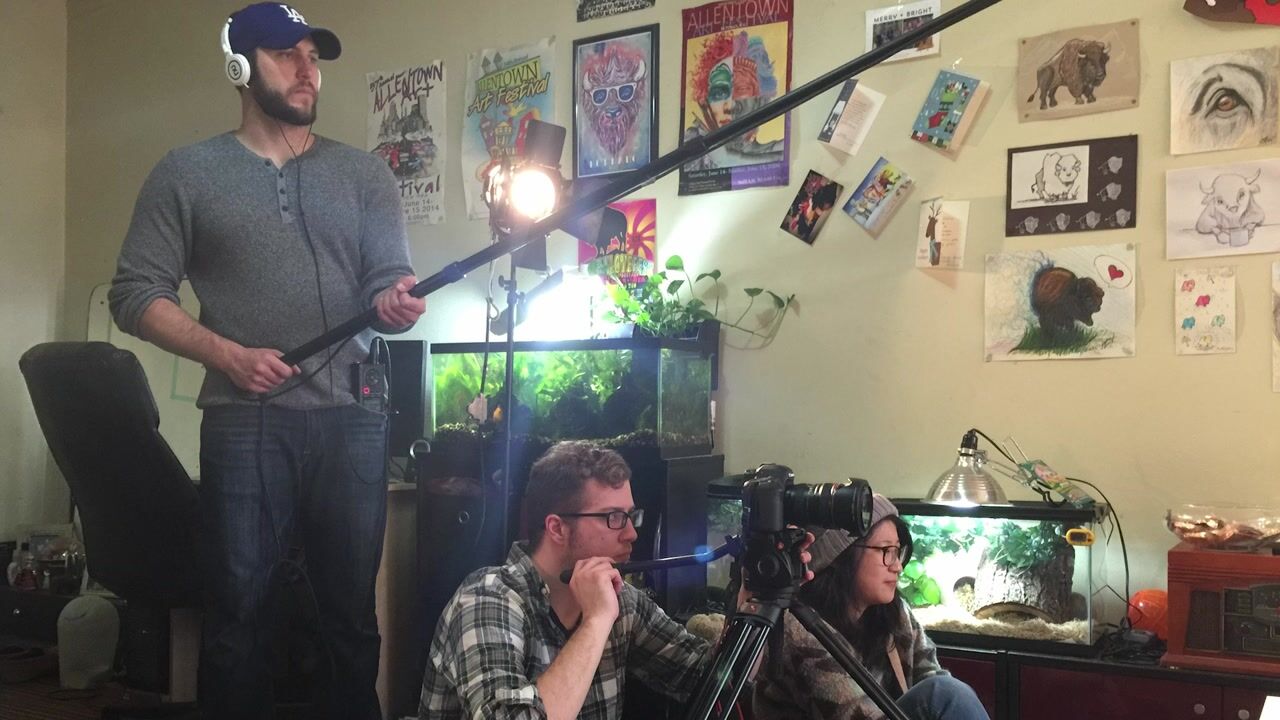
to party were very confused, have good video and good sound. Your phone might
be good for video, but you may need to invest in a boom mic or clip mics or
some kind of microphone. Do the research to find out what you need in terms of audio. And if you buy mics on line, make sure you buy them
in time for the shoot. Tinker around with the mics
and camera before you shoot, so when you're on
set, you're not wasting time for
Wrigley friends. We shot the entire
thing on a phone, but we recorded the audio
first with the actors in an audio booth that one of the actors built
in his apartment. Think about food if
it's long hours. If the set goes on for a
long time, think about food. Depending on how big
your cast and crew is, you may want to think
about catering of some kind, even if it's pizza. But if you're not filming
for more than 5 hours, then don't worry
about food too much. If it's a short film
under 5 minutes or a short episode
of a web series, you can probably
shoot everything you need to do in one
day or one night. If your content is
longer than 5 minutes, then it may be best to do
five pages in one day, and then the rest of it the day after that and the
day after that. I'd say a good rule of thumb is, try not to film more than
five pages in one day. It's totally doable,
but you do need to feed the cast and crew if you're scheduled for a long
period of time. And the cost of feeding everyone
on set can be expensive. Actors improv after
the second take. If you have actors who want
to improve some lines, let them play and have fun. But do this after
the second take, so you have the story down. A lot of times what they
improve may be funny, but it can tend to run long. I have one friend who's
really good at improving, but he makes scenes
three times longer. I usually try to keep
the best improv lines from him and not entire scenes. Special effects take time. Think about your time and budget when you do
special effects. Unless you know
someone who's already a pro at CGI in special effects, these can take a lot of time. I created a web series
once named Spy Time, and we had fun making it. But it fizzled out because
it took eight months to do two episodes with all
the special effects we had. Whereas with my series
Monster Therapy, we filmed five
episodes in two days. Only one episode had special
effects added to it. Make up took a long
time for that, sometimes depending
on the monster. But we still managed to get everything done in
a timely manner. Take pictures of behind
the scenes actors. And most people on
set love these. And you can use these photos
to promote your content. Production is probably
the most work, but also the most fun. And this is where a lot
of bonding takes place. Relationships are built on set. If you're filming
in your apartment, well now your
apartment is a set. Feel free to take
pictures and use hashtag. Set life, think about
production and all the hell. Yes, people you
have in your life. If you don't have them yet, you will as you create more content.
4. Write a Movie This Summer For Courses: Have a movie idea you've
been sitting on for years. This summer, let's finally turn it into a screenplay
from scratch. I'm Jordan D Mola, an award winning screenwriter with
many produced movies, TV shows, and a lot more. I'm also the host of
the popular podcast Screenwriters Talk
Screenwriting, and I've created a 12
week group course to help you write your entire
screenplay this summer. This course is for beginners or anyone who started the
script and got stuck. All you need is a movie idea. I'll guide you from
page one to the end. You'll get weekly
live Zoom sessions, ten page deadlines to
keep you on track, and a community of
writers just like you. People finish scripts they
never thought they could. This course keeps
you accountable, motivated, and supported
the entire way through. To join, just go to my website at www.jordanmola.com and SignU. Spots are limited, and the earlier you sign up,
the more you save. Make 2025 the year you write
and finish your screenplay. Sign up now and write
your movie this summer. You'll be glad you did. Roll. Again, go to www.jordanmla.com.
5. How to Format a Screenplay: If you're brand new
to screenwriting, then this quick video
lesson will show you the basics of how
to format a screenplay. There are many
screenwriting softwares out there to choose from. For the first decade
of my career, I used final draft, which was considered the
industry standard at the time. But then in 2016, I discovered my favorite
screen warning software, writer Duet, and I've been
using writer Duet ever since. I'll be using writer Duet
for this demonstration, and you can sign up and use writer Duet for free
at writer duet.com. There you can write your
first three scripts for free. For this quick demo,
I'm going to rewrite the first page of my feature
film screenplay, Leap Day. It's an ensemble comedy about
the craziness, confusion, and chaos that can only happen on that extra day we
get every four years. These are the basics, and this will get your
story going. All right. So the first thing you do for
any screenplay is fade in. You're only going
to fade in once at the very beginning
of the screenplay, and at the end, the last
thing you do is fade out. So open a document. You'll see this. When you press Enter, you'll see
all these choices. What I want to do is transition. So transition and then fade in. With a lot of
screenwriting software, they make it super easy. All you have to do is press
enter and you'll get choices, and you can just
keep moving forward. Back in the day people
had use a typewriter, but now it's super easy, and anyone can do
this from anywhere. So after you fade in, then you'll start every scene
with a scene heading, which is also known
as a slug line. For leap day, it starts
off in a hockey arena. I put interior hockey arena. You're always going
to use INT for interior and EXT for exterior. Always remember, interior means inside, exterior means outside. If this scene was
outside a hockey arena, I would put EXT
period hockey arena. But since it's inside, I'll use INT period
hockey arena, which means interior
hockey arena. All right after that, then you start writing the
action description. For this, I'm going to
put, it's a packed house. In the third row, Lucy,
who's my main character. She's 29, usually put the
age after the character, and then you describe them. She wears punk rock wardrobe. I could say that
word. She's frazzled because she's about to do something she's
never done before. And she's with her
sister right now. So talks with her sister, Jade, 31 business casual tire. She's way more professional
than her sister. She's cool calm,
cool, and collective. Now you'll notice, I capital
put this in All Capitals. Her name, Lucy, and I put
Jade in All Capitals. You only do this when you first introduce
a new character. This is how the
reader is going to know this character
is brand new. But from this point on, I'm only going to have
the first initial of Lucy's name be capitalized and the first initial of Jade's
name be capitalized. After that, I'll
do some dialogue. I just press Enter and tab, and then I'm going
to type in Lucy. Now from now on, you'll see this in all screen
noting software. It's going to keep this name. It's going to be easier for me to write and I'll just pop up, and I'll show you
that in a second. I can't believe I'm
going to do this. Then again, enter and
then I press tab, bring dialogue again,
I'll type in Jade. You and Tommy have
been together. It's okay to mispeel things.
I do it all the time. It's about time you got engaged. If you're figuring this out now, Lucy's about to ask her
boyfriend to marry her. I'll put Lucy, hold a ring and looks at the empty
seat. Next to her. Then I press enter again, tab because I'm
going to go back to dialogue and you see
SCR pops up Lucy. I got to use press
L and then boom. It gives me that press
L and then enter, and it fills in the
rest of the name. I don't just keep typing in Lucy every time I
put in dialogue. I'll put in L and
it'll find it for me. I don't know about this. And then I'll again enter tab. There's J. J just pops up. If there's only two characters,
you screen software, we read like who's
going to be next. I'll put women, propose
to men all the time. Especially on Leap Day. It's a Leap Day tradition. It is. I've done a bunch
of research on Leap Day, and this actually is
a huge tradition. Take a leap. Then, I
just pressed tab again. And then I'll write down Lucy. I'll go, Okay.
Okay. I'm leaping. And then I'm going to
introduce Lucy's boyfriend. I'll start typing an
action description again. They look behind them. As Lucy's boyfriend,
enters the aisle. I'm going to describe
him. He's a blond. You always describe
the character, especially main characters. You don't need to describe
minor characters. L say, you just have a
random I know waiter. You don't need to
describe that person, but any time as a
main character, you want to give them
a little description. The reader knows this person is important and they're
forwarding the story. He's a blond, tatted up 29. You year old musician.
Named Rocket. Again I'm going to
capitalize. Just for now I'm going to
capitalize his name in all caps because this is
a brand new character. This makes it easier
for the reader to know, this is a brand new character. Rocket launcher Tommy. As you can see, the screen
software doesn't know, I have a new character
in the dialogue, but it will from this point on. I put a Rocket Tommy, and then I do his dialogue. I'm not going to do
all caps anymore. Hey, sweetie, here. I
got us all more beers. Anything else you need
before the third period. Again, as you can see, it has all the characters now
that I've written so far. As I add more characters,
they'll just show up. All I got to do is just type in the first initial and it'll
just pop up automatically. All screen learning software
does this pretty much. I'll just have type in L.
Lose using it pops up, press Enter, and then that's it. No, honey, that's all. That's that's the basics. This scene goes on for
another four pages, but I don't want
to waste your time and keep showing you
things I just shown you. That's pretty much
all you got to know. This scene a Jade leaves, and then Lucy gets down on one knee and there's a big announcement
in the hockey arena. Then the camera goes on Lucy
and rocket Launcher Tommy. By the way, Rocket
launch Tommy, yes, it's a parody of what's his
name, Machine Gun Kelly. But anyway, Lucy proposes to Rocket Launcher Tommy and
rocket Launcher Tommy says, No and breaks up with her in front of thousands of people. This is the first scene of
my screenplay leap day. But that's it. If
after this scene, again, this isn't
a full scene yet. But the scenes four pages
long, but after the scene, when you want to
start a new scene, again, you just go
to a new scene. If I wanted to do a new scene, say I want to do a coffee shop. I could do INT period again, which means interior
and then coffee shop. Again, the screening software will remember the
different locations. If ever wanted to go back to the hockey arena,
it'll remember it. I'll just put day.
As you can see, there's day, night, continuous later moments later in morning. The two you use the
most are day and night. You can use the other
ones, continuous, especially use if you're going from inside a
building to outside a building and it's a It's
continuous within the scene. You use that every again, but really the basics
are day and night. Those are the ones
you'll use the most, and you can use these
other ones if you like. But day and night are the
ones you'll see the most. I'll just put into your coffee
shop and then keep going. Whatever next scene is. Lucy drinks coffee. Blah, blah, blah. If you're like me and you make spelling
and grammar mistakes, you can go back and
fix them later. I always tell my clients progress is more important
than perfection. The first screenplay I
ever sold had a bunch of misspellings when I looked
back at it years later. But the reason it sold is
because the story was great. And if you have
an amazing story, people don't notice
those mistakes because they're so
into the story. If you like to see the
first ten pages of Leap Day or other
script examples, you can find these
on my website at WWW Jordan emola.com
slash Examples.
6. Post-Production: The best advice I can give
when it comes to post production and editing
is set deadlines. And tell these deadlines to everyone set and stick
to your deadlines. When people say
they've been editing a short film and it's
been over a year, it just makes them
sound so lazy. Tv pilots and feature films I can be more
lenient towards. But if your content is short, then it should not take forever to edit and get
it out in the world. What drives us to finish things though, is
accountability. Set deadlines and tell
people your release date, make your deadlines realistic. And give yourself a
little wiggle room. So if something goes wrong or you need to
reshoot something, you still have time and announce a release
date on social media. Once you do that,
there's no turning back. The more detailed the
release date, the better. If you say, I'll have
it done in the fall, well that's a big
three month span. But if you say September 8, then this will hold
you accountable and kick your butt to get
it done by September 8. Tell your friends, cast and crew a premiere date and
then get it done. Get a dedicated editor. If you want to learn how to
edit, then edit yourself. But if you're hiring someone or bringing an editor
on the project, I highly suggest paying
them after the work is done or at least half the
money before and half after. I really advise not
to pay them all the money upfront before the
project is finished. I've been burned by this before and I know several
others have to because editing is a lot of work and sometimes
they're not hell yes, people or not completely
passionate about the project. I use Adobe Premiere Pro, but this is a monthly service and if you're just starting out, then you probably
don't need something. This expensive editing
can be a long process, especially if you have
a lot of footage. But like writing, editing is best if you do a
little bit every day, even if it's just
for a half an hour. Getting a little bit done
every day can go a long way. Have the director
work with the editor. If you're the director
on the project, it might also help
immensely to be there with the editor and
do editing sessions. Make it at least once a
week on the same day. You always want to make
sure you move the project forward until you have
a finished project. Kill your darlings. This is
a term we use to cut things. It's also referred to
as kill your babies. Sometimes you may
have to cut things that you thought worked
in the script or onset, but it just doesn't
work when you watch it, feel the rhythm and
follow your heart. When you make creative decisions like killing your darlings, show it to people
who are not on set. Once you have a cut,
show it to a friend, family member, or neighbor, and watch their reactions. People who worked on set
are already a little biased because they want to keep something that they
were a part of. Say an actor had
a long monologue. They may want to keep
that whole thing, but that monologue may not work. It's best to show
it someone who's completely new to the
project and watch them. Are they laughing at the jokes or are they bored at some parts? And do that with
multiple people. Some people are really hard to make laugh and others are easy. It's good to get a wide spectrum of laughable people right now. Jot down a deadline of when you want to
release your content. It could be a soft deadline, but at least have
a month in mind. Set a premier. Premiers
are always fun and also build commadity amongst the cast and crew for future projects. Maybe gather some friends over to watch it at the
person's house, who has the biggest TV and have a premier party if you
put it on Youtube. There's a Youtube
premiere setting that lets you choose a
time to premiere it. Then at that time,
they have a count on clock and a chat
next to the video, you can chat with your friends
as you watch it together. Youtube versus Vimeo. Most creators share
their series on Youtube and some
share it on Vimeo. Personally, I like Youtube because it's something
everyone is familiar with. It's far more
popular than Vimeo, and Youtube is free. If you need to create
a Youtube account, just go to Youtube.com
and click sign in, and then create a
Google account. If you have time, put together a quick trailer
for your content. This is a way to get
your cast and crew excited for it and more
of your friends too. Don't let perfect be
the enemy of good, especially if you're
the director, You're going to
notice something that isn't perfect about
your content. You're going to think if only
this shot was different, or I wish this actor did this thing that they
did in the audition, but they didn't bring it to set. Something will bug
you and that's okay. It happens to all directors.
Here's the thing. The small thing you notice
is probably something, almost no one else will
notice, you created something. There's a saying, 10% and 90% don't be proud that you're
part of the 10% that do. Don't stress out about
the imperfections. The more content you create, the more you learn
for the next time. And you'll be so busy doing
something else that that one small thing you think matters now really doesn't
matter at all. In the long run after
you release it, start listing IMDB credits, People love those and feel
free to share it with me so I can check it out once
it's out into the world, be proud you did it. I hope all this helped.
If you like this course, please check out
my other classes by clicking on my profile.
7. SkillShare Superpeer Coaching Promo: Hey, if you're interested in one on one coaching sessions, I'd love to help you during your creative process to make sure your project gets finished. You're interested, you
can book a session on SkillShare using their
new Super purer feature. To book a coaching session, just click on my SkillShare
profile and click Book Now. These coaching
sessions can be weekly or bi weekly,
whichever you prefer. I offer coaching sessions on
writing movies, TV shows, web series, producing
your own film or series, and much more. I can coach you once a week or every two weeks to
make sure you stay on track and create the
accountability you need to finish your
story and project. Contact me to book your
first session now. Thank you, and now back to your regularly
scheduled course. H.
8. Thank You + Summer Course Promo: Thank you so much for watching this course. I really
appreciate it. If you're interested in one
on one coaching sessions, I'd love to help you during your creative process to make sure your project gets finished. These sessions are
$45 for 45 minutes. If you're interested,
you can e mail me at Jordan period
emola@gmail.com. These coaching sessions can be weekly or bi weekly,
whichever you prefer. I offer coaching sessions on
writing movies, TV shows, web series, producing
your own film or series, and much more. I can coach you over Zoom once
a week or every two weeks, to make sure you stay
on track and create the accountability you need to finish your
story and project. Contact me to book your
first session now. Also, this summer, I'm hosting a summer screenplay course
where I'll be teaching students how to write
a movie in one season. I've spent many summers over the past 17 years writing
summer screenplays, where I write the
first draft of a movie during the summer season
where I am in America. Starting June 20
to September 19, I'll be teaching and hosting 60 minute teaching sessions with groups of students on Zoom, teaching several students
how to write a screenplay. You'll be responsible for
writing about ten pages a week, and I'll guide you to keep
your story moving forward. This course costs $395. And by September 19, you'll have a finished draft of a feature film screenplay. Once a week we'll meet, and I'll be giving instructions
on story structure. And we'll be
interacting with each other to see where our
stories are going. Talking out your story and
your writing helps immensely. And having a group of writers who are along the journey with you creates amazing
accountability and discipline. Again, you can e mail me at
JORDAN period mla@gmail.com. I'd love to help you write
a screenplay this summer. Also, my website
offers services like script coverage and links to my podcast and other courses. Thank you again and
write on. Okay.
 Jordan Imiola, Screenwriter