Transcripts
1. Introduction: Sometimes our creativity
flows almost effortlessly. We're filled with
ideas, excited by possibilities and
energized by inspiration. Other times, we can
feel a bit stuck or overwhelmed or we can't
even seem to pick up a pencil, let alone tackle
a dream project. Hi, I'm Ambara. 15 years ago, I decided to put creativity
at the center of my life. Since then, I've
developed my skills, built a business, and checked dream after dream off my list. Over the years, I've also
learned that there's always an ebb and a flow to
energy and inspiration. And I know how frustrating and painful it can be
to want to create, but to have no energy,
motivation, or confidence. But I've also learned that my creativity is always
there waiting for me, and I know that yours is, too. That's why I put together
this creative retreat. In it, for seven days, you prioritize and
nurture your creativity. You'll give yourself
permission to play, get clear on your intentions, and gain a deeper
understanding of your unique, creative identity. I'll help you shift
your focus to positivity so you can cheer
yourself on during low ebbs. You'll build up a
reservoir of ideas, and I'll help you discover inspiration in the most
ordinary of places. By the end of this retreat, you'll have the resources
you need to ride the ebbs and flows of your
creative energy with hope, knowing that your creativity is always there waiting for you, whether you've been
feeling blocked, uninspired or just pulled
in every direction. These next seven days will
remind you of the joy you find in creativity so that
you can return to yourself. I can't wait to get started.
2. Why I'm Teaching This: I like to give a
little bit of context for why I'm teaching
the classes I teach. This one is extra special to me. I asked my students, what keeps you from creating? And here are some of
the things you shared, not having a
dedicated workspace, executive dysfunction,
fear of being perceived, living in a small space, Time and lack of inspiration. Do you see yourself
in any of those or is there something
else holding you back? In June, my biggest
personal dream came true. My husband and I bought
a rural property. Began moving,
getting our house in town ready to sell and started the long process of
transforming our bit of land into the homestead we'd been dreaming
about for years. I left my beloved studio, and for the first
time in 12 years, I had no garden. Although this welcome change
is wonderful and joyful, truly a dream come true. My days were busy, and I was exhausted and feeling
a little lost. On top of that, before our move, I had already been
struggling with burnout and trying to work my way through a creative slump. I know I'm not the
only one struggling. With life changes, there
are so many both joyful and not with the heaviness of
current events with business, I know how hard it can be to fit one more thing
into our days. I kept asking myself, how do I get back my
creative practice? Not just as part of
my art business, but as part of the
heart of who I am. And so, as I wrestled with
my own creative slump, I began creating this class as a way to nurture myself and my creativity and as an invitation for you
to nurture yours. I want you to truly make
this a creative retreat. The next seven days are yours to focus on
your creative heart, not as another to do, not as another should, but as a joyful gift. In other classes I teach, I have us dig deep into what's
keeping us from creating. But this time, I don't
want us to do that. I don't want to get bogged
down by negativity. The next seven days are yours, free from negativity,
free from criticism, and free from pressure. So let's get to it.
In the next lesson, I'll help you set yourself
up for a successful retreat.
3. Set Up for Success: Before we get
started, I think it's helpful to get prepared. This class isn't
about making art. It's about something even more important and even
more difficult. Prioritizing and
nurturing our creativity. We all struggle with fitting
creativity into our days, and if we don't prioritize it, there will always be
something more important. And it's not just
about discipline or motivation or
time management. If you want to be able to fit
creativity into your days, your creative pursuits
have to be about joy. Joy has to be at the
heart of what you do. First thing, let's give
ourselves permission to play. Put creativity at the
heart of what you do and joy at the heart
of your creativity. And creativity is
not just art making. If you're not a fine artist,
if you're not a painter, if you don't like drawing, whatever, it doesn't matter. Creativity is so
much more than that. So don't get hung up on
labels or titles or whatever. Just know that it's joyful
and playful and fun. That's what it should be. That's what these
seven days are about. Bringing back the joy,
bringing back the play. First thing, give yourself
permission to play. If it would be helpful
to you, write it down in your journal
or in your sketchbook. I want you to think about time. Over and over again, my
students have said one of their number one
challenges is time. And I'm with you there.
Totally with you there. We're very busy. There's
so many things to do. But you can do a little bit
each day, and that adds up. If you gave yourself
10 minutes a day, over a week, that's
more than an hour. How hard is it for you to
find an hour to create? Probably harder than finding 10 minutes if you give
yourself 20 minutes a day. I think that's doable.
20 minutes a day over a week adds up
to over 2 hours. And that just keeps
accumulating. You can do the math
and figure it out. So figure out how much
time you have to devote to your creative pursuits each day and just do a little
bit each day. You don't have to have hours. One of the most concrete
examples of that. Is this piece of art? I absolutely adore
this piece of art. I created this a
little bit at a time. I took my colored pencils
out to my garden, and I would work on
a flower each day. I would sit in the
garden by the plant, look at the flower,
and I would sketch. It was such a joyful practice. And over time, my small
increments of sketching added up. Know that small
increments of time, over time, add up. And they help you
create big, beautiful, joyful pieces of art or whatever it is that you
want to create gardens, clothing, novels, songs, whatever it is
that you want to create. Back to prioritizing and
time and time management. I think it's helpful to set aside to schedule time each day. Know what works for
you. Is it the morning, the evening, your lunch break? When can you set aside? Maybe you could get up a little earlier and
work first thing. Whatever works for you, do that. And let me get this out
of the way right now. You have to do what
works for you. And I'm going to say
that again and again. There's going to be a lot of options for
everyday's activities, and I want you to choose
what works for you. And if none of those things
work, do something different. Be sure to prioritize you. If you're trying to
do something that works for someone else
but doesn't work for you, you're not going to do it,
or it's not going to be fun. One of my students mentioned that something that
keeps her from creating is that she needs to make things
that are useful. Plenty of other people can
do art for art's sake, but for her, that doesn't seem like a
good use of her time. That is a wonderful
insight to have. And if you're honest with
yourself like she was, then you're gonna
be better able to prioritize and nurture
your creativity. I want you to be strict
with yourself, too. Schedule that time, put a block aside and be strict with
the people in your lives. Don't let other people steal your time for these seven
days and beyond two, I hope. I hope you can do that, too. Keep going with this because that's what
this class is about getting your Spark going
so you can keep creating. I think it's most helpful if you do it seven days in a row. But if you don't have
the time to do that, or there's so many
other things going on, or maybe you have a
big block of time one day and less time other days. However you want to schedule
it, do what works for you. Don't listen to me. Do
what works for you. I'm going to say that
over and over again. One last choice you have
now is you can either jump in to the first
day's exercise right now or you can wait
and do it tomorrow. The choice is yours. Either way, I'll be there waiting for you.
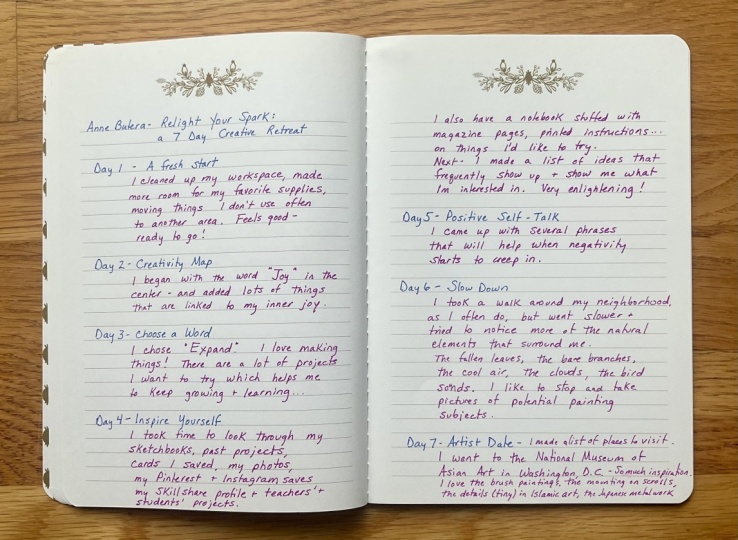
4. Day 1: A Fresh Start: Welcome to the day one exercise. We've already chatted a bunch, and in the last lesson, I talked about setting
yourself up for success. This exercise is going to
take that one step further. I love any chance
for a fresh start, and that fresh start energy is something I'm going to tap
into with this lesson. This exercise and really
all the exercises to follow are a bit of a
choose your own adventure. Each of us has our own
unique type of creativity. And that's what makes
it so beautiful. But that's what also sometimes makes it hard to create
because we think, Oh, I should be creating in
the way that works for her. No, you should be creating in
the way that works for you. So for today, I have some
ideas for you to think about. And I want you to
choose the option that gives you the best
feeling of a fresh start. Gather your supplies. Purge any unwanted supplies. But only if that
feels good to you. What do you want to create? What materials feel
exciting to you? Sometimes for me, just
taking out my art supplies, looking at them,
watching some paint, that'll start the ideas flowing and get my creativity
going again. So that's another possibility. Also, let's clear out those supplies that
are no longer good. Do you have some dried up paint? Get rid of it. Do you have some markers that
are dried up, too? Get rid of those. Or maybe you have some supplies
that you bought. You saw some other artists either in a class or on YouTube, working with some supplies
that looked so beautiful, and they created
this wonderful art, and you bought them,
and you hated them. Get rid of them. Give them
away to a friend or bring them to the thrift
store or donate them to library or school. If you don't like a supply,
you're never gonna use it. Or maybe you could look
at that as a challenge. There's some colored
pencils that you bought, and you never really
found how to use them, spend some time
just playing with them and see what happens. But these aren't
your only options. Begin a new journal. Begin a new sketchbook. Go shopping for a new
sketchbook or journal. Now, I have heard from students before who
hate journaling. If that's you? Ignore my
suggestion to journal. But if you do like journaling or if you're journaling curious, spend some time writing
about your creativity, how you feel, how you want to feel for the
next seven days. What you're thinking
maybe you'd like to tackle what projects sound exciting and interesting to you. Or if you're out of ideas,
write about that, too. It's entirely up to you. You're the one who chooses
this adventure for today. And I'm giving you
a few more options. Clean your creative space. Rearrange your creative space. Set up a creative space. If you don't have a
dedicated creative space, and I know so many
of my students don't don't let that
stop you from creating. Working in spaces like
your kitchen at the table or your dining room table or a desk in the corner
of your bedroom, all of that is perfectly okay. Wherever you can find space and however you can make it your own and make it pleasurable and easy to work in,
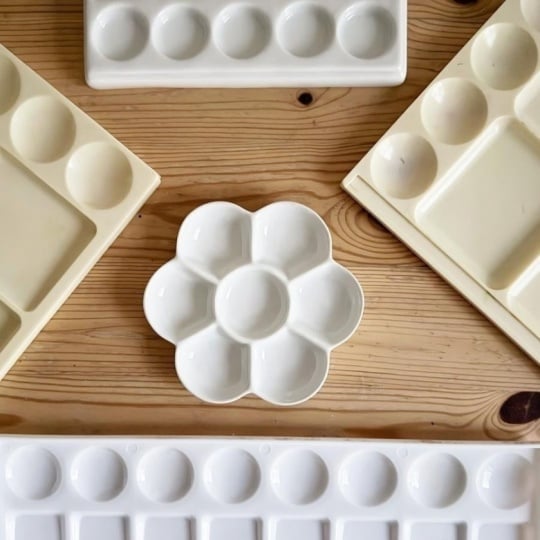
then that's a win. I love using this cart
to store my supplies. And then when I'm working, I can roll it where I need it. I can roll it out of the
way when I don't need it. Baskets are another
great option. And this can keep you mobile. You can take these
outside with you. You can take them when you
go somewhere away from home. So try to think a little bit outside of the box
when you're putting together a space or carving out a little area of your
home or figuring out storage for your
creative supplies. Maybe your space isn't
right because your table is too high or too low or
you don't have enough light. Although my new studio is bigger than any other
studio I've had so far. It's a work in progress. I put all my stuff out. I arranged everything,
set things up. So I could begin creating. I didn't want my art
supplies and boxes. I wanted them out
so I can use them. Eventually, I'm going
to change things. But for now, it works. So, if your space isn't
perfect, that's okay. If you want to tackle creating
a new space, do that. Maybe you want to go shopping for a new piece of furniture or something to help
you be more creative. Maybe that table that's
not the right height, maybe you'll find something new. You don't have to spend
a lot of money, either. Maybe you could go digging in a friend's basement or garage or a family member's
basement or garage. Keep your mind open
to possibilities. So, these are all your
options for day one. Do what works best
for your creativity, your energy, and your time. Onward with your adventure, and I will see you tomorrow.
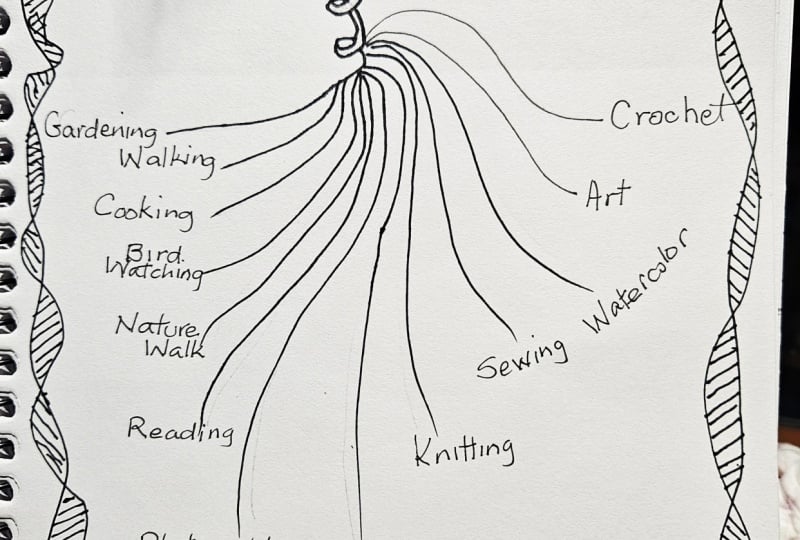
5. Day 2: Creativity Map: It's day two. Today, I have a fun exercise to help you get clear on what you like
and what you don't like, what you're dreaming about and what your favorite
ways of creating are. I know sometimes
when you're feeling blocked or paralyzed by fear, it can be helpful to have a reminder of what
brings you joy. So today's exercise is what
I'm calling a creativity map. It's similar to a mind map, if you have ever
done one of those. In the center, you're
going to put yourself. And then spokes going outwards to all sorts of
things that bring you joy, whether it's media you
like to work with, subject matter that
you are interested in your favorite ways of creating project types that
you'd like to do, different crafts that you like. Whatever you want to add to
your map, you can do that. This is easier for me to
demonstrate than to talk about. So why don't you watch
me work on mine? So I've got a page
in my sketchbook. And I grabbed some markers. You can use whatever kinds of
materials you want to use. So you can write your name in the center or whatever
you want to do for that. I'm gonna choose actually this turquoise color
teal, whatever. I'm gonna put that in
the center for me, and I'm just gonna make
a heart and fill it in. I'm just using crayola
super tips markers. They're inexpensive and
come in lots of colors. Sometimes using really
simple materials makes it easier to create. Watercolor. I'm making my spokes the
same color as my heart. Doesn't have to be that way. Gardens. So these can be
things that you love. They can be activities
you like doing. Let's see. What else? Let's see. Sometimes it can be hard
to fit everything in, but if it's messy, that's okay. We can always redo this. Oh. I'm having a hard
time choosing colors. If you're having a hard
time choosing colors, maybe stick with one color. So I think this is a
pretty good start. You can always add things to
yours as they come to you. I'm probably forgetting
some of my favorite things. Let me show you
some other examples of different ways of doing it. This one I did a long time ago, and it's just a ballpoint pen
and paper from a legal pad. Another sketchbook
here is one I did that has a few sketches
as well as words. Here's one that's intentions. Similar Here's another one. This one I just titled My Life, and it's all the
things that I love, and that bring me joy. And here I just made a list of things.
And here's another one. Things that I love. Another way you could do it is with collage. Here's a spread
of collage pages. That includes lots of
things that bring me joy. And here's another one.
And here's one more. There are so many different ways that you can do this exercise. I hope that you will make it truly your own and
have fun with this. If you don't want to do words and you don't feel like collage, drawing or painting is
another way you could take your own photographs
of things that you love and put them
on the page, too. However you do it, I want
it to bring you joy. Once you've done one of these, you may want to make a
prettier version that you can hang on your wall or not.
That's totally up to you. It can be a good reminder
if you need one. We'll dive deeper into
this in a few days, and tomorrow we're gonna
have another fun exercise to help you set intentions.
So I'll see you then.
6. Day 3: Choose a Word: Eight. I'm so glad to have
you here for day three. Yesterday, we did
our creativity map, and you got clear about
what you like to create, what ways in which
you like to create, what things bring you joy. Today, we're going
to get clear by setting an intention
and choosing a word. Lots of people like
to choose a word for their year and set an intention for
what they want to accomplish or how
they want to feel. And I used to do that
every year, too. But then, a few years ago, I started choosing different
words throughout the year. So I didn't just have one
overarching intention. It would shift with
how my life shifted. Now, you probably
have noticed in the various lessons that there are words all
over my studio. Right now, I have
this black paper. It's wrapping paper
that I attached to the wall and I've
been writing words. So that is one way that you can keep your word and your
intention front and center. I also have this
little chalkboard, and that has been
a place where I've written my word for the year or just words of encouragement. Right now, I've put focus. After our Mu, I wanted to focus on getting back to work and
getting back to making art. So that was my
intention at the time. You can do this in so many ways, not just writing on a chalkboard
or a fake chalkboard. Or that make art
sign over there, I created on a
small canvas block. Made it to look
like a chalkboard. Maybe you want to
paint your word. Maybe you wanted to put
it in your sketchbook. Here's one example
using watercolor, writing the word joy over
and over different colors, different ways of writing. Here is another example
of the word joy written with metallic paint
marker on black paper, and then glued down
in my sketchbook. And then one year
my word was due. Then one year I
chose the word open, wrote it all over, lots of times, lots
of different ways. Here's one choosing
the word hope and making a big
rainbow around it. Then here's another
one for my word of the Year when my word was grow, and I made the letters into
things that were growing. So they have roots and stems. Maybe you want to use
something like scrabble tiles. You maybe notice those
throughout my studio. Maybe you want to
use alphabet blocks or magnetic letters. Whatever way you'd like to
highlight your intention, this word that you're choosing, do that and make sure
that it's something fun. So go off on your own
and choose a word. Maybe you want to
make a whole list of different words and see what
one speaks to you most. You can also start building a collection of
words that you cut out from magazines that
you can use for this, too. When you're finished
with that, it could be helpful
to journal about it if you're one of the people who like to
write in a journal. If not, that's okay, too. Tomorrow, I'm gonna be back
with another exercise. And this one will make sure
you're never without an idea.
7. Day 4: Inspire Yourself: It is day four. I want to congratulate
you for sticking with prioritizing your creativity
for four days now. Today's lesson is less an exercise that you'll
be following step by step and more a practice that
you can develop forever. What's really great
about this is that although our creative
pursuits are wonderful stress relievers and can help us feel more
grounded when we're feeling overwhelmed if we're
stressed out or overwhelmed or depressed or really struggling with fitting our creativity just time
wise into our days, having what I like to
think of as a library of ideas just right
there for you to grab will help alleviate
some of the stress First part of what we're going to do today is think about all of the things that
you may want to create, all the things that you love creating or you love the look of and you wish you could create one place to turn
for ideas is books. I have collected a lot
of books over the years. But I also love going to the public library and checking
out books for new ideas, new ways of looking at things. I love getting inspiration
for gardening and cooking and painting
and crafting, sewing, crochet, all of that. So I turn to the library, and I turn to my own books
over and over again. Something else that I
think is a great way to come up with ideas is to look at your
past sketchbooks. I have a huge collection
of sketchbooks, and if you've been
following me for a while, you know that I'm
passionate about them. Taking a look at
my old sketchbooks always inspires me and always
gives me lots of ideas. But not only that, taking a look at the work that
you've already created gives you lots of insights into who you are as
a creative person. What are you interested in? What do you like doing? What brings you joy? You can also see
what you dislike, what didn't work, what ideas
you had that fizzled out. So look at your past work with curiosity, not
with negativity. And then write down some
notes about what you notice. What color or colors do
you use again and again? What medium or mediums
do you like using? What subject matters do you
turn to again and again? What sorts of styles do you
see in what you've created? What about the composition and the techniques that you use. Are there any
specific influences? Maybe you took a
class and you learned something that inspired that art or those pages in
your sketchbook. What initial inspiration
did you have? Were you looking at
a reference photo? And then if you wrote any notes in the pages
of your sketchbooks, look to those for insights
for what you like to create, what you dislike to create, what you want to take further. Back before I started painting, I kept a notebook where I glued in photographs of things
that inspired me. I'd cut things out of
magazines and catalogs. This is a notebook that I
kept track of my ideas, and you can see it's
filled with things that I didn't even glue in that I
just stuck in here for ideas. Right here in the front cover. I have a really telling
cutout from a magazine. I really summarizes
everything about this book. So I have a whole
catalog in here. I've got instructions
that I photocopied, lots of things that
never got glued in, but here are some of the pages
where I did glue in ideas, and I'd write myself notes, lots of clothing things,
here's some sketches. Let's see if I can show, here's some sketches
for some jewelry ideas, for some bags that I was sewing. And then this part was all when I was
designing my tattoos. I used that notebook as a place to keep
track of all my ideas. These days, probably
a lot of us keep track of ideas on Pinterest or other places maybe taking photographs of
things and keeping them on your phone, whatever. I'm going to encourage
you for this lesson and moving forward to also have an analog way of
collecting ideas. Maybe you don't want
to have a notebook where you glue things
in, but maybe you do. There are so many different ways that you can keep
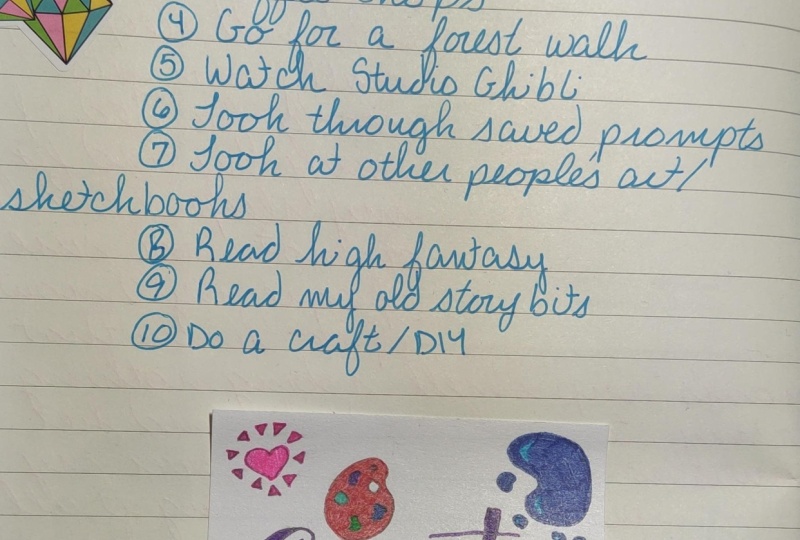
track of your ideas. Here are a few fun ways
that I can recommend. So once you've gathered
up a bunch of ideas, you can write them in
your sketchbook in the front or on the last page, however
you want to do that. Another fun idea is to take some little pieces
of paper, cut them, and then write your ideas or your prompts on the
pieces of paper, fold them up and put them in a little bowl like this
handmade bowl that I made in a ceramics class or something fun like this little
strawberry vessel. Or I really love
collecting tea tins, and that would be
a great place to put your creative prompts. And then when you are
struggling with an idea, you can open up your box or your dish and pull out an idea. Something else that's
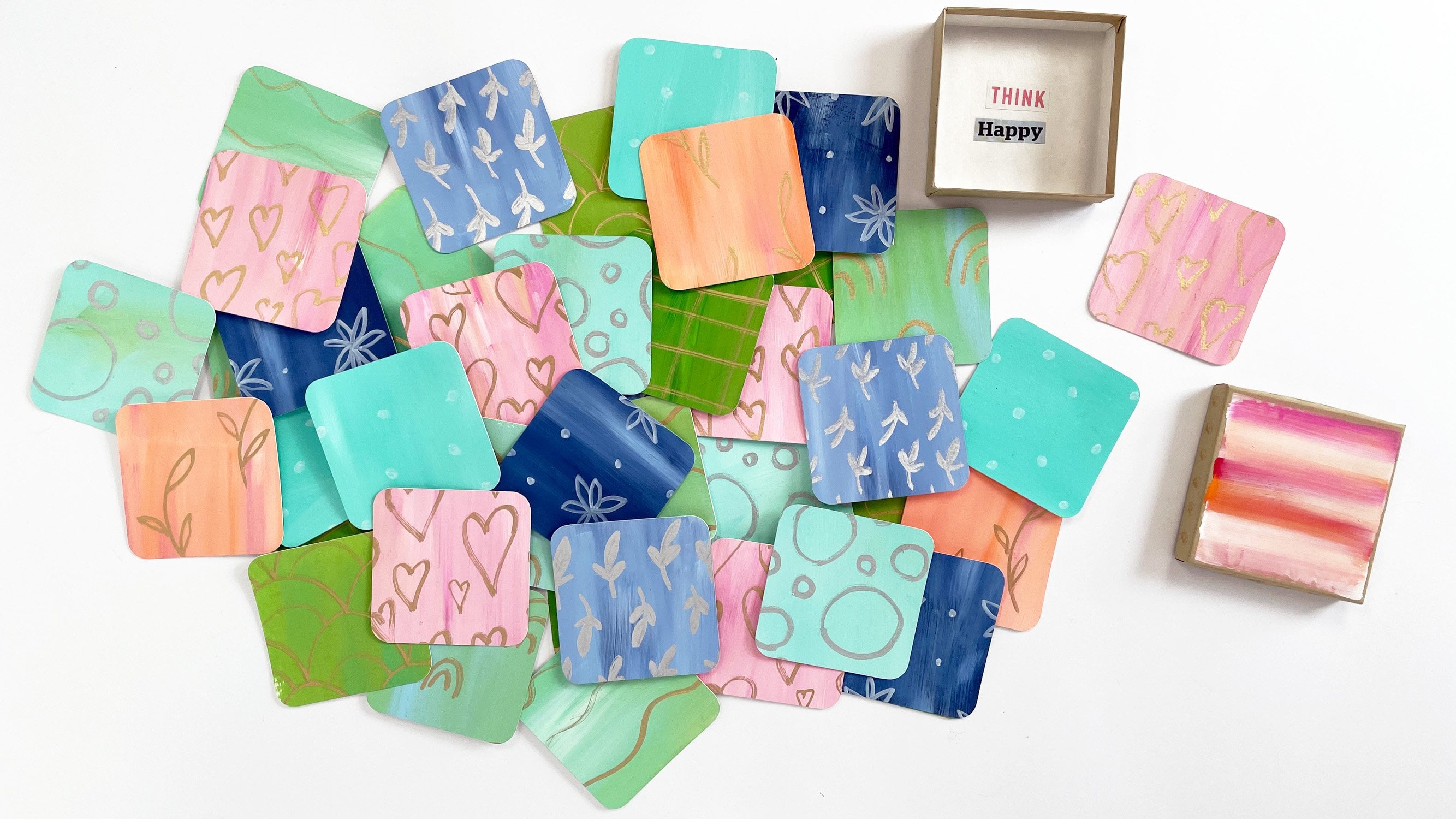
fun is to create an inspiration deck that you can shuffle and pull out a card with an idea for
something you didn't do. And all of these
are things that you can add to as time goes by, so you will never
be without an idea. So I hope that you
are filled with some ideas now that
will help you create your own library
of inspiration in whatever way works and is fun
for you because remember, joy needs to be at
the heart of this. Tomorrow, we're going to do
something else with words. So I'll see you
then for day five.
8. Day 5: Postive Self-Talk: So today is day five. For today, I want
you to start by thinking about and
becoming aware of the sort of things
you say to yourself. Now, maybe you're
someone like me who sometimes does literally
talk out loud to herself, or maybe talking to yourself
is more figurative and it's more thoughts that you have in your head about yourself or
about certain situations. The reason I want
you to do this is because if you're
like I am, like, a lot of creative people are you sometimes have some negative self talk going on in your head. Things like, I don't know what I'm doing or I'm
really bad at this, and those kinds of
negative thoughts can keep you from creating. So you already know
that I love books. I've read a lot of books about
creativity over the years, and because of that, I know that I'm not the only
one who has these sorts of negative thoughts and fears when it comes to our creativity. One that comes to mind is
Anne Lamott's Bird Bide Bird. And she has a whole chapter
about radio station, KF KD. She talks about self
loathing and doubt and how everything that you
touch turns to crap, not the word she uses, but you know what I'm saying? These sorts of negative thoughts are universal in
creative people. Elizabeth Gilbert's big magic
also talks a lot about fear and about the negativity that
comes from all these fears, things like you're afraid
you're a one hit wonder, you're afraid you don't
have the kind of work or space or financial freedom or empty hours in which to focus on invention or exploration. So you don't have to
take my word for it. We all have these
thoughts and feelings. And since this whole retreat
is about bringing back your creative spark
and getting energized and doing your art and other
creative things again, it can be really helpful
to find ways to stop that negative thinking and to continue with positive
thoughts instead. Before I sat down to film this, I wrote on my black paper on
the wall, You've got this. That's one of the
phrases that I use again and again when I'm
working on a painting, when I'm doing
something else that is challenging or scary
or hard to do, I tell myself, you've got this. You've got this. So for the
next part of this exercise, after you've thought about some of the negative self
talk you might have, and if you don't, wonderful, I'm so happy for you. The second part, whether or not you have
negative self Dk, is to come up with a list
of encouraging phrases. Now, you can come up
with them in your head. You can look through
quote books. I have a couple of quote books that are fun to read through. So go find some quoteooks of your own someplace else that
you can find quotes and inspiring words are
the little tags from T. And I remember
this notebook? You can see I collected some. You may recognize my
little strawberry. I've collected the fortunes
from fortune cookies. Of course, some of
those are really not very helpful or inspiring, but some of them
can make you laugh, see, I think I have some
T tags in here, too. Let's see what this one says. You are unlimited. You can also look at the library for quote books or look on the Internet for inspiring
quotes or encouraging quotes. And then it can be fun to
keep track of those in a sketchbook or a journal or even just some
blank sheets of paper. So collect up a lot of
ideas of encouraging words. They don't have to be quote, so they can be right
from your head. But you want to have
something that you can turn to anytime you're feeling a little
scared or challenged, you can encourage yourself with something like you've got this. The more you say it, the more you start
to believe it. Once you come up
with your phrases, you can write them on
a paper on your wall. You can use scrabble tiles. You probably already saw
some of my scrabble tiles, words of encouragement
throughout my studio. Another thing that I
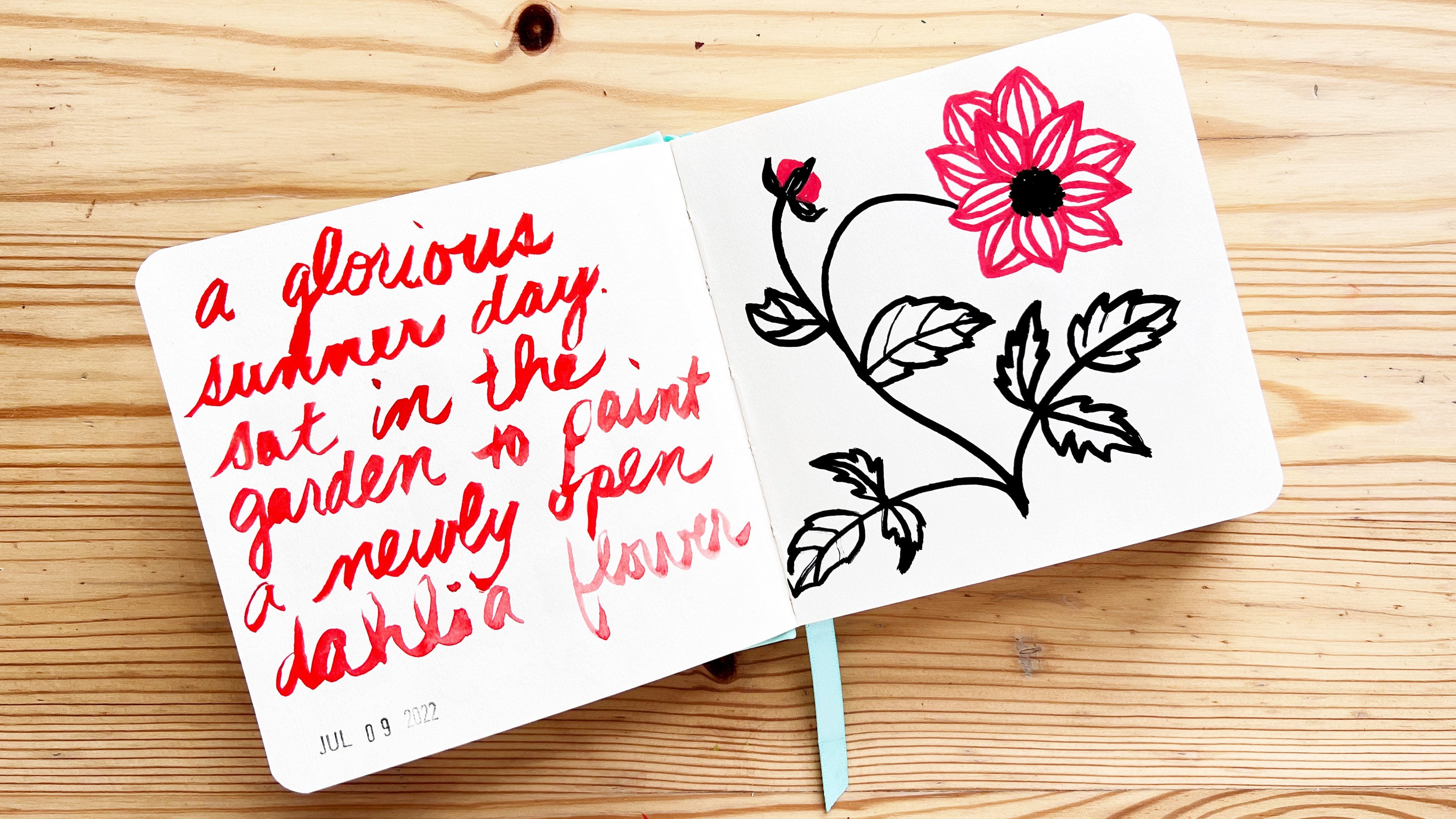
love to do is create sketchbook pages based on
these words of encouragement. The first pages of
inspiring words that I wrote is this one. Listen, you are the artist. That means you can do or make
or be whatever you want. Just make art and
stop wasting time. Blanket yourself in love, face towards the sun. Don't stop believing,
allow for rest, do what makes you happy, be present for play. You've got this. Yes, you do. There's always hope. It's
okay not to feel okay. Be yourself and enjoy it. Failure is part of the process. Embrace the messy middle, one thing at a time, keep going. Don't let distraction
steal your time. Focus on gratitude. You don't have to have
everything figured out. You have everything you need. One little bit at a time. You could also create a
page in your sketchbook with a phrase that is
a creative prompt, as well as an encouragement. Another idea for you
to take this even further is to write yourself
a letter of encouragement. You can look at it
as maybe your future self writing to your past self or maybe just your better self, your more confident
self or writing to your less confident self. Maybe you can glue
an envelope into your sketchbook and
tuck the letter inside. You can do this again
and again and again. You could also have
one sketchbook or journal where you can
keep all these sorts of encouragements and letters to yourself so that you can turn to it when you
need a little boost. There are so many
different ideas that you can use to play with encouraging yourself and focusing on positive self talk. This is also great to do with your collection of words
cut from magazines. You can take those and glue
them into your sketchbook. Anytime you catch yourself saying something or thinking
something negative, you can then work on switching it to a phrase
that is positive instead. I teach a class about
overcoming fear, and in that class, I share some examples of taking some of our fears
and flipping them over. So something like I'm afraid
that I don't know what I'm doing can turn to I'm constantly
learning and growing. So that's another way that you can come up with some
positive self talk. Tomorrow, I have an
interesting challenge for you, and we're going to do something
a little bit different.
9. Day 6: Slow Down: It is day six, and
I am outside today, even though it's a
bit chilly because today's choose
your own adventure is a little bit different. But first, I want to
talk about rushing. Often, I find myself rushing through tasks
throughout my day, whether it's just
something I need to finish or even sometimes it's with creative
projects as well. I stop and realize that I'm rushing rushing
through things, hurrying through our
days, it's not healthy. It also makes you more likely to have an accident
or make a mistake. I know when I'm rushing
when I'm working on a painting in the past, I have dropped my
paintbrush and splattered paint all over my
painting and ruined it. One time when I was
preparing customer orders, my exacto blade slipped
and I cut my finger, making it even harder to
prepare my customer's orders. Rushing and hurrying isn't good. Quite a few years ago, I was
going to graduate school, and my university
was an hour away, and I would drive there. Some of the drive was
pretty boring or tedious, and other parts of it were
through beautiful areas. There was a beautiful
lake I would drive past. There was a cute little town with cute houses that I would imagine what it would
be like to live there. But often I would
get to class and realize that I had no
recollection of the drive. I really didn't
remember any of it. I didn't remember
seeing that lake. I didn't remember going
through that town. I obviously did
because I got there, but I was paying no attention. So today's exercise is
an antidote to them. It's all about mindfulness. It's about slowing down, and it's about paying attention. And the whole purpose of
that is because as artists, as creative people,
when we're mindful, when we're slowing down, when we're paying attention, we are much more
open to inspiration. So your choices for you
choose your own adventure. First choice. Take
a mindfulness walk. Maybe you already walk a lot. Maybe you have dogs and you
walk with them every day. Maybe you walk a
child to school. This time, slow
down. Pay attention. Don't feel like me
driving to class, totally unaware of
what's around you. Your next option gives
you even more choices. And that is to take a
Monday task that you sometimes find yourself rushing through and slow it way down. Do it mindfully. Some ideas include washing
the dishes, making dinner, doing laundry,
watering the plants, weeding the garden,
vacuuming, mowing the lawn, whatever it is that you choose, make it something
that could be boring, could be tedious, and that you sometimes find
yourself rushing through. Think about your task. Think about what's
important about it. Think about why you do it. And maybe you'll notice
something surprising. The next option for you choose your own adventure is to
mindfully grocery shop. So take a trip to the store
and open all of your senses. Be aware of what you see. Usually, I go into the store and try to get out as
quickly as possible. So I'm going to invite
you to slow down. What do you notice? Open
up all of your senses. What colors do you see? Textures, smells,
tastes, sounds, so much rich inspiration
in the grocery store. When you come back, no matter
what adventure you chose, I hope that your slowness and your awareness will spill
into the rest of your day. I also want you to
spend a little bit of time thinking
about your adventure, thinking about everything that you noticed and experienced. Maybe you want to
write about it in your journal if you're one
of the journaling type. Or if you went to
the grocery store, maybe you picked up
something unusual that you want to
paint or cook with. Or if you were going for a walk, you picked up a beautiful leaf and now you want to paint it. I hope that this will spark a little bit
of inspiration for you. Now, tomorrow is our
last day together, and I have another fun
adventure for you. I will tell you all
about it tomorrow.
10. Day 7: Artist Date: Today is the last day. And I want it to be
special for you. I want you to make
it special for you. Yesterday's exercise was all about finding inspiration
in the ordinary, slowing down, being present, being aware of the beauty and the joy and inspiration
surrounding you all the time. Today's exercise
is about creating situations that are out of the ordinary to fill you
up with inspiration. I am borrowing the
term artist date from Julia Cameron
and the Artist's way, but this isn't strictly
her sort of artist date. There are no rules, and I want you to choose something
that's going to fill you up. Do something out of the ordinary that's going to fill
you up with inspiration. Now, the sky is the
limit with this. You can do whatever
feels most exciting and energizing or calming or whatever adjective
you need for you. Some ideas to get you
started thinking. Going to a museum or a gallery, maybe there's a show that's at a local museum that
you'd really like to see. Going to a bookstore, wandering around the bookstore, looking at books or magazines, and you don't even
have to buy anything. Go to the library,
check something out that is inspiring or
beautiful to you. Go to an art supply store or
a craft store, a yarn store, a fabric store, be
inspired by the colors, by the textures, by all of
those beautiful materials. Go to a nursery or a greenhouse and look at
the beautiful plants. I am always inspired and
energized looking at plants, botanical gardens, parks,
go for a walk in the woods, whatever it is that will fill
you up with inspiration. And while you're
doing these things, I want you to remember what we talked
about with the last lesson, going slow, being present, really fully experiencing
this with all of your senses. Now, maybe you don't have
enough time today to do that. So I'm giving you some options. Option number one is to, if you know exactly
what it is that you want to do, schedule that. Say, I can't do this today, but Saturday, I'm going out. To the gallery, and
I'm going to look at this show or whatever it
is that works for you. Another idea is to
create a big, long list, kind of like we did with
our inspiration library, create a big long list of different places you'd
like to take yourself out, and then slowly check them off. No, these don't have to be
big extraordinary things. They can be small
ordinary things that are just out of
your daily experience. We don't make time for these sorts of things
most of the time. Another great idea for
an artist date is to schedule some time doing something that you don't
normally have time for, that you don't
normally spend time doing a creative
pursuit that you love, but you just never
fit into your days. For me, that would be
something like sewing. I have my new tee towel that
I need to get going here. So that would be a
perfect choice for me. Other things that are on my list are candle making
and soap making. So I'm guessing you probably have some projects
like that, too. And I want you to include this more and more in your everyday. And by the way, this sewing area is set up in the
corner of my bedroom, so you don't need a dedicated space in
order to be creative. And my intention
for you is that. When you're finished, you will feel energized
and inspired. There's one more
lesson, and in it, I'm going to talk
about what's next. How do you keep your
momentum going? How do you stay inspired and
really get back that spark?
11. The Next Week and Beyond: So you've done the
seven days. Now what? Well, of course, my hope for you is that you are
feeling inspired, and from here on out, you'll do something
creative every day. But I don't want to pile on the pressure for you
to make art every day. Instead, I want you to think about what
we talked about at the very beginning prioritizing and nurturing your creativity. I want you to make that a
part of your every day. Even if you're not making art, I want you to look
for inspiration because if you take nothing
else from this class, let it be that inspiration
is everywhere. I want you to think about what kinds of things
you'd like to make. And not in any sort of
pressured sort of way, but in a fun, enjoyable way. I want you to come back
again and again to the sorts of things you say to yourself and think
about yourself. And I want you to
flip them from being negative to positive or
at least to work on that. I want you to have
words that guide you. I want you to have a sketchbook
or a journaling practice. That you come to to help process your ideas and get
through difficult times. I want you to have an
ever growing library of inspiration that
you can come back to prompt that you can use when you're feeling stuck that you can
just pull and say, Yep, that's what
I'm doing today. I want you to go on regular
artist dates with yourself, and I want you to slow
down and really experience all the beauty and the joy and the inspiration that
surrounds you all the time. Now, I know how
difficult that is, and I know that we have cycles, ups and downs,
inspiration, ruts, creative ruts, where we
don't feel inspired or we feel like we're not doing
anything new or exciting, and that is normal,
and that is okay. I want you to be able
to ride the waves with hope and know that your creativity will always
be there waiting for you. Sometimes what we
really need is to rest, and it's important to
allow for that rest. And when our energy and
our inspiration returns, then we can get back to
creating a few other ideas. Maybe you need to take a class. Maybe going through this class, you realize that you really
stink at time management, and you want to take a class or read a book about
time management. Spend some time
looking around on Skillshare for time
management classes, or maybe taking this class, you realized that you really
want to learn how to draw. Maybe you need to take
a class about drawing. Maybe you need to
take a class like my class about overcoming fear because you have a lot
of fear swirling in you. And these lessons were great, but you still have some things
that you want to work on. Think about that and make
a plan for the future. Put those things
on your schedule, just like you scheduled
these seven days, just like you scheduled your artist date and
future artist dates. That's what I want
for you. Also, I'd love to hear about
your experience. Tell me about it. Make project
for this class. Upload it. Take a picture of
something, anything, your sketchbook, where you
went on your art date, or maybe your
cleaned studio space or your supplies all set out, Your creativity map,
your word of intention, your words of encouragement,
whatever it is. Take a picture of
that, upload it. And talk about you can
talk about one day, you could talk about
all seven days. Share that. How did it go? What was hard? What was easy? What do you want to do next? I'd love to hear about
that, and I know your fellow students will be inspired by your
experiences, too. And leave a review. Let me know what you liked
about the class. What was not working for you. Tell me what you'd like
to see in another class. It's so helpful for me, and I love incorporating
your ideas into my classes. You can also follow me
here on Skillshare, so you always know when I have a new class or when I'm running a contest or when I just want to have some feedback or want
to share some inspiration, I like to check in with
my students all the time. You can also sign up
for my Joy letter on my website and stay in touch that way
because I love being able to connect with
you, share inspiration. My newsletters always have lots of links of
inspiring things and creative prompt
to get your ideas flowing so I'd love for you
to sign up for that as well. Thank you so much for
taking this class. I hope that it was helpful. I hope that it was
inspiring for you. And I would love to hear
about it. So let me know. Let me know how it
went. Until next time, I'm wishing you so much joy
and so much creativity.