Marine Jellyfish Drawing with POSCA Markers on Black Paper (Acrylic Paint Markers) | Ocean Animal | Andy Villon | Skillshare

Playback Speed


1.0x


  • 0.5x
  • 0.75x
  • 1x (Normal)
  • 1.25x
  • 1.5x
  • 1.75x
  • 2x

Marine Jellyfish Drawing with POSCA Markers on Black Paper (Acrylic Paint Markers) | Ocean Animal

teacher avatar Andy Villon, Fine Artist

Watch this class and thousands more

Get unlimited access to every class
Taught by industry leaders & working professionals
Topics include illustration, design, photography, and more

Watch this class and thousands more

Get unlimited access to every class
Taught by industry leaders & working professionals
Topics include illustration, design, photography, and more

Lessons in This Class

    • 1.

      Welcome to Class!

      0:47

    • 2.

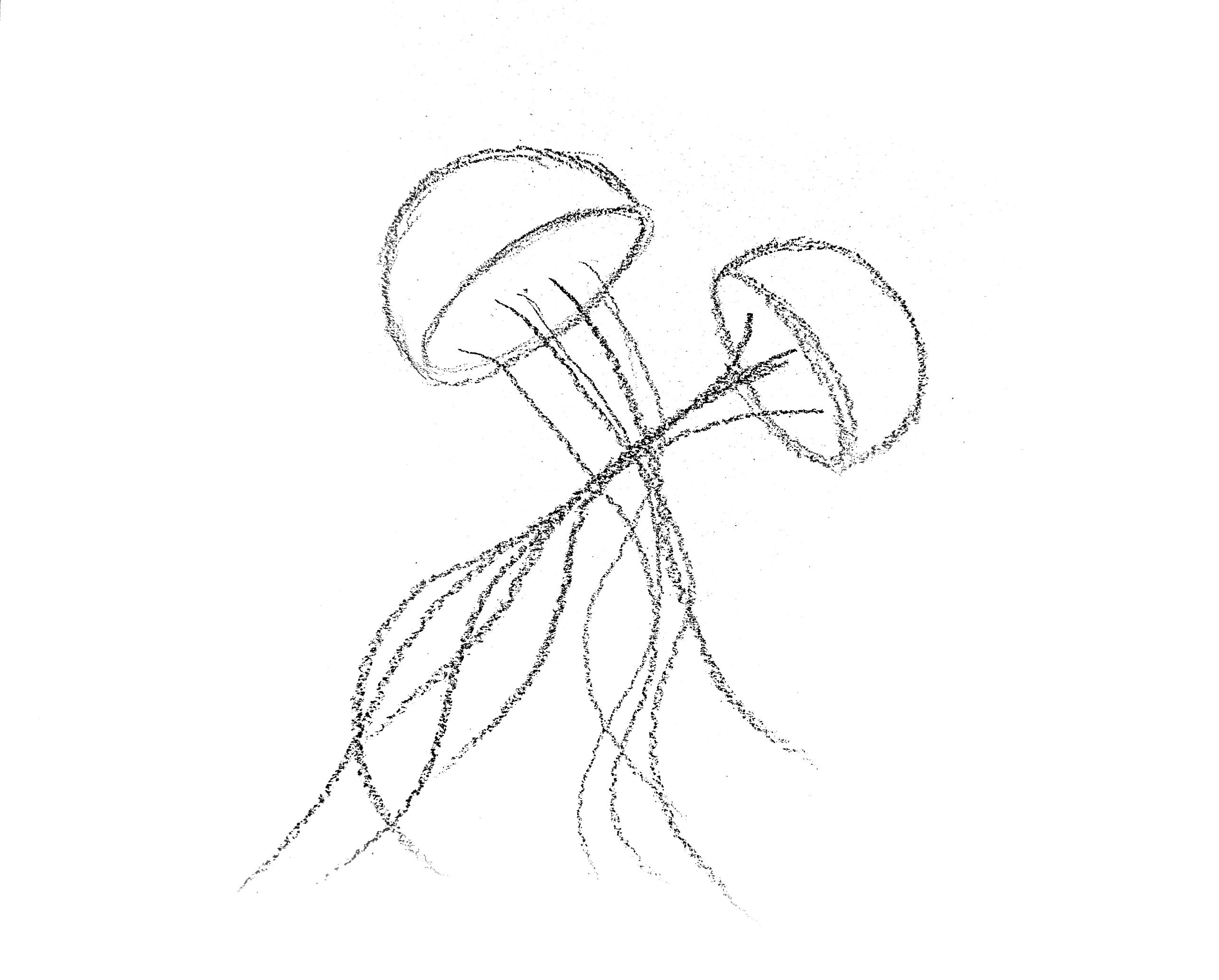
      Initial Sketch

      3:16

    • 3.

      First Layer of Marker

      4:42

    • 4.

      Layers of Color

      7:14

    • 5.

      More Colors

      4:35

    • 6.

      More Layers and More Yellow

      5:31

    • 7.

      Making it Glow

      4:06

    • 8.

      First Layer of Tentacles

      2:49

    • 9.

      Layers of the Tentacles

      3:41

    • 10.

      Glowing Tentacles

      4:19

    • 11.

      Thanks for Watching!

      1:13

  • --
  • Beginner level
  • Intermediate level
  • Advanced level
  • All levels

Community Generated

The level is determined by a majority opinion of students who have reviewed this class. The teacher's recommendation is shown until at least 5 student responses are collected.

84

Students

11

Projects

About This Class

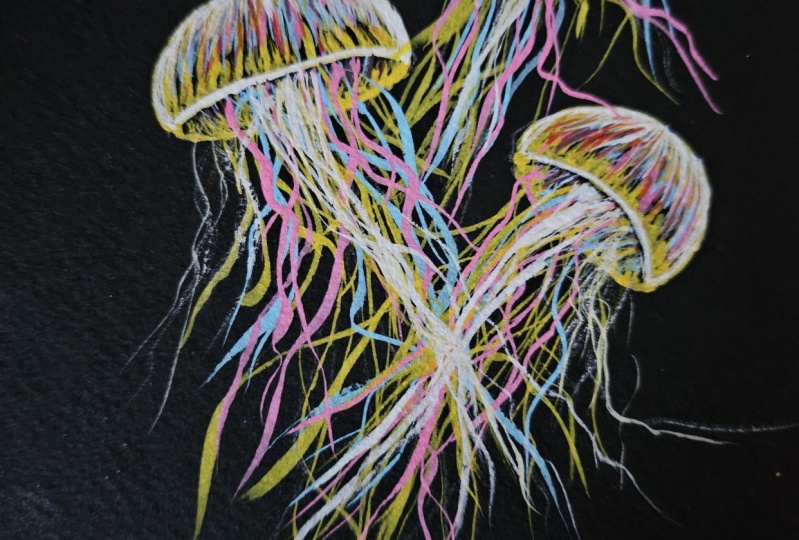
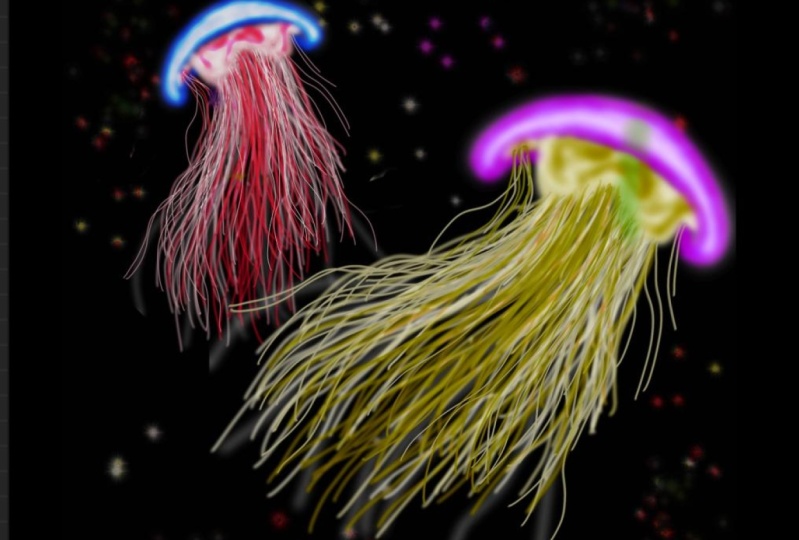
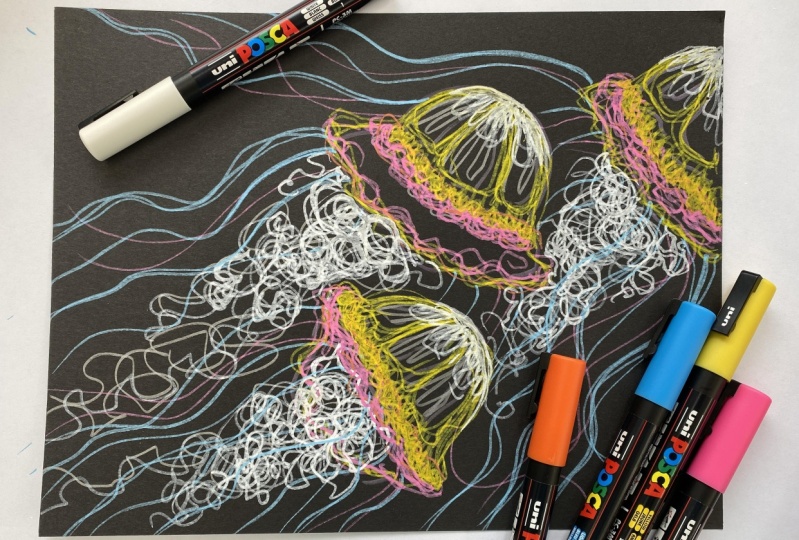
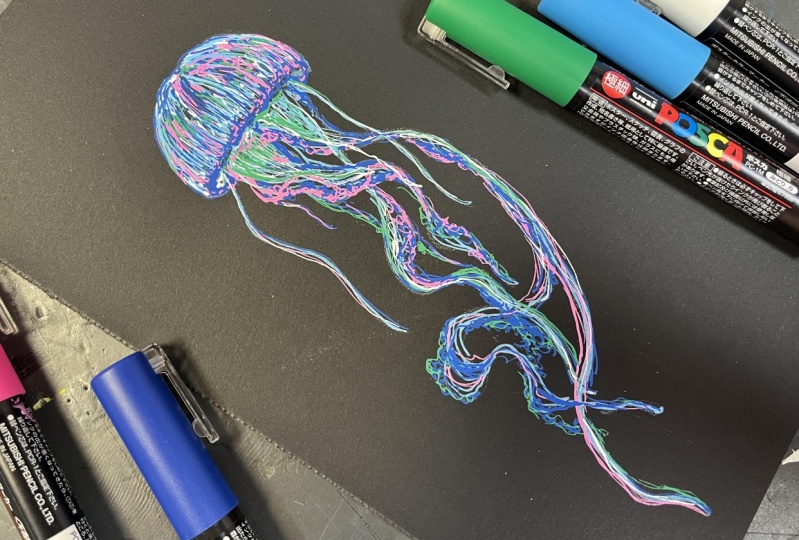
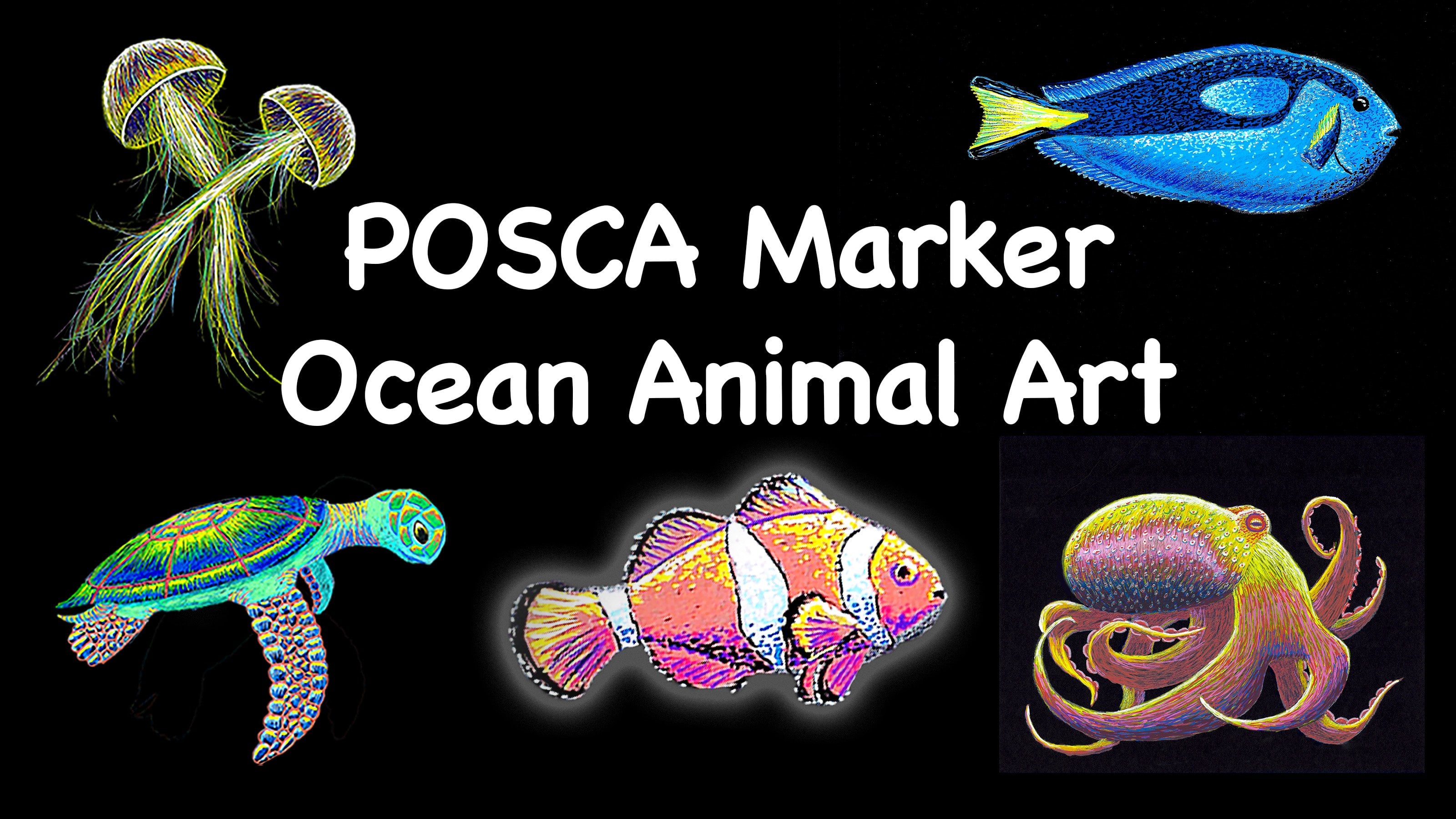
Are you an ocean animal lover? In this step-by-step class, we’ll draw and color a pair of jellyfish using acrylic paint markers (Uni POSCA markers). You’ll learn a simple process for sketching the basic shapes, layering color, and using highlights and contrast to give your jellyfish a soft, glowing look.

I’ve become a huge fan of acrylic paint pens because they’re bold, vibrant, and easy to control—perfect for beginners and fun for experienced artists too. By the end of class, you’ll have a finished jellyfish drawing and a better understanding of how to color with paint markers in a clean, polished way.

This class is for you if you want to:

  • Learn POSCA marker drawing in a beginner-friendly way

  • Practice simple drawing and coloring techniques with acrylic markers

  • Create bright, colorful ocean art with a finished look

References

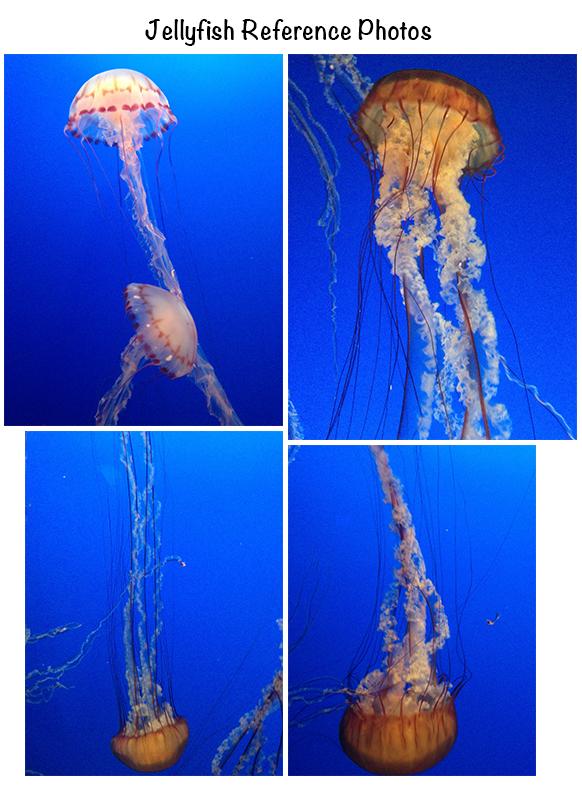
I’ve included four jellyfish reference photos plus a scan of my initial sketch to help you follow along.

Materials

Use what you have—POSCA markers or any acrylic paint marker brand works.

I’ll be using:

  • Black illustration board (or any dark surface)

  • White colored pencil (for the initial sketch)

  • Uni POSCA Extra Fine (PC-1MC, 0.7 mm) markers

  • For marker I’ll use Extra Fine Point (PC-1MC - 0.7 mm) Posca paint markers. Here is a list of the marker colors I will use:

My Jellyfish sketch:
I also would love it if you visit my Etsy Shop where I offer prints of my artwork and other handicrafts: AndysARTtitude

Be sure to check my pages out on Instagram and Facebook where I post updates of my art and I announce when there are new SkillShare classes.

  • acrylic paint markers
  • paint pen drawing
  • marker illustration
  • beginner marker art
  • step-by-step drawing class
  • drawing and coloring techniques
  • layering with markers
  • blending with paint markers
  • Fish art
  • ocean animal art
  • ocean animal drawing
  • sea creatures drawing
  • marine animals art
  • marine life illustration
  • under the sea art
  • underwater wildlife art
  • ocean life drawing
  • aquatic animals drawing
  • sea life art tutorial
  • coastal / ocean themed art
  • reef animals drawing
  • tropical fish drawing
  • sea turtle drawing
  • dolphin drawing
  • shark drawing
  • octopus drawing
  • whale drawing
  • stingray drawing
  • seahorse drawing

Meet Your Teacher

Teacher Profile Image

Andy Villon

Fine Artist

Teacher

I'm a fine artist and Skillshare teacher specializing in colorful, realistic animal and floral art using Posca markers, acrylic paint, watercolors, and mixed media. I've been working as a professional artist since 2013 and teaching art since 2021, helping beginners and growing artists build confidence through clear, step-by-step instruction.

My classes are beginner-friendly and project-focused, designed to help you create vibrant artwork while learning practical skills like shading, layering, texture, and color control. I'm especially known for teaching realistic animals, glowing effects, and eye-catching florals, inspired by bold color palettes and what I like to call Instagram-style art -- bright, expressive, and visua... See full profile

Level: Beginner

Class Ratings

Expectations Met?
    Exceeded!
  • 0%
  • Yes
  • 0%
  • Somewhat
  • 0%
  • Not really
  • 0%

Why Join Skillshare?

Take award-winning Skillshare Original Classes

Each class has short lessons, hands-on projects

Your membership supports Skillshare teachers

Learn From Anywhere

Take classes on the go with the Skillshare app. Stream or download to watch on the plane, the subway, or wherever you learn best.

Transcripts

1. Welcome to Class!: Hey. How are you? My name is Andy on. I'm a fine artist. Today we'll be using posca markers to throw a beautiful pair of growing jellyfish, and we'll be doing this on Black Illustration board. My goal is for you to learn different techniques for blending and coloring using pasta markers. These beautiful, colorful and vibrant markers have so much possibility and so much to offer. And I want to be able to share this with you and you to be able to create some awesome drawings with them. So without further ado, let's start with our setting is drawing. 2. Initial Sketch: All right, so we're going to start by drawing the initial sketch of the chelly fish. To do this we'll be using a white colored pencil, and the reason is that this pencil shows up well on our black illustration board. We'll begin by sketching the left hand chelly fish. What I'll do is I'll draw a oval for the opening of the body of the fish, It's somewhat wrong oval. Next I'll draw the dome of the body of the jellyfish. I'll draw a simple arc up from one side to the other. Now what we'll do is we'll draw just a few of the strands of the tail of the fish. So we'll go in and just add in these nice curve and long flowing tint course. So now we can start drawing the second, the fish in the same manner that we drew. The first one will make this oval opening a little bit less wide. We'll then draw the tomb of the body again from one side of the oval to the other. We'll finish off by adding in the tentacles we want them to go. And crossing the tentacles of the first jellyfish so that they go in opposite directions. One thing to note that we didn't want them to all in, in a cluster. We want them to separate through bit and be free flowing. 3. First Layer of Marker: We will start adding our first layer of Posco marker using a yellow marker. Extra fine point. I will start my first layer by coving around the outer edge of the tom of the jellyfish. Next, I will start adding in curved lines, thinking about how they will curve around the dome of the creature on the left side, they will curve towards the left. And on the right half of the dome, they will curve towards the right. And we don't want to color this all the way in solid, but instead have a bunch of lines that reach down and get a bit sparse, more as thick. As we go down towards the edge of the dome right there, you can see what we want. Now I will repeat this process on the second right hand side jellyfish going around the outer edge of the dome. And then we'll start adding the lines from the bottom to the top in the same manner as the first jelly fish. These lines arch towards the left, on the left hand or upper side of the jellyfish, and on the lower or right hand side, they arch towards the right. Next what we will do is we will color in the ring of the dome or in other words, around the opening of the body of the chilly fish. We're just coloring in that ring to make it nice and yellow. And I will do this for the second Chilli fish as well. 4. Layers of Color: Now we will use a yellow marker to go back and add a second layer to the dome of the jellyfish. What this does is it brightens up the yellow even more and makes it more bright and vibrant. I'm going to keep this second layer of yellow to the upper part of the domes and add just a bit to the lower part, in particular to the opening of the chili fish. I will repeat this process on the right hand jellyfish as well. Next I will go on the inside of the dome, what we would be seeing the opposite side of the jelly fish's body. I will add a thin layer of lines throwing down towards the lower part of the body. We don't want to add too much. Just enough so that there's a color there. Next we will go in with a red poker. We will start adding in a bit to the inside or central part of the dome. What I want you to do is keep adding lines, try to have them flow as if they were coming from the top of the dome and going down towards the bottom. We're going to keep the outer part of the dome yellow and not add any red there. As you can see I've done And it Ives that appearance of blowing that we want the chelly fish to have. We will now repeat this process for the right and chili fish flowing in adding in our sparse red lines. I will add in a bit more to that central part of the jellyfish dome. Just have some nice fight red in there. Also go on in the inside of the jellyfish opening and add a bit there on both of them. No, no, no, no, no, no, no, no, no, no, no, no, no, no, no. No, no, no, no, no, no, no, no, no, no, no, no, no, no, no, no, no, no, no. 5. More Colors: In this section, we will start with a, A marker. And what we will do is add more color to the central part of the dome, similar to how we did with the red. We will do this for both jellyfish and we will also add these colors into the inside of the jellyfish body. Now that the pink is dry, we're going to go in with a light blue per and mix in some of this color amongst the pink. We don't want to completely cover the pink, we just want to add enough so that there's a bit of this color blended in and combined with the pink. And we will do this to the dome, a bit on the inside. Also in the inner body and also on the other chelly fish as well. Now we will use a light breed, classical mercer, and adding a layer of this over the blue, pink, red and yellow, we will add this light free in the same manner that we added the blue and pink. Just adding a little bit amongst those colors. 6. More Layers and More Yellow: At this point, we will come in with an orange Posco merger, and we will add this color in, following what we did with the previous several colors. We will add this orange in, in the same manner. Now that the orange has had time to dry, we will come in with a black Bosco Mercer. We're only going to go in on the inner part of the dome. In other words, on the inner part of the body opening, the oval of the body cavity, We will add in a bit of black just to tone down some of these colors and give it a bit of a bit of shadow. We will do this for both of the jelly fish. Now using a yellow, we will come in and brighten up the yellow along this leading edge where I'm marking now adding some lines along the outer part of the dome, like I said, along the leading edge of the oval, red in here. I will also add in a few little lines that just go up ever so much on this lower leading edge of the oval. Now what you will see me do is just picking at this piece, adding in yellow here, adding it in there, and just gradually building back some of my yellow and adding it in various places. That's what I encourage you and want you to do, is just keep working with your studying it, thinking about what you can add, where there needs to be some more yellow, maybe you don't need to add anymore, maybe it's okay as it is. Just play around with it until you get the appropriate amount of color. 7. Making it Glow: All right, now we are going to make the jelly fish glow and we're going to do this white using a white mercer. We're going to do this by adding in white rhines and a bit of white along the outer part of the dome. Going around that perch, we will drag this yellow down a little bit into the lower part of the dome. As I'm doing now, I'm also going to widen this line of the oval going over it and making it low, making it really have a white and bright appearance. In a way, what we're doing is we're pushing the back part of the chelly fish further back in the scene. And bringing the front edge of the jellyfish body towards us by making it brighter and more white. Now we're going to come in with a purple. So mercer, and we're going to add in this ever so much in the central part of the dome. We don't want to overdo it and erase our bright, lovely colors. So that's about all will do there with the purple. Next will come in and a purple in the body opening of the jellyfish. We're going to deepen the shadow and make it more of a cavity by adding the purple. 8. First Layer of Tentacles: All right, so now we're going to use a yellow mercer, and we're going to do the extra front part of this drawing, which is adding in the tentacles. And we want the tentacles to be free. Some can be a bit shorter. As you've seen I've done the outer ones. In other words, the ones on the edge of the tentacle area are a bit looser, shorter. And then the ones towards the center are longer. I'm going to layer this yellow on, get thicker and more solid yellow towards the center of the tentacle column. We can also have a few tentacles going out in another direction. We don't want them all to be contained to one central column or section. We want them to be free and flowing in the water. We will do this for both of our chelly fish. One thing to note is that we want the tentacles to reach all the way up to the upper part of the cavity or the opening of the chelly fishes foam as you can see right now. And in a moment I will go back and add in more yellow to the left hand side shellfish, extending those tentacles to the very top of the opening. 9. Layers of the Tentacles: In this segment, we're going to use several colors that we've already used to add more layers to the tentacles to make them colorful B in a way similar to the body of the jellyfish. We'll start out with our orange possible marker. We're going to go over the same area of tentacles that we added in in the previous video with the yellow. Now we don't want to cover up the yellow all the way, we just want to add enough orange to blend it in and get that color down and mixed in with the yellow. So us 10. Glowing Tentacles: We will use a yellow posca markering out to finish the tentacles. And we will work on the central part of the tentacle column. What we will do is add a nice thick amount of yellow in here. We're not going to try to cover up the other colors of the tentacles all the way. We just want to have a nice amount of yellow in the central part of the tentacles in order to make them look like they're glowing. We can also add a few extra tentacles with the yellow that are flowing out and free. You can see I'm really thickening it up right in that central location. We're now going to come in with a white poco mercer and make these tentacles really glow. We'll do this by adding a thin streak of white to the central of that column, similar to how we did the yellow system a minute ago, but adding just a thin streak right in that central area you. 11. Thanks for Watching!: Thank you so much for watching. I really hope you enjoyed this class and we're able to learn something from it. Please feel free to post a picture of your drawing below this class so that all of us here on Sco chair can see what you did. If you have any questions, don't hesitate to start a discussion in the discussions tab below this video, and I will be happy to answer your questions. Well, if you would like to support me, please check out my website at www.andsartitude.com And feel free to visit me on Instagram and Facebook where you can see daily updates of my artwork at andsartitude Stick around here on Skillshare and follow me, because in the coming weeks I will be uploading more classes. That's been it for now. I hope you have a wonderful day. See you in the next class.