Transcripts
1. Introduction: Hi, my name is George J. Barnes and welcome to this leadership and
management masterclass. I'm excited today because
this class will be pivotal to anyone looking to take
their leadership or management skills
to the next level. I've had a lot of experience
in my life and spent over 15 years as the
Chief Executive Officer. This course is for Chief
Executive Officers or liters, but also for
individuals who may be leading and community
organizations, politicians, community
activists, executive directors, even individuals who lead
in their houses of worship. Supervisors, team leads, principals,
superintendents, etcetera. Whatever you may be
doing or whenever you find yourself needing to
lead, needing to manage. This is a resource that I
suggest you should have. You may be wondering what
students will learn. Well, let me give
you a little taste. We're gonna be talking
about how to become a stronger leader and
a better manager. How to build trust and
credibility with others. How to effectively
influence people, how to communicate as a leader. Time management techniques
of successful leaders. How to delegate with confidence, how to develop people to
their full potential. How to assemble, lead,
and manage teams, how to retain
world-class talent, and how to implement
organizational strategy. Those are some of the key
things we're going to learn. And I'm sure you'll be able to grab so much more
from this course.
2. What is Leadership: So in this first section, Let's start with leadership. Leadership is about encouraging, inspiring, and motivating
others to act. There's a quote from
Winston Churchill, who was a historical figure, a Prime Minister of Britain, any lead that country
through World War II. He has a quote that says, success is stumbling
from failure to failure with no
loss of enthusiasm. I like that quote
because it helps us to realize that one of the main jobs of a leader is to inspire and encourage others. And even in this quote, When people go through
failures in difficult times, if we can or someone
can lead them through that where they're
still enthusiastic, they still have hope,
they still can move forward to a goal or a
plan or a better future. That right there is the
idea of leadership. Now, as we dive into this course and as you look at the title, we have named this course the leadership and
management masterclass. Now, sometimes you'll see some
books or authors will talk about the differences between
leadership and management. And there are differences
and we're going to talk about that
in just a moment. But the first I want to
make is that although leadership and
management is different, This course will
seek to help you to understand that they
both are important. In my years as leading
organizations, there was a lot of
responsibility for leadership, but there was also a lot of responsibility
for management. And in today's
organization and in today's execution of being
someone who is in charge, you'll have to display skills of both leadership and management. So how are they different,
a manager and a leader? Well, let's first
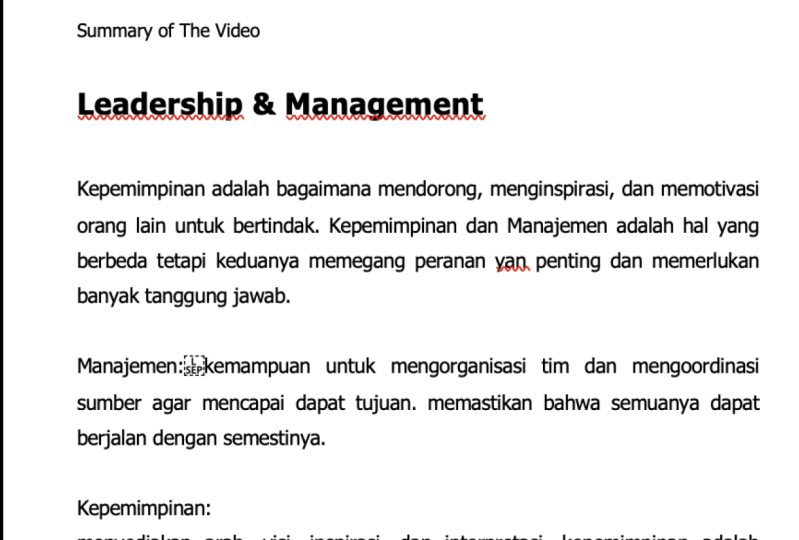
talk about managing. Management really is
the ability to organize a team and coordinate resources
to meet an objective. When we think about
organizing resources, when we think about making
sure things work well, making sure that certain
things are in the right place. That right there is
essentially management. As we think about
leadership though, leadership is about
providing direction, vision, inspiration, and
even interpretation. Leadership is about having an understanding that why are
we doing what we're doing, or where are we going? There was a quote
that I remember learning about
where someone said, the individual who steers
a ship is like a manager, but the person who charts
the course is a leader. And the other words
that making sure that things are running well and doing what they're
supposed to be doing. That really is some of the essential elements
of management. Leadership is about knowing where we're going,
why we're going, and helping us with a greater
understanding of what's going on in the greater world, environment or organization. Leadership is about
moving us forward and taking us to our next phase, next environment, or
our next product, or whatever we are doing
as an organization. So my idea, my thought
process to you first and foremost is that leadership and management are
both important.
3. Common Leadership Traits: In this section, I want to focus a little bit
on leadership. And I want to begin
to talk about some of the common traits of leaders. What I wanna do is kind of organizes them in
three main categories. In that first category of common traits is the
intellectual traits. Now, first and foremost, what I mean by this is some intellectual traits that we see in liters are very common. And one of those
intellectual traits is individuals who stay informed. And form simply
means that they are knowledgeable about
key information, key things about
their organization and even their industry. It's really difficult for
a leader to try to chart a course into what's next or where we're
going, so to speak. If they're not informed about the environment in
which we live at. Another aspect of the
intellectual tree is people who are
future focused. Future focus helps
us to realize that our tasks and our thinking guide it not
just by where we are now, but where we will be
their future based. It helps us to think a
little bit more long-term. Leadership is just not about understanding where
we are, where we are, but having the thought
process to think about where we need
to be tomorrow. Another aspect when we think about some
intellectual traits of leaders is an individual
who is decisive. This is the ability to make
difficult decisions and essentially keep things moving. One of the problems that
we see and research has shown us is that when
leaders are not decisive, things tend to slow down. Progress slows down. One of the things that is
a mark of a good leader is that the organization or the people or their
constituents, or the situation that
they're leading in must continue to make progress.
4. Social-emotional Traits: In this section, I
want to talk about another common
leadership category as it relates to their
traits is what is often called a social
emotional traits. What that means is that these
are individuals who display certain traits that tie
back to their social, emotional, or
psychological state. One is that they are self aware. Now we're going to talk
much more in depth about self-awareness a
little later in this course. But this is the ability that people have to pay attention to their own behavior and
how it affects others. The next trait within
this category is an individual who is
of course, engaged, engaged with their environment, engage with the
people around them so much so that they can be empathetic to what
people are feeling. And also an individual
who is trustworthy. Their actions are consistent
with their values. Their actions are consistent
with their words.
5. Leadership Traits in Organizations: In this category, let us look at some of the
necessary traits that research has shown us is a
part of effective leaders. The first one I want to talk
about is collaborative. This is when individuals
know how to work well with others and
produce results. We're going to spend some
time diving a little bit deeper into this idea
later in the course. But collaboration is important. Next, within an organization, a leader should be influential. And this is the idea that
they are good at listening. They're good at
finding common ground, and they good at being
effective communicators. Next, even in an organization, common leadership traits
include individuals who are politically astute. They understand perhaps the hierarchies in
the organization, power structures and
key stakeholders. All these things, we're
going to dive a little bit deeper into this course as we uncover what does it mean
to be an effective leader?
6. What the Best Leaders have in Common: In this lesson, we're gonna
go a little bit deeper into what the best leaders
have in common. Now, as leadership
has been something that has been
researched for years. If we think about the
beginning of time and all of our historical texts, even some of the religious
texts and everything that we've seen in world
history to American history. All of us have had I on the
story of great leaders. And so a lot of research
has been done on what things are in common of
these great leaders. One of the things
that research has uncovered is that many of the best leaders
have what's called a high degree of
emotional intelligence. Emotional intelligence
is really pivotal and continues to be seen
in effective leaders. One of the things that
research shows about emotional intelligence
is that it is twice as important as
technical skills or IQ, or just pure intellect. Now, although
technical skills and IQ or raw intellect
is important. But what research
has shown us is that emotional intelligence is much more predictive of a
successful leader. Not emotional
intelligence, or EQ, is the ability to
recognize, understand, and manage our own
emotions, and recognize, understand and influence
the emotions of others. In his book, working with emotional intelligence,
Daniel Goldman sites, the Harvard Business School
Research at determined that emotional intelligence
counts for twice as much as i2 and technical skills combined in determining
who will be successful.
7. 5 Components of Emotional Intelligence: In this lesson, I want
to dive a little bit deeper into emotional
intelligence. And what we've found is
that emotional intelligence can be organized in
five major components. Of the five major components,
we have self-awareness, self-regulation, motivation,
empathy, and social skills. Let's take a look at each one.
8. Self-awareness: Self-awareness, as it sounds, is an individual's ability to be aware of their own emotions, their own behaviors,
and their own actions. Now, one of the things
that research has shown us that is important for someone to have when displaying self-awareness is a
realistic self assessment. That's the ability to
be able to look at yourself and to assess
how well you're doing, how well you're not doing
and be realistic about it. Sometimes I've seen
it where people are so focused on looking
good on the outside that they miss the
opportunity to be realistic with how they're
feeling on the inside. And if you're not
realistic about your feelings on the inside
in which you're experiencing. You're causing
yourself to display a low level of self-awareness. Now one way that research has
shown that people display self-awareness is their ability
to be self-deprecating. Or in other words, having
a good sense of humor about their own lack of ability, their own mistakes, and sometimes
their own shortcomings. One thing that you have
to realize that if you're not able to look at yourself and realize your shortcomings and at some point have a good
sense of humor about it. You may not have the ability to exercise high levels of emotional intelligence
and self-awareness. A self-deprecating sense
of humor helps you to understand that as a leader, you don't have to be perfect. This next component of self-awareness is
called reflection. Reflection is the ability
to be able to look back over your recent behaviors, thoughts, and even actions. Not only recent behaviors, but also the ability
to look back over the long term thoughts,
behaviors, and actions. Sometimes we may not be
self-aware in the moment, but if we pause and reflect, we may be able to see
our own emotions in some unique patterns and
our behavior when we look back over a
longer-term period, leaders who see
themselves clearly, also able to see their
organizations clearly. What this quote,
you can imagine, why people who have a high degree of self-awareness and emotional intelligence, often associated with
successful organizations.
9. Self-regulation: In this lesson, we're
going to talk about the second component of
emotional intelligence, and that is self-regulation. Now, self-regulation is
also self-explanatory in that it is an
individual's ability to regulate their actions, their thoughts, and
their emotions. One of the key components
of self-regulation is this ability to have
delayed gratification. Delayed gratification
says that, hey, there's something that I want to participate in and I want
to reap the reward from it, but that reward may not come. Now, oftentimes when people try to speed up that
ratification process, that leads them to not
regulating their own behaviors. Another component of
self-regulation is being comfortable
with ambiguity. Sometimes it'll be
in circumstances or situations where
we don't have all the answers and we
are required to steal, regulate our actions, still make good decisions and not
essentially go overboard. Liters will control
their feelings, create an atmosphere
of fairness and trust. Later on in this course, we're going to dive a
little bit deeper into this concept of creating
an atmosphere of trust. Self-regulation is a major
key component of that.
10. Motivation: In this lesson, we're going to talk about the third aspect of emotional intelligence,
and that's motivation. Research has shown
that motivation is a key aspect of displaying
emotional intelligence. Motivation says
that an individual is passionate about their work. They're motivated to do
well in their organization. They're motivated that tomorrow will look better than today. And today we'll look
better than yesterday. There's a motivation
to be optimistic. There's a motivation to, when, there's a motivation
to expand and to grow. When a leader is motivated, they have a natural
drive to excel. And that drive to
Excel is contagious. You can imagine that
successful leaders display high emotional intelligence
and high motivation because individuals and their teams
and our organizations and their surroundings
feel their passion. And that passion spreads
to other people. If the leader isn't passionate, if the leader isn't motivated, if the leader is an excited to do things in
the organization, how can we expect other people in the
organization to become excited?
11. Empathy: In this lesson, I
want to touch on the fourth component of
emotional intelligence. That is empathy. Empathy is the ability to feel what other
people are feeling. One component of empathy, especially in the context
of emotional intelligence. This is the ability to
read between the lines. A lot of times in organizations, and especially when
you're a leader, sometimes people may not feel comfortable saying what
they actually feel. I spent many years as the
Chief Executive Officer and it was my goal to create an environment
where people could share their thoughts and ideas. But one thing I realized
is that just by the mere fact of me being in a high position in
an organization. Sometimes people were
a little intimidated to say what they
actually wanted to say. And it was really
important for me to be able to read between the lines. Successful leaders who display emotional intelligence can
see not only what people say, but things they don't say. As it relates to empathy. The research is clear. Leaders who manage with empathy, increased satisfaction,
and reduce turnover. Sometimes organizations
and leaders may think that if we have
a turnover problem, that's too many people
leaving and our organization, too many staff or
volunteers leading. Sometimes we think we can just provide more money or more perks and that
will be the solution. But research has
shown that unless those things are the
specific reason why one of the main things that
will reduce turnover and increase satisfaction is
leaders who have empathy, being able to feel what
other people are feeling. Because as we'll find out
later in this course, sometimes it's not
always money that reduces satisfaction
in an organization.
12. Social Skills: In this lesson, let's talk about the fifth component of
emotional intelligence, and that is social scale. Now, social skill is
the ability to know how to work and talk and
communicate with people. First, an individual
who displays social skills knows how to
be non-confrontational. Now, yeah, sure There are
moments in times when confrontation is
important, but oftentimes, even if we have conflict, wisdom tells us that we should start that discussion off in
a non-confrontational way. And eventually we'll be able
to lead to a resolution. Individuals who know how to be non-confrontational and
still get to a solution, display a high level
of social scale. Another aspect of social
skills is being persuasive. Knowing how to communicate
with people to get them to see things on
new and different way. And then final aspect I want
to share really quickly, the ability to collaborate. Collaboration is key when
it relates to having good social skills and displaying high levels of
emotional intelligence. And for a leader to be able to help the
organization succeed. If you're able to be
non-confrontational, persuasive, and help
people collaborate. This displays a strong degree
of social skills and helps you to show that you're able to operate in high levels of
emotional intelligence.
13. Building Credability: In this lesson, as we
talk about leadership, it's important to know that
one thing that leaders must do is that they must be able to build trust
and credibility. Specifically for those
who are new leaders or for those who
have new followers. It's important that a leader
be trustworthy and credible. I wanted to share this example
of trust and credibility. I wanted to make the point
that trust and credibility can even last through
challenging times. In 1985, even though he
co-founded the company, Apple's board of directors fired Steve Jobs, That's right. The famous Steve Jobs, after the company almost
went bankrupt without them. There was one person
the company leaders trusted to turn things around. And so in 1996, Apple
rehired Steve Jobs. And of course we all know the history that's
set the company on a trajectory where would be the most valuable
company in the world? This example is powerful
because it shows that although Steve Jobs was fired and although they went through
those tumultuous times, when push came to
shove, as they say, they only trusted one
person to really be passionate and to come back to the company with care
and turn things around. That shows me that
credibility and trust can even less
through difficulty, challenges, and
even disagreements, that people still
had trust in him.
14. Character: In this lesson, I
want to talk about two main categories where people build credibility and trust. Specifically new leaders or when you have new followers and how they're looking to see if an individual is trustworthy. Those two categories are through character
and competence. Let's dive a little bit
deeper into each one. Let's first start
with character. Character is about who you are. But how would you build
trust and credibility by showing who you are
displaying your character? I want to share with
you a few ways that you can build that
trust and credibility. First, is you need to
strive for consistency. When you're a new
leader, when you have new followers and you're trying to build that credibility, people are looking
at your character and one of the
things are going to judge your character
by is consistency. Are you consistent? If you decided to do something, are you consistent with it? If you decided to apply or create a rule or
something with the team, are you consistent
in the way you apply that rule or you apply
that standard to the team. Consistency is really important because it shows
people who you are. Another way people are judging your character is seeing how
you regulate your emotions. And we talked a little bit
about self-regulation before. But in this context, people are looking
specifically to judge your character through how
you regulate your emotions. Are you a person that can
hold back major emotions? Are you a person who
can maintain yourself? Are you a person who
can be professional, even though you may feel a certain way about
some kind of events. These are things that
people are gonna be looking to when they're judging
your character. Another aspect is
simply your manners. I like to make sure that
people often don't forget. Sometimes it's important
just to have manners. Sometimes we can become so passionate and our teams
and organizations, but we forget that being rude
is just not professional. Not only is it not professional, but it's not productive. Oftentimes we don't
realize that when we lack manners and our
route with people, it degrades our
credibility and it erodes trust that
people may have in us. This next component where people are looking to
judge your character is determining if you ask
appropriate questions. In my experience, as a leader, I've seen a lot of people who
just were not appropriate. And oftentimes when you ask things that are
not appropriate, people will tie that
to your character. Yes, there are sometimes
difficult things we have to find out or difficult
things we have to determine. But we still can do them
in an appropriate way and ask people
appropriate things. If we find ourselves continually not being
able to do that, we have to be warned that
this will potentially cause erosion and our
credibility and cause people not to trust us in
the way that they could. Another aspect that
people are looking to judge or character by is how often and likely are you
to invite them for feedback. When you invite people
to provide feedback, you're helping people to understand that
their point of view, their experience is important. When you're constantly
pushing people away and you're rejecting
their feedback, what you're telling people
is that they don't matter. And finally, another way
people are looking to judge your character
as they want to see. Do you give other people the opportunity and
the ability to shine? Give people a chance
to do their best. One thing that I've
seen before as I've counseled and
mentored by the liters, is that sometimes they may have so much pressure to produce that they don't give other team members the
opportunity to shine. And when people see that you take the limelight or
you don't give them an opportunity to show their talents or
abilities or skills. It erodes credibility. Make sure you give other people the opportunity
to do their best. Yeah, there are times
where people may not have all the skill and
experience that you have. But if it's your
team and if they're looking to you for leadership, it's important that they learn. It's important
that at some point they stretch their
wings and fly.
15. Competance: In this lesson, I want to talk now a little bit
about competence. Competence is another category
when we're seeking to build credibility and
trust as a leader, as you're seeking to
show your competence. The first thing you want to
make sure you do is plan. Now not only do you want to plan the events and activities
that you do as a team, of course, but you also
want to plan to make sure that you
accomplish quick wins. One thing that's
important is that people want to see what you can do, especially if you're
a new leader or their newly following you. It's no point that your first
task be something that is so difficult that your team can accomplish or your
team can't win. Next, you want to be able
to confront tough issues. You want to be able to show your team members that
you're willing to confront the things that perhaps other people
won't come from. They're looking for
your competence and they're looking to see, are you a credible leader? Are you competent? Can we trust you?
How do you handle the things that others
perhaps mishandled? And so you wanna be
able not only to plan, of course those wins and plan
the activities and things, but you want to be
able to plan to confront those tough issues. Next is just showing your competence in your
building credibility. You want to be able to
research your ideas. When you bring something to
the table with your team, you want them to
realize that you didn't just bring this off of a whim. I've had a lot of
experience with pitching ideas and bringing new thoughts and
initiatives and programs to boards, teams and organizations. And I've always saw that
the better I was able to do my research and then
articulate those ideas. The better those ideas
not only were adopted, but the better those ideas
manifested good results. Another aspect in showing people that you're
competent and building credibility is to
explain your decisions. Sometimes as a leader, you will have to make decisions
that are controversial. And sometimes your decisions
may not be controversial. But one thing that
can always build your credibility and
show people that you know what you're talking
about is to explain your thinking and reasoning
behind your decisions. It'll show your team that you didn't just make
your decision randomly, but that you hadn't legitimate thought comprehension behind it. That there's a reason why
you did what you did. Not only that, it's
an opportunity to show even some of
your experience, you'll be able to
share that, Hey, I've went through this before, I've seen this happen. And that has helped me to look at something in a
particular way. And that has helped me
to make this decision. And this is why. Finally, one
component of building credibility is to be honest. To be honest about
things around you. To be honest about where
you are, your organization. Also, to be honest about
what you don't know. I know sometimes we're thinking I gotta build credibility. I got to show them
that I'm competent. So let me try to make them believe that I know everything. Well, let me stop
you right there. That right there is a mistake. First and foremost,
people don't expect you to know everything.
That's number one. Number two, people can
see when you don't know something and you tried
to come off as you do. Sometimes you
didn't realize that trying to present
yourself in trying to say something based on
something you don't know actually reduces
your credibility. Because people then Noun wonder, if I can see that you're not
being honest about this. Maybe you're not being
honest about something else. It actually has the
opposite effect. And so what you
have to remember is that as you build credibility as a leader with new followers or if you're
a new leader on the scene, be honest about your experience. Be honest about what you know, but definitely be honest
about what you don't know.
16. How to Build Trust with your Team: We talked about
building credibility. We talked about displaying your competence and
your character. But let's talk even more
specifically noun in this lesson about building
trust with your team. What can you do to
establish trust? Here's a couple of things
I want to share with you. Number one, assume responsibility
for the tough calls. We talked about making
the tough decisions. But being very explicit that you are responsible
for those tough calls, that if anything
were to come from the decision that
would have a backlash, that you as the
leader will assume the responsibility that helps the team know that
they can trust you, trust you and tough
times trust you during the tough calls
and know that you won't leave them and walk away from them when
things get heated, they want to know, well,
you have their back when the situation
gets difficult. Next, you want to examine
your own decisions for bias. Again, a lot of times
people are seeing and trying to determine
can they trust you? Why are you doing
what you're doing? And sometimes
people will believe that you're doing what you're
doing because of bias. There's a lot of bias out there. And I would dare to say
that not all bias is bad. But what I do recommend
is that you explain your decision to people and make sure they know why
you do what you do. We've talked about
before explaining your decision and how that
shows your competence. But it also builds trust
because sometimes you'll display something what
I call positive bias. Now. But as of course, that we often think of as
a negative thing. We think about bias
and how people don't give people a chance, et cetera. There are definitely a lot of application of negative bias. But I submit that there's
something called positive bias. And what positive
biases is that you've been through an experience and it helped you to
learn something, or you're taking
that bias that you now have from an experience. Now I'm applying that to
something you're going through. Now, you may say, Hey, I've dealt with this
particular product before or I've dealt with this
type of situation before. And yeah, I have a
positive bias toward it, but that's why I'm
making a decision. I am because I've seen
this circumstance before, its experience and its bias. Now, as you communicate that
and you share that publicly, Perhaps people can see, and even if people
don't agree with you, it's more likely
for them to respect you because you've shared
it with them honestly, then to wonder why
you did what you did. Next. If you're building
trust with your team, you want to demonstrate genuine
concern for all groups in your organization as you are seeking to build
trust with others. Demonstrating
genuine concern for other groups in
your organization helps people see that you're not just focused on yourself. Essentially, what
this shows is that you have the ability
to not be selfish. And at the end of the day,
if you're not selfish, it shows people that
you can be trustworthy. Another aspect of building
trust with your team is to ensure the ethics
of your followers. A lot of time we can spin, making sure that our
actions are ethical. But people really
are looking to see, especially as you're a leader, do you hold others in your purview to those
same level of ethics? I've been a part of a
lot of organizations where people didn't
trust the leadership because they didn't
believe there were holding ethical
standards for everybody. That certain people
got away with certain things and other
people got punished. If you want to build
trust with your team and show that you're a person
of great credibility. Make sure that you hold
all of your followers to the ethical standards that
you hold yourself to.
17. Basic Leadership Influence: In this section, now we're
going to talk about influence. Did you realize that as
a leader and a manager, it's important that
you are influential with your team members
or your followers. Then I submit, it's
important that leaders and managers must be influencers. Now influences one's
ability to persuade others, decisions, plans,
and even results. And I want to submit
to you that influence essentially comes from
two main categories, are two main powers. Now the first one is
called positional power, and the second one is
called personal power. These are the
powers, if you will, that influence people or
why people are influence. Now first, let's talk about this positional power or
positional influence. And this is when influence
comes from a power. That is from a job
description, a title, or position in an
organization. How it sounds. Think of it as a individual who is a general manager
in a retail store. The individuals
are influenced by that person simply
because of their title. If you are an employee
at that retail store, you influence because
that's the general manager. And so I'm going to do what that individual says simply
because of their title. Now, as we dive a
little bit deeper into this positional power, I want to talk about some of the aspects of it that
you need to know. First is the most initial
and basic level of leading. This positional power is the
first level that people will be influenced by you simply
because of your title. Second, the position and title. Hello people to
follow you write. It's because of the hierarchy, it's because of the
organizational chart. They have to follow you. They're the positional
power of influence, create bosses, but it doesn't
necessarily create liters. This is where we get
a little bit into the distinction between
a manager and a leader. Oftentimes,
organizations don't call people the leader of something. They usually call them a
manager or a director. They can be a boss by
virtue of their title, but leadership is something
that is different. So this positional power of influence may make you a boss, but it doesn't
make you a leader. And finally, people
will be influenced only within the confines
of a person's position. So let's take, for example, that general manager
at a retail store, that person may have influence
over the employees there. But typically, they're influenced
only is in the realm of the jaw or what is compelled to be influenced
by that person's position. So they may have
influence on how they greet customers are
what they wear to work. They may have
influence on what they do in their particular tasks. But typically, if that influence is based on the position, it only lives there. Now for individuals who
operate at this level, there are a couple of
things that you have to watch for when you have your influence only based on the
position or a title. First, you have to make
sure you don't just value the position and not
the act of leading. As we talked about before, you can have influenced based on your title or your position, but that doesn't
make you a leader. You want to make sure that
you don't get so focused on the position that you
actually don't leave. We have to realize that
our position in holding our position does not
actually make us a leader. Next, we have to
watch out for being consumed with
organizational politics. I've been a part of
many organizations where of course they are led in, driven by positions and titles. But sometimes people can get so consumed with the politics
in the organization and operating and trying to become a part of a
particular position or title that they actually don't lead well or they actually
don't manage well. And all they are
really focused on is the organizational politics. Next is focusing on your
rights and responsibilities. Sometimes when people
are so focused with obtaining a position
or having a title, they can think about all the rights and things
that come with it. The rights that they have, where should they park? Who should report to them? Who should be telling
them things now? And they can boss around
this person and that person. But the reality of it is, is that they're missing out
on their responsibilities. What should they do? And so you have to make
sure that you don't get so focused on who should do for you that you miss out on what you should be
doing for other people. Finally, you have to watch out for segregating
yourself based on hierarchy and where you fall in the political landscape
of the organization. I've been a part of a lot
of organizations where people get so focused
on their title and get so focused on the
position that they separate themselves from
people that aren't at their quote, unquote level. This is of course a mistake and a massive limitation
because you're so focused on the position that you forgot about leadership. You forgot about leading people. And you forgot about the goal of getting things done
when you separate yourself or give the perception that you are better
than other people, because now you have a title, you'll soon find out that
you may be all alone and that isn't productive or getting you to a
level of success.
18. Fostering Influence as a Leader: In this lesson, we
want to now talk about the personal power or the personal level
of influence as we understand why people
are influenced by others, we talked about the position. People are influenced because
of a particular position. But now, what about some
of the personal aspects? Now, this power comes from
relationships, reciprocity, and even what we sometimes
call social capital. This is about who you are, not what position you hold. Now let's dive a
little bit into this. How do you build this
personal influence of power? First, you want to
be a team player. You want to realize that to get anything done in
any organization, you're going to have to
work through people. And people will always work best when they can
work as a team. If you've got a whole
bunch of people working individually but
not collectively, it's gonna be hard to
reach collective goals. And even though you
may be a leader, even though you may
be somebody who was higher in an
organizational chart. If you want to build
personal Influence, People must be able to see
that you're a team player. Next, you'll want to make sure you help other people succeed. If you're wondering why some people aren't
influenced by you, sometimes they may see that you only care about
yourself and you only need them when you need
something done for yourself. In that case, people of course, will not be influenced by you. And so you wanna make sure, am I helping other
people to succeed? Am I really pouring
into other people, or am I always taking
from other people? I've been in many organizations
and sometimes when I mentor and counsel
other leaders, I'll help them to think about
and to reflect how much are you actually helping
others to succeed? Next, do you respect others? If you're wondering and asking yourself why people
uninfluenced by you. Sometimes it's that you may
not actually respect them. I've been a part of
organizations and people were wondering
and asking, why do we have low morale? And sometimes they would
bring me in or bring others in and try to
determine the question. One of the quick answers
that would often come up around the
boardroom table is, well, we need to pay more money. What do we have in the budget
to give people more money? Well, research has shown that oftentimes job satisfaction isn't just limited to money. A lot of times what
I've found when we communicate with people and
we look at the research, is that people aren't satisfied when they
don't feel respected. And when they're not respected,
they're not satisfied, then they're not influenced by the leaders that are
supposed to be leading them. And so I suggest
that as you want to build your influence, you want to build
your personal power. Makes sure you're
respecting other people. Another thing that you have
to make sure is that you're inviting other people
to participate. Sometimes we can get so focused on doing things ourselves
or doing things that we think that only
we can do that we miss the opportunity to
bring others in. Another way to build
personal influence with people is to take action
and solve problems. We talked about this idea of taking action in
an earlier lesson. But it is truthful that the more you actually
take action and help people solve
problems or even participate in our collective
problems in a team, the more people will
trust you personally. And finally, if
you want to build personal influence, always
demonstrate integrity. It's hard for people
to be influenced by those who are operating
in integrity.
19. Building Influence Through Networking: In this lesson, I want to now talk about how to
build influence. But doing it through
building a network. Sometimes we have
to realize that no individual is an island. And there are moments
when some of us may feel that networking isn't necessary. But the reality of it is, is that if you want to influence people and influence
and organization, you're going to have
to engage with it. So here are a couple of keys of building influence to a network. First, networking isn't just for politicking and
self-promotion. We're going to talk about
some of the keys to networking and some of the
benefits to networking. But realizing it's
not just for simply trying to politic
or promote oneself. Next, networking is
a way to obtain and provide information more easily. If you want to influence
people and especially you want to lead an effectively
manage an organization, you're going to
need information. One of the things
I've realized as a chief executive is that
the information you receive from an end an
organization will not simply come from the formal
meetings that you have. I've sat around with staff and employees and individuals
who led departments. And of course, we have formal meetings and we
request for more information. But a lot of times some of the key things that
I really needed to know didn't come from what I learned at the
boardroom table. It came from what I learned
at the water cooler. In other words, there's information that you
really need to find out. And sometimes people
don't want to share those in formal settings, but you'll get it from
informal settings. That's when networking comes in. Networking is also important
because it helps you to better understand the people
in your organization. The reality is, is that
you're not going to gain all the understanding from just the formal means or the official communications. You're not going to
gain the understanding just by reading everyone's bio. Oftentimes when I'm leading
in a non-profit organization, a lot of times there are
a lot of leaders and people where they
won't necessarily have official
employee records are biographical articles
that you can read. And it's important
even in that setting, no, the background and what
people have experienced. But I realized that
the only way I've found out key information
about people, not necessarily gossip
or negative things, but even just
appropriate experiences is through networking. Oftentimes, even talking
directly to those individuals, taking the time to
hear their histories, taking the time to hear
their experiences. The best way to
understand people is to talk and deal
directly with them. And the best way to do
that is through network. And another important
aspect of networking is to get feedback on your ideas. Sometimes you may wonder, Well, I don't need
networking. What's the point? But if you're going to lead
and if you're going to seek to take your organization
to new and higher heights, you're going to have
to offer new ideas. And let me tell you through
my experience and research, you don't want the boardroom or the formal meetings to be the first place you
introduce those ideas. Networking is important
because it allows you to pitch those ideas to people
in an informal setting. I've been a part of a
lot of organizations, and that was one time
I was invited to join a board of a non-profit. And when I sat on the
board and I would hear some of the things that happened around the
boardroom table. I quickly realized that most of the board members
weren't comfortable with sharing their real
thoughts and ideas because of the dynamic
with the chairperson. And I realized that if you want it to launch something new, particularly in
that organization, you had to pre-launch your ideas with people outside
of the board meeting. Another thing I realized is that in a lot of formal
board meetings, people don't necessarily want to provide feedback
because they don't want to seem like a
person who's rocking the boat or stifling progress. But the reality of
it is, is that, that feedback maybe
something that may be pivotal and important. I remember reading a lot of
stories about organizations and companies that would launch new products and
new initiatives. And when they brought
those new products and initiatives to the
boardroom table, everybody just said yes, that the important
feedback that was necessary didn't make it there. And that's because a lot of
times people didn't want to have fights in the boardroom
and go back and forth. But if you really want
to bring an idea and get legitimate feedback and
give honest feedback. Networking is one of the
best ways to do that.
20. How to Build Your Network: In this lesson, I
want to talk about how to effectively
build your network. You may say,
alright, I hear you, it's good to network, but how do I find people? How do I make sure that I'm not the creepy person going around asking people a
bunch of questions and I'm becoming an
annoying person. Well, here's a couple of
tips that you want to use when you're trying
to build your network. Number one, make sure
you introduce yourself. It's important that
you realize that not everyone knows you. And sometimes we get so comfortable with not
talking to people that we put the
responsibility of introducing ourselves
to some one else. Next, as you're
building your network, seek out people who you have
a positive rapport with. There's sometimes
people you have a natural positive
rapport with whether you met them in a coffee shop before you went to
the organization, whether you had a
conversation with them at a another
outside of him. But if you have a positive
rapport with someone, that's a strong key, that this person may be someone who I can
expand my network with. Next, you want to find people who you have common
interests with. A lot of times when
you're looking to network and build and expand your base of
people in partnerships. It's a good idea to
start with people who you have common
interests with. One of the things that often
hinders networking and just basic communication
is that you may have an opportunity to
spend time with somebody, but you have nothing
to talk about. Those niceties and things
that you kinda talk about that are really
just filling up time, run out really quickly. So net working with someone
who you have common interests with is a great way to keep
the conversation going. The next thing I
want you to remember is to keep it light. Sometimes you may have a great common interests
with somebody, but even if you don't, you want to make sure you
keep your compensation light. So in this case, maybe
religion and politics, we can keep off the table. Another key and building
your network is to provide value to other people. We talked about this
before in another lesson. But you want to make
sure that you're not only finding yourself in places where you're just seeking things
from other people. Are you contributing to them? Are you valuable
to someone else? Networking really works, not when it's a one-way
relationship, but really when it's a
two-way relationship, when both people
feel like they're getting value from
the interaction. And another way to
build your network is to celebrate when
other people, when, when someone else in your
team or in your department, or even in your organization winds be one of the celebrated. A lot of times
when people, when, especially when
they have a public, when sometimes we think that
there's so many people who see there when they're gonna get so much praise
and iteration. And I don't just want to be
another person in the chorus. But the truth is, having been in that position and having
seen it a lot of times, you'll be surprised at how much actual celebration
and adoration you get. Aob, a couple of the
obligatory ones. But the truth is,
a lot of people around you actually
won't celebrate you. Another way to
build your network. And this is important, and
that's sticking to your word. I can't tell you how many times I've had conversations
with people. And it seemed like we
were going to build our network and build
our relationship. But the individual didn't
stick to their word. They said that they
were call or that we would meet or
that we would be in a place where they would send something to me in it
just never happened. You realize that there's so many networking
opportunities that fall through the cracks simply
because we didn't stick to our word and we
didn't follow through. If you meet somebody
at an event, at a conference or somewhere
outside of your office, or you end up talking to somebody in your
office and you say, I'm going to send you something or I'm gonna meet you here. Make sure you stick to it. You'll be surprised
at sticking to your word will greatly influence your network and greatly expand the people who
you're connected with.
21. Leadership Communication: In this lesson, I want to
talk about communication. And first, I want to talk about some keys to verbal
communication. There are many times
that you'll have to communicate in front of a team, a group, and even maybe
a large audience. And it's important
that as you grow as a leader and as you
grow as a manager, you feel comfortable and know
how to do it effectively. First, as you're
communicating as a leader, make sure you communicate
with an animated voice. What that means is that spend the time to make sure
your voice is variable. In other words, make sure your communication
isn't monotone. If you hear the way
I'm speaking now, I'm speaking with a
variable in animated voice. That means sometimes
I'm talking higher, sometimes I'm talking lower, sometimes I'm moving quickly, sometimes I go slow. It's the variability that
animation in your voice. Now let me give an
example of what a monotone voice sounds like. That if I were talking
like this and I didn't have any animation
or variability in my voice. Notice how that wasn't
as interesting. Notice even how
it could be a bit annoying when you're
communicating as a leader, it's important to know that
your communication matters. One way you can make
your communication more effective is with
animated voice. Another aspect
that's important for communication is
facial expressions. Did you realize that research shows us that communication, even when we're
talking to somebody, is 60% body language, not simply what we say. And a lot of times we perceive that body language by
our facial expressions. Realize that your
facial expressions are important when you're
talking to people, when you're encouraging
them or inspiring them. But even when you're
correcting them, It's important that you
realize that as a leader, I have to take account of
my facial expressions. One of the ways that you
can make sure you do this is try looking at
yourself in the mirror. Have a conversation with yourself about something
that perhaps is important. And think about what is it
that you're trying to convey. If you're trying to convey, maybe that people
would be inspired or feel better about the future. Look at how your face is
conveying that. Are you smiling? Are you giving an
opportunity for people to feel you and see what
you're thinking. Maybe you're trying to share something where your
goal is correction. Then look at yourself when
you say that in the mirror. Realizing that communication
is majority nonverbal cues, gestures are very important. Imagine if you're talking
to somebody open, are you using your hands? Are you leaning into war them? Are you stepping
back away from them? Your hands folded? Are you sitting there
with your hands on your hips looking at them
in a particular way. All those gestures matter. Now whatever you're going
for in your communication, the idea is to know that
you are intentional. You are standing there
with your arms folded. Make sure you are
making that decision because you realize what type of communication
you're giving with it. If you're standing there with
your arms and your hips, make sure that, hey, I'm doing this on purpose. And finally, Azure
communicating. One of the things
that research has shown is highly effective in getting across a message
is to communicate in threes. We tend to think of things
in threes as complete. Start, middle, finish, right? Green, yellow, red. So if you're
communicating in threes, make sure that you maybe
start with an introduction, have a body, and
have a conclusion. 3's help people to process
what you're saying. Remember it, understand it, and hopefully take it with them after they finished the
communication with you.
22. Mastering the Written Word: In this lesson, we're going
to talk about communication, but specifically communication
through variety. As a Chief Executive Officer and as a leader of many non-profits. Most of my leadership begins with something that
I have to put on paper, whether it's a letter
of support or a letter of an update kinda report
that I have to write. Maybe it's an email
that I have to send out to the whole company. Writing is important. And as a leader, as a manager, you want to make sure that you are
writing your best work. Here's a couple of things that I want you to grab as you're thinking about writing and
to make your writing better. First, you want to prepare. Preparation is key. Taking a moment to prepare
will help you be clear about your purpose and
clear about your audience. You want to start with a draft. One of the things that
helps me to write is to know that when I get
my ideas on paper, that those ideas written
aren't my final presentation. It's important first to
let your mind thing and get your ideas that you can
see what you're writing. Next, even after you
have your draft, then take a moment to edit it. I can tell you right now that there has never
been a form of written communication that I've put out there to followers, stakeholders, or team
members that wasn't. Editing. Editing is important. It's important
because the process of writing in the process of editing should be
two different things. How you see things, when you're thinking about them and when you're
writing them on paper is totally different When, when you're just reading it and trying to digest
what's on the paper. It's important that
you build in not only an opportunity
to get out a draft, but building an
opportunity to edit. Another key aspect in mastering
your communication as a leader and a manager is
to keep sentences short. I can remember as a leader, I would want to get
these wonderful and complex ideas out on paper. But the reality is that people
didn't understand them. And I would think
that I was trying to show them my competence
or show them migrate ability
by writing things that were overly complex
and overly long. Let me tell you, it's
better for people to comprehend what you're saying and to remember
what you're saying. Then to be impressed by your exaggeration in words or impressed by your
extravagance and vocabulary. Keep your sentences short. Keep your communication. Simple. People want to know what
you're thinking and people want to be able
to read and digest, which are saying, as you keep
your communication short, make sure you avoid repetition. One of the ways that you
can quickly disengage your audience is to say the same thing over and
over and over again. When you continue to repeat
the same information, people will figure,
it's no point for me to stay engaged
with this material. Let me start reading this. And finally, you'll want
to make sure not only you, but have somebody else
proofread your work. I can't tell you how many times I've put
something out there. I thought that I was
saying something, but when I looked at it, it wasn't what I thought
was on the paper. Did you realize your brain sees things that
sometimes aren't there, that you think are there when other people read
it and look at it, it's totally different to them. Can I tell you it's
important that as you're mastering
your written work, make sure you have somebody
who can proofread it. It's no point in you
sending your work out there to a bunch
of people when all it took was one
person to point out a mistake and it would save
you a lot of headache later.
23. How to Conduct Effective Meeting: In this lesson, I want to
talk about communication, but how to communicate and
conduct effective meetings. As a leader and a manager, you're going to have to be the leader and preside
over meetings. And it's important
that those meetings were unwell because a good meeting can have a major impact in
an organization. First, you want to
prepare for your meeting. Never come to a
meeting where you just want to see how things go. Make sure you have an
idea and agenda and at least you're prepared for
a particular direction. Yeah, that'd be meetings
where you'll let things maybe naturally
take their course, but you always want to be prepared that if
certain things happen, you have a way for
them to continue and you have a way to make sure
the meeting is productive. Next, you want to make sure you're ready to
conduct the meeting. Make sure that if
you need to speak to a large meeting or
large group of people, that you are comfortable
and you're able to share everything that
you need to share. Finally, after you
conduct your meetings, you want to follow up. A lot of times I've
been in places and situations where we've
had wonderful meetings, covered wonderful
things, but there was no follow-up and we missed
potential opportunities. Make sure that not only do you
prepare for your meetings, not only do you knock
them out of the park, but make sure there's a
process for follow-up.
24. Conducting Virtual Meetings: As we think about meetings, many of us have realized
how virtual meetings have become a part of every
day organizational life. So I want to cover a
couple of tips when you're running your virtual meetings
as a leader and a manager. First, you want to
make sure that you use video when possible. Although virtual meetings in some organizations and some
industries are perpetual, it's important that we still
see who we're talking to, especially as a leader. People need to see you. As we talked about before. Communication is
mostly nonverbal. So if you're just talking and you're coming
from a pitcher, people can't see you. And when people are
able to see you, they're able to be more engaged in what
they're saying and they're able to put more of
themselves in the meeting. Additionally, when you are establishing an environment
where video is used, it sets a standard
and it helps people to know that just as
they can see you. Then if they rise to the
occasion to the meeting, we should be able to see them. The next tip for virtual
meetings is to send out updates to
participants in advance. Not only do you want to
send out your agenda and send out things that people
should be prepared for. But if there's any
updates to the meeting, make sure you send
them out in advance. The more people are able to know what's happening
in the meeting. And B will prepare for it. The more they're able to stay engaged during
the virtual meeting. The next tip in a virtual
meeting is to keep my x hat. Not I know you may be wondering
and thinking like me, hey, I've been to
virtual meetings before. And people end up saying
all sorts of things. And it's a good idea
to mute out everybody. I get that sometimes
you may have to. But if you're trying to
increase engagement and you're trying to ensure that
everybody is in the meeting. If you said an atmosphere that
the mikes are always hot, then people will make
sure that they're in places and environments. That is conducive
for the meeting. One of the things I've realized, having done a lot of virtual meetings is that you
don't want people to try to think that they can be a part of your virtual meeting and do something else at the same time. There'll be distracted. They won't be fully engaged. And you won't be able to get everything out of them
from the meeting. And so people need to realize, I can't do this particular
virtual meeting and do grocery shopping
at the same time. You want people to respect
the meeting, respect to time. And sometimes keeping
the mix hot shows that we're only
going to be focused on this meeting at this time. The next step in
virtual meetings is to have a backup plan. Now, many of us have
experienced virtual meetings, know that sometimes we
have technical issues. It's important to note that when those technical issues arise, that it doesn't stop
the whole show. And finally, when you're
having a virtual meeting and especially if you're leading
or conducting that meeting, make sure you assign a
host to host the meeting. I've been a part of a lot of virtual meetings and I've tried to lead the meeting as it relates to the agenda
and the content, and host the meeting
as it relates to making sure people
are in the right place. They're able to login. We're watching the
chat box, et cetera. It's hard to do that
effectively at the same time. And if you're only one person. So if you want to conduct
the best meeting possible, assign somebody to host
the meeting who won't have the same responsibility of conducting the agenda
for the meeting.
25. Managing Individuals: In this section, we're
now going to talk about how to manage individuals. As a leader in a
course, as a manager, you will have a lot
of opportunities and responsibilities to
manage other people. But sometimes, if we don't
manage people effectively, we'll realize that
we find ourselves in a situation not getting the
most effective results. So let's talk about
managing individuals. First thing that we have to cover is effective delegation. One of the key things that when we start managing other people, we need to know how to delegate, how to give people tasks. And let's talk about the
best way to do that.
26. How to Delegate Tasks: In this lesson, let's talk
about how to delegate. First, you need to decide what
you're going to delegate. That may seem kind of obvious
and it may seem simple. But it's a good practice
to prepare and to think through what
you want to delegate. Sometimes you'll
realize that there are certain things that you actually
don't want to delegate. And you realized that there
are certain things that you thought you were
going to do yourself, but that you actually
do need to delegate. So the first aspect of good delegation is thinking through what you're delegating. The next aspect of
effective delegation, to know why you're delegating,
clarify the purpose. When you operate with
a clear purpose, then it's gonna be
very apparent if you meet that purpose or if
you miss that purpose. And that all begins
with knowing why. The next aspect of effective
delegation is the what, what are you
actually delegating? Defining the work,
defining the parameters, defining the actual outcomes and the actual things that
people need to do. Number four, choose the
right person to who, who are you going to
delegate this to? It's important to know
that sometimes we can know why we're delegating, sometimes we can know
what we're delegating, but if we give it to
the wrong person, it can cause us to
miss a whole bunch of opportunities and even possibly
get the wrong results. And finally, if you want
to effectively delegate, you need to know when to delegate determined
the timeline. Not only do you know when to delegate this particular
task to someone, but also think
through the timeline. Is it a particular time that
you need something done? If you think about the
timeline and you think about the win, then
you may wonder, am I giving this person
enough time to get it done, MI rushing the delegation? Or are we in the case where this may be something
that doesn't need to be delegated to an individual because
of the timeline. Maybe we need to outsource
this to someone else.
27. Sharing a Delegation Dlan: In this lesson, I want to talk about sharing the
delegation plan. Now we may have spent time figuring out what we're
going to delegate, determining when
and who and what. Not. It comes time
for us as a leader or a manager to share
that delegation plan. So now I want to tell you a good way to share
your delegation plan. First, explain the assignment. Sometimes people assume
that people know what the delegation assignment is because they just think you
ought to know what it is, but they don't spend
time explaining it. Going back to our
communication tips, you want to keep
the message clear. You want to keep your
sentences short, but make sure you explain it. Don't assume that people know
what you're talking about. Sometimes people don't bring back the correct results because we haven't spend time explaining
what the assignment is. It is your job as a leader and a manager to explain
the task at hand. Next, you want to
agree on a plan. Make sure that the individual knows what the assignment is, but to agree on the plan
of getting it done. Sometimes you want
to ensure that people actually
provide feedback. Make sure Did you understand
what I was saying? Are there any questions? Is it clear what I
was trying to convey? Make sure they agree? Yes. I want to make sure
that I get this done. Can I tell you it's very
important to make sure you get a confirmation from
people when you're giving them a
delegation assignments. Because what will
sometimes happen is when people don't do
things or get them done, they'll come back and say, Oh, I didn't know you
wanted it this time. I didn't know you
meant this or I didn't know you needed
it by this date. Make sure you agree on a plan, make sure it's clear. And finally, when
you're giving someone a delegation assignment
document, that agreement, it doesn't have to be a
long contract of course, but maybe an email, maybe a text message, maybe regurgitating
or summarizing what it is and make sure
you have it documented. Because when you find yourself, if you find yourself in a position where
what you delegate, it wasn't done, you want to
be able to go back and say, Hey, we wrote this down
and we agree to x.
28. Delegation Principles: In this lesson, I want
to give you some advice that I've learned
over the years of delegating assignments
to people that will help your delegation go much better. Here's a couple of things. Number one, make sure
you provide support. It's important that when you're delegating to other
people that they don't feel like they
are by themselves. As a leader, as a manager, it is your job to
make sure they have the necessary resources and tools they need to
accomplish the task. Make sure you create
an environment in a relationship with those
who you delegate with that, if they need support, they can come to you or any of the specific places that they need to go to
get that support. Make sure that feel comfortable. You don't want somebody to
feel like they're stuck out there with an
assignment with no support. Next, don't micromanage. The point of delegation is to put it in
somebody else's hands. You want them to feel
comfortable and build skills in managing the tasks
that are given to them. Another piece of advice
I want to share with you is learn how to be a coach. A coach is a person
who helped somebody accomplish the task
that is given to them. A coach is there to
lift up somebody else, to help guide them and help
push individuals along. As you are a leader or manager, you're delegating
tasks to others. Make sure you learn not how to micromanage and
take over the task, but learning how
to coach others, that they feel
better equipped to do the things that are given to. The next piece of
advice in delegating to others is learn how
to remove roadblocks. Your job as a leader and as a manager is to
try to make things simple and try to help others to be able to do what was
presented before them. Sometimes people
can't do their task because there's so much
roadblocks ahead of them. Or some people say in certain
larger organizations, a bunch of red tape. Sometimes there's red tape and you can't do
anything about it. If you're a leader
or a manager and you have the authority to
reduce roadblocks, reduce restrictions,
it's your job to do so. Here's my final tip and giving you some delegation advice and that is avoid
reverse delegation. I can remember early on that I would be delegating
tasks that people. And I will quickly
find myself in a position of
reverse delegation. What is that? I would give a task to
somebody else would obviously the purpose of taking things off my plate and
giving it to them. But find myself would more work because I'd
given them something. And what they did was reverse it around and give it back to me. Makes sure you avoid
reverse delegation. Make sure you don't
always try to jump in and save the day or jump
in and do some things. Let people do and
make decisions based on the delegation assignment
that you've given to them. Sometimes people will try to reverse it and give
it back to you, but make sure that you
don't accept it and say, Hey, I'm going to put
this in your hands. Let me let you tackle it for awhile and see what
you can come up with.
29. How to Provide Feedback: In this lesson, I
want to talk about providing feedback as you're managing individuals
and as you're helping other
people to do tasks, it's important that you know
how to provide feedback. Feedback is pivotal. Feedback is important
that people can see and know how you respond
to what they're doing. Here's something I want to
tell you about feedback. The best time to give
feedback is in the moment. Sometimes we have a way of looking at what
other people have done. And we want to provide feedback. We wait days or weeks or even sometimes months to give
feedback on an assignment. It's important that if you have vital feedback on
someone's work, something that you
delegated to them, Give it to them in the moment. People will be able
to respect it more. And also people will
be able to apply that feedback to the work that they're doing at that time.
30. How to Give Difficult Feedback: In this lesson, as we talk
about giving feedback, I want to talk about how to
give difficult feedback. Sometimes we don't give feedback because it may be
something that we think is going to be
difficult for someone to swallow. Sometimes it is. So as a leader, as a manager, you're going to need to know how to give difficult feedback. Here's a couple of things
that you have to learn. First, be objective. You need to be objective when you're giving
difficult feedback. Sometimes there are some
subjective measures in some of the things
that we're talking about. But it's important that we leave the subjective
stuff to the side. If you have a idea or a
response to somebody's work, make sure you take
away opinions. Make sure you take away
things that aren't tied to objective facts or objective
actual production. The more your objective, the more people can respect
what you're trying to say. Next, you want to plan
that conversation. It's important that you put
some time and thought to when you want to give
that difficult feedback, make sure you're not walking in the hallway and you all of a sudden stop somebody and say, Oh, let me tell you this, Nolan, that let me tell you
why that's not good. Because what you have to realize
is that you don't really know the other things
that may come in the way. One of the reasons why
you don't want to stop somebody in the hallway
is because a lot of times you may stop and
talk with somebody not realizing that something else is in the way of
your conversation. Let me give you an example. There was one time I was walking in the hallway trying to talk to somebody and we
were talking about something happening
in their life. And the conversation
turned pretty serious. But of course we were walking in already on our way
to something else. Although the conversation
turns serious, it became awkward
because there was something else
happening in the office that took our attention away
and we couldn't really talk about the serious nature of
what was just presented. So I found myself
actually having to leave hastily because I already had something planned that
had to happen in that moment. And it seemed like I was kind of insensitive to the major thing
that was presented there. Those major conversations or difficult things that
you want to discuss, make sure you plan. The next thing you want to
make sure when you're giving difficult feedback is
to leave the meeting. Not only do you want to
plan the conversation, but make sure you take
leadership in the meeting. If you're a leader or manager and you have to give
difficult feedback, guy the meeting, make sure that the meeting stays productive. Make sure that the
meeting stays objective, and makes sure that the
meeting stays focused on the feedback that
you're trying to give. Next, you want to be
honest in the meeting. If you're going to
plan a meeting and you're going to take a moment to sit and have a conversation about some difficult feedback. Be honest about it. It's better to be honest during the conversation
then for somebody to find out what you
really think after the conversation, I'd
like to think about it. If we're going to sit down
and have them meeting, make sure we cover what needs to be covered during the meeting. When you're having these
difficult conversations or giving this
difficult feedback, make sure you focus
on behaviors. Focus on actions. You don't want someone to
feel like you're making a personal attack toward them. You want to focus
on actual outcomes, actual objective behaviors that will help a person to
realize that making the change that you
as a leader want to see is possible when you
make things personal, it's kind of difficult
for somebody to hear a personal attack and
walk away thinking, well, I need to change
my personality. I need to change my
innate thought process. I need to change
something about me. That's why you don't want
to make it personal. Focus on behaviors. And someone will be able to take your feedback and hopefully
apply it to specific actions. And going along
with that thought, you want to be action oriented. You want to focus
on actual outcomes, not just simply thoughts
or abstract ideas, but help somebody to be very clear about
the feedback you're giving and think about the actual action steps
they need to take.
31. Developing Other People: In this lesson, I
want to talk about how to develop other people. When you're developing
other people, first, you want to make
sure you communicate. It's important to communicate to people when you're
trying to develop them. A lot of times I've
had the privilege of developing people and to helping them grow and helping they themselves
become leaders. But I made sure we had to
start with communication. Sometimes we can become
so task-focused, simply doing what we're
doing that we actually don't spend time communicating
with our team members, are communicating
with our followers. Make sure if your goal is to develop other people,
to grow them. Make sure you communicate
that to them, communicate to them that
you're trying to grow them, communicate to them that
you want to see them. Do better, communicate
to them that you see potential in them
becoming a leader. Next, if your goal is to
develop somebody else, take the time to understand their interests
and their skills. Sometimes we can think that we want to see a certain person, perhaps in a certain division
or a certain department, or even in a certain position. But if we haven't
taken the time to understand their interests
and their skills, we may not understand that
that might not be a good fit. The best way to
develop others is to develop them based on
their own interests, based on their own passion, and based on their own skills. The next piece and developing
others is to try to provide them with training and
mentoring opportunities. Try to give them an
opportunity to be trained in the area in which
you want to develop them. And so if you want them
to be developed in a particular place or a particular area,
let's say leadership. Provide some options for
leadership training for them, give them some resources. And maybe also if
you want them to become a leader that maybe suggest some actual
people that they can follow who could
be their mentor? Maybe you yourself
can mentor them. But if you want to
develop people, you have to provide them
with some means of growth. Next, maybe you're
their manager or you're leading them and you want
to see them develop. Well, one way you can do that is to refresh their
responsibilities. Sometimes people have been
doing the same thing, the same way for
a very long time. And you're maybe wondering, Hey, I want to develop them,
I want them to grow. One of the ways to do that is to maybe refresh their
responsibilities, give them something new, give them a new thing to do, a project, a new division, or a new way of
working with people, maybe have them partner
with somebody else. If you want to help
people develop, you'll have to give them
an opportunity to do new things and work
with new people. Another way, even as
you're giving them new and refresh
responsibilities is to give them also some
stretch assignments. Stretch assignments
are assignments that aren't easy for somebody to do. Sometimes you'll
refresh responsibility with things that are pretty
easy and pretty light. But you'll also want to give
them the ability to grow. Sometimes people grow
by being challenged. Give them some stretch
assignments that may seem or be difficult for them. It's not that you're
trying to have them fail. You don't want to give them
something too outrageous. But you want to give
them some assignments that will stretch
their abilities, caused them to do
something different, caused them to maybe even put themselves in some
uncomfortable, appropriate positions, but uncomfortable to the
point that they will grow. Make sure you provide
stretch opportunities. And ultimately, people
will appreciate the ability for them
to do new things, to challenge their
presence skills, and to grow new ones.
32. Time Management Principles: In this section, I
want to talk a little bit about time management. Did you realize that as
a leader, as a manager, as you grow as a
leader and manager, it's gonna be really
important for you to manage your time. Time management is important because as you or your
organization grows, you'll have more
responsibilities and your time will become
more precious. As a leader and manager, it's important for
you to realize that your time is valuable. Your time is valuable
because not only are you leading or managing
a group of other people, but how you spend
your time can have an exponential impact on your
organization or your team. Here are a couple of
centrals I want you to grab as it relates
to time management. Number one, understand
how you spend your time. It's really important
to note that even as we talk about
the importance of time management and we can
plan all day about what you should be doing
with your time or how to do this, how to do that. One thing is for
sure, if you don't understand how you
presently spend your time, it's gonna be difficult to make adjustments and to do
time management better. And so the first
thing you wanna do is look at how are you
spending your time. Maybe reflect on your day, maybe look back over what you've done and maybe take
a moment to think, what did I do yesterday? Sometimes some of us have
actual well-documented days, meaning that we
know Two O'clock, we did this at three o'clock. We did that. If you have that, let
that be your first place that you'll look look at
what did I do last week? How did they spend my time. But if you don't have a
well-documented time, maybe you use other
resources and other means to
determine what you did. Look at your emails, maybe look at some of the
meetings you've attended, maybe look at some of the
things that you've done, but try to determine
how am I actually spending my time
throughout my day. Another thing you need
to understand as you look at your time and
look at how you spend it. Try to determine your patterns. Look for patterns in
what you've done. If you could determine
that the first part of your days are very in efficient. In the second part of your
days are very efficient. You want to be able to
understand and document that. Maybe it's vice versa for you, maybe after two PM in your day, you tend to just waste
a bunch of time. It's important for
you to know that because those patterns are going to show you how you
can make adjustments. How you can make changes to be even more efficient
with your time. Next, you want to make
a goal driven schedule. You have to understand
not only how you're spending your time in the
patterns in your time, but what are your
goals and make your scheduled based on what
you're trying to accomplish. Sometimes, when we talk
about making schedules, we make schedules just to crunch as much as we can in the day. And if that is your goal, then let that be your goal. But I submit that most of us as predictive leaders and
productive managers, it's not just about the quantity
of what we do every day. It's about the quality. And so having a schedule
based on actual goals, based on actual
outcomes helps us to be much more effective
and much more efficient. The next thing I want
you to do is to execute your goal based schedule,
execute your plan. Now, a lot of times
we have to realize that it's good to have
things in theory. But if we don't do
them in practice, they will miss out on all that great planning
and all those great ideas. But we have to realize in
order to use our time better, we're going to have
to execute the plan. There's no way around it. Let's do what we put out to do. And finally, after we spent all that time to determine what we're going to do
and actually doing it. We want to make sure
we don't create the same possible
mistake we had earlier. And that's not being able
to review what we've done. And so now we want
to make sure that we review our actual
execution of our plan. If we set a goal based schedule, if we actually done it, or maybe we haven't done it, but we want to take
the time now until you look back over our day, did we actually do
what we set out to do? That we actually accomplish the things that we
had on our list. We have to review
what we've done. If we do, then we're
able to see that the adjustments we
made were productive. Can I tell you something?
You have to have an agenda, you have to have a
calendar because your time is valuable.
33. How to Stay Focused: In this lesson, as we talk
about managing our time, It's important that we know
how to get in stay focused. Did you realize that
a lot of times we don't get things done
because of distractions. Distractions that come before
us throughout our day. Distractions that
come via texts and emails and news and people
popping up in our office. And so it's important
to realize we have to get in stay focus. So
how do we do that? In this lesson, I'm going
to talk about how to get focused and
how to stay focus. The first thing we have to
do when we're trying to stay focused is number one,
remove distractions. Distractions are a parent
and they're all around us. And we realize in
today's society, so many things going
on that happened so quickly and so rapidly
that if we're not careful, we can find ourself in
the stream of never ending distractions from
news to personal things, to even things that happened in our organization
are on our team. We can get consumed
with distractions. Next, we have to have time, tasks, and timed checks. In other words, we
have to predetermine what are the times that
we're supposed to do things? And when are we going to check to make sure we're doing
the things that we do. We gotta time those
tasks and we have to time when we're
checking on those tasks, we have to be, of course, discipline to make
sure that we're doing the things that
need to get done. Sometimes we think that
we're doing things, but we actually aren't
really doing them. We think that we're doing things or we think
that we're focused. But the truth is we
haven't actually got things done and we haven't
actually been productive. We haven't actually
been able to do what we need to do as a chief
executive and as a leader, sometimes we can do things
and become so consumed with things that we didn't realize
how much time has passed. Sometimes we have to realize
that hour has passed, two hours have passed, and we didn't realize it. Those timed tasks or those timed check-ins help us to stay focused and make sure that our data doesn't
run away from us. Next, we have to
eliminate the clutter. If we're trying to
remain focused. A lot of times we are distracted not just by
the things that happen, but sometimes we're distracted
by our environment. We're distracted by clutter. Now, a lot of times
clutter may feel comfortable because there are
a lot of things around us, but sometimes we don't
realize that clutter actually slows us down. Clutter actually causes
micro distractions, even though it may not
be a big distraction, but just the fact
that we can't find the pencil is a distraction
in that clutter actually slows us down and it causes us to lose our focus. So when you eliminate clutter, we are causing ourselves to be focused on the task at hand. Next, even though you're in a
place with reduced clutter, you want to make sure
you're comfortable. Because sometimes
being uncomfortable in itself can be a distraction. Being uncomfortable
in things around you, maybe how you're sitting or the place that you're
actually working at. You don't want that to become a distraction and lose focus. Many times as an executive, although I would wear
particular things in the office and work in
professional dress clothes. But sometimes if I
knew that I would be standing a lot
more teaching a lot, I would have to add some
comfortable shoes, right? And so making sure that
you're comfortable actually will help you
to maintain focus. This next tip, instinct focus. I had to learn as a
chief executive and I had to learn particularly
in the non-profit sector. And that was, I had to
know when to say no. A lot of times as a
leader and especially as a new leader in a sector where you're
trying to build trust, you often say yes
to a lot of things. You don't want to say no. Somebody asked for a meeting, somebody asked for your time. You don't want to be
the person that says, Hey, I'm too busy. So you say Yes. But one of the things that
you have to realize that as a leader and as a manager, especially as you're
trying to grow. And especially as you're
trying to stay focus, sometimes you will
have to say no. One of the things I did that
was really productive is I actually wrote a template letter when I had to decline
meetings or invitations. I spent the time to write it, but I ended up using
that letter in a lot of situations and
a lot of circumstances. And when people
receive that letter, they understood that I
wasn't trying to be rude. I wasn't trying
to be dismissive, but I legitimately had other things to do in
this particular moment. I didn't have the time to meet. So I would actually
encourage you to invest in a means or mechanism to say no. Whether that's a really
good written email or even a formal letter or training with your staff around you to decline
invitations and meetings. Invest in a good and
productive way to say no, it helps you to stay focus, then help you to
remain productive. And yes, my final tip is
to turn off notifications. We talked about this
before, but yes. Sometimes you just
need to turn them off. Sometimes we think that
we can kind of ignore notifications and now we
won't let them distract us. But let me tell you when it's
time for you to be focused, is time for you
to be productive. As a leader, as a
manager, as an executive, sometimes you're
just going to have to turn off notifications. And maybe if you
have an assistant or someone else around you, maybe they will be the point of contact that if an
emergency happens, people know to contact
them and they will have the authority to bust in my room or bust and my place
or wherever I am, or to get my attention. But sometimes you gotta
realize I have to just turn off the
notifications to stay focus.
34. How to Manage a Team: In this section, I want to
talk about managing Teams. As a leader or manager. You won't always simply
be managing individual. Sometimes you'll
be managing teams. First, let's talk about what
it means to manage a team. Or leading a team means managing multiple people
who come together to achieve a shared goal. This is different
from just managing multiple individuals
that work separately. This is when you have the task, when you are trying to
manage individuals who are working together to
accomplish one thing, there's some unique skills and strategies to manage
a team effectively. First, you want to
assemble the right people. I can remember
when I read a book called Good to Great
by Jim Collins. And one of the things he
talks about in his book, when he evaluated a lot of productive and successful
organizations, he shared this
principle of getting the right people on the bus. Well, first you want to make
sure when you're managing a team that you assemble
the right people, get the right people on
the bus, so to speak. And what that means
is that making sure that individuals on your team not only can be effective
at their potential tasks, also that they
complement one another. If you know, you have
two people who have declared that they
are arch enemies, maybe they might not
be the right people to be on a team together. Yeah, there'll be
some people with some unique strategies
for putting arch enemies on
the same team and hoping that they create
some great result. But generally speaking, as my experience as a
chief executive, both leading paid individuals and employees and volunteers, it's a good idea to
think through who should be on the team
in the first place. The next thing you want
to make sure you have is a clear purpose. When you bring a team together, you want to make
sure that you have a clear purpose so that you can articulate the clear purpose. But also that purpose should
drive who comes on the team. That purpose should
drive the objective. That purpose should
drive the tasks, that purpose should drive
the people coming together. One of the things that I've
always seen work very well is that the more I'm able to
articulate a clear purpose, the better people
stick to that purpose. I've been a part of teams. I've led teams. And one thing that can sometimes happen is that
teams veer off into territory that isn't productive and quite frankly
isn't necessary. The more the team leader can
articulate a clear purpose, the better people are able
to stick to that purpose. Not only do you want to
have a clear purpose, but you want to be clear about
the goals of that purpose. What are we trying to
accomplish as a team? What are the outcomes
we are seeking? The more you're able to
make sure that goal is very clear and in
front of the team. Then people will be able to
kinda stay goal oriented. And people will make sure
that some of the other things that are involved in
working together on a team, like politics or feelings,
or emotions, etc. Those things perhaps may happen, but at least people
can be clear. What is the end result
that we're trying to get? You wanna make sure
that as a leader, you establish goals and
you stay goal oriented. This next point I
want to make is another point regarding
effective team leadership. As a team leader, it's important for you to
define the group norms and culture when people
come together on this team with a shared
goal and a shared purpose, people are looking to
determine what is the culture, what are the norms? Because once those norms and culture is started
is established, people tend to stick to it. And one of the things I've
realized and I've seen as a chief executive in both for-profit and non-profit world, is once you establish a culture, people are good at department
analyzing their team. So maybe in one team
the culture as this. But in this team the
culture is that. And don't assume that
just because people operate in the culture
and another team, that, that culture will be
automatically assumed an established in this team,
people can departmentalize. In this culture,
people participate. And in this culture
people don't. People will not
participate if you allow that to be the norm in
the culture of your team. So as a leader, be explicit, established that
culture realized that everything you're doing is reinforcing or
pushing that culture and you want to make sure
your purposeful about it. The next thing that's important
as a leader of a team is to make sure that you build relationships in that team. Early on in my
years as a leader, I was so focused on the task or the goal
or the purpose that I thought all those other
extracurricular things were just not necessary. But as I began to put some experience in
years on leading teams, I quickly saw that
the relationships within the team is important, that the time people
can spend together and the better they're able
to relate to one another, the more productive, cohesive, and effective the team will be. And so as a team leader, don't shy away from
relationships amongst the team. I'm not just talking about romantic relationships
of course, but I'm talking about time and opportunity for people to
relate to one another. And so as a team lead
established that, built that into your
culture, even sometimes, it might be required to put that as an agenda item for your team. Because the better people are able to relate to one another, the better they can work with
each other and guess what? The better they can get to
their shared goal or purpose. Another thing that I've
found was very important when leading a team
is very simple, but that is to meet regularly. That's right. A lot of times when people
have a shared goal or purpose, they'll come together
maybe once and say, Hey, we are a part of such and
such team or a part of such and such board or group
or working task force. And the reality of it is, is that we kinda put
ideas out there, may be loosely put some tasks
and assignments out there. And we say we're going
to meet next quarter or next year in some cases
and find out that, you know what, We didn't really
work that well as a team, it's important that
as you or the team lead makes sure that
you meet regularly. Now, sometimes due to distance
or other obligations, it may not be possible or feasible to meet
in-person regularly, but that doesn't mean
you can't maybe meet virtually or even meet
via conference call. But the idea of
those touch points coming together as a team,
it creates momentum. It creates an opportunity for cohesiveness
and relationship, and also it creates an
opportunity for feedback. Make sure that you build
in the time for people to engage with one another
and to meet regularly.
35. Resolving Disruptive Conflict: If you've ever worked on a team before or if he
ever lead a team. You note that sometimes
teams can have conflict. Even more specifically, people on the team can have conflict. Now, conflict by itself
isn't always a bad thing. Sometimes it's actually good
when people are comfortable enough to bring contrary
ideas to the table. And those contrary ideas
may produce conflict. Maybe someone doesn't
agree with someone else. And it is always good that when you have a team that people are honest and that you can get
to the best possible result. But there are other times
when conflict can be what I call disruptive
group conflict. And when you have
disruptive group conflict, that conflict isn't productive. It is obviously disruptive. And as a leader, it's
important that you know how to resolve disruptive
group conflict. So in this lesson, I'm going to talk about how to resolve conflict when
it is disruptive, when it is unproductive, and when it is an appropriate. Number one, as a leader, it's important to
find the root cause. A lot of times I was a leader
and I saw that there was disruptive conflict
amongst two individuals. And I thought it was one thing. And I said, You know
what, All right. We're just going to
address that one thing. Put it on the table. We came to a resolution
and I thought the disruptive con
flip was done. But what I soon found
out is that that was just a symptom
that wasn't the cause. And so it's important
as a leader that you be keen that you'd be aware that she'd be attentive
to see that maybe one of the things that's on the table isn't the root cause. And if you're going to
actually resolve it, you got to find that root
cause so you can address it. Next when you find
the root cause and you understand what's really at the source
of the conflict. You want to facilitate
a resolution. You want to be a facilitator. You wanna be the
individual who helps come in-between the conflict so that you can actually
provide a resolution. It's important that as
the leader of the team, you're the arbiter of
reason that you can be the person that
people on the team can trust to be objective, to be fair, to be just. And it's your job
to facilitate that. It's important that if you
see a conflict in your team, that you don't abdicate
your responsibility. Don't simply say,
well, you know what, I hope they'll just figure it
out or maybe you know what, I'm not going to touch that. If you're leading the team
and it's causing a disruption on the team than it is
in your responsibility. It's your job to address it. Next when you're leading a team and you're trying to
resolve conflict, It's important that
you realize that we all have to get back to work. Sometimes with
disruptive conflict can actually cause a pause in work. Sometimes it can be
so distracted that we actually cannot
do anything else. I've been a part of groups in, and I've been a part of
teams when there was so much disruptive conflict
that we had to go home, we had to stop, we had
to just take a break. We had to cease operations. And sometimes that's
the wise thing to do. But as a leader, it's important
to know that as they say, in Hollywood in
the United States, the show must go on. The idea is the same when
you're leading a team, don't let the disruption
stop the work. The work must go on. It's your job as
the team leader, as the manager to make
sure we get back to work, Let's transition back
to our clear purpose. Are clear goal, are clear
assignment, clear timeline. Yes, we had a disruption, but let's get moving.
36. Fostering Creativity: Alright, in this lesson, let's bring it down
to a lighter note. One of the things that you'll
often be required to do or foster as a team
leader is creativity. Sometimes you'll come together as a team with a shared goal because you're trying to
create some new idea, some new approach, and it's your job to foster
that creativity. In this lesson, we're going
to talk about some things that I've learned and
that research shows will help foster
creativity amongst your team when you're trying
to build a creative culture. Let's talk about some of
the things that you can do that can foster
that creativity. Number one, you want to
plan a creative session. You want to make sure
that you carve out a time and actually plan
that this session, this meeting will be
for creative purposes. It's important to do
that because one of the things that I
saw that wasn't as productive and being
creative is trying to stuff a creative session
in a meeting that has such power packed
agenda that we wonder why we can't be creative
because we spent our energy on figuring
out all this other stuff. So one of the things
you wanna do is actually plan a
creative session. Realized that you know what, we may have a meeting where
we're going to accomplish these other things and figure
out all this other stuff. But you know what,
we're also going to take the time to actually take another session and planet
just to be creative. Next, we want to set the scene. The reason why we're setting up this separate creative
session is that we can actually try to foster creativity in the
environment that we're in. So if we're bringing
people together in an actual in-person meeting
to foster creativity. Guess what, set that scene. Let's, let's actually let the environment help
him to set the scene. May mean that if
you have to meet in a predetermined boardroom or conference room that
you often meet in, then bringing some things that will actually foster creativity. Maybe if you have a whiteboard, makes sure the
whiteboard is clear, or if you don't
bring in a lot of easels with a lot of blank pages in places for people to actually have and
write down ideas. Maybe that means that
you bring a lot of blank pads and pencils and yes, even crayons to foster
that creativity. You want to set the
scene and be in a place that will help be conducive
for people to be. The next, as you're trying to foster their creativity and build
that creative culture, you want to set the rules for your conduct you want
to establish, okay? This is what it means, and this is the rules
we're going to follow. I'll give you an example. When I was trying to establish a creative session
amongst people, we were trying to foster ideas. I quickly established
rules of conduct. One of the first
rules I said was, there are no bad ideas. There's no crazy ideas. Now, yes, we may come to the realization that an idea
is just simply not feasible. It's not workable. It's just not something
that we can do. But at this level of creativity, in this session, our goal
is not to shoot down ideas. Our goal is to get as
many ideas on the table. So one of the rules of
conduct I said was, Hey, at this point we're not going to provide feedback
on anybody's idea. The goal of this session
is quantity over quality. We'll come back later
and we can noun, come back and determine
what won't work or what isn't a good idea or what
may not be feasible. But at this point, our code of conduct is just, let's get it out on the table. Once you establish
this code of conduct, you're setting the atmosphere
for people to feel comfortable to bring
their ideas to the table. You may even have different
ideas and other rules, but it's important as a leader
that you establish them.
37. How to Generate Ideas: As we're seeking to
foster creativity, I want it to now share with you some tools for
generating ideas. When you're in a session and you're trying
to be creative. One of the things that
you are seeking to do is to create new ideas. Well, here's some
ways you can do it. Number one is the
classic brainstorming. That's right. Having people come
around and think and brainstorm and
come up with options. Usually you have a question
or a topic and you'll say, give me all the ideas
as it relate to this. What are your thoughts? Everybody to the table. This is time and
tested in something that's great for
generating new ideas. This next tool for
generating ideas is a very specific thing that
you can do with your group. And that is assumption
challenging. Now an assumption challenging is just what it sounds like. It's when you go around the
room and you ask your team, what assumptions do we have? And can we challenge it? A lot of times, we have
assumptions in there, things that we think are
stable or not changing. But assumption challenging says, Well, let's throw
that out the window. What assumptions can
we actually challenge? Maybe there are things
that we think are true or things that we think are
not going to change. Maybe they aren't true, maybe they will change. Let's take the assumptions
and throw them on the table, and now let's challenge them. This is a productive way with generating new and fresh ideas. Another tool for generating
new ideas is experimenting. That's right, having
the opportunity for people to kind of
just simply experiment. Experimenting is when we
can sort of take things and put them together that sometimes might not go together. I don't know about you, but
when I was a little kid, I would love to experiment. I would love to sort of experiment first and
foremost with food. And so I would take one thing and mix it with
something else and mix it with something
else and try to find something that tastes good. Well, my experimenting skills weren't that great
because I don't recall creating a wonderful
and tasteful concoction. But the idea of putting
things together that may not go together with the hopes of creating
something new is the experiment in
principle that we can take to our teams and used
to generate new ideas. So sometimes when you're
struggling to find ideas, have people mix and match
and put things together, and hopefully you'll come
out with something tasteful. Another tool that we can
use to generate ideas, something called catch
ball, no, catch ball. Maybe something you may have
seen on TV or in movies, or maybe in other forums
where groups are together. And people need to only have one person
talking at a time. Catch ball simply says, hey, I'm going to throw
this ball to somebody. And that person will either
have the opportunity to talk or say whatever
comes to mind. And the ability for the
group to be able to send that ball two different
people at different times creates an environment
where we'll be able to see new ideas, new thinking. And it will cause people
not only to say new things, but it'll give us
the ability to react to the things that
people are saying. Now here's another idea
that is mind-mapping. My mapping is when we try
to make connection with things and try to
find relationships. And so another way of
generating fresh ideas, sometimes, maybe
try mind-mapping. And if you find yourself really still trying to generate
some new ideas, well, maybe a location
change is what you need. A location change
really just says, you know what, we're
going to get up and go somewhere else. Maybe a museum, a free museum, maybe a new environment, or maybe a neighborhood that nobody lives and
nobody has seen. Sometimes a location change is of course, new stimulation. And it causes us to
see things and see them analogous to
the task at hand. Sometimes looking at
one thing and finding principles in a certain
location and environment will cause us to take those principles and
apply it to what we're trying to create new ideas
with whatever we use. Realize that there
are many tools out there that you can
use as a leader to foster creativity and foster
new ideas in your group.
38. How to Keep Meetings Productive: Now when you're leading a group
and when you're trying to foster creativity and new ideas, you may find yourself hitting a brick wall or a roadblock. In this lesson, I'm going to share some things that you can do to keep your creative
sessions very productive. Number one, break up. Large groups. Sometimes people
aren't as engaged, are active when they're just too many people trying to communicate
with one another. One of the things I've
found is that when people are in smaller groups, more people are likely to
participate and be engaged. If you have a large group
of 30 people, for example, and you find that only a handful of them are being engaged. That's because a lot of
people may simply feel that it's just too many people
for them to contribute. So what you wanna do if
you want to generate more ideas and make sure
it stays productive, is to break people up
in smaller groups. People will be more
likely to say something, share their thoughts, and you'll have more ideas on the table. Another way that you can foster productivity and make sure people are engaged is to
actually call on people. And of course, you don't want to be to the point where people are feeling overly exposed or
maybe they're extremely shy, or maybe they feel anxious. But you wanna make sure that
you get people involved. And so sometimes if
you're calling on people, maybe spread easy questions
around the world. People don't like to be put on the spot on something
that's difficult. Make sure you don't
do a couple of gotcha questions or things that are sort of
trick questions. But maybe just to get
people participating, just to get them engaged, column quiet people
and have them give an answer that
can't be wrong. And that may foster them
feeling more comfortable and ultimately becoming
more productive and being more engaged
in your group. Next, make sure you watch the body language of
people around you. Sometimes people are
tired or people may not be agreeing with the direction that the group is going in. And sometimes people won't
tell you that in the group, you'll have to discern it. You have to watch
the body language. So if there's a topic
that just maybe hitting a brick wall and
isn't productive. It's not that people may
not have nothing to say. Maybe they're
frustrated with it. Maybe they are discouraged
by that topic. You can find that out by
looking at their body language, seeing how they're shifting, seeing how they're
stepping back, seeing how there
may be frustrated. It might be your job as a leader to watch the
body language and say, Hey, it's time to switch topics. Let's move on and talk
about something else. Here's another one. If you find yourself in a
meeting and you're trying to maintain productivity and
things are seeming to stop. Maybe it's your job to push for what we call
second thoughts. Maybe if people have
come up with answers or something and come up with
even sometimes solutions, putting it back to the
table and say, hey, let's go back to something that we thought we already
had an answer to. Anybody has any second
thoughts on this. Pushing for those second
thoughts may actually take you into a new level
of production, a new level of discussion, in a new level of
creating ideas. I can remember pushing
for a second thoughts. And there are times
where we thought we had something on the table. But pushing for those
second thoughts lead us into a whole new discussion. What brought us into a whole
new realm of productivity? Everybody left that
meeting so satisfied, so motivated and so excited. Because we push a
second thoughts into something that we thought
was over, but it wasn't. And it just helped us to be
all the more productive. And finally, if
things are actually not being productive or
seemingly not productive, make sure you're giving
your group time to think. There are moments when
I'm leading a group and sometimes I can be so excited, I'll start to dispense so many ideas and so
much information. Then say, all right guys, Now give me a bunch of feedback. Tell me what you think. Let's go, go now. And then I realize people don't
really have a lot to say. And I'm sitting there
like, why doesn't anybody have a lot of feedback? Well, because I
didn't realize that I've put so much
information out there. And I did it so fast that I didn't give people
time to process it. And so sometimes you may see that your group is
not productive. Maybe you need to give more
time for people to think. Realize that if you want
people to be engaged, you don't have to rush it.
39. Overcoming Resistance to Your Vision: Azure leading, a team. Azure leading or managing
a group of people. Sometimes you'll have new ideas and new thoughts and
you're ready to roll, but you find yourself dealing
with a lot of resistance. In this lesson, I
want to talk about some techniques for
overcoming resistance. Overcoming people, just being against some of the progress
you're trying to make. So here's a couple of
things you need to do. First, you need to
practice persuasion. Sometimes you'll need
to work at trying to persuade people that yes, you may be resistant to these new ideas or to
this new initiative. But let me try to persuade
you with some thoughts, some facts, and some reasons
why you should get on board. Next. If you're trying to overcome resistance and
you're finding that a lot of people are actually
feeling disengaged, then you might want to
actually try participation. Sometimes people are
resistant to something because they don't
feel a part of it. Another technique for overcoming resistance
is facilitation. Now, facilitation
simply means that you come to the
table and seek to facilitate people
in understanding what they are resistant to. Maybe facilitation
means that hey, we're going to
facilitate a dialogue about it or I want to
facilitate a discussion. So maybe it after
you've tried to persuade them or have
them participate, now you want to facilitate a
greater discussion about it. Next, you can try negotiation. Negotiation is really just
going back-and-forth. And negotiation says, Hey, I know you're resistant to this, but let me put
this on the table. Let me give you this for that. Sometimes you'll have
to negotiate with people to come to a resolution, and sometimes there's some
back-and-forth in it. But negotiation is another
strategy that you can use to overcome
people's resistance. Another one is direction. And sometimes you're
just going to have to direct people to either fax, direct people to information, or direct people to
protocols to help them to understand
that resisting this is not helpful in this is why make sure
you know your facts and your information when you're
trying to help people to overcome resistance to something
that is about to happen.
40. Organizational Leadership and Stretagy: In this section,
we're now going to talk about leadership
and managing. But understanding that
leadership and management often happens within the
context of an organization. We're gonna be talking about
organizational leadership. When you're in an organization, it's important to know how to be effective in
that organization, how to lead, how to manage, so that you can propelled
the goals of your team, the goals of your group, and stay a part of a
greater organization. Although we talked
about managing individuals and managing groups, of course, most likely
in an organization. I now want to talk about
a little bit of strategy or what I like to call
strategic leadership. We're going to
discuss what does it mean to operate with a strategy? How do you operate through
strategic leadership? And how can you use this
to be a better leader, a better manager, and
accomplish your goals? First, what is strategy? Now, strategy is a
deliberate plan to create comparative
advantage and growth. One of the things that I
learned about strategy is strategy isn't simply
defined by what you do. Strategy is defined by
what you choose not to do. Strategy says, Hey, we
can't do everything. So we have to choose strategically choose
to do something. I love the example
of a target, right? When you think about
a target and when you are maybe aiming for
a particular target, a target actually focuses
on one place intentionally. In other words, it chooses not to focus
on everything else. A target is about taking your attention and focusing
on a particular area. Strategy is really
about having a target, focusing on that target, being deliberate to
hit that target. One of the things I like to
understand about strategy is that strategy isn't always
just determined in a vacuum, but that it is determined
in context to other people, other organizations, and
your greater environment. So strategy gives us the ability to create comparative advantage. In other words, crafting an advantage compared
to something else. So if your organization is
seeking to have a strategy, let's say in the retail space, you want to have a
strategic focus to grow as a retail organization. The question is,
how can you grow? How can you strategically grow? But definitely, how can you grow compared to other
retail organizations? That's how strategy
is performed. Let's take a deeper
dive into it.
41. Creative Competitive Strategy: Now when we talk about this comparative or competitive
positioning or contexts, when we think about strategy, I want to help us
to understand how we as an organization are compared or how we compete with other organizations
in our context, in our environment,
in our industry. This will help us to
become better leaders and managers when we understand what needs do we meet
as an organization compared to other organizations that are in our same industry. For example, Let's use our retail analogy or
example as we did before. If you have a retail store, understanding your competitive
or comparative positioning means you understand how you are positioned compared
to other retail stores. So what we're going to
do is we're going to see the ways that an
organization can be positioned against
other organizations that can give IT
strategic advantage. The first competitive
organization or positioning, is what is called convenience
base positioning. Now, let's use this retail store again to help us understand
what we're talking about. If you're a retail
store and you're serving a particular
group of customers, you may have a competitive
position because you are convenient or you using the convenience
based positioning, what that means is that
you compete or compared to your competitors by having a better advantage
in convenience. I'll give you an example. There are a whole category
of retail stores, literally called
convenience stores. And they are literally called
convenience stores because their competitive
position based on them, focused on convenience. Convenience means that
they're trying to be as close as they can to
their customer base. Not only are they
simply trying to be as close as they can to
their customer base? But they're trying to make their retail experience as
convenient as they can. So let's give an example. If you think about a store
that's focused on convenience, or that's their
comparative position or their competitive
position, then guess what? They're focused on,
making sure that they're easily accessible
to their customers. So when you see these literal convenience stores literally built to be
in multiple places, the next competitive
position I want to talk about is cost-based. Your organization,
particularly those who focused on selling things, products, or services
to customers, may have a cost
base positioning. And what that means is
that you're trying to be strategically different
by having the best cost, which for most of us
means the lowest cost. So there are stores, organizations that
simply focused on presenting the lowest cost in their industry and
their environment? Yes, there are many
places you can go. They are focused
on the best cost. Let's take the retail
store as an example. Some retail stores, as we
said, focused on convenience, but I can almost always assure you that those retail stores that focus on convenience don't necessarily have the best costs. If you don't believe
me, try going to a local convenience
store and buying milk. And then realizing that, that milk is not the
cheapest milk you can buy. Because there are other
places that are focused on cost base and they have
the better priced milk. So places that have a cost-based strategic
positioning are simply trying to have
the lowest cost. Now, as we all imagine, to have an organization
with the lowest cost, that means oftentimes you
can't be the most convenient. And a lot of times when we see, particularly those
in the retail space that have the lowest cost, maybe they'll have a location that is literally
not convenient or maybe not the closest
place that you can go to. Cost-based positioning. Retail places are
focused on efficiency, meaning we want to create
a place where we can sell the most stuff because we're trying to have
the lowest cost. And what that means, we need the most amount of transactions and the
most amount of people. So what you will typically find in a cost-based positioning, particularly in
the retail space, is that they tend to have
bigger and larger stores. Because they're trying to foster more transactions
that are going to have bigger and
larger parking lots, which means they
can't have a bunch of these stores close to
people's locations. They tend to be spread out. But the focus or their strategic positioning
is all about costs. It's important that as
a leader or manager, you're clear about your organization
strategic positioning. Here's the next strategic
positioning and that is quality base positioning. Now, you may be able to see very clear convenience
base positioning is all about being very
convenient to the customer. Costs is the lowest cost. But now when we come
to quality base, It's all about giving
you the highest quality. Let's take the retail
store as an example. There are some places
that are focused on cost, but almost always, if you're trying to
have the lowest cost, most likely you're not going
to have the highest quality. These organizations
are locations say, Hey, quality comes first. And that means we
might not be that convenient and we might
not have the best cost, but we're going to
add the best quality. Now, I want to talk about some advanced competitive
organizational positioning. The next one is exclusive
base positioning. Non-exclusive based positioning
is all about having a strategic position that
we give our stakeholders, our customers, our clients, something that is exclusive, something that they
cannot get anywhere else. It isn't just the best quality, but we're seeking to
be very exclusive. When you think about super
high-end luxury retail places, they are focused on
exclusive base positioning. So an exclusive based
positioning says, Hey, we're not trying to
be the most convenient. We're not just focused
on the most quality, but we're focused on presenting the best and most exclusive
products to our customers. Why would you say there's an
exclusive base positioning? Because a lot of times we
associate value with scarcity. Scarcity means that
something is valuable because it's just not
a lot of it around. And so in exclusive base
positioning says, Hey, we're creating our
strategic advantage in our environment
and our marketplace. Because it's not a
lot of it available. This type of competitive or comparative
organizational positioning next is called experienced
base positioning. This is where your organization strategic
comparative advantage is about delivering
a unique experience for your customer base, your client base, or
your stakeholders. A lot of times people realize
that there are things that they want to be a part of because of the
unique experience, meaning they want
to feel something, they want to be somewhere. They want to be in a
particular environment. You may be a part of an
organization that has this type of experience-based
positioning. And one of the questions
that people will ask when they are part
of organizations is, how can we create an experience
that our stakeholders, our clients, our
customers will enjoy? Let's take the retail
example here and talk about the
experience-based positioning. This type of retail
establishment focuses on the
customer experience. They want to come the door. They want to be in
the environment. If you think about some of
the coffee shops and some of the coffees chains
that have been popular in the last few decades. Some of them have
gotten popular not simply based on
convenience cost, or even quality,
but they've become popular because of experience. People want it to come into
the shop, hear the music, being able to jump on the WiFi, get work done, engage
with people, et cetera. It's all about the experience. It's clear that if you want to be a successful leader and you want to make sure you focus on productive
strategic advantage. Know that, hey, my organization
is experience based. This final comparative
organizational positioning I want to share is for those
organizations that may say, Hey, I don't see my
organization in any of these. I may be a charity or
maybe a house of worship. I'm not really focused
on convenience. Definitely not cost because
they're not selling anything. Yeah, we care about quality. We're not trying
to be exclusive. Maybe we haven't experienced, but it doesn't quite fit. How is it that I, as a leader, determiner
strategic positioning? Well, this last one is for you, and that is compassion,
base positioning. So if you think
about a charity or some non-profits or
organizations that are focused on delivering altruistic outcomes
for other people. This organization also has a comparative
organization position, and that is compassion. People are engaged with
this organization, their stakeholders,
their clients, even sometimes
they're volunteers, they're a part of it
because of the compassion. Today's positioning, every organization has
goals, has missions, and most, if not, all organizations,
have to raise funds. Sometimes your
strategic positioning isn't to adopt customers, but maybe it's to
adopt stakeholders and donors in there still a reason why those
individuals choose u. And it may be compassion, base, positioning people
who are a part of you because of your
organizations compassion, because of their compassion to be a part of
your organization. But it's clear that it still has a comparative positioning. If you think about
some retail stores, for example, goodwill, their inventory
doesn't come from big distributors or people
purchasing exclusive items. It comes from people donating
to that organization. They have a compassion
base, positioning. And so even if you're a charity, even if you're a
non-profit organization, still having strategic
positioning. And as a leader, it's
important to know that so that you can
guide your organization, be a more effective manager, and be a productive and
transformational leader.
42. Organizational Positioning: In this lesson, I
want to just share 1 about organizational
positioning, whether you call it
competitive or comparative. At the end of the day,
your organization is positioned in the environment
in which you serve. Here's a fact about it. Number one is you can only have one primary organizational
positioning. So if your organization
is convenience, or if it's experience-based, or if it's exclusive based
or compassion based. Most people will perceive that organization through
one of those lenses. One of the ways that you can
make your tenure as a leader more challenging
is to try to have multiple primary
organizational positionings. Let me put it this way. An organization can only have one primary organizational
positioning, but maybe have an
optional secondary. Now, some organizations have perhaps brands that serve different situations
and that's possible. But there's no way that you
can have a particular brand that serves multiple
organizational positionings. As a matter of fact, there
are some organizations that attempt to have brands that
are all over the place. And for the most part,
history has shown us that organizations
that try to operate in three or four or
perhaps all six of the organizational positionings
typically don't last. Sometimes they'll try to
have subsidiaries that cover this position and that
position in that position. But at the end of the day, they ultimately end up
still breaking up because organizations have to live their organizational positioning
through and through. They have to adapt them. And that's when you are, as a leader have to realize
that culture matters. You can't simply tried to enact multiple cultures
in an organization. It creates confusion, it
creates inefficiencies. And people often
don't know how to operate in a place where there's multiple directions going
on at the same time. So as you develop as a leader and as you want
to become more strategic, make sure that you have one primary organizational
positioning and maybe one optional secondary organizational
positioning. But be clear about what
you're about so that you can lead more effectively and
manage for better results.
43. How to Develop Dtrategy: In this lesson, I want to talk about how to develop strategy. Now we heard about the
importance of strategy. What strategy is, how to
position your organization comparative to other entities in your environment or
in your marketplace. But how is it that you
ought to develop strategy? Well, here I want to share some points when as a
leader and a manager, how to be effective in
developing strategy. Number one, you need to look outside at threats
and opportunities. Strategy is all about understanding what's happening
outside your organization. Strategy is all about
understanding your stakeholders, your customers, your donors, your volunteers, your clients. And it's important
that you cannot develop strategy in a vacuum. You can't simply say, Hey, I'm going to be who I am and I'm going to
just do what I do. Yes, you need to
understand who you are, maybe as an individual and
even as an organization. But you still have to
realize that yourself, individually and
organizationally still has to connect with
people outside. Next, you want to look
inside at your resources, capabilities, and
your practices. As you look at the things that are good and bad on the outside, think about what is it
that we can actually do? What resources inside
our organization do we actually have? What capabilities do we have? What are we good at? What do we not so well at doing? What practices have we become experts in
as an organization? That right there will
help you to determine and develop an
effective strategy. Next, you want to consider your feasibility and
consider what it would look like to change as you're thinking about what
you can do and the strategic opportunities
out there as you're factoring
in the threats. What is it that you
actually can do? Sometimes as
organizations, we have great ideas and we have
great thoughts in there, maybe wonderful
opportunities, but we never consider the feasibility
of executing something. I remember as a Chief Executive, not only in the
for profit world, but in the non-profit world, it wouldn't necessarily be hard to come up
with ideas, right? It wouldn't necessarily be
hard to look at opportunities. But what we would always
have to cross our t's and dot our eyes is when it
came down to feasibility. Is that feasible? Do we have the ability to
actually execute that? And perhaps it may be feasible
and it may require change. Are we willing to change? Are we ready to change? Are we able to change? As we start to develop strategy, we have to consider this. Then as we're
developing strategy, we have to realize that
in order to do it, we'll have to cast vision
and generate support. When you're a
leader and when you come on the scene and
maybe you've gone through so many processes
and you've seen so many things that, hey, we've got great opportunities
in this particular area, in this particular vision, in this particular place, It's important that
you learn how to cast that vision in gain
and generate support. It doesn't matter if you add the best ideas in the world
and your organization. If you're not able
to cast the vision, sell it, and generate support, you may find yourself in a
graveyard of dead ideas. You don't want to
be the person or the leader where good
ideas come to die. It's not just the good idea, but you wanna make sure you cast a vision and you
generate support for. And finally, create alignment. One of the wives things that
you can do as a leader is, even as you generate support internally,
create alignment, externally aligned with
other organizations that may be in your industry, or organizations
that are outside of your industry aligned with maybe governments
and municipalities and cities that are moving
in particular directions. If you can foster alignment with things that are happening
outside your organization. It's smart strategy
because it puts you a part of the momentum of your marketplace,
of your environment. And it helps you to
propel forward to reach your goals and
accomplish your mission.
44. How to Cast a Vision: In this lesson, I want to talk about something I
mentioned earlier in a former lesson and
that was casting vision. How to cast vision? Now, as a chief
executive officer, I took my organization from one particular part of the industry to another
part of the industry. And I found myself
having to cast vision to a lot of staff members
and department heads. Also, as I worked in
the non-profit sector, specifically as leading a
house of worship, a church. I found myself also having
to cast the vision. Number one, be future focused. Casting vision is often
about telling people, showing them and
inspiring them about a brighter tomorrow or something that will take place
in the future. Make sure as you're
casting vision that you don't spend so much time just in where you are or spend too much time
analyzing the past. But you want to be
future-focused. You want to help people to
understand what could be, what we can do, eggs
and organization. And if we come together, what we can accomplish. Next when you cast vision, you want to focus on people. One of the lessons I learned early on when
casting vision is to try to cast vision focused
on data and statistics. Yes, data and statistics
are appropriate, are important, are needed and we have to factor
those things in. But when you're
casting vision and you're trying to
generate support, make sure you take the
conversation back to people. People can understand people better than they can
understand data. And that's not a condescending
point about people can't understand
science and data. But going back to
this idea that we talked about earlier
about being empathetic. People can empathize
with other people, but often don't
empathize with data. So when you're casting
vision and you're maybe coming to a roadblock and wondering why people
aren't engaged with your vision or not adopting
it or supporting it. Ask yourself, am I bringing
this vision back to people, back to our employees, back to staff, back
to stakeholders, back to customers, back to
donors, back to worshipers. Am I bringing it back to people? Sometimes our visions don't
stick because we haven't shown people how the
vision will impact people. And finally, when
you're casting vision, even though your future focused, even though you're
thinking about tomorrow, Make sure your vision
connects back to the foundation of
the organization. The foundation of why the
organization is there. The foundation that
people can relate to, the foundation perhaps
of its history. One of the things that
I've also learned early on when I tried to cast
vision and it didn't stick, is because I didn't connect
it back to the Foundation. One of the ways, if
you want to keep people engaged
with a new vision, show them how it connects
to an old foundation. The old mission showed them that although the organization
is expanding, it still has roots in its past that will help people
to create a continuity. A continuity from what
they've experienced, what they're used to in a continuity into where
the organization can go. So if you find yourself
in a place where you're casting vision and it's not
working and you're wondering, why aren't people getting this? Why aren't people excited? Maybe you need to rethink
about casting that vision and making it connected to the history and foundation
of your organization.
45. How to Generate Support: In this lesson, I want to take casting vision a
little bit further. I want to now talk about
how to generate support, specific support
for your vision. You have a great idea. You've now taken that idea
immediate future-focused. You made sure that you had the resources and the
data to back it up. You made sure that it
connected with the foundation, but now you're trying
to generate support. So here are a couple
of things that you need to know when
you're trying to generate support for a
vision that you're casting. Number one, you need
to precast division. I mentioned this early on
in one of our lessons, but it's very important. If you want to cast division, makes sure you don't
cast that vision for the first time
in a formal setting, you want a precast. And then what that means is that at their key stakeholders, key team members, key
volunteers or donors, make sure you cast
that vision to them in an informal
setting first, not only will it help them
to be able to process it, but what it's also going to do is that whenever you do cast that vision to the
greater community, when you do cast that vision to your greater organization, they will feel like they
weren't blindsided. So if you want to generate
support, pre cashier vision, when you're precast
in your vision and your generating support, ask people what
their thoughts are. Asked them to provide feedback. Ask them what are they
thinking about the vision. This will help people
to not only feel like you thought that
they were valuable, in their opinion was valuable. But what's going to happen
is as they begin to think through division and maybe
if they provide feedback, they'll begin to adopt
ownership of it. So make sure you always invite people to provide feedback. If you think your vision is so tested and perfect
cannot change, you may be missing out
on great opportunities. Next, as I alluded
to again before, share the ownership with people. If you cast vision
where people believe it only came from you and
it's only your idea. It's gonna be difficult to have people to generate support. You wanna be able
as your pre casting that vision as you're
inviting feedback, that you allow them to feel that they are a
part of the vision. So when the vision is finally
cast it to the world, people can feel like
they were a part of it. Maybe adopt some
ideas that they had, maybe adopt some feedback. But that will help people to feel like they are a part of it. Can I tell you something? People will support something
that they feel a part of more than just the
best idea in the world. I remember being a leader and trying to cast some
vision and some ideas. And every time I tried to cast ideas that came just from me, it always had a limited
amount of support. But when I cast it those
ideas and visions that came from the group or definitely had a strong
contribution from the group. People supported it all. The more. So make sure you
share ownership. Additionally, when you're
trying to generate support, find the right allies. Makes sure that you go
to the right people and find the right
stakeholders that really are excited about
your vision and really want to partner with
you in our live with you. And also what you wanna do
when you're trying to generate support is the uncommitted. So there may be some
people that aren't committed to your
vision just yet. Don't just allow them
to receive it in the formal casting
of your vision. Maybe spend some time
and try to court, then people will feel like
you're taking your vision seriously and that you're
concerned about their concerns, and that you take
them seriously. So when you find that as
your pre casting your vision and maybe some people are
uncommitted or not sure, spend time to talk to
them and say, Hey, I'm here to address
any of your issues, any of your concerns
or questions, trust me, it'll go a long way. And finally, sometimes you
just come up to roadblocks and people just don't
want to support the vision and they don't
want to receive it. And even after the
vision has been vetted, it's been shared by many people. Sometimes people don't want to adopt the vision because they have a unrealistic view about
where the organization is. I can remember trying
to cast vision to an organization and some people
not wanting to adopt it. And that's because they thought the organization was beyond. It really was. Sometimes you have to share the organization's reality
with people and say, Hey, this is where
we really are. And if we want to
survive for tomorrow, we have to do
something different. This vision is something
that we all came up with. We all are a part
of and it helps us to keep the
organization moving. Sometimes you just have
to be honest with people.
46. Conclusion: Well, we accomplished a lot. In this course. We covered leadership and
management all the way from who it is for to
how to be a better leader, how to communicate, how to
manage individuals and groups, all the way to strategy
and everything in between. I hope you really got a
lot out of this course. I'm excited because I realized
this course is pivotal. If I had this course when
I first became a leader, it would have caused me
to not have to go through a lot of pitfalls and
things I had to learn. So I hope this prevents a lot of things that you will not have to go through
that are negative. But you know what? I'm excited because I do believe that with this course and all the things
that you learned, if you believe in yourself, do you implement the things
we've talked about and you keep an open mind. I believe that every thing
in your heart's desire, everything that you seek
to accomplish is possible. So I hope that you're able to be able to reach all your goals, reach all your desires, and do everything that
you set out to do. Remember, I'm George
J. Barnes and I, thank you for taking the time to participate in this course. Visit my website George
J. Barnes.com to find more courses, materials,
educational information. I look forward to seeing
you in our next course. Take care.
 George J Barnes, Founder/CEO and Top Teacher