Transcripts
1. Introduction: Hello, my name is Reese and I am the creator of the
webcomic Vacant. I graduated from
School of Visual Arts in New York City in 2012, and I've been working on comics off and on for
the past ten years. I've definitely had my
successes and failures. I would like to
share with you what some of those successes
and failures are. It's almost like
if I went back in time and told the beginner or me what to do and what
not to do in comics. What I will be teaching you
is how to start a comic, how to finish a comic, and how to make comics easy
for the artists to read. Since you're most likely going to be working
with an artist, you could be drawing
them yourself. But this is just to make
it easier to collaborate. As for the assignment, I'm going to be asking
you to thumbnail and write five pages
of a complete comic. The comic must have
a beginning, middle, and end, and there
will be bonus points. If you managed to get an artist to draw the comic for you, I will be teaching you
how to collaborate with other artists or how
to hire different artists. And just some kind of tips
and tricks on how to do that. You should join this course
if you'd like to learn how to start in comics and
learn from an old far, such as myself, of a
few things on what to avoid and maybe things
to help your success.
2. Lesson 01 - Mentality and Expectations: So this is lesson
one of the lessons, and we're going to
be talking about mentality versus expectations. So these are two things that you need in order to break
into the industry. Is you need to have
good expectations and you need to have
good mentality. So let's go for
expectations first. I think a lot of people are told that when they break
into the industry, or when they try to get
to the industry and they're not going to make a lot of money off of their comics. And that's true, especially
when you're starting off, you just don't make
a lot of money. And that's important to
realize who you're coming in is that it's going to
be a struggle for a while, but it is doable and so don't obsess about
this fact that, that you're not going
to make a lot of money because that kind of gets
people and they don't even try. They're like, what's even
the point of trying? And it's like don't
obsess about it. Try try to get in about
understanding the market, understanding yourself
and understanding what type of publisher or what type of site
would want you. Another thing that would happen often at the school
I went to is that teachers would often just tell the students that
they can't make it, they're not going to
break into the industry, and that's just not realistic. Nowadays, you have
a lot of options. You have lots of publishers and you have like
Top Us a web tunes, so there is an option
to get through. You just have to adapt and
learn about yourself, really. If someone comes up to you and says you're
not going to make it, don't just immediately
listen to them and go, oh, okay, I'm going to make it, I'm not
going to even try. That doesn't make any sense, like don't listen to them. The next thing is
mentality, story time. Back in the day
when I did vacant, the comic did very well. It got 10,000 views a month, if not more with advertising people around
the world read the comic. It does well on Amylova, it's still on Amy Lova. But I was convinced, completely and utterly
convinced that nobody liked it. And I was so convinced that nobody liked
it that I tanked my career. I took the comic down, and I quit comics. And I look back going, was that really necessary? And that's because I
didn't really take care of my mental state. What I suggest is if you suffer from things like
depression or anxiety like me, is maybe go seek professional
help and just ask, hey, I'm having negative
thoughts about my comic. What do you suggest I
do to get around that? And that helps a lot. Let's just push to do
that sort of thing, just so that you can
actually make the comic. Because if you sit there going, I suck, I'm terrible. And you just get really into the cycle of thinking that it gets very difficult
to make anything and it gets very difficult
to market yourself. You need to have confidence. You need to think
like a professional. You can't sit there and go, I can't get anywhere or
anything like that. That's just not going to help. You're going to have to think like I can do it and
I am doing well. Just really say you're not going to make it big instantly. If you go on web
tunes and you're, you're not getting
like a ton of like people immediately, that's okay. It takes time. And I didn't realize that when
I was starting off. I thought I need to be
making money immediately. I need to like I need to have like a ton
of followers immediately. I didn't really understand my place in the industry
and I didn't really, I didn't understand my audience and I just didn't understand
that this stuff takes time. And if I had kept going, it probably would have been a lot easier for me
than what it is. Now there's a flip side to this. There's such a thing as being too confident thinking that you're going to be
going in making the big bucks immediately on your comment movie made out
of your stuff and all that. And for new beginners
that's just not realistic. You need to think more in a grounded way if you think you're
in that position. Just good critiques
from other people, good critiques from
professionals just to see where you're really at and take
to heart what they say. It may be harsh, but what
they say may be important. Again, if they just say you can't make it
in the industry, you suck, Don't listen
to advice like that. That's just helpful advice. Gauge whether or not this is
helpful advice and use that to really see where you
are in the industry. Let's just also be
motivation just to get started and gets
outside that mindset. If you're in the negative
mindset of I can't do this baan get started. Let's just get
started on the class. Let's get started on the
3. Lesson 02 - Scope: Lesson number two
is about scope. I think a big thing that gets the new writers and new artists even down pretty
immediately is scope. I think a lot of people
read a lot of manga. They read these really
big epic series with like 20
volumes, 30 volumes. And they think I need
to do that well, the American history doesn't
quite work like that. Like a lot of people excited, like one volume stories
at the beginning. And then if it does really well, then you can add on
when you start off. Try not to do the big epic. I'm not saying if you have a big epic that you really
like and you're like, no, I believe in it, I think it's going
to do really well. I'm going to put it
on web tunes the. Sure. But do it on the side
and have your main focus be completing a one
graphic novel story at the beginning or
even smaller than that. Maybe try to do anthologies, Ologies or a collection of comics put together
in a book or online. You can look stem up, you can make a small comic hell, you can make our assignment. Our assignment is a five page comic with the beginning,
middle, and end. You could take that
comic and submit it to a Zen or an anthology. That'll be a good start off
to getting into comics. But thinking small and thin, going big is the way to go just because honestly you may
just not get it done. That's what happened to me.
I thought I had a big epic. I thought I'm going to
do all these issues and volumes and it's
going to do really well and I'm going to get
it done because I have all the will and I
didn't get done. So it's like you
just never know. At the beginning, it may feel like you have all this energy, you have this will, like
you're going to do it. But a few months from
now, like things happen, stress adds up, like life happens in general and you
may just not get it done. Just keep in mind
that publishers like, that's how publishers
think, they think. Can we sell a first volume before we sell all
these other volumes? Because you might come up with a series and the book
one doesn't do well, in book one doesn't do well. They're not going to
want to sell book two, just it's safer in the publisher's mind if you
do a one volume thing first. That said, I hope that motivates you to
complete a short comic. And let's continue on
to the next lesson.
4. Lesson 03- Your Plan: This is lesson three
of the lessons, and this one we're going
to be learning about. Lucky. We've kind of
got things going, We're kind of
figuring out what we want to write and
now we're going to figure out what our plan
is with the future. This is important to do now that way when you
write your story, you know what to include
and what to exclude and have a general idea of what your audience is
going to be and all that. The first thing you
ask yourself is, what do you want to
do with the comic? Do you want to do
whatever you want? And don't care about the rules. Don't care about the audience. You want to do whatever you
want, it doesn't matter. Do you want to do that or do
you want to get published? Because one or the other. It's a specific set of
steps towards that. If you want to get
traditionally published mop, want to get the comics? They have read Marvel. They see. And they think, okay, I'm going to be a
Marvel artist and you have to make a
good evaluation of yourself and your art
and compare it to moral, to see and think yourself, does it look like a male comic? Do you write like a Marvel or
do you see a comook writer? If you are unsure, maybe give your writing to
someone in the industry or a friend and say like a
friend who knows about comics. Like who do you think this would most likely
be published with? Do you feel like it's
a DC Comic or not? Same thing goes for manga. An example of this
is for example, like I have a comic
called Granite Joe. It's about an old
woman who fights war, wolves and mythical creatures. Now, it's not a bad
story. It's a good story. But if I pitched that
idea to Marvel DC, they probably wouldn't take it. You probably want to
write more things like Superman or Spider Man
or like that in general. And same thing goes for manga. You want to make it more manga. Esque Granite Joe
might be a fine manga, but some things don't
mix well with the genre. You just want to make
sure that you fit it. So another big good thing is to get an agent to go to core tracker.com filter
out agents for just graphic novels and pitch to the ones that seem like
the most like you, that have the same sort of stories that you're
looking to pitch. Don't if you're writing a thriller dump pitch or a romance agent, that
doesn't make sense. It's just, don't waste your time with it because
you might be sending out, you don't want to send out like 30 proposals you want to
send out maybe like eight, so that's a good thing to do. Also, keep in mind that
when you pitch to agents, you're going to have to come
up with cup titles, titles, or books that you
compare your book to. Let's say you're making
a comic about aliens. A nice comp title would be Saga, or Black Science, or like. What are some I don't
actually know about. Alien Schoolgirl You know there's plenty of schoolgirl
comics out there. Manga, if you want to
do comp titles of Maga, it's a good thing
to think about. And it's a good
thing to think about these things when you're
writing your comic two, because they're going to try and market your book like that book, if you're making an alien comic, they're going to try to
market your book like Saga. When you write your
comment, keep that in mind. Another thing to keep in mind is that you have to look for what audience you want
to make your comic for. Do you want it to
be a young adult? Do you want it to
be for children? Do you want it to be for
new mature audience? You have to figure
out what group you want to make your comic for. It's very rare for somebody to make a comic
book for everybody. Just think of an audience and then think of what's
allowed in that audience. Because YA books, well it depends on if
you read the hunger YA comic books don't really
have a lot of violence and they don't have
a lot of not safe work material in their work. So if you want to
do something with a whole bunch of not
safe work scenes, then you may not want
to do a YA book. Also, a lot of agents
may not pick you up, and a lot of publishers
may not pick you up. But it all depends because
there's publishers like Dark Horse and Image that
do publish mature content. You always have options. And then there's the idea of, you know, I don't want to even consider any of this like I just want
to do what I want. I don't want to think
about the audience. I don't want to
think about what's allowed or what's allowed. I don't want to be like
other comic books. I want to do whatever I want whenever I want to
make my own rules. Okay, totally fine. You have options. First,
your self publishing. I self published
my comic Vacant as a Kickstarter and it
successfully kickstarted. Kickstarter is a
website where you basically post up your comic, or not your comic, any project, it doesn't
have to be a comic. And you pitch your idea and then if other
people like your idea, they'll give you money to
make that project happen. I put facing up. I asked for I think,
$2,000 or so, and then people were
willing to give me money to make
the project happen. You have that option. You
have Diggs, another one. That's another website
where you can do these fund raising projects. You have self publishing and
you have web tunes and Top. As there's other websites like web tunes and Top S
that you can look into, but they're basically websites
where you can post up your comment book and have people read
your work for free. The only downside to going on web tunes to Top S
is that if you have like very not safe work stories, they don't allow that
on web tunes top S, what I would do is maybe
just show the stuff that is within guidelines and then
say hey if you'd like this, read more on my patrion
and link to your patrion. I mean technically you
can have not say for work stuff on there
but it has to be like heavily censored. So sometimes it's so
censored that you're like you want to bring them to a website or something so
that they can read your work. But yeah, that's
always an option. So there is a way you don't have to do
traditional publishing. If you don't want to do
traditional publishing, there's always a way, there is a way to get
into the industry. I think a lot of professionals make it seem like if
you can't do Marvel DC, you can't break into comics. And that's just not the
reality of how it is nowadays, because you do have a
lot of free options, and I hope that helps.
5. Lesson04 - Coming Up With The Idea: So now that we've got the basic idea of
what we're going to be, who kind of audience
we're going for, and the kind of
thing we want to do. Time to come up with
an idea for our story. There's more than one
way that we can do this. One we can think about
things that we like. Do we want to do Marvel? Do we like Spider
Man? Do we like dogs? Do we like ballerinas? Swans do like like pizza. Like think of different things that you like reading about. Do you like science fiction?
Do you like fantasy? Have that be your
first step is to think of things that you
want to write about. Then think about things
that mean a lot to you. These could be things
like the LGBT immunity may maybe it's treating animals well maybe it's
veganism. Give anything. But just think about things that mean a lot to you that way. You could write about them
in a way that feels good and works well for
you that you can write like an entire volume
based off of this thing. That means a lot to you. The thing you can think
about is personal stories. And then think of
ways you can tell those personal stories in a metaphorical or even
in the literal sense. It could be an autobiography. Or you could do a story like, let's say I did a story
off of my schizophrenia. I have schizophrenia. I made a story about a boy who gets ahold of a love potion because he's
in love with the prince. He drinks a love potion. And love potion causes
hallucinations. And hallucinations caused
him to need to get help. And it goes to a good wizard, and a good wizard cures
him of this sickness. So that's an example
of taking something that came from me,
came from my life. And then I was able to
use it to create a story. Now we're going to
go ahead and start, actually we're going to start writing the
five page story. For this, I'm actually going
to choose a fairy tale. I'm going to choose
a red writing hood. So we're going to look
at red writing hood. And break down red writing
hood into a five page comic.
6. Lesson05- Outlining your story: Alright, so let's start
from the beginning. Okay, so I have the story
of Red Writing Hood, and I'm going to pitch it to comic publishers to
think of an audience. And I kind of want mine to be kind of cheeky, kind of funny, have a lot of action in it, kind of spicy, you know. So I'm going to do it, I can do it as young adult because there are
comics out there like the teenage Una turtles
or other comic books in that genre that have
violence that are fine. The just graphic violence. It's not like people getting their heads ripped
off or something like that. So we could get away
with young adult. I think I'm going to go
ahead and do young adult, I'm going to think about the
audience of young adult. I'm going to think about
what young adult people like when I write this comic. Okay, so we have a young adult and I'm going to think of some publishers that I think
this will be a part of. Let's see for second, it had some really good on press is really good comics
that are not necessarily, they're not like
super duper manga, but they're not Marvel or DC. They're just American
comics with unique styles. And I want to do a comic
with a unique style. I'm going to do something
inspired by first, second, and on press. Those are the stories I do now. I don't think those publishers are actually open right
now for submissions, but let's pretend that they are. We have those
things checked off. Then what we think about is when we come up with the story, the things like themes are
the backstory of a story. The five page story
that we want to do is for the five page story, if you want to do
your own fairy tale, except for just doing, just looking up the fairy tale and just writing
the story straight. Look up the origins
of the fairy tale. The origins of the
red writing hood is that it's a story about a little girl who tells too much information
to a stranger, a wolf, and that gets her
essentially killed at the end. Now there's different versions. Sometimes she lives,
sometimes she doesn't. Depends on which red
writing hood you read, but that's what we're going
to be thinking about. Those are the main
thieves, don't talk to strangers and they'll
wander off of your path. So we'll think
about that when we come up with our interpretation. There's more
interpretation, there's ones where she eats
your grandmother, which you don't have to
put in, but I'm just saying there's darker versions. So if you wouldn't
like a darker story, you could do it or you'd have early childish just have
her like one at the end. But those are a few things to think about when it
comes to re writing hood. There's also a theory that the
red writing the hood meant your period or the
time of the month and you could incorporate
that into your story as well. Maybe your red writing hoods about someone becoming an
adult for the first time. Those are a few things
to think about. Now we have all those and we have the
themes and all that. I think I'm going
to go ahead and get started on the
right writing head. Now we have the story structure,
story structure five. Structure, act one
is the exposition. Act two is rising action, act three is climax. X four is falling action, and at five is a resolution. What does that mean is another way of saying
setting up the story. Now there's a system of writing
called Set up and payoff. Setting up something. Setting up information of something that's
going to happen later on. A lot of the setups for
the red writing hood are things like why she's going
to the grandmother's house? What is her threat all the
way to grandmother's house? How does she know to go
to grandmother's house? How does she get lost? How does she get eaten? How does she get fooled? Like these are
several setups that you can have for the
red writing hood. And you just have to pick
at different areas of the story to pay
off those things. For our exposition,
we're going to say, what does she bring to
grandmother's house? Why is she going?
We're setting up with she's bringing
her food and wine. That's in the main story.
That's what we're going to do. We're going to have
the mom tell her to do this set up.
Well, why does she go? We ask yourselves these
questions and fill up the gaps. The mother tells her to go, and then she goes
and that's what the set up of the rest of
the story is going to be. Then you have rising action. Our rising action is her walking to the forest and
encountering the wolf. This is what leads
up to the climax. She walks into the forest, wolf sees in the original,
he confronts her. But I'm going to do something
a little bit interesting. I'm going to have
it to where she has like a gun in her basket. She takes the gun out.
She's like no wolf. Why? Well, she doesn't
say anything in my story but like
picture her be like, no, I won't be eaten today And then the
wolf scurries off. And that's what it
is in my version that he gets Fred
because she has a gun. And just make it like,
funny and really quirky. And then we have the climax, which is her entering
the home and seeing, well, this is considered
kind of so rising action. She goes into the home, she sees that the
grandmother is a wolf. Climax. Finding out
that the wolf is the grandmother moment set up to this is all of the sort beforehand going
through the forest, meeting the wolf, talking about the grandmother at the
beginning of the story and saying that the grandmother
is at the cottage set up for when the wolf is found
to be the grandmother, so that it's not
out of the blue. The reason why we want
to do set ups and payoffs is so that things
aren't out of the blue. You don't want to go
to grandma's house. And why did he dressed
up like the grandma? Or why did she even go to the grandmother's
house to begin with, you can ask questions like
who is the red riding hood? Where her parents
and stuff like that. People don't think you're
too terribly random. It's good to set
up and pay off so that it feels like
a complete thought. Then there's the
falling action which is depending on the sort
version you have in mind. The wolf attacks that climax
in the fall action is that she shoots the
wolf in the back. Then the resolution is, is her taking
grandmother out and then having the wolf
dead behind them. That's going to be the
resolution as number five. Those are going to
be the five things that I put in my story. That's how you should
think about your story. If you have a story, let's say we went with pizza. Dogs have to ask yourself
like, who's the dog? How does pizza
associated with this, the force that's pulling
the story along? What is the point of the story? Um, what is the resolution? Ask yourself these questions so that when you come up
with your five pages, it can be spread
out in that way. Now you can make do it the
easy way and half page one, be the exposition that be
setting up your entire plot. Act two, be the rising action. That's just everything being set up and everything
coming to a point. The climax. Everything
having a payoff to it. Everything set up has
a payoff in the scene. Then following action, we have the big payoff ever
coming to a resolution. And then in page five,
give you the resolution. You can split each one by each, each page like that, just to
make it easier for yourself. I didn't do that. The following action and the resolution, I made them very short
and short near the end. That's fine. You don't need to have it
completely past out. Just depends on the pasting you wouldn't have
with your story. Now that we have
that figured out, we're going to actually
start writing it down in a script format page by page, and I'll show you
how to do that.
7. Lesson06- Writing Your Script part 1: Okay, now that we have
everything set up, it's now time to thumbnail. Thumbnailing is probably the scariest part
of doing comics. As a writer, you may feel like you don't need
to do thumbnailing, and honestly maybe you don't. But I like doing
thumbnailing for my scripts because it helps me
plan out the story. It helps just make it
easier to break it down and write out what
happens in each panel. Re is an example of
my thumb nailing. It's not pretty, you don't have to make pretty thumbnails
to do thumbnails. As long as you understand what's happening in the
page, it's fine. It kind of run to issues if
you have to show somebody. I'm assuming that if
you're watching this, you're not much of an
artist because this was made for people
who just write comics. You may not have thumbnails that are easy to look at anyway, but if you understand them, then I think you'll
be okay for now. Thumbnailing is really, really, really complicated and
very, very difficult to do. We're going to just
try to get to where you are not overwhelmed
by doing thumbnailing. Thumbnail. We'll go through each panel and we'll discuss why I chose to do each panel
in written format. I'll discuss why I chose to
angle, why the distance, I don't know how I
want to say distance, like the distance from the
camera that the character is. But like I know a lot of
combookwriters and artists don't like to use
the word camera when it comes to comic books, because you're not
filming a movie. It doesn't make sense
to say the word camera. I'll say how you crop the image. I'll explain each one of
those as we move along. And hopefully after, by
the time that you're done, you'll have a much better idea of how to thumbnail your comic. But I do recommend thumbnailing. Just make it easier
because it's hard to visualize or play on each panel one at a
time through a script. Now, the way that you write scripts can be really
different from one another. There's not one way of
sure way of doing it. I'm going to show
three examples. Well I'm going to
show two examples because I don't know if I
could show the third one. But for the first one I did a script where I made
the descriptions vague. And then I provided references for the objects in the script. For example, in this page
I'm doing page two of Bullet Rose not page
one because page one is spicy and I don't know if that's
a lo, skill share. In page number two, I have a character
named Artemis. And except for
describing artimists, I just have a
reference of artimis for the artist to click on. I did that for the
force as well. I didn't describe the force, I just did like an
image of the force. That's how I did this one. Here is the script. I'll have it to where
you can download it. And then here is the final art. This is how this one turned out. The next one I had a little bit more detailed description. I actually describe it
takes place in the office. I actually describe the office. To describe you character, I used a couple of references, but I didn't rely so much
on references for this one. That's how this turned
out. This is the scripts. You could download it and
then here's the artwork. Then the last one I did because there's a certain format
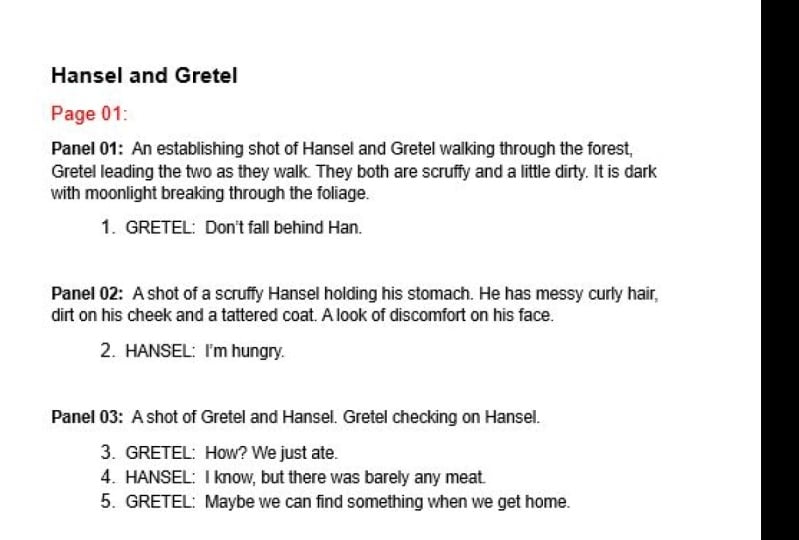
to doing scripts. Well, you don't have
to do the format, but usually how they have it is where there is the
title of the comic. For our old, or I don't know, our Red Riding Hood comic going to be
called Red Riding Hood, and you would say by Res
Nunnelly, which is my name. And then you would say page one. And in each page
of the document, the word document is
a page of the comic. Page one here is
just just page one. I don't put 0.1 and page two. On page one, I
just put page one. I put page one and then I put one and then I
describe the panel. And then if I have dialogue, I number the dialogue and I have the name of the characters. Caps In all caps, I have them indented
on the script. I do each panel this way. I have a description,
then I have the dialogue, and it differs. If you have like sound effects, like some people will
actually put sound effect and then write the
side effect out. There's different
ways of doing it. But this is what I've learned of how to do common
books, strip writing. But I do have one common
books strip where the artist wanted to do
all the thumbnailing, she wanted to do
most of the work. So I just had a general
idea of what happened on each page so that she could
take over from there. So just make sure to
talk to the artist and make sure that you have an agreement of
how you want to do this. Because you don't want to take all the creative ability away from the artist if they
want creative power. There are four things you'd
like to ask yourself for every single page of the comic. That's right, I said
every single page, not the book in general, is you need to ask yourself, what, when, where, and how. What is happening? When is
this play taking place? Where is it taking place? And how are they going to
complete the task at hand? Let's take a look at our
script page number one. Panel number one. We have a medium shot
of Red's mother. She has blond hair with a low point of til she is speaking to Red
with a big smile. It is something outside
with some clouds. Now I chose a medium shot because later on there's going to be an
establishing shot. And it's always good
to have a variety of different angles and
shots in your script. Some close up,
some medium shots, and some far away shots. I said a medium shot
of the mother talking. I said medium shot versus close shot because
far away shots, medium shots and close up shots each have
their own meaning. Close up shots typically mean close up shots
typically emphasize something very important
or big is happening. It's also to get the reaction of the different
characters in the scene. And since we don't really
want her reaction, and it's like a pivotal
portant moment right now, we don't need to
have a close up, especially since this is at
the beginning of the story. We want a shot that's able to establish things about
the surroundings. So we're going to
do a medium shot of Red Riding Hood's mother
with a sunny background. And I said blue sky, sunny background so you know where they are and what
time of day it is. I said partly cloudy because clouds have
meaning in stories. Usually when there's
a lot of clouds or just a storms, storms coming. But clear skies means like
things are good right now, we don't have a lot
to worry about. I said some clouds to show establish something might be coming up soon but
it's not immediate. You don't have to
make this so literal to make like a storm
over the forest. You don't need to
do that, but like some clouds is a good indicator that something
alright might go on. I made sure to put a description of Red
Riding Hood's mother. A very brief one though. Um, this is just so that because I don't like dictating everything
that the artist does, do keep certain things
vague for this. I kept how the blonde
woman's looks kind of vague. As you can see here,
I put a reference. You don't have to put
a reference here. In a lot of scripts, there's nothing here and you don't
put the reference here. I think they just send
references between, between the artist
and the writer. But I like them to be
in the script that way. They just have a
reference like on hand. There's a reference right here. They can click on the
reference and look at it. But for the most
part, it's that way. It's up to the artist, how the mother looks. I like doing it
that way because it gives the artist
artistic freedom. It's really difficult
to draw comics. It's very stressful, and it's
even worse when you feel like you don't
really have a lot of say in the project
that you're doing. So that's why I did
that. In this panel, it says Red, will you run along and give your grandmother
some cake and wine? She's not feeling well This is what sets up
the entire story, which is that she's
going to be going on an adventure to go and
find her grandmother. That's the set up
this panel and sets up the entire story
from the get go. That's going to be at the
beginning of the comic. Page one is just
different information that will be come up later on in the panel to
an establishing shot of a little girl of blond hair and pigtails and a
red riding hood. Walking out of her
mother's cottage. She has a yellow basket on
her arm with a red bow. Her mother is behind her
standing at the door. There's a path outside
of her mother's home. To the right, there is a hint of a forest, says your mother. As you can tell, you don't
have to write like this, but you can write
your scripts to be very formal and much
more like a novel. I choose not to do
that because clarity is more important than
it's sounding good. I made point blank sentences that are very clear to
read and very obvious. Because this matters more as a comic than it
is as a script. People aren't going to
be reading the script, so it doesn't make
sense not to do that with heavily secrets. I did write that
more as a novel, but you don't have to do
that if you don't want to. That's why I did what I did. There's an establishing shot
now of the little girl. I did a vague description of her and applied a reference that
the artist can look at that. And for all based off of that, I said an establishing shot. An establishing
shot is a shot that basically shows the
entirety of a scene. We're going to want to
establish Red and we want to establish Red standing in front of the mother
and going on a path. They want to establish
these things. So it's going to
show those items completely and not
leave anything out. So we're going to
have a complete shot of the two figures
and the house, and then we're going to have
a little bit of the force, that's what an
establishing shot means, it just establishes something that we're going to be using. Later on, I made sure to
put the yellow basket on her arm because that's where
the cake in the wine is. We set up the wine in
the cake in panel one. So it needs to be like
paid off in panel two with the basket so that
you know that she's carrying this basket with her throughout the
entire journey. She's not leaving it behind because you don't want
the audience wondering, well, where is the food? Where does she keep the food? You have the basket to
help you out with that. She says, sure, Mother, to establish she's
talking to her mother, establishes a
relationship from Red to her mom so that you can
establish that as well. We know who we know the mother. Red is the little girl. So that answers who? We know that they're exiting the house to
go out to the forest. When we know this happens
at daylight and how they are they going, they're
that's established. And panel two says she walks
outside and there's a path. The path is signaling
there's going to be a journey taking place. Panel three is
establishing shot of red walking down the
path towards the forest. In the distance, she's
shrined by green hills. The forest looks dark and scary. As you may notice, there's two establishing shots back to back. There's not a lot
of establishing shots at the
beginning of a story. Because you need
to set things up for later on and you need to establish things
for later on. Because once you establish, let's say, a big crowd scene, you can show the crowd
scene once and then you don't have to show it as much throughout the
rest of the comic. So that's why there's
another establishing shot of Red walking down the
path towards the forest. I put green hills to show that, like green hills around the
house, the cottage house. So that she lives
in a peaceful area where she doesn't deal
with a lot of the danger. That's usually what
green hills means. Like there's not a lot,
it's very clear to look at. It's easy to look over hills. So it's like there's not a
lot of danger going on in the forest Is dark
and scary because typically forests mean danger. And stories typically,
sometimes they're not. But there's the unknown
things in the forest. That's always how it's
been, fairy tales. I'm going to talk about
the rest of the script in part two because this
is kind of long.
8. Lesson07- Writing Your Script part 2: Okay, we're on to the next lesson or the
next part of this lesson. We're on page two, panel one. An establishing shot of
red walking in the forest. The forest is shaded
with dark cues. Plants and flowers grow
from the ground around her with the shadows of the, within the shadows
of the forest, you see the eyes of the
wolf shining menacingly. Again, it's an
establishing shot. So it's going to be
a really good shot of her in the fort. She's walking and she's
walking in the forest. You don't want to
close up shot of her in the forest because you don't get a good look of where she is. Again, this is near the
beginning of the comic, which is going to be a thing. When it comes to the
five page comics, you're going to get a lot of establishing shots
within your five page comic because it's
only five pages. Yeah, it's going to be
an establishing shot. The force is going to be
shaded with dark cues. Just to show that
it's dangerous, I put flowers growing
on the ground. As an homage to a version
of the story where she goes around picking flowers and that's how she gets like
straight off her path. Then I have the eyes shining menacingly in the shadows like a lone tune you Luna tunes. You can see the eyes of the moss or whatever
in the shadows. You can see eyes in the dark was just homage to that panel two, a close shot of red and the
wool side of the background. This is just to emphasize the eyes just in case you didn't see the eyes in the first panel. And it's just to amplify it. Also we want to zoom
up of red face. I like having zoom
characters faces so you can register face and keep
the face in mind. Otherwise it's hard to relate or identify with the character. Panel three, an explosive
shot of a massive jumping, jumping out at the red, snarling with teeth and
nails red, see surprise. She has her head and her
hand in the yellow basket, an explosive shot because I wanted it to be maybe
exceeding the panel borders. I wanted it to be really big. I wanted it to just
be like a big moment, a big action packed
moment of when the massive wolf
jumps out at red. And I wanted to make sure, se, snarling teeth and nails so that the artist wants to draw
that sort of thing. I wrote red, see surprise. So that you get reds reaction. It's important to
get reds reaction so that the artist knows
what to draw for that. And then I have her hand
in the yellow basket as it set up for her
pulling out the gun. It's in the panel before and then it's going to
be the panel after. Red holds out a
magnum at the wolf. The gun looks big
and frame she a red. That's just but of
the joke is that she puts her hand in the
basket, she takes out a gun. So she had a gun on
her the whole time. The gun looks really big, just to be comical and
really emphasize the gun. Red keeps holding out to the gun as the wolf
whimpers off frame, his head hangs low. Make sure to put that she's
holding the gun in that frame just to show what he's
whimpering away from. To show the relationship between the show the relationship between the gun and the wolf. He's whimpering
away. You know he's whimpering away from his hand, head hangs low just to show
that he's been defeated. Now we're onto page three. Page the three Sabine
shot of grandma's house. The force surrounds them. The front door is open. Again, this will
have reference of the grandma's house
attached to this document, which you can get
when you download the document so they don't
have to draw grandma's house. It'll be the establishing shot. So show entirety
of grandma's house and will be a zoom up
of grandma's house because and you won't
be able to see her in relationship to Red. You need to see the relationship
between Red and Grandma. And then the forest surrounding them just shows that they're
still in the forest. That she came from
the forest and she's going to the house
within the forest. I said that the door
is open to set up, that the wolf has snuck in. This is also another
homage to the book, because in some versions, the door is open when she
walks up to the house. Red stands in the doorway
of grandma's house. Her shadow extends
across the panel, over the wolf that
lays in grandma's bed. He is wearing grandma's clothes. The inside of grandma's
house is dark, being very shadowy
inside grandma's house just to show because
in the story is too dark to see Grandma and
the wolf very well. This is how they're
able to disguise it. They are they are the grandmother able to fool Red into thinking that
it's because it's dark. So I made sure to make it dark. I had her shadow extend over the wolf to show the relationship
between red and the wolf, to show that distance and that they are
related to the story, of being important to the story. It just gives an ominous
feel to the story. If you just see a long shadow, then there's an
establishing shot of the wolf's face in
the Gard's clothing. I said establishing shot, but you could also say
close up shot, either one. I just said an establishing shot of the wolf's face to show that you want to have the
entirety of the wolf's face. But you could say close up shot and that
would work as well. We want to close up
shot site where you could register that
it's the wolf in the wolf and grandma's clothing and that it
is indeed the wolf. Just to make sure
that if you didn't see that it was the wolf
in the previous panel, you will now page four. This grid, I have a
picture of it here. A grid like page we're on, the left is going to be
all the reactions of red, and on the right is
all the reactions of the wolf in each panel. On the left, Red
asks a question, and the wolf answers in
the panel to the right, what big ears you have. Then the wolf says, all the better to hear
you with the red goes, what big eyes you have. It goes all the better
to see you with. The last one is what
big mouth you have. And it says, the best
to eat you with. I put in my description that the wolf attacks
red in the last panel. I said it exceeds
outside the panel, just to show that it's ruined
the rhythm of the paneling. He's doing something
very different now, and it's like breaking the
fourth wall a little bit. He breaks the panel
to attack red. Then we have page five. A big panel of cart
wolf through the chest. I said the chest to stomach. I said the stomach
originally but if they shoot the stomach,
they grandma dies. We can't do that shot
in a cartoon way. That way we can sound
like a young adult. So cartoonishly
basically means like cartoonish bullet holes,
not a lot of blood. Just not like graphic shots. Just, you know, kind of silly. There are no guts and
there's some blood. So we're just specifying that so that the R just
doesn't go in and just straw like tons of guts
and stuff because then we can't sell it as young adult. And then in the very last panel, grandma and the little
girl are hugging. Behind them lays the dead
wolf with a pair of scissors. In his stomach, a choice of blood leaves from the
wolf to the grandmother. Now this is just
established that one they were able to cut grandma
out with the scissors, that's why his the scissors
are embedded in the stomach. The blood trail is to show that grandma was once in the belly. You can also have her
covered in blood, but I'm not sure if that would
be a young adult or not. To be completely honest. We'd have to talk with the publisher to
see if we could get grandma covered in
blood to kind of show like she was inside
the stomach of this wolf. It really depends. I
don't really know, but then that's the
big resolution. So these are the five pages of the red riding hood
story broken down. And I explained why each one is thumbnailed the way that it's thumbnailed when you do
yours. Just think about that. Think about do I want
to close up shot? Do want a far away shot? Do want to medium shot? What do I want to establish? What do I not want to establish? What are the meaning
of things in my story that I can put in there to
set up something later on. You could do your own story, you could do what I did, Just do a fairy tale that
makes things easier. You're able to write up how to do the script pretty easily based off what's
already been written. Just keep in mind like
the origins and all that. But yeah, that's about
it for the five.
9. Lesson08 -Your Assignment: All right, so I'm
going to go for your assignment one more time. Again, it is a five page comic with the beginning,
middle, and end. Please do it as I
guess you could do as a Word document or PDF. Format it the same way that I formatted the red writing hood. Have the page panel
and then quotes. You can make them into PDFs by, you can either do
that through Google, I think Google Docs.
You can do that. You can just put
all the words on there and then you can save as PDF or you could do that
through Word documents. I think Word allows
you to save as PDF. You can also do Canva if
you want to do Canva. It's a free website
where you can put together word documents
and pretty little things. You could do those things. Bonus points, if you can get an artist to draw your comic
is just a bonus for you. Obviously, I can't give you anything extra for doing this, but just a bonus for yourself. That way you can go send it
to anthologies, bonus points. If you figure out what
publisher you want to send it to or what anthology
do you want to send it to, then what audience
your comic is for. When you're done
submitted to the website, it's on this page right here. You just click on this
button and you just upload the file that's about it.
10. Lesson09- Hiring an artist: Hooray. You have everything
done for your comic. You thumbnailed it, hopefully
by this point you wrote it. You have a plan of where
you wanted to submit it. You have it all done. So now here comes the scary and important
part of writing comics. Finding an artist. There's several ways
of finding an artist. You can go to conventions right away and just
connect and say, hey, how are you to
the artists there? If you find someone you'd like, ask them what their schedule is and see if maybe
they'll work with. You have DV and Art. You have Twitter,
you have Tumbler. You can explore those for
artists that you like. There's also a website
called Comics Cab. I'll make a link on it, on the Skillshare website. But you can go on there
and you can just say, hey, I'm willing to pay for a artist who is open for being able to be worked with and
asked for a portfolio. Now that gets to the part
where people don't like, which is that you need
to pay your artists. I know seems really scary. It seems like not
everybody pays artists. It seems like some writers are able to get
artists for free. The problem is, is that you are not going
to be able to get an artist unless you
have a reputation. If you don't have a reputation
writing other comics, I know that the writer
of sex criminals, he tried to get someone
to collaborate with him. And he was able to say that
he worked for Candy X Men. What did he work on? He worked
on a whole bunch of stuff. I'm blanking on it right now, but he worked for
a whole bunch of stuff that makes people go, oh, okay, I can have
faith in this person. I know that our comment
may get somewhere. But if you don't
have a reputation and you don't have a
relationship with the artist, then the chances are unlikely you will want to
pay your artist. Now, you should be paying
your artist $20 an hour. It takes about a day to
complete a comment page, so that's 20 times. Let's say you work 10 hours, you should be paying
them around 200 bucks. Nobody does that. Book artists
don't ask for that much. For some reason. I think they just think they
won't get any work. If they ask for that much,
they should be asking for that much because
that's how you live, that's the only way
you live off of comics is if they pay
the appropriate amount, but they go as low as $30
a page, which is nuts. Some people will
draw for $30 a page, Some will draw for $50 a page. I normally pay at least 100, which I think is
still too cheap. To be honest. I think
it should be like 160. But some combers will take that. But you need to be able
to pay artists to live. There was one guy who paid only 100 bucks for
an entire issue. If you do the math, that's
24 pages in a month. If you spend 10 hours a day on a comic and it takes
you a day to do the comic, that's $0.25 an hour. That's maybe even less. I think it's like $0.02 I
don't know, I can't do math, but it's very little I try and if you go on
the comic book clab, make sure to put
your information about the comic say
like the comic summary, what kind of art
you're looking for, and give your
contact information. There is scammers and people
might think you're scammer, so just make sure to
have your information readily available so people
don't think you're a scammer. Also, beware of messages
where they don't send a portfolio right away in
your post asking for artists, you may want to say, please provide your portfolio. I won't look at your work unless you provide
me a portfolio. Because I find that a
lot of people were just wanting you to waste your
time by chatting it up. That's a good way of figuring out if you're being
scammed or not. See if they have a website. If they have a website, that
means they're not a scammer. Just like look into
the person that you're wanting to hire except
for just going for it. Make sure, do reverse
search just to make sure that
they're not stealing art from another website. You just really, because there are people
who will do that. And then once you have an
artist draw your stuff, make sure to ask them to do a quick rough sketch of the page before
they do the final. Don't have them do
the final immediately because you may find things
that you don't like about it. And if you're paying,
you're not collaborating. If you're paying them,
you could tell them, hey, I would like these
adjustments and they'll make adjustments for you
before they do the final. Once they have the final, then you'll have
your coma book page. If you have a five, decide
to do your assignment. You decided to hire an artist
to draw your assignment, then you're welcome to
submit that, the Anthology. You're welcome to print
it out and go to cons. And hand it out at cons. That's always an option. That's what you could
do with the short. If you choose to
do a longer comic, then you can make a pitch, which I might do in another
class on just a comic. Make sure, just see who publishers are open and look at their
submission guidelines. And then follow other
submission guidelines. This is if you don't
get an agent again, you want to get
an agent to go to Tracker.com and filter out, filter out agents
for graphic novels. And you should be able to do it. From this point on, there's
not much more to do. I'm glad that you managed
to finish the assignment. I hope you post it on Skillshare so I can take
a look and critique it. I will be answering questions
on my Tiktok as well. Just make sure you
check everything out. And make sure to download all the things you
need to download. And I'll see you
later. Thank you so much for taking this class.
 Rhys Nunnelly, Writer/Artist