Transcripts
1. Intro to How to build a Personal Brand that creates opportunities: Did you know there's a powerful way to attract your
opportunities by better communicating the value of
hiring or working with him. Do you feel as a professional
that you have a lot of untapped potential
that you're craving to share with the world. Hi, I'm Tatiana, Florez, personal branding
coach and speaker. I help independent
professionals, like coaches, consultants, entrepreneurs
to clarify their offer, refine their business model, and establish a
powerful personal brand that attracts
opportunities and clients organically welcome to how to build a personal brand that
attracts opportunities. In this course, I
will be sharing with you the knowledge, tips, and tools to be
able to establish an impactful personal
brand that allows you to get more and better
qualified clients, attract other opportunities
like speaking invitations and get a more
sustainable business. By having a powerful brand, we will start by getting a good understanding of a
personal branding is what it is and why it's so important for any professional who wants
better results, torque on it. We will then dig into who you are and what your value
is so that we can explore the tools and strategies to develop
a personal brand that lets you get positive
attention and start sharing your biggest
gifts with the world. Some of the topics we will
cover during the course will include how to use your strengths to always
deliver the best, what kind of content to
share on social media, and how to use your
unique value proposition. At the end of the course, you will have a greater
understanding on your own personal
branding tools and your unique value
proposition so that you can start sharing it with your
audience and make an impact. Each lesson, we'll begin with a creative exercise to get
that creative muscle growth. You will also have different
tests to help you build personalized guide on
how to make your brand visible and gain a leadership spot on what you offer. I'm looking forward
to seeing you grow a personal brand
that is aligned with your dreams, values,
and strengths, and that helps many
others feel free to drop any questions on
the discussion board. Please open your heart to finally share it the
best that you have to offer and be ready to see the results of
working with purpose.
2. Class Project Video: Your class project,
you will be working on different exercises
that will help you start building a
powerful personal brand. The questions and exercises included in the
workbook have been designed to help you
navigate and develop the basic steps to
build a personal brand. At the end of the course, you will upload to the project
gallery the final project, including your unique
value proposition, along with the
strategies you plan to implement to make your
personal brand visible. The exercises have
all been included in a workbook that you can
find in the class materials. So please make sure you download the PDF inhabited hand
while you take the course. Feel free to print it out
or fill it digitally. As some of the exercises
are very personal, you can decide on what
to share and whatnot. But let's make this
a safe space so that we can share feedback and
grow our brands together. I look forward to seeing your
personal brand take form.
3. Lesson 1 - What is Personal Branding: Hi, Welcome to
your first lesson. We will start by talking about
what personal branding is. So let's begin. I would like to
start by letting you know that you already
have a personal brand. You might ask yourself, what is this personal brand? If I haven't done anything intentionally to make it happen? Well, that personal brand is that relationship that
you have with others. So that relationship means that people already know what
to expect from you. How you communicate, how
you express your emotions, how you say things, how you work, what do you well, what do you don't do well? And that's your personal brand. In, in other times, it could be summarized
as your reputation, what people know about you. However, and the last
couple of years, we've seen the need to actually make that
more intentional. And that is what
personal branding is. Taking. All that I've just said, what people think about you, what do you do? Well, what you can
contribute to others, make it more intentional
and make it actionable. So personal branding is being more strategic about the way
you communicate to others. What do you do for others, and how to attract opportunities in a way that
is aligned with who you are, but also in what other
people need, right? It's not just what
you want to do. It's more about
what others need. And that's the beauty
about personal branding. And it's that although it
has the personal part in it, It's not about yourself. It's about the value that
you bring to others. How you contribute
to others problems, how you solve them, how you can change
other people's lives, how you can impact their lives, or whatever it is in
regards to what you do. However, if we just
leave that to that and you just do the work
that other people need. That's great. However, you're not
actually expanding your circle of opportunities because you're not
making invisible. Visibility is one of the main elements about
personal branding. And that is the different
from personal brand. Although yes, you have
certain visibility, of course, otherwise we
wouldn't have a personal brand. However, when we do it more
intentionally, strategically, we get more visibility and that opens our space
of opportunities. I always like to tell about this example and I'm going to
tell you my personal story. I'm an industrial designer. And five-years ago before I started working on
my personal brand, I was a freelance designer. I was also a consultant
in hospitality. I was managing social media. I was a consultant
for a law firm. I was doing many,
many things. Right. So to some people, I would meet and I
would present myself as I'm a freelance
designer to others. I would be like, I'm a
hospitality consultant to others. I'm a social media
manager to others. I'm a consultant for a law firm. So people around me, my inner circle didn't actually
understand what I did. And that happens very often. That can happen with
simple, simple thing. If you're a lawyer, e.g. and you tell your
people around you. Okay. I'm a lawyer. Well, that's a very, very small part of it. Right? Because when you say I'm a lawyer and you
just stay with that, you're not actually
letting people know what you could
do to help them. How you could help
them write what the value is for them too. Getting in touch with you, or to reference you
to other people. And that's why visibility
is so important. Because when you get
a clearer message, a more straight message to the audience that
you want to attract. You will be able to grow your inner circle and opportunities will
come organically. And that's the name
of this course. How to attract opportunities organically with
your personal brand. Visibility is the way to go and the result of this is
having a reputation. I've told you already, personal
brand is a reputation. However, we want to
manage that reputation. And I'm not saying
to you that you need to be authentic or then you need to be manipulative to get what you want in
terms of your reputation? No, you need to be
authentic, personal brand. It's you, not about
you, it but it's you. So your values, who you are, what is natural for you? It's what you need to bring
to that mix so that you can start communicating
and attracting the opportunities that are
aligned with who you are. I love this quote, because it really covers a lot of what personal
branding is, right? Is the promise to your clients. And the promise to your client's means that
you're already communicating some something
to someone in a specific, right, then a promise of
quality so that you really, really deliver the value, consistency that
you are authentic. If you weren't authentic, you wouldn't be able to give other people
consistency, competency. So you're able to do it, you're good at it, and people will know
that you're good at it. And reliability that
people can count on me, that you create this
trust with people. So now let's see what
personal brand isn't. Personal branding, sorry. You don't need to
be an influencer. And it's not about
becoming an influencer. I feel that the
word influencer has been has been damaged a
little in the last years. However, it's
something that yes, you will influence people. But you don't have to become an influencer to have a personal branding
and that's different. You don't need to
be a public figure. So very similar to
being an influencer, but you don't need
to be Oprah to have a personal brand to or do
personal branding, right? You can be a Dr.
in a small town. You can be a psychologist that one's more clients or
wants to help like very, very focused group of people. But you haven't been
able to attract them. Whatever it is that you do, you're a designer that wants
to work more in a niche. Like that's great. You need a personal
branding. We all do. Having a logo. Professional photos is
in personal branding. Yes, having a logo and especially professional
photos, it's very, very important in
personal branding and being able to communicate
what do you want, however, is not, is
not just about that. Having a professional
and personal profile is in about that. We can be professionally easily, but being able to deliver what
I just said in that quote. Yes, It's not just
about that being recognized about something
isn't a personal brand. Personal branding neither. Okay, let me say
something about this. Of course, this is one
of the objectives. We want to be recognized as
a leader, as the expert, or being able to be recognized as the person
that can help them. However, not just dis
is personal brand. Having a personal website isn't
personal branding either? Yes, it's important. All of this is
important of course, but it isn't about that. Why it's so important to
develop personal branding. First, because you will
really get to know yourself. And that means you'll discover, use, and potential
lies your strengths. That means that you
will be able to use the tools that
you already have. I will be speaking about this in more detail in
the next lesson. Then you will be able to
use the strands to build clear and attractive
business model that responds to certain
needs of your clients. And that brings
more opportunities. When we have that clear
and we're super focused, we will attract
more opportunities. So that's great, and that's what personal
branding helps you to. You will be able to communicate
and offer of value. I'm not talking about
discounts or sales or or just the pricing
of your offer. I'm saying, when you really bring to the
table to your client, what do you consult for
them and all of that. But that also is aligned
with your values, with your dreams, with
what you want to achieve, what you are able to work on, what you enjoy doing. So that's very, very powerful. And finally, you will be able
to stand out from others. I love the personal
brand that gives you the edge in competitiveness. Why? Because it makes you compete
in what your value is, not in comparison to other. It's more about how
you help others. And that's amazing
because that puts you in a spot that not many
people are doing. I have this client and
she's a personal trainer. And when we were working
with her before, I started this new model of personal branding
with my clients, coaching with my clients. I would have these part
that I would offer them to do like a benchmarking
analysis of the competition. Now I don't do it. Why? Because I've found that really like you
don't need to do it. Well, you need to know, but you don't really need
to focus on that before you used to focus on what is
my competition doing? What are you saying? How are they communicating? And that's yeah, you need
to know that, however, not focus and put your
main attention into it. Why? Because you have a lot
to give my client. She's a personal trainer and she was very, very booked out. And she told me, like, I need to make more money. I need to attract more clients. However, I cannot book
any more clients or any new clients because my my schedule is
full and physically, I cannot work more. So what do we focus on was what kind of clients
you want to help? And she was like because she has had clients we focus on okay. What clients you
enjoy working with? What clients? Like have the best results, what clients have you
come to you more often. And what are their results? They say that you're
getting for them. And they told her
three main things. First, that they enjoyed
the workouts with her, that they really felt happy, that they were able to make exercise part
of their routine. And that's something that they were struggling with before. And third, that
they were feeling more secure in their own body. We've focused the
communication of her whole personal branding
on those three things. Instead of loose,
waiting 21 days, lose 10 kg or pounds. Loose, like whatever it is that we see a lot of in
terms of communication, in terms of personal remedy. So when we communicate
in those terms, that are what people can
really get from you. And that is different from what they're getting
from others. That's great. It makes
you competitive, makes you a leader in
what you're offering. That's the beauty of building
your personal branding. Why? Because you will be able to
attract more opportunities that are aligned
with who you are, what you offer, and that
can solve their problems. So, thank you. This is
the end of this lesson. We will see you in the
second lesson soon. Thank you for staying
for lesson number one. Now I invite you to look
into your workbook and work the two
questions that I have added for lesson number one. Once you've done it, if you want to, you
want to share with us, please upload your answers to the project section and we'll
be giving you feedback. Thank you. Bye.
4. Lesson 2 - Steps to building Personal Branding: Welcome to lesson number two. In this lesson, we will
be speaking about what the steps are to build a
powerful personal random, Let's see, attract
opportunities. Let's begin. For me. Building a personal brand is like the construction
of a building. So let's begin first. You start by excavating, preparing the lens, really, working through your piece
of land to be able to put powerful and
strong foundations for personal branding. These means looking
into who you are, what you have to offer. So what are your
strengths, your values, your abilities, your knowledge, your studies in anything
that you can bring to the table to be able to offer something to someone
that really needs it. Also your story. We all have stories that are
absolutely valuable. And bringing this
to your personal brand mix, It's really, really helpful to be
able to cover and be more close to the people
that you want to attract. The first floor of our building is the
lobby, is the entrance. What people see first,
your first impression. How do you attract others? So these includes having
professional branding photos, our website, and
anything that you put out there so that your
brand is visible. You also open the door and close the door to
different audiences. So who enters your door? This is exactly what we want
to work in our building, and this is the entrance and main main floor
of your building. The second floor is
your back-office. Where do you work the problem? What is the pain that your audience's experience and how what they want to be solved. The promise. So how
do you solve it? The people, so who is it for? And the price? Because we definitely want to monetize your personal brand. The third floor is your
visibility strategy. This is your online presence, how you build your community and the content
you put out there. This can be in Podcast, your website, social media, of course, any events
that you go to, networking events and anything that relates to building
a community and really getting in touch with your audience to be able to
be in top of mind of them. The last floor or
fourth floor is the penthouse where everyone
wants to leave, right? This is your leadership spot. It is about being visible, attracting opportunities
and helping many others. Your pen house needs to be
consistent at the core. Of course, you can
not show one thing to one person and another
thing to another. It's focus. It's genuine and authentic, tells a story, leaves the talk
and of course is visible. Thank you for staying
for your second lesson. Now, go to your workbook
to work on three questions that will help you see and
visualize your penthouse. Thank you.
5. Lesson 3 - Who am I: Hi, welcome to lesson three. In this lesson, we will
be talking about who you are and the first step of
building your personal brand, which is escalating learning, but you have to offer, we all have this toolbox
that was given by God and where he plays many, many tools, that
can be our values. Our strands are
natural abilities. However, we have also placed even more tools during
our lives, e.g. what we studied,
the jobs we've had, and everything in that
toolbox is there for. However many times
we let that tool be, they're not use it. And personal branding allows you to really get into that toolbox and put into use every single tool that we
have there for a purpose. First, with my clients, we look into what
their strengths are. I use different tools to be able to realize what are the
tools for my clients. And one of them is the
Gallup StrengthsFinder, where we have four main domains, which are executing, influencing their
relationship building, and the strategic
thinking domains. We take a test of five
strands and we focus on dose by strands to be able to really dig into what are
the tools that you have, always have and that you
actually are transmitting to other people so that
you can build on those strengths even more so
that you can maximize them. Second, we view into what the
values of the brand hour. This is my client
gave me Andrea Ghez. She's a personal trainer and her main values for
her personal brand, our consciousness,
positivism and generosity. In her services. She delivers these values in
everything that she does. She doesn't have
to mention them on her website or any
communication. But she leaves the talk. These values really,
really guide her decisions and whatever
she puts out there. And that we want to achieve. We want you to be able
to live by your values and really let your values
be able to help you decide. That's one of the main things about personal
branding and ease. It is that it allows you to make really easy decisions because you already have set up
all the foundations. I also like to talk about lives. Whispers, stories are so powerful and that we all
have something to tell. And then everything that happens in our lives has a purpose. And that's what I
call live whispers. Live whispers that we hear. But only when we put attention, we can really listen. What life is telling us to do, what our purpose is and what
should we be focusing on. So when we work in
personal brand, I ask my clients to really write their story in terms of what has gotten them to the place
they are and what has given them in terms of their life experiences
to come to this place. I talked to you about a little
bit of my personal story and how I move from
different places. And this is part of my story. One of my values and actually my strengths
is adaptability. And I think my story, having to move so many times in my life has given
me these strength. And now I put it to
use for the good of others to be able to bring something to the other's lives. Thank you for staying
for lesson number three. Go to your workbook and see what the exercise are for
lesson number three. See you soon.
6. Lesson 4 - Aligning your brand: Hi, welcome to
lesson number four. We will be talking about
how to align your brand. You need to align your
brand because it will need to work not only for
others but also for you. So this is where you
align who you are, what you have to offer, what your strengths are, what your values are with the
objectives that you have. And we'll see those in a minute. And your audience, what
their needs are, their pain, what they need to solve. Write your objectives. I have divided this into
personal, financial, professional impact and type
of clients or highlights. Now, let's look into some examples that I
have worked on for you so that you can really know where I'm going with
each of these objectives. Knowing this will help you to really align what
you do and what your offer and how you offer
it so that you don't push yourself
outside your limits and outside your boundaries. But also that it's really focus
into you having the best, best Live and that you're
able to do and work your purpose with the best
energy and motivation, right? So you need to work on you
and be able to accomplish these objectives in order
to give the best to others. Now, let's see the examples. Okay? Now let's see the examples
for your objectives. Let's start with
the personal ones. You'd could be that
you want one day off during the week to
work on a side project. Plus weekends, Of
course. Then you could want to go on holiday, a two-week holiday,
two times per year. It could also be that you want
to live in a better house. What is it that you
want to achieve? Then financially? It could be that you want
to make 20 K per month, then invest, buy that house, save money. I'm being a little bit
vague with those examples. However, you can be as
specific as you want. You could also add
as many as you want, make it achievable and
something that you really, really want and that he wants to incorporate into
your business model so that you can really get
to those professional. It could be that you need to get a certification in coaching. It could be that
you want to write a book, launch podcast. What is it that will help you gain the experience, knowledge, or that it will
help you evidence your expertise in your
area and grow and learn. Then in terms of impact, this is what you
want to achieve, the results you want to have
on other people's lives. So it could be that
you want five clients per month achieving results. Or it could be if you were that psychologists we spoke
about in a previous lesson, it could be that
you want one client per month to go off myths. That would be a
wonderful result. Then you go two types of clients
see into your expertise, into your what do you want your energy to flow and to get the clients
to get results? So who are those clients? How do they express? What do they do that makes
you happy to work with them. So it could be that
they're positive. It could be that
they're unittest. What is it that makes
them ideal clients? In terms of the relationship? We will work a little bit
more in a following lesson. So you can put as
much as you want, but you might come
later and look at this. Now go to your workbook and start writing
your objectives. See you in the next lesson. Thank you.
7. Lesson 5 - The offer: Hi, welcome to lesson
five, your offer. This is where we define what are you putting out there
to the world first. In order to do so, you need to clarify
your offer and you need to make yourself
three questions. The first one is, what
are your services? So what are you able
to provide others? It might be that you already are providing certain
services to people. So you need to review
your current situation. How do you do this? You can see where
you're at and where you want to get and
identify the gap, which is what actions do you need to take to get
from here to here? Second, you need to know how you can build a
sustainable business. It helps you obtain those objectives we
worked on last lesson. But also that it's
really, really global, sustainable, and then you can
make it Your Life project. And thirdly, what
are you solving? It needs to be based on a
problem your audience has. We will be talking more about
that in the next lesson. However, when you put out
there is the promise. So what are you solving? In summary, you need the four Ps in order
to clarify your offer. First, the problem. So what is the pain
of your audience? What is the necessity,
then the promise? So how you will solve that
necessity and how you can get them to hire
you than the people, of course, who are
the people that are having those pains and that
you can actually help. And finally, you need
to monetize everything So the pricing of
whatever your offer. So this will help you
clarify your offer, then you need to align it
to your business model. It's not only aligning
it to your objectives, personal objectives,
financial objectives, the ones that we talked
about last lesson, but also, how can you guarantee
that you will be able to obtain the same results with the same quality
to your clients. So you need to put
that into account. And what do you need to include
in your business model? This is working on the recipe. The recipe is exactly
like it sounds. It's laying down
their ingredients. You need for your business to be successful in order to respond
to your client's needs, but also to grow and to help you leave the life of
purpose that you want, and also the recipe. How do you get to them? What do you need to do? How do you do that? Your clients get the results. What do you need to include in your program or your service? Then your client takes those steps and gets
the results they want. Thank you for staying
for this lesson. See you in the next one. Go to your workbook and
work on those exercises. Then you can start
building these recipe. Bye, thank you.
8. Lesson 6 - Knowing your audience: Hi, welcome to lesson six. Knowing your audience, we
already talked about the offer. The offer that is
based on who you are, what your profession is, what you can do for others. However, it needs to be very aligned with who your audiences. Let's see. You need to ask yourself who
they are, what moves them? What are their characteristics? What drains them, would
give the Mariner G, then really know and
explore their problem. They're paying their necessity, the one that we are solving. Really understand that and thoroughly know where they
are, where you can find them. So e.g. the answer to
this question will give you what platforms on
social media to use. You don't have to
decide that yourself or you don't have to be
in every single one, just be in the ones
that they are, because that's where you'll
find the opportunities. Second, build a
customer persona. Building a customer
persona can be very easy when you base it on
people than you already know. So it's a mix of people. What I do is I think of previous
clients that have had or friends that have
communicated with me the problems that
I can solve them. Ask yourself about
their frustrations, their fears, their
wants, their dreams. Have an interview with them and see how they communicate those. What language do they use
to communicate those? And build one persona
that actually takes into account the main problems of these people, all
of your audience. But also identify the
consequences of them not working with you and the potential of them
working with you. The consequences will
give you the wording and the right answer on how
to express your solution, the solution you have for them, and really validate
what you're offering. And the potential will
give them the edge, the benefits of them hiring
you are looking to work with. You also know that not everyone that can
pay you is your client. Of course, when we
are independent, we are looking to get more work, however, doesn't work very well in terms for your
audience nor for you. Why? Because it might drain you to work with clients that
are in align with your values when
you're offering or won't get the results
and to your clients, it will also make an
uncomfortable relationship. If they don't get the results, you are the one that has the
responsibility for them. Go to your workbook
and do a list of the characteristics of who
your client is and who isn't. You already started this when you worked
on the objective. So visit that. But on the left side, put who your client is. So e.g. someone that has invested on personal
development or someone that has a time and it will to work on whatever test you put them to do in order
to get the results. On the other hand, you can put
someone doesn't care about their personal development or someone that doesn't want
to put the time or effort, more resources to
get the results. Be clear on this. You can add as many as you want. The beauty about this exercise
is that it's amazing how, when you haven't clear, even though you are not
communicating outside, you start attracting
the right people. So this is what we want. Thank you for staying
for this lesson. Go to your workbook and work on the exercises for less than six. And I'll see you
in the next one. Thank you.
9. Lesson 7 - Crafting your Unique Value Proposition: Hi, Welcome to lesson seven, crafting your unique
value proposition. In this lesson, we will see how we put together
everything you have worked on to in order to build a message that attracts the opportunities
that you want. Yes. This is a simple message that you will know by heart
and then you will express in every single platform or way of communication so that you can start
really positioning yourself as the expert
on certain area. These will give you really, really the results that you're looking for. I've
seen it myself. As soon as I started
communicating this message, I started getting the
opportunities that anyone, what is your unique value
proposition, as I said, is the message that covers everything that
we've talked about. How it will tell your clients who you
are. What do you do? How do you do it? Who are they? What, Who is it for? And what are the benefits and the results of them
working with you. Let's see, this is a template
for you to build it. First you start with your name, then your expert title. Your expert title is what you
do in three or five words. So e.g. if you're
a psychologist, let's not put Joe psychologists. Let's be clear,
let's be specific. So e.g. you want to work with teenagers are going
through depression. So put that there.
Psychologist's expert in teenage depression then offers
so what are your services? Explain them. Nice and short way. Then if you have other services that complement
whatever you do, e.g. if you're that psychologists, you could put retreats,
therapy, one-on-one, are directed to
teenagers that are going through and now talk
about the problem, but be very, very direct
talking their rewards. So e.g. you've known that your
clients are teenagers that feel a lot of pressure from the people around
them to be perfect. So put up there if, if they express it that way there and talk
about the solution. So how do you help them? They will have the
tools to be able to confront the pressure of others. They will take care
of themselves. What is it that you're
going to do for them? And finally, what are the benefits of them
working with you? Yes, the results. So let's see some examples. I've talked about Gabby before. Gabby fitness and life coach offers personal
training services and group classes seeking to
provide tools that support people to make exercise
and other healthy habits. Third, lifestyle. Her trainings are aimed at Experts living in Guatemala who seek to improve their life and health quality through
a comprehensive, sustainable and fun program. With Gabby's guidance
and support, people managed to feel happier and more comfortable
with themselves, improve their health, and get the necessary
tools to continue learning on how to take care of their body, mind, and heart. This is the core
of Gabby's brand. The mind, the body,
and the heart. You can see here, there's
the solution. Who is it for? What she does and what are the benefits of
working with her? This is a short example. This is the promise
template and it's mine. The piano personal
branding coach helps independent professionals
and consultants to clarify their offer, refine their business model, and establish a powerful
personal brand that allows them to attract more
opportunities organically. Simple. This is what I use, e.g. for my videos on social media. The thing is that you speak
to the solution of a problem. Not only focus on
what your experiences or if you speak to
a solution that validates that you can
actually get the results. Thank you for staying
for this lesson. Go to your workbook and work on your value proposition and
see you in the next one. Thanks.
10. Lesson 8 - Visual tools of Personal Branding: Hi, Welcome to lesson eight. In this lesson, we
will be talking about the visual tools of
your personal branding. We already have a message, you know, what is it based on? You know, your offer, you
understanding your audience. So what do we put out
there to the world in order to communicate
this in a bar, I'd wait, and that really attracts the opportunities
that you are seeking. Let's see. One of the tools is your logo. It's not essential,
but it really helps you stand
out for your logo. I recommend that it has the right colors that
communicate your values, the values of their brand, what you do, and that is
aligned with your audience. But also choosing the right font is essential and really
communicating what you do and the experience of working
with your personal brand really will help you build a
logo that is well-received. For these, you can hire a
professional graphic designer, but you need to
communicate with him whatever you have worked
on the previous lessons. So then you know that you are transmitting him
what the brand is, the essence of your brand. Second, and this one
is not optional, are the personal
branding photos. The personal branding photos will really help
you communicate. What do you do, who you are, and what the experience
of working with you. E.g. there is a photo of mine. I work personal branding
coaching, right? However, I do have a side business and need
some Chai tea brand. And I designed the cup that
you see in this photo. And it's something that is very, very important for me
that I communicate in my bt using my lives and
in everything that I do. Because being able to
be an entrepreneur in that brand helps me to do my work in
personal branding better. So that's why I've
added it there. Something that you see
me every morning having my tie at 11:00 A.M. so something that
is very, very mean. So it's important for
you to communicate that you've seen me
wearing leather jacket. That's very mean. So when you start
putting yourself there and your real
and you're authentic, and you show that in a
professional manner. Of course, people can see
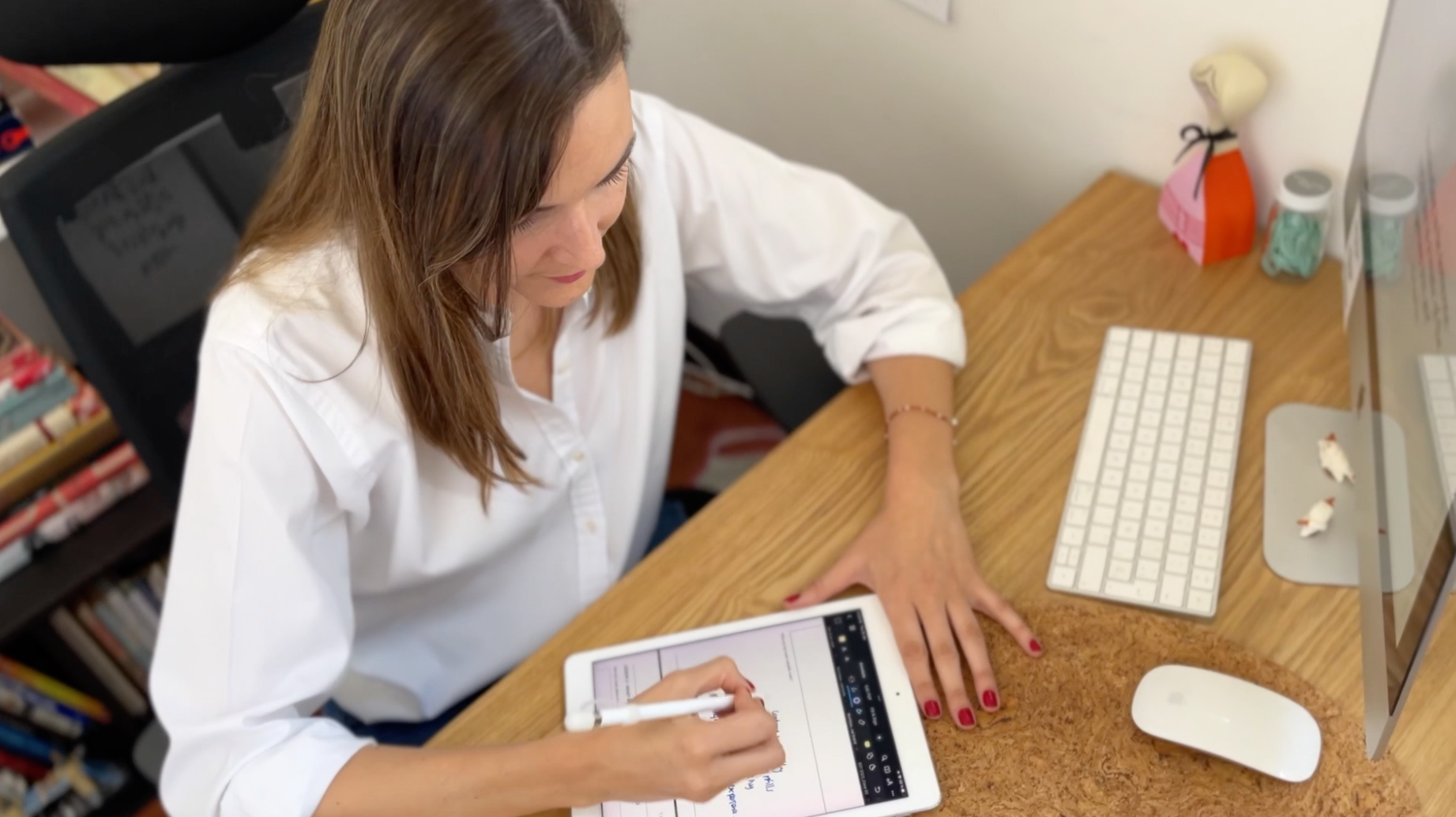
what to expect from you. Also, e.g. my client here, she's taking a t and studying. This is something that really, really communicates that she's growing every single time that she's learning more and more in order to offer the
best to their clients, have the right props. Choose them in terms of
the colors of your brand. So what really
identified your brand? Don't be too sterile. Don't be all the same photos. Tried to really
communicate what do you do and what the experience
of working with us. And finally, other applications
can be your website that really needs to communicate how it is to work with you. I'm sorry that the wording
using the Spanish. But for me to clarify, How do you need
to communicate in every single communication that you use is that you can
express your brand. So e.g. for this client, we use awarding that is
very close friendly. She's a motivational
speaker for a woman. So it talks to them, it talks to their problems. So anything in terms of
content and whatever you put out there needs
to be aligned and consistent with your
personal branding. So what other
applications are there? So it can be a website, photos, your like a flyer
with your services, your personal branding card,
your email, signature, whatever it is that you put
your brand in a graphic way. Thank you for staying
for this week's lesson. You don't have any exercises on the workbook for this one, but start thinking
about your photos.
11. Lesson 9 - Online presence of Personal Branding: Hi, welcome to Lesson nine. We will be talking
about the only presence of your personal brand. We already know and have a
lot of material to work on. However, how do we
put that out there? It's definitely that you need to put it out there on
the digital world. So let's see how we do it. First, you need to choose
one you're going to use. What media is. You'll definitely need
to be on social media. However, I've told you before, you don't need to be in
every single platform. You need to be in the ones that your clients are, your audience. Where are you going
to track them? Where you're going
to engage with them? So that's where you choose. If you're gonna be on Instagram, TikTok, Facebook, what is it? Then? You need to choose, according
to your experience, your abilities, whatever it is that you feel
more comfortable on. But you need to choose
a mixture of this. So e.g. it could be that you write a blog and
you do webinars, or that you post
on social media. And then you have a YouTube channel where you teach people
about what do you do. The thing is about choosing
the right fit for you. However, you also need to think about what
your audience wants to hear and what is relevant
for them and how to use it. First, consistency is key. I'm not moved. With algorithm thinking that quality makes you get the
results that you want. So be consistent, yes. But I'm not telling you. Right. Three blocks a week or post every single
day, twice a day? No. I'm not saying that. I'm I say do what is
more authentic to you, but focus on the quality
of your content. Built a community,
engaged with them. If they write to
you, answered them, seek for people that you
want to get in touch with, either because they do
the same as you do. But you want to create like a co-operative community or also because they
could be your clients, engage with them, but in a very authentic and not
non sales oriented manner. I like to use this rule
when posting content. The 70 2010 rule, 70% of your content
needs to be relevant, relevant for who,
for your audience. So how do you express
their problem, their wants, their dreams, their frustrations in
a way that you can start talking to that in
terms of the solution. But not, again,
in a selling way, 20% of your content needs to be about your
product or service. This is where you talk about
what you offer, right? They need to know, they need to understand that you can offer them the solution
to their problems. And lastly, ten per cent
needs to be about your brand. So what gives you the expertise and the evidence
for you to be able to help them write what really
arguments that you are the person for them to hire
to solve them this problem. So see how this is
a balanced thing. And it's not about just
posting, posting, posting. You also need to be aware
that people wants to see you. People relate to you more
than a brand or your product. So don't be afraid to
share a little bit of your personal life as long as it is aligned
with your values, with the values of your clients. And that it really
relates to your brand. That is nothing that
gets outside from it. So here are my tips for
social **** online presence. Have a domain with your name. If you don't have a
domain right now, go and get it. Build a website. Right now. Yes, we have LinkedIn and many other platforms where people get good,
can get to know us. However, when you
have your domain, a website where people can see when you do,
when you offer them. That really is the evidence of your expertise
and professionalism. That speaks quality. Third, open the right
social media accounts. Not every single one, as I said, published quality over quantity. I already told you this. Use hashtags that bring people
to the subject they need. Think about their problem. The solution that you offer, publish videos and
videos right now, are very, very powerful
tool to attract people. People has less attention span, so get in touch with videos. Don't be afraid
to show yourself. You know, English is
not my first language. And I'm here doing videos. And it's uncomfortable.
Absolutely. It's difficult. Absolutely. I've made mistakes.
Absolutely been Dory. You can get there. And practice makes all
use high-quality images. We don't want images
that aren't clear, but don't transmit a message. So be sure that you always use high-quality images in
terms of payments per se, but it's not pixelated, but also that the
message is clear. Interact with your audience. I already told you
engage with them, respond to their comments. Be very, very in touch. Have your camera on. So when you're on Zoom, which we're using a lot lately, put your camera on
people wants to see you and shared content of value. Thank you for staying
for this lesson. We will see you in the next one.
12. Lesson 10 - The Personal Branding Visibility Plan: Hi, welcome to lesson
ten, your last lesson. In this lesson, we
will be talking about the personal branding
visualization plan. We already talked
about your offer is aligning your personal
brand with who you are, your objectives also, we
know who your audiences, who is it directed for. Now, you should
already have an idea of what kind of content and
things to share out there. So let's see first, how do you plan your personal
branding visualization? You need to think about content so you know who
your audience is, their pain, their
problem, their dreams. How did they speak about those? Plan your content accordingly. You need to plan content
that is valuable, but also that it
attracts opportunities. So in a way that
you are sharing, how you will help them achieve the results
that they're seeking. Also seek for the
activities that would put you into a spot of
getting to know new people, of networking or
making new contexts. Yes, I've talked about your inner circle,
your closest circle. This circle will definitely help you get opportunities,
believer or not. They haven't done it
before because you didn't have a clear personal
branding strategy. However, now that you do, and then you will
start sharing with them on social media, even from your
personal profiles, they will start knowing that
you're the person to help. Let's see what activities
could there be? There's networking
groups, industry event. You could go to industry events
related to your audience. It might not be
with what you do, but with what your audience do. And it could be anywhere else. I take a lot of advantage of social events to
speak clearly of what I do in a non-invasive
or sales oriented manner. And this has really helped me to get to know people
and attract clients. But also, I have been getting
opportunities via LinkedIn, Instagram, or even directly
through my website. That's what I do organically. That's how I attract
people organically. I do Instagram lives, and that has helped people to
really understand what I do and get me in top of their
minds for when they meet me. Awesome. A growth strategy. We hope that at some point your personal brand goes from only you to
a team of people. So you're going to ask herself, but if it's my name that
I'm putting out there, yes. But because you have a clear
personal branding strategy, people will be able to
communicate as if they were you, your team and the audience receive it as if it
was you talking. And secondly, what to
include in your plan. I've talked about content. So think about what
kind of subjects or categories you could be talking about in
terms of content. So if you're at the
psychologist for teenage kids that are going through depression that
I've talked about before, try to think what kind of things they would
like to read, e.g. how to deal with bullying or things like
that, whatever it is. How do you deal with your
depression of your parents? How do you deal with
school being tough, whatever it is that
you think might help your audience and you start
putting content out there, being in a blog, YouTube, videos,
instagram lives, whatever it is, and
you put it out there so your audience can
really start finding you. And what do you think is not only the
present where you are, You did the gap analysis at
some point in this course. We've talked about it. So think about where you're at right now and
where you want again, really focus as well
on your future. Where do you want
to take your brand? What do you want to do next? And thank you, this is
your visualization plan, and I really hope that
you've put everything that we've talked about
into practice. Thank you. Bye.
13. Conclusion Video: Congratulations, You've
reached the end of the course. Thank you for being
part of how to build a personal branding
that attracts opportunities. Now, let's review
what we've covered. We first talked about what personal branding is
and what is it not. We then talked about
the steps to building a powerful personal branding
done we cover who you are. So what are your strengths and most valuable
talents so that you can put out there
and help others. Then we talked
about how to align all of this with
your objectives, your personal finance impact, and type of client objectives. We follow really knowing who
your audiences to be able to bill your offer and no one's gonna be able
to provide further, we kept that your unique value proposition
so that you can start sharing that message with the world and get the
opportunities that you see. We've talked about
the visual tools of personal branding and how to build an online
presence with them. And we find a lies with
your visualization plan. So how do you get that
message across to your audience and get them to hire you or give
you the opportunity. I hope that what we've talked about has given
you the tools to be able to really put yourself out there and gained a
leadership spot, that recognition
spot, so that you can start attracting
opportunities organically. I know has worked for
me and for my clients. I really hope that you get
in touch and really work out your personal branding so that
you can get those results. The key takeaway
of these sports is that you focus on
helping others. How can I be of service? How can I be a value for others that will get you
the right opportunities, but also that you didn't need
to have anything perfect to a T so that you can start sharing your
message with the world. I hope that you feel ready and
motivated to start sharing your gifts with
the world and live with purpose to finalize, review the workbook, and finish any pending
exercise you may have. And please feel free to share your unique value proposition on the project section if
you want some feedback. Thank you again for being part of this course and I
hope to see you soon, But mostly I hope to see your
brand out there shining. Thank you.
 Tatiana Florez, Personal Branding Coach & Speaker